

Odia Wedding Sarees: Sambalpuri, Bomkai & Traditional Styles carry more than colour and shine: their borders, motifs and weaving methods connect a wedding wardrobe to Odisha's textile history. Sambalpuri ikat brings resist-dyed geometry, Bomkai sarees combine a distinctive body with figurative motifs, and Khandua traditions are closely associated with Odisha's ceremonial textile culture. Knowing these differences makes it easier to choose a saree for the bride, a family member or a guest without treating every regional weave as interchangeable.
Odia Wedding Sarees: Sambalpuri, Bomkai & Traditional Styles explained
Odia wedding sarees are distinctive because Odisha's textile vocabulary places strong emphasis on symbolic motifs, contrasting borders and carefully planned woven or resist-dyed patterns. The most recognisable families include Sambalpuri ikat, Bomkai, Khandua and several silk and cotton-silk interpretations.
Sambalpuri sarees are associated with ikat, a resist-dyeing technique in which selected threads are tied and dyed before weaving. The design is planned on the yarn itself, so the finished motif has a characteristic slightly softened edge rather than the perfectly sharp outline of a printed pattern. Shankha, chakra, flowers, animals and geometric forms commonly appear in Sambalpuri design traditions.
Bomkai sarees, also called Sonepuri sarees in connection with their weaving region, are known for ornate borders and pallu designs. Bomkai styling often features nature-inspired forms, birds, fish, flowers and temple-like arrangements. Some Bomkai textiles use supplementary-weft ornamentation, while contemporary versions may adapt the visual language for lighter, easier-to-wear sarees.
Khandua, or Khandua silk, has an important place in Odisha's textile heritage and is associated with devotional and ceremonial use. Traditional Khandua designs may include script, floral ornament or carefully arranged motifs. A wedding wardrobe can acknowledge Khandua influence through a silk saree with an Odia-inspired border, even when the saree isn't a museum-style reproduction of a historical textile.
Odia Wedding Sarees: Sambalpuri, Bomkai & Traditional Styles compared
Choose Sambalpuri when you want a visibly graphic saree with rhythmic ikat motifs, and choose Bomkai when you prefer a more ornate border and pallu with figurative or floral detailing.
Sambalpuri creates a balanced, architectural look
Sambalpuri ikat works particularly well for a daytime wedding, engagement ceremony or reception where the saree should look culturally rooted without becoming excessively heavy. A red, maroon, black, white or deep blue base can make the border and pallu easy to identify from a distance. Cotton Sambalpuri is breathable and comfortable for long rituals, while silk or silk-blend versions offer greater lustre for evening wear.
Motif scale matters. Small repeated motifs create a neat, versatile appearance, while a broad patterned pallu gives the saree stronger bridal presence. A blouse in a solid colour taken from the border usually allows the ikat design to remain the focus.
Bomkai creates a richer ceremonial effect
Bomkai is a strong choice when the pallu, border and woven ornament are central to your look. Bomkai-inspired sarees can suit a bride's trousseau, a mother-of-the-bride ensemble or a formal reception outfit because the surface design often reads as decorative even without additional embroidery.
A Bomkai saree should be assessed from both sides when possible. Handloom weaving can create subtle variations in motif alignment and texture, while a printed imitation may show a flat reverse side. Neither choice is automatically wrong, but the difference affects durability, price and the way the saree ages.
Odia Wedding Sarees: Sambalpuri, Bomkai & Traditional Styles for wedding colours
Red, maroon, yellow, white, black, green and deep blue all work for an Odia wedding, but the right colour depends on the ceremony, family custom, time of day and the amount of jewellery you plan to wear.
Red remains a familiar bridal colour across India, yet Odia wedding dressing doesn't need to be limited to one shade of red. Maroon offers a more subdued alternative for a mature bride or close family member. Mustard and yellow complement a Haldi ceremony, especially with gold jewellery and fresh-flower accessories. White with red or black accents can create a striking handloom look, although individual family traditions should guide choices for the wedding ceremony itself.
Motifs can also carry visual meaning. Shankha refers to the conch, chakra to the wheel, and fish, flowers, birds and temple forms are recurring elements in eastern Indian textile design. A motif's presence doesn't guarantee that a saree is a historically exact traditional weave, so buyers should distinguish between an authentic technique, a regional design vocabulary and a modern printed interpretation.
Maroon Cotton Saree with Zari Work for Wedding demonstrates how a breathable base can be given ceremonial emphasis through zari. Royal Mustard Bloom Banarasi Silk Saree brings a different route: it's not an Odia handloom, but its mustard colour and floral zari make it useful when building a broader Indian wedding wardrobe.
Odia Wedding Sarees: Sambalpuri, Bomkai & Traditional Styles styled well
An Odia saree retains its identity when the blouse, jewellery and drape support its border and pallu instead of covering them with competing detail.
Keep the blouse relatively controlled when the saree contains dense ikat or Bomkai ornament. A high-neck blouse, elbow-length sleeve or simple round-neck blouse in a border colour can look polished without competing with the weave. For a contemporary reception, a structured blouse in raw silk or a matte fabric can contrast effectively with a lustrous silk saree.
The standard Nivi drape is practical for most wedding settings because it keeps the pleats stable and displays the pallu over the shoulder. Pinning the pallu at the shoulder and waist helps during pheras, dancing and photographs. A slightly wider pallu pleat can make a bold woven design easier to see in full-length portraits.
Gold jewellery pairs naturally with zari and warm-toned borders, while silver, oxidised metal or white-stone jewellery can sharpen a black, white, blue or green handloom saree. Traditional red-and-white bangles, a statement choker, jhumkas and a low bun with flowers can create an eastern Indian mood without requiring every accessory to be specifically Odia.
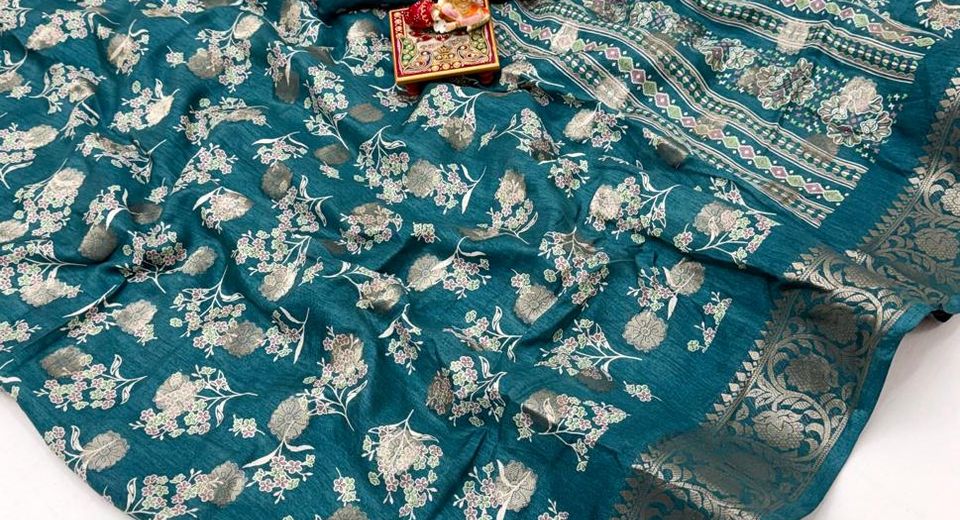
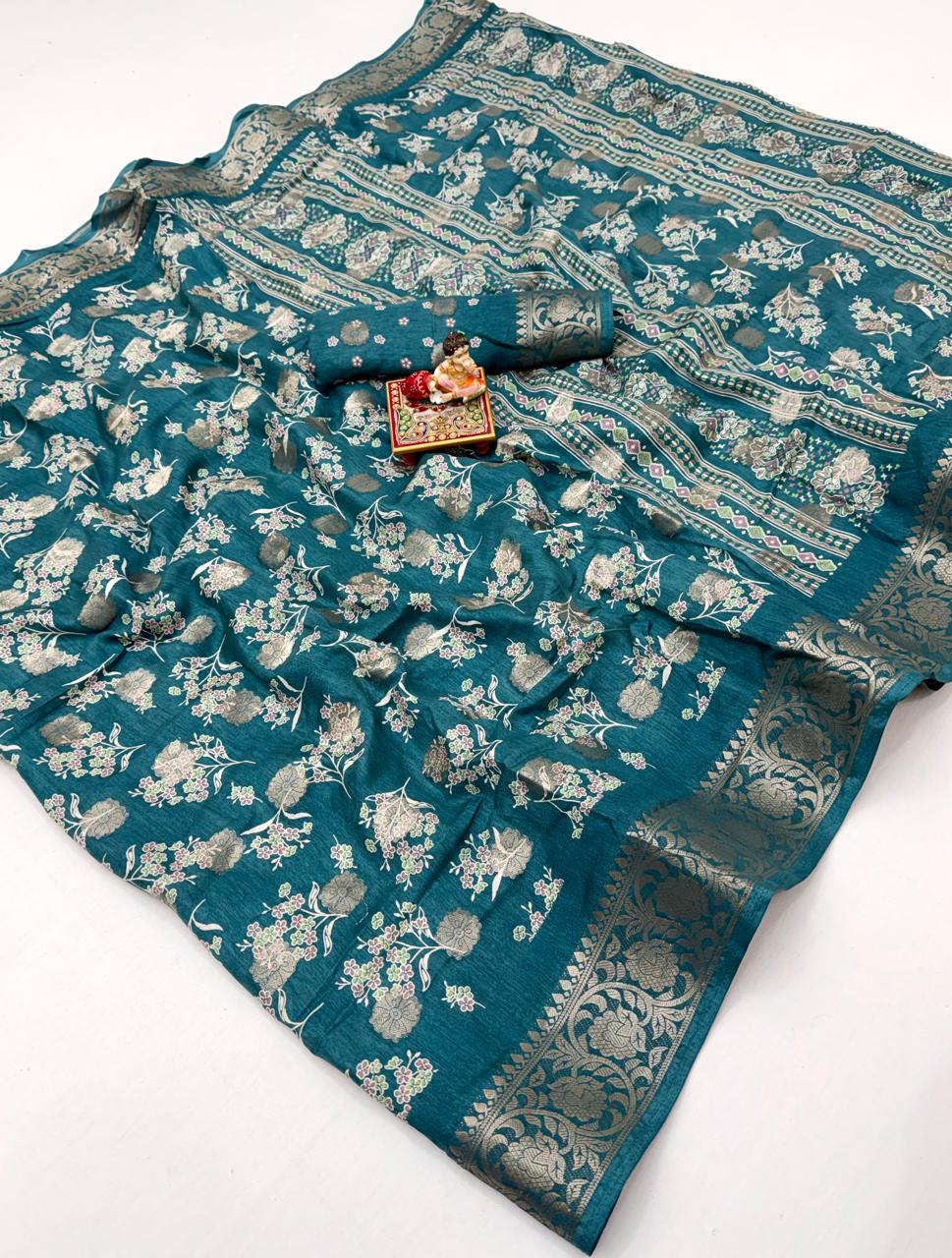
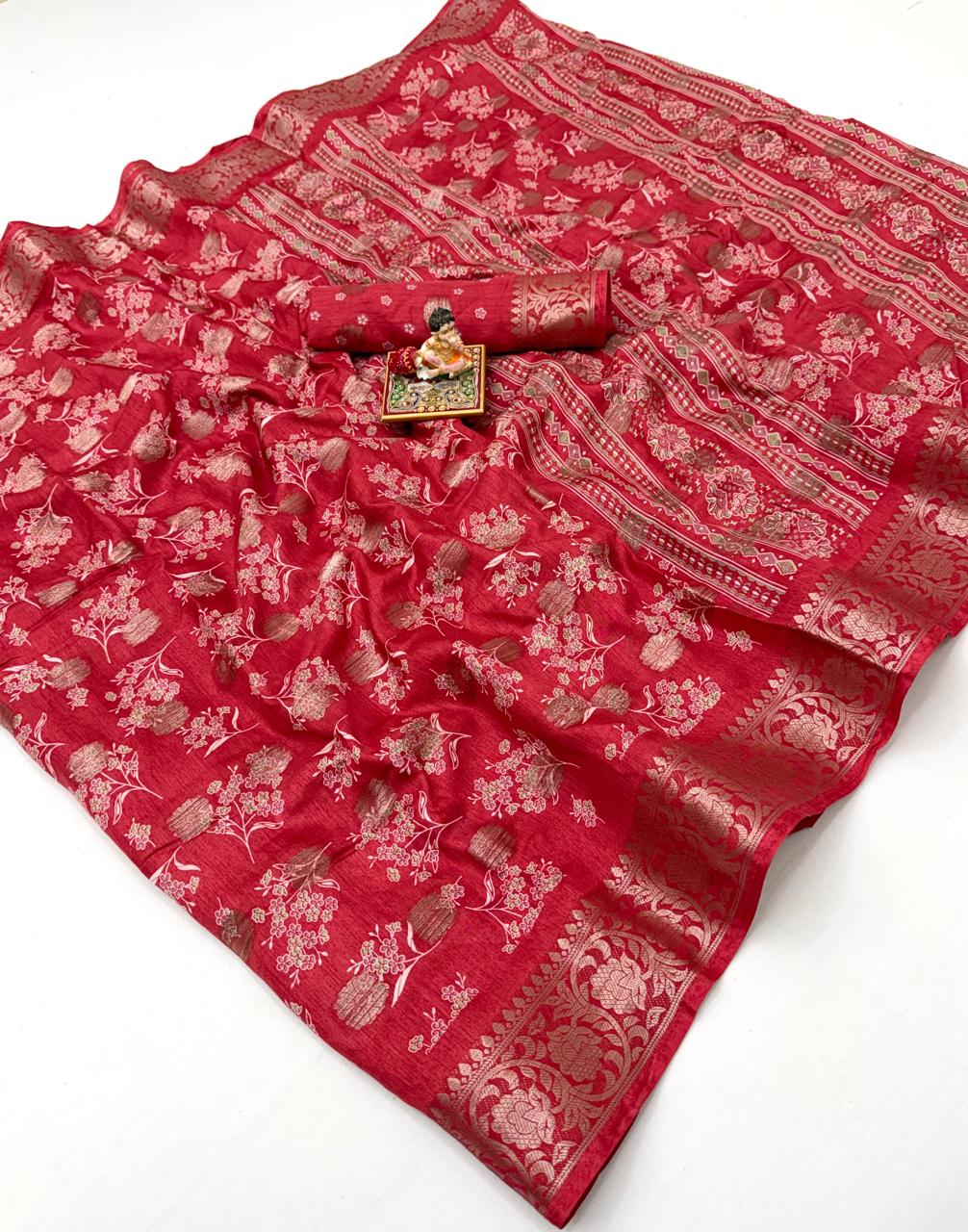
Teal Ethnic Dola Silk Saree With Elegant Jacquard Border and Red Dola Silk Butti Saree With Jacquard Border show how a Dola silk base can be styled for wedding events when you want softness, colour and a formal border rather than dense all-over embellishment. A plain blouse in teal, red, antique gold or a carefully matched contrast keeps the look coherent.
Odia Wedding Sarees: Sambalpuri, Bomkai & Traditional Styles buying checklist
Check the fibre, weaving or printing method, border construction, blouse-piece length, saree measurements and care instructions before paying for an Odia wedding saree.
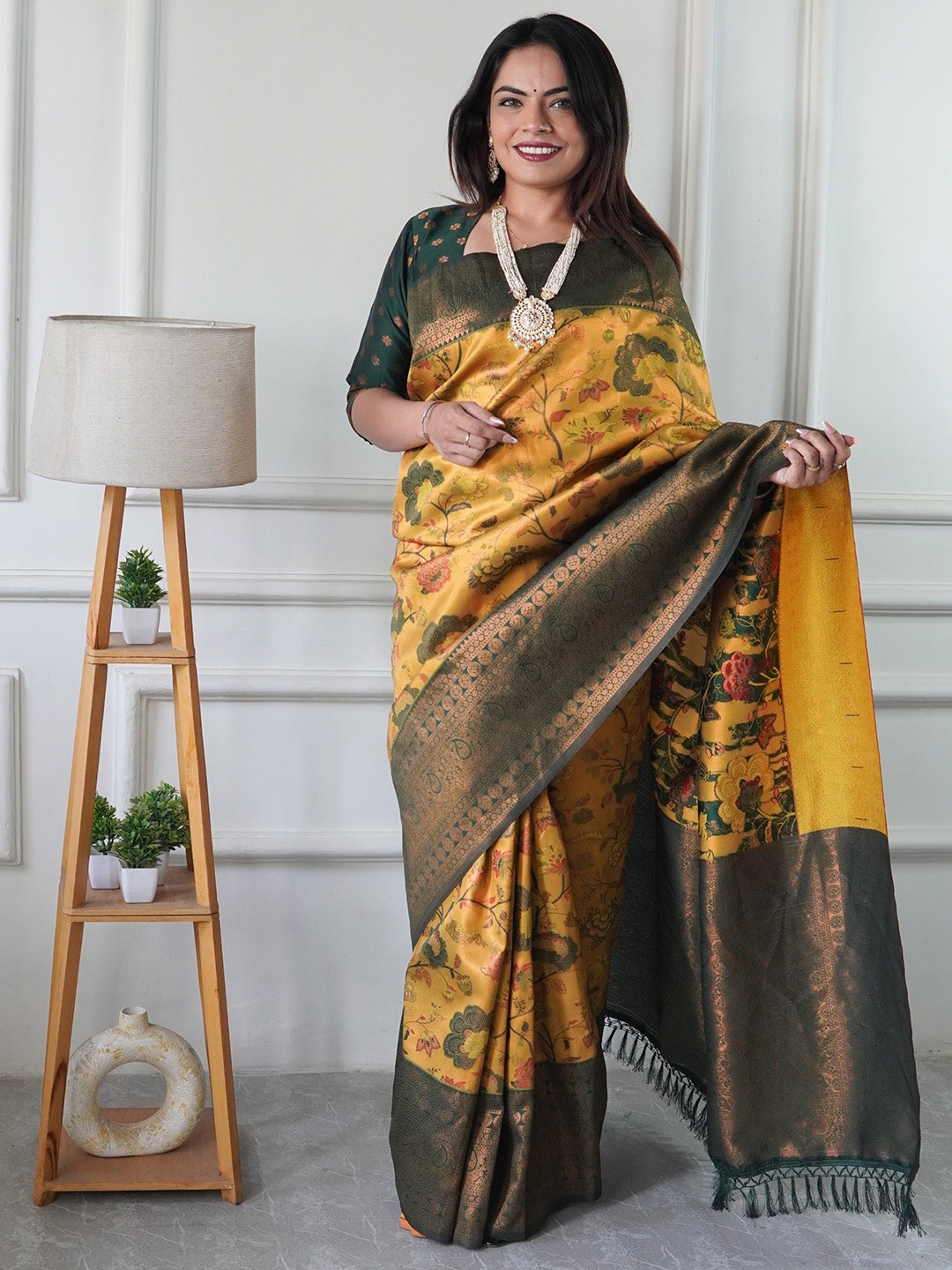
- Fibre: Confirm whether the saree is cotton, silk, silk-cotton, Dola silk, Banarasi silk or a synthetic blend. Fibre affects breathability, fall, sheen, crease behaviour and maintenance.
- Technique: Ask whether Sambalpuri-style motifs are woven ikat, printed, embroidered or digitally reproduced. A design inspired by ikat can be attractive, but it should not be described as handwoven ikat unless that claim is supported.
- Measurements: A saree commonly measures around 5.5 metres, with an additional blouse piece in many designs, but measurements vary. Check the product specification before planning a pre-stitched blouse or a long pallu drape.
- Border and pallu: Confirm whether zari is real metallic zari, tested zari, imitation zari or a jacquard effect. The distinction changes how the saree should be washed and stored.
- Weight: A heavy silk or dense zari saree may need stronger petticoat support and more secure pins. Lightweight cotton is easier for daytime rituals and travel.
- Colour accuracy: Deep maroon, red, purple and teal can appear different under warm indoor lighting. Request daylight photographs or compare the seller's colour description with customer images where available.
Wedding Sarees Collection Under 4000 and Silk Sarees Under 3000 With Discount can be useful starting points for guests or relatives working within a clear budget, but a low price should not be treated as proof of handloom authenticity. Compare fibre content, finishing and return terms before comparing only the sale number.
Odia Wedding Sarees: Sambalpuri, Bomkai & Traditional Styles in a wider wardrobe
Non-Odia sarees can fit into an Odia wedding wardrobe when they're chosen for a specific function and styled respectfully alongside regional textiles.
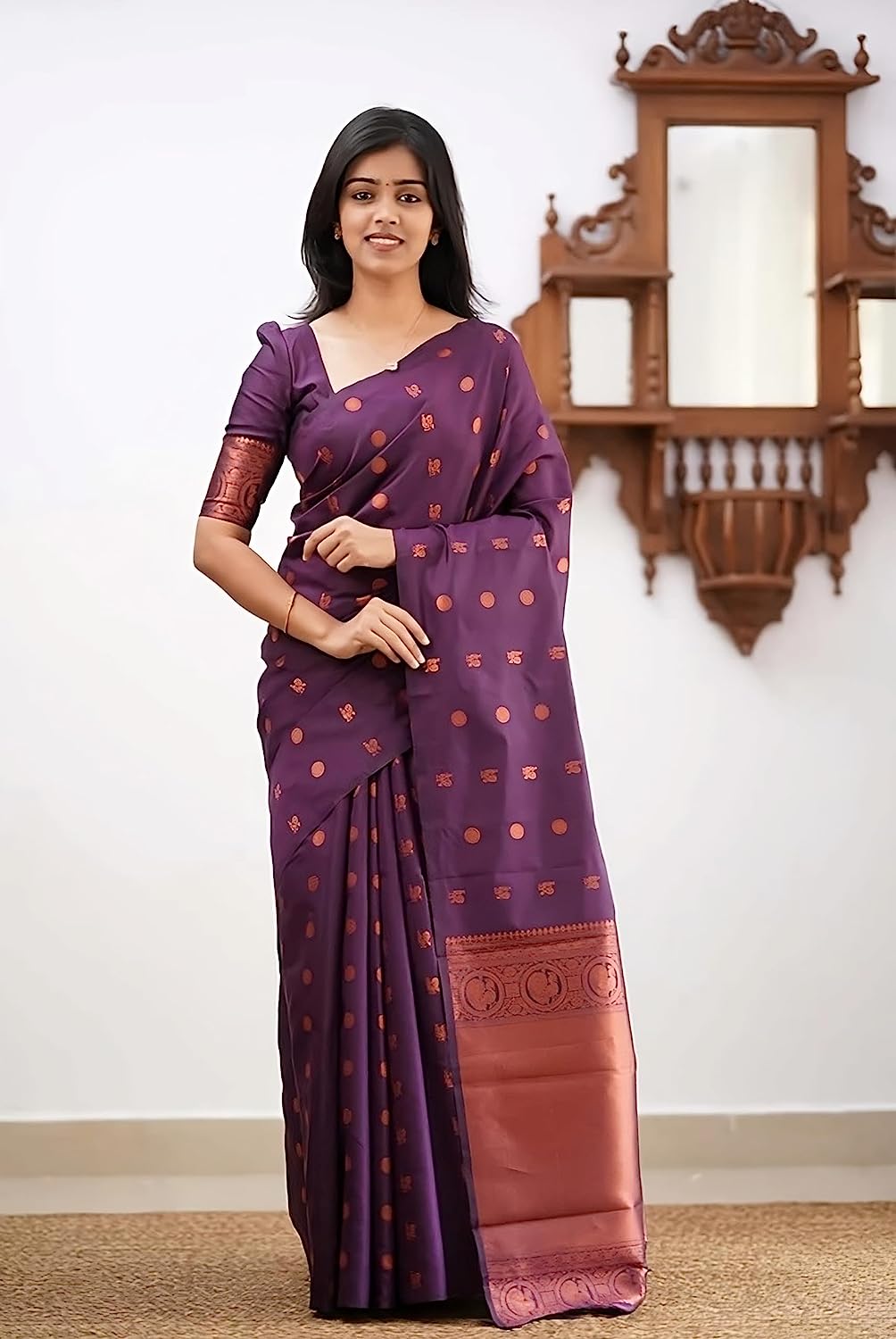
A wedding wardrobe often needs several sarees: a comfortable daytime option, a more formal ceremony saree, a reception look and a lighter outfit for post-wedding visits. A Banarasi silk saree, Kanjeevaram, Chanderi or Dola silk can fill one of those roles without replacing the cultural importance of Sambalpuri, Bomkai or Khandua traditions.
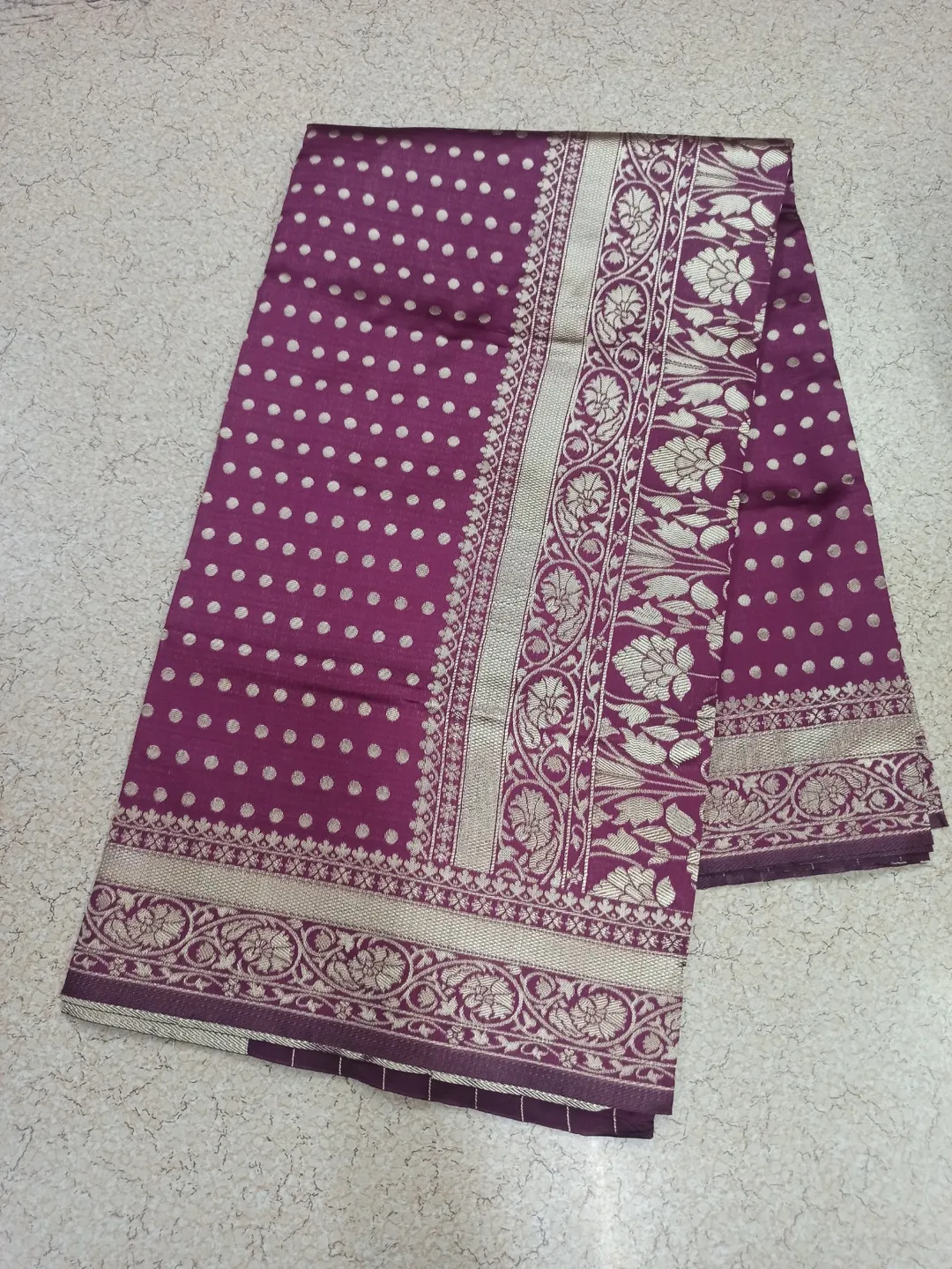
Wedding Special Purple Banarasi Silk Saree for Women and Royal Purple Banarasi Soft Silk Saree With Floral Zari Work suit evening functions where a luminous pallu and zari work are desirable. Royal Off White Zari Woven Maslin Silk Saree gives a quieter, elegant direction for a reception or family gathering, especially when paired with a coloured blouse and traditional jewellery.
Black Ethnic Mirror Work Bandhej Silk Saree can work for a sangeet or cocktail-style event where mirror work and a strong contrast are appropriate. Pink Georgette Sarees Collection brings a lighter direction for a daytime function, while Red Banarasi Silk Sarees for Weddings Under 1100 can help guests seeking a festive red saree at a lower price point. Latest Wedding Sarees Collection is useful when comparing several silhouettes, fabrics and colour families before choosing a final outfit.
Odia Wedding Sarees: Sambalpuri, Bomkai & Traditional Styles care advice
Care for an Odia wedding saree according to its fibre, dyeing method and zari rather than treating every saree as washable at home.
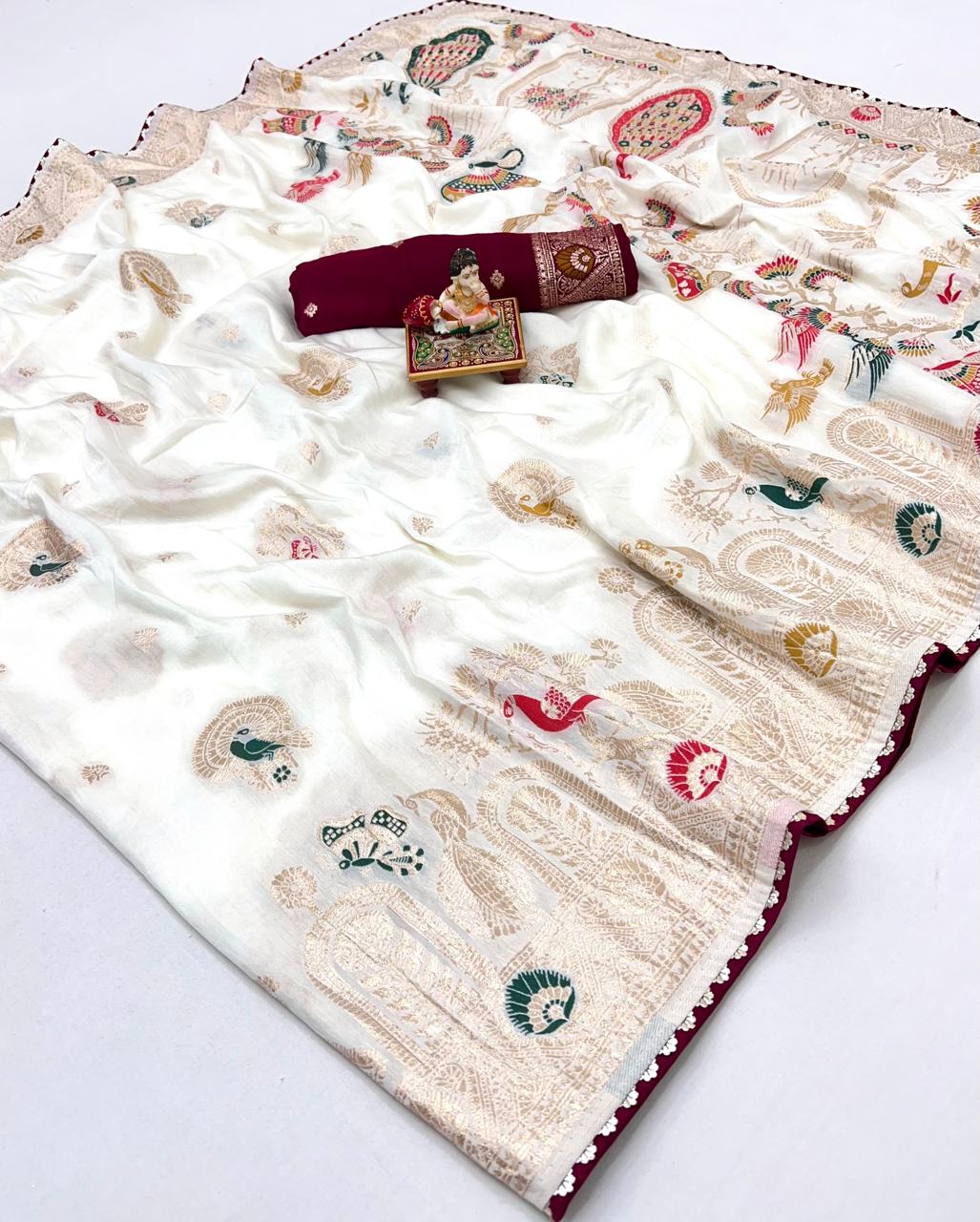
Air a saree after wearing it and remove jewellery pins carefully so that loose threads don't catch. Fold silk sarees with the pallu and border inside the fold to reduce direct exposure to light. Refold stored silk every few months, and use a clean cotton or muslin cover instead of sealing a damp saree in plastic.
Dry-cleaning is generally safer for silk, dense zari, mirror work and uncertain colourfastness. Cotton Sambalpuri sarees may tolerate gentler home washing when the care label permits it, but strong detergent, hot water and prolonged soaking can cause colour bleeding or weaken zari.
Keep perfume, deodorant and hair spray away from the saree surface. Store heavy jewellery separately rather than inside the folded saree, because pressure from stones or metal edges can leave permanent marks. These simple precautions are especially valuable for a bridal saree intended to be worn by another family member later.
Common Questions About Odia Wedding Sarees
What is the difference between a Sambalpuri and a Bomkai saree?
A Sambalpuri saree is especially associated with ikat, in which yarns are resist-dyed before weaving to create geometric or symbolic motifs. A Bomkai saree is recognised for ornate borders and pallu designs featuring floral, animal, bird or other figurative forms.
Which saree is traditionally worn for an Odia wedding?
There is no single saree prescribed for every Odia wedding, because family customs, region, ceremony and personal preference differ. Sambalpuri, Bomkai, Khandua and silk sarees with Odia-inspired motifs are all relevant choices, while red, maroon, yellow and gold remain common festive colours.
Is Sambalpuri saree suitable for a bride?
A Sambalpuri saree can be suitable for a bride, particularly in silk or silk-blend versions with a substantial pallu and ceremonial border. Lightweight cotton Sambalpuri is often more practical for daytime rituals, pre-wedding functions or relatives who will wear the saree for several hours.
How can I tell whether a Sambalpuri design is woven ikat or printed?
A woven ikat design is created through resist-dyed yarns and usually shows a slightly softened alignment at motif edges, with pattern continuity visible through the fabric. A printed design may look flatter and may not carry the motif clearly onto the reverse side, so buyers should also check the seller's technique description and authenticity claims.
What blouse goes with a Bomkai or Sambalpuri wedding saree?
A solid-colour blouse usually works best because it allows the saree's border and pallu to remain visible. Choose a blouse colour from the saree's dominant motif, use a structured silk blouse for an evening reception, or choose a simpler cotton blouse for a long daytime ceremony.
How should I store an Odia silk wedding saree?
Store an Odia silk wedding saree clean and completely dry, wrapped in breathable cotton or muslin and kept away from direct sunlight. Refold the saree every few months, avoid plastic storage for long periods, and use professional dry-cleaning when the saree contains dense zari, mirror work or unstable dyes.





