Odia Pata Saree and Silk Shopping Words You May Encounter can look unfamiliar when a product page combines regional weaving terms with fabric, finish and design vocabulary. A short description may mention pata, kosa, bandha, zari, anchal, jacquard or handloom, and each word can affect what you receive. Knowing the difference between a fibre, a weaving technique and a decorative detail helps you compare sarees honestly rather than choosing only by colour or discount.
Odia textile language also carries cultural meaning. Khandua Pata, Sambalpuri ikat, Bomkai-inspired designs and kosa silk are related to Odisha's textile traditions, but these terms are not interchangeable labels. The most useful shopping habit is to ask what the saree is made from, how the motif was created and which parts are woven, printed or added later.
Odia Pata Saree and Silk Shopping Words You May Encounter: What does "pata" mean?
In Odia textile usage, "pata" generally refers to silk cloth or a silk saree, although the exact composition should still be checked on the product description. "Pata" identifies a regional textile tradition, not one universal grade of silk, weight or production method.
Khandua Pata is especially associated with Odisha and is traditionally linked with silk weaving, devotional textiles and distinctive motifs. A shopper may also see "Odia pata" used more broadly for sarees influenced by Odisha's silk heritage. That broader usage means the fibre content, weaving location and technique need separate confirmation.
"Kosa" usually refers to tasar silk in Odisha. Kosa silk often has a naturally textured appearance and a warm, earthy sheen that differs from the smoother, more uniform look of many mulberry silk sarees. "Mulberry silk" describes silk produced by silkworms fed primarily on mulberry leaves; "kosa" describes a different silk tradition and should not be treated as a synonym.
Odia Pata Saree and Silk Shopping Words You May Encounter become more useful when each term is read as a separate clue. A listing that says "pata" tells you about regional identity, while a listing that says "kosa" gives information about silk type. Neither word alone confirms whether a saree is pure silk, silk-blend, handloom or powerloom.
Odia Pata Saree and Silk Shopping Words You May Encounter: Which weaving terms matter?
The most important Odisha weaving terms are bandha, ikat, Khandua Pata, kosa and handloom, because they describe either technique, textile tradition or production method.
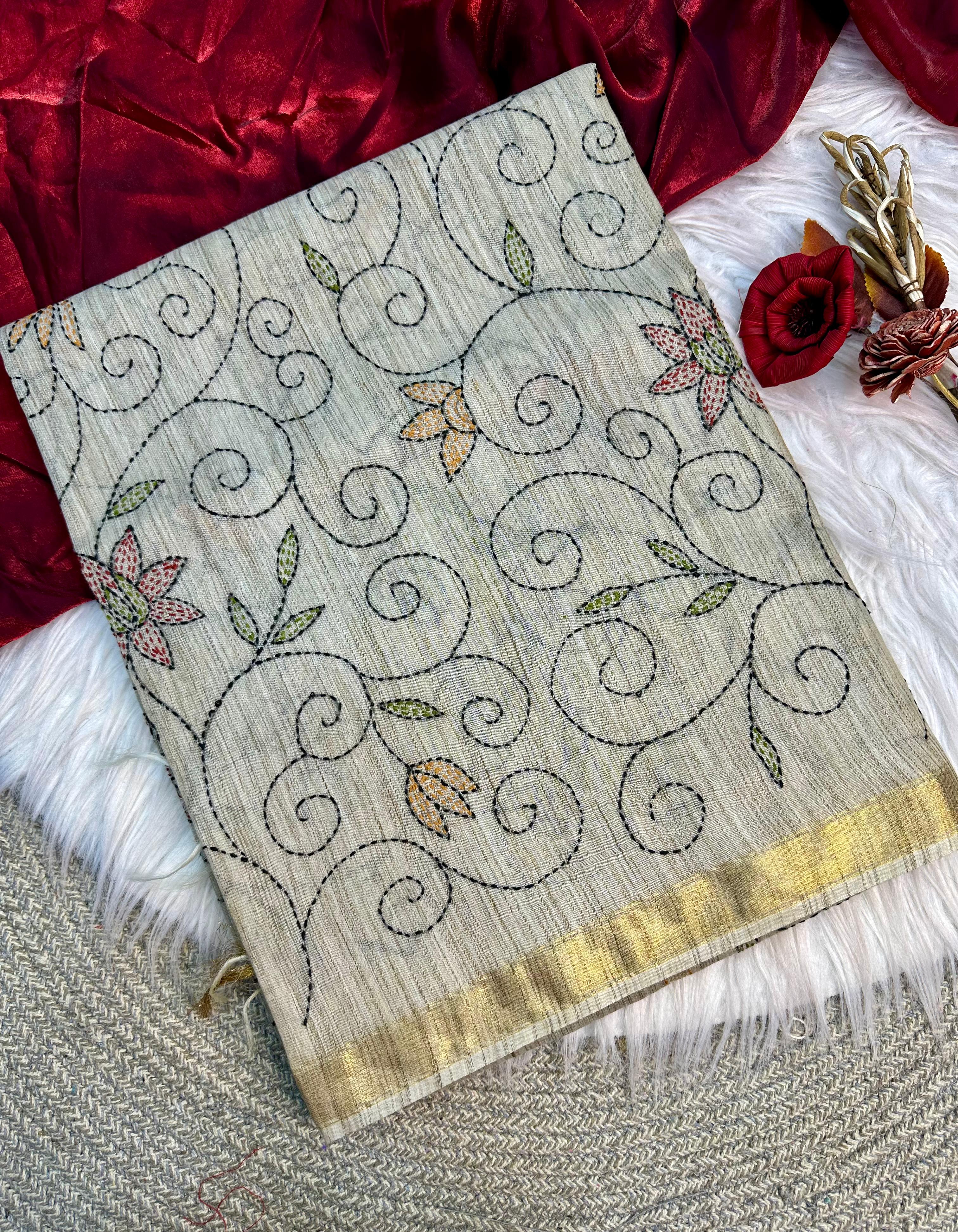
What do bandha and ikat mean?
Bandha is Odisha's term for a resist-dyeing technique commonly known elsewhere as ikat. Threads are tied or otherwise protected before dyeing, and the dyed warp or weft is then arranged to create a motif during weaving. Slight feathering, tiny irregularities and variations in alignment can occur in genuine handmade work.
Warp refers to the threads running lengthwise on the loom, while weft refers to the threads inserted across the width. In warp ikat, the lengthwise threads carry the resist-dyed pattern; in weft ikat, the crosswise threads carry the pattern. Double ikat involves resist-dyed warp and weft, making alignment more complex than a printed design.
Pure Patola Silk Double Ikkat Saree with Zari Border is an useful comparison when learning this vocabulary. The phrase "double ikkat" points to a demanding resist-dyeing structure, while "zari border" identifies a metallic decorative element. Patola and Odia bandha belong to different regional traditions, so shoppers should not assume that every ikat saree is an Odia saree.
What do Khandua and Bomkai references tell you?
Khandua Pata refers to a recognised Odisha silk tradition, while Bomkai refers to a distinctive Odisha textile style known for patterned borders and pallu designs. A product described only as "Odia-inspired" may borrow motifs without following every traditional production method.
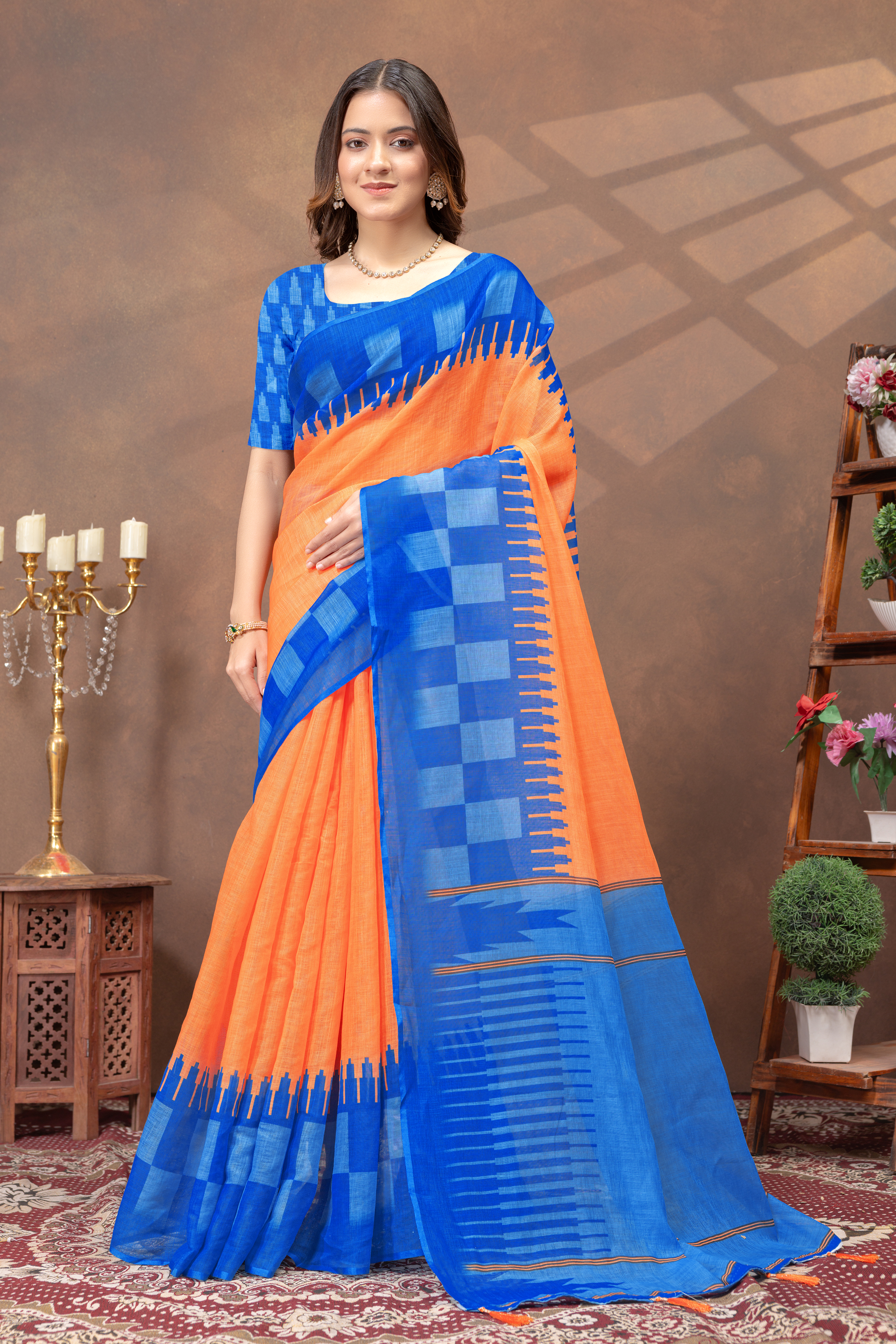
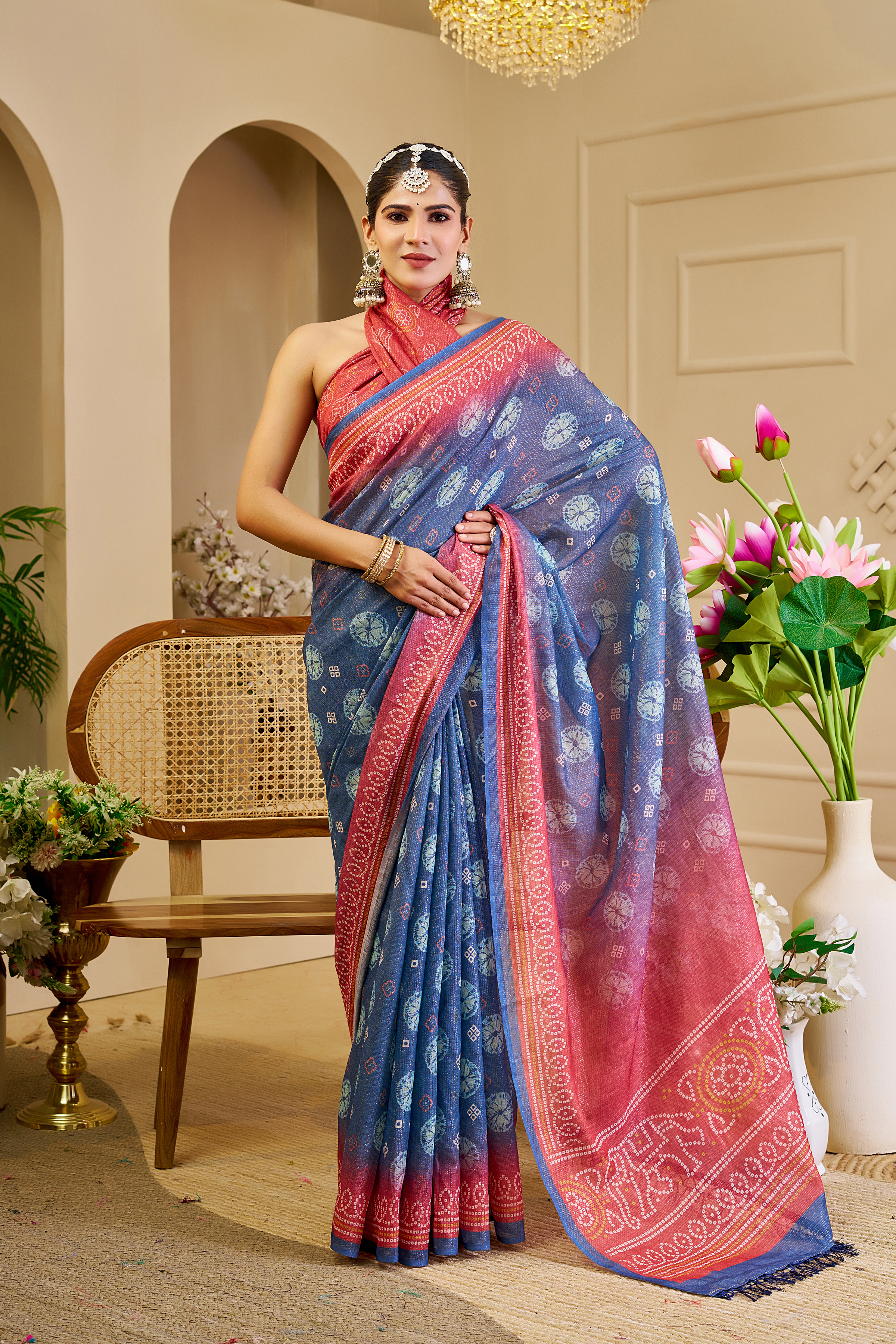
Ask whether a motif is woven, printed or embroidered when a description uses terms such as "inspired," "pattern" or "design." A printed design can resemble ikat from a distance, but the colour placement won't be created by resist-dyed threads. A woven motif normally remains visible on the reverse side, although the reverse may not look identical to the front.
Odia Pata Saree and Silk Shopping Words You May Encounter: How do silk terms describe texture?
You can assess a silk saree online by checking fibre composition, surface description, weight, transparency, weave terminology and care instructions together rather than relying on the word "silk" alone.
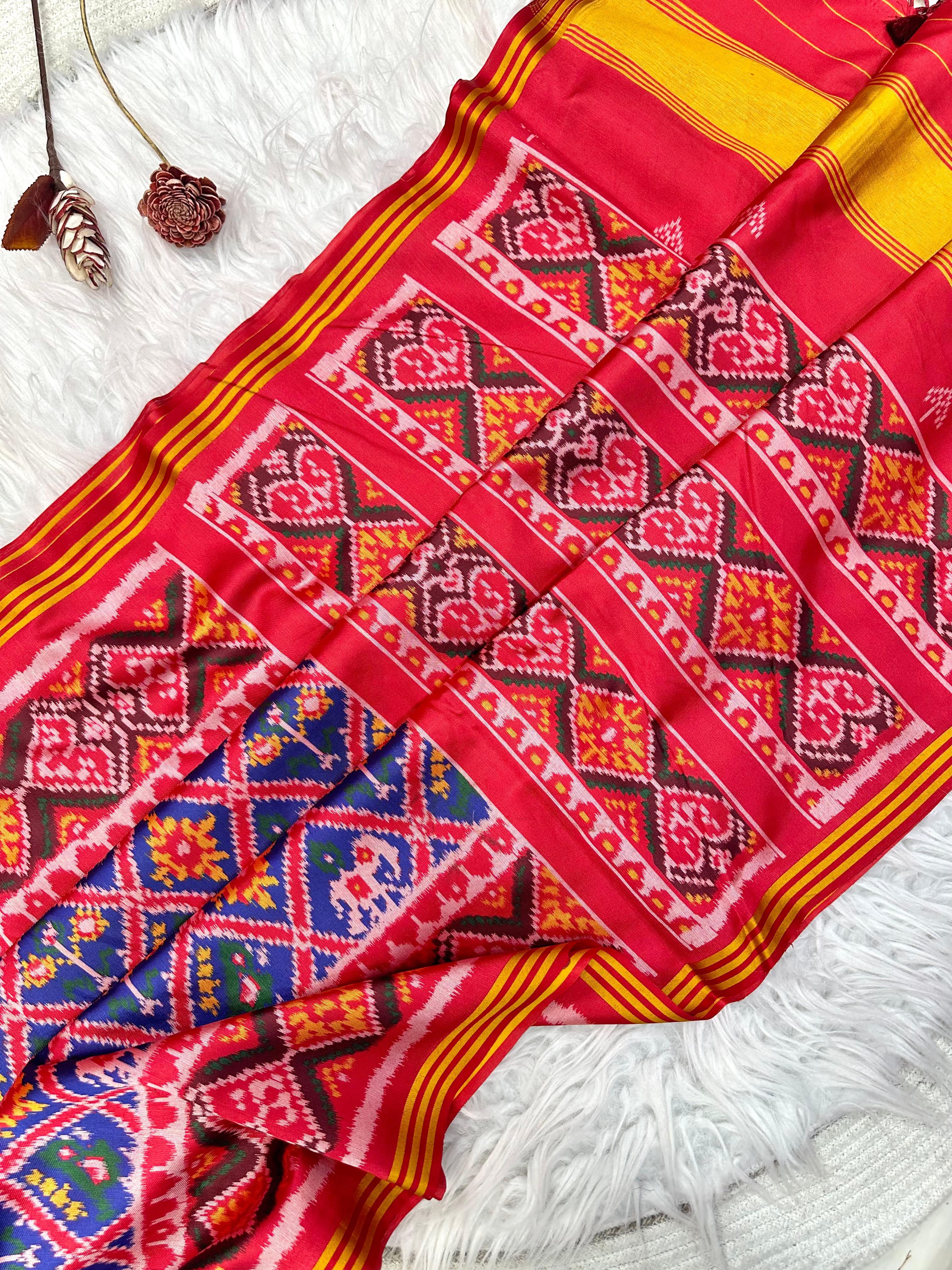
"Pure silk" usually indicates that the main fabric is silk, but a responsible listing should ideally specify the silk type. "Soft silk" generally describes a supple finish and comfortable drape, not a separate botanical species of silk. "Pashmina silk" is often used in product naming for a soft, fluid fabric with a particular handle; shoppers should read the stated composition instead of assuming that the word pashmina automatically means cashmere.
"Handloom silk" means the fabric is woven on a hand-operated loom, but handloom status doesn't by itself indicate a specific silk grade. "Handcrafted," "handwoven" and "handloom" can have different meanings in different listings, so look for a clear statement about the loom and fibre. Premium Handloom Silk Saree with Handkatha demonstrates how a product name may combine a production detail with a surface or finishing feature.
A smooth, glossy surface often points to a polished or tightly woven fabric, while a slightly slubbed or uneven texture may be characteristic of tasar or handspun yarn. Texture alone can't authenticate silk because synthetic fibres can also be made shiny or textured. Home burn tests are unsafe and unreliable; a fibre declaration or professional assessment is more useful.
Red Banarasi Soft Silk Saree With Golden Zari Floral Border and Deep Green Banarasi Soft Silk Saree with Zari Floral Border show why colour, weave and embellishment should be read separately. "Banarasi" refers to the Banaras weaving tradition, "soft silk" describes the stated handle, and "golden zari floral border" describes the visible ornamentation. Those terms don't automatically mean that the entire saree is made with metallic thread.
Odia Pata Saree and Silk Shopping Words You May Encounter: What are pallu, border, zari and jacquard?
Pallu, border, zari and jacquard identify different parts or techniques of a saree, so they should never be treated as interchangeable descriptions.
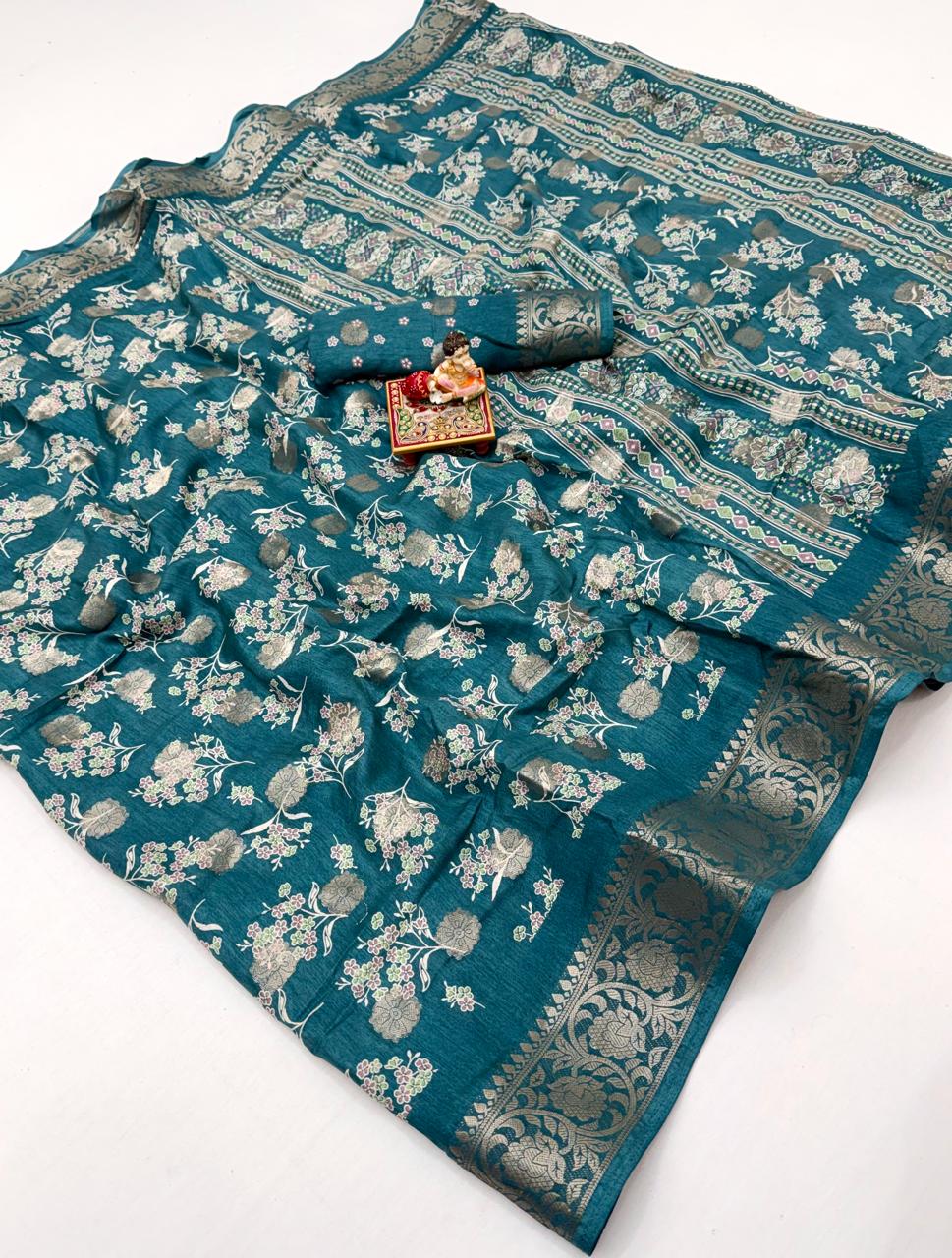
- Pallu or anchal: The decorative end section that falls over the shoulder. The pallu often carries the heaviest motif, contrasting colour or woven pattern.
- Border: The band running along one or both long edges of the saree. A border may be woven, printed, embroidered or finished with metallic thread.
- Zari: A metallic-looking thread used for motifs, borders or pallu designs. Zari may contain precious metal, metal-coated material or synthetic metallic yarn, so composition matters.
- Jacquard: A method of creating figured designs by controlling individual warp threads on a loom. A jacquard border is woven, but jacquard doesn't automatically mean silk or handloom.
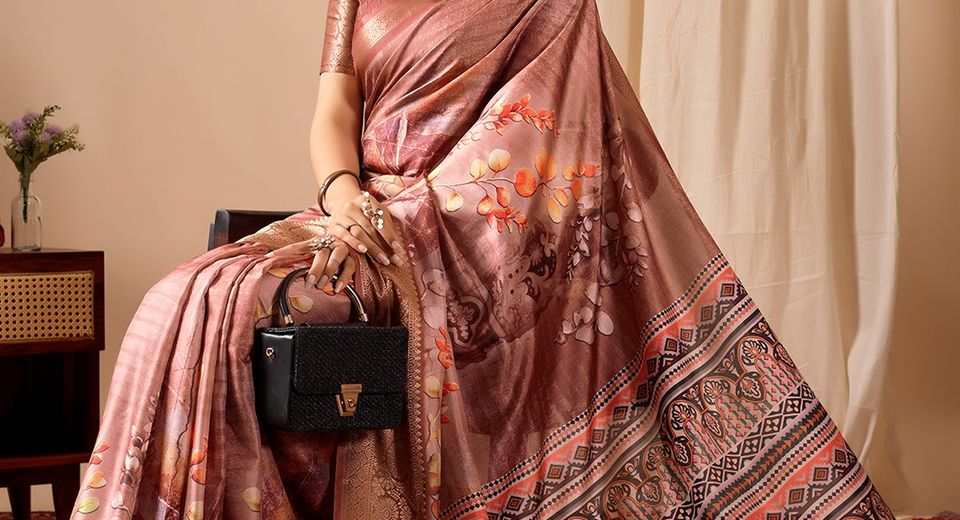
- Printed pallu: A pallu carrying a surface-applied design. "Printed" tells you how the visual pattern was added; it doesn't describe the fibre.
Teal Ethnic Dola Silk Saree With Elegant Jacquard Border illustrates the difference between fabric and construction. "Dola silk" names the stated fabric category, while "jacquard border" explains how the border pattern is formed. Red Patola Border Pashmina Silk Saree With Printed Pallu similarly separates a border detail from a printed pallu detail.
Zari requires particular care because metallic-looking yarn can tarnish, flatten or lose shine through abrasion and moisture. Fold a zari saree with the decorated side inward, place soft cotton or muslin between folds, and refold the saree every few months. Avoid spraying perfume directly onto zari, because alcohol and moisture can affect metallic finishes and dyes.
Odia Pata Saree and Silk Shopping Words You May Encounter: How should you compare sarees online?
Compare an Odia pata saree online using a five-point checklist covering fibre, weave, dimensions, embellishment and maintenance.

- Fibre: Check whether the listing says pure silk, a named silk such as kosa, a silk blend or only "silk-feel." don't infer fibre content from shine.
- Weave: Look for handloom, powerloom, ikat, double ikat, jacquard or printed. These words describe different stages of making the fabric.
- Dimensions: Confirm saree length, width and blouse-piece length. A standard saree may be around 5.5 to 6.3 metres, but product measurements vary.
- Embellishment: Identify whether zari, embroidery, sequins or prints appear on the border, pallu or full body. Placement affects weight and care.
- Maintenance: Check whether dry cleaning, gentle hand washing or specialist cleaning is recommended. Silk and metallic finishes should not be assumed to be machine washable.
Product photography can distort colour, especially with deep red, teal, green and gold. Read the written colour description, inspect multiple images and ask for a daylight video if colour accuracy matters. A close-up photograph can also reveal whether a motif is printed, woven or embroidered.
Price is another useful clue, but price isn't proof of authenticity. A lower-priced saree may use a blend, printed design or lighter yarn; a higher-priced saree may reflect labour, zari, regional provenance or finishing. Sarees from Rs 1000 to Rs 1500 can help shoppers set a budget, while Sarees Under 20% Off and Sarees Under 10% Off can be compared by checking the original composition and specifications rather than the discount percentage alone.
Heritage Beige Multicolor Printed Saree is an useful reminder that printed sarees can offer attractive colour and motif variety without claiming a handwoven technique. Heritage Peacock Patola Pashmina Silk Saree offers another vocabulary comparison because "Patola," "Pashmina silk" and the peacock motif describe different aspects of the product name.
Odia Pata Saree and Silk Shopping Words You May Encounter: How should silk and zari be stored?
Store a silk saree in clean, dry conditions with breathable wrapping, minimal pressure and regular refolding.
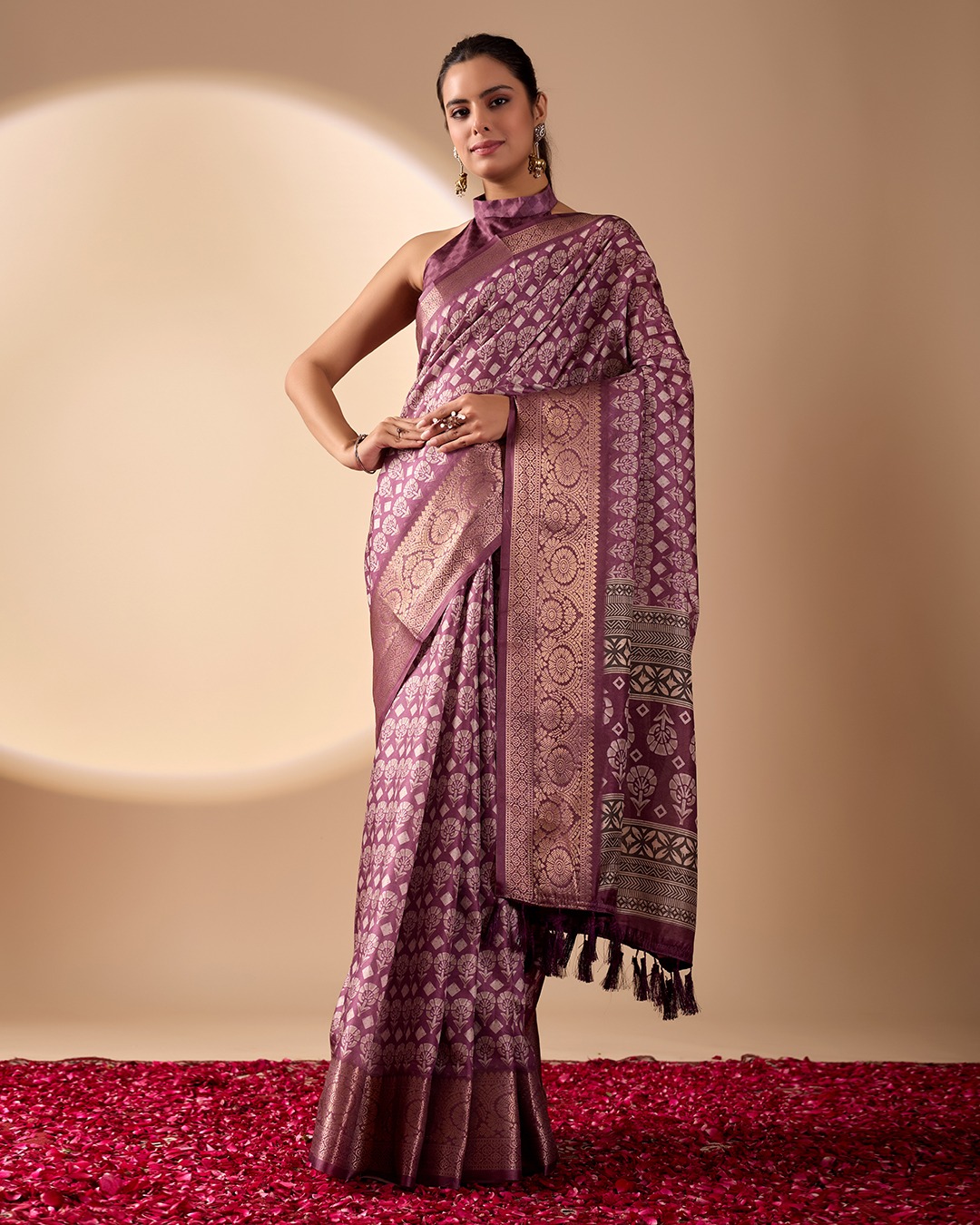
Air a silk saree in shade for 30 to 60 minutes after wearing before storage. Do not leave silk in direct sunlight for long periods, because ultraviolet exposure can weaken fibres and fade dyes. Fold the saree along different lines every two to three months to reduce permanent creases.
Use unbleached cotton or muslin rather than airtight plastic for long-term storage. Keep zari sarees away from damp walls, bathrooms and strong fragrances. Silica-gel sachets can help control moisture inside a cupboard, but sachets should not touch the fabric directly.
Professional dry cleaning is the safer default for pure silk, heavy zari, colour-sensitive dyes and sarees with multiple decorative finishes. If a care label permits gentle washing, use cold water, a mild silk detergent and no wringing; press excess water between towels and dry the saree flat or over a broad hanger in shade.
Odia Pata Saree and Silk Shopping Words You May Encounter: Which questions should you ask?
The most useful pre-purchase questions ask for fibre composition, weaving method, dimensions, zari composition, blouse-piece details and care instructions.
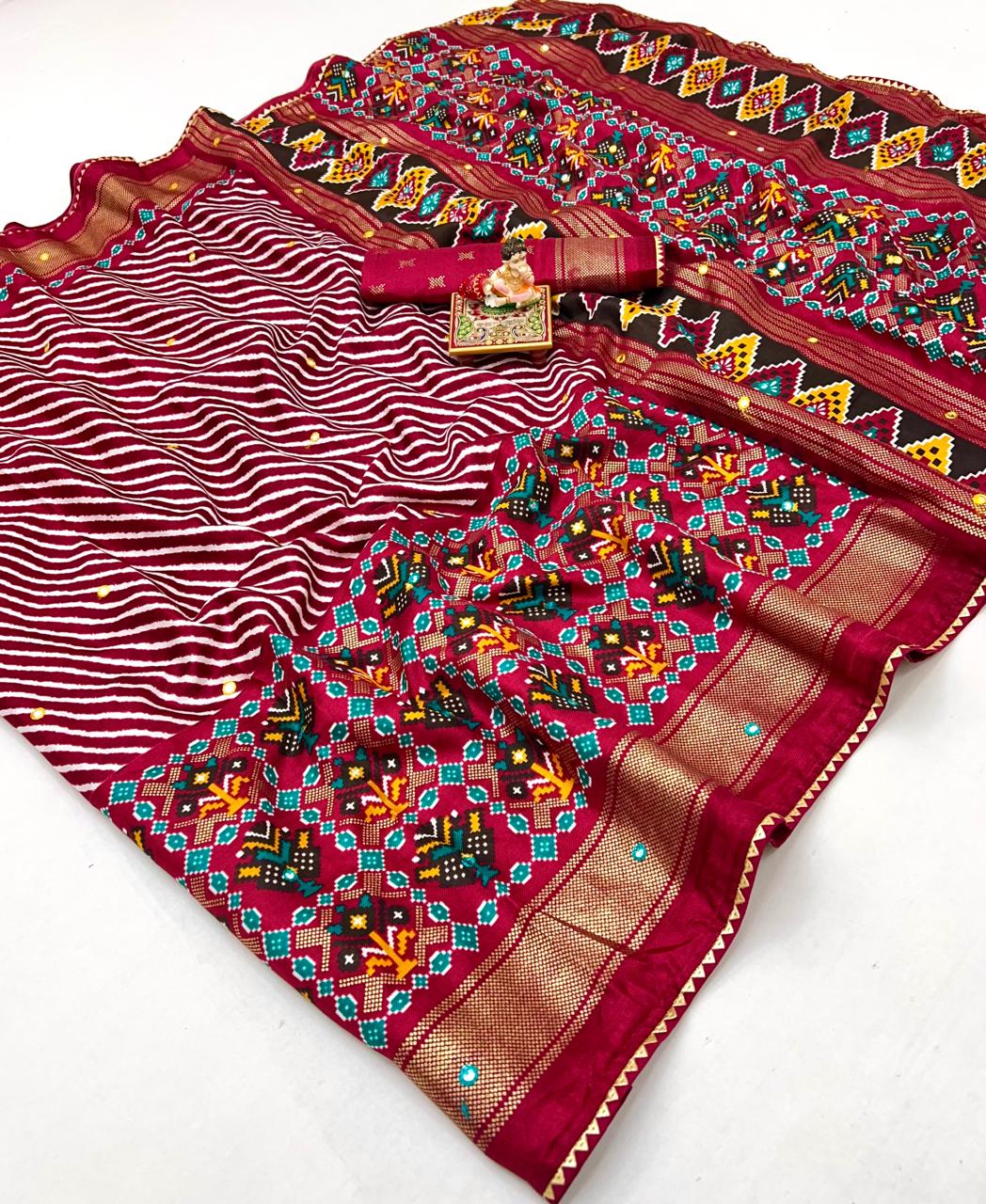
- Is the saree pure silk, a silk blend or another fibre with a silk-like finish?
- Is the motif woven, resist-dyed, printed or embroidered?
- Does "handloom" refer to the complete saree or only a particular component?
- Is the zari metallic, synthetic or unspecified?
- What are the exact saree, border and blouse-piece measurements?
- Which cleaning method is recommended for the fabric and decorative details?
Clear answers make regional textile vocabulary useful instead of decorative. A shopper who separates silk type from weave, weave from print, and zari from the base fabric can compare an Odia pata saree with Banarasi silk, Patola, Chanderi or Kanjeevaram more accurately and choose according to budget, drape, occasion and care capacity.
Questions Shoppers Ask About Odia Pata Saree and Silk Terms
What does pata mean in an Odia saree?
"Pata" generally refers to silk cloth or a silk saree in Odia textile usage. The word indicates regional textile identity, but it does not by itself confirm pure silk, handloom production or a particular silk grade.
Is kosa silk the same as mulberry silk?
No. Kosa generally refers to tasar silk in Odisha, while mulberry silk comes from silkworms fed primarily on mulberry leaves. Kosa silk often has a more textured, earthy appearance than smoother mulberry silk.
What is bandha in Odisha sarees?
Bandha is an Odisha resist-dyeing technique commonly known elsewhere as ikat. Threads are tied before dyeing and then arranged on the loom to form motifs, which distinguishes bandha from a surface-printed ikat pattern.
Does zari mean that a saree contains real gold or silver?
No. Zari is a metallic-looking thread, and modern zari may be made from metal-coated material or synthetic metallic yarn. Ask for the zari composition if precious-metal content matters to your purchase.
How can you tell whether an ikat design is woven or printed?
A woven ikat design is created through resist-dyed warp or weft threads and may show slight alignment variation. A printed ikat design is applied to the surface, so a close-up image and the product description should identify the difference.
How should a silk saree with zari be stored?
Store the saree in breathable cotton or muslin in a cool, dry cupboard, away from sunlight, perfume and moisture. Fold the decorated side inward, refold every two to three months and use professional dry cleaning when the care label recommends it.