

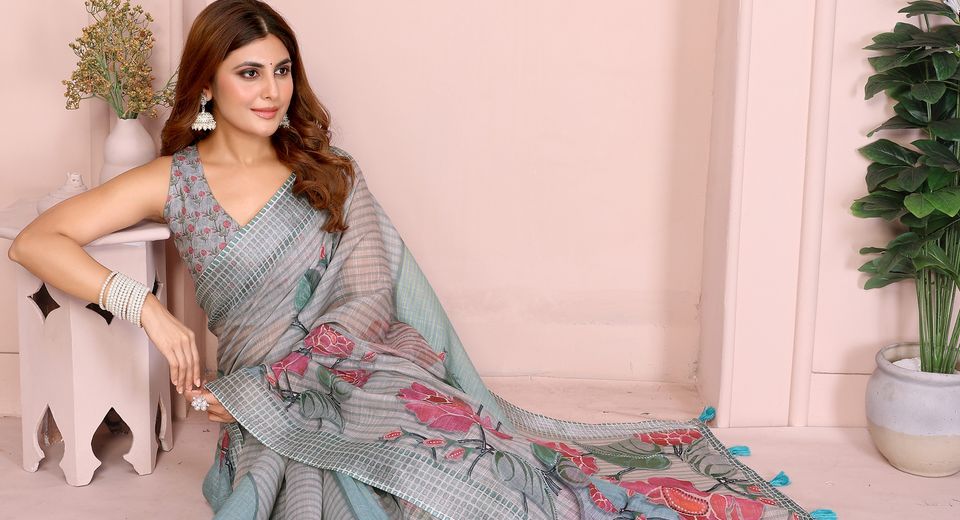
Nuakhai Festival Fashion: Traditional Odia Sarees for Women brings together the first harvest, regional identity and practical festive dressing. Nuakhai is observed across western Odisha and by Odia families elsewhere, with newly harvested rice offered to the household deity before people share the meal and exchange greetings. A saree for Nuakhai therefore carries more meaning than a bright outfit selected at random: its weave, colour, comfort and drape can all support the spirit of the celebration.
The most recognisable traditional choices include Sambalpuri Ikat, Bomkai, Khandua and other handwoven Odia sarees, usually identified by their motifs and borders. Contemporary women can also adapt linen cotton, silk or tissue sarees when an authentic regional weave is unavailable. The key is to style the saree with restraint, choose a secure drape for family rituals and let one or two heritage details lead the outfit.
Why Nuakhai clothing has cultural meaning
Nuakhai clothing represents gratitude for the harvest, respect for family traditions and the joy of meeting relatives after the offering. Nuakhai follows the lunar calendar and is commonly celebrated the day after Ganesh Chaturthi, although the precise date changes every year. The festival is especially important in western Odisha, including Sambalpur, Bargarh, Balangir and Kalahandi.
Nuakhai Bhet, the custom of visiting elders and exchanging good wishes, makes a saree a practical choice because the garment remains formal through prayer, meals and social visits. Many families choose newly purchased or carefully preserved clothes for the day. A clean, well-pressed saree with a coordinated blouse can look more appropriate than an excessively embellished outfit that's difficult to sit, eat or move in.
Traditional Odia sarees often communicate identity through motifs rather than heavy decoration. Sambalpuri Ikat is known for resist-dyed yarns woven into geometric and figurative patterns. Bomkai sarees are associated with dense motifs and richly designed borders. Khandua is known for Odisha's textile heritage and is linked with traditional motifs such as elephants, flowers and script-inspired designs. These names assist shoppers distinguish a regional weave from a generic saree marketed only as ethnic wear.
Nuakhai Festival Fashion: Traditional Odia Sarees for Women
The strongest Nuakhai saree choice is a breathable, recognisably Indian weave in a colour and motif combination that suits the family gathering. A genuine Sambalpuri, Bomkai or Khandua saree gives the clearest regional connection, while a cotton-silk, linen cotton or silk saree can provide a polished alternative for women who prioritise lightness and easy maintenance.
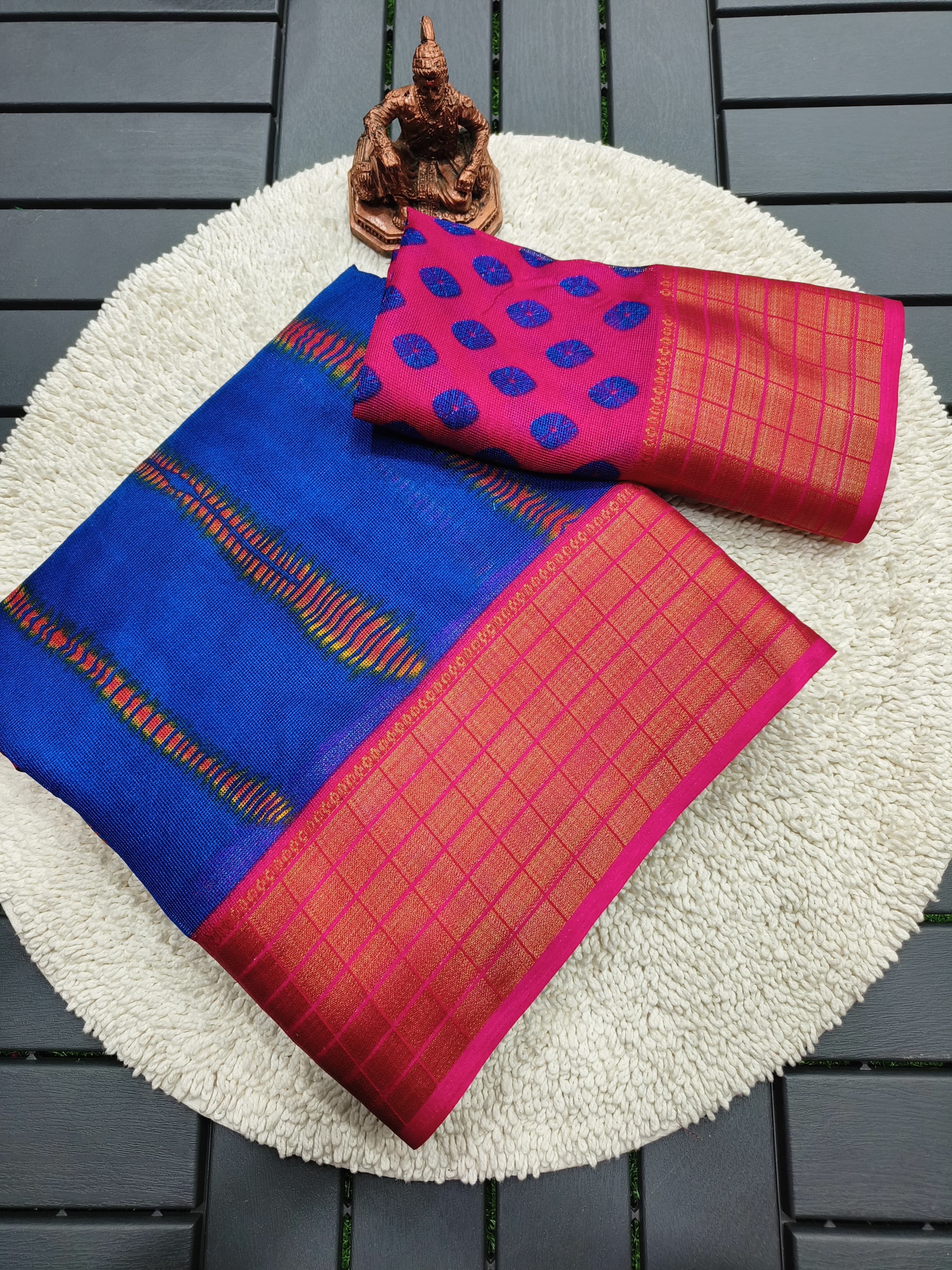
Handloom cotton works particularly well for daytime celebrations because cotton absorbs moisture and remains comfortable during cooking, prayer and visiting. Silk traditional sarees create a richer appearance for a formal family event, but silk can feel warm and may need more careful pleating. Linen cotton offers a crisp fall and breathable texture, although linen cotton may crease more visibly after several hours.
Pastel Floral Tissue Handloom Cotton Saree with Zari Weaves demonstrates how a lighter textile can retain a festive finish through zari. Pastel Linen Cotton Floral Print Saree with Designer Blouse and Peach Linen Cotton Floral Print Saree with Blouse for Women are useful references for women who want an already coordinated blouse and a softer daytime palette. These sarees are not substitutes for an authentic Sambalpuri or Bomkai weave, but they can suit a contemporary Nuakhai gathering when a regional handloom isn't specifically required.
Which colours suit a Nuakhai saree?
Deep red, maroon, green, yellow, rust, indigo and cream are dependable Nuakhai colours because they connect naturally with festive, harvest and handloom palettes. Red and green create a traditional contrast, while mustard and rust feel earthy and seasonal. White, ivory or pastel sarees can look elegant when paired with a strong border, a coloured blouse or gold-toned jewellery.
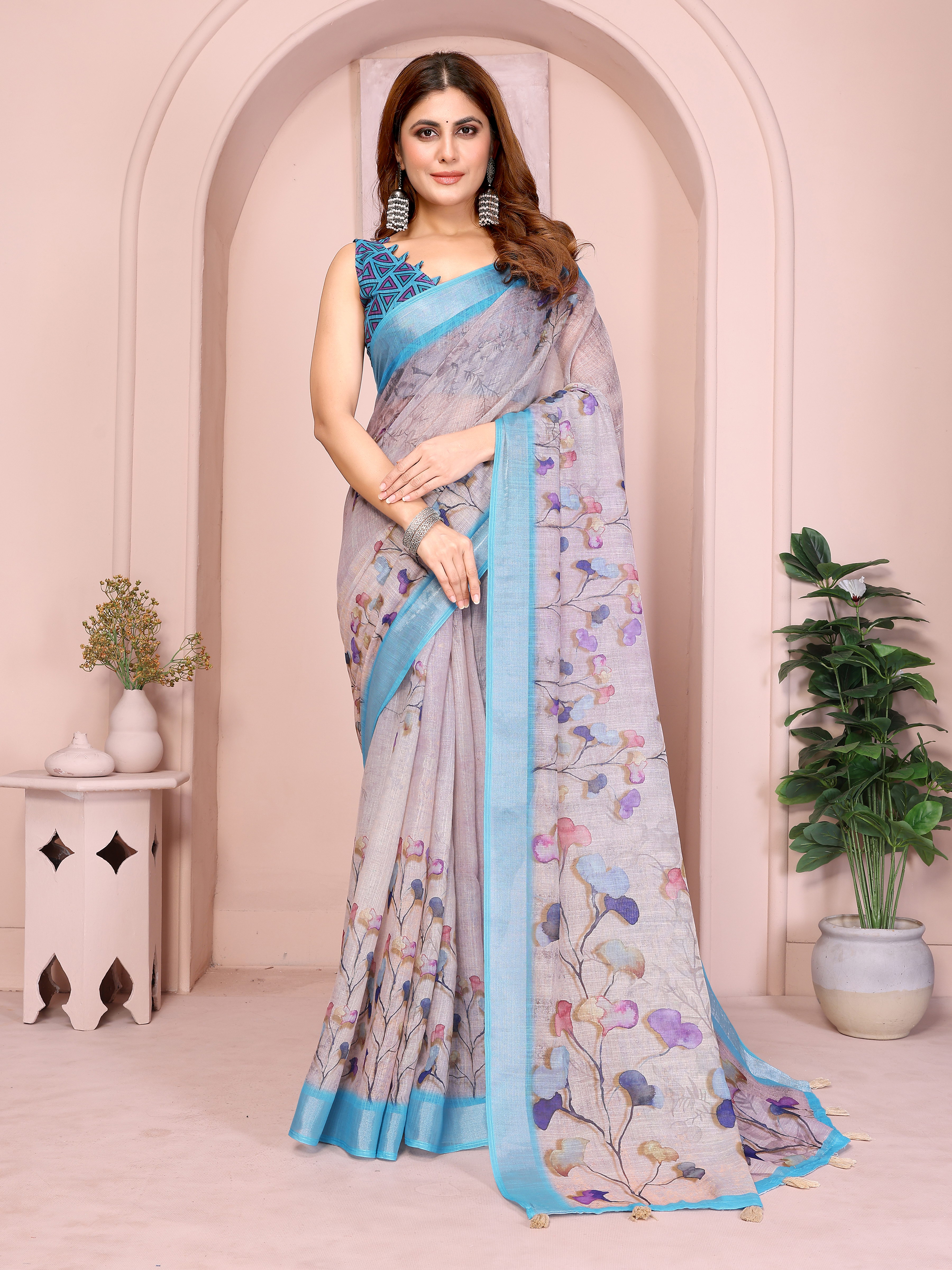
Colour should also suit the time and setting. A bright red or deep green silk works well for a formal evening gathering. A pastel linen cotton or handloom cotton saree is easier for daytime visits. Lavender Floral Linen Cotton Saree with Elegant Blue Border shows how a cool palette can remain festive when the border supplies definition.
How to choose an Odia saree for the occasion
Choose the saree by weighing authenticity, weather, duration and movement before choosing surface decoration. A family puja requires a secure drape and covered, comfortable blouse; a formal Nuakhai Bhet allows more jewellery and a richer border; an outdoor gathering benefits from a lighter fabric and shorter accessories.
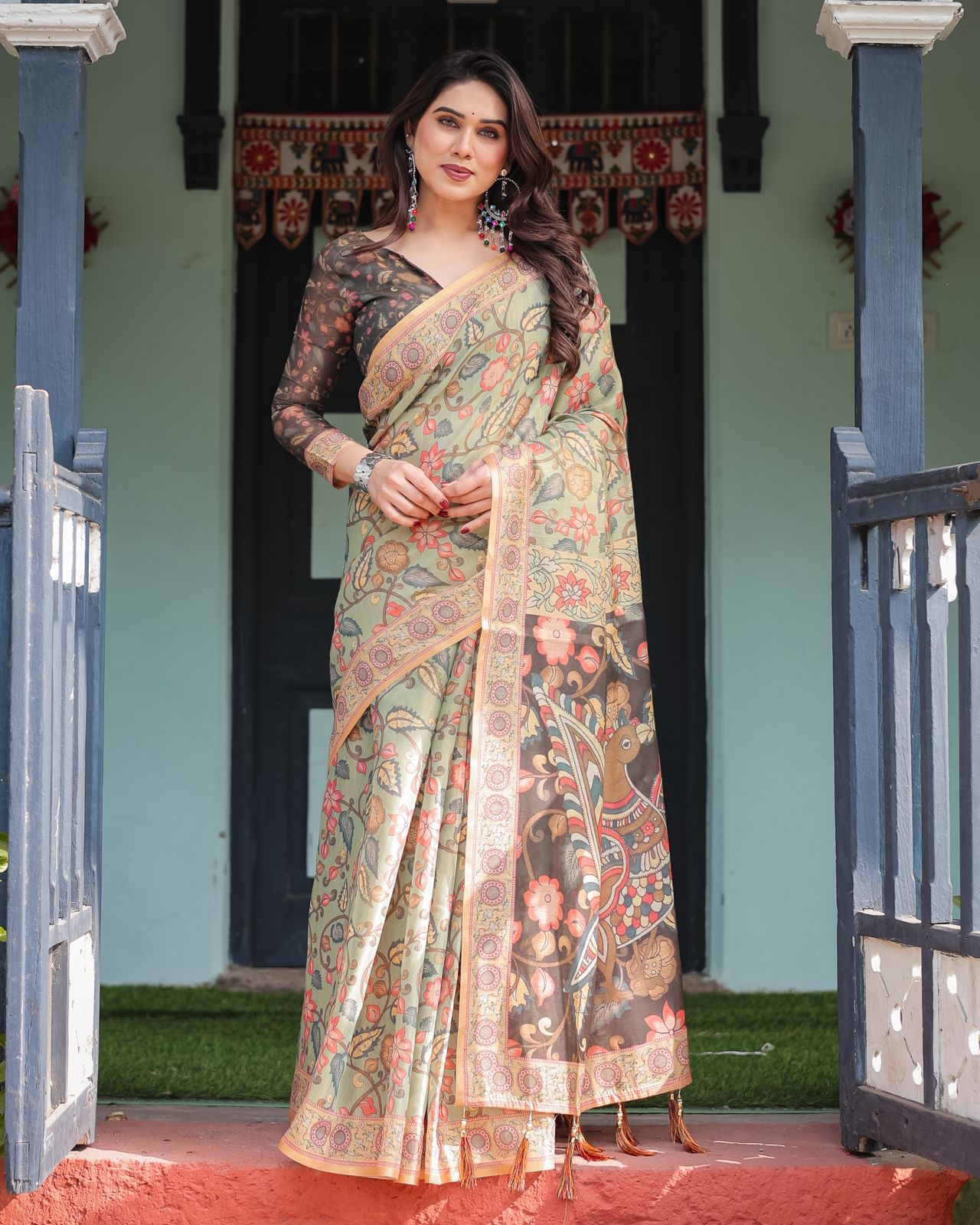
For a traditional family puja
A handloom cotton, Sambalpuri Ikat or Bomkai saree with a modest blouse is the most practical option for a family puja. Select a saree with a firm border and enough length for five to seven front pleats, depending on your height and draping style. Avoid very slippery fabrics if you'll sit on the floor or move repeatedly between rooms.
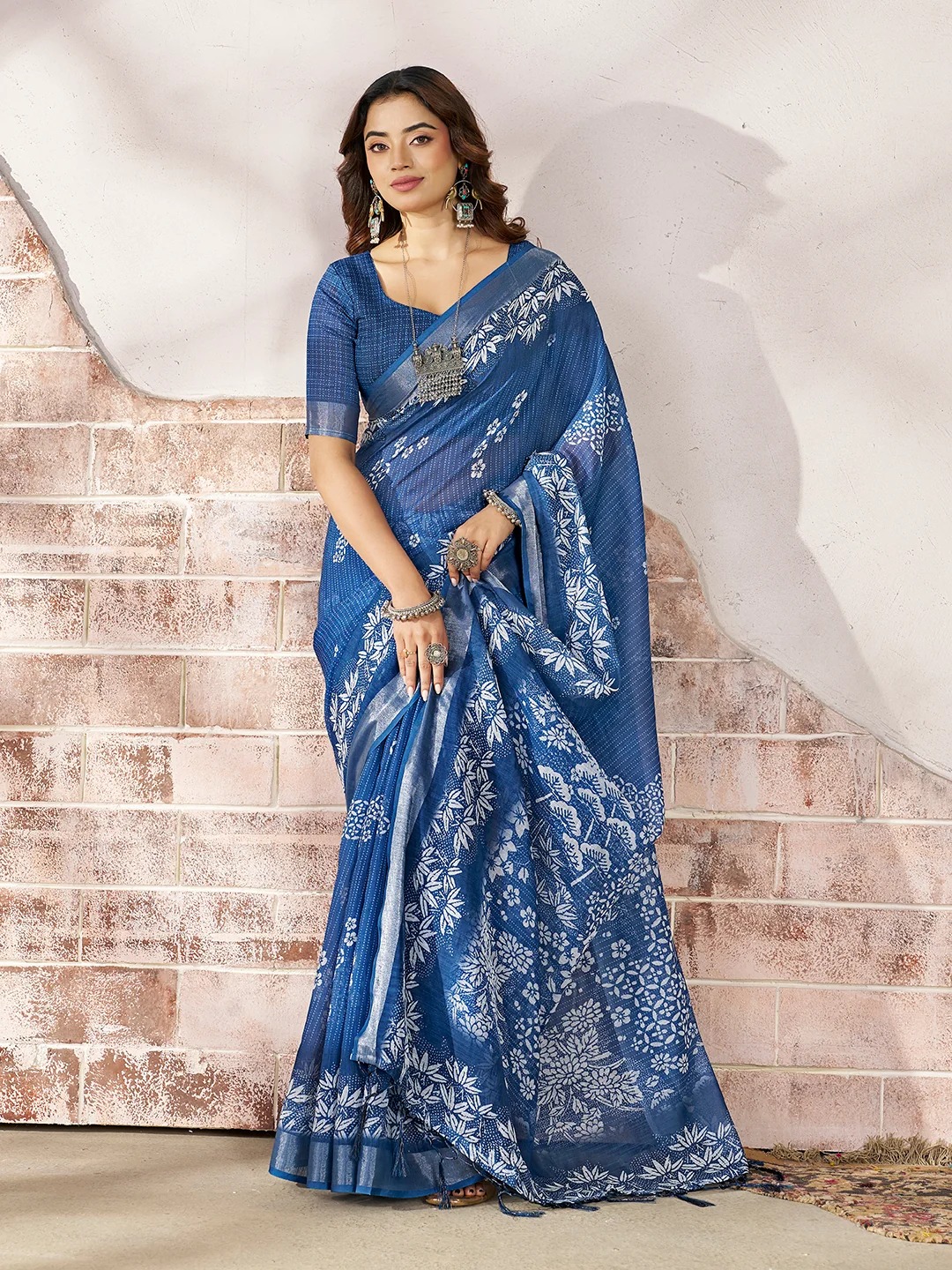
Festive Wear Blue Silk Saree for Women provides a more formal appearance for an evening or larger family event. A blue silk saree becomes more culturally grounded when paired with a blouse in red, green, mustard or antique gold rather than a completely unrelated neon shade. Women comparing silk options can also browse the Silk Sarees Under 3000 With Discount collection for price-conscious festive choices, while remembering to check fibre composition and blouse inclusion before purchasing.
For Nuakhai Bhet and visiting relatives
A saree for Nuakhai Bhet should look festive while remaining comfortable for walking, sitting and greeting elders. Linen cotton, cotton silk and medium-weight silk are usually easier to manage than very stiff tissue or heavily layered drapes. A pre-stitched petticoat, safety pins and a correctly fitted blouse reduce adjustments during visits.
Colorful Ethnic Chinon Saree for Women brings a dressier option when the gathering includes photographs or an evening celebration. Chinon can have a fluid fall, so use a well-fitted petticoat and pin the pleats securely at the waist. Women who prefer a softer floral look can consider Pink Floral Linen Cotton Saree with Green Border for Ladies, pairing the green border with green glass bangles or a small green stone in the earrings.
Party Wear Sarees can be useful when Nuakhai Bhet extends into an evening celebration, but heavy embellishment isn't automatically more traditional. A medium-weight saree with a clear border, comfortable blouse and stable pallu often serves the occasion better than a garment covered in sequins. Pink Georgette Sarees may suit a dressier family gathering, although georgette requires extra pallu pins because its light, fluid surface can shift while walking.
Blouse, drape and jewellery details that make the outfit work
A well-fitted blouse improves both the appearance and stability of a Nuakhai saree. The blouse should sit smoothly across the bust, close securely at the shoulder and allow the arms to move without pulling at the sleeve seam. A sleeve ending around the elbow gives a classic balance for handloom sarees, while a short sleeve or sleeveless cut can suit lighter contemporary fabrics if the family setting allows it.

Match the blouse to one colour from the saree border instead of trying to reproduce every colour in the print. A green blouse with a red or cream saree creates a clear traditional contrast. A red blouse with a gold-bordered silk saree gives a more ceremonial impression. A blue blouse with a lavender or grey-blue saree keeps the palette coordinated without looking overly matched.
Grey Blue Floral Linen Cotton Saree with Floral Blue Border is an useful example of a saree that can be styled with a blue blouse for continuity or a rust blouse for contrast. Keep the blouse neckline comfortable for a long day, especially if the saree will be worn during cooking, serving or floor seating.
Traditional jewellery doesn't need to be heavy. Gold-toned jhumkas, a short necklace, bangles and a small bindi can complete a festive saree. Silver jewellery can suit indigo, blue, grey and earthy handloom palettes. A single statement necklace is often more practical than several long chains, which can shift while eating or greeting relatives. A neatly tied bun or braid decorated with flowers supports the traditional mood without competing with a detailed saree border.
How to drape and prepare the saree for a long festival day
A secure Nivi drape with firmly pressed pleats is the easiest option for most women attending Nuakhai events. The petticoat should fit snugly at the waist, the saree should be tucked at a comfortable height and the pallu should be pinned at the shoulder and, if needed, near the blouse side seam.

Prepare the saree one day before Nuakhai. Check the blouse hooks, fall stitching, loose zari threads and border joins. Press cotton and linen cotton on the recommended heat setting, using a thin cotton cloth between the iron and delicate surface details. Do not use high heat directly on zari, synthetic blends or printed areas because heat can dull metallic threads and damage surface colour.
Carry two medium safety pins, one small pin for the pallu, a few spare blouse hooks and a compact stain-removal cloth. These items are more useful than carrying excessive accessories. If the celebration involves sitting on the floor, make the front pleats slightly broader and secure them below the waist so the pleats don't spread when you sit.
Women searching for traditional sarees without a blouse should check the listing carefully before ordering. A saree is generally sold as an unstitched garment, while the blouse may be included as a separate fabric piece, a stitched component or not included at all. Wearing a saree without a blouse isn't the standard approach for a contemporary Nuakhai family gathering, so arrange a fitted blouse in advance rather than assuming a ready-to-wear set contains one.
How to shop online for a traditional Nuakhai saree
The best website for buying a Nuakhai saree online is one that clearly states fabric, length, blouse details, care instructions, dispatch time and return conditions. A product photograph alone can't confirm whether a saree is handwoven, powerloom, printed, woven with zari or made from a synthetic blend. Read the specification panel and contact customer support when the weave or blouse information is unclear.
Check the saree length before ordering because most adult sarees measure approximately 5.3 to 5.5 metres, with additional blouse material varying by listing. Confirm whether the stated fabric is Banarasi silk, silk blend, cotton, linen cotton, georgette or Chinon. Banarasi silk and Kanjeevaram are distinct traditions from Sambalpuri Ikat and Bomkai, so a listing labelled traditional Indian saree should not automatically be treated as Odia.
Price collections can help with discovery but should not replace specification checks. Red Banarasi Silk Sarees for Weddings Under 1100 may suit a different traditional wedding requirement rather than Nuakhai. Gray Color Sarees Under 1000 can be useful for a muted palette, but compare fabric composition, border construction and customer photographs before deciding. A lower price doesn't prove inferior quality, and a higher price doesn't by itself prove handloom authenticity.
Allow at least seven to ten days before Nuakhai when ordering online if the blouse needs stitching or alterations. Add extra time for remote delivery locations, festival-season demand and possible exchanges. Trying the complete outfit at home allows you to test the blouse, pallu security, footwear and pleat length before the family gathering.
Building a respectful modern Nuakhai look
A respectful current Nuakhai look keeps one strong regional or festive element visible while making the rest of the outfit comfortable. That element might be a Sambalpuri border, a handloom cotton texture, a red-and-green colour story, a traditional bindi or gold-toned jewellery. The remaining choices can be simple: a fitted blouse, low-heeled sandals, a secure bun and a neatly pinned pallu.
A saree doesn't need to look old-fashioned to honour a traditional celebration. A contemporary blouse with elbow-length sleeves, a narrow belt used only if it doesn't disturb the drape, or a coordinated potli can update the outfit without hiding the border. Avoid combining a highly ornate blouse, oversized jewellery, dramatic hair accessories and a heavily embellished saree at the same time because competing details obscure the textile.
The most meaningful Nuakhai outfit is one that lets the wearer participate fully. Choose a fabric suited to the weather, secure the drape for sitting and walking, confirm the blouse in advance and select jewellery that won't interfere with family rituals. Thoughtful preparation gives traditional Odia sarees the space to express celebration, belonging and gratitude.
Common Questions About Nuakhai Sarees and Odia Festive Dressing
What are some trending traditional sarees for Nuakhai?
Sambalpuri Ikat, Bomkai, Khandua and handloom cotton sarees remain strong traditional choices for Nuakhai. Linen cotton, cotton-silk and silk sarees with clear borders are practical contemporary alternatives when a regional handloom is unavailable.
Where can I buy traditional Odia sarees online in India?
Choose an online saree website that states the fabric, saree length, blouse details, care instructions, dispatch period and return terms clearly. For an authentic Odia textile, look specifically for named weaves such as Sambalpuri Ikat, Bomkai or Khandua rather than relying only on the phrase traditional saree.
Can I wear a traditional saree without a blouse for Nuakhai?
A contemporary Nuakhai gathering generally calls for a fitted blouse, so a blouse should be arranged before the festival. Check whether the saree listing includes stitched blouse material, an unstitched blouse piece or no blouse fabric at all.
Which colours are suitable for a Nuakhai saree?
Red, green, mustard, rust, maroon, indigo, cream and yellow suit the festive and harvest-inspired mood of Nuakhai. Pastel sarees can also work when a contrasting border or blouse adds definition.
How can I keep a saree secure during Nuakhai rituals?
Use a well-fitted petticoat, press five to seven neat pleats and pin the pallu at the shoulder. Carry spare safety pins and blouse hooks, especially when the day includes floor seating, cooking, serving food or visiting several homes.
Are silk sarees suitable for a traditional Nuakhai celebration?
Silk sarees are suitable for formal Nuakhai gatherings, particularly in the evening, but they may feel warmer and require more careful pleating than cotton. A handloom cotton or linen cotton saree is usually more comfortable for daytime rituals and extended family visits.





