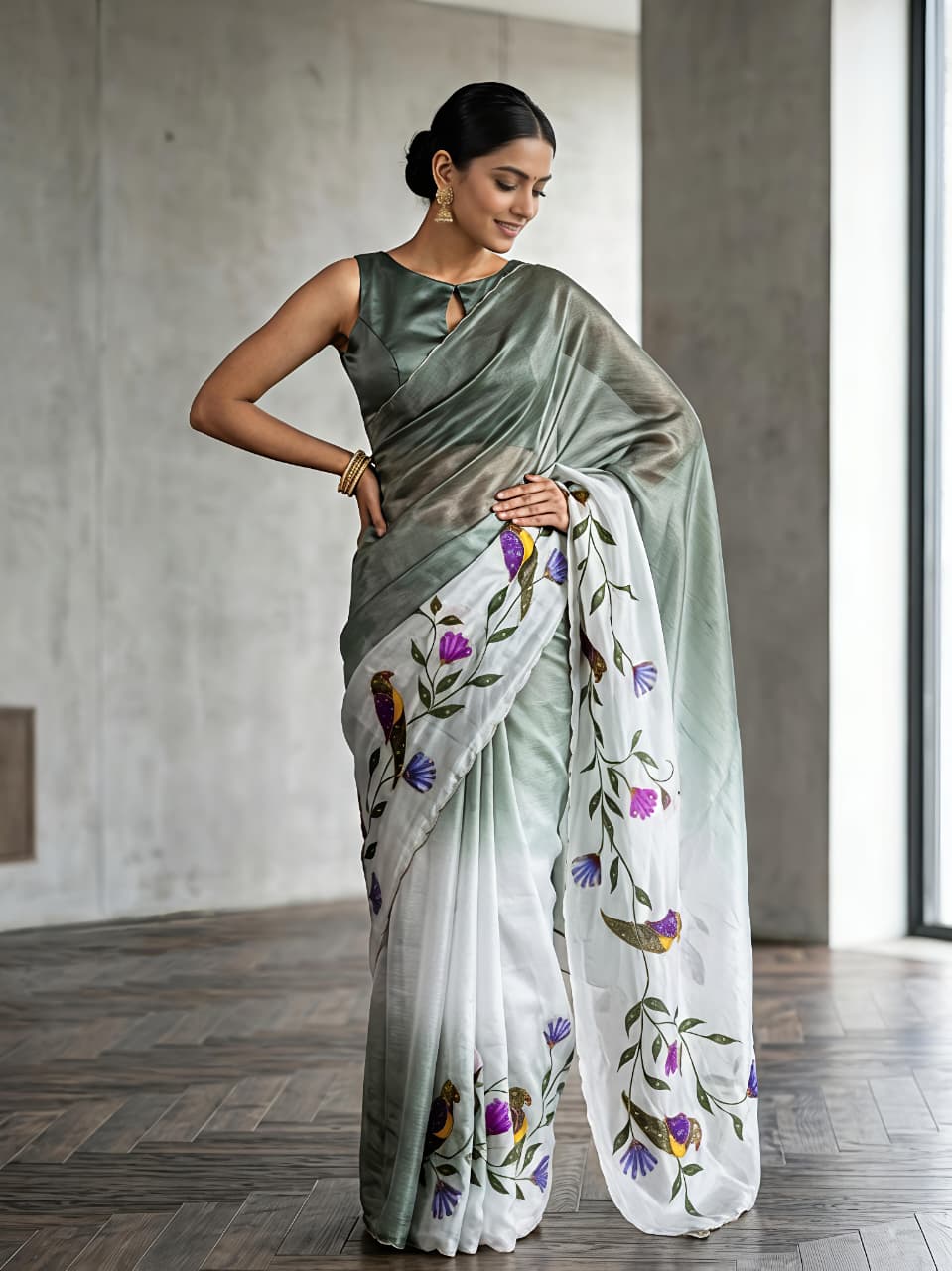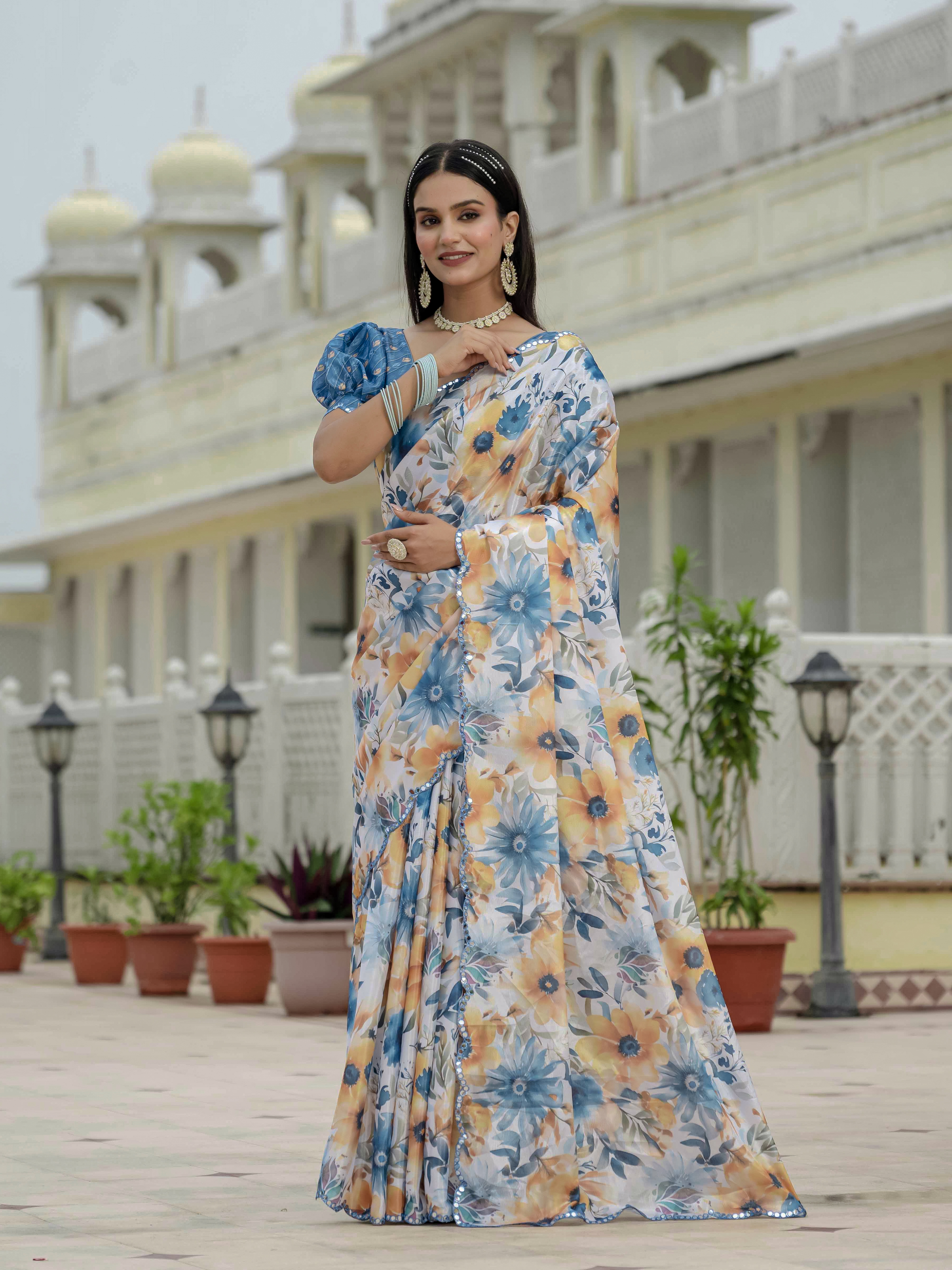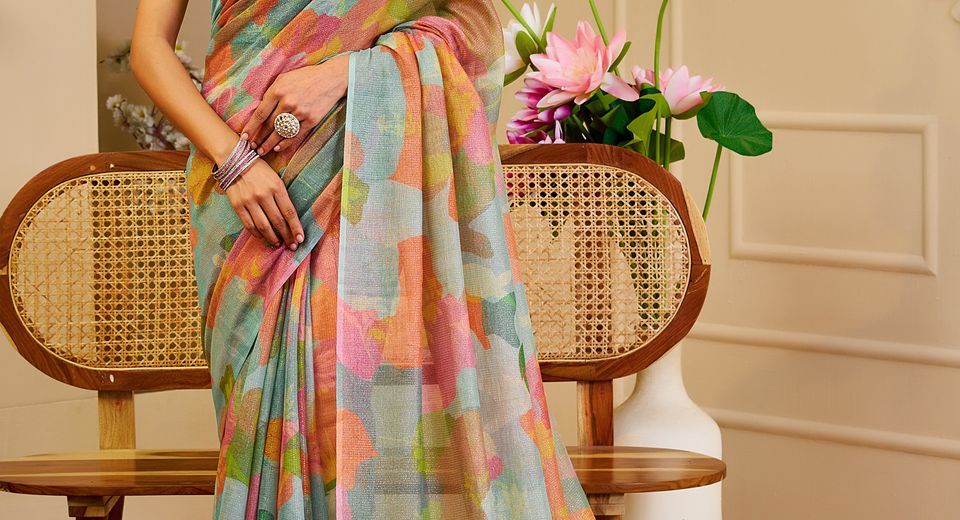
Northeast-Inspired Sarees for Winter Festivals can give a celebration wardrobe a distinctive regional mood without sacrificing warmth or movement. The most successful look combines a substantial saree, a well-fitted blouse, deliberate layering and accessories that respect the visual language of Northeast Indian textiles. Assam's mekhela chador, Muga silk, Eri silk, Pat silk, woven geometric borders and richly coloured shawls offer useful points of reference, while a conventional saree keeps the outfit easy to drape and wear.
Winter festivals create various dressing demands from summer ceremonies. Evening temperatures may fall sharply, outdoor venues can be windy, and heavy embellishment can become upper when combined with coats or shawls. Fabric weight, pallu placement, blouse sleeves and footwear therefore matter as much as colour. The guide below explains how to build a bright festival saree outfit that works for family gatherings, cultural events, seasonal fairs and religious celebrations.
What gives Northeast-Inspired Sarees for Winter Festivals their character?
Northeast-Inspired Sarees for Winter Festivals draw their character from handloom texture, distinctive borders, nature-led colours and thoughtful layering rather than from a single prescribed silhouette. A saree with a visible weave, a restrained zari line, a floral or geometric motif and a shawl-like pallu arrangement can suggest the region while remaining a saree rather than a costume interpretation.
Northeast India contains many textile traditions, so treating the region as one uniform design vocabulary would be inaccurate. Assam is associated with Muga, Eri and Pat silk traditions, while Naga, Manipuri, Mizo, Khasi, Garo and other communities have their own weaving practices, motifs and garments. A respectful Northeast-inspired outfit uses broad visual cues and avoids presenting a mass-produced saree as an authentic traditional garment from a specific community.
Look for three practical design signals. First, texture should be visible at normal viewing distance, because handloom-like slubs, tissue surfaces and woven borders create depth in winter light. Second, colour can combine earthy red, wine, cream, charcoal, pink, mustard or forest green instead of relying only on bright festive contrast. Third, the border or pallu should provide structure, since a defined edge makes layered draping look intentional.
Which fabrics work best for a winter festival saree?
Banarasi soft silk, tissue handloom cotton and heavier silk blends work well for winter festivals because they hold a defined drape and feel more substantial than very light georgette or chiffon. The best choice depends on the temperature, venue and amount of walking planned for the event.

Silk for evening warmth and a formal finish
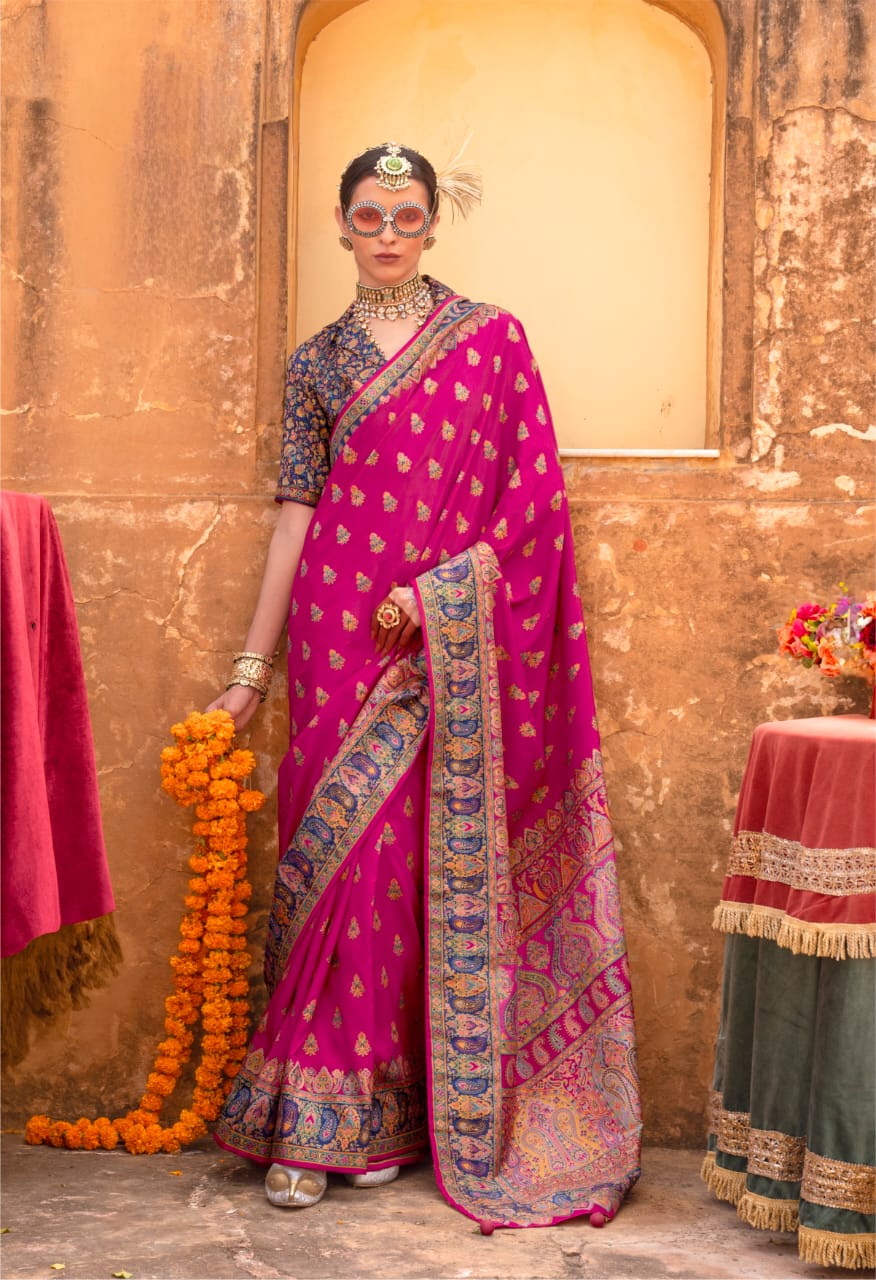
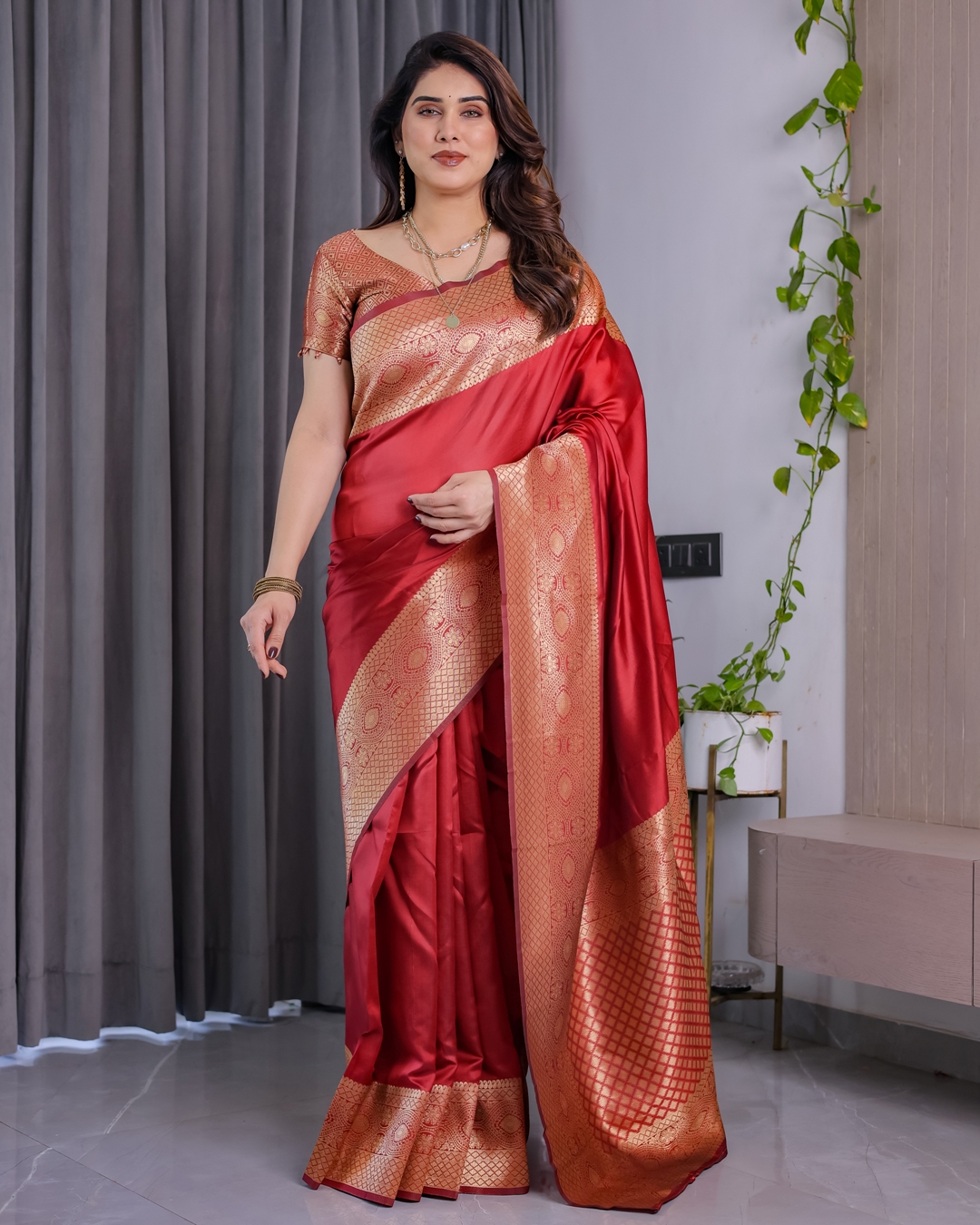
Banarasi silk adds visual weight through its dense weave and zari, making it suitable for an evening puja, wedding-related festival gathering or indoor cultural programme. Red Banarasi Soft Silk Saree with Jacquard Zari Border demonstrates how a strong base colour and a structured border can create a complete look without excessive jewellery. A three-quarter or full-sleeved blouse in raw silk, velvet or lined brocade can make the outfit more comfortable after sunset.
Silk doesn't replace a winter layer, particularly in an open venue. A wool shawl, embroidered wrap or tailored long jacket can provide warmth while leaving the saree border visible. Choose a layer with a smooth inner surface so that zari and pleats don't catch repeatedly during movement.
Handloom cotton and tissue for daytime celebrations
Tissue handloom cotton offers an useful middle ground for a daytime festival because it has breathable cotton content with a slightly luminous surface. Pastel Floral Tissue Handloom Cotton Saree with Zari Weaves suits a softer daytime palette, while Cream Pink Tissue Handloom Cotton Saree with Zari gives a light base for antique-gold jewellery and a contrasting shawl.
Cotton can feel cool in an open winter setting, so wear a camisole or thermal inner layer beneath the blouse when necessary. A lined blouse, closed footwear and a medium-weight stole can make a cotton festival outfit practical without hiding its texture. Cotton also benefits from careful pleating because crisp folds prevent the fabric from looking limp under a shawl.
When a printed or jewel-toned saree works better
Wine Tissue Handloom Cotton Saree with Zari & Floral Prints brings colour and surface interest to a winter festival without the full visual density of brocade. Wine, rust and deep red shades photograph well in low evening light and pair naturally with brass, gold or oxidised silver accessories. Use one dominant motif and keep the blouse relatively quiet when the saree already contains floral printing and zari.
How should you choose colours for a Northeast-inspired festival look?
Choose a grounded base colour and add one clear accent rather than combining several unrelated bright shades. Winter light generally suits wine, red, cream, charcoal, deep pink, muted gold, forest green and terracotta because these colours retain depth outdoors and under warm indoor lighting.

Red works especially well for a ceremonial festival celebration, but the shade changes the mood. Vermilion red feels heritage and energetic, while brick red or wine appears more understated and works with brown shawls and antique jewellery. Cream and pink create a gentler daytime look, particularly when the border includes gold zari rather than high-contrast silver.
Grey can be an useful neutral for a contemporary interpretation. A grey saree with a red, pink or mustard blouse creates contrast without looking overly ornate, and a charcoal shawl can unify the outfit. A selection such as Gray Color Sarees Under 1000 can be useful when testing a winter colour palette before investing in a more elaborate silk saree.
Colour should also relate to the venue. A bright red saree can hold its own in a large outdoor mela, while cream, blush and muted pink may be more comfortable for a small afternoon gathering. If the festival includes photographs at night, select enough contrast between the saree, blouse and outer layer so the outfit doesn't appear as one dark block.
How can you layer a saree without losing its drape?
Layer a winter saree with a fitted base layer, a sleeve-friendly blouse and one controlled outer layer; too many loose pieces create bulk around the waist and disturb the pleats. The aim is to protect the torso and arms while keeping the border, pallu and footwear visible.

Start with the inner layers
Wear a well-fitted petticoat or saree shapewear that doesn't bunch under the pleats. A cotton camisole or thin thermal vest can add warmth beneath the blouse, but the neckline and armholes should remain invisible. A lined blouse in silk, cotton-satin or velvet feels warmer than an unlined sheer blouse and supports heavier jewellery more comfortably.
Blouse sleeves provide one of the simplest ways to adapt a saree for winter. Elbow-length sleeves work for mild weather, while full sleeves in a matte fabric suit colder evenings. A high round neck, boat neck or modest square neck balances a statement shawl and prevents the upper body from looking crowded.
Use the pallu as a functional layer
Pin the pallu securely at the shoulder and bring enough fabric across the chest to block a cross-breeze. A seedha pallu arrangement can display zari and regional-looking borders clearly, while a standard pleated pallu leaves one arm freer for greeting guests or carrying a small bag. Concealed safety pins at the shoulder and waist reduce readjustment during long events.
A shawl should sit over or beside the pallu rather than compete with it. Drape a solid wool or woven shawl over both shoulders when warmth matters most, or let one corner fall behind the shoulder when the pallu contains the main decorative detail. A narrow belt over the shawl can hold the layers in place, but the belt should not compress delicate zari.
Add a jacket for outdoor venues
A cropped jacket ending above the hip preserves the saree's waistline and works well with a broad border. A longline jacket creates a more formal silhouette, especially with Banarasi silk, but it should have a front opening or side slits to allow comfortable walking. Avoid bulky padded jackets with slippery linings because they can pull the pallu backwards.
Which accessories support a Northeast-inspired saree outfit?
Textured metal jewellery, woven bags, practical shoes and one strong hair or ear detail support a Northeast-inspired saree outfit better than a collection of unrelated ornate pieces. Accessories should echo the saree's texture or colour while leaving room for the border and pallu to remain visible.
Antique-gold jhumkas, silver-toned hoops, brass cuffs and beaded necklaces can work with handloom cotton and silk. Choose a necklace according to the blouse neckline: a short collar-length piece suits a high neck, while a longer pendant works with a simple open neckline. If the saree contains prominent zari, one metallic family usually looks more deliberate than mixing bright yellow gold with highly polished silver.
Woven sling bags, embroidered potlis and small structured clutches are useful for winter festivals because they keep essentials close without tangling in the pleats. Select a bag in a solid shade if the saree has floral prints. A patterned or beaded bag works better with a plain saree such as a cream, grey or wine base.
Footwear should be chosen for the surface you'll cross. Closed juttis, low block heels and embellished flats offer more stability than narrow stilettos on grass, stone paths or crowded festival grounds. A heel of 1.5 to 2.5 inches generally gives the saree enough clearance while remaining manageable for several hours of standing.
How do you adapt the saree to different winter festival settings?
Adapt the saree to the event by changing the fabric weight, sleeve length, footwear and outer layer rather than replacing the entire styling idea. A daytime family celebration needs breathability, an evening religious gathering needs warmth and modest security, and a formal reception can accommodate richer silk and stronger jewellery.
For a daytime festival under mild winter sun, choose tissue handloom cotton, a three-quarter-sleeved blouse and a lightweight shawl. Pastel Floral Tissue Handloom Cotton Saree with Zari Weaves can carry a floral, nature-led mood when paired with muted earrings and tan or metallic flats. Keep the pallu lightly pleated so the fabric catches the light without becoming too formal.
For a cold evening celebration, select Banarasi soft silk or another dense silk, add a lined full-sleeved blouse and carry a wool wrap. Red Banarasi Soft Silk Saree with Jacquard Zari Border suits a more ceremonial setting because the jacquard border remains visible even when the pallu is arranged for warmth. A low bun, secure pins and closed footwear reduce maintenance during a long event.
For a relaxed cultural programme, a wine or cream tissue saree with a simple blouse can feel festive without appearing bridal. Wine Tissue Handloom Cotton Saree with Zari & Floral Prints works with a dark brown, muted gold or deep green shawl. Keep the jewellery light if the programme involves sitting on the floor, walking between stalls or travelling by public transport.
For a wedding-adjacent winter celebration, richer silk and more formal accessories are appropriate, but the outfit doesn't need to become heavily embellished. Red Banarasi Silk Sarees for Weddings Under 1100 and Silk Sarees Under 3000 With Discount may help with budget planning when the event requires a festive silk look without the cost of heirloom weaving. Check fabric composition, lining, fall and blouse measurements before relying on a low listed price.
What should you check before buying a winter festival saree?
Check fabric composition, total length, border width, blouse-piece details, transparency, wash instructions and dispatch timing before buying a saree for a fixed festival date. A beautiful colour can't compensate for a short length, an impractical blouse piece or a delivery that arrives after the event.
- Fabric and weight: Confirm whether the saree is pure silk, silk-blend, cotton or tissue handloom cotton. Product weight can indicate structure, but fibre content and weave provide more useful information.
- Length: A saree of about 5.3 to 5.5 metres suits many standard drapes, while a taller wearer or a more generous pallu may need additional length. Confirm the measurement rather than assuming every saree follows one size.
- Blouse piece: Check whether the blouse fabric is attached, separate, plain, printed or sufficient for full sleeves. A six-metre saree may still provide a limited blouse piece.
- Transparency: Hold light-coloured tissue and cotton sarees against a bright background when possible. A lined petticoat can help, but an excessively transparent fabric may remain inconvenient in strong outdoor light.
- Border and zari: Examine whether zari is woven, printed or embroidered and whether the border is soft enough to pleat. Woven zari generally gives a more integrated surface, while delicate decorative work may need gentler handling.
- Timing: Allow at least 10 to 14 days before a major celebration for delivery, blouse stitching, fall and pico work, and a trial drape. Seasonal demand can extend tailoring and shipping time.
Collections such as Party Wear Sarees and Pink Georgette Sarees can help compare the intended mood, but collection labels should not replace product-level checks. A georgette saree may be visually festive yet less suited to a cold outdoor venue than a lined cotton or silk option. Read measurements and care information before comparing price alone.
How should a winter festival saree be cared for after wearing?
Air the saree in shade after wearing, remove surface dust with a soft brush and store the folded fabric in breathable muslin rather than plastic. Care differs by fibre, but direct sunlight, damp storage and repeated sharp folds can damage colour, zari and surface texture.
Dry-clean Banarasi silk when the care label recommends it, and never scrub zari borders at home. Fold silk with acid-free tissue or clean cotton between major folds, then refold it every few months to prevent a permanent crease along the same line. Keep perfumes, hair spray and body oils away from zari because chemical residue can dull metallic surfaces.
Handloom cotton usually tolerates more regular care, but washing instructions still matter because tissue surfaces and woven borders can change with agitation. Wash only when necessary, use a mild detergent if the label permits, avoid wringing and dry the saree away from harsh midday sun. Store a completely dry saree before the next festival to prevent mildew during humid weather.
Northeast-Inspired Sarees for Winter Festivals remain most convincing when the clothing is comfortable enough to be worn naturally. Regional references, warm fabrics, secure draping and considered accessories can create a celebratory look that feels informed rather than imitative. The strongest outfit leaves you free to participate in the festival, not constantly repair the pallu or guard an impractical layer.
Practical Questions About Northeast-Inspired Winter Festival Sarees
What fabrics are warmest for a winter festival saree?
Banarasi soft silk and other dense silk weaves generally feel warmer and hold their shape better than chiffon or very light georgette. Tissue handloom cotton can work for mild daytime weather when paired with a lined blouse, thermal inner layer and shawl.
How can I wear a saree to an outdoor winter festival?
Use a fitted inner layer, a full- or three-quarter-sleeved blouse, secure pallu pins and one smooth wool shawl or tailored jacket. Closed juttis or low block heels provide better stability on grass, stone and crowded outdoor surfaces.
Are Northeast-inspired sarees traditional Assamese sarees?
Not necessarily. Northeast-inspired sarees borrow broad cues such as handloom texture, nature-led colours, woven borders and shawl layering, while an authentic Assamese textile tradition may involve garments such as the mekhela chador and specific Muga, Eri or Pat silk practices.
Can cotton sarees be worn for a winter festival celebration?
Yes, cotton sarees suit daytime winter celebrations in mild weather, especially when the blouse is lined and the outfit includes a warm shawl. Tissue handloom cotton adds more structure and festive light than a very thin everyday cotton saree.
What colours suit Northeast-inspired winter saree styling?
Wine, red, cream, charcoal, deep pink, muted gold, forest green and terracotta create depth in winter light. Pair one grounded base colour with a single accent instead of combining several competing bright shades.
How early should I buy a saree for a winter festival?
Allow at least 10 to 14 days before the event for delivery, fall and pico work, blouse stitching and a trial drape. Order earlier for a major celebration because tailoring and seasonal dispatch times can increase.