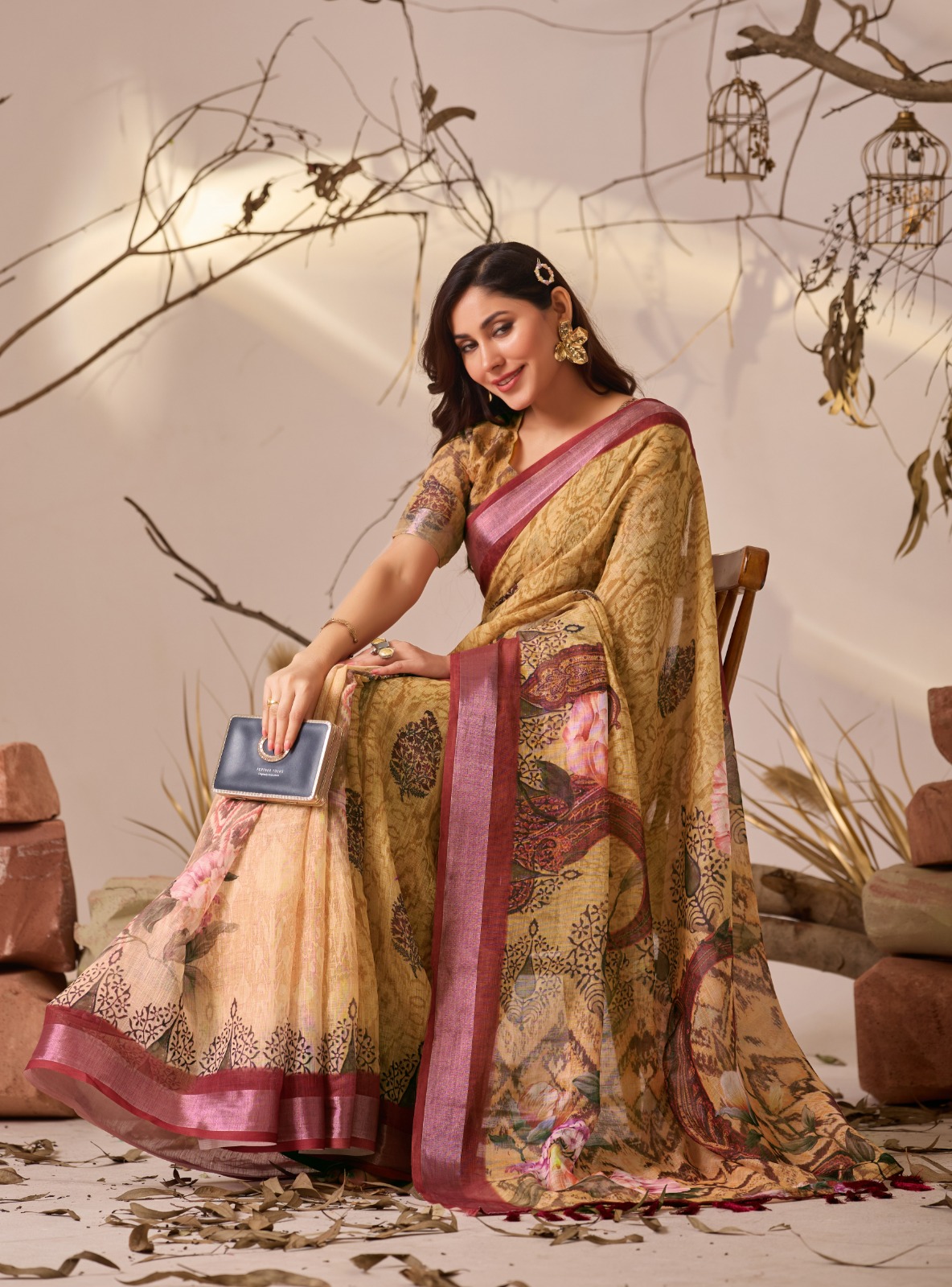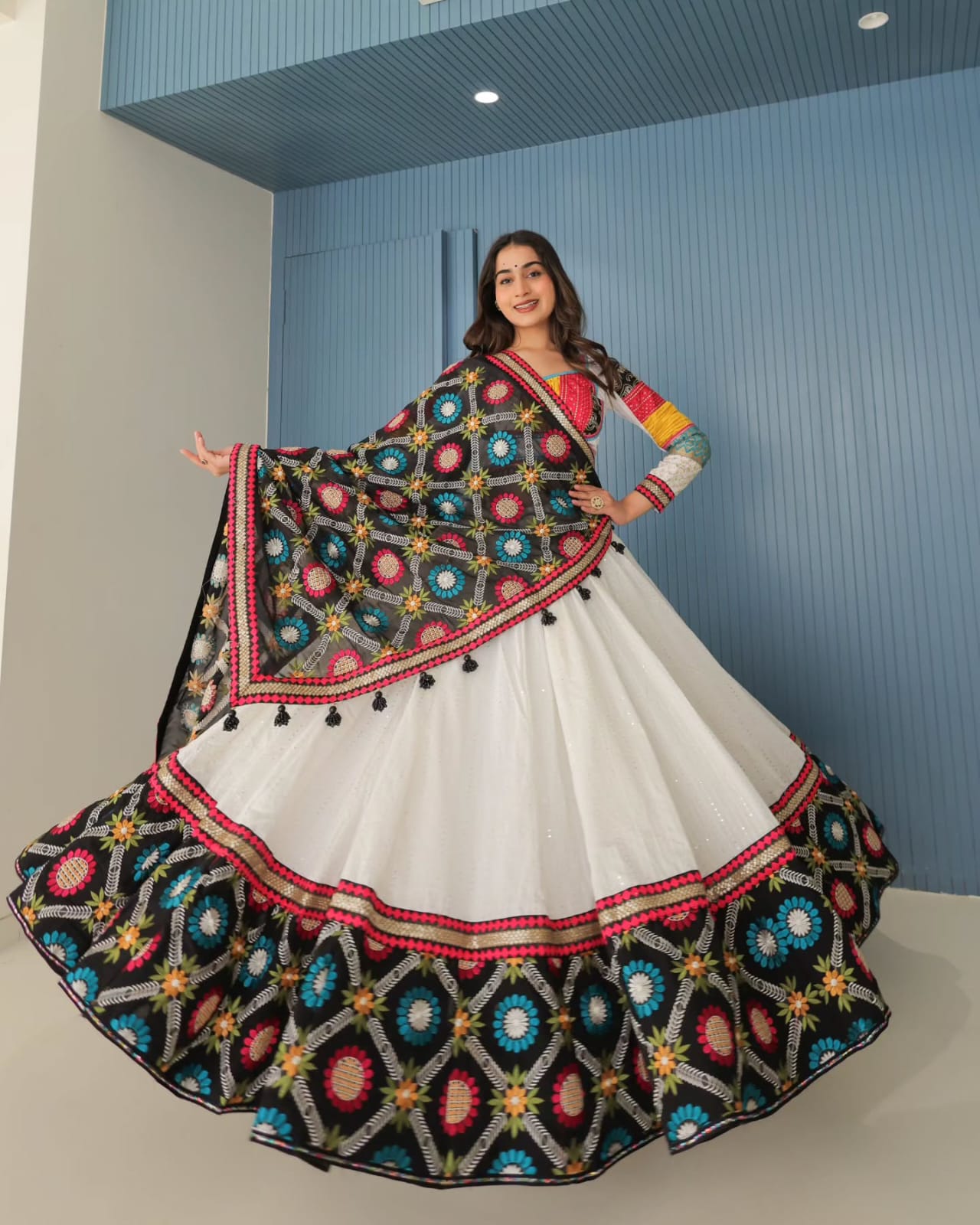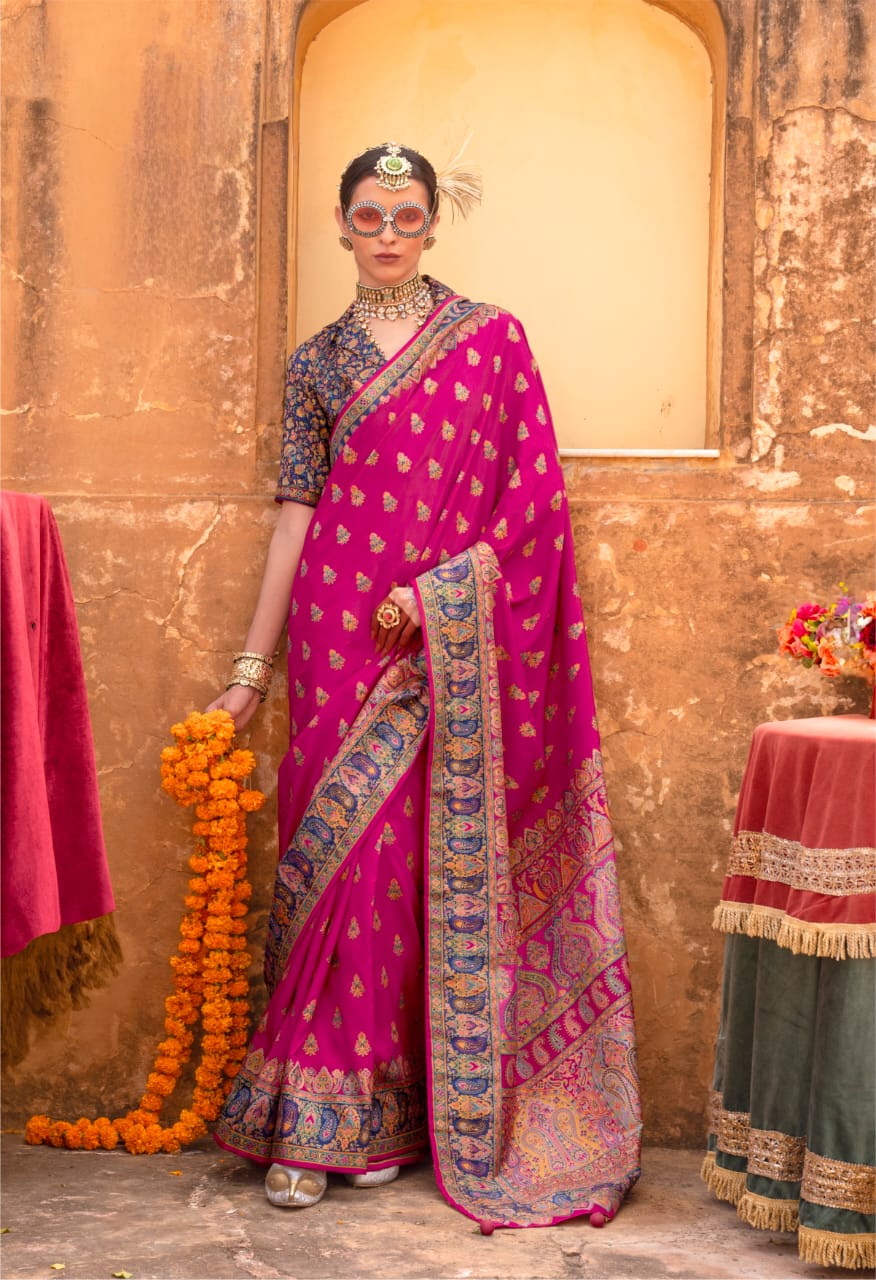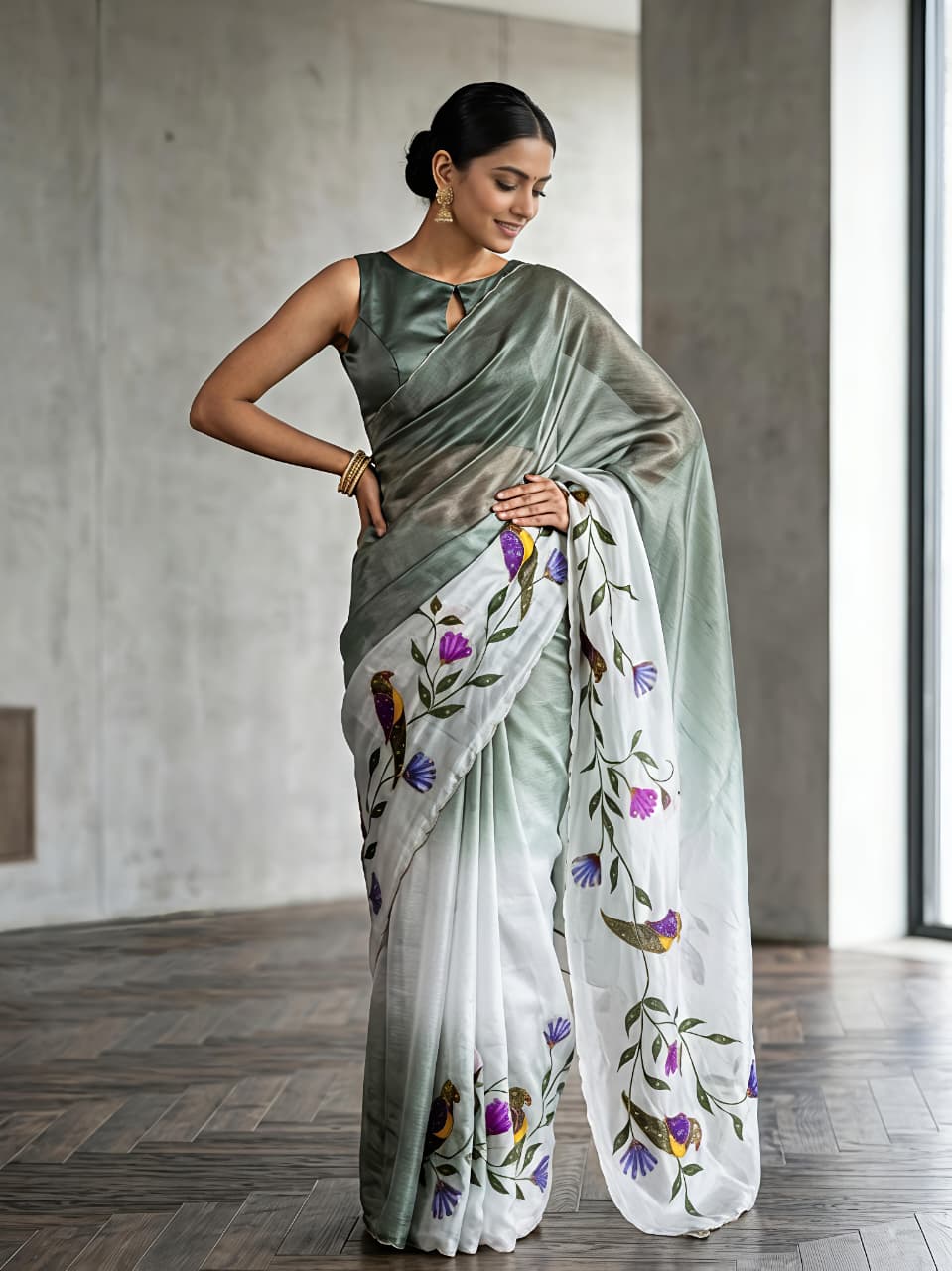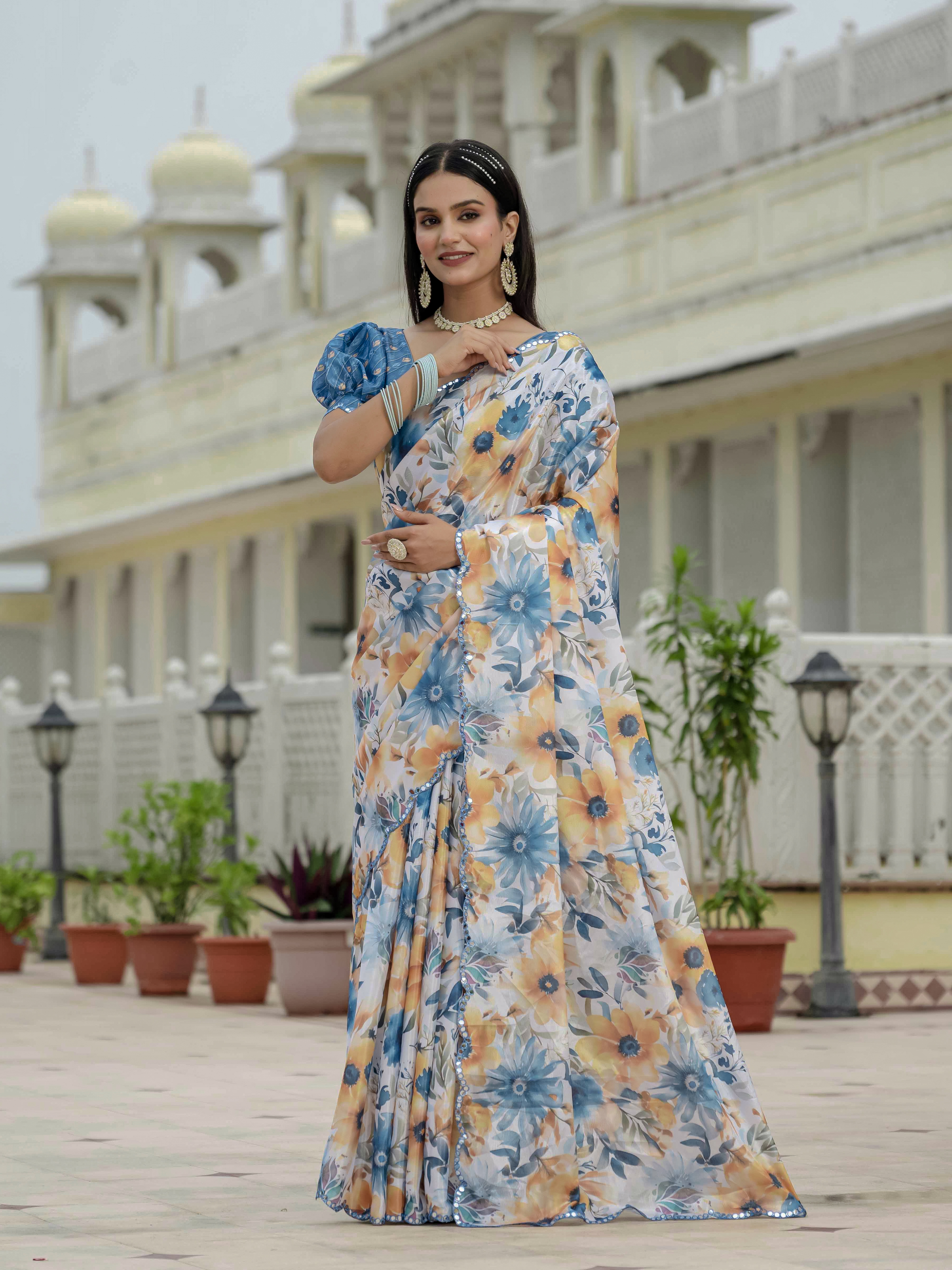
Northeast-Inspired Blouse Designs: Arunachal Textile Motifs & Styling can bring the graphic beauty of Arunachal Pradesh textiles into a contemporary saree wardrobe without turning traditional motifs into costume. Arunachal weaving traditions are remarkably diverse, so a thoughtful blouse borrows visual ideas such as rhythmic stripes, stepped geometry, diamonds and strong colour blocking rather than claiming that one pattern represents the entire state. The result can work with handloom cotton for daytime, silk for a celebration or a restrained designer saree for an evening gathering.
Successful styling depends on proportion. A blouse with a busy geometric surface usually needs a quieter saree, while a plain blouse can give a patterned Arunachal-inspired saree room to lead. Fabric weight, sleeve length, neckline depth and motif placement matter as much as colour. This guide explains those decisions and shows what to check when buying a readymade blouse.
Northeast-Inspired Blouse Designs: Arunachal Textile Motifs & Styling and their visual language
Arunachal textile motifs are distinctive because they use repeated geometric structure, intense colour bands and community-specific weaving vocabularies rather than one universal "tribal" pattern. Textiles across Arunachal Pradesh reflect the traditions of different communities, including Apatani, Adi, Nyishi and Monpa groups, among others. Motifs and colour combinations can therefore change by region, garment and formal purpose.
Many Arunachali textiles rely on visual rhythm: horizontal bands, narrow stripes, stepped forms, diamonds, zigzags and small repeated units. These forms translate well to a blouse because they can be placed on a yoke, sleeve border, back panel or piping without covering the entire garment. A narrow geometric border around a boat neckline can suggest woven structure more subtly than a large printed motif across the bust.
Colour carries much of the visual identity. Black, red, white, yellow, deep blue and earthy neutrals often appear in Northeast textile palettes, although no single palette applies to every Arunachal weaving tradition. A blouse designer can use one dominant shade with two accent colours to create clarity. A black cotton blouse with a red and ivory border, for example, is easier to style than a garment carrying six equally bright colours.
Motif placement should remain intentional. A horizontal band across the upper back creates a strong focal point, while vertical side panels can visually lengthen the torso. Repeated diamonds on sleeves may look balanced with a plain saree but crowded beside a heavily zari-worked drape. These choices separate an informed textile reference from a generic geometric print.
Northeast-Inspired Blouse Designs: Arunachal Textile Motifs & Styling with cultural care
Respectful Arunachal-inspired styling acknowledges the region's living textile traditions, avoids flattening every Northeastern community into one look and treats motifs as considered design references rather than decorative shorthand. Buyers should look for clear descriptions of fabric, technique and inspiration instead of vague labels such as "tribal print."
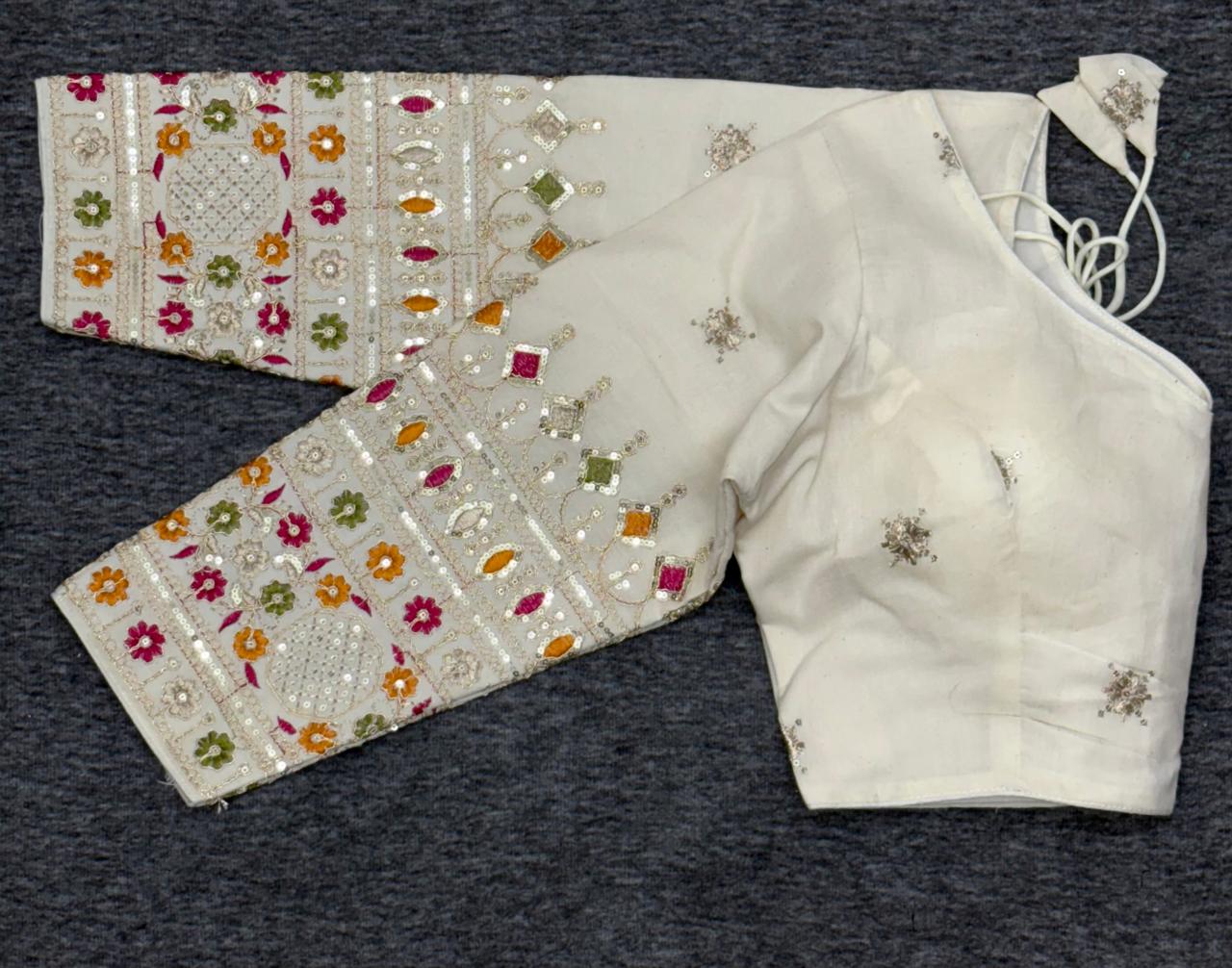
A printed geometric pattern isn't automatically the same as a handwoven textile. A powerloom cotton blouse with a printed border, a jacquard blouse with woven motifs and a handwoven textile blouse have different surfaces, costs and care requirements. Product descriptions should identify whether the pattern is printed, embroidered, woven or appliquéd. That information helps you judge durability and understand what you're buying.
Good styling also avoids mixing too many culturally specific elements in one outfit. A blouse with a pronounced Arunachal-inspired band can be paired with a simple handloom saree, minimal jewellery and a clean drape. Several unrelated "ethnic" accessories can make the outfit look themed rather than thoughtfully assembled.
When a garment directly uses a named community pattern or claims a handloom origin, check whether the seller provides information about the artisan, region, weaving method or material. When those details are unavailable, describing the garment as Arunachal-inspired is more accurate than calling it an authentic classic textile.
Northeast-Inspired Blouse Designs: Arunachal Textile Motifs & Styling by fabric
Cotton works best for a breathable daytime blouse, silk adds evening polish, and stable woven fabrics can provide shape for a readymade design. The right choice depends on the saree's fall, the weather and the amount of surface detail on the blouse.
Cotton for everyday sarees
Cotton supports geometric motifs particularly well because its matte surface keeps stripes, checks and bands legible. Medium-weight cotton works with handloom cotton, linen-cotton and light silk-cotton sarees. In humid weather, look for breathable lining, a smooth armhole finish and enough ease across the bust rather than relying on an excessively tight fit.
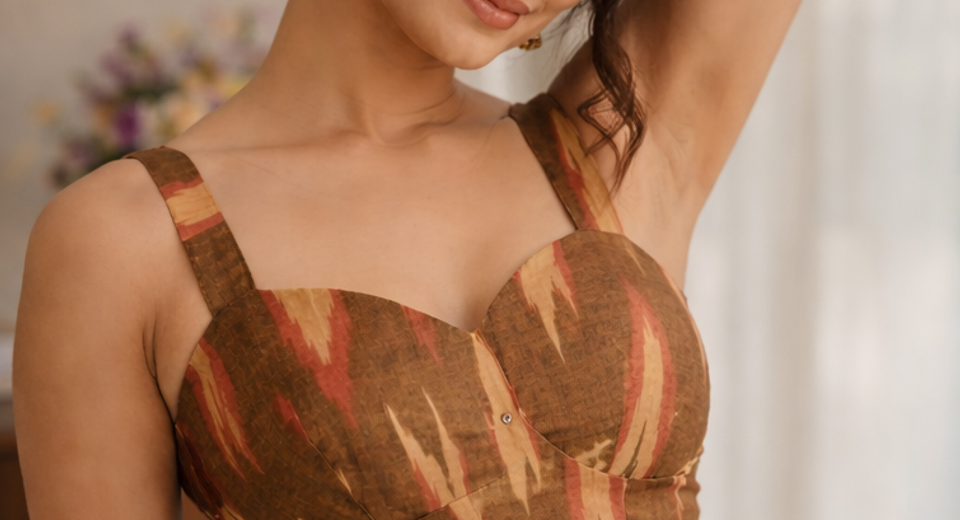
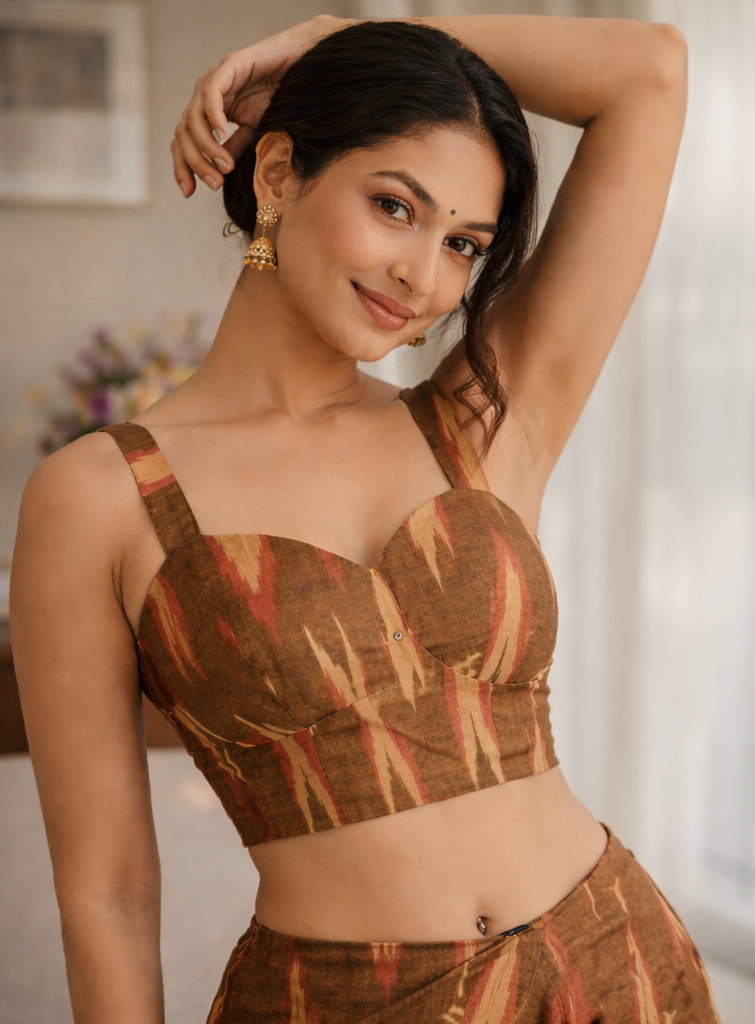
The Brown Ikat Cotton Padded Blouse Sleeveless Stylish shows how a cotton base can carry visual texture without heavy embellishment. Brown gives an earthy foundation, while ikat introduces pattern through resist-dyed yarns rather than flat graphic printing. The sleeveless cut can suit a summer saree, but the armhole should sit securely and the blouse should not pull diagonally across the chest.
Silk for festive dressing
Silk works best when an Arunachal-inspired motif is edited into a border, yoke or panel. Banarasi silk, raw silk and silk blends reflect light differently, so a dense geometric design can become visually heavy when combined with broad zari. A quieter blouse in deep red, charcoal, ivory or mustard can balance a richly woven saree.
Silk changes the perceived scale of a motif. A small pattern may disappear on a lustrous fabric from a distance, while a large stepped diamond can dominate the outfit. Test the blouse beside the saree in daylight and indoor light before finalising jewellery. Zari earrings may compete with a metallic silk blouse but complement a matte cotton design.
Structured fabrics for a readymade fit
A structured cotton blend or stable woven fabric can help a readymade blouse hold a clean neckline and defined shoulder line. Padded styles may reduce the need for an additional inner layer, but padding doesn't replace correct bust and underbust measurements. Check whether the padding is removable, stitched securely and positioned at the centre of the bust.
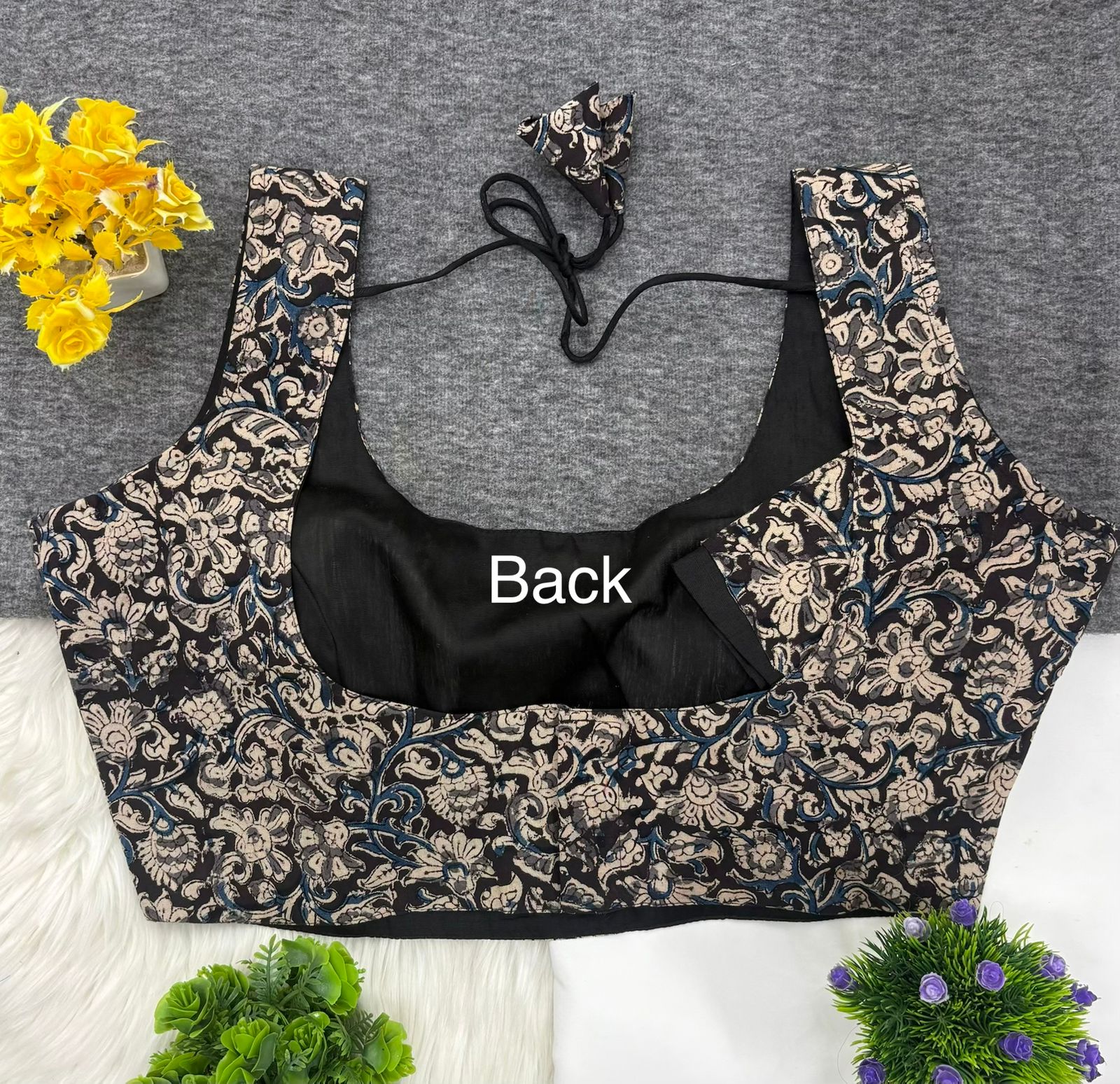
The Pure Kalamkari Cotton Padded Blouse for Women brings an useful contrast to geometric Arunachal references because Kalamkari uses a different visual language based on drawn and painted motifs. Pairing the blouse with a plain saree demonstrates an important styling rule: one strong textile story usually looks more refined than several competing ones.
Northeast-Inspired Blouse Designs: Arunachal Textile Motifs & Styling for readymade fits
A readymade blouse fits correctly when the shoulder seam sits on the shoulder edge, the neckline lies flat, the bust area doesn't gape and the armhole allows movement without cutting into the skin. Measurements should be compared with the seller's garment chart, not with a familiar clothing size alone.
Measure the fullest bust, underbust, shoulder width and preferred blouse length while wearing the innerwear intended for the saree. Record the numbers in centimetres. A difference of 2 to 3 centimetres at the bust can change whether a padded blouse remains comfortable for several hours.
Readymade blouses are useful when a design has a complex neckline or a finished woven border that would be difficult to reproduce quickly with local tailoring. The trade-off is limited alteration. Before buying, inspect the closure, hook placement, lining, seam allowance and whether the sleeves can be adjusted. Side openings and multiple hook positions offer more flexibility than a fixed back zip.
The Classic Festive Wear Blouse for Stylish Saree Look represents a versatile direction for buyers who want a polished blouse without an overtly busy motif. A neutral blouse can anchor a patterned saree, allowing an Arunachal-inspired border or stole to provide the textile reference. A reusable neutral blouse also serves more occasions than a highly specific novelty print.
Northeast-Inspired Blouse Designs: Arunachal Textile Motifs & Styling with sarees
Plain or lightly textured sarees pair best with a motif-rich blouse, while patterned sarees usually need a solid blouse that repeats one colour from the drape. This contrast keeps the outfit readable from a distance and prevents the blouse from competing with the saree's pallu.
A handloom cotton saree in ivory, indigo, rust, black or muted green can support a geometric blouse for office-friendly festive dressing. Keep the jewellery restrained with silver hoops, a narrow cuff or a small textile-inspired pendant. A low bun or a single braid allows the neckline and sleeve border to remain visible.
Banarasi silk requires more editing. If the saree has dense zari, use a matte cotton or raw-silk blouse in a colour lifted from the border. A black blouse with a small red geometric accent can work with a red Banarasi border, but a full multicoloured motif may overwhelm the brocade.
Kanjeevaram sarees have a strong border and substantial body, so a blouse with a narrow geometric sleeve trim usually looks more balanced than one with large all-over graphics. Match one accent colour to the Kanjeevaram border instead of attempting to repeat every shade. Gold jewellery can remain heritage while the blouse introduces a contemporary Northeast-inspired element.
Chanderi sarees are light and translucent, making them suitable for a crisp sleeveless or short-sleeve blouse with controlled pattern placement. Choose lining carefully because an opaque blouse creates a deliberate contrast against the sheer drape. A simple pleat arrangement and a narrow border keep the final outfit airy.
Northeast-Inspired Blouse Designs: Arunachal Textile Motifs & Styling for necklines and sleeves
A boat neckline, modest square neckline or shallow V-neck usually shows geometric borders clearly without competing with an Arunachal-inspired motif. Neckline choice should follow the saree's formality, the wearer's comfort and the placement of the textile detail.
A boat neckline suits a horizontal border because the two lines reinforce each other. A square neckline creates a defined frame for a small central motif or contrasting piping. A shallow V-neck adds length to the upper body but should be reinforced with stable facing so the edge doesn't collapse during wear.
Sleeve length changes the visual weight of the blouse. Sleeveless cuts keep a patterned blouse light and work well with cotton sarees, while elbow-length sleeves provide more space for a woven-looking band. Three-quarter sleeves can suit a formal saree, but a wide horizontal motif near the cuff may make the arms appear visually shorter.
Back details should remain practical. A geometric panel across the upper back can create interest while leaving enough space for hooks or a zip. Avoid placing a large motif exactly where the blouse bends or where a tie will repeatedly rub, because friction can damage printed and woven surfaces.
Northeast-Inspired Blouse Designs: Arunachal Textile Motifs & Styling and care
Care depends on the blouse's fibre and surface treatment, but gentle washing, shade drying and low-heat pressing are safe starting points for most cotton and silk garments. Always follow the garment label when its instructions differ.
Wash cotton blouses separately the first time if the colours are deep red, black, indigo or mustard, because excess dye can transfer to lighter sarees. Use cool water and a mild detergent, avoid prolonged soaking and dry the blouse inside out in shade. Direct, strong sunlight can fade printed motifs and weaken some dyed yarns.
Silk blouses generally benefit from professional dry cleaning, especially when they contain zari, delicate lining or structured padding. Store silk away from dampness, fold along different lines every few months and place a breathable cotton cover around the garment. Avoid plastic storage for long periods because trapped moisture can encourage odour and fibre damage.
Iron geometric borders from the reverse side on a low or medium setting. Place a thin cotton cloth between the iron and the blouse when working near embroidery, zari or raised motifs. Padded blouses should be stored flat or on a broad hanger so the cups and shoulder seams don't become misshapen.
For a cohesive outfit, let one element carry the strongest pattern, repeat one secondary colour in the blouse or jewellery and keep the remaining pieces quiet. That formula gives Northeast-Inspired Blouse Designs visual confidence while preserving the clarity of the saree and the significance of the textile reference.
Questions About Arunachal-Inspired Blouse Styling
What motifs are commonly associated with Arunachal-inspired blouse designs?
Geometric bands, stripes, diamonds, zigzags and stepped forms are common visual references in Arunachal-inspired blouse design. Arunachal Pradesh has many distinct textile traditions, so no single motif represents every community or region.
Which fabric is best for an Arunachal-inspired blouse?
Cotton is practical for warm weather and daytime sarees, while silk and raw silk suit festive dressing. Stable woven cotton blends can be useful for readymade blouses that need a defined neckline and shoulder line.
Can I wear a geometric Arunachal-inspired blouse with a patterned saree?
Yes, but the saree should ideally repeat one colour from the blouse and have a quieter pattern. A heavily zari-worked Banarasi silk or Kanjeevaram saree usually pairs more successfully with a solid blouse or a narrow geometric border.
How do I choose the right readymade blouse size?
Compare your bust, underbust, shoulder and blouse-length measurements with the garment chart in centimetres. Check the neckline, armhole, padding position, closure and alteration allowance before buying, because familiar size labels vary between sellers.
Is a printed motif the same as a handwoven Arunachal textile?
No, a printed motif, woven jacquard and handwoven textile are different techniques with different surfaces, costs and care needs. Product descriptions should identify the technique instead of using a broad label such as "tribal print."
How should I care for a cotton blouse with dark geometric motifs?
Wash the cotton blouse in cool water with mild detergent, avoid long soaking and dry it inside out in shade. Wash deep-coloured garments separately at first to reduce the risk of dye transfer onto a saree or pale lining.