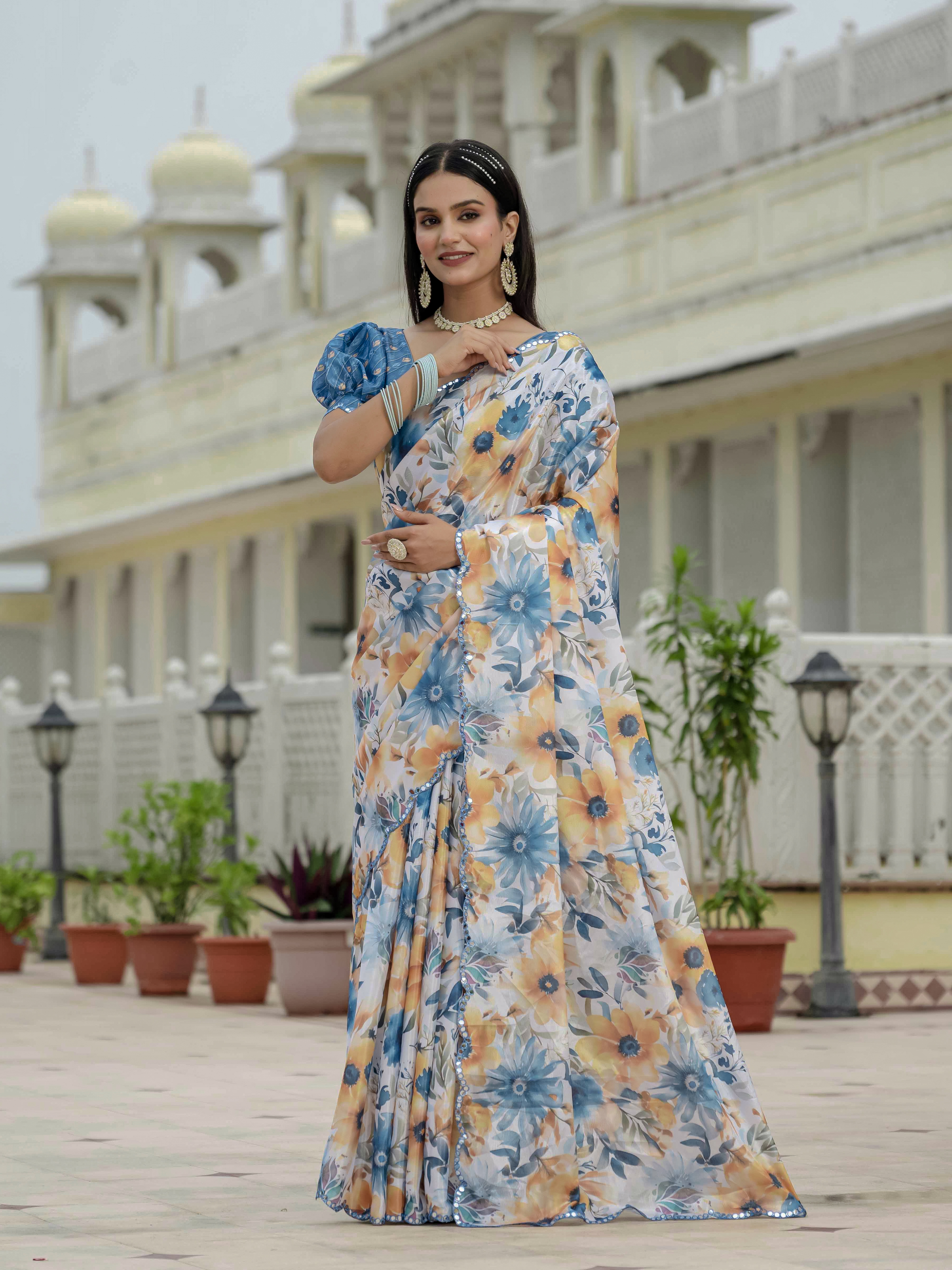
Northeast Blouse Designs Inspired by Meghalaya Textiles can bring quiet texture, natural fibre, and regional storytelling to a saree without turning traditional references into costume. The most useful starting points are Meghalaya's eri silk, handwoven cotton traditions, restrained geometric thinking, and practical garments designed for movement. A blouse inspired by these ideas may use a textured fabric, a clean neckline, a wrapped-looking panel, or an earthy colour palette rather than copying a ceremonial garment literally.
That distinction matters when choosing a blouse online. Meghalaya contains several communities and weaving traditions, so no single "Northeast style" represents the entire state. Khasi, Jaintia, and Garo clothing traditions have different forms, uses, and visual languages. The styling advice below separates documented textile references from modern saree interpretation, helping you build a wearable look while giving credit to the source of inspiration.
What makes Meghalaya textiles useful blouse inspiration?
Meghalaya textiles offer blouse inspiration through natural fibres, tactile surfaces, practical construction, and strong but controlled colour relationships. These qualities translate particularly well to sarees because a blouse can carry texture and structure while the drape remains fluid.
Eri silk, also called endi or erri silk, is closely associated with Assam and the wider Northeast, including Meghalaya's textile landscape. Eri silk has a soft, slightly textured appearance rather than the high-gloss finish of conventional silk satin. The fibre is valued for warmth, breathability, and a matte character that works with handloom sarees, cotton sarees, and subdued festive dressing.
Meghalaya's handwoven traditions also demonstrate why surface texture can be more important than heavy ornament. A small check, stripe, rib, or geometric arrangement creates visual interest at blouse scale. The same principle can be achieved with woven cotton, a subtle ikat, or a matte silk blouse paired with a plain saree.
Time-honoured garments such as the Khasi jainsem, the Jaintia dakmanda, and Garo clothing should not be treated as interchangeable blouse templates. These garments have their own silhouettes, draping systems, and social contexts. A contemporary saree blouse can acknowledge their emphasis on proportion, layering, and textile identity without reproducing a community garment inaccurately.
How can Northeast Blouse Designs Inspired by Meghalaya Textiles work with a saree?
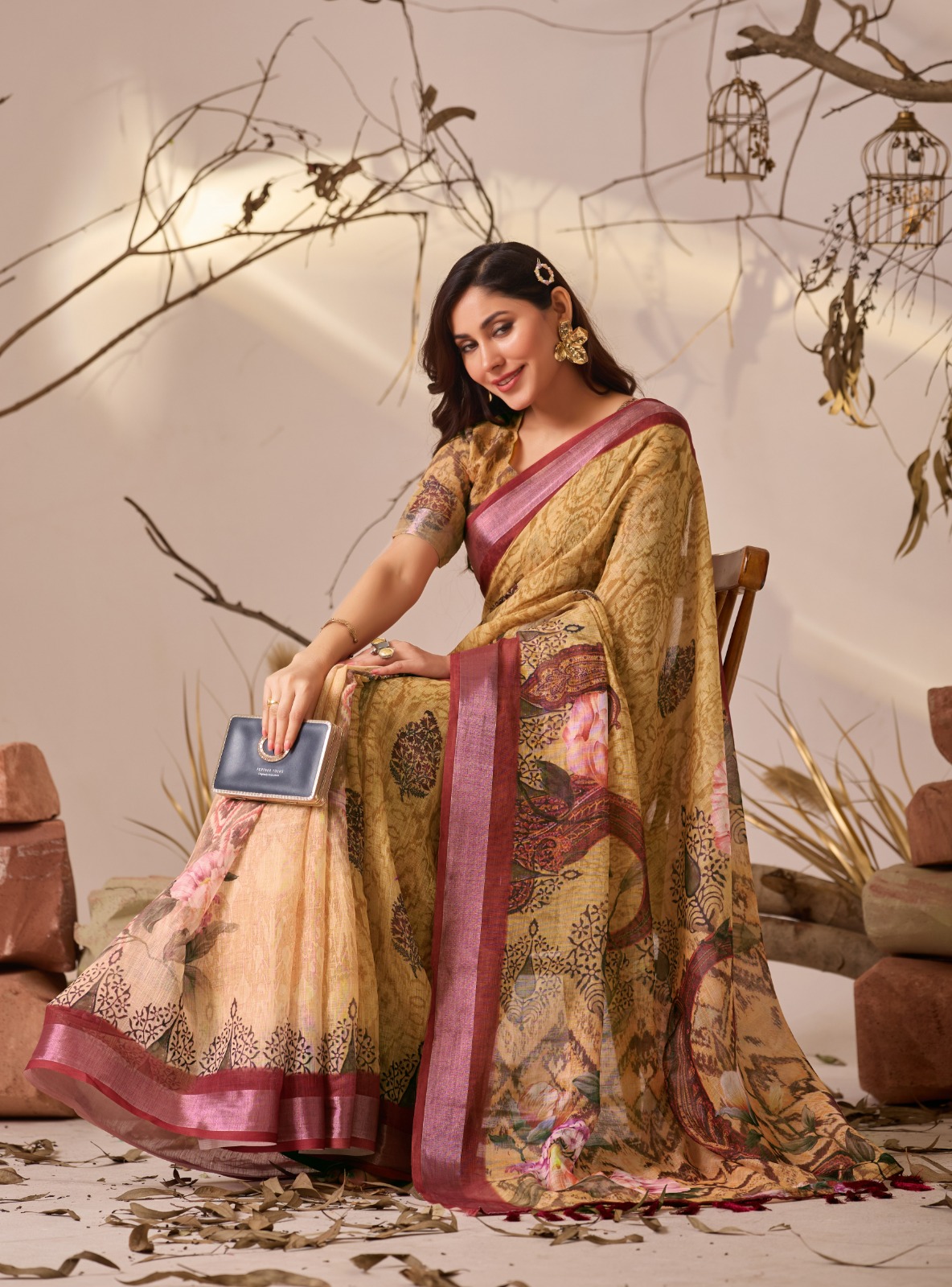
Northeast Blouse Designs Inspired by Meghalaya Textiles work best with sarees that leave enough visual space for the blouse texture to be noticed. Plain handloom cotton, linen, tussar, matte silk, and lightly patterned sarees are especially compatible.
For a quiet daytime look, pair an ivory, clay, rust, or deep brown blouse with a natural cotton saree. A woven stripe or small geometric pattern can echo Meghalaya's textile sensibility without competing with the saree border. A solid blouse can work just as well if its fabric has a visible slub or dry hand.
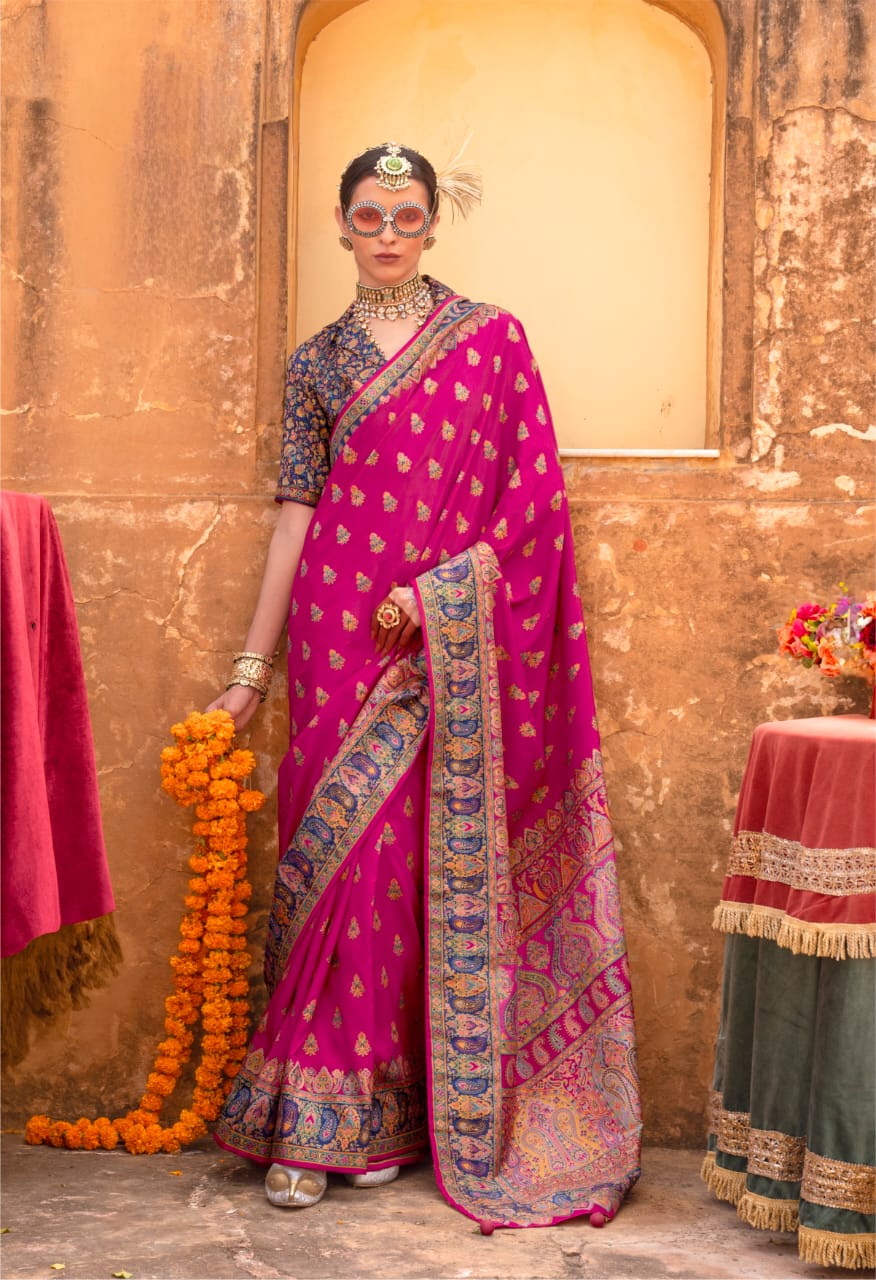
For a festive saree, use a silk blouse with a restrained neckline and one deliberate detail, such as a narrow contrast border, covered buttons, or a textured sleeve. Banarasi silk with dense zari may need a simpler blouse so the metallic work doesn't become visually crowded. A Kanjeevaram saree can take a more structured blouse in a colour drawn from its border, while an eri silk saree can be paired with another matte textile for tonal depth.
Designer saree styling doesn't require a heavily decorated blouse. A considered relationship between the saree's border, the blouse's sleeve length, and the placement of the pallu often creates a more refined result than adding embroidery everywhere. The blouse should support the saree's material and drape rather than erase them.
Which blouse fabrics suit this regional design direction?
Cotton, eri silk, raw silk, tussar, and textured blends are the most practical fabric choices for Meghalaya-inspired blouse styling. Each option creates a different level of formality, breathability, and structure.
Cotton for everyday sarees
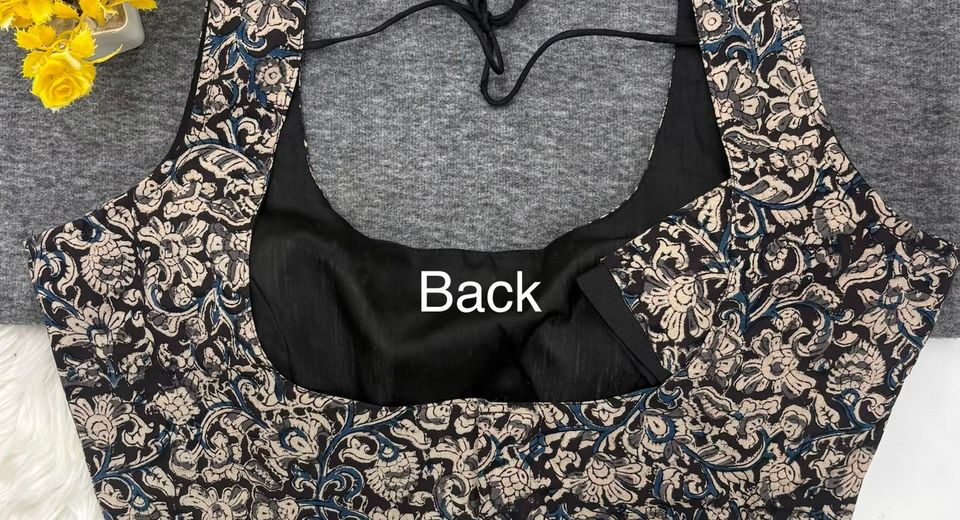
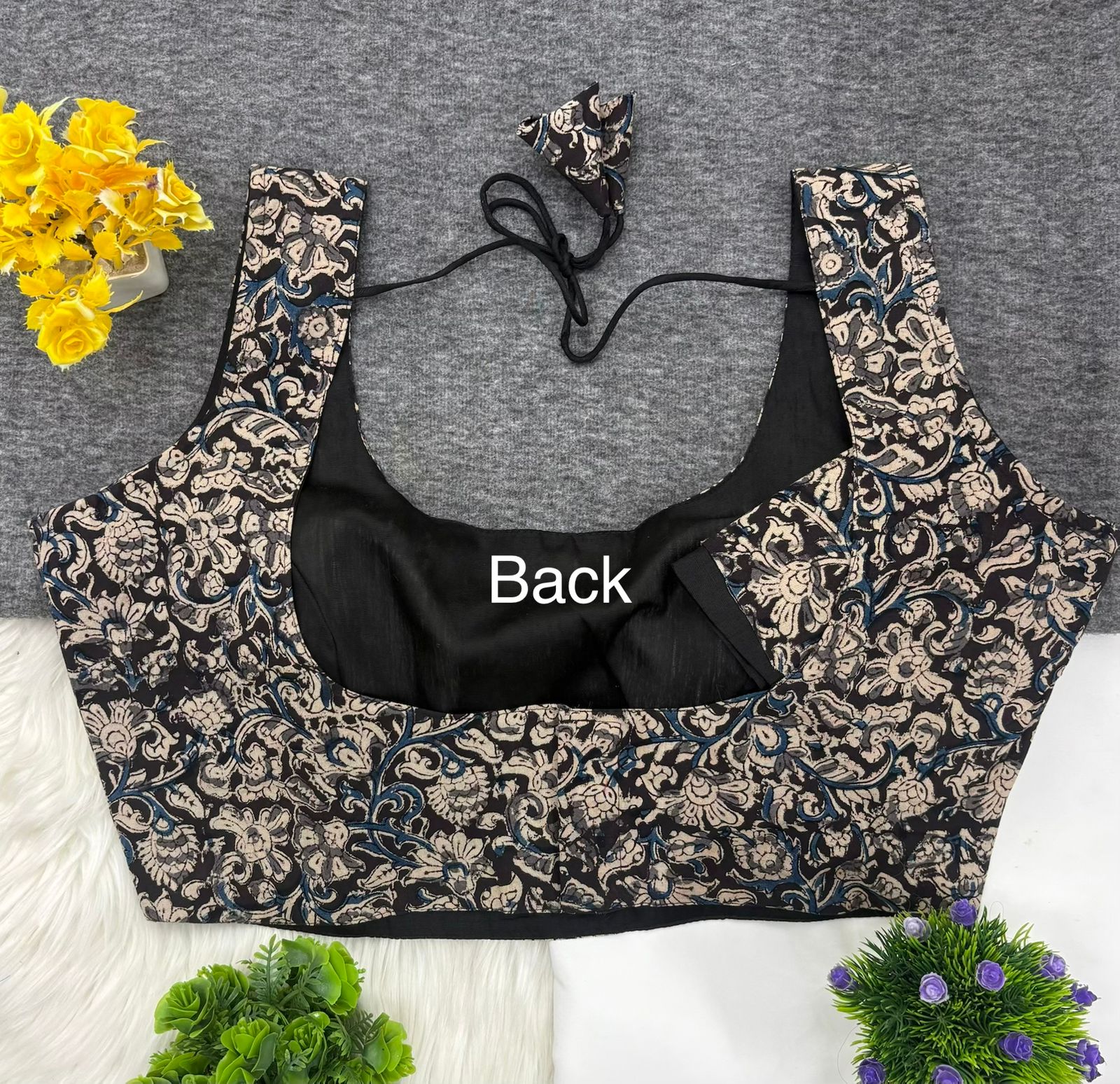
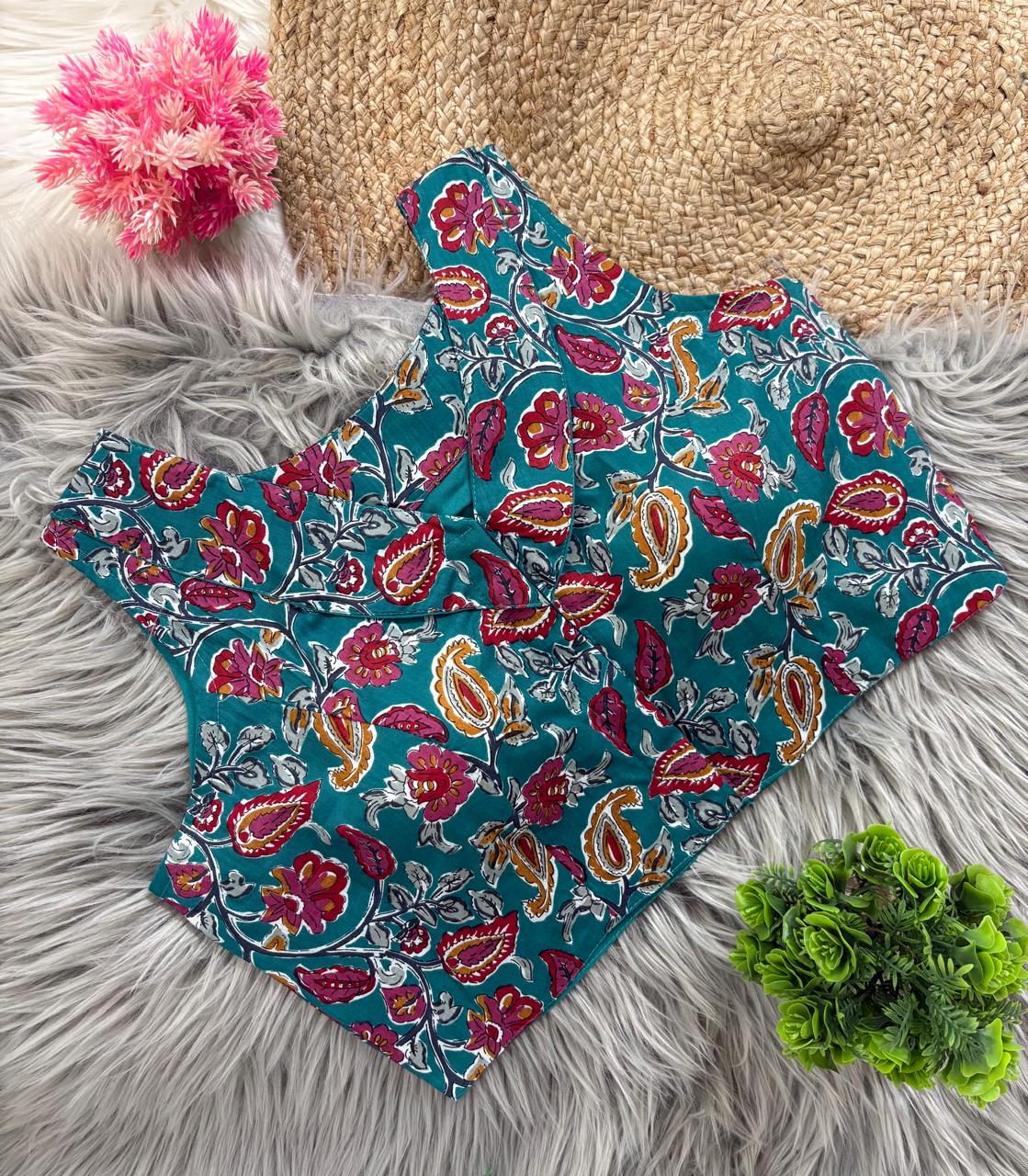
Cotton is the easiest choice for warm weather, frequent wear, and sarees with a handloom appearance. Kalamkari cotton introduces printed storytelling, while ikat cotton introduces rhythm through blurred or resist-dyed geometry. A cotton blouse usually looks most balanced when the saree is also matte or lightly textured.
The Pure Kalamkari Cotton Padded Blouse for Women can illustrate how a printed cotton blouse adds character to a plain saree. Keep the saree border narrow or unembellished when the blouse has a strong print. The Kalamkari Cotton V Neck Collar Blouse for Women offers a different approach: the collar and V neckline give printed cotton a sharper, more tailored finish.
Ikat for pattern without heavy embellishment
Ikat uses a resist-dyeing process in which yarns are dyed before weaving, creating characteristic softened or feathered edges in the pattern. An ikat blouse can provide the geometric energy associated with Northeast textile styling while remaining easy to wear with a solid saree.
The Brown Ikat Cotton Padded Blouse Sleeveless Stylish suits an earthy palette built around rust, cream, ochre, olive, or indigo. The Cream Ikat Cotton Padded Blouse Sleeveless Trendy is more adaptable with pastel sarees and dark borders. Because both colour and pattern already attract attention, jewellery can remain minimal: oxidised silver earrings, a wooden bangle, or one textile-covered accessory is enough.
Silk and silk-like fabrics for ceremony
Silk gives a blouse a more formal finish, but the right silk depends on the saree. Eri silk and tussar have a dry, textured surface; mulberry silk is smoother and more lustrous; raw silk is firmer and can hold architectural shapes. A silk blouse should not automatically be paired with a glossy silk saree, because contrasting surfaces often create greater depth.
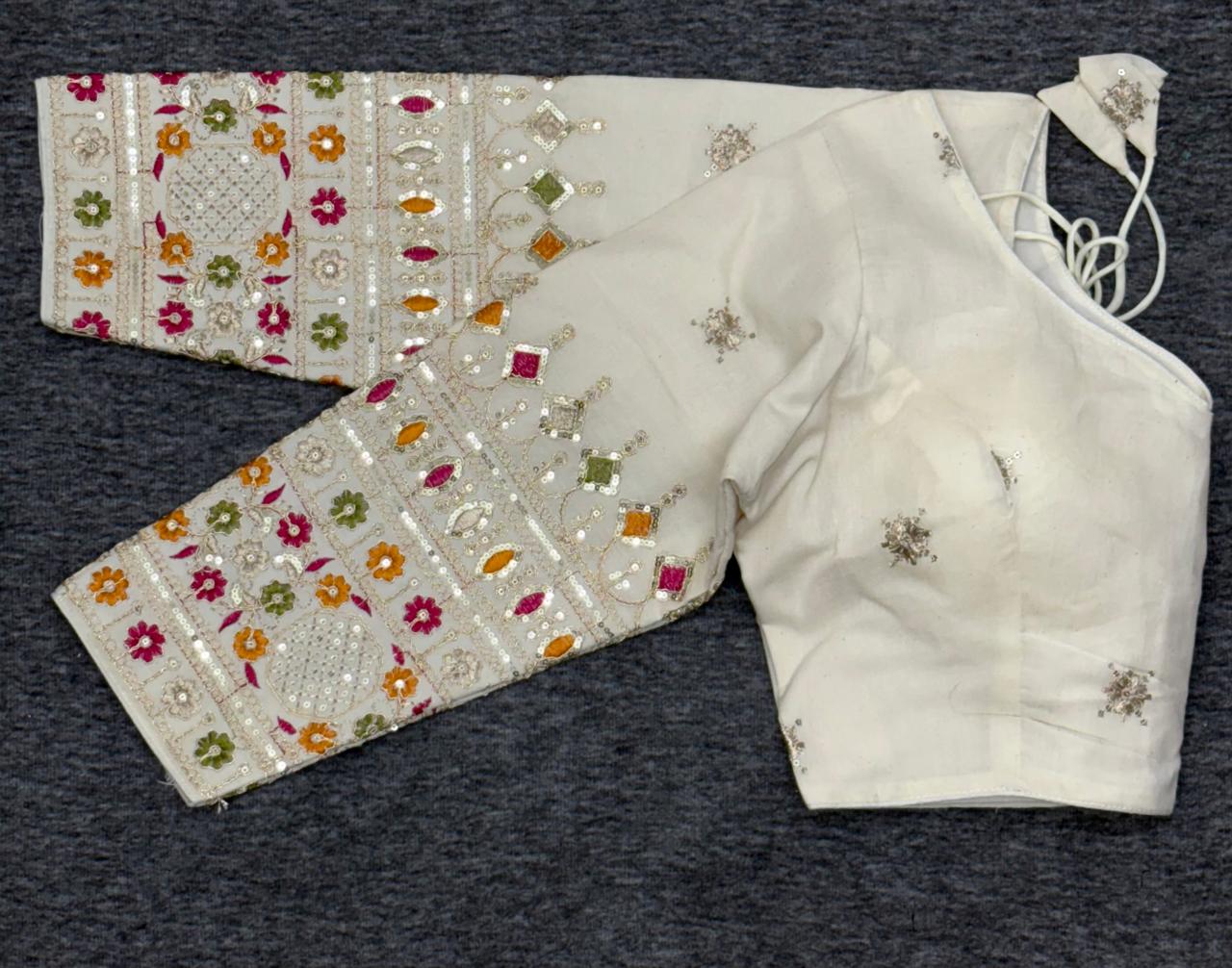
For a Haldi ceremony, a cotton or matte silk blouse in turmeric yellow, marigold, leaf green, or unbleached cream is comfortable and photograph-friendly. For an evening reception, deep wine, charcoal, forest green, or black silk can ground a brighter saree. A designer readymade blouse is useful when the fabric and construction are already finished, but checking measurements remains essential before ordering.
Which necklines and sleeves translate the inspiration well?
Clean V necks, modest round necks, collar necks, and high necks translate Meghalaya-inspired textile ideas most effectively because these shapes keep attention on fabric and proportion. Sleeve length should be chosen according to the saree, weather, and desired formality.
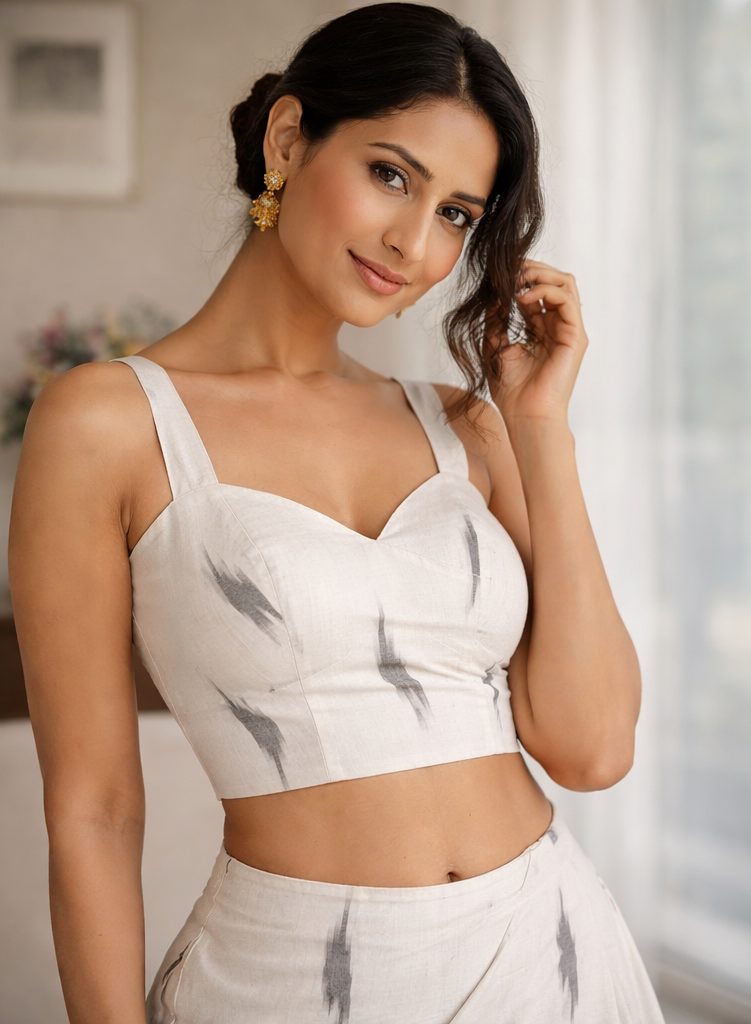
A V neckline lengthens the upper body and works especially well with a saree pallu worn over one shoulder. A collar neckline gives printed cotton a contemporary, almost shirt-like quality that suits office sarees and daytime cultural events. A high neck or shallow round neck creates a compact frame for a statement necklace or a heavily bordered saree.
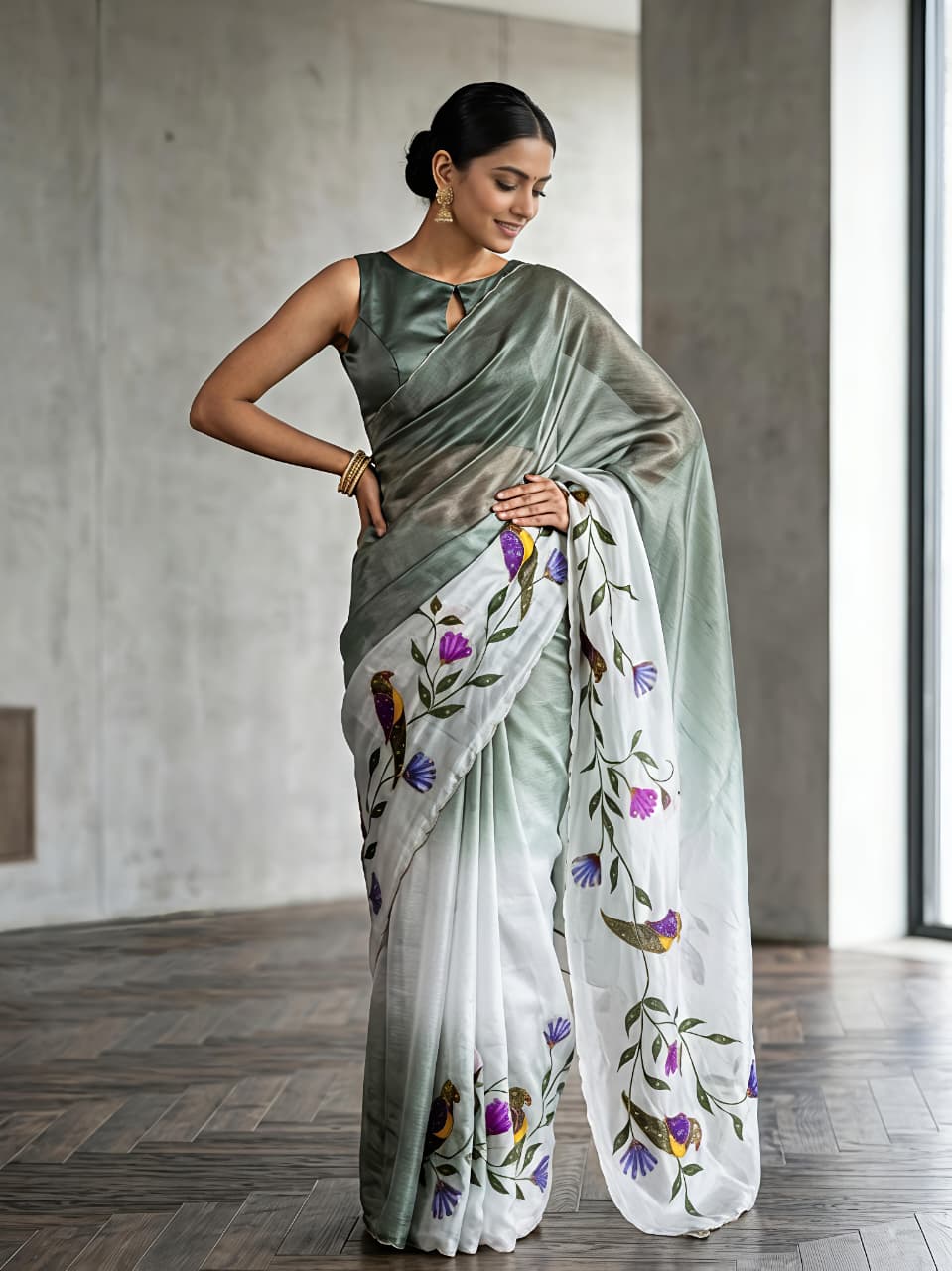
Sleeveless blouses show off a patterned textile clearly and are practical in humid weather, provided the armhole is cut comfortably. Elbow-length sleeves create a more classic proportion and balance a lightweight or transparent saree. Three-quarter sleeves can make a cotton blouse feel more formal, especially when finished with a narrow cuff.
The Classic Festive Wear Blouse for Stylish Saree Look demonstrates why a straightforward festive shape can be more versatile than an elaborate trend. A classic silhouette can work with a printed cotton saree in the afternoon and a silk saree at night if the colour relationship is carefully chosen.
How should colour and pattern be balanced?
Colour balance is easiest when one element carries the pattern and the other carries the accent colour. A patterned blouse with a plain saree is the simplest formula, while a plain blouse in a border colour works better with a patterned or zari-rich saree.
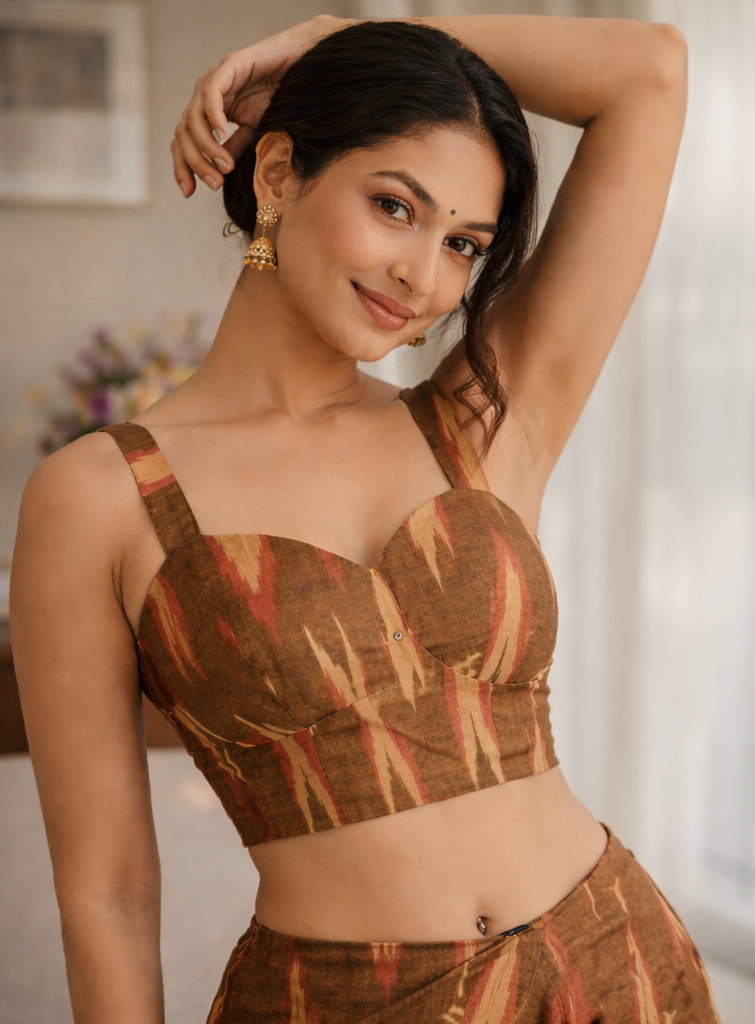
Earth colours connect naturally with many handwoven references: laterite red, turmeric yellow, betel-leaf green, charcoal, undyed cream, indigo, and warm brown. These colours don't need to be worn together. A brown ikat blouse with a cream saree creates a grounded daytime combination, while a rust blouse with a muted teal saree feels more festive without relying on sequins.
When the saree already contains a strong motif, match the blouse to one secondary colour rather than its dominant colour. For example, a cream blouse can calm a saree with a dark red border, while a dark green blouse can draw out a small green detail in a multicoloured weave. Repeating the exact print on both blouse and saree often makes the outfit appear visually flat.
Metal choice should follow the textile's visual temperature. Oxidised silver complements indigo, brown, black, and natural cotton. Gold-toned jewellery suits marigold, red, wine, and silk. Bamboo, wood, and woven fibre accessories can reinforce a handloom-inspired look, but using one or two such elements is more effective than styling every accessory around the same theme.
What should you check when buying a readymade blouse?
A readymade blouse should be checked for bust, underbust, shoulder, armhole, sleeve, and blouse-length measurements rather than selected by size label alone. Size labels vary between sellers, and a padded or structured blouse needs more precise fitting than an unlined cotton top.
Measure the fullest part of the bust while wearing the bra intended for the blouse. Measure the underbust firmly but without pulling the tape tight. Compare both measurements with the seller's chart, then check shoulder width and armhole depth. A correct bust measurement can't compensate for an armhole that cuts into the underarm or a shoulder that collapses outward.
Padding changes how a blouse sits on the body. Padded blouses may provide shape and reduce the need for additional lining, but padding can also make a close fit feel tighter. Check whether the padding is removable, whether the cups are positioned correctly, and whether the neckline remains flat when you move your arms.
Readymade designs are particularly useful when you need a blouse within a short timeframe or want a repeatable wardrobe basic. A readymade blouse isn't automatically less distinctive than a custom blouse; fabric, neckline, sleeve, and colour can still create a considered regional reference. Alteration is worthwhile when the shoulders and bust fit but the length or sleeve needs adjustment.
How can you wear the look respectfully?
Respectful styling names the textile or community reference accurately, avoids calling every Northeast pattern "tribal," and doesn't present an up-to-date blouse as an authentic Khasi, Jaintia, or Garo garment. Regional inspiration becomes more responsible when the description explains what has been borrowed: a matte fibre, a woven geometry, a colour relationship, or a layered proportion.
don't use ceremonial garments as costume accessories or combine sacred, community-specific motifs with claims of authenticity that can't be verified. When buying handwoven material, ask about the fibre, weaving location, maker, and whether the design is contemporary or heritage. Those questions support clearer choices and help distinguish a genuinely regionally made textile from a mass-produced print.
A saree look inspired by Meghalaya can remain contemporary and personal. Pair a textured blouse with a simple drape, keep the jewellery edited, and allow the fabric to be visible. The strongest result communicates appreciation through care and specificity rather than through exaggerated styling.
Practical outfit formulas for different occasions
For work, choose a cotton blouse with a collar or modest V neck, a plain handloom saree, small metal earrings, and a low bun. Brown, cream, charcoal, and indigo make the combination easy to repeat across several sarees.
For a family puja, choose a textured silk or cotton blouse with elbow-length sleeves and a saree in marigold, cream, deep green, or red. A slim zari border is enough to introduce festivity; heavy jewellery is optional rather than necessary.
For a Haldi ceremony, choose a washable cotton blouse, a breathable saree, and secure padding or lining that won't shift during movement. Yellow, rust, leaf green, and natural cream photograph well in daylight and suit the cheerful setting.
For an evening celebration, use a matte silk blouse with a plain or lightly woven saree, then add one polished element such as gold earrings or a narrow metallic belt. The contrast between a dry-textured blouse and a smoother saree makes the outfit look intentional without requiring dense embellishment.
A Meghalaya-inspired blouse succeeds when the textile reference remains visible, the fit supports movement, and the styling acknowledges regional detail without pretending to reproduce a community garment.
Questions About Meghalaya-Inspired Blouse Styling
What fabrics work best for Meghalaya-inspired saree blouses?
Cotton, eri silk, tussar, raw silk, and other textured fabrics work well because they show surface character without needing heavy decoration. Cotton suits everyday sarees, while eri silk and raw silk create a more formal finish.
Can I wear a Meghalaya-inspired blouse with a designer saree?
Yes, a textured or patterned blouse can work with a designer saree when one element is kept visually quiet. Pair a printed or ikat blouse with a plain saree, or match a solid matte silk blouse to one colour in a heavily designed border.
Are readymade blouses suitable for this style?
Readymade blouses are suitable when the bust, underbust, shoulder, armhole, and length measurements match your body. Padded styles need extra attention because the cup position and added structure can change the fit.
Is eri silk the same as regular silk?
No, eri silk generally has a softer, more textured and matte appearance than highly lustrous silk fabrics. Eri silk is associated with Northeast textile traditions and can be used for understated festive blouses.
Which sarees pair well with a cotton ikat blouse?
Plain cotton, linen, tussar, Chanderi, and lightly patterned handloom sarees pair well with a cotton ikat blouse. Choose a saree in a quiet colour so the ikat pattern remains clear.
How can I reference Meghalaya textiles without wearing traditional dress inaccurately?
Use specific, limited references such as a matte fibre, woven geometry, earthy colour palette, or layered proportion rather than copying a ceremonial garment. Name the textile or community accurately and avoid describing a modern blouse as an authentic traditional garment.