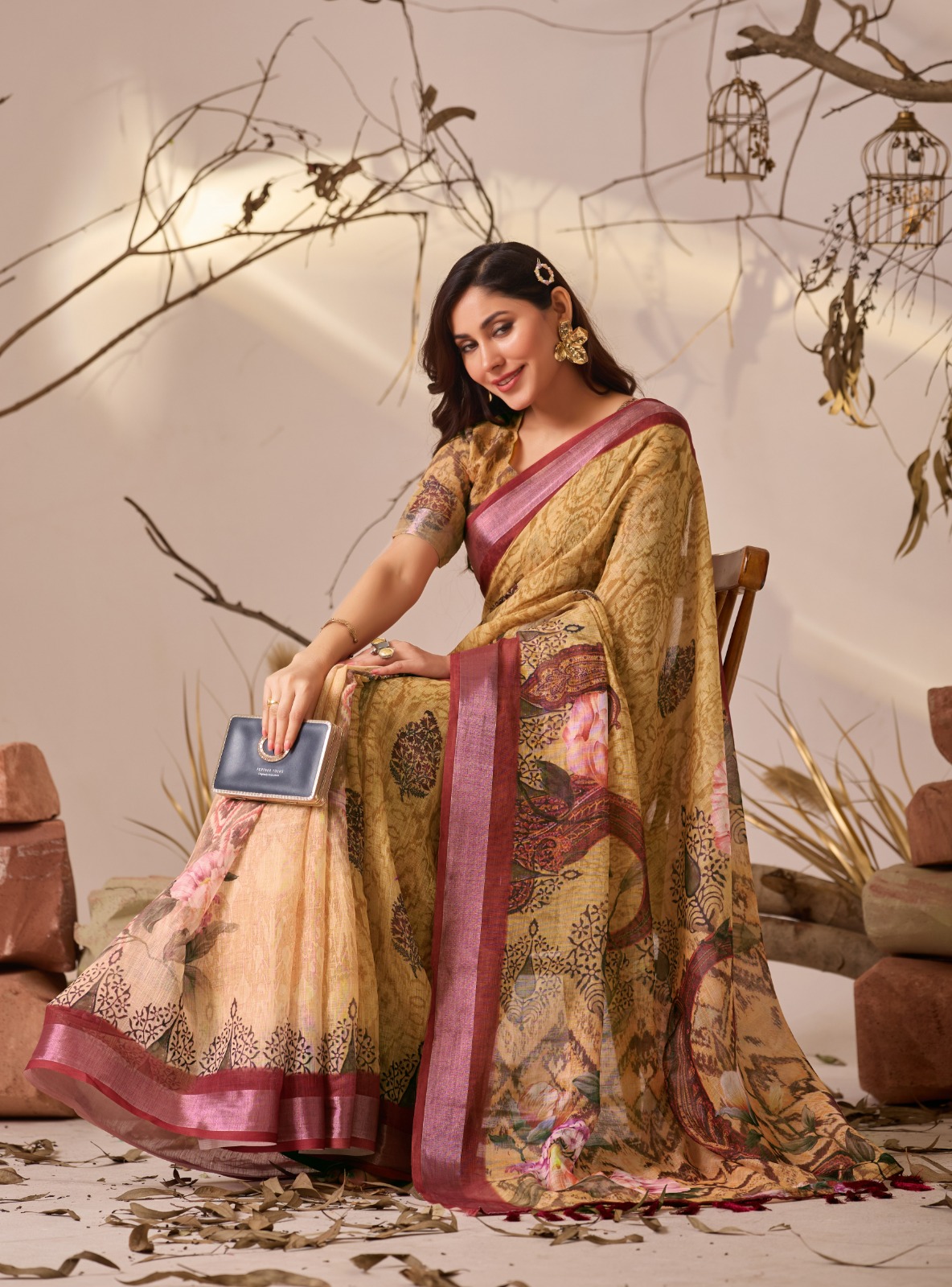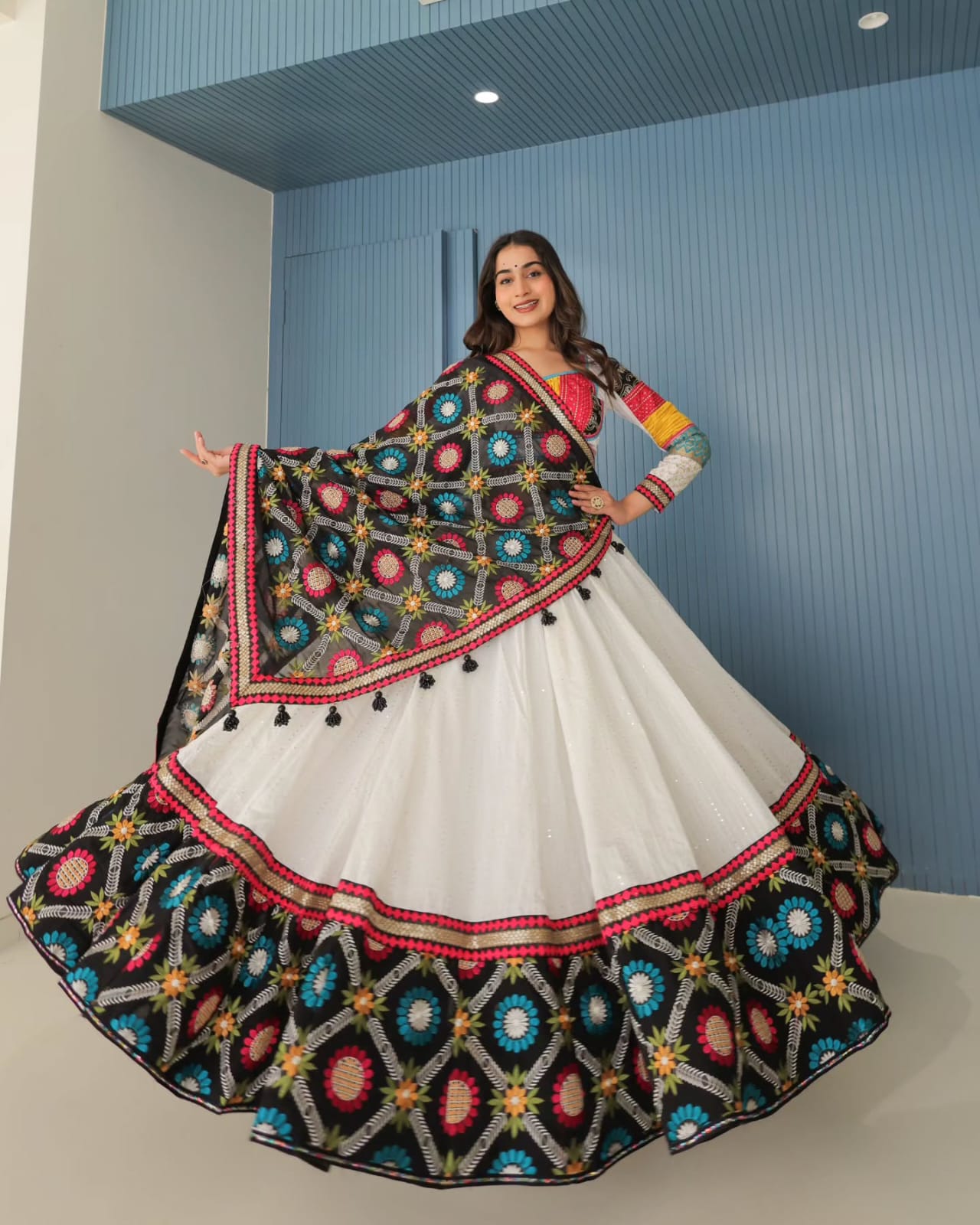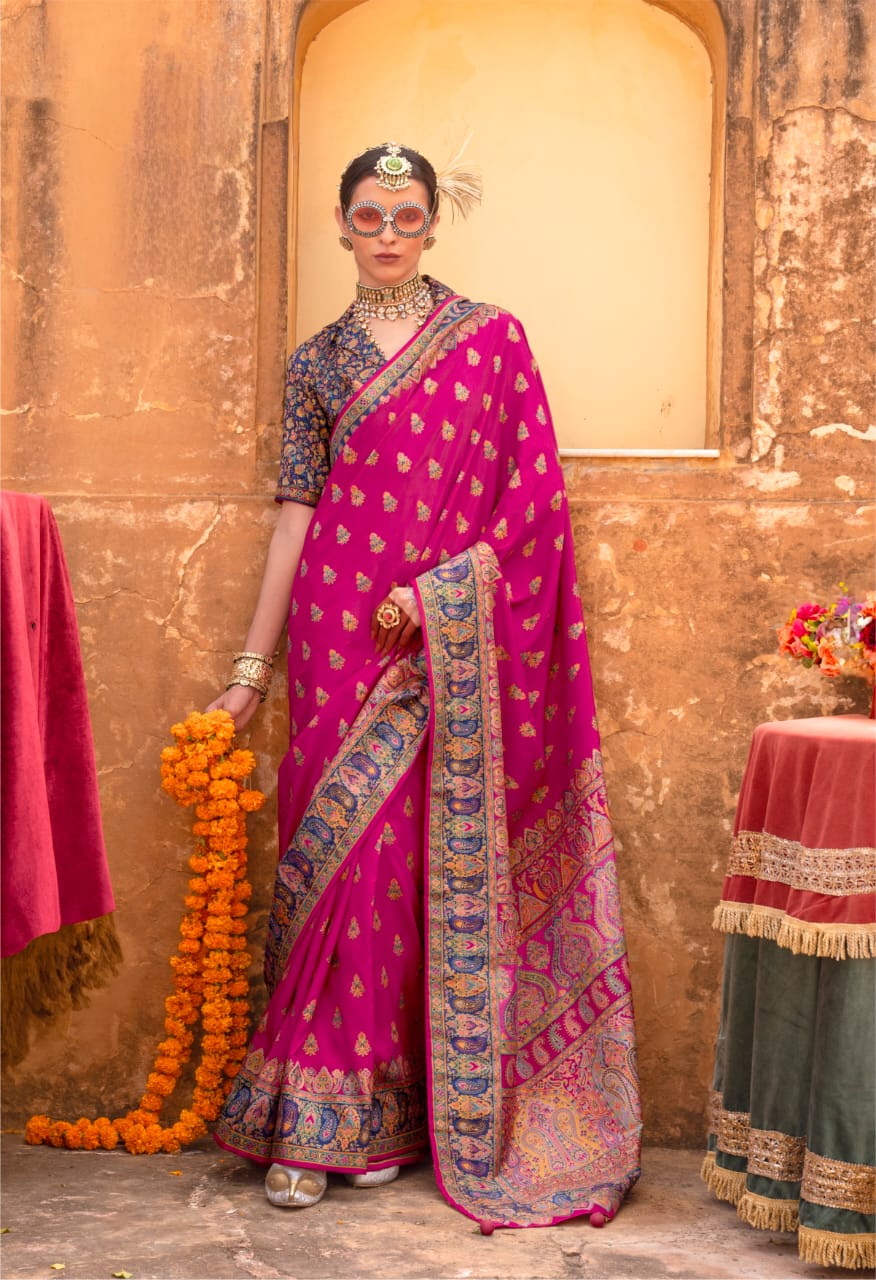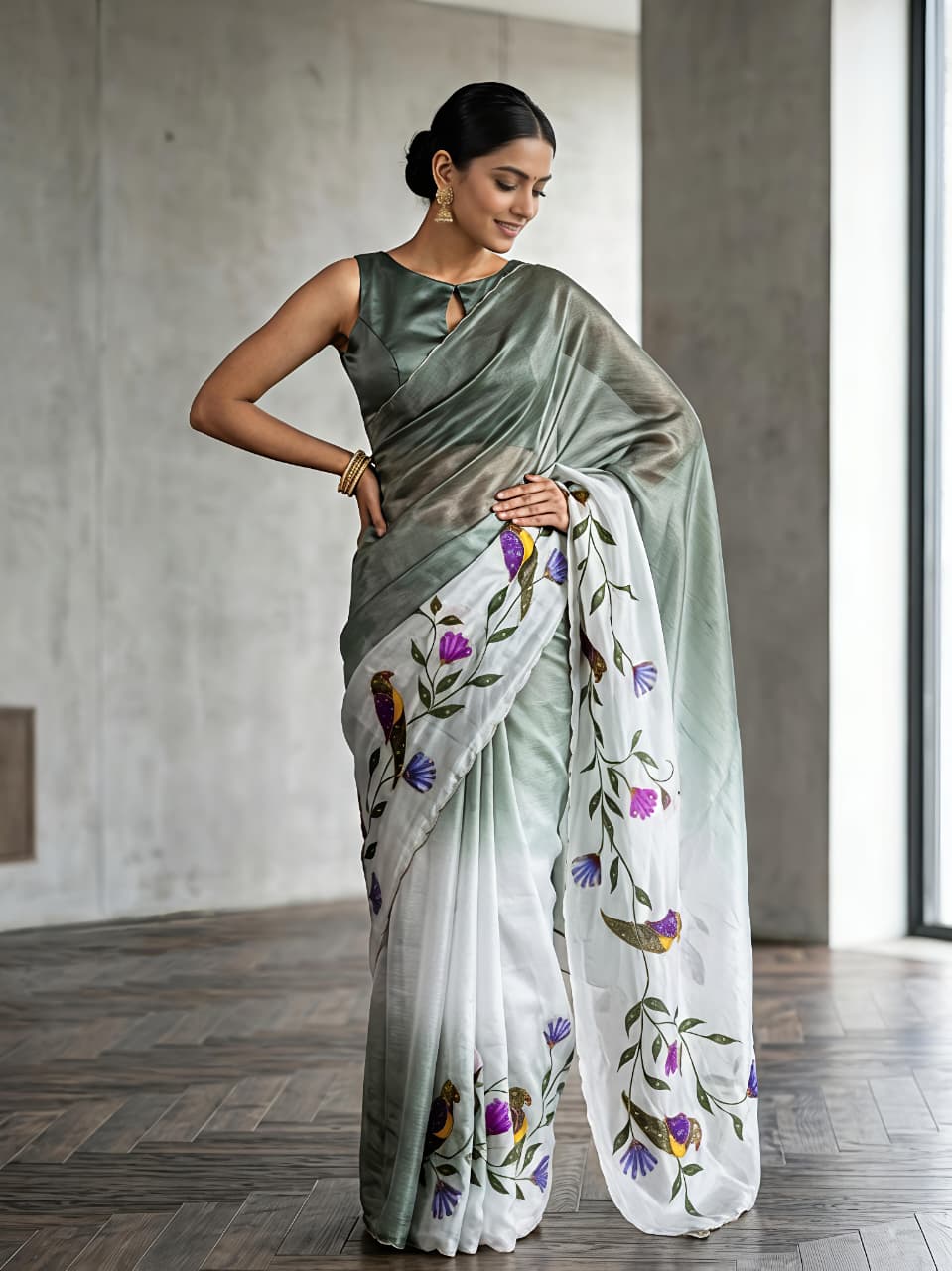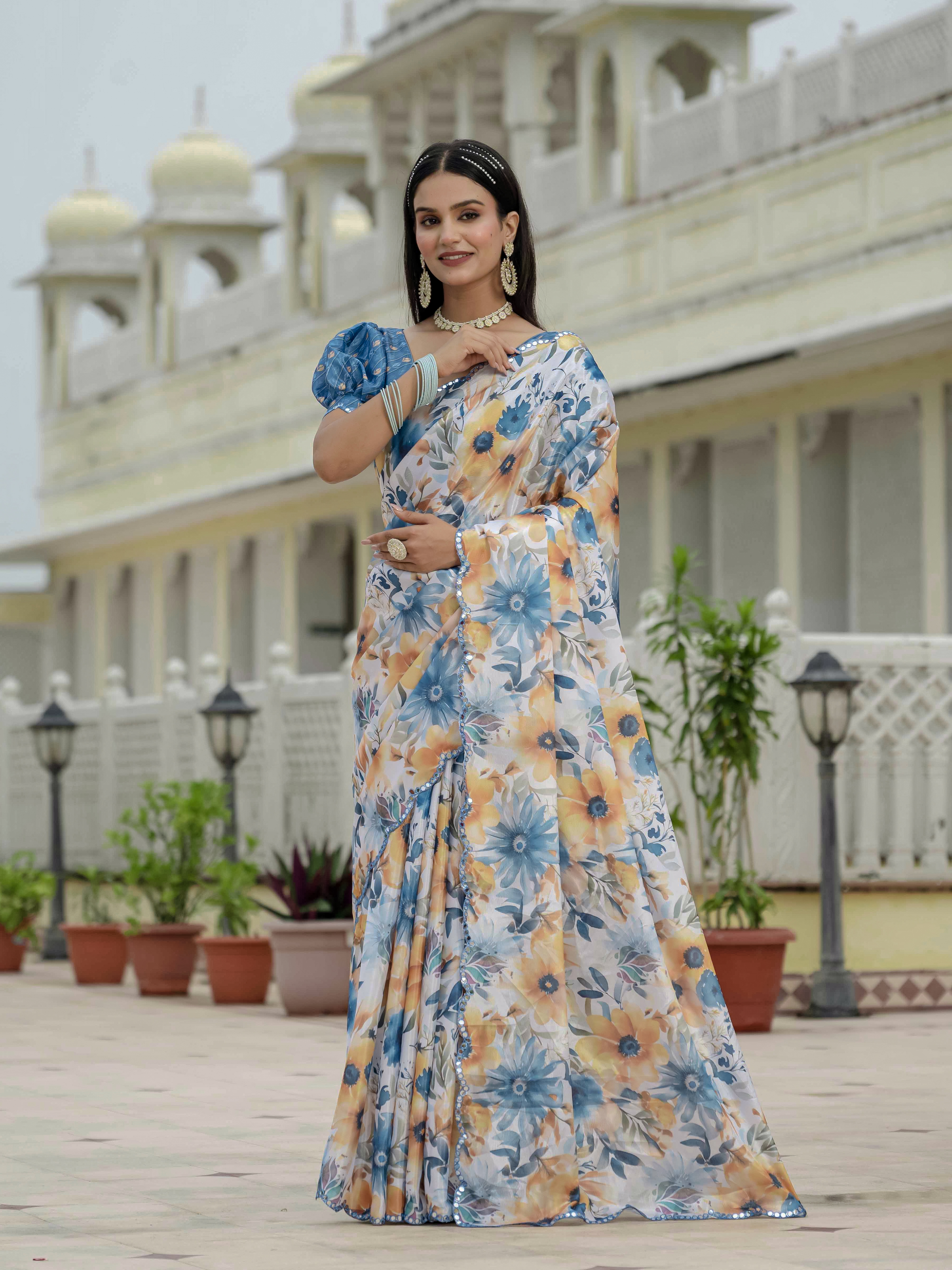
Northeast Blouse Designs Inspired by Manipuri Textiles offer a thoughtful way to bring regional craft references into contemporary saree dressing. The strongest interpretations don't simply copy a motif. They study the visual language of Manipuri textiles-contrasting bands, disciplined geometry, earthy reds, black, white and natural cotton textures-and translate those qualities into neckline, border, colour and fit. The result can work with a handloom cotton saree for daytime or a silk saree for a more formal celebration.
Manipuri textile traditions are closely connected to weaving, community identity and formal clothing. A blouse inspired by Manipur should therefore be approached with context and restraint. A minor woven-looking border, a carefully placed colour block or a geometric neckline detail can acknowledge the source more respectfully than an oversized, loosely copied pattern.
What makes Northeast Blouse Designs Inspired by Manipuri Textiles distinctive?
Northeast Blouse Designs Inspired by Manipuri Textiles are distinctive because they use structure, contrast and surface rhythm instead of relying only on heavy ornamentation. Manipuri dress traditions include garments such as the phanek, a wrapped lower garment, and the inaphi, a shoulder cloth or wrap worn in different cultural contexts. Their visual character often comes through stripes, checks, repeated motifs and clear colour relationships.
These references can be adapted to a saree blouse in several practical ways. A blouse may use two-tone sleeves, a narrow contrast piping, a square or boat neckline that echoes woven geometry, or a border placed along the sleeve hem. A restrained design keeps the saree visible and allows the textile reference to read as considered styling rather than costume.
Manipuri textiles should not be treated as a single uniform style. Weaving practices, motifs and clothing traditions vary across communities in Manipur, and a commercial blouse can't represent every tradition. Using general ideas such as handloom texture and geometric balance is safer than assigning a sacred or community-specific symbol to a fashion garment without understanding its meaning.
How can Manipuri textile ideas shape a modern blouse?
Manipuri textile ideas can shape a current blouse through colour blocking, linear borders, compact geometric prints and a balance of matte and glossy surfaces. The adaptation works best when one or two visual references guide the blouse while the remaining details stay clean.
Use stripes and borders with intention
Horizontal stripes can visually broaden the shoulder area, while vertical piping can create a longer line through the torso. A narrow border at the sleeve edge gives a readymade blouse a woven appearance without making the garment look busy. If the saree already has a strong border, match one colour from the saree rather than adding a third dominant shade.
Choose geometry before embellishment
Checks, stepped lines and repeated diamonds can suggest the discipline of a loom-woven textile. Printed cotton, woven cotton and matte silk are more convincing for this look than dense sequins because the inspiration depends on rhythm and texture. A small geometric print also gives more repeat wear than a highly occasion-specific embroidered blouse.
Let the neckline carry the reference
A square neckline, shallow boat neckline or modest V-neck can frame a striped saree border in a graphic way. A high neckline suits formal silk sarees, while a V-neck gives a lighter appearance to cotton drapes. The neckline should also suit the saree's pallu: a heavily patterned pallu usually needs a simpler blouse front.
Which fabrics work best for this blouse style?
Cotton works best for a daytime Manipuri-inspired blouse because cotton supports matte texture, crisp borders and breathable construction. Cotton also pairs naturally with handloom sarees, linen-cotton sarees and printed drapes used for office gatherings, cultural events or summer celebrations.
Silk works best when a formal saree needs more depth and polish. Banarasi silk, raw silk and lightweight silk can carry a structured blouse, although a fully glossy blouse may overpower a textile-inspired look. A matte silk blouse with a contrasting woven-looking trim often creates a better balance than matching high shine from shoulder to hem.
Chanderi can be useful for a lighter festive interpretation because its translucency and subtle sheen keep the blouse delicate. Kanjeevaram sarees require special attention: a blouse with a strong geometric or contrasting border can look effective, but the zari width and blouse colour should be coordinated so the blouse doesn't compete with the silk border.
A cotton blouse can also be practical for a designer saree because it introduces contrast. For example, a muted cotton blouse can calm a bright silk saree, while a deep maroon or black blouse can give a pale saree a stronger graphic outline. Fabric weight matters: a very light saree may not sit smoothly over a stiff, heavily padded blouse.
How should you choose a readymade blouse for a textile-inspired look?
A readymade blouse should be chosen by shoulder fit, bust ease, armhole comfort and neckline placement before colour or motif. A blouse that looks perfect on a hanger can pull across the bust or restrict the arms when the saree is pinned, so movement is an essential part of the fitting test.
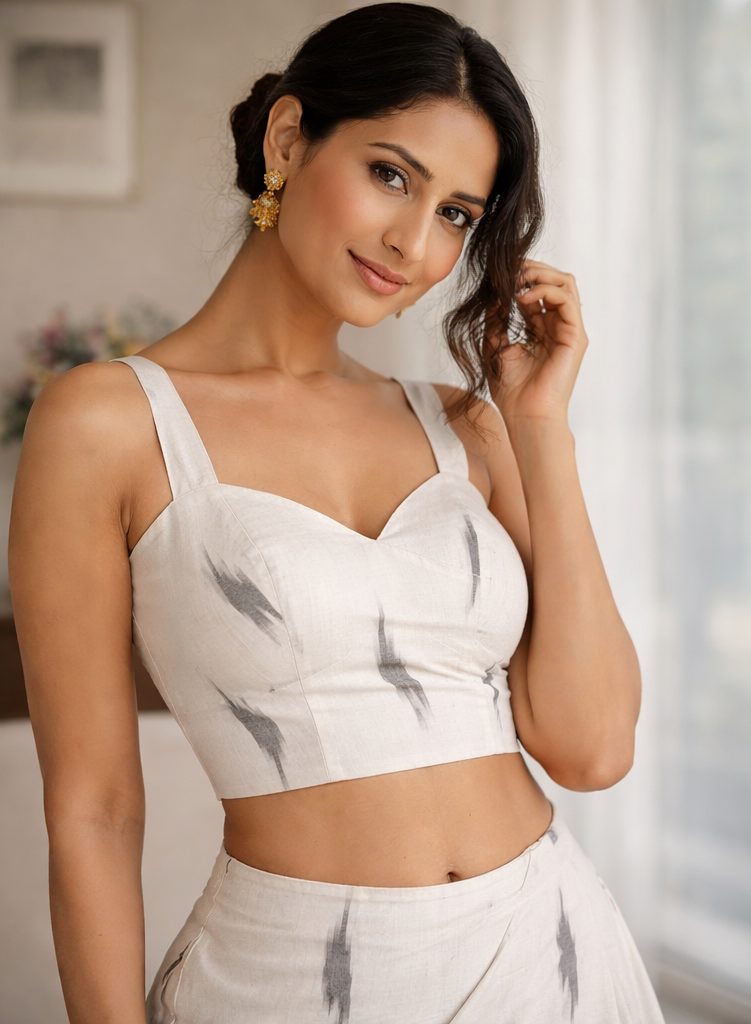
Measure the fullest part of the bust, the shoulder width and the preferred sleeve opening, then compare those measurements with the garment's size chart. A padded readymade blouse can provide structure under a saree, but padding thickness varies and may alter the fit by approximately 1 to 2 centimetres around the bust. Check whether the back closure allows minor adjustment before buying.
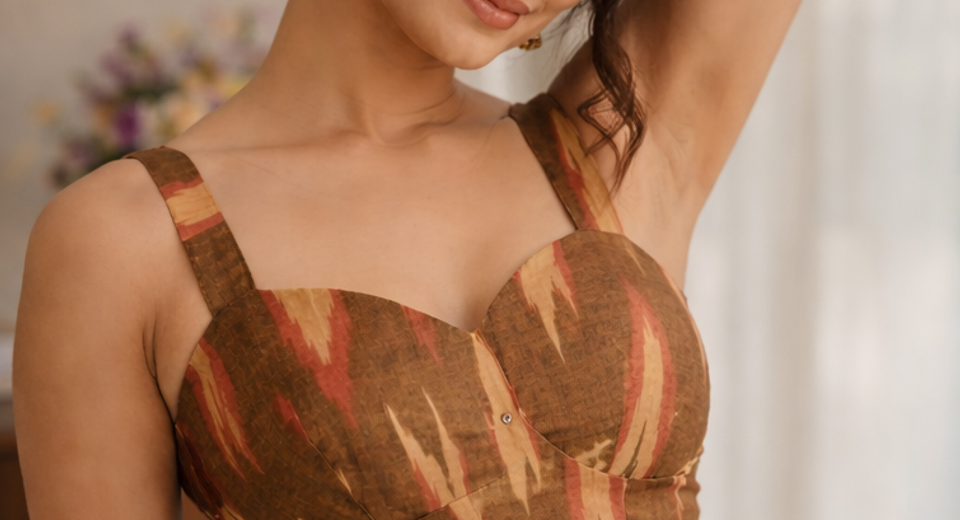
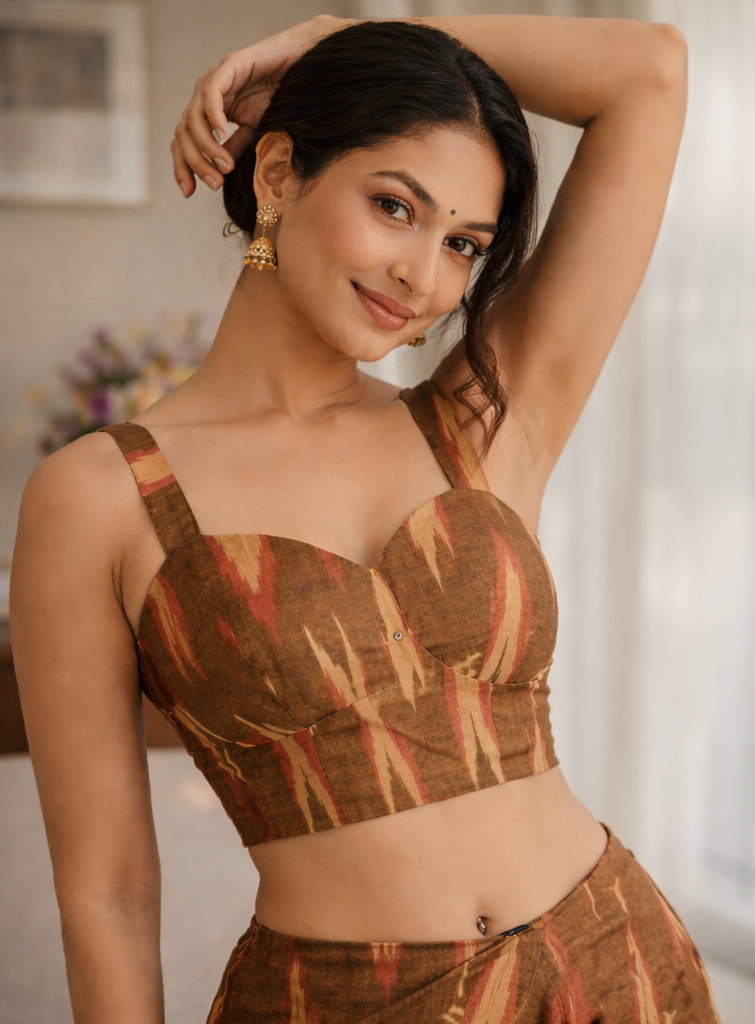
The Brown Ikat Cotton Padded Blouse Sleeveless Stylish demonstrates how an Ikat-like surface and earthy colour can carry a textile reference without needing heavy decoration. Brown works especially well with cream, rust, mustard, indigo and black sarees. The sleeveless cut suits warm-weather dressing, but the shoulder line should be checked carefully if the saree is worn with a broad, formal pallu.
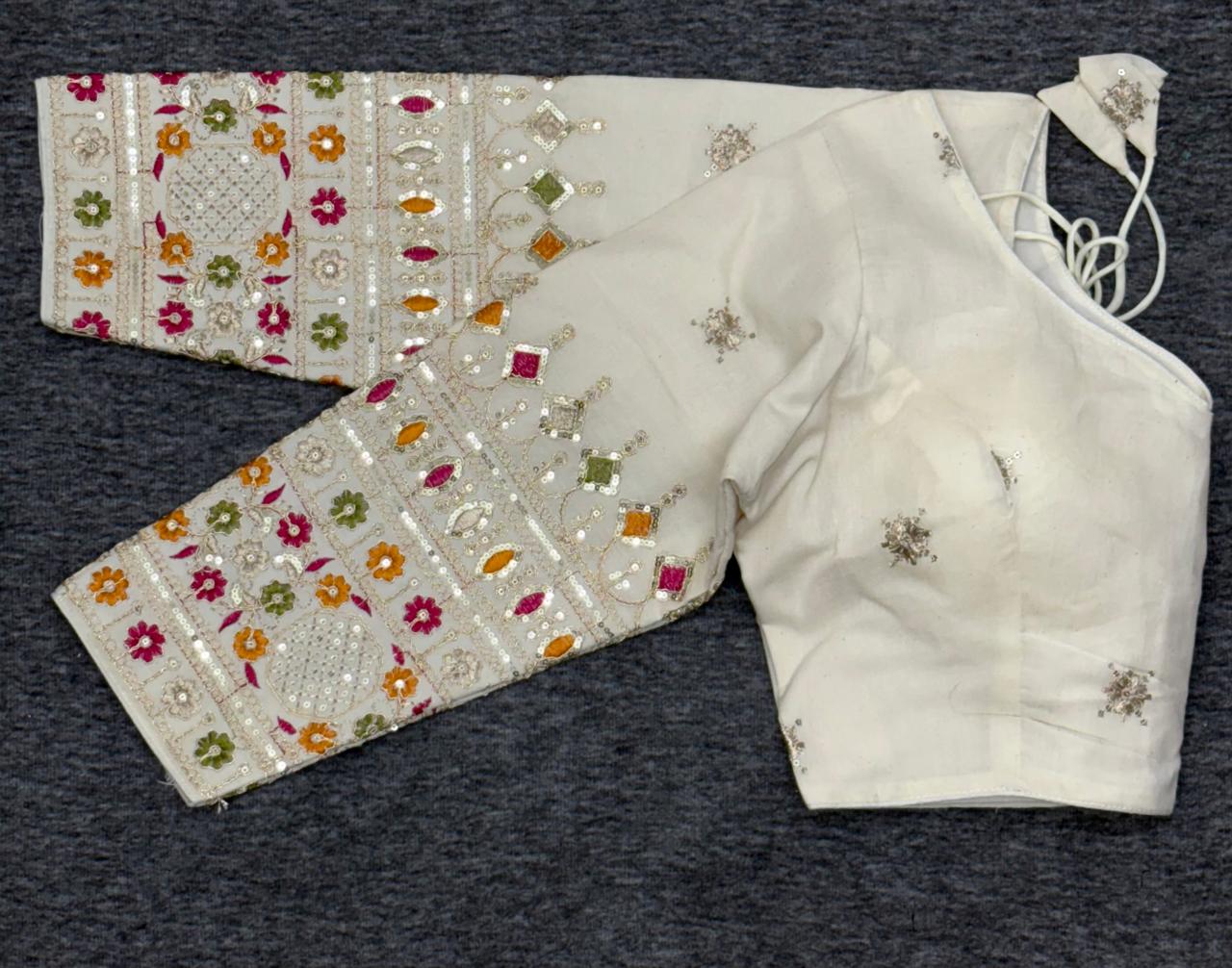
The Cream Ikat Cotton Padded Blouse Sleeveless Trendy offers a lighter alternative for dark cotton sarees and jewel-toned silk sarees. Cream can soften a strong border, though it needs more care around makeup, turmeric and food stains. A cream blouse also allows a red or black saree border to become the main visual feature.
A classic silhouette can be useful when the saree already carries the regional inspiration. Classic Festive Wear Blouse for Stylish Saree Look can anchor a formal drape without adding too many competing details. Pair a clean blouse shape with a border-focused saree when the goal is to keep the styling polished and wearable beyond one celebration.
How do you pair the blouse with cotton and silk sarees?
Pair a cotton blouse with a cotton, linen-cotton or handloom saree when the outfit needs a coherent daytime texture. A brown Ikat-inspired blouse can sit comfortably with an off-white saree, an indigo saree or a muted red drape. Keep the jewellery made from one dominant material, such as silver-tone metal or oxidised metal, so the handloom references remain visible.
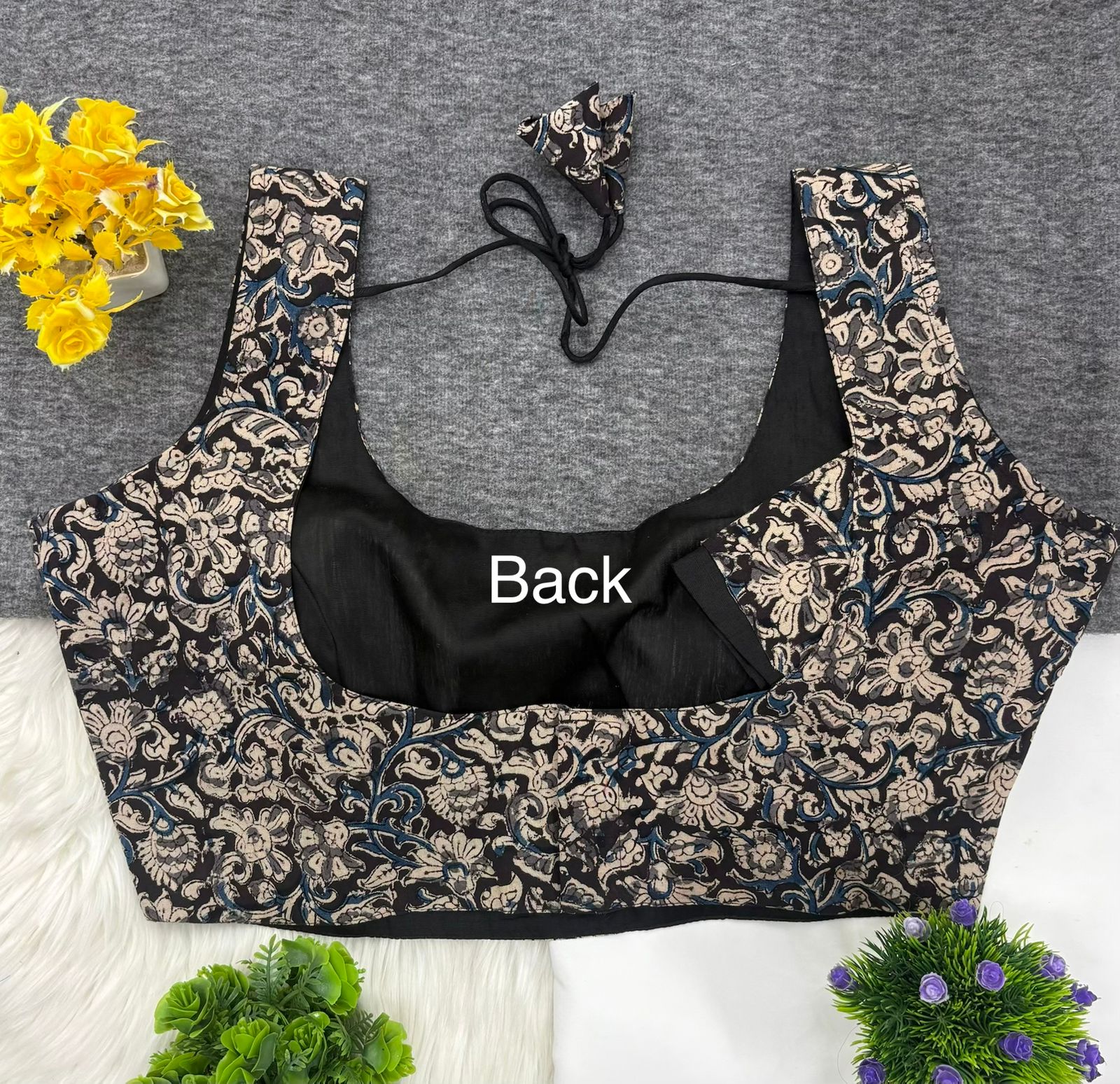
Pair a silk blouse with a silk saree when the outfit is intended for a wedding, reception or evening ceremony. A contrast blouse can work with Banarasi silk if one blouse colour is repeated in the saree border. With Kanjeevaram, coordinate the blouse with the zari temperature: antique gold zari usually harmonises with warmer browns, maroons and mustard, while silver-toned accents sit more naturally with cooler colours.
Pure Kalamkari Cotton Padded Blouse for Women brings a different regional craft vocabulary into the same styling conversation. Kalamkari is associated with narrative and nature-based printed imagery, so it should not be described as Manipuri textile. The blouse can instead be used when the wearer wants a broader Indian craft look, combining a printed blouse with a plain saree and allowing each textile tradition to remain distinct.
Kalamkari Cotton V Neck Collar Blouse for Women works well for a slightly more defined neckline. The collar can add structure to a simple saree, while a V shape creates visual length through the upper body. Choose a plain or minimally bordered saree when the blouse print already contains several colours.
What colours create a convincing Manipuri-inspired palette?
Deep red, black, white, cream, earthy brown, indigo and muted mustard create a convincing palette for a Manipuri-inspired saree blouse. These colours provide enough contrast to suggest woven bands while remaining easy to coordinate with existing sarees.
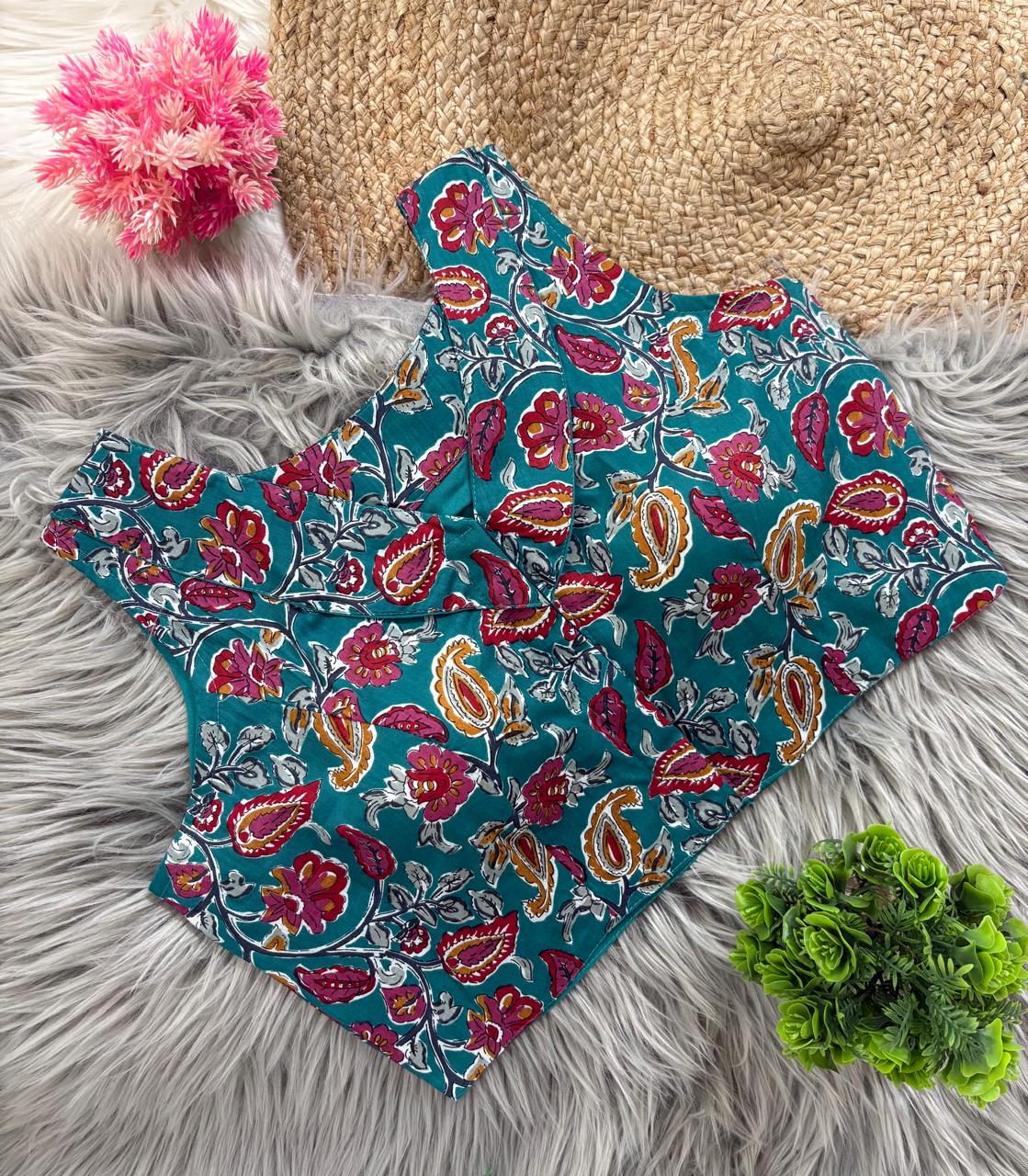
Use the 60-30-10 rule as a practical starting point: let approximately 60 percent of the outfit remain the main saree colour, use 30 percent for the blouse or border family, and reserve 10 percent for a small accent such as a red bangle, gold zari detail or contrasting piping. The ratio isn't a cultural rule; it's a styling method that prevents too many equal-strength colours.
Black and cream create a sharp, graphic pairing for daytime or evening wear. Brown and rust produce a softer earthy combination. Red should be used with care when the saree already contains strong zari or a vivid print. A single red accent can look intentional, while red across the blouse, border, jewellery and makeup may make the outfit feel visually crowded.
How can you style the look respectfully for different occasions?
A respectful styling approach keeps the cultural reference visible but avoids presenting a contemporary blouse as an authentic traditional Manipuri garment. Mentioning the source of inspiration, choosing commercially available geometric or Ikat-like surfaces, and avoiding sacred or community-specific emblems without knowledge are sensible boundaries.
For a Haldi ceremony
Choose breathable cotton, a secure neckline and a blouse colour that can tolerate turmeric stains. Cream, pale yellow and brown are attractive but require practical care, so wear a washable cotton blouse or keep a spare layer nearby. Sleeveless styles can be comfortable during a crowded Haldi ceremony, provided the armhole doesn't rub during movement.
For a festive daytime gathering
Use a cotton saree with a compact geometric blouse, small earrings and a low bun or braid. A narrow zari border can introduce festivity without changing the handloom character of the outfit. Avoid excessive layering of necklaces if the blouse already has a collar, high neckline or strong print.
For a wedding or evening event
Choose silk, Chanderi or a structured cotton-silk blend with controlled contrast. Antique gold jewellery, a defined drape and a blouse with clean padding can elevate the look without requiring dense embroidery. A designer readymade blouse is especially useful when time is limited, but the sleeve and armhole should be tested with the final saree drape before the event.
Care and fitting details that protect the finished look
Wash cotton blouses according to the care label and test colourfastness on a hidden seam before the first wash. Handwashing in cool water, using mild detergent and drying the garment in shade can reduce colour bleeding and fading. Printed or Ikat-inspired surfaces should not be scrubbed aggressively at the neckline or underarm.
Store padded blouses flat or on a broad hanger so the cups don't crease. Avoid folding a damp blouse, and allow perspiration to dry before long-term storage. A cotton blouse may shrink if exposed to hot water or high dryer heat, so account for possible dimensional change before making alterations.
Make final blouse alterations after trying the saree with its intended petticoat, shapewear or underskirt. The same blouse can feel different when the saree is draped higher, lower or with a pleated pallu. A two-centimetre sleeve adjustment or a small hook-position change can improve movement more effectively than choosing a more elaborate design.
Northeast Blouse Designs Inspired by Manipuri Textiles become most successful when textile knowledge guides practical decisions. Select one clear reference-such as linear geometry, an earthy palette or a handloom-like surface-then match the blouse to the saree's fabric, occasion and movement requirements. That approach creates a wearable outfit with cultural sensitivity and repeat value rather than a costume-like imitation.
Questions About Styling Manipuri Textile-Inspired Blouses
What are Northeast Blouse Designs Inspired by Manipuri Textiles?
Northeast Blouse Designs Inspired by Manipuri Textiles are contemporary blouse ideas influenced by Manipuri weaving qualities such as geometric repetition, contrasting bands, earthy colour and cotton texture. They are modern saree blouses, not replacements for traditional Manipuri garments such as the phanek or inaphi.
Can a Manipuri-inspired blouse be worn with a silk saree?
Yes, a Manipuri-inspired blouse can be worn with a silk saree when the blouse colour and border do not compete with the saree. Matte silk, raw silk or a structured cotton blouse can balance Banarasi silk, Kanjeevaram or other formal silk drapes.
Are cotton blouses suitable for festive sarees?
Cotton blouses are suitable for festive sarees when the saree has a lighter weave or the outfit is intended for daytime. A printed, padded or neatly tailored cotton blouse can provide useful contrast against silk, although the blouse weight should match the saree.
How do I choose a readymade blouse size?
Choose a readymade blouse size by comparing bust, shoulder, armhole and garment length measurements with the seller's size chart. Try the blouse with the actual saree and check whether you can raise both arms, sit comfortably and move without the hooks pulling.
Which colours suit a Manipuri textile-inspired saree blouse?
Black, cream, deep red, brown, indigo and muted mustard suit a Manipuri textile-inspired blouse because they create clear woven-looking contrast. Use one main colour, one supporting shade and a small accent instead of giving every part of the outfit equal visual intensity.
How should I care for an Ikat or printed cotton blouse?
Care for an Ikat or printed cotton blouse by following the garment label, using cool water and mild detergent, and drying it in shade. Avoid soaking coloured cotton for long periods and store padded blouses flat after they are completely dry.