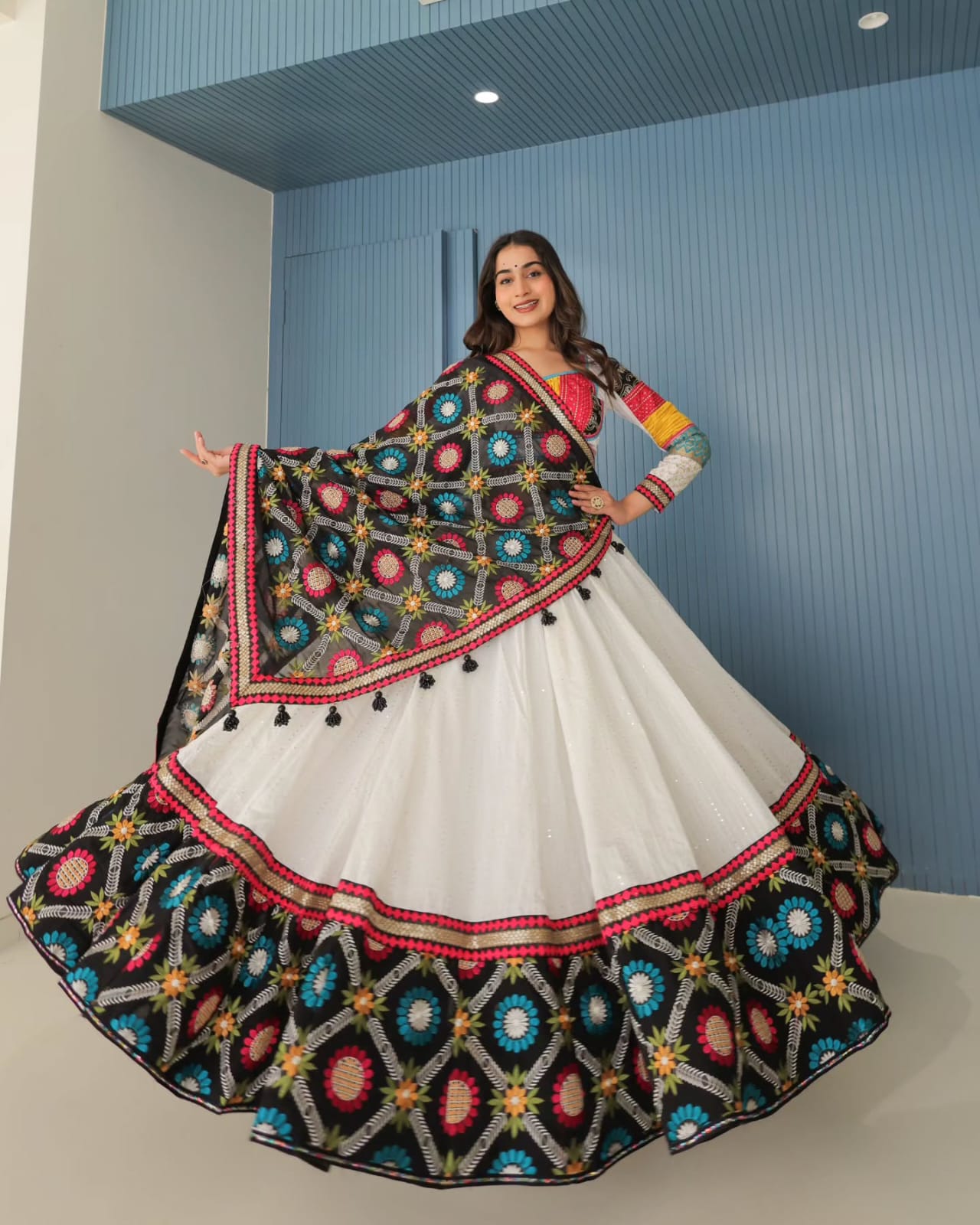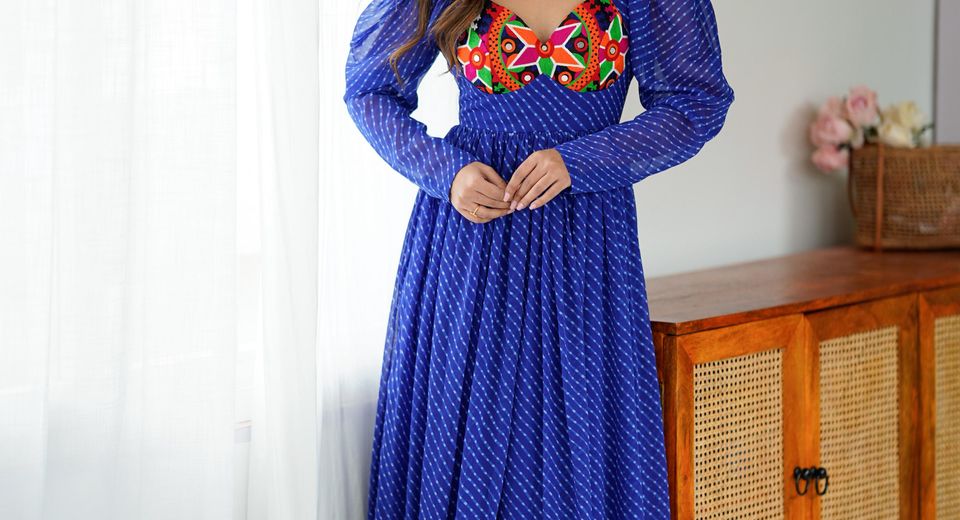
Garba clothing has to do more than look festive: it must stay comfortable through repeated spins, claps and several hours on your feet. Navratri Suit Designs Inspired by Gujarati Festive Fashion translate the colour, movement and surface detail of chaniya cholis into practical salwar suits, kurta sets, palazzo sets and Anarkali silhouettes. The most useful choices balance a secure fit, breathable fabric, manageable dupatta and decoration that catches light without becoming heavy.
What Gujarati festive fashion contributes to a Navratri suit
Gujarati festive fashion contributes three clear design ideas to a Navratri suit: energetic colour, circular movement and reflective ornamentation. Traditional chaniya choli dressing often combines a flared skirt, fitted choli and odhani, while contemporary salwar suits reinterpret those proportions with a kurta, trousers or palazzo and dupatta.
Garba and dandiya involve turning, side steps, raised arms and frequent interaction with other dancers. A straight kurta with narrow trousers can look polished but may restrict stride if the fit is too close at the knee. An Anarkali, palazzo suit or softly flared kurta gives the lower body more room while preserving the recognisable salwar suit format.
Gujarati influence doesn't require wearing every heritage feature at once. A printed dupatta can provide the regional reference when the kurta is solid, while a small amount of mirror-like embroidery can supply festive light without the weight of a heavily embellished lehenga. Bandhani-inspired dots, leheriya-like movement, geometric borders and contrasting piping are useful visual cues, although the garment should be judged by its actual fabric and construction rather than by a style label alone.
Navratri Suit Designs Inspired by Gujarati Festive Fashion: silhouettes that move
The most practical Navratri silhouettes are Anarkali suits, wide-leg palazzo sets, relaxed kurta-and-pant sets and lightweight long-line gowns. Each silhouette handles movement differently, so the right choice depends on whether the wearer plans to dance actively, attend a puja, or move between family gatherings and evening events.
Why are Anarkali suits useful for Garba?
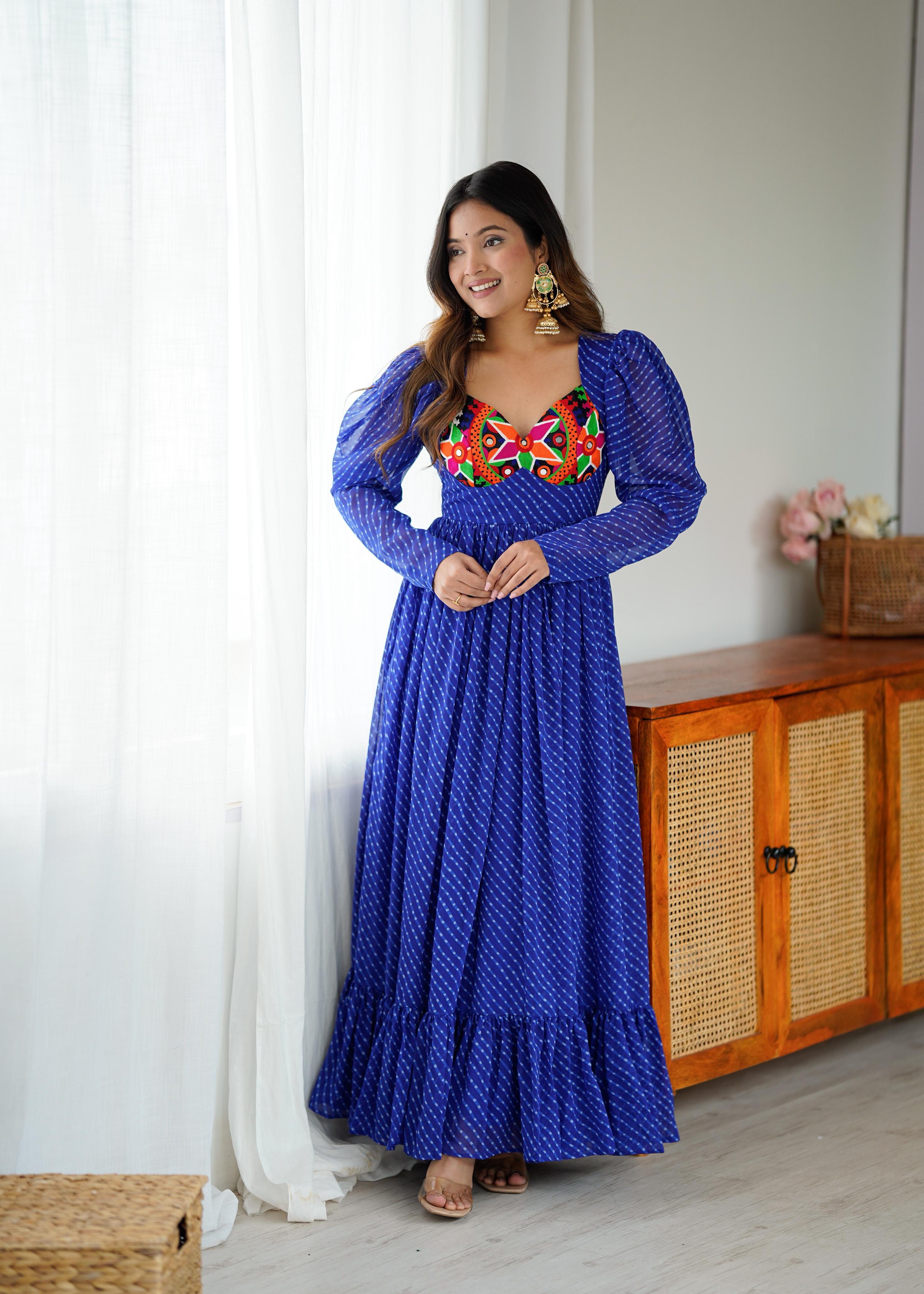
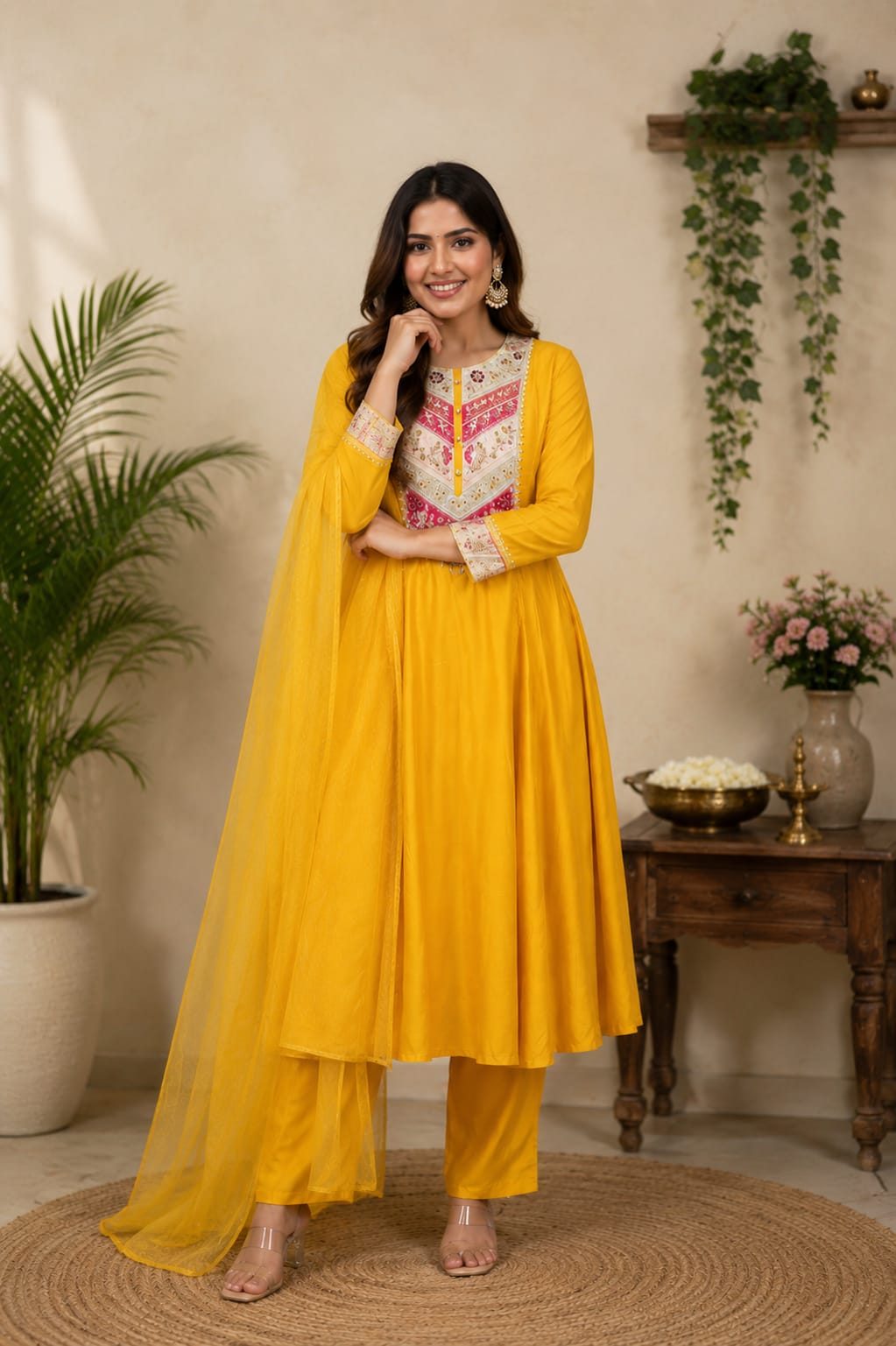
Anarkali suits are useful for Garba because their flare creates movement below the waist without requiring a separate skirt. A hem circumference of roughly 3 to 5 metres usually gives visible swing while remaining easier to manage than a very full lehenga. A layered or panelled Anarkali can add volume, but extra layers also increase warmth and may become inconvenient in crowded venues.
The Ladies Dress Anarkali Salwar Suits collection is an useful starting point for comparing flared proportions, sleeve lengths and dupatta pairings. Look for a fitted shoulder and bust, enough ease at the waist, and a hem that clears the floor by at least 1 to 2 centimetres when worn with the intended footwear.
When do palazzos work better than narrow trousers?
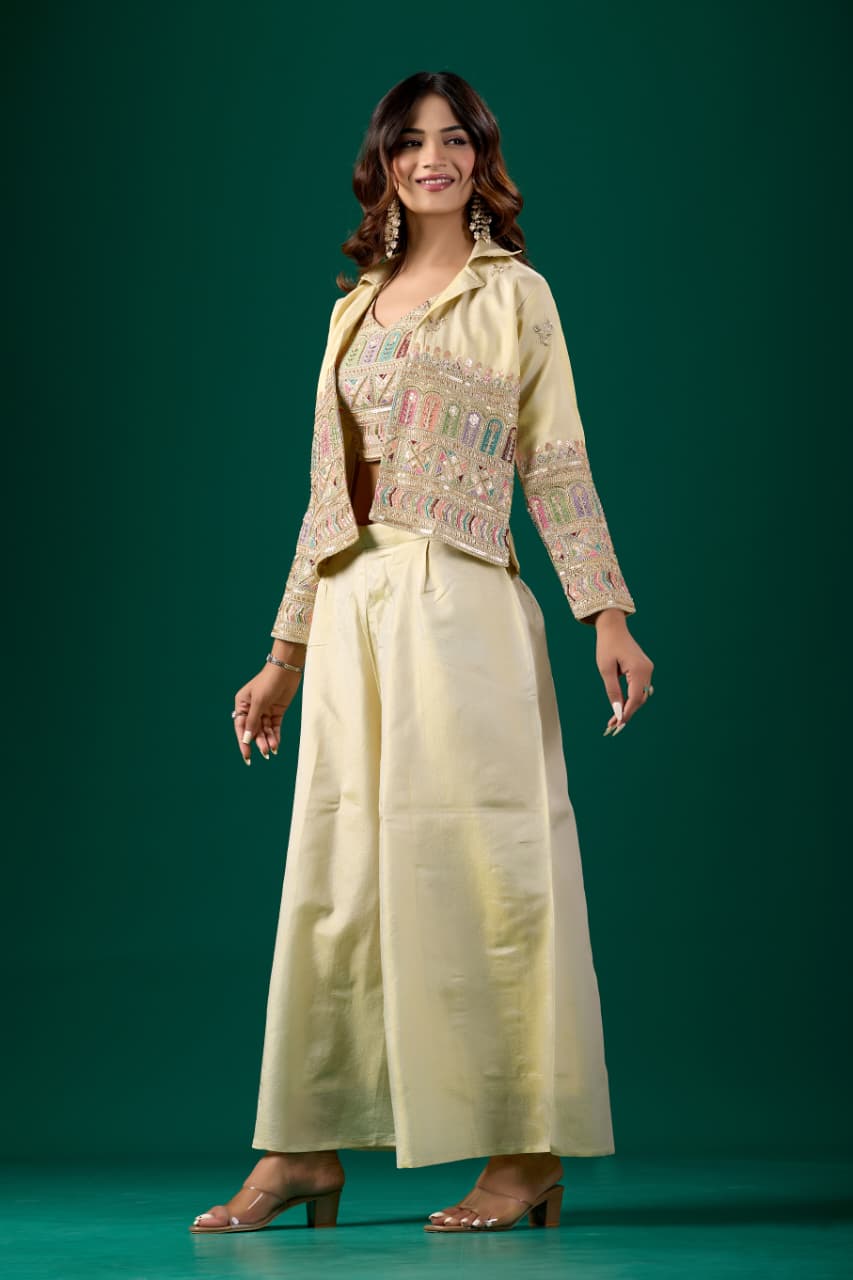
Palazzos work better than narrow trousers when a wearer wants unrestricted steps, airflow and a modern Gujarati-inspired outline. Wide legs create a skirt-like impression during turns, especially when paired with a shorter kurta or cropped jacket. The waistband should sit securely at the natural waist or high hip, because a loose waistband can shift during dancing.
The Women's Embroidered Crop Top & Jacket Palazzo Set | Varnavi demonstrates how a crop-top-and-jacket structure can bring the layered energy of festive choli dressing into a trouser-based outfit. A long jacket adds visual length, while a shorter inner layer keeps the silhouette from appearing bulky around the hips.
Colour combinations that feel Gujarati without becoming costume-like
Strong contrast is the simplest way to create a Gujarati festive mood in a salwar suit. Red with ivory, cobalt with pink, mustard with magenta, emerald with orange, and purple with yellow all create the lively opposition associated with Navratri dressing. A neutral such as beige, cream or taupe can prevent a bright outfit from appearing visually crowded.
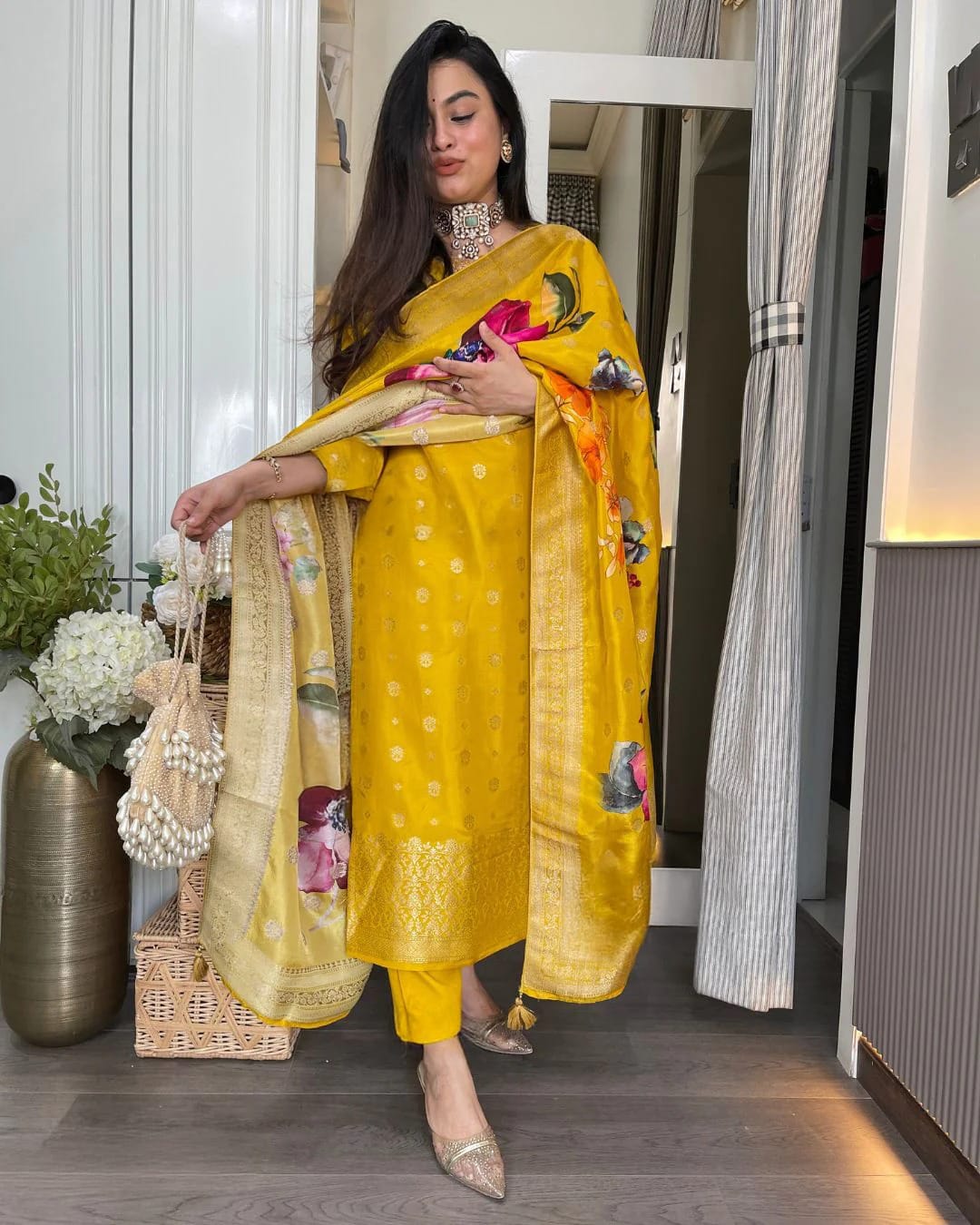
Colour can also be assigned by garment component. A jewel-toned kurta with a lighter dupatta keeps the face bright, while a neutral kurta with a saturated dupatta creates a more restrained look. A two-colour outfit is generally easier to accessorise than a three- or four-colour set, particularly when embroidery already introduces metallic or multicoloured detail.
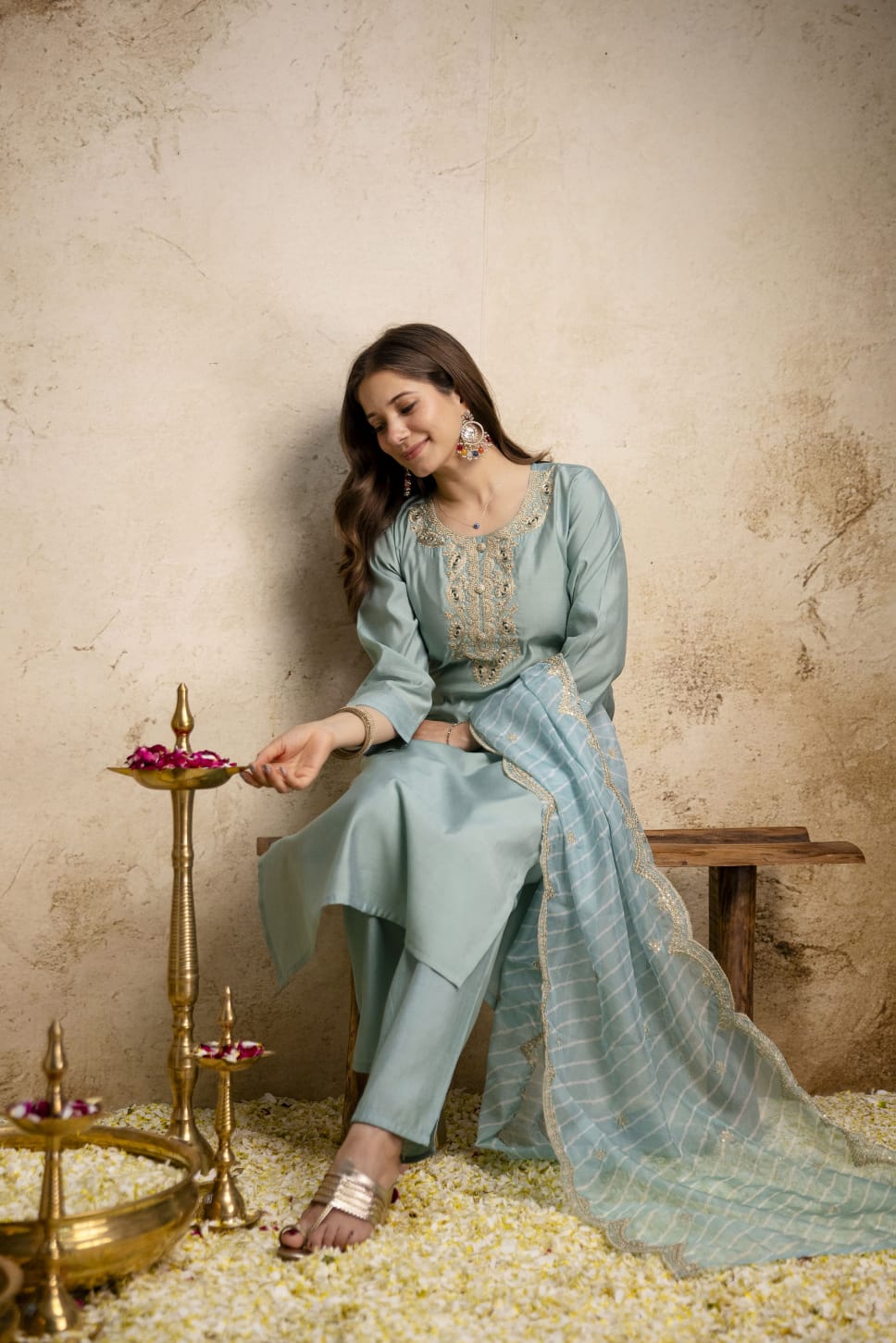
The Blue Printed Georgette Designer Gown for Women Festive shows how blue can carry a festive outfit when the print supplies enough visual movement. For a salwar suit, a similar principle works with a blue kurta, contrasting border and silver-toned accessories. Pastel colour is also suitable for daytime Navratri gatherings; the Pastel Blue Embroidered Chanderi Kurta Set with Dupatta offers a softer direction for puja visits, brunches or early-evening events.
Maroon and white create a more grounded festive palette. The Maroon Viscose Chanderi Silk Embroidered Kurta Set for Women can be styled with antique-gold jewellery for a warmer appearance, while the White Embroidered Viscose Jacquard Kurta Set for Women benefits from a coloured dupatta, bangles or embroidered footwear to prevent the outfit from looking too formal or bridal.
Fabrics that can handle a long Navratri evening
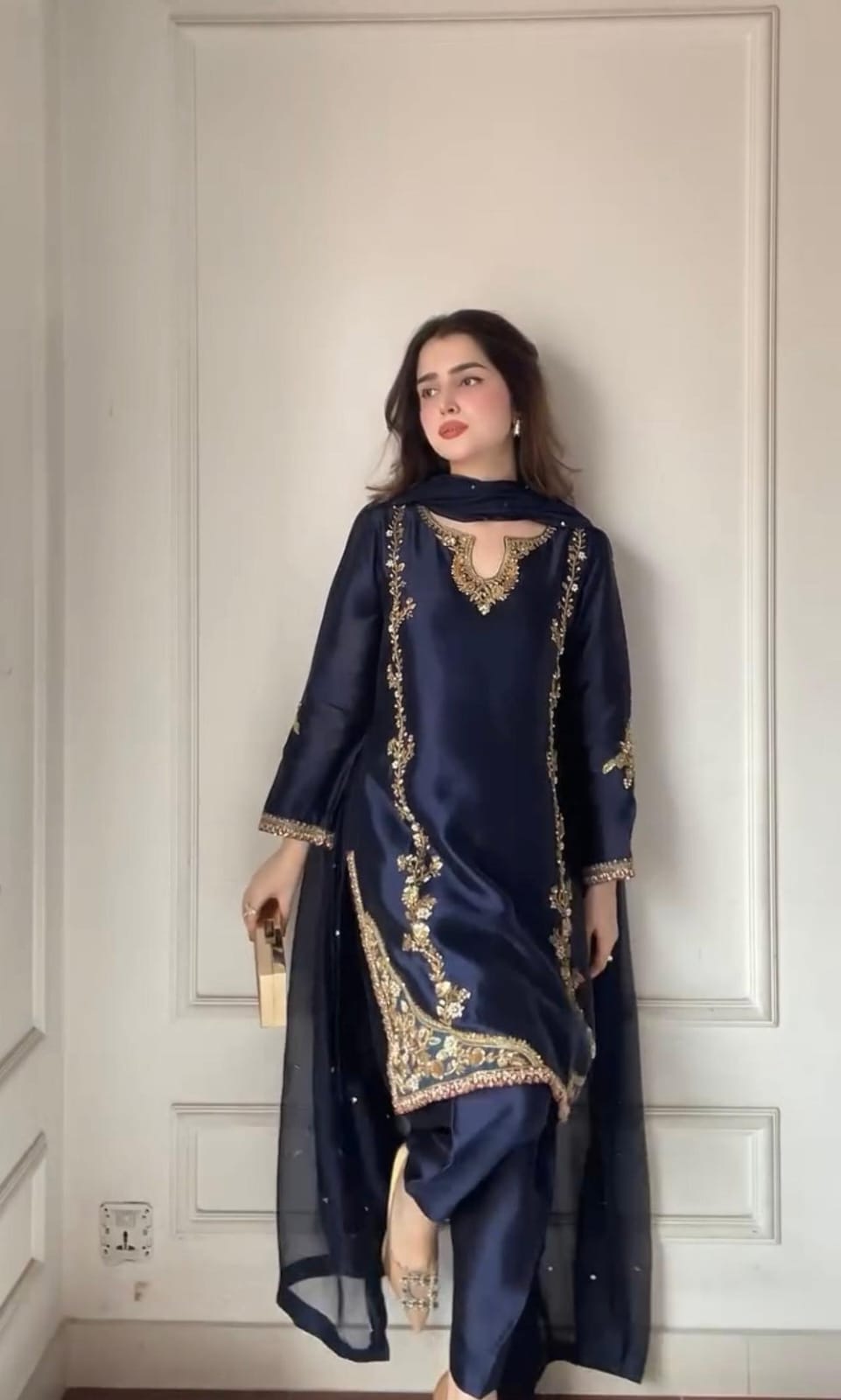
Fabric choice affects comfort more than ornamentation during Navratri. Georgette drapes and moves easily, Chanderi has a light structured hand with a subtle sheen, Vichitra silk gives a dressier surface, and viscose-based fabrics can provide softness and fluidity. The best option depends on venue temperature, expected movement and how much time the garment will spend under artificial light or outdoors.
Which fabric is suitable for active Garba?
Lightweight georgette, breathable Chanderi and fluid viscose blends are suitable for active Garba when the lining and fit are comfortable. Georgette is useful for flowing layers, but a slippery dupatta may need discreet shoulder pins or a secure drape. Chanderi can feel airy and polished, although its crispness may be less forgiving if the kurta is cut too close to the body.
Vichitra silk is better suited to a dressier Navratri dinner, family celebration or shorter dance session than to several hours of vigorous Garba. The Modern Taupe Vichitra Silk Embroidered Co-Ord Set for Women uses a muted base to make embroidery the focal point, while the Elegant Beige Vichitra Silk Embroidered Kurta Set for Women provides a neutral canvas for colourful bangles, a bright potli or a contrasting dupatta.
Fabric names don't reveal the complete comfort level of a garment. Check whether the bodice, sleeves and trouser waistband are lined, whether the embroidery has a soft backing, and whether the care label permits home washing. A garment that feels light on a hanger may become warm when lined with polyester or layered over a fitted inner garment.
Mirror work, embroidery and borders: choosing detail for the venue
Reflective and geometric embellishment creates a Gujarati festive reference, but the amount of detail should match the event and the garment's weight. Small mirrors, metallic thread, sequins, zari accents and embroidered borders catch stage and venue lighting effectively. Dense embellishment across the entire front can add weight, heat and snagging risk.
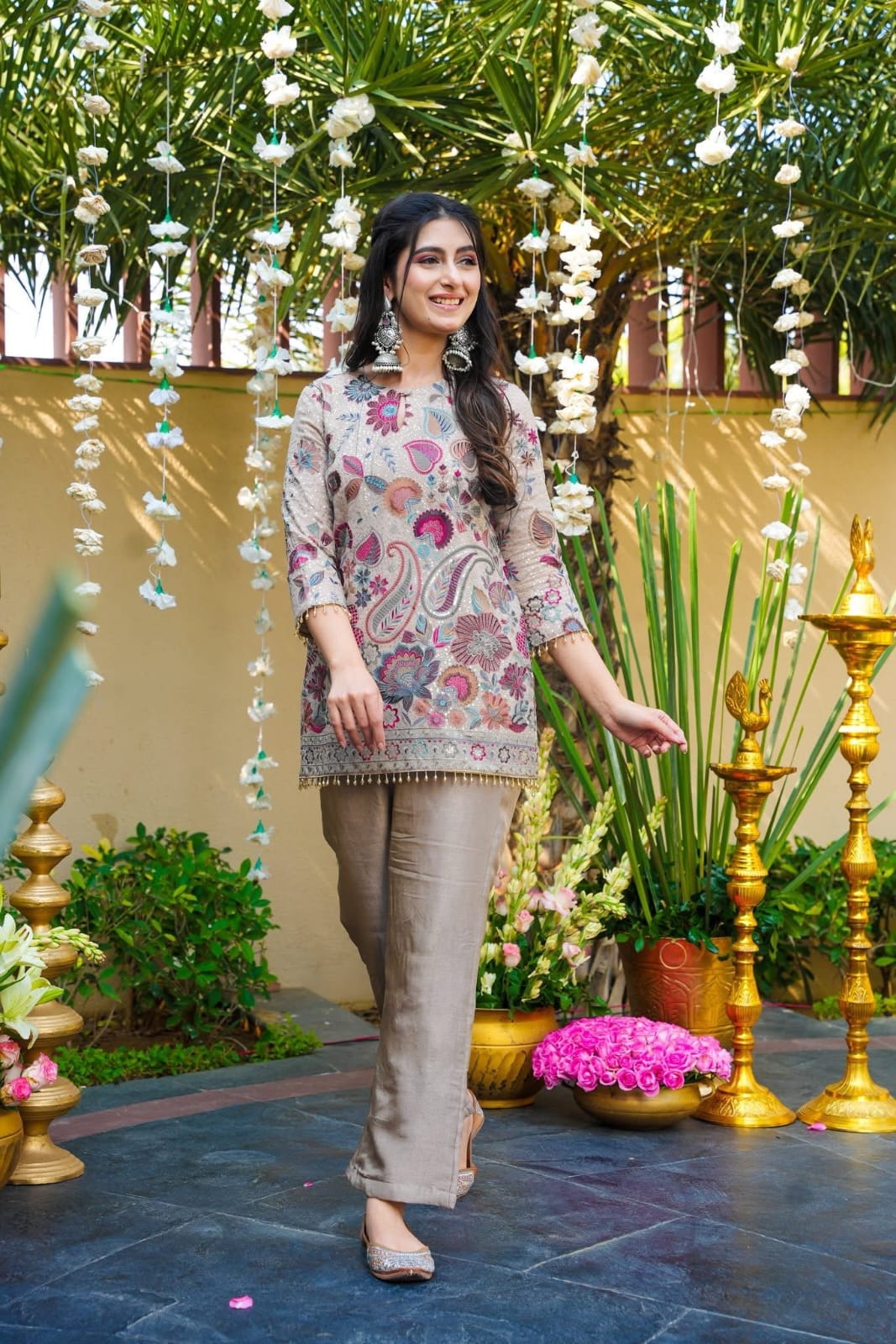
For a community Garba night, place decoration where it will be seen during movement: around the neckline, on sleeve cuffs, along the dupatta border or at the kurta hem. For a puja or family dinner, concentrated embroidery at the yoke and cuffs may look more refined than a heavily decorated hem. Zari can add warmth to maroon, beige and mustard, while silver-toned thread usually complements blue, lavender and white.
The Lavender Georgette Kurti Pant Set with Embroidery & Dupatta illustrates a balanced approach: a light base, coordinated separates and embroidery that can provide occasion value without relying on a floor-length skirt. The placement of detail also matters for photographs; neckline and shoulder embroidery remains visible when a dupatta is worn over one arm, while decoration hidden under folds contributes less to the overall appearance.
How to style a Navratri suit for different nights
A Navratri suit should be styled according to the activity, timing and venue rather than according to colour alone. Daytime puja, family visits, community Garba and formal festive dinners each reward a different balance of coverage, sparkle and ease.
Daytime puja and family visits
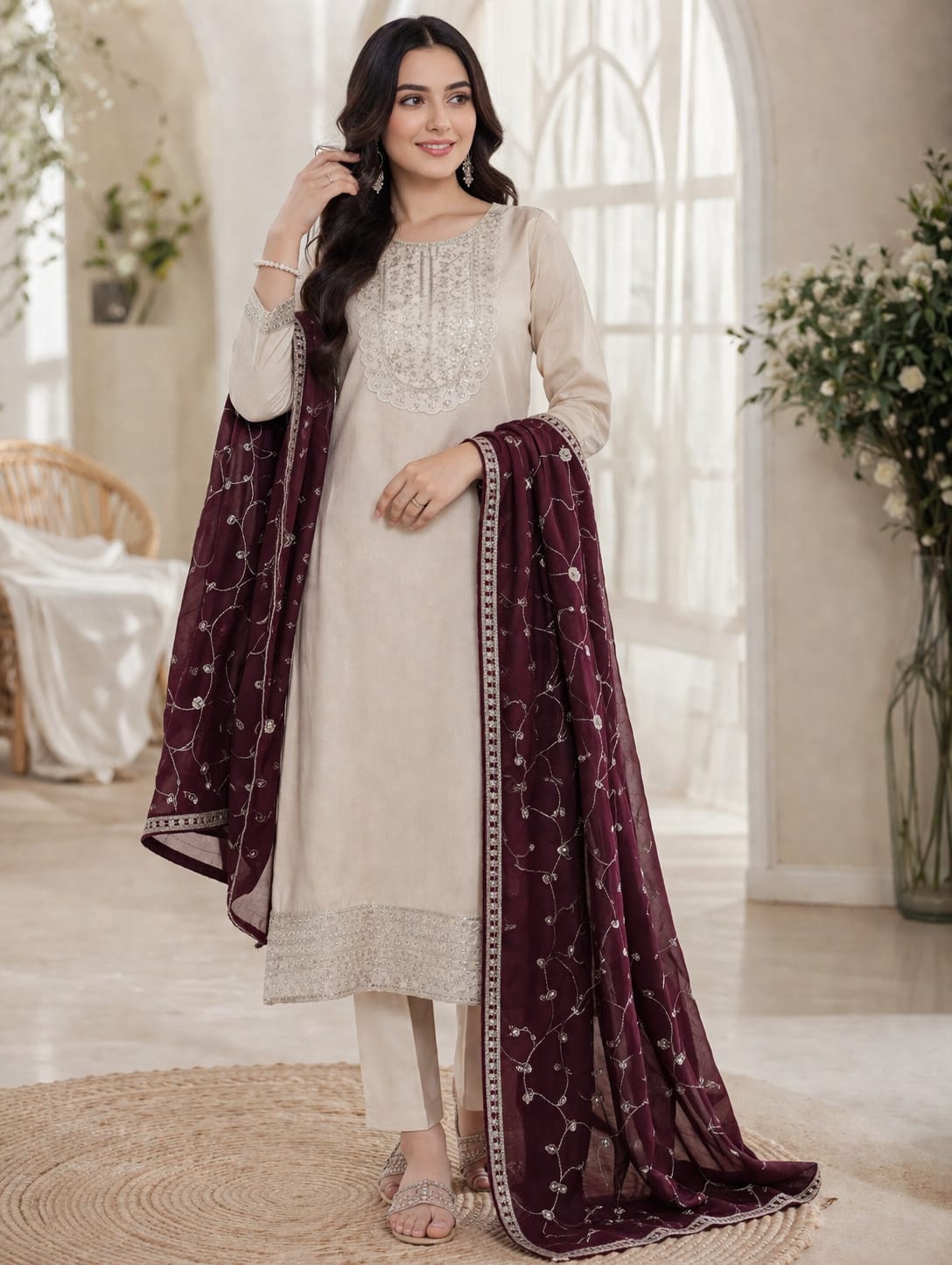
Daytime puja and family visits suit pastel Chanderi, white jacquard, beige silk and restrained embroidery. Choose a three-quarter sleeve, a breathable lining and a dupatta that stays in place without repeated adjustment. Small jhumkas, flat embroidered juttis and a compact shoulder bag keep the outfit festive without making movement difficult.
The Pastel Blue Embroidered Chanderi Kurta Set with Dupatta works well with pearl or silver-toned jewellery, while the White Embroidered Viscose Jacquard Kurta Set for Women can be given a Gujarati accent through a red, pink or bandhani-inspired dupatta. Avoid pairing a pale suit with very heavy dark accessories if the intention is a light daytime appearance.
Community Garba and Dandiya
Community Garba and Dandiya call for a secure waistband, breathable layers, a shorter or well-managed dupatta and footwear with a stable sole. A palazzo, Anarkali or relaxed straight kurta allows repeated steps more comfortably than a tight churidar. Pinning the dupatta at one shoulder and securing the opposite end near the waist reduces the chance of catching it on another dancer's jewellery or clothing.
Bright bangles, oxidised silver earrings and a small bindi can supply festive character without adding substantial weight. Choose juttis or low wedges that have already been worn indoors for at least 30 minutes; new footwear can cause friction before the evening is halfway through.
Formal Navratri dinners
Formal Navratri dinners suit Vichitra silk, structured Chanderi, detailed yokes and a more controlled dupatta drape. The Elegant Beige Vichitra Silk Embroidered Kurta Set for Women can be paired with antique-gold earrings and a coloured clutch, while the Modern Taupe Vichitra Silk Embroidered Co-Ord Set for Women suits a minimal jewellery approach.
A long gown can work for a dinner where dancing is limited, but a salwar suit usually brings more flexibility for sitting, walking and eating. A coordinated jacket or dupatta can be removed after arrival if the venue becomes warm, provided the underlying kurta still looks complete.
Fit and purchase checks that prevent Navratri wardrobe problems
The most important pre-purchase checks are shoulder fit, armhole comfort, waist security, hem length and dupatta weight. These five measurements affect movement more directly than the size printed on a label.
- Shoulder: The shoulder seam should sit near the natural shoulder point without pulling when both arms are raised.
- Armhole: The armhole should allow clapping and circular arm movements without cutting into the underarm.
- Waist: Elastic or drawstring trousers should stay secure during turns but should not compress the stomach when seated.
- Hem: The hem should remain above the floor with the footwear intended for Navratri.
- Dupatta: A medium-weight dupatta is easier to pin and less likely to slide than a very smooth, unlined fabric.
Measure over the undergarments and any camisole that will actually be worn. If a size chart gives garment measurements rather than body measurements, compare the bust, waist and hip figures with a well-fitting kurta at home. Allow approximately 5 to 8 centimetres of ease at the bust for active movement, depending on the fabric and silhouette.
Collections such as Dress Materials can be useful when a particular colour or fabric matters more than immediate convenience, but tailoring time should be included in the plan. Ready-to-wear options from Salwar Suits with 30% Off and Salwar Suits Flat 40% Off may be practical for a time-sensitive purchase, while Red Dress Materials Under 2000 can suit shoppers who already have a trusted tailor. Discount percentage should never replace checking lining, stitching, measurements and return conditions.
Care steps after a night of Garba
Garment care begins by airing the suit before it enters a wardrobe. Hang the kurta and dupatta in shade for several hours, remove surface dust with a soft brush, and empty the pockets before storage. Sweat and perfume residue are more likely to damage embroidery and metallic accents when left untreated for weeks.
Follow the care label before washing any embellished suit. Hand washing in cool water may suit some viscose or cotton-rich garments, while Chanderi, Vichitra silk and zari detailing may require dry cleaning or specialised care. Do not wring georgette, and keep damp garments away from direct sunlight because intense heat can affect colour and weaken delicate finishes.
Store a heavily embroidered dupatta folded inside a clean cotton cloth rather than pressed against rough zari or exposed metal embellishment. Refold silk and embellished garments every few months to reduce permanent fold lines. These small steps help a Navratri suit remain wearable for more than one festive season.
Common questions about Gujarati-inspired Navratri suits
Gujarati-inspired Navratri suits work best when colour, movement and practical comfort are planned together. The following answers address common decisions about fabric, silhouette, styling and care.
Common Questions About Gujarati-Inspired Navratri Suits
What should I wear to Garba if I do not want a lehenga?
Choose an Anarkali, palazzo suit or relaxed kurta set with a secure waistband and a manageable dupatta. These salwar suit silhouettes provide the movement and festive volume associated with Gujarati dressing without requiring a separate skirt and choli.
Which colours are suitable for a Gujarati-inspired Navratri outfit?
Cobalt blue, fuchsia, red, mustard, emerald, orange, maroon and purple work well for an energetic Navratri palette. Pair one strong colour with beige, ivory, white or taupe when you want the outfit to look balanced rather than highly contrasting.
Is Chanderi suitable for an active Garba night?
Chanderi can suit an active Garba night when the garment has comfortable ease, a breathable lining and a secure waistband. The fabric may feel more structured than georgette, so check that the kurta does not restrict the elbows, bust or hips.
How can I keep a dupatta in place while dancing?
Pin the dupatta at one shoulder and secure the opposite end near the waist with a small concealed pin. Select a medium-weight fabric and avoid a very slippery drape if you expect to dance for several hours.
Are palazzo suits comfortable for Navratri dancing?
Palazzo suits are comfortable for Navratri dancing when the waistband stays secure and the legs have enough width for side steps. Check that the hem does not drag and that the palazzo fabric does not catch under your footwear during turns.
How should I care for an embroidered Navratri suit after wearing it?
Air the suit in the shade, remove surface dust gently and follow the care label before washing or dry cleaning. Store zari, sequins and embroidered dupattas folded inside a clean cotton cloth to reduce snagging, tarnishing and pressure on the embellishment.