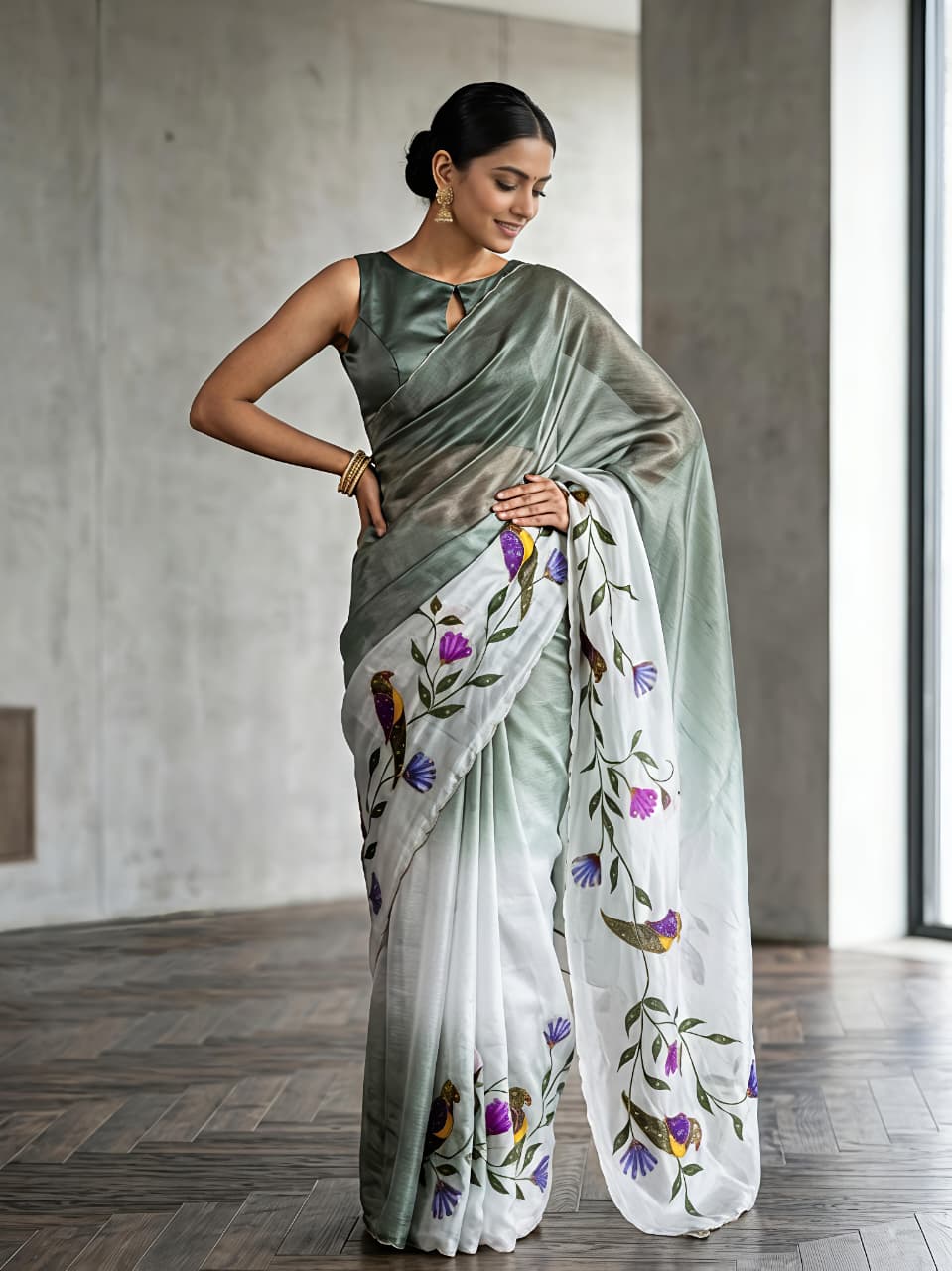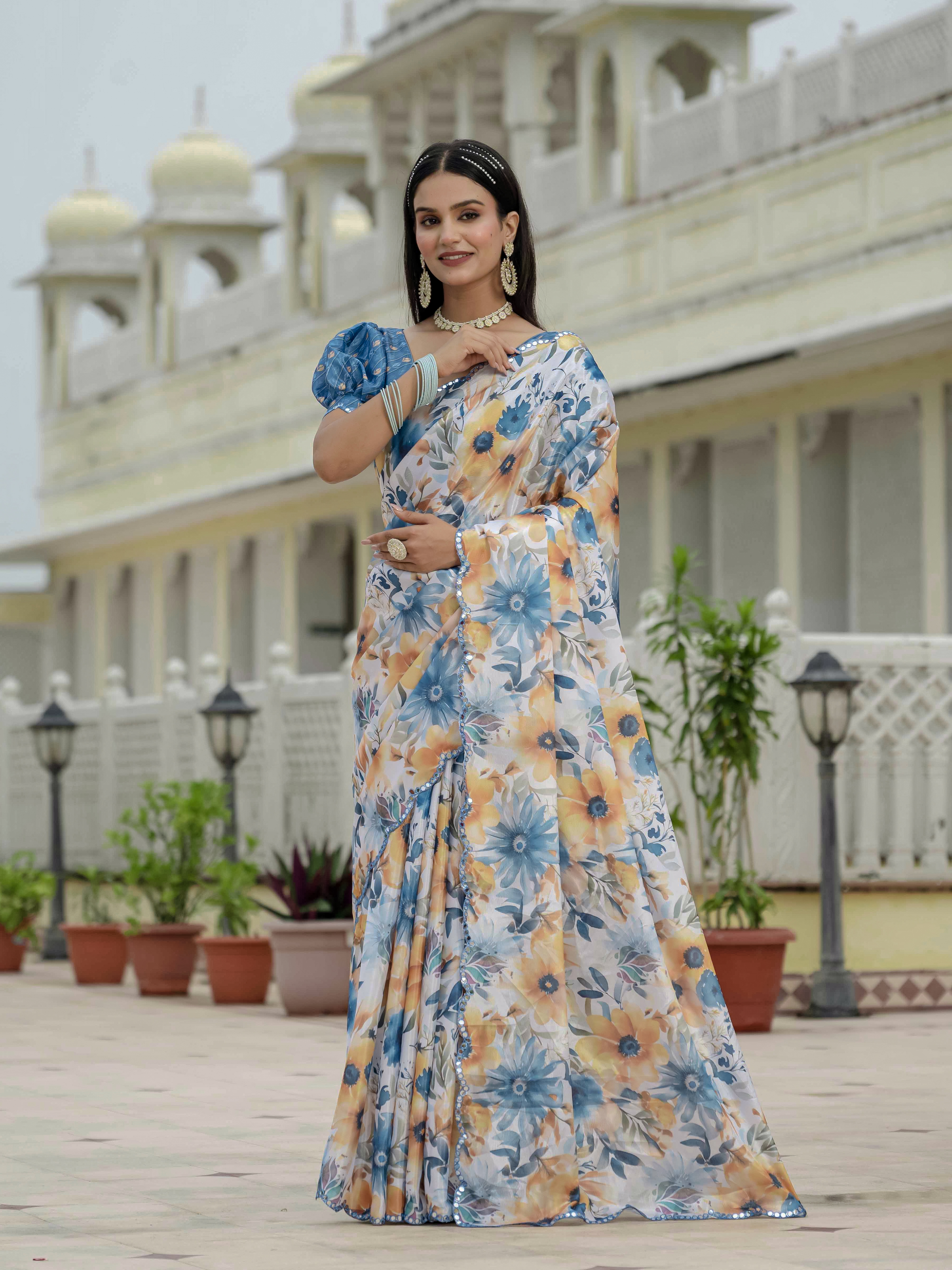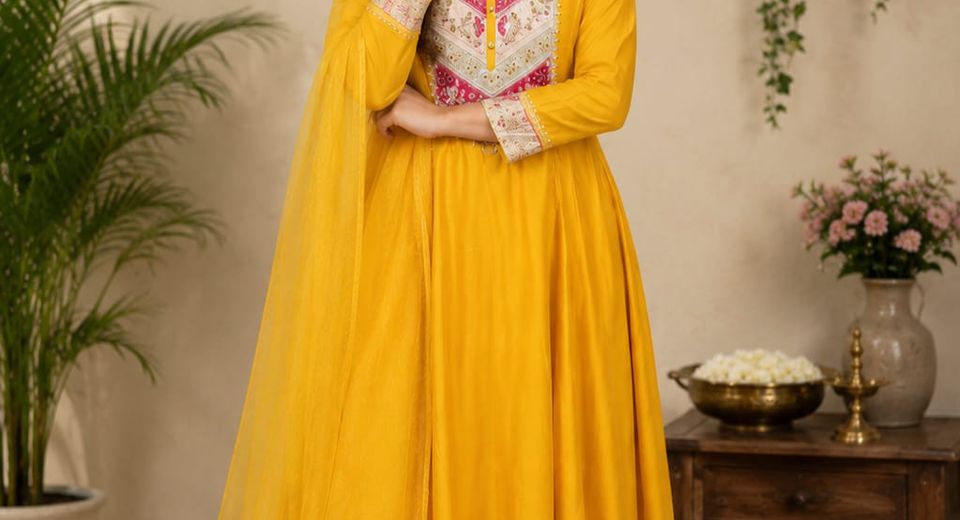
Navratri Straight-Cut Suit Styles for Elegant Festive Dressing make sense when you want a polished silhouette without giving up comfort during puja, family visits or Garba nights. A straight-cut suit usually combines a vertically falling kurta with trousers, pants or a narrow salwar, creating clean lines that work across body shapes. The most successful festive outfit depends on more than embroidery: fabric weight, sleeve length, hemline, dupatta security and the amount of movement you need all matter.
Navratri clothing also carries regional meaning. Gujarat may bring mirror work, bandhani-inspired colour and outfits made for Garba, while other families prefer silk, Chanderi, zari accents or restrained embroidery for temple visits and dinners. A straight-cut kurta set can adapt to both approaches when colour and accessories are selected thoughtfully.
Navratri Straight-Cut Suit Styles and the appeal of a clean silhouette
Navratri straight-cut suits work well because they provide a neat festive shape while allowing easier walking, sitting and dancing than many heavily flared silhouettes. The kurta falls close to the body instead of widening dramatically from the waist, so the outfit generally feels controlled in crowded venues.
The silhouette is particularly useful when you're attending more than one kind of event in a day. A lightly embroidered kurta set can look appropriate at a morning puja, while stronger earrings and a brighter dupatta can take the same base outfit into an evening gathering. Straight lines also make layering easier: a short embroidered jacket, a contrasting stole or a structured potli can add interest without overwhelming the outfit.
Proportion determines whether a straight-cut suit looks graceful or restrictive. A kurta that ends around the knee or a few inches below it pairs naturally with cigarette pants, slim trousers or straight pants. A longer kurta can balance wider palazzos, but the fabric must fall cleanly rather than bunching at the ankle. For active Garba, leave enough room at the armhole and avoid very narrow trousers that limit side steps.
How much ease should a festive straight kurta have?
A festive straight kurta should usually have around 2 to 4 inches of total wearing ease at the bust, depending on the fabric and personal comfort. Woven fabrics such as silk and Chanderi need more practical ease than stretch fabrics because they don't give when you lift your arms.
Check the shoulder seam, armhole and upper sleeve before judging the fit. A shoulder seam that drops too far can make the kurta look tired, while a tight armhole becomes uncomfortable during aarti or dance. The side slits should open only enough to support walking and should not pull across the hips when you sit.
Navratri Straight-Cut Suit Styles by fabric and climate
Fabric should be chosen according to the venue, weather, duration of wear and amount of movement expected. Lightweight Chanderi, Assam silk, Vichitra silk and silk crepe each create a different balance of breathability, drape and festive polish.
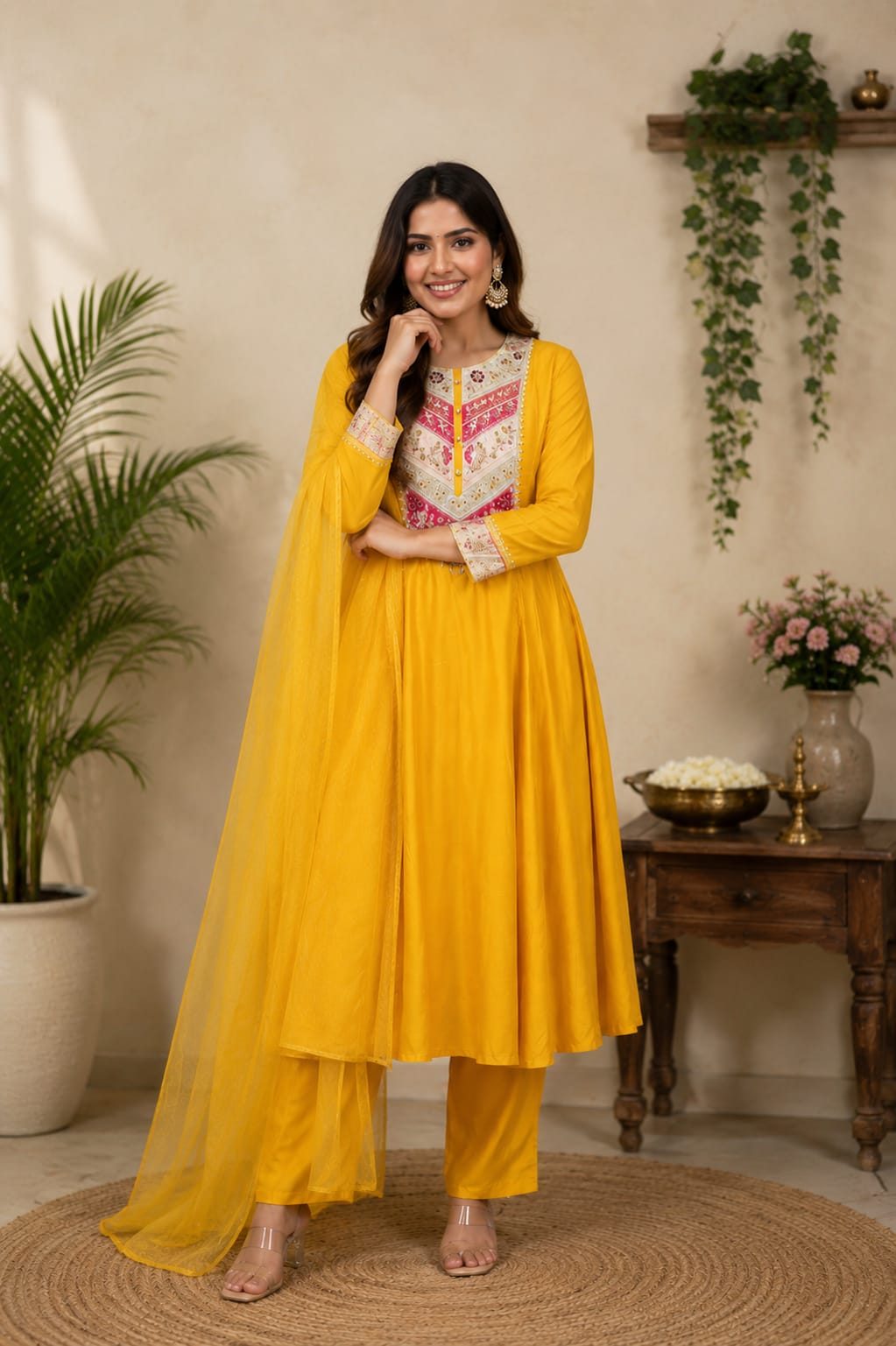
- Chanderi: Chanderi is light, softly crisp and suitable for daytime puja or a warm indoor gathering. Its subtle sheen supports delicate embroidery without making the outfit feel heavy. Mustard Viscose Chanderi Kurta Set with Sequence Embroidery demonstrates how a warm colour and controlled sparkle can look festive without a large flare.
- Assam silk: Assam silk offers a more textured, slightly substantial appearance and works well when you want the kurta to hold a clean shape. Peach Assam Silk Kurta Set with Printed Organza Dupatta combines a gentle colour with a lighter-looking dupatta, making it useful for a family celebration or festive lunch.
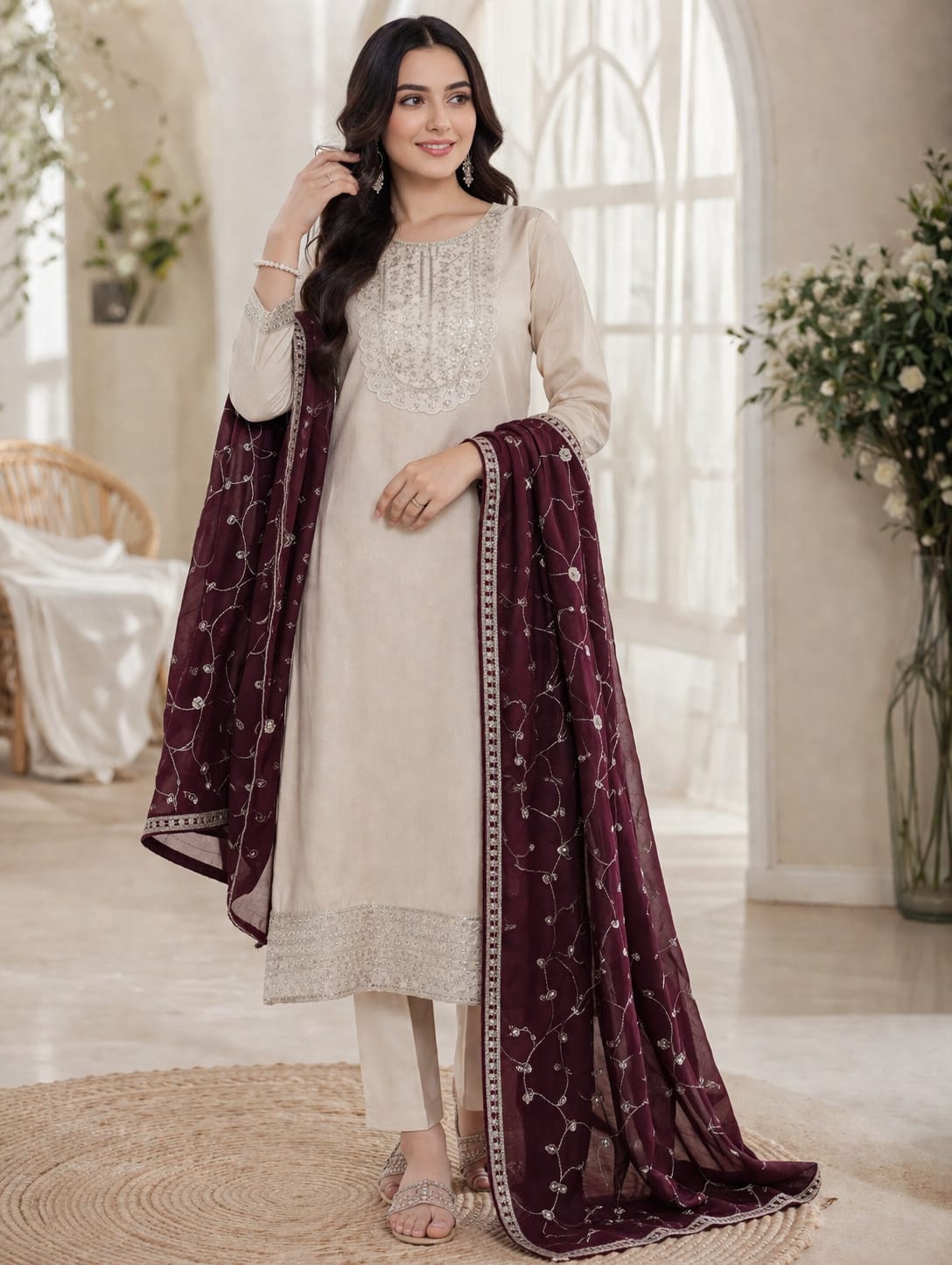
- Vichitra silk: Vichitra silk has a smooth, dressy surface that suits evening celebrations and formal Navratri dinners. Elegant Beige Vichitra Silk Embroidered Kurta Set for Women is a useful example of how a neutral base can let embroidery and jewellery provide the visual focus.
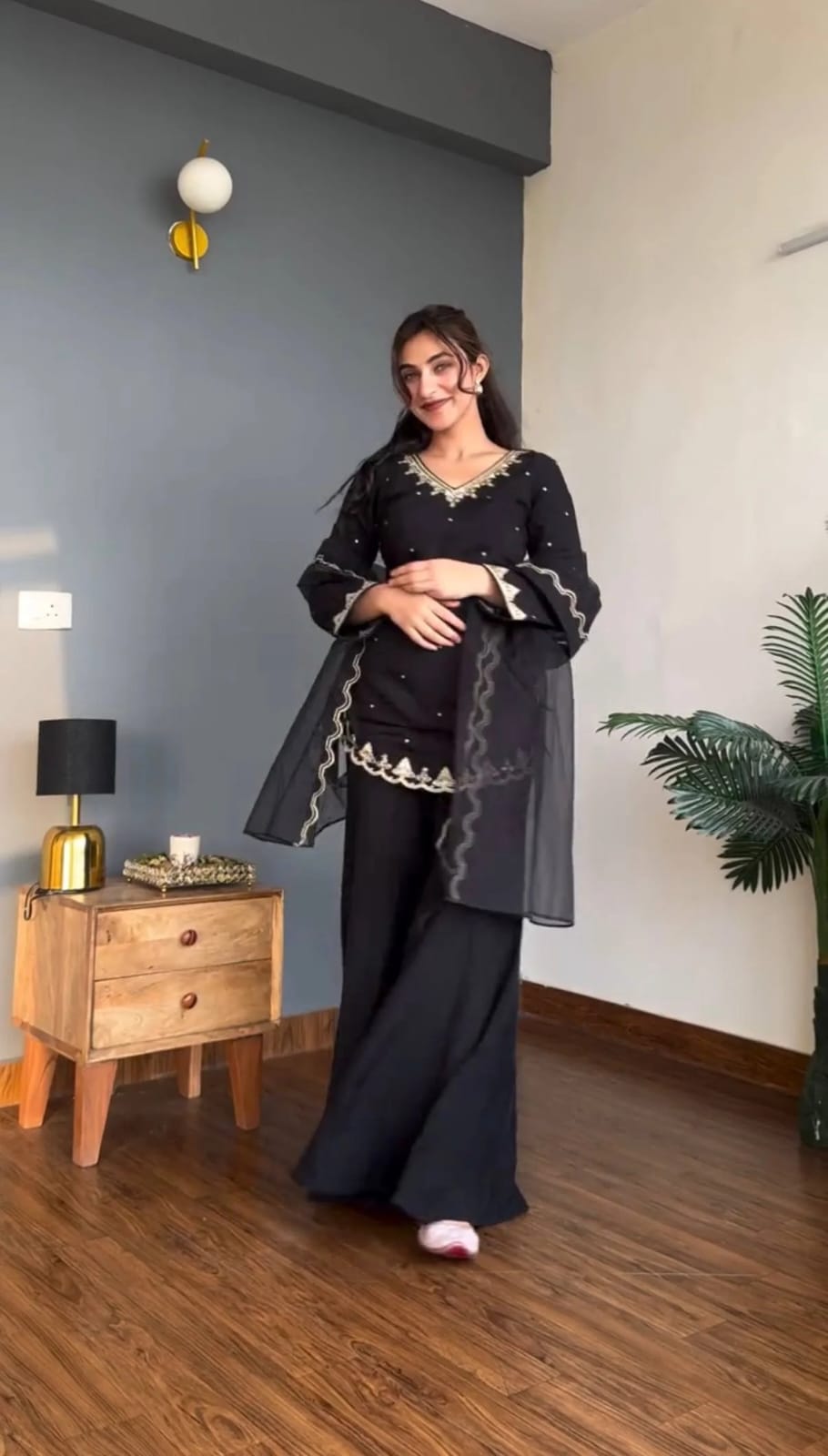
- Silk crepe: Silk crepe drapes more fluidly than crisp Chanderi and can look elegant in a longer straight kurta. Black Heavy Silk Crepe Kurta Set with Sequence Embroidery brings evening depth through a dark base, although black should be balanced with bright jewellery or a lively dupatta for Navratri.
- Georgette: Georgette is light and fluid, so it suits outfits where movement and a soft fall matter. Blue Printed Georgette Designer Gown for Women Festive isn't a straight-cut suit, but it shows how a printed, flowing fabric can create festive movement when a more traditional kurta silhouette isn't required.
Fabric care should influence your purchase. Sequence embroidery can catch on rough surfaces, organza dupattas can crease sharply and silk surfaces may show pressure marks from tightly packed bags. Keep embroidered suits on padded hangers, use a breathable garment cover and follow the care label instead of assuming that every silk-like fabric needs the same cleaning method.
Shoppers comparing silhouettes can also browse Ladies Dress Anarkali Salwar Suits when they want a more flared alternative, or Dress Materials when they prefer to select the fabric, colour and tailoring details themselves. A straight-cut suit remains the more practical option when you want less volume around the legs.
Navratri Straight-Cut Suit Styles and a useful colour plan
Colour planning for Navratri should begin with the celebration's dress tradition, followed by your personal comfort, venue lighting and existing accessories. The commonly followed nine-colour sequence changes by region and year, so a colour calendar should be treated as a local custom rather than a universal rule.
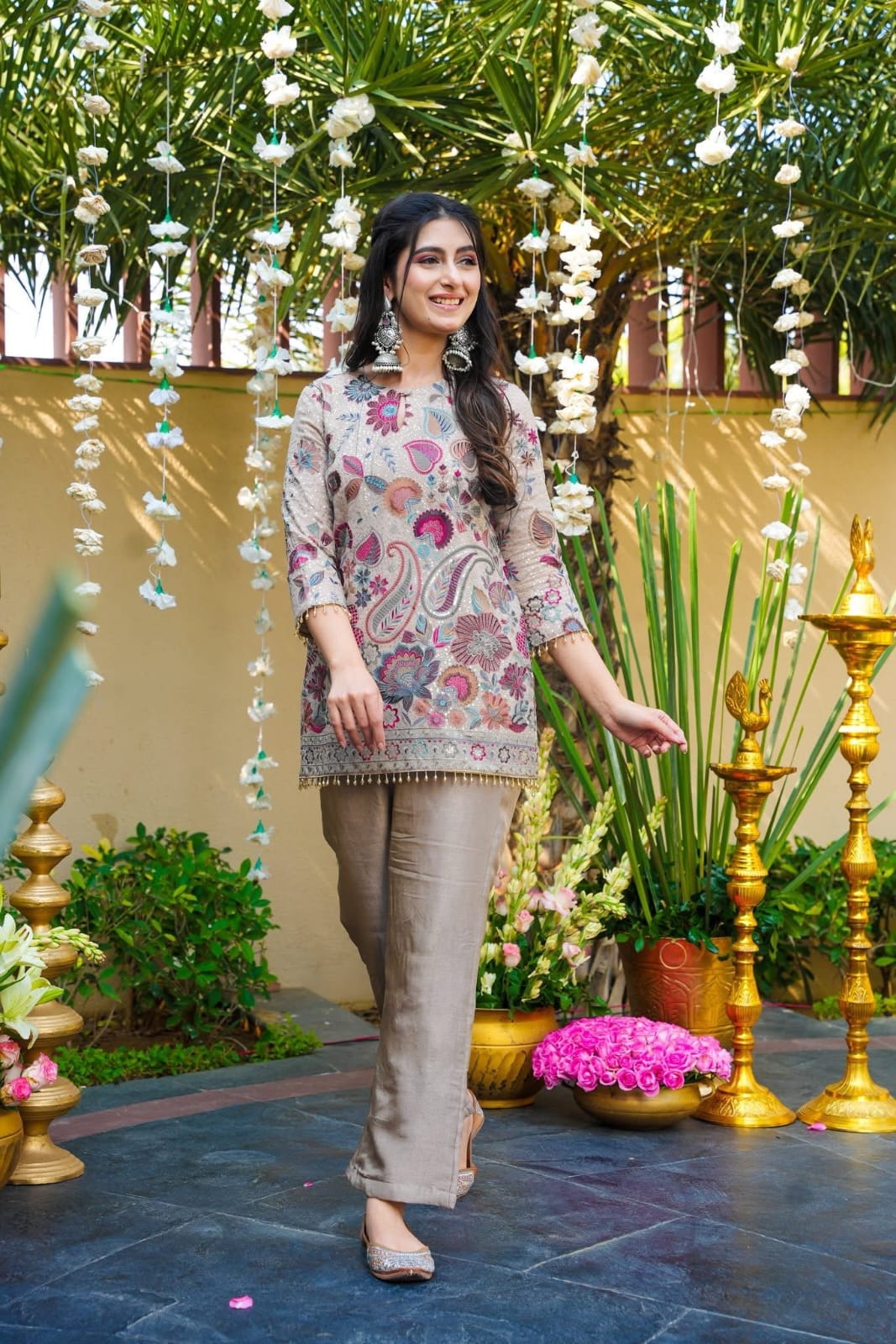
Mustard, peach, beige, blue and black can all work for festive dressing when their styling is intentional. Mustard brings warmth and photographs well in daylight. Peach softens the appearance of silk and organza. Beige creates a quiet base for antique gold, pearl or coloured stone jewellery. Blue can look fresh for evening events, while black creates a sophisticated foundation for metallic accents.
For a colour-led Garba gathering, choose one dominant shade and keep the rest of the outfit supportive. A bright kurta with a printed dupatta can stand alone with silver jhumkas. A neutral kurta can take a more colorful dupatta, bangles and bindi. Wearing several competing prints, metallics and saturated colours at once can make a straight silhouette look mainly crowded.
Pastel Blue Embroidered Chanderi Kurta Set with Dupatta gives a useful approach to daytime festive dressing. Pastel blue can be strengthened with silver-toned earrings, blue glass bangles or a deeper indigo accessory. Modern Taupe Vichitra Silk Embroidered Co-Ord Set for Women shows another route: taupe keeps the base understated, allowing footwear, earrings or a contrasting lip colour to introduce Navratri energy.
Price can also shape the colour decision because a versatile shade may earn more use after the festival. Seasonal options in Salwar Suits with 30% Off and Salwar Suits Flat 40% Off can be assessed for repeat wear, while Red Dress Materials Under 2000 may suit shoppers who want to customise a red Navratri outfit within a defined budget.
Navratri Straight-Cut Suit Styles with practical dupatta drapes
A secure, proportionate dupatta makes a straight-cut suit more comfortable and more polished. Drape one end over the opposite shoulder and secure it near the shoulder seam with a discreet pin when you expect to move, or use a front pleat for a formal seated event.
Organza dupattas create shape and volume, while soft printed fabrics fall closer to the body. A stiff dupatta can frame a simple kurta beautifully, but it may need two small pins to stop it from sliding. Avoid placing a heavy brooch directly through delicate organza or fine silk because the weight can leave a visible pull.
Neckline choice changes the visual length of the torso. A V-neck or narrow notch can create a longer vertical impression, while a round or boat neckline gives a more time-honoured, composed finish. High necklines work well with short earrings or a sleek hairstyle, whereas a simpler neckline can support a statement necklace.
Keep the dupatta length practical for Garba. A floor-skimming edge can catch underfoot, especially with sandals or a fast-moving circle dance. A length that reaches around the calf or lower ankle when worn over one shoulder is easier to manage, provided the opposite end is secured.
For very active dancing, a cross-body drape can be more secure than a loose shoulder drape. Place the dupatta over one shoulder, bring it diagonally across the front and tuck or pin it near the opposite waist. Test the arrangement by raising both arms before leaving home; a secure drape should not pull sharply at the neck or chest.
Navratri Straight-Cut Suit Styles for puja, Garba and dinner
What should you wear to a daytime puja?
A daytime puja calls for a breathable straight-cut suit in a moderate colour with comfortable sleeves and minimal trailing fabric. Chanderi, light Assam silk or a softly finished cotton-blend style can provide enough structure without feeling overdressed in warm weather.
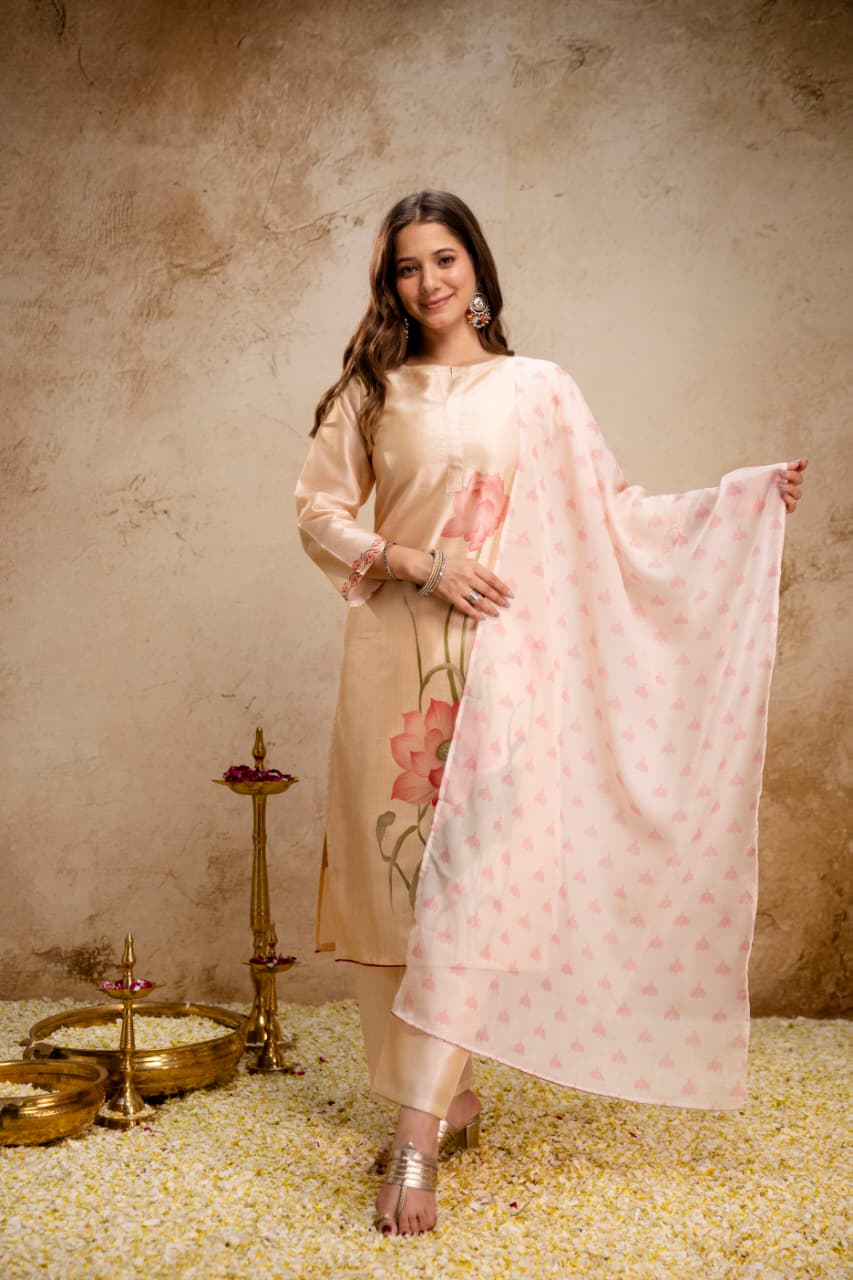
Choose small jhumkas, a slim bangle stack and flat embroidered sandals. Keep the dupatta secure and select a hemline that allows easy sitting on the floor if the ceremony requires it. Pastel Blue Embroidered Chanderi Kurta Set with Dupatta or the peach-toned Assam silk option can be styled with low-key accessories for this setting.
What works for an evening Garba event?
An evening Garba event needs a straight-cut suit with arm and hip ease, a secure dupatta and footwear that can remain comfortable for at least two hours. Sequence embroidery, a bright accessory or a printed dupatta can add celebration without requiring a heavy lehenga.
Wear low block heels, cushioned juttis or embellished flats with a firm sole. Keep long necklaces and loose tassels away from the arm line if you expect repeated movement. Black Heavy Silk Crepe Kurta Set with Sequence Embroidery can become more Navratri-ready with silver earrings, colourful bangles and a vivid potli.
How can a straight suit work for a family dinner?
A family dinner suits a refined straight kurta with controlled embroidery, a well-pressed dupatta and jewellery that adds light rather than noise. Vichitra silk, silk crepe or a dressy Chanderi set can look formal while remaining easier to sit in than a heavily layered outfit.
Use a compact clutch, pointed juttis and a low bun or polished braid. Elegant Beige Vichitra Silk Embroidered Kurta Set for Women can be paired with pearl earrings for a softer look, while Modern Taupe Vichitra Silk Embroidered Co-Ord Set for Women can take on more contrast through coloured stones or a jewel-toned lip.
Navratri Straight-Cut Suit Styles and accessories that improve movement
Accessories should support the silhouette and the activity level rather than compete with embroidery. Medium-sized jhumkas, a few glass bangles, a small bindi and a structured potli usually provide enough festive detail for a straight-cut kurta set.
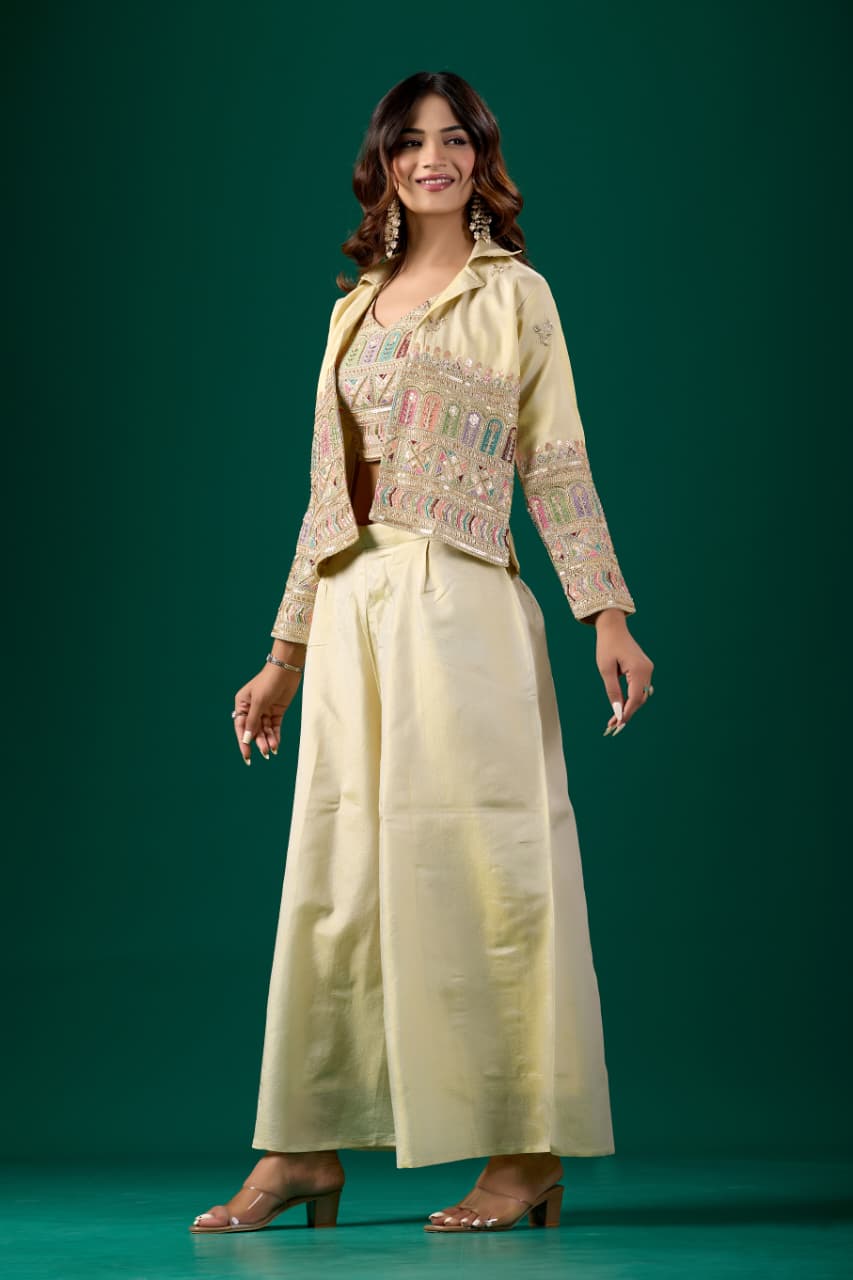
Metal choice can shift the character of the outfit. Silver complements blue, black and cool pastel shades, while antique gold works naturally with mustard, beige, peach and warm silk. Mixed metals can work when one finish clearly dominates, but equal amounts of silver and gold may make a restrained suit appear visually disjointed.
Footwear deserves as much attention as jewellery for Navratri. Choose a cushioned jutti, a flat sandal with an adjustable strap or a low block heel if you expect prolonged standing. Wear the footwear at home for at least 30 minutes before the event, and check that the sole doesn't slip on polished floors.
Hair and makeup can also preserve comfort. A low bun, braid or half-up style keeps hair away from the face during dancing. Long artificial nails, heavy bangles and dangling tassels may look attractive in photographs but can catch on dupatta embroidery, so test the full outfit before the celebration.
Navratri Straight-Cut Suit Styles: a final buying checklist
The right Navratri straight-cut suit should fit the event, climate, movement level and accessories you already own. A beautiful colour can't compensate for a tight armhole, an unstable dupatta or a hem that catches underfoot.
- Check fabric: Choose Chanderi for a light daytime feel, Assam silk or Vichitra silk for more structure, and silk crepe for fluid evening drape.
- Check measurements: Compare bust, shoulder, sleeve and kurta length measurements with a well-fitting garment you already own. Allow around 2 to 4 inches of total ease in a woven kurta.
- Check movement: Raise your arms, sit down and take several side steps before finalising the outfit. The kurta and trousers should not pull at the armhole, hips or crotch.
- Check the dupatta: Make sure the length is manageable and the fabric can be pinned without damage. Organza often needs careful handling, while soft printed fabrics are easier to secure.
- Check repeat wear: Ask whether the kurta can work for a family lunch, office celebration or festive dinner after Navratri. Neutral taupe, beige and pastel blue often offer more styling combinations than a heavily occasion-specific colour.
- Check care: Read the wash and storage instructions before buying. Embroidery, sequences, silk surfaces and organza may require dry cleaning or gentle professional care.
Elegant festive dressing comes from coordination rather than excess. When the fabric suits the weather, the fit permits movement, the colour has one clear focal point and the dupatta stays secure, a straight-cut salwar suit can carry you comfortably from prayer to celebration.
Common Questions About Navratri Straight-Cut Suit Styles
Are straight-cut suits suitable for Garba?
Yes, straight-cut suits are suitable for Garba when the kurta has enough ease at the armhole and hips and the trousers allow side movement. Secure the dupatta with pins or a cross-body drape, and choose cushioned flats, juttis or low block heels.
Which fabric is best for a Navratri straight-cut suit?
Chanderi is a strong choice for warm daytime celebrations because it is light and softly crisp. Vichitra silk, Assam silk and silk crepe are better suited to dressier evening events, with the final choice depending on climate, lining and the amount of movement required.
What colour should I wear for Navratri?
The best colour depends on your local Navratri colour tradition, venue and personal styling preferences. Mustard, peach, beige, blue and black can all look festive when coordinated with suitable jewellery, footwear and a contrasting or matching dupatta.
How should I style a straight-cut suit for an elegant Navratri look?
Pair the suit with one defined jewellery finish, a secure dupatta and comfortable footwear. Medium jhumkas, a few bangles, a small bindi and a polished braid or bun usually create a festive look without overwhelming the clean lines of the kurta.
Can I wear a straight-cut suit to a daytime Navratri puja?
Yes, a lightweight Chanderi or Assam silk straight-cut suit works well for a daytime puja. Choose moderate embroidery, a manageable dupatta and a hemline that allows comfortable sitting if the ceremony takes place on the floor.
How much ease should a straight-cut kurta have?
A woven straight-cut kurta generally needs around 2 to 4 inches of total ease at the bust, although personal comfort and garment construction affect the exact amount. Always test arm movement, sitting comfort and side steps before wearing the suit for a long celebration.