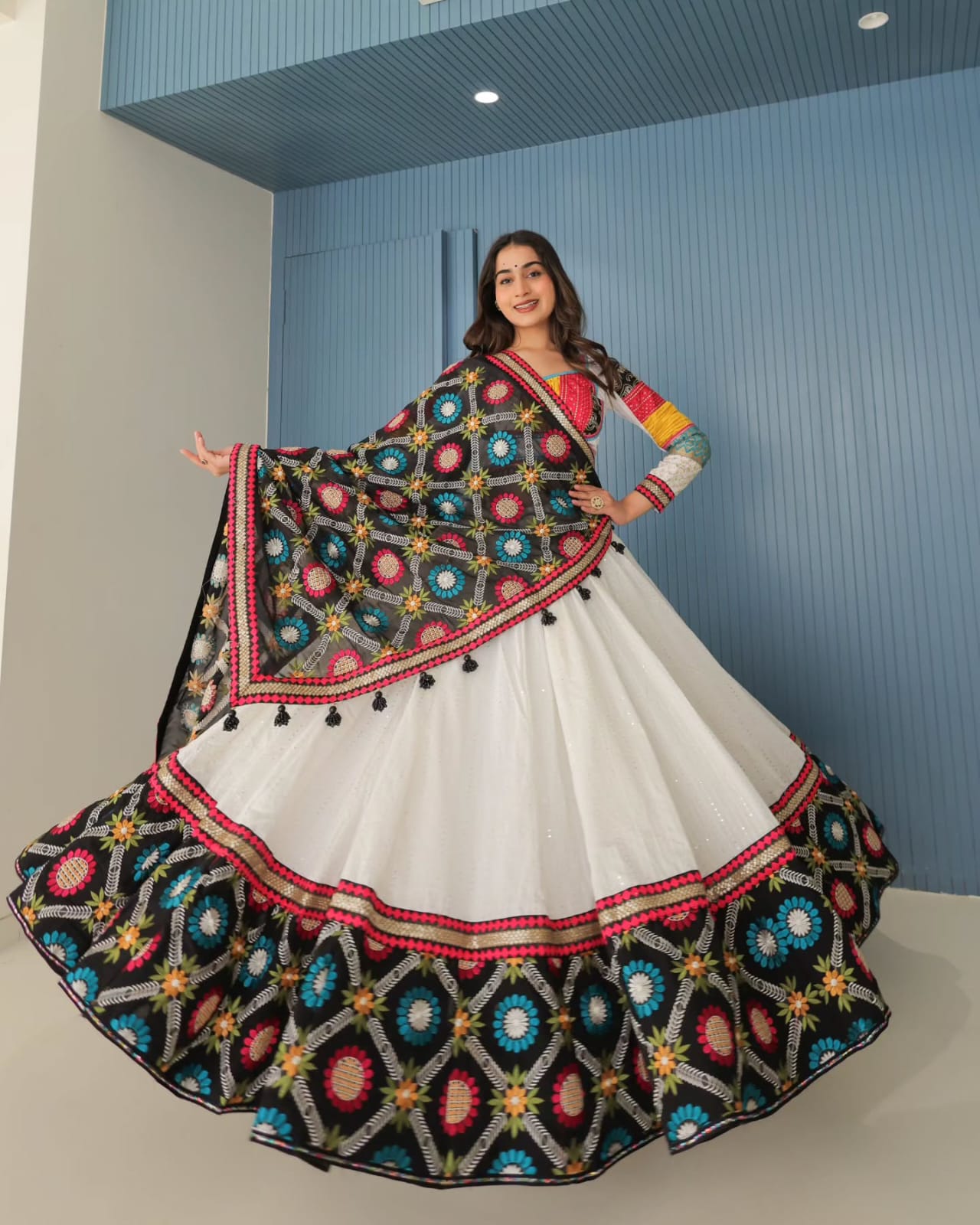
Garba nights demand more from an outfit than a festive photograph does. Navratri Anarkali Suit Styles for Festive Celebrations need enough flare for movement, a fabric that remains comfortable for several hours, and styling details that respect the colour and ritual traditions of Navratri. The right Anarkali can move from an evening aarti to a crowded dance floor without constant pinning or readjustment.
An Anarkali suit usually combines a fitted or shaped bodice with a skirt-like kurta that widens towards the hem. The silhouette creates graceful movement while retaining the familiarity of a salwar suit. Fabric weight, panel construction, hem width, sleeve design and dupatta placement determine whether the outfit feels practical or cumbersome during Navratri.
What makes an Anarkali suitable for Navratri?
A suitable Navratri Anarkali has breathable construction, a manageable hem, secure layering and enough room through the waist and hips for walking and dancing. A floor-sweeping style may look dramatic, but a hem that sits 2 to 4 centimetres above the floor is usually easier to manage at crowded venues.
Garba involves repeated turns, side steps, quick footwork and contact with other dancers. A moderate flare gives visual movement without trapping the feet. Six to twelve panels can create a graceful fall, while excessive gathers may add weight and make the kurta harder to control. A side slit or front opening should not pull when the wearer takes a wide step.
Neckline depth also matters. A round, boat or modest V-neck works well for family gatherings, temple visits and office-to-festival dressing. A lined bodice prevents embroidery, zari or sequins from scratching the skin during long wear. Three-quarter sleeves provide coverage while leaving the wrists free for bangles and dandiya sticks.
Navratri Anarkali Suit Styles for Festive Celebrations can include anything from a relatively simple kurta-and-pant set to a heavily worked skirt-like silhouette. The most useful choice depends on the event rather than the amount of decoration. A puja at home may suit delicate embroidery, while an open-air Garba event may justify a stronger colour and more visible border.
Fabric choices that work for long festive evenings
Chanderi, Vichitra silk, georgette, viscose Chanderi silk and silk crepe each behave differently, so the best fabric depends on movement, weather and the length of wear.
Chanderi for light structure
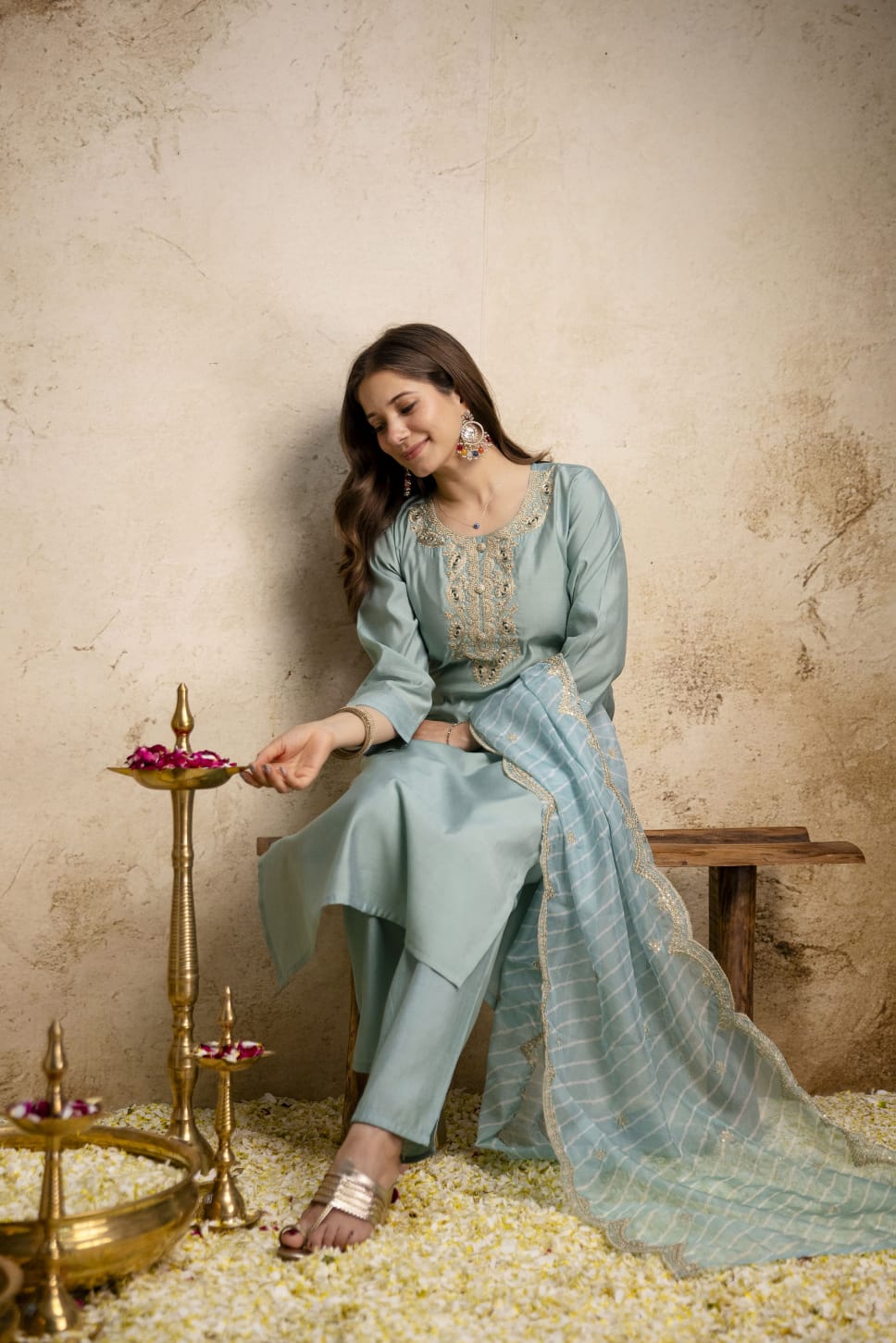
Chanderi offers a light, slightly crisp fall that helps an Anarkali keep its shape without feeling as dense as a heavier silk. Pastel Blue Embroidered Chanderi Kurta Set with Dupatta is an useful reference for daytime puja, family lunches and smaller festive gatherings. The fabric pairs well with delicate earrings and a dupatta worn over one shoulder.
Chanderi can crease more visibly than a fluid synthetic fabric, particularly around the waist and elbows. Folding the garment along its seams and storing it in a breathable cotton cover helps reduce hard creases. Embroidered Chanderi should not be crushed under heavy garments.
Vichitra silk for a richer evening finish
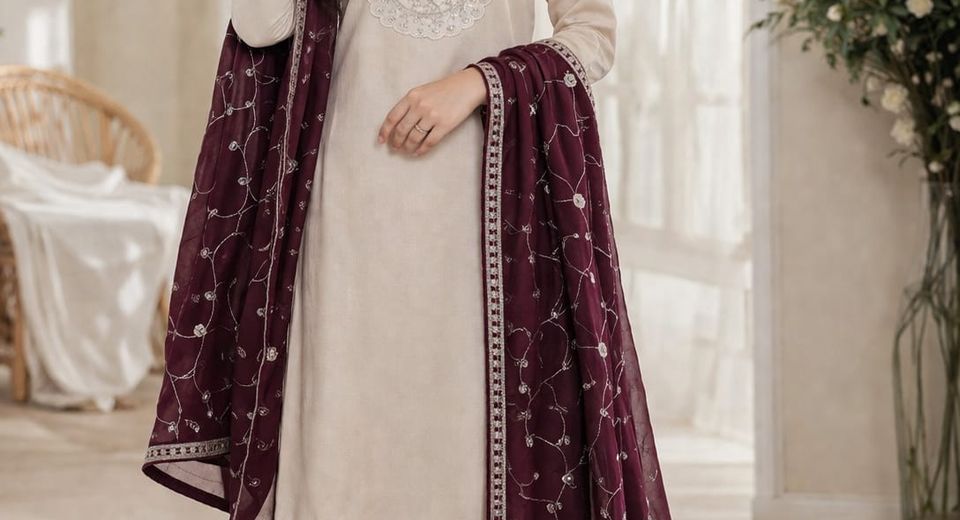
Vichitra silk generally gives a smoother, dressier surface and a more pronounced fall than lightweight cotton-silk fabrics. Elegant Beige Vichitra Silk Embroidered Kurta Set for Women works for a refined Navratri dinner or a family celebration where subtle embroidery is preferable to loud surface decoration.
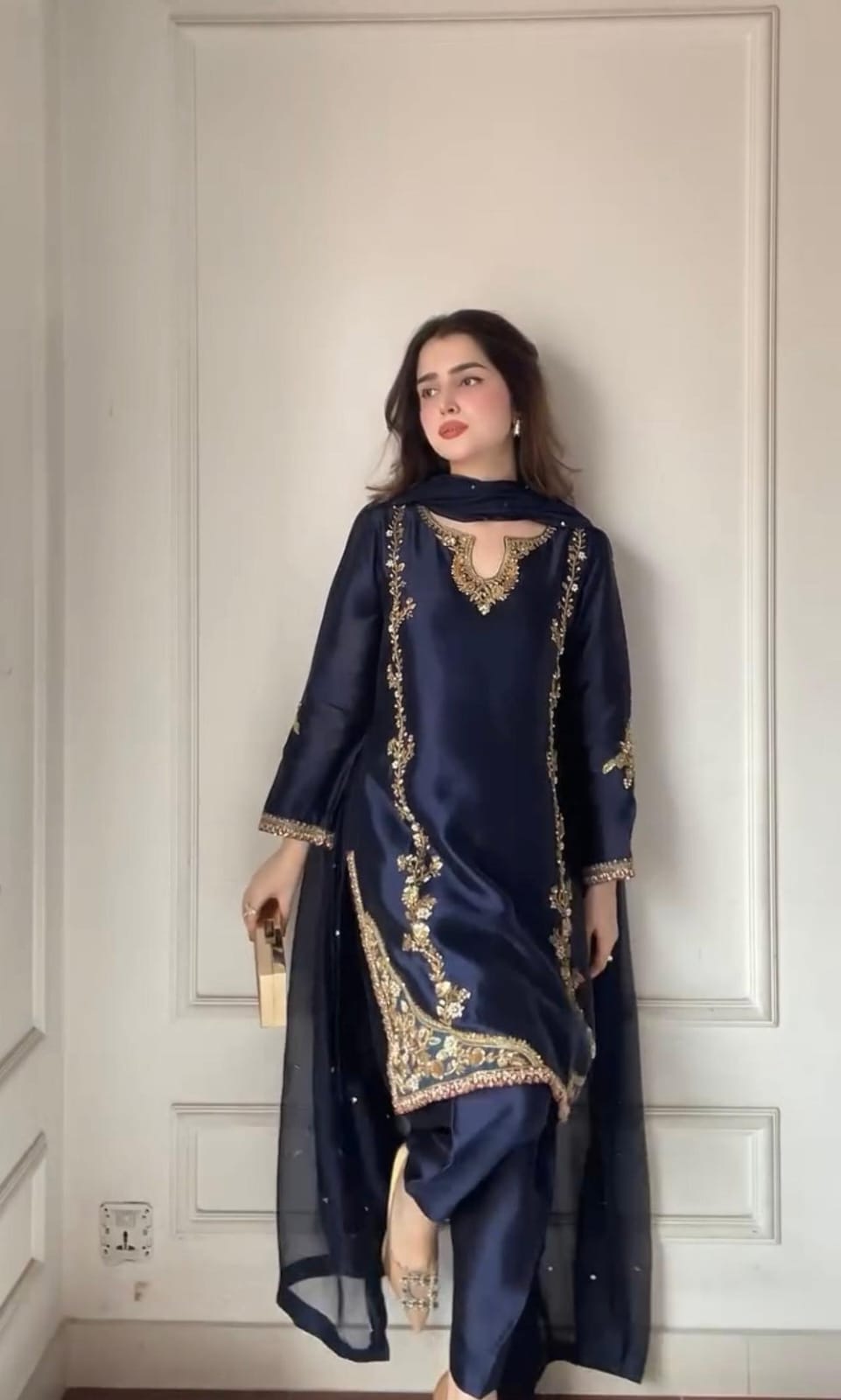
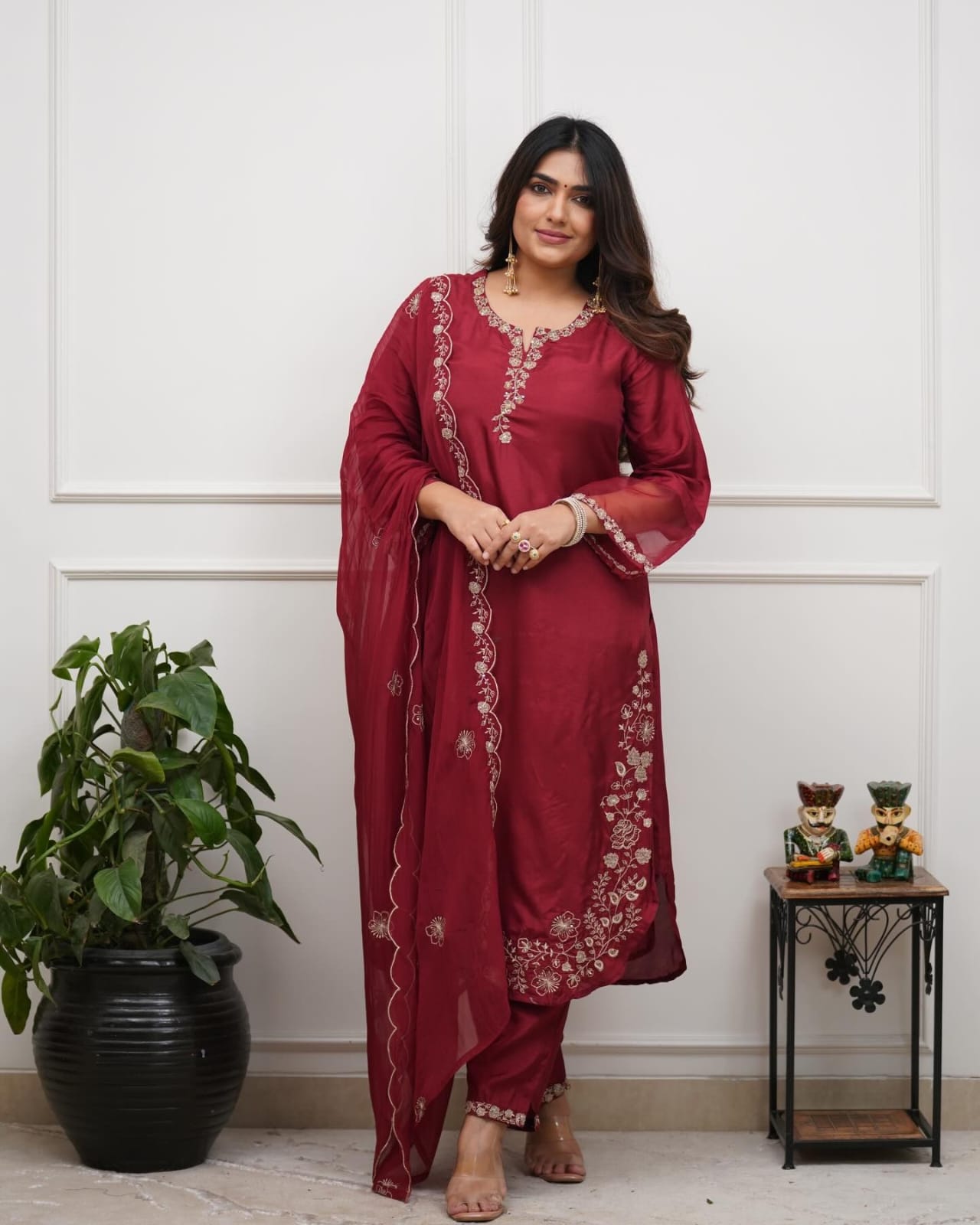
Maroon Vichitra Silk Kurta Set with Elegant Embroidery Work brings a deeper colour direction for evening wear. Maroon photographs well under warm lights and can be balanced with antique-gold earrings, a muted clutch and footwear in tan or gold.
Georgette and crepe for fluid movement
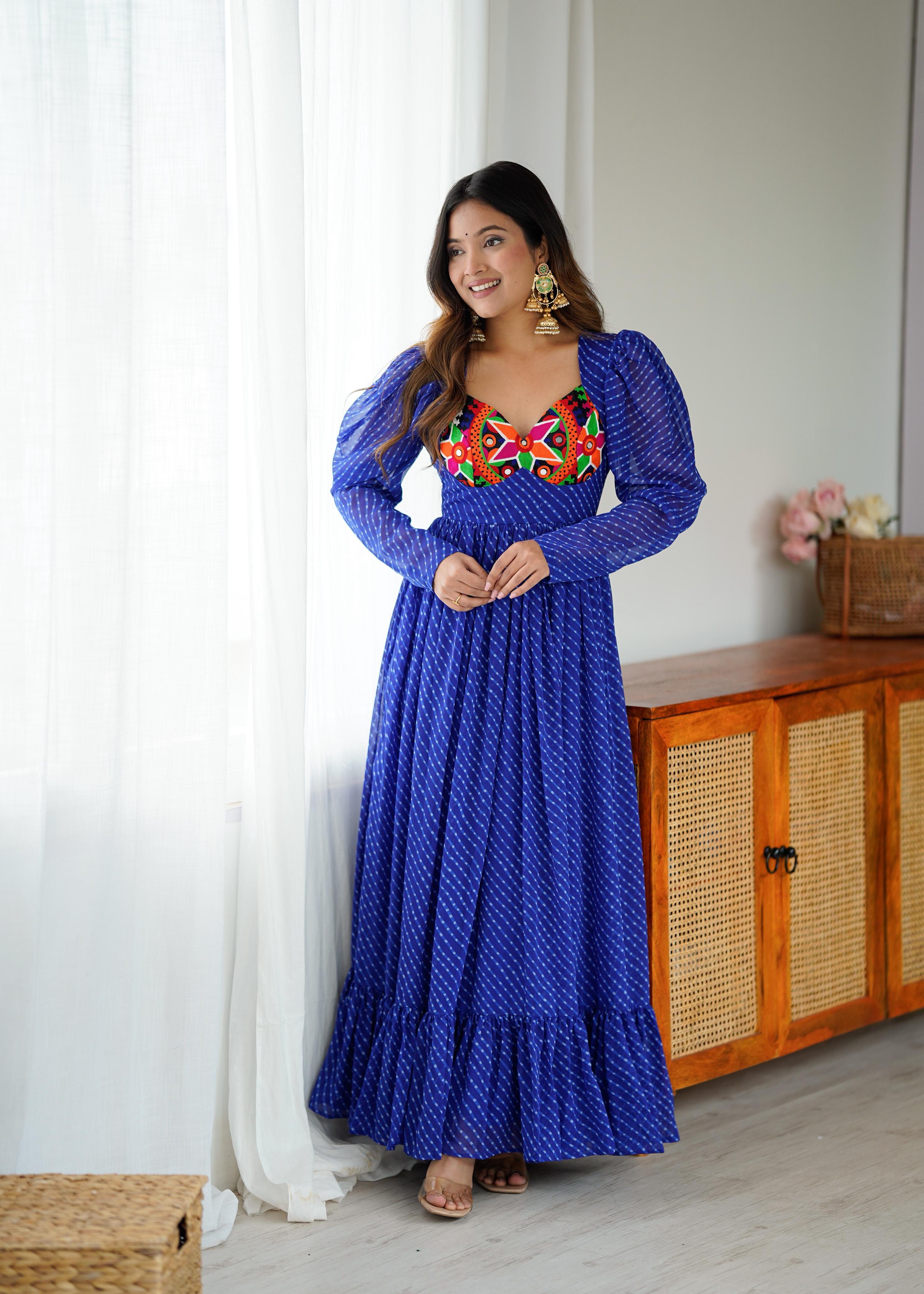
Georgette is lightweight and fluid, making it suitable for a kurta or gown-inspired Anarkali that needs visible movement. Blue Printed Georgette Designer Gown for Women Festive demonstrates how a print can provide interest without relying entirely on sequins or dense embroidery.
Silk crepe has more body than many lightweight georgettes and can support an evening look with a polished drape. Black Heavy Silk Crepe Kurta Set with Sequence Embroidery suits a later Navratri event, especially when the styling is kept balanced with metallic jewellery rather than multiple bright accessories.
Viscose blends for practical wear
Viscose Chanderi silk and similar blends can offer softness, movement and a festive surface without the stiffness of very heavily embellished fabrics. Maroon Viscose Chanderi Silk Embroidered Kurta Set for Women works well when the wearer wants a traditional colour with a comfortable, fluid silhouette.
Fabric choice should account for venue temperature. Natural-feeling, lighter fabrics are often more comfortable in a crowded indoor hall, while a lined silk-blend set may feel more appropriate for a cooler evening or formal dinner. A breathable lining is useful in either case because embroidery and sequins can make an unlined garment feel warm.
Colour ideas for the nine nights of Navratri
The nine Navratri colours vary by regional and yearly calendars, so a colour plan should follow the calendar being observed by the wearer's family or community. White, yellow, red, blue, green, grey, orange, peacock green and pink are commonly included in annual Navratri colour lists, although the sequence changes from year to year.
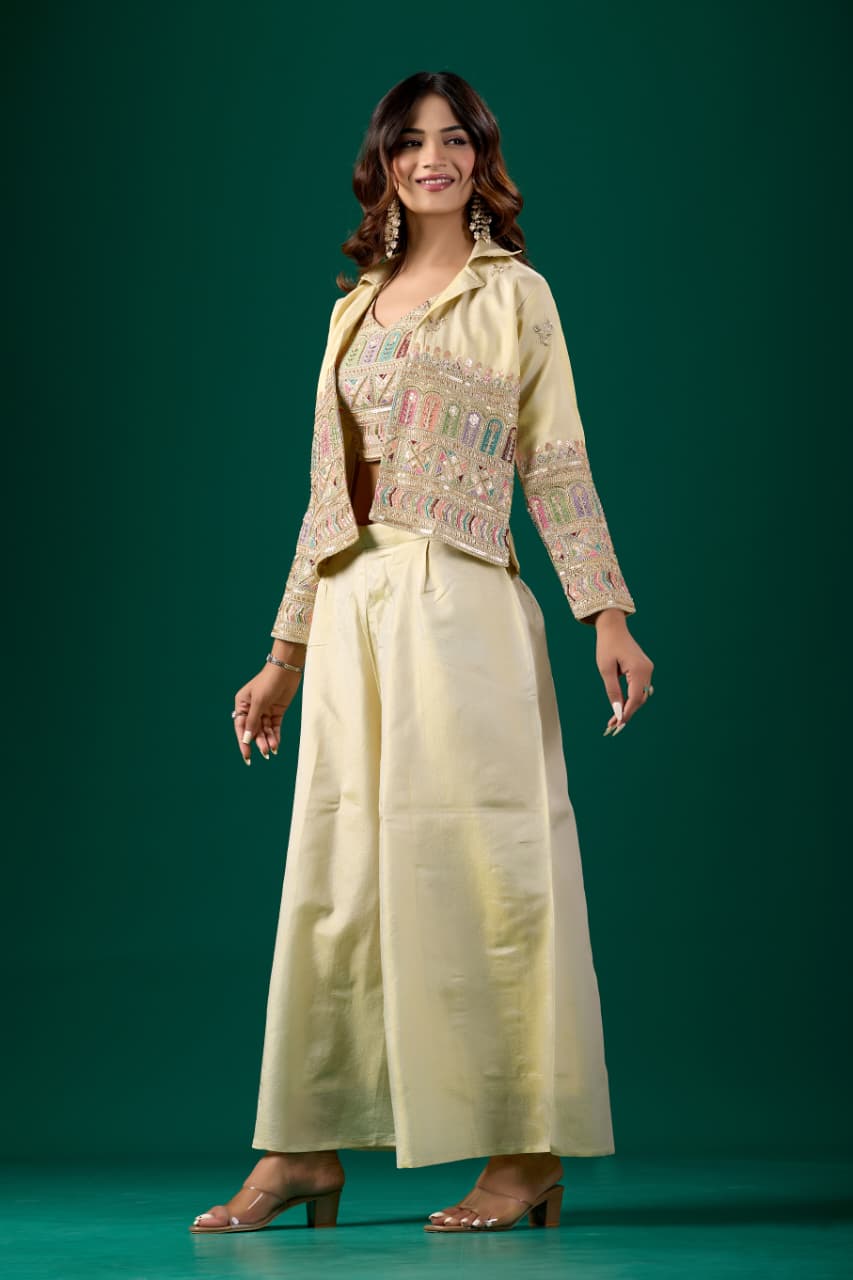
Yellow and mustard bring a bright, auspicious quality to daytime celebrations. Mustard Viscose Chanderi Kurta Set with Sequence Embroidery can be styled with gold-toned jhumkas, a warm ivory potli and neutral sandals. The look feels festive without requiring a heavily contrasting dupatta.
Blue works particularly well for evening events because it reads clearly under artificial lighting. A printed blue georgette set can be paired with silver jewellery for a cooler look or antique gold for a more heritage result. Pastel blue is gentler for daytime, while navy, cobalt and royal blue create greater visual depth after sunset.
Red and maroon suit people who prefer a more time-honoured festive palette. Maroon can be made contemporary with a blush or beige dupatta, while red benefits from restrained jewellery because the colour already carries strong visual impact. White gives a calm option for aarti and daytime gatherings; floral embroidery prevents the outfit from appearing too plain.
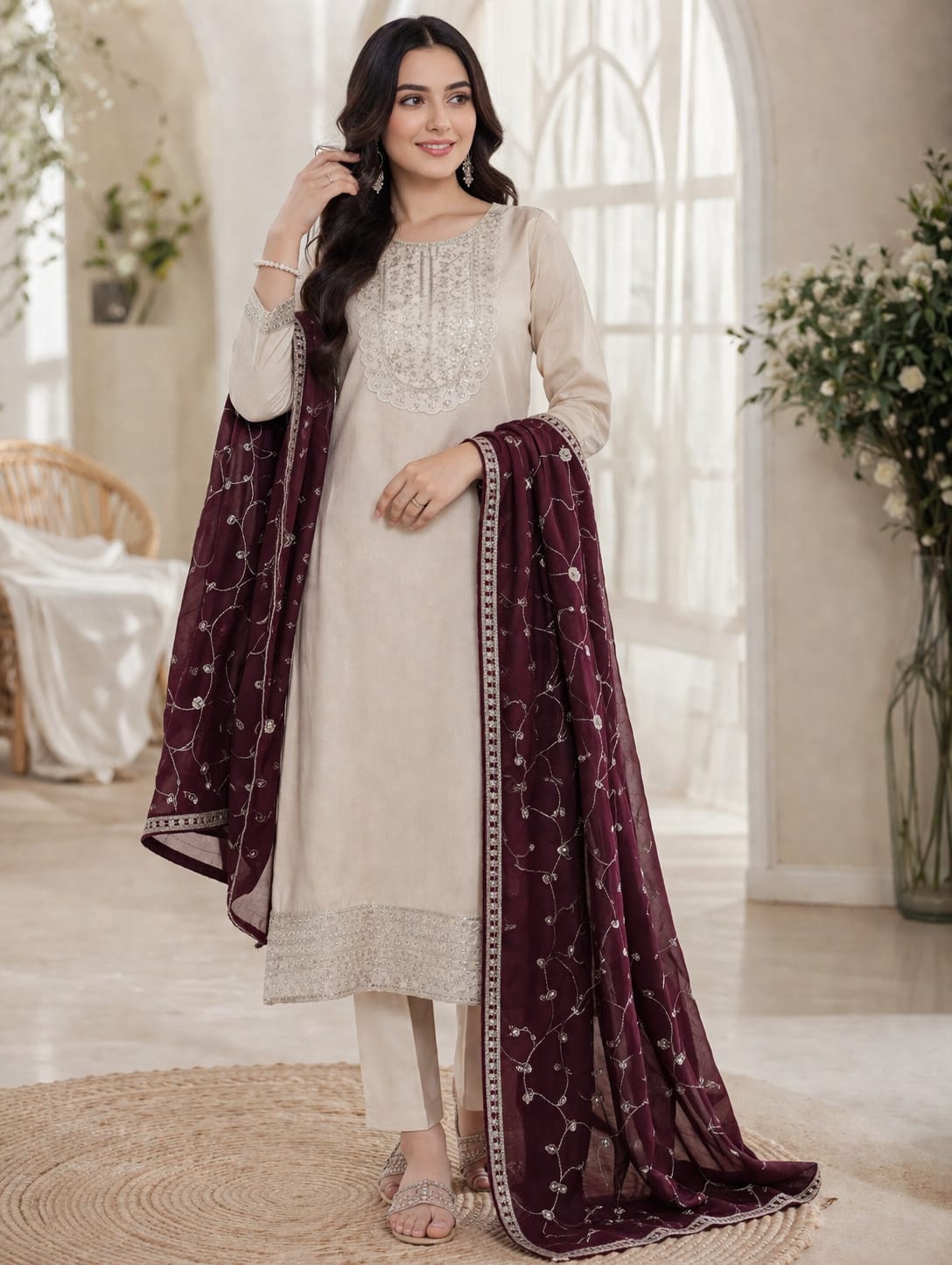
White Chanderi Kurta Set with Floral Embroidery and Dupatta illustrates how embroidery can add festive definition to a pale base. Pearl earrings, coloured glass bangles or a bright embroidered potli can introduce contrast without disturbing the clean appearance of white Chanderi.
Colour matching doesn't require every accessory to repeat the kurta shade. One dominant colour, one supporting neutral and one small accent colour usually create a more composed outfit than a head-to-toe match. This approach also makes the same Anarkali easier to restyle for Diwali, family dinners or wedding-related events.
How to choose the right flare, length and fit
The right Anarkali fit follows the body without pulling at the bust, waist or armhole, while the flare begins where the silhouette can move freely. A fitted upper section should still allow the wearer to sit, raise the arms and take a long step without strain.
Measure the bust, waist, hips, shoulder, sleeve length and full garment length before ordering or tailoring. An useful length check is to wear the footwear planned for Navratri and stand naturally; the hem should clear the floor and remain away from the heel. A garment intended for flat juttis may need a different length from one worn with a 5-centimetre heel.
Petite wearers often find a controlled flare and a slightly higher waist seam easier to carry than a very long, heavily gathered Anarkali. Taller wearers can accommodate broader borders and more panels, provided the hem remains manageable. A vertical embroidery arrangement, narrow border or monochrome colour scheme can create a longer line without adding physical length.
For active Garba, choose a flare that opens from the waist or upper hip but doesn't sweep excessively across the floor. For seated puja or dinner, a fuller flare can be comfortable because movement is less demanding. The same principle applies to sleeves: fitted cuffs may look elegant but can restrict the wrists during dancing.
Sequence embroidery and zari add sparkle, but placement matters. Embellishment concentrated around the neckline and borders keeps the garment visually festive while leaving the main body lighter. Dense work across every panel can increase weight, catch on bangles and make the outfit warmer over several hours.
Dupatta drapes that stay secure during Garba
A secure dupatta should be anchored at the shoulder and arranged so that the free end can't fall near the feet. A neat shoulder drape with two small hidden pins is usually more practical for dancing than a loose, full-length front drape.
For a classic appearance, place one end over the opposite shoulder and secure the fabric near the shoulder seam with a concealed safety pin. Pinning the dupatta lightly at the waist can prevent it from sliding while still preserving movement. Soft georgette drapes easily, whereas Chanderi may need careful pleating because its crisp texture can shift less predictably.
A front U-drape creates a graceful frame around the Anarkali but requires secure shoulder placement. This style works better for photographs, aarti and seated gatherings than for vigorous dancing. A dupatta worn over both shoulders creates more coverage and symmetry, but the fabric should not hang low enough to brush the floor.
Choose the dupatta weight according to the kurta. A heavily embroidered Anarkali usually benefits from a lighter, plain or narrowly bordered dupatta. A simple kurta can support a printed, tissue-like or embellished dupatta as the main accent. Matching the dupatta exactly to the kurta is optional; repeating one embroidery colour is often enough to connect the pieces.
Jewellery, footwear and finishing details
Comfortable jewellery and stable footwear make a greater practical difference than adding another layer of decoration. Jhumkas, chandbalis, a short necklace and stacked glass bangles can create a complete Navratri look without competing with detailed embroidery.
Dandiya events call for earrings that sit securely and bangles that don't catch on the dupatta. Long, loose necklaces may swing into the face during turns, while very large rings can become uncomfortable when holding sticks. A small bindi can connect the styling to the festive setting without depending on heavy makeup.
Juttis, mojaris and low block heels are safer choices for long periods of standing and dancing than narrow stilettos. Test footwear with the Anarkali before the event, particularly if the hem is long. Cushioned insoles can reduce fatigue, but they should not make the shoe too tight across the toes.
A compact potli or small crossbody bag keeps essentials close without interfering with the flare. Carrying a few safety pins, a small fashion tape strip and a compact comb is sensible when the evening includes travel, dancing and several hours of wear. A cotton slip may also improve comfort beneath a synthetic or heavily embellished garment.
Shopping and care decisions that protect the outfit
An useful purchase decision compares fabric, lining, embellishment, measurements, closure design and maintenance requirements rather than judging the photograph alone. Check whether the kurta has a functional side zip, whether the trousers have an elasticated or fixed waist, and whether the dupatta dimensions are adequate for the planned drape.
Budget-conscious shoppers can compare seasonal selections in Ladies Dress Anarkali Salwar Suits, while Dress Materials may suit people who want a custom-stitched flare or neckline. Sale-led browsing through Salwar Suits with 30% Off and Salwar Suits Flat 40% Off can be useful, but a lower price should not replace checking measurements and fabric composition.
Red Dress Materials Under 2000 may provide a practical route to a colour-specific Navratri outfit when tailoring is available locally. Custom stitching is particularly useful when the wearer needs a shorter hem, a wider armhole, a fuller bust adjustment or a flare that suits dancing.
Keep embroidered garments away from direct sunlight and strong humidity after wearing them. Air the outfit briefly before storage, remove surface dust with a soft brush and follow the stated wash or dry-cleaning instruction. Sequins, zari and delicate Chanderi embroidery should not be scrubbed, wrung or stored in a tightly compressed plastic bag.
Fold the Anarkali with tissue or soft cotton between heavily embellished sections to prevent snagging. Store the dupatta separately when its embroidery could catch on the kurta. Before Navratri begins, check hooks, zips, lining seams and hem threads so that a small repair doesn't become an event-day problem.
Putting together Navratri Anarkali Suit Styles for Festive Celebrations
The strongest festive outfit usually has one clear focal point: colour, embroidery, print, jewellery or silhouette. When the Anarkali already has a broad embellished border, simpler footwear and jewellery create balance. When the kurta is lightly decorated, a vivid dupatta or statement earrings can provide the needed festive emphasis.
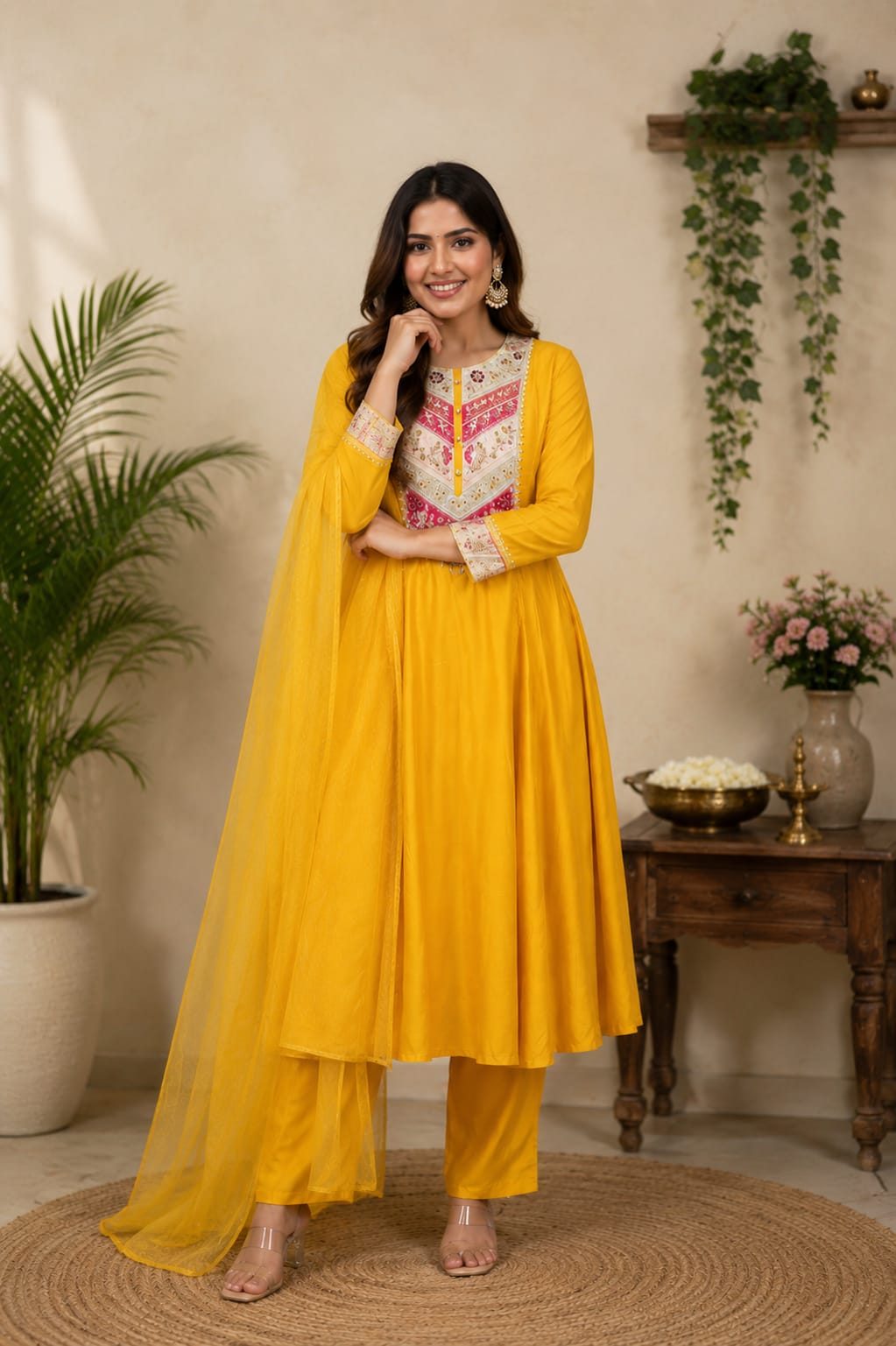
For daytime puja, a light Chanderi Anarkali in white, pastel blue or yellow with modest jewellery and comfortable flats gives a polished result. For evening Garba, a maroon, blue, mustard or black silk-blend outfit with secure styling, a manageable hem and low-profile footwear is more practical. For a formal dinner, Vichitra silk, silk crepe or concentrated sequence work can provide richness without requiring a very wide flare.
Navratri Anarkali Suit Styles for Festive Celebrations work best when beauty and movement are planned together. A garment that fits accurately, uses an appropriate fabric and keeps the dupatta secure will look more confident than a more elaborate outfit that needs constant adjustment.
Questions to Ask Before Choosing a Navratri Anarkali Suit
Which fabric is most comfortable for a Navratri Anarkali suit?
Light Chanderi, georgette and comfortable viscose blends are suitable for long festive wear because they allow airflow and movement. Vichitra silk and silk crepe offer a richer evening appearance, but a breathable lining is important when embroidery or sequins add weight.
Can I wear an Anarkali suit for Garba?
Yes, an Anarkali suit works well for Garba when the hem is clear of the floor, the flare does not trap the feet and the dupatta is securely pinned. Low block heels, juttis or mojaris are more practical than unstable high heels.
How long should a Navratri Anarkali be?
The hem should sit slightly above the floor when worn with the footwear planned for the event. A clearance of roughly 2 to 4 centimetres helps prevent stepping on the garment while preserving the elegant full-length appearance.
Which colours are suitable for Navratri outfits?
Common Navratri colour lists include yellow, white, red, blue, green, grey, orange, peacock green and pink, although the sequence changes each year and by regional tradition. Follow the calendar observed by your family or community, then choose a shade that suits the time of day and venue.
How can I stop my Anarkali dupatta from slipping during Garba?
Pin the dupatta at the shoulder and lightly secure it near the waist so the free end stays away from the feet. A shorter or lighter dupatta is often easier to manage than a heavy, floor-length style during active dancing.
How should embroidered Chanderi and silk-blend Anarkali suits be stored?
Air the garment after wearing it, follow the recommended cleaning method and store it folded with soft cotton or tissue between embellished sections. Keep embroidered garments away from direct sunlight, moisture and tightly compressed plastic storage.