

Nauvari Saree Blouse Designs can change the character of a nine-yard drape without taking attention away from its distinctive Maharashtrian silhouette. A traditional blouse may use a modest round neck, elbow-length sleeves and a close fit, while a modern version can introduce a square neckline, structured shoulders or understated embroidery. The right choice depends on the saree fabric, draping method, jewellery, weather and the amount of movement required during the day.
Nauvari sarees are worn for weddings, Ganesh Chaturthi, Gudi Padwa, Haldi ceremony celebrations, cultural performances and family rituals. Each setting calls for a different balance between authenticity and comfort. A blouse that works under lightweight cotton may feel restrictive beneath a heavier Paithani silk drape. Understanding these practical details helps you choose a blouse that looks intentional rather than simply decorative.
Nauvari Saree Blouse Designs for a Traditional Maharashtrian Silhouette
A traditional Nauvari blouse usually has a fitted bodice, a high or moderate neckline, sleeves that reach the elbow and a back opening secured with hooks, buttons or tie strings. The blouse stays close to the body because the nine-yard saree is tucked between the legs and pleated for easier walking. Extra looseness around the waist can disturb the drape and create bulk at the back.
Many Maharashtrian blouses are made in cotton, silk cotton, raw silk or a fabric that complements the saree. Red, green, purple, mustard, royal blue, black and off-white are widely used because these colours pair naturally with traditional sarees and jewellery. A blouse may include a contrasting border at the sleeve edge or neckline, particularly when the saree has a woven zari border.
Traditional styling doesn't require heavy ornamentation. Narrow zari piping, fabric-covered buttons, a small back tie or a simple brocade panel can provide enough detail. For a Paithani saree, matching the blouse to the dominant body colour often gives a more coherent result than copying every colour from the peacock, parrot or floral pallu.
How should a blouse fit a Nauvari saree?
A Nauvari blouse should feel firm across the bust and shoulders without pulling at the armhole or creating horizontal wrinkles. A close fit is useful, but the garment should allow you to raise both arms, sit cross-legged and walk comfortably. A blouse with approximately 1 to 2 centimetres of wearing ease at the bust can work well when the fabric has no stretch, although the final measurement should be decided with a skilled tailor.
The armhole deserves particular attention because Nauvari draping allows considerable leg movement and may expose more of the side silhouette than a conventional six-yard drape. A low armhole can gape when the wearer lifts an arm. A high armhole with a carefully shaped sleeve usually provides better coverage and cleaner movement.
Nauvari Saree Blouse Designs for Weddings, Festivals and Rituals
The most useful traditional blouse designs rely on proportion, fabric and finishing rather than excessive embellishment. A round-neck blouse with elbow-length sleeves is a dependable choice for a cotton or silk Nauvari saree. A high-neck blouse creates a formal appearance and works especially well with a nath, thushi necklace and layered gold jewellery.
A square neckline can still look traditional when the cut isn't too deep and the sleeve remains structured. A small keyhole at the back offers ventilation while preserving a modest front. A front-button blouse with fabric-covered buttons suits lighter cotton sarees and makes dressing easier for older wearers or anyone who prefers not to pull a blouse over the head.
For a festive drape, a blouse with a contrasting sleeve border adds definition. Green and red combinations are associated with many Maharashtrian festive wardrobes, while deep purple with gold creates a richer evening effect. Mustard, rust and maroon are useful alternatives when a wearer wants traditional warmth without repeating the most familiar red-green palette.
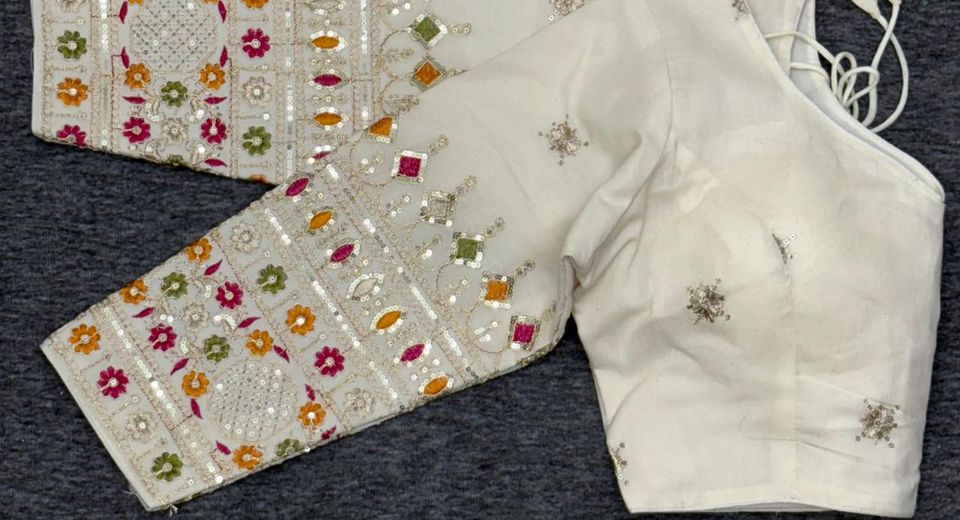
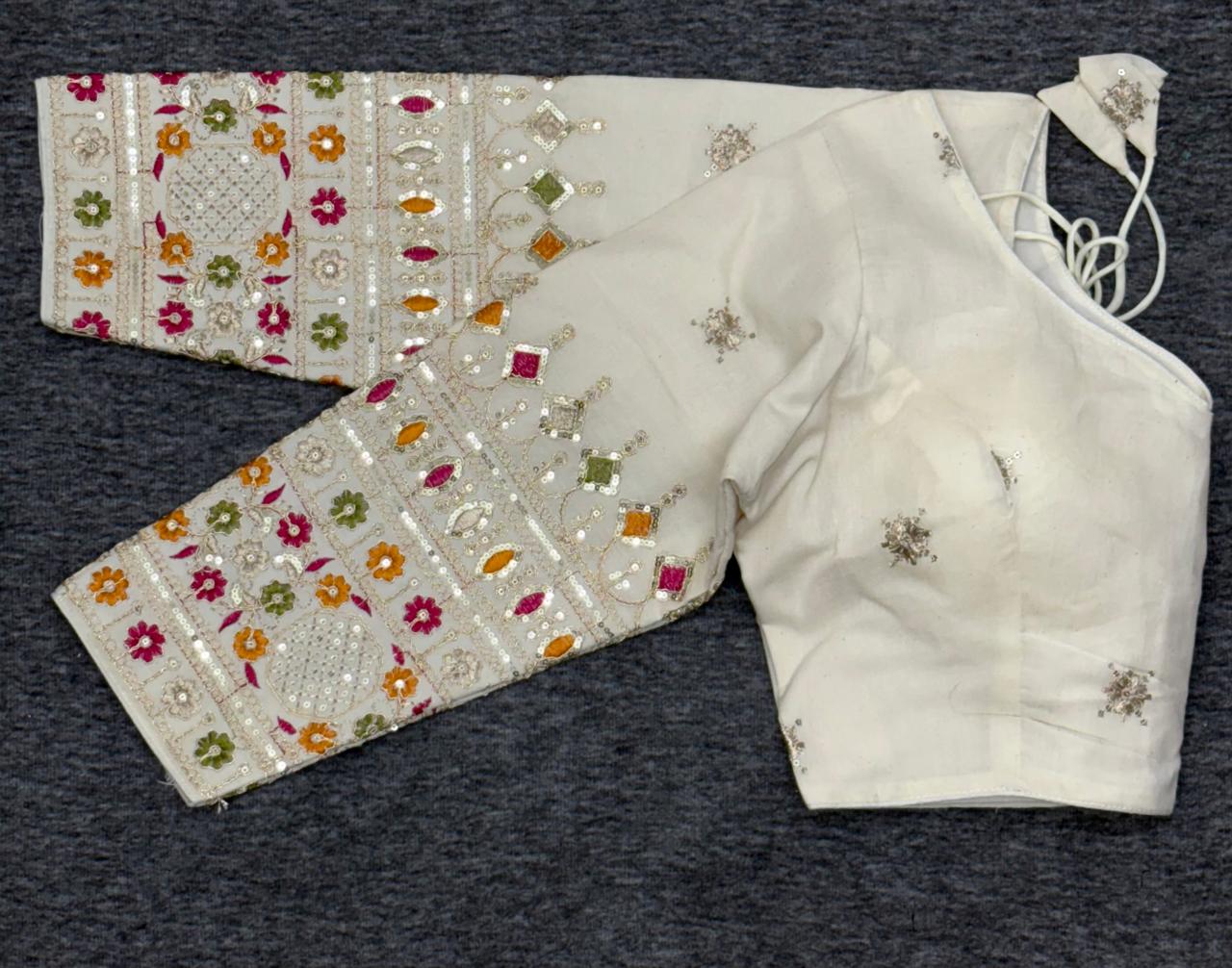
Classic Festive Wear Blouse for Stylish Saree Look illustrates the value of a clean, occasion-ready silhouette. The important styling principle is to coordinate the neckline and sleeve finish with the saree border, rather than allowing blouse decoration to compete with a heavily woven pallu.
For a Haldi ceremony, washable cotton or cotton silk in yellow, turmeric, green or coral is more practical than delicate velvet or heavily embellished brocade. A blouse worn for a wedding reception can use zari, sequins or a woven silk texture, provided the sleeve and armhole still allow comfortable movement. For a cultural performance, secure hooks, a firm neckline and breathable lining matter more than subtle hand embroidery.
Nauvari Saree Blouse Designs With Modern Necklines and Sleeves
Modern Nauvari blouse styling works best when one contemporary feature is balanced with two or three traditional details. A contemporary feature may be a boat neckline, a gently squared neckline, short puff sleeves, a slightly cropped length or a minimal back opening. Traditional details can include a close-fitting bodice, a saree-matched colour, a zari edge and jewellery associated with Maharashtra.
Three-quarter sleeves are practical for cooler weather and formal indoor functions. Short sleeves suit a lightweight cotton drape, especially when the saree is worn for a daytime festival. Elbow-length puff sleeves create a softer vintage mood, but the puff should remain controlled because excessive volume can interfere with the shoulder pleats and pallu.
A contemporary blouse can also use a matte fabric instead of high-shine synthetic material. Raw silk, cotton silk, Chanderi and textured handloom cotton create visual depth without making the outfit look costume-like. Chanderi is particularly useful for a lighter festive wardrobe because its fine structure adds polish while remaining less heavy than many brocades.
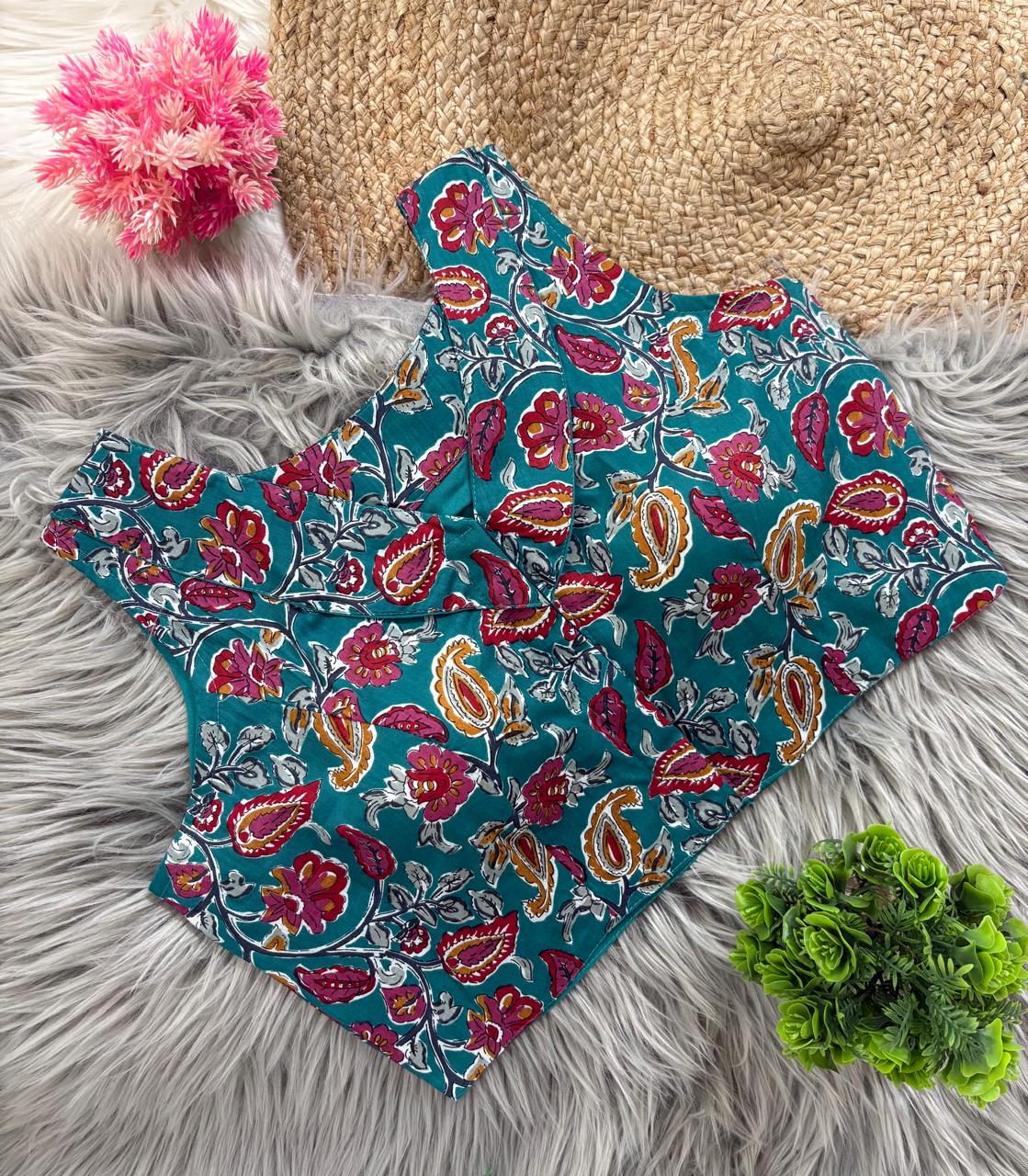
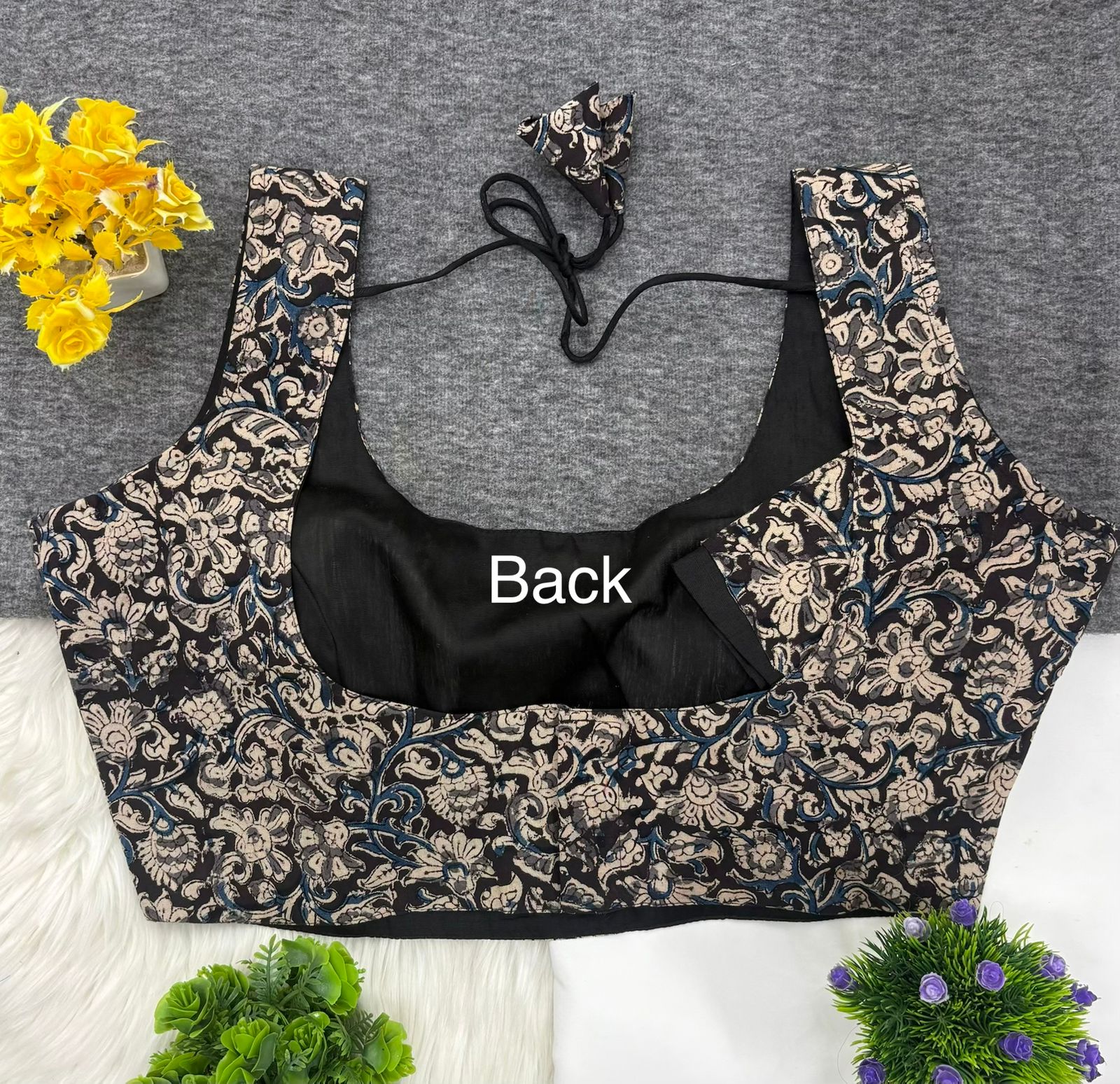
Pure Kalamkari Cotton Padded Blouse for Women can be considered when a printed blouse is paired with a plain or minimally bordered Nauvari saree. Kalamkari cotton introduces floral and natural motifs, but the saree should remain quiet enough for the print to be readable. Padded construction may provide a smoother outline, although padding should never replace correct bust and shoulder measurements.
Kalamkari Cotton V Neck Collar Blouse for Women gives another modern direction through the combination of a V neckline and collar detail. A V neckline can lengthen the upper body visually, while a collar gives the blouse a sharper, more tailored character. For a traditional function, keep the V moderate and balance the neckline with a nath, green glass bangles or a short gold necklace.
Nauvari Saree Blouse Designs: Choosing the Right Neckline and Back
The most suitable neckline depends on the wearer's comfort, jewellery and the height of the saree border. A round neck is versatile, a square neck frames a broad necklace, a high neck supports a formal traditional look, and a moderate V neck creates vertical length. Very deep necklines may look disconnected from a conservative Nauvari styling approach and can become difficult to secure while moving.
Sleeve length affects both appearance and comfort. Elbow sleeves are the safest traditional option because they provide coverage and remain visible beneath the pallu. Short sleeves make sense for summer cotton sarees. Three-quarter sleeves offer more coverage but should not be so tight at the forearm that they restrict movement during dancing, rituals or serving food.
Back details should be chosen according to the saree's pallu placement and the wearer's need for support. A closed back with hooks gives a secure finish. A tie-up back brings adjustability but may create a visible knot beneath a thin saree. A small keyhole is more practical than a large open-back design when the blouse will be worn with layered necklaces or a traditional shoulder drape.
Neckline depth should be tested while standing and sitting. A neckline that appears modest when upright can shift when the wearer bends forward to perform a ritual. A tailor should also check whether the blouse remains covered when the pallu is pinned at the shoulder and when the arm is raised.
Nauvari Saree Blouse Designs by Fabric, Colour and Season
Cotton and cotton silk are dependable for daytime festivals, summer ceremonies and outdoor photographs because they breathe better than dense synthetic fabrics. Silk, raw silk, brocade and velvet are more appropriate for evening celebrations or winter weddings, when their structure and weight can support richer embellishment. Banarasi silk blouses can complement a plain Nauvari saree, but the blouse should be lined carefully because zari-rich fabric may feel scratchy against the skin.
Colour matching can follow three useful methods. A same-colour blouse creates a long, uninterrupted line and lets the saree border lead. A contrast blouse highlights the upper body and works well when the saree is plain. A tonal blouse uses a lighter or darker version of the saree colour for depth without creating a sharp divide.
Gold and silver should be selected with the saree border and jewellery in mind. Gold zari normally sits naturally with neutral shades such as maroon, rust, mustard and bottle green. Silver zari can complement grey, lavender, royal blue and cool pinks. Mixing metals is possible, but the blouse embroidery, jewellery and saree border should share at least one visible link.
Weather should influence lining as much as the outer fabric. A cotton voile or lightweight cotton lining is more comfortable in humid conditions than polyester. A silk or brocade blouse may need a smooth lining to prevent snagging against the saree. A blouse worn repeatedly should be aired after use, especially around the underarm and neckline, before it's stored.
Nauvari Saree Blouse Designs and Maharashtrian Jewellery Coordination
A Nauvari blouse should leave enough visual space for Maharashtrian jewellery to remain recognisable. A nath, thushi, kolhapuri saaj, tanmani, bormal, green glass bangles and gold kamarbandh each occupy a different area of the outfit. A high neckline pairs well with shorter necklaces, while a moderate round or square neckline creates room for layered necklaces.
Large earrings and a prominent nath can make a heavily embellished neckline look crowded. When the saree has an elaborate Paithani pallu, a restrained blouse with a narrow zari edge often creates a more balanced result. When the saree is plain, blouse embroidery or a Kalamkari print can provide the main surface interest.
Hair and blouse details should also work together. A traditional bun with gajra leaves the neckline visible, making a high neck or collar more prominent. A braid or loose low bun can soften a structured blouse. Jewellery should be tried with the completed drape because the pallu may cover part of the blouse neckline and alter the intended balance.
Nauvari Saree Blouse Designs: Fitting, Alterations and Care
Accurate measurements are more important than a fashionable cut because a poorly fitted blouse can pull the saree out of position. Measure the full bust, underbust, shoulder width, armhole, upper arm, sleeve length and blouse length while wearing the undergarments intended for the final outfit. The tailor should record whether the blouse will be worn with padding, a saree shapewear garment or a traditional petticoat.
Leave the most useful alteration allowance at the side seams and underarm seams when possible. A blouse that's too tight across the upper back can't always be enlarged without disturbing the armhole. Hook-and-eye closures are easier to alter than a concealed zip, while tie strings offer adjustment but may not provide the smoothest finish under a thin saree.
Wash and store the blouse according to its fibre and decoration. Cotton can usually be gently hand-washed after checking the colourfastness of Kalamkari dyes. Silk, velvet, zari and heavily embellished blouses are safer with specialist dry cleaning. Do not wring a blouse with padded cups, and don't store damp fabric in a closed wardrobe because moisture can cause odour, colour transfer and mildew.
Fold embellished blouses with soft muslin between heavy surfaces, and keep zari away from direct contact with rough hooks or jewellery. Air a silk blouse in shade after wearing it. Press cotton on the reverse side, use low heat for silk and place a pressing cloth between the iron and zari. These steps preserve the shape and surface for future festivals.
How to Make Nauvari Saree Blouse Designs Feel Personal
A personal blouse choice can be created by combining one family tradition with one current detail. A grandmother's sleeve border may be reproduced on a modern square-neck blouse. A traditional red saree may be paired with a tonal rust blouse rather than a contrasting blue one. A plain cotton Nauvari can take a small embroidered motif inspired by the wearer's hometown, family temple or wedding palette.
Photographs should be considered before finalising the cut. Matte cotton photographs softly in daylight, while silk and zari reflect artificial light. A very dark blouse may lose its neckline in evening photographs unless the border, piping or jewellery creates separation. A small contrast edge can make the silhouette easier to read without requiring heavy embroidery.
The best final test is practical: wear the blouse with the fully draped saree for at least 20 minutes before the event. Sit, walk, raise both arms, pin the pallu, wear the intended jewellery and check the back in a mirror. A blouse that remains secure through these movements will usually look more polished than one chosen only for a striking hanger appearance.
Common Questions About Nauvari Saree Blouse Designs
What blouse is traditionally worn with a Nauvari saree?
A fitted blouse with a round or high neckline and elbow-length sleeves is the most traditional choice for a Nauvari saree. Cotton, silk cotton and silk are commonly selected, with colours or borders coordinated to the saree and Maharashtrian jewellery.
Can I wear a modern blouse with a Nauvari saree?
Yes, a modern blouse can work with a Nauvari saree when its fit remains secure and at least some traditional details are retained. A moderate boat, square or V neckline, structured sleeve, saree-matched colour or narrow zari edge can update the outfit without making the drape look disconnected.
Which fabric is best for a Nauvari blouse in summer?
Cotton and cotton silk are usually the most comfortable summer choices because they allow more airflow than velvet, dense brocade or heavily lined synthetic fabric. A lightweight cotton lining and a well-shaped armhole can further improve comfort during outdoor festivals.
Which blouse colour goes with a Paithani Nauvari saree?
A blouse matching the dominant Paithani colour is the safest option, while a contrast blouse can highlight a plain saree. Red, green, purple, mustard, maroon and deep blue work particularly well, but the blouse border should also relate to the saree's zari and pallu colours.
How should a Nauvari blouse fit?
A Nauvari blouse should fit closely across the bust and shoulders without pulling, gaping or restricting arm movement. The wearer should be able to sit, walk and raise both arms comfortably, and the neckline and armhole should remain secure when the pallu is pinned.
How should I care for a Nauvari saree blouse?
Cotton blouses can often be gently hand-washed after a colourfastness test, while silk, velvet, zari and heavily embellished blouses are safer with specialist dry cleaning. Air the blouse after wearing it, avoid storing it damp, and fold embellished surfaces with soft muslin between layers.




