

Nagaland Traditional Dress for Women carries information through colour, woven bands, shawl structures and jewellery. A Naga outfit can communicate community identity, age, ceremonial status and the significance of an event, so its visual appeal can't be separated from cultural context. Modern wardrobes may borrow the language of Naga textile fashion through colour, layering and handloom texture, but respectful styling begins with knowing which elements are everyday clothing, which are ceremonial, and which belong to a particular Naga community.
Nagaland is home to several major Naga communities, including the Ao, Angami, Chakhesang, Chang, Konyak, Lotha, Phom, Rengma, Sangtam, Sumi and Yimkhiung, among others. Each community has distinctive textile traditions, and no single outfit represents every woman in the state. The most accurate way to read a Naga ensemble is as a combination of local identity, woven cloth, occasion and personal styling rather than as one fixed costume.
Nagaland Traditional Dress for Women and Its Essential Garments
Nagaland Traditional Dress for Women commonly includes a wrapped lower garment, a blouse or tunic, a woven shawl, waist ornaments and jewellery, although the exact combination changes by community and occasion. The shawl is often the most recognisable piece because its stripes, borders and motifs can carry community-specific meaning.
Traditional lower garments may be wrapped around the body or tied at the waist, while contemporary versions may use stitched skirts, dresses or coordinated separates. A fitted blouse, short jacket or plain upper layer usually allows the woven cloth to remain visually prominent. In cooler hill weather, a shawl can function as both an outer layer and a statement textile.
Naga women's dress also changes according to whether a woman is attending a village ceremony, a church gathering, a cultural performance, a wedding or an ordinary day. Ceremonial clothing may include more elaborate beadwork, heavier ornaments and textiles reserved for important occasions. Everyday clothing is often more practical, with fewer accessories and easier-to-wash fabrics.
Why are Naga shawls important in Nagaland Traditional Dress for Women?
Naga shawls are important because their colours, bands and motifs can identify community heritage and mark social or ceremonial associations. A shawl isn't automatically interchangeable with another shawl simply because both use black, red or white.
Historically, some Naga shawls were connected with status, achievement and community recognition, while others were associated with particular villages or groups. Exact meanings are not universal, and interpretations can vary by community and period. That variation is why a generic tribal print description is too imprecise for an editorial account of Naga textiles.
Nagaland Traditional Dress for Women: Textiles, Colours and Motifs
Naga textile fashion is recognised through handwoven cloth, strong colour blocking, horizontal bands, geometric forms and carefully controlled repetition. Black, red, white, yellow, blue and green appear in different combinations, but colour meanings and pattern ownership should not be generalised across all Naga communities.
Traditional weaving often uses cotton yarn on backstrap looms, with the weaver controlling tension and pattern placement by hand. The resulting cloth can have a firm, slightly uneven texture that shows human workmanship. Contemporary Naga textiles may also use acrylic yarns, commercial cotton, rayon or blended fibres when affordability, weight and durability matter.
Common visual features include narrow stripes, stepped diamonds, zigzags, stylised animal forms and bands arranged across a dark ground. Hornbill imagery is frequently associated with Nagaland in popular visual culture, but not every hornbill motif is traditional, community-specific or appropriate for every context. A printed garment that resembles a woven design should be described as inspired by Naga aesthetics, not automatically labelled an authentic Naga handloom.
How can shoppers identify woven cloth in Nagaland Traditional Dress for Women?
A handwoven textile usually shows pattern construction within the structure of the cloth, while a printed imitation places colour on the surface. Turn the textile over, inspect the reverse side, look for slight irregularities in the bands and examine whether motifs align with the weave rather than sitting on top of it.
Handwoven cloth may have small variations in width, selvedge and yarn tension, but irregularity alone doesn't prove authenticity. Ask for the fibre composition, weaving location, maker information and care instructions before buying. A transparent seller should distinguish handwoven, powerloom, jacquard-woven and digitally printed fabric.
Nagaland Traditional Dress for Women Across Naga Communities
Nagaland Traditional Dress for Women varies by Naga community because each community has its own textile vocabulary, ceremonial practices and histories of dress. A black-and-red shawl from one community should not be presented as a universal Naga shawl.
Ao textiles, for example, are known for distinctive shawl traditions and strong banded compositions, while Angami, Chakhesang, Konyak, Lotha and Sumi communities have their own recognisable approaches to colour and pattern. Konyak visual culture is often associated with bold ornament and strong contrast, but museum images and performance costumes should not be treated as instructions for reproducing sacred or status-linked elements.
Community identity can also find how a textile is folded, draped or paired with jewellery. Some garments are worn by men and women in related but other forms, while some accessories are connected to age, achievement or ritual history. A responsible fashion article should therefore name a community when information is verified and use the deep term Naga textile fashion when it's not.
Photographs of a festival costume can help readers study silhouette and layering, but a photograph can't establish whether a motif is ceremonial, contemporary, borrowed from another community or created for a stage performance. Cultural context from Naga writers, museums, weavers and community-led sources is more reliable than a generic online caption.
Nagaland Traditional Dress for Women: Jewellery and Accessories
Beaded necklaces, layered strands, metal ornaments, bracelets, earrings and waist accessories commonly complete a Naga women's outfit, with the materials and arrangement changing by community and occasion. Beads may be made from glass, stone, shell, metal, wood or contemporary synthetic materials.
Layered necklaces create a strong vertical line over a plain blouse, while a single substantial necklace works better with a densely patterned shawl. Metal bangles and earrings can add brightness without competing with woven bands. Hair may be worn simply, with the textile and jewellery carrying the visual emphasis rather than an elaborate hairstyle.
Every accessory should not be treated as a costume prop. Historic images may show objects associated with warrior traditions, ritual authority, clan identity or social position. Reproducing such objects without understanding their background can turn a living culture into decoration. For a contemporary non-Naga wardrobe, use ordinary bead strands, silver-toned jewellery and geometric accessories instead of claiming ceremonial authenticity.
Nagaland Traditional Dress for Women in Contemporary Styling
Contemporary wardrobes can use Naga-inspired textile styling respectfully by borrowing general principles such as layering, contrast, handloom texture and geometric borders without copying community-specific insignia or presenting a mass-produced print as traditional dress. The distinction should be stated clearly in product descriptions, event styling and editorial captions.
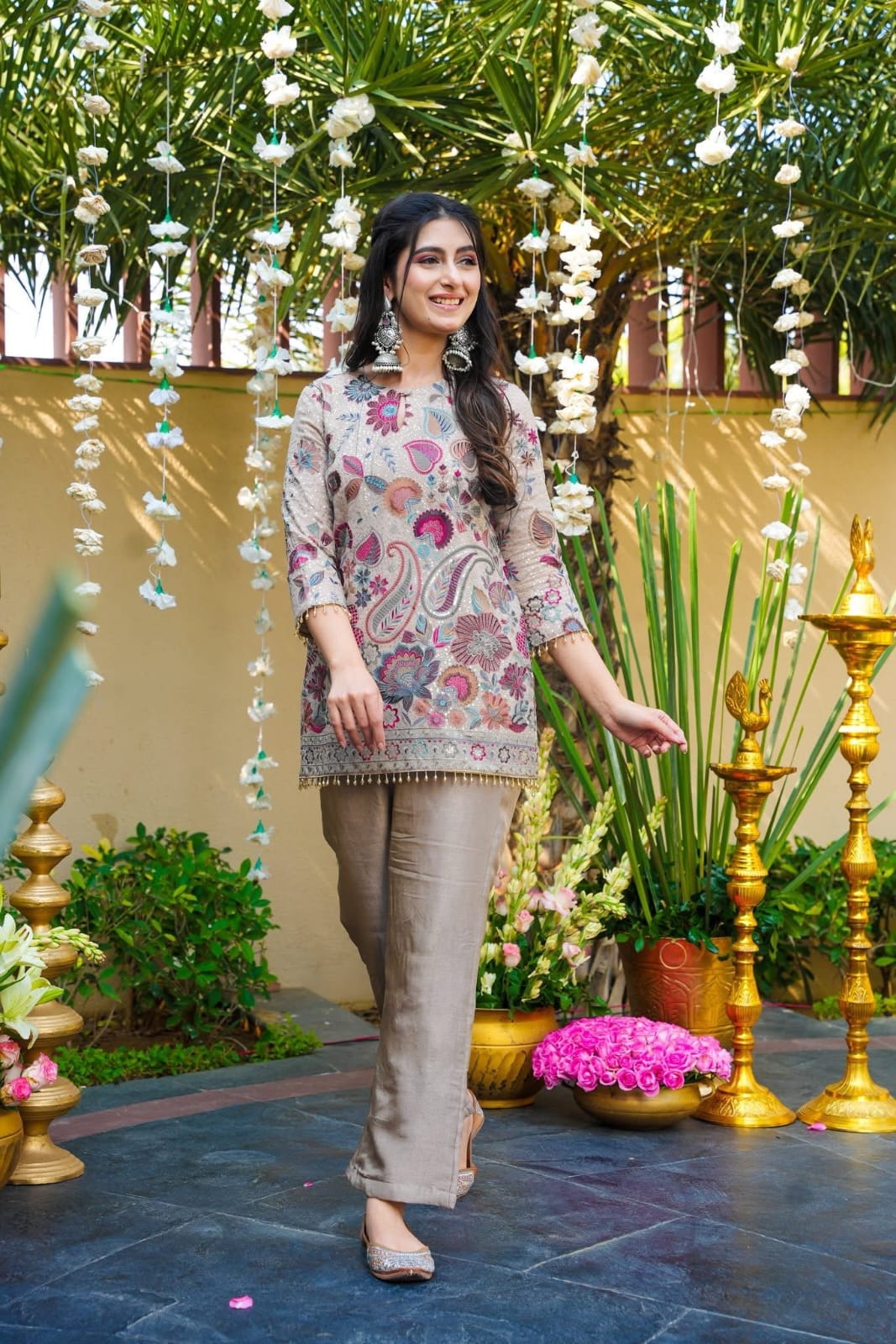
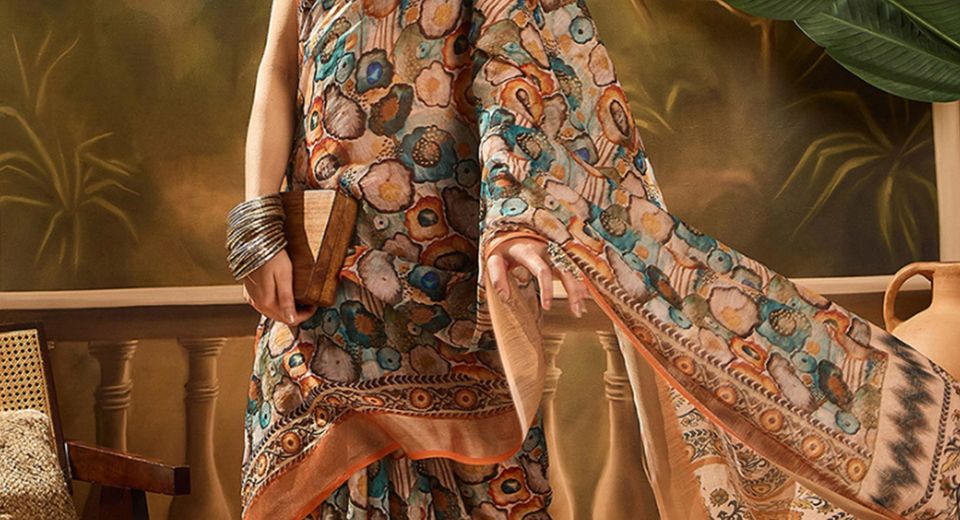
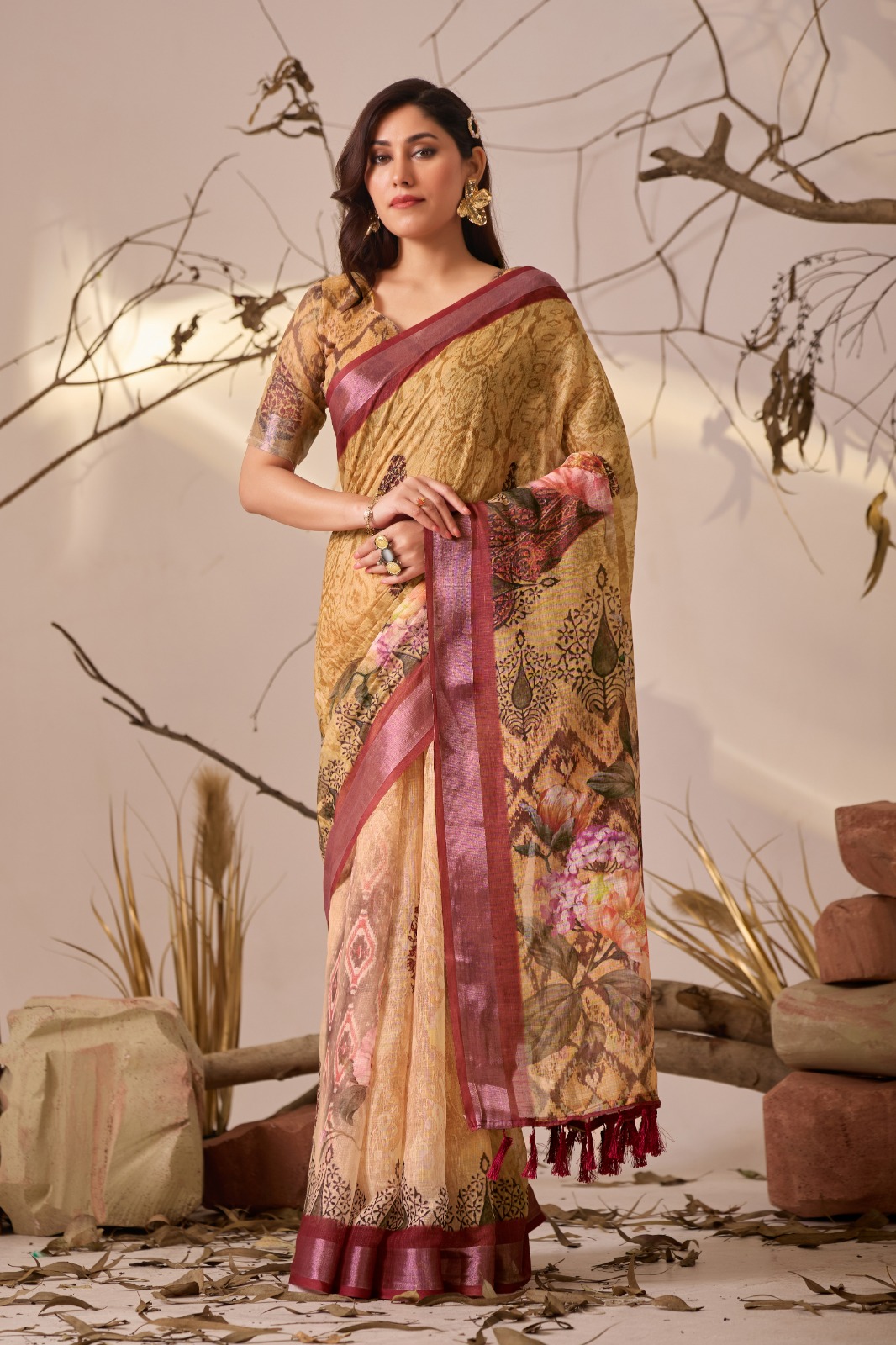
A plain saree with a bold woven-looking border can echo the contrast of Naga textiles while remaining a contemporary Indian outfit. Pastel Linen Cotton Floral Print Saree with Designer Blouse offers a softer base for a red, black or indigo geometric stole, but the resulting look should be called Naga-inspired styling rather than authentic Naga dress. VARNAVI Peach Linen Cotton Floral Saree with Border Tassels can be paired with a restrained bead necklace when the goal is texture and contrast.
Floral prints are not substitutes for Naga woven motifs, yet they can work in a current fusion wardrobe when styling avoids false cultural claims. Peach Floral Linen Cotton Saree with Statement Blue Border! Demonstrates how a strong border can create the visual focus normally supplied by a contrasting shawl. Peach Floral Linen Cotton Saree with Blue Border for Ladies can be styled with a plain black blouse and one layered necklace for a quieter interpretation.
Which silhouettes suit contemporary Naga-inspired styling?
A saree, wrap skirt, straight kurta, cropped jacket or simple maxi dress can carry Naga-inspired styling when the silhouette leaves room for a distinctive textile layer. A narrow shawl worn over one shoulder creates a clean vertical line, while a wider wrap around the upper body gives more visual weight and warmth.
Pastel Floral Tissue Handloom Cotton Saree with Zari Weaves suits a mixed-texture approach because zari introduces a reflective surface beside matte cotton or wool. Red Floral Linen Cotton Saree with Beautiful Printed Border works with oxidised-metal earrings and a plain blouse, although the printed border should be described accurately as a print rather than a handwoven Naga pattern.
Naga-inspired styling benefits from a limited palette. One dominant textile, one supporting solid colour and two or three accessories generally look more considered than several unrelated motifs. A black blouse can anchor a red-bordered saree, while an indigo stole can connect a blue border to silver jewellery without copying a specific community textile.
The Nagaland Ethnic Wear collection can be used as a starting point for examining how colour, border scale and fabric weight influence a contemporary ethnic outfit. The Nagaland Ethnic Wear collection should not be treated as proof that every printed or contemporary garment reproduces traditional Naga dress. Product descriptions remain important because a linen-cotton saree, a handloom cotton saree and an authentic community-woven shawl are different textile categories.
Nagaland Traditional Dress for Women: Buying, Wearing and Caring
Buying Naga-inspired clothing responsibly requires checking fibre content, production method, motif description, seller transparency and care instructions. A shopper should ask whether a textile is handwoven, powerloom, jacquard or printed, and should avoid assuming that a dark palette or geometric border confirms Naga origin.
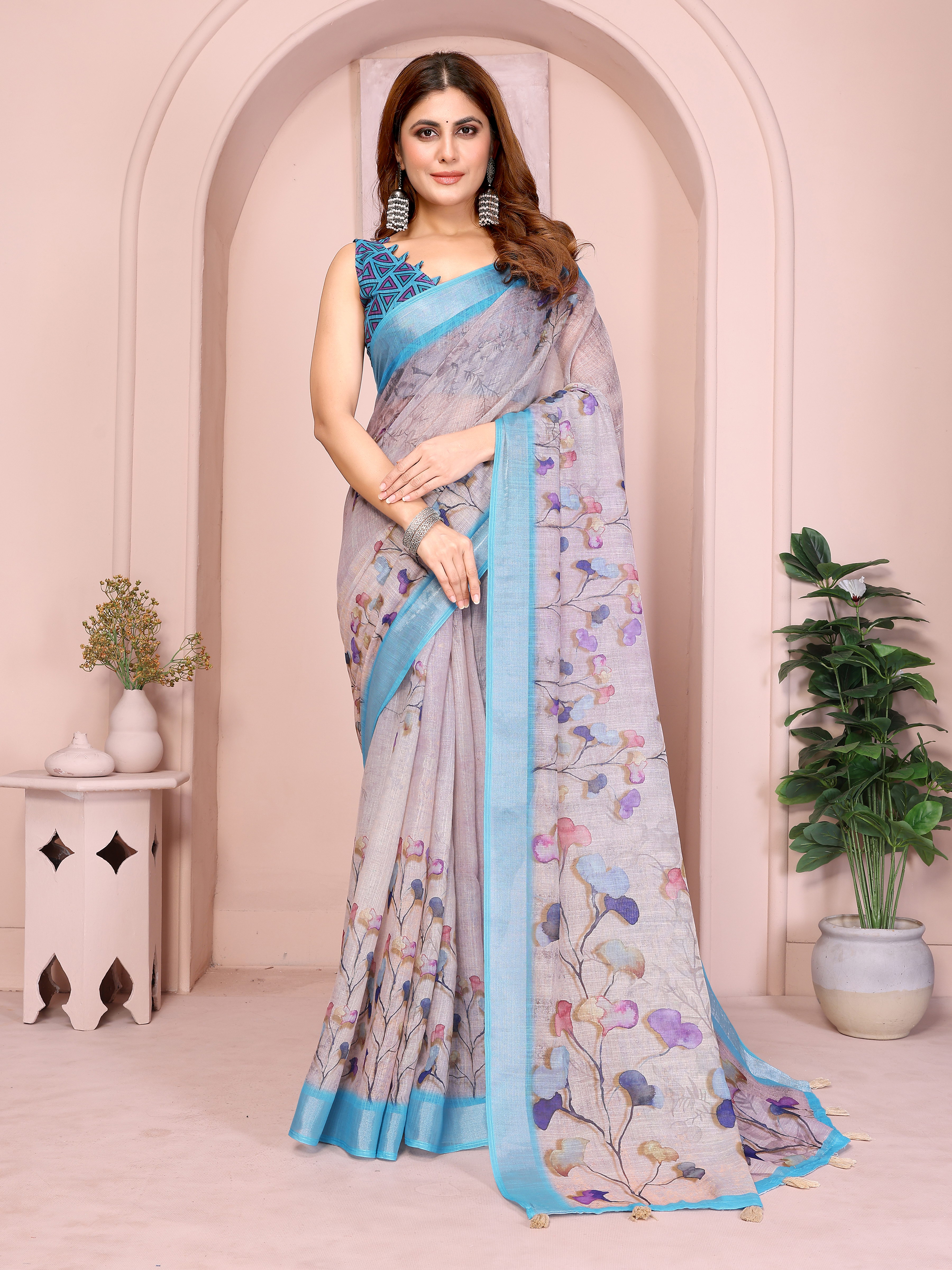
Choose natural-fibre layers such as cotton or wool for breathability, especially when a shawl will be worn for several hours. Linen-cotton sarees are comfortable in warm weather but can crease more readily than synthetic blends. Zari details should be protected from abrasive surfaces, perfumes and prolonged moisture.
Wash printed linen-cotton garments according to the care label, preferably with cold water and a mild detergent. Dry coloured textiles in shade rather than harsh direct sunlight, and store handwoven shawls folded in a breathable cotton bag. Keep heavy jewellery away from delicate yarns because hooks and sharp edges can catch the weave.
For a wedding, Haldi ceremony or cultural event, a contemporary Naga-inspired outfit can be elegant without claiming to be ceremonial Naga dress. Use a solid blouse, a controlled colour palette and one distinctive textile layer. If the event specifically requests traditional Naga attire, seek guidance from Naga community members or a verified specialist instead of assembling an outfit from generic online references.
Nagaland Traditional Dress for Women: Respectful Interpretation
Respectful interpretation begins with accurate naming, community awareness and a clear distinction between traditional clothing and fashion inspired by Naga textiles. Naga dress remains a living practice rather than a decorative archive, and contemporary Naga women may combine traditional pieces with jeans, up-to-date blouses, coats or other personal choices.

Credit weavers, designers, communities and source material whenever their work informs an editorial or commercial story. Avoid using words such as tribal, authentic or ceremonial without evidence. Avoid treating a shawl as a costume accessory when its motif or structure may carry community, achievement or ritual associations.
The most useful styling lesson from Naga textiles isn't to copy a pattern without context. The lesson is to value material knowledge, deliberate contrast, regional specificity and the relationship between clothing and identity. That approach produces a current outfit with visual integrity while leaving space for the original culture to be understood on its own terms.
Questions Readers Ask About Nagaland Traditional Dress for Women
What is the traditional dress of women in Nagaland?
Women's traditional dress in Nagaland commonly includes a wrapped lower garment, blouse or tunic, woven shawl and jewellery, but the exact style varies by Naga community. Ao, Angami, Konyak, Lotha, Sumi and other communities have distinct textiles, colours and ceremonial practices.
What do Naga shawl colours and patterns mean?
Naga shawl colours and patterns can communicate community identity, social associations, achievement or ceremonial context. Meanings are not universal, so a specific shawl should be interpreted using information from the relevant Naga community rather than a general colour chart.
Are all geometric shawls from Nagaland authentic Naga textiles?
No, geometric appearance alone does not establish Naga origin. Check the weaving method, fibre, production location, maker information and motif description because printed, jacquard, powerloom and handwoven textiles can look similar from a distance.
How can I wear Naga-inspired fashion respectfully?
Use general elements such as contrast, handloom texture, layered textiles and geometric borders without copying status-linked motifs or calling a commercial print traditional Naga dress. Describe the outfit as Naga-inspired when its connection is visual rather than community-made or traditionally documented.
What jewellery is worn with Naga traditional dress for women?
Layered bead necklaces, metal ornaments, earrings, bracelets and waist accessories are commonly seen, although materials and arrangements vary by community and occasion. For non-Naga styling, ordinary beadwork and silver-toned jewellery are safer choices than reproducing ceremonial or status-linked ornaments.
How should Naga shawls and handwoven textiles be cared for?
Follow the maker's care label, keep coloured textiles away from harsh sunlight and store handwoven shawls folded in a breathable cotton bag. Use mild detergent and avoid abrasive jewellery, which can catch yarns or damage woven motifs.





