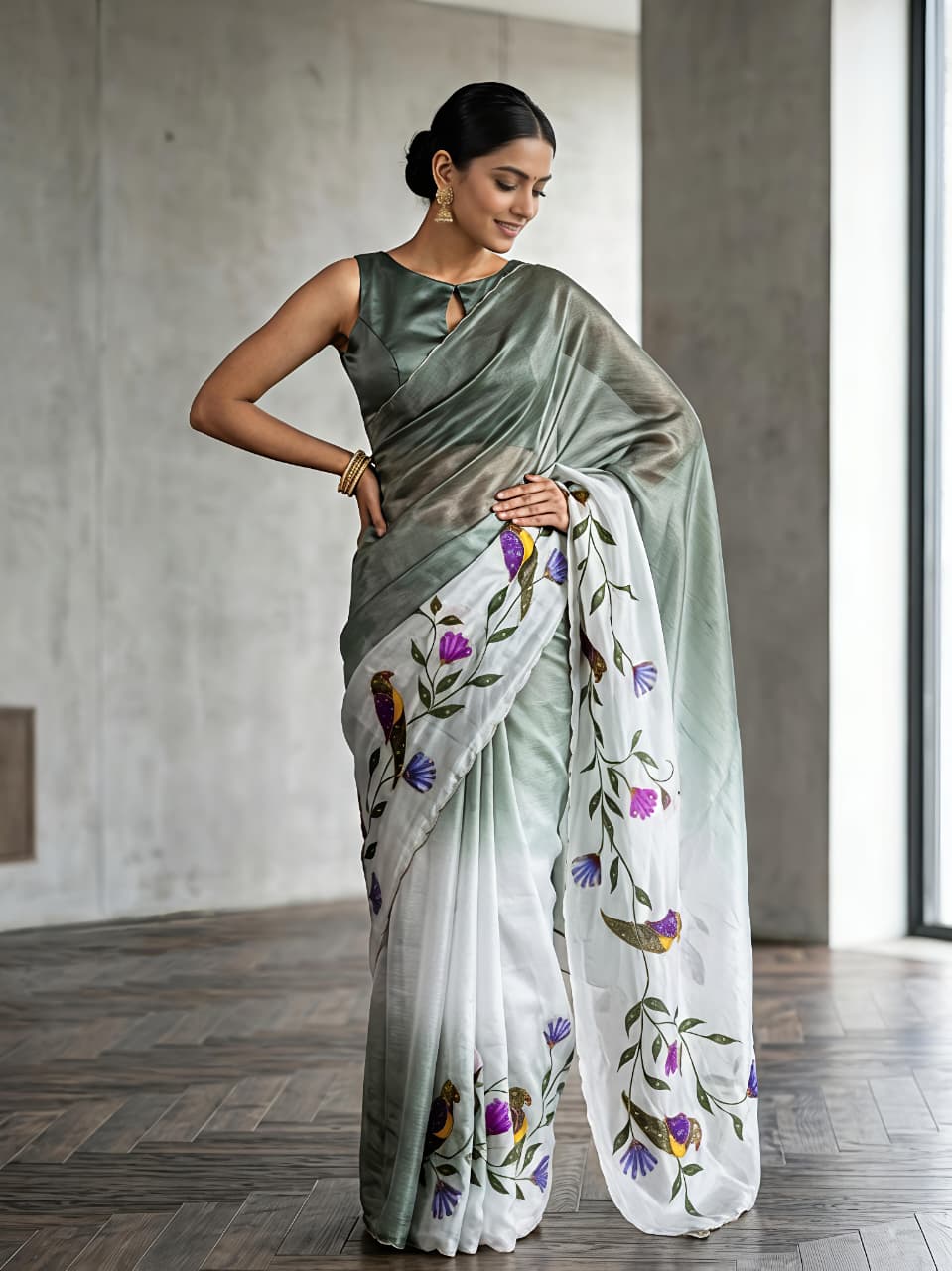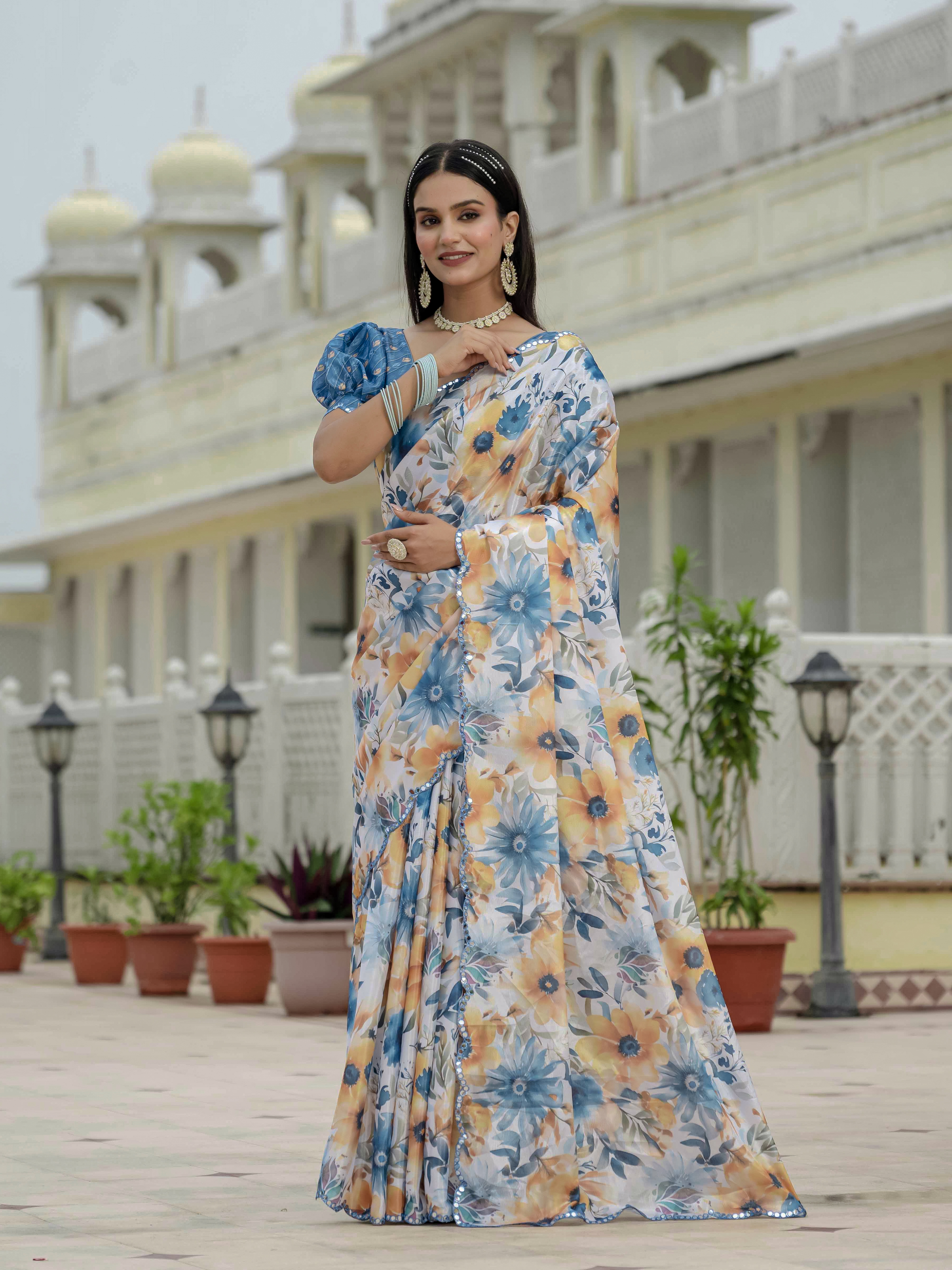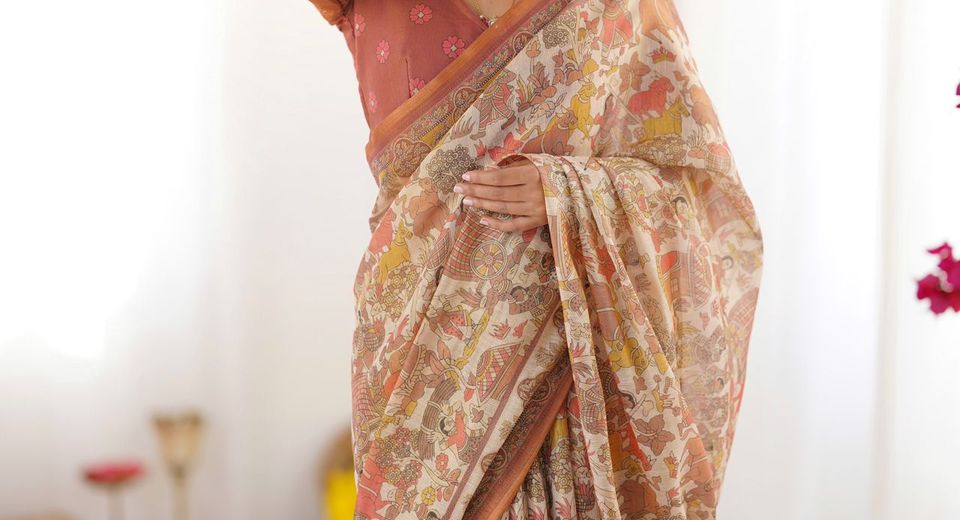
A well-chosen handloom saree can carry colour, craftsmanship and regional identity without making an outfit difficult to wear. This Nagaland Handloom Fashion Guide for Women explains how to identify useful fabrics, understand Naga-inspired visual details, select a saree for an occasion, style it with balance and protect it after purchase. The focus is practical: you'll learn what cotton, linen, tissue and zari contribute to a garment, how border width changes the silhouette, and why care instructions matter as much as colour.
Nagaland Handloom Fashion Guide for Women: What makes the style distinctive?
Nagaland handloom fashion combines practical woven textiles with strong geometric colour language, symbolic craft traditions and a confident use of contrast. Naga textile traditions vary among communities including Ao, Angami, Sumi, Lotha, Chakhesang and Konyak groups, so no single pattern represents every part of Nagaland. Contemporary clothing often interprets these visual ideas through borders, stripes, checks, earthy colours and handcrafted-looking motifs rather than reproducing one community's ceremonial textile exactly.
Traditional Naga shawls and wraps can communicate identity, community and status through colour arrangement and motif placement. Some historical designs carry meanings connected with achievement, social position or belonging, which is why respectful fashion writing should avoid describing every geometric pattern as a generic "tribal print." A modern saree may be inspired by Northeast Indian aesthetics while using a different construction, fabric or motif vocabulary.
Handloom clothing also has a practical advantage in a woman's wardrobe. Cotton and linen-cotton sarees breathe well in warm weather, accept repeated styling and become more comfortable with careful use. Tissue cotton and zari introduce a dressier surface, making the same six-yard silhouette suitable for festive dinners, receptions or cultural events.
Nagaland Handloom Fashion Guide for Women: Which fabrics work best?
Cotton is the most versatile choice for regular wear because cotton fibres absorb moisture, feel breathable and usually hold a pleat better than very fluid synthetics. A handloom cotton saree may have small variations in slub, thickness or weave tension; those variations are normal signs of a woven textile rather than defects. Cotton is especially useful for daytime gatherings, workwear with a cultural accent and summer celebrations.

Linen-cotton blends combine linen's dry texture and visual crispness with cotton's softness and easier handling. A linen-cotton saree generally looks structured without feeling as formal as silk. The blend can crease during sitting and travel, but those creases are part of the fabric's character. Light steaming or pressing on the reverse side restores a cleaner fall.
Tissue cotton has a finer, slightly luminous appearance created by the weave and the use of delicate yarns. Tissue should not automatically be treated as fragile silk, but it deserves gentler handling than a heavy everyday cotton saree. Fold tissue sarees along different lines every few months so permanent creases don't form in one place.
Zari is a metallic thread used to create borders, motifs or woven highlights. Genuine zari may contain metallic-coated material, while zari-look yarns may use synthetic metallic fibres; the product description should clarify the composition when that information is available. Zari adds occasion value, but abrasive jewellery, rough storage shelves and frequent machine washing can dull or loosen it.
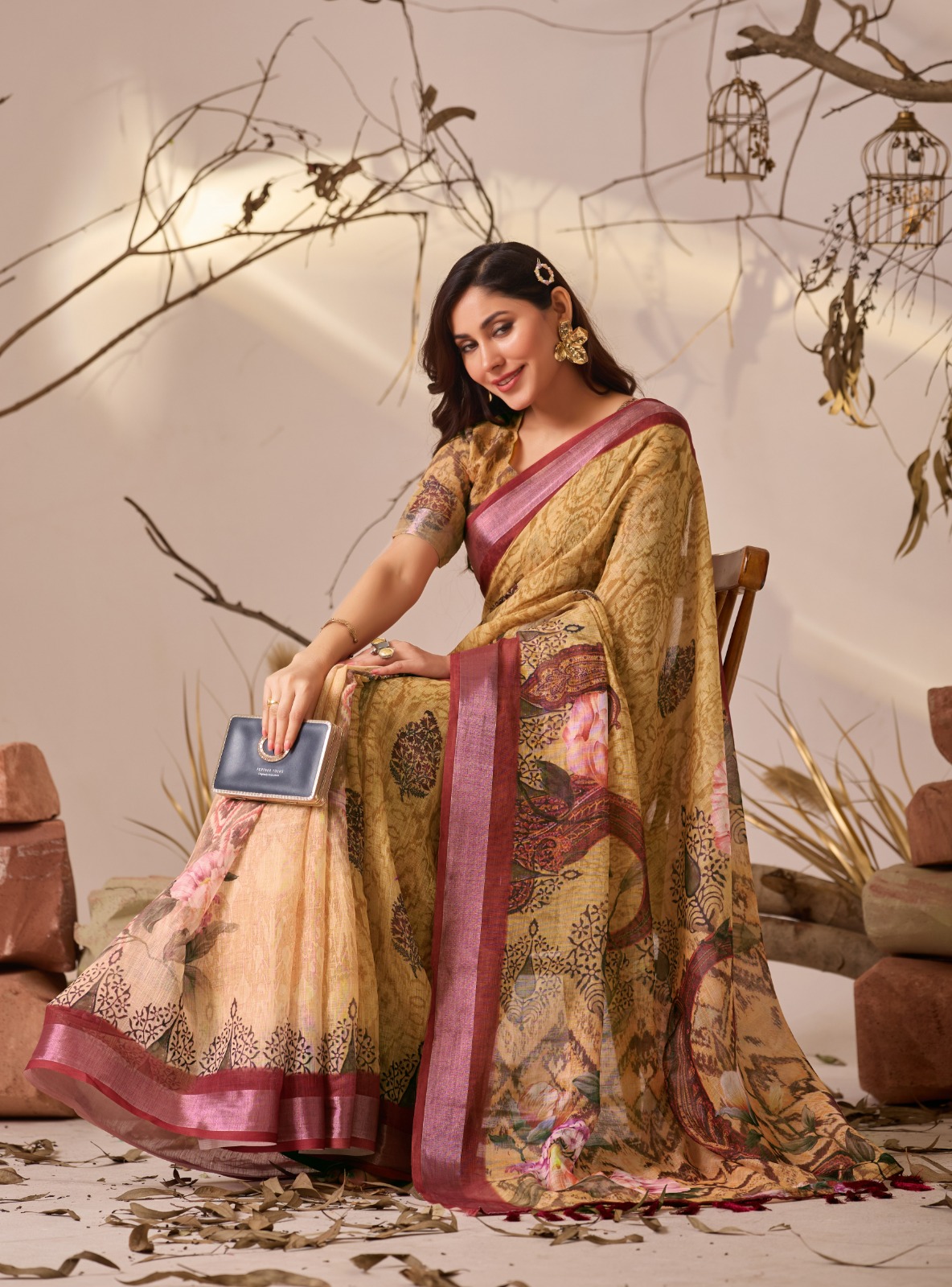
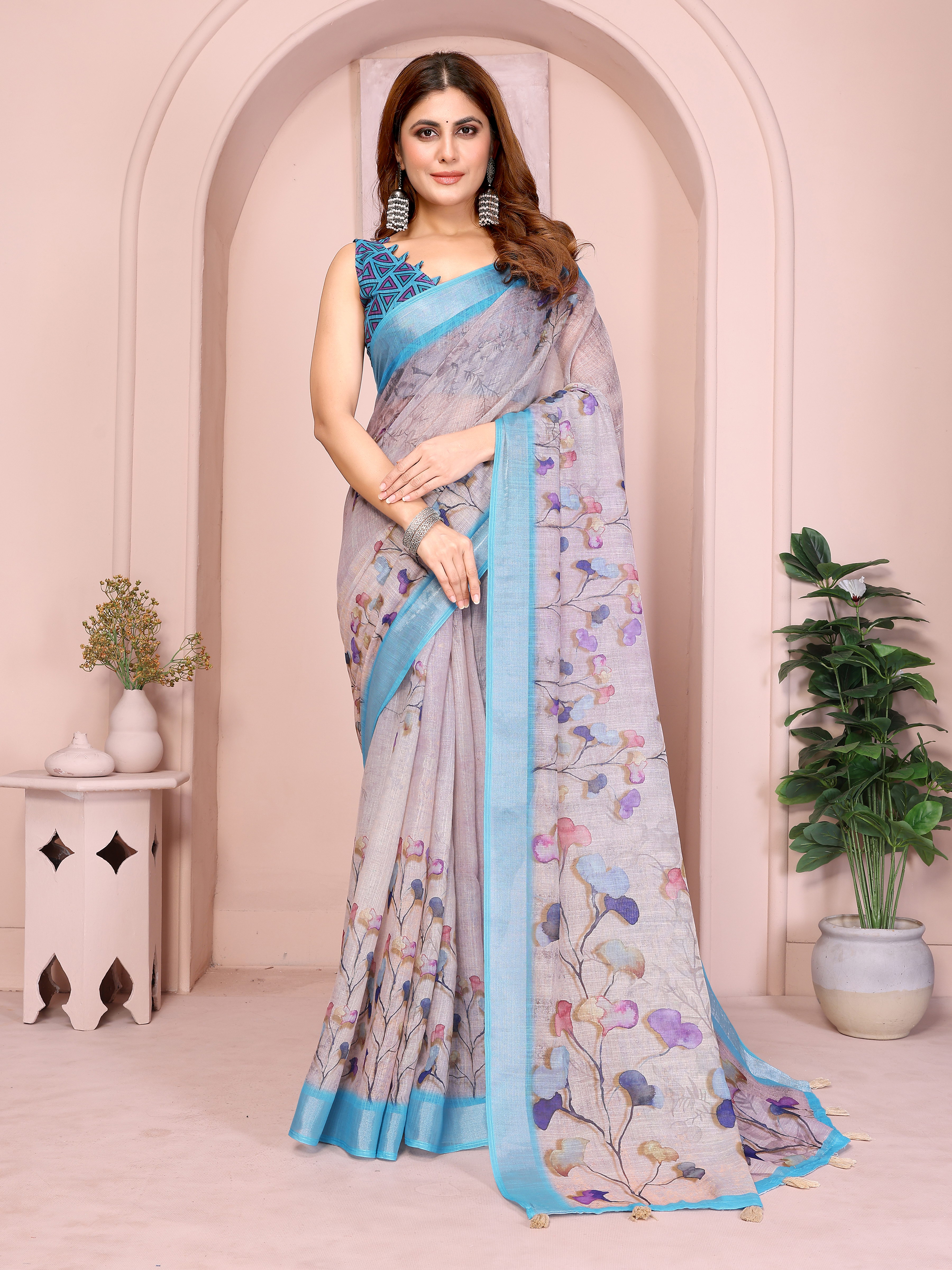
Pastel Floral Tissue Handloom Cotton Saree with Zari Weaves demonstrates how tissue and zari can create a festive surface without relying on a heavy brocade. Pastel Linen Cotton Floral Print Saree with Designer Blouse offers a lighter route when you want a coordinated blouse and a softer, more relaxed texture.
Nagaland Handloom Fashion Guide for Women: How should you choose colours and motifs?
Choose the dominant colour according to the setting, then use the border or pallu to introduce stronger Naga-inspired contrast. Beige, cream, mushroom brown, muted pink, wine and terracotta work well for daytime and semi-formal dressing because they provide visual depth without looking overly bright. Deep red, maroon, indigo, black and metallic accents create more presence for evening events.
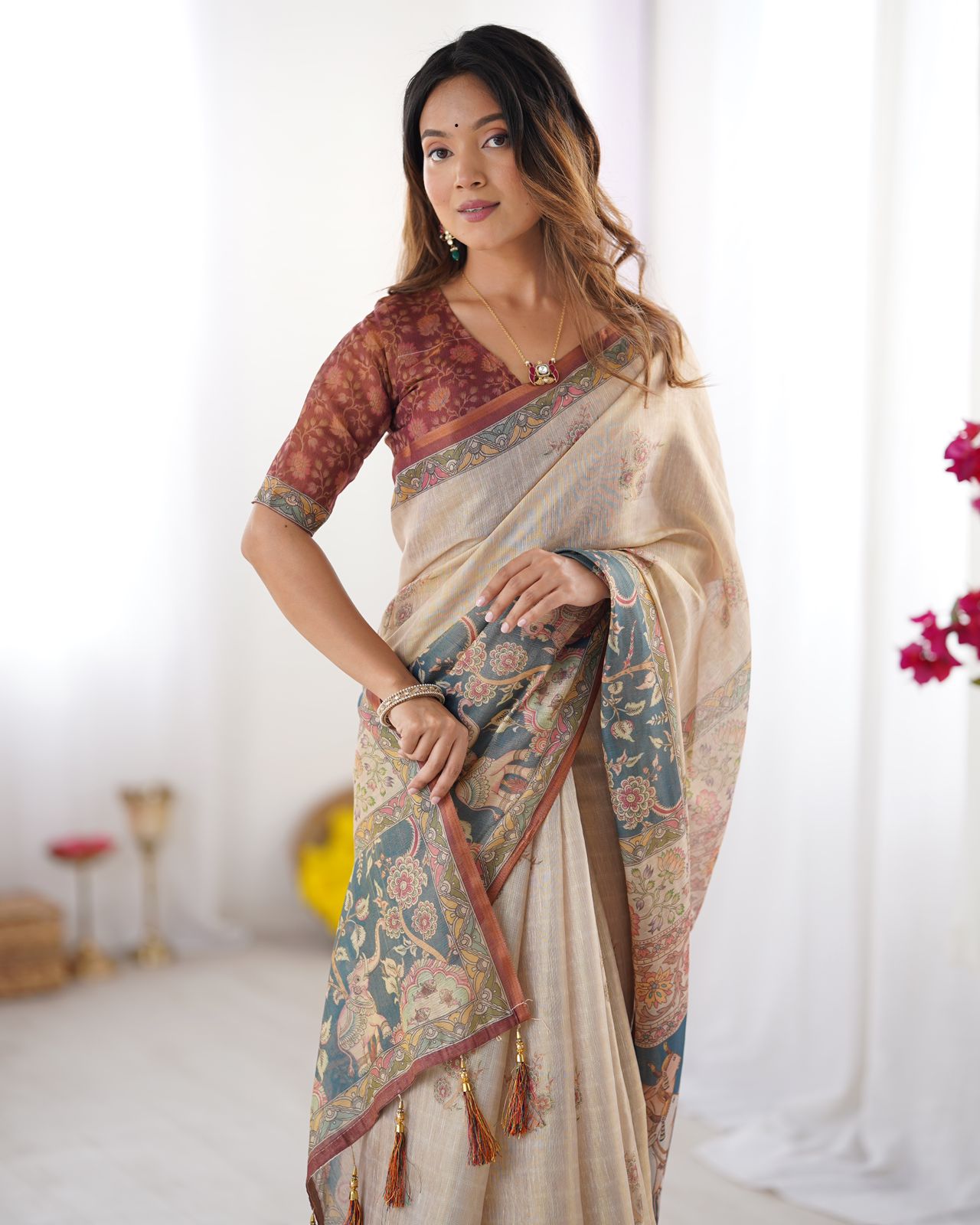
Earth colours often pair naturally with the visual language associated with Nagaland and Northeast India. Mushroom brown beside rust, cream beside maroon, or beige beside black creates a grounded palette. Pastels can also work effectively when a darker blouse, a defined border or oxidised silver jewellery supplies contrast. Colour harmony matters more than matching every accessory to the saree.
Geometric stripes and structured borders create a sharper appearance, while florals soften the overall look. A saree with a big pallu can stand alone with a plain blouse. A printed or woven floral saree benefits from a blouse in one of the pallu's secondary colours. Repeating the perfect motif in earrings, handbag and footwear can make an outfit look too coordinated.
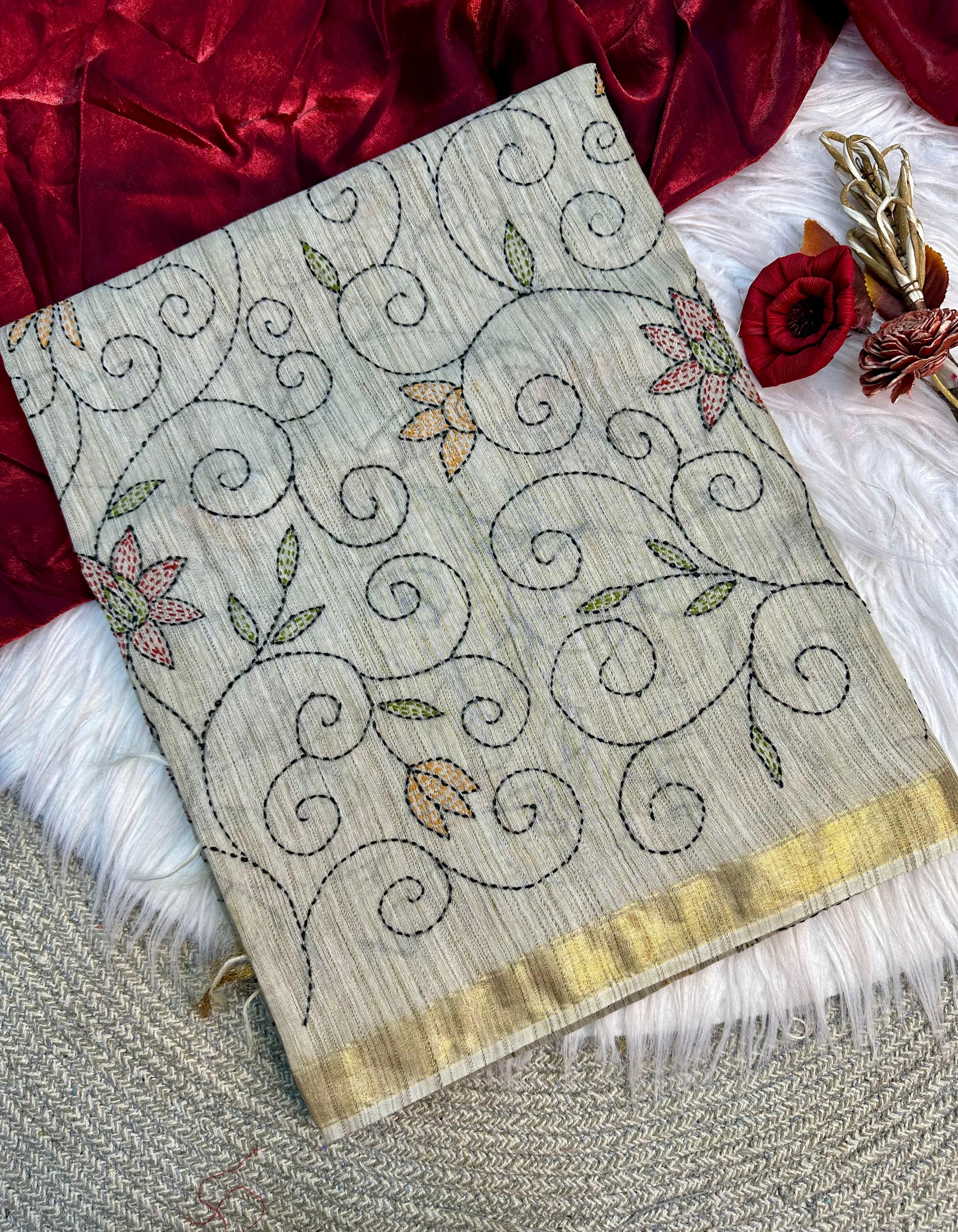
Ethnic Beige Cotton Linen Saree with Village Art Design shows how a quieter palette can carry visual interest through artwork rather than shine. Cream Pink Tissue Handloom Cotton Saree With Zari Weave uses pale colour with metallic definition, making it suitable for a daytime puja, engagement lunch or intimate festive gathering.
Nagaland Handloom Fashion Guide for Women: How can you style a handloom saree?
A Nagaland-inspired handloom saree looks contemporary when the drape remains neat and the accessories repeat one or two details instead of competing with the textile. Begin with a well-fitted blouse, secure the shoulder pleats with a discreet pin and choose footwear that lets the hem sit slightly above the floor. The styling can then shift from everyday to occasion-ready through jewellery, hair and the blouse neckline.
Nagaland Handloom Fashion Guide for Women: What works for daytime?
A cotton or linen-cotton saree with a three-quarter-sleeve blouse, small silver studs and a structured tote creates a practical daytime outfit. Keep the pallu folded into controlled pleats if you need to move frequently. Flat sandals, low block heels or closed-back juttis are more comfortable than high stilettos for long hours.
A plain blouse in ivory, charcoal, olive, maroon or terracotta allows the saree's border to remain the focal point. A high round neck gives a composed appearance, while a modest V-neck lengthens the upper body. Avoid very loose blouses with crisp linen-cotton because both shapes can lose definition together.
Nagaland Handloom Fashion Guide for Women: What works for festive gatherings?
Zari, tissue and a richer pallu make a handloom saree appropriate for a festive gathering without requiring a heavily embellished lehenga. Cream Floral Tissue Handloom Cotton Saree with Zari Weaving can be styled with antique-gold earrings and a low bun decorated with a small cluster of flowers. Keep the blouse matte if the saree already has visible shine.
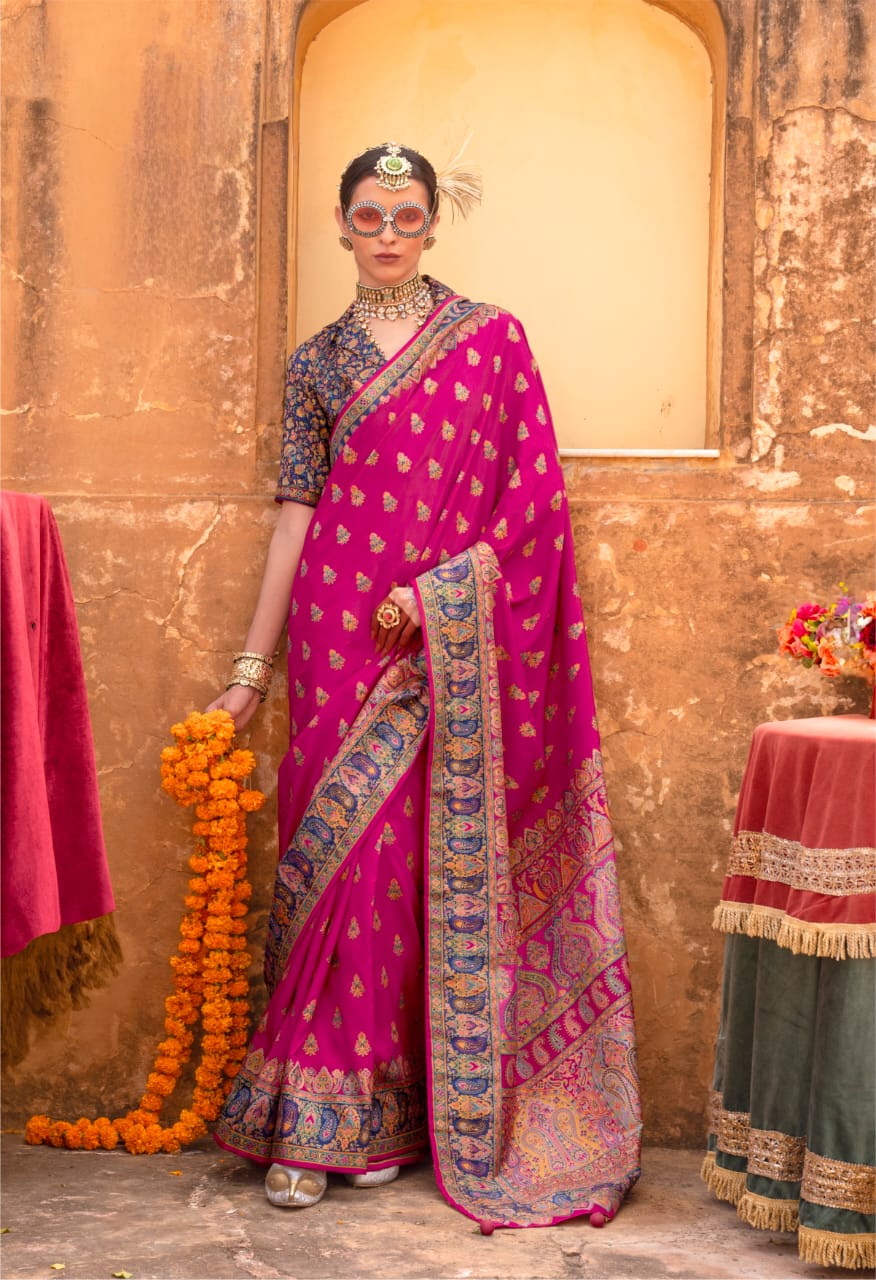
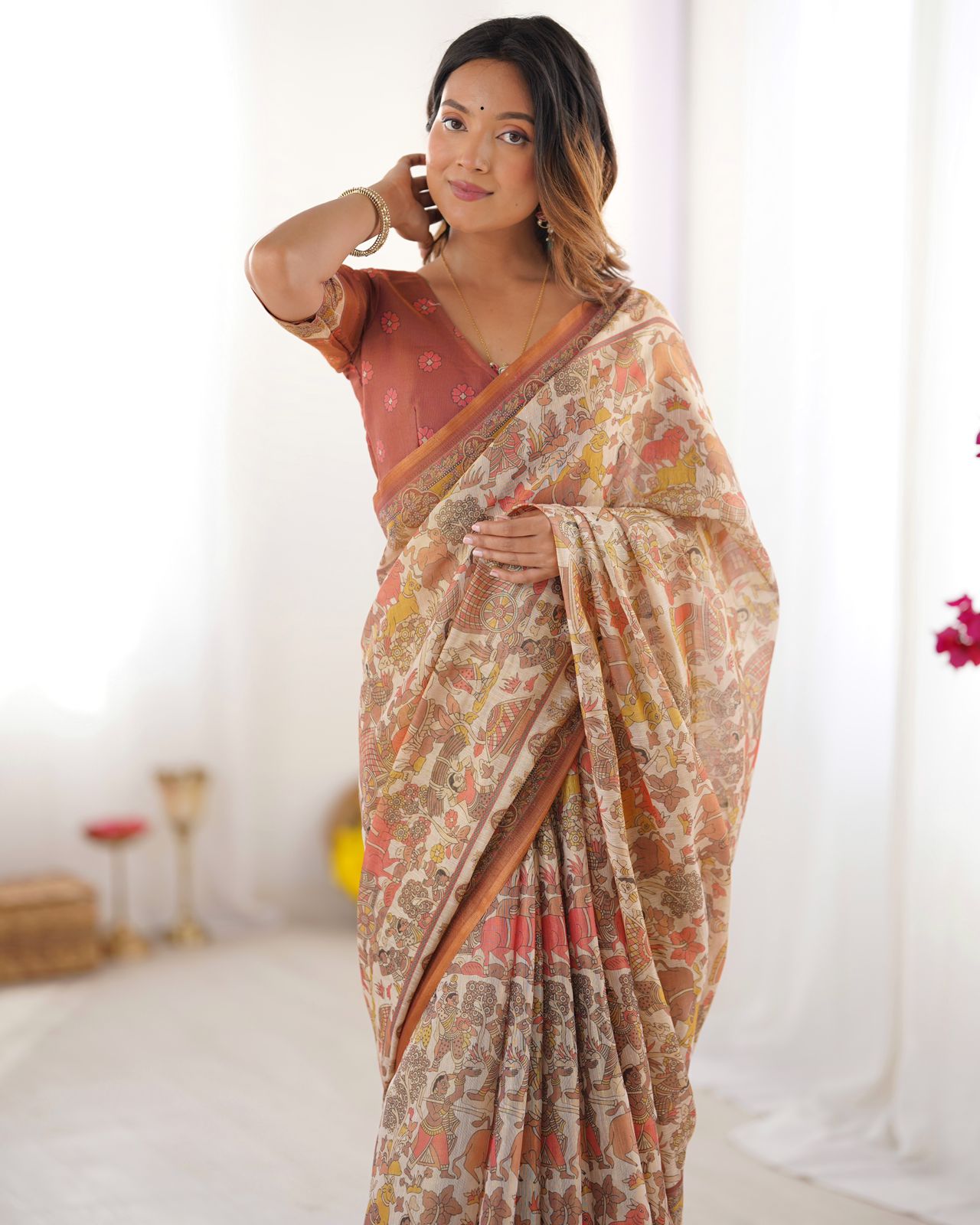
Premium Beige Cotton Handloom Saree with Maroon Ethnic Border and Heritage Printed Pallu gives a different proportion: the border frames the lower body while the printed pallu provides detail near the face and shoulder. A maroon blouse, bronze bangles and a compact potli can reinforce the palette without adding another print.
Nagaland Handloom Fashion Guide for Women: How can you create a graphic look?
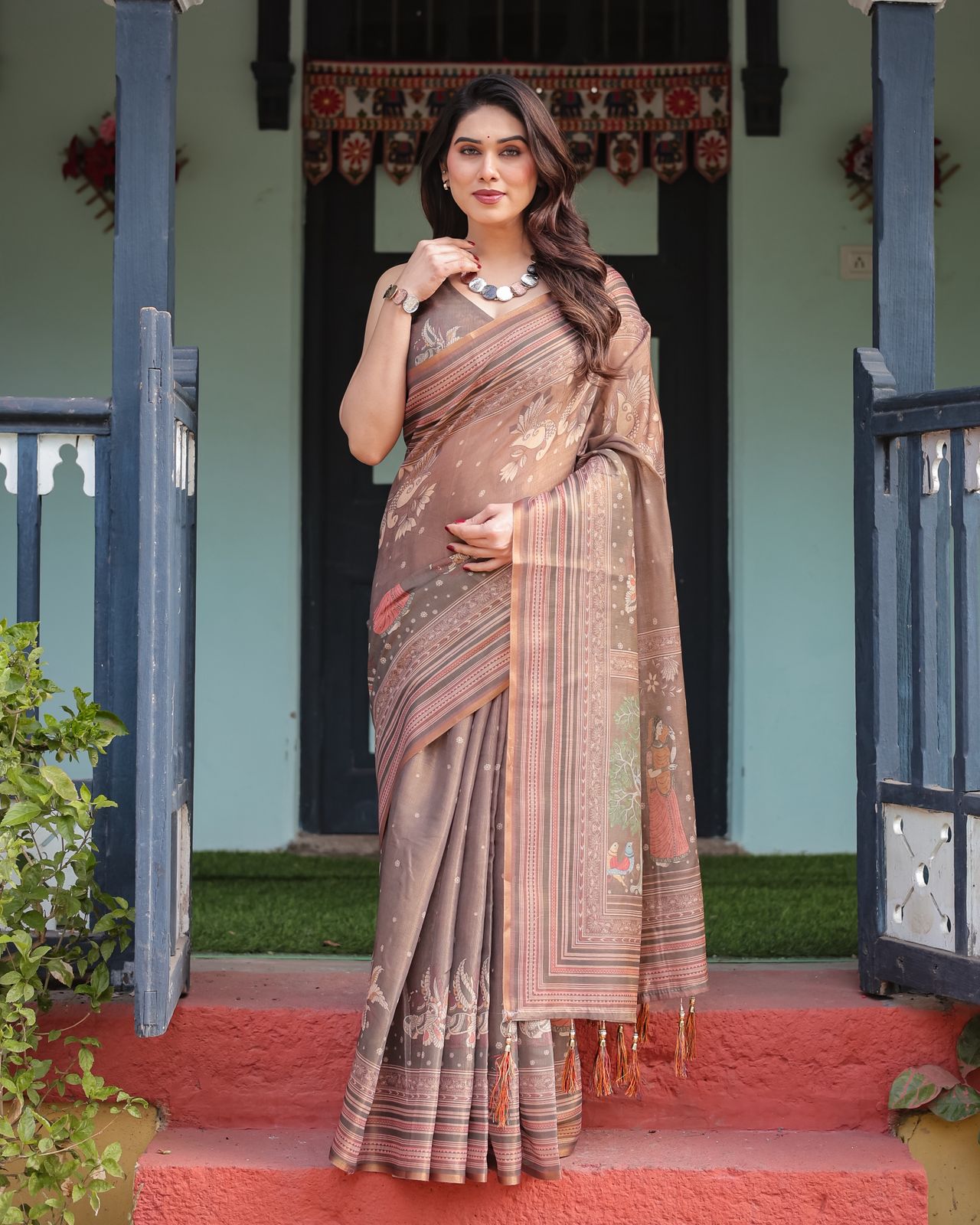
Use a striped or strongly bordered saree with a sleeveless blouse, geometric earrings and a clean hairstyle when you want a sharper silhouette. Mushroom Brown Handloom Saree with Ethnic Striped Border can support black, rust or cream accessories depending on the desired contrast. A narrow belt over the saree may work for photographs or a fashion-forward gathering, but the belt should be light enough not to distort the pleats.
Contemporary styling should not erase the textile's regional character. A western-style blouse can be attractive, but the outfit remains more coherent when the colour, border and handloom texture stay visible. Nagaland Ethnic Wear gives an useful starting point for comparing these regional cues across coordinated ethnic options, and the same collection can be revisited when you want to compare a quieter daytime palette with a more festive one.
Nagaland Handloom Fashion Guide for Women: Which saree suits each occasion?
A daytime cultural programme usually calls for breathable cotton, linen-cotton or lightly woven tissue. A Haldi ceremony suits cheerful yellow, cream, pink, coral or green, provided the fabric can tolerate accidental turmeric marks and repeated movement. For a Haldi ceremony, avoid wearing a heavily metallic or difficult-to-wash saree that you can't comfortably sit or walk in.
An office celebration or literary event benefits from a restrained palette, a medium-width border and minimal jewellery. Beige, mushroom brown, cream, muted pink and wine can look polished without appearing bridal. A printed pallu or village-art-inspired design supplies interest while keeping the blouse and accessories simple.
A wedding reception or evening cultural event can accommodate zari, a luminous tissue weave and a stronger border. Wine Tissue Handloom Cotton Saree with Zari & Floral Prints brings together a deep base colour, metallic detail and floral decoration, so a plain blouse and one substantial pair of earrings are usually sufficient.
Travel changes the calculation. A cotton-linen saree is often easier to steam and re-drape than a very delicate tissue piece, while a darker colour hides minor marks better than pale cream. Pack the saree in a breathable cotton cover, place heavier jewellery separately and carry two safety pins, a small stain cloth and a travel-sized measuring tape for emergency blouse adjustments.
Nagaland Handloom Fashion Guide for Women: What should you check before buying?
Check the fibre composition, saree length, blouse-piece details, border width, transparency and care instructions before buying. Fibre labels help you predict breathability and maintenance, while the saree length affects whether a taller wearer can create comfortable pleats and a full pallu. A standard saree often measures approximately 5.5 metres plus a blouse piece, but measurements vary by product.
Inspect photographs for the relationship between the border and the pallu rather than looking only at the main body colour. A broad border can visually shorten the lower body, while a narrow border and longer vertical motifs can create a more elongated impression. Ask whether the zari is woven, printed or embroidered if the product description doesn't make the construction clear.
Check the blouse piece before planning a particular neckline or sleeve. A separate blouse fabric gives greater tailoring freedom, while a pre-attached or limited-length piece may require a simpler design. Allow approximately 1 to 2 centimetres of extra seam allowance when possible, because handloom fabric can be easier to adjust when the tailor has sufficient material.
Handloom variation should be judged differently from manufacturing damage. Slight irregularities in yarn thickness, tiny changes in motif alignment and subtle colour variation can occur in woven textiles. Broken threads, unexplained holes, severe dye transfer or a border that's visibly detached from the body are different concerns and should be clarified before purchase.
Nagaland Handloom Fashion Guide for Women: How should you care for handloom sarees?
Handloom sarees last longer when they're aired after use, washed according to fibre and zari requirements, and stored away from direct sunlight. Do not leave a damp saree folded after a humid event because moisture can encourage mildew and weaken metallic detailing.
For cotton and linen-cotton, follow the garment label first. If hand washing is permitted, use cool or lukewarm water, a mild detergent and gentle pressing rather than vigorous scrubbing. Wash dark wine, maroon or indigo pieces separately during the first few washes because excess dye may release. Do not wring the saree; press water out between clean towels or let it drip briefly before drying in shade.
Tissue and zari sarees usually benefit from professional dry cleaning or the specific care method supplied by the maker. Keep perfume, hair spray and deodorant away from metallic borders because alcohol and chemical residue can affect surface shine. Iron on the reverse side at a low or medium setting, place a thin cotton cloth between the iron and saree, and never drag the iron repeatedly over zari.
Store each saree in a clean cotton or muslin cover rather than an airtight plastic bag. Refold sarees every two or three months along different lines, particularly when the textile contains zari. Keep neem leaves or cedar blocks nearby only if they don't touch the fabric directly, and avoid mothballs in the same compartment because their strong chemicals can leave a persistent odour.
A thoughtful Nagaland Handloom Fashion Guide for Women ends with use, not purchase. When fabric, colour, silhouette and care requirements match your real routine, a handloom saree becomes more than occasional ethnic wear: it becomes a repeatable, comfortable part of a current wardrobe.
Common Questions About Nagaland Handloom Fashion for Women
What fabrics are most comfortable for Nagaland-inspired handloom sarees?
Cotton and linen-cotton are usually the most comfortable choices for warm weather, travel and daytime wear because they are breathable and relatively easy to maintain. Tissue cotton with zari is better suited to festive use and requires gentler storage and washing.
How can I style a Nagaland handloom saree for an office event?
Choose a cotton or linen-cotton saree in beige, cream, mushroom brown, muted pink or wine, and pair it with a plain three-quarter-sleeve blouse. Small silver earrings, low block heels and a structured bag keep the outfit polished without overpowering the handloom texture.
Are geometric Naga-inspired motifs the same as traditional Naga textiles?
No, contemporary saree motifs inspired by Nagaland do not automatically reproduce the exact textile traditions of every Naga community. Nagaland includes diverse communities with distinct weaving histories, so product descriptions should identify a design as inspired by regional aesthetics unless its specific provenance is documented.
Can I wear a Nagaland handloom saree to a Haldi ceremony?
Yes, a breathable cotton or linen-cotton saree in cream, pink, coral, yellow or green can work well for a Haldi ceremony. Avoid delicate zari-heavy pieces if turmeric stains, outdoor movement or repeated washing are likely.
How should zari handloom sarees be stored?
Store zari sarees in a clean cotton or muslin cover away from direct sunlight and moisture. Refold the saree every two or three months, avoid plastic storage for long periods, and use a thin cotton cloth between the iron and the zari when pressing is permitted.
What should I check before buying a handloom saree online?
Check the fibre composition, measurements, blouse-piece details, border width, transparency, colour photographs and care instructions before buying. Also distinguish normal handloom variation from problems such as broken threads, holes, severe dye transfer or a detached border.