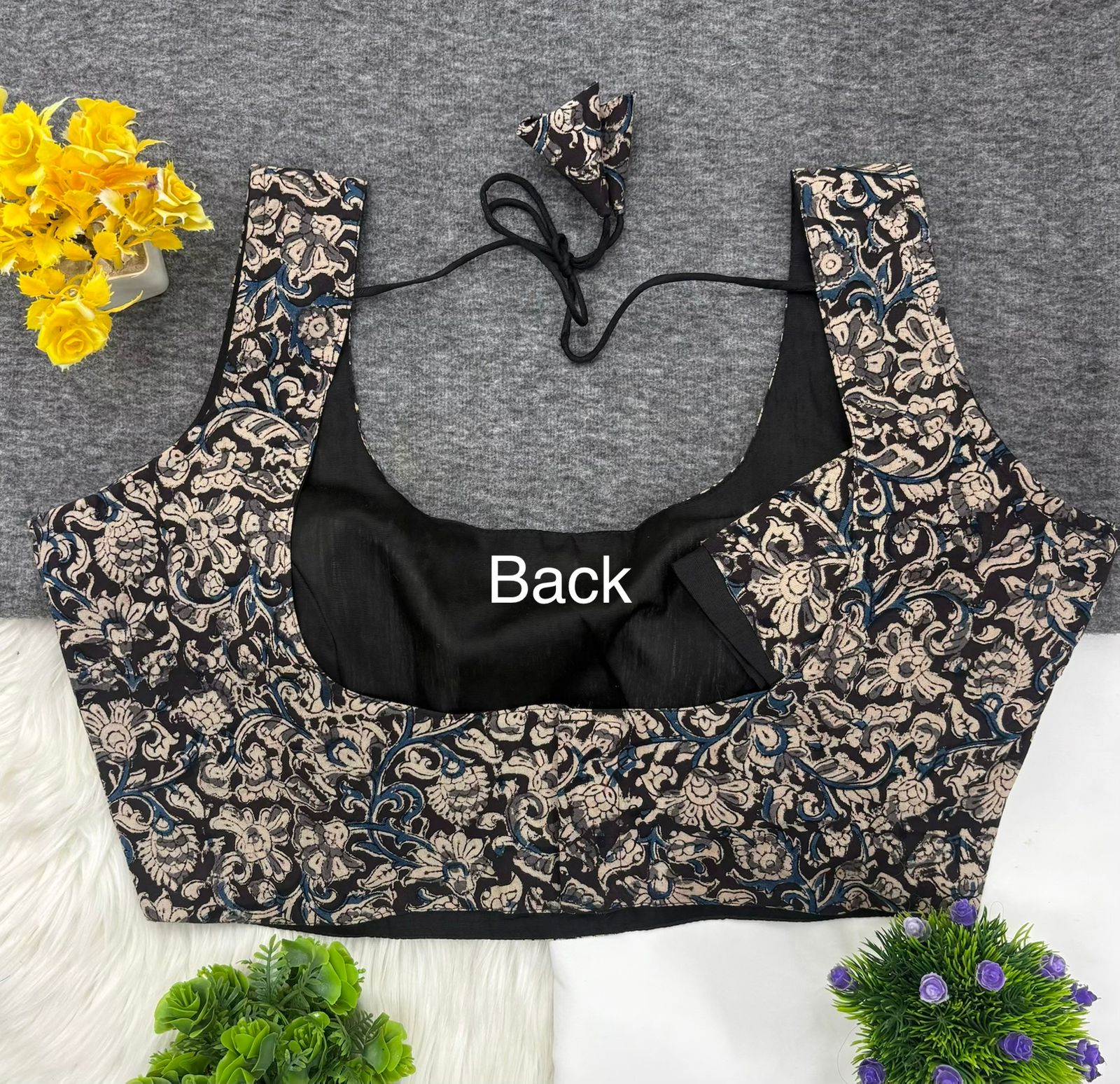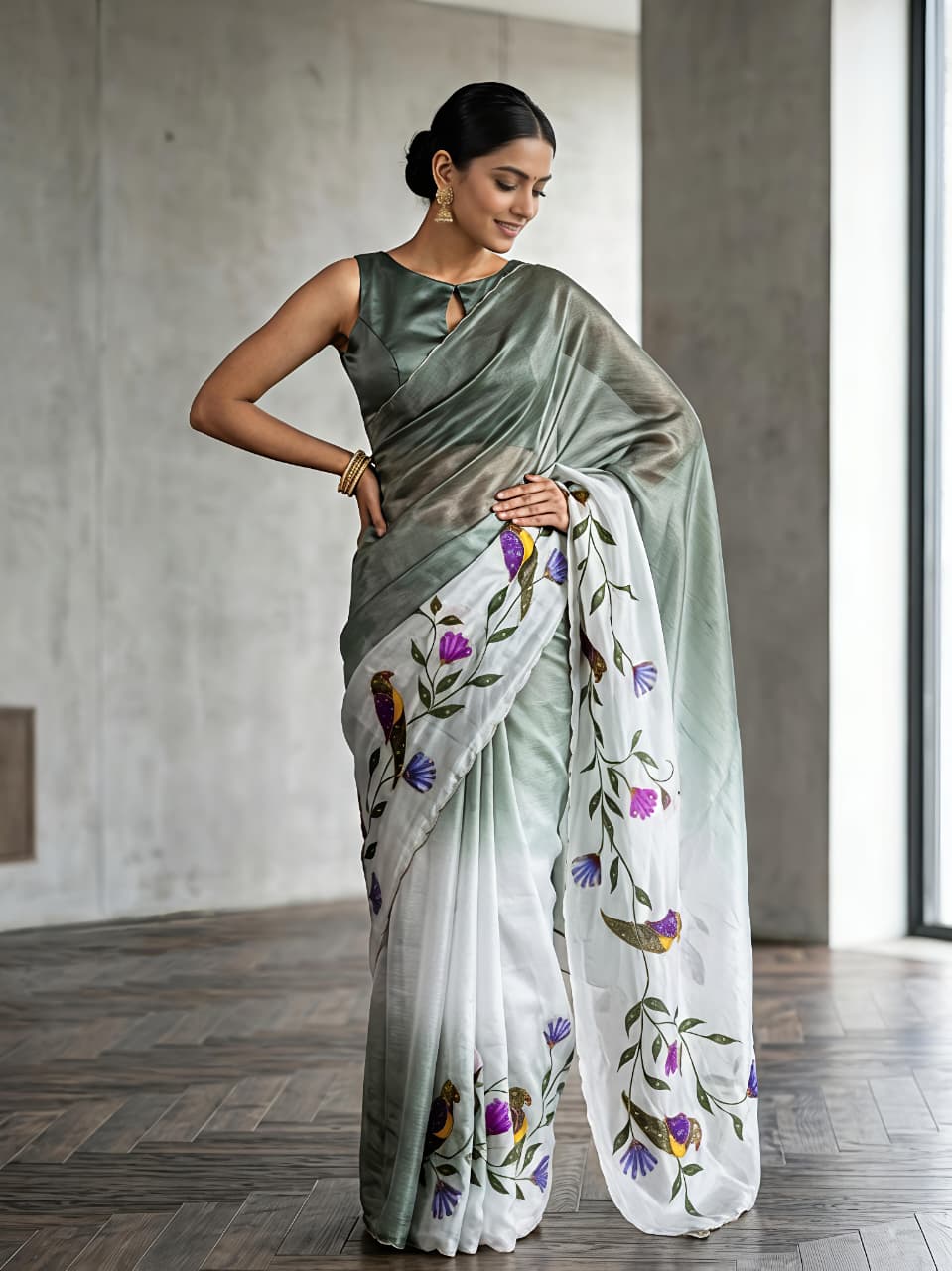
The Nagaland Festival Fashion Calendar helps travellers and celebration guests plan clothing around festival dates, weather, local customs and the visual language of Naga textiles. An outfit suitable for Hornbill Festival in December won't necessarily suit Moatsu in May or Aoling in April. The most useful approach combines breathable Indian fabrics, practical layers and a clear distinction between appreciating Naga design and copying ceremonial attire.
A contemporary outfit can acknowledge the festive mood without claiming to represent Angami, Ao, Konyak, Sumi, Lotha or another community. The collection Nagaland Ethnic Wear can be used as a broad styling reference for colour, print and silhouette, but visitors should still research the specific community and setting before wearing a culturally recognisable textile.
How the Nagaland Festival Fashion Calendar follows the year
The calendar follows a seasonal rhythm: spring festivals bring mild-to-warm daytime dressing, monsoon festivals require quick-drying layers, autumn celebrations call for breathable outfits with rain protection, and Hornbill Festival demands warm evening layers. Festival dates can shift according to community calendars, local announcements and annual programming, so visitors should confirm dates before booking travel.
- February: Sekrenyi, the Angami purification and renewal festival, generally takes place around 25 February and includes several days of observance.
- April: Aoling, celebrated by the Konyak community, is usually held from 1 to 6 April.
- May: Moatsu, the Ao community festival, commonly runs from 1 to 3 May.
- July: Tuluni, associated with the Sumi community, is generally observed around 8 July, although programme details vary.
- August: Tsungremong, an Ao harvest festival, is commonly marked in the first week of August.
- October: Yemshe, associated with the Pochuri community, is generally observed in early October.
- November: Tokhu Emong, associated with the Lotha community, is often celebrated around 7 to 9 November.
- December: Hornbill Festival is held at Kisama Heritage Village, near Kohima, traditionally from 1 to 10 December.
These dates are planning references rather than a substitute for an official programme. Community festivals may include village-specific customs, while Hornbill Festival presents many communities in a public cultural setting. Clothing that feels appropriate at a tourism venue may not be appropriate inside a sacred, ceremonial or community-only space.
What should you wear to a Nagaland festival?
The best festival outfit is a modest, breathable look that allows walking, respects local settings and doesn't imitate a community's ceremonial regalia without permission. A cotton saree, a simple salwar suit, a lightweight lehenga or a full-sleeved blouse with a long skirt can work well when the silhouette is comfortable and the styling isn't costume-like.
For daytime events, choose cotton, linen cotton, mulmul or another breathable weave with a comfortable lining. For evening programmes in Kohima, a fine wool stole, cardigan, light jacket or full-sleeved layer can be useful, particularly in December. Closed-toe shoes with a stable sole are more practical than delicate sandals because festival venues may include uneven paths, temporary seating and muddy ground.
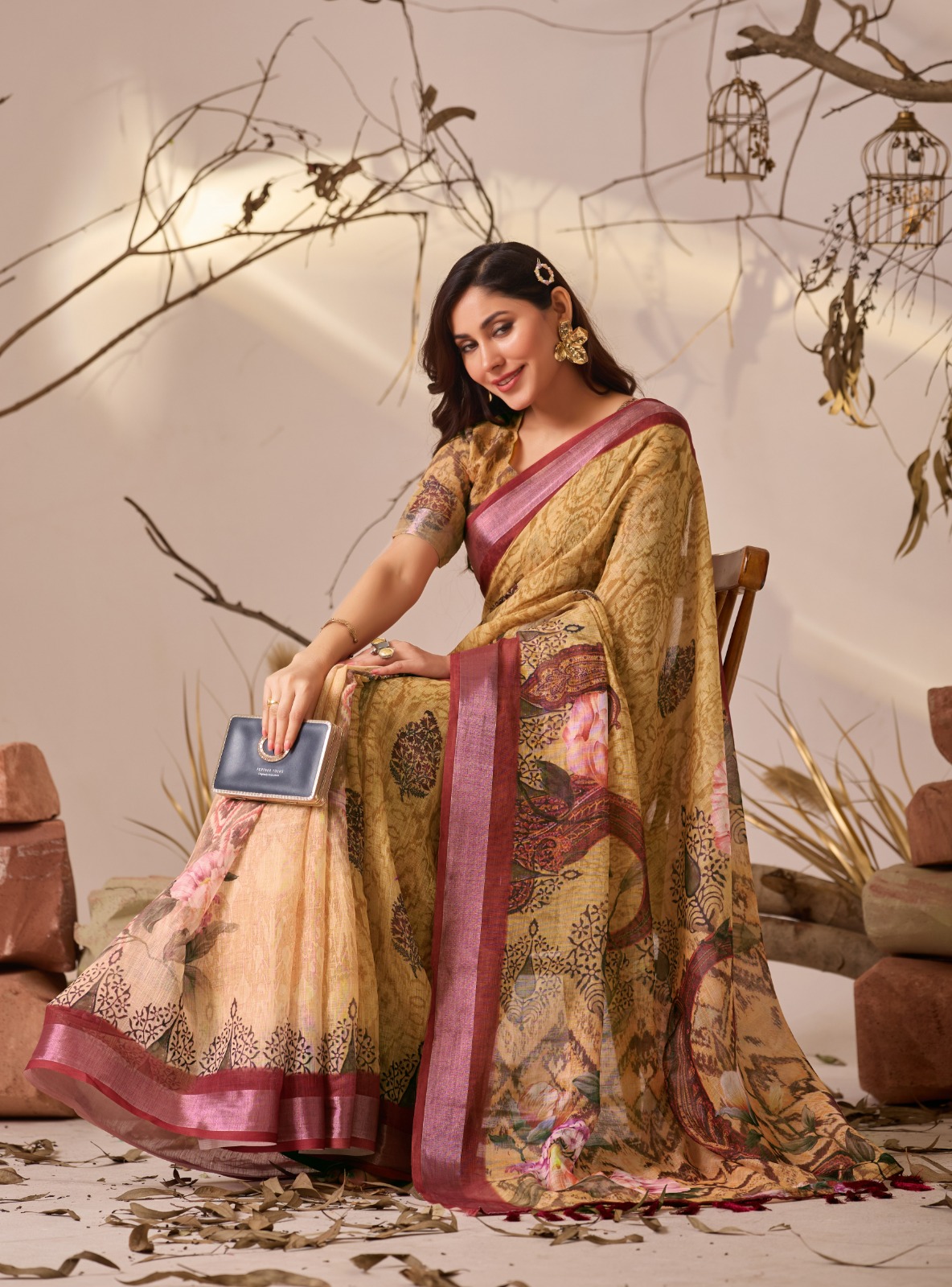
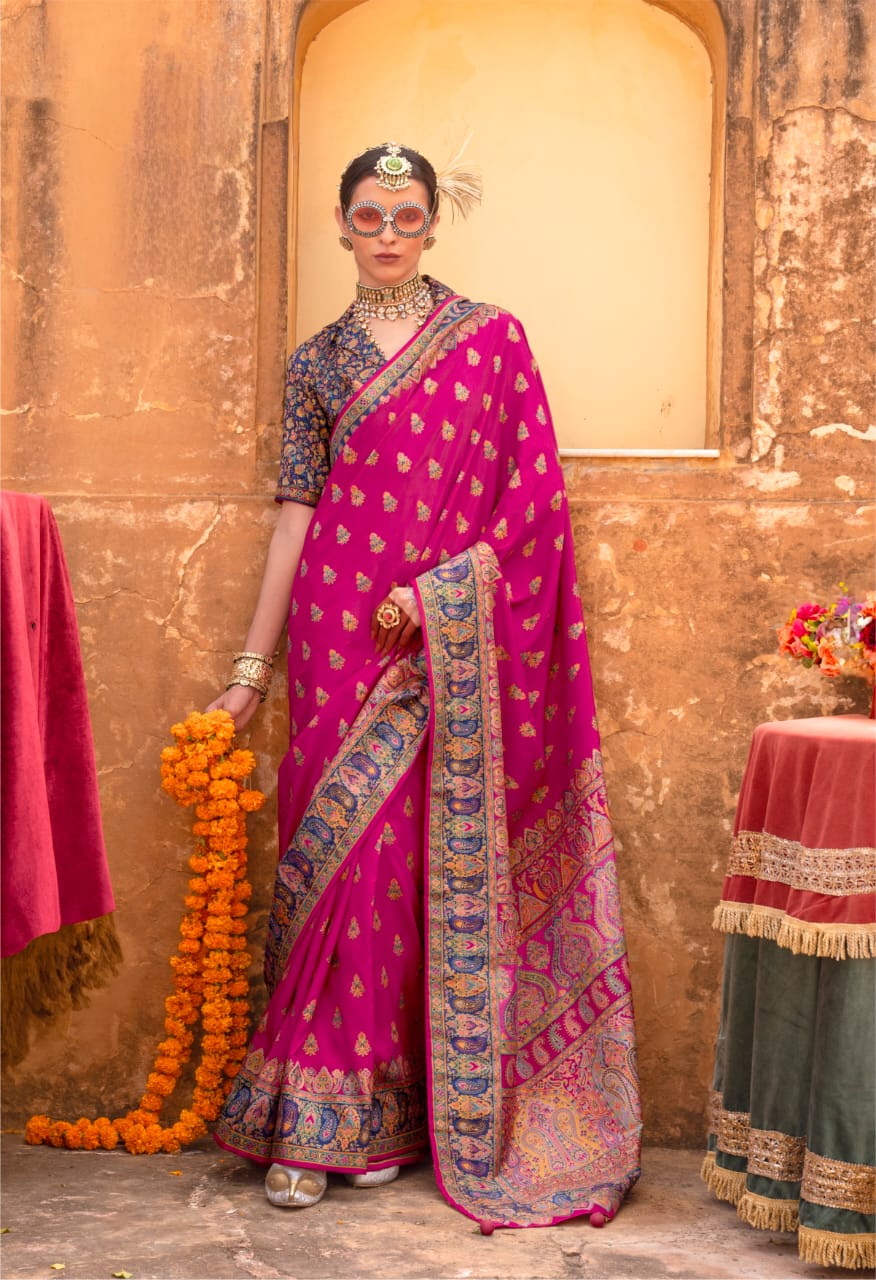
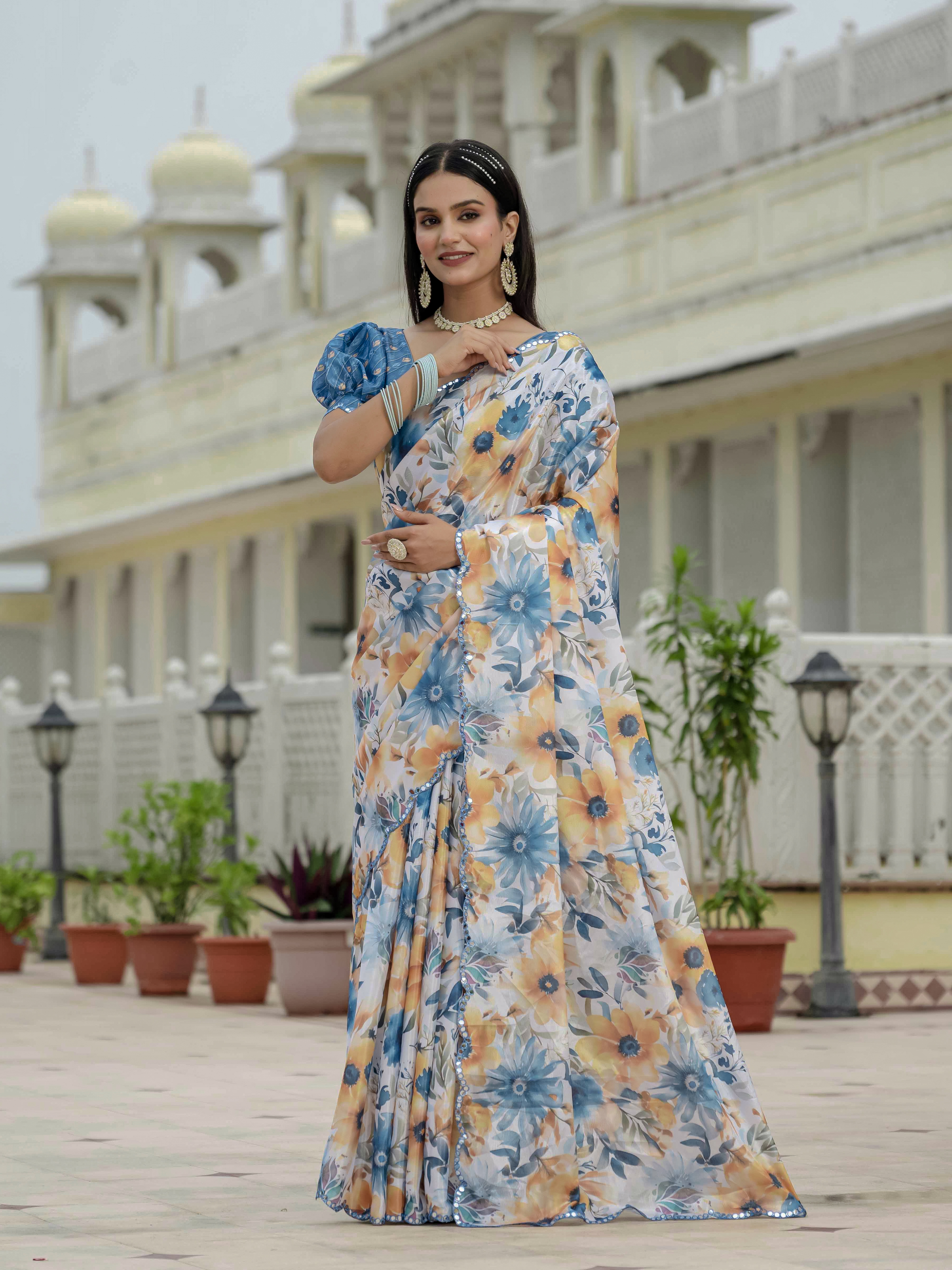
Colorful Ethnic Chinon Saree for Women can suit a cultural programme when paired with a modest blouse, secure pleats and minimal jewellery. Chinon has a fluid fall, so discreet safety pins at the shoulder and waist can prevent the pallu from catching on crowds or chairs. VARNAVI Peach Linen Cotton Floral Saree with Border Tassels can be more comfortable for a warm daytime programme, provided the tassels are secured away from food stalls, vehicle doors and crowded walkways.
Which colours work across festival settings?
Rich colour works well for festive dressing, but colour alone doesn't make an outfit culturally specific. Rust, maroon, indigo, emerald, mustard, ivory and black can create a celebration-ready palette without reproducing a particular community's full ceremonial combination. A simple solid base with one patterned accent is often more versatile than wearing several unrelated motifs together.
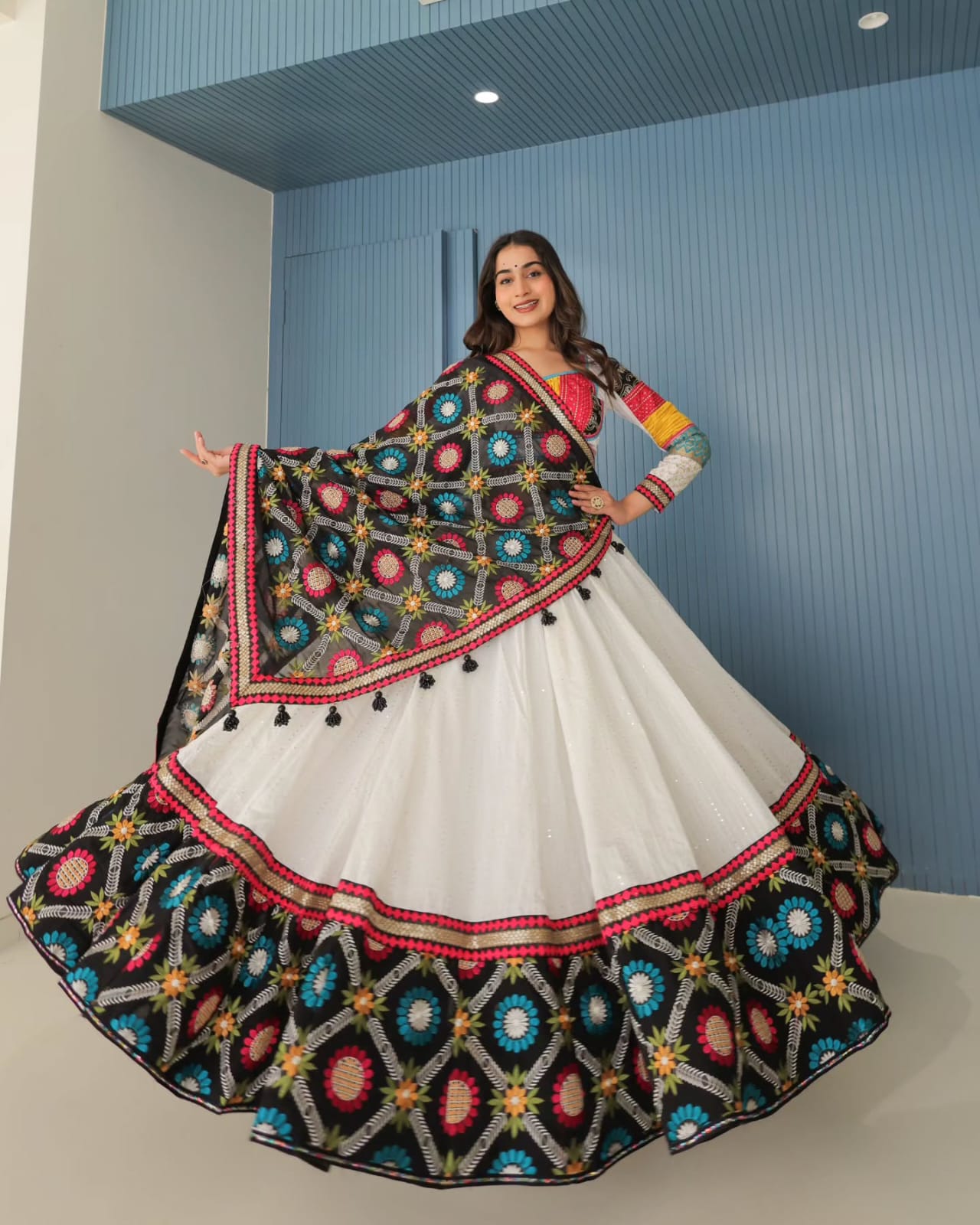
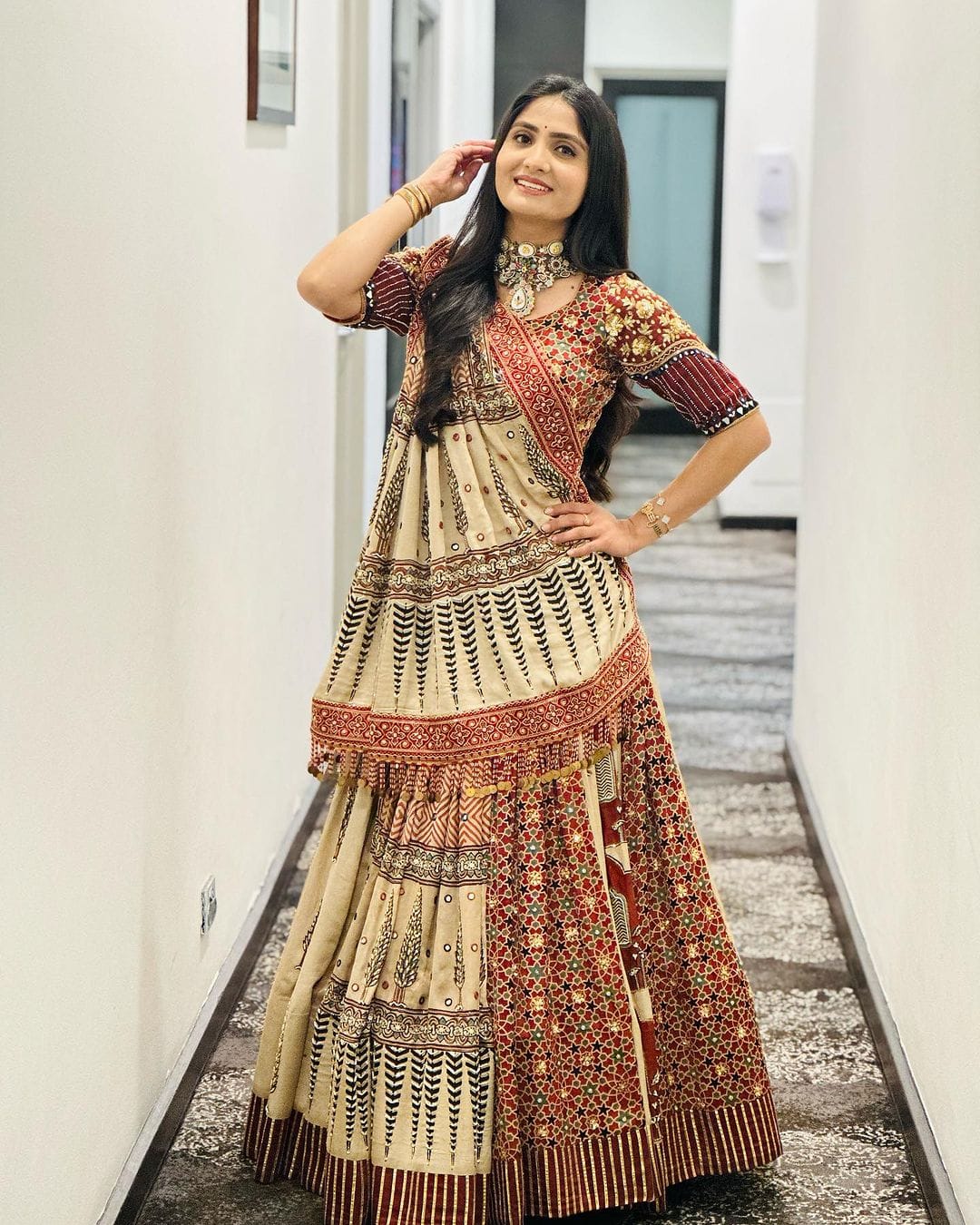
Beige Ethnic Printed Lehenga Set for Navratri and Garba demonstrates an useful styling principle: a neutral ground can make a print feel festive without becoming visually heavy. The same principle can be adapted for a Nagaland event with a plain dupatta, low jewellery and comfortable footwear. The outfit should remain a contemporary festive look, not a claim to represent Angami, Ao, Konyak, Sumi or another community's traditional dress.
February to May: dressing for renewal, spring and village festivals
February through May calls for light layers, covered shoulders for formal visits and footwear suited to changing temperatures. Mornings and evenings can feel cool in the hills, while midday walking can become warm, so a removable layer is more useful than a heavily embellished outfit.
What works for Sekrenyi?
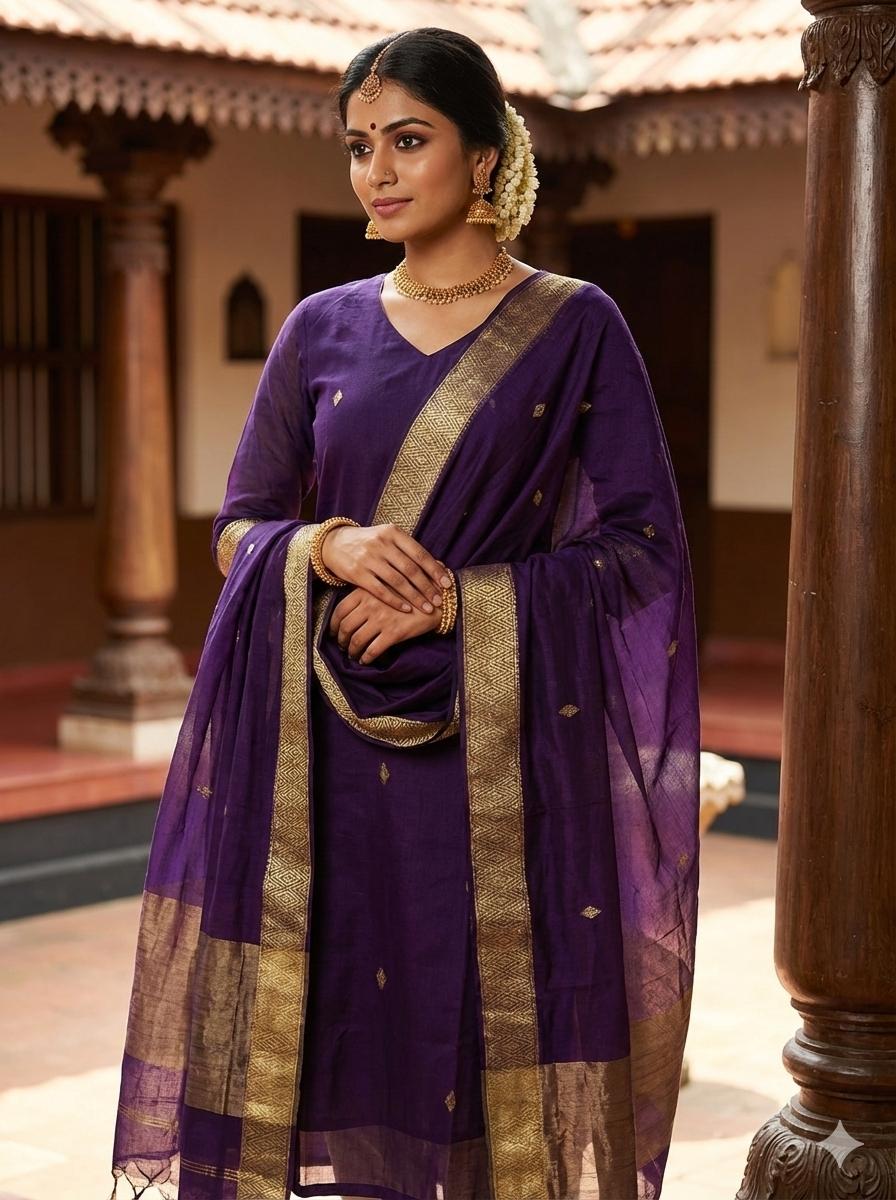
A modest salwar suit, cotton saree or long skirt with a full-sleeved blouse is a suitable starting point for a public visit during Sekrenyi. Choose breathable fabric, restrained jewellery and a shawl or cardigan for early mornings. Sekrenyi is an Angami festival with its own cultural meaning, so visitors should not wear Angami ceremonial ornaments, warrior accessories or distinctive classic pieces as fashion props.
What works for Aoling and Moatsu?
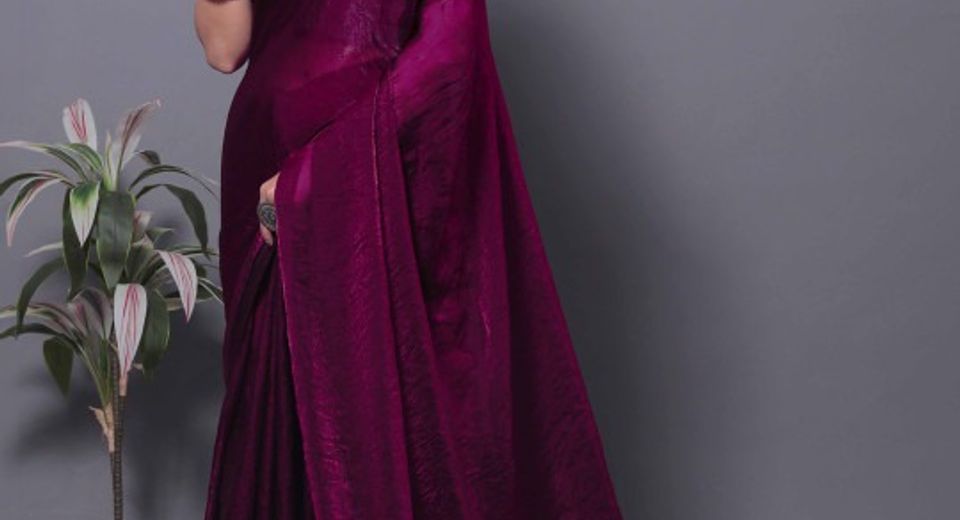
Light cotton separates, a simple saree or a printed kurta set are practical for Aoling and Moatsu because April and May can bring warm afternoons. A full-length outfit with a secure dupatta offers coverage without restricting movement. Maroon Mal Cotton Ethnic Saree With Blouse from VARNAVI shows how a naturally textured cotton saree can provide colour and occasion appeal while remaining more breathable than dense synthetic embellishment.
Moatsu is connected with the Ao community, while Aoling belongs to the Konyak community; the two festivals should not be treated as interchangeable cultural themes. Avoid buying or wearing a shawl, headgear, bead arrangement or ornament described by a seller as tribal unless the item's origin, community association and permission for use are clear. A contemporary outfit in festive colours is safer than an imitation of a ceremonial ensemble.
July to October: monsoon-smart festival dressing
Monsoon-season festival dressing should prioritise quick drying, secure drapes and protection from wet ground. July and August can bring heavy rain, humidity and slippery paths, while October may still have intermittent showers depending on location.
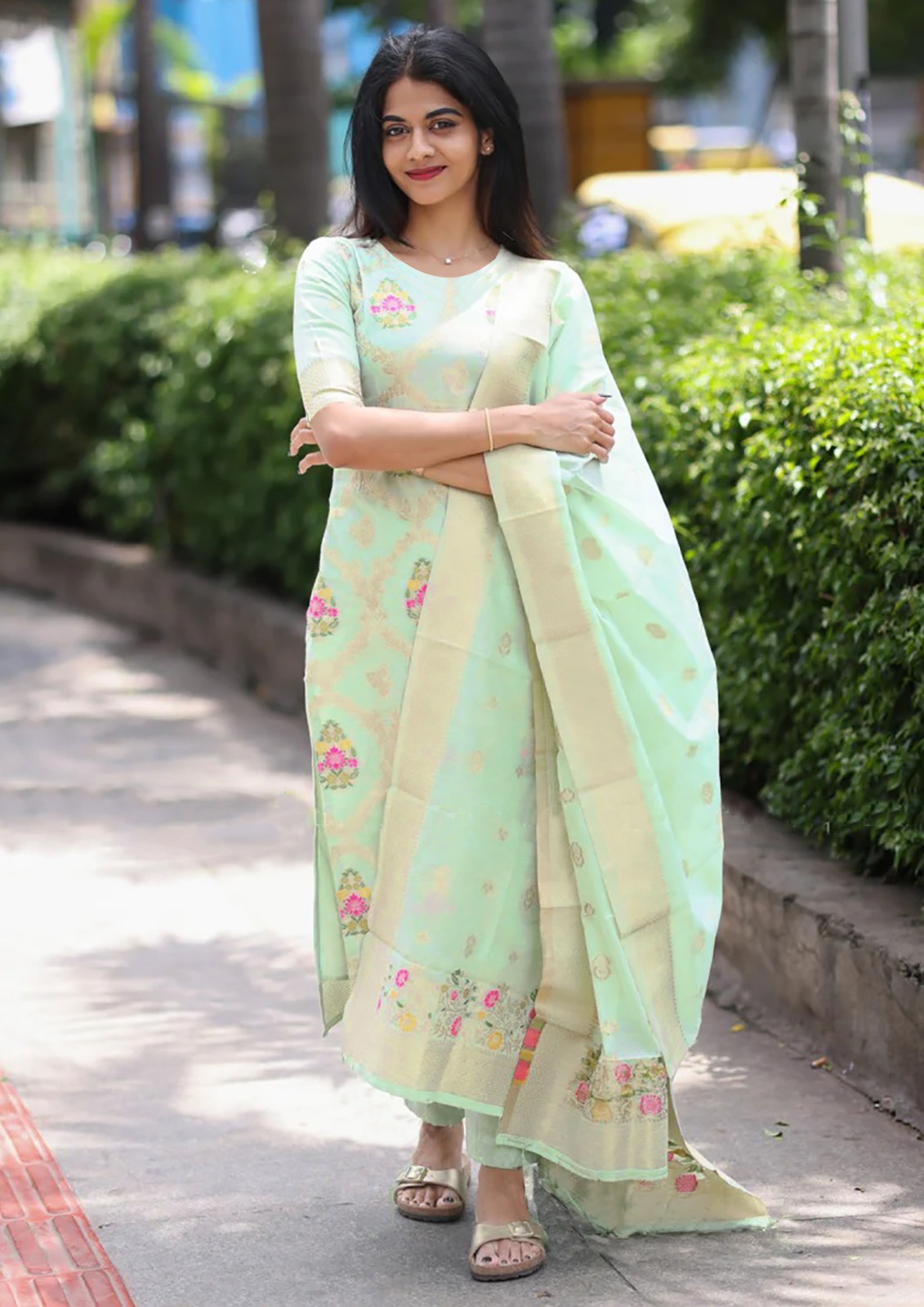
Choose cotton blends, linen cotton, lightweight silk blends or fabrics that can be washed and dried without specialist handling. Avoid very long hems that drag through mud, heavily trailing dupattas and shoes with smooth leather soles. A compact umbrella, a reusable waterproof pouch for a phone and a spare pair of socks are more valuable than extra jewellery.
A saree with a firm waist tuck and a shorter, securely pinned pallu is easier to manage in rain than a loose, floor-length drape. A long kurta with straight trousers or a palazzo suit can provide similar coverage with less fabric near the ground. Peach Floral Linen Cotton Saree with Statement Blue Border! Brings an useful colour-blocking idea: a clean border can provide visual interest without requiring layers of heavy embellishment.
How should you dress for Tuluni or Tsungremong?
For Tuluni or Tsungremong, choose breathable clothing with a secure fit, a light rain layer and non-slip shoes. These festivals are associated with specific communities, so clothing should acknowledge the event through neatness and festive colour rather than through unverified replicas of Sumi or Ao ceremonial dress.
Humidity also affects hair, makeup and fabric care. A low bun, braid or pinned half-up style is more reliable than loose hair in rain. Use a lightweight base, waterproof eyeliner if needed and jewellery that won't tarnish easily. Keep zari, metallic trims and damp fabrics separated after the event because trapped moisture can cause odour, colour transfer or tarnishing.
November and December: building a warm Hornbill Festival wardrobe
December visitors to Kisama need warm evening layers, comfortable walking shoes and an outfit that can handle a full day outdoors. Kohima's winter conditions can feel cool, especially after sunset, even when afternoons are pleasant.
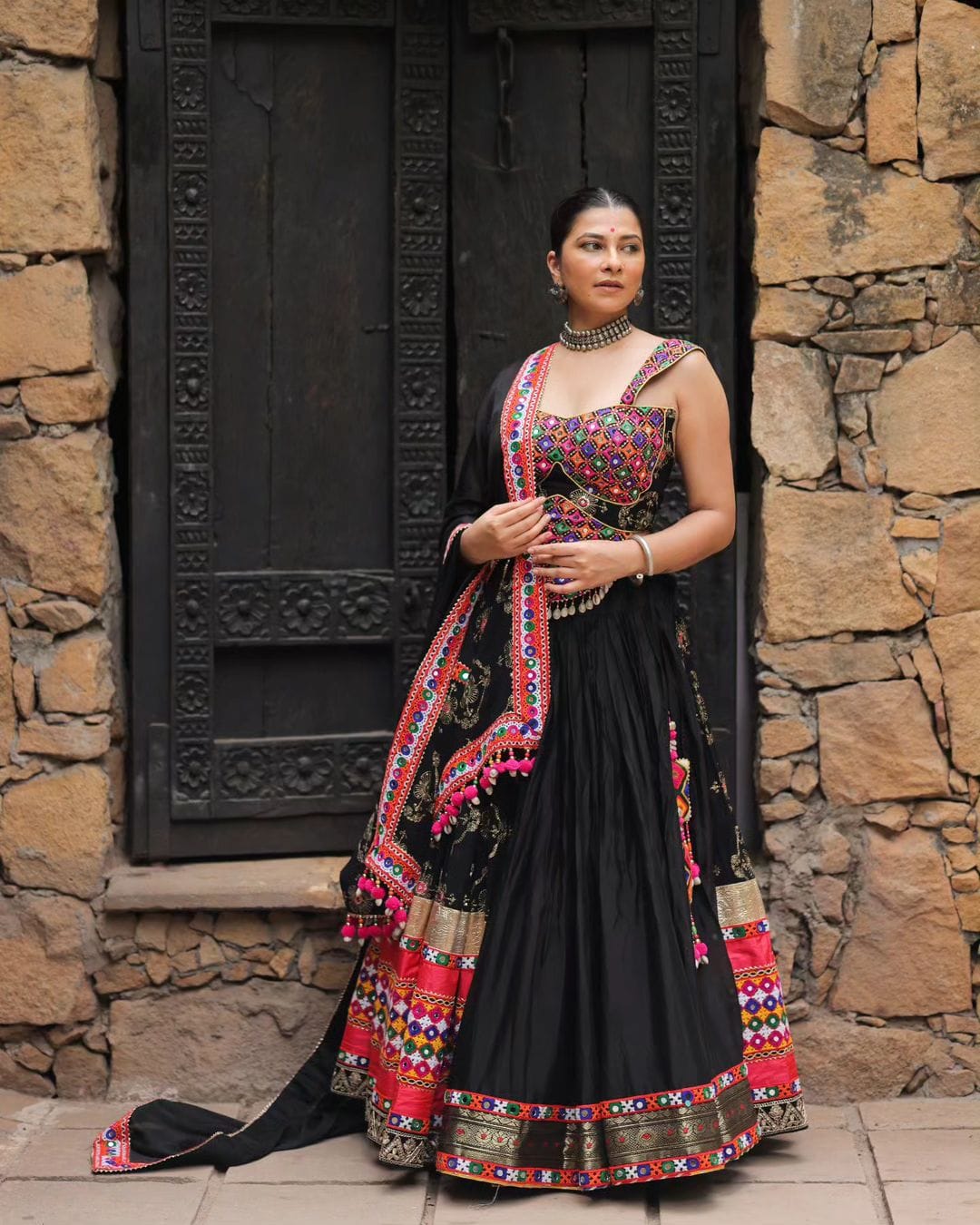
Start with a breathable base such as a cotton kurta, saree or blouse, then add a cardigan, denim jacket, wool stole or compact puffer depending on the forecast. A long skirt or trousers can be easier than a very wide lehenga when moving between stalls, performances and seating areas. Designer Black Garba Lehenga Choli for Festive Season can inspire a black-and-metallic evening palette, but a Hornbill outfit should be styled as contemporary festive wear rather than presented as Naga dress.
Vibrant Multicolor Navratri Lehenga Choli Set provides another lesson in balancing colour: a multicoloured garment can be paired with plain footwear and limited jewellery so the overall look remains comfortable and considered. A lehenga is practical for a ticketed evening programme if the hem is shortened to avoid dragging and the dupatta is pinned at both shoulders.
Can you wear a Naga shawl to Hornbill Festival?
You can wear a Naga shawl when it has been purchased through a reliable source and the seller explains its community association and appropriate use. Naga shawls carry distinct patterns, colours and histories connected to communities such as Ao, Angami, Konyak, Lotha and Sumi, so they should not be treated as generic ethnic accessories.
When provenance is uncertain, wear a plain wool stole or an Indian handloom shawl instead. Ask before photographing artisans, performers or people in heritage dress. Do not touch ceremonial objects, headdresses or jewellery without permission, and don't assume that an item displayed for sale is appropriate for casual styling.
How to style Indian ethnic wear without copying Naga regalia
Styling Indian ethnic wear respectfully means borrowing practical ideas such as colour balance, layering and textile appreciation while leaving community-specific symbols to their rightful context. A saree with a plain blouse, a kurta with a woven dupatta or a lehenga with understated jewellery can look festive without replicating a ceremonial outfit.
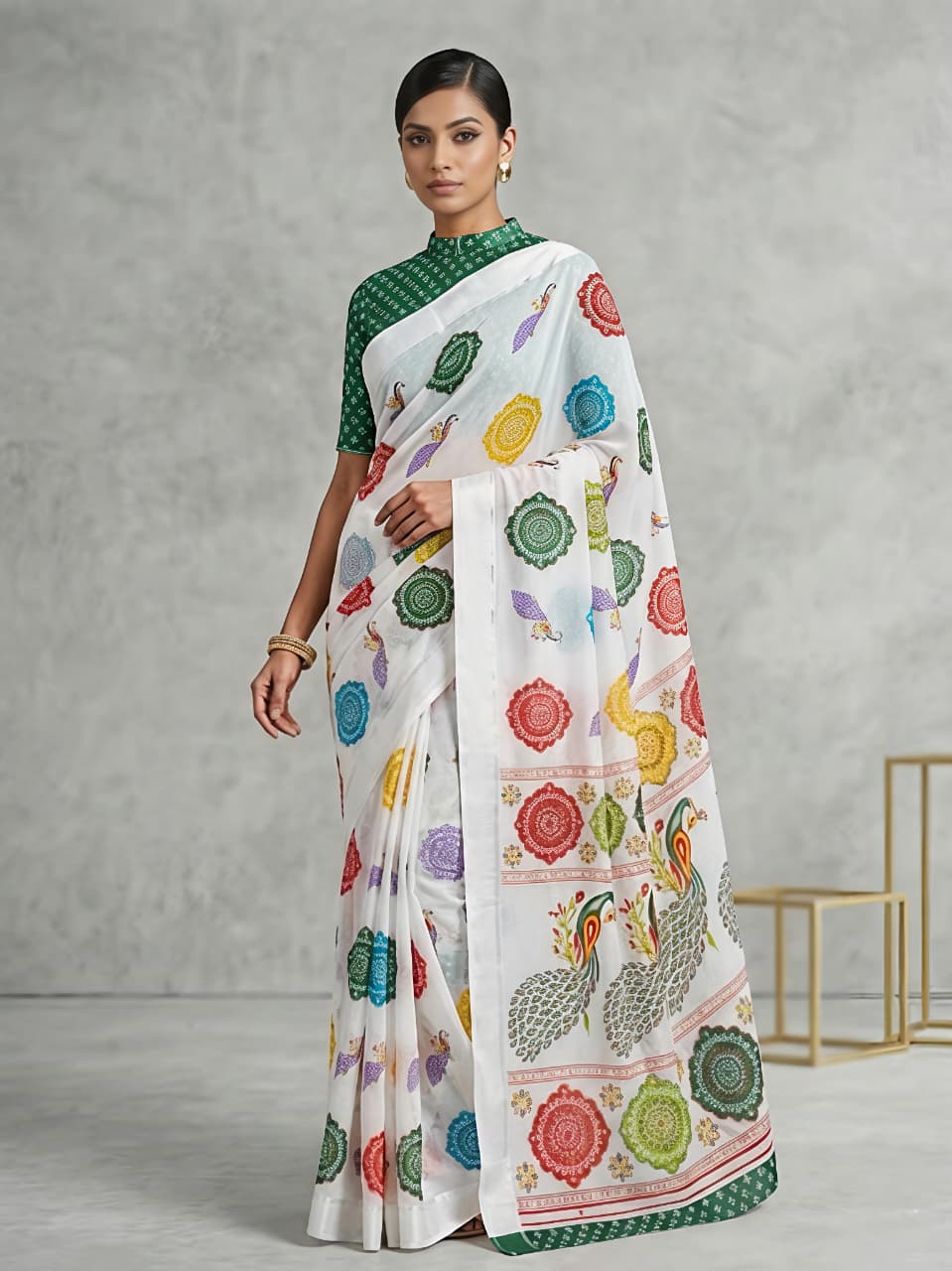
Keep the styling simple when the event includes cultural performances. Choose one statement element, such as a printed pallu, a bright border or a textured shawl, and keep the rest of the outfit quiet. Avoid combining imitation beadwork, faux animal motifs, replica headgear and a copied shawl pattern, because several borrowed details can turn a fashionable look into an inaccurate costume.
The collection Nagaland Ethnic Wear is most useful when treated as an invitation to study textiles and silhouettes rather than as permission to reproduce community identity. Check whether a garment uses a named Naga motif, whether the product description identifies a community, and whether the maker explains how the textile should be worn. Transparent sourcing is more meaningful than attaching the word "tribal" to a garment with no documented origin.
Festival packing and care checklist
A compact festival wardrobe should include one breathable daytime outfit, one warmer evening layer, secure footwear, rain protection and a small repair kit. Three safety pins, a stain-removal wipe, two hair ties, a needle, matching thread and a waterproof pouch can solve common problems during a long programme.

- Check the official festival dates and venue before selecting an outfit.
- Look up the expected temperature and rainfall for the specific town, not only for Nagaland as a whole.
- Test the full outfit by walking, sitting and climbing stairs before travelling.
- Pin saree pallus and dupattas at pressure points rather than relying on one shoulder pin.
- Carry a breathable inner layer if the outer garment is synthetic or heavily embellished.
- Air-dry damp clothing fully before folding it into luggage.
- Store zari and metallic trims in a dry cotton bag, away from perfume and moisture.
Handloom and embellished textiles require particular care after travel. Cotton sarees should be aired in shade before storage, while delicate Chinon should be folded loosely and kept away from rough surfaces that can cause pulls. Linen cotton can crease naturally, so steam or iron it on the reverse side at a moderate temperature after checking the care label. Never leave a wet garment sealed in plastic overnight.
Respectful festival fashion begins with a practical question: am I wearing a comfortable festive outfit, or am I presenting another community's identity as a costume?
A thoughtful answer usually leads to better clothing choices. Wear contemporary ethnic clothing with confidence, learn the difference between a public cultural performance and a private community ceremony, and ask before photographing or borrowing recognisable classic items. That balance lets clothing participate in the celebration without reducing Naga cultures to decorative patterns.
Questions About Planning Festival Outfits in Nagaland
What should women wear to Hornbill Festival in Nagaland?
Women can wear a comfortable saree, salwar suit, long skirt, kurta set or modest lehenga with stable footwear and a warm evening layer. December evenings near Kohima can be cool, so a cardigan, wool stole or light jacket is useful.
Can tourists wear traditional Naga clothes at Hornbill Festival?
Tourists should wear Naga traditional clothing only when it has been purchased or offered through a reliable local source and the appropriate use has been explained. Visitors should not copy ceremonial regalia, wear community-specific ornaments as props or assume that a commercial costume represents every Naga community.
What should I wear to Moatsu or Aoling in Nagaland?
A breathable cotton saree, kurta set, salwar suit or long skirt with a secure dupatta works well for the warm daytime conditions common in May and April. Choose modest styling and avoid imitating Ao or Konyak ceremonial dress unless a knowledgeable local source has given permission and guidance.
Is a saree practical for a Nagaland festival?
A saree is practical when the pleats, waist tuck and pallu are secured for walking and weather conditions. Linen cotton and cotton sarees are useful in warm weather, while a shorter pallu and non-slip footwear help during rain or on uneven festival grounds.
What fabrics are best for festival travel in Nagaland?
Cotton, linen cotton, mulmul and lightweight blends are useful for warm daytime events, while wool, denim or quilted layers can help during cool December evenings. Avoid fabrics that remain damp for long periods during monsoon travel and always follow the garment's care label.
How can I wear Naga-inspired colours without disrespecting Naga culture?
Use general festive colours such as maroon, indigo, mustard, ivory or emerald with contemporary Indian silhouettes rather than copying a named community's shawl, motif or ceremonial accessories. Verify textile provenance and choose a plain handloom stole when the cultural meaning of a pattern is unclear.