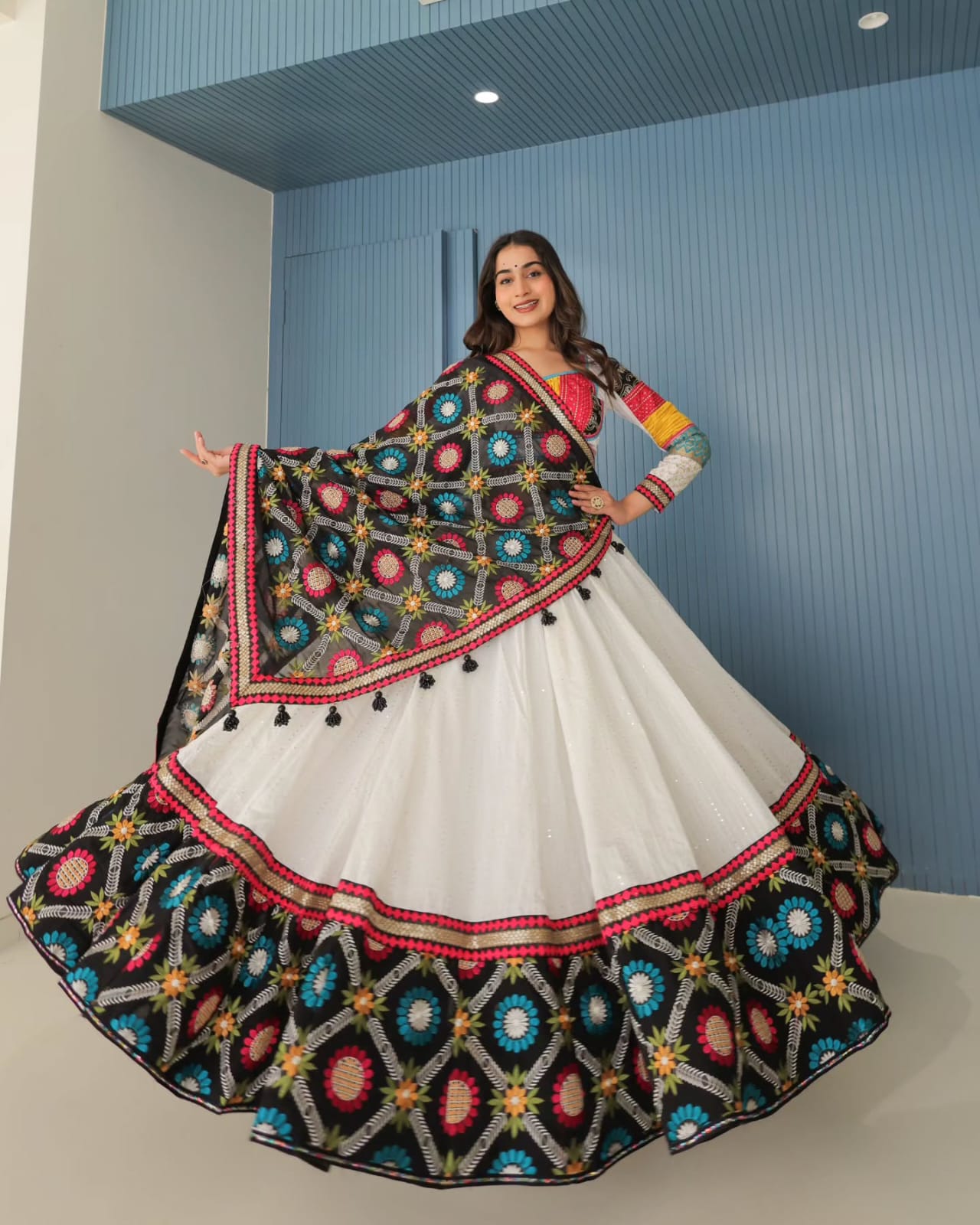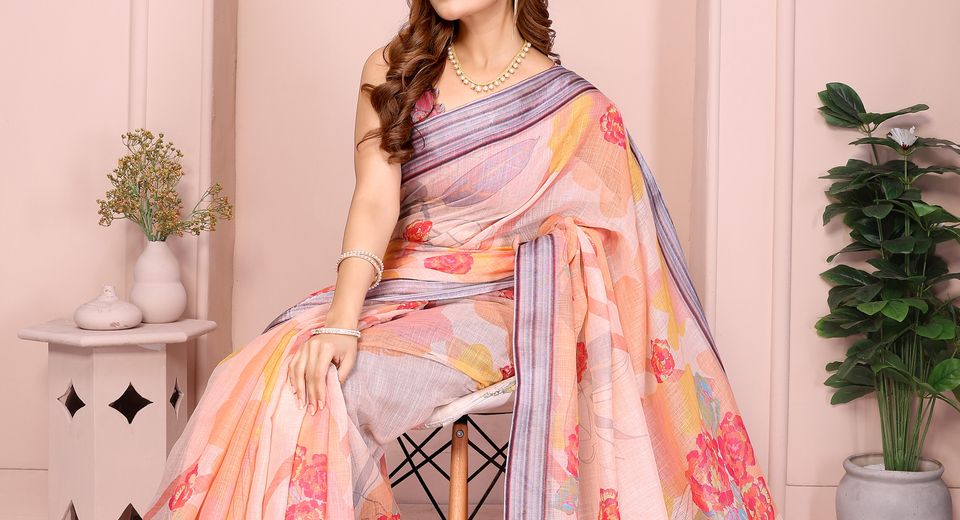
Naga-Inspired Blouse Designs for Modern Sarees bring strong geometry, tactile surfaces and a sense of hand-crafted identity to a familiar drape. The most successful versions don't copy ceremonial clothing; they translate selected visual ideas-structured bands, contrast borders, bead-like details and deep earthy colour-into a blouse that fits a contemporary wardrobe. The result can work with linen cotton for daytime, silk for evening or a restrained floral saree for a more unexpected festive look.
A thoughtful design begins with context. Naga communities include many distinct groups, including Ao, Angami, Sumi, Lotha and others, each with their own textile traditions, symbols and ceremonial meanings. A blouse described as Naga-inspired should therefore be understood as a contemporary interpretation, not automatically as an authentic representation of one community. Naming the reference honestly and avoiding borrowed ceremonial insignia makes the styling more respectful and more visually precise.
What gives Naga-inspired blouse design its visual character?
Naga-inspired blouse design usually gains its character from bold linear arrangement, contrasting colour blocks and surface texture rather than from a heavily embellished silhouette. Narrow horizontal bands, stepped geometry, diamond formations and graphic borders can suggest woven textile structure when they're used with restraint.
Black, ivory, rust, crimson, indigo, forest green and muted mustard create a grounded palette, while one brighter accent gives a modern saree enough energy for a celebration. A red-and-black band on an otherwise plain blouse can be more effective than covering the entire garment in motifs. Similarly, a narrow woven-looking panel at the sleeve edge can reference textile architecture without turning the blouse into a costume piece.
Texture matters as much as colour. Matte cotton, raw silk, handloom linen, woven tape, small wooden beads and controlled zari can create visual depth. Glossy sequins and dense crystal work are not necessary for the look, especially when the saree already has a floral print or a reflective border. A tactile blouse paired with a quieter saree lets the construction remain visible from a distance.
Which motifs work best on a contemporary blouse?
Geometric bands, stepped diamonds, narrow stripes and abstracted plant forms work best because they translate clearly into embroidery, appliqué, jacquard or printed panels. A stylised serpent line may be used as a modern graphic, but it should not be presented as a universal Naga symbol or assigned a cultural meaning without reliable research.
Placement controls the impact. A single vertical panel can lengthen the torso, shoulder bands can frame a wide neckline, and sleeve borders can echo the saree pallu without competing with it. Repeating a small motif across the entire blouse creates a quieter effect; placing one enlarged motif at the back creates a more editorial result that appears only when the wearer turns.
How should the blouse fabric be matched with a modern saree?
The blouse fabric should balance the saree's weight, surface and level of shine. A medium-weight blouse fabric usually provides the best structure for geometric panels, while very soft or slippery materials need lining and careful seam support.
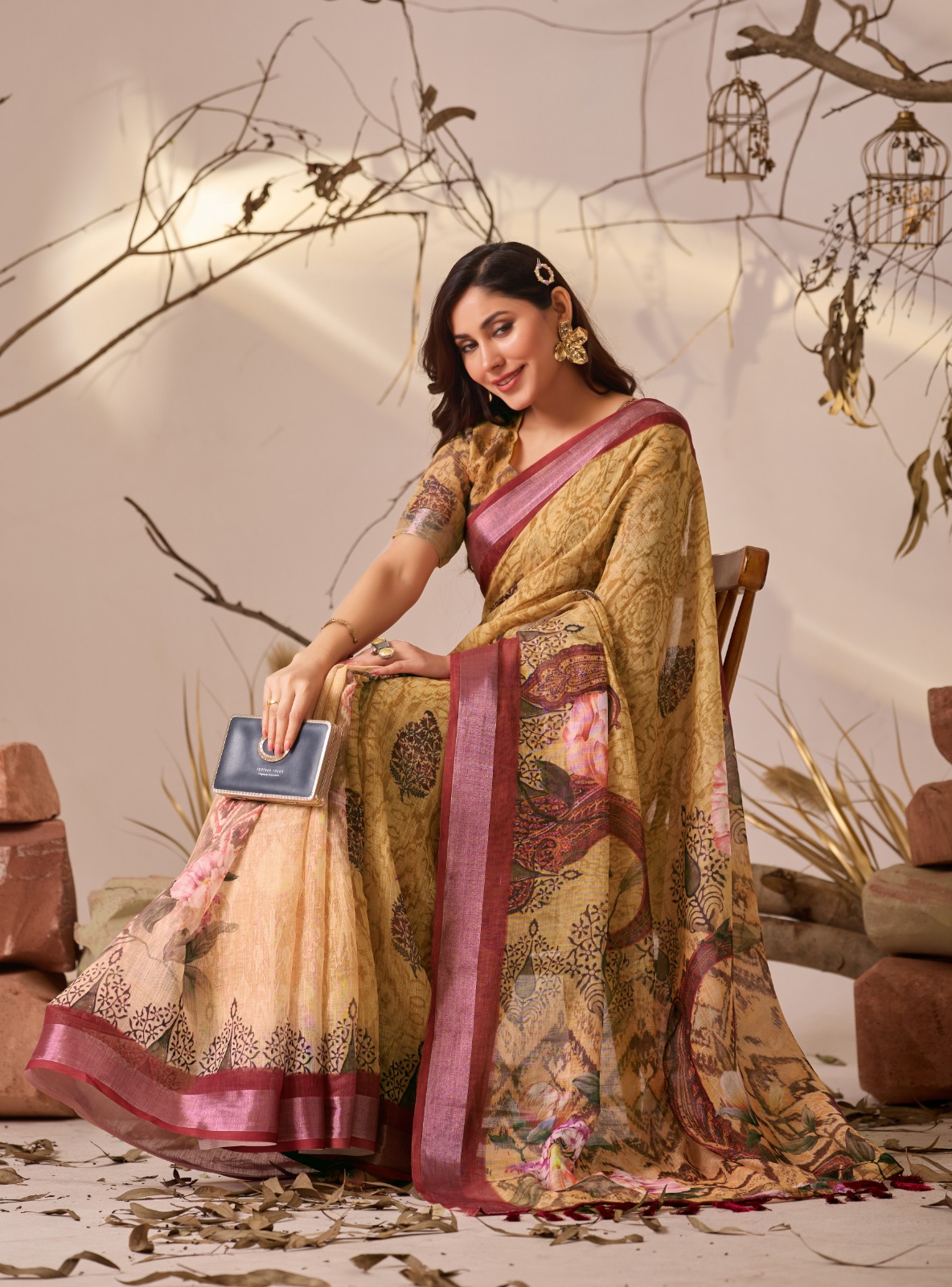
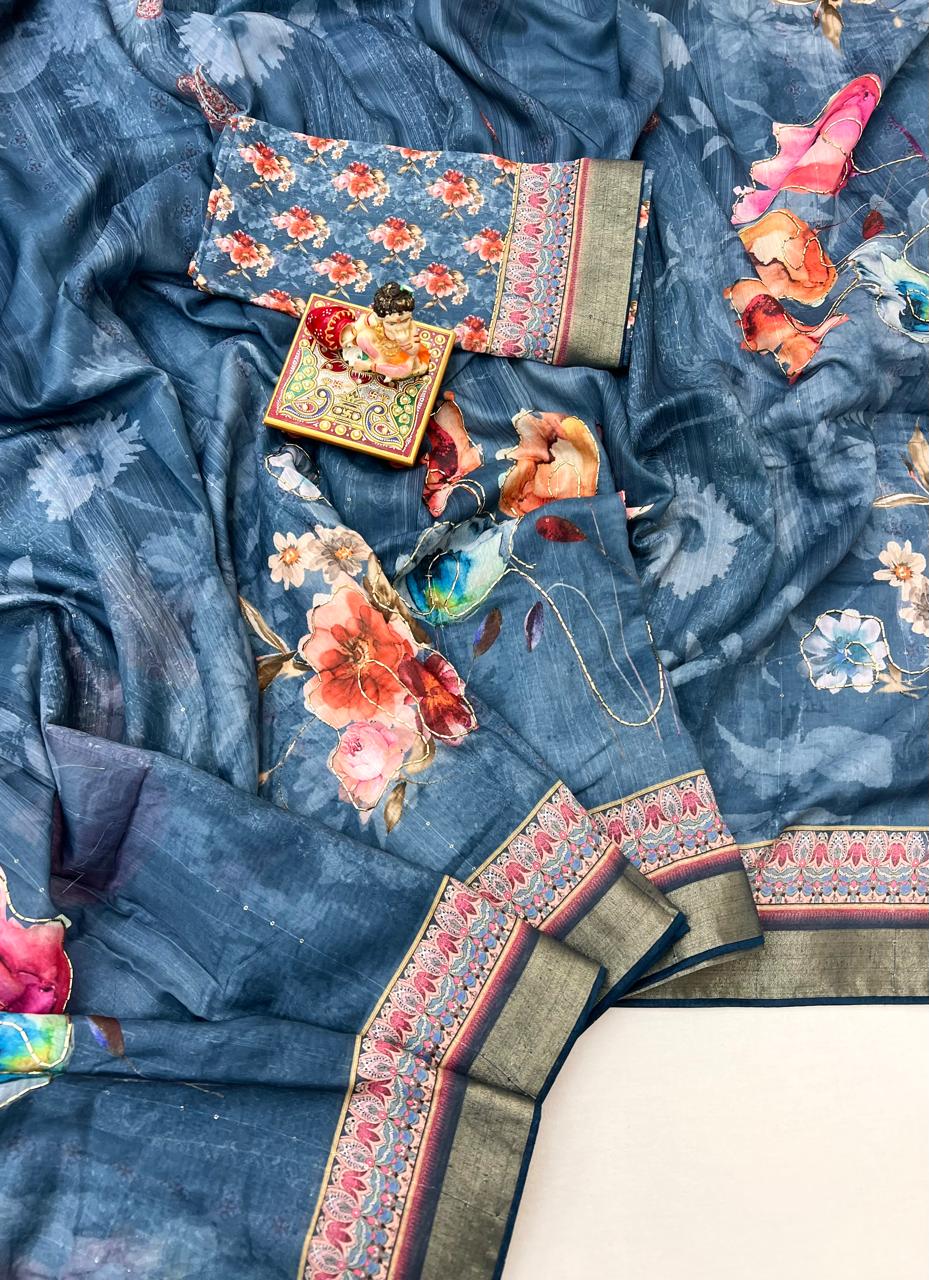
Linen cotton sarees pair naturally with cotton-silk, linen-blend or matte raw-silk blouses because those fabrics preserve a handcrafted appearance. The Pastel Linen Cotton Floral Print Saree with Designer Blouse demonstrates why a structured blouse can sharpen a gentle floral base. A black, rust or deep indigo blouse with a small geometric sleeve border would give the pastel ground more definition without hiding the print.
The Peach Floral Linen Cotton Saree with Statement Blue Border! Calls for a different balance. The blue border already supplies a strong colour interruption, so a blouse in indigo, navy or the same blue with restrained geometric embroidery can connect the look. Avoid adding several unrelated accent colours; the border should remain the main colour cue.
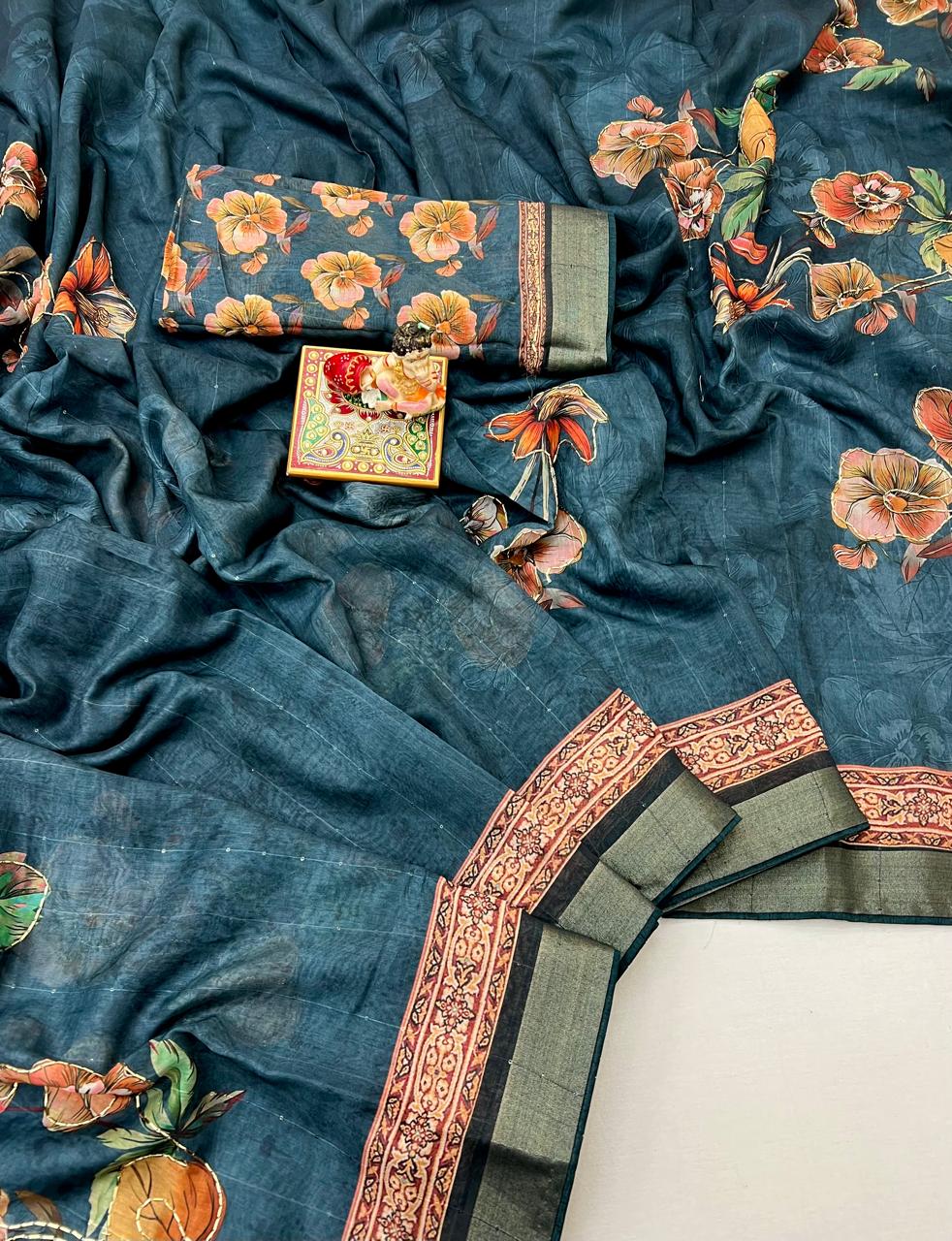
For a softer tonal outfit, the Peach Linen Cotton Floral Print Saree with Blouse for Women can take a cocoa, muted maroon or warm ivory blouse. A woven-looking yoke or narrow sleeve stripe adds structure while keeping the peach palette wearable for a daytime gathering. The Beige Leaf Printed Linen Cotton Saree with Blouse is similarly suited to olive, charcoal, coffee brown or black, particularly when the print needs a darker frame.
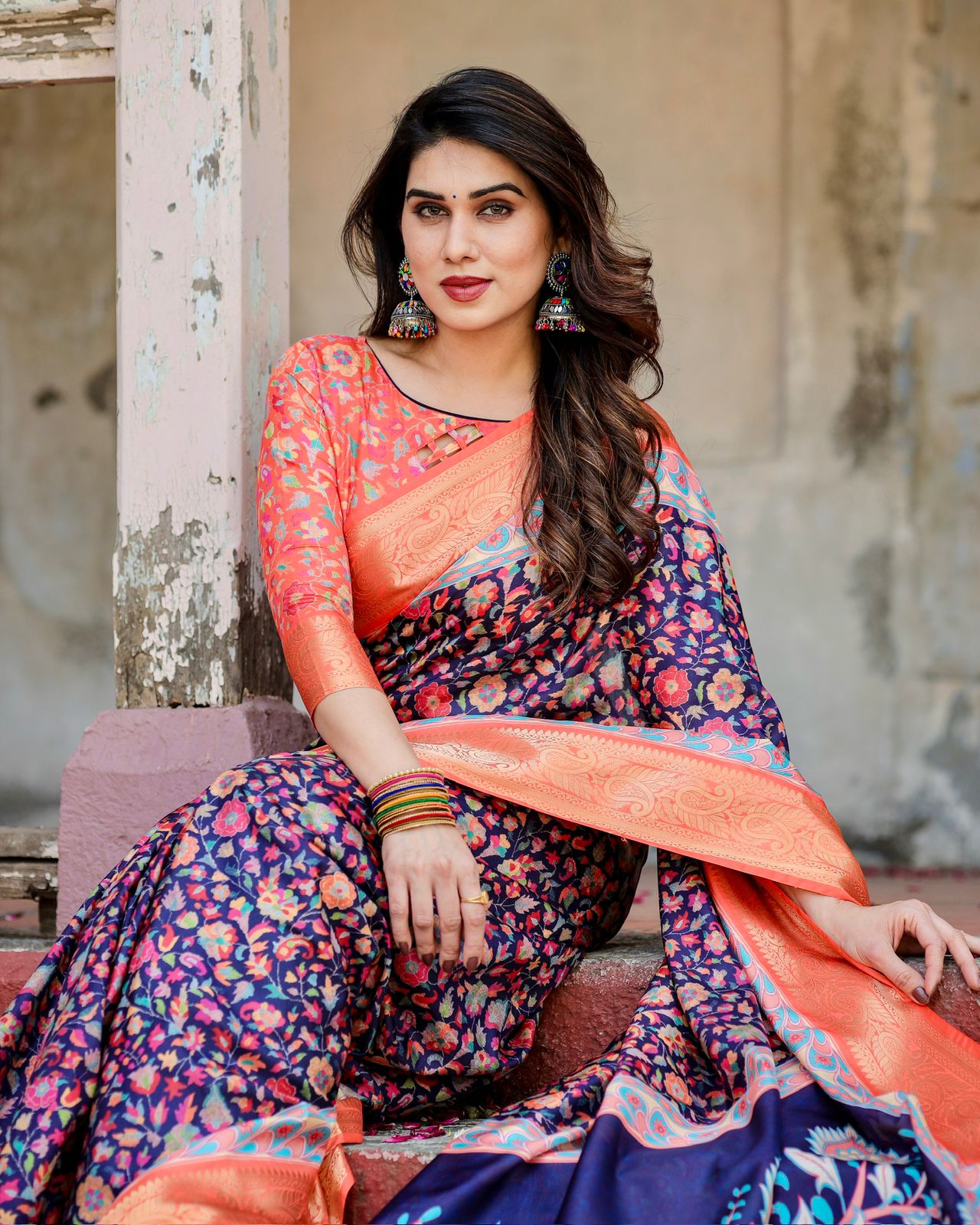
Silk and tissue sarees can support sharper evening interpretations. The Navy Blue Floral Silk Saree with Peach Zari Border already combines a dark ground, floral detail and metallic warmth. A peach, antique-gold or deep navy blouse with a geometric neckline can repeat those relationships. The Pastel Floral Tissue Handloom Cotton Saree with Zari Weaves benefits from a blouse that's matte or lightly lustrous; excessive shine can make zari, tissue and embellishment compete for attention.
Which blouse cuts make the inspiration feel modern?
A clean neckline and controlled volume make a culturally referenced blouse feel contemporary. The strongest cuts are usually simple enough to let the motif and fabric carry the design.
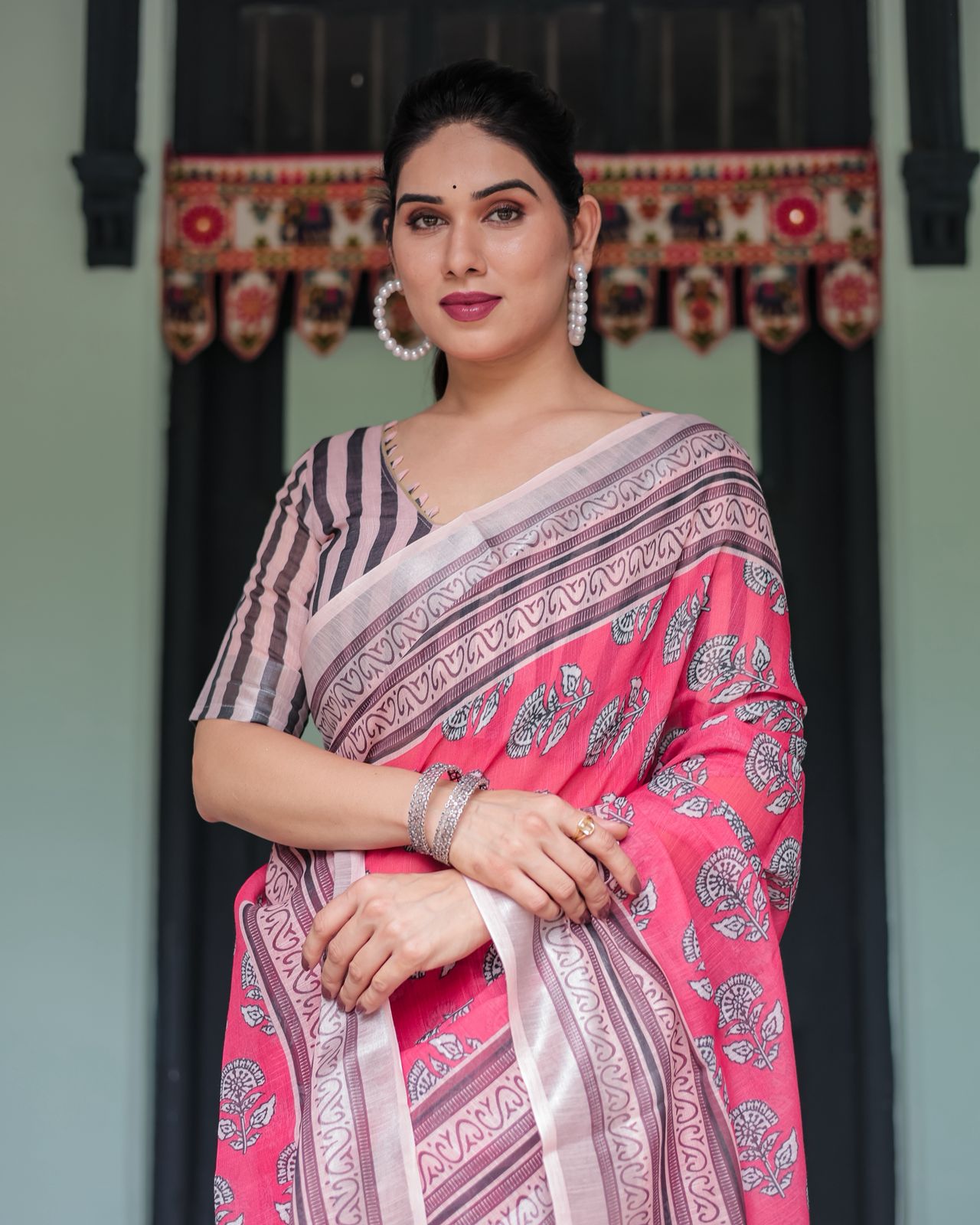
Necklines and backs
A square neckline gives geometric embroidery a natural frame and works especially well on smaller or medium bust proportions. A shallow V-neck creates length through the upper body, while a bateau neckline gives a composed, editorial finish with a plain saree. A high round neck is practical for a motif-heavy blouse because it creates a clear uninterrupted field.
The back can carry the most distinctive detail. A rectangular back opening with fabric-covered buttons, a broad tie panel or a horizontal embroidered band can echo woven structure without requiring a dramatic low cut. A keyhole opening suits lighter sarees, but the opening should be reinforced so the blouse doesn't pull against the fastening.
Sleeves and proportions
Three-quarter sleeves offer the clearest space for bands, appliqué and narrow borders. Elbow-length sleeves create a classic proportion with silk sarees, while short sleeves keep linen cotton outfits easy for daytime. A fitted full sleeve can look striking for winter events, but the armhole must allow comfortable movement during greeting, eating and dancing.
Use a wider motif on a plain blouse and a narrower motif on a printed saree. Keep the blouse hem close to the natural waist when the saree has a busy pallu; a longer, slightly structured blouse can work with a minimalist drape and a narrow border. These proportion decisions prevent the blouse from appearing disconnected from the saree.
How can Naga-Inspired Blouse Designs for Modern Sarees stay respectful?
Respect comes from clear attribution, selective interpretation and avoiding sacred or ceremonial details as decoration. A contemporary blouse can acknowledge visual language without claiming to reproduce traditional Naga attire.
Start by identifying the specific source of inspiration whenever possible. Research museum collections, community-led writing, textile documentation and work by Naga designers rather than relying on a generic "tribal" mood board. Do not combine unrelated motifs and label the result as one unified tradition. Do not use ceremonial shawl patterns, status markers or community-specific symbols simply because they look graphic.
Material choices also affect the message. A blouse made with handloom cotton, woven tape or artisan-produced trim communicates attention to textile practice more convincingly than mass-applied faux tribal graphics. If a motif is printed, describe it as a contemporary geometric interpretation. If a textile or trim comes from a particular community, credit that community accurately and avoid treating the technique as anonymous decoration.
Respectful styling doesn't require the outfit to look solemn. Modern tailoring, a measured colour palette and a clear explanation of the reference can make the garment both fashionable and culturally considerate. The aim is an informed design conversation, not a costume shortcut.
How do you style the saree, jewellery and hair together?
The saree drape should remain uncomplicated when the blouse carries the strongest visual story. A neat Nivi drape, a narrow pleat front and a deliberately arranged pallu give geometric sleeves and backs enough visibility.
Choose jewellery according to the blouse's surface. Brushed silver, oxidised metal, wood, terracotta and small bead strands complement matte cotton and strong graphic bands. Antique gold works with zari, silk and warm shades such as maroon or peach. Heavy layered necklaces are best reserved for a plain blouse; a high-neck blouse with embroidery may need only statement earrings and one cuff.
Hair can support the regional-textile reference without becoming theatrical. A low bun, a long braid or loose waves with a clean middle part keeps the silhouette composed. Fresh flowers are suitable for many festive settings, but the choice should reflect the event and the wearer's own style rather than function as a generic marker of "time-honoured" dress.
Makeup can follow the palette rather than compete with it. A brick or berry lip works with black, rust and maroon, while peach or rose tones suit pastel linen cotton. Keep the eyes defined but not excessively glittered when the blouse includes metallic thread or a reflective border.
Which sarees suit this look for different occasions?
Linen cotton and handloom cotton sarees are the most practical choices for daytime celebrations, cultural events and intimate festive lunches. Their breathable structure allows a graphic blouse to feel deliberate without becoming overdressed. The Peach Floral Linen Cotton Saree with Beautiful Blue Border can move from a daytime event to dinner when paired first with a matte blouse and later with sharper earrings and a more defined lip.
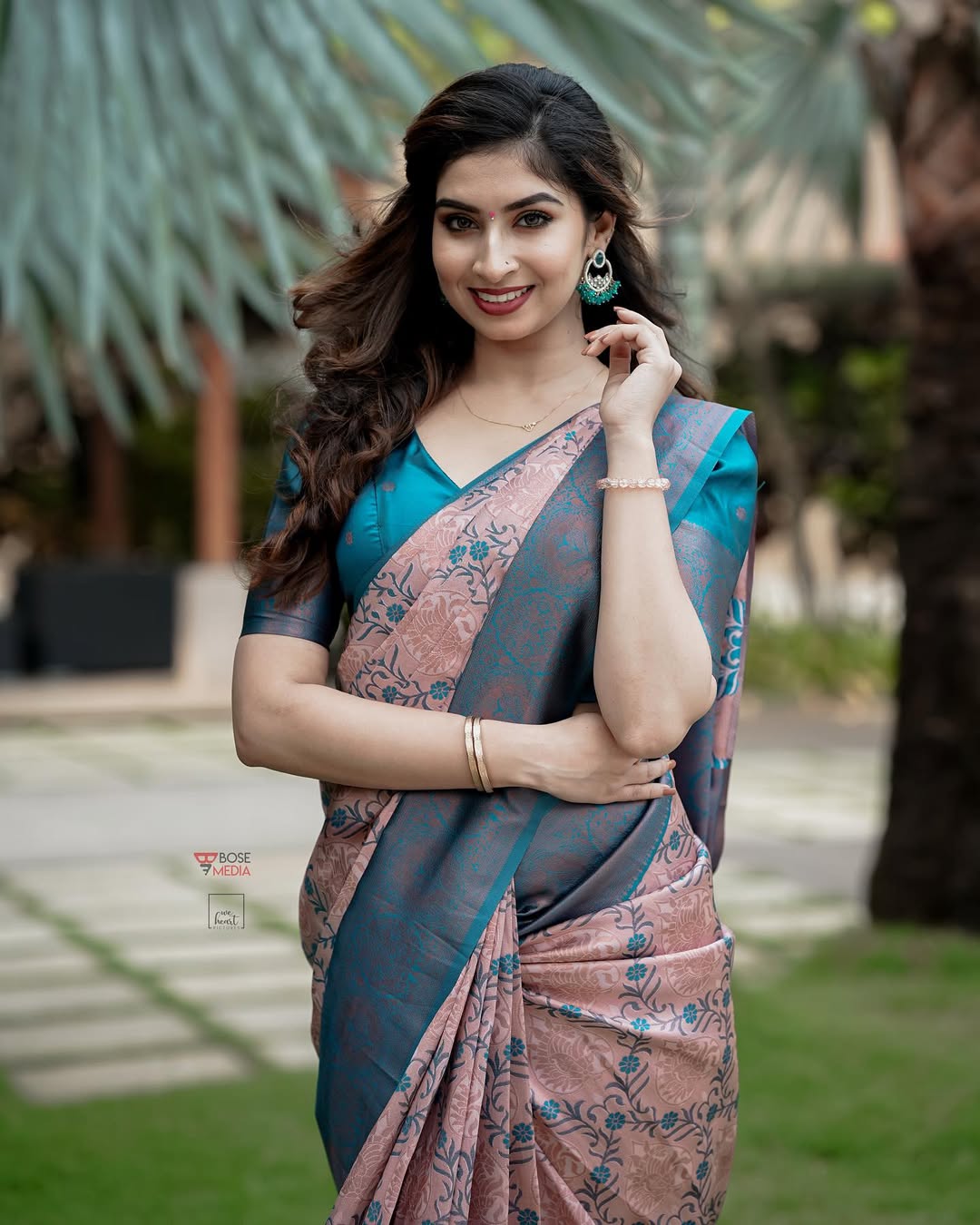
Mal cotton works well for a relaxed ethnic wardrobe because it holds a blouse with moderate structure while remaining comfortable for long hours. The Maroon Mal Cotton Ethnic Saree With Blouse from VARNAVI can be styled with an ivory, black or muted mustard blouse panel, depending on whether the desired result is softer or more graphic.
Silk is appropriate for receptions, evening ceremonies and formal festive gatherings. The navy and peach relationship in the Navy Blue Floral Silk Saree with Peach Zari Border can be repeated through a peach sleeve edge or a navy blouse with antique-gold detailing. Keep the motif scale medium-sized so the saree's floral design and zari border remain visible.
Budget planning can also shape the choice. The Sarees from Rs 1000 to Rs 1500 collection is useful when building an everyday-to-festive wardrobe around one well-tailored blouse. Sale-led browsing through Sarees Under 20% Off, Sarees Under 10% Off and Sarees Flat 50% Off can make it easier to test an unfamiliar colour combination before investing in a more elaborate custom blouse. A larger discount should not replace checking fibre content, blouse-piece measurements and return conditions.
What should you check before ordering or tailoring the blouse?
Check the finished measurements, lining, closure position and motif placement before treating a blouse as an occasion-ready garment. A beautiful design becomes uncomfortable when the armhole is tight or the bust seam cuts across a graphic band.

- Measure the bust, underbust, shoulder, armhole and sleeve length: record measurements over the bra or shapewear intended for the saree, and allow movement at the upper arm.
- Confirm seam allowance: a tailor should ideally leave approximately 1 to 1.5 inches where adjustment is possible, especially at the side seams.
- Inspect the lining: cotton lining improves comfort in warm weather, while a silk or poly-cotton lining can help structured fabrics slide over the saree more cleanly.
- Check the closure: hooks and eyes provide a close fit, while a concealed zip gives a smooth back; fabric-covered buttons need secure loops rather than decorative stitching alone.
- Plan motif placement: avoid placing a large geometric panel directly over a dart unless the pattern has been designed around the shaping.
- Match the blouse to the saree's actual colour: compare fabrics in daylight because peach, navy, beige and antique gold can shift noticeably under warm indoor lighting.
Care depends on the materials used. Hand-wash or dry-clean zari, silk and beadwork according to the care label, and never wring a structured blouse. Air a cotton or linen-blend blouse fully before storing it, press it inside out on a moderate setting, and keep embellished pieces folded with soft tissue between layers. Store dark and light garments separately when untested dyes or metallic trims are present.
For readers comparing festive options, Sarees Flat 60% Off offers another price-led route. But the same inspection matters: a reduced price doesn't tell you whether the blouse is lined, whether the saree includes an usable blouse piece or whether the print aligns at the border. Those practical details determine whether Naga-Inspired Blouse Designs for Modern Sarees remain wearable beyond one photograph.
How can one blouse work with more than one saree?
A reversible colour relationship makes a statement blouse more versatile than a highly specific matching blouse. A navy geometric blouse can support peach, beige and pastel sarees; an ivory blouse can soften maroon, indigo and rust; a dark maroon blouse can frame floral linen cotton without looking tied to one print.
Keep one side of the design quiet. If the front has contrast bands, use a plain back with one small motif. If the sleeves are embroidered, choose an uninterrupted front and let the saree border provide the second pattern. A detachable bow, removable shoulder panel or separate sleeve cuff can also change the mood without commissioning a completely new blouse.
The most lasting wardrobe decision is often a well-fitted blouse in a flexible base colour, tailored with one unmistakable detail. A square neckline, a three-quarter sleeve and a narrow geometric border can work across everyday cotton, floral linen cotton and formal silk, allowing the wearer to adapt the styling rather than repeat an entire outfit.
Questions About Wearing Naga-Inspired Saree Blouses
What are Naga-inspired blouse designs for modern sarees?
Naga-inspired blouse designs for modern sarees are contemporary blouses that draw selectively on graphic bands, geometric arrangements, earthy colour contrasts and textile-like surface details associated with Naga textile references. They are interpretations, not automatic reproductions of ceremonial clothing, so the specific cultural source should be identified whenever possible.
Which saree fabric works best with a Naga-inspired blouse?
Linen cotton, handloom cotton, silk and tissue cotton can all work well, provided the blouse balances the saree's weight and shine. Matte cotton or raw silk suits daytime linen cotton, while silk or lightly lustrous fabric is more appropriate for a formal saree with zari.
Which neckline is best for a geometric Naga-inspired blouse?
A square, shallow V, bateau or high round neckline gives geometric motifs a clean frame. A square neckline suits structured embroidery, while a shallow V can create a longer visual line; comfort and the placement of darts should determine the final choice.
How can I wear a Naga-inspired blouse respectfully?
Use a clearly described contemporary interpretation rather than claiming that a generic graphic is traditional Naga clothing. Research the specific community or textile reference, avoid copying ceremonial insignia or status markers, and credit community-led or designer sources when a particular pattern or technique is used.
Can a Naga-inspired blouse be worn with a floral saree?
Yes, a geometric blouse can sharpen a floral saree when the colours are connected and the motif scale is controlled. Repeat one shade from the saree border or print, keep the blouse pattern narrower than the main floral design, and avoid adding several unrelated accent colours.
How should a geometric saree blouse be cared for?
Follow the care label, and use dry cleaning or gentle hand care for silk, zari, beads and structured embellishment. Cotton and linen-blend blouses can usually be aired and pressed inside out, while all embellished blouses should be stored folded with soft tissue and never wrung.