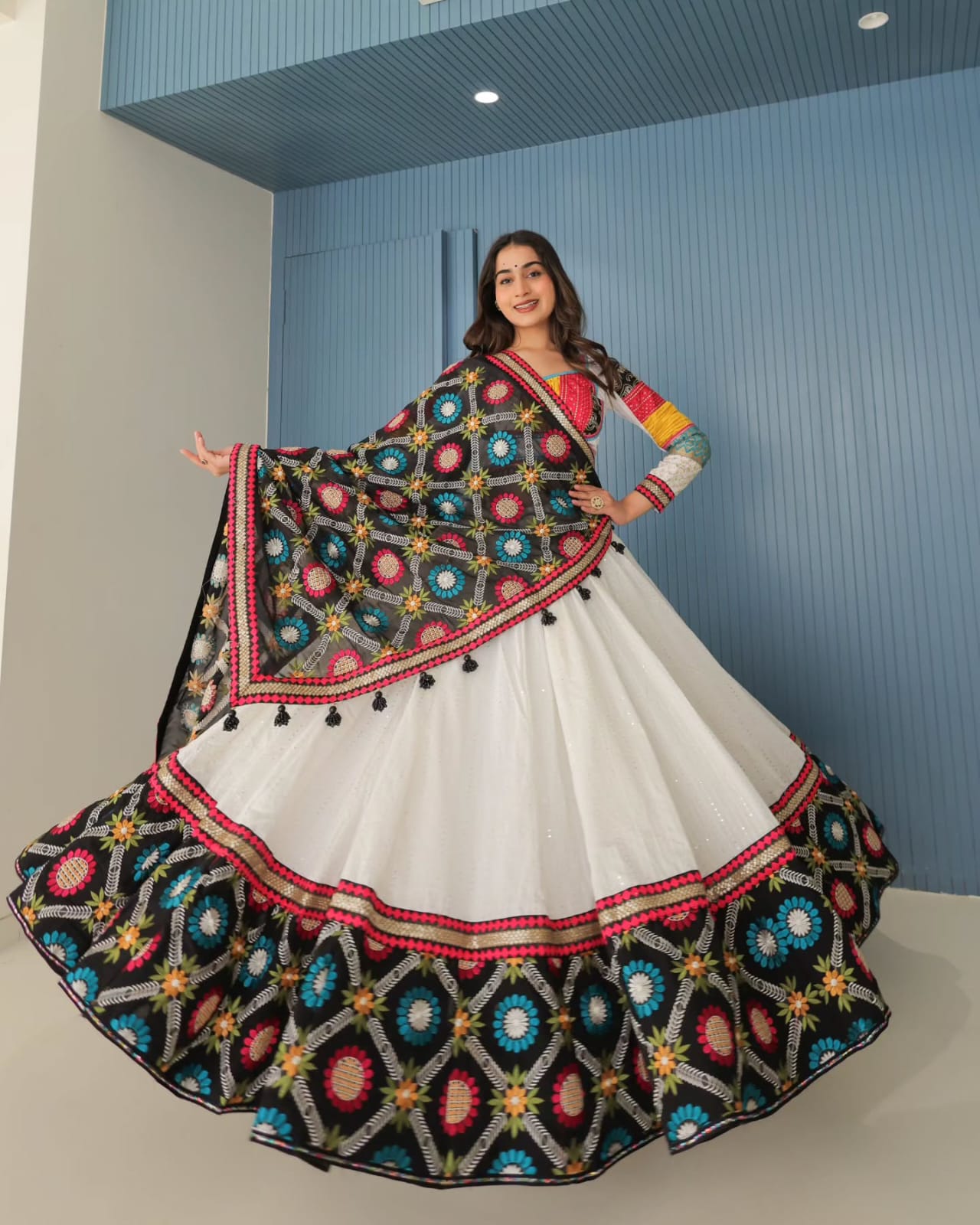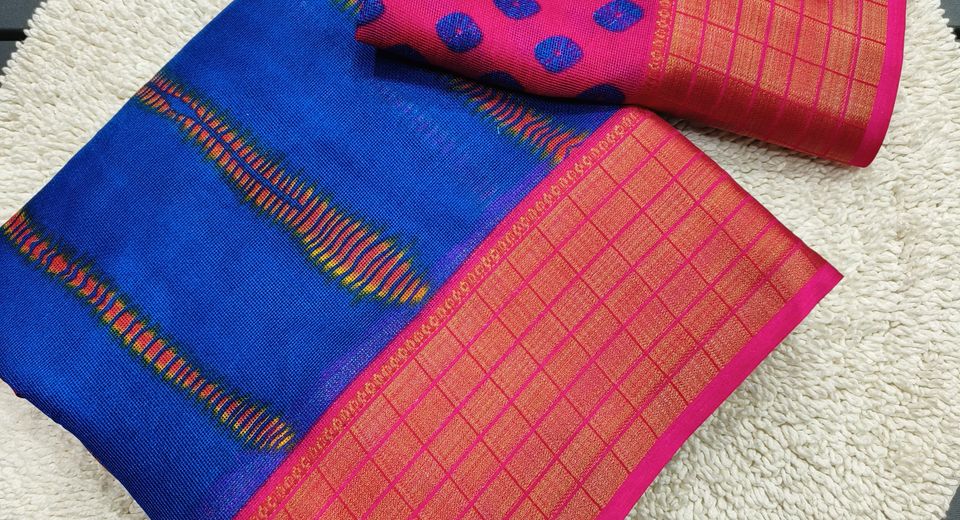
Mysore Silk Sarees: History, Style and Festival-Wear Guide starts with an useful distinction: genuine Mysore silk is associated with Karnataka's mulberry-silk tradition, a smooth surface and restrained, luminous zari work. The fabric feels light against the body while still looking formal enough for a puja, wedding reception or Diwali gathering. Understanding the silk's origin, weave, border and care requirements makes choosing a festive saree easier than relying on colour or shine alone.
Mysore Silk Sarees: History, Style and Festival-Wear Guide to Karnataka's Heritage
Mysore silk sarees developed in Karnataka through the royal and industrial weaving traditions associated with Mysuru. The Mysore Palace encouraged silk production in the early twentieth century, and the Government Silk Factory, established in 1912, helped organise the manufacture of silk textiles for royal use and later for a wider market.
Traditional Mysore silk begins with mulberry silk filament, which is reeled into long, smooth fibres before weaving. Long fibres help create the fabric's characteristic even surface and soft lustre. Karnataka's silk-growing regions, including areas around Mysuru, Ramanagara and Channapatna, remain closely connected with the state's silk economy.
The Mysore silk identity became especially strong through the Karnataka Silk Industries Corporation, commonly associated with the KSIC Mysore Silk label. A saree carrying a recognised authenticity mark, product code or silk certification is easier to trace than an item described only as "Mysore silk" by a seller.
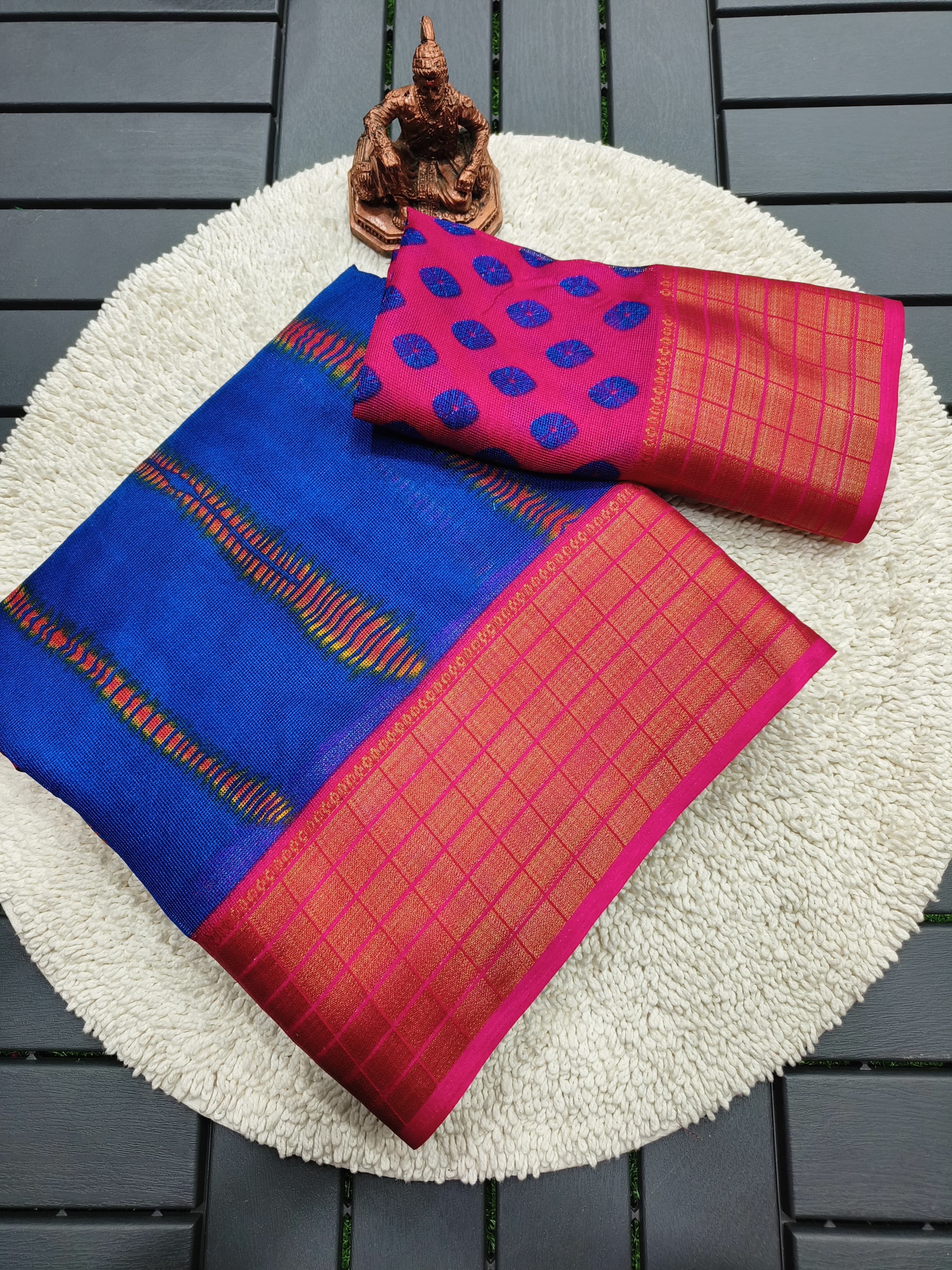
Mysore silk isn't limited to one colour family. Jewel tones such as royal blue, magenta, emerald and crimson are popular for festivals, while ivory, gold, teal and muted pink suit daytime ceremonies. The consistent visual cues are a clean silk surface, a fluid fall, a narrow or medium zari border and an understated pallu compared with the denser architecture of many Kanjeevaram sarees.
Mysore Silk Sarees: History, Style and Festival-Wear Guide to Texture and Zari
Mysore silk is known for its lightweight drape, smooth texture, clear colour and relatively minimal zari design. These characteristics make the saree comfortable for several hours of festive wear without losing a dressed-up appearance.
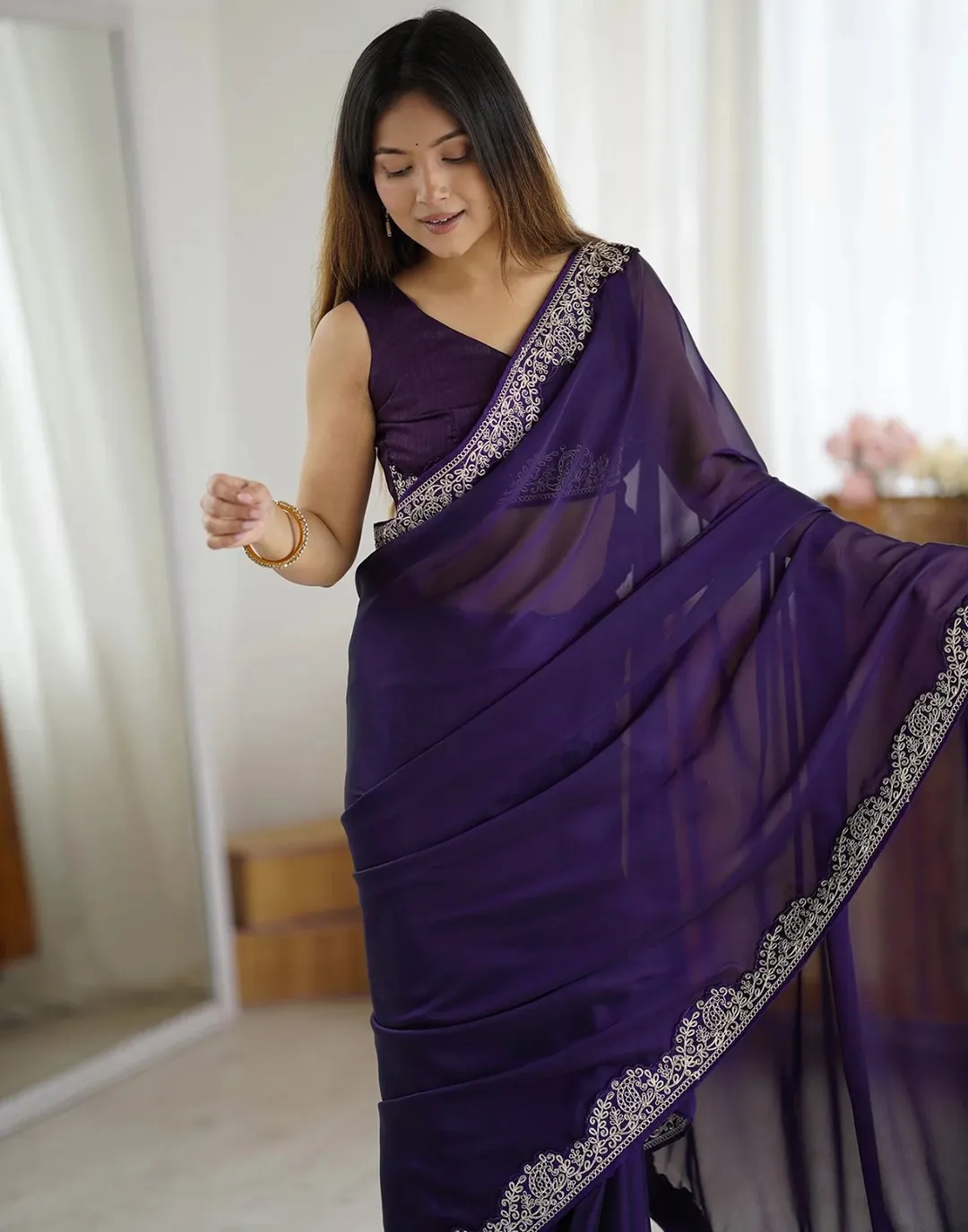
Texture and drape
Mulberry silk gives Mysore silk a soft hand feel and a gentle, fluid fall. A well-made saree should settle close to the body rather than standing away from the waist in stiff folds. The fabric can look glossy under direct light, but the shine should appear even rather than plasticky or excessively reflective.
Border and zari
Zari on a Mysore silk saree is often used as a neat border, pallu highlight or small motif instead of covering the entire field. Traditional descriptions frequently refer to zari containing silver with a gold coating, although the exact composition varies by period, manufacturer and product. Buyers should check the written specification instead of assuming that every gold-coloured border contains precious-metal zari.
A clean selvedge, secure edge finishing and an even border are practical quality indicators. Loose metallic threads, irregular colour breaks and a border that waves away from the silk may signal weak finishing, especially when the saree is intended for repeated festive use.
Comparison with other silk sarees
Mysore silk generally feels lighter and less structured than Kanjeevaram silk, which is recognised for heavier silk, contrasting borders and interlocked body-and-border weaving. Banarasi silk, including Red Banarasi Silk Sarees for Weddings Under 1100, usually features more elaborate brocade, floral butis or metallic patterning across the body. Chanderi is lighter and more translucent, while Maslin silk can offer a softer, airy drape with a different surface character.
The comparison helps when selecting a saree for a long event. Mysore silk suits someone who wants polish without substantial weight. Kanjeevaram works well for a traditional bridal wardrobe, and Banarasi silk creates a richer brocade-led appearance. No category is automatically superior; the appropriate choice depends on the desired structure, climate and level of ornament.
Mysore Silk Sarees: History, Style and Festival-Wear Guide for Choosing Colour
The best festive Mysore silk saree matches the event's formality, the time of day, the wearer's comfort needs and the amount of jewellery planned. A simple selection process prevents the blouse, border and accessories from competing with one another.
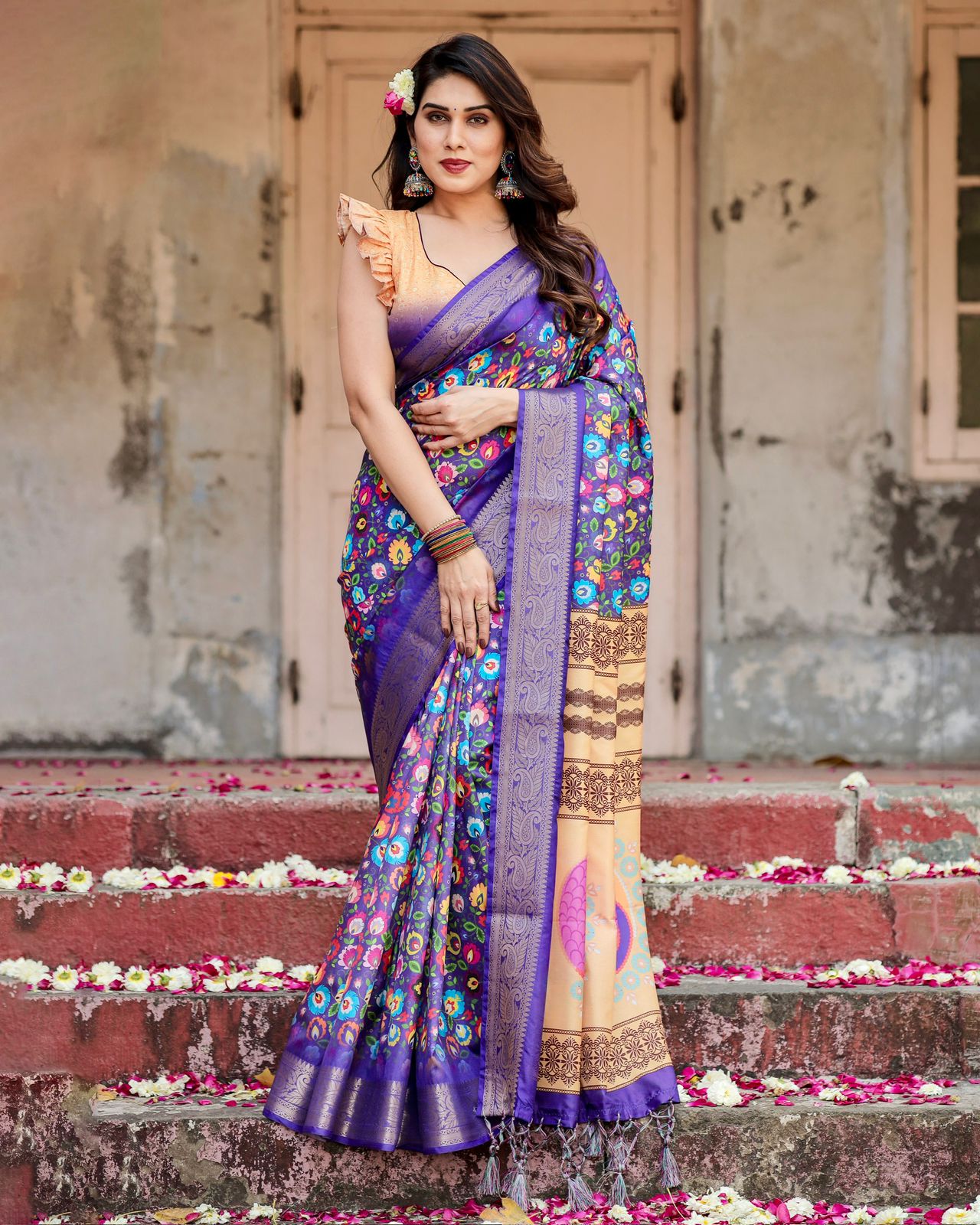
Colour for daytime and evening events
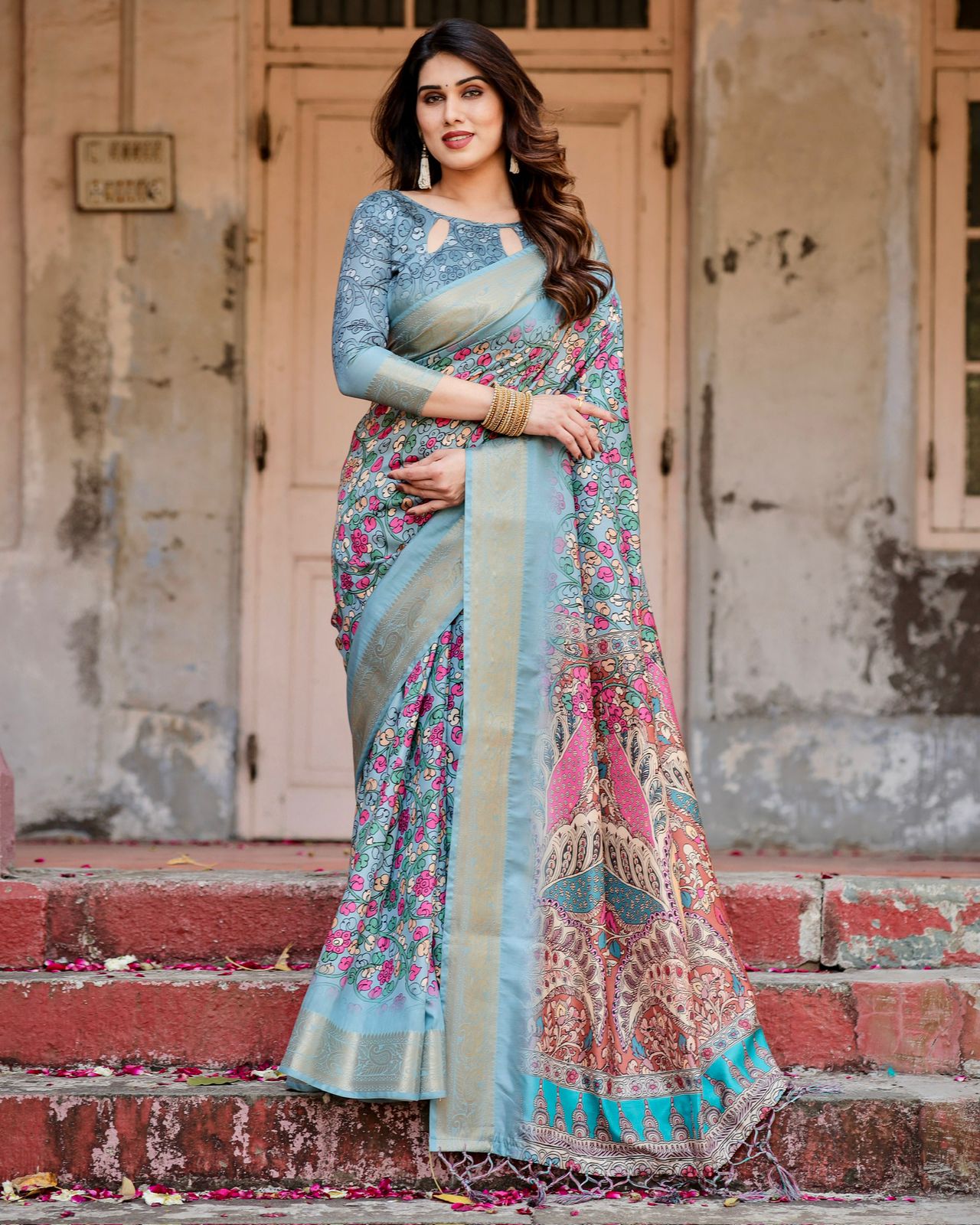
Bright jewel shades work particularly well for evening celebrations because artificial light brings out silk's reflective surface. Royal blue, deep pink, peacock green and wine create a formal impression without requiring heavy embellishment. For a daytime puja or family lunch, turmeric yellow, coral, powder blue, ivory and leaf green appear fresher in natural light.
A blue saree can be styled in several directions. Festive Wear Blue Silk Saree for Women offers a straightforward base for gold jewellery and a contrasting blouse. Elegant Royal Blue Silk Saree for Festive & Wedding Wear creates a more formal mood when paired with a structured brocade blouse. Royal Blue Silk Saree with Exquisite Zari Work needs fewer additional embellishments because the border already provides visual focus.
Reading the product specification
Look for explicit information about silk type, weave, zari, blouse-piece length, saree length and care. A standard saree is commonly around 5.3 to 5.5 metres with a separate blouse piece, but measurements vary. Confirm whether the blouse piece is attached, whether the saree is pre-finished and whether the zari is imitation, tested or described as pure.
Price alone can't prove authenticity. A lower-priced silk saree may use a silk blend, powerloom production, imitation zari or a lighter construction, while an expensive saree may include handwork, certification and more elaborate finishing. Comparing fibre descriptions and close-up images gives better evidence than comparing the original marked price.
Silk Sarees Under 3000 With Discount can be an useful price-conscious starting point, while Party Wear Sarees may offer more embellished options for receptions and evening gatherings. A product labelled as silk should still be checked for its fibre composition before purchase.
Mysore Silk Sarees: History, Style and Festival-Wear Guide for Blouses and Drapes
A well-fitted blouse and a controlled pleat arrangement make Mysore silk look more refined than excessive accessorising. The smooth fabric rewards clean tailoring because wrinkles and uneven folds remain visible in photographs.
Blouse choices
A blouse in the saree's border colour creates a traditional, coordinated finish. Gold, antique gold, rust, magenta and bottle green can provide contrast without disrupting a royal blue or emerald saree. A high round neck with elbow-length sleeves looks formal for a temple visit, while a square neck or modest V-neck suits a reception when the event permits contemporary styling.
Use brocade, raw silk or textured silk for a structured blouse, and use plain silk when the saree contains prominent zari. A blouse with too many sequins can make a refined Mysore silk border appear visually crowded. Sleeves measuring roughly 10 to 12 inches can give a classic proportion, although the best length depends on arm shape and personal comfort.
Drape and finishing
Press the saree on the reverse side with a protective cotton cloth before pleating. Six to eight front pleats usually create a neat fall, but the number depends on fabric width and body proportions. Secure the pleats with discreet pins at the waist and shoulder, then check that the pallu reaches near the knee without dragging on the floor.
The Nivi drape is the most adaptable option for a festival because it keeps the front pleats symmetrical and leaves the pallu available for a decorative border. A seedha pallu gives the border greater visibility and suits family photographs, but the pallu should be pinned firmly to prevent the silk from slipping.
Wedding Wear Maslin Silk Zari Woven Saree can illustrate a softer, more fluid alternative when the wearer wants an airy drape, while Premium Handloom Silk Saree with Handkatha brings a more textured handloom direction. These comparisons help shoppers identify whether they prefer Mysore silk's smoothness or a visibly handcrafted surface.
Mysore Silk Sarees: History, Style and Festival-Wear Guide to Jewellery
Gold-toned jewellery, comfortable footwear and restrained makeup complement Mysore silk without hiding the saree's own sheen. Accessories should repeat one detail from the saree, such as zari colour, a border shade or a floral motif.
Temple jewellery works well for a traditional puja, especially with a brocade blouse and jasmine flowers. A short gold necklace combined with long earrings gives a cleaner silhouette for a reception. Pearls, kundan and antique-finish gold can all work, but wearing every style together may overwhelm a lightweight saree.
Choose footwear with a stable heel or cushioned flat sole when the event involves standing, walking or temple queues. Metallic sandals, embroidered juttis and closed-toe block heels coordinate easily with silk. Wear and test the footwear before the event because a saree hem can catch on an unfamiliar heel.
Warm gold eyeshadow, a defined kajal line and lipstick in berry, brick or classic red complement jewel-toned silk. Daytime ceremonies usually benefit from lighter base makeup and a small bindi, while evening events can support stronger eye definition. Hair styled in a low bun with jasmine keeps the neckline and earrings visible.
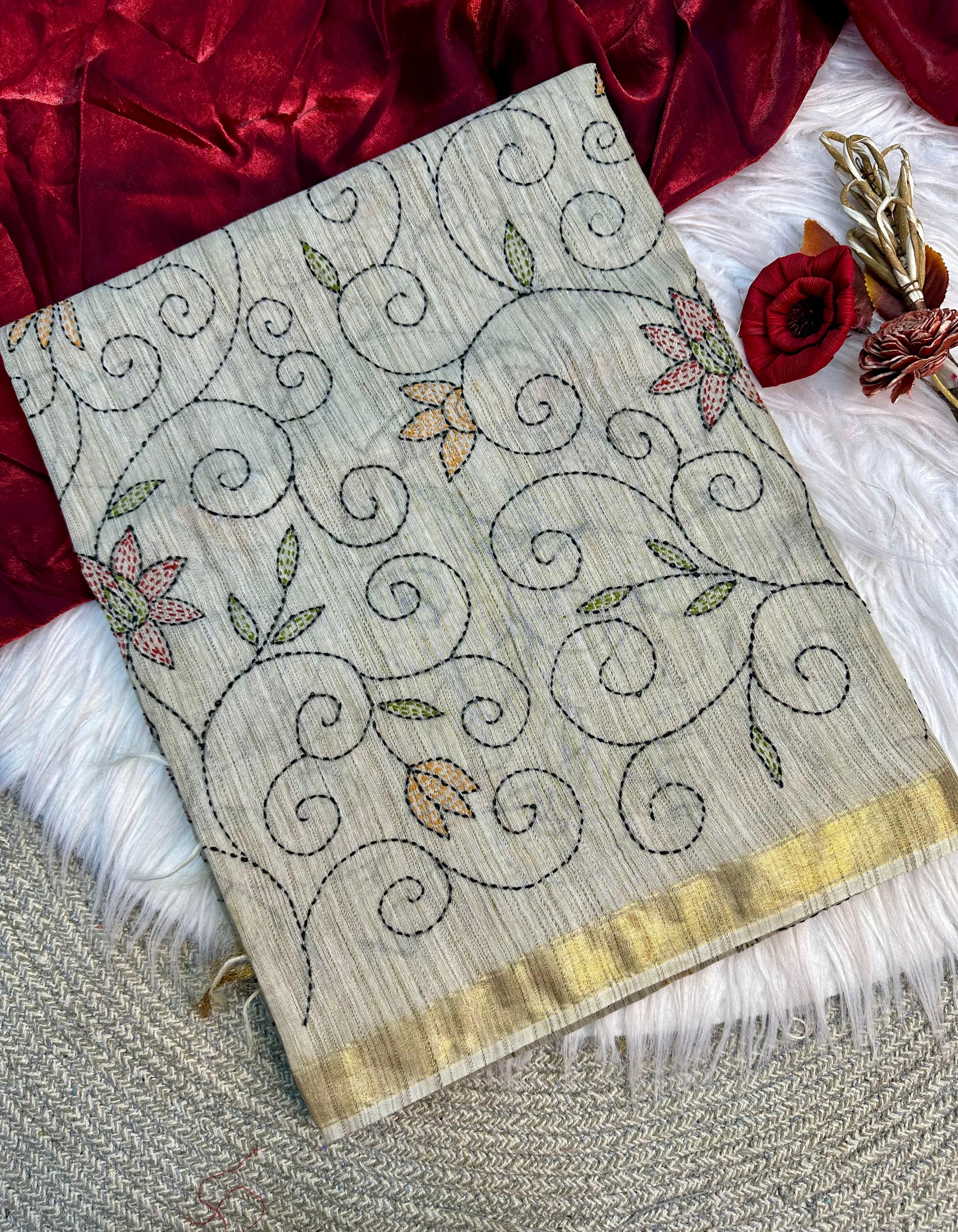
Magenta Traditional Kalamkari Art Saree with Blouse demonstrates how a strong textile motif changes the accessory balance: statement earrings may be enough, with no elaborate necklace required. Navy Blue Floral Silk Saree with Peach Zari Border similarly benefits from peach, rose-gold or muted-gold accessories that pick up the border rather than introduce another dominant colour.
Mysore Silk Sarees: History, Style and Festival-Wear Guide for Care
Mysore silk should be dry-cleaned when necessary, stored away from direct sunlight and refolded periodically to protect the silk and zari. Correct storage matters because prolonged pressure, moisture and sharp folds can permanently damage a valuable saree.
don't machine-wash, soak or wring a silk saree at home. Perfume, deodorant and hair products should be applied before draping because alcohol and oils can stain silk and dull metallic threads. If a spill occurs, blot gently with a clean, dry cloth and send the saree to a professional cleaner rather than rubbing the mark.
Air the saree in shade after wearing it, particularly after a humid Haldi ceremony or crowded indoor celebration. Fold the saree with the zari facing inward, change the fold direction every few months and place it in a clean muslin cover. Avoid plastic bags for long-term storage because trapped moisture can encourage mildew and leave a stale odour.
Keep silk away from direct sunlight, damp cupboards, rough wooden shelves and metal hooks. Store heavy jewellery separately so that stones and clasps can't pull the weave. A saree worn only two or three times a year still benefits from occasional airing and careful refolding.
Gray Color Sarees Under 1000 and Pink Georgette Sarees can be useful additions for lighter daytime functions, allowing a treasured Mysore silk saree to remain reserved for major celebrations. Building a varied wardrobe also reduces repeated cleaning and handling of one delicate silk garment.
Mysore Silk Sarees: History, Style and Festival-Wear Guide finally points to a practical buying decision: choose verified fibre information, inspect the border and selvedge, match the colour to the lighting, fit the blouse carefully and store the saree correctly after use. Those details preserve both the visible character of Karnataka's silk tradition and the comfort needed for real festival days.
Common Questions About Wearing and Caring for Mysore Silk Sarees
How can you identify a genuine Mysore silk saree?
A genuine Mysore silk saree should provide clear information about mulberry silk, manufacturer details, weave and, where applicable, a recognised silk or KSIC-related authenticity mark. Smooth texture and even lustre are useful clues, but appearance alone cannot prove fibre content.
Are Mysore silk sarees suitable for weddings?
Mysore silk sarees are suitable for wedding ceremonies, receptions and pre-wedding celebrations when the colour, zari and blouse match the formality of the event. Choose heavier jewellery and a structured blouse for an evening reception, or a lighter border and restrained accessories for a daytime function.
How is Mysore silk different from Kanjeevaram silk?
Mysore silk is usually lighter, smoother and more fluid, with restrained borders and zari. Kanjeevaram silk generally has a more substantial body, stronger contrasting borders and a structured traditional appearance created through characteristic weaving techniques.
Which blouse colours work with a royal blue Mysore silk saree?
Gold, antique gold, magenta, rust, bottle green and a matching royal blue blouse work well with a royal blue Mysore silk saree. Gold or antique gold creates a classic festive look, while magenta or rust provides controlled contrast.
Can a Mysore silk saree be washed at home?
Mysore silk should not be machine-washed, soaked or wrung at home because water, friction and detergent can damage the silk and zari. Use professional dry cleaning when cleaning is necessary, and blot small spills gently instead of rubbing them.
How should a Mysore silk saree be stored?
Store a Mysore silk saree in a clean muslin cover away from sunlight, dampness and rough surfaces. Fold the saree with the zari facing inward, change the fold direction every few months and air the saree in shade after humid or lengthy wear.