

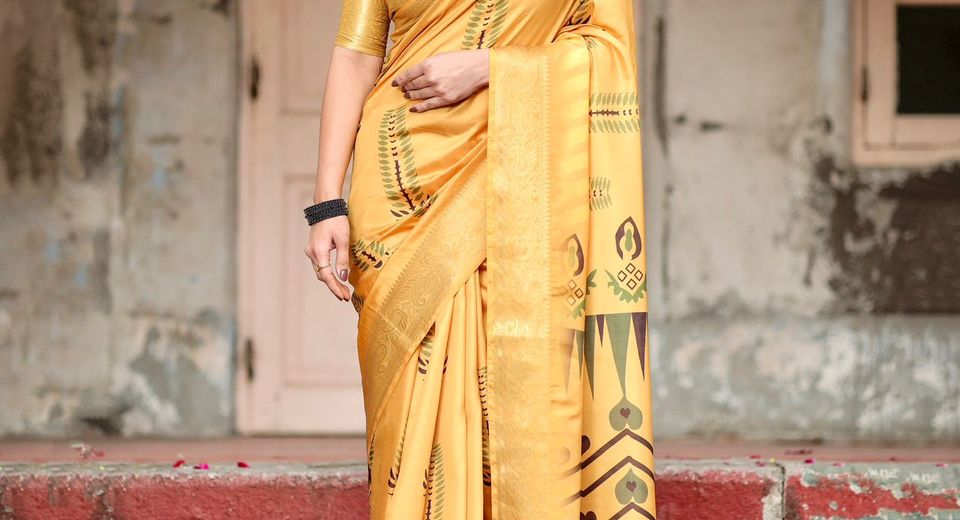
A Muga Silk Saree Guide should begin with the fibre itself: Muga silk comes from Assam and is known for a naturally warm, golden sheen that becomes more distinctive with age. The silk is produced by the silkworm Antheraea assamensis, which is native to Assam. That origin explains why Muga silk feels different from Banarasi silk, Kanjeevaram or glossy synthetic satin. The saree's appeal lies in its strength, quiet lustre and connection to Assamese textile culture, not only in its colour.
Knowing the difference between pure Muga silk, Muga cotton and other golden silk sarees helps you make a better purchase. A saree described as Muga cotton will usually have a lighter, more breathable hand than a heavier pure-silk drape, while a Tussar silk saree may offer a similar earthy glow without being Muga. The sections below cover fibre identity, weave behaviour, buying checks, care and styling combinations that work in real wardrobes.
Muga Silk Saree Guide: Assam's Golden Silk & Styling Ideas and the Origin of Muga
Muga silk is special because it's a naturally golden, durable silk associated with Assam's Brahmaputra Valley and traditional rearing practices. Unlike silk that depends mainly on dye for its shine, Muga silk has an inherent yellow-gold tone that can look more pronounced over time when the saree is handled and stored correctly.
The silkworm that produces Muga silk feeds primarily on aromatic leaves such as som and soalu. Muga cultivation depends on Assam's climate, host plants and skilled rearing, so the fibre has a strong geographical identity. Production includes cocoon harvesting, reeling, spinning, weaving and finishing, with variations in texture depending on the yarn and loom.
Muga silk is valued for tensile strength as well as appearance. A well-made Muga saree can feel crisp or structured at first, then become more comfortable with use. The surface is generally less mirror-like than highly polished silk. Small irregularities in yarn, a dry hand or subtle variations in sheen can indicate natural character rather than a flaw.
Assamese dress gives Muga silk an important cultural setting. Muga mekhela chadors are widely associated with Assamese celebrations, while Muga sarees have moved into wardrobes across India. The fibre also appears in borders, pallus, stoles and blended textiles, making it possible to wear the look in a lighter or more contemporary format.
Muga Silk Saree Guide: Assam's Golden Silk & Styling Ideas for Identifying the Fibre
You can assess Muga silk by checking the product description, fibre composition, surface character, weight and seller information together; no single home test proves authenticity. A reliable listing should state whether the saree is pure Muga silk, Muga cotton, a silk blend or another silk with a golden colour.
Muga Silk Saree Guide: Assam's Golden Silk & Styling Ideas for Reading Fibre Labels
Words such as "Muga silk," "Muga cotton," "Tussar silk" and "silk blend" describe different constructions. Muga cotton isn't interchangeable with pure Muga silk, even when both include the word Muga. Golden Tussar Silk Saree with Elegant Zari Border Design may provide a rich golden effect, but Tussar silk and Muga silk come from different silkworm varieties and should not be treated as the same textile.
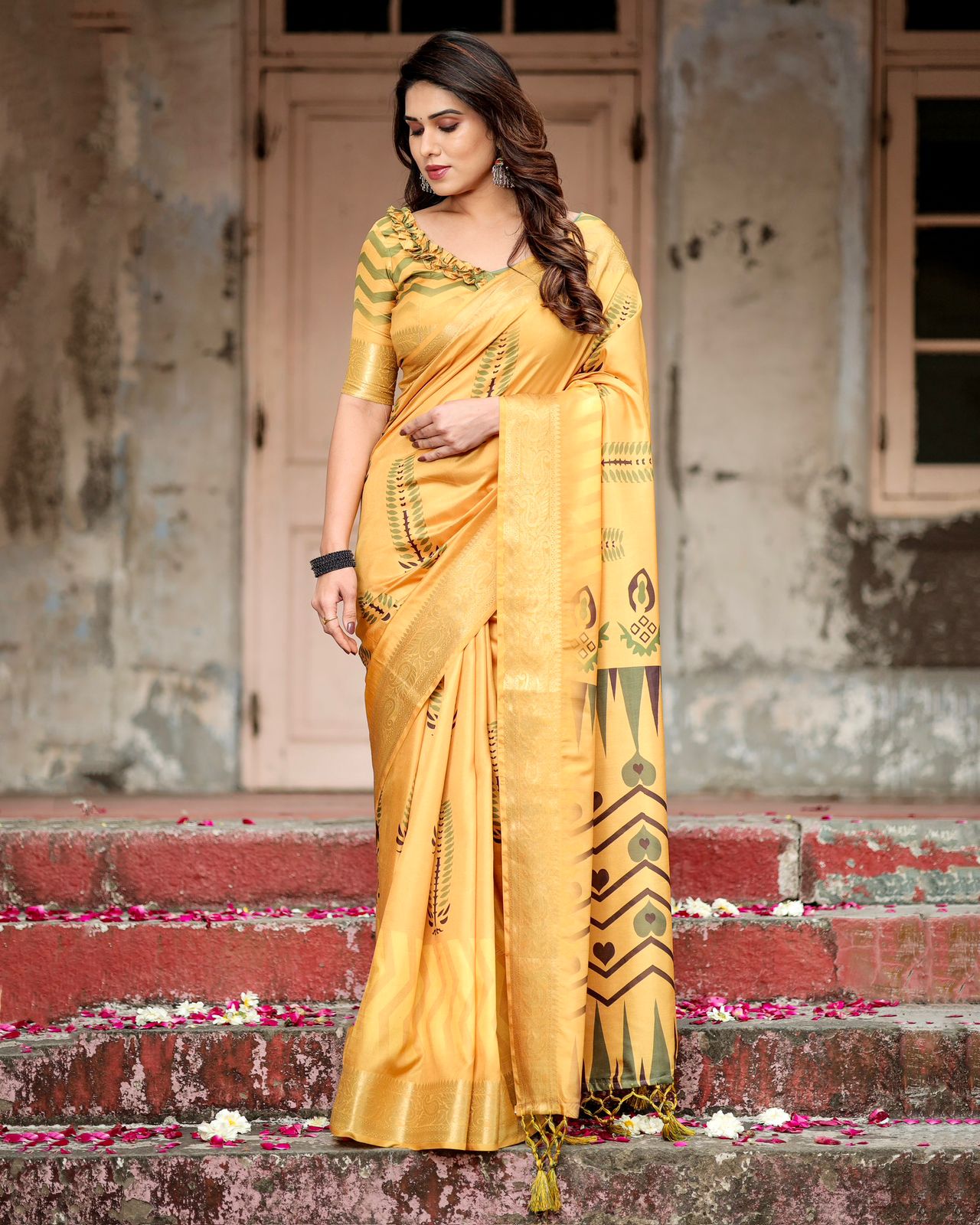
A saree name can suggest the design direction without confirming fibre purity. Golden Yellow Tussar Silk Printed Saree with Blouse belongs to the Tussar category indicated by its name. Checking the composition, weave details and care instructions is more useful than judging authenticity from colour alone.
Muga Silk Saree Guide: Assam's Golden Silk & Styling Ideas for Comparing Surface and Drape
Pure Muga silk commonly has a firm, resilient drape with a warm, restrained lustre rather than a liquid, highly slippery fall. Muga cotton can feel airier and may fold with more softness because cotton changes the hand and weight of the fabric. A very shiny, uniformly smooth surface may indicate a different silk, a synthetic blend or a polished finish.
Colour isn't enough for identification. Natural Muga can range from pale champagne to deeper honey-gold, while dyes, blends and zari borders can change the overall appearance. A maroon Banarasi saree may have gold zari and a silk base but remains a Banarasi textile rather than Muga. Maroon Banarasi Soft Silk Saree with Golden Zari Border is an useful comparison when learning to separate weave identity from colour and ornament.
Muga Silk Saree Guide: Assam's Golden Silk & Styling Ideas for Safe Verification
A burn test should not be performed on a finished saree because it damages the garment and can't reliably distinguish every silk blend. A silk mark, invoice, fibre declaration, handloom information and transparent return policy provide safer evidence. For a high-value purchase, a textile testing laboratory or recognised silk certification route is more dependable than online flame-test advice.
Muga Silk Saree Guide: Assam's Golden Silk & Styling Ideas for Choosing a Saree
Choose a Muga saree by matching fibre weight, colour, border scale and blouse flexibility to the occasions you actually attend. A structured pure-silk saree suits formal festive dressing, while a Muga cotton option can be more practical for daytime gatherings, cultural programmes and warm-weather events.
Start with the drape you prefer. People who like a saree that holds pleats neatly may enjoy the body of Muga silk. People who prioritise lightness should examine Muga cotton or silk-cotton options and ask for the approximate weight before ordering. A product description that gives only colour and design but omits composition deserves closer scrutiny.
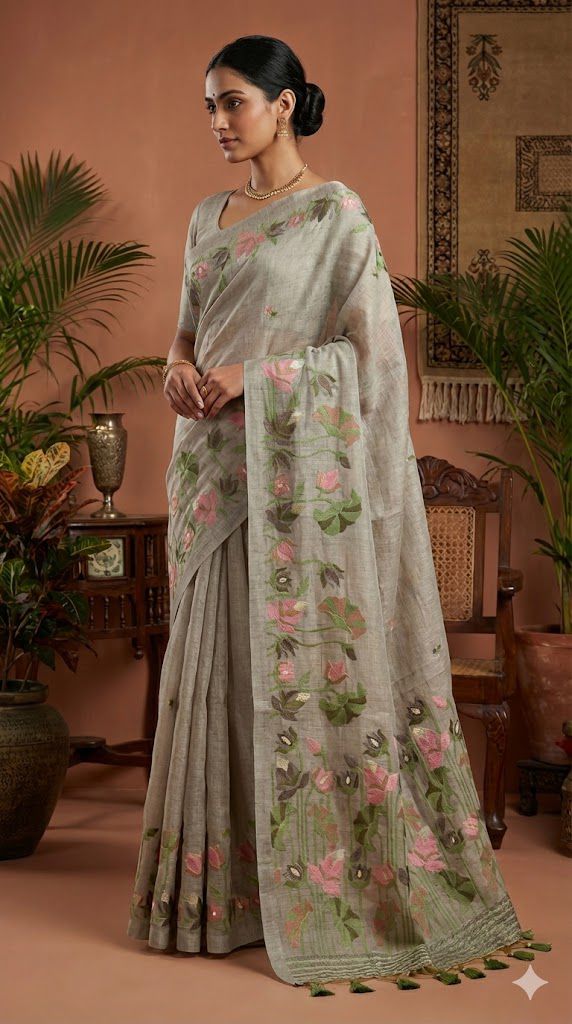
Colour selection can make Muga easier to repeat. Blush Peach Muga Cotton Saree with Jamdani Lotus Pallu offers a soft pastel direction for daytime celebrations, spring ceremonies and intimate festive meals. Sage Green Muga Cotton Saree with Lotus Jamdani Pallu creates a muted, contemporary palette that pairs well with antique gold, pearl or matte silver accessories.
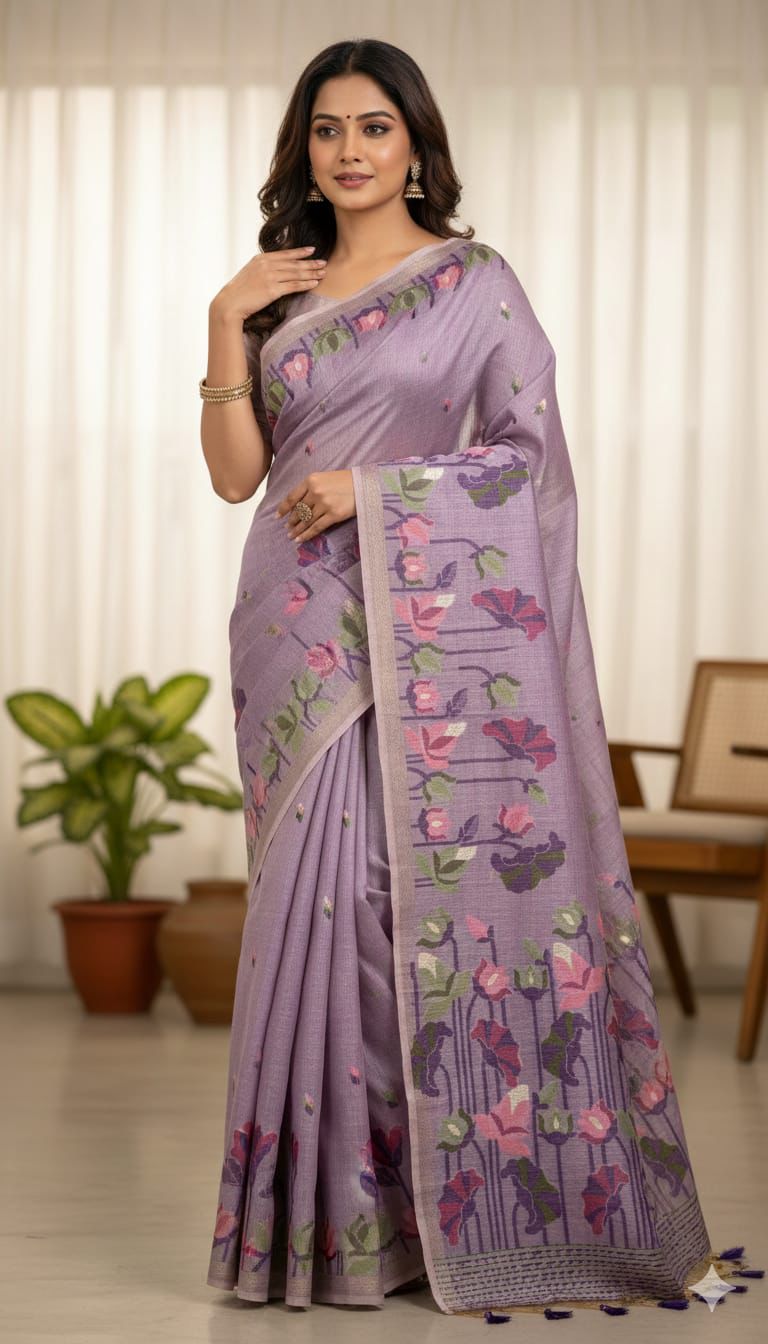
Lavender Muga Cotton Saree with Lotus Jamdani Pallu works when you want the textile's classic character without choosing a conventional yellow-gold appearance. Lotus Jamdani detailing gives the pallu a focal point, so the blouse can remain comparatively clean. A border or pallu with visible motifs should be evaluated from a normal standing distance because a design that looks delicate in a close photograph can appear more prominent when draped.
Budget should be considered alongside composition and finishing. Sarees from Rs 1000 to Rs 1500 can help shoppers compare accessible styles, but a low price doesn't establish that a saree is pure Muga silk. Sarees Under 20% Off, Sarees Under 10% Off, Sarees Flat 60% Off and Sarees Flat 50% Off are useful for price tracking, but the original fibre description and measurements still matter.
Muga Silk Saree Guide: Assam's Golden Silk & Styling Ideas for Blouses
The most versatile blouse for a Muga silk saree is a well-fitted blouse in a solid colour that repeats one shade from the border or pallu. A jewel neckline, elbow-length sleeve and lightly structured fabric complement Muga's firm drape without competing with its natural sheen.
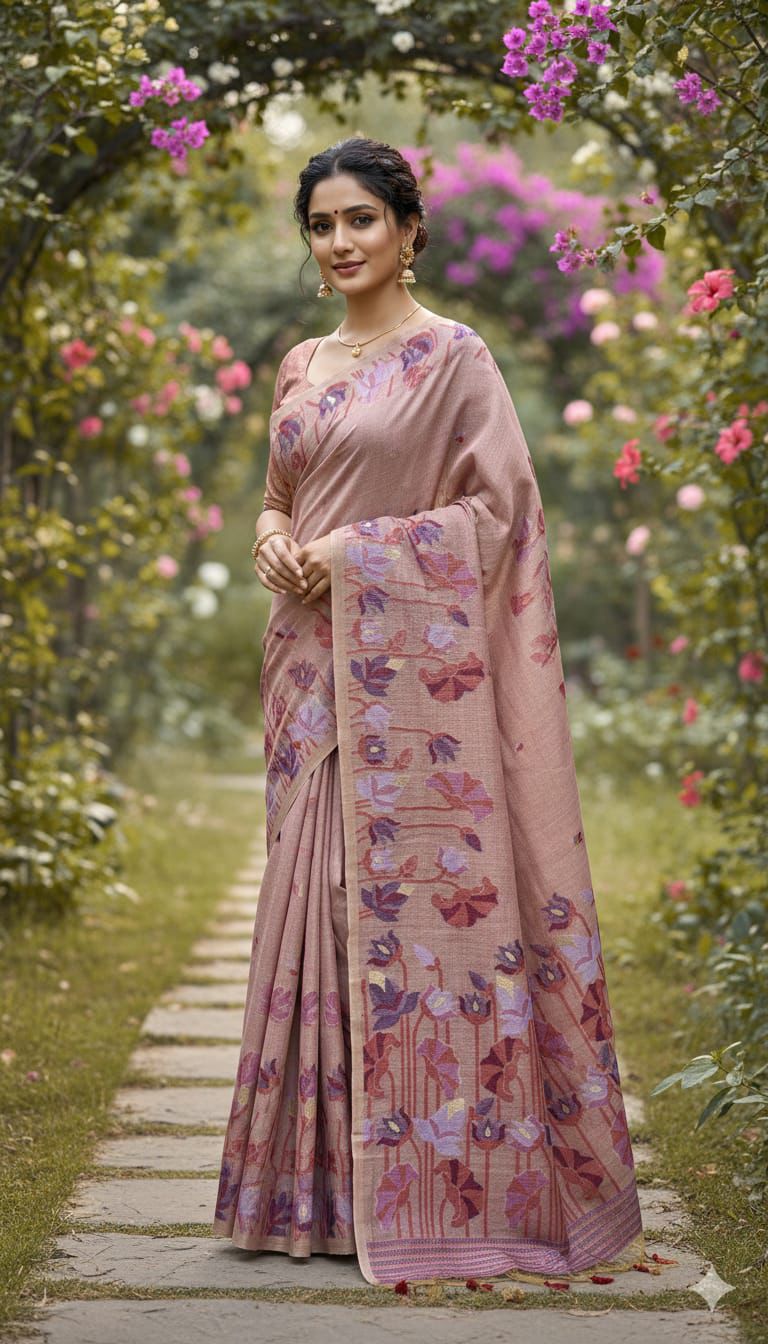
For a soft peach or lavender saree, choose a blouse in the same colour family for a long, uninterrupted line, or use deep wine, bottle green or antique gold for contrast. Sage green works with ivory, muted gold, rust or dark green. A golden Muga saree can be paired with maroon, black, deep purple or a tonal gold blouse, depending on whether the outfit is intended for day or evening.
Jamdani lotus motifs deserve room to remain visible. A heavily embroidered blouse can make a Jamdani pallu look crowded, especially when the sleeve and neckline also carry embellishment. A plain silk, raw-silk or textured cotton blouse with one controlled detail, such as piping or a small sleeve border, often creates a more balanced result.
Modern blouse shapes can work without weakening the heritage mood. A high-neck blouse gives a formal appearance, a square neck feels architectural, and a modest boat neck echoes the horizontal line of a saree border. For a daytime Haldi ceremony, a short-sleeved blouse in cotton or silk-cotton can feel more comfortable than a densely worked evening blouse.
Muga Silk Saree Guide: Assam's Golden Silk & Styling Ideas for Different Occasions
You can style a Muga saree for daytime ceremonies, weddings, cultural events and formal dinners by changing the blouse, jewellery, pleat structure and pallu treatment. The same golden fibre can look understated or ceremonial depending on the supporting pieces.
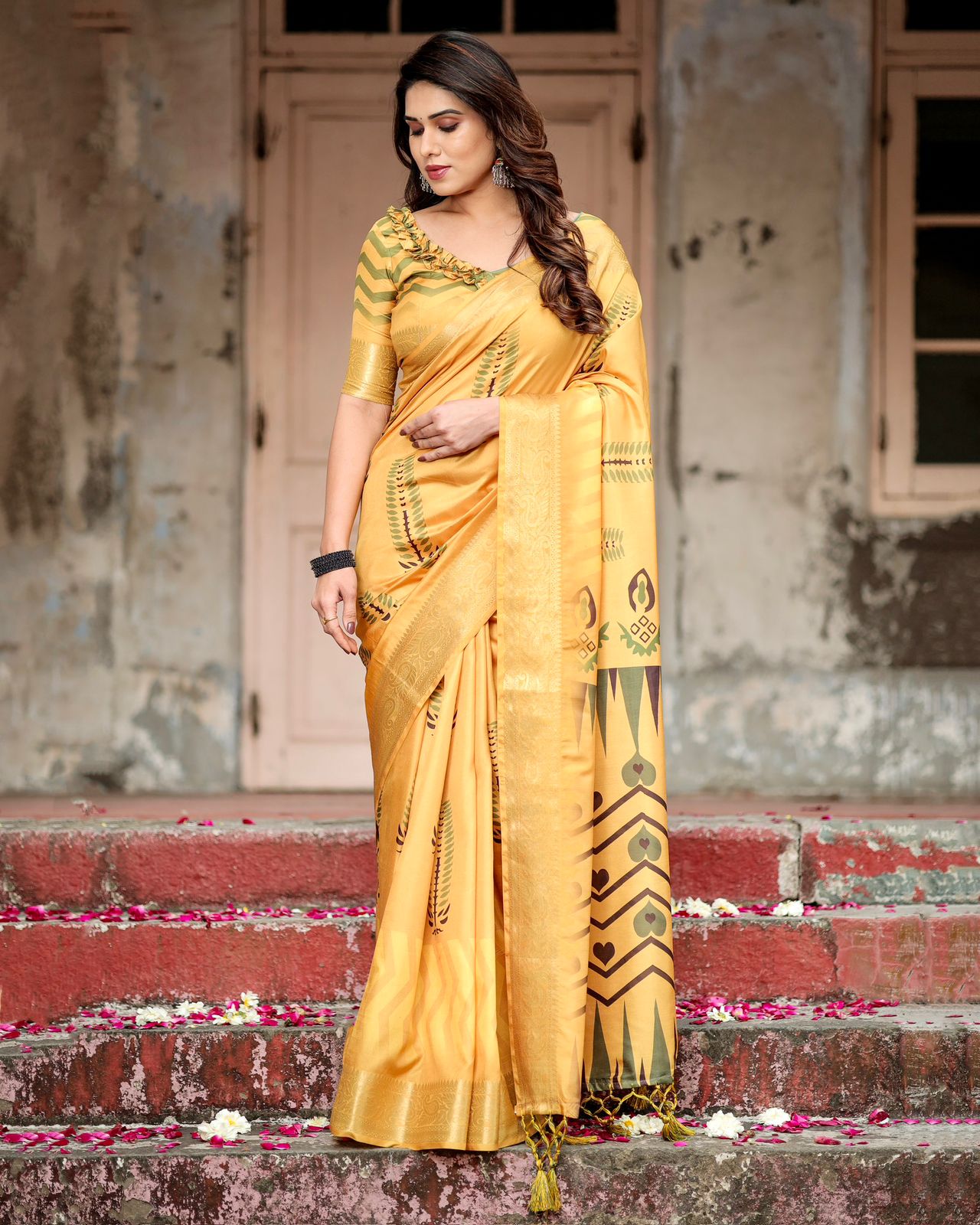
Muga Silk Saree Guide: Assam's Golden Silk & Styling Ideas for a Haldi Ceremony
A lightweight Muga cotton saree, small earrings and a low, secure bun create a comfortable daytime outfit. Keep the pallu open over the shoulder so Jamdani motifs remain visible, and choose a blouse with breathable sleeves. Flat sandals, a fabric potli and a small bindi maintain ease without making the look feel unfinished.
Blush peach, sage green and lavender are especially useful for daylight because their softer values prevent the golden undertone from looking overly formal. Terracotta, rose-brown or muted-coral makeup echoes the saree without matching every detail exactly.
Muga Silk Saree Guide: Assam's Golden Silk & Styling Ideas for Weddings
A wedding-ready Muga silk saree benefits from a contrast blouse, layered gold jewellery and a more defined pallu pleat. Choose one prominent accessory, such as a choker, long necklace or statement earrings, instead of placing heavy ornament at the neck, ears and wrists simultaneously.
Maroon, purple and deep green provide enough contrast for evening lighting. Purple Lichi Silk Saree with Rich Golden Jacquard Work demonstrates how a rich purple-and-gold direction can feel festive, although Lichi silk and Muga silk are different textiles. Golden Tussar Silk Saree with Elegant Zari Border Design can similarly inform a gold-forward styling palette without being described as Muga.
Muga Silk Saree Guide: Assam's Golden Silk & Styling Ideas for Cultural Events
For a cultural event, a neat Nivi drape or an Assamese-influenced pleat arrangement can keep the saree secure while allowing the pallu or border to remain visible. Wear classic gold, silver or oxidised metal according to the saree's details, and avoid mixing too many unrelated finishes. A low bun, braid or jasmine strand supports the textile's heritage character without requiring elaborate styling.
Muga Silk Saree Guide: Assam's Golden Silk & Styling Ideas for Care
Store a Muga silk saree clean, dry, folded in breathable muslin and refolded every few months to reduce permanent crease stress. Muga silk is durable, but strength doesn't make it immune to moisture, perfume, abrasion, sunlight or poor storage.
Dry-cleaning is the safer default for pure Muga silk, especially when the saree includes zari, dark dyes, Jamdani work or contrasting borders. Do not soak a valuable silk saree at home, scrub stains or apply bleach. For a small fresh spill, blot gently with a clean, dry cloth and send the saree to a professional cleaner rather than rubbing the affected area.
Keep the saree away from direct sunlight for long periods because ultraviolet exposure can weaken fibres and alter dyes. Avoid storing silk in airtight plastic for months; trapped humidity can encourage mildew, while completely dry conditions can make folds brittle. A breathable cotton or muslin cover inside a clean cupboard provides better circulation.
Refold the saree along different lines every eight to twelve weeks if it's stored long-term. Place heavier zari sections so they don't remain sharply compressed under other garments. Air the saree briefly in shade before refolding, and ensure the fabric is completely dry after wearing it in humid weather.
Iron Muga silk from the reverse side on a low silk setting, preferably with a thin cotton pressing cloth between the iron and the saree. Test heat on an inconspicuous edge first. Never iron directly over zari, raised Jamdani motifs or printed areas because pressure and heat can flatten, discolour or snag surface work.
Muga Silk Saree Guide: Assam's Golden Silk & Styling Ideas for Better Buying Decisions
A better Muga purchase comes from verifying fibre content, measurements, finishing, care requirements and return conditions before comparing colour or discount. Ask whether the saree is pure Muga silk or Muga cotton, whether the blouse piece is included, and whether the displayed colour may vary under different lighting.
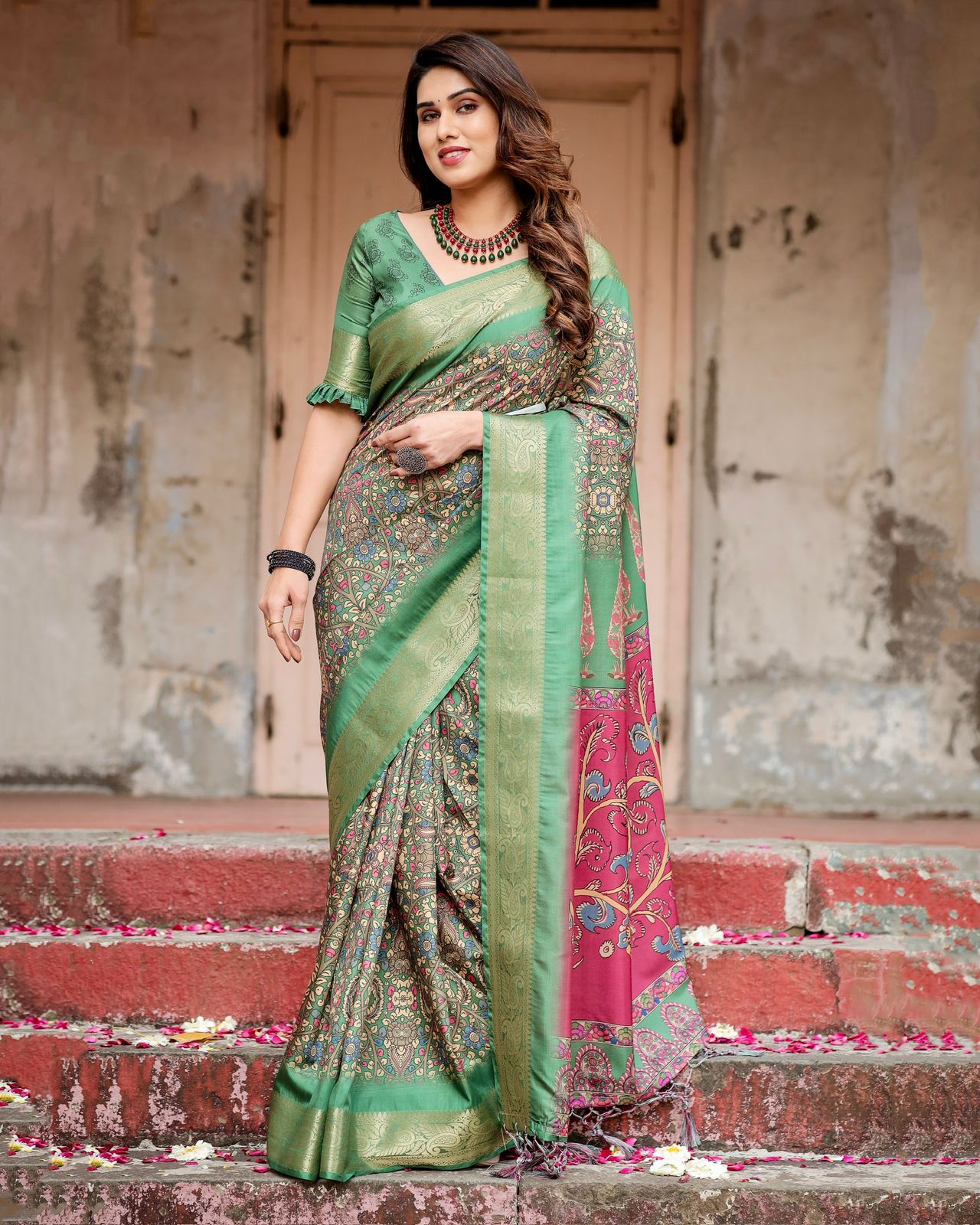
Check the saree length and width against your preferred drape. A six-yard saree may be sufficient for a standard Nivi drape, but taller wearers or those who prefer more generous pleats may want to confirm measurements before ordering. A blouse piece may be shorter than expected, so verify its length if you plan a full-sleeved or high-neck design.
Read the care label before purchase rather than after the first wear. Dry-clean-only instructions, zari handling and colour-transfer cautions affect the real cost of ownership. Photographs taken in natural light, close views of the weave and clear descriptions of borders help distinguish a textile decision from an impulse purchase.
The most useful styling principle is restraint: let Muga's warm lustre, structured drape and Assamese identity lead the outfit. A considered blouse, one strong jewellery direction and careful storage can make a Muga saree suitable for many years of festive and formal wear.
Common Questions About Assam’s Muga Silk Sarees and Styling
What is a Muga silk saree made from?
A Muga silk saree is made from silk produced by the Antheraea assamensis silkworm native to Assam. Muga cotton sarees contain cotton as part of the construction, so they should not be treated as pure Muga silk.
How can I identify a genuine Muga silk saree?
Check the stated fibre composition, seller documentation, silk certification or handloom information, surface character and drape together. Colour alone cannot prove authenticity, and a burn test can damage the saree while giving unreliable results for blends.
Is Muga silk the same as Tussar silk?
Muga silk and Tussar silk are different textiles produced by different silkworm varieties. Both can have an earthy or golden appearance, but their fibre identity, regional association, texture and product description should remain separate.
How should I wash and store a Muga silk saree?
Professional dry-cleaning is the safer choice for pure Muga silk, zari, dark dyes and embellished pallus. Store the clean, dry saree folded in breathable muslin, away from direct sunlight, humidity, perfumes and airtight plastic.
Which blouse colours suit a Muga silk saree?
Maroon, deep purple, bottle green, ivory, antique gold and tonal shades suit the warm character of Muga silk. Peach, sage green and lavender Muga cotton sarees can also be paired with matching blouses for a softer daytime appearance.
Can I wear a Muga silk saree to a Haldi ceremony?
Yes, a lightweight Muga cotton saree is well suited to a Haldi ceremony because it combines a festive surface with a more breathable feel. Use a comfortable blouse, secure pleats, minimal jewellery and a practical hairstyle for easier movement.





