

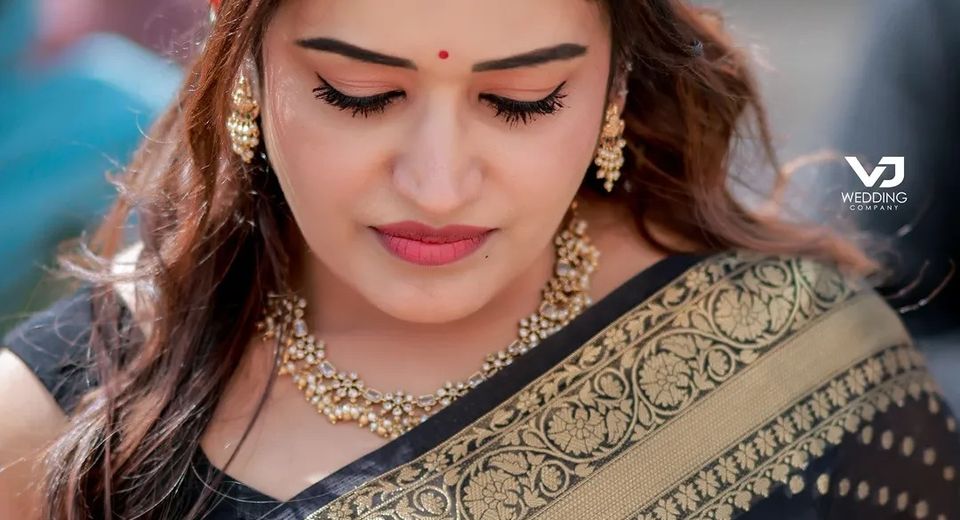
Modern Ethnic Wear Inspired by Sikkim Traditional Textiles begins with respect for the region's living textile traditions, not simply with a mountain-themed colour palette. Sikkim's Lepcha, Bhutia and Nepali communities have distinct clothing histories, weaving practices and ceremonial dress. A contemporary wardrobe can respond to those traditions through geometric borders, layered silhouettes, deep Himalayan colours and carefully chosen handloom textures while avoiding the claim that a commercial garment is an authentic traditional textile.
The most useful approach is to understand the source references first and then translate selected ideas into sarees, blouses, shawls, lehengas or salwar suits. That distinction matters: a Banarasi silk saree with a geometric border may be Sikkim-inspired in styling, but it's not automatically a Lepcha thara. Cultural accuracy makes modern interpretation more interesting, because every colour, weave and proportion has a reason behind it.
What Sikkim's Textile Heritage Contributes to Modern Ethnic Dressing
Sikkim's textile heritage contributes strong geometric design, wrap-based dressing, practical layering and a restrained but expressive Himalayan colour vocabulary. These elements can be adapted to contemporary Indian clothing without copying a complete ceremonial outfit.
Sikkim is home to several communities, so there's no single garment that represents every Sikkimese tradition. Lepcha clothing, Bhutia dress and Nepali community traditions have developed through different histories and neighbouring cultural influences. A responsible editorial interpretation names the reference instead of combining every regional element into one invented "Sikkimese" look.
Lepcha weaving and the thara
Lepcha textile traditions are closely associated with handwoven cloth and the thara, a long rectangular garment traditionally made on a backstrap loom. Lepcha weaving is recognised for geometric arrangements, rhythmic bands and colours that can look striking even when the palette remains relatively controlled. Backstrap weaving also produces a human scale of irregularity that differs from perfectly uniform industrial printing.
For modern clothing, the most wearable translation is a narrow geometric border on a saree, dupatta or sleeve rather than a direct imitation of a complete thara. A border placed along a saree pallu can echo the visual rhythm of handwoven bands. A blouse with one restrained woven panel can carry the reference more intelligently than a garment covered with unrelated motifs.
Bhutia dress and the bakhu silhouette
The Bhutia bakhu is a wrap-style robe associated with Sikkim's Bhutia community and with wider Tibetan cultural influences. The garment creates a long, enveloping line, often secured with a belt and styled with a blouse or shirt underneath. Its practical construction makes layering part of the visual identity rather than an afterthought.
A modern adaptation can borrow the bakhu's wrapped proportion through a belted long jacket, an overlap kurta, a draped pre-stitched saree or a full-length cape worn over a sari. The adaptation should be described as inspired by the silhouette, not presented as a traditional bakhu unless it follows the garment's cultural and construction context.
Modern Ethnic Wear Inspired by Sikkim Traditional Textiles: Motifs, Colour and Texture
Modern Ethnic Wear Inspired by Sikkim Traditional Textiles works best when one design language leads and the rest of the outfit stays quiet. Geometric bands, layered colour blocks and tactile surfaces create a stronger connection to Sikkim than adding random snowflakes, prayer flags or oversized mountain graphics.
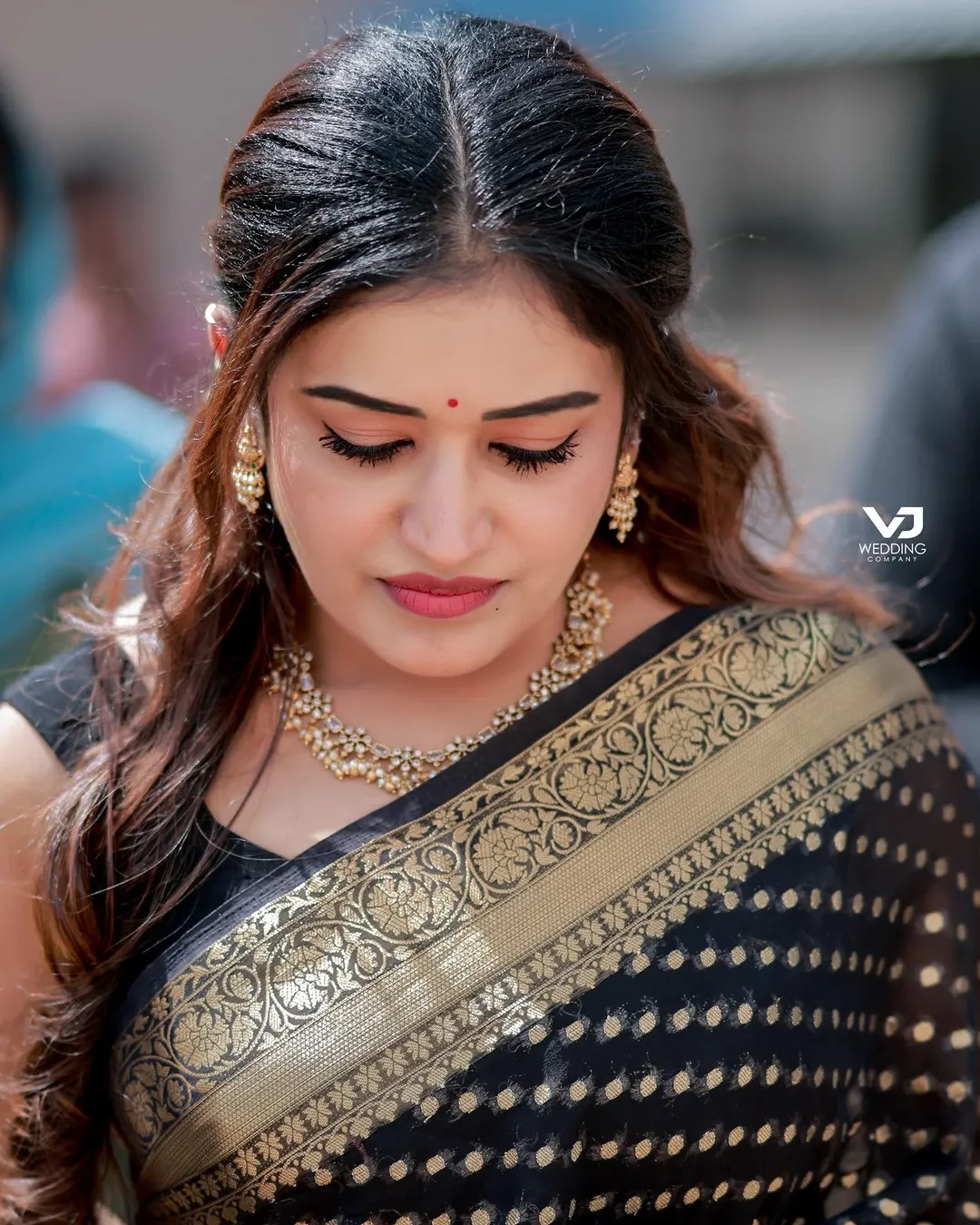
Look for stepped diamonds, chevrons, small squares, zigzags and repeated horizontal stripes. Geometric motifs are particularly useful because they can be woven, jacquard-woven, embroidered or printed without becoming costume-like. A border with a 2- to 4-inch repeat can provide visual structure on a saree while remaining easy to wear at a family celebration.
Deep bottle green, ink blue, charcoal, black, rust, muted red, ivory and warm gold offer a convincing Himalayan mood. Teal can bridge cool mountain shades and festive Indian colour. Pastel peach or soft pink can lighten the palette when paired with teal, ivory or antique gold rather than with several bright colours at once.
Texture gives the interpretation depth. Jacquard weaving, silk slub, matte cotton, wool-blend shawls and narrow zari accents can sit together when their proportions are controlled. Zari should function as a highlight on the border or pallu, especially when the central idea comes from woven bands rather than high-shine ornament.
How to Translate Sikkimese References Into Sarees and Separates
A saree becomes Sikkim-inspired through its border, pallu, colour blocking and styling rather than through the saree category itself. Choosing one of those four elements as the main reference keeps the outfit coherent.
For a structured daytime look
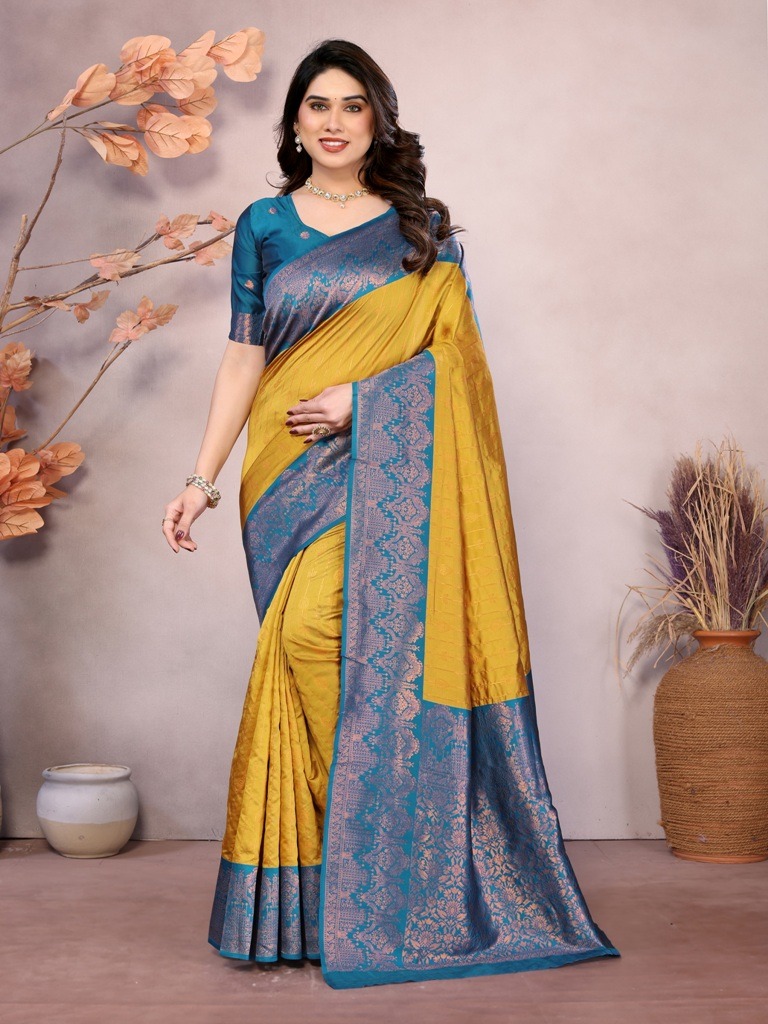
Choose a saree with a visible border, a high-neck blouse and a cropped or waist-length jacket. The Traditional Bottle Green Patola Border Silk Saree demonstrates how a strong border can supply geometric energy while the rest of the outfit remains composed. Pair it with a charcoal, black or ivory blouse and flat leather juttis for a daytime festive gathering.
The Green Ivory Printed Silk Saree with Zari Border offers a softer route. Its green-and-ivory relationship can be styled with a simple long-sleeved blouse, a handwoven-looking stole and minimal gold earrings. Keep the print visible by avoiding a heavily embroidered jacket.
For an evening celebration
Dark colours and controlled shine suit evening events because they echo the depth of Himalayan landscapes while allowing festive details to catch the light. The Black Gold Jacquard Lichi Silk Saree with Rich Pallu can work with a fitted black blouse, a narrow belt and a low bun. The jacquard texture is more effective when the jewellery remains limited to one pair of sculptural earrings or a single cuff.
The Dark Green Lichi Silk Saree with Rich Golden Jacquard creates a similar effect with a warmer, more traditional finish. A deep green blouse with three-quarter sleeves keeps the silhouette grounded. A gold potli or muted bronze sandals can repeat the pallu without making the outfit look coordinated from head to toe.
For a lighter festive palette
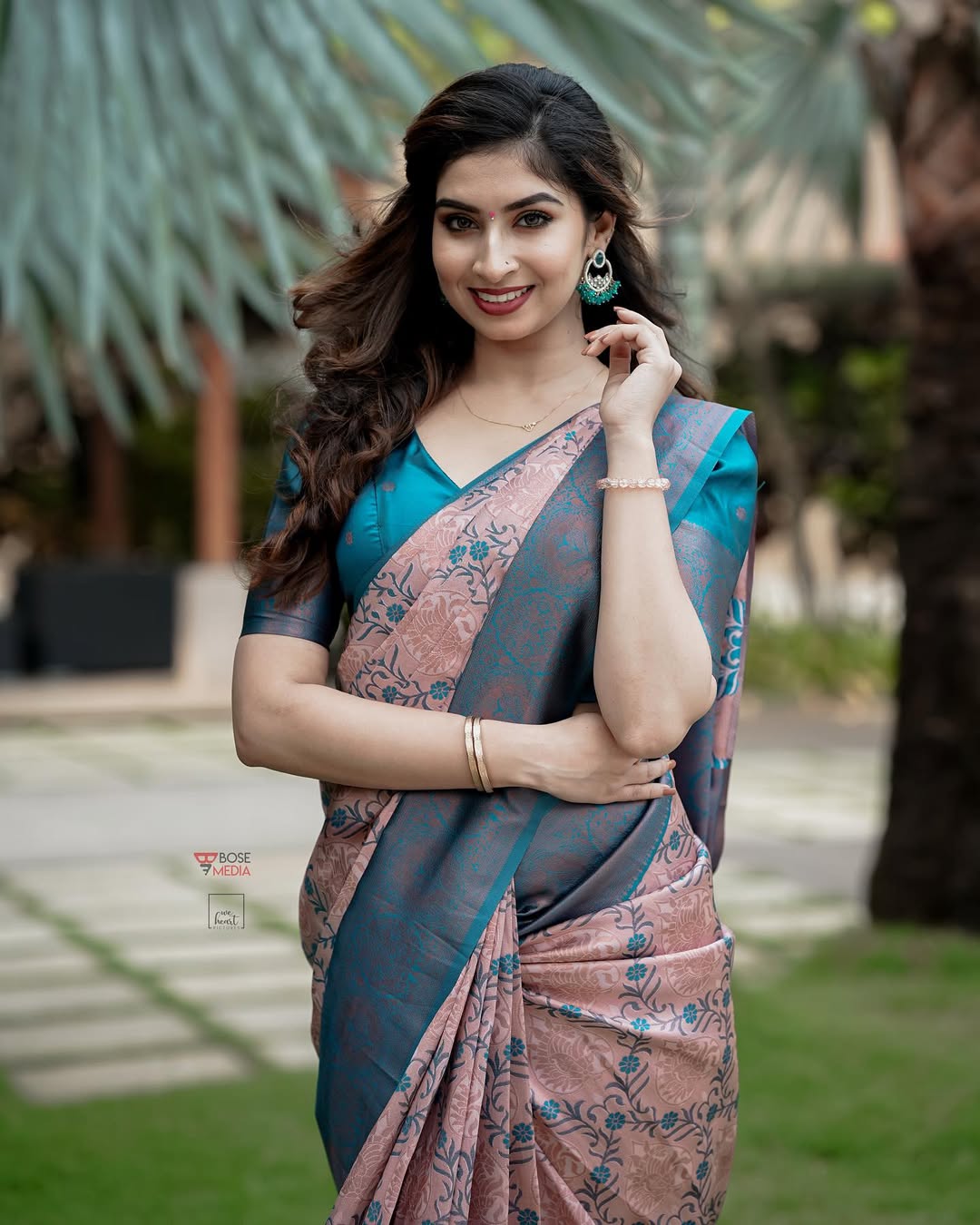
Teal, peach, pink and ivory can interpret the brighter side of a Himalayan colour story. The Pastel Peach Teal Banarasi Lichi Silk Saree Zari Work is suitable when you want contrast without the visual weight of black or bottle green. Use a teal blouse with a simple neckline and let the zari remain the only strong metallic detail.
The Pink Lichi Silk Saree with Teal Border & Zari Weaving takes the same colour relationship in a more noticeable direction. Balance the pink and teal with antique gold jewellery, a neutral clutch and makeup in warm rose or terracotta tones. The outfit will feel more considered if the blouse repeats either the teal border or the pink body, but not both through additional prints.
Layering, Blouses and Accessories That Support the Reference
Layering is the most direct way to bring a bakhu-inspired sense of structure into an Indian outfit. A long overlap jacket, belted cape or straight wool-blend coat can create a wrapped line over a saree, salwar suit or palazzo set.
Keep the jacket between the hip and mid-calf depending on the saree's volume. A hip-length jacket suits a narrow, pleated drape, while a mid-calf layer looks more balanced with a plain saree and low-profile footwear. Avoid combining a large jacket print, a busy saree border and statement jewellery because three competing focal points conceal the textile reference.
Blouse construction can carry the design when the saree is plain. High necklines, overlapping front panels, long sleeves, fabric-covered buttons and a slightly squared shoulder refer to the practical geometry of wrapped garments without reproducing a ceremonial dress. A 1- to 2-inch woven trim at the cuff or neckline is enough to establish continuity.
Accessories should add material contrast rather than cultural costume. Oxidised silver, brushed brass, matte gold, leather belts, wool stoles and compact woven bags work well with geometric textiles. A traditional-looking headpiece or community-specific jewellery should not be added merely to make an outfit appear more "tribal"; such pieces can carry religious and cultural significance.
The Traditional Teal Banarasi Saree for Festive Wear can be styled with a charcoal wool stole and silver-toned earrings for a cool, layered finish. For a more distinctly silk-led outfit, the Blue Banarasi Silk Saree with Digital Ethnic Design can be paired with an ivory blouse and a plain deep-blue jacket. Banarasi silk and Sikkimese handwoven cloth are different textile traditions, but their border-led styling can sit in dialogue when the distinction is stated clearly.
Building a Respectful Sikkim-Inspired Outfit
A respectful Sikkim-inspired outfit identifies its source, avoids false authenticity claims and gives the original tradition enough space to remain visible. The garment should not use sacred symbols or community-specific details as generic decoration.
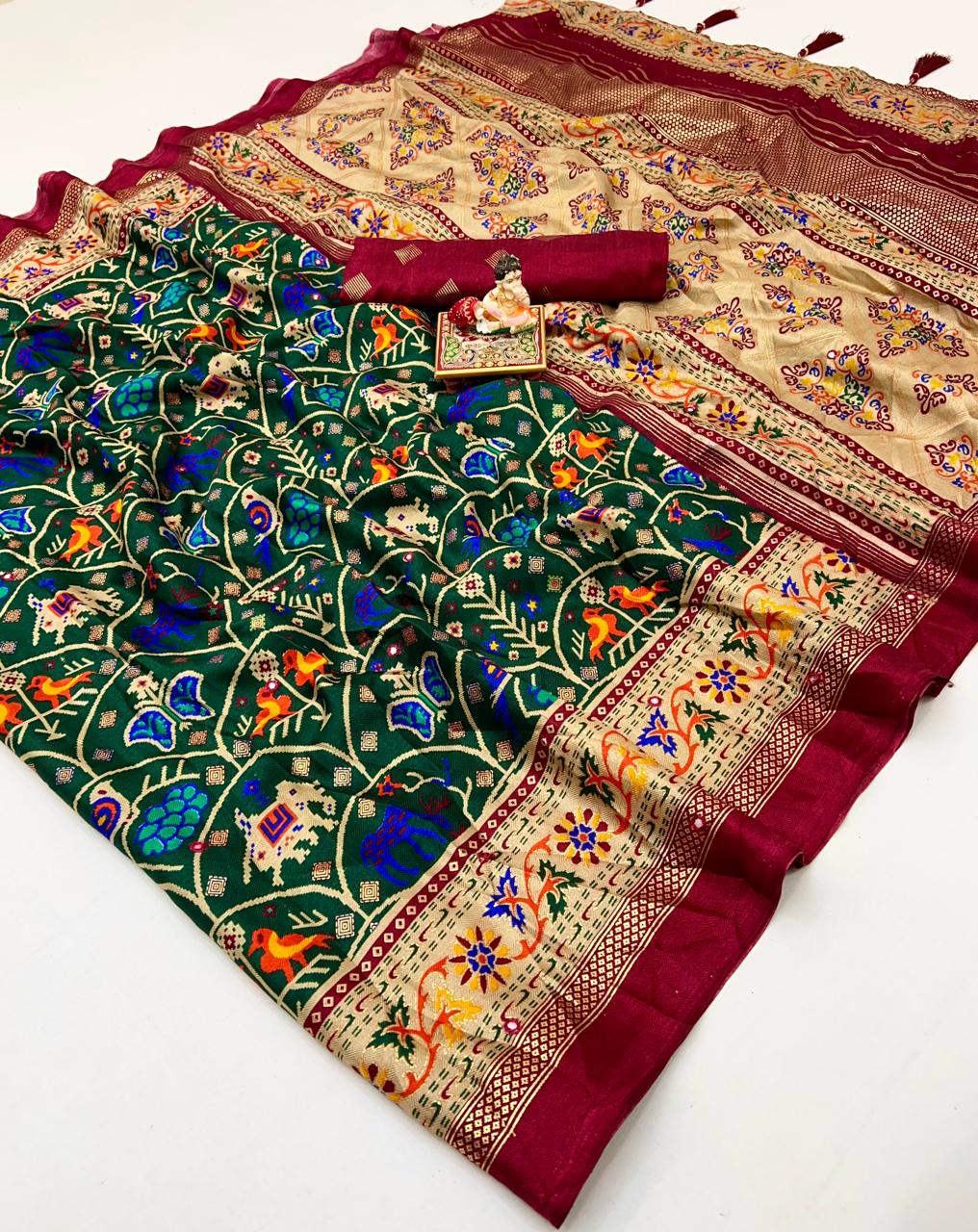
Start with one reference: Lepcha geometric weaving, Bhutia wrap construction, a Sikkimese colour relationship or the practical idea of layered mountain clothing. Add one supporting element from Indian festive dressing, such as a silk saree, zari border or tailored blouse. This method prevents the outfit from becoming a collage of unrelated regional cues.
Descriptions also matter when purchasing or writing about clothing. "Sikkim-inspired geometric border" is more accurate than "authentic Lepcha saree" unless the garment is genuinely made within the relevant tradition and its provenance is documented. A product made from Banarasi silk, Chanderi, cotton or synthetic jacquard should retain its correct fabric name. Calling every patterned silk "traditional Sikkim textile" erases the difference between source culture and modern interpretation.
Ask four practical questions before buying: What is the base fibre? Is the pattern woven, printed or embroidered? Which Sikkimese reference informed the design? Does the seller provide information about the artisan, community or technique? Clear answers help distinguish cultural inspiration from superficial regional styling.
Fabric, Fit and Care for Long-Term Wear
Fabric choice determines whether a Sikkim-inspired outfit feels structured, breathable or ceremonial. Lichi silk and Banarasi silk offer sheen and drape for evening wear, while cotton, wool blends and matte silk are better for a layered daytime look. Jacquard fabric gives a woven pattern but may be heavier than a printed silk, so check fall and blouse support before ordering.

Silk sarees should be aired in shade after wearing and stored folded in a clean cotton or muslin cover. Refold silk every few months along different lines to reduce permanent creasing. Keep zari away from direct contact with perfume, deodorant and damp storage, because moisture and chemicals can dull metallic surfaces.
Dry cleaning is generally safer for zari-rich Banarasi silk, jacquard silk and heavily finished garments than home washing. A plain cotton or washable synthetic layer may follow its own care label, but the presence of zari, colour bleeding or surface finishing changes the recommendation. Never iron directly over zari; place a thin cotton cloth between the iron and the garment and use low heat only when the care instructions permit it.
Fit should allow movement if the outfit includes a wrap jacket or belt. Leave approximately 1 to 2 inches of ease at the waist for a belted layer over a saree, and test sitting, climbing stairs and lifting the pallu before an event. A beautiful silhouette becomes impractical if the belt compresses pleats or the jacket catches on jewellery.
A Practical Formula for Modern Sikkim-Inspired Styling
A reliable formula uses one textile reference, two supporting colours and one restrained accessory material. For example, a deep green silk saree can carry the main reference, ivory can provide contrast, and brushed brass can finish the outfit without competing with the border.
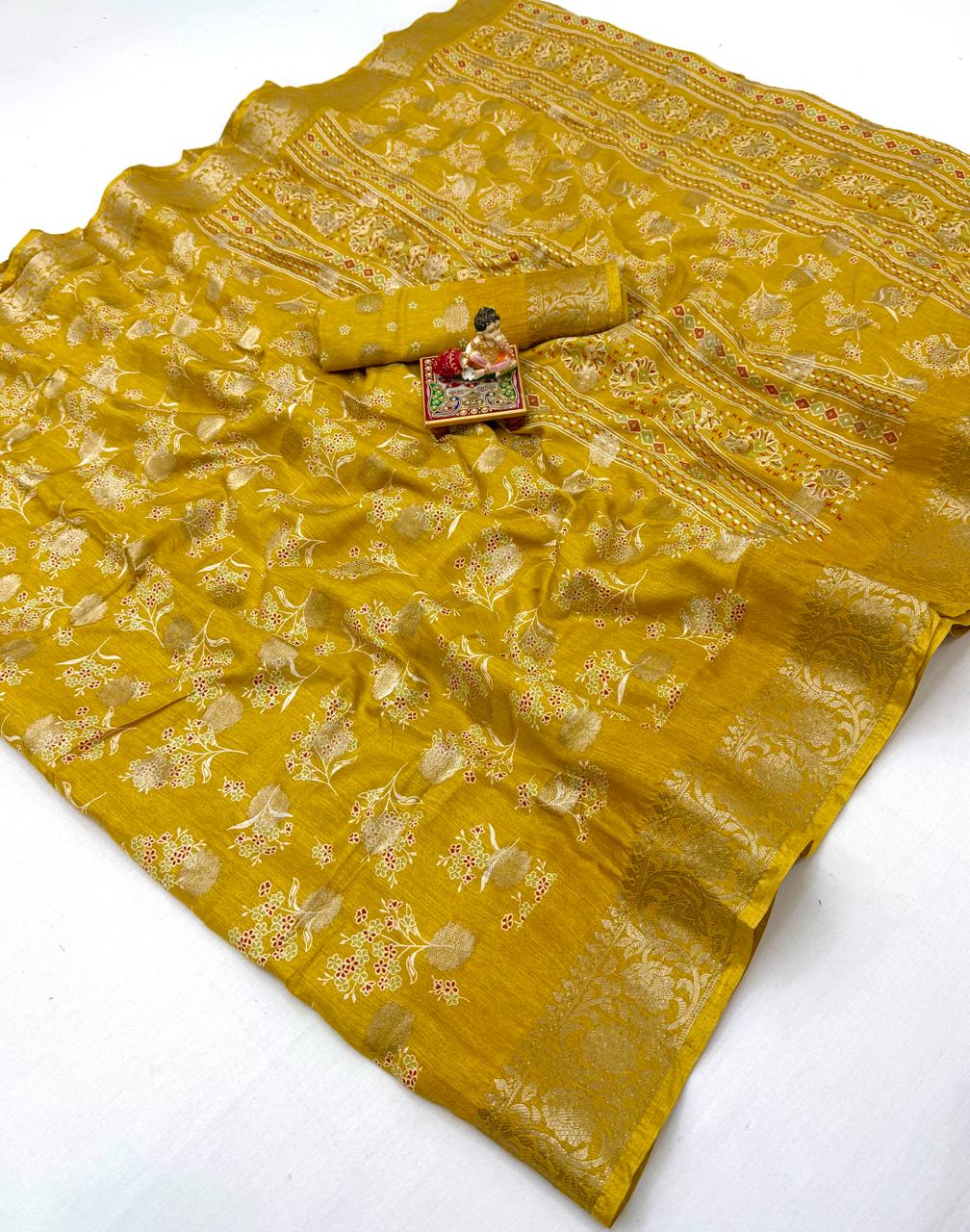
- Select the anchor: Choose a geometric border, a wrap silhouette, a layered jacket or a Himalayan colour pairing.
- Choose the garment: Use a saree, salwar suit, lehenga or palazzo set whose fabric and construction are accurately named.
- Control the palette: Limit the outfit to two major colours and one metallic accent for a clear visual rhythm.
- Add one layer: Try a belted jacket, wool stole, cape or longline blouse instead of several overlapping accessories.
- Check cultural language: Describe the outfit as inspired by Sikkimese references unless its textile provenance supports a more specific claim.
- Test practicality: Sit, walk and move your arms before finalising the drape, belt and sleeve length.
Modern Ethnic Wear Inspired by Sikkim Traditional Textiles becomes most compelling when the wearer can explain the design choice in one clear sentence. A geometric border may come from the visual discipline of Lepcha weaving; a wrapped jacket may respond to the bakhu; a deep green and teal palette may evoke the region's landscape without pretending to reproduce a traditional garment. Thoughtful styling turns a regional reference into a lasting wardrobe idea rather than a short-lived theme.
Questions About Sikkim-Inspired Modern Ethnic Wear
What are the main traditional textiles and garments associated with Sikkim?
Lepcha weaving and the thara, Bhutia wrap-style bakhu, and clothing traditions of Sikkim's Nepali communities are important references. Sikkim has more than one textile tradition, so no single fabric or garment represents the entire state.
How can I style a saree inspired by Sikkim traditional textiles?
Use one clear reference, such as a geometric border, deep Himalayan colour palette or wrapped layer. Pair a bordered silk saree with a plain blouse, a belted jacket or a wool stole, and avoid adding several unrelated motifs.
Is a Banarasi silk saree the same as a Sikkim traditional textile?
No. Banarasi silk is associated with the weaving traditions of Varanasi, while Sikkim has distinct Lepcha, Bhutia and other community textile histories. A Banarasi saree can be styled with Sikkim-inspired colours or proportions, but it should not be labelled an authentic Sikkim textile.
What colours work well for Sikkim-inspired ethnic wear?
Bottle green, teal, ink blue, charcoal, black, ivory, rust, muted red and antique gold create a strong starting palette. Pink or pastel peach can be added as a lighter contrast, especially with teal, ivory or restrained zari.
How should I care for a silk saree with zari or jacquard weaving?
Air the saree in shade, store it folded in cotton or muslin, and keep it away from perfume and moisture. Dry cleaning is usually safer for zari-rich silk and jacquard garments; always follow the garment's care label and never apply high heat directly to zari.
How can I reference Sikkimese clothing without appropriating it?
Name the specific inspiration, use community-specific garments and symbols accurately, and avoid calling a commercial saree an authentic Lepcha or Bhutia textile without documented provenance. Borrowing a broad design idea such as geometric borders or layered wrapping is more respectful than using sacred or ceremonial details as decoration.





