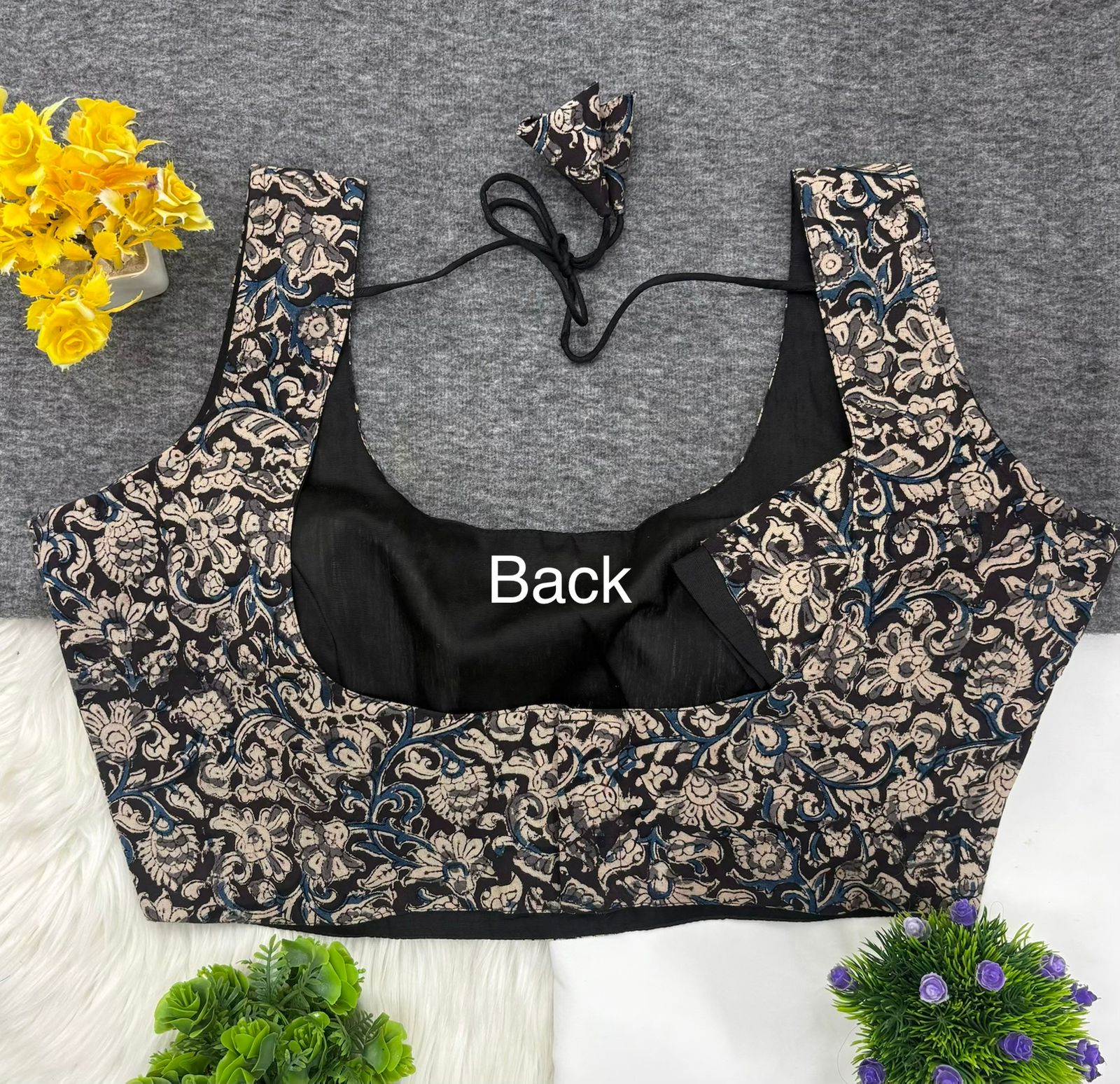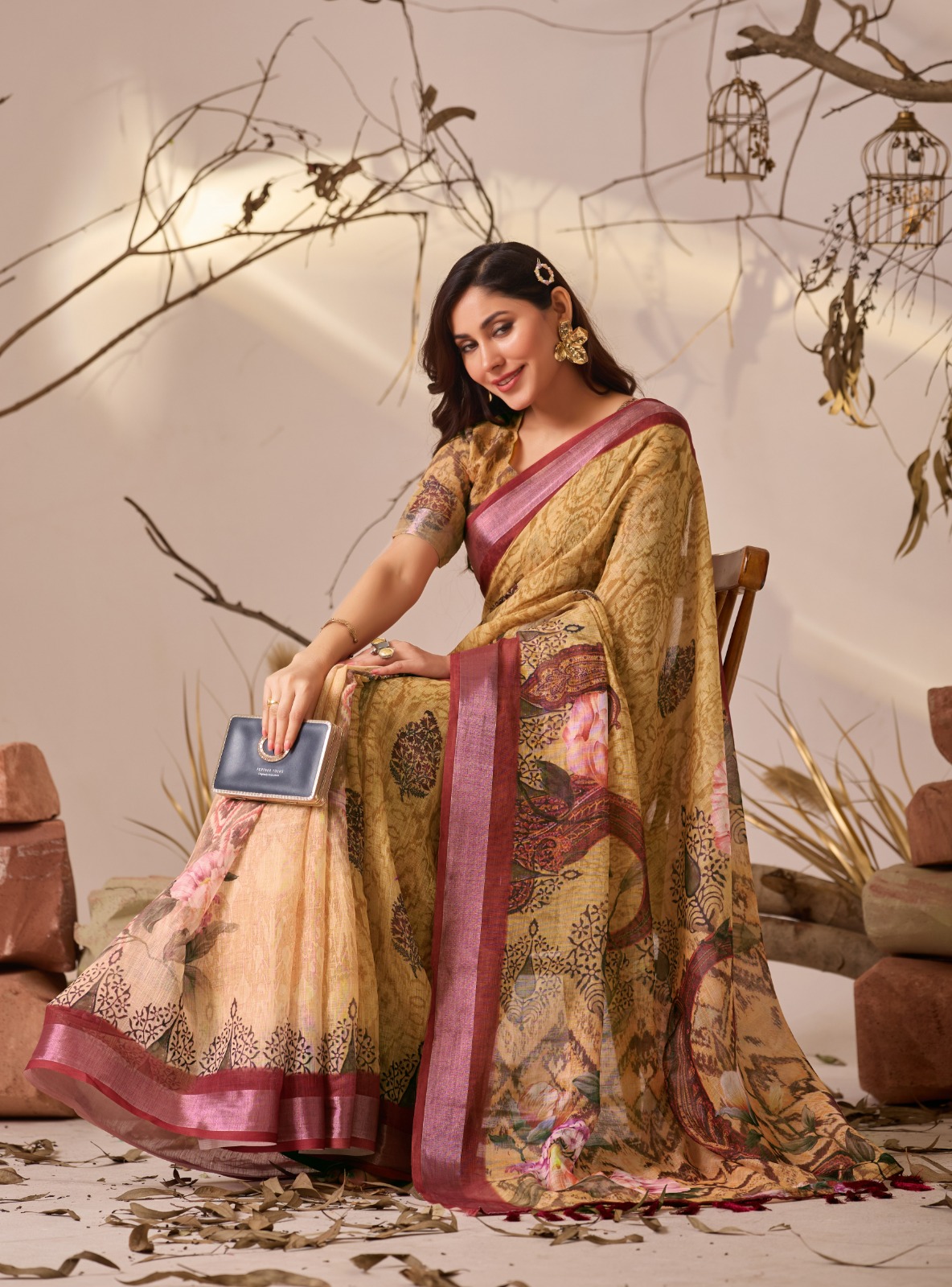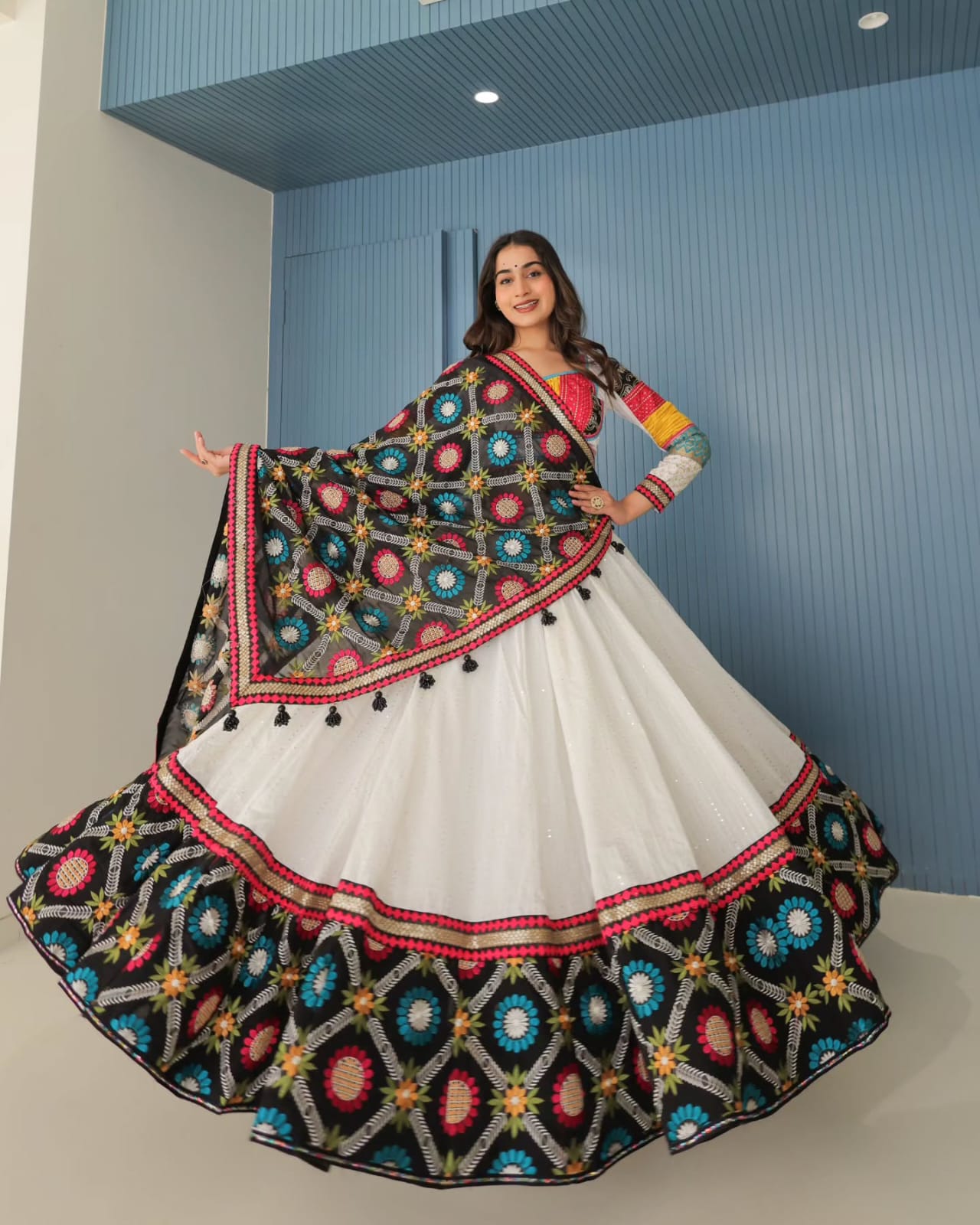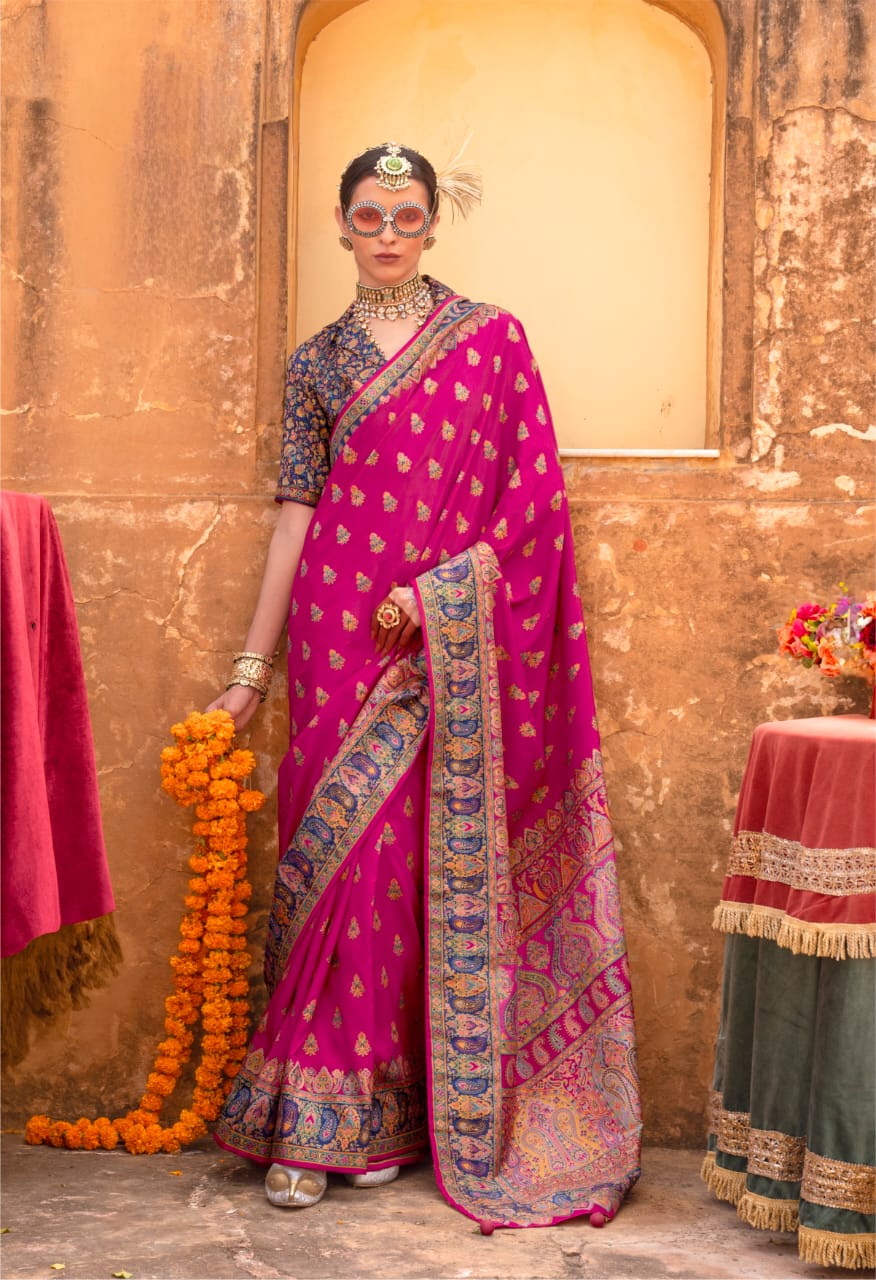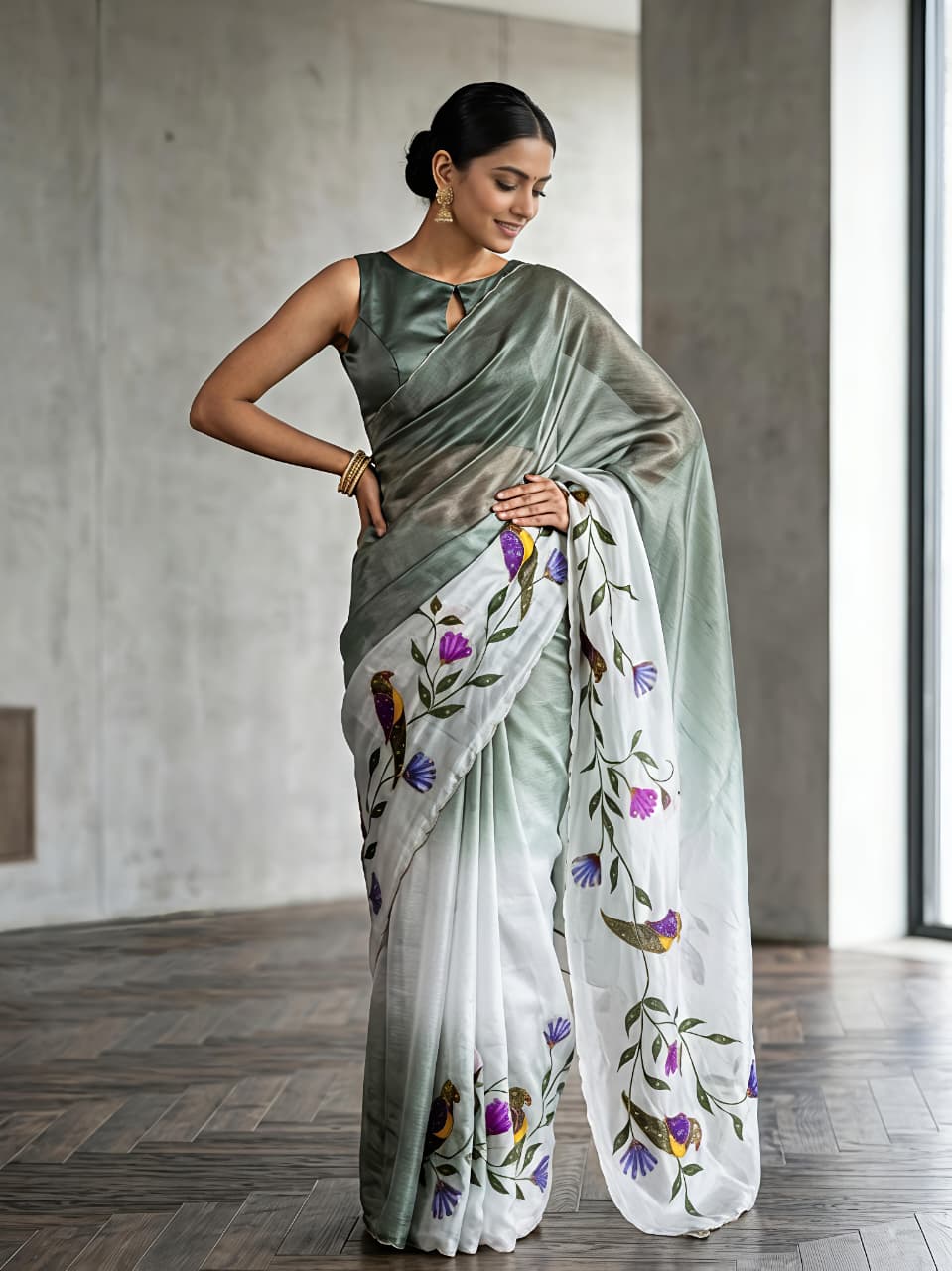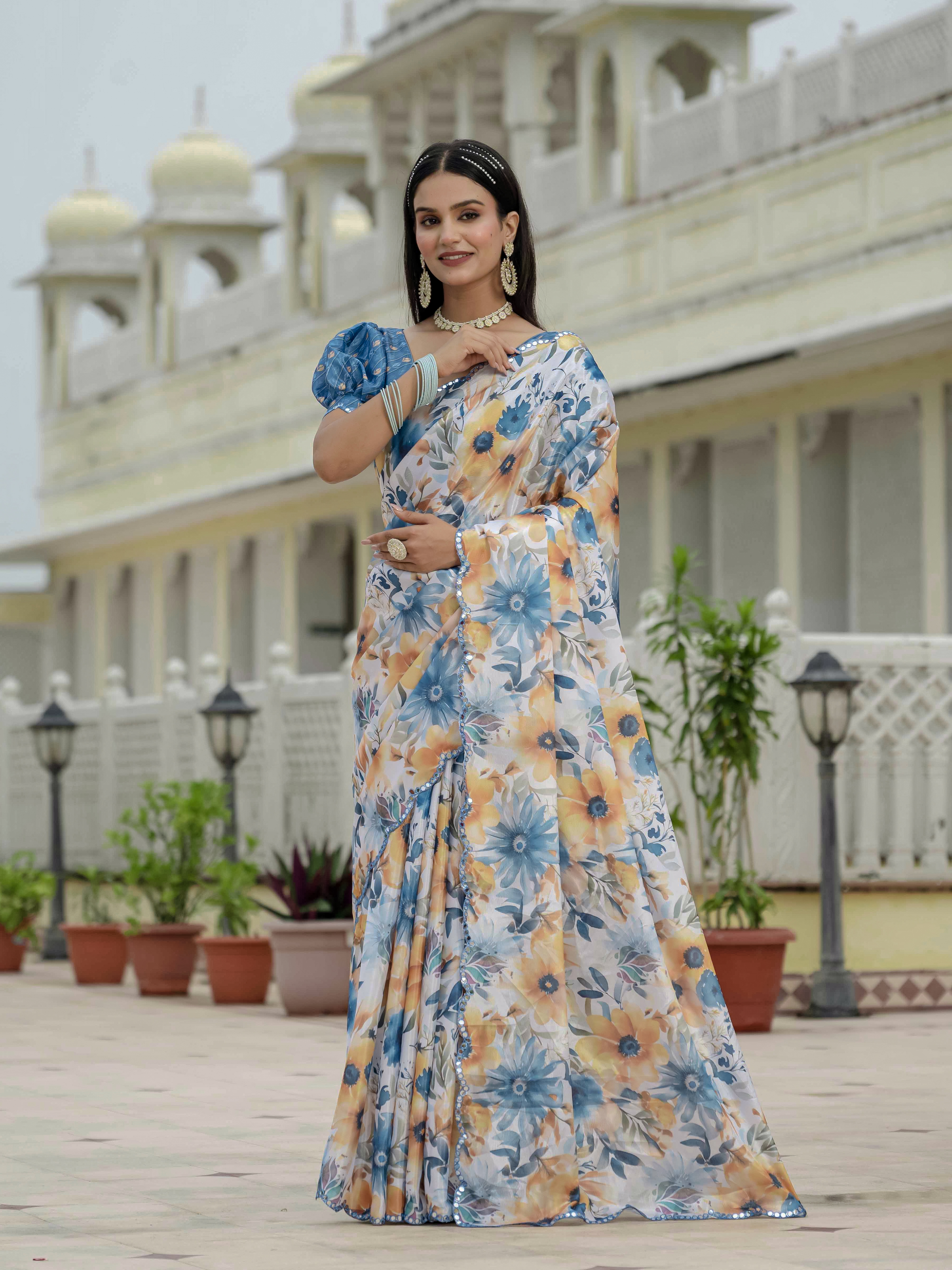
A well-chosen textile can carry geography, community memory and skilled handwork into an everyday wardrobe. The Mizoram Traditional Textile Fashion Guide begins with the puan, the woven cloth central to Mizo dress, and then explains how its stripes, colours and motifs can inform contemporary saree styling without reducing Mizo culture to a decorative print.
Mizoram's textile traditions developed around handwoven cloth, community identity and garments suited to a hilly climate. Traditional Mizo clothing includes puan, puanchei, puan dum and other named textiles, each associated with particular uses, patterns or stages of dress. Modern ethnic wear may borrow colour arrangements or geometric borders, but a saree inspired by Mizo aesthetics isn't automatically a traditional Mizo garment.
Mizoram Traditional Textile Fashion Guide: What makes Mizo textiles distinctive?
Mizo textiles are distinctive because handwoven structure, strong horizontal bands, symbolic motifs and carefully arranged colour fields work together rather than appearing as isolated decoration.
The most recognisable foundation is the puan, a rectangular woven cloth traditionally worn by Mizo women in different draped forms. Puan can function as clothing, a wrap or a ceremonial textile, depending on its design and context. The cloth's panel construction, repeated stripes and dense borders often make the weaving technique visible to the wearer.
Many traditional textiles are made on a loin loom, a compact backstrap loom that allows the weaver to hold tension with the body. The technique can create narrow fabric widths, so larger garments may involve joined panels. Visible seams, aligned bands and minor variations in repeated motifs can therefore be signs of handwoven construction rather than manufacturing defects.
Cotton has long been important in Mizo weaving, although contemporary textiles may also use silk, rayon, acrylic or blended yarns. Fibre content changes the fall, warmth, lustre and care requirements. Handloom cotton generally has more body and a matte surface, while silk blends produce a smoother drape and brighter contrast.
Traditional Mizo motifs may include stylised flowers, animals, birds, stars, horns and geometric forms. Motif meanings can vary by textile, community and interpretation, so a fixed symbolic explanation should not be assigned to every repeated shape without reliable documentation. Describing a border as geometric, floral or animal-inspired is more accurate than claiming ceremonial significance without evidence.
Mizoram Traditional Textile Fashion Guide: Which garments should readers know?
Puan is the broadest starting point because the word refers to woven cloth used in several forms of Mizo dress.
Puanchei, also written puanchei or puan chei, is a colourful wrap traditionally associated with women's festive and ceremonial attire. Its vivid bands and patterned sections make it one of the most recognisable forms of Mizo dress. Puan dum is another important textile name and is commonly associated with a darker, more restrained appearance than the bright puanchei.
Thihna is known as a traditional Mizo shawl or wrap, while Mizo men's traditional dress may include puan worn in different ways, often with a shirt or another accompanying garment. Names, spellings and details can vary across sources and communities, so a responsible description should acknowledge regional and linguistic variation.
Traditional garments should not be treated as interchangeable labels for every striped Northeast Indian fabric. A saree with a geometric border can be Mizo-inspired, but it's not necessarily a puanchei. A respectful product description should state whether the textile is handloom, uses Mizo-inspired colours or reproduces a documented motif; it should not call every striped saree traditional Mizo attire.
This distinction helps shoppers make better choices. Someone seeking a ceremonial Mizo garment should look for provenance and community-led information. Someone seeking a contemporary ethnic outfit can choose a saree, blouse or shawl that uses similar colour discipline and woven geometry while acknowledging the adaptation.
Mizoram Traditional Textile Fashion Guide: How do colour and pattern work?
Mizoram-inspired fashion often works best when one dominant colour is balanced by two or three contrasting bands, borders or accent details.
Strong combinations may include deep red with black and white, turquoise with mustard, magenta with green, or indigo with warm yellow, although no single palette represents every Mizo textile. Colour should be treated as a visual reference rather than a fixed code that applies to every community or garment.
Horizontal stripes are especially useful because they echo the panelled appearance of many woven puan textiles. On a saree, a striped pallu can create a strong visual endpoint, while a narrow striped border can introduce the reference more subtly. A blouse with woven bands at the sleeve edge can repeat the textile language without turning the whole outfit into a costume.
Geometric borders need careful placement. A broad border near the hem can shorten the visual line on a petite wearer, while a narrow border can keep the silhouette elongated. On a saree with a busy pallu, a plain blouse in one of the border colours usually gives the eye a resting point.
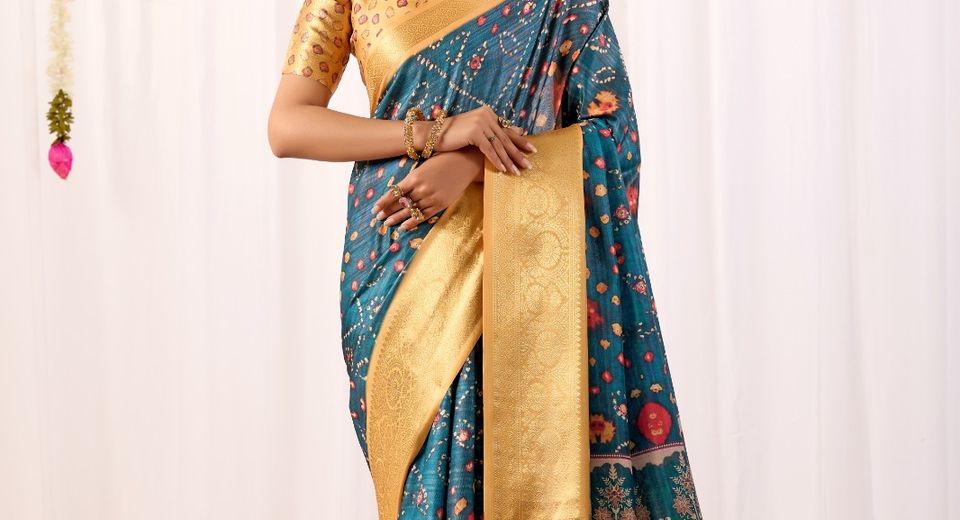
Floral and tribal-art prints can sit comfortably beside Mizo-inspired styling when their origins are described honestly. Teal Tribal Art Printed Lichi Silk Saree with Zari Border supports a Northeast-inspired editorial look through its teal ground, patterned surface and defined border. The saree should not be presented as an authentic Mizo puan unless its textile history confirms that claim.
Mizoram Traditional Textile Fashion Guide: How can sarees translate these ideas?
A saree wardrobe can translate Mizo textile ideas through colour blocking, border emphasis, handloom texture and restrained geometric accessories.
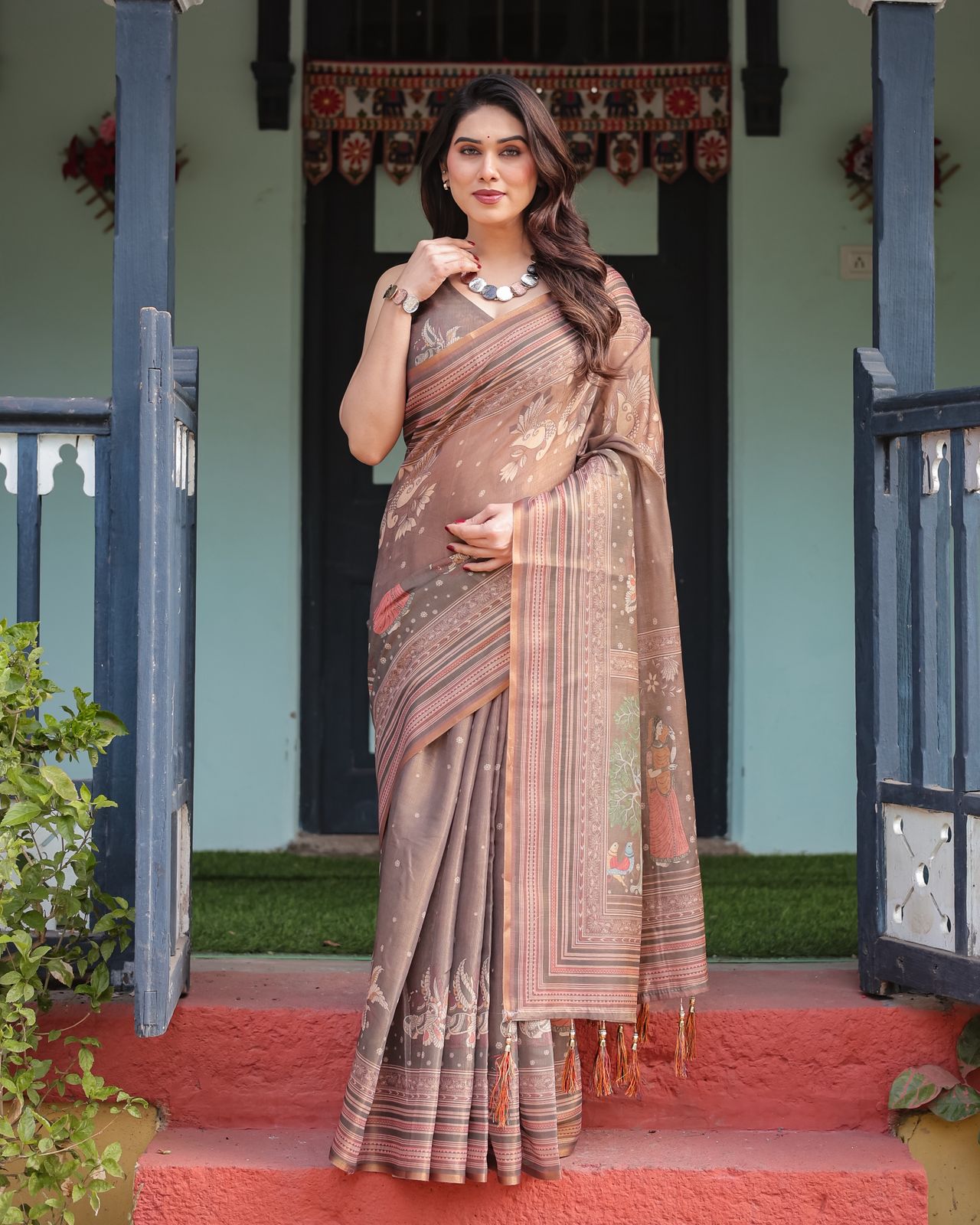
Handloom cotton is a practical place to begin because its slightly firm texture resembles the visual presence of woven cloth more closely than a very fluid synthetic fabric. Mushroom Brown Handloom Saree with Ethnic Striped Border offers a muted base with a clear stripe reference, making it suitable for a daytime cultural event, a museum visit or a workwear interpretation of ethnic dressing.
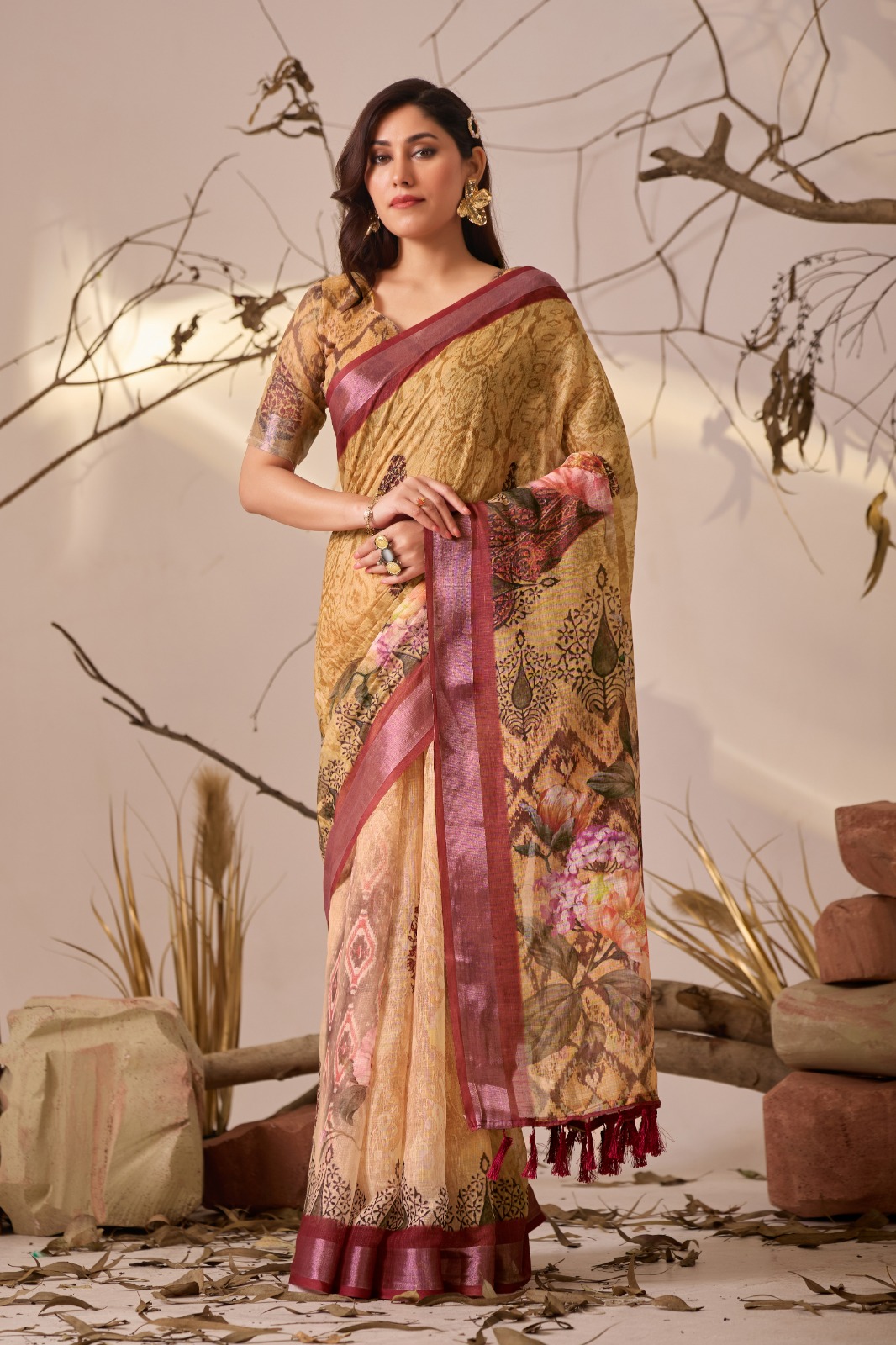
Pastel shades can also work when the weave remains visible. Pastel Floral Tissue Handloom Cotton Saree with Zari Weaves combines a softer palette with a structured handloom surface and metallic detail. A blouse in maroon, charcoal or deep teal can create contrast without forcing a traditional Mizo colour scheme onto the garment.
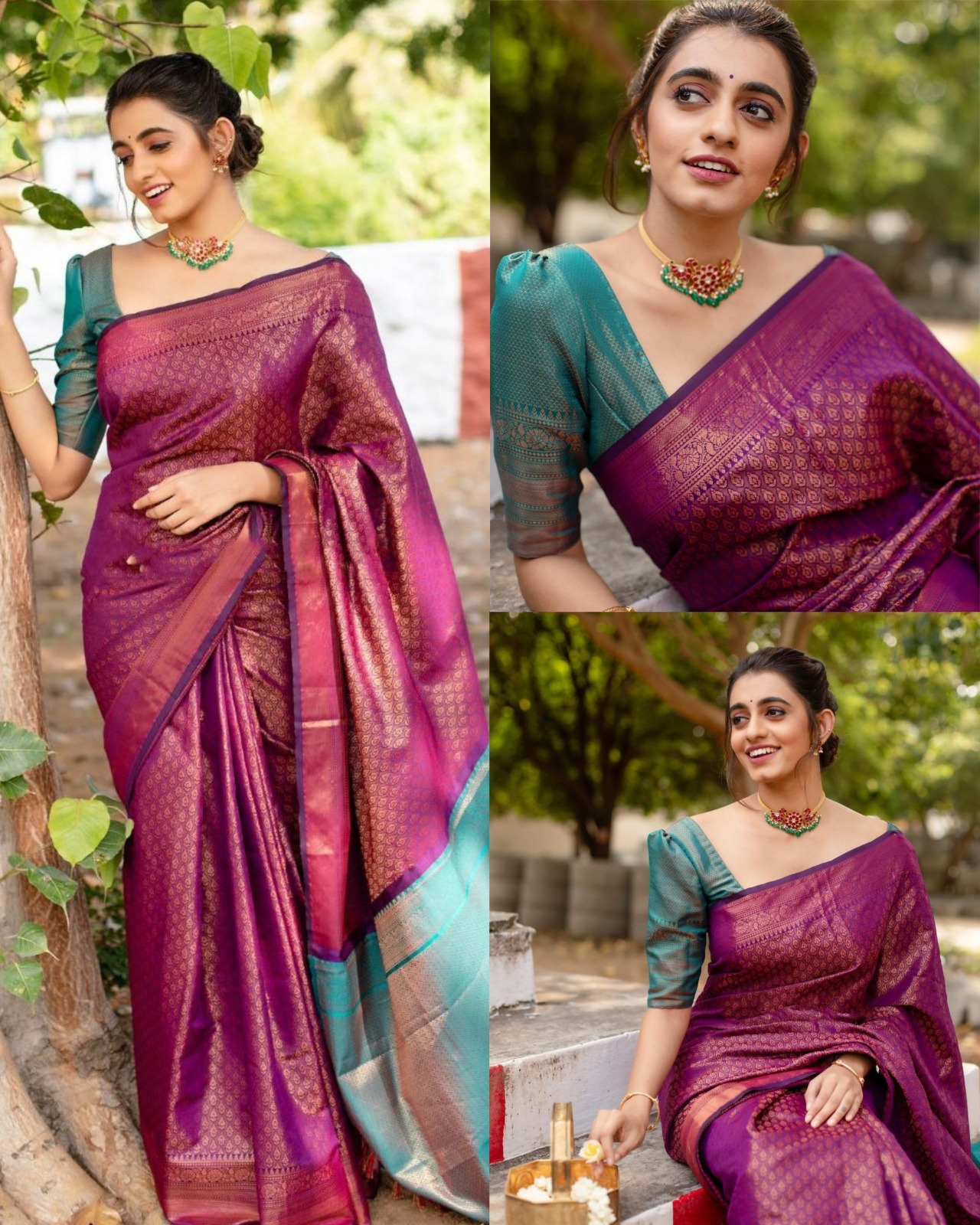
Silk gives the same styling idea a more formal direction. Magenta Lichi Silk Saree with Copper Zari Pallu has a saturated body and warm metallic finish, so a black, rust or dark green blouse can echo the depth of festive woven palettes. Copper-toned earrings or oxidised silver can prevent the look from becoming excessively glossy.
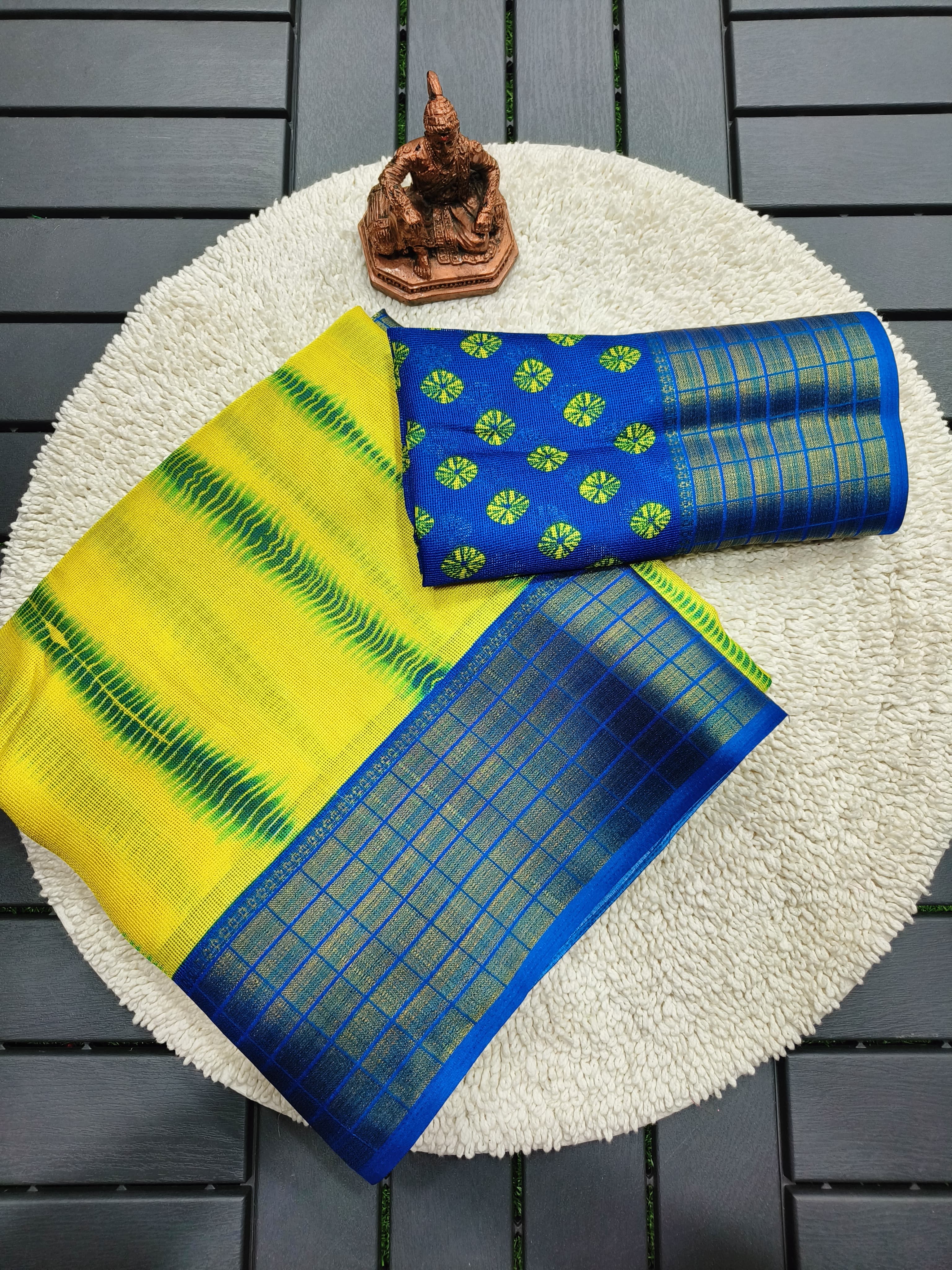
A yellow-and-blue combination brings another clear route. Traditional Yellow Saree with Blue Zari Border Design can be styled with a deep blue blouse, a narrow woven belt or a blue hair accessory. The contrast is strong enough to suggest textile-band dressing, while the saree remains recognisably a contemporary Indian garment.
For a lighter daytime option, Teal Floral Printed Linen Cotton Saree With Matching Blouse can be worn with minimal jewellery and a structured drape. Teal can serve as the dominant field while mustard, red or black appears only in the bag, footwear or border detail.
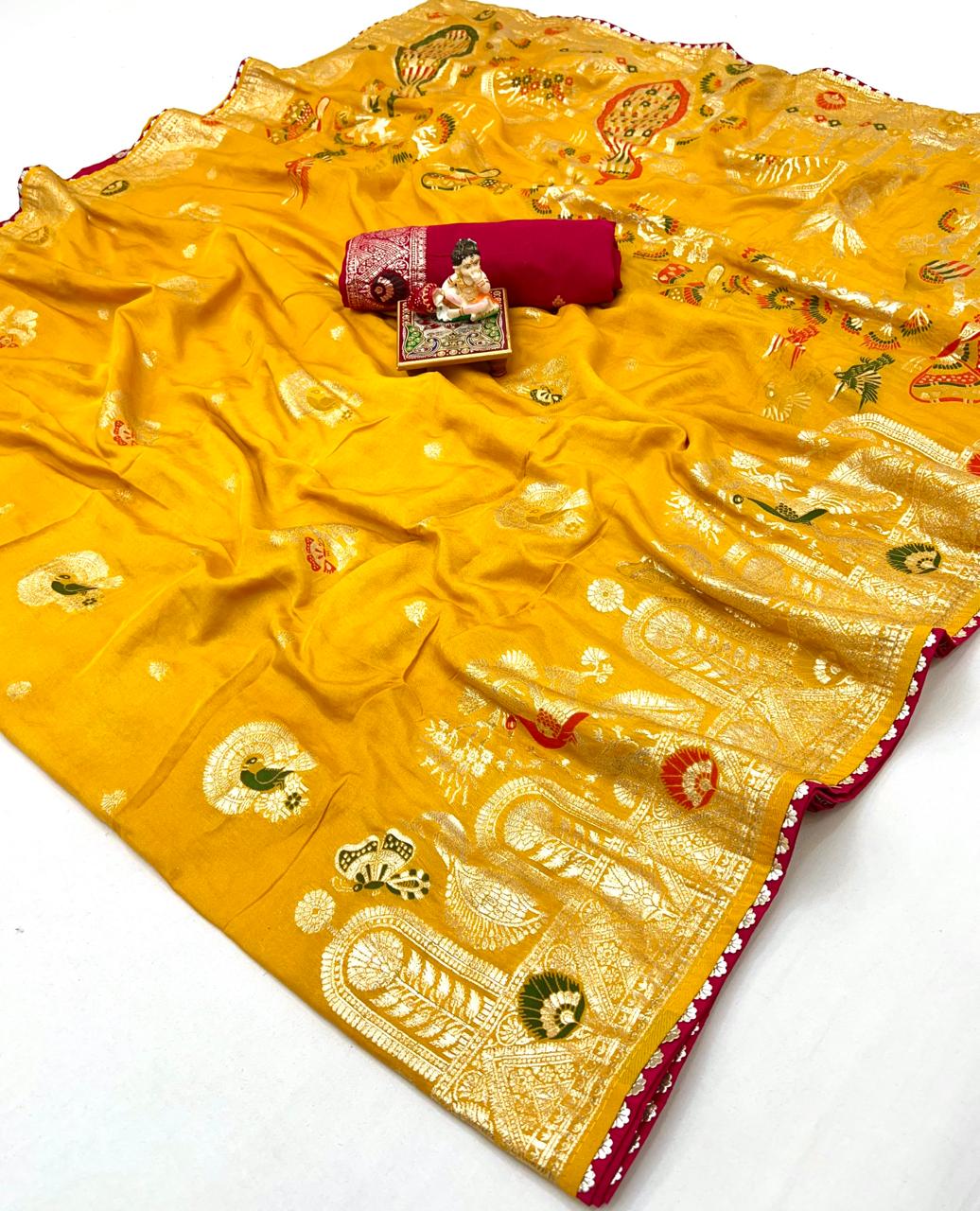
A neutral saree can make the woven reference quieter and more versatile. Traditional Mustard Maslin Silk Saree With Rich Pallu introduces warmth through mustard and concentrates its visual weight at the pallu, allowing a dark blouse and understated jewellery to carry the rest of the styling.
Mizoram Traditional Textile Fashion Guide: Which fabrics suit each occasion?
Cotton and linen-cotton sarees are usually the most practical choices for daytime wear because they breathe well, hold pleats and tolerate repeated use better than delicate silk.
A firm cotton saree benefits from a full-length cotton petticoat or a well-fitted shapewear petticoat, especially when the fabric has a broad border. Cotton also works well for community gatherings, daytime cultural programmes and summer travel because it doesn't cling as readily as many synthetic fabrics.
Maslin silk and lichi silk suit evening gatherings because their smoother surfaces catch light and create a cleaner fall. Traditional Mustard Maslin Silk Saree With Rich Pallu can be reserved for a festive dinner, cultural programme or intimate wedding function, where concentrated pallu detail doesn't compete with a heavily decorated venue.
Zari requires more care than plain yarn because metallic threads can tarnish, snag or flatten under rough handling. Maroon Cotton Saree with Zari Work for Wedding shows how cotton and zari can share one garment: cotton keeps the drape grounded, while metallic work raises the formality for wedding dressing.
For a formal reception, a darker saree can make the border and pallu look more architectural. Teal Tribal Art Printed Lichi Silk Saree with Zari Border works with a plain blouse in black, antique gold or the deepest shade found in its print. A heavily embroidered jacket should be avoided unless the saree has a quiet enough surface to support it.
Wedding styling doesn't require every accessory to be traditional. One substantial earring, a handwoven clutch and a low bun can provide a more coherent finish than several unrelated ethnic elements. The strongest outfit usually repeats one saree colour twice and leaves the remaining accessories quiet.
Mizoram Traditional Textile Fashion Guide: How can styling remain respectful?
Respectful styling begins by separating documented Mizo dress from a contemporary look influenced by its visual vocabulary.
Terms such as Mizo-inspired, geometric handloom styling or Northeast-inspired colour blocking are more accurate when a garment isn't made or documented as traditional Mizo attire. Clear wording gives credit to the source of inspiration without turning a culturally specific garment into a generic fashion trend.
A culturally specific shawl, motif or ceremonial arrangement should not be worn as a novelty costume. A photograph, performance or public event may require traditional clothing, but the wearer should follow guidance from Mizo community members, cultural organisations or the event's organisers.
Designers can also show respect through attribution and material transparency. Product descriptions should identify fibre content, weaving method, place of production and whether a pattern is traditional, adapted or newly designed. Claims such as handwoven, artisan-made and traditional should be used only when they can be supported.
Accessories can reference texture without copying a ceremonial ensemble. Oxidised silver, a narrow woven belt, a plain leather sandal or a small geometric bag can reinforce the outfit's structure. Pairing every striped textile with large tribal jewellery, a dramatic headpiece and a borrowed ceremonial wrap often creates visual confusion and weakens cultural accuracy.
Care is part of respect for handloom textiles. Cotton sarees should be gently hand-washed or professionally cleaned according to the care label, dried away from harsh direct sunlight and stored completely dry. Silk sarees should be dry-cleaned when recommended, folded with the zari side inward and refolded every few months to prevent permanent crease lines. Acid-free tissue or clean muslin helps protect zari from abrasion.
A thoughtful Mizoram-inspired outfit therefore depends on three decisions: identify the textile normally, use colour and structure with restraint, and avoid presenting adaptation as authenticity. Those decisions create clothing that's visually distinctive while leaving room for the history and living communities behind Mizo weaving.
Mizoram Traditional Textile Fashion Guide: What should shoppers check before buying?
Shoppers should check fibre, weave, provenance, motif description, zari content, measurements and care instructions before buying a Mizo-inspired textile.

Fibre content affects comfort and maintenance, so the label should distinguish pure cotton, silk, maslin silk, linen-cotton and blended yarns. A handloom claim should ideally be accompanied by information about the weaving process or artisan source rather than used only as a premium-sounding adjective.
Border width and pallu length also matter for styling. A broad border may require more careful pleating, while a short pallu can limit shoulder draping. Buyers who are between standard saree lengths should confirm the finished measurement before ordering, particularly when the saree includes a pre-attached blouse piece.
Metallic detailing deserves close inspection. Zari can mean real metallic zari, imitation zari or a synthetic metallic thread, and the difference affects price, weight and care. A buyer should also check whether the blouse piece matches the saree's colour and whether printed areas may bleed during cleaning.
The most meaningful purchase is one that values both design and information. A documented Mizo textile from a community-linked source serves a different purpose from a contemporary saree using Mizo-inspired stripes, and both can be appreciated when their identities are described accurately.
Questions Readers Ask About Mizo Textiles and Contemporary Saree Styling
What is the main traditional textile of Mizoram?
Puan is the main traditional textile associated with Mizo dress. Puanchei, puan dum and thihna are related named garments or wraps with distinct uses, colours and designs.
What is the difference between puan and puanchei?
Puan is a broad term for woven cloth used in several forms of Mizo dress, while puanchei refers to a colourful patterned wrap traditionally associated with women's festive and ceremonial clothing. The terms should not be used interchangeably for every striped fabric.
Can a saree be styled in a Mizo-inspired way?
Yes, a saree can use Mizo-inspired colour blocking, horizontal stripes, geometric borders and handloom texture. The saree should be described as inspired or adapted unless reliable provenance confirms that it is an authentic Mizo textile.
Which fabric is best for a daytime Mizo-inspired outfit?
Handloom cotton or linen-cotton is generally the most practical choice for daytime dressing because the fabric breathes, holds pleats and has a structured woven appearance. Silk and zari are better suited to evening events or formal celebrations.
How should zari sarees be stored?
Zari sarees should be folded with the metallic side inward, separated with clean muslin or acid-free tissue and stored away from moisture. Refolding the saree every few months helps prevent permanent crease marks and reduces pressure on one fold.
How can someone avoid cultural appropriation when wearing Mizo-inspired fashion?
Use accurate language, identify whether the textile is traditional or contemporary, and avoid wearing ceremonial garments or motifs as costume without community guidance. Buying from documented artisan or community-linked sources and crediting the inspiration also improves cultural respect.