Mizo Puan and Puanchei Are Not Generic Saree Names, and using the correct terms matters because these garments come from a distinct textile tradition in Mizoram. A saree is generally a long, unstitched length of cloth draped around the body, while a puan is a Mizo woven garment with its own forms, construction and cultural context. Puanchei refers to a particularly recognised festive style of Mizo wrap, not a decorative label for any colourful saree.
The difference is more than vocabulary. Fabric dimensions, arrangement of motifs, method of wearing and social meaning all help identify the garment. Understanding those details makes it easier to discuss Northeast Indian textiles accurately, appreciate the work of weavers and avoid reducing a regional tradition to a generic online fashion category.
Mizo Puan and Puanchei Are Not Generic Saree Names: What Do They Mean?
Mizo Puan is a traditional woven cloth or wrap associated with the Mizo people of Mizoram, while Puanchei is a prominent ceremonial and festive form of Mizo women's wraparound dress. The word "puan" can be used broadly for Mizo woven garments, whereas "Puanchei" identifies a more specific and culturally recognised textile form.
Mizo clothing terminology can vary according to context, local usage and whether a speaker is referring to the cloth, a complete outfit or a particular style of wrap. That variation doesn't make Puanchei a synonym for saree. The variation makes careful description more important.
Puanchei is often recognised by structured bands, strong colour contrast and a lively arrangement of woven pattern. The exact palette and motif arrangement are not fixed across every example. Contemporary weavers and designers may adapt colour combinations, borders or proportions while retaining a visual relationship with Mizo textile traditions.
A puan may be worn as a natural wrap, shoulder cloth or part of time-honoured attire, depending on its type and use. Puanchei is especially associated with formal gatherings, celebrations and cultural presentation. A retailer or writer should therefore name the proper textile rather than placing every woven Northeast Indian garment under "saree".
Mizo Puan and Puanchei Are Not Generic Saree Names: How Do They Differ From a Saree?
A Puanchei differs from a saree in its heritage form, dimensions, draping logic and cultural identity. A saree usually has a long length designed to wrap around the waist and pass over the shoulder, often with a visible pallu; a Puanchei is generally understood as a Mizo wraparound skirt or lower garment with a different proportion and wearing method.
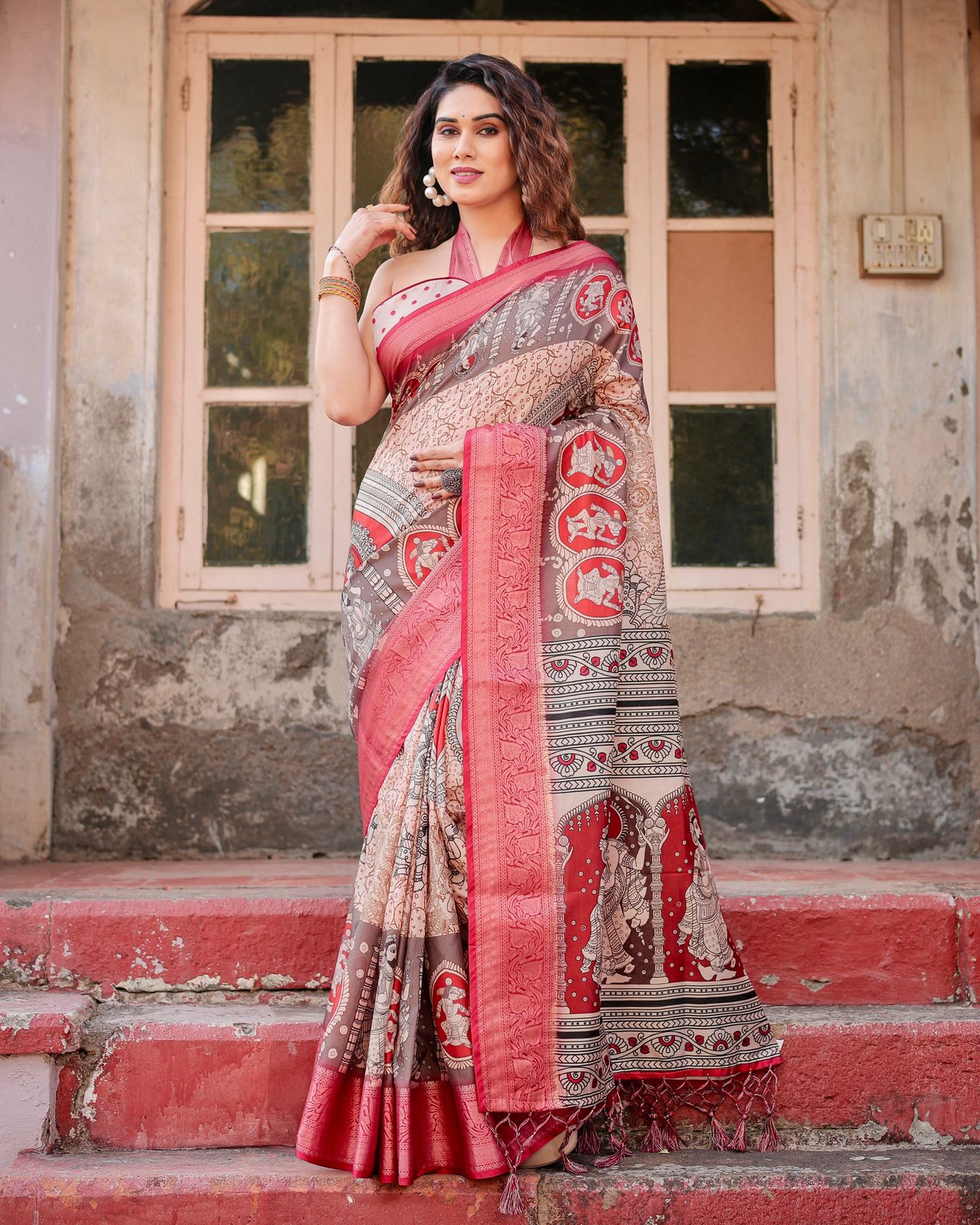
Construction and proportions
Most sarees are long, narrow lengths of cloth commonly measuring approximately 5 to 9 yards, although regional and ready-to-wear formats vary. A Puanchei is usually woven as a more compact rectangular wrap, with the design distributed across bands or panels rather than organised around a saree pallu.
Many sarees depend on pleating at the front and tucking at the waist to create their recognisable silhouette. A Puanchei typically wraps around the lower body as a skirt-like garment. The cloth may be secured through folding, tucking or a separate fastening method, but a wrapped garment doesn't become a saree simply because it's worn around the body.
Design vocabulary
Saree design may place visual emphasis on a pallu, border, buti, all-over print or woven field. Puanchei design commonly uses horizontal bands, geometric structures and high-contrast colour placement connected with Mizo weaving traditions. A banded woven textile should not automatically be described as a striped saree.
Terms such as Banarasi silk, Kanjeevaram, Chanderi and zari identify particular Indian textile traditions or techniques. Puan and Puanchei deserve the same precision. A Banarasi silk saree with zari isn't interchangeable with a Puanchei, just as a Puanchei isn't a regional nickname for a saree.
Mizo Puan and Puanchei Are Not Generic Saree Names: Why Does Accurate Naming Matter?
Accurate naming protects cultural context, improves buyer understanding and gives visibility to the communities whose weaving traditions created the garment. A product title that calls a Puanchei a generic saree can mislead shoppers about how the garment is worn, what size to expect and what kind of blouse or styling is appropriate.
Textile names often carry information about place, community, technique and use. Calling a Kanjeevaram silk saree a generic silk saree removes information about its regional association and weaving identity. Calling Puanchei a saree similarly removes the connection to Mizo dress and makes a specific tradition harder to recognise in searches, catalogues and cultural writing.
Respectful naming doesn't require treating classic garments as untouchable museum objects. Designers can reinterpret silhouettes, use new colour stories or combine regional references in contemporary clothing. The essential responsibility is to state what the inspiration or garment actually is, rather than using a familiar category merely because it attracts more searches.
Clear descriptions also help customers avoid practical disappointment. A shopper expecting a standard 6-yard saree may look for a pallu, blouse piece and saree pleats. A shopper buying a Puanchei may instead expect a woven wrap with its own width, finish and styling requirements. Those are different expectations.
Mizo Puan and Puanchei Are Not Generic Saree Names: Which Details Identify the Textile?
Texture, width, motif placement, edge finishing and intended use together provide better clues than colour alone. Red, black, white, green or multicoloured fabric doesn't prove that a textile is Puanchei, because colour palettes can be shared by many Indian weaving traditions.
Look at the weave before the colour
A reliable textile description should state whether the design is woven, printed, embroidered or embellished. Woven bands are built into the fabric during textile production, while a printed motif sits on the surface. The distinction affects texture, reverse-side appearance, durability and care.
Banarasi Silk Saree with Pichwai Art & Zari Border demonstrates why surface technique matters: Banarasi silk and zari describe textile and embellishment characteristics, while Pichwai describes the visual art influence. A Mizo textile should similarly be identified through its own weave and cultural terminology, not through a broad label such as "ethnic saree".
Consider the garment's intended role
A Puanchei is generally associated with festive or formal Mizo presentation, while the wider category of puan can include garments with everyday, ceremonial or functional uses. The same word may not describe every Mizo cloth in exactly the same way, so product notes should avoid presenting one design as the only authentic format.
Dimensions are another useful clue. A rectangular wrap with a compact width and no separate pallu should not be photographed only in a conventional saree drape. Showing the garment folded, wrapped or styled with a suitable top gives viewers a more accurate idea of its structure.
Mizo Puan and Puanchei Are Not Generic Saree Names: Can They Be Styled Today?
A Puanchei can be styled contemporarily when the garment's original identity and wearing method remain clearly acknowledged. Modern styling can include a coordinated blouse, a simple top, restrained jewellery or layering, but the result should not be presented as a conventional saree drape unless the garment has been deliberately redesigned into one.
A fitted blouse or clean shirt can create a balanced silhouette with a patterned wrap, especially when the upper garment repeats one quiet colour from the textile. Avoiding a second busy print allows the woven bands to remain the focal point. Silver-toned jewellery, handwoven accessories and low-contrast footwear can support the textile without competing with it.
When a Puanchei-inspired design is made into a skirt, skirt set or draped outfit, the description should say "inspired by" or explain the adaptation. A reinterpretation isn't automatically disrespectful, but concealing the adaptation makes the garment harder to understand and can imply an authenticity that the piece doesn't possess.
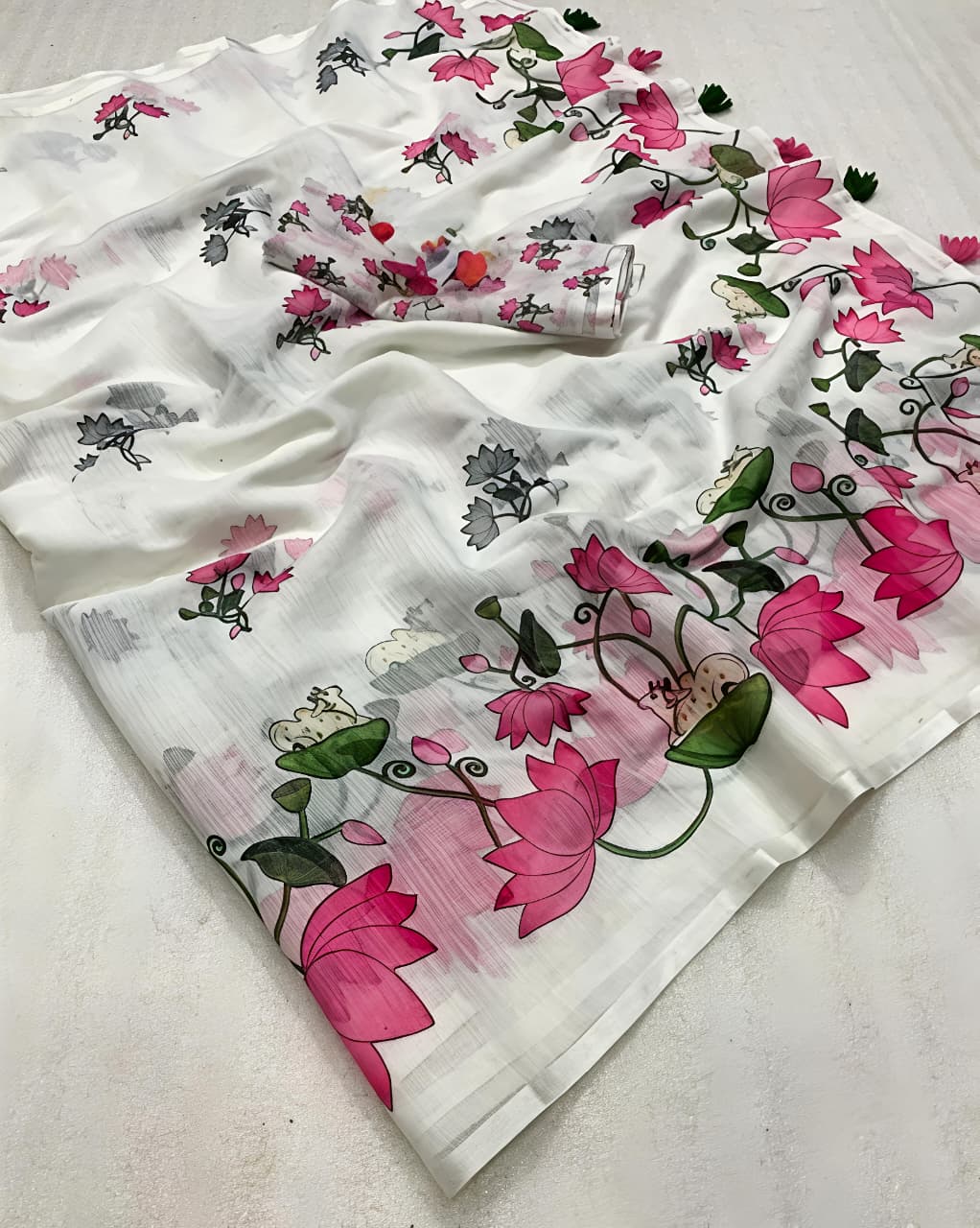
For readers comparing textile-led occasion wear, Royal Pichwai White Linen Saree with Lotus Design and Peach Multicolor Linen Cotton Saree with Paisley Pallu show how regional art references can be described specifically without collapsing every textile into one category. The same editorial discipline should apply to Mizo clothing.
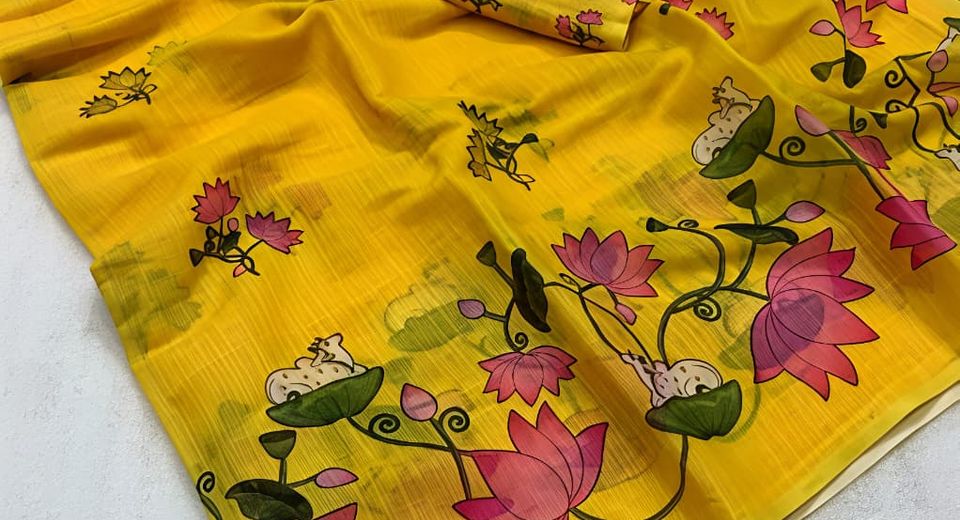
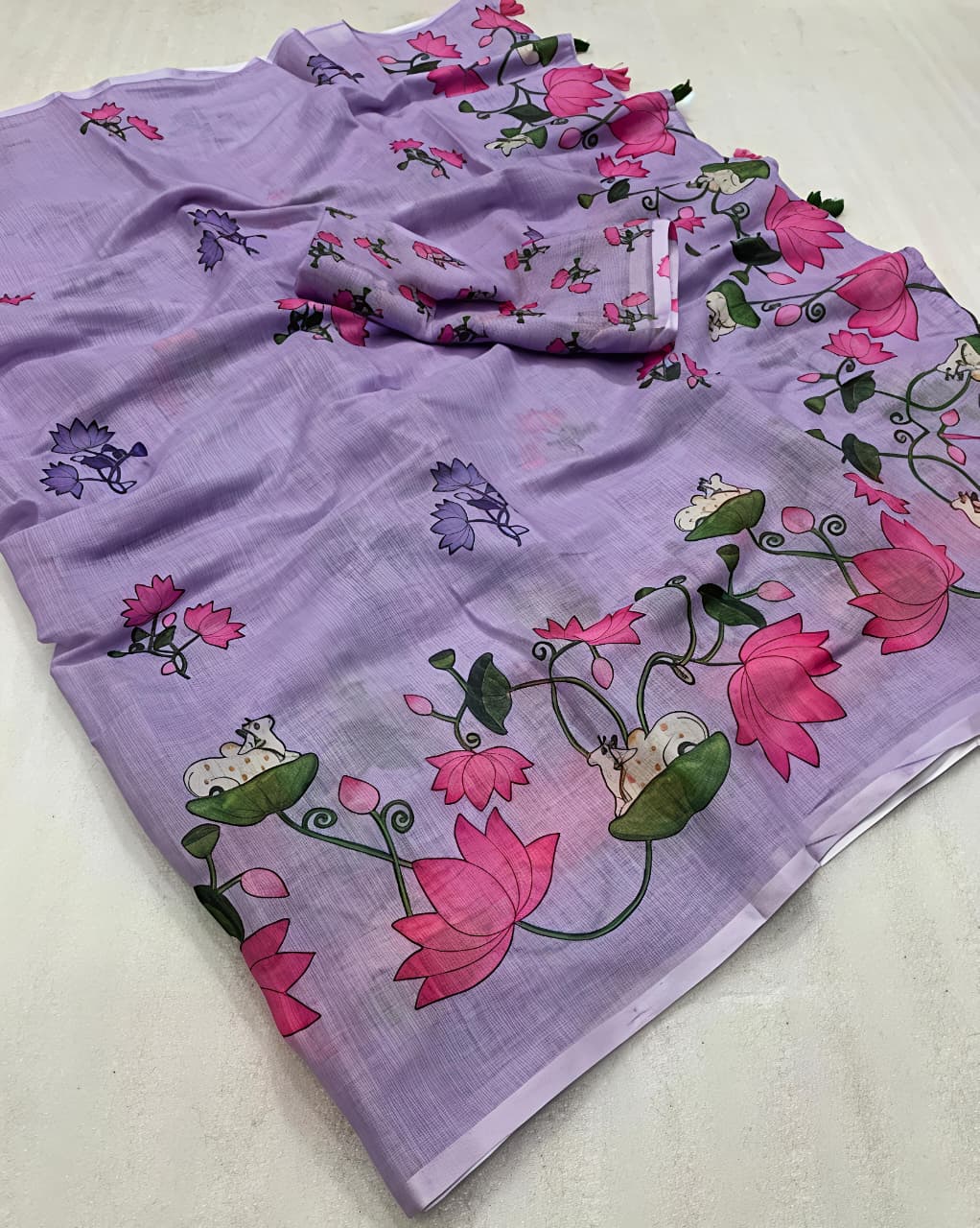
Lavender Pichwai Print Linen Saree with Tassels, Yellow Lotus Bloom Pichwai Linen Saree and Soft Green Pichwai Lotus Printed Linen Saree also illustrate the importance of naming the base fabric and surface technique. A printed linen saree can be visually striking without being described as a woven Mizo wrap.
Mizo Puan and Puanchei Are Not Generic Saree Names: How Should Shoppers Compare Them?
A shopper should compare fibre, construction, dimensions, surface technique, occasion and care instructions instead of comparing only colour or price. A Puanchei may be a woven wrap, while a saree may be silk, linen, cotton, Chanderi or a synthetic blend with entirely different behaviour.
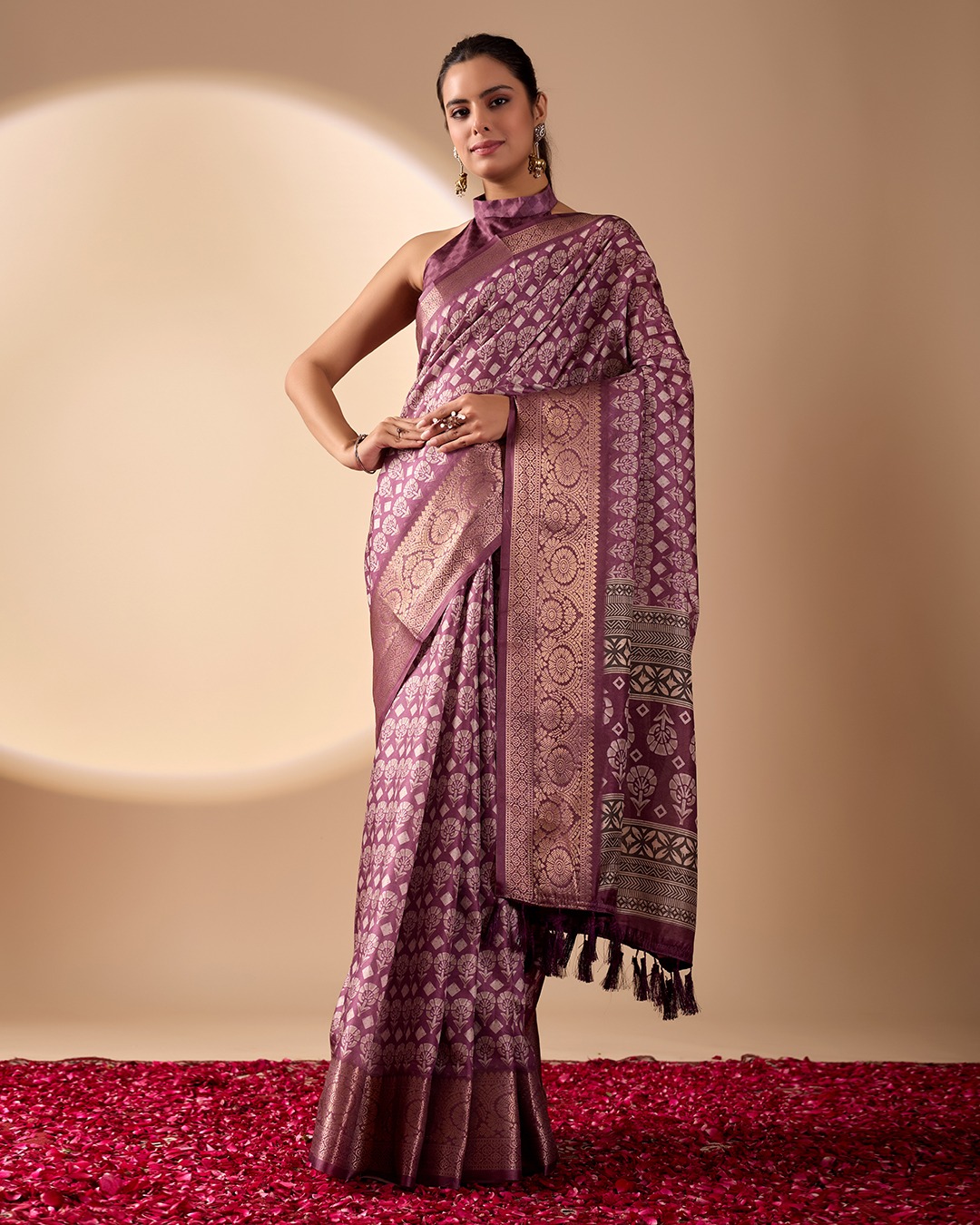
- Fibre: Check whether the textile is cotton, silk, linen, a blend or an unspecified fibre.
- Construction: Ask whether the pattern is woven into the cloth, printed, embroidered or finished with zari.
- Measurements: Confirm the full length and width before assuming that standard saree pleats or a pallu are possible.
- Styling: Check whether the item is intended as a wrap, skirt, shoulder cloth, saree or ready-to-wear garment.
- Care: Follow the stated washing and storage instructions because woven textiles, zari and printed linen don't respond identically to water or heat.
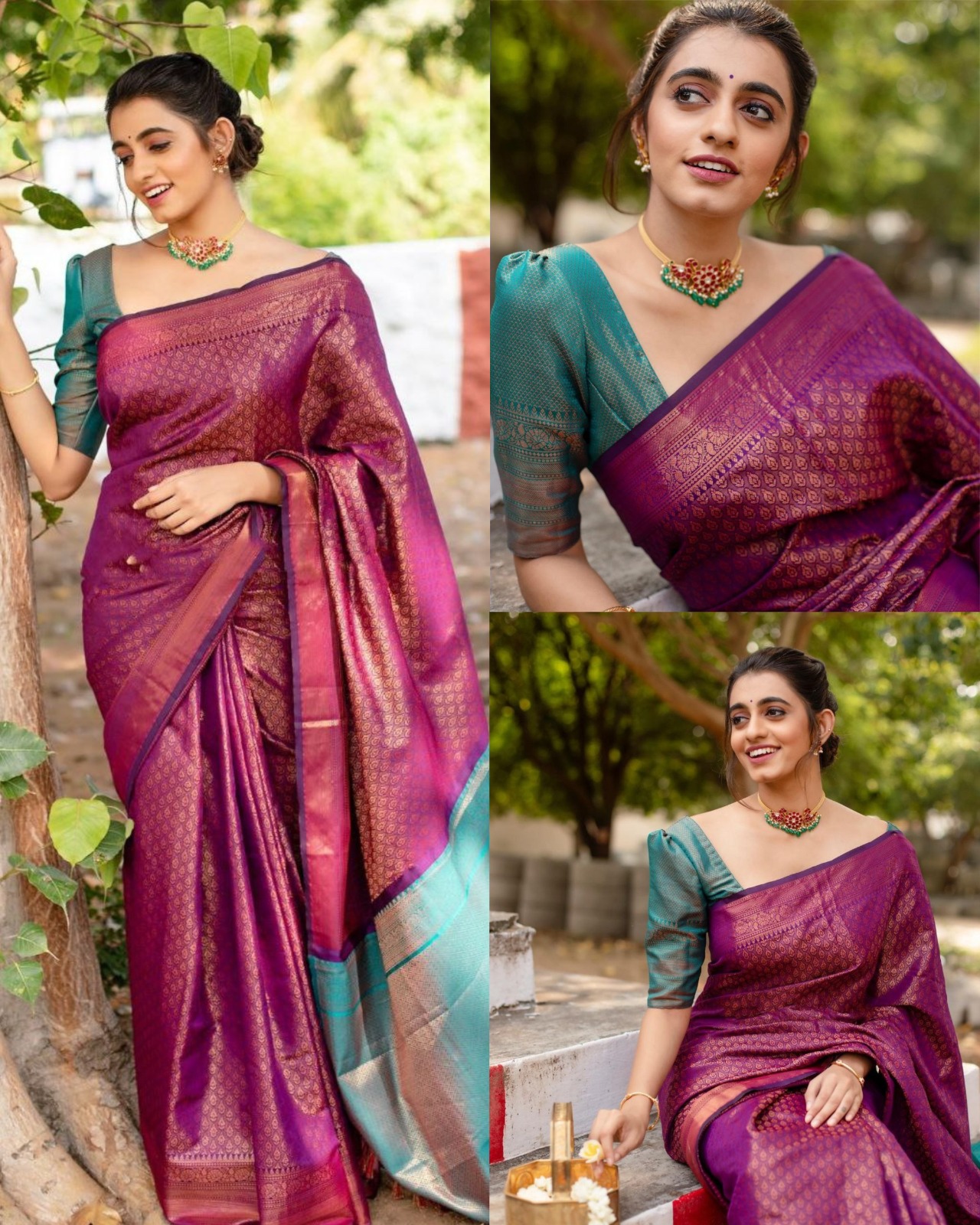
Product comparisons become clearer when the garment name remains visible. Peach Blue Floral Chinnon Ready To Wear Saree | Varnavi is a ready-to-wear saree format, while Magenta Lichi Silk Saree with Copper Zari Pallu uses a saree construction with a defined pallu. Neither should be relabelled as Puanchei because the colours or motifs feel festive.
Price can also distort terminology. Sarees from Rs 1000 to Rs 1500, Sarees Under 20% Off and Sarees Under 10% Off may help shoppers compare accessible saree options, but a discount category doesn't explain a textile's regional identity or construction. Sarees Flat 60% Off and Sarees Flat 50% Off likewise describe pricing rather than weave, drape or cultural origin.
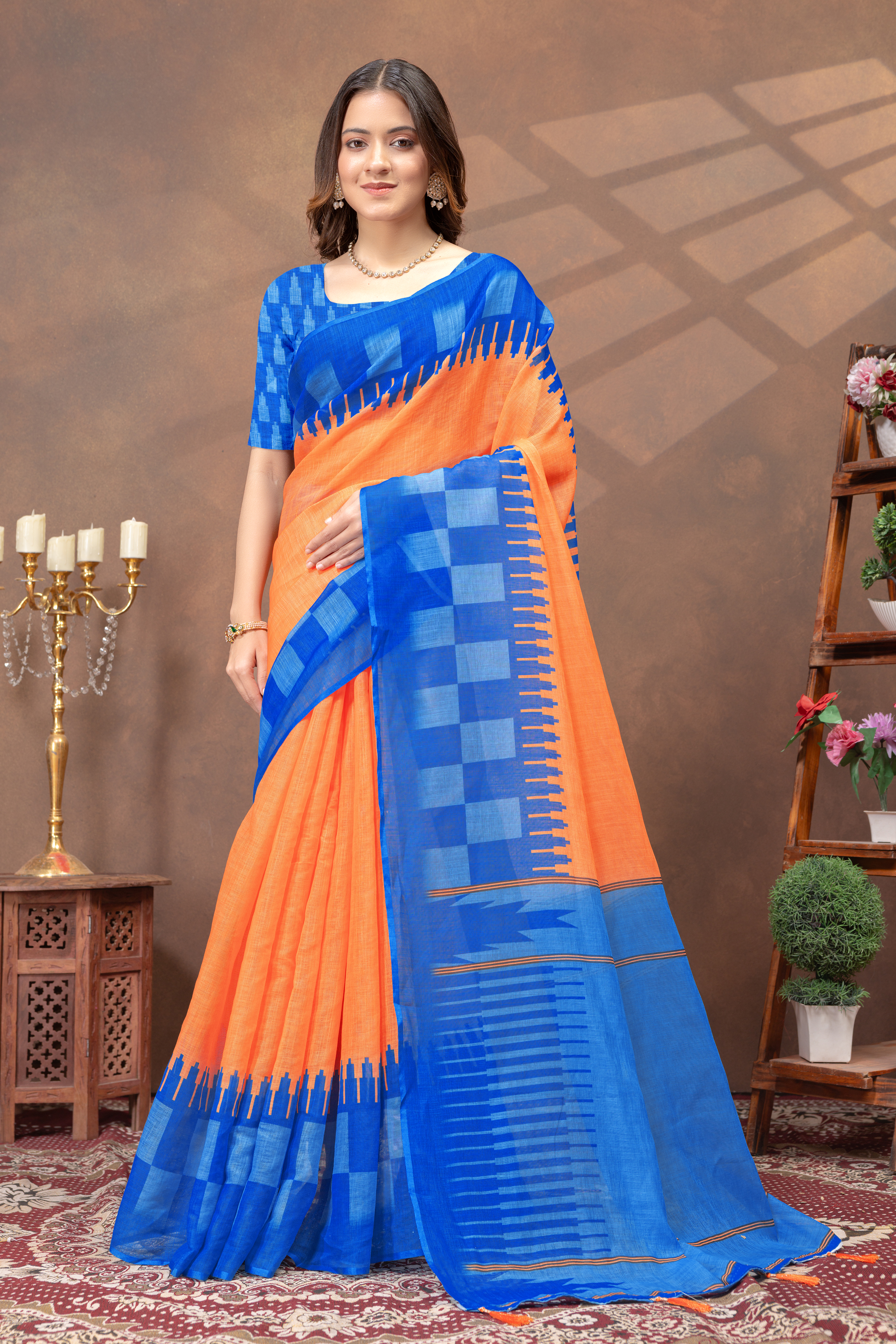
Peach Multicolor Linen Cotton Saree with Paisley Pallu offers another useful comparison because its pallu is named explicitly. A Puanchei should not be assumed to have a pallu simply because a saree catalogue places both garments in an ethnic-wear section.
Mizo Puan and Puanchei Are Not Generic Saree Names: What Should Responsible Descriptions Include?
A responsible description should name the textile, identify its construction, provide measurements and explain the intended way of wearing it. The description should distinguish heritage terminology from contemporary adaptation and should avoid claiming that one commercial version represents every Mizo garment.
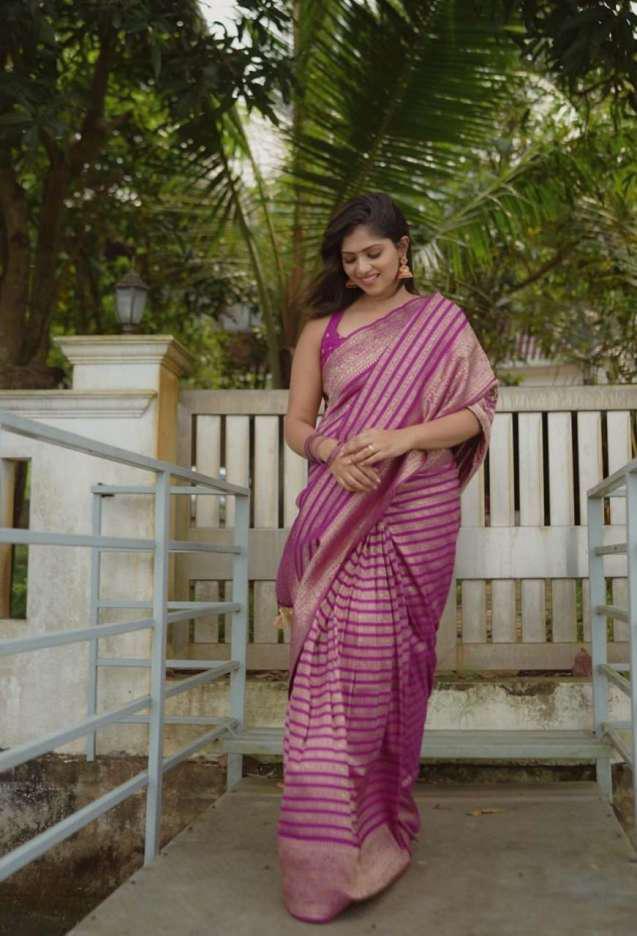
Useful product information can include the region associated with the textile, whether the motifs are woven or printed, the cloth width, the closure or wrapping method, the recommended blouse or top and the care routine. A clear photograph should show the full textile, its edges and at least one appropriate styling method.
Writers should also avoid turning cultural identity into a trend adjective. Phrases such as "tribal-inspired" or "North-East style" can be vague and flatten several distinct communities into one category. Naming Mizoram, Mizo weaving, puan or Puanchei where accurate gives readers information that a generic style label can't provide.
Mizo Puan and Puanchei Are Not Generic Saree Names because terminology carries history, technique and belonging. A saree remains a rich and varied Indian garment category, but respect for sarees doesn't require absorbing every other wrapped textile into it. Accurate names allow both traditions to be appreciated on their own terms.
Common Questions About Mizo Puan, Puanchei and Saree Terminology
Is Puanchei the same as a saree?
No, Puanchei is a recognised Mizo festive wrap or garment, while a saree is a separate Indian unstitched drape with its own construction and wearing method. Puanchei generally has a more compact wraparound form and does not depend on a saree-style pallu and pleats.
What is the difference between Mizo Puan and Puanchei?
Mizo Puan is a broader term for traditional Mizo woven cloths or wraps, while Puanchei refers to a more specific and culturally recognised festive form. Exact usage can vary by context, so descriptions should identify the particular garment, weave and intended use.
How is Puanchei usually worn?
Puanchei is generally worn as a wraparound lower garment or skirt-like textile, often with a coordinated upper garment. The precise arrangement can vary by garment design, occasion and contemporary styling, but it is not automatically worn with the pleats and shoulder pallu associated with a saree.
What patterns are associated with Puanchei?
Puanchei is often recognised through structured bands, geometric forms and strong colour contrasts created through weaving. Colour alone does not establish that a textile is Puanchei because many Indian textiles share similar red, black, white, green or multicoloured palettes.
Can Puanchei be worn for a modern occasion?
Yes, Puanchei can be styled with a simple blouse, shirt, coordinated top, restrained jewellery or contemporary layering. A redesigned skirt or draped outfit should be described as an adaptation or Puanchei-inspired design when it no longer follows the traditional garment form.
What should I check before buying a Puanchei online?
Check the textile name, fibre, woven or printed construction, length, width, fastening method and care instructions before buying. Confirm that the product photographs show the garment in an appropriate wrap or styling rather than implying that every rectangular textile is a standard saree.