

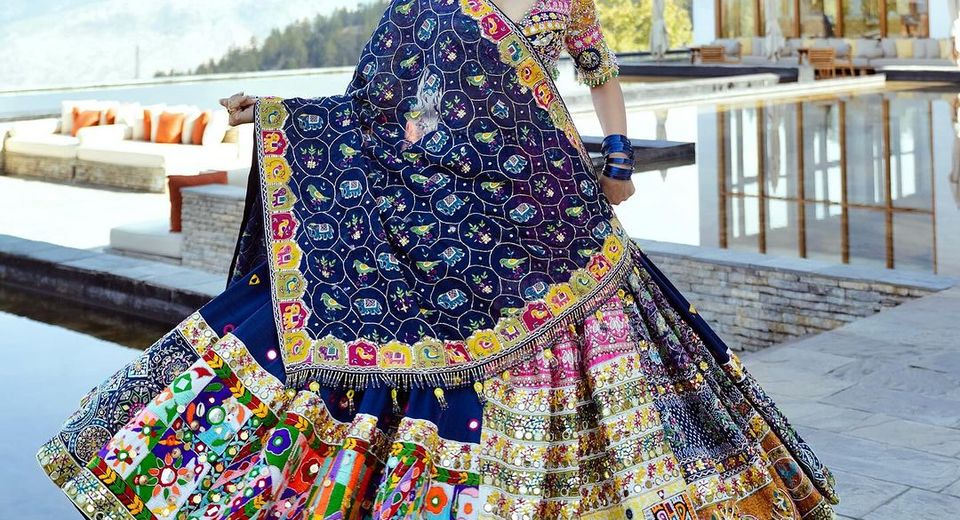
Meghalaya Wedding Lehenga Ideas Inspired by Traditional Textiles begin with the state's living weaving traditions rather than with a generic "North-East" print. Khasi, Jaintia and Garo communities have distinct garments, textile practices and visual languages, including the Khasi Jainsem, the Garo dakmanda and the use of eri silk, locally known as ryndia. A lehenga can respectfully borrow their colours, textures, drape logic and handcrafted character without pretending to be a traditional Meghalaya garment.
The most successful look usually combines one regional reference with a familiar wedding silhouette. For example, an eri-silk dupatta can soften a structured skirt, a red-and-black border can recall Garo dressing, or a woven stole can replace a heavily embellished veil. The result feels personal, culturally informed and comfortable enough for several hours of rituals, photographs and movement.
What makes Meghalaya textiles distinctive?
Meghalaya textiles are distinctive because they're closely connected to community identity, climate, daily use and handwoven construction. Cotton, eri silk and other natural fibres are valued for their texture and practicality, while colour placement and garment shapes often carry more meaning than surface sparkle.
The Khasi Jainsem is a two-piece draped garment traditionally associated with Khasi women. The Jainsem's layered form creates an important styling lesson for a lehenga: volume and visual interest can come from the arrangement of fabric, not only from embroidery. A long, fluid dupatta worn over both shoulders can echo that sense of layered dressing more convincingly than a narrow, pinned scarf.
Garo clothing offers a different visual direction. The dakmanda, a wraparound lower garment, is often recognised through strong horizontal bands, geometric arrangements and high-contrast colour combinations. A lehenga border with repeated stripes, a broad waistband or a dupatta with a graphic edge can translate that rhythm into contemporary wedding wear.
Ryndia, or eri silk, is another useful point of reference. Eri silk has a soft, slightly textured surface and a matte-to-gently lustrous appearance rather than the sharp shine of synthetic satin. Eri silk is also associated with a non-violent silk tradition because the moth is generally allowed to emerge before the fibre is collected, although sourcing and production practices can vary.
How can Meghalaya Wedding Lehenga Ideas Inspired by Traditional Textiles become wedding-ready?
Meghalaya Wedding Lehenga Ideas Inspired by Traditional Textiles become wedding-ready when the textile reference is balanced with a silhouette suited to the ceremony, weather and movement. A bride or wedding guest can choose a traditional-textile influence for one major element and keep the remaining pieces uncomplicated.
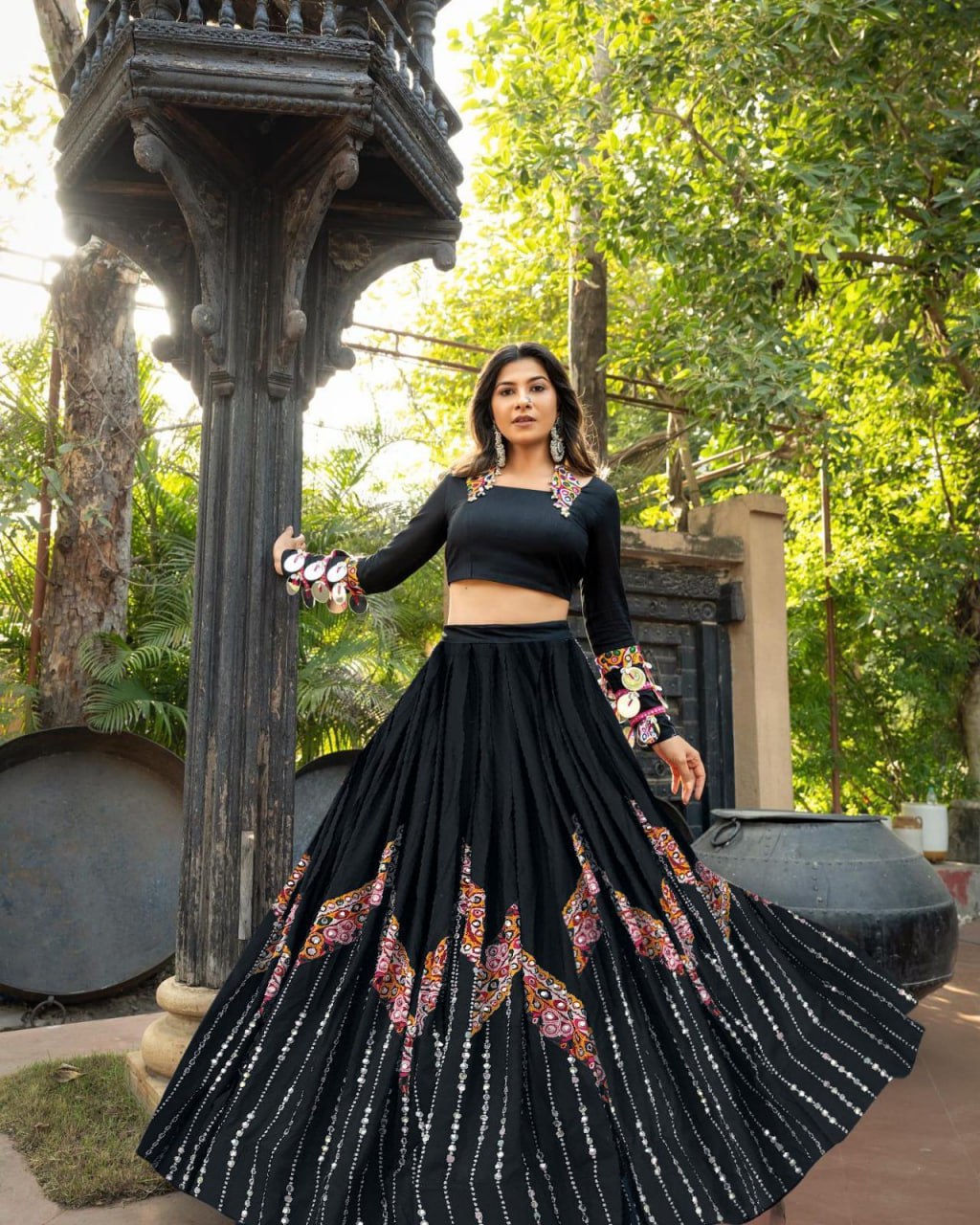
A full lehenga set can use a plain or lightly woven skirt with a textile-led dupatta. This approach gives the eye somewhere to rest and allows a border, shoulder drape or blouse panel to carry the cultural reference. A skirt with six to eight kalis provides graceful movement without the weight of a heavily layered can-can underskirt.
A second option is a conventional embroidered lehenga with a handloom-inspired blouse. A square neckline, elbow-length sleeves and a broad woven-looking yoke can suggest the structure of Khasi and Garo garments while remaining recognisably contemporary. Avoid copying ceremonial motifs when their meaning is uncertain; geometric bands, texture and colour are safer design starting points than sacred or community-specific symbols.
For a bridesmaid, a textile-inspired dupatta is often the most practical choice. A bridesmaid can coordinate with the bridal palette while wearing a simpler skirt and blouse, then reuse the dupatta with a sari or salwar suit after the wedding. The Bridesmaid Lehengas Under 5500 collection is useful for comparing accessible silhouettes before adding a handloom stole or locally sourced accent.
Which colours work for a Meghalaya-inspired wedding lehenga?
Deep red, black, white, ivory, indigo, rust, mustard and forest green work particularly well for a Meghalaya-inspired wedding lehenga because they create the strong contrast and earthy depth associated with many woven textiles. A carefully limited palette looks more authentic than combining every bright shade at once.
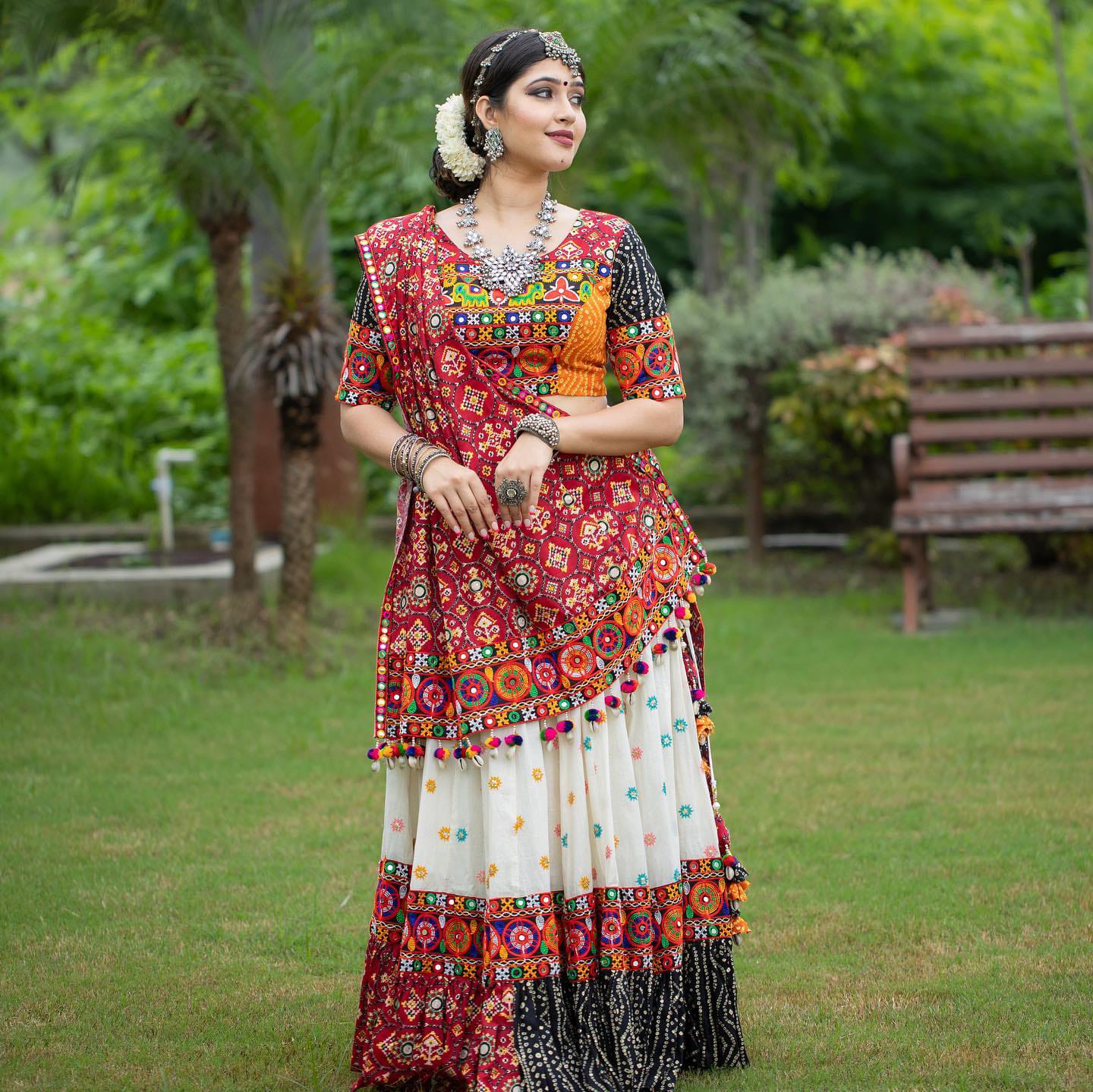
Red with black gives a dramatic Garo-influenced direction. Try a vermilion skirt with a black blouse, then add a red-and-black border or a narrow geometric trim. This combination suits evening receptions, but black should be used thoughtfully if the family considers it unsuitable for a particular ritual.
Ivory with red or black gives a quieter interpretation for a daytime ceremony. An ivory skirt, a red blouse and a textured stole can look ceremonial without relying on dense gold zari. Festive White Lehenga Choli with Mirror Work Design demonstrates how a pale base can support reflective detail, although a Meghalaya-inspired styling plan would benefit from a woven-looking border and more restrained accessories.
Indigo, teal and forest green suit guests who want colour without bridal red. Pair a deep green skirt with an ivory blouse and a rust dupatta, or combine indigo with mustard for a graphic but wearable result. The Exclusive Blue Traditional Navratri Lehenga Choli can provide an useful starting point for a blue-led palette, especially when the jewellery and footwear remain warm-toned.
Pink and coral can work for a softer bridesmaid look, particularly when balanced by black, brown or natural beige. Pink Lehengas Under 4000 with 50% Discount gives budget-conscious shoppers a way to begin with the colour story and add textile character through a contrasting dupatta, belt or handwoven bag.
Which fabrics translate Meghalaya's textile character most effectively?
Eri silk, cotton-silk blends, handloom cotton and matte silk translate Meghalaya's textile character most effectively because their surfaces show weave, softness and natural irregularity. Highly reflective polyester satin can look attractive, but it doesn't communicate the same tactile quality and may photograph as costume-like beside a handwoven accessory.
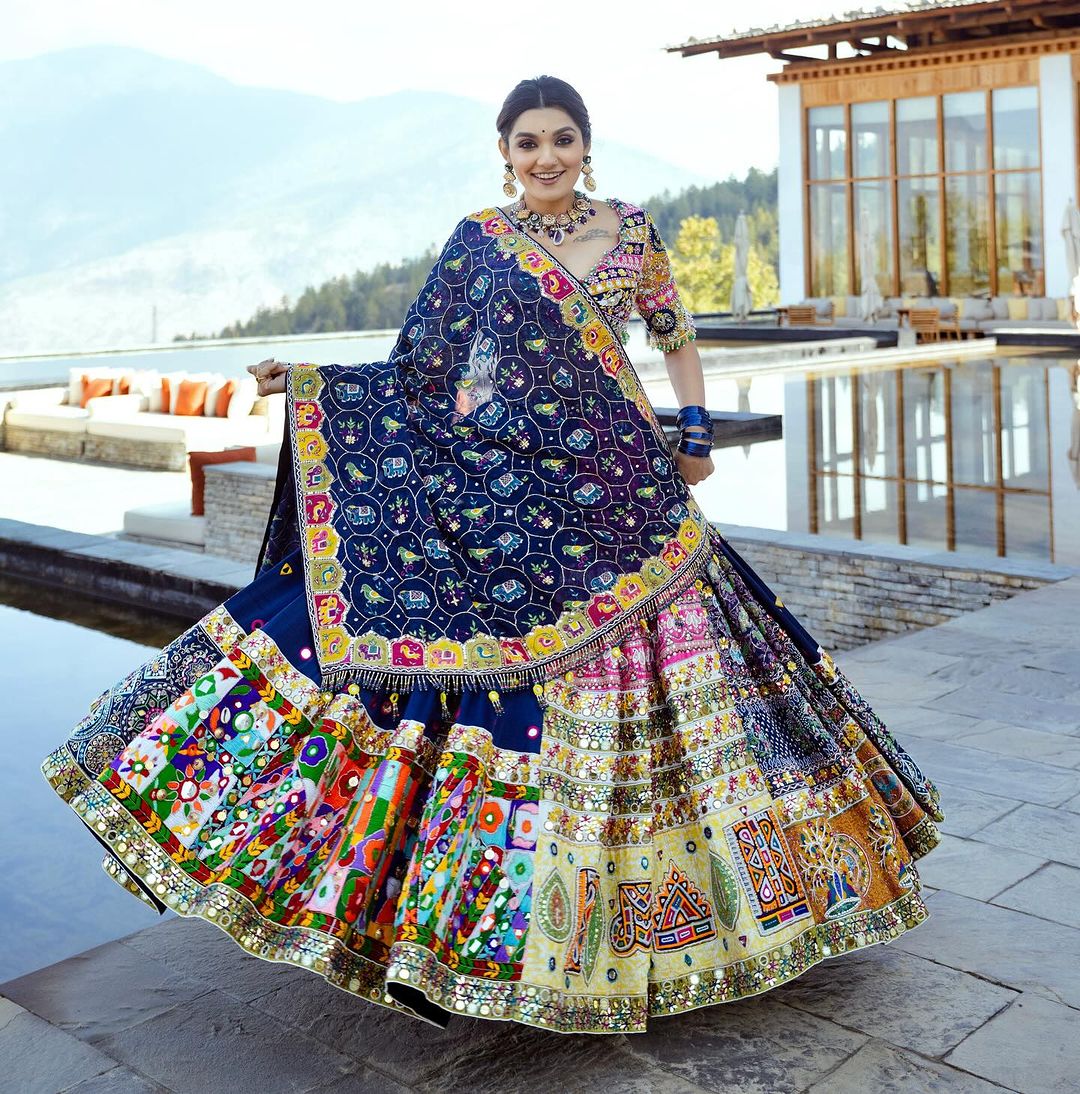
Ryndia and silk blends
Eri silk works especially well for a dupatta, blouse or skirt panel because its gentle texture adds depth without demanding heavy embellishment. A silk-blend lehenga can also be easier to tailor than pure handwoven fabric when the skirt requires multiple panels. Designer Threadwork Silk Lehenga Choli Set with Dupatta is an example of how silk and threadwork can supply occasion-ready structure; style such a set with a matte stole instead of adding more glitter.
Silk Lehengas Under 3000 may suit shoppers who want the look of silk within a controlled budget, but check the fibre composition before purchase. "Silk" in a product description can refer to a blend, art silk or a synthetic imitation, and each option behaves differently in heat, drape and care.
Cotton and muslin
Muslin cotton is a strong choice for a daytime Haldi ceremony because it's breathable, light and less restrictive than dense brocade. Multicolor Mirror Work Muslin Cotton Lehenga Choli Set and Vibrant Mirror Work Muslin Lehenga Choli Set Online show how cotton and mirror work can create festive impact without a thick, heavily padded skirt.
Mirror work should be concentrated on the blouse, border or dupatta when comfort matters. Small mirrors can catch sunlight beautifully, but a very dense arrangement adds weight and may snag against jewellery, seating or a partner's outfit during rituals.
Net and layered fabrics
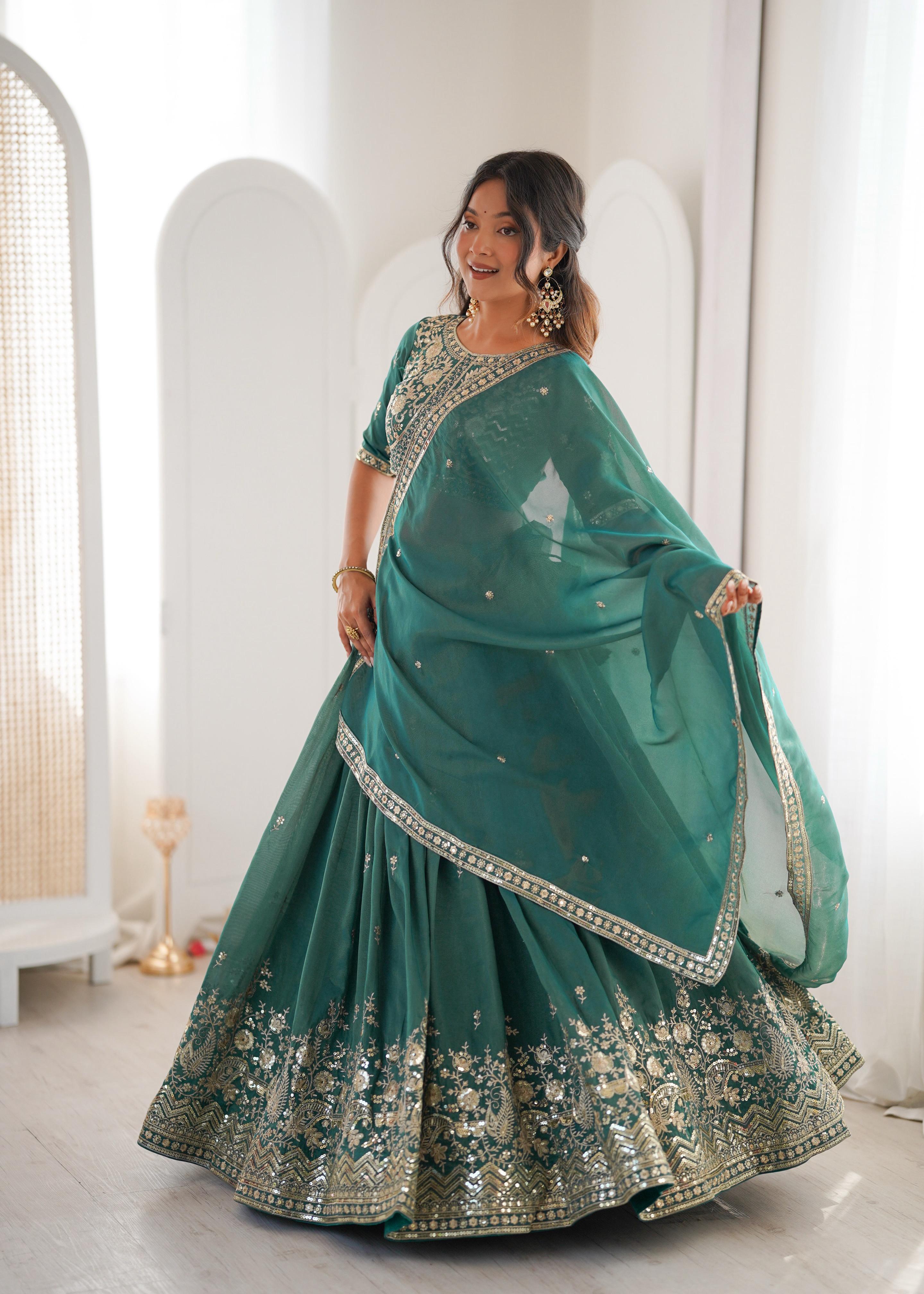
Net works best as a controlled overlay rather than as the only expression of textile heritage. Mint Embroidered Lehenga Set with Net Dupatta for Women brings a lighter, contemporary direction; replacing or layering the net dupatta with a textured cotton or eri-silk stole can make the outfit feel more connected to Meghalaya's material culture.
How should a lehenga be styled for different wedding functions?
A Meghalaya-inspired lehenga should be styled differently for the Haldi ceremony, wedding rituals and reception because each function demands a different level of weight, movement and formality.
Haldi ceremony
A muslin cotton or light cotton-silk lehenga is the most practical choice for a Haldi ceremony. Yellow, turmeric, ivory, coral and green create a natural palette, while a short blouse sleeve and a dupatta pinned at one shoulder keep the outfit manageable during dancing and ritual participation.
Haldi Lehengas Under 5500 is an useful budget reference for comparing bright, washable-looking styles, but no embellished garment should be assumed to be stain-proof. Keep a spare blouse or dupatta available, and avoid wearing an irreplaceable handwoven textile where turmeric paste will be applied directly.
Wedding ceremony
A silk, eri-silk blend or structured matte lehenga suits the main wedding ceremony because the fabric holds pleats and photographs with more depth. Use a longer dupatta over the head or both shoulders, and choose a blouse with secure hooks, a comfortable lining and enough ease for sitting cross-legged.
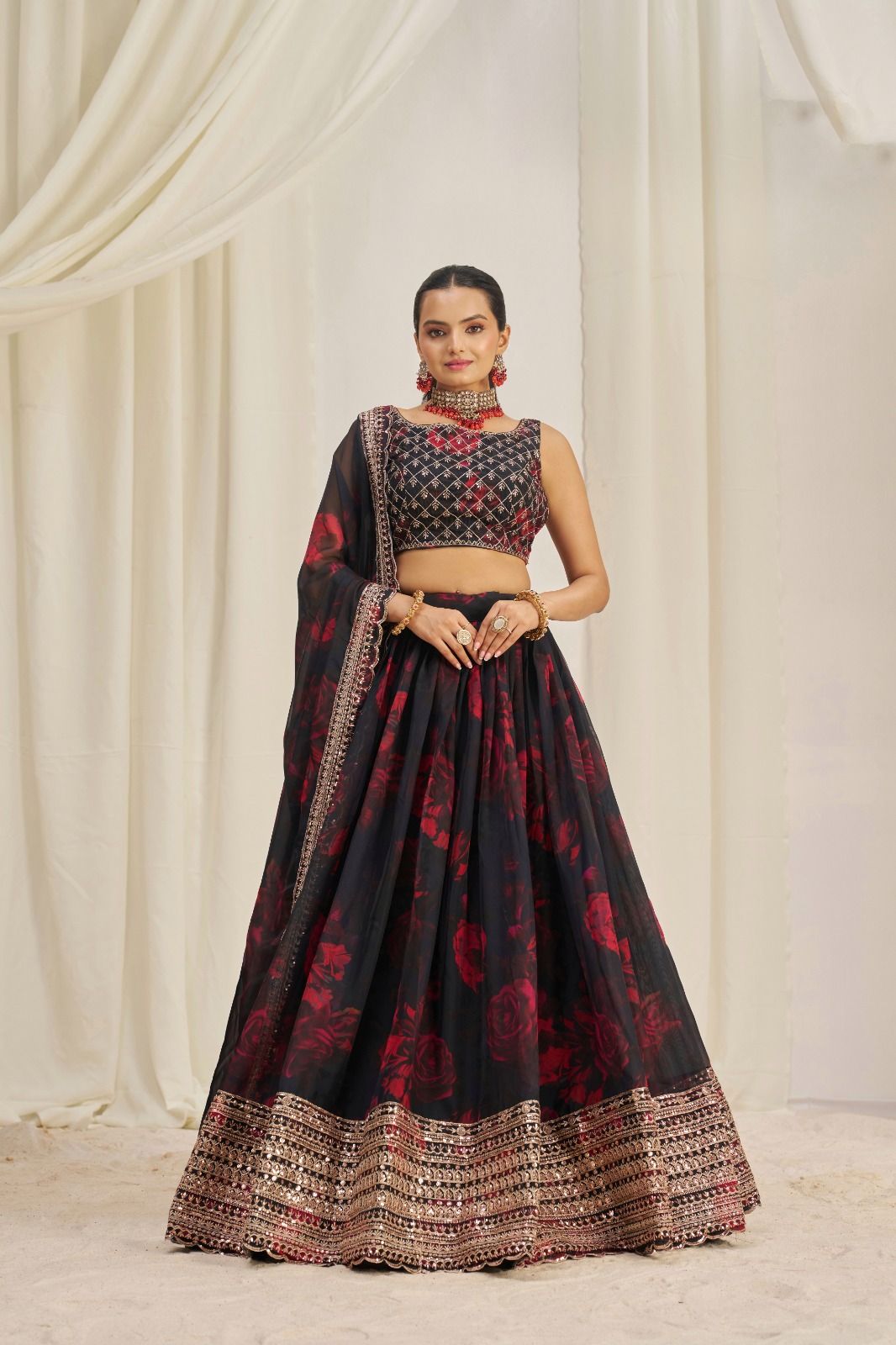
Black Wedding & Festive Wear Designer Lehenga can inspire a strong red-and-black or black-and-ivory direction, but bridal styling should follow family expectations about colour. Gold-toned jewellery, oxidised silver, or a combination of both can work; the better choice depends on whether the textile palette leans warm, cool or earthy.
Reception
A reception permits more surface decoration and a lighter drape because movement, photographs and dining take priority over ritual modesty. Stylish Multicolor Butter Silk Lehenga Choli Set gives an useful example of a colourful evening direction, while restrained jewellery and a woven clutch prevent a multicolour outfit from appearing visually crowded.
How can you add Meghalaya references without turning them into costume?
Respectful styling uses identifiable textile qualities and acknowledges their regional origin instead of treating Meghalaya as a vague decorative theme. A single well-researched reference is stronger than a collection of random "tribal" prints, oversized motifs and unrelated accessories.
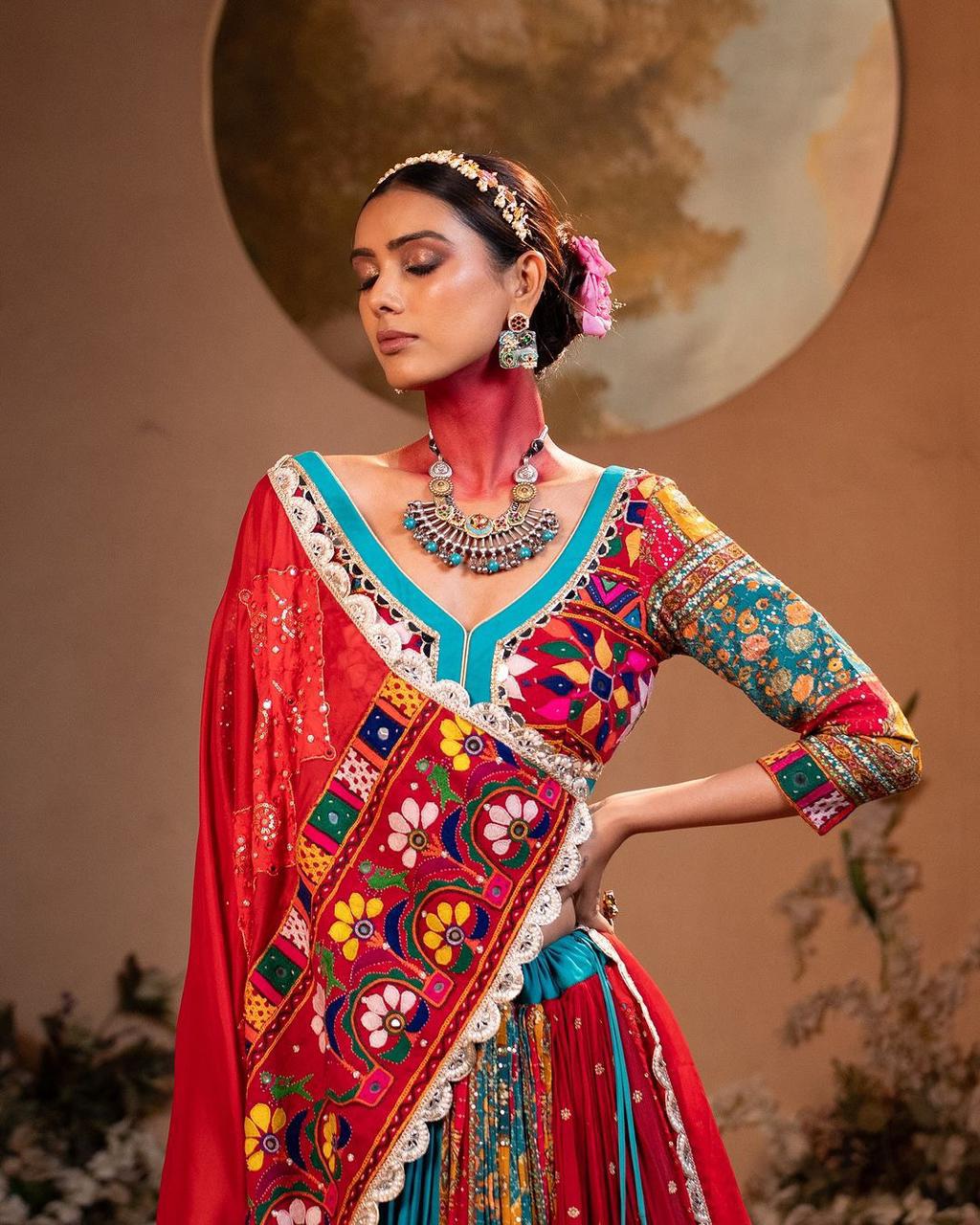
Start with a named influence: Khasi Jainsem-inspired layering, Garo dakmanda-inspired horizontal bands or an eri-silk texture. Then choose one visible translation, such as a broad border, a shoulder drape or a textured stole. Avoid labelling a factory-made geometric print as an authentic Khasi or Garo motif unless the maker brings that information.
Accessories can support the story through material rather than imitation. Silver earrings, bead strands, cane or bamboo details, a woven potli and hand-finished bangles create a tactile connection without copying a community garment. Keep the jewellery proportionate to the blouse neckline and avoid wearing every regional reference in one look.
When purchasing a handwoven textile, ask who made it, where it was woven, what fibre it contains and how it should be washed. A transparent description is more valuable than a broad claim about "tribal heritage." If a textile comes from a specific artisan group or cooperative, crediting that source in a wedding note or social caption is a small but meaningful gesture.
What should you check before buying the lehenga?
Check fibre content, lining, skirt weight, waist construction, return measurements and care instructions before buying a Meghalaya-inspired wedding lehenga. These details determine whether a beautiful outfit remains comfortable and usable after the ceremony.
- Measure the waist and length: Leave enough allowance for sitting, and confirm whether the stated skirt length includes the waistband and hem.
- Inspect the lining: Cotton or soft rayon lining is more comfortable for long events than rough net touching the skin.
- Estimate the weight: Heavy zari, dense sequins and many mirrors can make a lehenga tiring after four or five hours.
- Check colour transfer: Rub a hidden section with a damp white cloth before wearing a dark red, indigo or black garment with a pale blouse.
- Confirm the dupatta width: A 36-to-44-inch width is generally easier for a head drape or two-shoulder arrangement than a narrow scarf.
- Read the care label: Eri silk, zari, mirror work and handwoven cotton may require dry cleaning, gentle spot treatment or separate storage.
A budget collection can still support a thoughtful look when the styling doesn't overclaim its origins. Net Lehengas Under 4500 with 51% Discount may be suitable for a lighter reception outfit, while a more expensive handwoven stole can supply the distinctive textile element. This split approach often costs less than commissioning an entirely custom ensemble and gives each piece more chances to be worn again.
How can one lehenga be worn again after the wedding?
One lehenga becomes more reusable when the skirt, blouse and dupatta are chosen as separate wardrobe pieces rather than as a permanently matched set. A textured dupatta can be worn with a plain sari, the blouse can pair with a high-waisted skirt, and the lehenga skirt can work with a short kurta or simple shirt for a festive dinner.
For a Meghalaya-inspired wardrobe, invest in the most distinctive material where it will receive the most wear. A handwoven stole or eri-silk dupatta often offers better repeat value than a fully embellished skirt because it can be styled with salwar suits, palazzo sets and sarees. Store silk and embellished pieces folded in breathable cotton, away from direct sunlight and damp wardrobes.
A considered lehenga does more than reproduce a colour palette. It connects a modern wedding silhouette with the layered dressing, tactile surfaces and regional textile knowledge of Meghalaya while leaving room for the original traditions to remain distinct.
Questions About Meghalaya-Inspired Wedding Lehengas
What is a Meghalaya-inspired wedding lehenga?
A Meghalaya-inspired wedding lehenga is a contemporary lehenga that draws from named Meghalaya textile traditions such as the Khasi Jainsem, Garo dakmanda or eri silk. The outfit should use related textures, layering or colour arrangements without claiming to be a traditional community garment.
Which fabric is best for a Meghalaya-inspired bridal lehenga?
Eri silk, cotton-silk blends, handloom cotton and matte silk are strong choices because they show texture and remain more breathable than heavy synthetic satin. Eri silk works particularly well for a dupatta or blouse, while cotton and muslin suit daytime functions such as a Haldi ceremony.
Can I wear black in a Meghalaya-inspired wedding lehenga?
Black can work in a Meghalaya-inspired wedding lehenga, especially when paired with red, ivory, rust or metallic accents. Confirm the family's colour preferences before choosing black for the main ceremony, because wedding customs vary between families and communities.
How can I reference Khasi or Garo textiles respectfully?
Use a specific reference, such as Jainsem-inspired layering or dakmanda-inspired horizontal bands, and describe the influence accurately. Avoid calling a mass-produced geometric print an authentic Khasi or Garo motif unless the maker can verify its origin and meaning.
Are mirror-work lehengas suitable for a Meghalaya-inspired wedding?
Mirror-work lehengas are suitable when mirror work is treated as a contemporary festive detail rather than presented as a traditional Meghalaya textile technique. Muslin cotton with limited mirror work is especially practical for a Haldi ceremony or daytime celebration.
How do I care for an eri-silk or handwoven dupatta?
Follow the maker's care label because eri silk and handwoven textiles vary in finish and dye stability. Keep the dupatta away from perfume and moisture, spot-test dark colours, avoid harsh detergents and use professional cleaning when zari, mirrors or delicate embroidery are present.





