Meghalaya Textile Patterns & Traditional Fashion Inspiration begins with three living cultural traditions: Khasi, Jaintia and Garo dress. Each community uses clothing, colour, proportion and ornament differently, so a meaningful modern interpretation requires more than copying a geometric print. Meghalaya's humid hills, matrilineal societies, handloom practices and ceremonial customs have all influenced how textiles are made and worn.
The most useful lesson for a contemporary wardrobe is to study the visual grammar behind the garments. Look for strong borders, restrained but deliberate colour contrasts, checks, stripes, nature-inspired forms and generous drapes. Then adapt those ideas through a saree, blouse, stole or layered festive outfit without claiming that an up-to-date printed garment is an original Khasi, Jaintia or Garo textile.
What makes Meghalaya Textile Patterns & Traditional Fashion Inspiration distinctive?
Meghalaya Textile Patterns & Traditional Fashion Inspiration is distinctive because it combines practical clothing shapes with recognisable regional colour and motif systems. Khasi, Jaintia and Garo communities don't share one interchangeable textile identity; each has its own clothing vocabulary, ceremonial context and local variations.
Traditional Meghalaya clothing often communicates community, gender, age and occasion through construction as much as surface decoration. A wrap, shawl or skirt may be woven for movement and climate, while a border, fastening or contrasting panel provides visual structure. That balance is valuable for current Indian dressing because it creates clothes that look detailed without requiring heavy embellishment from edge to edge.
Many visual references from the region include stripes, checks, repeated bands and small-scale geometric arrangements. These motifs can appear especially effective on a saree border or blouse panel, where the eye can read the repeat clearly. A large all-over print may look attractive, but a carefully placed border often communicates the influence more convincingly.
Which communities shape Meghalaya's traditional textile language?
Khasi, Jaintia and Garo communities shape Meghalaya's traditional textile language through different garments, weaving practices and ceremonial uses. Treating these traditions separately is the first step towards respectful styling.
Khasi and Jaintia clothing references
Khasi and Jaintia women are commonly associated with layered draped garments, including the Jainsem and related forms of wrapped dress. The Jainsem is made from two pieces of cloth arranged around the body, and its structure creates a composed, architectural silhouette rather than a tightly tailored one. Jaintia dress traditions also include distinctive wraps and shawls used according to context.
For contemporary styling, the useful elements are the layered proportion, the controlled fall of fabric and the use of a contrasting shoulder or upper-body layer. A saree worn with a square-neck blouse and a separate shawl can echo that sense of layering without pretending to reproduce a Jainsem. A linen or cotton saree with a firm border is generally better for this approach than a very fluid, high-shine fabric.
Garo textile references
Garo textile traditions are strongly associated with garments such as the dakmanda, a wraparound lower garment traditionally worn by Garo women. Garo clothing can feature saturated red, black, white and yellow combinations, as well as stripes, checks and rhythmic geometric bands.
A contemporary wardrobe can borrow the idea of a strong lower-body pattern while keeping the rest of the outfit quiet. A patterned saree with a plain blouse, or a solid kurta with a bold woven stole, preserves visual balance. The goal isn't to place every known motif into one outfit; the goal is to let one regional design principle lead.
Which motifs, colours and materials are useful sources of inspiration?
Geometric repeats, horizontal bands, checks, stripes and nature-linked forms are useful sources of Meghalaya-inspired styling, while cotton, handloom linen and eri silk offer practical material references. These elements can be translated into current ethnic wear without reducing Meghalaya to a single "tribal print."
Red, black, white and yellow are especially prominent in many visual references associated with Garo clothing, although actual textiles vary by community, maker and purpose. Khasi and Jaintia-inspired palettes may also use deep blue, green, maroon, cream and muted natural shades. A practical colour formula is one dark anchor, one light ground and one clear accent. For example, charcoal with ivory and rust feels grounded; cream with indigo and mustard feels more relaxed.
Geometry works best when scale is considered. Small checks and narrow stripes suit blouses, borders and everyday sarees. Medium repeated bands create a stronger festive presence. Oversized motifs need more empty space around them, especially when used on a saree pallu or shawl. Mixing a large motif with another equally busy print can hide the structure that makes the reference attractive.
Material changes the meaning of a pattern. Mal cotton gives a print a soft, breathable and informal character. Linen cotton creates a crisp surface that makes borders look precise. Silk adds light reflection and ceremony, but a glossy surface can make a geometric design appear more decorative than handloom-inspired. Eri silk, widely associated with Assam and the wider Northeast, is valued for its warm, textured handle and can support a quieter, more tactile interpretation.
How can these patterns be adapted to sarees without losing balance?
Meghalaya-inspired saree styling works best when one visible feature carries the regional reference and the remaining elements provide restraint. The feature may be a geometric border, a tribal-inspired repeat, a contrasting pallu or a carefully selected colour combination.
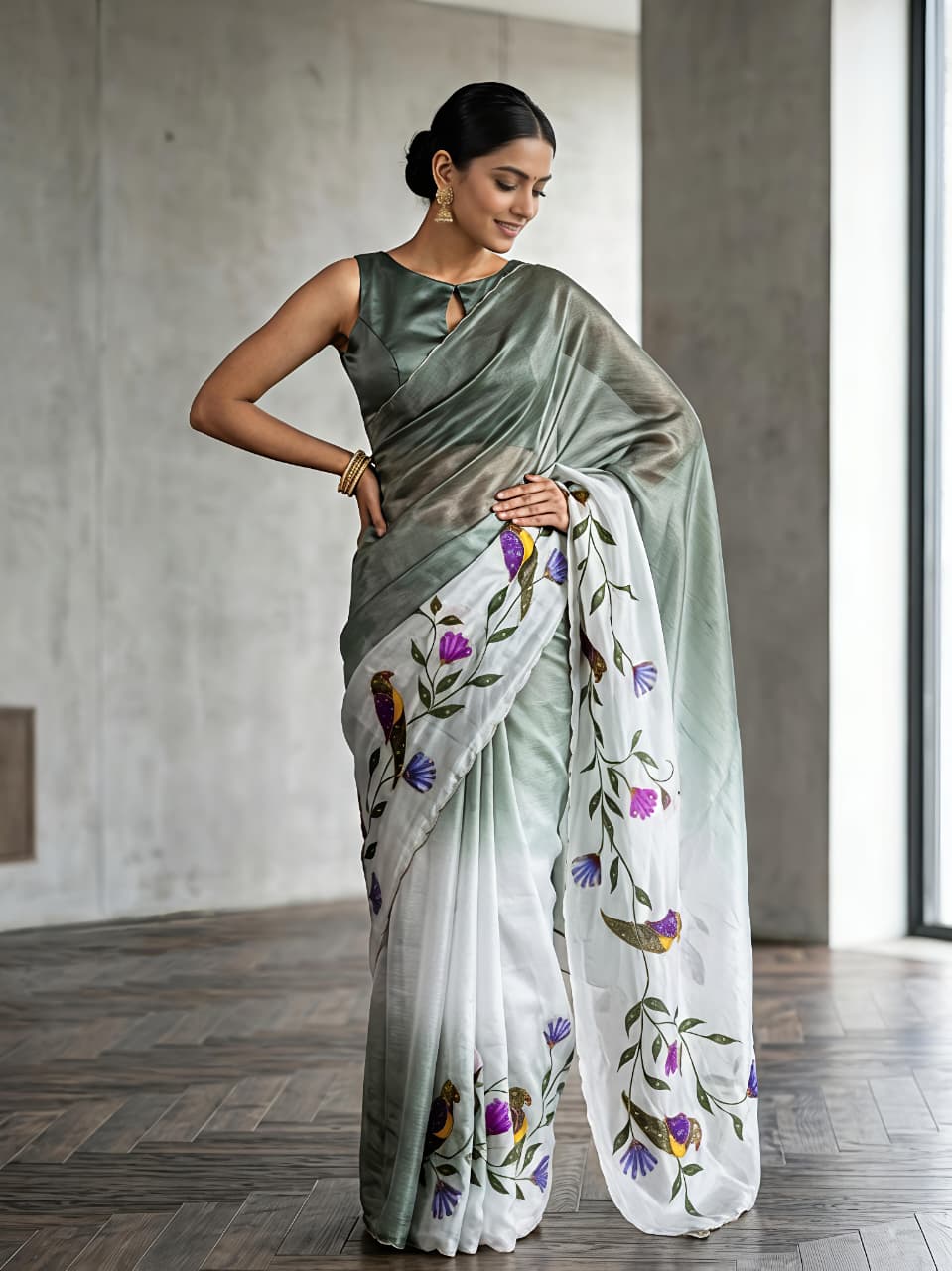
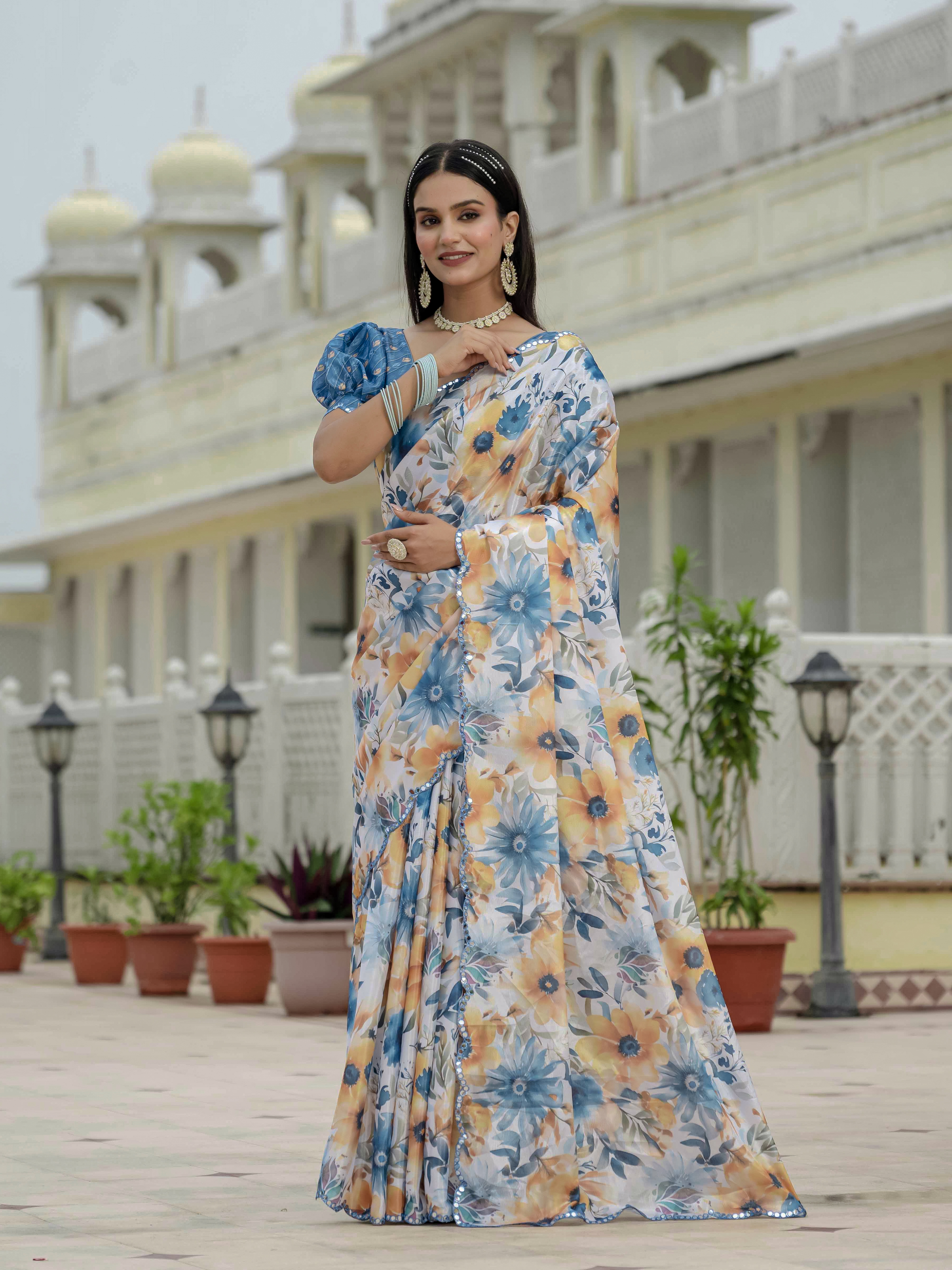
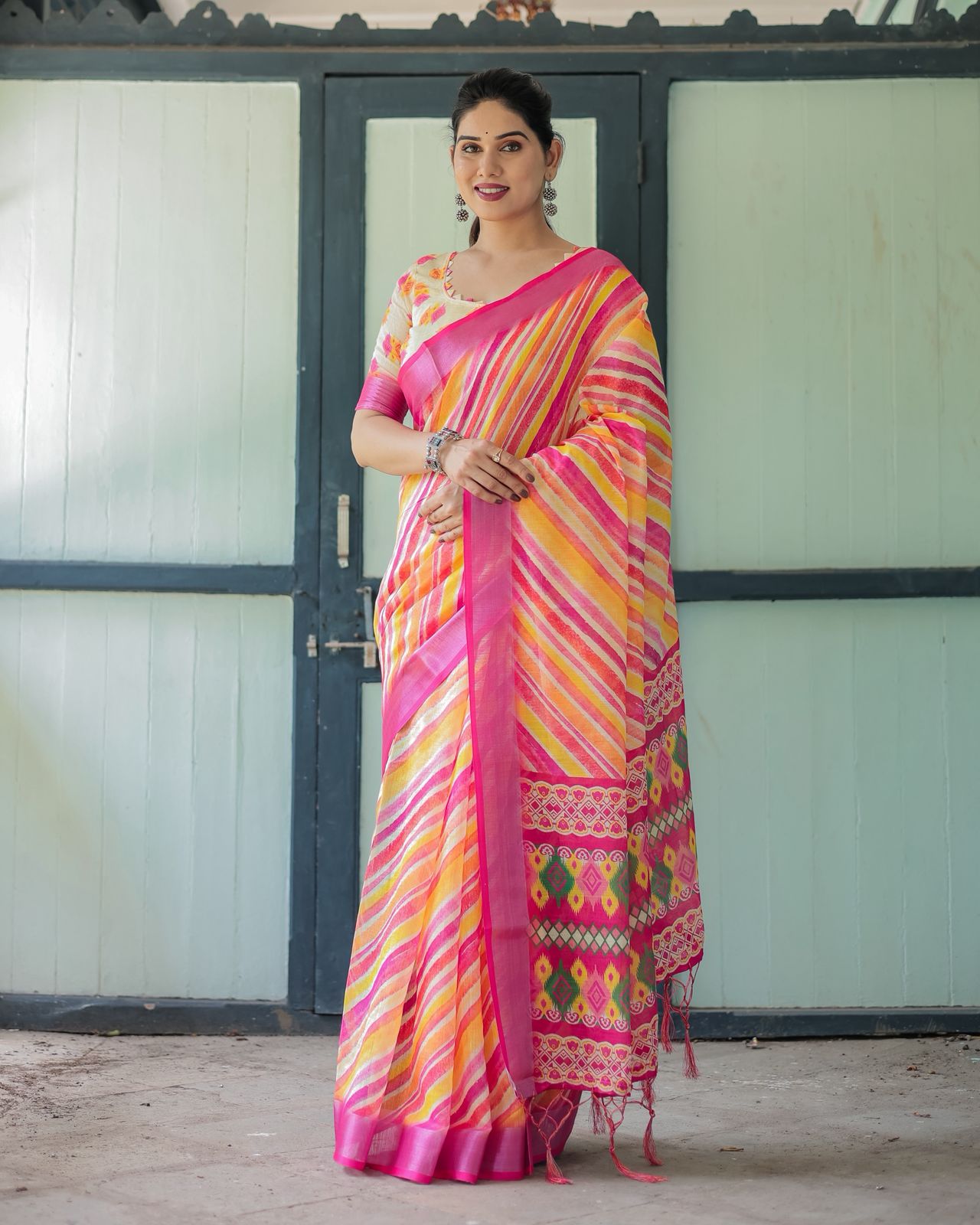
For daytime gatherings, Printed Mal Cotton Saree With Designer Pallu by VARNAVI demonstrates how a breathable cotton base and a visually stronger pallu can divide attention across the drape. Pair a saree with a plain blouse in a colour taken from the pallu rather than introducing another print. A low bun, woven earrings and flat sandals keep the outfit connected to its textile focus.
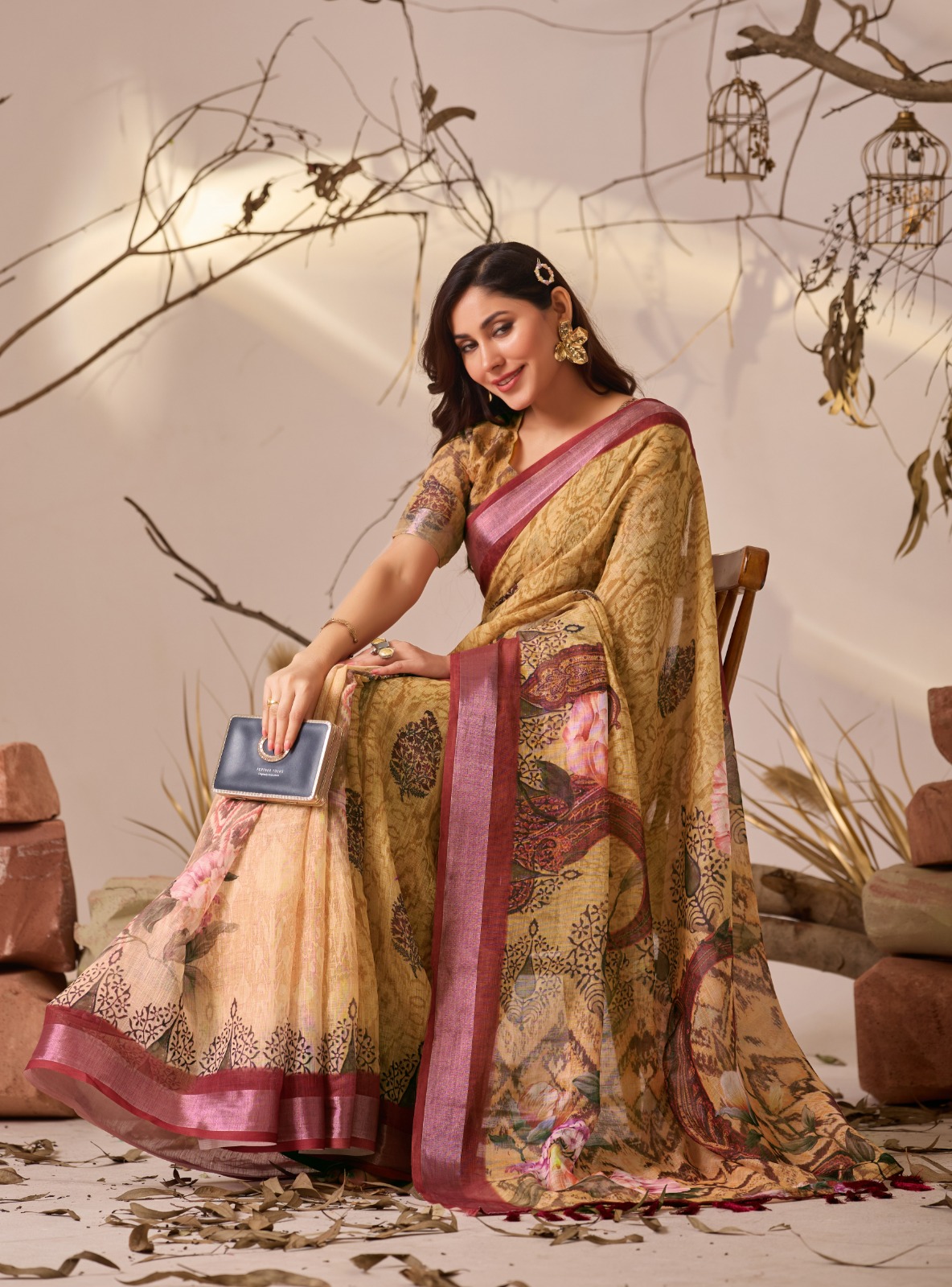
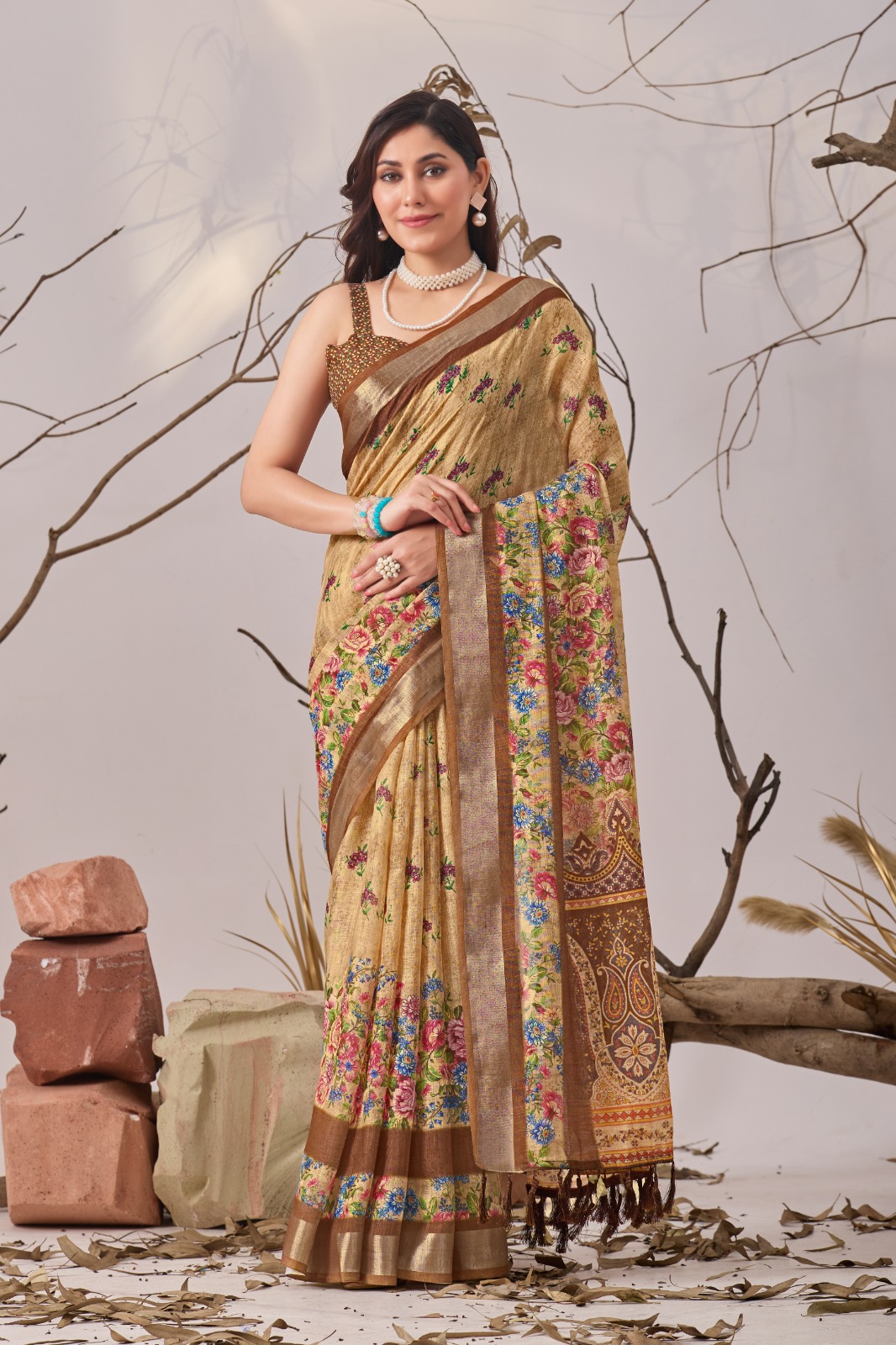
Traditional Beige Multicolor Printed Saree offers an useful neutral-ground approach. Beige allows maroon, mustard, black, rust or teal motifs to remain visible without making the entire outfit feel intense. Choose one of those colours for the blouse and keep jewellery in oxidised silver or matte metal when the print already contains several tones.
Maroon Mal Cotton Ethnic Saree With Blouse from VARNAVI can be styled around the depth of maroon rather than overloaded with additional red. A black or cream blouse, a narrow metal belt and a compact shoulder bag can make the drape suitable for a cultural event or an evening gathering. If the blouse is already patterned, use a simple drape so the border doesn't become visually crowded.
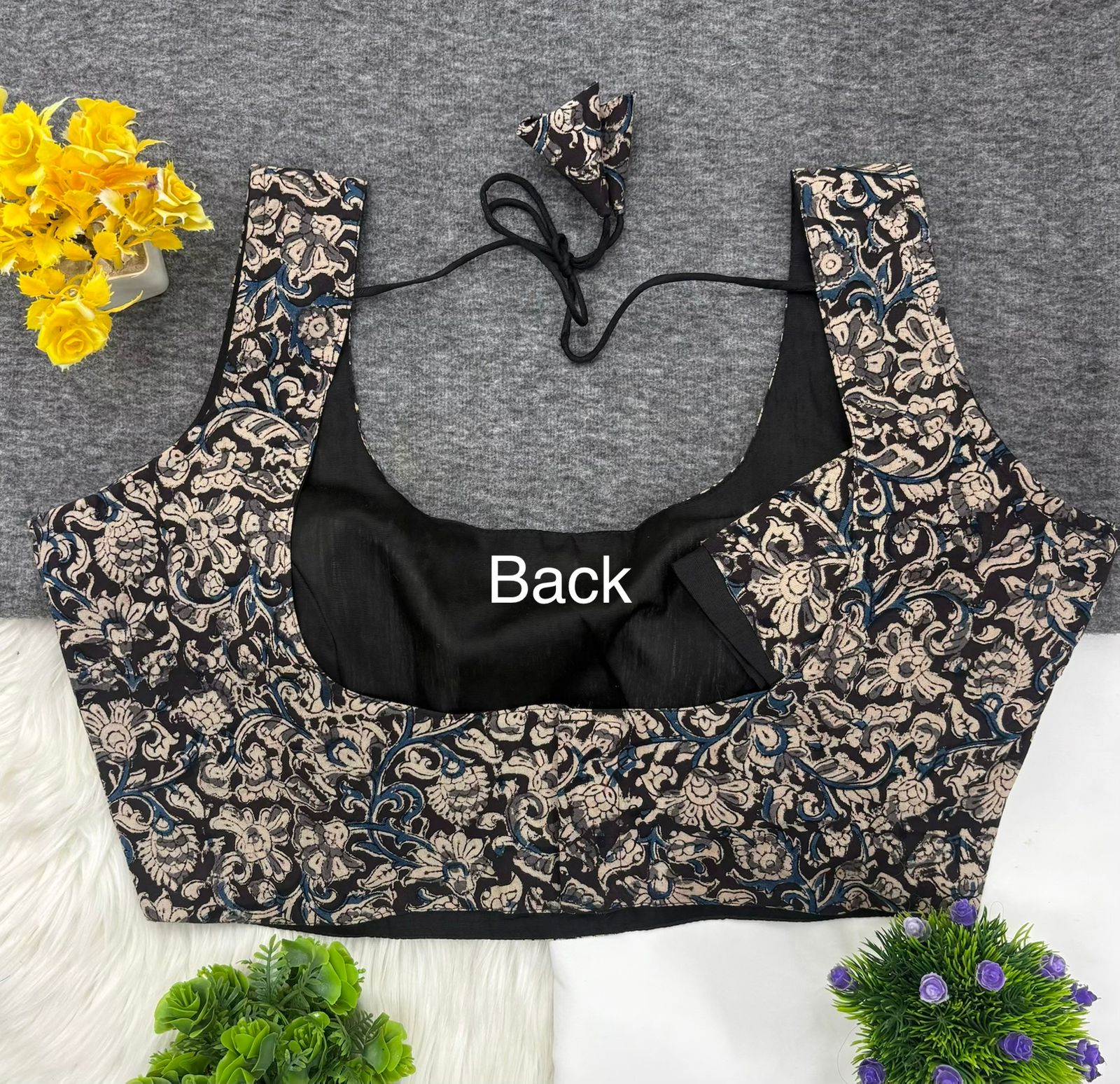
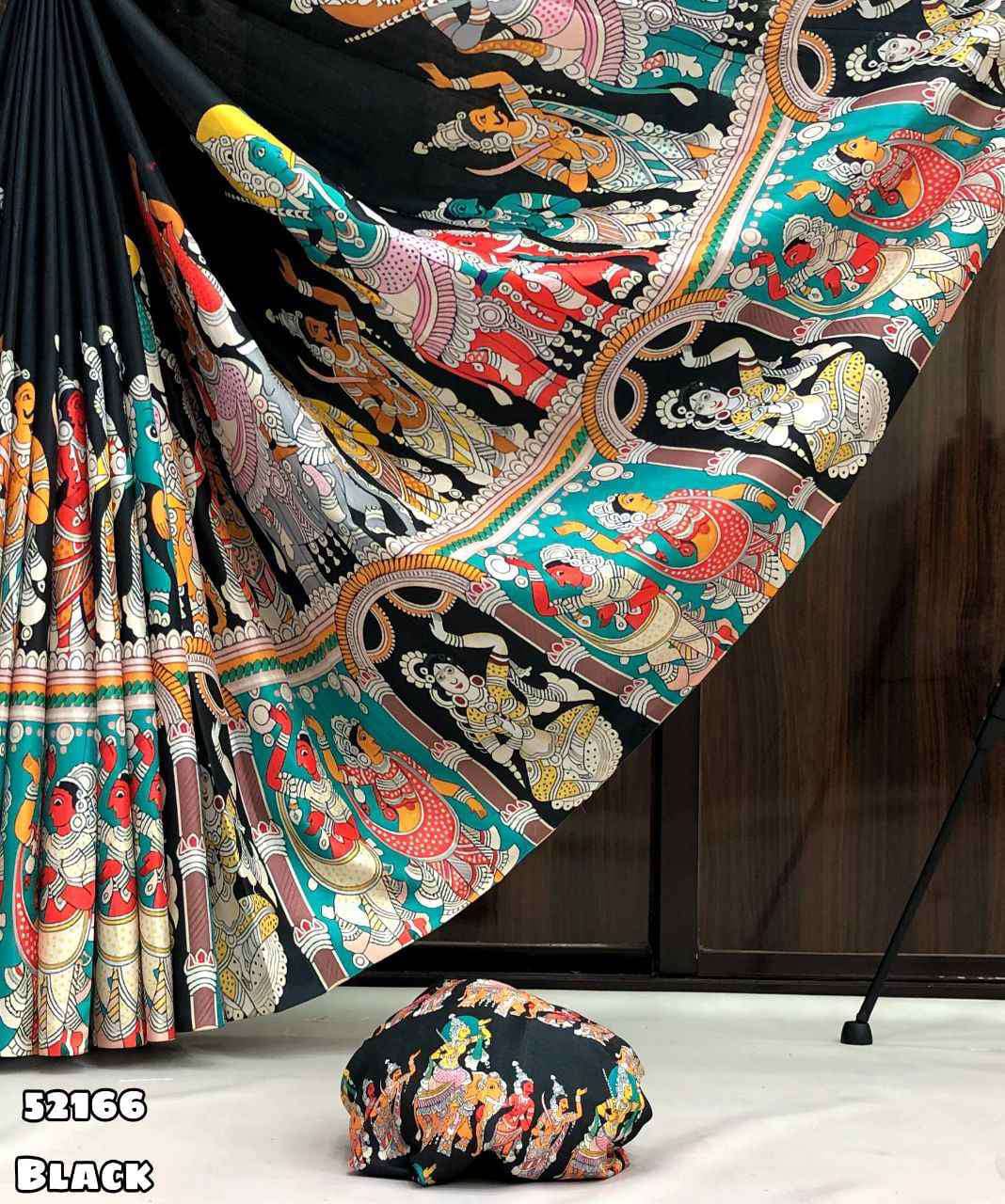
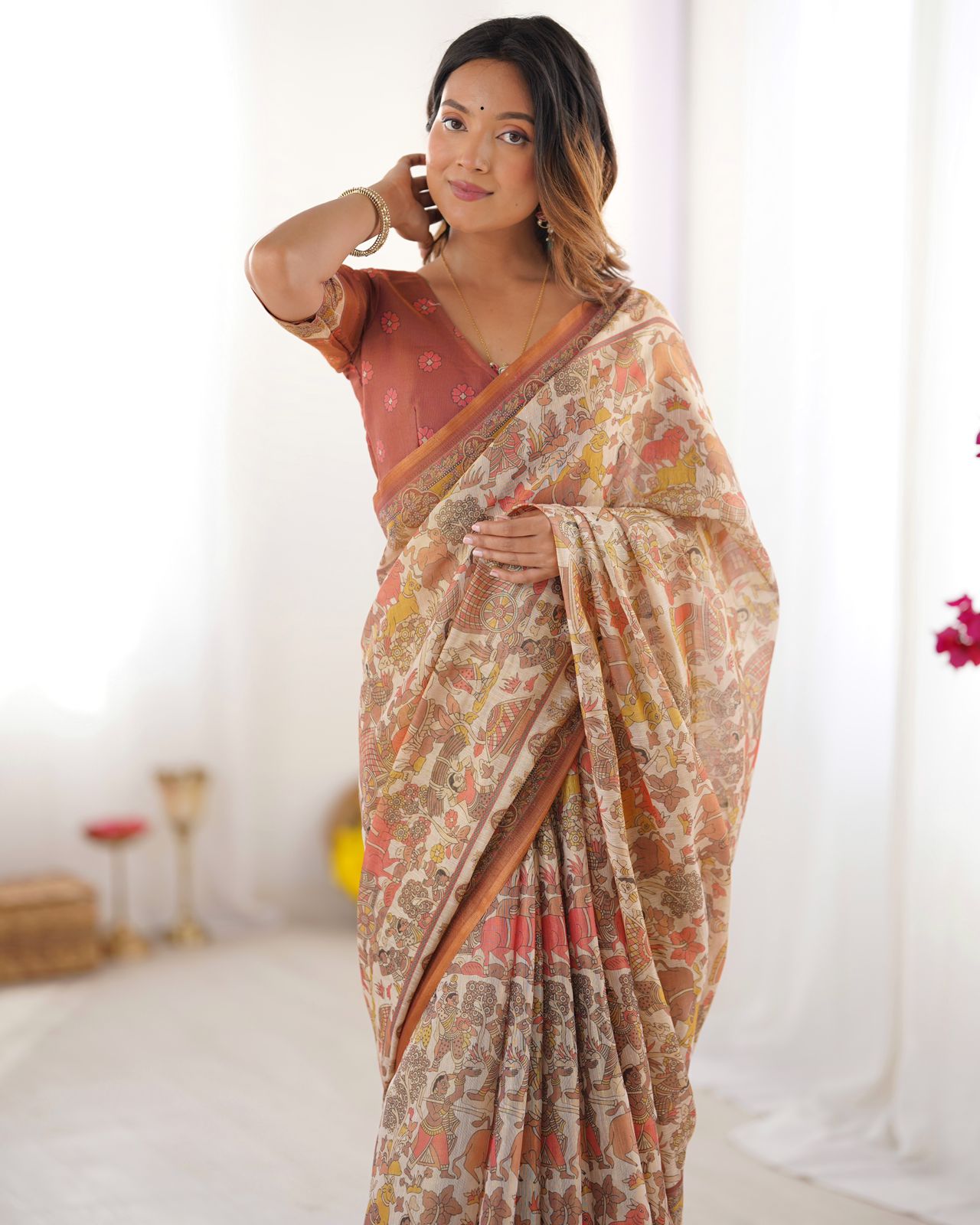
Beige Kalamkari Printed Linen Cotton Saree Online illustrates a different route: a natural-looking base combined with narrative motifs. Kalamkari isn't a Meghalaya textile tradition, so it should not be labelled as one. The saree can still be used in a broader Northeast-inspired wardrobe by selecting a blouse in forest green, indigo or muted red and keeping the styling language focused on craft, texture and earthy colour.
How should blouses and accessories support the textile reference?
Blouses and accessories should repeat one colour, texture or proportion from the saree instead of competing with every pattern at once. A simple square neckline, a three-quarter sleeve or a structured high neck can reinforce the layered quality associated with Meghalaya clothing references.
Black Traditional Kalamkari Print Silk Saree needs a different treatment from cotton. Silk already supplies sheen, so a matte blouse in black, ivory or a muted jewel tone can prevent excessive shine. A narrow woven belt, wooden bangles or brushed silver earrings may add texture without turning the outfit into a costume interpretation.
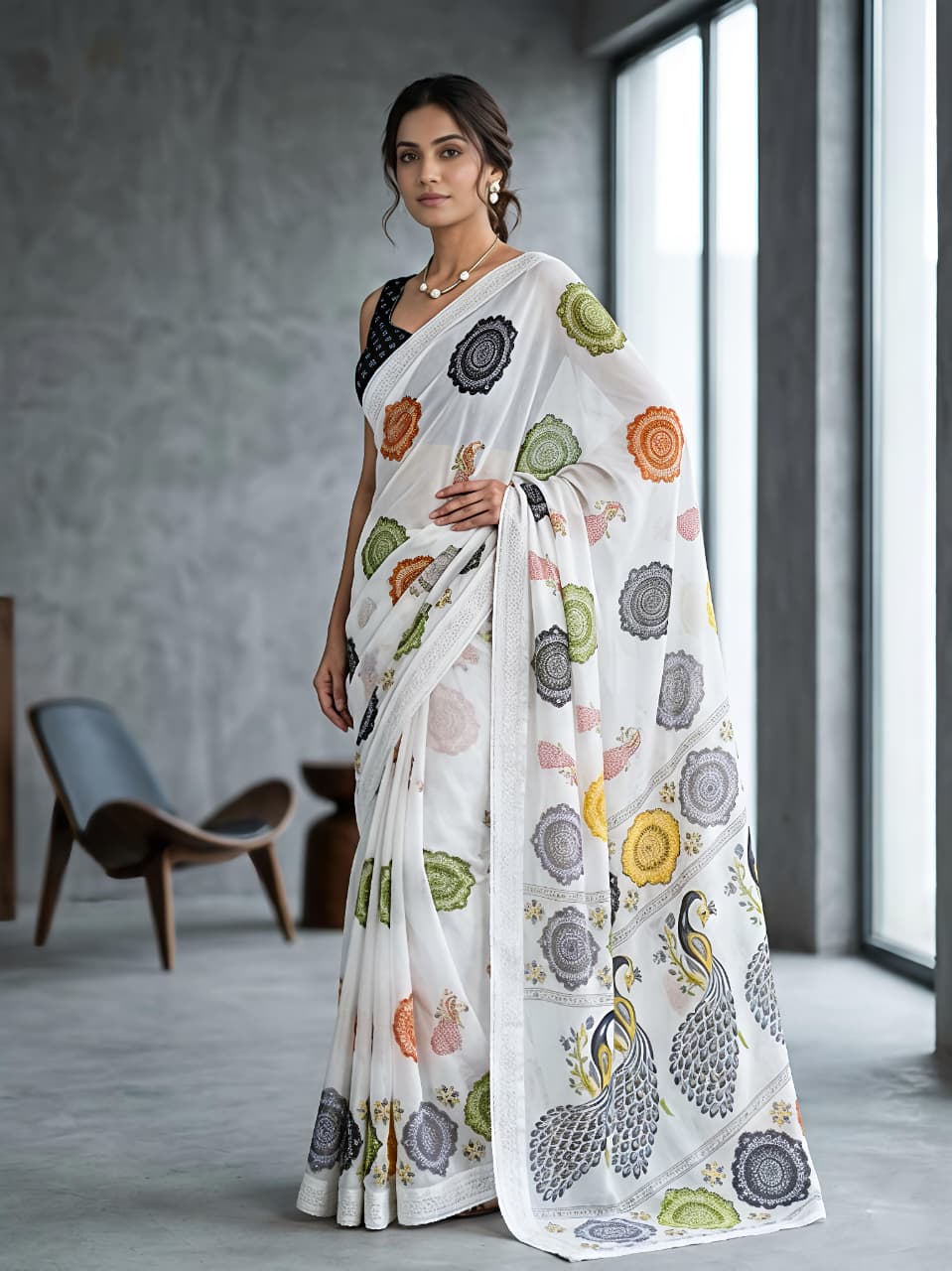
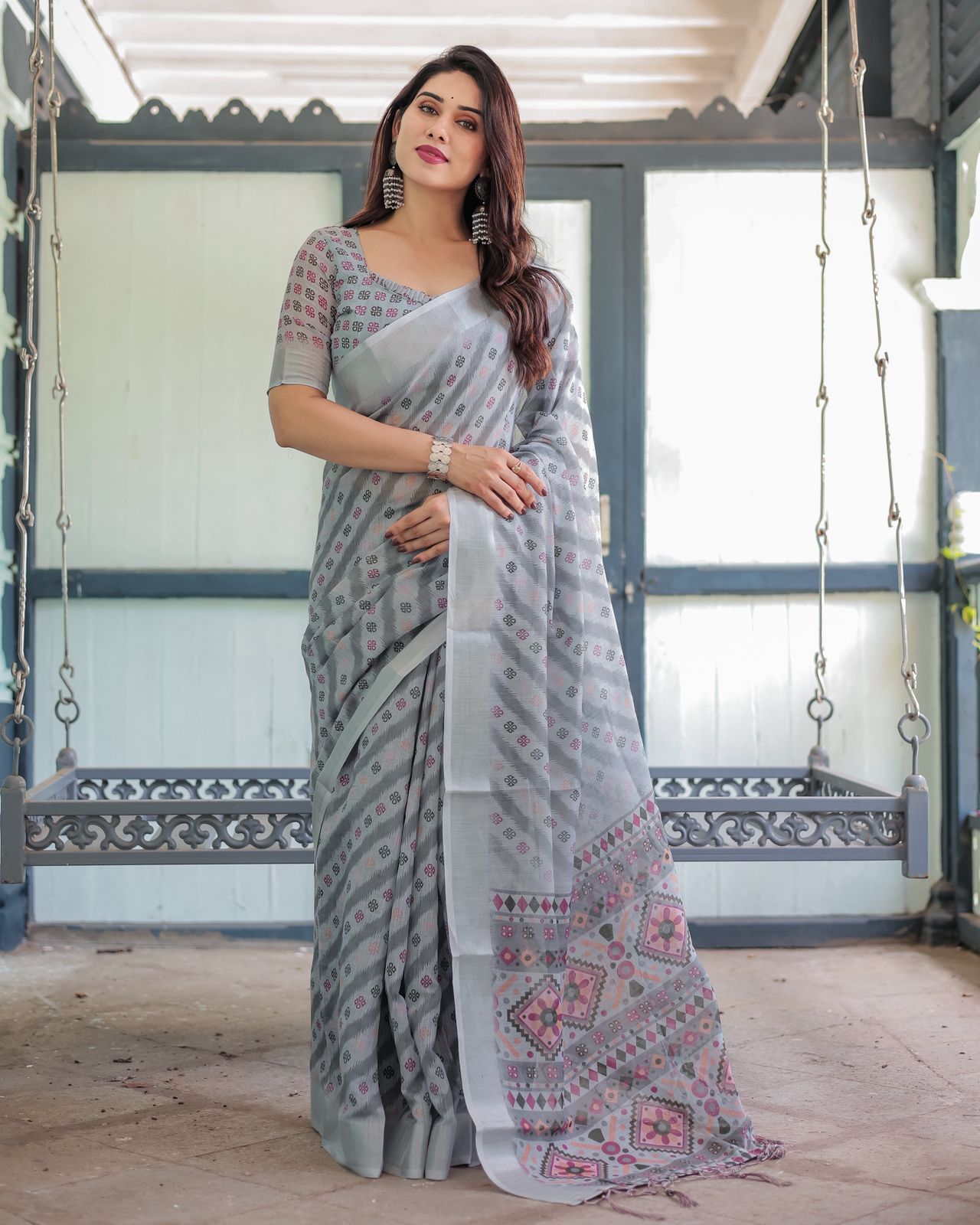
Soft White Linen Saree with Grey Tribal Design gives a restrained base for a more deliberate accessory choice. A grey blouse creates tonal continuity, while a rust, mustard or indigo blouse introduces one controlled contrast. Textured earrings, a handwoven potli or a plain shawl can reinforce the tactile quality of linen.
Accessories should be chosen with cultural care. A generic geometric earring isn't automatically a traditional Khasi, Jaintia or Garo ornament, and a commercially labelled "tribal" accessory may have no connection to Meghalaya. Use descriptive language such as geometric, handwoven or craft-inspired unless the maker brings a specific community, location and technique.
What can contemporary wardrobes learn from Meghalaya garment construction?
Current wardrobes can learn three practical principles from Meghalaya garment construction: layering, adaptable wrapping and deliberate contrast. These principles improve comfort and proportion even when the final outfit isn't a direct traditional reproduction.
Layering is useful in air-conditioned venues and changing weather. Wear a sleeveless blouse under a lightweight jacket or drape a cotton stole across one shoulder. A structured outer layer can echo the visual effect of a shawl while making the outfit easier to wear at work, exhibitions or travel events.
Wrapping creates flexibility. A saree pallu can be pinned higher for movement, left longer for ceremony or arranged over both shoulders for a shawl-like finish. A long stole can also be folded into a narrower band, allowing the outfit to shift from relaxed daytime dressing to a more formal dinner setting.
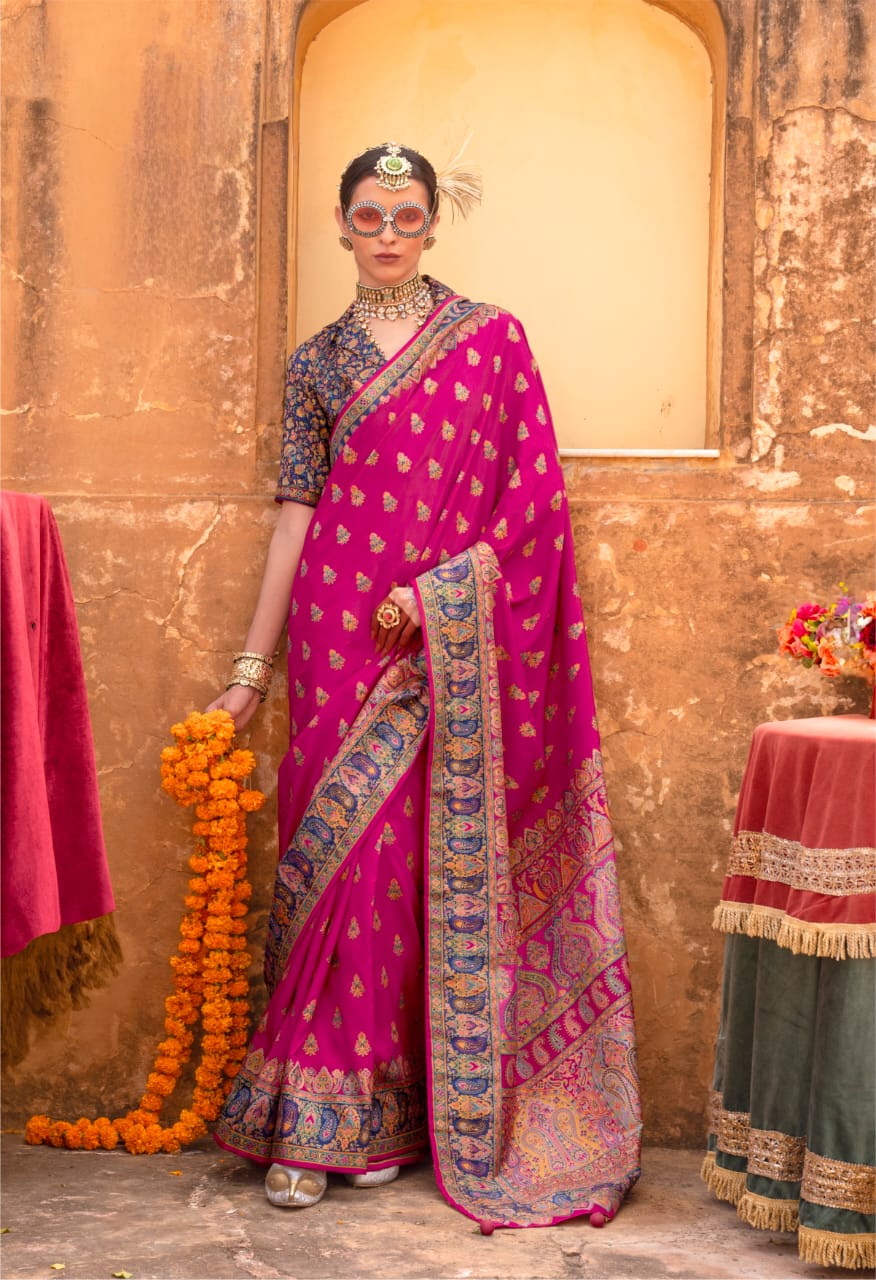
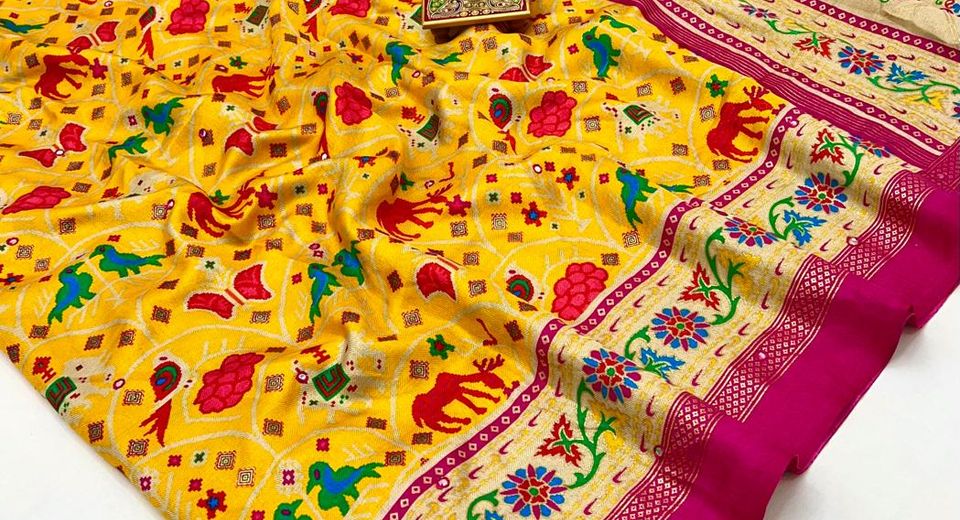
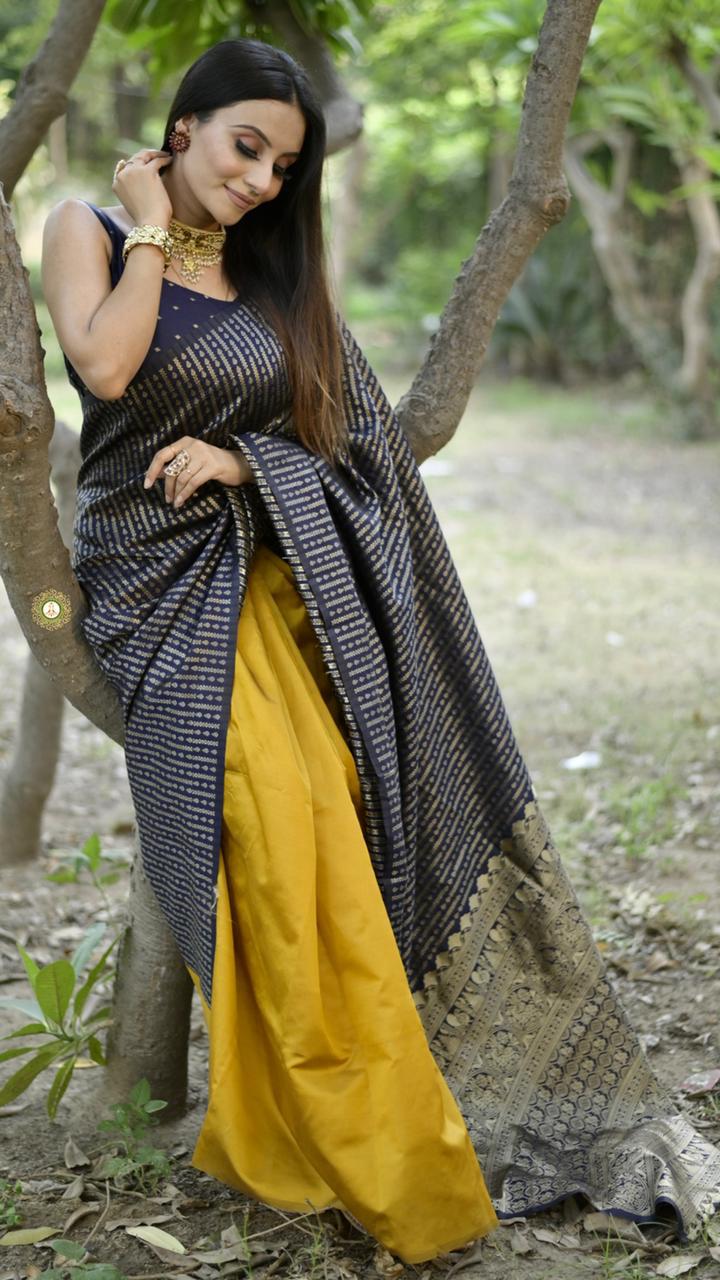
Contrast gives a simple outfit identity. Mustard with black, ivory with grey, maroon with cream and teal with beige are practical combinations that can be repeated through the blouse, footwear or bag. Mustard Yellow Patola Print Soft Pashmina Silk Designer Saree shows how a warm yellow base can become the main colour statement; pair it with a black, deep green or unprinted maroon blouse rather than adding another elaborate pattern.
Varnavi Beige Teal Heritage Art Handloom Linen Saree gives an useful example of a quiet, heritage-oriented palette. Beige gives breathing room, while teal supplies definition. Such a combination works with a tucked-in blouse for a contemporary silhouette, or with a conventional blouse and low pleats for a more traditional presentation.
How can shoppers distinguish inspiration from authentic regional textile?
Shoppers can distinguish inspiration from an authentic regional textile by checking the maker's information about location, community, fibre, technique, artisan group and provenance. A product described only as "tribal print" or "Northeast style" doesn't prove a Meghalaya origin.
Ask whether the fabric is handwoven or mill-made, whether the pattern is woven or printed, and whether the seller names a specific Meghalaya community or craft cluster. Request fibre details such as cotton, eri silk, linen or a blend. A genuine provenance statement should offer more than a broad reference to the Northeast.
Printed fabric and handwoven fabric behave differently. Printed motifs usually sit on the surface and may show a slight difference between the front and back. Woven motifs are built into the structure and often affect both sides of the cloth. Neither method is automatically superior, but the distinction matters when a product is presented as a traditional textile.
Respectful purchasing also means avoiding claims that a commercial saree "is" a Jainsem, dakmanda or Khasi textile unless the garment actually follows that tradition and has a documented connection to its makers. A modern saree may be Meghalaya-inspired, geometric, handloom-influenced or Northeast-inspired. Accurate wording protects both cultural meaning and the buyer's expectations.
How should Meghalaya-inspired textiles be cared for?
Meghalaya-inspired textiles should be cared for according to fibre and surface treatment, with cool washing, shade drying and low-friction storage as safe general practices. The care label remains the final authority because a printed cotton saree and a silk saree require different handling.
Wash cotton and linen separately in cool water when the label permits, using a mild detergent and avoiding long soaking. Strong rubbing can blur printed surfaces and weaken delicate borders. Dry sarees inside out or in shade to reduce fading, and remove them from direct sunlight once they're dry.
Silk garments such as Mustard Yellow Patola Print Soft Pashmina Silk Designer Saree should generally be dry-cleaned or washed only according to the stated instructions. Do not wring silk, hang heavy wet silk from a thin hanger or spray perfume directly onto the fabric. Fold silk with soft, breathable wrapping and refold it every few months to reduce permanent creases.
Linen develops natural creases, so pressing while slightly damp can produce a smoother finish with less heat. Store sarees clean and completely dry, preferably in cotton covers rather than sealed plastic. Keep zari, metallic trims and embellished borders away from rough wooden surfaces that can catch threads.
A regional textile reference becomes meaningful when the garment's material, maker information, styling and description all tell the same story.
Questions About Styling Meghalaya-Inspired Textiles
What are the main traditional textiles and garments of Meghalaya?
Important Meghalaya clothing references include the Khasi Jainsem, Jaintia draped garments and the Garo dakmanda. Cotton, handwoven cloth, shawls, checks, stripes and geometric borders appear across regional traditions, although exact designs vary by community and occasion.
What colours are associated with Meghalaya traditional dress?
Red, black, white and yellow are strongly associated with many Garo clothing references, while Khasi and Jaintia-inspired palettes may include cream, blue, green, maroon and natural shades. Colour choices vary by garment, maker, community and ceremonial use.
Can I wear a saree inspired by Meghalaya textile patterns?
Yes, a saree can draw from Meghalaya through geometric borders, layered styling, restrained contrast and handloom-like textures. Describe the saree as Meghalaya-inspired unless the product has documented origins in a specific Meghalaya community or craft tradition.
How are Khasi, Jaintia and Garo textiles different?
Khasi and Jaintia traditions are often associated with layered draped garments such as the Jainsem and related wraps, while Garo clothing commonly includes the dakmanda and stronger geometric colour contrasts. These are broad references, and regional variations should not be treated as fixed rules.
How can I style a Meghalaya-inspired saree for a formal event?
Choose one strong feature, such as a geometric border or contrasting pallu, and pair it with a plain blouse in a colour drawn from the saree. Add matte metal jewellery, a structured drape and one textured accessory instead of combining several unrelated prints.
How do I check whether a Meghalaya textile is genuinely handwoven?
Check whether the seller names the fibre, weaving technique, production location, artisan group and community connection. Ask whether the motif is woven or printed, and look for clear provenance rather than relying only on terms such as tribal, ethnic or Northeast-inspired.