

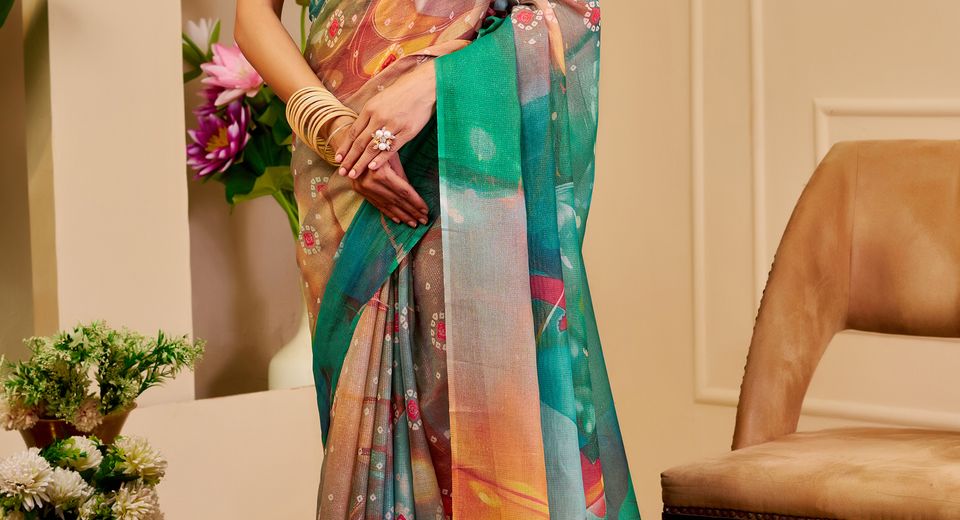
Meghalaya Festival Saree Styling can bring together the ease of a breathable Indian saree and the visual vocabulary of the Northeast: rain-washed greens, cloud-soft neutrals, botanical prints, handloom texture and purposeful accessories. The aim isn't to imitate a traditional Meghalaya garment, but to create a respectful, contemporary festival outfit inspired by the region's landscape and textile sensibility.
A successful look depends on four practical decisions: fabric weight, colour relationship, blouse proportion and drape security. Cotton, linen-cotton and tissue cotton work especially well for a daytime festival celebration because they allow movement and remain more comfortable than heavily layered silk. A floral saree can carry the visual interest, while a plain blouse, compact jewellery and a firmly pinned pallu keep the result balanced.
Meghalaya Festival Saree Styling: What Makes the Look Distinctive?
Meghalaya Festival Saree Styling is distinctive when a saree combines natural colour cues, airy texture and restrained ornament instead of relying only on heavy shine. Moss green, fern green, maroon, cloud white, misty blue, turmeric yellow and earthy beige create a palette associated with Meghalaya's hills, rain and plant life without claiming to reproduce a specific classic textile.
Meghalaya includes diverse communities and textile traditions, so a single "Northeast look" can't represent the whole region. A saree outfit can acknowledge that diversity by using botanical prints, handloom cotton, woven borders and handcrafted-looking accessories while avoiding decorative elements presented as authentic tribal motifs unless their provenance is known.
Texture makes the inspiration visible. Linen-cotton has a slightly dry, breathable surface; Mal cotton gives a softer, lighter fall; and tissue cotton introduces a delicate festive glimmer without the weight of dense brocade. Sea Green Tissue Handloom Cotton Saree With Floral Patterns demonstrates how a floral surface and gentle sheen can create a celebration-ready outfit with a relaxed silhouette.
How can a saree suggest Meghalaya without becoming a costume?
A saree suggests Meghalaya through colour, climate-conscious fabric and nature-led styling, not through random ethnic symbols. Pair one identifiable design feature, such as a floral border, with simple jewellery and a clean blouse so the outfit feels considered rather than themed.
Use a botanical colour story instead of combining several unrelated "Northeast" references. For example, sea green with silver, maroon with antique gold, or beige with indigo creates a coherent outfit. A woven bamboo clutch, oxidised silver earrings or a small textile potli can add material contrast, but three or four statement accessories at once can make the look visually noisy.
Meghalaya Festival Saree Styling: Which Fabrics Suit a Festival Celebration?
Cotton, linen-cotton, Mal cotton and lightweight tissue cotton are strong choices for a festival celebration when comfort, standing time and easy movement matter. Banarasi silk, georgette and heavier silks are more suitable when the event is formal, air-conditioned or held in the evening, but their drape and maintenance requirements are different.

For an outdoor puja, community gathering or daytime cultural programme, breathable fabric is usually more useful than maximum sheen. Cotton absorbs some moisture and feels less clingy in warm weather, while linen-cotton often keeps a crisp fall. Lightweight tissue cotton offers a festive surface, although its delicate weave deserves careful pinning and gentler storage.
Multicolour Floral Linen Cotton Saree with Blue Border Look is useful for a daytime outfit because the blue border gives the eye a clear anchor among the floral colours. Red Floral Linen Cotton Saree with Beautiful Printed Border works when a festival calls for warmth and energy, especially with a restrained blouse that doesn't compete with the printed border.
Mal cotton is a sensible option for long celebrations because its light construction usually makes repeated pleating less tiring. Maroon Mal Cotton Ethnic Saree With Blouse from VARNAVI can be styled with a muted beige or black blouse, antique-finish earrings and a low bun. The maroon shade also transitions easily from a family puja to an evening meal.
Is silk necessary for a festive saree look?
Silk isn't necessary for a festive saree look; colour, border definition, blouse finishing and accessories can provide enough occasion value. Banarasi silk or Kanjeevaram may suit a formal wedding or ceremonial evening, while cotton and linen-cotton are often better for a long, active festival day.
Silk Sarees Under 3000 With Discount can be a useful reference when comparing the visual effect of silk with more breathable alternatives. Red Banarasi Silk Sarees for Weddings Under 1100 belongs to a more formal styling direction, where zari, structured pleats and gold jewellery can be allowed to lead the outfit.
Meghalaya Festival Saree Styling: How Should Colours and Prints Work Together?
Choose one dominant colour, one supporting colour and one metallic accent when building a festival saree palette. This three-part method prevents a floral or multicolour saree from looking disconnected from the blouse and jewellery.
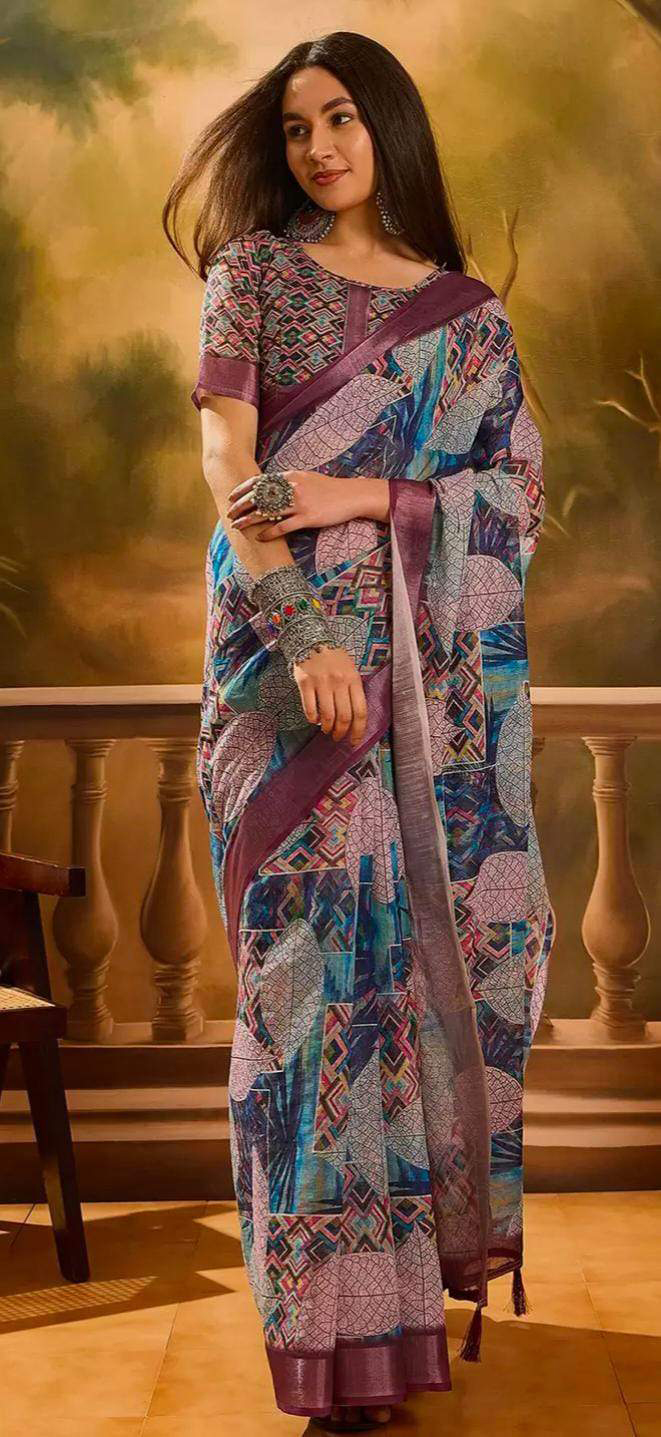
Green sarees create a natural Meghalaya-inspired foundation. Emerald Green Tissue Cotton Saree With Digital Floral Print can be paired with a plain ivory, deep wine or tonal green blouse. Silver jewellery gives emerald a cooler, rain-inspired finish, while antique gold makes the outfit warmer and more time-honoured.
Pastel colours suit morning celebrations, spring festivals and daytime cultural events. Pastel Floral Printed Linen Cotton Saree with Blouse already contains a soft visual rhythm, so add a blouse in one colour picked from the print rather than introducing a fourth shade. Pearl studs, a slim watch and a woven neutral bag preserve the lightness of the outfit.
Beige works as a grounding neutral when a print has several colours. Beige Leaf Printed Linen Cotton Saree with Blouse can be styled with a rust, forest-green or indigo blouse. A deeper blouse colour gives definition to the face, while a matching beige blouse creates a quieter, editorial effect suitable for a daytime festival gathering.
Which festive colours are easiest to accessorise?
Maroon, emerald green, beige, ivory and deep blue are among the easiest festive colours to accessorise because they work with both silver and gold-toned details. Pastel pink, lilac and pale blue need more careful contrast, usually through a darker blouse, border or lip colour.
Pink Georgette Sarees can inspire a softer party direction, especially when the celebration is indoors or in the evening. Keep the jewellery delicate if the saree has a glossy surface, because georgette already catches light through movement. A slim metallic belt can define the waist, but the belt should match the jewellery finish rather than introduce another competing metal.
Meghalaya Festival Saree Styling: Which Blouse and Drape Choices Are Practical?
A practical festive blouse has a comfortable armhole, secure shoulder seams and enough coverage to support repeated movement. A boat neck, square neck or modest V-neck works with most floral cotton sarees; sleeve lengths between elbow and three-quarter length offer useful balance for family ceremonies and outdoor events.

Match the blouse to either the saree's border or its smallest visible colour. A blue blouse with a blue-bordered linen saree looks deliberate, while a maroon blouse with a multicolour floral saree creates stronger contrast. Avoid matching a busy printed blouse to a busy printed saree unless the prints differ clearly in scale.
The standard Nivi drape is the most dependable choice for a festival because it keeps the pleats stable and places the pallu over the shoulder in a familiar silhouette. Make five to seven front pleats of similar width, align the lower edges before pinning and place one discreet pin near the waist. The pallu should reach around mid-calf or the top of the ankle, depending on height and footwear.
A slightly narrower pleat width can reduce bulk in linen-cotton sarees. For tissue cotton, use a fine safety pin inside the shoulder fold because a smooth or delicate weave can shift during walking. A belt is optional; a narrow fabric or metallic belt can stabilise the waist, but a wide belt may hide a printed border that deserves to remain visible.
How can you keep a saree secure during a long celebration?
Secure a long-wear saree with a well-fitted petticoat, evenly pressed pleats, two hidden waist pins and one shoulder pin. Test the complete outfit by sitting, climbing stairs and walking for five minutes before leaving home.
Choose a cotton or cotton-blend petticoat with a firm but comfortable drawstring rather than a loose underskirt. Wear the intended footwear before setting the saree length, because even a two-centimetre difference can change whether the hem catches under the foot. A small emergency kit with safety pins, fashion tape and a spare blouse hook is more useful than carrying extra jewellery.
Meghalaya Festival Saree Styling: How Should Jewellery and Beauty Be Balanced?
Jewellery should reinforce the saree's material and colour without turning a landscape-inspired outfit into a costume. Oxidised silver suits cool greens, blue borders and linen texture, while antique gold suits maroon, red, beige and warm floral prints.
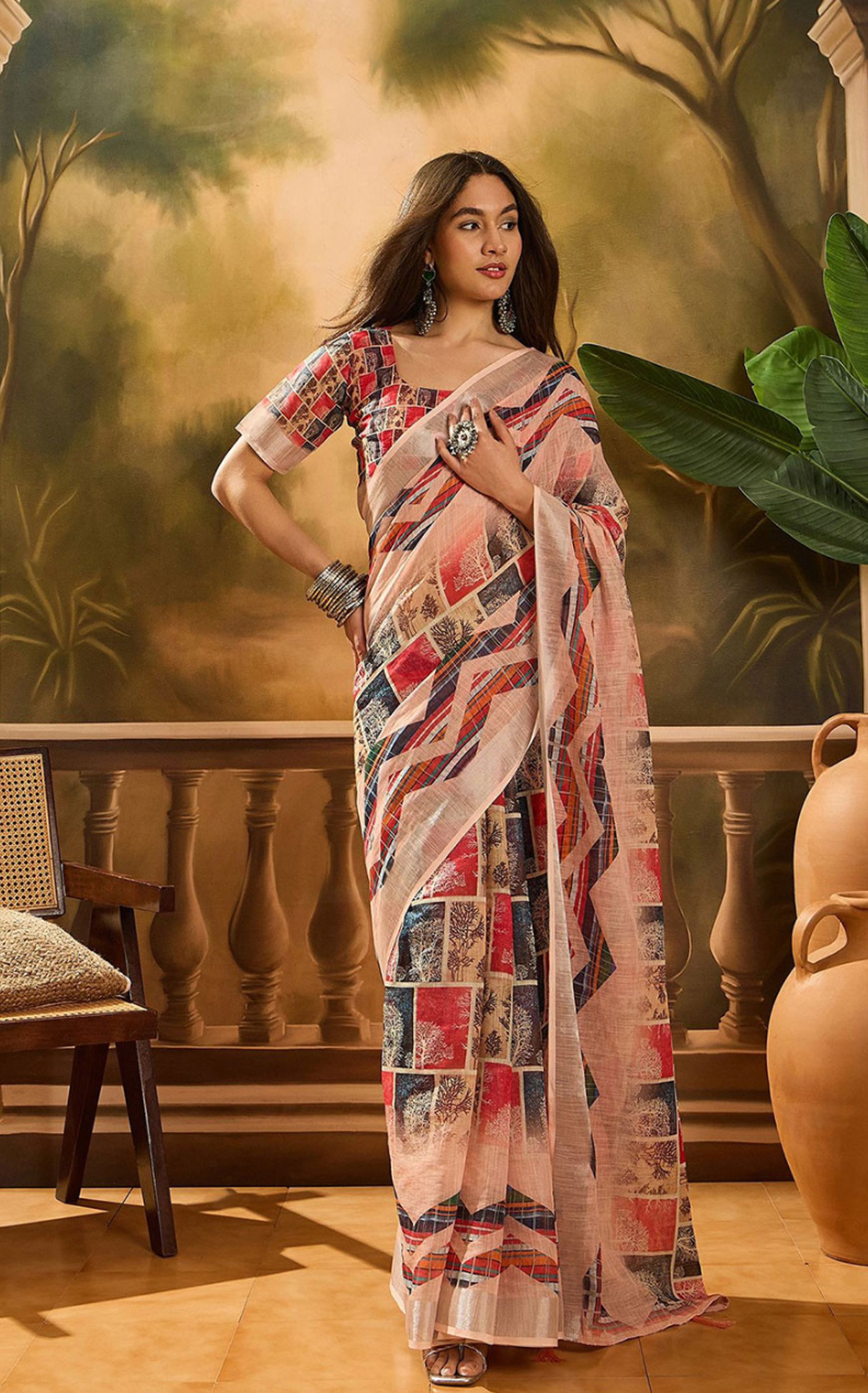
Choose one focal accessory: a pair of textured earrings, a short necklace, a stack of bangles or a distinctive ring. A floral saree with a visible border already has pattern density, so large earrings alone may be enough. If the blouse has embroidery, keep the necklace short and uncomplicated.
Hair should support the neckline and the weather. A low bun, braided bun or half-up style keeps hair away from the face during a humid outdoor festival. Fresh flowers can be beautiful with a plain saree, but avoid adding them when the print already contains large flowers unless the flowers are small and tonal.
Makeup can follow the saree's temperature rather than copying the exact colour. A terracotta lip complements maroon and beige, berry tones suit emerald and purple, and a muted coral works with pastel floral prints. Waterproof kajal, a light setting product and blotting paper are practical additions for a Meghalaya-like humid climate or any long outdoor celebration.
Party Wear Sarees can guide a more polished evening interpretation, but a lightweight saree still benefits from the same rule: one dominant feature at a time. A luminous base, defined brows and a single deeper lip colour create a finished look without overpowering cotton texture.
Meghalaya Festival Saree Styling: What Should You Check Before Buying?
Check fabric composition, saree length, blouse status, border placement and care instructions before buying a festival saree. These details determine whether a beautiful online image will translate into a comfortable and secure outfit.

A standard saree is often around 5.5 metres, while the blouse piece may be separate, attached, or absent. Confirm the product description before planning a contrast blouse. Also check whether the print is digital, block-inspired or woven, because a printed border usually needs gentler ironing than a substantial woven zari border.
For a petite frame, a narrow border and smaller print can create a longer visual line. Taller wearers can carry a broad border or larger botanical print more easily. A pear-shaped silhouette may feel balanced with a blouse that has defined shoulders, while a straighter silhouette can gain shape from a neatly placed belt or slightly structured blouse sleeves.
Gray Color Sarees Under 1000 can be considered when building a neutral wardrobe for repeated festival styling. Grey works particularly well with sea green, maroon, pink and silver, so one neutral saree can support several different blouse and jewellery combinations.
Care matters after the celebration. Air a cotton or linen-cotton saree in shade before folding it, remove pins immediately, and store the garment dry. Fold tissue cotton with soft muslin or plain cotton around it to reduce snagging. Do not leave perfume, sweat or dampness trapped in the folds overnight, because odour and colour transfer become harder to remove later.
Party styling doesn't require sacrificing regional sensitivity or personal comfort. The strongest Northeast-inspired saree outfit uses a clear palette, breathable construction, secure tailoring and accessories chosen for material harmony. That approach makes the look appropriate for a festival celebration while leaving room for the wearer's own identity.
Common Questions About Meghalaya Festival Saree Styling
What saree fabric is best for a Meghalaya-inspired festival look?
Linen-cotton, Mal cotton, cotton and lightweight tissue cotton are practical choices for a Meghalaya-inspired festival look because they are breathable and easy to wear for several hours. Choose silk or Banarasi silk when the event is more formal and the setting allows heavier draping.
Which colours create a Northeast-inspired saree outfit?
Emerald green, sea green, maroon, beige, misty blue, ivory and deep red create a Northeast-inspired saree palette. Combine one main colour with one supporting shade and either silver or antique gold jewellery.
How should I style a floral saree for a festival celebration?
Pair a floral saree with a plain blouse in one colour taken from the print. Keep the drape neat, choose one prominent jewellery piece and use a secure pallu pin so the floral pattern remains the focus.
Is cotton suitable for an evening festival celebration?
Cotton is suitable for an evening festival celebration when the saree has a defined border, subtle sheen, rich colour or polished blouse. Tissue cotton, printed linen-cotton and fine handloom cotton can look festive without the weight of heavy silk.
How can I stop a linen or tissue saree from slipping?
Use a fitted petticoat, press five to seven even pleats, add two concealed waist pins and secure the shoulder fold with one fine safety pin. Test the outfit while walking and sitting before leaving home.
What jewellery works with a Meghalaya-inspired saree look?
Oxidised silver works well with sea green, emerald, blue and linen textures, while antique gold complements maroon, red, beige and warm floral prints. Select one focal accessory instead of combining a large necklace, dramatic earrings and multiple bangles.





