

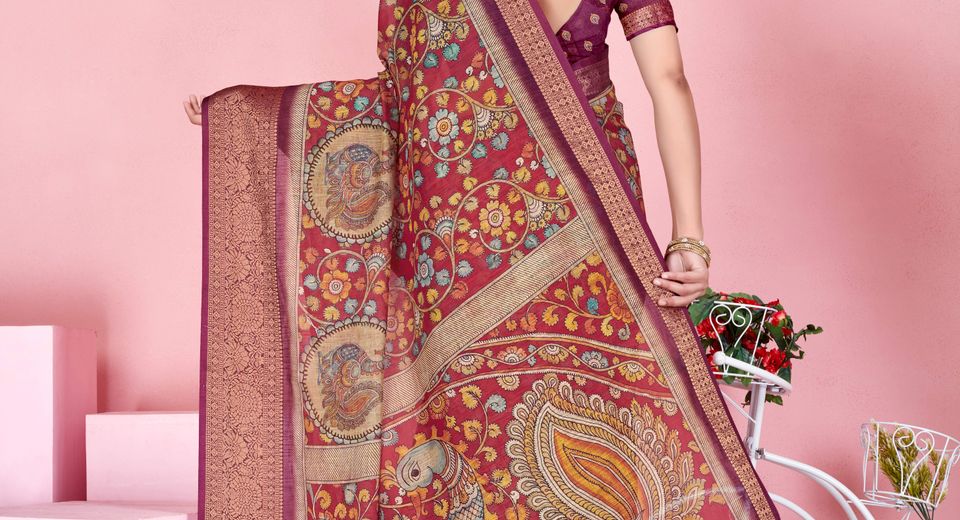
Marathi Lugade and Nauvari Are Not Names for Every Saree worn in Maharashtra or every drape inspired by Maharashtrian clothing. The terms belong to a particular regional vocabulary and, in the case of Nauvari, point to a distinctive nine-yard format and leg-tucked drape. A six-yard floral saree paired with Maharashtrian jewellery may create a Marathi-inspired look, but it doesn't automatically become a Nauvari. Understanding the difference helps you describe a saree accurately, select the right length and avoid buying a conventional saree for a drape that needs considerably more fabric.
Marathi Lugade and Nauvari Are Not Names for Every Saree: What Do the Terms Mean?
Marathi Lugade and Nauvari refer to related but different ideas: Lugade is a Marathi word used for a saree, while Nauvari identifies a nine-yard saree tradition. Regional speech, community practice and family usage can influence how the terms are applied, so the words should not be treated as exact substitutes in every setting.
The word "Lugade" is commonly used in Marathi for a saree or traditional draped garment. The term can therefore draw a broader category than a specific nine-yard construction. "Nauvari" literally means nine yards and is associated with a saree that has enough fabric for a distinctive low drape between the legs.
Nauvari is also called a Kashta or Kashta saree in many style and retail contexts. "Kashta" refers to the rear or central tuck that creates a trouser-like lower silhouette. The tuck allows greater freedom of movement and changes the way the pleats, waist and pallu are arranged. A stitched garment that imitates the appearance of a Nauvari can be convenient, but a stitched imitation and an unstitched nine-yard saree remain different formats.
The most accurate description depends on the garment's measurable features. A nine-yard saree designed for a Kashta drape can be called a Nauvari. A standard six-yard saree should instead be described by its fabric, weave, print, border or regional styling, even when the wearer uses Maharashtrian accessories.
Marathi Lugade and Nauvari Are Not Names for Every Saree: Why Is a Six-Yard Saree Different?
A six-yard saree is different from a traditional Nauvari because it usually doesn't provide enough fabric for the complete leg-tucked structure. Most conventional sarees measure approximately 5.5 to 6.3 metres, including the pallu, while a traditional Nauvari commonly measures around 8 to 9 yards, or approximately 7.3 to 8.2 metres, depending on regional format and whether a blouse piece is included.

A standard saree can be pleated at the front, wrapped around the waist and carried over the shoulder without dividing the lower fabric between the legs. A Nauvari allocates additional length to the central tuck, rear fastening, waist wrap and pallu. The extra fabric is functional rather than merely decorative.
Product photographs often make the two formats look similar because both may show front pleats, a shoulder pallu and a traditional blouse. A six-yard saree styled with a Maharashtrian nath, green glass bangles, flowers and a braided hairstyle can communicate a Marathi wedding or festival mood. Those styling choices don't change the garment's original length or construction.
A product described as "Marathi style" may be a regular saree, a pre-stitched dhoti saree, a ready-made Nauvari or a conventional saree supplied with a regional blouse. Buyers should check the measured length, stitching details and intended drape instead of relying on a broad style label.
What makes the Nauvari silhouette recognisable?
The Nauvari silhouette is recognisable by the fabric passing between the legs and being secured at the back or waist before the upper section becomes the pallu. The central division creates a dhoti-like lower appearance, while the front pleats and shoulder arrangement vary by community, region and personal preference.
Some wearers use leggings, fitted shorts or a close-fitting underskirt for comfort and coverage. Ready-to-wear versions may include sewn pleats, hooks, elastic or a pre-formed dhoti panel. Unstitched Nauvari sarees permit more adjustment at the waist and pallu, but they require practice and careful tucking.
Marathi Lugade and Nauvari Are Not Names for Every Saree: How Do Length and Construction Affect Draping?
Saree length determines whether the fabric can support a secure Nauvari drape. A conventional six-yard saree is planned for a regular waist-to-shoulder arrangement, whereas a nine-yard saree must provide fabric for the leg division, rear tuck, waist wrap, front pleats and pallu.

Traditional unstitched draping generally begins with the saree positioned around the back of the body, followed by a waist wrap and a central division between the legs. The lower ends are tucked securely, and the remaining upper fabric is pleated into a pallu. Exact methods differ between a Brahmani-style drape, a Kashta arrangement and simplified instructional versions.
First-time wearers should practise with a medium-weight cotton saree before attempting a slippery silk or a heavy zari border. A practice fabric makes it easier to understand how much material is required at the waist and how firmly the central tuck must be secured.
A ready-to-wear Nauvari is useful for weddings, stage performances and short events because the stitched panels keep the leg sections aligned. An unstitched nine-yard saree gives the wearer greater control over waist placement, pleat width and pallu length. Taller wearers should confirm the usable length because a nominal nine-yard measurement may include a blouse piece, tassels or finishing allowances.
- Standard saree: Usually about 5.5 to 6.3 metres and designed for a conventional drape.
- Traditional Nauvari: Usually about 8 to 9 yards, with extra fabric for a leg-tucked lower drape.
- Pre-stitched Nauvari: A sewn garment that simplifies or imitates the nine-yard structure.
- Marathi-inspired saree: A broad styling description that may involve a regular saree, regional jewellery or a Maharashtrian blouse.
Marathi Lugade and Nauvari Are Not Names for Every Saree: Which Fabrics Work Best?
Medium-weight cotton, linen cotton and light silk blends generally work well for a Marathi-inspired drape because they hold pleats without becoming excessively bulky. Crisp cotton gives the front folds definition, while linen cotton offers structure and airflow for daytime ceremonies and cultural events.
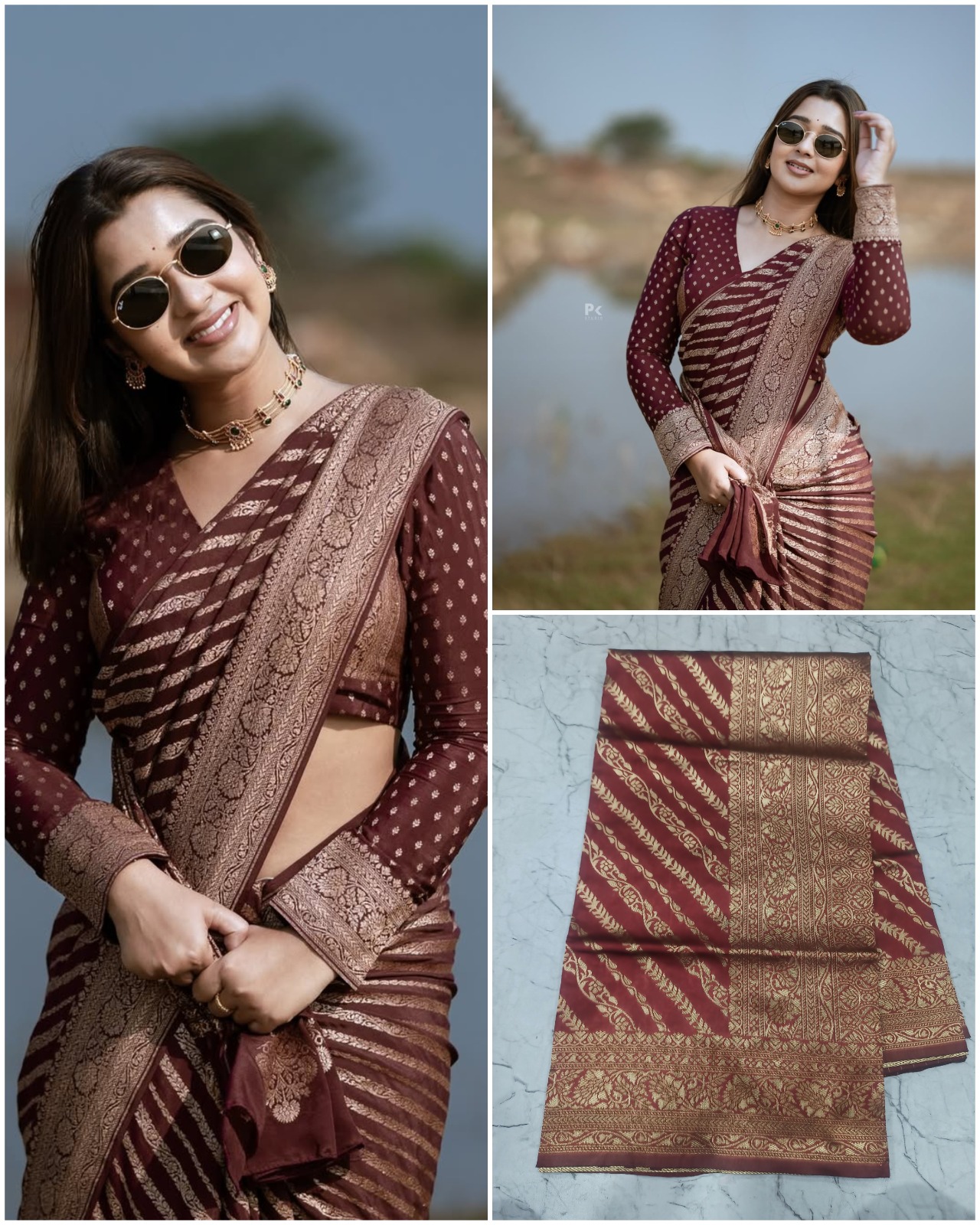
Fabric width, fall and surface finish affect comfort as much as length. A heavy zari border can pull the pallu sideways in a leg-tucked drape. A very smooth weave can loosen at the waist unless the wearer uses a firm tuck or concealed pins. Banarasi silk and Banarasi Lichi silk create a rich festive appearance, but their weight and smoothness demand more careful anchoring than plain cotton.
The Maroon Floral Linen Cotton Saree with Jacquard Woven Border demonstrates how a linen-cotton body and defined woven border can provide visible structure without the weight of dense silk brocade. The Maroon Floral Linen Cotton Saree with Woven Jacquard Border brings another useful comparison: a border changes the visual rhythm of the pleats and pallu, but it doesn't turn a standard saree into a Nauvari.
For a ceremonial look, the Maroon Soft Lichi Silk Saree with Silver Zari & Jacquard Border and the Maroon Banarasi Lichi Silk Saree with Zari Border show why border scale matters. Silver zari, jacquard and a contrasting edge can frame the shoulder and lower hem attractively, yet the wearer should confirm the saree length before planning a nine-yard drape.
The Maroon Banarasi Lichi Silk Saree With Zari Work is similarly suited to a festive styling discussion. Zari work communicates surface richness, not garment length. A six-yard silk saree remains a six-yard silk saree even when its colour, jewellery and blouse create a strongly Maharashtrian visual impression.
Marathi Lugade and Nauvari Are Not Names for Every Saree: What Should You Check Before Buying?
Check the measured length, construction and intended drape before judging whether a saree is suitable for a Nauvari look. Product images alone can't reliably distinguish a true nine-yard garment from a six-yard saree photographed in a similar pose.

- Read the length specification. Look for metres or yards rather than relying only on words such as "traditional," "dhoti," "Marathi" or "Nauvari style." A true nine-yard format should provide substantially more fabric than a regular saree.
- Confirm whether the garment is stitched. A pre-stitched Nauvari may list hooks, elastic, sewn pleats or a dhoti panel. An unstitched saree requires a full draping process and more practice.
- Inspect the blouse information. A blouse piece may be included, separate or absent. A matching blouse doesn't prove that the saree itself is nine yards.
- Ask about usable length. Borders, tassels and blouse-piece sections can affect the material available for wrapping. Taller wearers should request the practical draping length if the listing is unclear.
- Match fabric weight to the event. Cotton and linen cotton suit movement-heavy daytime functions, while zari-rich silk creates a formal appearance but can feel heavier in a leg-tucked drape.
The Maroon Mal Cotton Ethnic Saree With Blouse from VARNAVI shows why a product name and its construction should be read together. "Ethnic" communicates styling direction, while the actual length and included blouse determine whether the garment can support a particular drape.
The Indigo Blue Geometric Print Saree with Contrast Pallu and the Mauve Floral Print Linen Cotton Saree with Blouse | VARNAVI can be evaluated as regular saree options by checking their measurements rather than inferring a Nauvari format from colour or print. A contrast pallu, floral motif or attached blouse affects styling, but none of those details establishes a nine-yard construction.
Price collections can also contain mixed formats, so a lower price should not be treated as evidence that a saree is pre-stitched or suitable for a particular drape. Collections such as Sarees from Rs 1000 to Rs 1500, Sarees Under 20% Off and Sarees Under 10% Off are useful for comparing fabric, length and construction across different products. Sale labels such as Sarees Flat 60% Off and Sarees Flat 50% Off should likewise be considered after checking measurements and care details.
Marathi Lugade and Nauvari Are Not Names for Every Saree: How Can You Style a Regular Saree?
A regular six-yard saree can create a Marathi-inspired look through the blouse, jewellery, hair, colour palette and pallu placement without being called a Nauvari. A tucked front pleat arrangement, short-sleeved blouse, traditional nose ring, green bangles, low bun and flowers can establish the visual language while preserving the garment's correct identity.
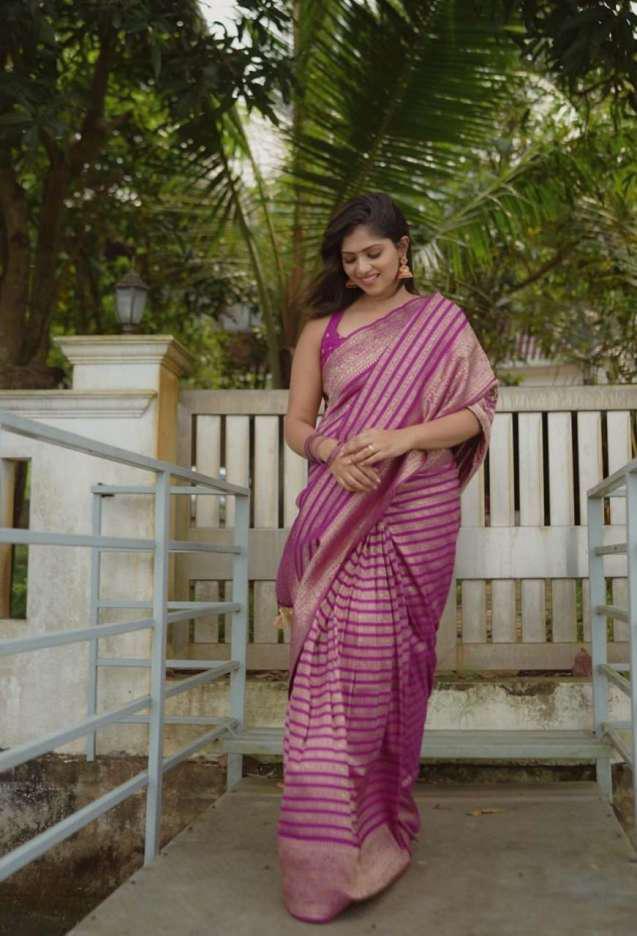
Choose a stable pallu arrangement for an event that involves walking, dancing or greeting guests. Pinning the shoulder pallu at two points can reduce slipping, while a firm waist tuck keeps front pleats aligned. A cotton or linen-cotton saree is usually easier to manage for an outdoor Haldi ceremony than a very smooth silk with a heavy border.
Jewellery should support the regional reference without overwhelming the drape. A nath, thushi-style necklace, green bangles, gold-toned earrings and a traditional hair accessory can be combined selectively. Wearing every regional accessory at once may obscure the textile and make the styling appear costume-like rather than considered.
For a genuine Nauvari appearance, begin with the correct garment rather than trying to force a six-yard saree into a nine-yard structure. A longer saree, appropriate underlayers, secure waist support and enough time to practise are more important than simply copying a photograph.
Accurate terminology also respects the communities and traditions behind the clothing. Marathi Lugade and Nauvari Are Not Names for Every Saree; one term can function broadly in Marathi usage, while the other points to a recognisable nine-yard tradition. Describing a garment by its actual length, construction and drape allows regional styling to remain both attractive and truthful.
Common Questions About Marathi Lugade and Nauvari Saree Terms
Is every Marathi saree a Nauvari?
No. A Marathi saree may be a standard six-yard saree styled with Maharashtrian colours, jewellery or a regional blouse. Nauvari specifically refers to a nine-yard tradition, usually associated with a leg-tucked Kashta drape.
What is the difference between a Lugade and a Nauvari saree?
Lugade is a Marathi term commonly used for a saree in a broader sense. Nauvari identifies a nine-yard saree format and its characteristic drape, although regional usage can vary between families and communities.
Can a six-yard saree be draped like a Nauvari?
A six-yard saree can imitate some visual elements of a Nauvari, but it usually lacks enough fabric for the complete traditional leg-tucked construction. A ready-made dhoti-style garment can create a similar appearance, but it is not the same as an unstitched nine-yard saree.
How many metres is a traditional Nauvari saree?
A traditional Nauvari commonly measures around 8 to 9 yards, or approximately 7.3 to 8.2 metres. The exact usable length can vary according to regional format, finishing details and whether a blouse piece is included.
Which fabric is easiest for learning Nauvari draping?
Medium-weight cotton is usually the easiest fabric for learning because it offers grip, structure and manageable weight. Linen cotton can also work well, while slippery silk and heavy zari fabrics are better attempted after the basic drape is familiar.
What should I check when buying a Marathi-style saree online?
Check the length in metres or yards, whether the garment is stitched, the usable fabric length, the blouse-piece details and the fabric weight. Product photographs and labels such as "Marathi style" do not by themselves confirm that a saree is a genuine nine-yard Nauvari.




