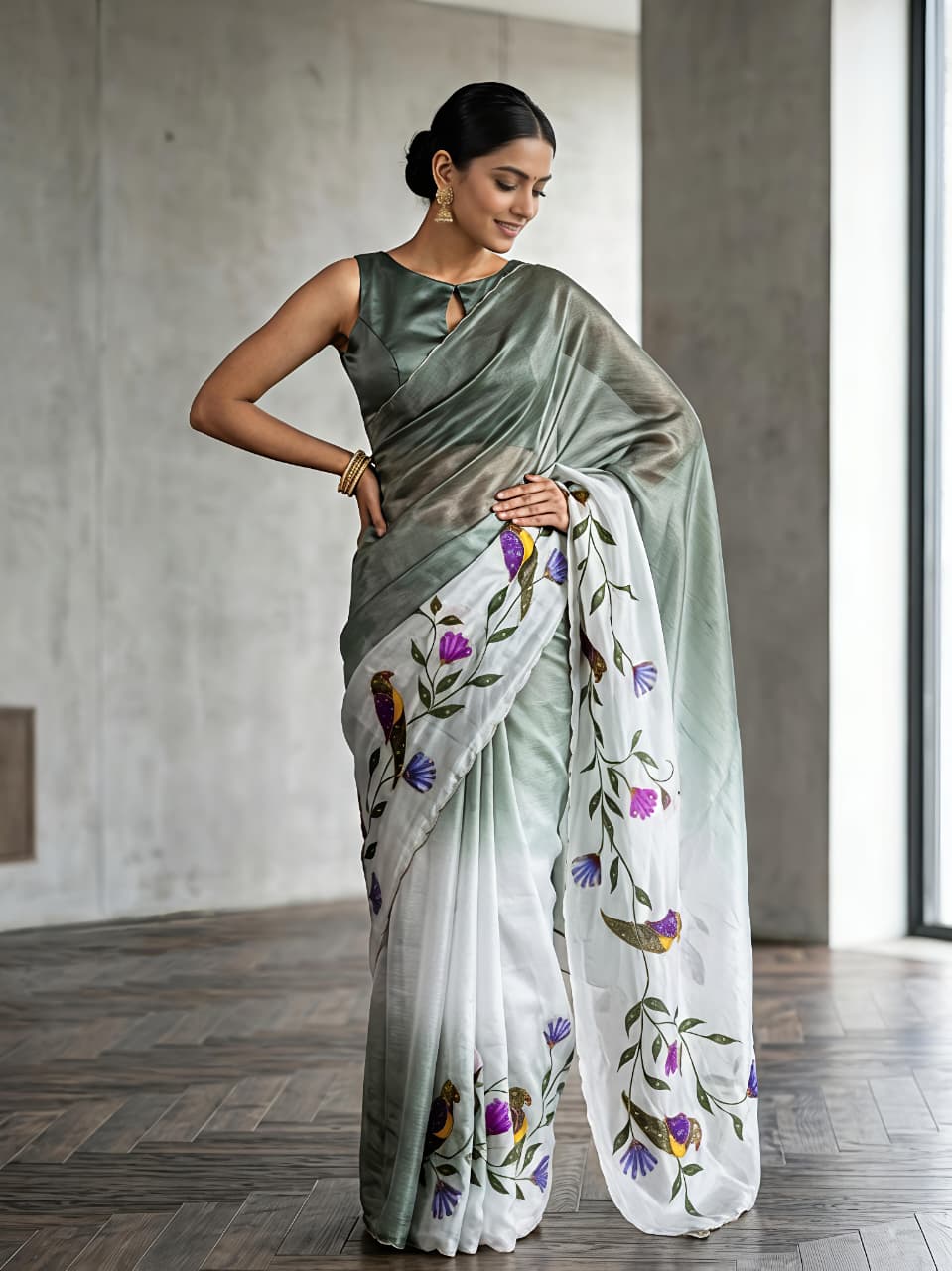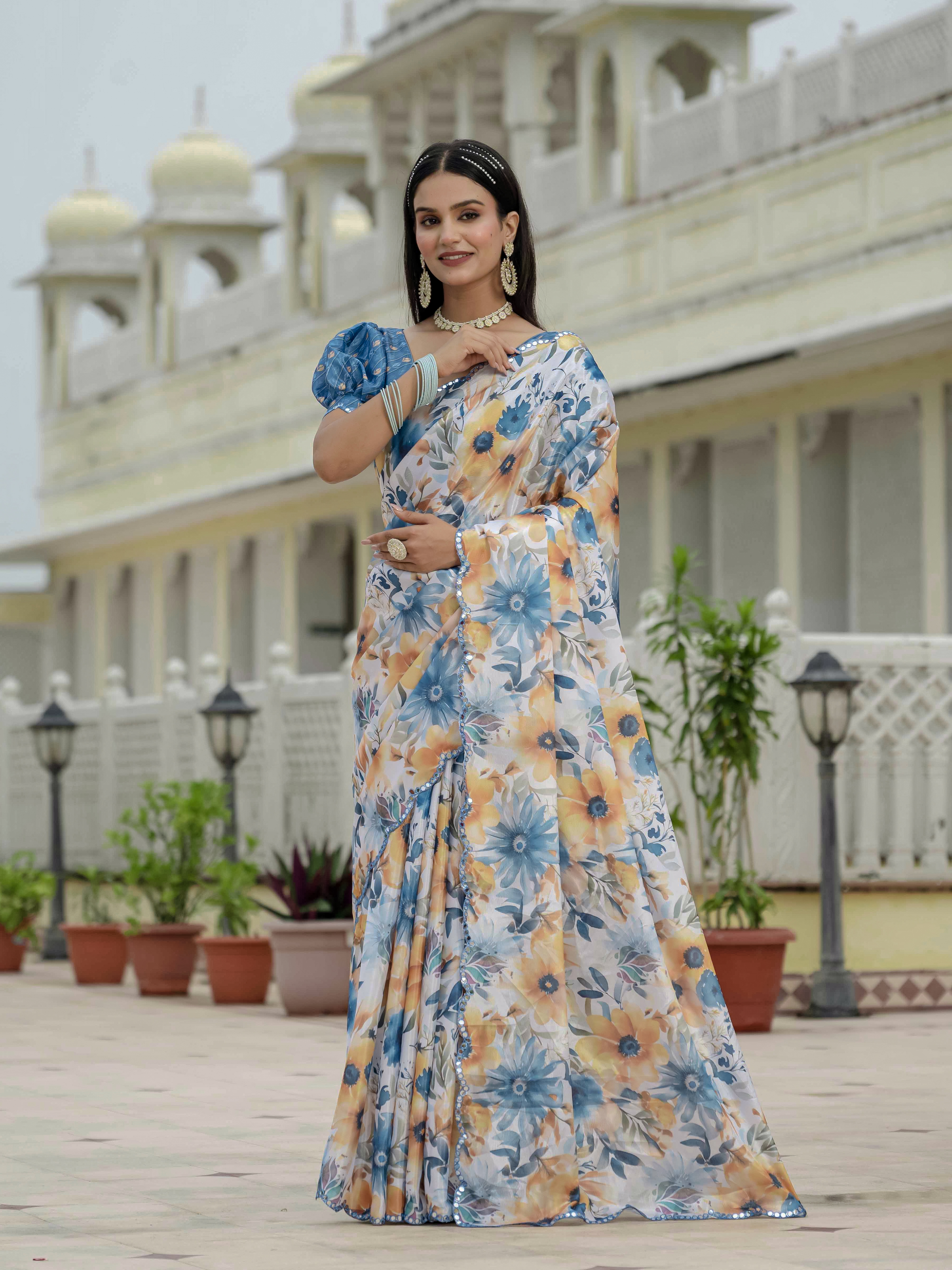
A Manipur Handloom Fashion Guide for Women begins with a simple fact: Manipuri textiles carry regional history in their yarn, motifs, colour choices and methods of dressing. A saree with a restrained border, a handwoven cotton body or a traditional shawl-inspired detail can communicate heritage without looking costume-like. The most useful way to wear Manipur handloom fashion today is to understand what you're buying, match the fabric to the weather and occasion, and style one distinctive textile with otherwise uncomplicated pieces.
Manipur's textile culture belongs to the wider weaving traditions of Northeast India, where handloom work has long been connected with community identity, household skill and ceremonial life. Contemporary wardrobes can honour that history through breathable cottons, silk blends, woven borders, floral surfaces and heritage-inspired pallus rather than relying on excessive ornament.
Manipur Handloom Fashion Guide for Women: What makes the textiles distinctive?
Manipur handloom fashion is distinctive because it combines practical woven cloth with strong cultural symbolism, regional motifs and a preference for texture over surface decoration. The final character of a garment depends on fibre, yarn tension, weaving structure, border treatment and the way the textile is draped.
Manipuri textile traditions include garments such as the phanek, a wrapped lower garment worn by women, and the inaphi, a shoulder cloth or wrap. Heritage textiles may feature stripes, checks, geometric arrangements and nature-inspired motifs. The exact appearance varies by community, purpose and period, so a modern saree inspired by Manipur should not be treated as a direct substitute for every time-honoured garment.
Handloom production also creates small variations in density, slub, alignment and colour. Those variations are not automatically defects. A slightly irregular yarn or a border that's not perfectly identical from end to end can indicate the human process behind the cloth, although loose threads, holes and unstable dye should still be treated as quality concerns.
Contemporary Indian sarees often translate regional textile ideas into versatile forms. A floral pallu, an ethnic striped border or a muted silk surface can work with a plain blouse and minimal jewellery. The result feels connected to craft while remaining appropriate for work, daytime gatherings and family celebrations.
Manipur Handloom Fashion Guide for Women: How should you choose a saree?
Choose a Manipur-inspired handloom saree by checking fibre, weight, weave consistency, border construction, pallu finish and the level of maintenance you can realistically provide. A beautiful saree becomes an useful wardrobe purchase only when its fabric suits your climate, movement and frequency of wear.
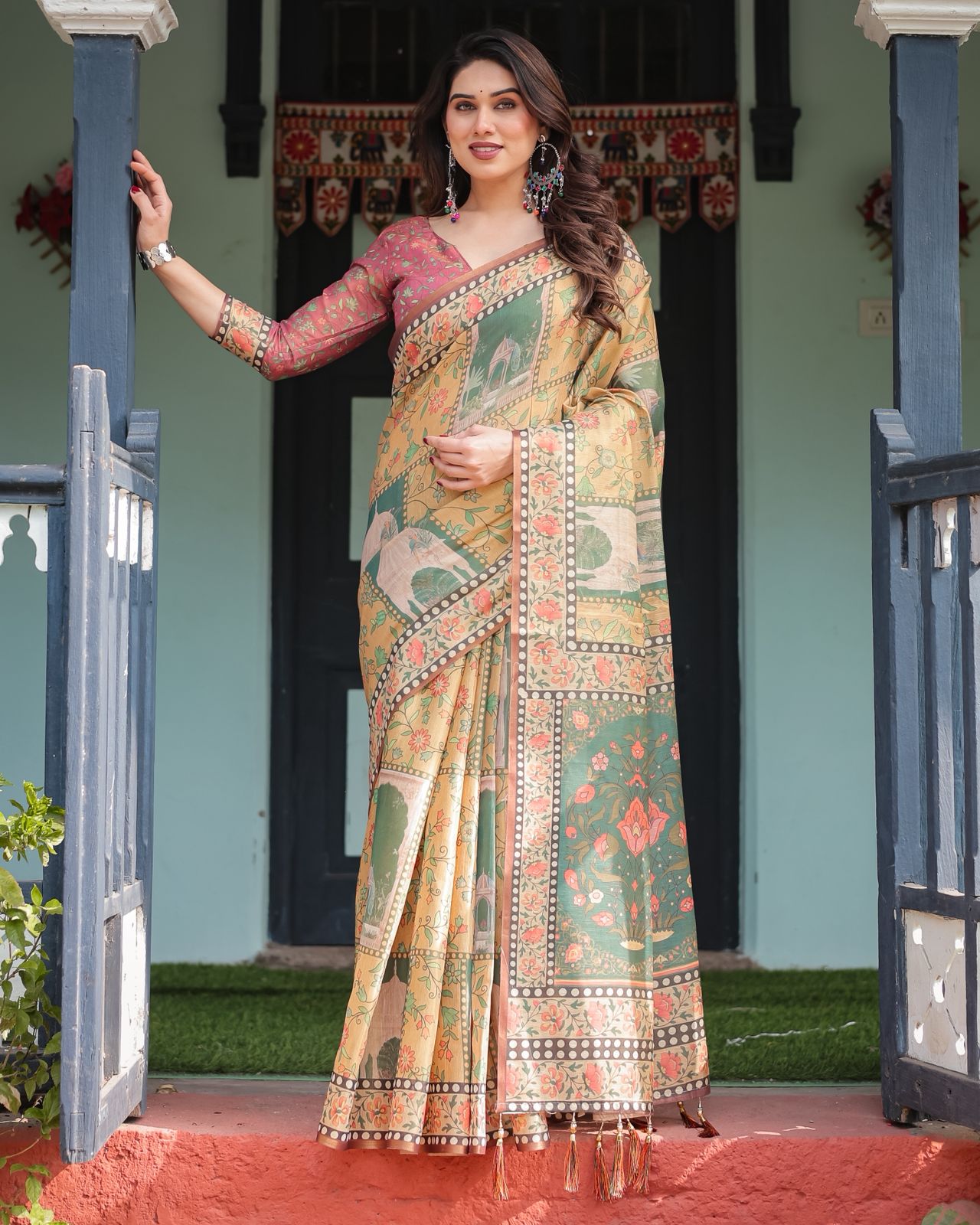
Manipur Handloom Fashion Guide for Women: Start with the fibre
Cotton handloom sarees are usually the most comfortable choice for humid weather, long daytime events and regular use. Cotton absorbs moisture and allows air movement, though a very crisp cotton may crease more visibly than a soft, lightly textured weave. Handloom linen offers a dry, airy feel and develops character through wear, but linen can crease and may require careful ironing.
Silk handloom sarees provide more sheen, structure and occasion value. Banarasi silk and Kanjeevaram are distinct textile traditions and should not be used as interchangeable labels for every silk saree. A handloom silk with a restrained pallu can be more adaptable than a heavily zari-covered design because it works for both a formal lunch and an evening ceremony.
Manipur Handloom Fashion Guide for Women: Read the border and pallu
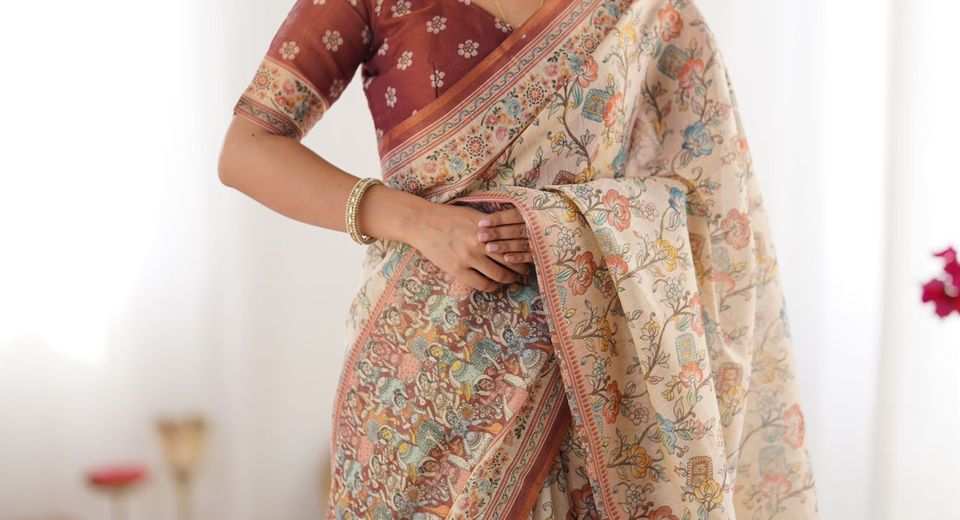
A border changes the visual proportion of a saree more strongly than many shoppers expect. A narrow border gives a lighter, contemporary impression, while a broad contrast border creates a formal frame around the body. A printed pallu adds visual focus without the weight of dense zari, making it useful when you want a heritage effect with an easier drape.
The Premium Beige Cotton Handloom Saree with Maroon Ethnic Border and Heritage Printed Pallu demonstrates how three controlled elements can work together: a calm base, a defined border and a pallu with concentrated pattern. The saree doesn't need a heavily embellished blouse because the pallu already provides a focal point.
Manipur Handloom Fashion Guide for Women: Judge weight before buying
Weight matters when a saree will be worn for six or more hours. A light cotton or tissue handloom is easier for commuting, standing during ceremonies and travelling. A denser silk or zari weave gives more body but may need stronger pleats, a secure petticoat and better blouse support.
The words tissue and zari describe appearance and material details, not a guarantee of lightness. The Pastel Floral Tissue Handloom Cotton Saree with Zari Weaves and the Cream Floral Tissue Handloom Cotton Saree with Zari Weaving may look delicate, but the wearer should still check fabric weight, transparency and care instructions before choosing either saree for all-day use.
Manipur Handloom Fashion Guide for Women: Which colours and motifs suit occasions?
Muted earthy shades, floral accents and one clearly defined contrast colour work across the widest range of occasions because they can shift from daytime simplicity to festive dressing through accessories. Colour selection should consider lighting, venue, blouse contrast and whether the saree will be photographed indoors.
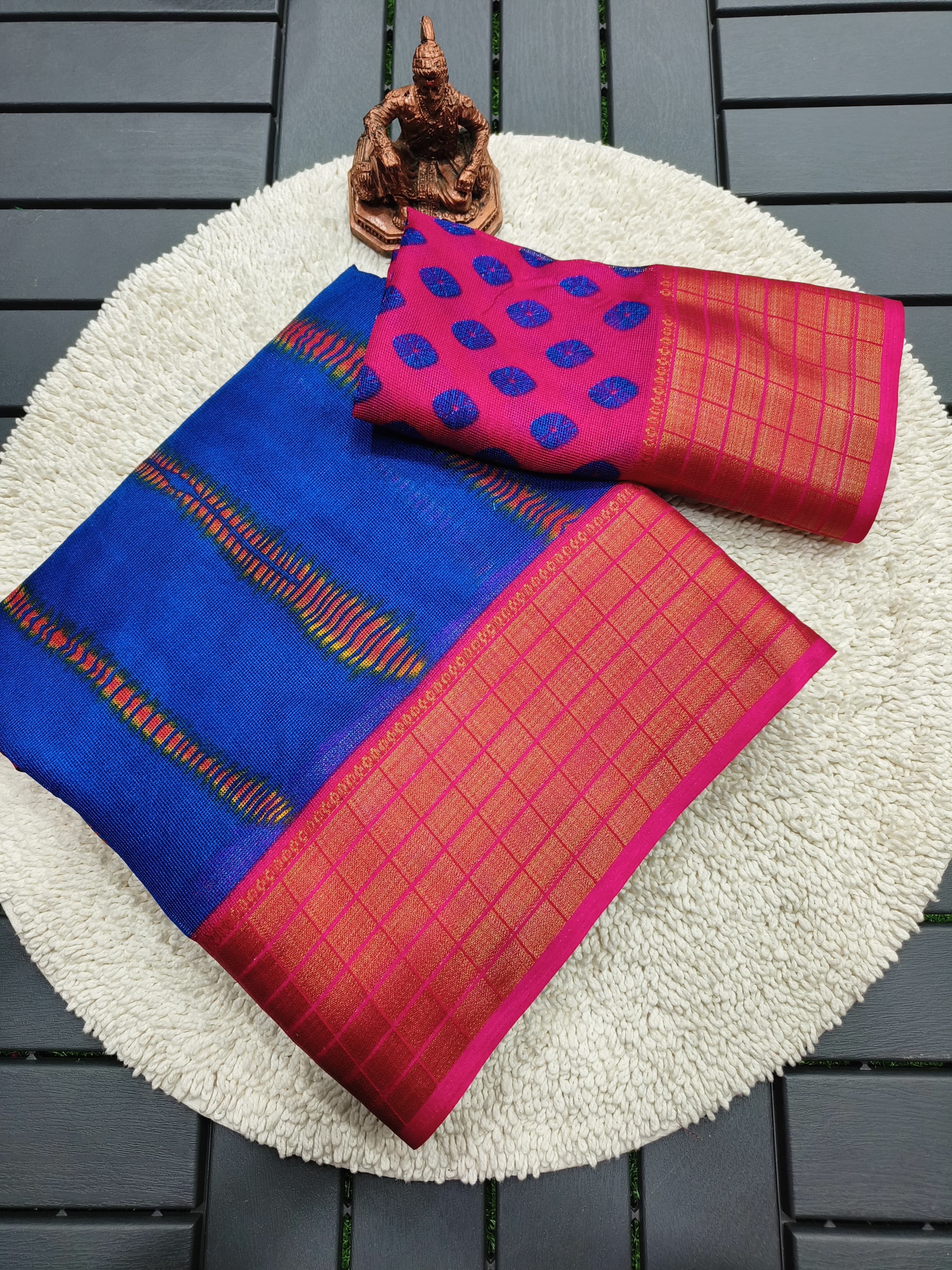
Beige, cream, mushroom brown, caramel and olive create a grounded palette associated with natural fibres and heritage craft. Maroon, mustard, teal and deep red add depth without requiring heavy embellishment. Pastel shades are particularly useful for daytime ceremonies, spring celebrations and office-friendly ethnic dressing, while darker borders make a lighter saree feel more structured.
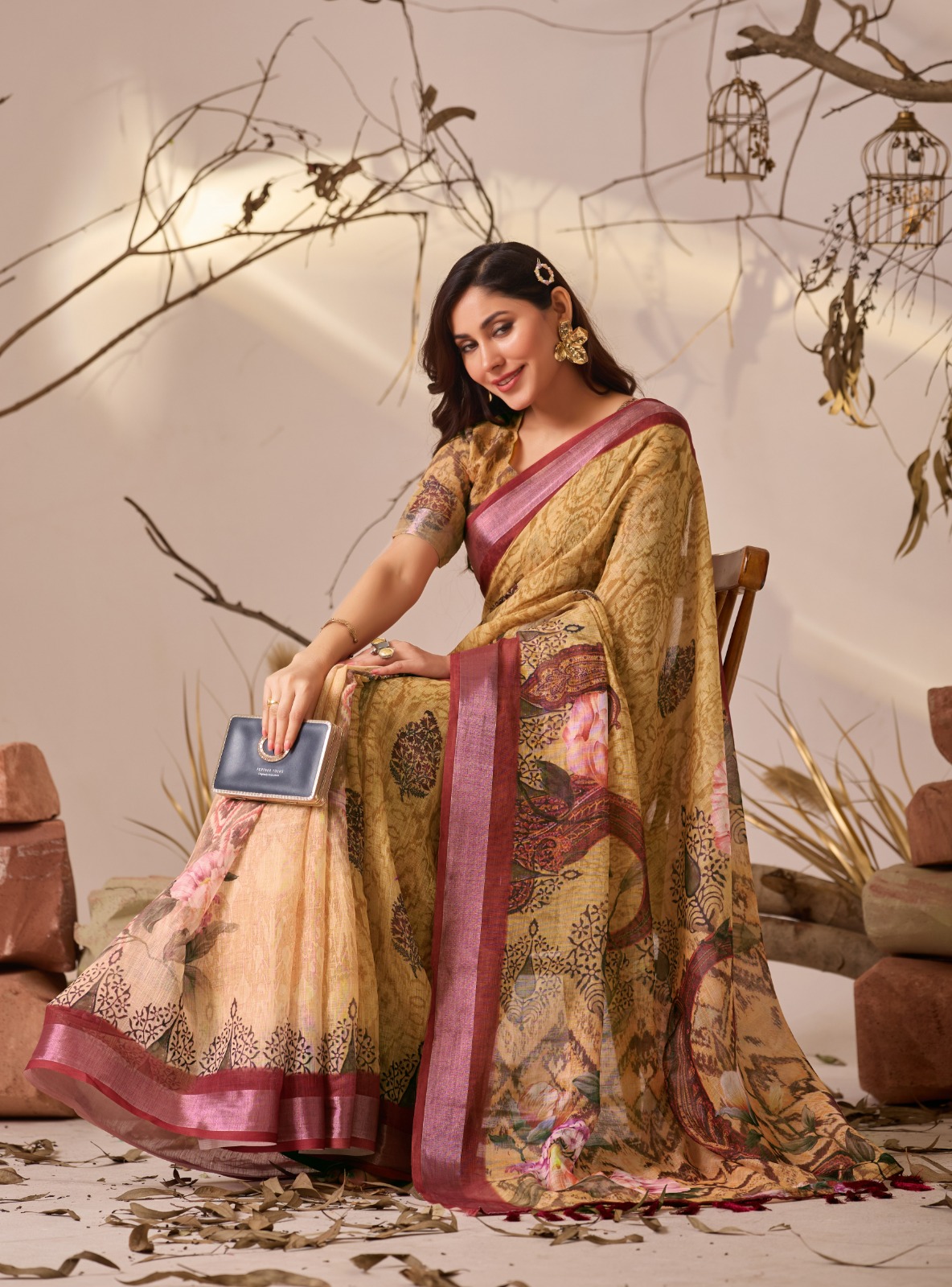
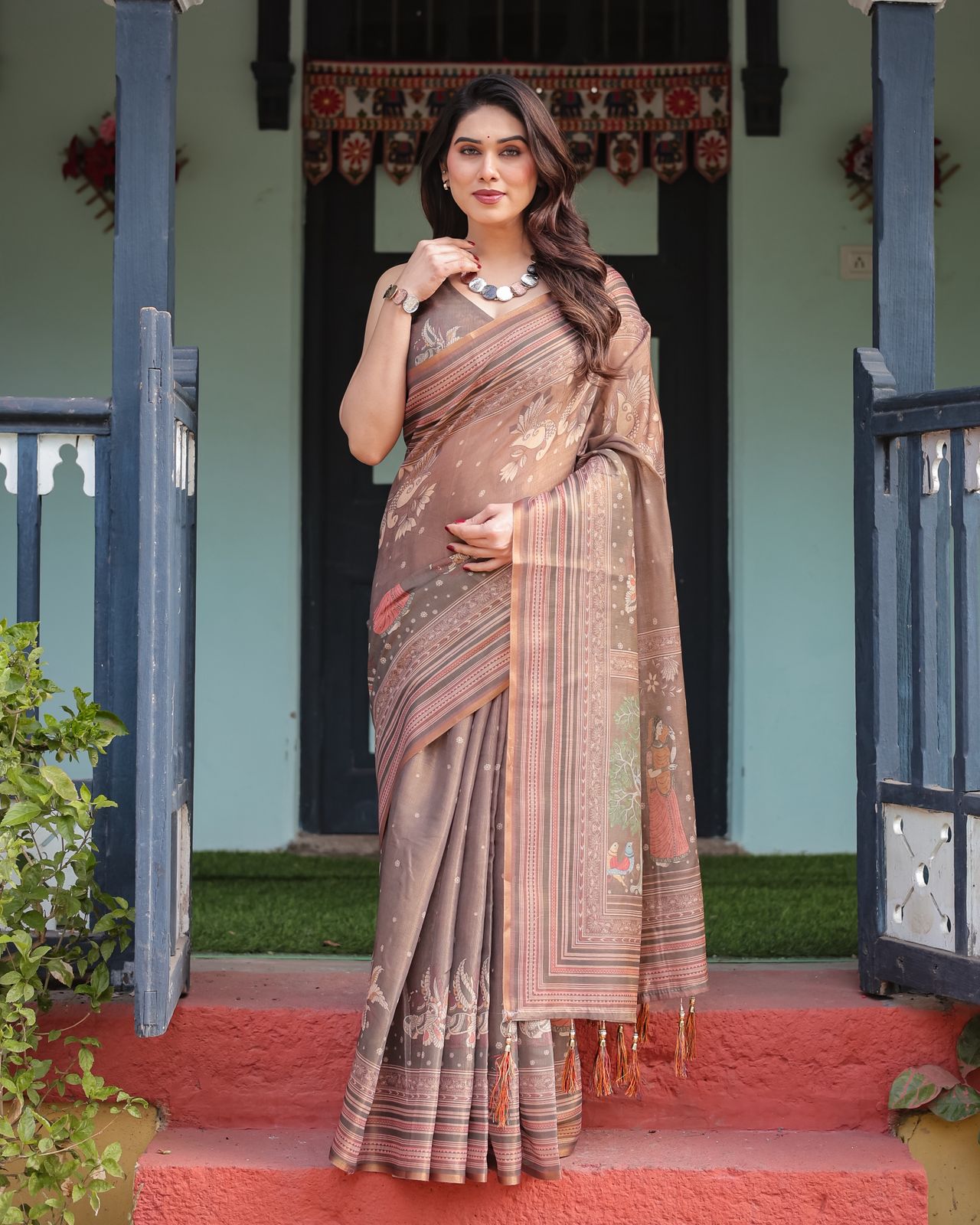
The Mushroom Brown Handloom Saree with Ethnic Striped Border suits a tonal styling approach. A blouse in chocolate brown, muted rust or warm ivory can echo the saree without competing with its striped border. The Caramel Brown Floral Handloom Saree with Printed Pallu can move in a more feminine direction when paired with a dusty rose blouse and small floral earrings.
Floral motifs don't automatically make a saree casual. Scale determines the effect: small repeated flowers feel understated, while large concentrated blooms on a pallu create a statement. A Mustard Olive Handloom Floral Heritage Saree with Pallu can be dressed down with a plain cotton blouse or elevated with antique gold earrings and a textured bun.
Manipur Handloom Fashion Guide for Women: How can you style handlooms?
Style a handloom saree with one deliberate contrast and keep the remaining elements quiet enough for the weave to remain visible. The contrast may come from the blouse, jewellery, drape or footwear, but using all four at once can obscure the textile's texture and regional influence.
Manipur Handloom Fashion Guide for Women: Build the blouse around the saree
A plain blouse is the most reliable partner for a patterned pallu, zari detail or strong ethnic border. Elbow-length sleeves create a classic proportion for cotton sarees, while short sleeves or a modest square neckline can make the outfit feel more contemporary. A blouse in the border colour creates cohesion; a blouse in a darker version of the saree's base creates a longer visual line.
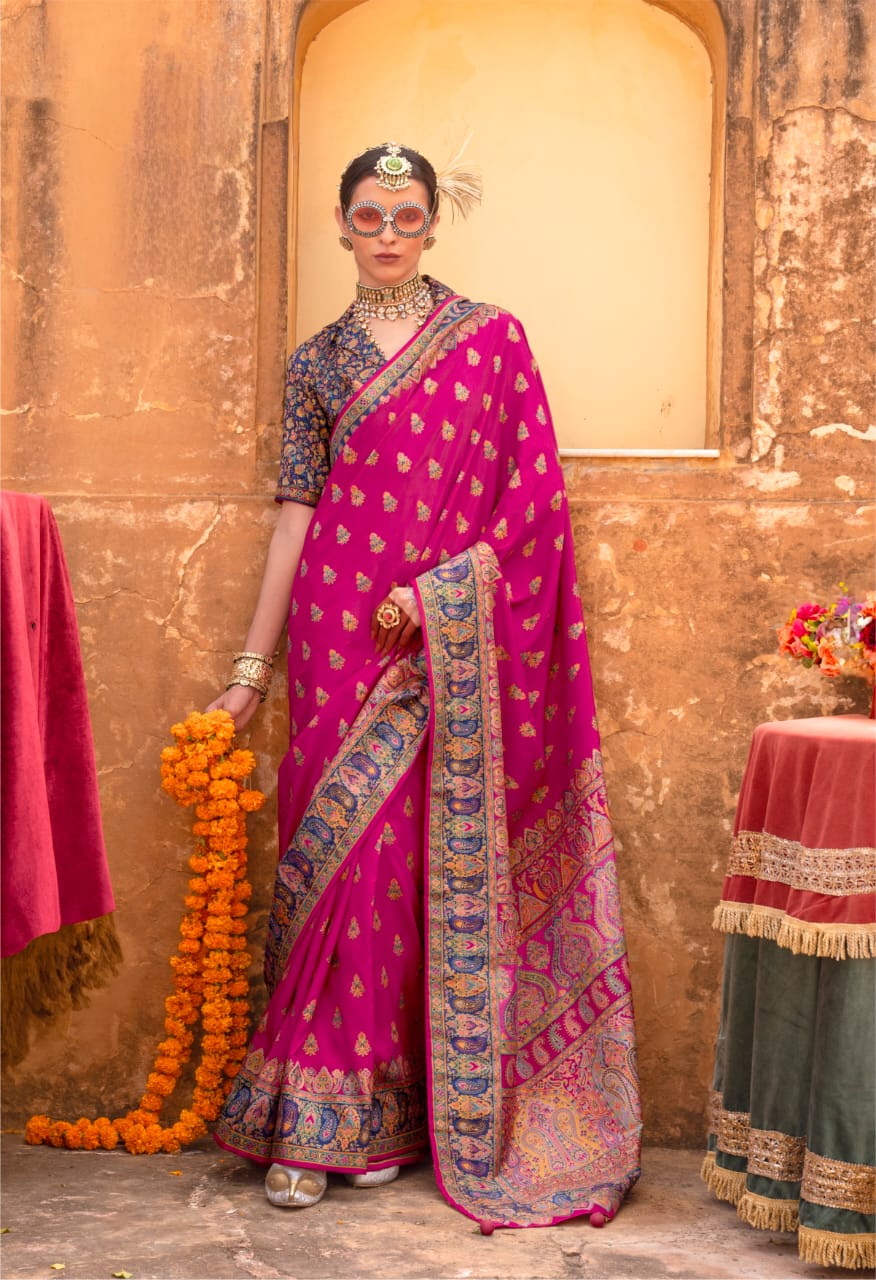
The Premium Handloom Silk Saree with Handkatha can support a more structured blouse because silk has enough body to balance tailored details. A high round neck, three-quarter sleeves or covered buttons can make the outfit suitable for a formal cultural event without adding sequins or dense embroidery.
Manipur Handloom Fashion Guide for Women: Choose the drape for the fabric
Crisp cotton usually holds neat front pleats and a clearly arranged pallu. Softer cotton can be draped with slightly narrower pleats to reduce bulk at the waist. Linen benefits from a secure tuck and deliberate pleat setting because its natural creasing can otherwise look untidy after movement.
A conventional Nivi drape works for most sarees and lets a border remain visible. A shorter pallu worn close to the shoulder is practical for work or hosting, while a longer open pallu creates movement for photographs and festive entrances. Pinning the pallu at the shoulder and near the waist prevents repeated handling of delicate zari or tissue sections.
Manipur Handloom Fashion Guide for Women: Use jewellery as punctuation
Handloom sarees pair well with jewellery that repeats one material or colour already present in the textile. Oxidised silver can strengthen a cool, geometric or earthy look; antique gold complements zari, maroon, mustard and warm brown; pearls soften pastel florals and cream cotton.
One substantial element is usually enough for a daytime outfit. Choose statement earrings, a layered necklace or a broad bangle stack rather than combining all three. A small potli, leather clutch or woven bag can extend the craft language without making the outfit look themed.
Manipur Handloom Fashion Guide for Women: What should you wear for each occasion?
Choose cotton and linen handlooms for daytime gatherings, silk or zari accents for evening celebrations, and moderate borders for professional settings. Occasion dressing becomes easier when comfort, movement and formality are evaluated separately.
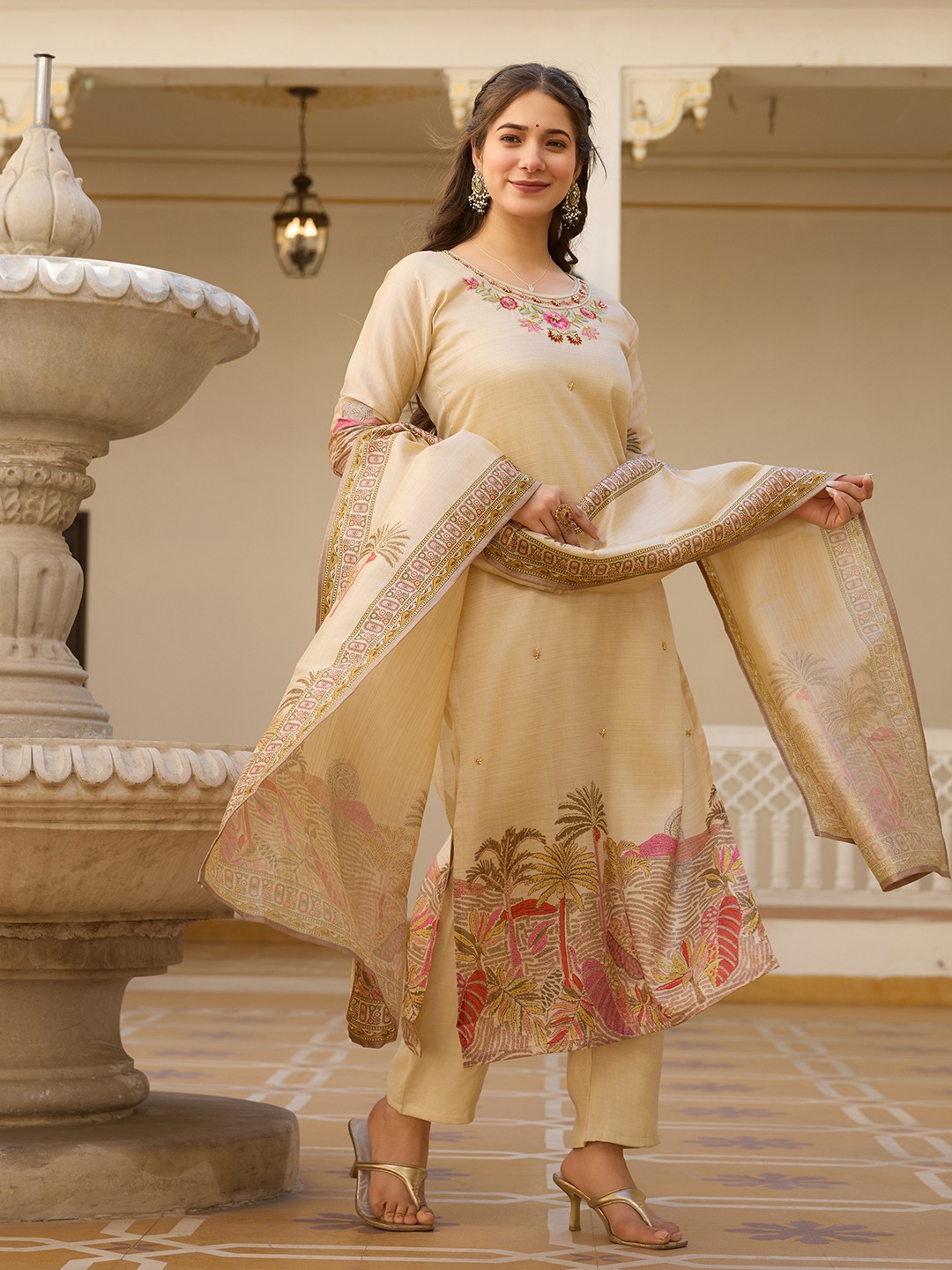
- Work and presentations: Choose a medium-weight cotton handloom with a restrained border, a well-fitted solid blouse and low-profile jewellery. Cream, mushroom, beige, olive and muted maroon photograph professionally without appearing severe.
- Haldi ceremony: Select a washable or comparatively easy-care cotton in mustard, yellow, cream, olive or pastel. Keep the pallu secure because turmeric, flower petals and outdoor seating can expose the saree to stains and friction.
- Family puja: A cotton-silk or silk handloom with zari, a printed heritage pallu or a defined border gives respectful formality. Choose a blouse with comfortable sleeves if the ceremony involves sitting on the floor.
- Wedding reception: A handloom silk or a cotton saree with polished zari can provide evening presence. Add a defined bun, metallic sandals and one substantial jewellery piece instead of multiple competing accessories.
- Travel and cultural events: Light cotton is usually easier to fold, wear and wash than heavy silk. Carry safety pins, a spare blouse hook and a breathable cotton cover rather than storing the saree in plastic during a journey.
Manipur Handloom Fashion Guide for Women: How should you care for every weave?
Care for handloom sarees by following the fibre-specific washing method, protecting the fabric from prolonged sunlight and storing the saree in breathable folds. Correct storage prevents more damage than occasional emergency repairs.
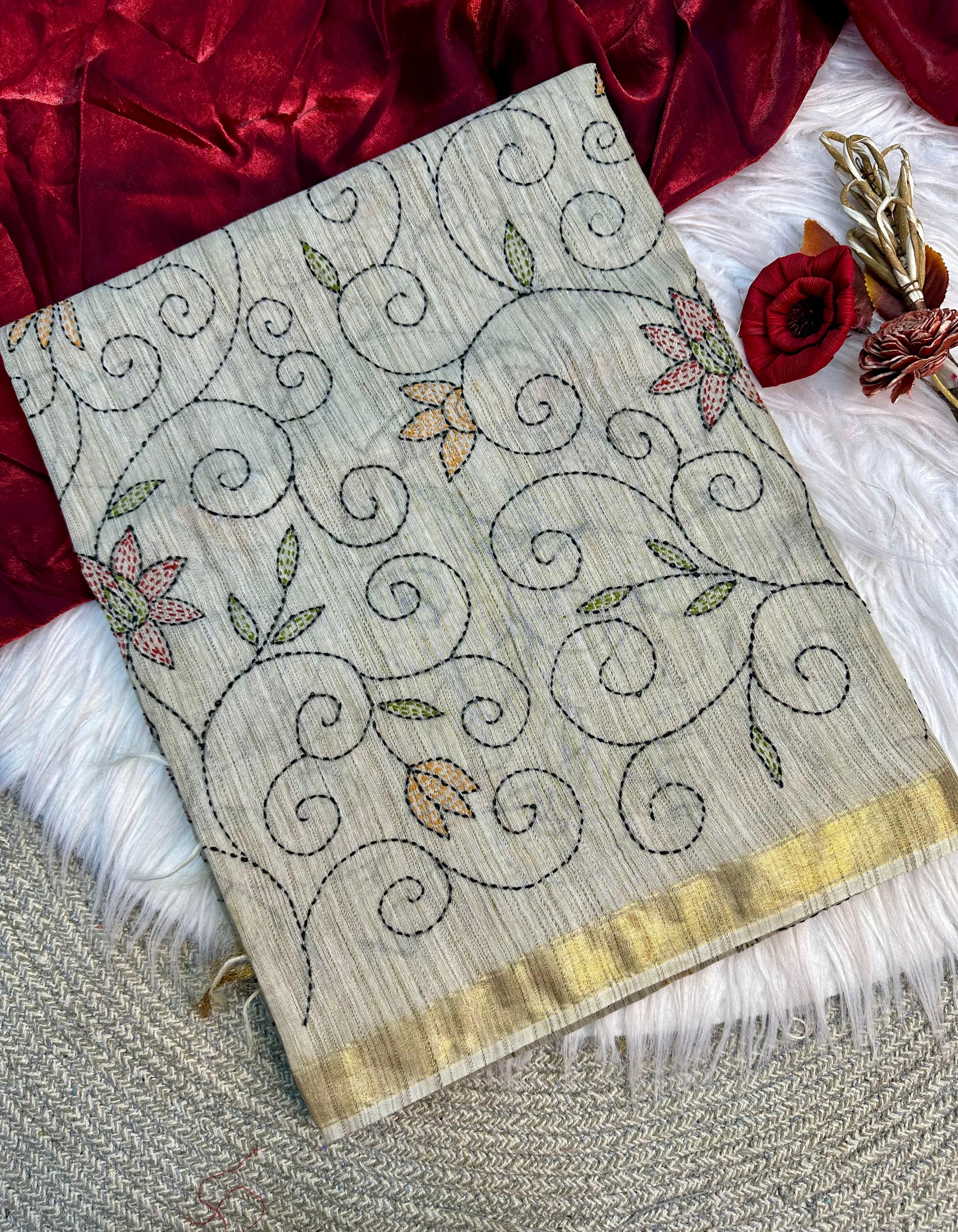
Read the care label before the first wash because zari, silk, printed sections and blended fibres may require different treatment. Dry cleaning is generally safer for silk, dense zari or colour-sensitive textiles. For washable cotton, use cold water, a mild detergent and a short gentle wash; avoid soaking for hours because long exposure can cause colour migration and weaken sizing.
don't wring a handloom saree. Press excess water between clean towels or roll the saree gently, then dry it in shade with the pallu supported. Direct midday sunlight can fade floral prints and dark borders. Iron cotton on the reverse side at a temperature suited to the fibre, and place a thin cloth between the iron and zari.
Fold sarees along different lines every few months to reduce permanent creases. Refold silk and zari sarees once every two to three months, especially if they remain in storage. Use unbleached muslin or another breathable cotton cover, keep the textile away from damp walls, and avoid placing heavy embroidered garments on top.
Small loose threads should be trimmed only after confirming that they're not part of the selvedge or motif. Never pull a snag. A professional handloom repairer can secure a damaged section before the weave unravels further.
Manipur Handloom Fashion Guide for Women: How can you buy with cultural respect?
Buy with cultural respect by asking what fibre, technique and regional reference the garment uses instead of treating every Northeast-inspired design as interchangeable. A transparent description helps shoppers value the textile while avoiding inaccurate labels.
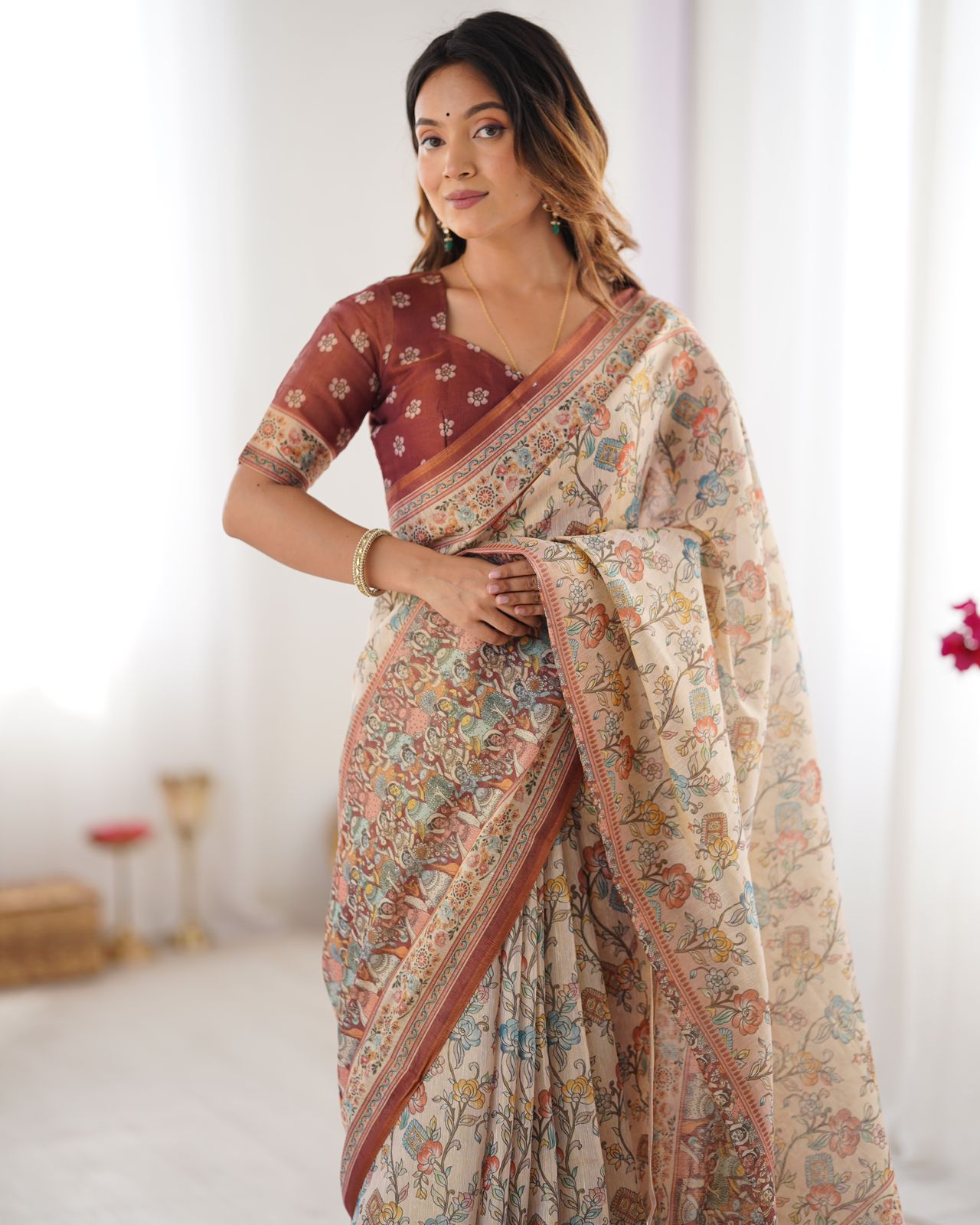
Ask whether the saree is handwoven, hand-finished or simply printed with a handloom-style motif. These terms describe different production processes. Check the fibre composition, dimensions, blouse-piece availability, colourfastness guidance and return conditions before purchase. A genuine handloom saree can have minor irregularities, but the seller should still provide clear information about construction and care.
Regional fashion also deserves accurate naming. Manipur, Assam, Nagaland, Meghalaya and other parts of Northeast India have distinct textile histories, even when current collections combine visual references. Calling a textile by its documented fibre, weave or community association is more respectful than applying a broad label based only on colour or pattern.
A considered wardrobe might include one light cotton saree for regular wear, one printed or patterned saree for daytime gatherings, and one silk or zari-accented saree for formal occasions. Such a small rotation encourages repeated use, makes care manageable and gives each handloom textile room to be noticed.
The strongest handloom outfit usually leaves one element visible: the yarn texture, the border, the pallu or the workmanship. Styling becomes more convincing when the textile remains the main subject.
Questions Women Ask About Manipur Handloom Saree Styling
What fabric is best for a comfortable Manipur-inspired handloom saree?
Light to medium-weight cotton is usually the most comfortable option for humid weather, commuting and long daytime events. Linen is airy but creases more readily, while silk is better suited to formal occasions and cooler indoor settings.
How can I style a Manipuri-inspired saree for work?
Pair a medium-weight cotton saree with a plain, well-fitted blouse, low-profile jewellery and practical footwear. Choose restrained borders and colours such as cream, beige, mushroom brown, olive or muted maroon, and keep the pallu securely pinned.
Can handloom sarees with zari be worn during the day?
Yes, handloom sarees with a narrow or moderate zari detail can work well during the day when paired with a simple blouse and limited jewellery. Avoid combining a dense zari pallu with heavy necklaces and elaborate hair accessories if you want a lighter daytime appearance.
How should a handloom cotton saree be washed?
Wash a washable cotton handloom saree briefly in cold water with mild detergent, and avoid prolonged soaking, bleach and wringing. Dry the saree in shade, iron it on the reverse side and follow the care label when the saree includes zari, silk or printed sections.
Are small irregularities in a handloom saree a defect?
Small variations in yarn thickness, weave density or motif alignment can be normal signs of handloom production. Holes, major tears, unstable dye, broken selvedges and extensive loose threads are quality concerns that should be raised with the seller.
What jewellery suits earthy handloom saree colours?
Antique gold works well with mustard, maroon, caramel and zari, while oxidised silver complements cool geometric or earthy designs. Pearls and lightweight gold jewellery soften cream and pastel floral sarees without competing with the weave.