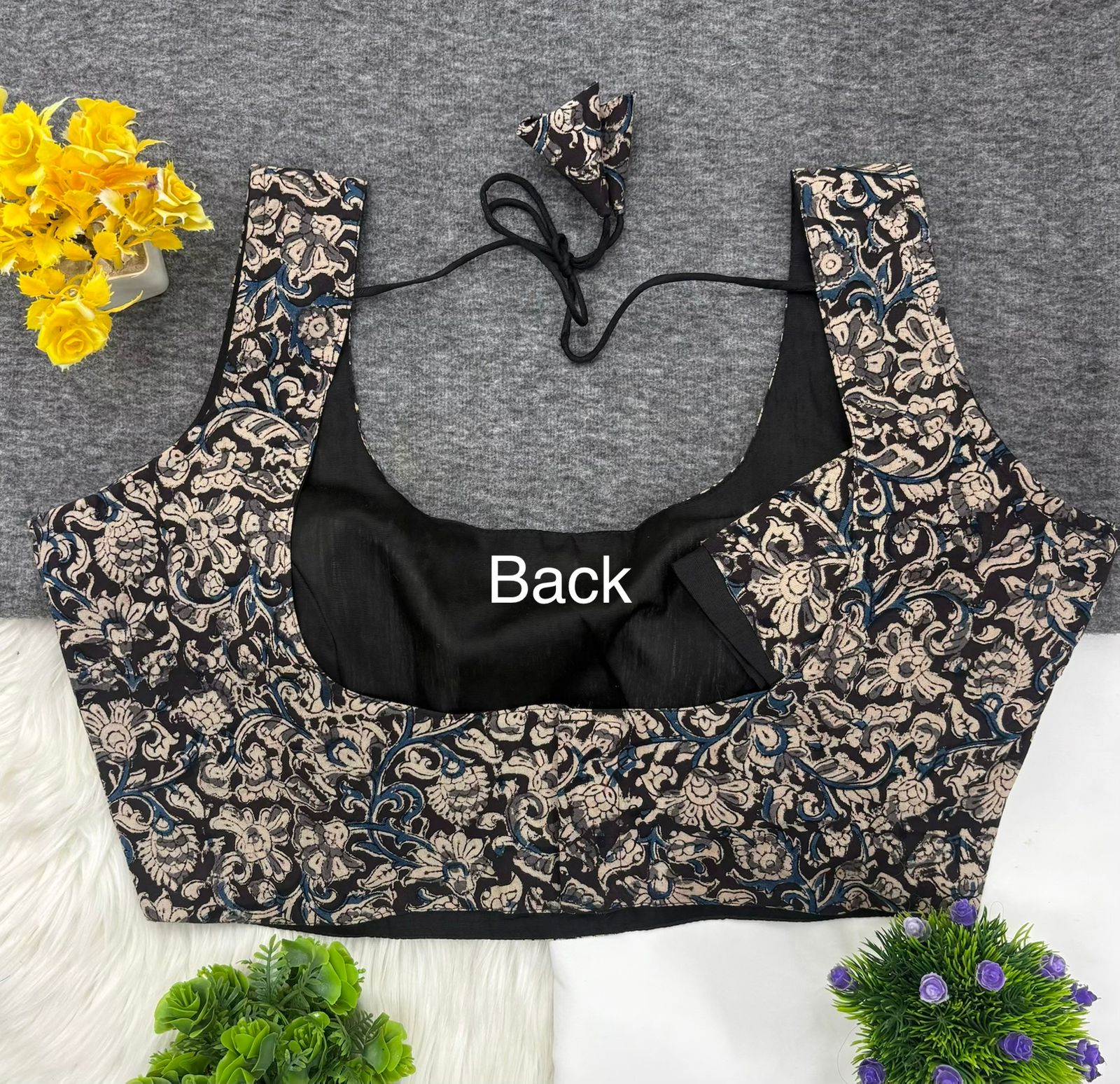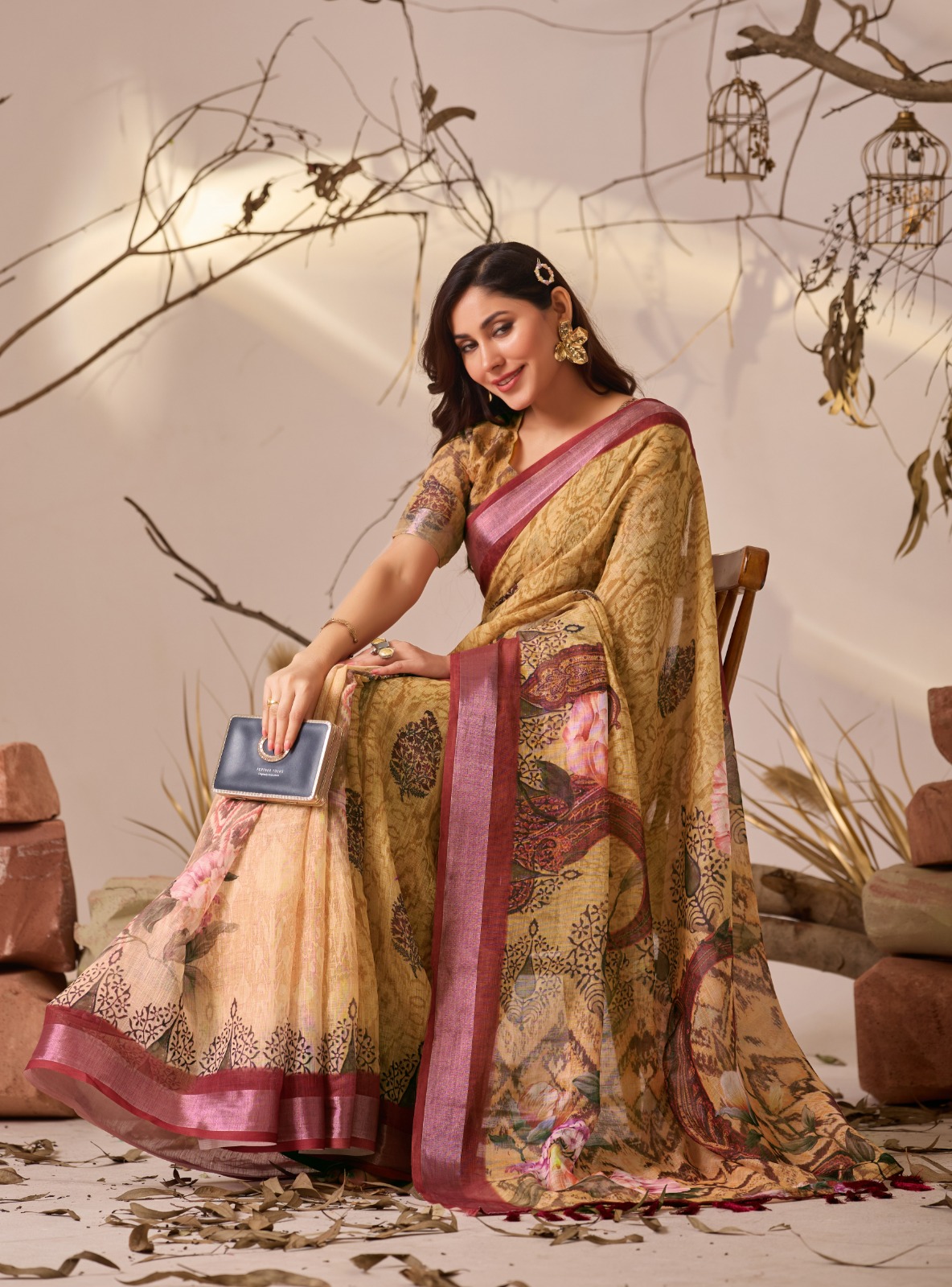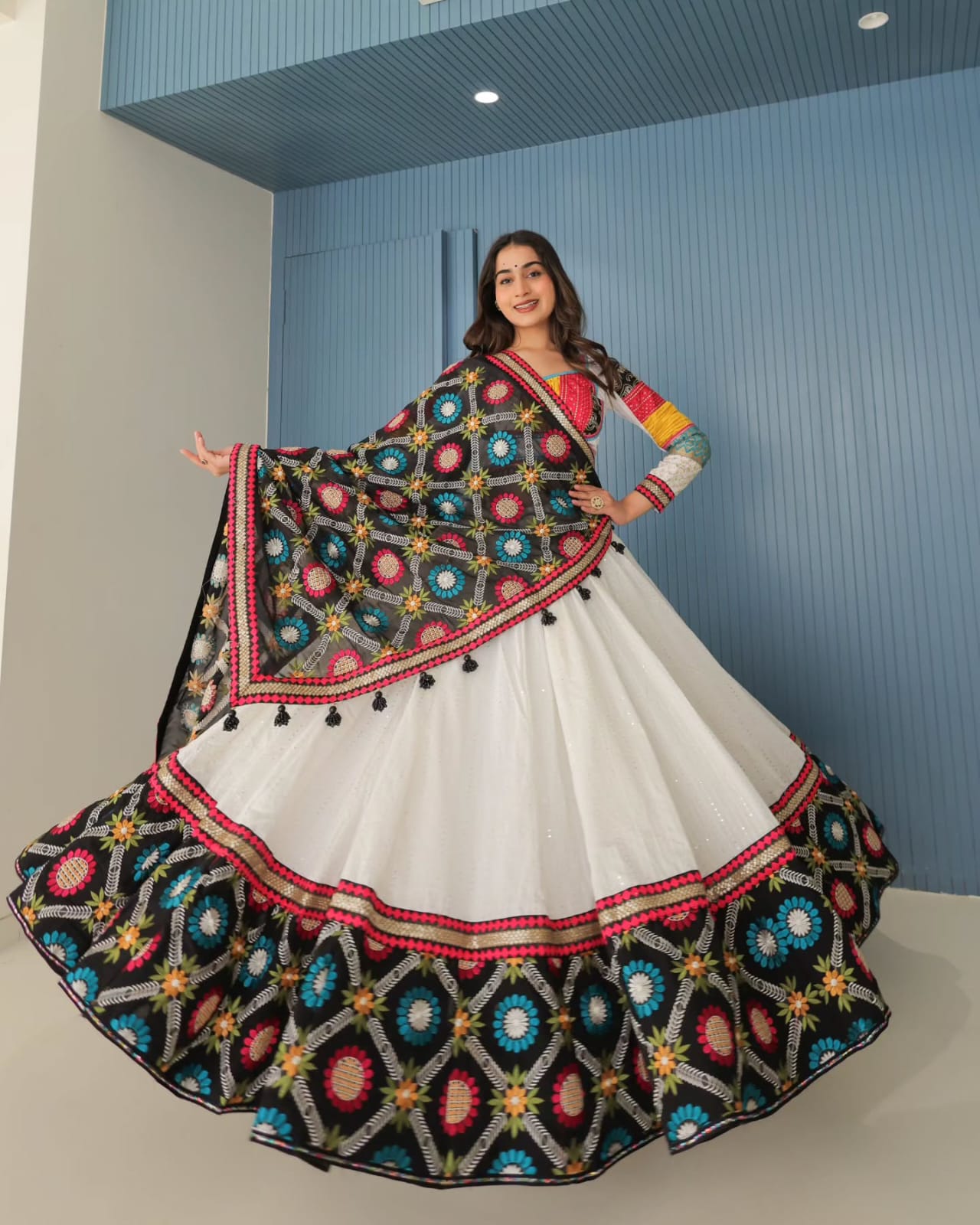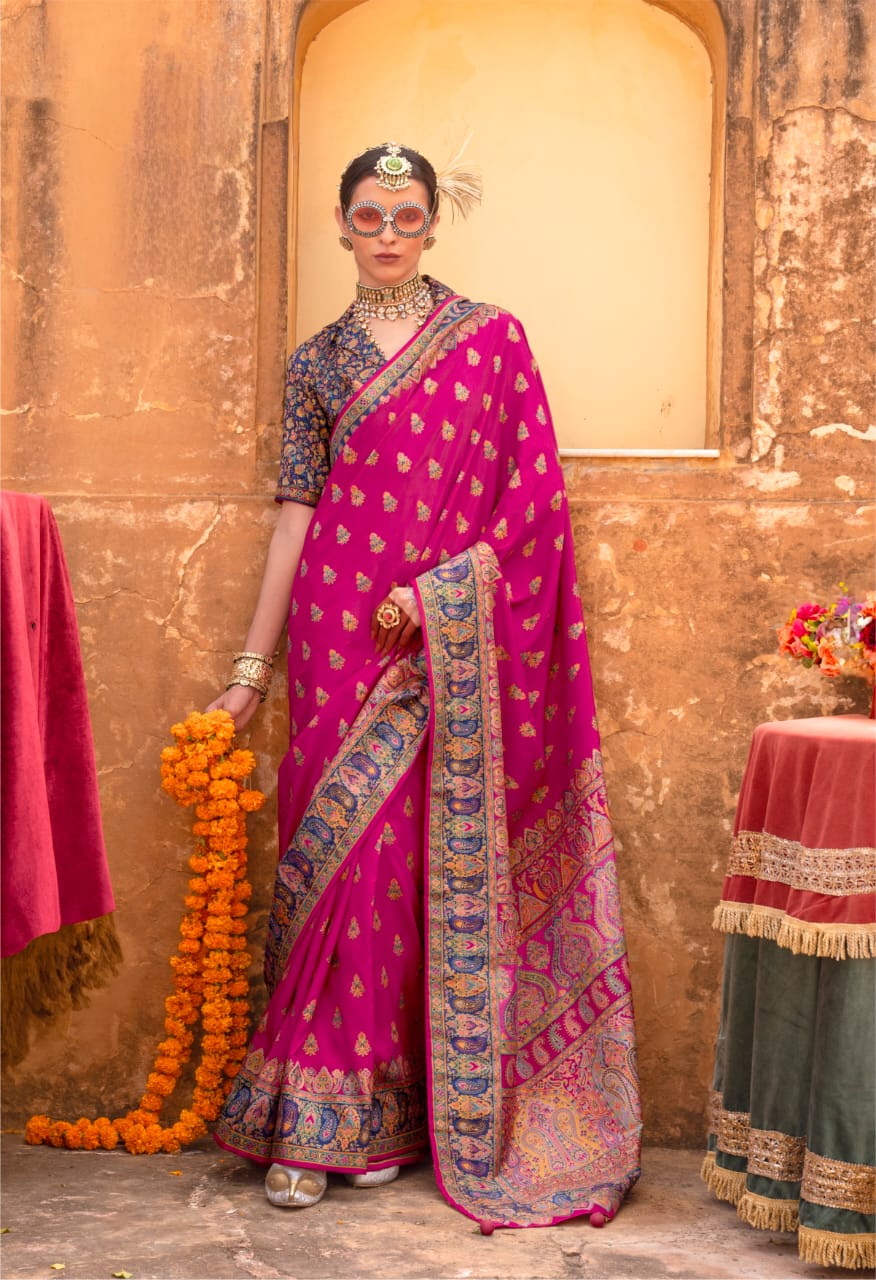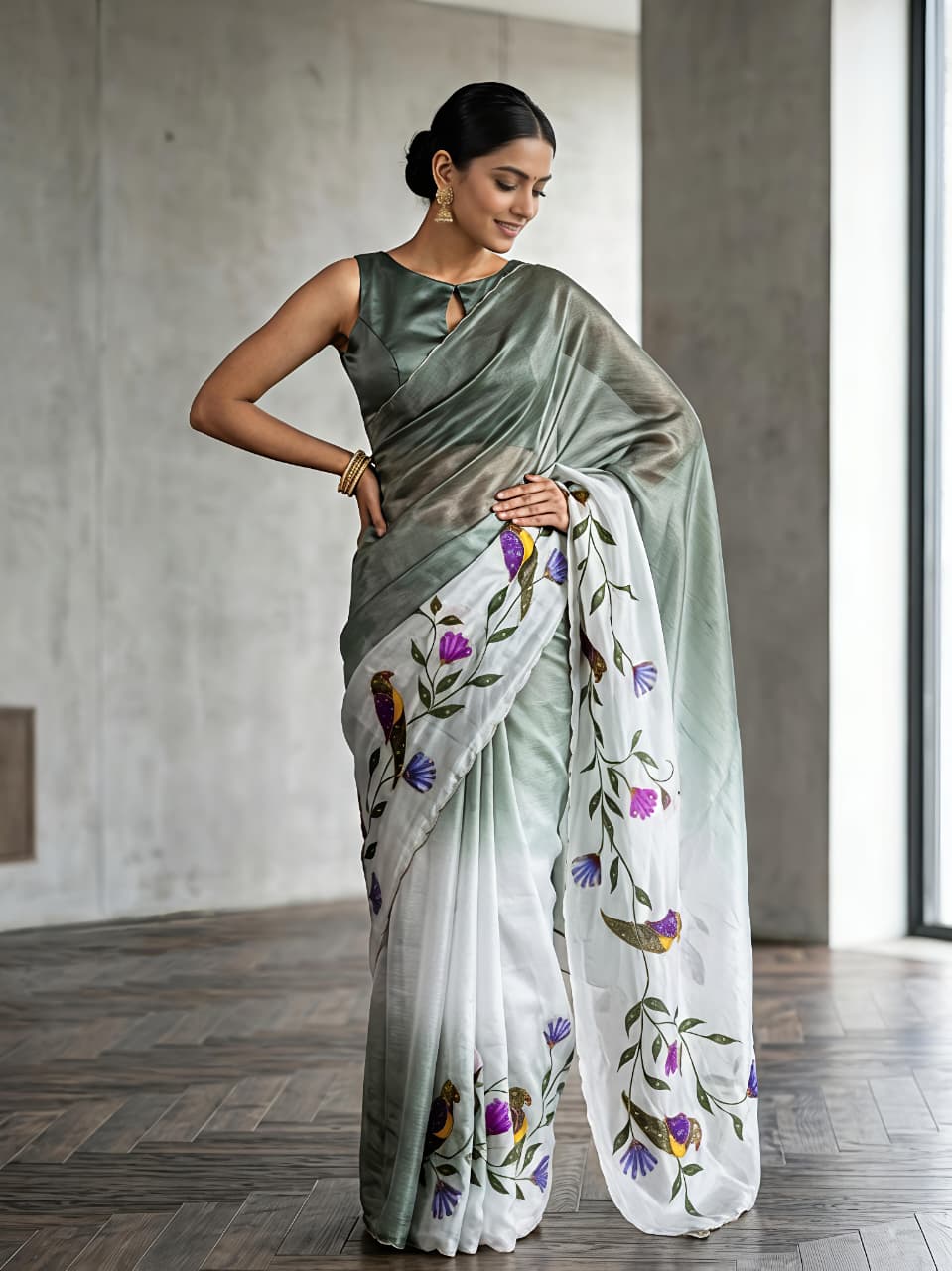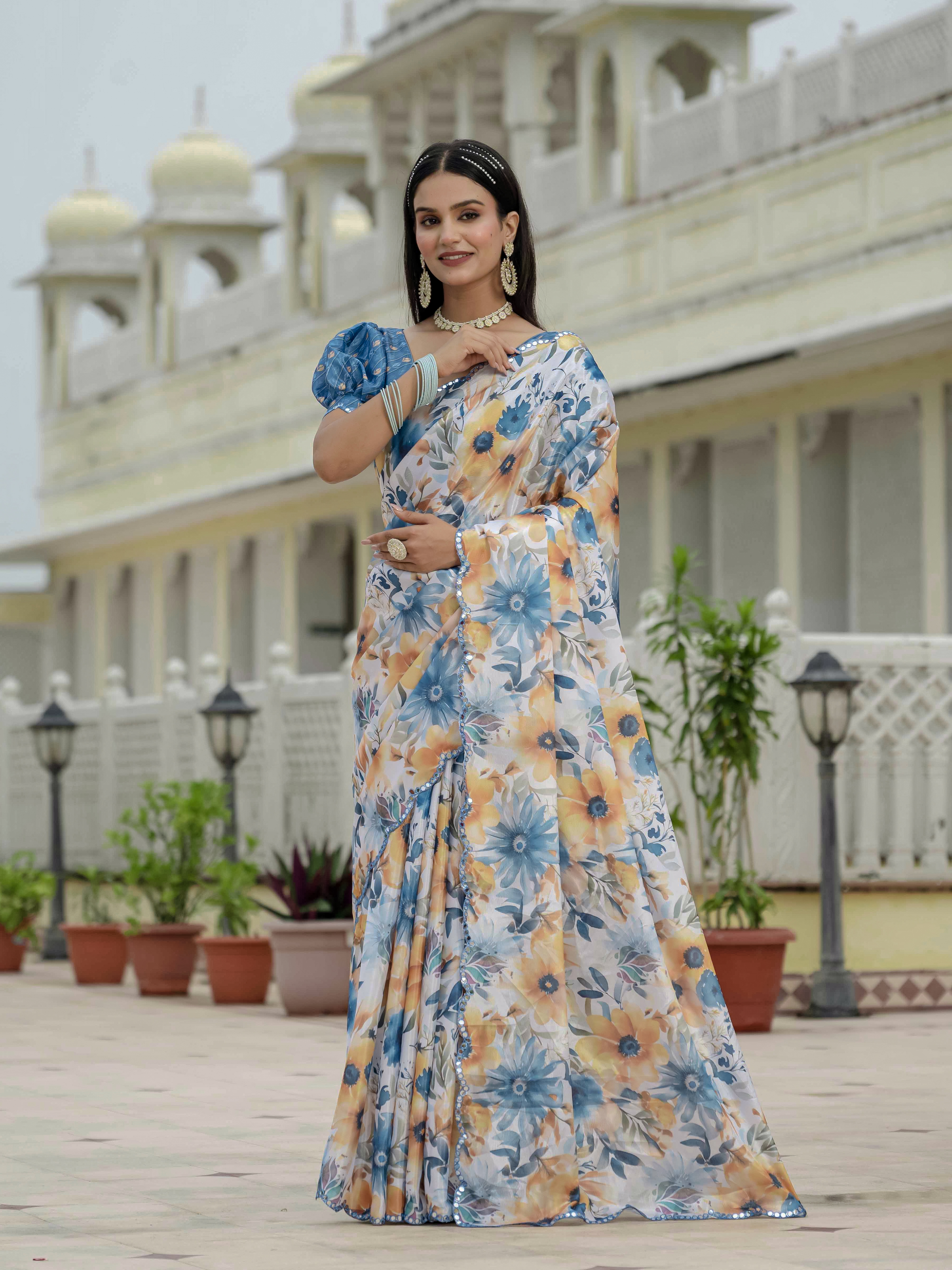
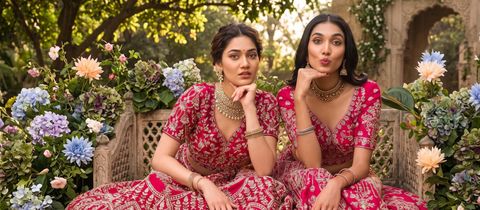
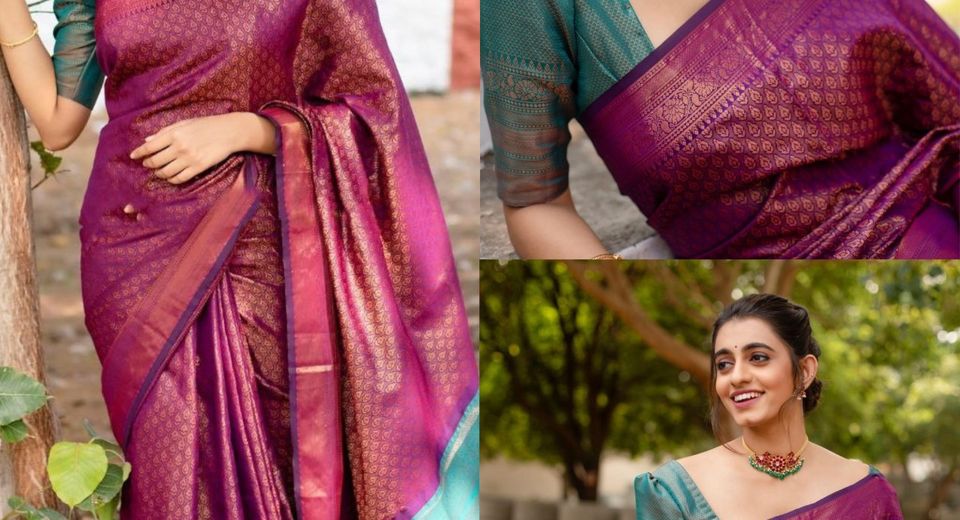
A Mangalagiri saree brings together the breathability of cotton, the discipline of a handloom border and the visual restraint associated with Andhra Pradesh weaving. Mangalagiri Sarees: History, Features and Styling Ideas become easier to understand when the saree is examined as both a regional textile and a versatile wardrobe piece. The fabric suits warm weather, long ceremonies and polished everyday dressing, while zari accents can move it into festive wear.
Mangalagiri sarees are often compared with other South Indian cottons, but their appeal lies in the balance between a relatively simple body and a clearly defined border or pallu. The right styling depends on recognising that balance. A busy blouse, heavy jewellery and a wide embellished belt can overwhelm a finely woven cotton saree; a carefully chosen blouse, compact jewellery and a crisp drape usually reveal its character better.
Mangalagiri Sarees: History, Features and Styling Ideas in Context
Mangalagiri sarees come from Mangalagiri, a historic temple town in present-day Andhra Pradesh, situated between Vijayawada and Guntur. The town is known for the Lakshmi Narasimha temple and for a long-standing handloom economy in which weaving has supported local households across generations.
The exact beginning of Mangalagiri weaving is difficult to reduce to one founding date, because regional weaving traditions developed gradually through family knowledge, local demand and changing trade routes. The craft became especially associated with cotton yardage and sarees woven on pit looms, with skills passed from one generation to the next rather than created as a single modern design movement.
Mangalagiri textile history is also connected to the practical needs of the Deccan and coastal Andhra climate. Lightweight cotton was useful for daily clothing, while borders and zari details gave the saree enough formality for temple visits, family gatherings and festivals. Mangalagiri handloom weaving therefore sits between utility and ceremony instead of belonging exclusively to either category.
Traditional Mangalagiri sarees are frequently recognised by a plain or lightly structured body, a narrow-to-medium border and a pallu that may use stripes, zari lines or restrained geometric organisation. Contemporary versions can introduce colour contrasts, printed bodies, tissue effects and decorative motifs, so every saree labelled Mangalagiri should still be assessed by its fibre, weave and finishing details rather than by name alone.
What makes Mangalagiri cotton distinctive?
Mangalagiri cotton is distinctive because it combines a firm, clean handloom texture with an airy cotton structure and a visually disciplined border. The saree usually feels comfortable against the skin, holds a neat pleat and has enough body to create an orderly fall without the weight of heavy silk.
Weave and surface
Handloom cotton can show tiny irregularities in slubs, selvedges or yarn spacing, and these variations are not automatically defects. A genuine handloom surface may look less mechanically uniform than mill-made cloth. The saree should nevertheless have a secure selvedge, consistent edge finishing and no open gaps caused by poor handling.
Mangalagiri weaving is commonly associated with a smooth yet slightly crisp cotton feel. The crispness helps the saree remain presentable through a workday or ceremony, while cotton keeps the garment more breathable than many synthetic party-wear fabrics. The final hand depends on yarn count, finishing, starching and whether the saree includes silk, zari or blended elements.
Border, pallu and zari
The border and pallu provide the strongest visual identity in many Mangalagiri designs. Zari may appear as a restrained line, a temple-inspired rhythm, metallic stripes or a more prominent festive border. Real zari can contain metal-coated yarn or precious-metal content depending on the product, so buyers should check the seller's fibre and zari description instead of assuming that every shiny thread is pure zari.
Some newer designs borrow the lightness and border discipline of Mangalagiri weaving while adding tissue shine, floral prints or Jamdani-inspired motifs. Pastel Floral Tissue Handloom Cotton Saree with Zari Weaves and Cream Pink Tissue Handloom Cotton Saree with Zari illustrate how a contemporary handloom cotton look can use metallic accents without becoming as weighty as a traditional silk saree.
How is a Mangalagiri saree different from other cotton sarees?
A Mangalagiri saree is generally identified by its regional weaving association, cotton structure and controlled border-and-pallu design, whereas a generic cotton saree may come from any weaving centre and use any combination of motifs, yarns or finishing techniques.
Chanderi cotton can appear more translucent and may have a softer, dressier lightness. Bengal cotton often draws attention through distinctive checks, stripes or regional motifs. Ilkal sarees are known for their characteristic joining technique and contrasting pallu construction. Mangalagiri cotton usually makes a quieter statement through a composed body, a clean border and a practical drape.
A Mangalagiri saree should also not be confused automatically with every Andhra handloom saree. Uppada, Venkatagiri and other regional traditions have their own yarn choices, structures and design languages. The name Mangalagiri describes a textile lineage and weaving centre, but contemporary retail categories can include adaptations, so a transparent product description matters.
Silk changes the behaviour of a saree considerably. Banarasi silk has a more reflective surface and often a denser decorative vocabulary, while Kanjeevaram is known for its substantial silk body and strong contrasting borders. A Mangalagiri cotton saree is usually lighter, more breathable and easier to wear for several hours in warm conditions.
Which colours and designs work best for Mangalagiri sarees?
Solid, pastel, jewel and earthy shades all work well, but the best colour depends on whether the saree's border is meant to blend with the body or create contrast. A pale body with a defined zari border looks refined for daytime ceremonies, while wine, magenta, maroon or deep green can create a more formal evening impression.
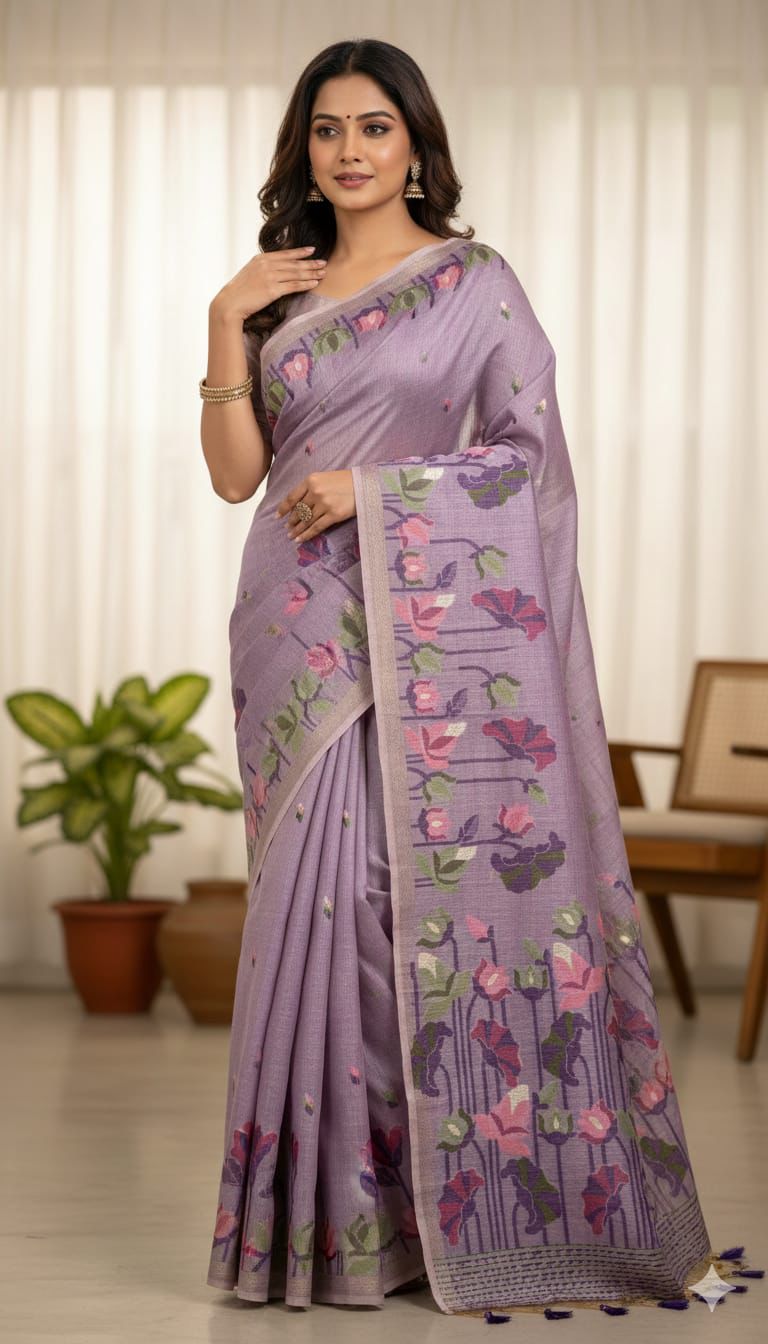
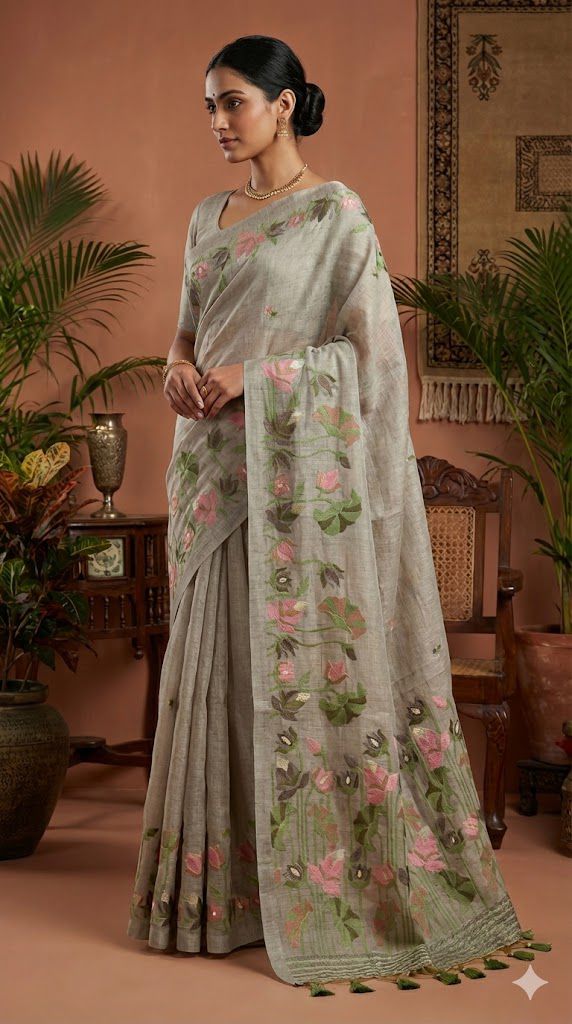
Pastel cotton sarees suit Haldi ceremony dressing because yellow, blush, mint and lavender photograph softly in daylight and feel comfortable during movement. Lavender Muga Cotton Saree with Lotus Jamdani Pallu and Sage Green Muga Cotton Saree with Lotus Jamdani Pallu show how botanical pallu detailing can supply visual interest when the main body remains calm.
Printed bodies can make the saree feel more relaxed, but the print scale should be considered before selecting accessories. Wine Tissue Handloom Cotton Saree with Zari & Floral Prints has a stronger decorative presence than a plain-border cotton saree, so a solid blouse and fewer accessories will usually create a more balanced outfit.
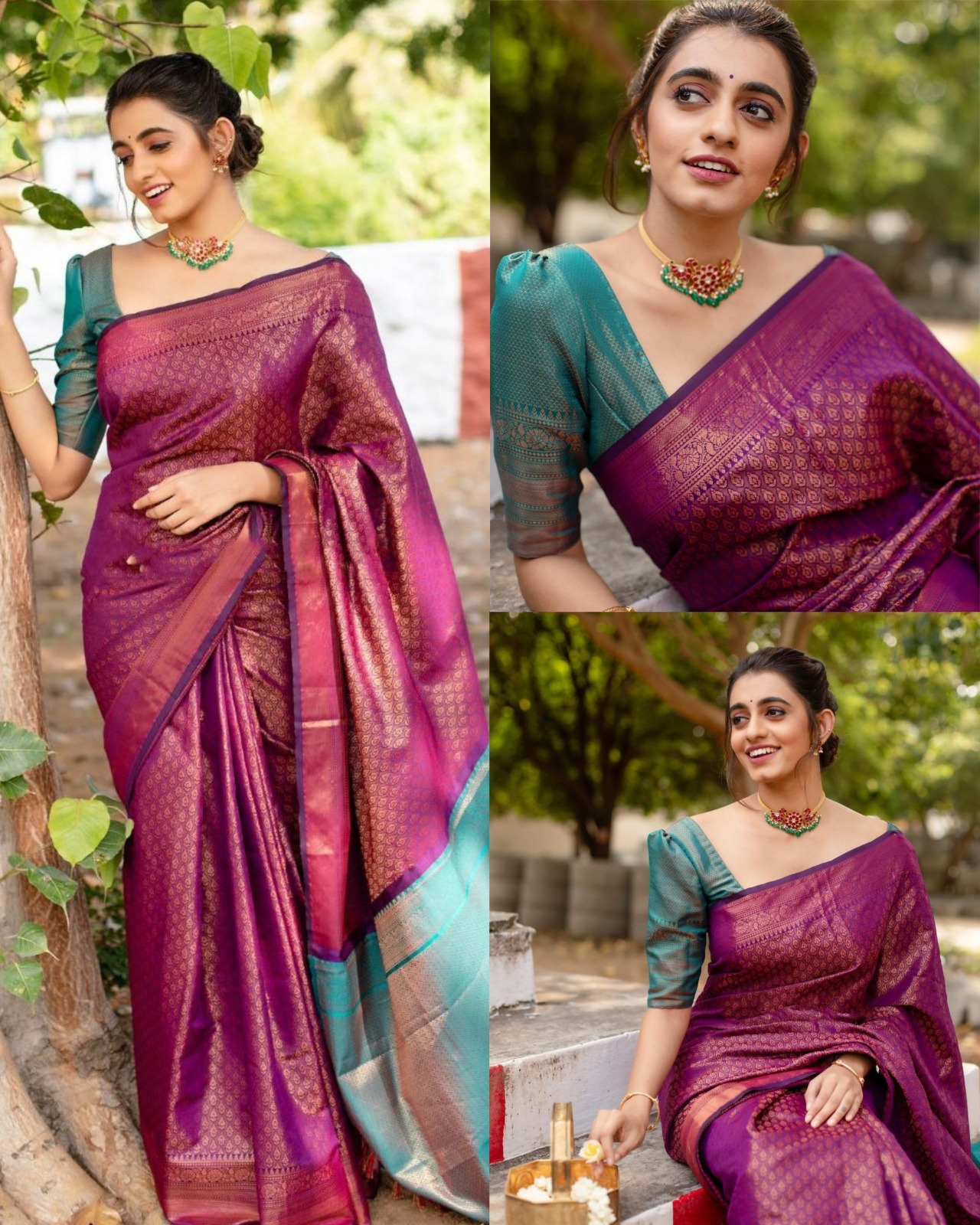
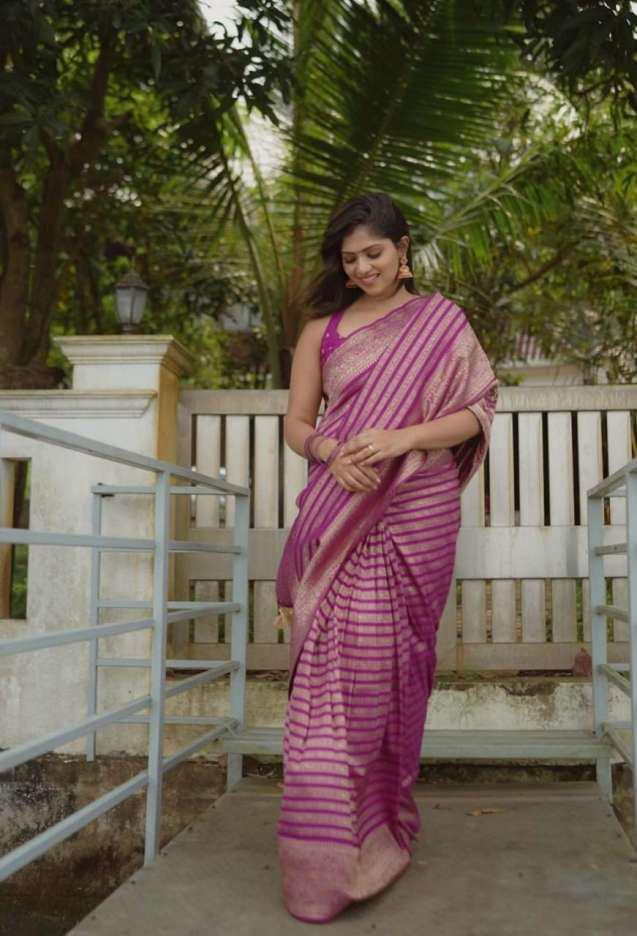
For a polished traditional palette, pair off-white, cream or muted pink with antique gold, copper or green accents. Magenta Lichi Silk Saree with Copper Zari Pallu and Maroon Banarasi Soft Silk Saree with Golden Zari Border are not Mangalagiri cotton examples, but they demonstrate how copper and gold borders can guide blouse colour choices for a richer festive wardrobe.
How can you style Mangalagiri sarees for different occasions?
Mangalagiri sarees can be styled for office wear, temple visits, daytime celebrations and intimate festive events by changing the blouse structure, jewellery scale and drape rather than replacing the saree entirely.
For work and daytime wear
Choose a high-neck, elbow-sleeve or short-sleeve blouse in a solid colour drawn from the saree border. A small leather or metal watch, compact studs and a low bun keep the outfit professional. Pleat the pallu neatly over the shoulder and use a modest number of safety pins so the cotton remains comfortable while commuting.
Indigo, maroon, bottle green, ivory and muted rust blouses work especially well with handloom cotton. A narrow belt can define the waist for a contemporary office look, but the belt should be matte and lightweight rather than heavily embellished. Flat sandals, block heels under five centimetres and a structured fabric bag complement the practical character of the saree.
For weddings and festive ceremonies
For a wedding guest outfit, use a silk-blend or raw-silk blouse with a border that echoes the saree's zari. A three-quarter sleeve, square neckline or modest boat neck adds ceremony without competing with the pallu. Gold jhumkas, a single bangle stack and a small bindi are often enough for a cotton saree with a visible zari edge.
Red Banarasi Silk Sarees for Weddings Under 1100, Party Wear Sarees and Pink Georgette Sarees are useful comparison points when building a broader occasion wardrobe. Banarasi silk and georgette create more shine or fluidity, while Mangalagiri cotton offers a lighter, more rooted handloom look. Choosing between them should depend on venue temperature, event duration and the amount of movement required.
For a Haldi ceremony or daytime family event
A Haldi ceremony calls for washable comfort, secure pleats and accessories that can tolerate movement. Select a bright blouse in yellow, coral, parrot green or pink, then keep the jewellery to enamel earrings, glass bangles or fabric flowers that don't snag the cotton.
For a more contemporary drape, pin the pallu in narrow pleats and wear a sleeveless blouse only when the setting permits it. A low braided ponytail, fresh flowers and flat footwear create a practical look for outdoor functions. Cotton also makes a sensible choice when the event involves sitting on the floor, walking between venues or spending several hours in heat.
How should you shop for Mangalagiri sarees online?
Online shoppers should verify fibre content, weave description, saree length, blouse-piece details and close-up images before purchasing a Mangalagiri saree. A product title alone can't establish whether a saree is handloom cotton, powerloom cotton, cotton-silk or a synthetic adaptation.
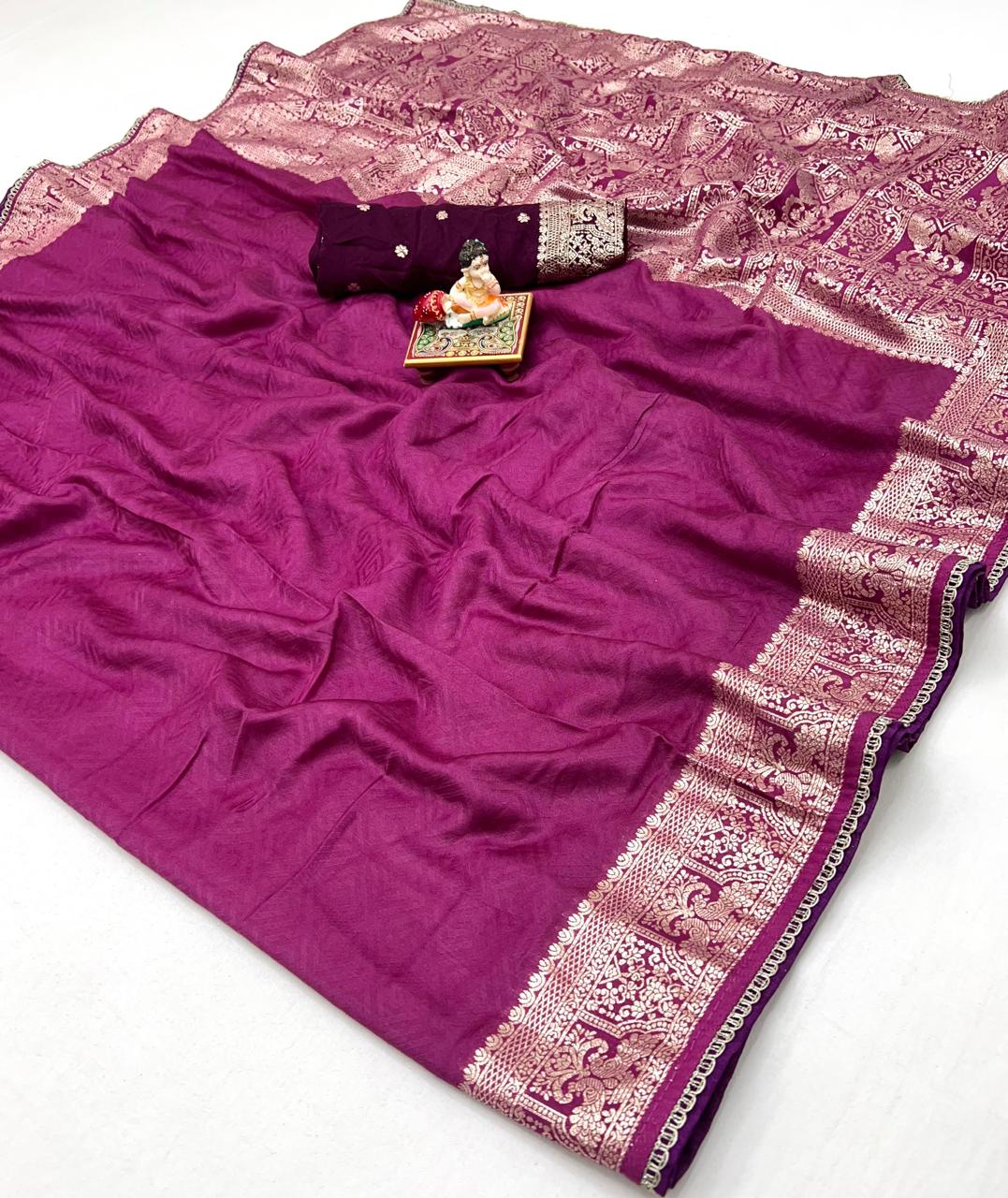
Look for a stated saree length of roughly 5.3 to 5.6 metres and a blouse piece of about 0.8 to 1 metre, although measurements vary by seller. Ask whether the saree is pre-washed, starched or colourfast, and check whether zari is metallic yarn, tested zari or another decorative thread. A transparent website should also provide wash instructions and a clear explanation of returns for colour or weaving irregularities.
Price isn't a reliable authenticity test by itself. Handloom wages, yarn quality, zari content, dyeing, finishing and seller margins all affect the final price. A very low price may indicate a synthetic blend or powerloom production, but a high price may also reflect embellishment or branding rather than superior handloom work.
Collections such as Silk Sarees Under 3000 With Discount and Gray Color Sarees Under 1000 can help shoppers compare budgets, but neither collection label proves that a saree is Mangalagiri. Brands and online marketplaces should state the actual material and production details. Buyer reviews are most useful when they comment on transparency, colour accuracy, fabric weight and post-wash behaviour rather than only on appearance.
Before ordering, measure a blouse that fits well and compare its shoulder, bust and armhole measurements with the seller's chart. Saree length is rarely the main fit problem; blouse sizing and the finished fall usually determine whether the garment feels easy to wear.
How do you wash and store a Mangalagiri saree?
Hand-wash plain cotton Mangalagiri sarees gently in cool water only when the care label permits it, and use professional dry cleaning for sarees with delicate zari, tissue, silk content or unstable dyes.

For a washable cotton saree, test colour bleed on a hidden edge before the first full wash. Use a mild liquid detergent, avoid soaking for long periods, don't scrub the zari border and rinse until no detergent remains. Dry the saree inside out in shade, because strong direct sunlight can fade dyes and weaken some decorative threads.
don't wring a wet saree tightly. Press excess water between clean towels, then hang it on a wide hanger or dry it flat enough to prevent stretching. Iron cotton on the reverse side at a suitable medium temperature, placing a thin cotton cloth over metallic work. Excessive starch can make the fabric brittle over time, particularly where the saree folds repeatedly.
Store the saree clean and completely dry in a breathable cotton or muslin cover. Refold the saree every few months along different lines to reduce permanent creases, and keep it away from damp walls, perfumes, metal hooks and direct sunlight. Tissue cotton, Muga cotton, Banarasi silk and zari-rich sarees require more cautious storage than an unembellished cotton weave.
Why Mangalagiri sarees still matter in an up-to-date wardrobe
Mangalagiri sarees remain relevant because they solve several current dressing needs at once: they're breathable, comparatively easy to carry, visually polished and adaptable across age groups. A simple cotton body can accompany workwear, while a zari border or carefully chosen blouse can make the same regional textile appropriate for a celebration.

The strongest purchase is one that respects both the craft and the garment's practical use. Check the fibre, understand the border, select accessories in proportion to the pallu and follow the care instructions. Mangalagiri Sarees: History, Features and Styling Ideas are not only a search topic; they're a way to recognise how regional handloom knowledge can remain useful in everyday Indian dressing.
Questions Shoppers Ask Before Buying Mangalagiri Sarees
What makes Mangalagiri sarees special?
Mangalagiri sarees are valued for their breathable cotton, firm handloom texture and neatly organised borders and pallus. Zari lines, stripes and restrained geometric details often add formality without making the saree heavy.
Are Mangalagiri sarees suitable for summer weddings?
Mangalagiri cotton sarees are suitable for summer weddings because cotton allows airflow and is usually lighter than heavy silk. Choose a zari border, silk or raw-silk blouse and festive jewellery when the event calls for a more formal appearance.
How can I identify an authentic Mangalagiri handloom saree online?
Check whether the listing clearly states the fibre, handloom or powerloom method, saree measurements, blouse-piece details and care instructions. Close-up photographs of the selvedge, border and weave are more useful than a generic claim of authenticity, and buyer reviews can reveal colour bleeding or finishing issues.
Can Mangalagiri sarees be worn as women’s party wear?
Mangalagiri sarees can work as women's party wear when paired with a structured blouse, metallic accessories and a crisp pleated drape. A stronger colour, tissue finish or zari border can provide evening presence while retaining cotton comfort.
Are Mangalagiri sarees easy to maintain?
Plain cotton Mangalagiri sarees are generally easier to maintain than zari-rich silk sarees, provided the care label allows gentle washing. Cool water, mild detergent, shade drying and breathable storage help preserve colour and fabric strength.
Which online site is best for buying silk or handloom sarees?
The best online site is one that gives verifiable fibre details, accurate measurements, close-up images, care instructions and a clear return process. A website should be judged by product transparency and service evidence rather than by a large catalogue or the word "handloom" in a title alone.