

A Maheshwari Saree Guide: Madhya Pradesh Handloom & Styling Ideas begins in Maheshwar, a historic town on the Narmada River where fine cotton and silk sarees are woven with narrow borders, geometric motifs and distinctive pallus. Maheshwari sarees are valued because they can look crisp enough for daytime dressing yet carry enough zari or silk sheen for festive wear. The most useful way to choose one is to understand the fibre blend, border construction, fall of the fabric and relationship between the saree and blouse.
Maheshwari weaving developed under the patronage of Ahilyabai Holkar in the eighteenth century, when skilled weavers were invited to Maheshwar to create refined textiles for the royal household. Contemporary Maheshwari sarees retain that balance of lightness and structure, but they now appear in handloom cotton, silk-cotton and silk versions. The difference between these materials affects comfort, drape, price and care more than colour alone.
Maheshwari Saree Guide: Madhya Pradesh Handloom origins and identifying features
A Maheshwari saree is distinctive for its lightweight handloom body, defined border, decorative pallu and frequent use of contrasting warp and weft colours. Traditional designs include stripes, checks, small geometric forms, floral details and motifs associated with Maheshwar architecture and the Narmada landscape.
Many classic Maheshwari sarees have a reversible border, often described as a bugdi-style or kinari-inspired border in different design vocabularies. The border may show a complementary colour on the reverse rather than a completely unrelated finish. A neat selvedge, even picks and a pallu that holds its shape are useful visual signs when comparing sarees.
Maheshwari cotton uses cotton yarn for a dry, breathable and relatively matte surface. Silk-cotton Maheshwari sarees combine a cotton body with silk yarn in selected areas or throughout the structure, giving the fabric a gentle sheen and smoother drape. Maheshwari silk feels more fluid and luminous, but it generally needs more careful storage than light cotton handloom.
Zari may appear on the border, pallu or small motifs. Real zari can be made with a metallic coating over a core yarn, while imitation zari usually has a brighter, more uniform surface and may tarnish differently. Zari content alone doesn't prove that a saree is handmade, so construction, fibre information and finishing should be assessed together.
Maheshwari Saree Guide: Madhya Pradesh Handloom fabric choices for comfort
Choose cotton Maheshwari for hot weather, long workdays and daytime ceremonies; choose silk-cotton for a more polished drape; and choose Maheshwari silk when sheen and occasion formality matter most.
Which Maheshwari fabric works best for summer?
Maheshwari cotton works best for summer because its breathable structure feels lighter during warm weather. A cotton saree with a narrow border is suitable for teaching, office wear, cultural events and travel. Cotton also responds well to firm pleats, making the fabric easier to manage for someone new to handloom sarees.
Look for a body that feels even rather than excessively stiff. Slight irregularities in yarn thickness can occur in handloom weaving, but large slubs, skipped threads or an unstable selvedge deserve closer inspection. A cotton saree may soften after careful washing, so a slightly crisp first touch isn't automatically a defect.
When should you choose silk-cotton or silk?
Silk-cotton Maheshwari sarees offer a practical middle ground between breathability and lustre. The fabric usually falls closer to the body than pure cotton and photographs well under indoor lighting. Maheshwari silk creates a more formal silhouette, especially when the pallu has zari, tissue-like highlights or a wide contrast border.
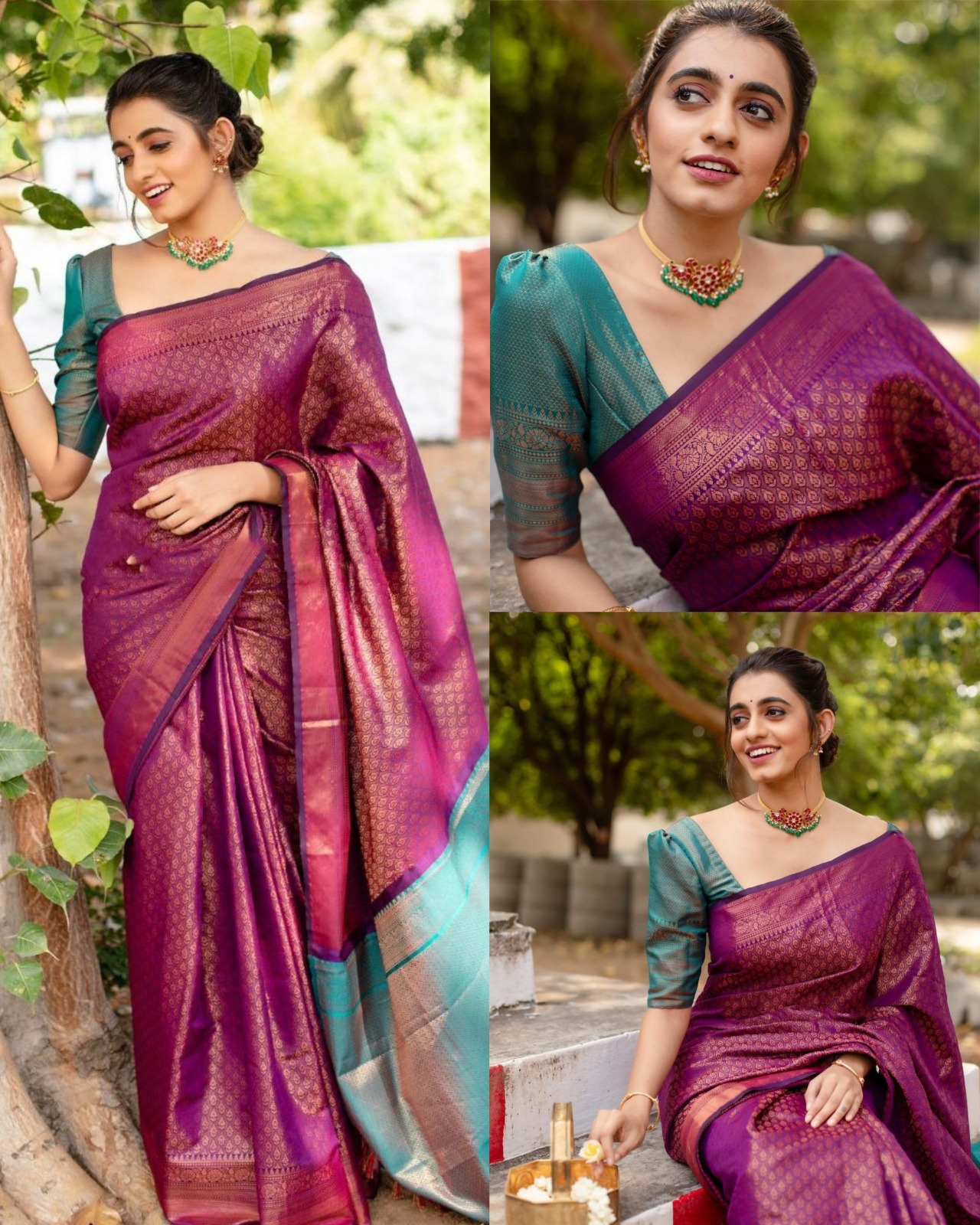
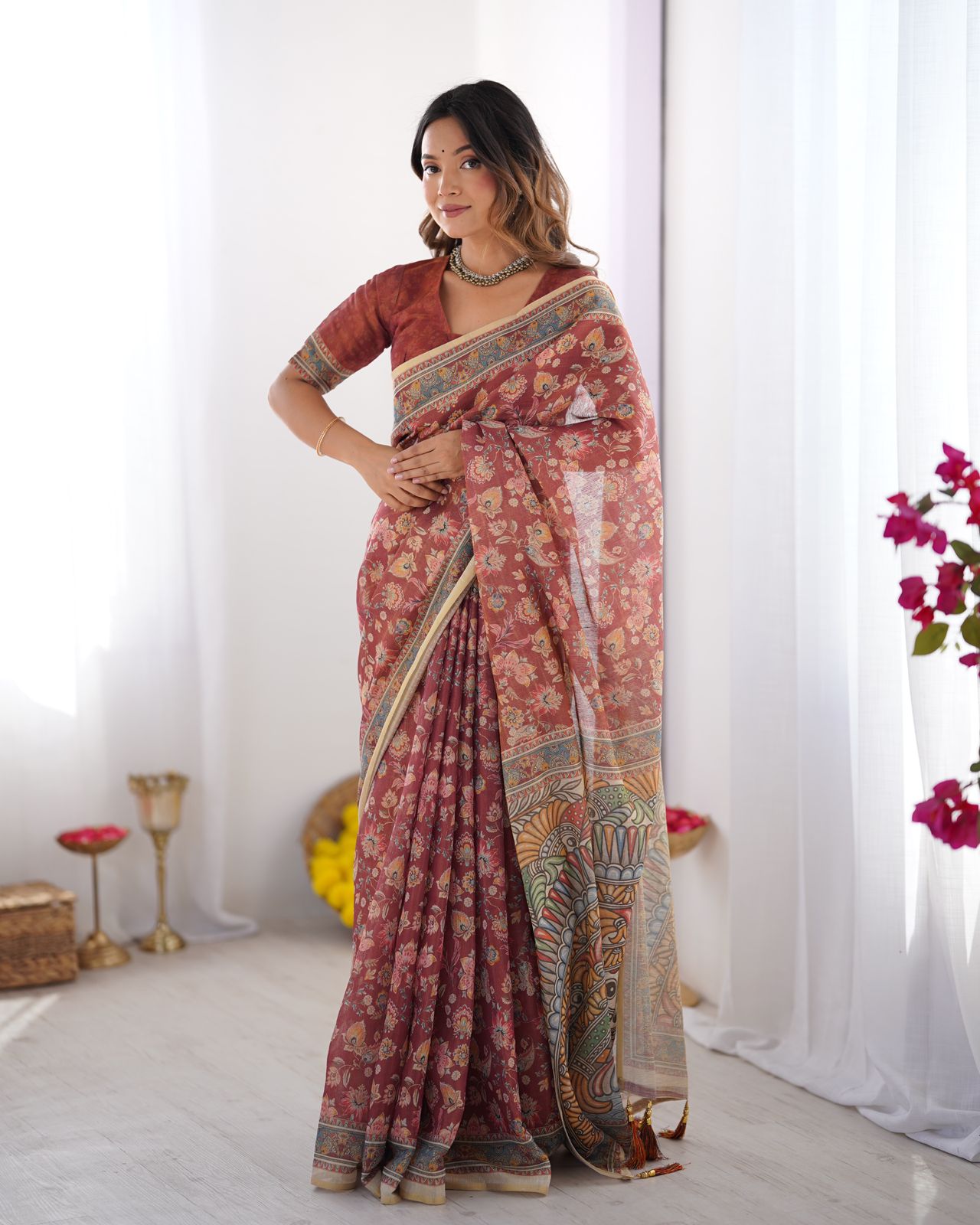
Premium Wine Maroon Floral Handloom Saree with Designer Pallu illustrates how a deeper base colour can carry attention through the pallu instead of heavy all-over embellishment. Peach Beige Floral Handloom Saree with Ethnic Border offers a softer palette that can be paired with antique-gold jewellery and a blouse one shade darker than the body.
Maheshwari Saree Guide: Madhya Pradesh Handloom buying checks that prevent mistakes
Inspect the fibre composition, border alignment, pallu finishing, colour consistency and measurements before buying a Maheshwari saree. These checks reveal more about usability than a product photograph alone.
- Read the fibre description. Confirm whether the saree is cotton, silk-cotton or silk, and check whether the blouse piece uses the same material as the main body.
- Measure the length and width. A saree commonly measures around 5.3 to 5.5 metres without a blouse piece, but measurements vary. A taller wearer or a fuller petticoat may need additional length for comfortable pleats.
- Examine the border. The border should remain reasonably parallel to the selvedge. Minor handloom variation is normal; a visibly wavering border can make front pleats difficult.
- Check the pallu. Hold the pallu up and inspect the transition from body to border. Loose threads, unfinished tassels or abrupt colour breaks can indicate weak finishing.
- Test transparency in daylight. A lightweight cotton saree can be slightly translucent, but the body should not look patchy or excessively open unless the product description clearly states that effect.
- Ask about colour bleeding. Deep indigo, maroon, black, red and mustard dyes deserve a first-wash precaution. Sellers should provide washing guidance for the specific saree.
Price comparisons should account for fibre, handloom origin, zari, weaving complexity and finishing rather than treating every Maheshwari saree as the same category. A simple cotton handloom may be more useful for frequent wear than a silk saree with a higher price, while a silk-cotton version may offer better value for a wardrobe that needs one saree for repeated festive use.
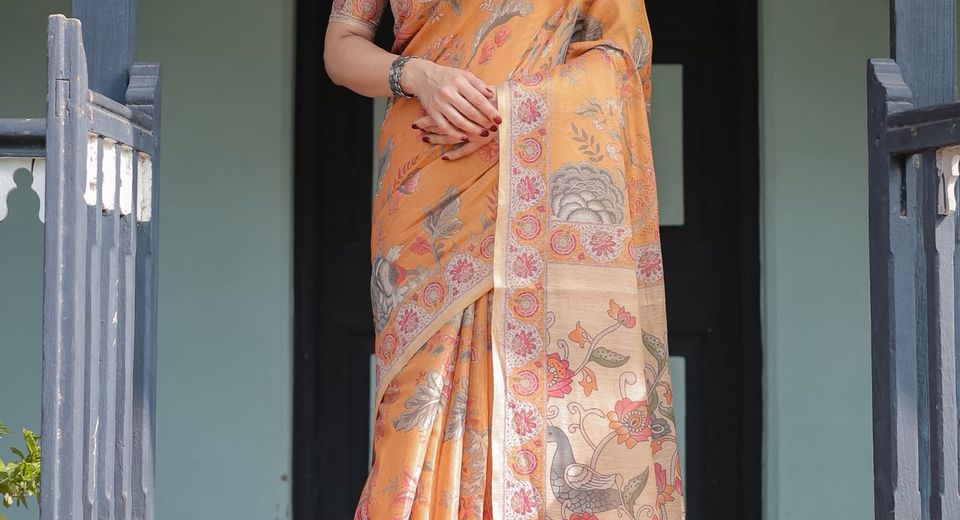
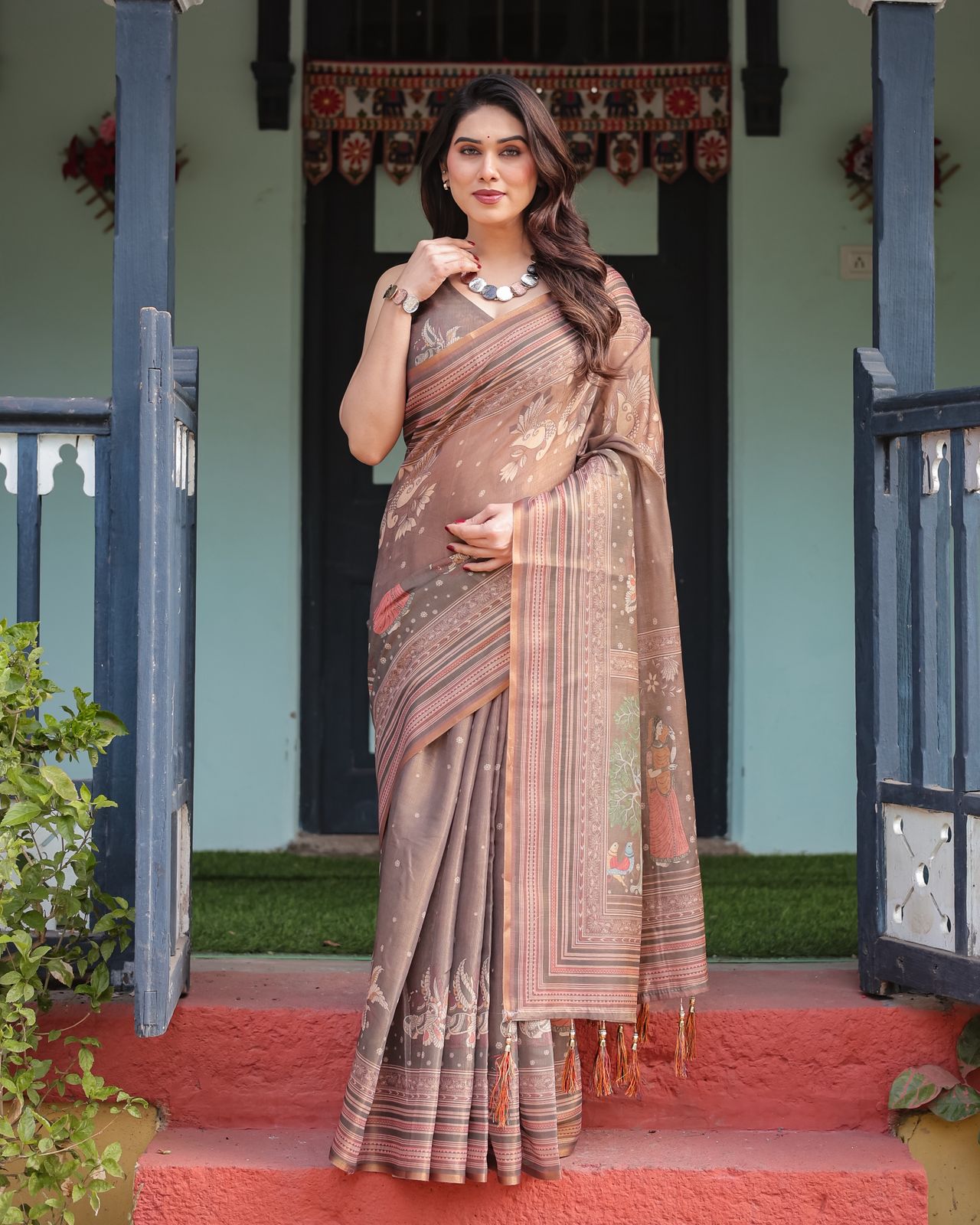
Mushroom Brown Handloom Saree with Ethnic Striped Border is a useful reference for an earthy base supporting a sharper striped edge. Marigold Handloom Floral Bird Print Saree with Tassel Pallu brings warmth through yellow-gold colour and movement at the pallu. Both examples show why border and pallu details deserve as much attention as the main body.
Maheshwari Saree Guide: Madhya Pradesh Handloom motifs and colour combinations
Maheshwari sarees look most recognisable when colour contrast, small-scale motifs and a defined pallu remain visible. Large accessories or a very busy blouse can hide the textile features that make the weave appealing.
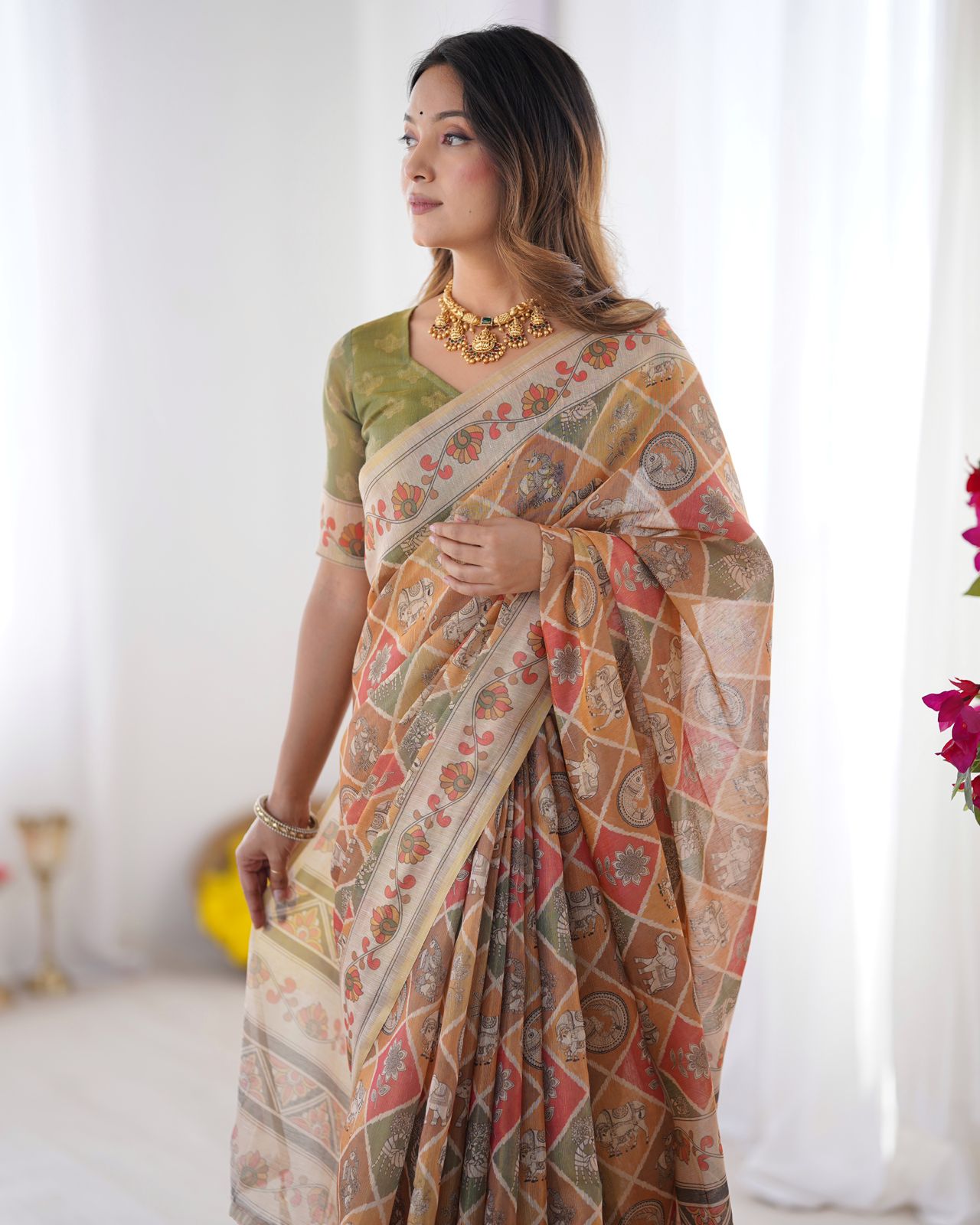
Stripes and checks create a graphic look that suits plain blouses and minimal jewellery. Floral and bird prints soften the structure of the border and work well for daytime celebrations. Mustard Olive Handloom Floral Heritage Saree with Pallu shows how two grounded shades can be balanced by a blouse in deep olive, muted brown or warm ivory.
Rust, olive, maroon and mustard are strong choices for an autumn or festive wardrobe because they complement antique gold, oxidised silver and wooden accessories. Rust Maroon Handloom Cotton Saree with Floral Print and Traditional brings a ceremonial colour story to a cotton base, making it suitable for a family gathering without the weight of heavy embroidery.
Pastels need not look insubstantial when the border provides definition. Peach, beige, blush and pale grey can be sharpened with a wine, chocolate or bottle-green blouse. Gray Color Sarees Under 1000 can provide a useful colour reference for a subdued wardrobe, although fibre and weave should still be evaluated saree by saree.
Royal Varnavi Olive Bloom Handloom Saree demonstrates how an olive ground can support floral detail without appearing overly bright. The saree can be styled with brushed gold, bronze or kundan accents, depending on whether the intended result is understated or festive.
Maheshwari Saree Guide: Madhya Pradesh Handloom styling for real occasions
Style a Maheshwari saree by matching the blouse structure and jewellery weight to the saree's border and pallu, not by adding decoration everywhere.
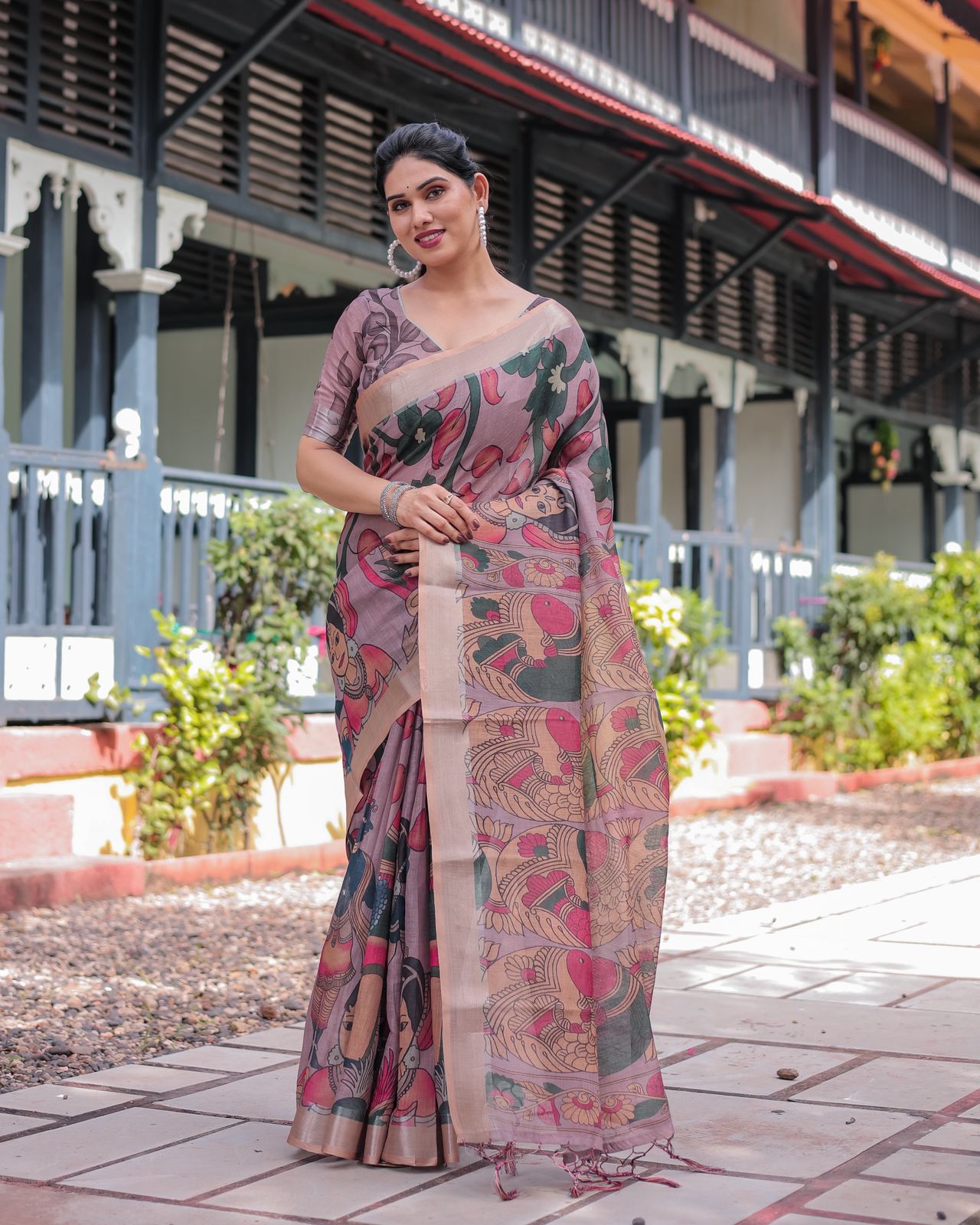
How should you wear Maheshwari cotton for office dressing?
Wear Maheshwari cotton for office dressing with a three-quarter-sleeve blouse, a low-contrast petticoat and restrained jewellery. A closed neckline, small studs and a structured leather or fabric tote keep the outfit professional. Keep the pleats narrow and secure the pallu at the shoulder with one discreet pin so the border remains visible.
Rust Red Handloom Printed Saree with Ethnic Border can be made office-appropriate with a solid beige, charcoal or muted red blouse. Avoid pairing a strong printed saree with a second large print unless the prints share a clearly repeated scale or colour.
What works for a Haldi ceremony?
A breathable cotton Maheshwari saree in marigold, mustard, peach or olive works well for a Haldi ceremony because the fabric is comfortable and the colours suit a daytime setting. A short-sleeve blouse, fabric potli and lightweight jhumkas provide movement without making the outfit difficult to manage.
Marigold Handloom Floral Bird Print Saree with Tassel Pallu suits a Haldi ceremony because the motif and tassel detail create interest without requiring a heavily embroidered blouse. A blouse in unprinted marigold or warm ivory keeps the pallu as the visual focus. Secure tassels before travel so they don't snag on jewellery.
How can you style Maheshwari silk for a wedding?
Style Maheshwari silk for a wedding with a clean square or boat-neck blouse and jewellery that echoes the zari or border. A belt can define the waist over a lighter Maheshwari saree, but the belt should sit securely without crushing zari. A low bun, gajra and a neatly pinned pallu suit a traditional wedding setting.
Premium Wine Maroon Floral Handloom Saree with Designer Pallu can take an antique-gold blouse, while Royal Varnavi Olive Bloom Handloom Saree pairs naturally with brushed gold, bronze or kundan accents. Red Banarasi Silk Sarees for Weddings Under 1100 can offer a contrasting reference when comparing the richer shine of Banarasi silk with the lighter structure of Maheshwari weaving.
Maheshwari Saree Guide: Madhya Pradesh Handloom care and storage
Care for a Maheshwari saree by following the fibre-specific wash method, drying it away from direct sunlight and storing it in breathable fabric rather than plastic. Cotton, silk-cotton and silk should not automatically receive the same treatment.
How should a Maheshwari saree be washed?
Wash a plain cotton Maheshwari saree separately in cool water with a mild detergent after checking for colour bleeding. Avoid soaking deep-coloured sarees for long periods, and don't scrub zari, tassels or printed areas. Silk and silk-cotton Maheshwari sarees are safer with professional dry cleaning unless the care label explicitly permits gentle hand washing.
Press excess water out with a clean towel instead of twisting the saree. Dry the saree inside out in shade, because strong sunlight can fade maroon, mustard, red and indigo dyes. Iron cotton on a medium setting while the saree is slightly damp; use low heat and a pressing cloth for silk or zari.
How should Maheshwari sarees be stored?
Store a Maheshwari saree folded in a clean muslin or cotton cloth, refolding it every few months to prevent permanent creases along the same lines. Keep zari away from moisture, perfume and direct contact with rough jewellery. Avoid airtight plastic for long-term storage because trapped humidity can encourage odour, mildew or tarnishing.
Maintain a small gap between frequently worn sarees and heavily embellished garments. A breathable wardrobe shelf, dry environment and occasional airing in shade are more useful than adding perfumed products. Remove safety pins after wearing, since metal pins can rust or leave marks on pale cotton.
Maheshwari Saree Guide: Madhya Pradesh Handloom collections and wardrobe planning
Build a useful Maheshwari wardrobe by choosing one breathable everyday saree, one versatile silk-cotton option and one formal piece with a stronger pallu or zari detail. This three-saree structure covers work, daytime celebrations and evening events without repeating the same visual effect.
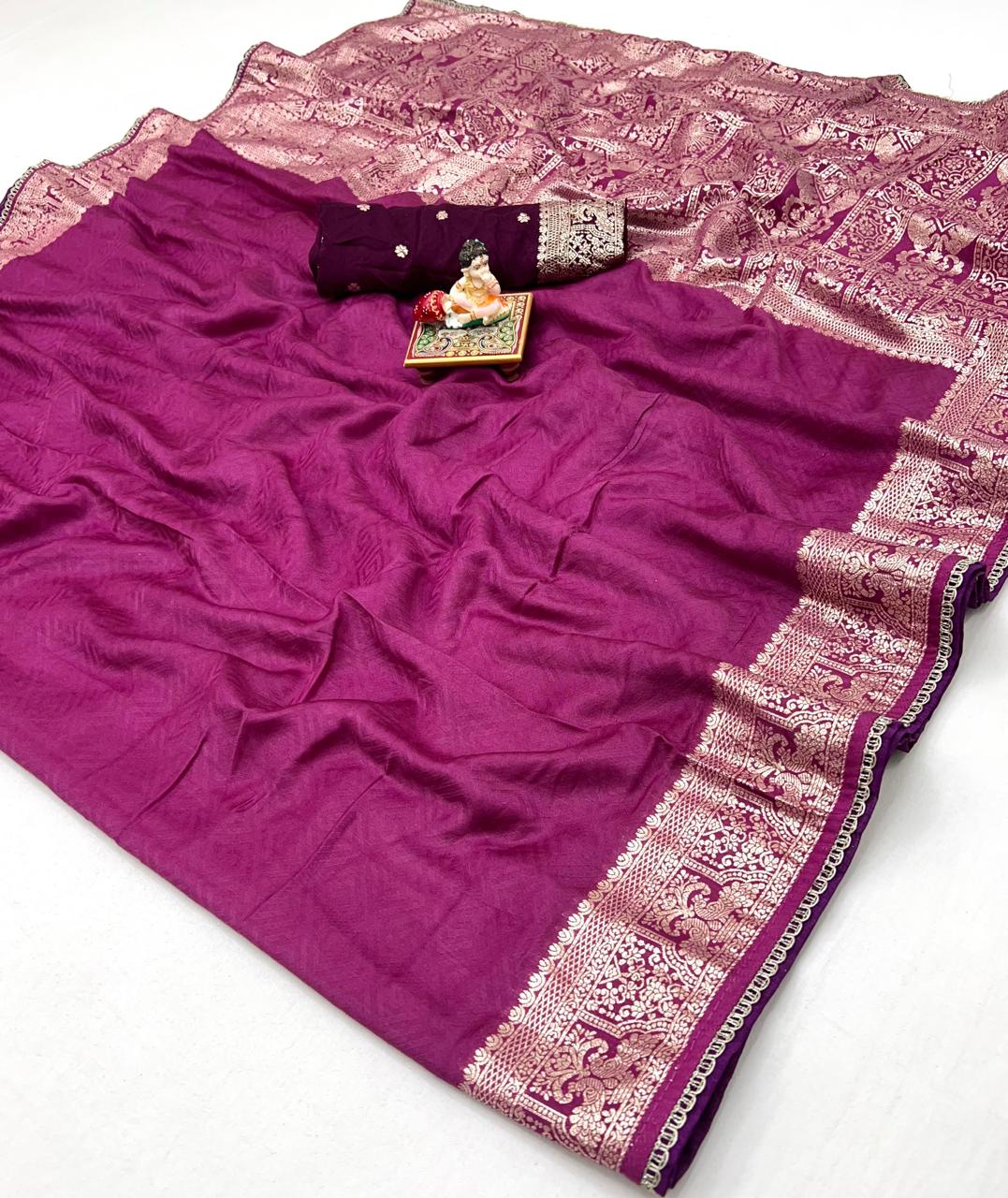
Party Wear Sarees can help compare how embellishment changes the balance of an outfit, while Silk Sarees Under 3000 With Discount may be useful for assessing the price difference between silk blends and lighter handloom constructions. Pink Georgette Sarees provide another contrast in drape, since georgette falls more fluidly and doesn't offer the same crisp handloom structure as Maheshwari cotton.
Choose a plain blouse when the saree has a prominent floral print, bird motif or elaborate pallu. Choose a lightly textured or woven blouse when the saree body is quiet and the border needs additional framing. A blouse sleeve ending two to three inches above the elbow usually gives a balanced proportion with a narrow Maheshwari border.
A practical wardrobe doesn't require every saree to be reserved for a festival. Maheshwari cotton can be worn with sandals and a small shoulder bag for daytime use, then restyled with a bun, silk blouse and metal jewellery for an evening gathering. The fabric's versatility comes from its controlled structure, not from adding more accessories.
Maheshwari Saree Guide: Madhya Pradesh Handloom quick checklist
Use a short checklist before purchase and before dressing to protect both the value and appearance of a Maheshwari saree.
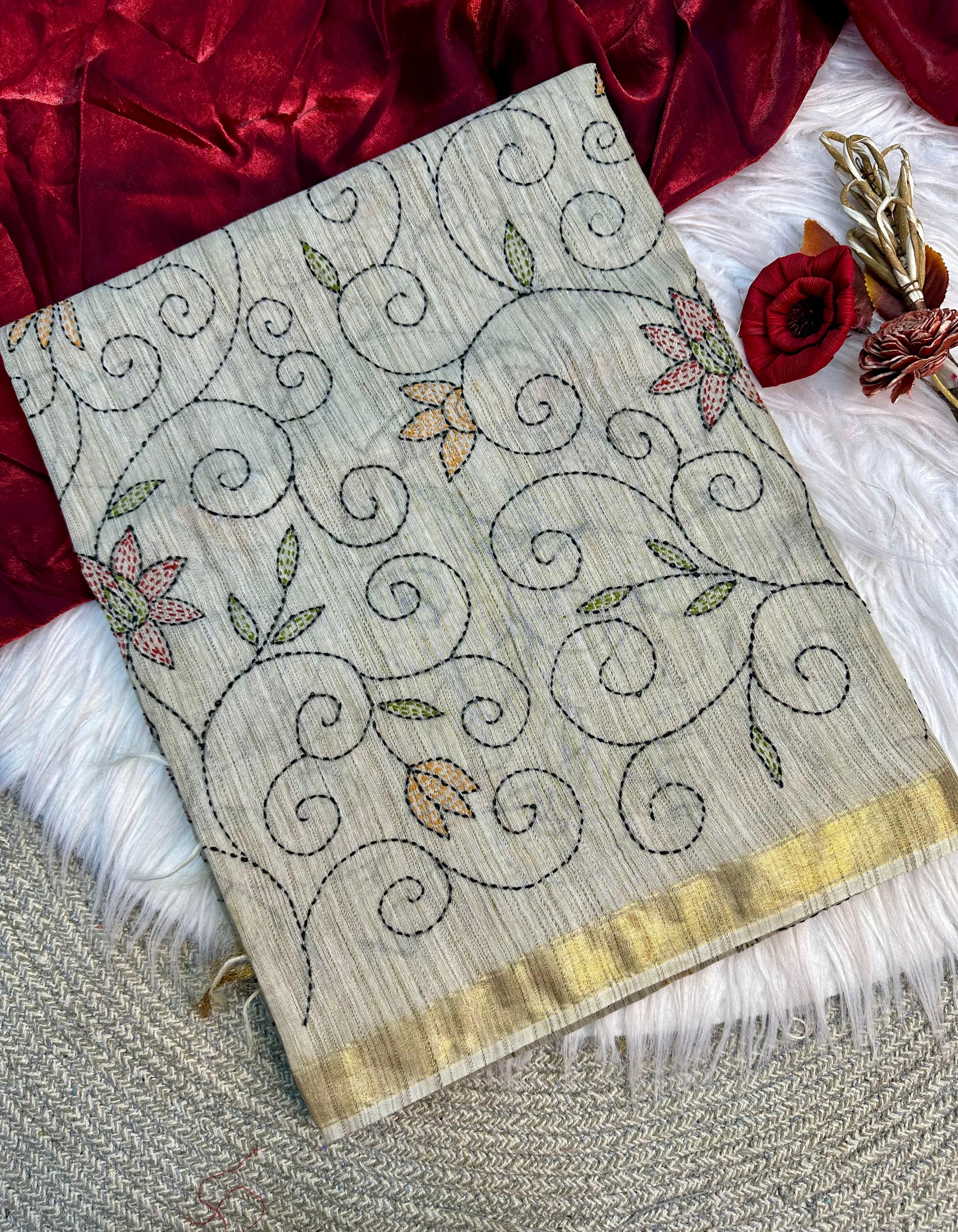
- Confirm whether the saree is cotton, silk-cotton or silk.
- Check the saree length, width and blouse-piece measurements.
- Inspect the selvedge, border alignment and pallu finishing.
- Ask about colour bleeding, zari care and the recommended wash method.
- Match jewellery scale to the border rather than the saree's overall price.
- Use a plain blouse when floral, bird or geometric motifs already dominate.
- Store the saree in breathable fabric and refold it periodically.
Maheshwari weaving rewards close observation because small construction details determine how comfortably a saree wears and how long it remains attractive. A considered choice of fibre, blouse and care routine allows Madhya Pradesh handloom to work across everyday dressing, Haldi ceremonies, family occasions and weddings.
Common Questions About Choosing and Styling a Maheshwari Saree
What is a Maheshwari saree made of?
A Maheshwari saree may be made from cotton, silk-cotton or silk, depending on the design and intended use. Cotton feels breathable and crisp, silk-cotton offers a balance of comfort and sheen, and silk gives a more formal drape.
How can you identify a good Maheshwari handloom saree?
Check the fibre description, even selvedge, consistent border alignment, secure pallu finishing and clean transitions between colours. Minor yarn variation can be normal in handloom weaving, but skipped threads, loose edges and unstable borders require caution.
Is a Maheshwari saree suitable for summer?
A cotton Maheshwari saree is suitable for summer because it is lightweight and breathable. Choose a narrow-bordered cotton design for work or daytime events, and avoid heavily layered petticoats that can make any saree feel warmer.
Which blouse goes well with a Maheshwari saree?
A plain blouse in a colour drawn from the border or pallu usually works best with a Maheshwari saree. Three-quarter sleeves suit office dressing, while a square-neck or boat-neck blouse can provide a more formal finish for weddings and evening events.
How should a Maheshwari saree be washed?
Wash plain cotton Maheshwari sarees separately in cool water with mild detergent after testing for colour bleeding. Silk and silk-cotton sarees should generally be dry-cleaned unless the care label specifically permits gentle hand washing, and every Maheshwari saree should be dried in shade.
Can a Maheshwari saree be worn to a wedding?
A silk or silk-cotton Maheshwari saree can be worn to a wedding when paired with a well-structured blouse, suitable jewellery and a neatly pinned pallu. Zari borders, rich maroon or olive colours and antique-gold accessories create a formal look without requiring heavy embellishment.





