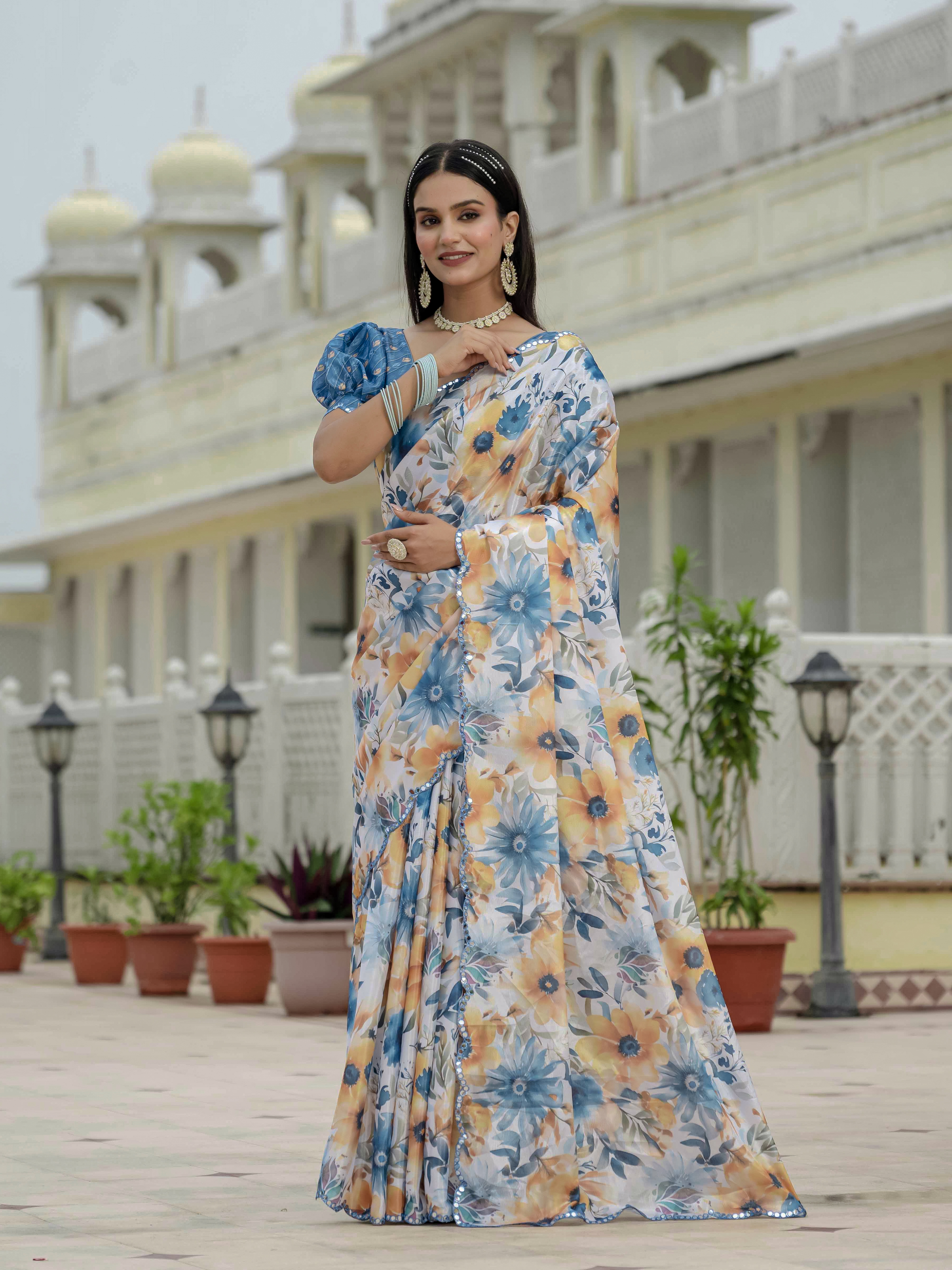
Maharashtrian Wedding Guest Outfits: Paithani Sarees & Lehengas require a thoughtful balance between regional tradition and the practical demands of a long wedding day. Paithani silk brings peacock, parrot and geometric motifs, while a lehenga can offer easier movement for Haldi ceremony celebrations, sangeet dancing and reception photographs. The most successful guest outfit reflects Maharashtrian colour language and jewellery without looking like a bridal costume.
A guest should consider the ceremony, venue, weather and relationship to the couple before choosing an outfit. A silk saree with a traditional drape may suit a morning wedding, whereas a lighter lehenga can be more comfortable for an evening reception. The guidance below explains how to make those decisions using specific fabrics, colours, accessories and care steps.
Maharashtrian Wedding Guest Outfits: Paithani Sarees & Lehengas and regional style
Maharashtrian wedding style becomes recognisable through its colour, textile details, jewellery and drape rather than through one compulsory garment. Paithani silk, a rich border, a nauvari-inspired styling detail, a nath-shaped nose ring or a traditional thushi necklace can establish a regional connection.
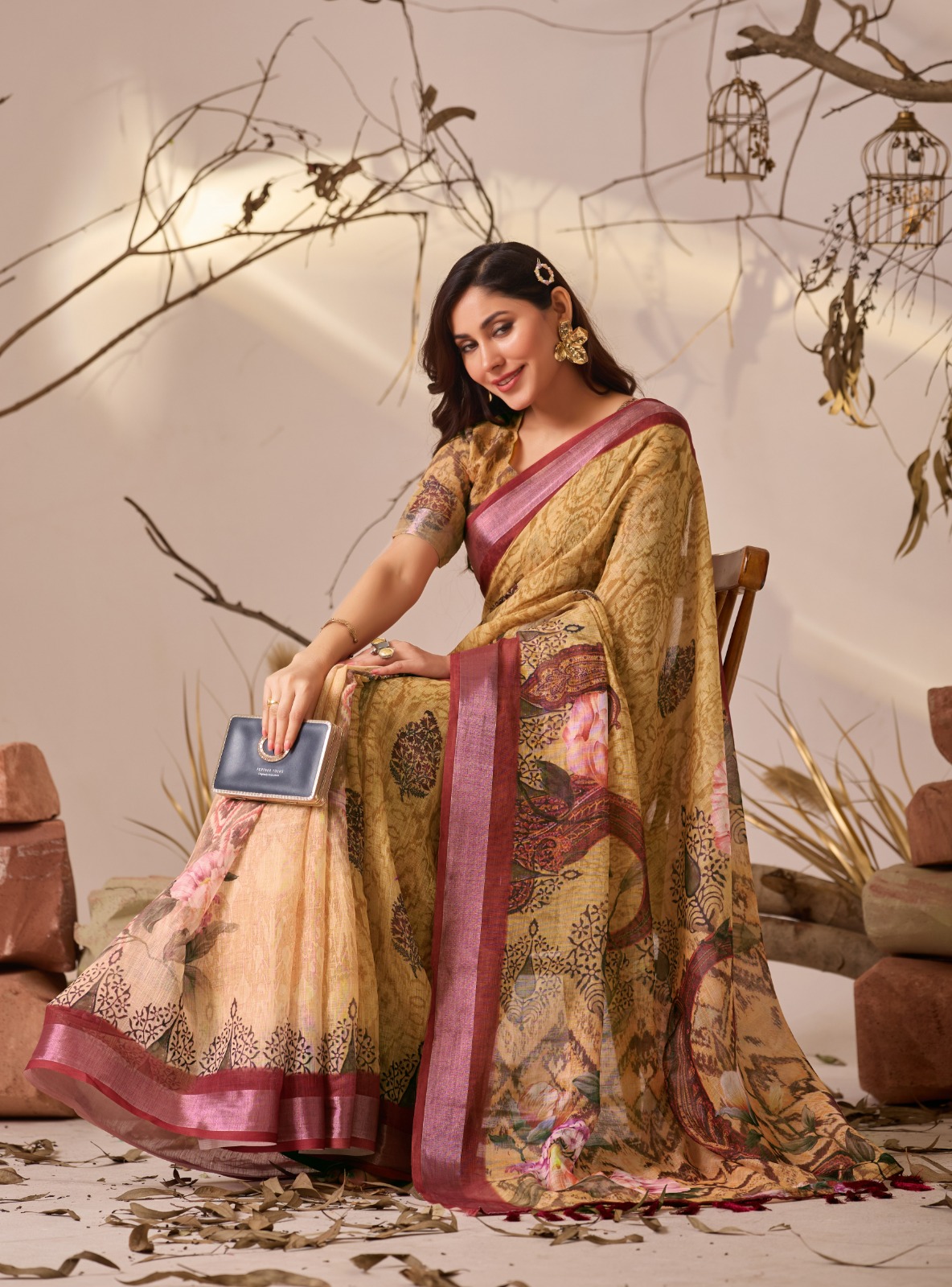
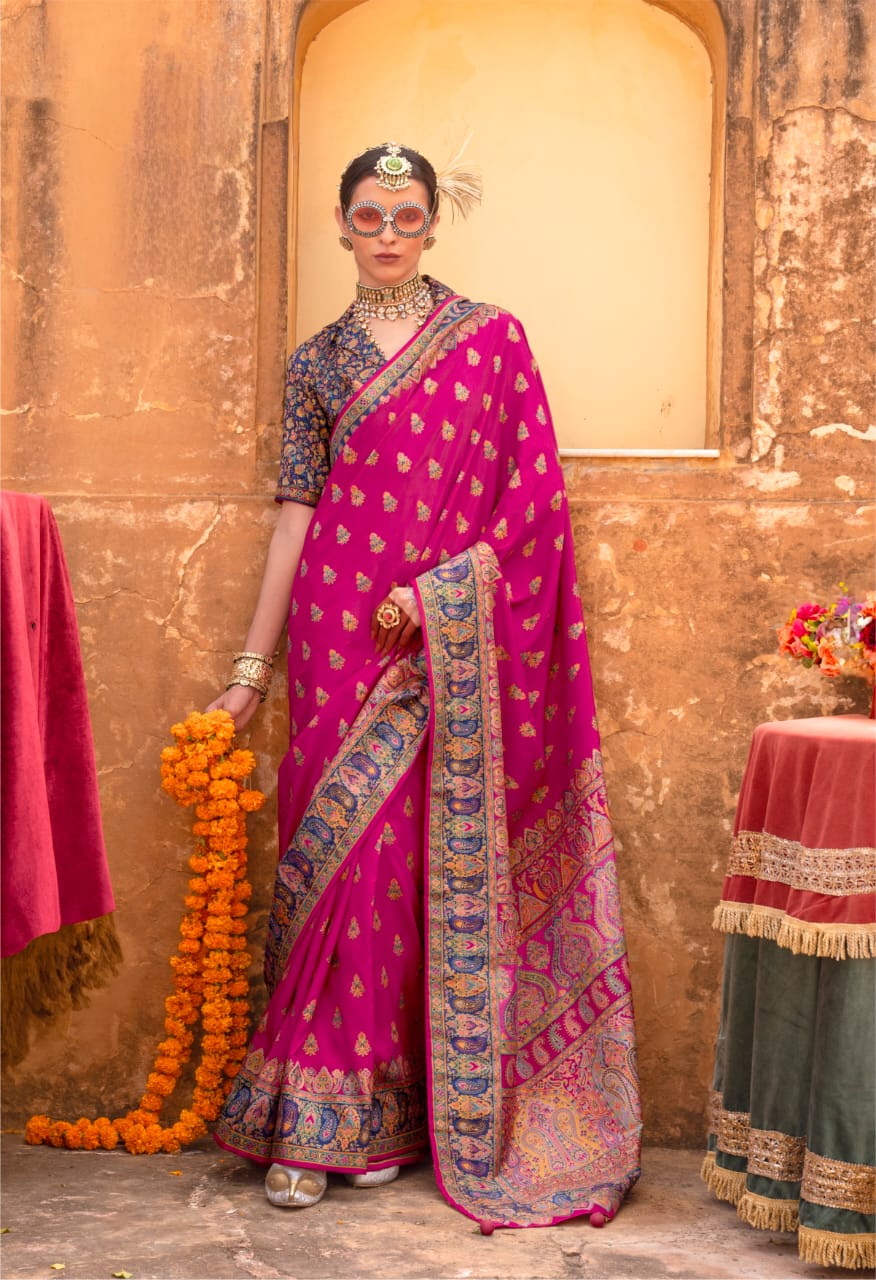
Paithani is a handwoven silk tradition associated especially with Yeola in Maharashtra. Heritage Paithani sarees are recognised for contrasting pallus and borders, often featuring motifs such as the munia parrot, peacock, asavali floral forms and geometric patterns. Pure silk Paithani sarees can be substantial and expensive, so guests can also choose Paithani-inspired zari borders or silk-blend textiles when comfort and budget matter more than heirloom weaving.
Guests should avoid copying the bride's complete styling when the family has a clearly traditional ceremony. A heavy green or red saree, elaborate head decoration or exceptionally dense gold jewellery may look bridal. A single Maharashtrian detail, such as a heritage necklace or carefully pleated pallu, is often more elegant than wearing every regional marker together.
How should Maharashtrian Wedding Guest Outfits: Paithani Sarees & Lehengas be chosen?
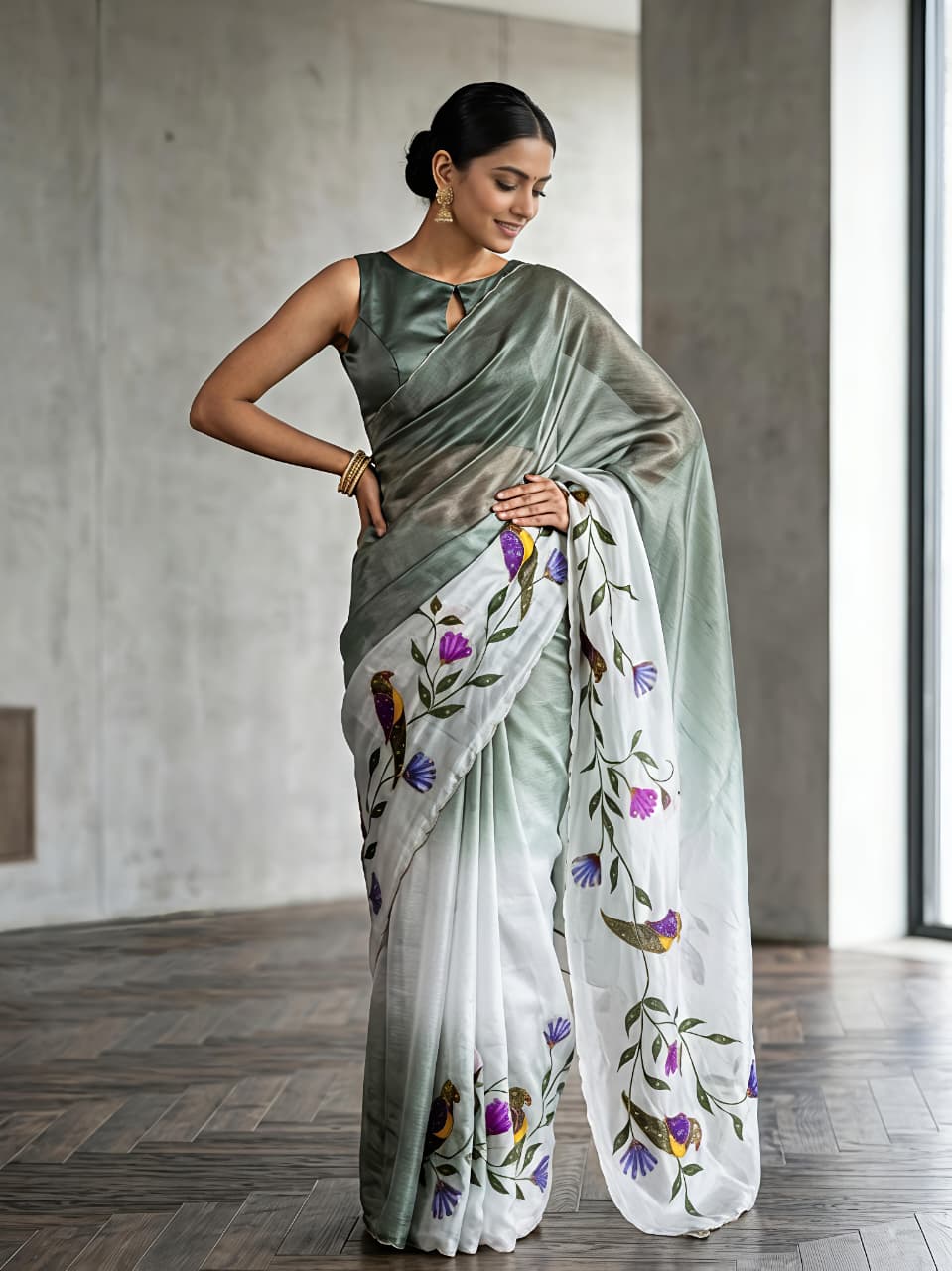
Choose a Paithani saree for a formal classic ceremony, and choose a lehenga when movement, dancing or a contemporary reception setting matters more. Both options can look appropriate when the colour palette and finishing details suit the wedding schedule.
When a Paithani saree works best
A Paithani saree is particularly suitable for a sakharpuda, wedding ceremony, family puja or formal daytime gathering. A six-yard saree in purple, magenta, green, mustard or peacock blue gives the outfit regional character without requiring a heavily embellished blouse. A gold zari border can be balanced with a plain silk blouse in a related shade.
For a guest who isn't accustomed to saree draping, a pre-pleated option or a practice session two days before the wedding can prevent last-minute problems. Secure the pleats with discreet safety pins, use a petticoat with a firm waistband and test sitting, walking and climbing stairs before leaving home.
When a lehenga is more practical
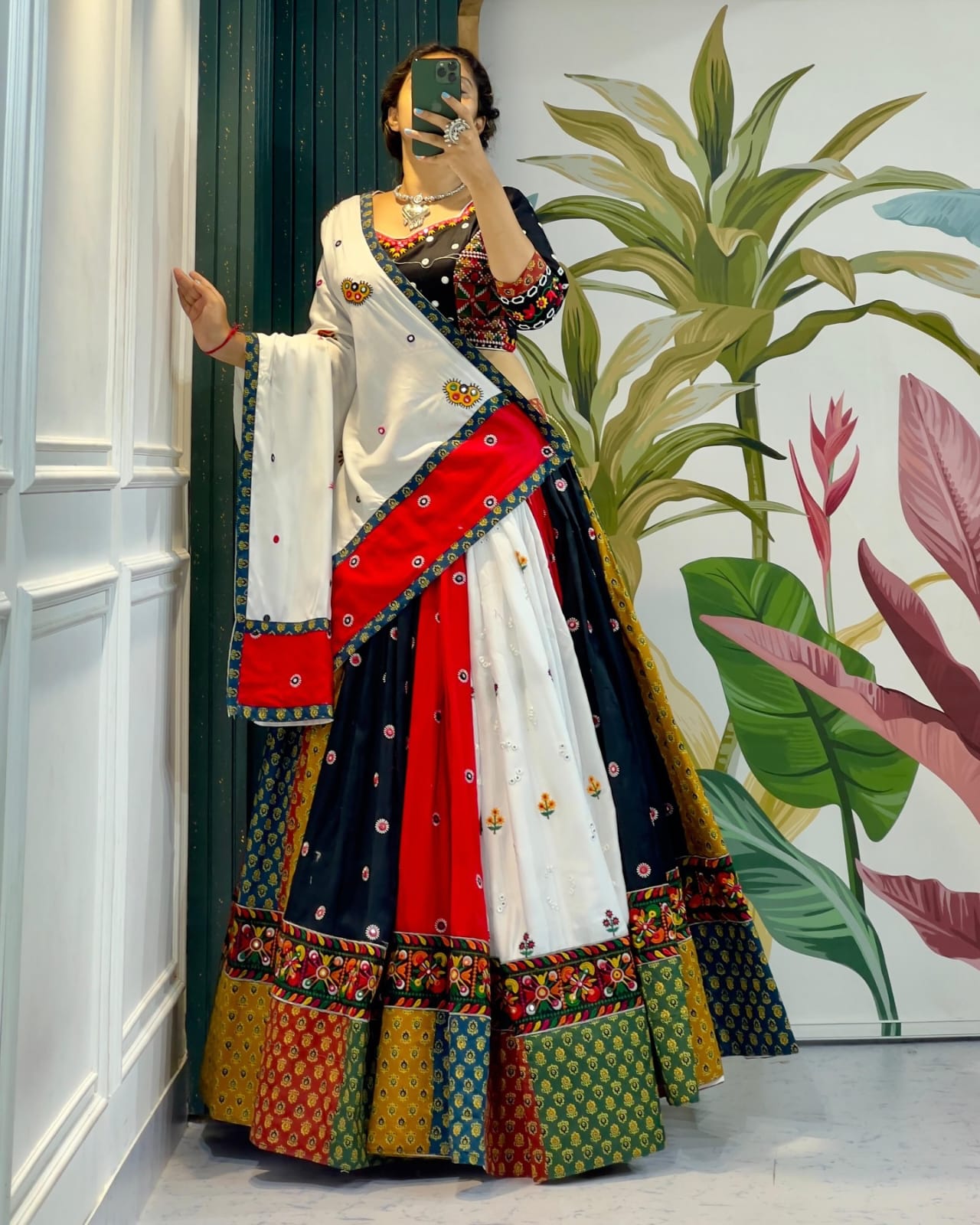
A lehenga is more practical for sangeet performances, outdoor celebrations and receptions where guests will stand or dance for several hours. A three-piece set with a blouse, skirt and dupatta also allows a guest to adjust coverage by changing the dupatta drape or adding a lightweight stole.
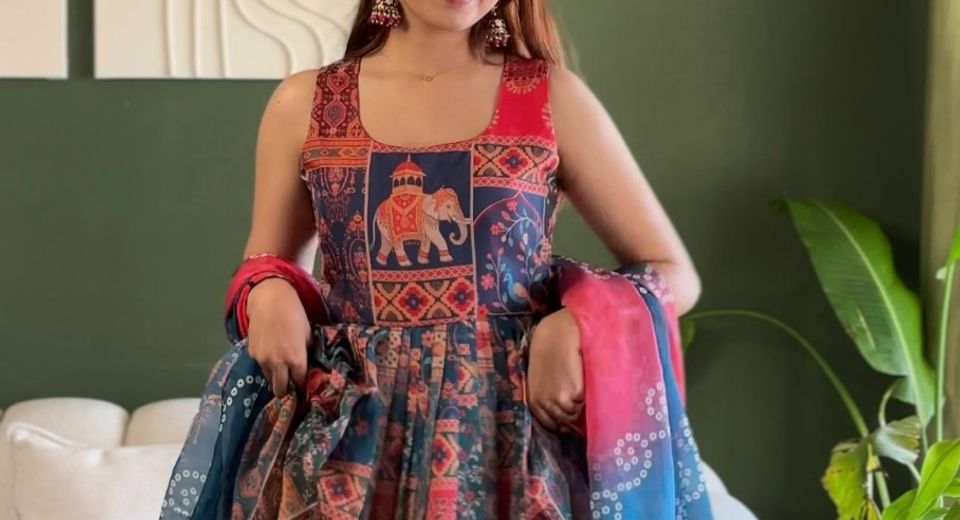
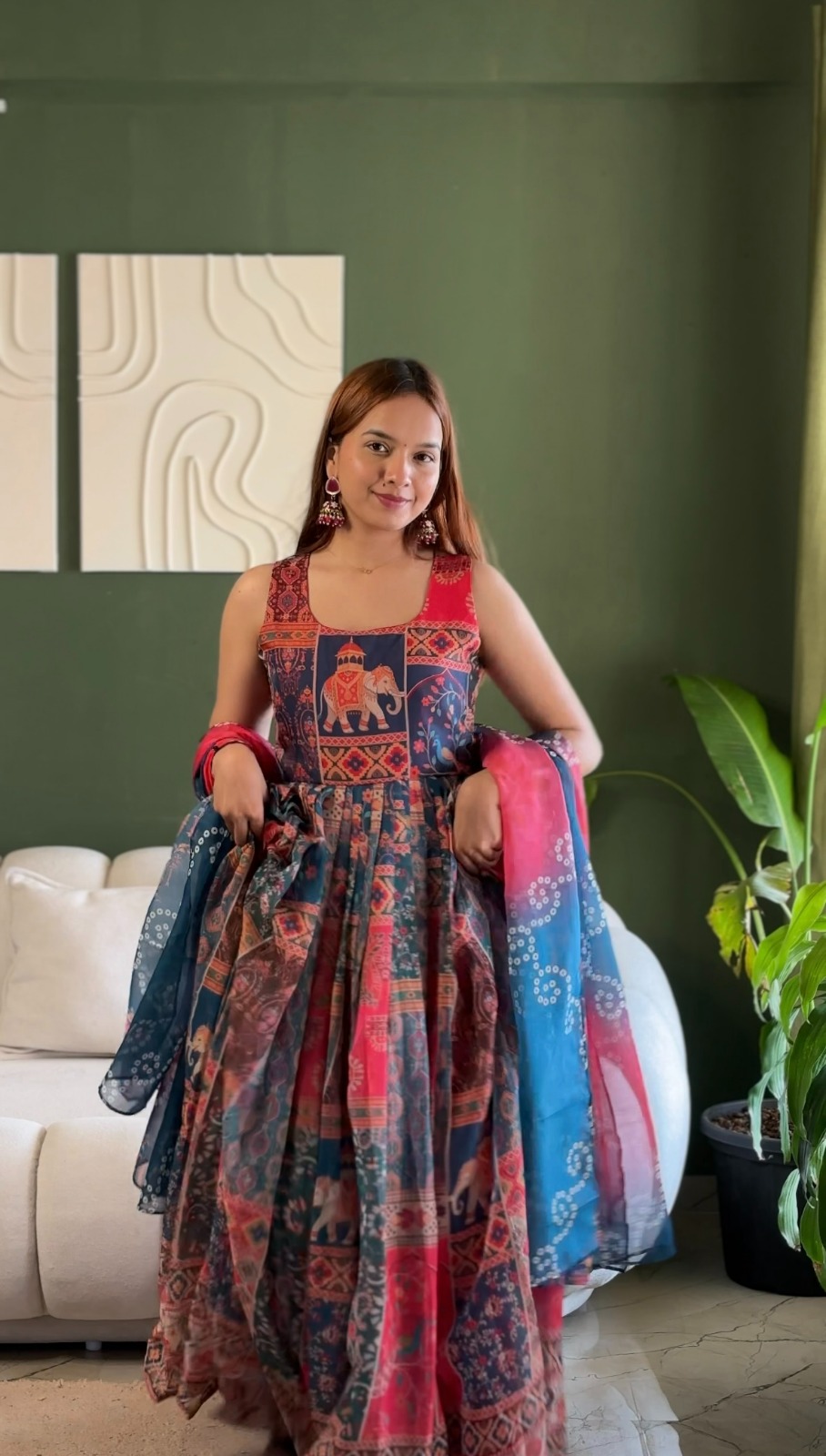
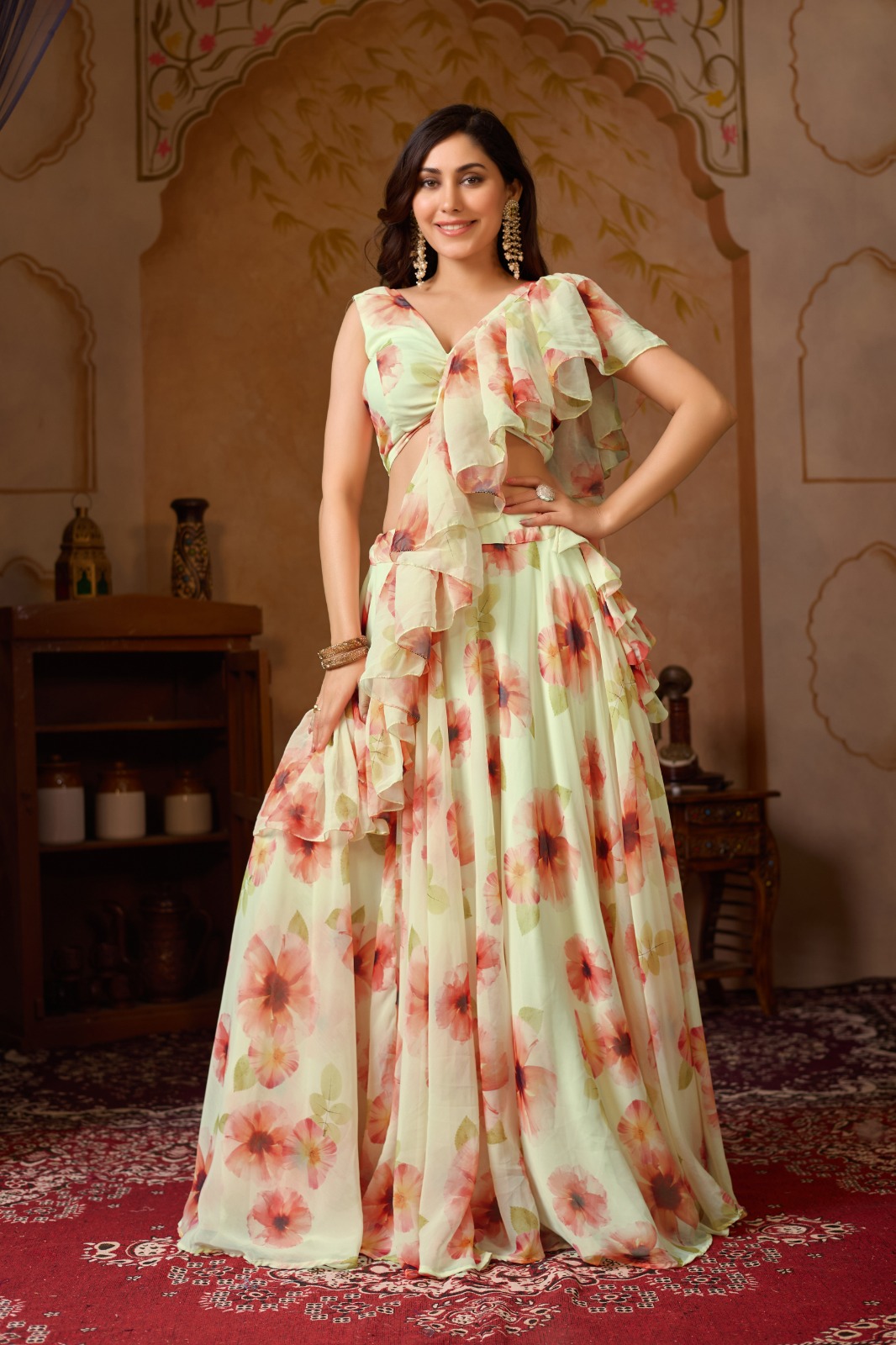
Royal Patola Printed Designer Gown with Elegant Dupatta shows how a patola-inspired print can bring jewel-toned pattern into a gown silhouette. Pastel Floral Georgette Lehenga Set with Ruffle Blouse suits a daytime engagement or garden venue, provided the ruffles don't compete with the bride's outfit.
Which colours suit Maharashtrian Wedding Guest Outfits: Paithani Sarees & Lehengas?
Jewel tones, warm festive shades and carefully chosen pastels suit Maharashtrian wedding guest outfits, while vermilion red and heavily bridal gold are best used with restraint. Colour should also respond to the function, lighting and time of day.
- Morning ceremony: Choose parrot green, peacock blue, mustard, lotus pink, lavender or soft coral. These shades photograph clearly in natural light and connect well with Paithani motifs.
- Haldi ceremony: Select turmeric yellow, marigold, lime, mango or light green in washable cotton-silk, georgette or a light lehenga fabric. Haldi Lehengas Under 5500 provides a useful reference for bright, movement-friendly styling.
- Evening reception: Consider wine, emerald, royal blue, plum, charcoal or antique gold. Black Wedding & Festive Wear Designer Lehenga can work for an evening event when paired with colourful jewellery rather than an entirely black accessory set.
- Pastel celebration: Blush, powder blue, mint and ivory suit daytime festivities. A pale outfit benefits from a stronger border, contrasting blouse or vivid earrings so that it doesn't disappear in photographs.
Red isn't automatically unsuitable for a guest, but the shade and surface decoration matter. Muted brick red with a green border is less bridal than bright scarlet covered in gold sequins. Guests should also ask close family members whether a specific colour has been reserved for the bride, bridesmaids or a ritual such as the Haldi ceremony.
How can Maharashtrian Wedding Guest Outfits: Paithani Sarees & Lehengas use Paithani details?
A lehenga can reflect Paithani style through a contrasting zari border, peacock or floral motifs, a structured dupatta and a controlled jewel-tone palette. The outfit doesn't need to reproduce a saree's pallu literally.
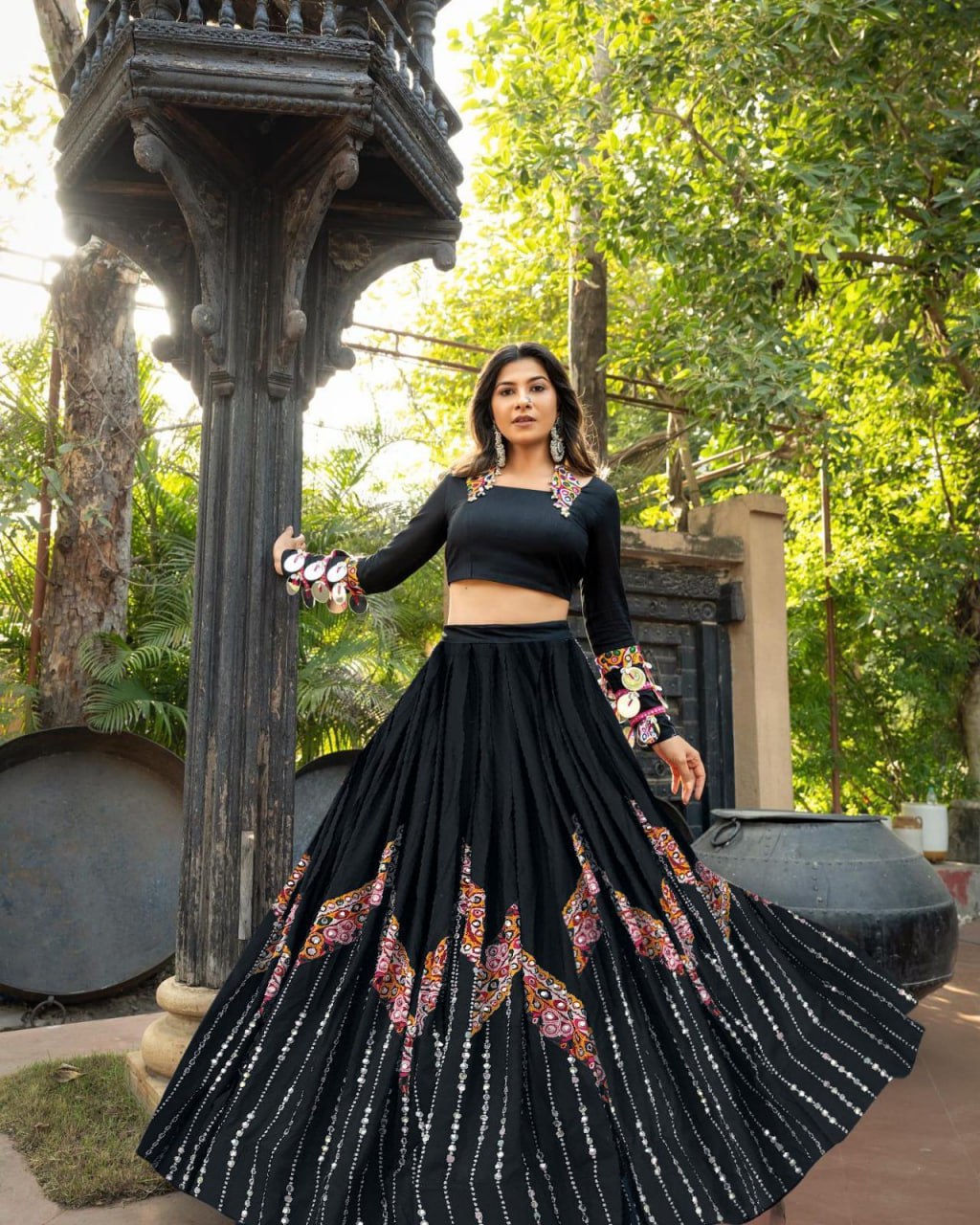
Look for a skirt border that resembles a woven saree edge rather than scattered all-over glitter. A magenta skirt with a green border, a purple set with antique-gold detailing or a mustard blouse with peacock-blue accents can suggest Paithani colour relationships. Jacquard, brocade and silk-blend fabrics generally communicate this influence more effectively than very glossy polyester.
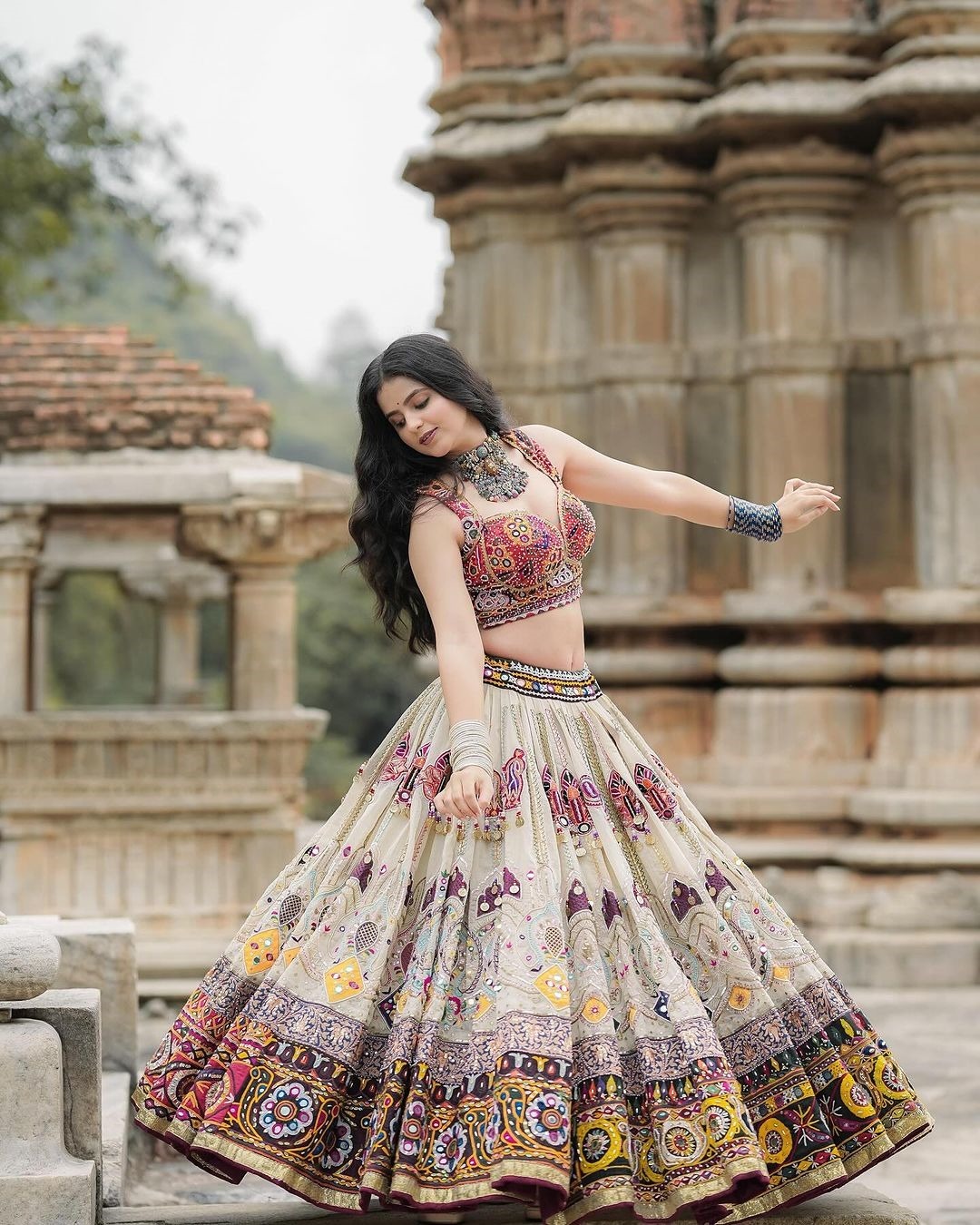
Cream & Maroon Jacquard Lehenga Choli with Dupatta Set shows why texture can matter more than excessive embellishment. Its cream-and-maroon contrast creates a classic foundation, while the jacquard surface gives the outfit depth under indoor lighting. Cream Ethnic Lehenga Choli with Mirror Work Design offers a lighter base for a guest who wants festive sparkle without selecting a saturated bridal shade.
Use the dupatta as the strongest regional styling cue. Drape the dupatta over one shoulder with the border visible, or bring it diagonally across the torso and secure it near the waist for dancing. A second dupatta is rarely necessary for a guest and can create bulk around the neck and arms.
Which jewellery completes Maharashtrian Wedding Guest Outfits: Paithani Sarees & Lehengas?
Traditional Maharashtrian jewellery, a neat blouse and one deliberate statement piece complete the look more effectively than several heavy accessories. A thushi, kolhapuri saaj, tanmani, nath-inspired nose ring, green glass bangles or gold-toned jhumkas can each provide a recognisable regional accent.
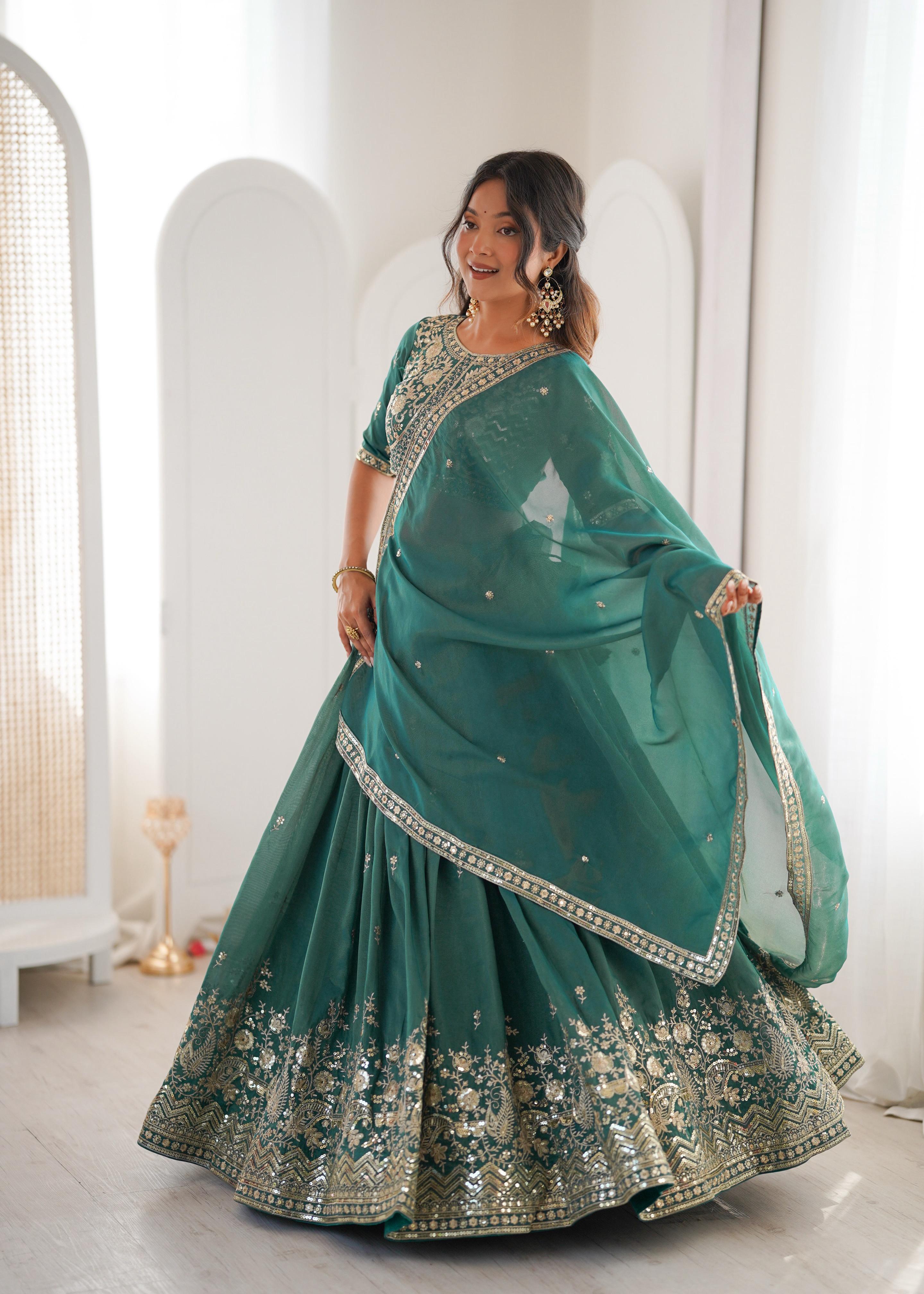
The thushi is a close-fitting necklace made from small gold beads, while the kolhapuri saaj is a pendant necklace associated with Maharashtra. Guests can choose lightweight imitation versions for a long event. A short necklace works best with a higher blouse neckline; a longer pendant can balance a simple round or square neckline.
Green glass bangles are a particularly useful choice because they connect with Maharashtrian bridal styling but remain accessible for guests. Combine green bangles with two or four gold-toned bangles on each arm rather than filling the wrist with noisy stacks. A nath-shaped clip-on nose ring and a small gajra can complete a Paithani look without requiring a permanent piercing.
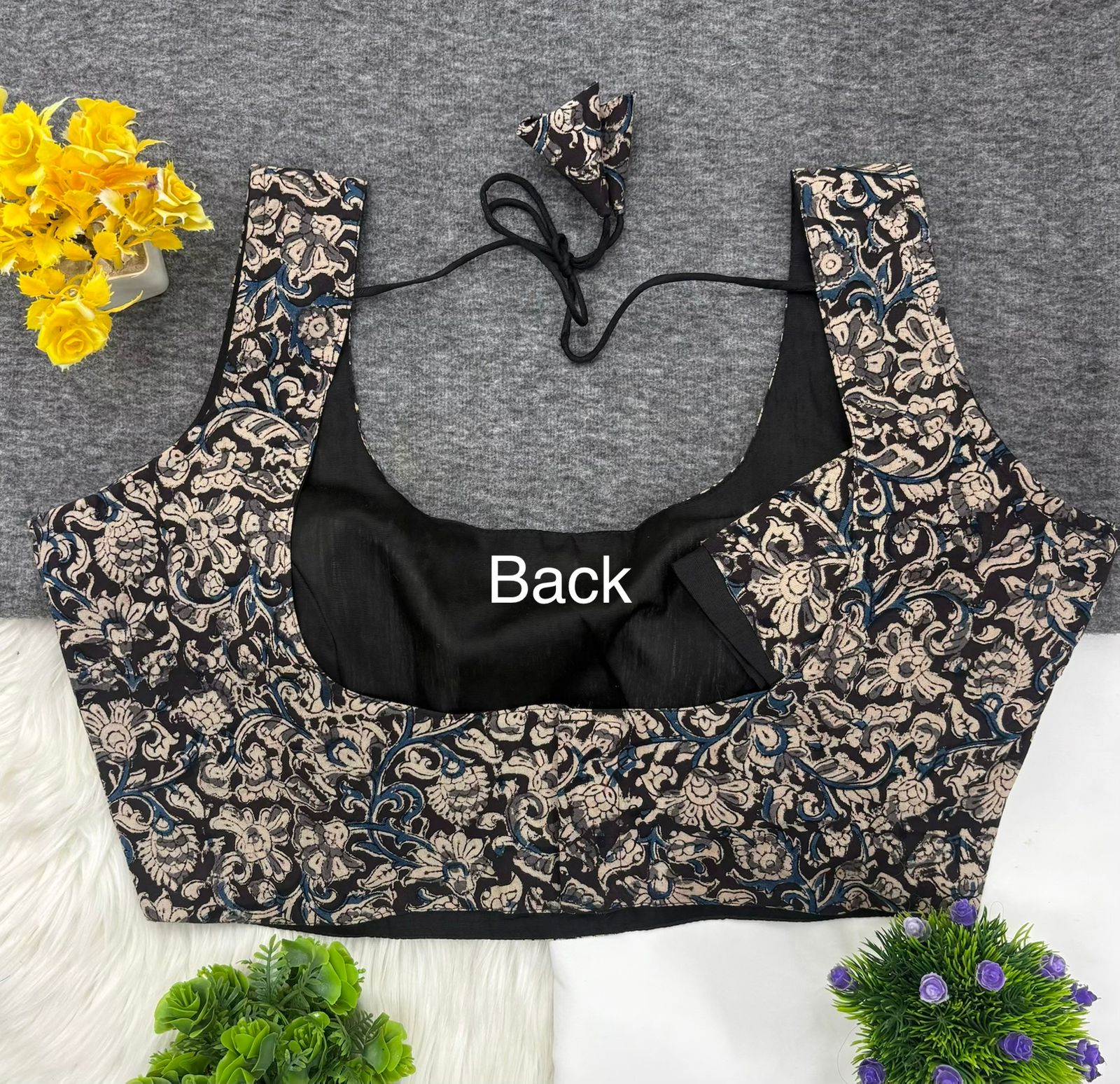
Blouse design should support movement and modesty. Elbow-length sleeves, a secure neckline and a supportive inner lining are practical for ceremonies lasting three or more hours. Mirror work can add light to a simple lehenga, as seen in Stylish White Mirror Work Lehenga for Festive Wear, but reflective embellishment should be balanced with matte earrings or a plain dupatta.
How should Maharashtrian Wedding Guest Outfits: Paithani Sarees & Lehengas change by function?
One outfit can serve several wedding functions when the guest changes the blouse, dupatta, jewellery and footwear instead of repeating the full styling unchanged. A modular wardrobe reduces the cost and storage burden of occasion wear.
For a daytime engagement, pair a light lehenga with pearl or polki-style earrings, a low bun and juttis. For a sangeet, replace the necklace with statement earrings, pin the dupatta securely at the shoulder and choose footwear with a padded sole. For a reception, add a structured potli, a darker lip colour and an antique-gold belt or waist chain if the skirt has a stable waistband.
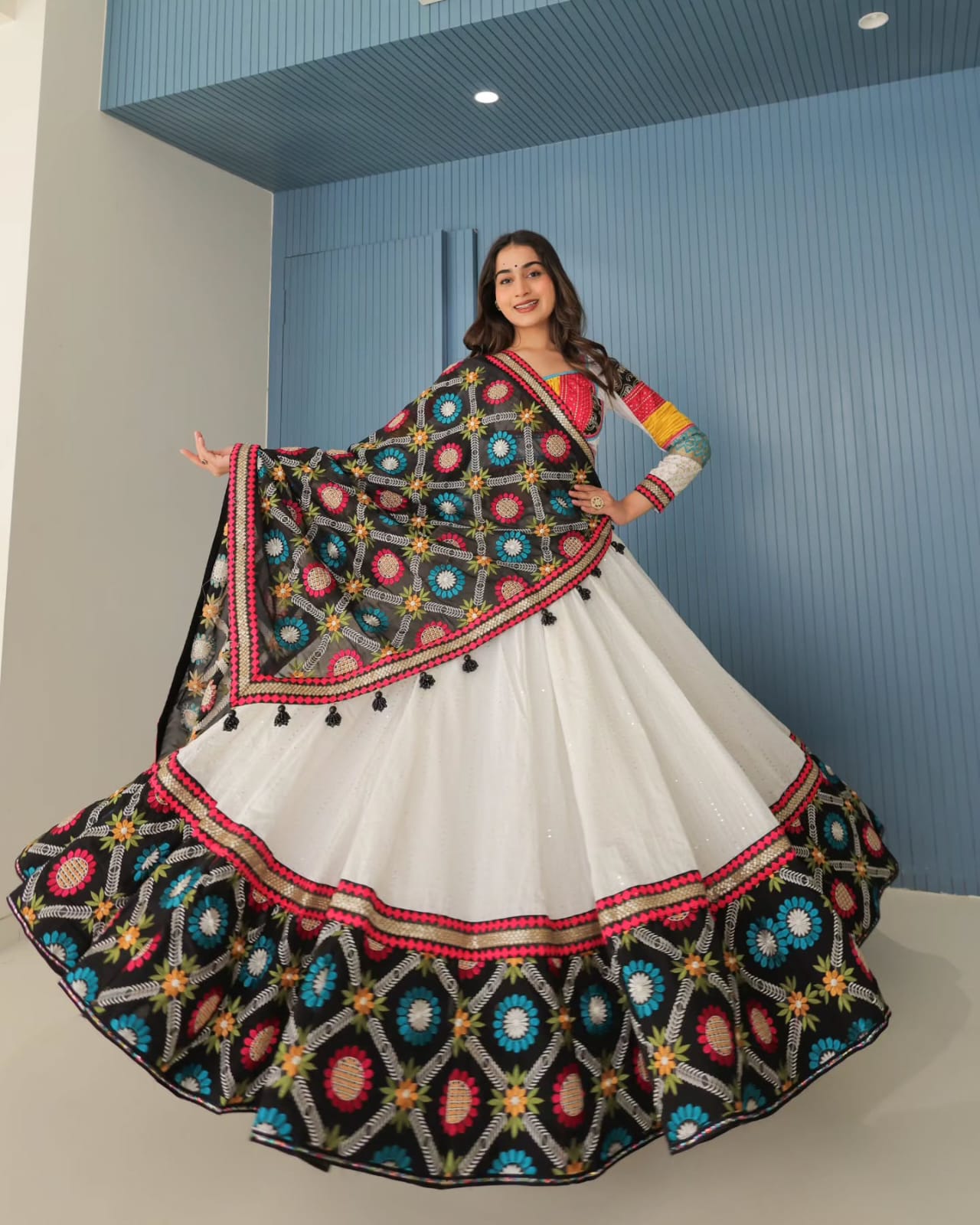
White Digital Print Festive Lehenga Choli Set can become more ceremonial with a contrasting green or maroon dupatta and traditional bangles. Vibrant Multicolor Navratri Lehenga Choli Set can work for a lively sangeet, although guests should check whether the print feels too festive for a restrained morning ceremony.
Collections organised by budget can help narrow the search without treating price as a substitute for quality. Silk Lehengas Under 3000 may suit a smaller family function, while Bridesmaid Lehengas Under 5500 can provide coordinated options when several guests need related colours. Pink Lehengas Under 4000 with 50% Discount may also help a guest compare bright palettes, but fabric composition, lining and stitching should be checked before price alone decides the purchase.
How can guests make Maharashtrian Wedding Guest Outfits: Paithani Sarees & Lehengas comfortable?
Comfort depends on fit, lining, fastening and footwear more than on the garment's fabric label. A comfortable wedding outfit should allow the wearer to sit cross-legged, walk up stairs, raise both arms and remain dressed for at least five hours.
Check the waist measurement while seated, not only while standing. A lehenga waistband that fits perfectly when standing may feel restrictive after a meal. Ask for an extra inch or two of alteration allowance if the skirt has a side seam. Blouses should have enough room across the upper back, and hooks or a concealed zip should close without pulling.
Heavy zari and dense mirror work can make an outfit warmer than expected. For an outdoor summer wedding, choose georgette, chiffon, cotton-silk or a lighter jacquard rather than multiple layers of velvet and foam-backed embroidery. For winter or air-conditioned venues, silk, brocade and lined jacquard provide more structure and warmth.
Footwear should be broken in for at least two short walks before the event. Low block heels, cushioned juttis or embellished flats are generally safer than new stilettos on grass, uneven courtyards or stone temple floors. Carry fashion tape, two safety pins, blister patches and a small sewing kit in the potli or handbag.
How should Maharashtrian Wedding Guest Outfits: Paithani Sarees & Lehengas be cared for?
Paithani silk and embellished lehengas should be aired after use, stored dry and cleaned according to their fibre and surface decoration. Correct storage prevents odour, zari tarnishing, colour transfer and permanent creases.
don't machine-wash Paithani silk, zari sarees or mirror-work lehengas. Air the garment in shade for 30 to 60 minutes after wearing, then send heavily embellished or pure silk pieces to a specialist dry cleaner. Avoid spraying perfume directly onto silk, zari or mirror work because alcohol and moisture can stain the surface.
Fold a Paithani saree with soft cotton muslin around it and refold the saree every few months to prevent deep permanent creases. Store it away from direct sunlight, damp walls and unsealed cardboard. Keep jewellery separate from the fabric because sharp hooks can catch zari and sequins.
Lehenga skirts should be hung only when the waistband and hanger can support the garment's weight. Heavy skirts are safer folded with tissue paper between embroidered sections. Never press mirror work or raised zari directly with a hot iron; use a pressing cloth and low heat, or ask a professional.
Questions About Maharashtrian Wedding Guest Outfits, Paithani Sarees and Lehengas
What should a guest wear to a Maharashtrian wedding?
A guest can wear a Paithani saree, a silk-blend saree or a lehenga in colours such as green, peacock blue, mustard, magenta or plum. Traditional jewellery, a neat blouse and a secure drape add Maharashtrian character without making the outfit look bridal.
Is a Paithani saree suitable for a wedding guest?
A Paithani saree is highly suitable for a wedding guest, especially for a formal ceremony, puja or daytime function. Guests should choose a moderate zari weight and avoid combining an extremely bridal colour, heavy jewellery and elaborate head decoration.
Can I wear a lehenga to a Marathi wedding?
A lehenga is appropriate for a Marathi wedding, particularly for a sangeet, reception or outdoor celebration. Choose a rich border, jacquard or silk-blend texture and regional colour accents so the outfit feels connected to the occasion.
Which colours should wedding guests avoid at a Maharashtrian wedding?
Guests should ask the family whether red, green or a particular shade has been reserved for the bride or a ritual. Bright scarlet, very heavy gold and dense bridal embroidery deserve caution, while muted red, jewel tones and pastels are usually easier to wear appropriately.
What jewellery goes with a Paithani saree for a guest?
A thushi, kolhapuri saaj, tanmani, green glass bangles, gold-toned jhumkas or a clip-on nath can complement a Paithani saree. Select one prominent necklace or earring style and keep the remaining jewellery lighter for a balanced guest look.
How can I keep a wedding lehenga comfortable for several hours?
Choose a waistband that remains comfortable while seated, a lined blouse with secure fastenings and padded footwear that has already been worn. Pin the dupatta at the shoulder and waist, and carry safety pins, fashion tape and blister patches for quick adjustments.