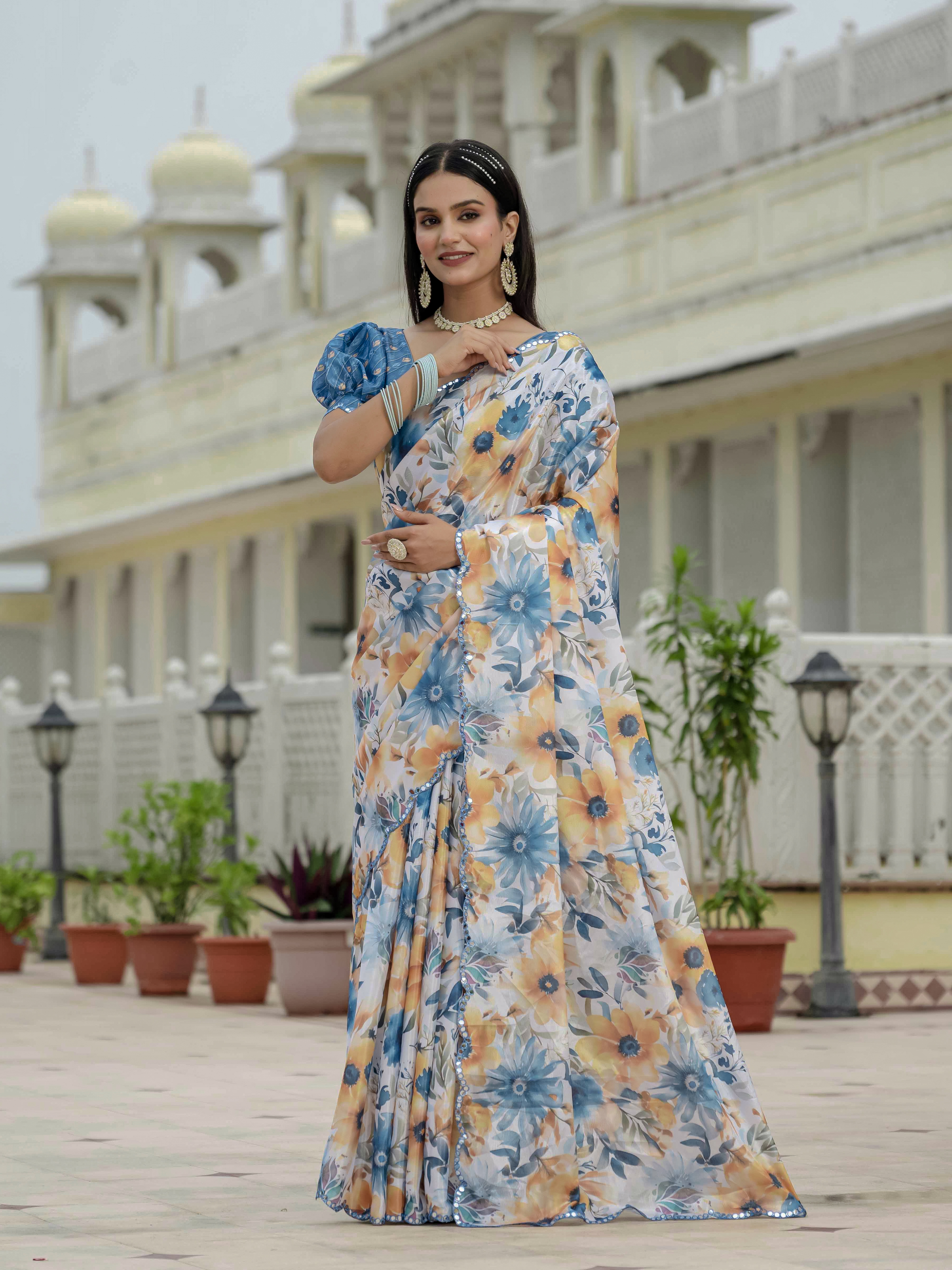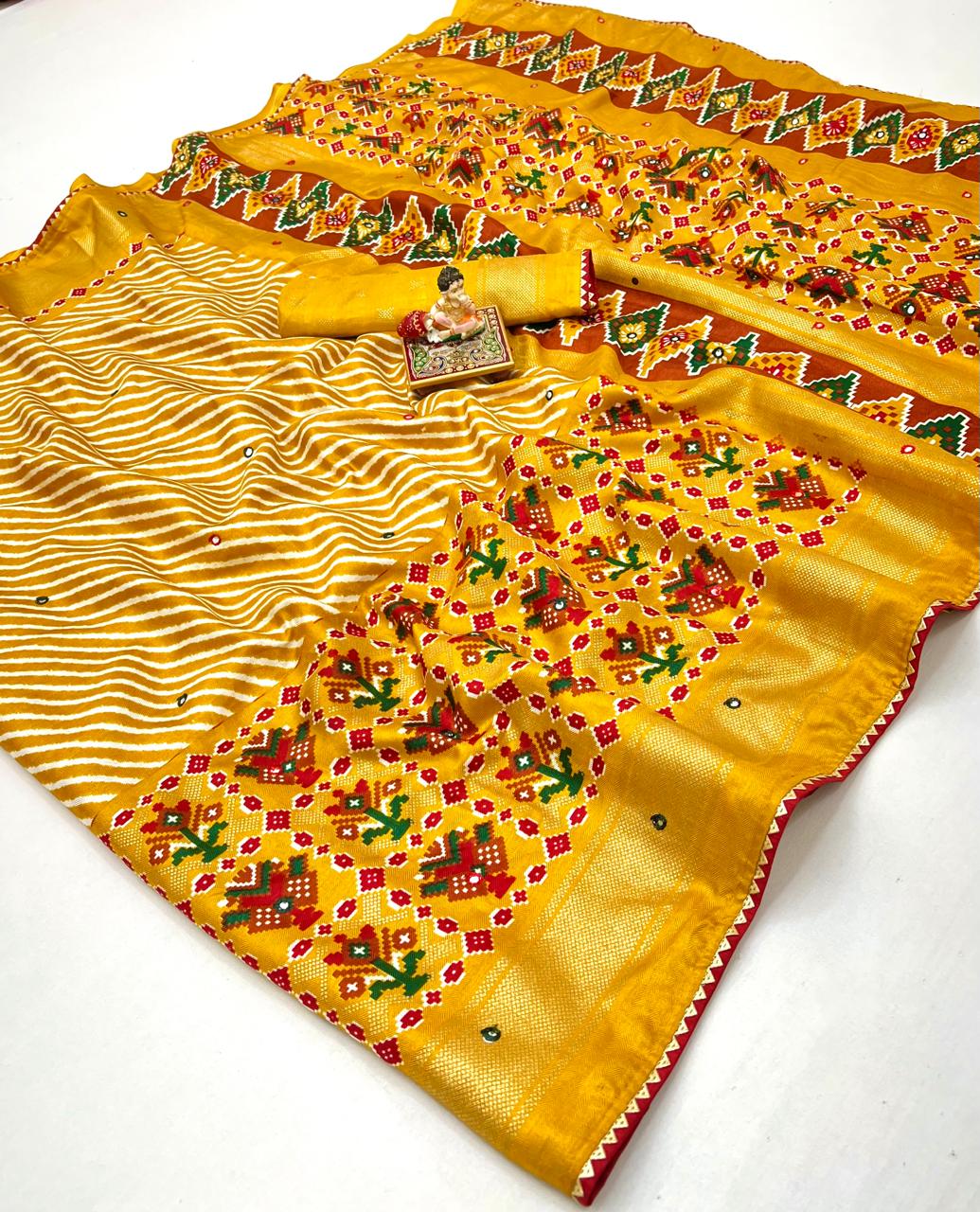
Madhya Pradesh Lehenga Styles for Festivals & Weddings draw character from the state's varied textile traditions, including Chanderi, Maheshwari, Bagh printing, mirror work and richly coloured regional dress. A lehenga inspired by Madhya Pradesh doesn't need to copy one single costume. It can combine a lightweight Chanderi skirt, a mirror-work blouse, a Bandhani-inspired dupatta or a Bagh-inspired colour story while remaining comfortable for a long celebration. The most successful outfit choices begin with the event, weather, fabric weight and amount of movement required.
Madhya Pradesh offers several visual directions rather than one fixed lehenga formula. Malwa brings saturated colours and festive ornamentation, Bundelkhand suggests stronger contrasts and substantial textiles, while Nimar and tribal craft traditions introduce bold motifs, mirrors and earthy colour combinations. Understanding those influences helps you choose a coordinated outfit instead of simply adding more embellishment.
What makes Madhya Pradesh Lehenga Styles for Festivals & Weddings distinctive?
Madhya Pradesh-inspired lehengas are distinctive because they balance regional textile references with practical festive silhouettes and vivid surface decoration. The strongest looks usually rely on one clear craft idea, such as Chanderi translucency, Maheshwari stripes, mirror work, Bagh-inspired geometry or a deep Malwa colour palette.
Chanderi is a handwoven fabric associated with the town of Chanderi in Madhya Pradesh. Chanderi silk and silk-cotton varieties are known for a light feel, a subtle sheen and a slightly transparent appearance. A Chanderi lehenga works particularly well for daytime weddings, pujas and festivals because the fabric looks dressy without becoming heavy.
Maheshwari fabric comes from Maheshwar and commonly features a firm yet lightweight hand, narrow stripes, checks or distinctive borders. A Maheshwari-inspired lehenga can use a striped skirt, a contrasting border or a dupatta with a neat woven edge. Maheshwari works well for guests who want a polished regional reference rather than dense embroidery.
Bagh printing, created with carved wooden blocks and natural or vegetable-based colours, is another useful source of inspiration. Bagh textiles often use red, black and cream, with geometric or floral forms arranged in repeated blocks. A lehenga doesn't need to be made entirely from Bagh print; a printed dupatta, border panel or blouse accent can provide the reference with better durability and easier coordination.
Mirror work adds a different kind of energy. Small mirrors catch movement and lamp light, making mirror-work lehengas particularly suitable for Navratri-style dancing, Sangeet functions and evening receptions. Mirror work isn't exclusive to Madhya Pradesh, but it can sit naturally alongside the state's bold folk-art and tribal-inspired visual language.
Choosing the right regional fabric for the celebration
The best fabric depends on the ceremony length, climate, time of day and amount of movement expected from the wearer. Fabric weight matters as much as colour because a lehenga worn for six hours should remain comfortable after photographs, meals and dancing.
For daytime festivals and outdoor ceremonies
Chanderi silk, silk-cotton, cotton muslin and lightweight georgette are practical choices for daytime events. Chanderi silk provides a luminous surface without the bulk of heavy brocade, while cotton muslin allows more airflow in warm weather. A skirt with a cotton lining will usually feel more comfortable than a fully synthetic lining during an outdoor Haldi ceremony.
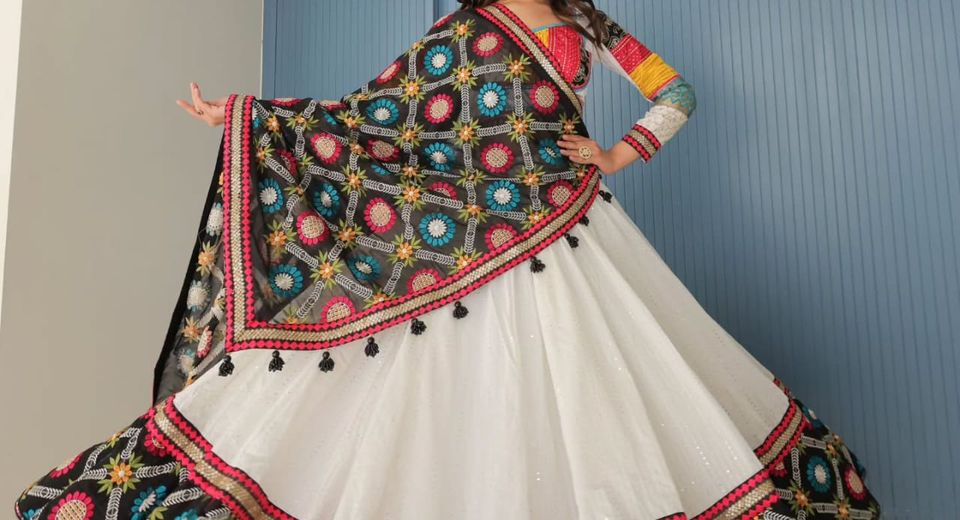
The Stylish White Mirror Work Lehenga for Festive Wear demonstrates how a pale base can let mirror details become the visual focus. White, ivory and soft pink reflect sunlight strongly, so these colours benefit from restrained jewellery and a dupatta with a defined border. For a daytime function, choose a blouse with breathable lining and avoid excessive layers under the skirt.
For evening weddings and receptions
Silk blends, satin, velvet accents and layered net create more visual depth for evening events. Satin reflects artificial light and photographs with a smooth glow, but satin can show creases and should be stored carefully. Net is useful for a voluminous dupatta, although a cotton or viscose lining under the skirt improves comfort and prevents scratchiness.
The Magenta Satin Embroidered Lehenga Set Online suits an evening palette because magenta holds its intensity under warm lighting. Pair saturated satin with antique gold, kundan or dull-gold jewellery rather than mixing several bright metallic finishes. The Black Wedding & Festive Wear Designer Lehenga gives a stronger evening direction; balance black with ruby, emerald, rani pink or antique-gold accents so the outfit doesn't appear visually flat.
Colour stories that suit Madhya Pradesh-inspired dressing
Deep red, black, fuchsia, indigo, mustard, ivory and emerald create the clearest Madhya Pradesh-inspired colour stories. These shades echo the strong contrasts found in Bagh printing, folk textiles and festive regional clothing without requiring a literal reproduction of any one garment.
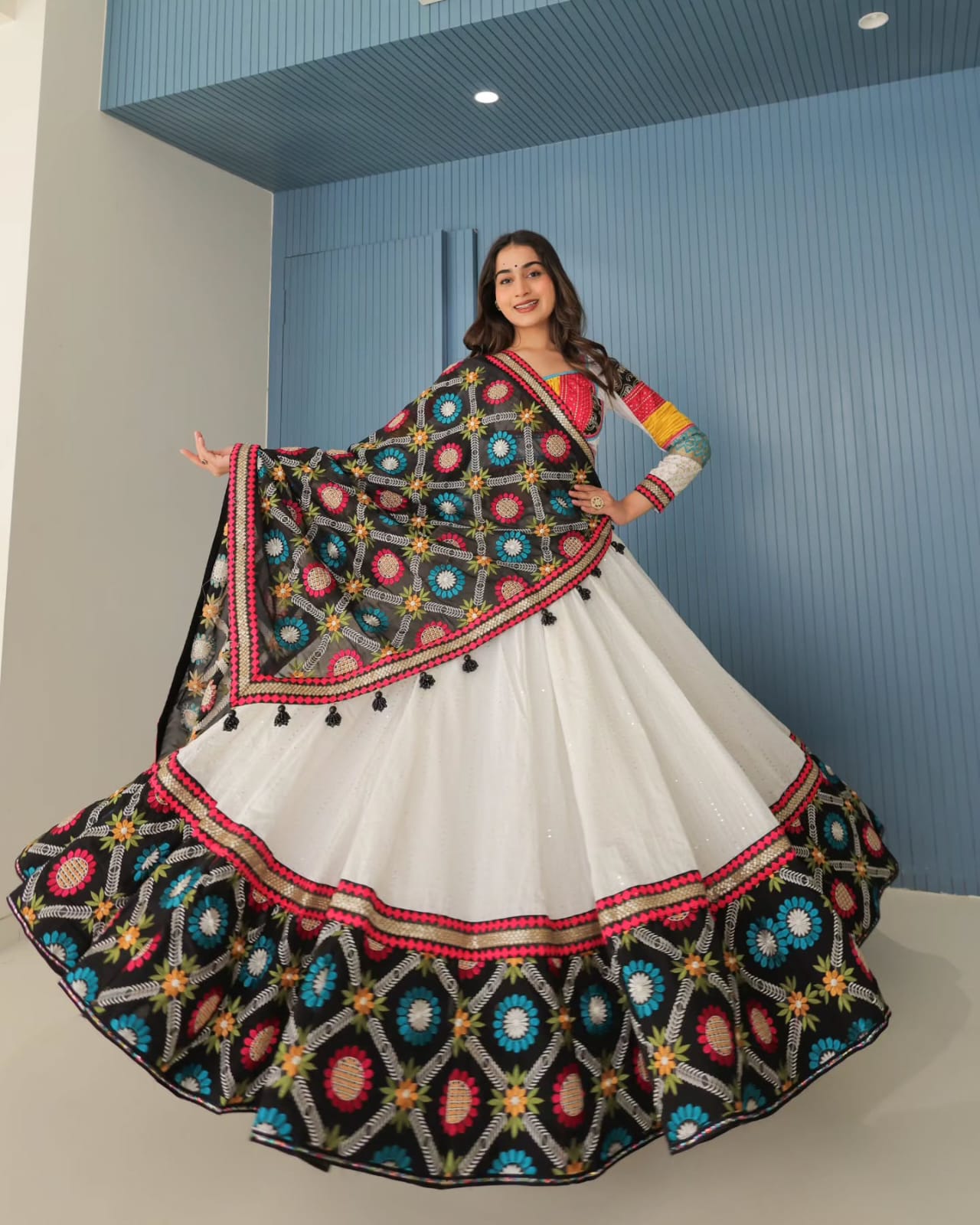
Red and black create a dramatic Bagh-inspired combination. Use red in the skirt, black in the blouse or dupatta and cream in the embroidery to create separation. Ivory and magenta make a softer festive pairing, especially for daytime weddings. Mustard with pink or rust with green works well for pre-wedding functions because the colours look lively in natural light.
White, mint and lavender suit daytime celebrations where you want a lighter appearance. The Mint Embroidered Lehenga Set with Net Dupatta for Women can be styled with pearl, silver or rose-gold accessories depending on the embroidery. Mint also pairs effectively with maroon or wine if you need a more regional-looking contrast without choosing a very dark base.
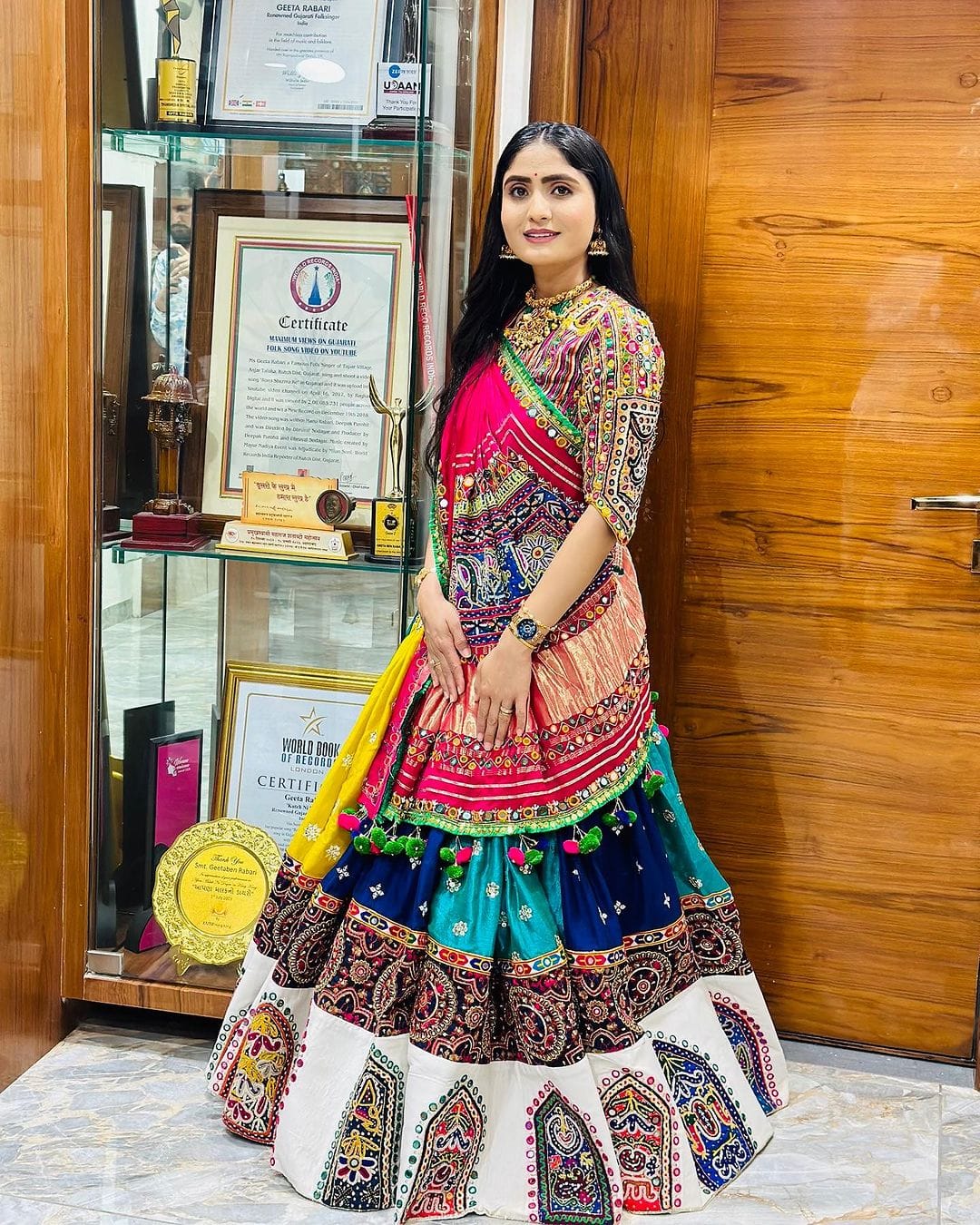
Multicolour outfits require one anchoring shade. The Multicolor Mirror Work Muslin Cotton Lehenga Choli Set already carries visual variety, so select one colour from the skirt for the bangles, bindi or footwear. Repeating every colour in the jewellery usually makes the outfit look busy. A plain metallic potli or neutral sandal gives the textile room to stand out.
Blouse, skirt and dupatta proportions that improve the outfit
A balanced lehenga usually combines one statement element with two quieter elements. If the skirt has heavy mirror work, choose a more controlled blouse and a lighter dupatta; if the skirt is plain or woven, a decorated blouse or ornate border can supply the needed occasion finish.
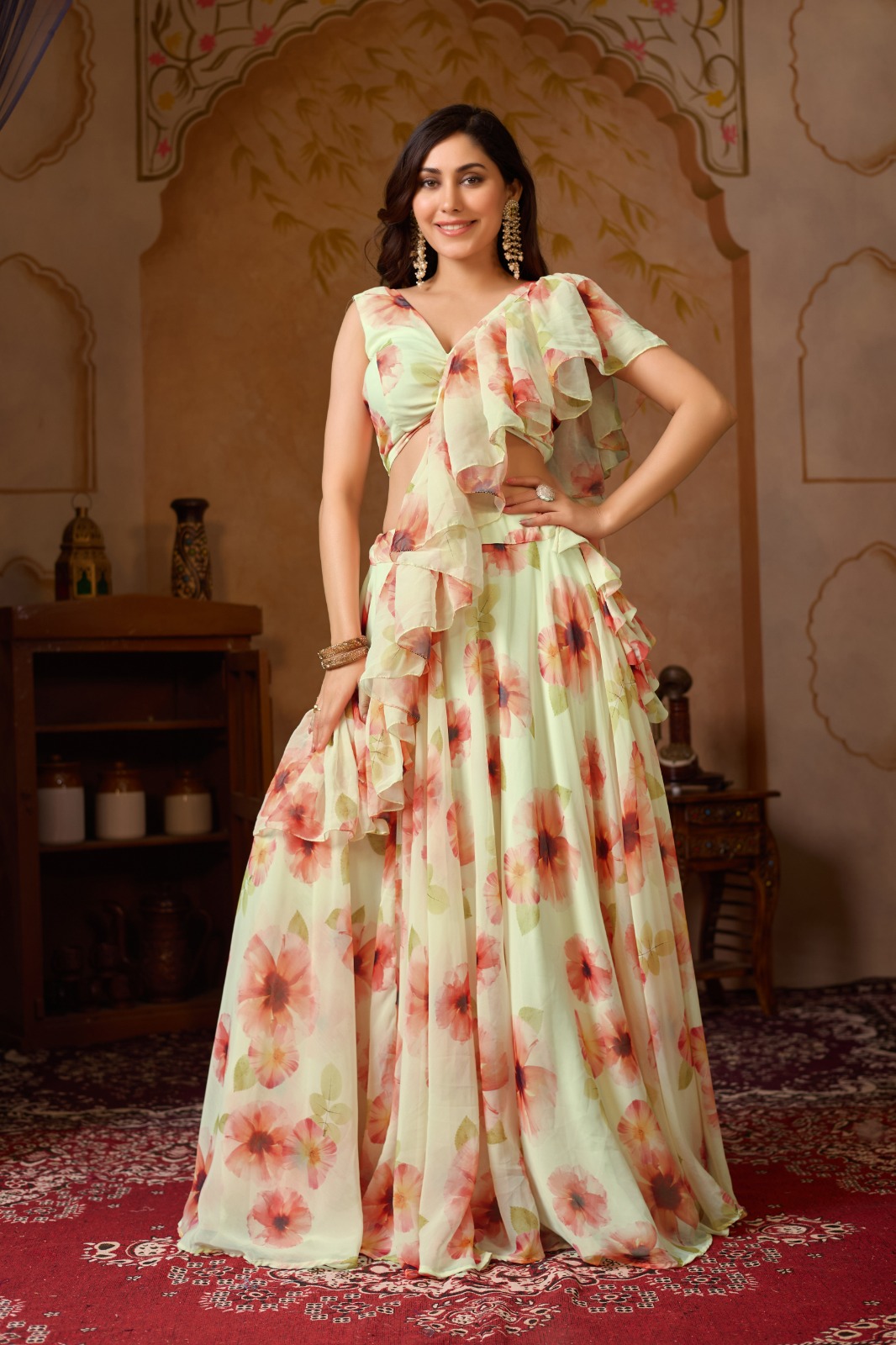
For a shorter torso, a slightly higher waistline and a blouse ending near the natural waist can create a longer leg line. A V-shaped or gently scooped neckline also adds vertical direction. For a longer torso, a blouse with a broader border, a modest peplum shape or a dupatta worn across the upper body can create proportion.
Flared skirts are comfortable for dancing, but the flare should match the venue. Six to eight broad panels provide movement without the bulk of a heavily layered skirt. A very wide can-can hem may look impressive in photographs but can become difficult on stairs, in crowded halls or during a ceremony requiring floor seating.
Dupatta placement changes the character of a lehenga. A single-shoulder drape looks elegant for receptions, a front-open drape protects modesty during family ceremonies, and a waist-secured drape stays practical during dancing. Pin the dupatta at the shoulder and waist, then test sitting, walking and raising both arms before leaving for the event.
The Stylish Multicolor Butter Silk Lehenga Choli Set shows why a colourful outfit benefits from a controlled dupatta arrangement. Let the skirt remain visible by using one shoulder pin rather than wrapping the dupatta around the waist several times. Butter silk can look rich under lights, so matte accessories help prevent excessive shine.
How to style Madhya Pradesh Lehenga Styles for Festivals & Weddings
Styling Madhya Pradesh Lehenga Styles for Festivals & Weddings works best when jewellery, footwear and hair support the textile rather than compete with it. Build the look in layers: first the fabric and silhouette, then the colour accent, followed by one regional-looking accessory.
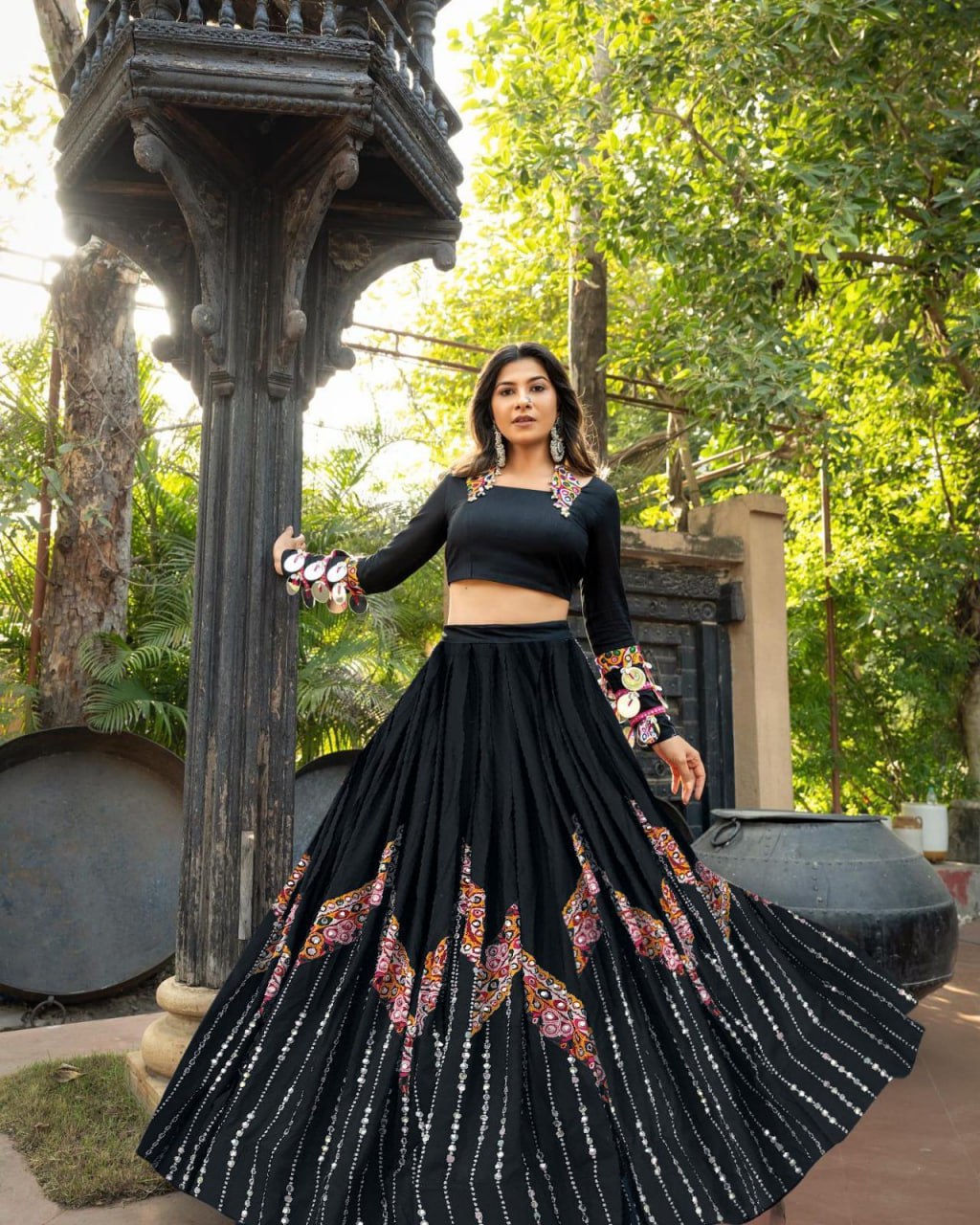
For a festival, oxidised silver jhumkas, a stack of glass bangles and a small bindi create an easy folk-inspired finish. For a wedding, polki, kundan or antique-gold jewellery can make Chanderi, silk or mirror work appear more formal. A maang tikka is most effective when the blouse neckline and dupatta arrangement leave enough space around the face.
Juttis, embroidered mojaris and low block heels are safer than narrow stilettos for lawns, courtyards and uneven heritage venues. Match the footwear to the skirt hem rather than only to the blouse. The skirt should sit approximately 1 to 2 centimetres above the floor when worn with the intended footwear, allowing movement without dragging.
Hair should reflect the function. A low bun decorated with gajra works for a wedding ceremony, while a braid or half-up style is more secure for dancing. Use a strong but lightweight hairpin if the dupatta will be placed over the head. Heavy earrings need a supportive backing because long functions put pressure on the earlobes.
The Royal Purple Mirror Work Muslin Lehenga Choli Set works with silver jewellery for a cooler look or antique gold for a warmer wedding palette. The Vibrant Mirror Work Muslin Lehenga Choli Set Online can become the centre of a Sangeet look when paired with a plain clutch and comfortable footwear. The styling principle remains the same: let one surface carry the sparkle.
Budget planning and shopping checks for a lehenga
A realistic lehenga budget should include the outfit, alterations, lining adjustments, footwear, jewellery and possible dupatta pinning accessories. A lower-priced lehenga can still look polished when the fit and fabric handle are good, while an expensive outfit can appear uncomfortable if the waist or blouse is poorly adjusted.
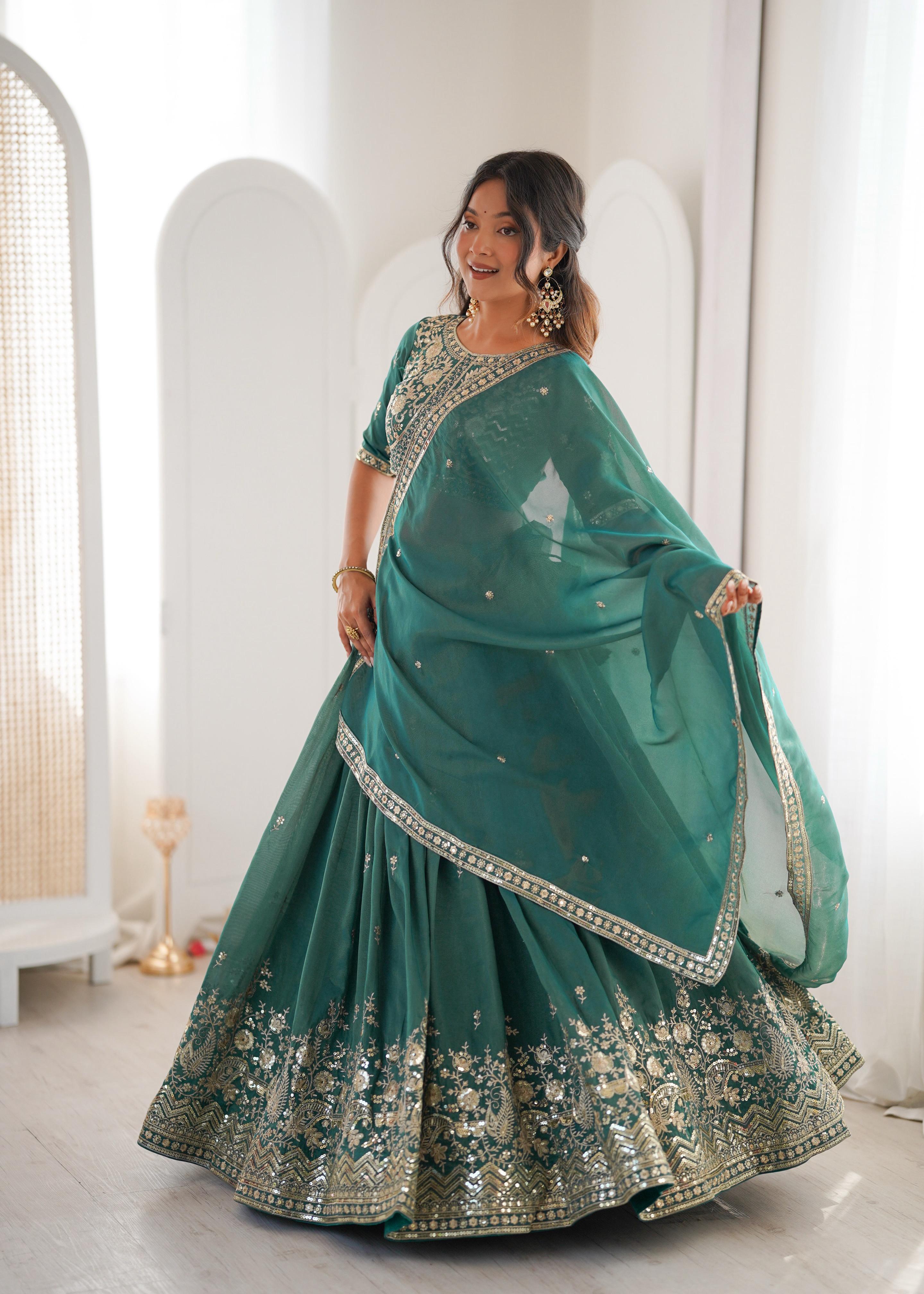
For a value-conscious guest outfit, compare the Silk Lehengas Under 3000 collection with the Pink Lehengas Under 4000 with 50% Discount collection. Check whether the listed price includes the blouse, dupatta, lining and stitched finishing. A semi-stitched skirt may require additional tailoring, so add alteration charges before comparing prices.
Bridesmaids often need coordinated colours without identical silhouettes. The Bridesmaid Lehengas Under 5500 collection can be useful when a group wants a shared budget range. Choose one common feature, such as magenta dupattas or mirror-work borders, and allow each person to select a neckline and sleeve length suited to her comfort.
For a light, romantic appearance, the Net Lehengas Under 4500 with 51% Discount collection brings a starting point, but inspect the net for softness and the skirt lining for coverage. For a turmeric ceremony, the Haldi Lehengas Under 5500 collection brings a relevant colour direction. Yellow and turmeric paste can stain delicate fabrics, so select washable or easier-to-clean materials when the outfit will be worn close to the ceremony rituals.
Fit, lining and movement checks before the event
A well-fitted lehenga should allow sitting, walking, climbing stairs and lifting both arms without pulling at the waist or shoulders. Try the complete outfit with the final blouse cups, footwear, jewellery and dupatta because each item changes the fit and balance.
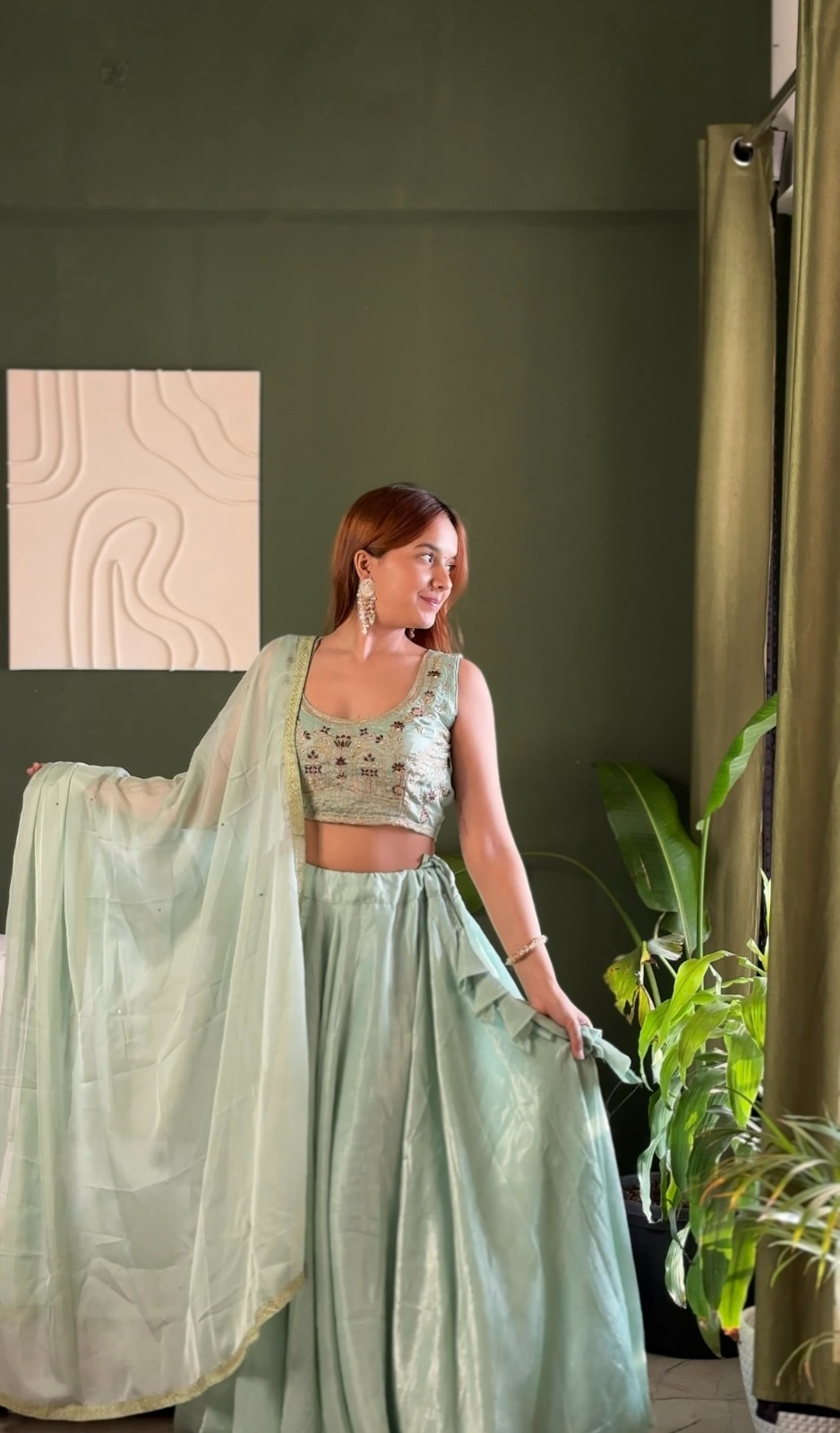
Measure the natural waist, fullest hip, shoulder, bust and preferred skirt length rather than relying only on a familiar ready-to-wear size. A waist measurement taken over shapewear can differ from a measurement taken over a thin blouse. Leave enough ease for breathing and sitting; a very tight waistband becomes uncomfortable during long ceremonies.
Inspect the inside seams, hooks, drawstrings and lining before removing tags. Mirror work should have secure stitching and no sharp edges touching the armhole or neckline. Embroidery should not catch repeatedly on the dupatta. A small safety kit containing fashion tape, spare hooks, needle and thread, and two safety pins can prevent a minor wardrobe problem from interrupting a wedding.
Do one complete movement test at home. Walk ten steps, sit on a chair, climb a few stairs, raise both arms and turn once. If the skirt twists, the blouse rides up or the dupatta slips, adjust the garment before the event rather than depending on emergency pinning at the venue.
Care instructions for embellished and woven lehengas
Most embellished lehengas should be spot-cleaned and professionally dry-cleaned only when necessary. Frequent washing can loosen mirrors, fade printed panels and weaken delicate net, while soaking can distort zari or embroidery.
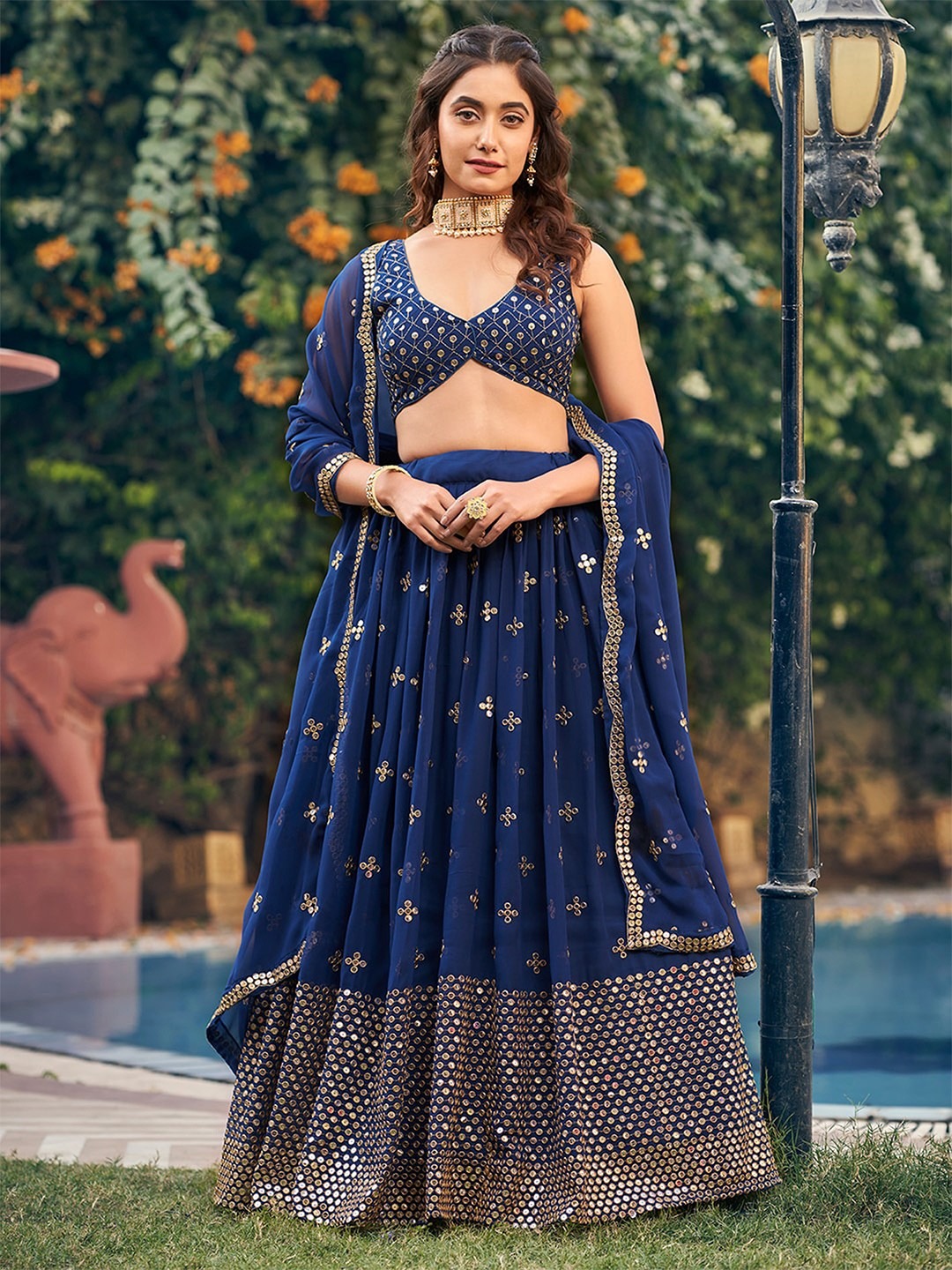
After wearing, air the lehenga in shade for several hours before storing it. Do not place a damp, perspiration-marked garment directly into a plastic cover. Fold the skirt along existing seam lines, wrap heavy embroidery in soft muslin, and store the dupatta separately so metallic work doesn't pull against the blouse.
Chanderi and Maheshwari fabrics should be protected from sharp hangers and direct sunlight. Store silk and silk blends in breathable cotton covers with a little space around them. Avoid spraying perfume directly onto zari, mirrors or satin; apply fragrance to the skin and allow it to dry before dressing.
Seasonal inspection prevents small problems from becoming expensive repairs. Every few months, check hooks, tassels, drawstrings and loose mirrors. Early reinforcement is especially useful for outfits worn during dancing, where repeated movement places stress on waist seams and shoulder attachments.
A regional-inspired lehenga becomes memorable when the textile, colour, silhouette and ceremony all make sense together. Choose one strong craft reference, fit the outfit for real movement and let the details remain comfortable enough to enjoy the celebration.
Questions Readers Ask About Madhya Pradesh-Inspired Lehenga Dressing
Which fabric is best for a Madhya Pradesh-inspired lehenga in summer?
Chanderi silk, silk-cotton, cotton muslin and lightweight georgette are practical summer choices. These fabrics are lighter and more breathable than velvet or heavily layered brocade, especially for daytime weddings and outdoor Haldi ceremonies.
How can I create a Madhya Pradesh-style lehenga look without wearing heavy embroidery?
Choose one regional textile reference, such as a Chanderi dupatta, Maheshwari-style border or Bagh-inspired red-and-black palette. Add simple silver jewellery and a clean silhouette instead of using dense embroidery on every garment panel.
Are mirror-work lehengas suitable for wedding guests?
Mirror-work lehengas are suitable for wedding guests when the outfit is balanced with restrained jewellery and comfortable footwear. Mirror work is especially effective for Sangeet functions, evening receptions and festive dancing, but a lighter design may be more appropriate for a formal ceremony.
What colours work best for a Haldi lehenga?
Yellow, mustard, marigold, lime, pink and orange work well for a Haldi lehenga. Choose washable or easy-care fabric where possible because turmeric paste can stain delicate silk, satin and light-coloured net.
How should I style a multicolour lehenga?
Repeat one colour from the skirt in the bindi, bangles, footwear or dupatta accent. Keep the jewellery and clutch relatively simple so the multicolour textile remains the main visual focus.
How do I know whether a lehenga will be comfortable for a long wedding?
Test the full outfit by sitting, walking, climbing stairs and raising both arms before the event. Check the waistband, blouse armholes, skirt lining, dupatta security and footwear because discomfort usually comes from fit or movement restrictions rather than appearance.