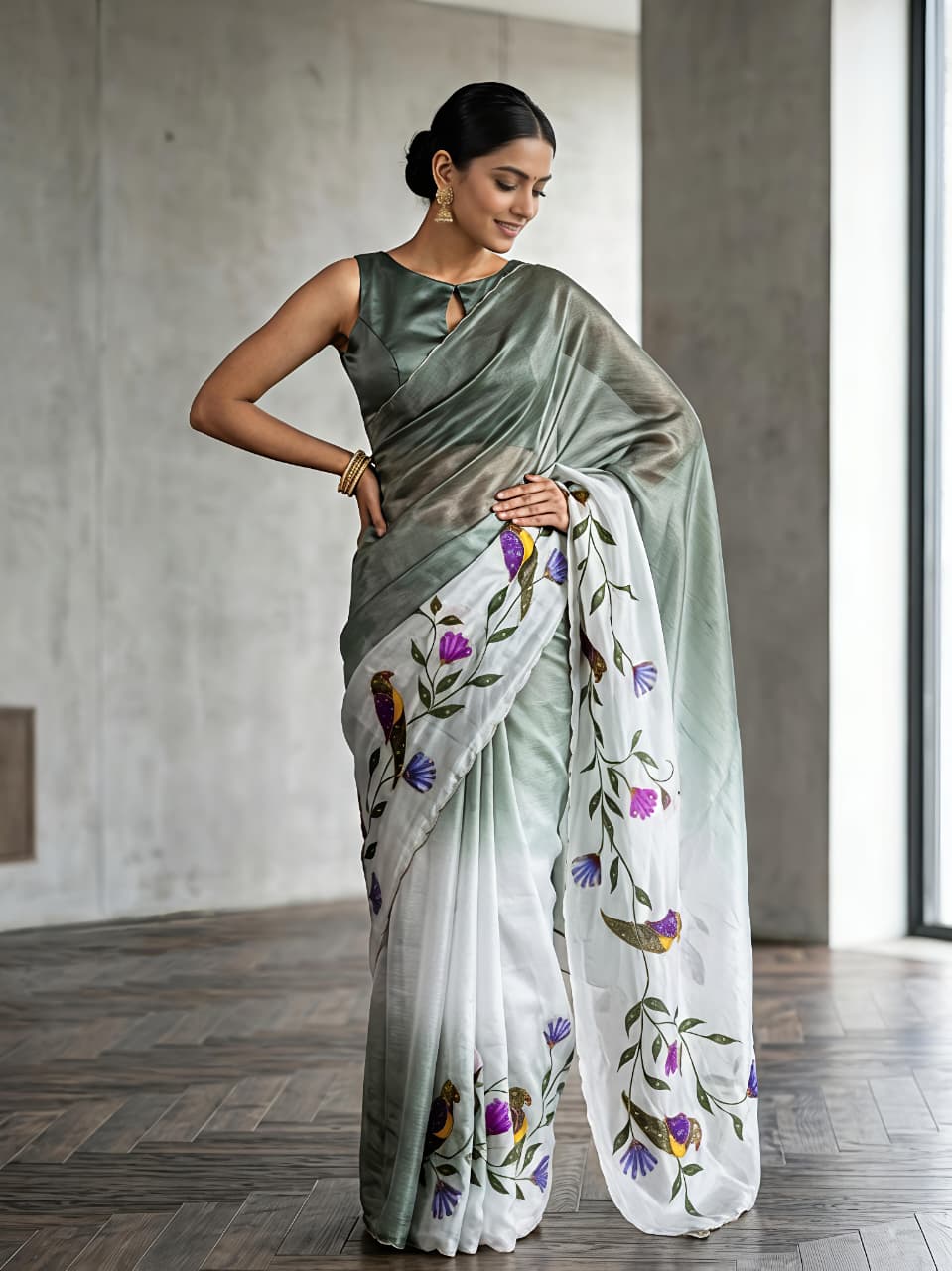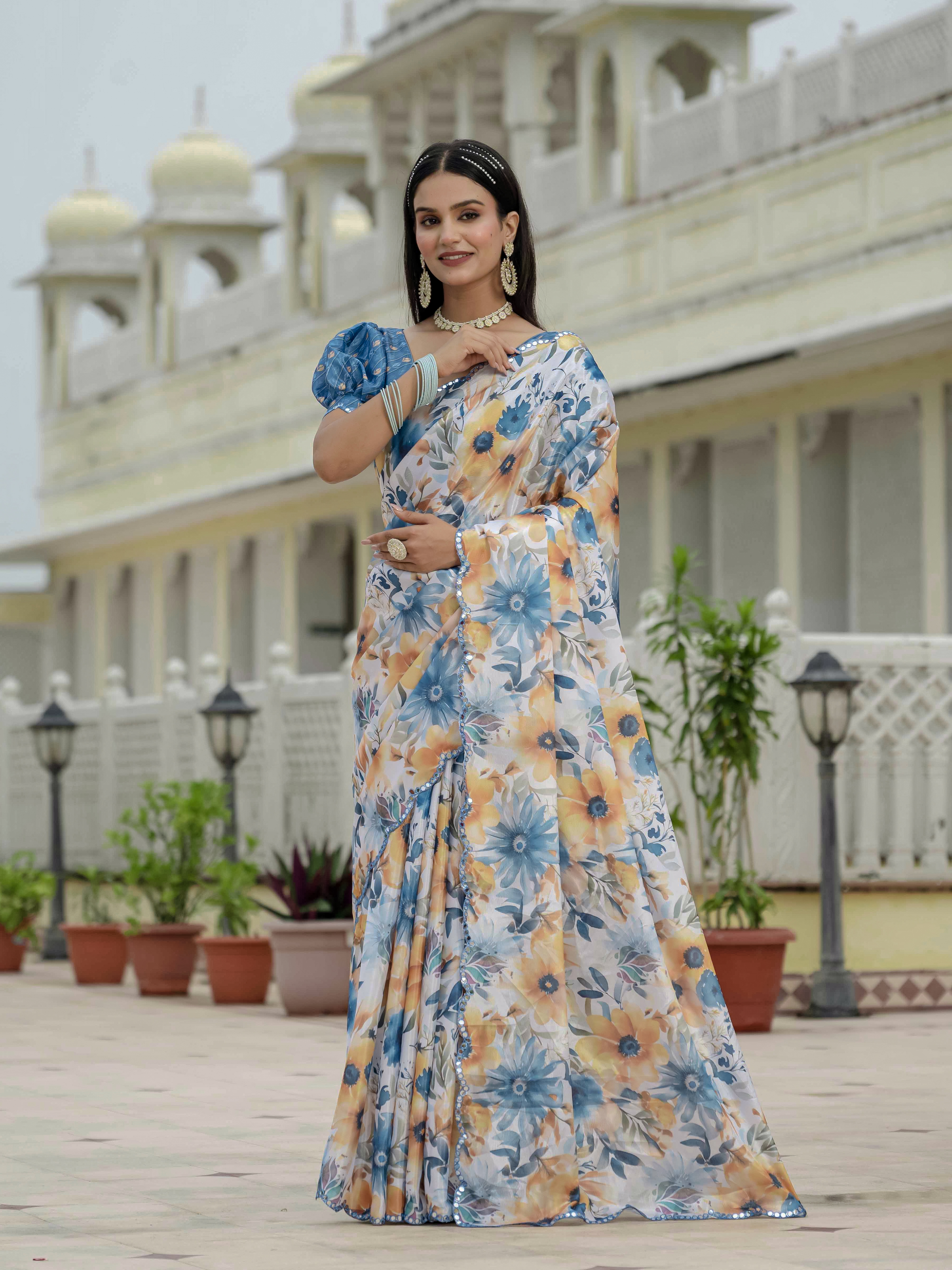
Madhubani Sarees: Mithila Art Meets Modern Ethnic Fashion in a form that can move from a cultural celebration to a practical everyday wardrobe. The visual language comes from Mithila painting, an art tradition associated with Bihar, where figures, animals, plants and ceremonial symbols appear in bold outlines and strong colour fields. A saree carrying those motifs is more than a colourful alternative to a plain drape; it's a story-led textile with a distinctly Indian point of view.
The most useful way to choose a Madhubani-inspired saree is to consider three things together: the artwork, the base fabric and the setting in which the saree will be worn. A detailed cotton saree can suit a daytime puja, while a quieter linen design may work for a gallery visit, office gathering or intimate dinner. Understanding those differences makes folk-art dressing more versatile and prevents the saree from feeling costume-like.
Madhubani Sarees: Mithila Art Meets Modern Ethnic Fashion Through Regional Motifs
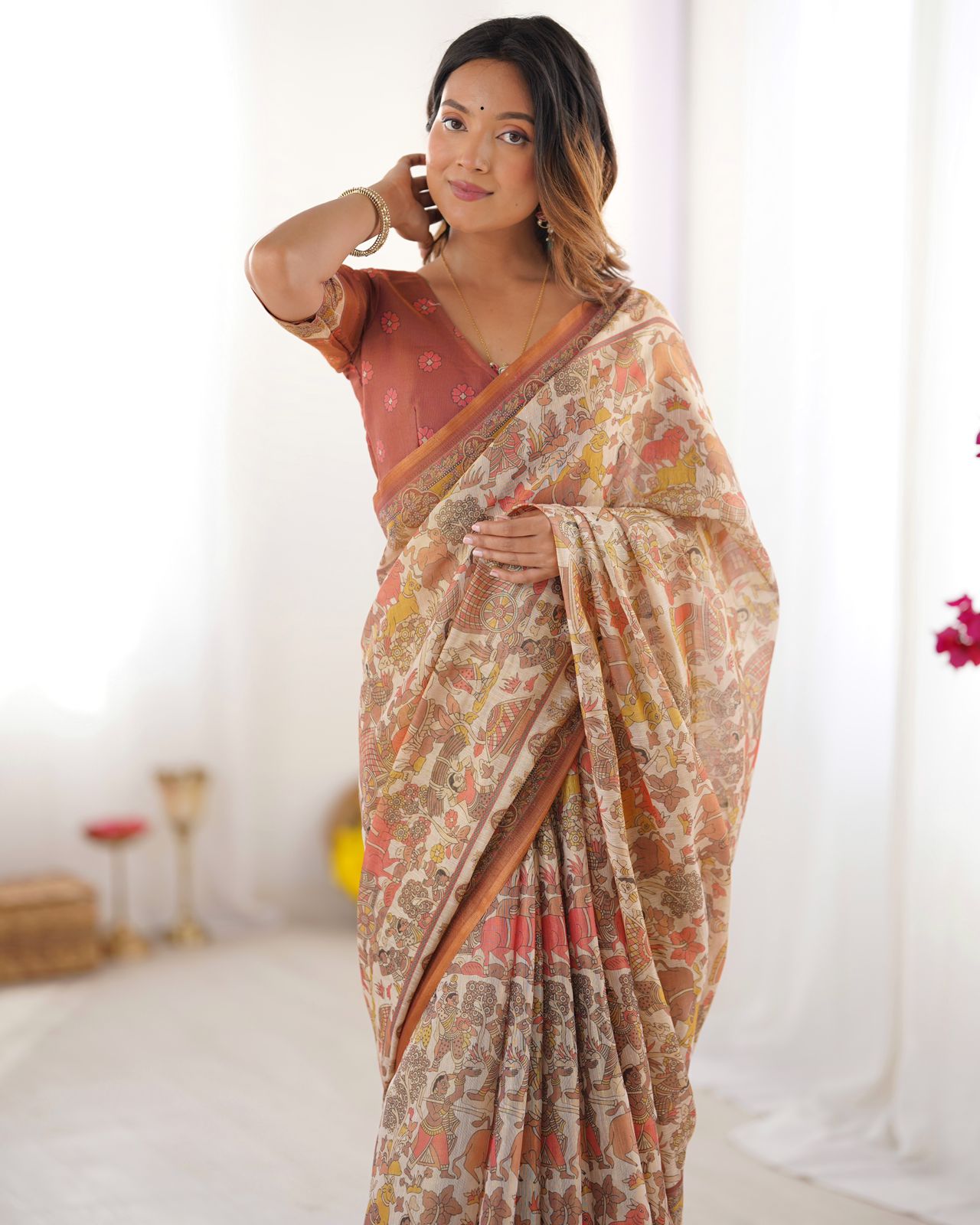
Madhubani Sarees: Mithila Art Meets Modern Ethnic Fashion through the visual structure of Mithila painting, while Warli and Kalamkari sarees belong to different regional art traditions. Madhubani art commonly uses strong contours, filled forms, repeated borders and symbolic subjects such as fish, peacocks, lotus flowers, trees, sun forms and human figures.
Madhubani painting developed in the Mithila region and historically appeared on walls and handmade surfaces during weddings, festivals and household rituals. Traditional compositions may represent fertility, protection, devotion or the relationship between people and the natural world. Modern textile prints simplify or repeat those compositions so they can fit a six-yard saree, but the underlying vocabulary remains recognisable.
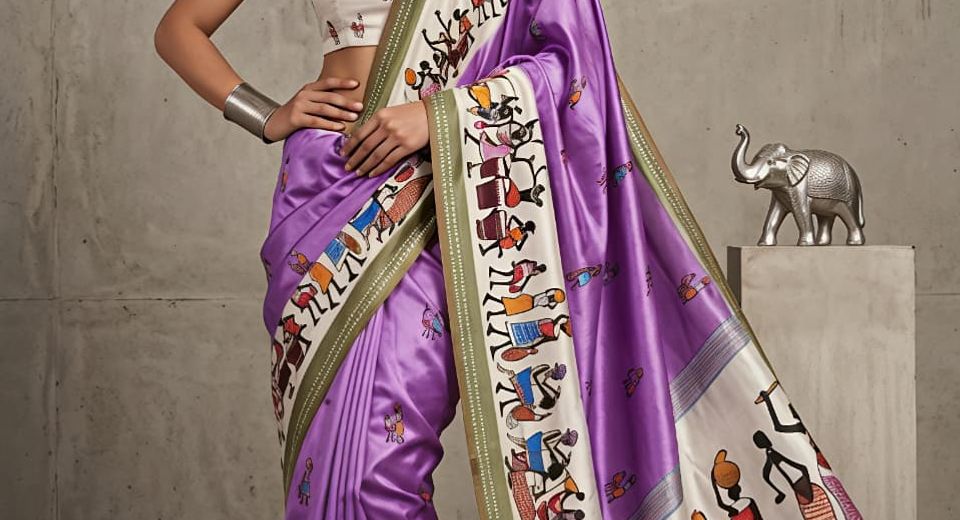
Warli art from Maharashtra is generally known for pared-back white figures, circular dances, huts and scenes of village life against an earthy background. Kalamkari, associated with Andhra Pradesh and Telangana, often uses drawn or block-printed imagery involving florals, mythological narratives and vegetal ornament. Elegant Purple Warli Art Cotton Saree with Designer Pallu can be beautiful beside a Madhubani design, but calling both Madhubani would erase the distinction that gives each tradition meaning.
Motif placement also matters. A Madhubani-inspired saree may place a large narrative panel on the pallu, use a narrow repeated border or distribute small animals and florals across the body. Placement changes how much artwork remains visible after the saree is pleated, pinned and worn with a blouse.
Madhubani Sarees: Mithila Art Meets Modern Ethnic Fashion in Motif Meaning
Madhubani Sarees: Mithila Art Meets Modern Ethnic Fashion through recurring figures, borders and colour relationships rather than random decoration. A single printed design may combine several symbols, so meaning depends on the composition and the context in which the artwork was created.
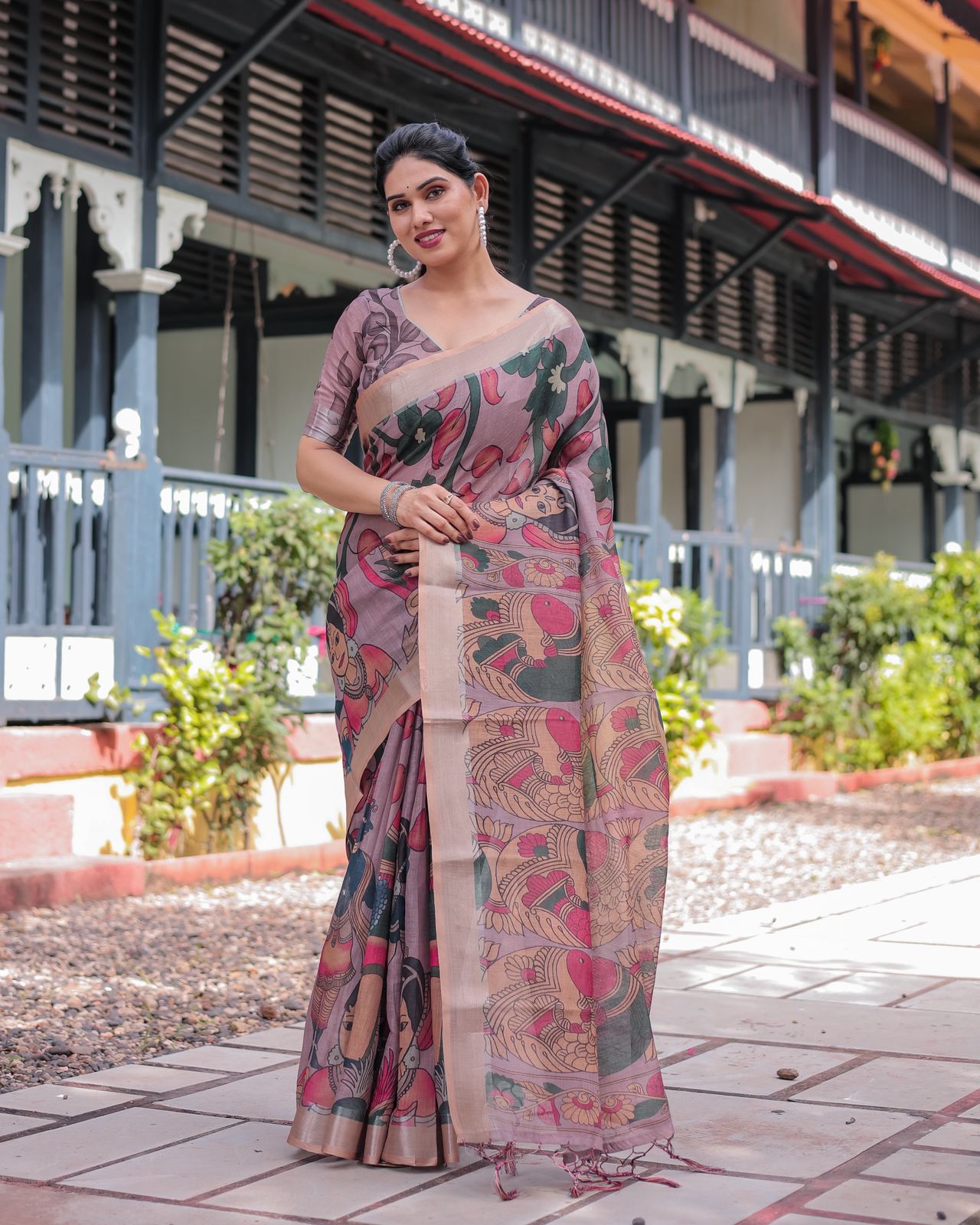
Common motifs in Madhubani art
- Fish: Fish are frequently associated with fertility, abundance and auspiciousness in Mithila visual culture.
- Peacocks: Peacocks can suggest beauty, romance, vitality and the arrival of rain.
- Lotus flowers: Lotuses often carry associations of purity, renewal and sacred beauty across Indian artistic traditions.
- Trees and foliage: Tree-of-life forms connect a composition to growth, continuity and the living world.
- Geometric borders: Repeated lines, dots and angular frames create rhythm and contain a busy narrative surface.
- Human or divine figures: Figures may reference wedding scenes, village life, devotional stories or fertility imagery, depending on the artwork.
Colour can guide the mood as strongly as the motif. Red and orange create a festive, energetic impression, while indigo, purple, mauve and beige make folk imagery easier to integrate into contemporary clothing. A monochrome blouse can calm a highly illustrated pallu, whereas a contrast blouse can deliberately amplify the saree's theatrical character.
Madhubani Sarees: Mithila Art Meets Modern Ethnic Fashion Through Fabric Choice
Cotton and linen are usually the easiest fabrics for regular wear because they breathe well, hold a printed border clearly and remain comfortable during long daytime events. Fabric choice should follow climate, drape preference and the amount of structure you want in the pleats.
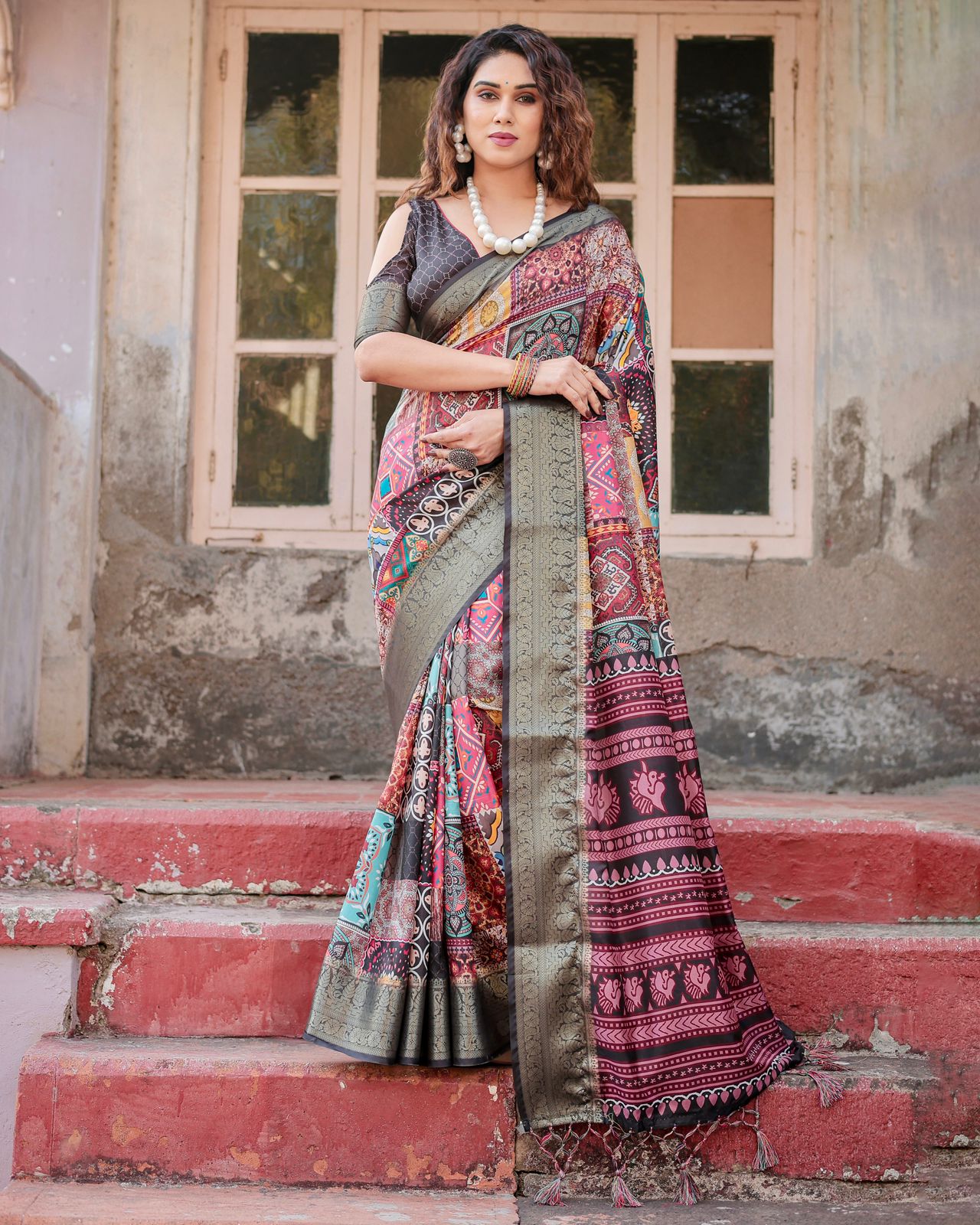
Cotton for movement and warm weather
Cotton works well for office wear, day celebrations and humid weather because the fibre absorbs moisture and generally feels less clingy than synthetic fabric. A cotton saree often gives a crisp, grounded drape, although a very lightweight weave may need careful pleating to prevent the pallu from shifting.
Festive Folk Warli Printed Blue Cotton Saree and Traditional Touch Warli Art Orange Saree demonstrate why folk-art cottons are useful references even when you're specifically shopping for Madhubani imagery. Blue offers a calmer base for silver-toned accessories, while orange naturally supports gold accents and festive styling.
Linen and linen blends for a modern silhouette
Linen creates a slightly relaxed, textured fall and suits minimal styling. Linen-cotton blends are often easier to manage than very crisp pure linen because the blend can reduce excessive creasing while retaining breathability.
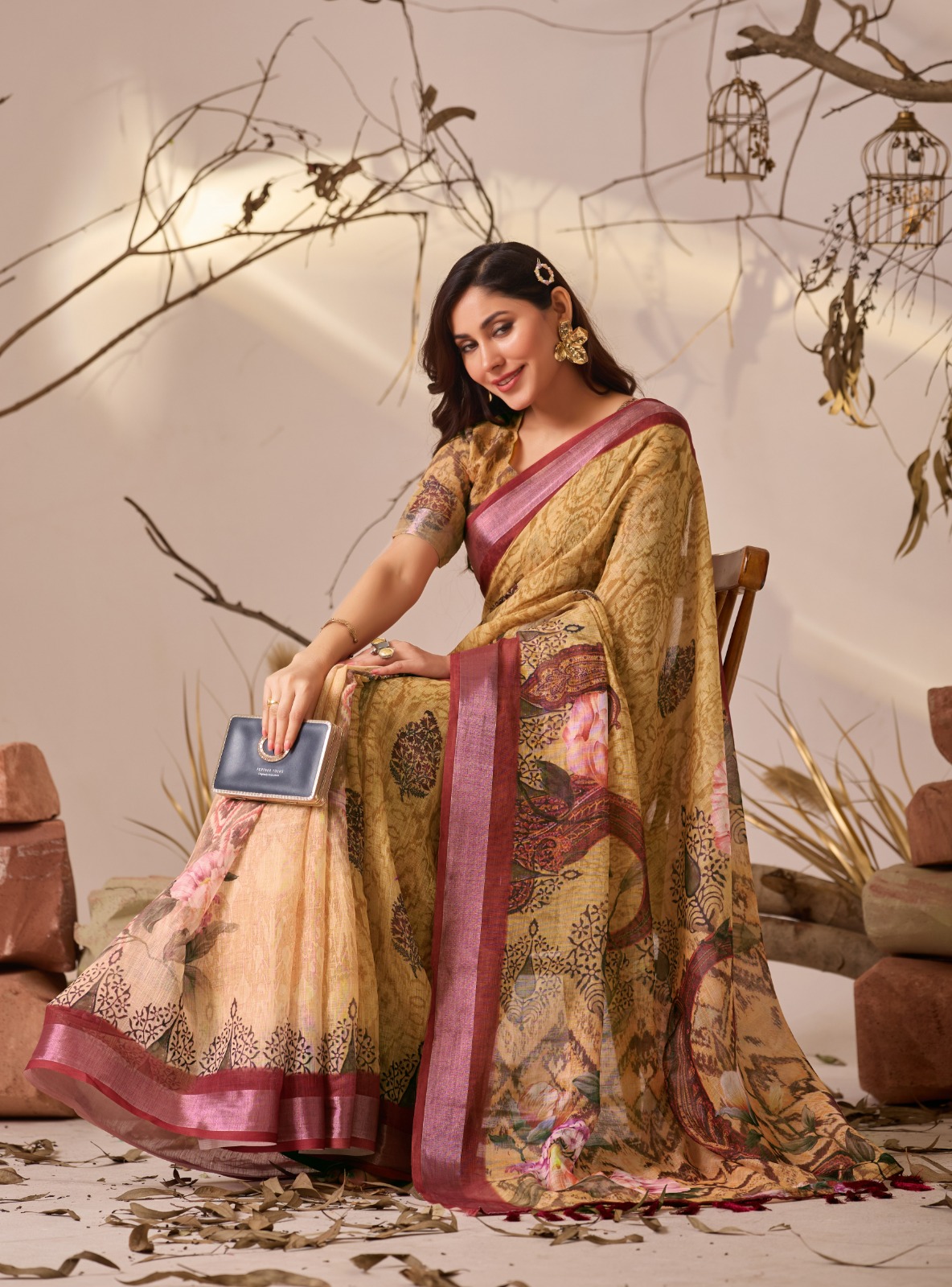
Elegant Mauve Linen Saree with Artistic Madhubani Print shows how a muted base can make illustrative artwork feel contemporary. Ethnic Beige Cotton Linen Saree with Village Art Design uses a neutral direction that can work with tan, rust, black, maroon or deep green accessories. Beige Multicolor Art Print Pure Linen Saree with Border is better for someone who enjoys a visible border and a more structured, design-led finish.
When a softer drape is preferable
A softer fabric is preferable when you want fluid pleats, a lighter pallu and less visual stiffness around the waist. Fabrics with a slippery surface may require a well-fitted petticoat and additional discreet pins, especially when the saree carries a large printed pallu.
Madhubani Sarees: Mithila Art Meets Modern Ethnic Fashion for Daytime Events
Madhubani Sarees: Mithila Art Meets Modern Ethnic Fashion most naturally at daytime cultural events when breathable fabric, visible motifs and restrained accessories work together. Cotton or linen is usually more comfortable than a heavy embellished saree for a long puja, craft fair, family lunch or Haldi ceremony.
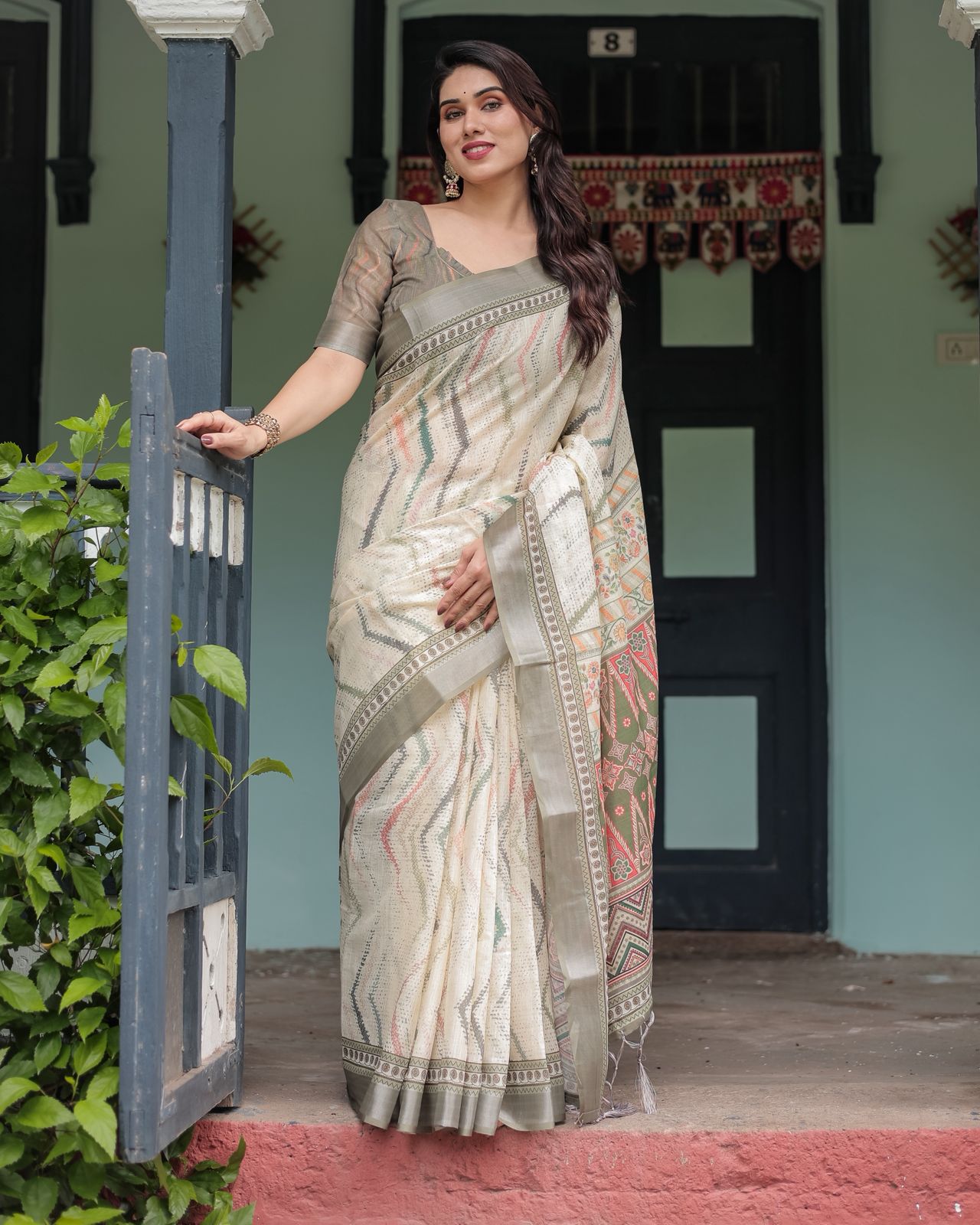
Choose a blouse in a solid colour taken from the print. A high-neck, elbow-sleeve or simple round-neck blouse gives the saree a clean frame. Small silver jhumkas, a fabric potli and flat sandals can complete a daytime look without covering the artwork.
A blue folk-art saree can take oxidised silver and indigo details, while an orange or red saree can take antique gold without needing heavy bridal jewellery. Fresh makeup and a low bun or braid keep the pallu's illustrations visible.
For workplace dressing, use a restrained print, a compact border and a blouse with sleeves. A mauve, beige, navy or charcoal blouse can reduce the visual volume of a detailed saree, while a leather watch and small studs keep the outfit professional.
Elegant Mauve Linen Saree with Artistic Madhubani Print can suit a presentation, creative workplace or informal business event when paired with a solid blouse and minimal jewellery. Avoid stacking many bangles or adding a heavily embroidered blouse, because competing surfaces can make a folk-art print appear less intentional.
Madhubani Sarees: Mithila Art Meets Modern Ethnic Fashion for Evening Wear
Madhubani Sarees: Mithila Art Meets Modern Ethnic Fashion becomes more formal in the evening when the blouse introduces controlled contrast or texture. A sleeveless blouse in velvet, raw silk or a matte satin-like fabric can add polish if the saree itself is lightweight and printed.
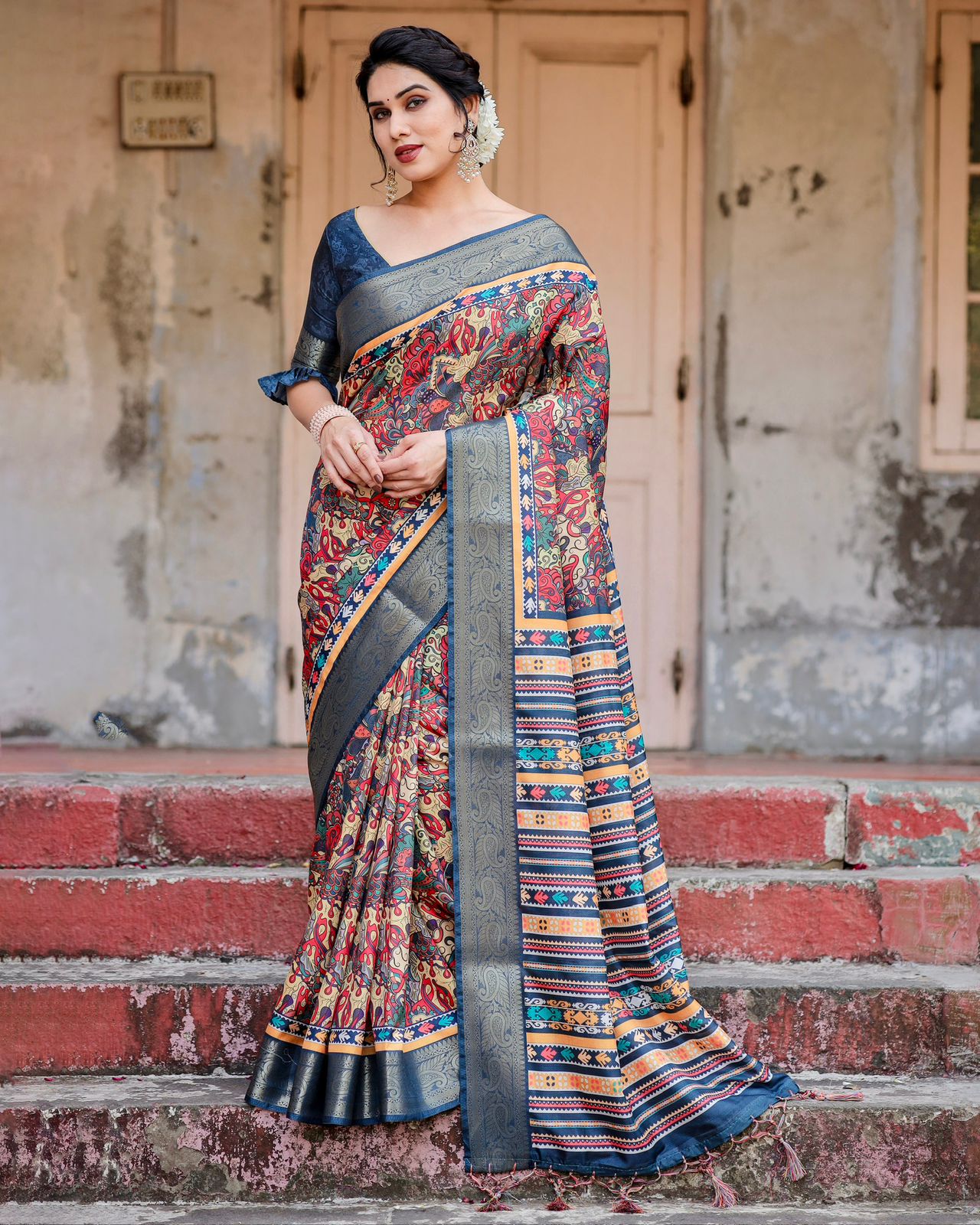
Keep embellishment limited to a narrow neckline, piping, small buttons or subtle metallic edging. A heavily sequinned blouse can compete with a large narrative pallu, while a plain blouse can make the artwork look deliberate and sophisticated.
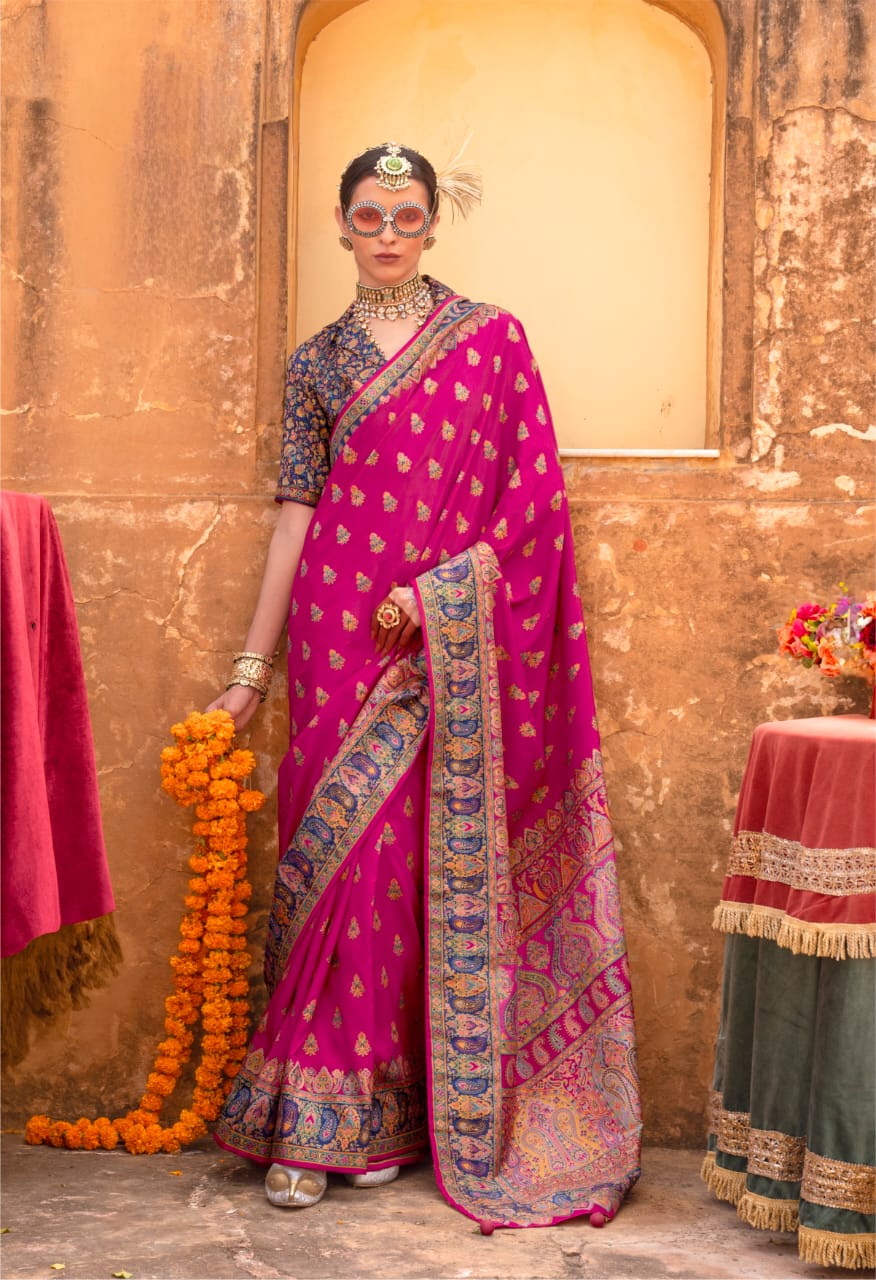
Pastel Linen Cotton Floral Print Saree with Designer Blouse brings an useful styling lesson: a coordinated designer blouse can create polish, but the blouse should still respect the scale and colour of the saree. Magenta Traditional Kalamkari Art Saree with Blouse shows how a different regional art vocabulary can create a richer evening reference without being mistaken for Madhubani.
The Party Wear Sarees collection can help compare how print, sheen and embellishment change the same basic drape. The Printed Sarees Collection Under 3000 is useful for comparing artwork density and fabric choices within a defined budget, while Silk Sarees Under 3000 With Discount provides a contrasting reference for shoppers considering a smoother, more luminous surface.
Madhubani Sarees: Mithila Art Meets Modern Ethnic Fashion With the Right Blouse
The most balanced blouse for a folk-art saree is usually a solid, well-fitted design that repeats one colour from the border or pallu. The blouse doesn't need to copy every motif, and a second busy print often competes with the artwork rather than supporting it.
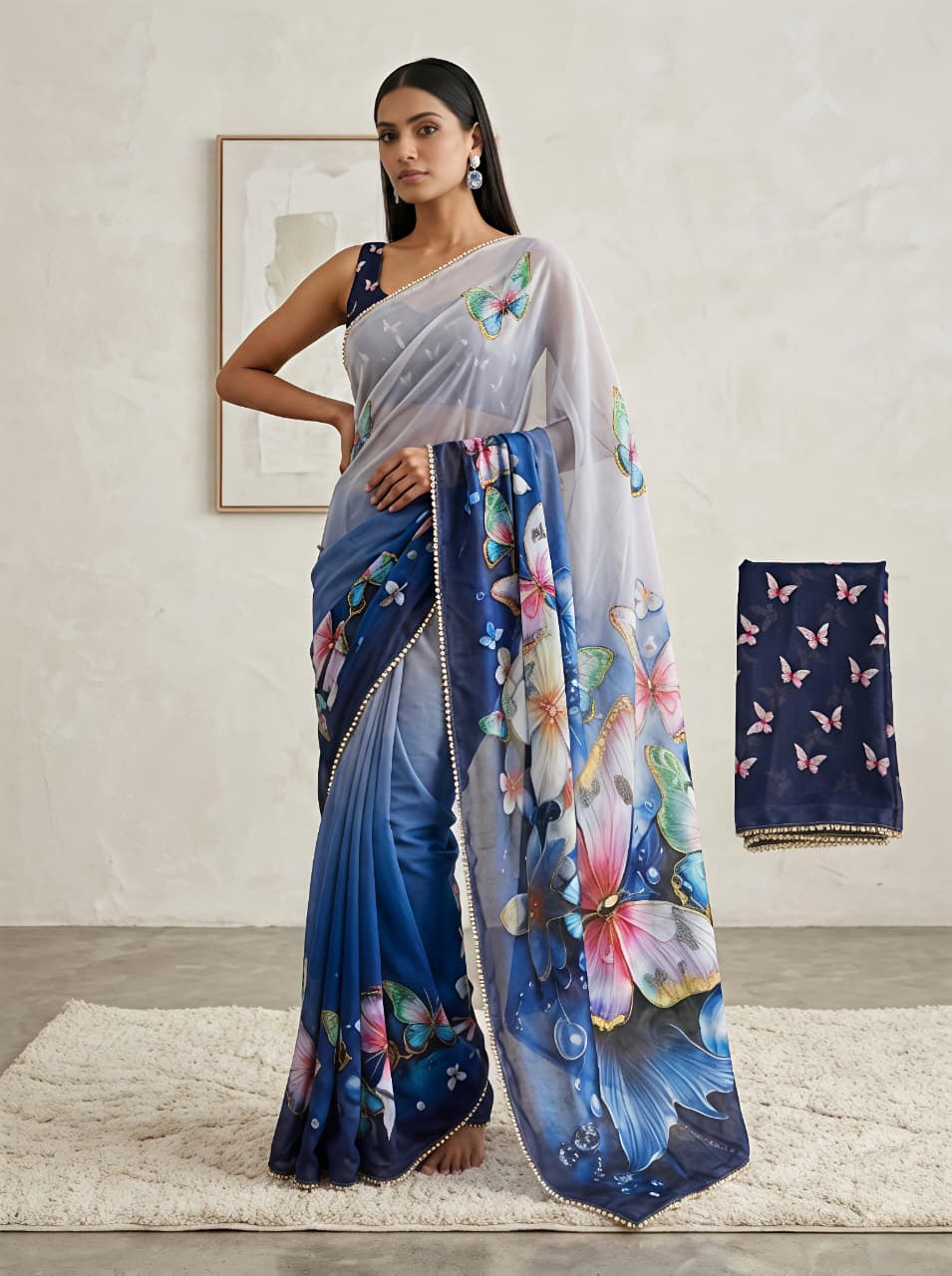
- For a multicolour pallu: Choose the quietest major colour in the pallu for the blouse and use one metal family for jewellery.
- For a neutral saree: Add a rust, maroon, teal or deep purple blouse to give the outfit definition without hiding the print.
- For a narrow border: Try a blouse with a stronger sleeve shape, such as elbow sleeves or a modest puff sleeve, because the outfit can handle more structure.
- For a large narrative pallu: Pin the pallu in a neat front pleat or let it fall from one shoulder so the figures are not broken by excessive folds.
- For a casual look: Pair the saree with a plain cotton blouse, a small bindi, a sling bag and flat footwear.
Jewellery should respond to the artwork's density. Oxidised silver complements blue, purple and grey bases, while matte gold or antique gold works well with red, orange, mustard and earthy beige. A single statement earring is often more effective than a necklace, earrings, bangles and hair accessories competing at once.
Pink Georgette Sarees can offer an useful comparison for shoppers who prefer a softer, more fluid evening drape. Red Banarasi Silk Sarees for Weddings Under 1100 provide another contrast: Banarasi silk and zari create a formal woven surface, whereas Madhubani-inspired prints rely on illustrated motifs and visual storytelling.
Madhubani Sarees: Mithila Art Meets Modern Ethnic Fashion With Proper Care
Madhubani Sarees: Mithila Art Meets Modern Ethnic Fashion will remain sharper when printed cotton and linen are handled gently, protected from prolonged sunlight and stored without dampness. Care should follow the garment's label because print methods and fabric blends vary.
- Wash carefully: Prefer a gentle hand wash in cool water unless the care label specifically allows machine washing or dry cleaning.
- Use mild detergent: Avoid bleach, strong stain removers and prolonged soaking, which can dull colours and weaken fibres.
- Dry in shade: Turn the saree inside out and dry it away from direct, harsh sunlight to reduce fading.
- Iron at the correct temperature: Use a medium or fabric-appropriate heat setting, and place a thin cotton cloth between the iron and the print when needed.
- Store dry: Fold the saree loosely, refold it every few months and keep it in a breathable cotton cover rather than sealed plastic.
- Protect the pallu: Avoid hanging a heavy blouse or jewellery directly on the printed pallu, because repeated pressure can create marks or stretching.
Small creases are natural in linen and cotton and don't indicate poor quality. A light steam treatment or careful ironing on the reverse side can restore a neat appearance without flattening the character of the fabric.
Choosing a Madhubani saree becomes easier when you separate the art tradition from the styling trend. Look for recognisable motifs, a fabric suited to the weather, a blouse that gives the print room to breathe and accessories that support rather than overwhelm the composition. That approach allows Mithila-inspired art to remain culturally legible while fitting comfortably into a modern ethnic wardrobe.
Common Questions About Wearing Madhubani Sarees in Modern Wardrobes
What is the difference between a Madhubani saree and a Warli saree?
A Madhubani saree draws on Mithila painting, which commonly features bold outlines, fish, peacocks, lotus flowers, trees and detailed borders. A Warli saree draws on Maharashtra's Warli art, known for simplified white figures, circular dances and village-life scenes.
Which fabric is best for a Madhubani saree in summer?
Cotton or linen is usually best for summer because both fabrics are breathable and suitable for long daytime wear. Linen can have a more textured, relaxed fall, while cotton often feels crisper and easier to manage in humid weather.
What blouse colour goes with a Madhubani saree?
A solid blouse in one colour taken from the saree's border or pallu is the safest choice. Mauve, beige, rust, maroon, teal, navy and deep purple can work well, depending on the dominant colours in the artwork.
Can a Madhubani saree be worn to the office?
Yes, a restrained cotton or linen Madhubani saree can work for the office when paired with a simple blouse, modest sleeves and minimal jewellery. Avoid combining a heavily detailed pallu with a sequinned blouse or excessive accessories.
How should a printed Madhubani saree be washed?
A printed Madhubani saree should generally be hand-washed in cool water with mild detergent unless its care label gives different instructions. Avoid bleach and prolonged soaking, dry the saree in shade and iron it on the reverse side at a fabric-appropriate temperature.
How can I style a Madhubani saree for a Haldi ceremony?
Wear a breathable cotton or linen saree with a solid blouse, small statement earrings, flat sandals and a neatly pinned pallu. Orange, yellow, pink, blue and earthy folk-art palettes can suit a Haldi ceremony, but practical fabrics are preferable when turmeric and outdoor movement are involved.