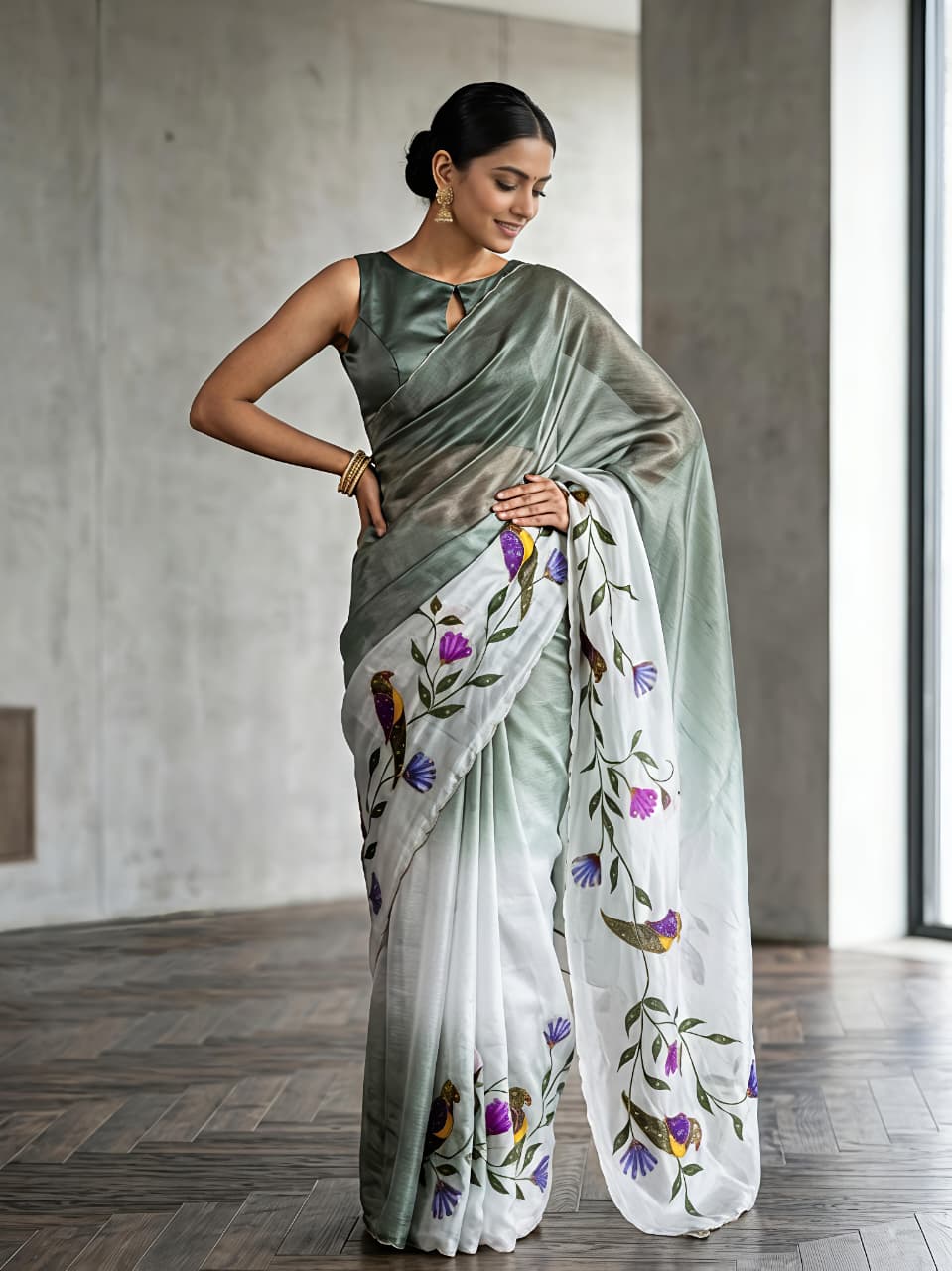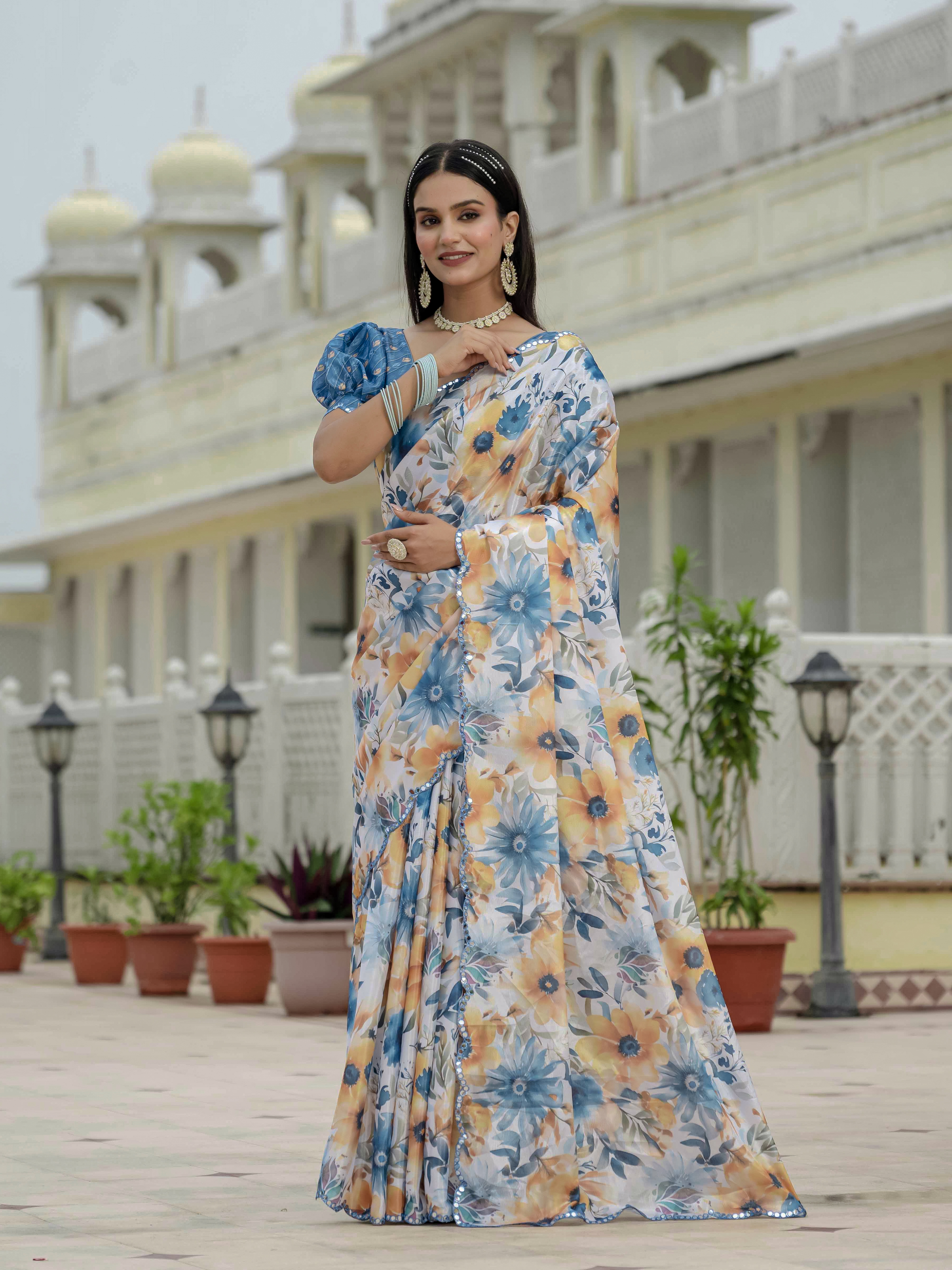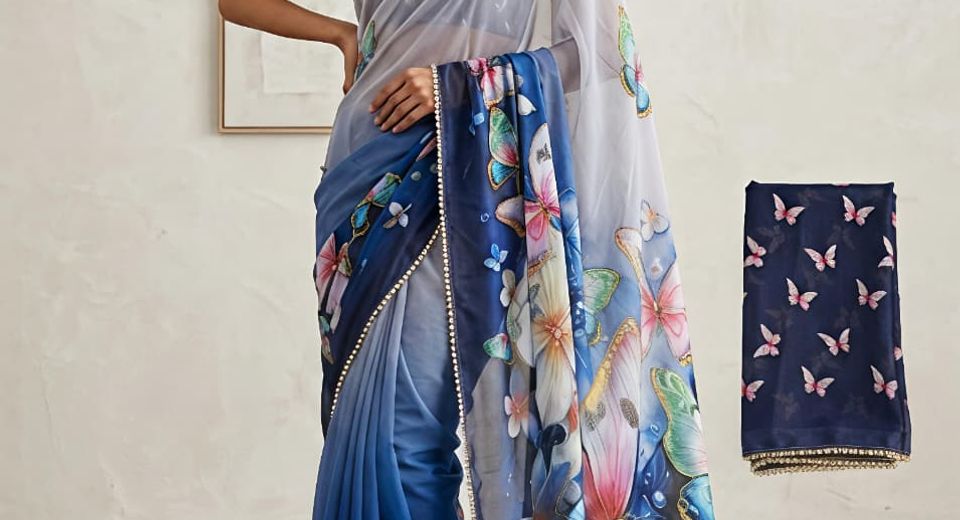
Madhubani Print Saree Styling: Mithila-Inspired Festival Looks begins with one useful principle: let the artwork remain the visual centre of the outfit. Madhubani painting, also called Mithila painting, uses bold outlines, patterned fills, symbolic animals, flowers, fish, peacocks and figures from nature or folklore. A festive saree look feels intentional when the blouse, jewellery and drape support those motifs instead of competing with them.
The easiest way to achieve that balance is to identify one dominant colour in the print, repeat it once in the blouse or accessories, and keep the remaining elements textural rather than heavily patterned. A cotton or linen Madhubani saree can look celebratory without becoming costume-like, while a silk interpretation can carry richer jewellery and a more formal drape.
Madhubani Print Saree Styling: Mithila-Inspired Festival Looks and the right fabric
The right fabric depends on the festival setting, weather and level of formality. Linen, cotton and Mal cotton work well for daytime pujas, community celebrations and home gatherings, while Banarasi silk gives a folk-inspired motif a dressier evening presence.
Traditional Madhubani paintings often use a strong black or dark outline around densely filled forms. Saree prints may interpret that vocabulary through repeated borders, pallu scenes or all-over motifs. The result is different from wearing a plain silk saree with a random floral design because the print already has a narrative quality, so styling should preserve its rhythm.
Fabric weight also changes the mood. A crisp linen saree creates a sculptural pleat and keeps the artwork visible, whereas soft cotton falls closer to the body and feels relaxed. Banarasi silk reflects light and makes saturated reds, purples, greens and yellows appear more ceremonial. For a long family event, check whether the saree has enough body to stay tucked comfortably and whether the blouse lining will prevent scratchiness.
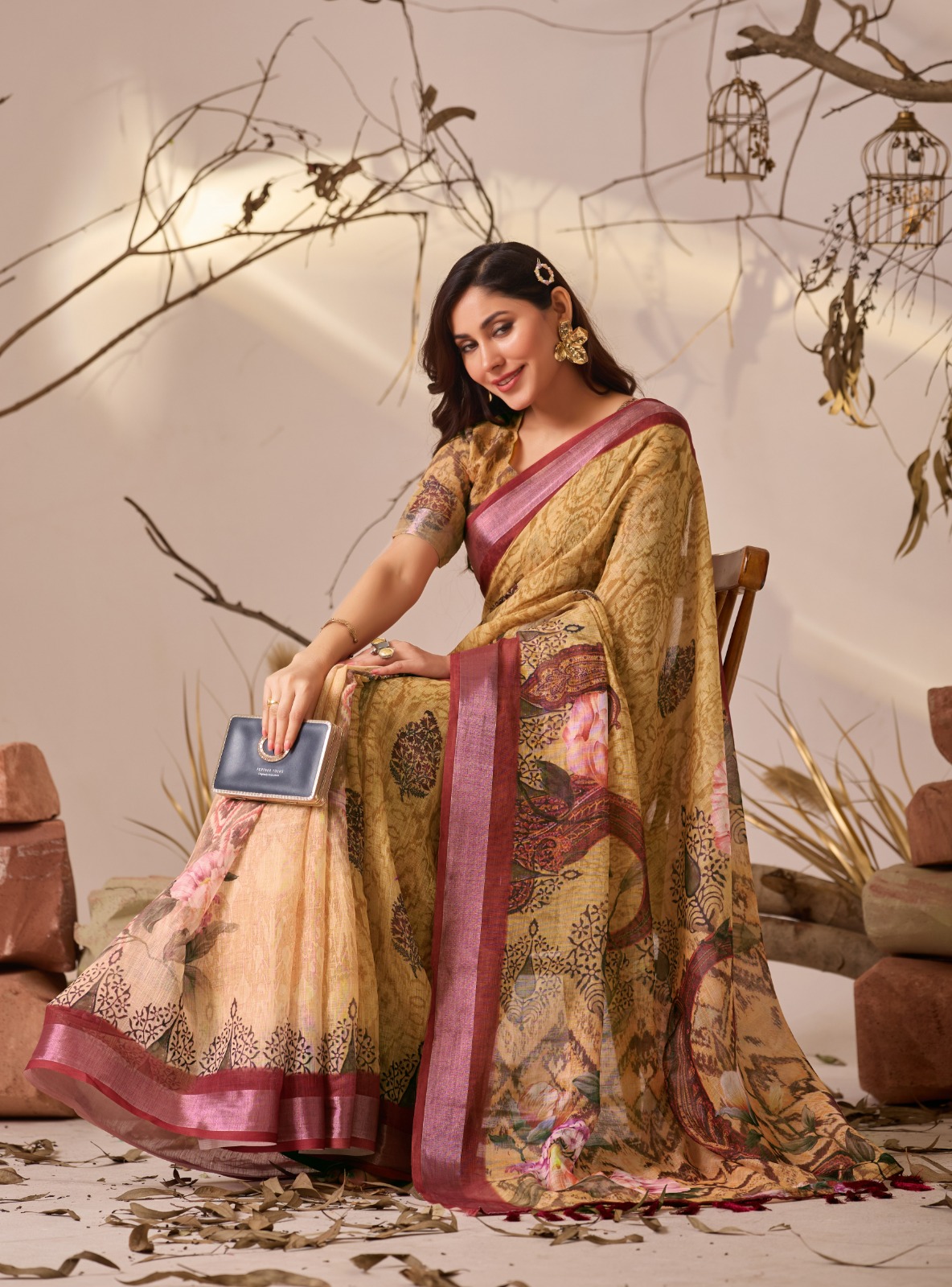
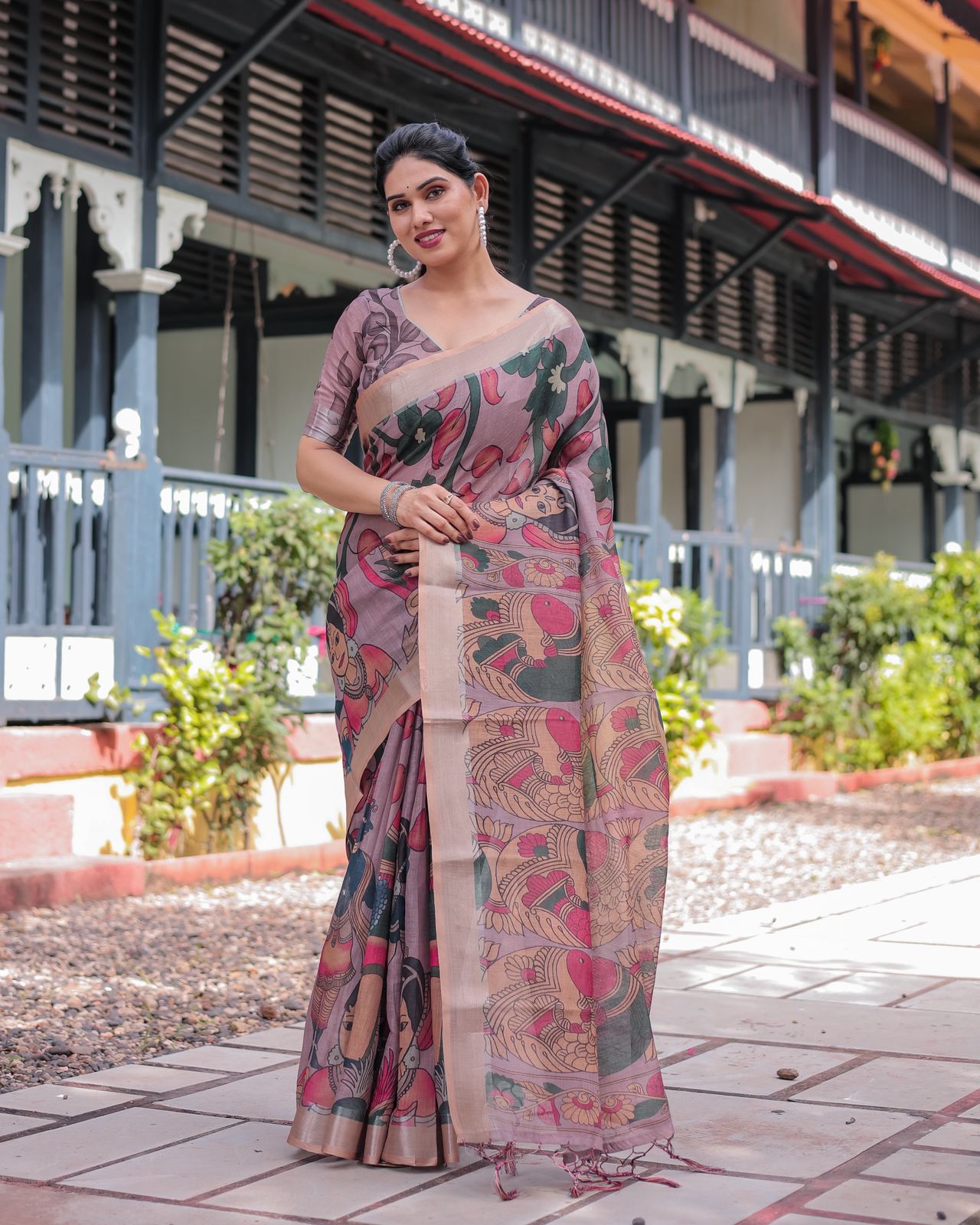
An Elegant Mauve Linen Saree with Artistic Madhubani Print offers an useful example of a lighter festive option. Mauve softens the graphic quality of folk motifs, while linen gives the pleats enough structure for a neat daytime drape.
Madhubani Print Saree Styling: Mithila-Inspired Festival Looks through colour control
The most reliable colour method is to select one anchor shade from the saree and repeat it in only two supporting details. A blue border, for example, can be echoed in glass bangles and a small bindi while the blouse remains ivory or muted gold.
Madhubani Print Saree Styling: Mithila-Inspired Festival Looks with a 60-30-10 balance
A practical proportion is 60 percent saree base colour, 30 percent blouse or border colour, and 10 percent accent colour from jewellery, flowers or footwear. The ratio isn't a strict rule, but it prevents a multicoloured print from turning into an unstructured mix of competing shades.
The Elegant Mauve Linen Saree with Artistic Madhubani Print can be paired with a deep plum, antique gold or muted green blouse. Mauve already provides a gentle base, so oxidised silver jewellery or brushed gold will usually look more cohesive than highly polished, multicoloured stones.
The Multicolour Floral Linen Cotton Saree with Blue Border Look gives a clearer styling route: choose a plain blue blouse, a white blouse with blue piping, or a blouse in one small floral accent shade. The blue border can also guide the choice of a blue bindi, indigo potli or enamel earrings.
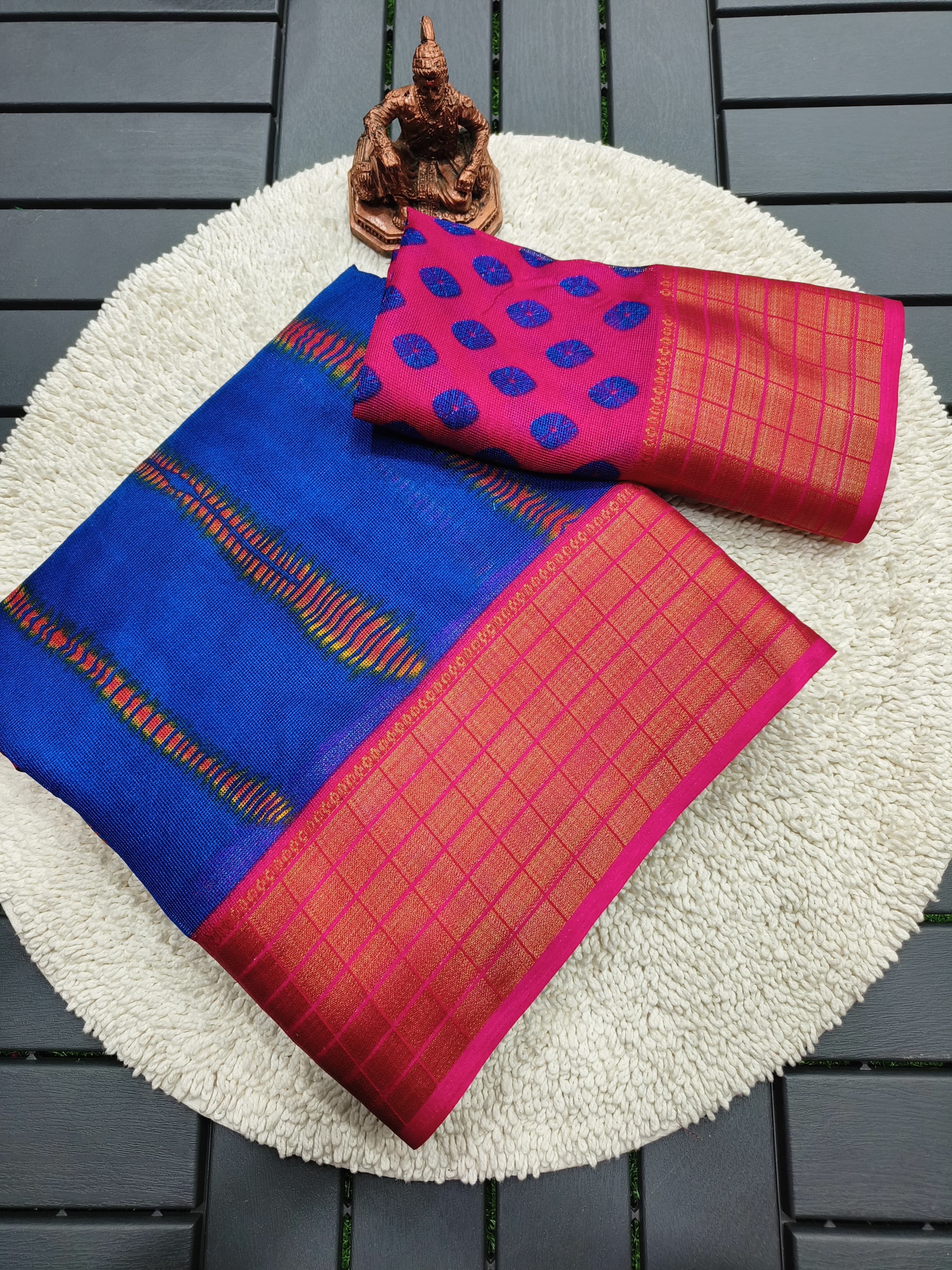
For a more experimental celebration outfit, the Vibrant Multicolor Linen Saree with Ikat Inspired Prints can be styled with a solid sleeveless blouse in cobalt, magenta or forest green. Although the print is Ikat-inspired rather than strictly Madhubani, the same principle applies: a plain blouse gives a busy textile enough breathing room.
Madhubani Print Saree Styling: Mithila-Inspired Festival Looks with the right blouse
Plain blouses with a defined neckline work best with Mithila-inspired saree prints because they frame the artwork without introducing another competing pattern. Choose the sleeve length and neckline according to the formality of the event, the season and the amount of jewellery you plan to wear.
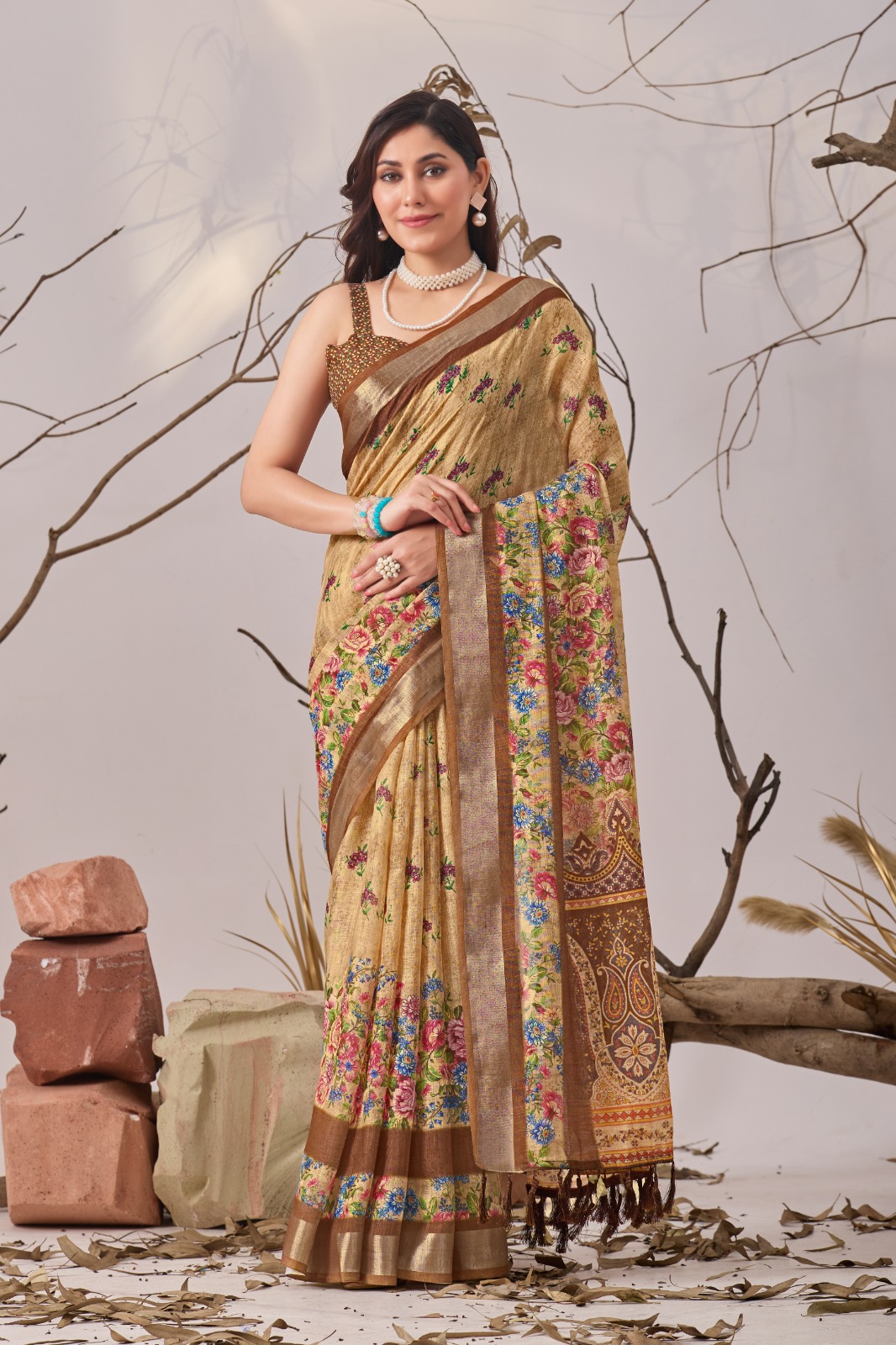
A round-neck blouse with elbow-length sleeves creates a classic, modest silhouette for puja gatherings. A square neckline adds structure to a linen saree, while a high neck works particularly well with a crisp drape and statement earrings. For evening functions, a sleeveless blouse in raw silk or subtly textured brocade can make a cotton print feel more polished.
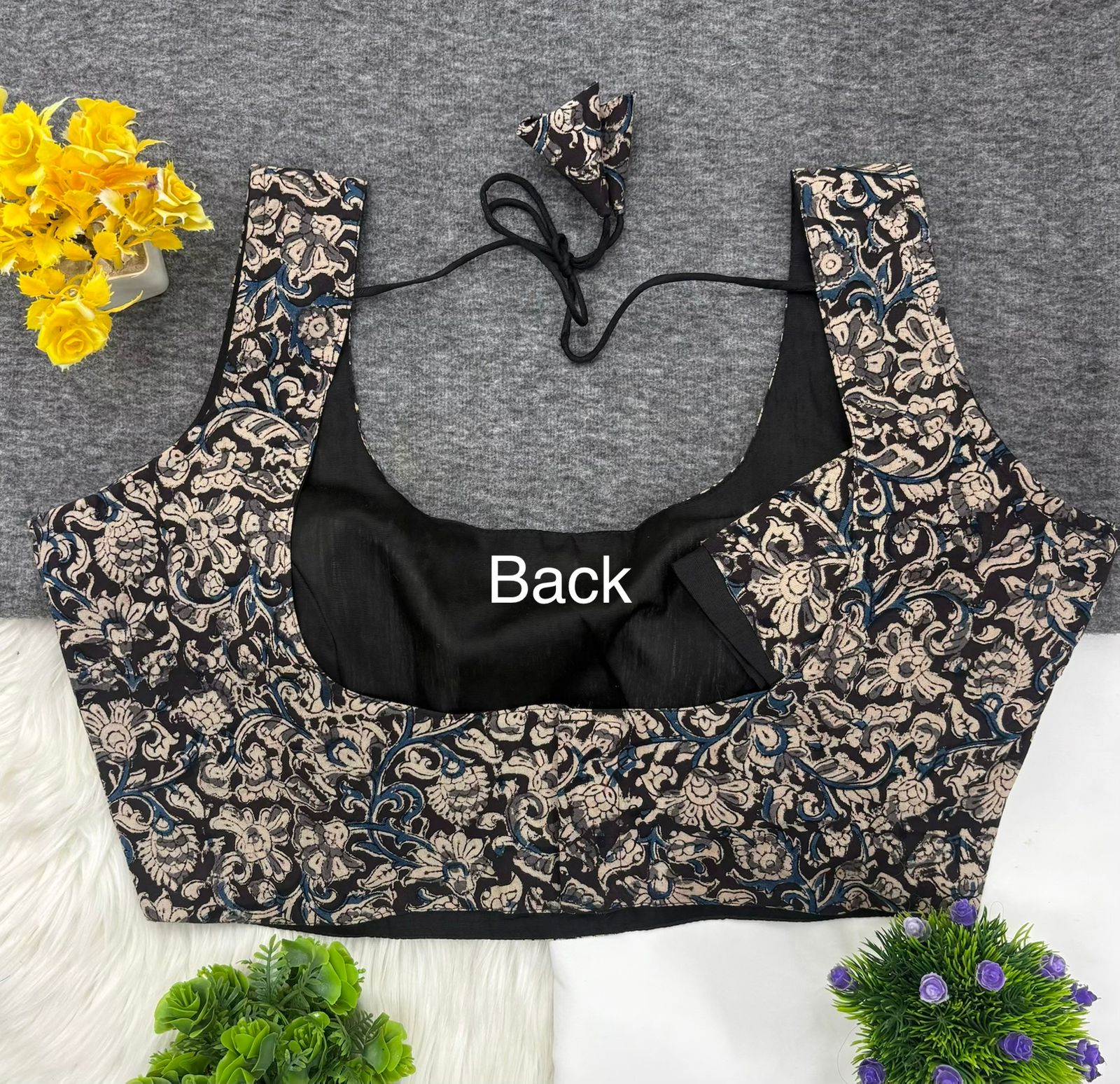
Border details can be repeated selectively. A thin zari piping, contrast sleeve edge or covered fabric button is enough; a heavily embroidered blouse border may obscure the saree's folk-art quality. Avoid matching the blouse to every colour in the print. A single-colour blouse generally makes the pallu easier to read from a distance.
The Printed Mal Cotton Saree With Designer Pallu by VARNAVI demonstrates why the pallu should influence blouse design. When the pallu carries the strongest arrangement, a blouse in a quiet base colour keeps attention on that area. A boat neck or short stand collar can add finish without adding a second focal point.
Madhubani Print Saree Styling: Mithila-Inspired Festival Looks through festive draping
The most effective festive drape is a neat Nivi drape with sharply arranged pleats and a pallu that displays the main artwork. A Nivi drape is practical because the front pleats stay manageable while the pallu can be adjusted for movement, photographs or formal sitting.
Madhubani Print Saree Styling: Mithila-Inspired Festival Looks for a daytime puja
Use five to seven front pleats of similar width, tuck them securely at the waist and pin the upper pallu near the shoulder. Keep the pallu length around mid-calf to ankle level, depending on height, so the printed end remains visible without dragging. A discreet waist belt is useful with slippery linen blends, but the belt should be narrow enough not to cover the central design.
For a Haldi ceremony, choose a shorter, safer pallu and secure the lower edge with a hidden safety pin. Yellow turmeric, oil and flower petals can stain delicate silk, so washable cotton or linen is more practical than a heavily embellished Banarasi silk saree. A cotton underskirt with a firm waistband also prevents pleats from shifting while walking.
Madhubani Print Saree Styling: Mithila-Inspired Festival Looks for evening events
For an evening celebration, make the pallu broader and allow a little more length to show the border or artistic panel. A front-pallu variation can reveal the print dramatically, but the classic shoulder pallu remains easier to manage during dinner, dancing and greeting guests.
Steam or iron linen and cotton on the reverse side before pleating, placing a thin cotton cloth between the iron and the print when the care label recommends protection. Pressing the pallu flat is particularly important because folds across painted figures can make the motif look visually broken in photographs.
A waist belt should match the outfit's finish rather than automatically being metallic. A narrow fabric belt works with cotton, a matte brass belt suits earthy folk styling, and a slim zari belt works with silk. Keep the belt between 1 and 2 inches wide so it defines the waist without covering a significant part of the print.
Madhubani Print Saree Styling: Mithila-Inspired Festival Looks with jewellery
Handcrafted-looking jewellery complements Madhubani artwork better than a full set of highly ornate pieces. Oxidised silver, terracotta, wood, lac, brass and matte gold reinforce the handmade character associated with Mithila painting.
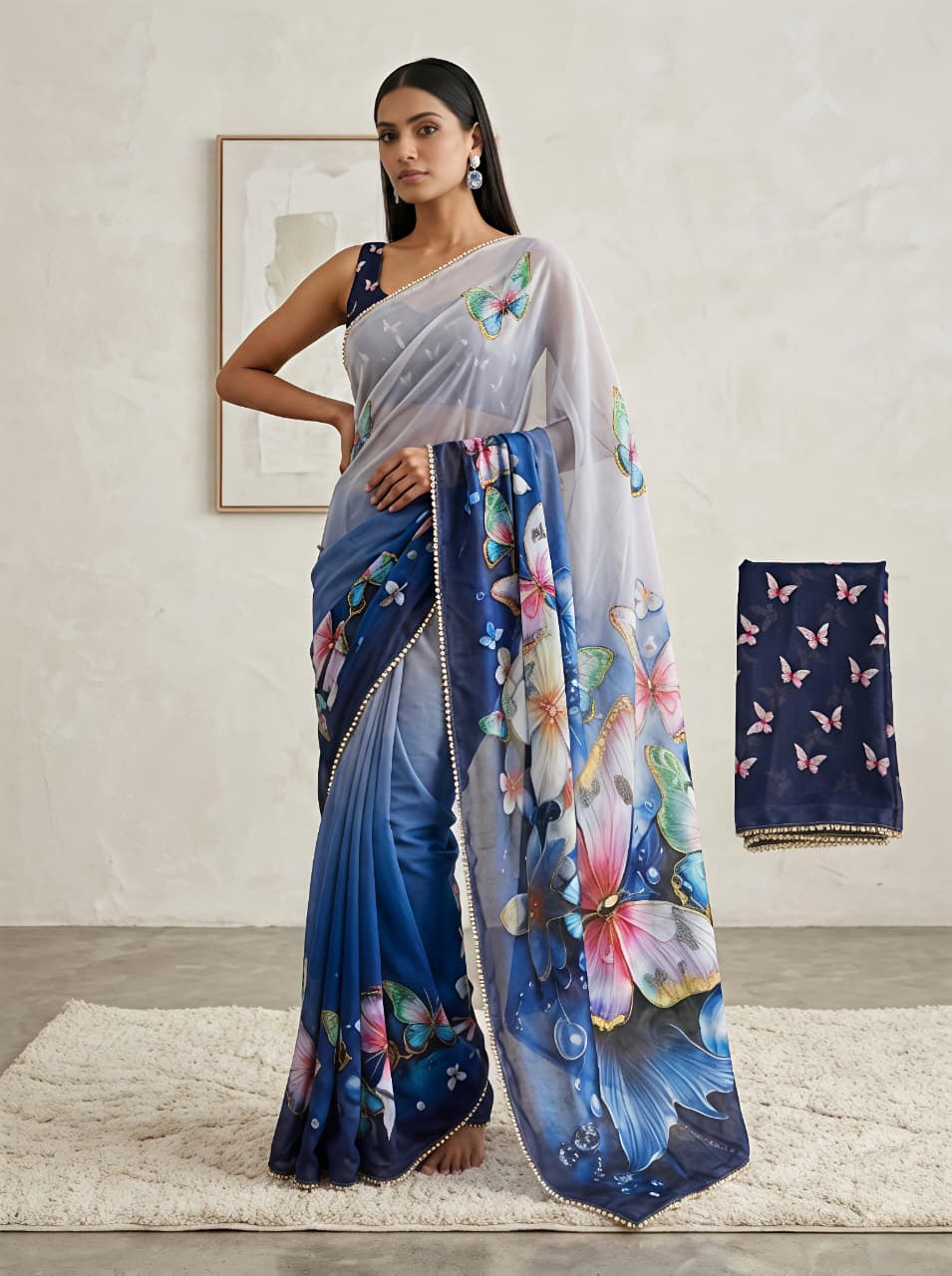
Choose one statement category: large earrings, a broad necklace or a stack of bangles. For a high-neck blouse, skip the necklace and use jhumkas with two or three slim bangles. For a simple round-neck blouse, a short necklace can frame the neckline, but avoid pairing a large necklace with equally large earrings.
A small round bindi, a side-parted braid or a low bun with jasmine can complete the look without imitating every motif in the saree. A woven potli, embroidered clutch or plain leather sandal adds texture while remaining functional. Block heels between 2 and 3 inches provide better stability than narrow stilettos on uneven festive floors.
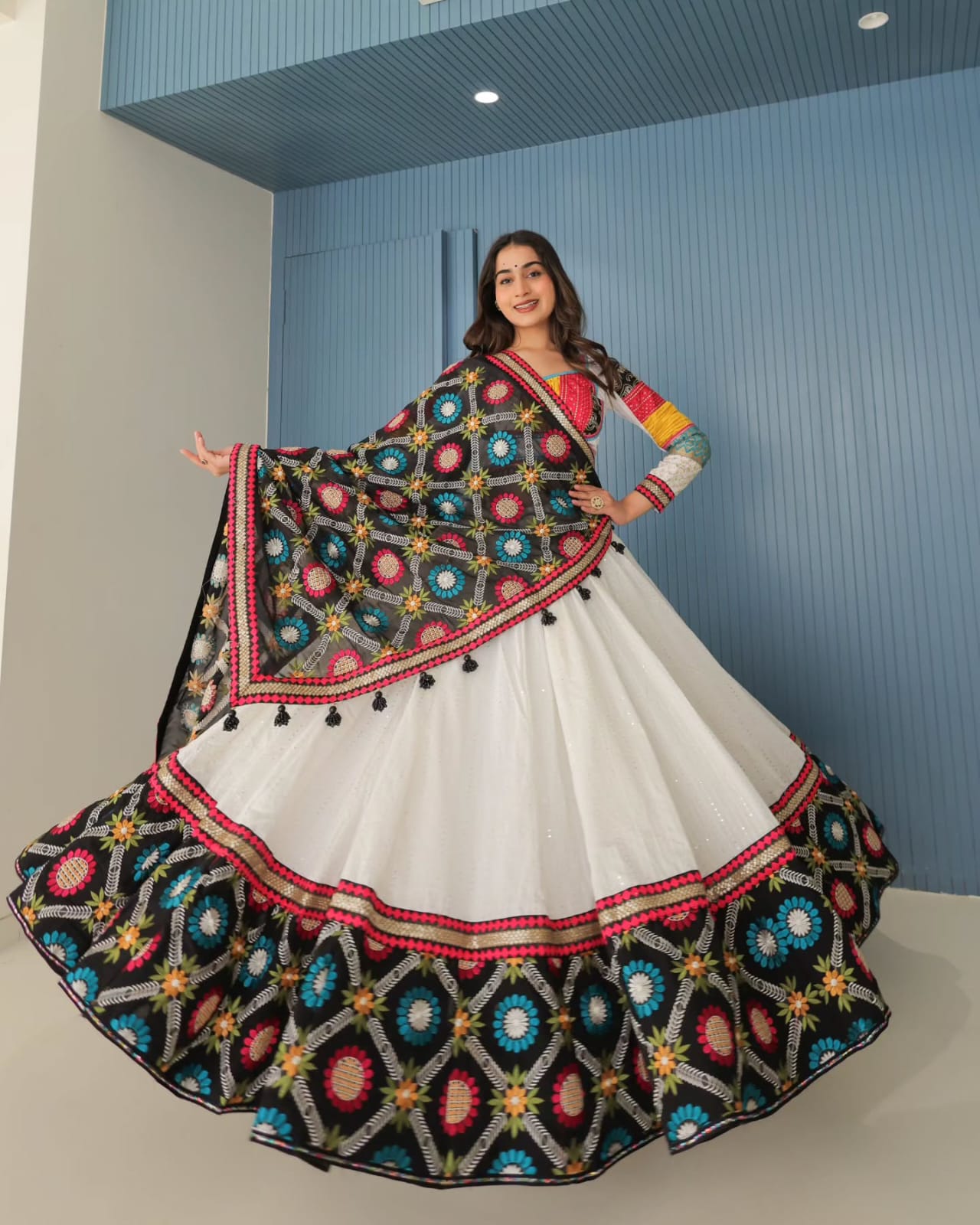
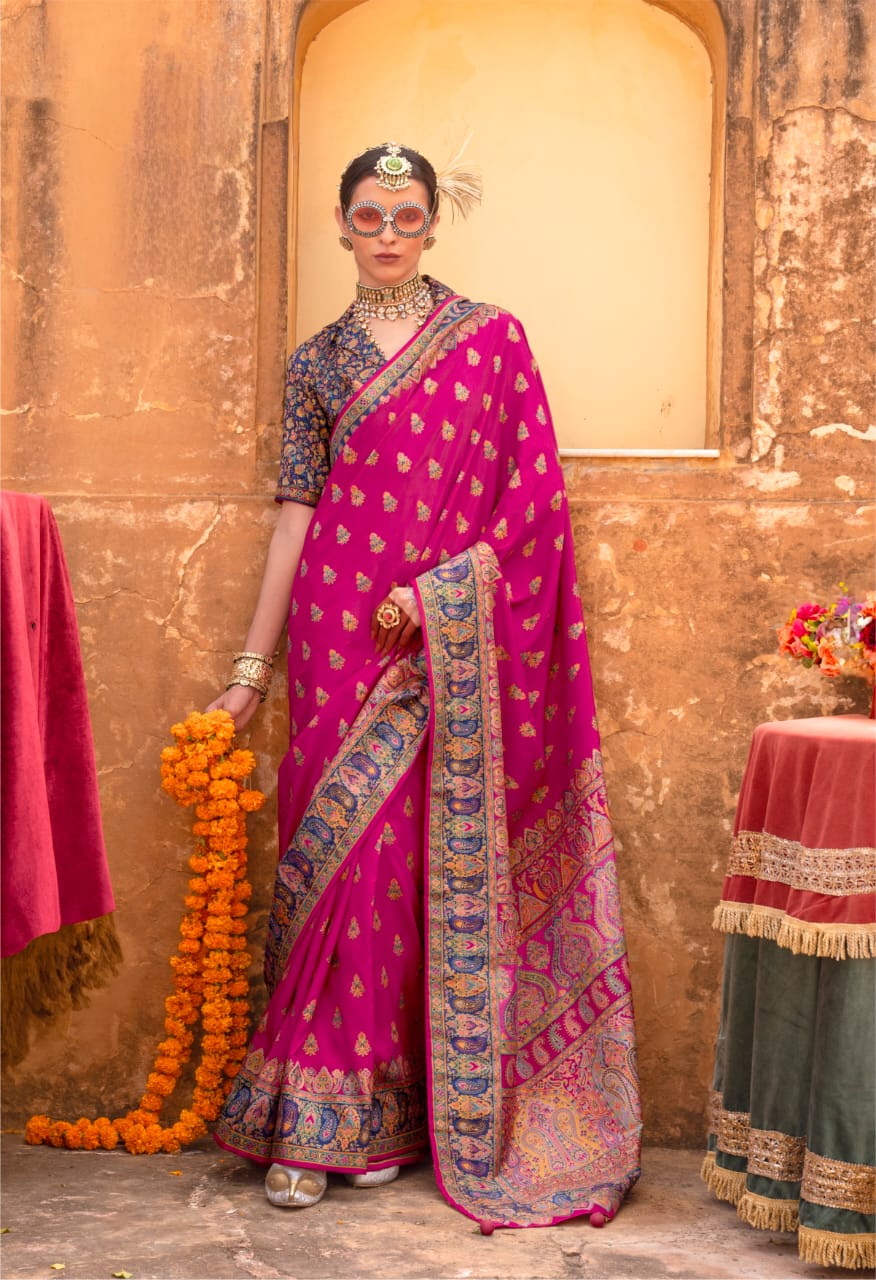
The Festive Folk Warli Printed Blue Cotton Saree shows how folk-art clothing can benefit from earthy accessories. Terracotta earrings, a rust blouse and tan sandals create warmth against the blue base. The Purple Banarasi Silk Saree with Ethnic Print, by contrast, can take antique gold earrings and a small potli for a more formal result.
Madhubani Print Saree Styling: Mithila-Inspired Festival Looks for different occasions
Daytime pujas call for breathable fabric, secure pleats and accessories that remain comfortable for at least four hours. An afternoon family gathering can suit linen, Mal cotton or cotton with a plain blouse and light jewellery.
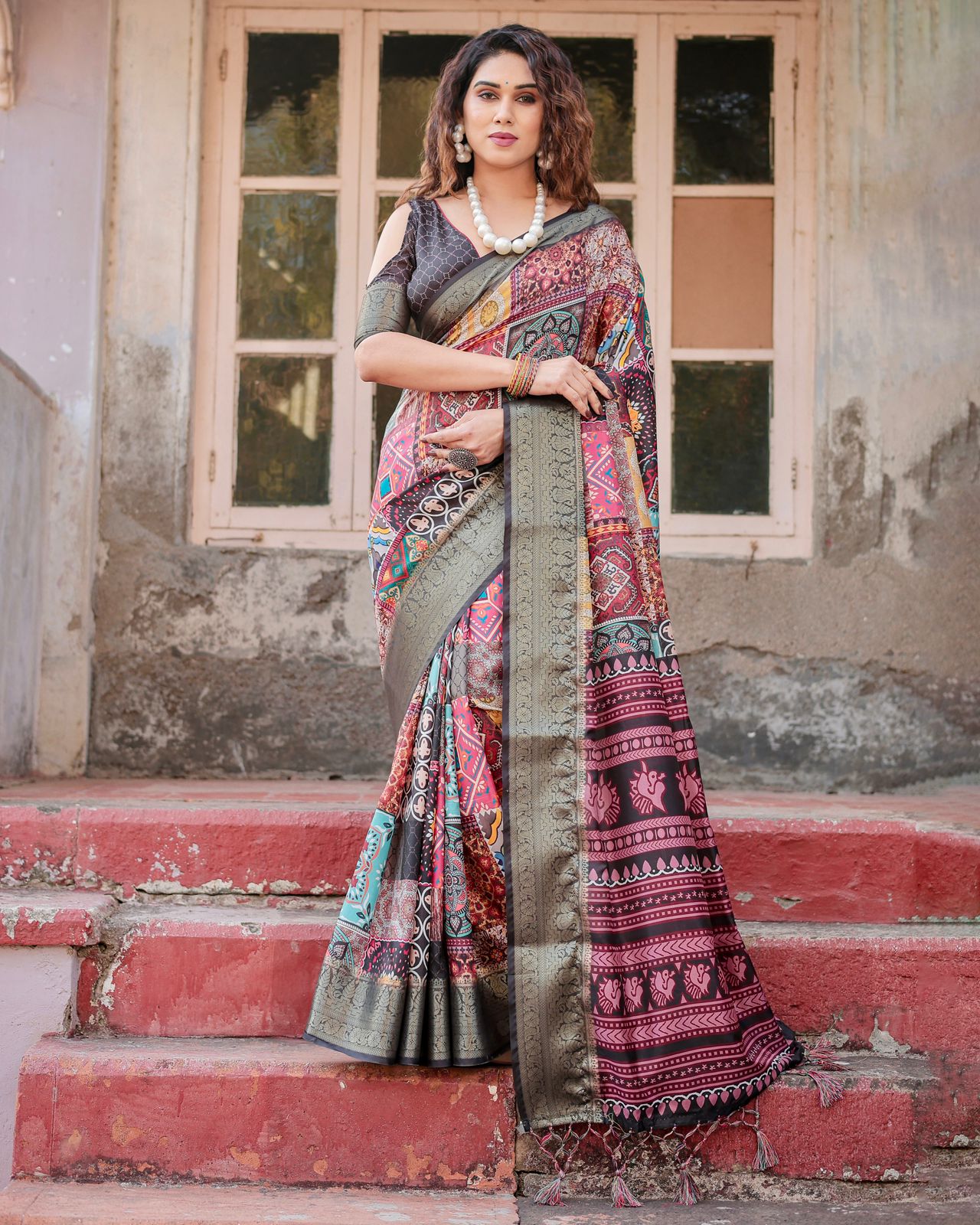
Evening festive dinners allow more shine, deeper colours and heavier accessories. The Multi Color Banarasi Silk Saree with Artistic Prints can be paired with a plain jewel-toned blouse, antique zari jewellery and a compact clutch. Keep the hair controlled in a bun or braid when the saree already contains dense visual detail.
Collections such as Party Wear Sarees may help when comparing dressier silhouettes, but a collection label should not replace checking fabric composition, blouse-piece length and care instructions. A saree intended for a crowded reception should also have a secure pallu and a border that won't catch easily on chairs or jewellery.
Budget-conscious shoppers may compare Silk Sarees Under 3000 With Discount for festive shine, while Pink Georgette Sarees can provide a softer, lighter drape for evening celebrations. Georgette needs careful pinning because its fluid surface can shift more readily than cotton or linen.
For wedding-related festivities, Red Banarasi Silk Sarees for Weddings Under 1100 can inspire a more traditional colour direction, although the actual fabric blend and zari content should be checked before purchase. Gray Color Sarees Under 1000 offer a quieter base for colourful folk accessories, especially when the blouse repeats a bright border shade.
Care should follow the fibre rather than the print alone. Fold cotton and linen along fresh crease lines after they're completely dry, store silk in breathable cotton fabric, and avoid direct sunlight for long periods. Never apply perfume directly to zari or printed areas, and test stain-removal methods on an inconspicuous section before treating the visible pallu.
Madhubani Print Saree Styling: Mithila-Inspired Festival Looks checklist
A successful outfit can be checked in five minutes before leaving home. Confirm that the blouse repeats one useful colour, the pleats are similar in width, the pallu displays the strongest motif, and the footwear allows comfortable walking.
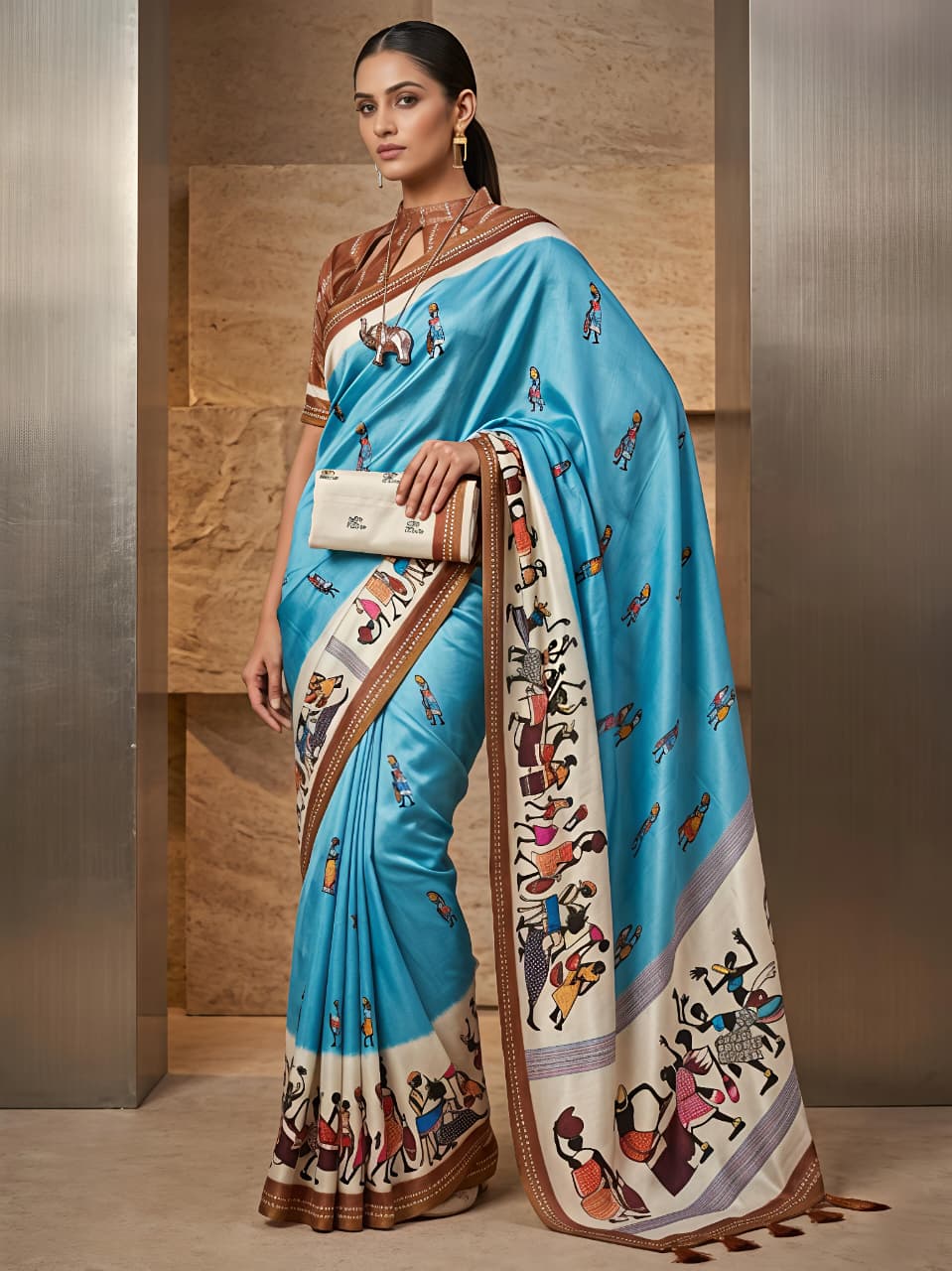
- Check the focal point: Decide whether the focus is the Madhubani pallu, border or all-over print.
- Limit repetition: Repeat one colour in the blouse, bindi, bangles or footwear, but not in every accessory.
- Secure the drape: Use hidden pins at the shoulder and waist, especially for georgette, silk and fluid linen blends.
- Balance jewellery: Select one statement category and keep the remaining pieces lighter.
- Match the fabric to the event: Choose cotton or linen for heat and movement, and Banarasi silk for a more formal evening.
- Protect the artwork: Iron on the reverse when required, avoid direct perfume and store the saree in breathable fabric.
The strongest Madhubani-inspired festive outfits don't copy every colour or motif from Mithila painting. The strongest outfits respect the print's visual energy, then add comfort, proportion and one or two personal details. That approach keeps the saree recognisable while making the finished look practical for real celebrations.
Common Questions About Madhubani Print Saree Styling for Festivals
How do I style a Madhubani print saree for a festival?
Pair the saree with a plain blouse in one dominant print colour, use a neat Nivi drape, and choose handcrafted-looking jewellery such as terracotta, oxidised silver or matte brass. Keep the pallu visible and limit contrasting accessories so the artwork remains the focal point.
Which blouse colour goes with a multicolour Madhubani saree?
A solid blouse in the saree's border colour is usually the safest choice. Ivory, black, deep blue, rust, plum and muted green can also work, provided the blouse repeats only one supporting shade instead of matching every colour in the print.
Can I wear a Madhubani saree to a Haldi ceremony?
Yes, but cotton, linen or Mal cotton is more practical than delicate silk for a Haldi ceremony. Use a shorter pinned pallu, secure the pleats firmly and avoid fabrics or embellishments that are difficult to clean after contact with turmeric and oil.
What jewellery looks good with a Mithila-inspired saree?
Terracotta, oxidised silver, wood, lac, brass and matte gold jewellery complement Mithila-inspired prints. Choose one statement category, such as large earrings or a broad necklace, instead of wearing several heavily ornate pieces together.
Is linen suitable for festive saree styling?
Linen is suitable for daytime festivals because it is breathable and holds crisp pleats. Linen can crease during long events, so press it before draping, secure the pallu and choose a blouse with enough structure to maintain the silhouette.
How should I care for a printed Madhubani saree?
Follow the fibre-specific care label, iron linen and cotton on the reverse when advised, and keep silk away from direct sunlight and moisture. Store the saree in breathable cotton fabric, avoid spraying perfume directly on the print, and test any stain treatment on a hidden area first.