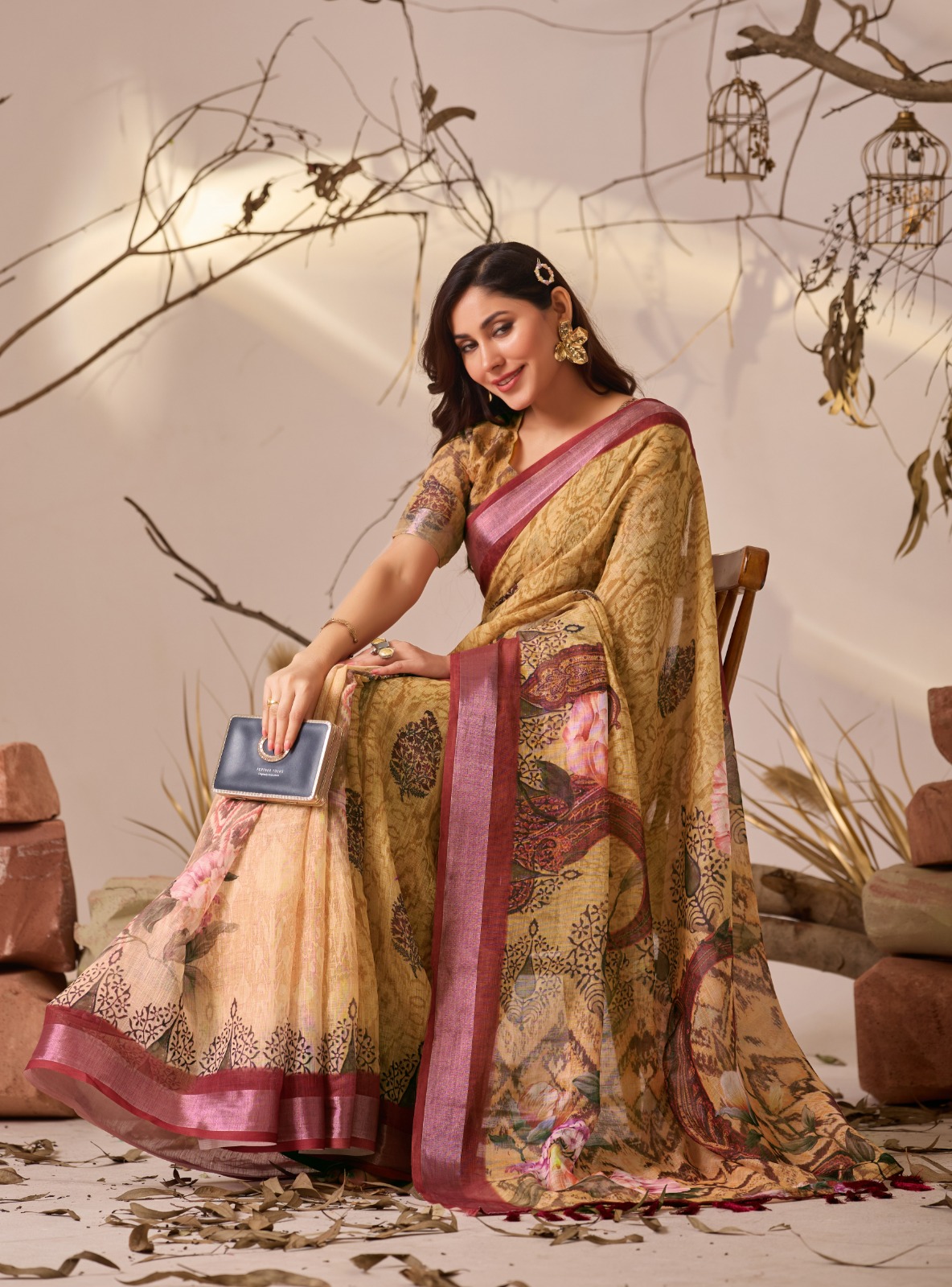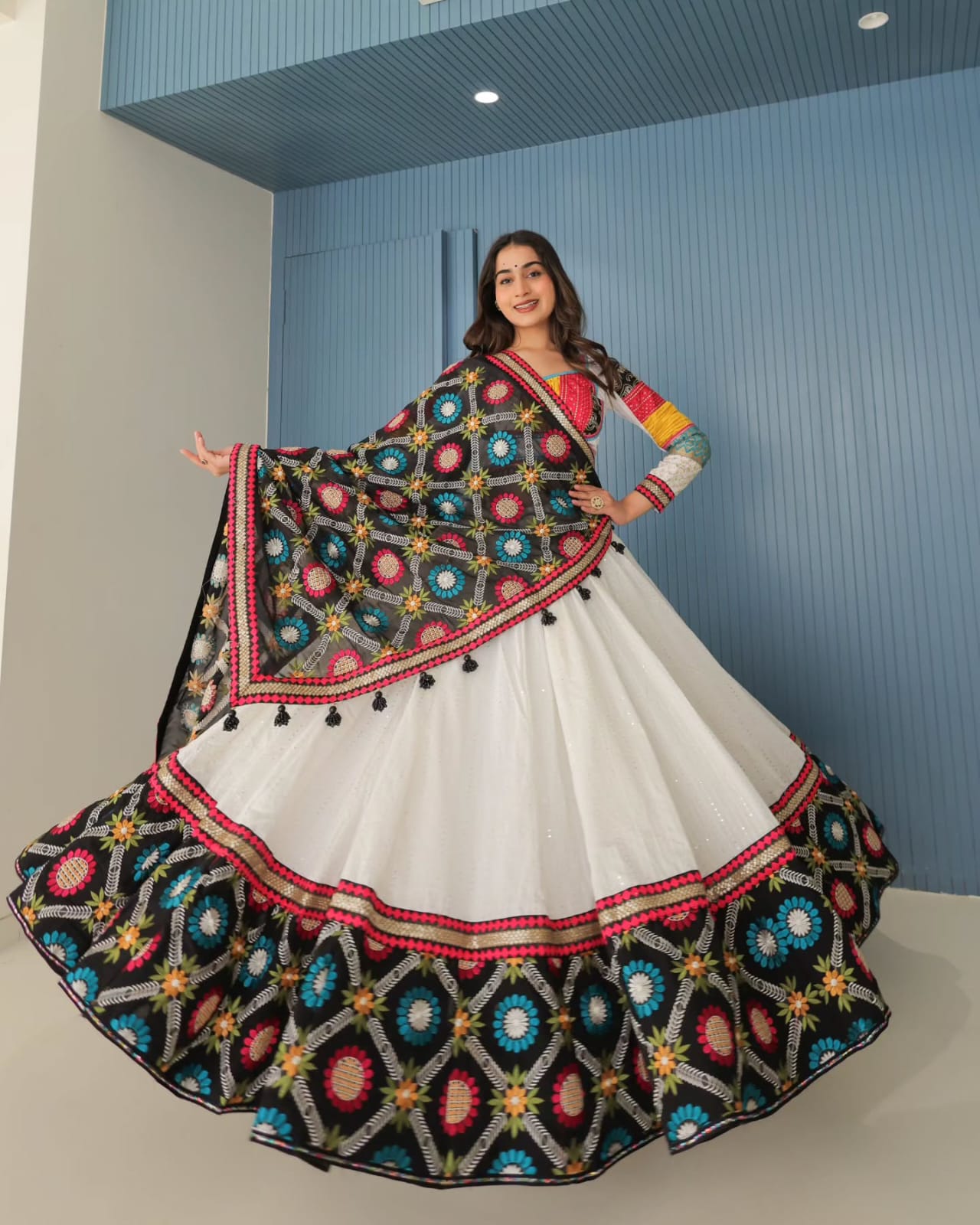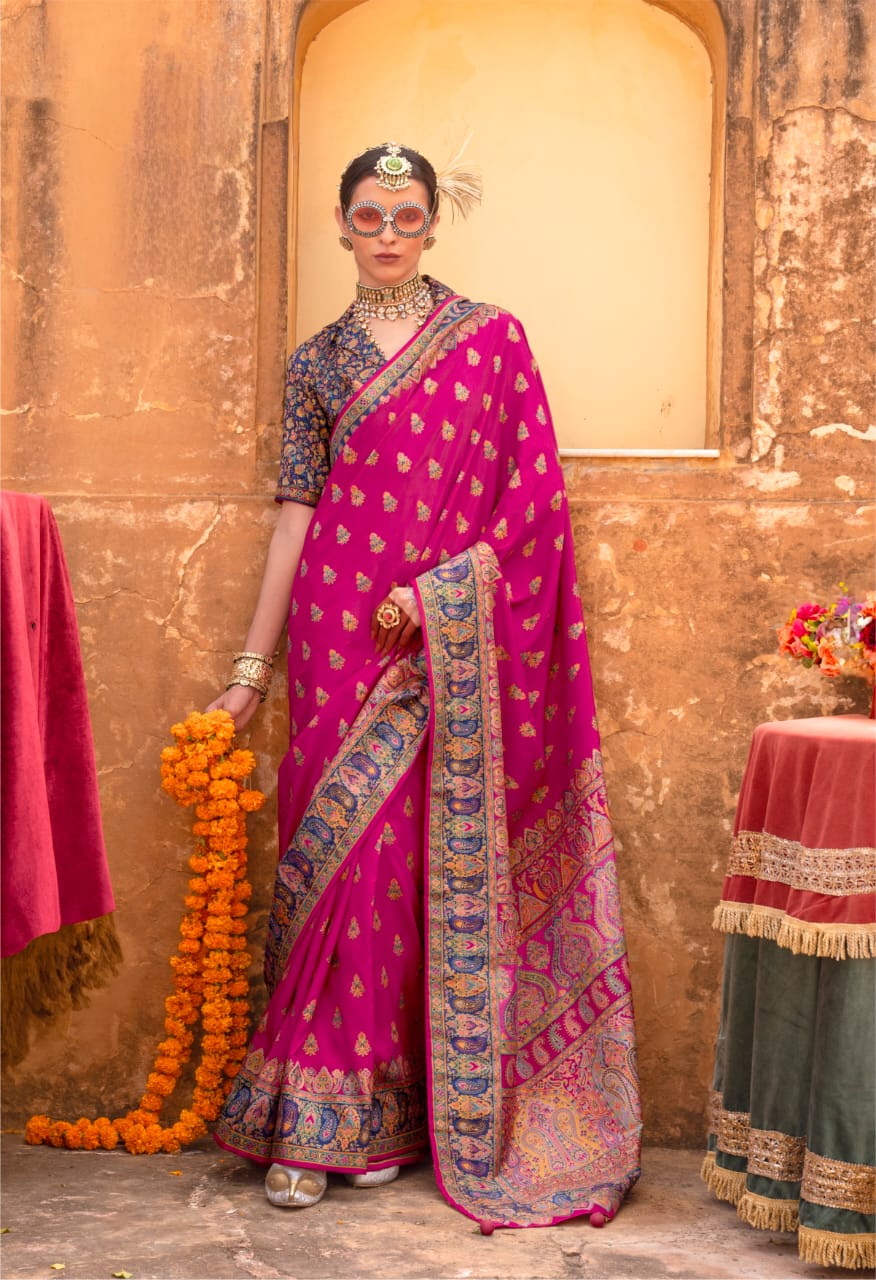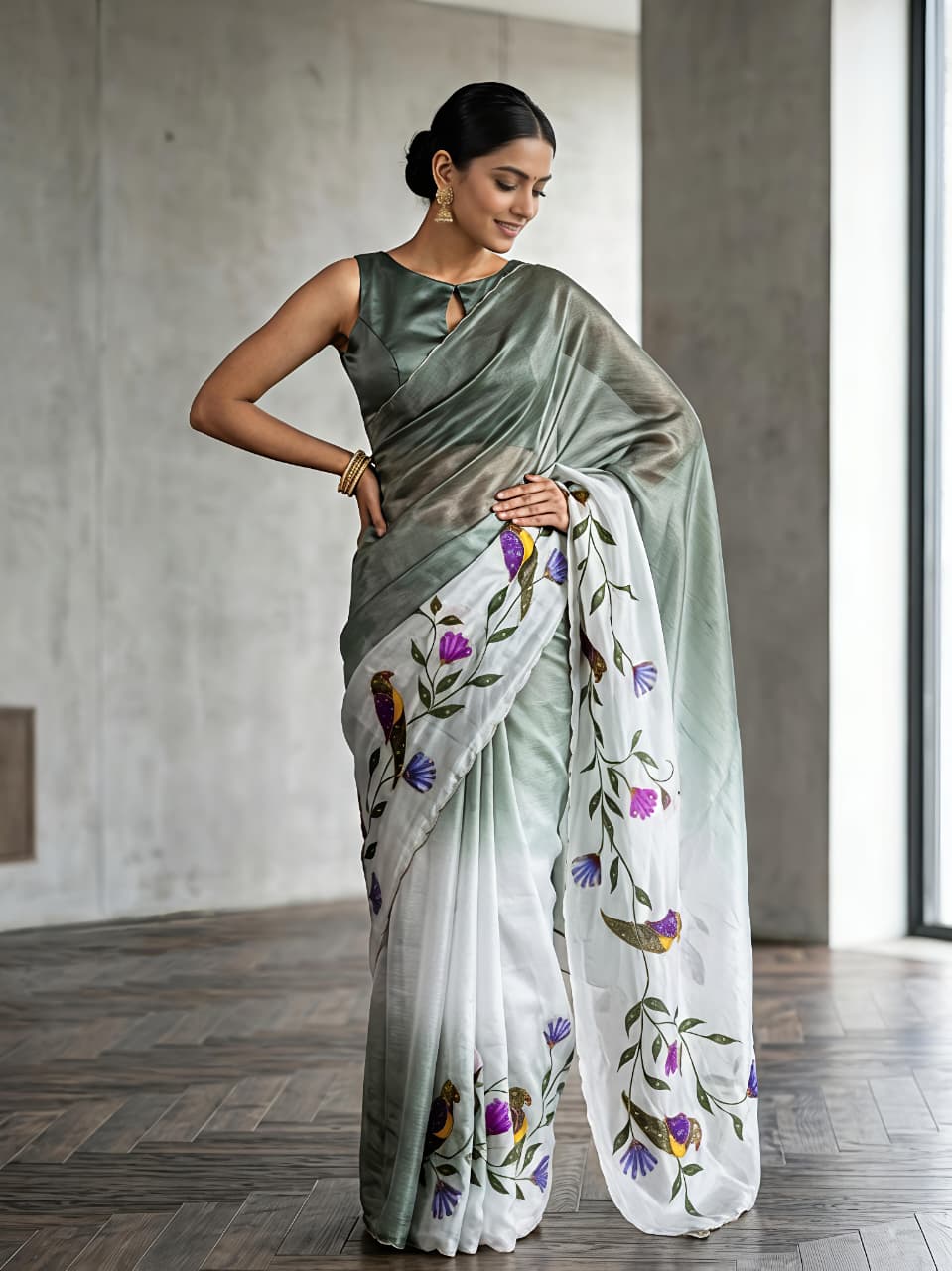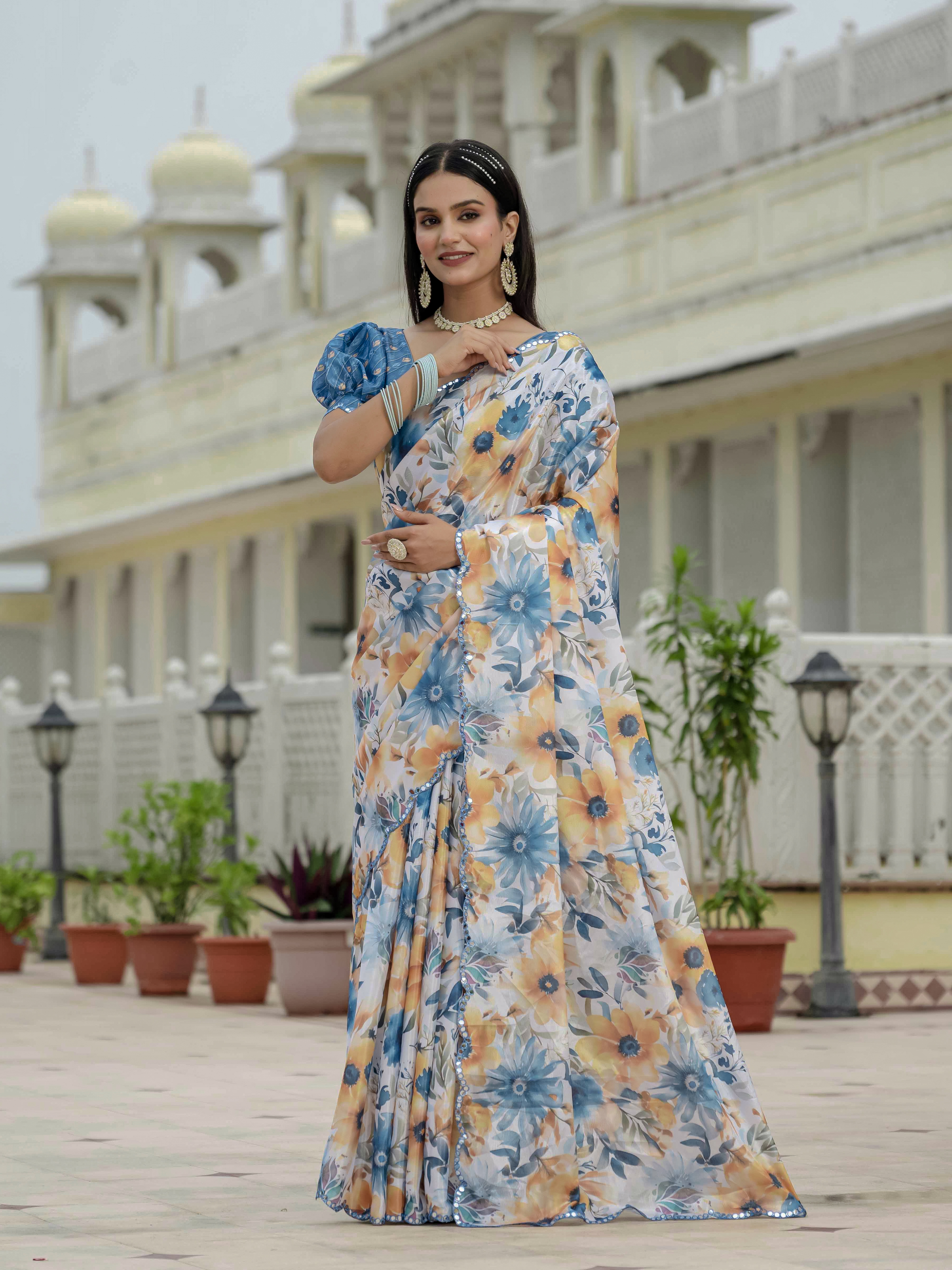
Madhubani Blouse Designs bring the visual language of Mithila painting into a garment that frames the face and anchors a saree. Fish, peacocks, lotus flowers, bamboo, sun motifs and repeating borders can appear as hand-painted details, printed panels, embroidered outlines or fabric accents. The strongest designs respect the artwork while providing comfortable movement, reliable support and a flattering fit.
Madhubani art originated in the Mithila region of Bihar and traditionally uses strong outlines, filled spaces, dots, hatching and symbolic natural imagery. A blouse inspired by this tradition doesn't need to cover every inch with motifs. One painted back panel, a contrast sleeve border or a framed neckline can create a more balanced result than an overloaded print.
What are Madhubani Blouse Designs and what makes them recognisable?
Madhubani Blouse Designs use recognisable Mithila visual elements, bold outlining and purposeful pattern placement rather than relying only on bright colours. Common motifs include fish associated with fertility and prosperity, peacocks associated with beauty, lotus flowers associated with purity, bamboo associated with growth, and the sun and moon associated with continuity.
Traditional Madhubani painting often fills the entire surface with lines, dots and repeated forms. Contemporary clothing adapts that density by reserving detailed artwork for areas that remain visible after the saree is draped. A border along the sleeve, a central back motif or a framed neckline usually reads more clearly than a scattered design hidden under pleats.
Colour provides another important clue. Vermilion red, turmeric yellow, leaf green, indigo, black and white appear frequently in folk-art interpretations, although contemporary artists use wider palettes. Black outlines provide definition, red and yellow create warmth, and indigo, rust, teal and cream make the blouse easier to pair with handloom sarees.
An useful design test is to identify the main motif from a distance of two metres. If the artwork disappears into the fabric or looks like a random assortment of shapes, the blouse needs stronger contrast, cleaner spacing or a simpler supporting pattern.
How should you select motifs for Madhubani Blouse Designs?
Select one main motif family and support it with a border or restrained filler pattern. A peacock blouse, for example, can use two mirrored peacocks on the back with small dots and vines around them. A fish blouse can pair one central fish with wave-like lines and lotus buds.
Fish, peacocks and lotus flowers
Fish work well on back panels because their horizontal form follows the shoulder line and creates visual width. Peacocks suit a single statement motif on the back or two smaller motifs near the sleeves. Lotus flowers can sit at the centre of a square neckline, on sleeve cuffs or along a narrow waistband when the blouse forms part of a lehenga ensemble.
Geometric borders and nature fillers
Geometric borders make a detailed blouse look intentional. Triangles, checks, stripes and repeated leaves can separate an illustrated panel from a plain section. Dots, short lines and tiny vines are useful fillers, but excessive filler work can make the garment look visually heavy.
Consider the saree print before selecting artwork. A Banarasi silk saree with dense zari usually benefits from a quieter blouse with one strong Madhubani panel. A plain Chanderi or cotton saree can support more elaborate artwork because the saree itself gives visual space.
Which fabrics suit Madhubani Blouse Designs best?
Cotton, silk-cotton, raw silk and lightweight silk provide practical surfaces for Madhubani-inspired blouses because they hold shape and accept printing, painting, embroidery or applique. Cotton suits daytime ceremonies, while silk-cotton and raw silk offer greater structure for receptions and wedding functions.
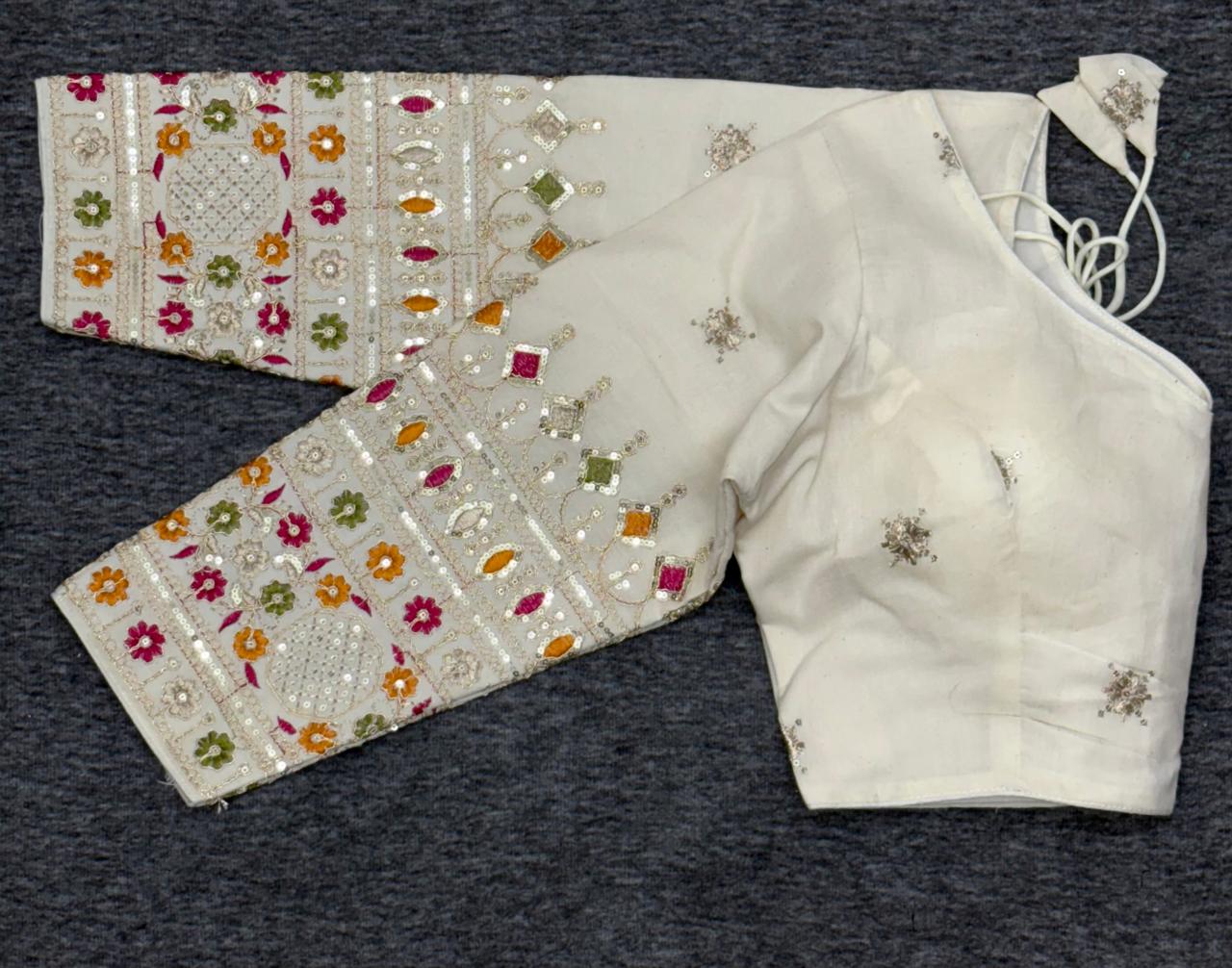
Hand-painted work requires a stable, smooth surface and should be protected from repeated friction. Screen printing gives consistent repetition, while block printing creates a slightly irregular character that complements folk-art aesthetics. Embroidered outlines are more durable in high-contact areas such as sleeve edges, although dense embroidery increases weight and cost.
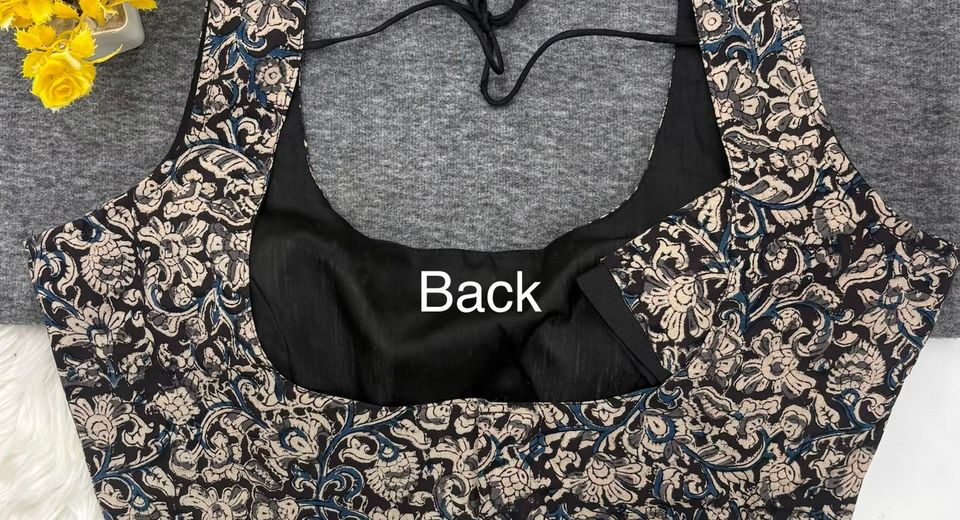
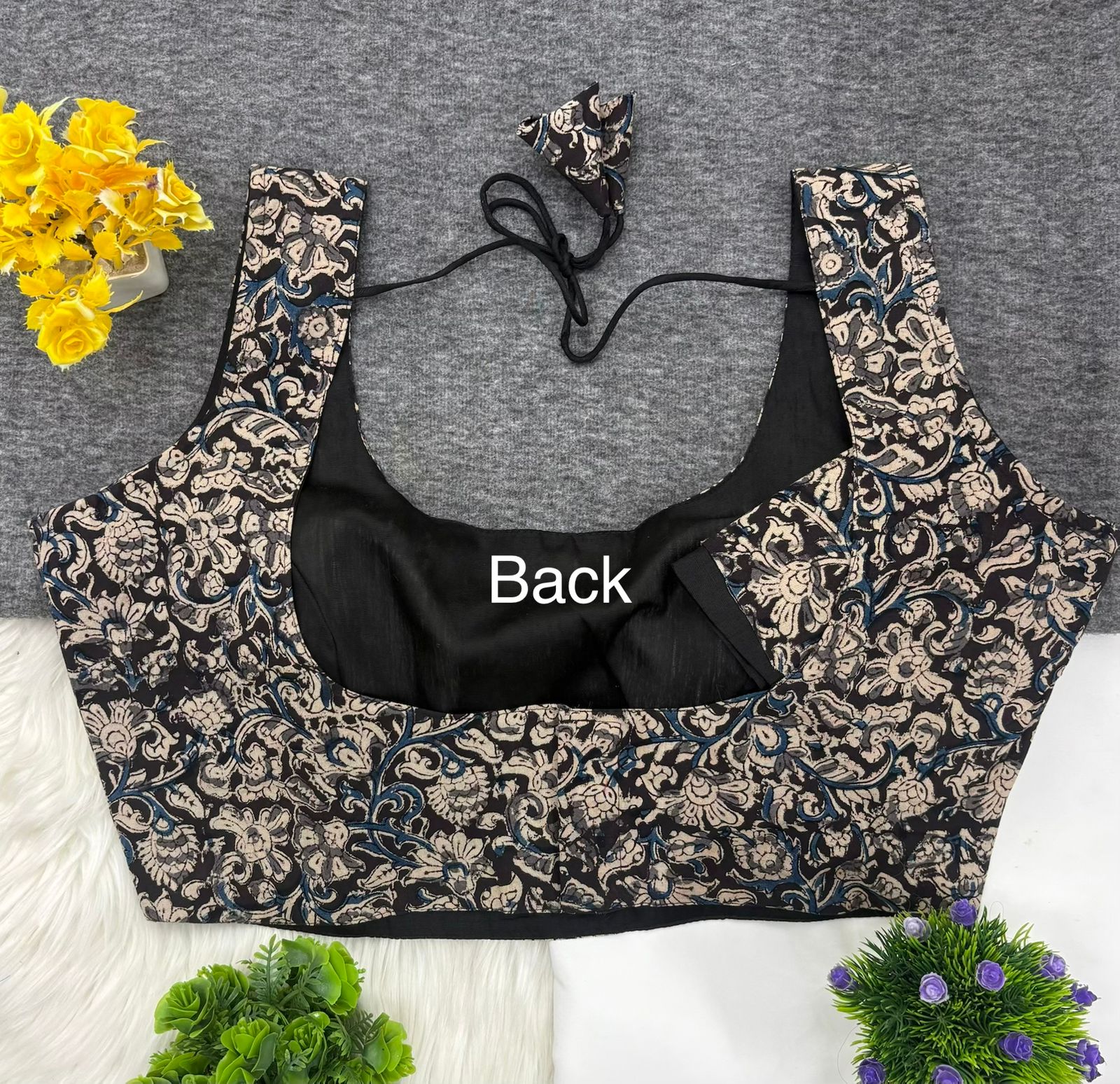
A padded blouse can create a clean silhouette under a saree, especially when the fabric is lightweight or slightly sheer. Pure Kalamkari Cotton Padded Blouse for Women demonstrates how a printed textile and structured construction can work together, even when the print itself isn't Madhubani. Its cotton character is an useful reference for choosing a breathable base.
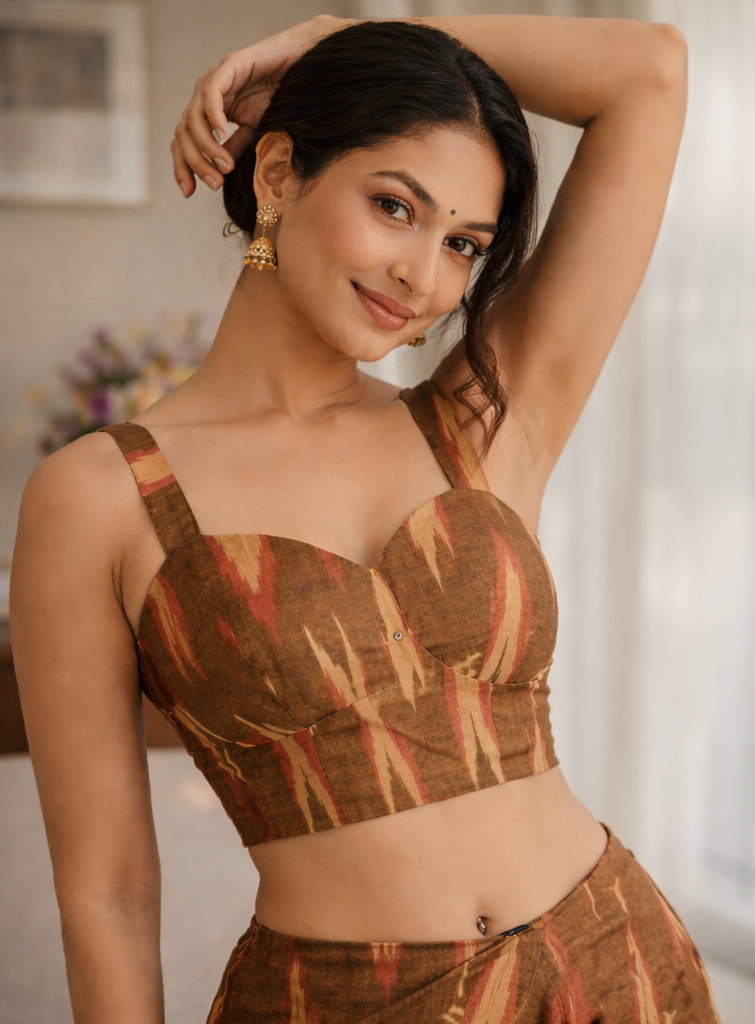
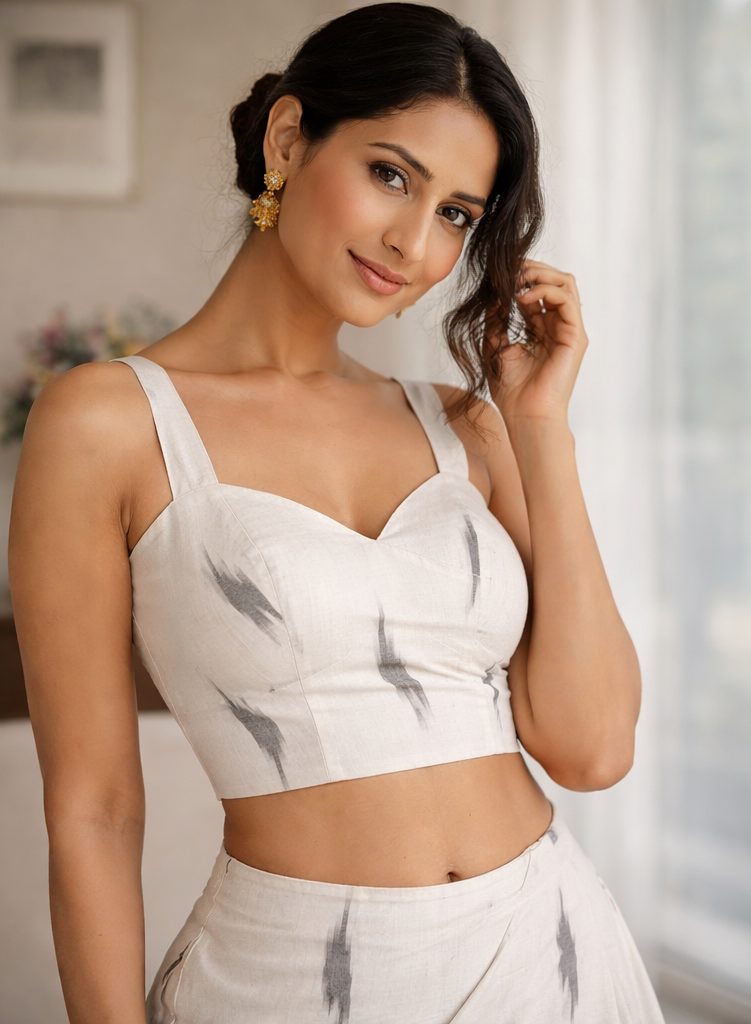
For warm weather, a sleeveless or short-sleeved cotton blouse reduces bulk. Brown Ikat Cotton Padded Blouse Sleeveless Stylish and Cream Ikat Cotton Padded Blouse Sleeveless Trendy show how a woven pattern can become the main visual feature without requiring heavy embellishment. Ikat surfaces can be styled beside Madhubani accessories or used when the saree already carries the primary artwork.
Check the seam allowance before ordering or tailoring. A blouse usually needs approximately 1 to 1.5 inches of extra allowance at key seams when future alteration may be required. Artwork placed too close to a side seam can be cut off during fitting, so central motifs should remain at least 1.5 inches away from likely seam lines.
Which necklines work with Madhubani Blouse Designs?
Square, boat, sweetheart and modest V necklines provide clear frames for Madhubani artwork. A square neckline works particularly well with a lotus or geometric border because its straight edges echo the structured composition of many painted panels.
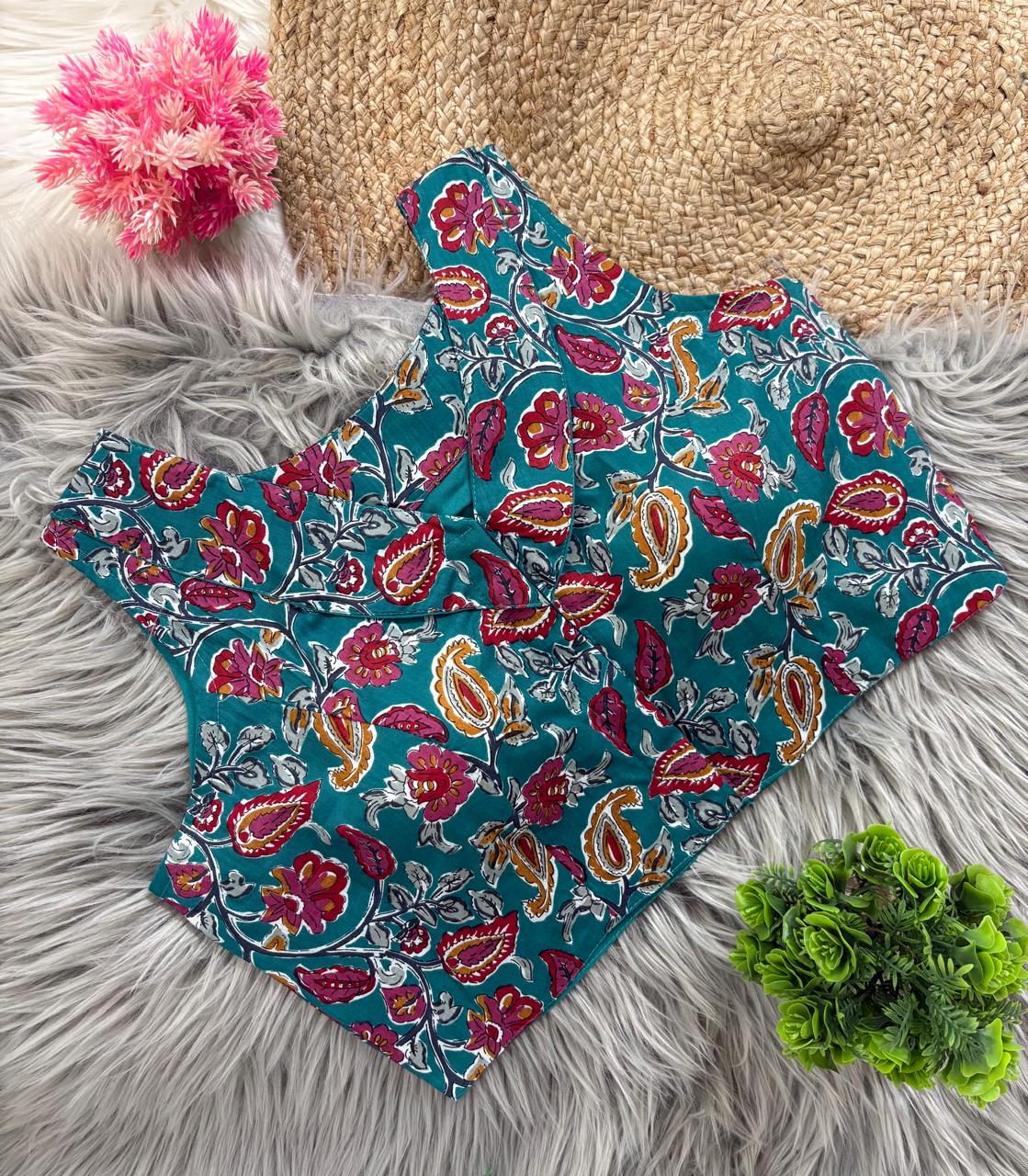
A V neckline elongates the upper body and directs attention towards a central motif. Kalamkari Cotton V Neck Collar Blouse for Women offers an useful styling reference for combining a V-shaped opening with a collar detail. A collar can give folk-art styling a sharper contemporary finish, particularly when the saree is draped in a clean, narrow-pleat style.
Boat necks create a broad canvas across the shoulders and suit horizontal borders, paired peacocks or a continuous vine. High necks work with formal silk sarees, but dense artwork near the throat can feel crowded. Leaving a small plain area around the neckline helps when the design already contains strong black outlines or bright red accents.
Short sleeves ending above the elbow keep the blouse versatile for office-friendly cultural events and daytime pujas. Elbow-length sleeves provide more room for painted borders. Sleeveless cuts look modern with a plain saree, but they place greater emphasis on shoulder and armhole fit. A correctly finished armhole should lie flat without cutting into the underarm.
How can you style Madhubani Blouse Designs with a saree?
Pair a detailed Madhubani blouse with a plain or lightly textured saree when the blouse is the intended focal point. Pair a simple motif blouse with a richly woven saree when the saree carries the main visual weight.
For a red, yellow and black blouse, try an off-white cotton saree, a black handloom saree or a muted mustard drape. A peacock-inspired blouse can coordinate with teal, peacock blue, green or antique gold. A lotus motif looks refined with ivory, blush, magenta or deep red, depending on the background fabric.
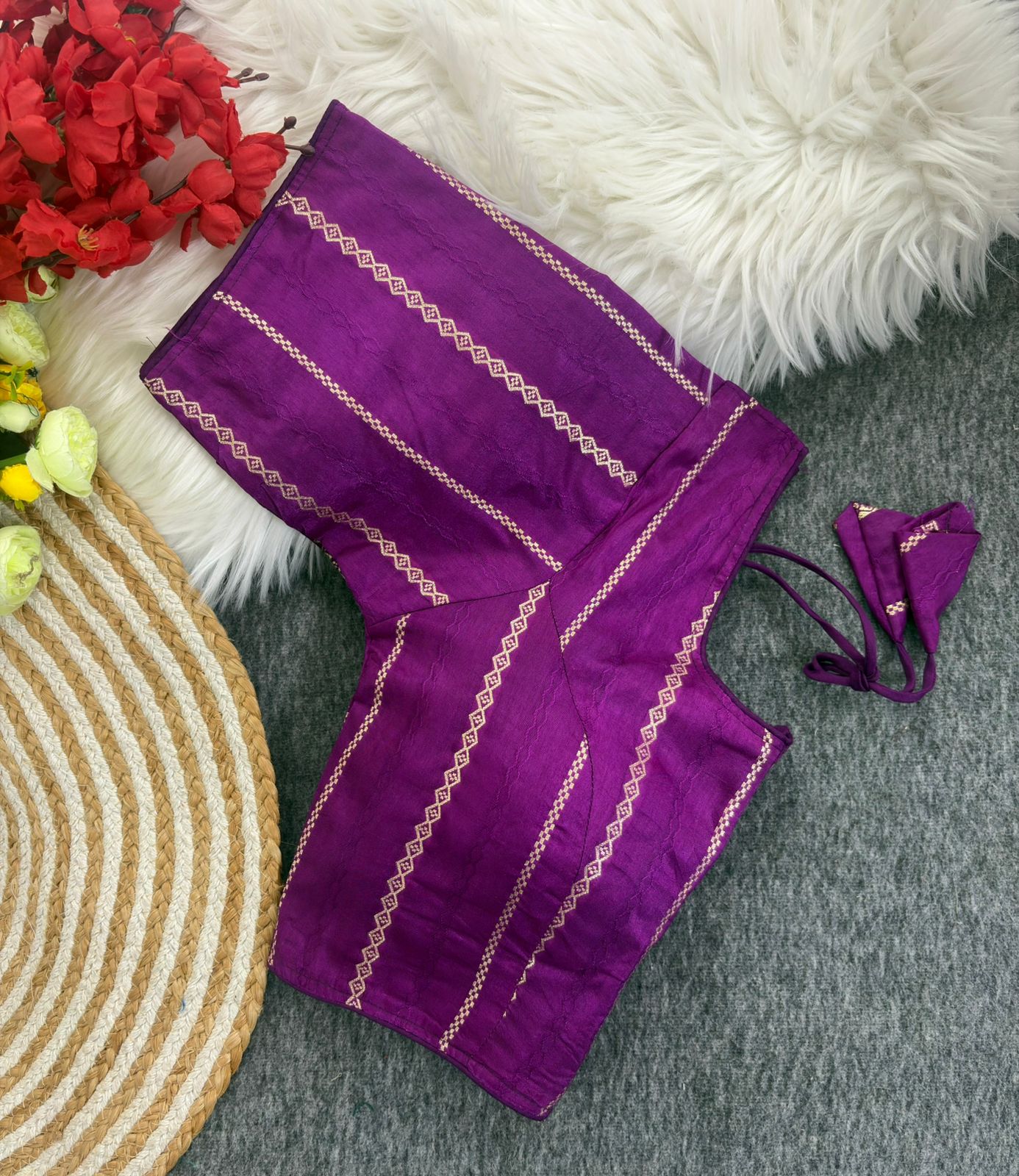
Gold zari and Madhubani artwork can coexist when the metallic element is repeated sparingly. Banarasi Silk Golden Jari Padded Blouse for Women illustrates a more formal approach: a structured golden blouse can anchor a Banarasi silk saree, while Madhubani-inspired earrings, a painted clutch or a contrasting motif on the saree pallu introduces the folk-art reference elsewhere.
don't match every colour exactly. Matching three colours is usually enough: one dominant saree colour, one blouse colour and one accessory accent. An indigo saree, rust blouse and antique-gold jewellery create stronger separation than an outfit in which every element uses the same shade.
Classic Festive Wear Blouse for Stylish Saree Look can be considered when the saree already has a strong border and the blouse needs to remain polished rather than illustrative. A clean blouse silhouette lets Madhubani jewellery or a printed pallu carry the artistic story without creating competing patterns.
How should you accessorise Madhubani Blouse Designs?
Use jewellery with clear shapes and moderate detail so that jewellery supports rather than obscures the blouse artwork. Oxidised silver works naturally with black outlines and indigo backgrounds, while antique gold works with red, mustard, rust and Banarasi zari.
Jhumkas, a short beaded necklace or a single statement pendant can frame the neckline without covering a central motif. Avoid a long necklace that falls directly over a painted front panel. If the blouse has a high collar, earrings and bangles may provide better balance than layered neckpieces.
A neat front-pleat drape exposes more of the blouse and makes a central neckline motif legible. A relaxed Bengali-style drape can reveal a broader section of the sleeve and pallu, making it suitable for a blouse with border artwork. Keep the pallu edge away from the most detailed blouse section when photographing or attending a function.
Hair and makeup can echo the palette without becoming costume-like. A low bun with jasmine suits a floral or lotus motif, while a braid with a fabric ribbon suits a village-art-inspired look. A red bindi, terracotta lip or kohl-lined eye can connect with the artwork, but using every available colour at once weakens the overall composition.
Layered styling works best when each layer has a defined role. Let the blouse carry the Mithila reference, use one jewellery family for texture, and keep the handbag or footwear in a quiet neutral shade. That approach makes the outfit suitable for a Haldi ceremony, cultural programme or intimate wedding without making the ensemble appear theatrical.
How can you care for Madhubani Blouse Designs?
Care for a Madhubani-inspired blouse according to its surface treatment, with gentle washing and protection from prolonged sunlight. Hand-painted, embroidered and printed garments don't always share the same cleaning requirements.
Read the care label before washing. For cotton or colourfast printed fabric, use cold water, a mild detergent and a short hand wash. Do not rub painted panels, twist the blouse aggressively or soak the garment for more than 10 minutes. Test loose colour on an inside seam before the first wash.
Dry the blouse inside out in shade rather than direct midday sunlight. Strong sunlight can fade indigo, red and yellow pigments over time. Lay the blouse flat or place it on a broad padded hanger while damp, because thin wire hangers can distort the shoulder line.
Store a fully dry blouse in breathable cotton or muslin. Avoid sealed plastic for long-term storage because trapped moisture can encourage mildew and affect zari. Keep embellished or painted sections from rubbing against rough jewellery, metal hooks or sharp embroidery on another garment.
Iron the reverse side on a low or medium setting according to the fabric. Place a thin cotton cloth between the iron and the blouse when the surface includes paint, print, zari or embroidery. Never press directly over raised metallic work or a hand-painted motif without checking the garment instructions.
How do you choose the right Madhubani Blouse Designs for an event?
Choose the blouse according to the event's formality, expected movement and length of wear. A daytime Haldi ceremony allows breathable cotton and brighter motifs, while a wedding reception can support raw silk, silk-cotton, zari or more structured tailoring.
For a family puja, select a modest square, boat or V neckline with elbow-length sleeves and a compact lotus or fish motif. For a cultural event, a sleeveless blouse with a bold back panel can look contemporary when paired with a plain handloom saree. For a formal reception, limit the folk-art reference to one panel and introduce silk, zari or antique-gold jewellery.
Fit should be checked in the posture used for wearing the saree. Sit, raise both arms and take several steps before finalising the blouse. The bust seam should remain smooth, the armhole should not pinch, and the back closure should sit flat. A beautiful motif can't compensate for a blouse that restricts breathing or pulls across the shoulders.
When commissioning a custom blouse, provide measurements taken over the undergarment or padding you'll actually wear. Specify the desired sleeve length, neckline depth, closure type and motif placement. Ask the tailor to preserve the central artwork during seam adjustment and to use a lining when the outer fabric is delicate.
The best Madhubani Blouse Designs combine respect for Mithila imagery with practical garment decisions. A clearly framed motif, breathable fabric, balanced colour palette and tested fit will make the blouse distinctive without turning it into a costume. The result can work with cotton, Chanderi, Banarasi silk or a simple contemporary saree, giving the artwork room to remain visible and meaningful.
Common Questions About Madhubani Blouse Designs
What motifs are commonly used in Madhubani Blouse Designs?
Fish, peacocks, lotus flowers, bamboo, vines, the sun, the moon and geometric borders are commonly used in Madhubani Blouse Designs. Select one main motif family and use smaller dots, leaves or lines as supporting details.
Which sarees pair well with a Madhubani-inspired blouse?
Plain cotton, Chanderi, handloom and lightly textured sarees pair especially well with a detailed Madhubani-inspired blouse. A Banarasi silk saree can also work when the blouse uses one controlled motif panel instead of dense artwork across the entire garment.
Are Madhubani blouses suitable for wedding functions?
Madhubani blouses are suitable for wedding functions when the fabric and finish match the formality of the event. Raw silk, silk-cotton, zari accents and antique-gold jewellery create a more formal result, while cotton suits daytime ceremonies.
Which neckline is best for a Madhubani blouse?
Square, boat and modest V necklines are versatile choices because they frame painted or embroidered motifs clearly. A square neckline suits lotus and geometric borders, while a V neckline directs attention towards a central design.
How should a hand-painted Madhubani blouse be washed?
A hand-painted Madhubani blouse should generally be hand washed in cold water with mild detergent, unless the care label specifies dry cleaning. Avoid rubbing, long soaking, direct sunlight and high heat, and iron the garment from the reverse side.
Can a Madhubani blouse be worn with a lehenga?
A Madhubani blouse can be worn with a lehenga when the skirt has a plain or restrained surface. Place the strongest motif on the blouse front or back, repeat one colour in the dupatta, and avoid combining several equally dense prints.