Looking for a Bhai Dooj Outfit? Try These Simple Ethnic Looks when you want festive polish without spending hours managing heavy embroidery, uncomfortable layers or elaborate styling. Bhai Dooj usually includes a puja, a family meal, photographs and movement between rooms, so a successful outfit balances tradition with ease. A breathable kurta set, a lightweight saree or a modest lehenga can look celebratory while still allowing you to sit comfortably and enjoy the rituals.
Bhai Dooj celebrates the bond between brothers and sisters, and customs vary across India. Sisters may apply a tilak, perform an aarti and share sweets with their brothers, while families often gather for lunch or dinner afterwards. Clothing doesn't need heavy embellishment to feel special. The right fabric, colour combination, fit and finishing details can make a simple ethnic outfit look occasion-ready.
Try These Simple Ethnic Looks by Starting with the Occasion
Choose a Bhai Dooj outfit according to the ceremony, time of day, weather and amount of movement your family gathering involves. A morning puja generally suits breathable fabrics and lighter colours, while an evening celebration can accommodate silk, deeper jewel tones and more visible embellishment.
Start with the silhouette rather than the decoration. A straight kurta with trousers gives dependable comfort, a saree creates a traditional appearance with relatively few components, and a lehenga delivers a more festive look for a larger gathering. Consider the seating arrangement too. Floor seating makes a stiff waistband or bulky can-can uncomfortable, while a saree with secured pleats can remain graceful and practical.
Fit matters more than size labels. Measure the bust, waist, hip and preferred garment length against the seller's size chart, especially when ordering a stitched kurta set or lehenga. Leave enough ease for sitting and eating because a garment that feels perfect while standing may become restrictive during a long family meal.
Think about the venue before choosing surface detail. A heavily embellished outfit can feel excessive for a small home puja, whereas a printed lehenga or silk saree can suit a larger family gathering. A simple outfit also photographs better when the background already contains marigold garlands, rangoli, lamps and colourful decorations.
Try These Simple Ethnic Looks in Kurta Sets
Simple kurta sets work especially well for Bhai Dooj because they combine ethnic detailing with easy movement and straightforward styling. A kurta with pants and a dupatta can take you from the tilak ceremony to lunch without requiring frequent adjustments.
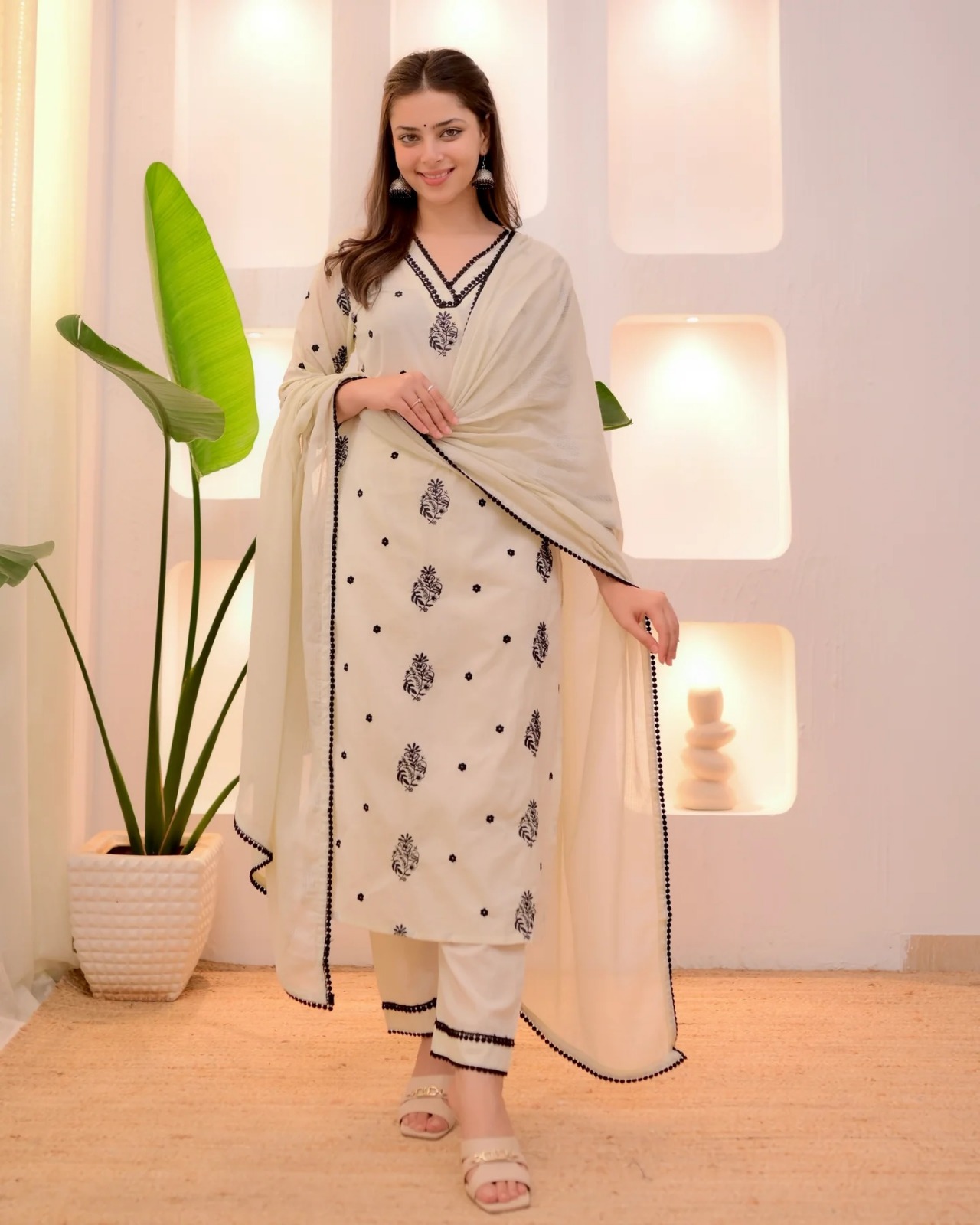 Festive Wear Cream Embroidered Kurta Set
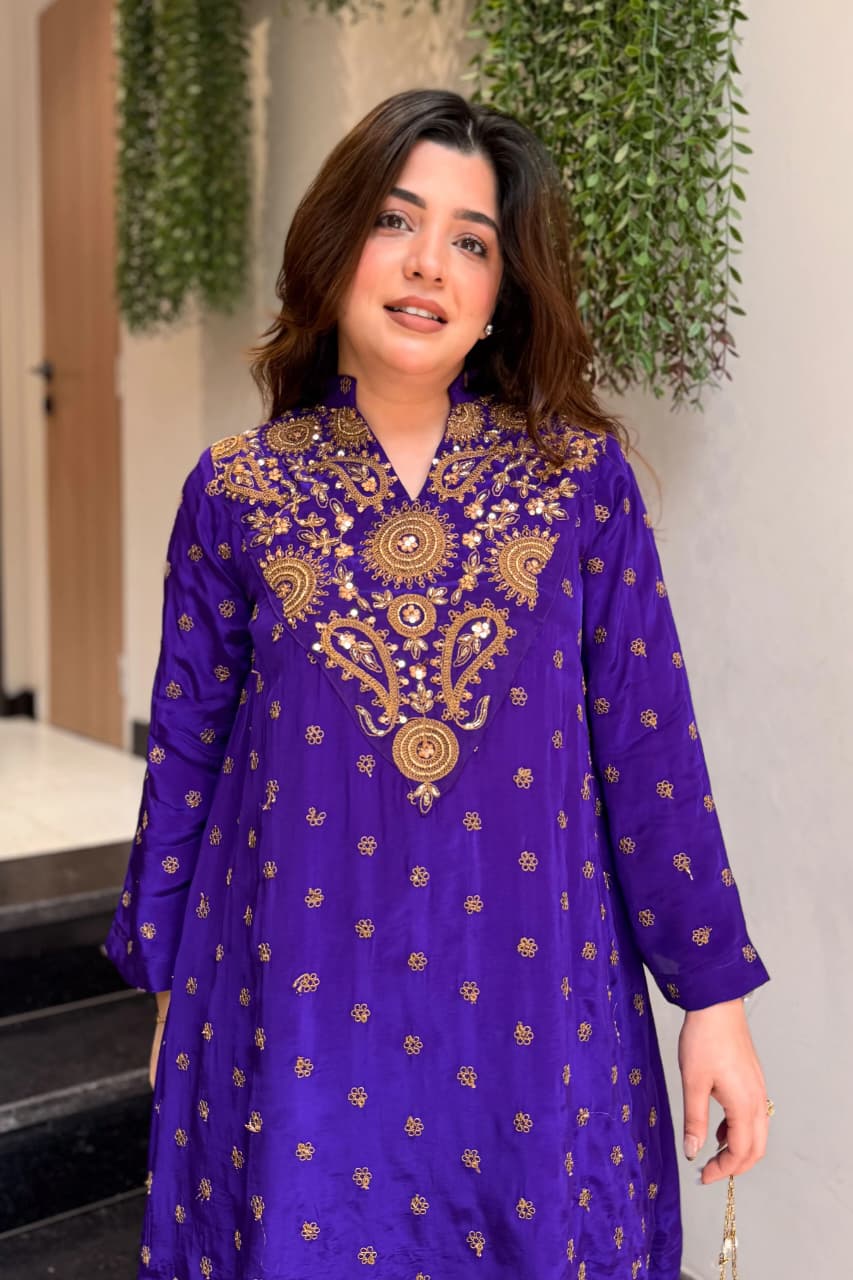
The Cream Embroidered Silk Kurta Pant Ethnic Co-ord Set offers a refined option for an afternoon celebration. Cream silk catches warm indoor light beautifully, while embroidery supplies enough festive detail without requiring a heavy necklace. Pair the set with pearl studs, tan juttis and a small potli in maroon or antique gold for contrast.
For a softer, more classic appearance, the Elegant Rani Pink Ethnic Kurti Set with Organza Dupatta brings colour and texture through the dupatta. Rani pink photographs well against neutral walls and festive décor, while organza adds volume near the shoulders. Keep the rest of the styling restrained with gold-toned earrings, a low bun and sandals with a stable two-inch heel or a flat sole.
A family gathering held in a cooler room or during a winter afternoon may suit the Olive Embroidered Chanderi Kurta Pant Dupatta Set. Chanderi has a light, slightly sheer character and a subtle surface sheen, so a lining or opaque inner layer is important when the fabric is translucent. Olive works with antique gold jewellery, brown footwear and muted peach makeup.
The Brown Embroidered Cotton Kurta Pant Dupatta Set Women is useful when comfort and breathability matter more than shine. Cotton absorbs moisture better than silk and feels easier during cooking, hosting or travelling. Add a bright dupatta, colourful glass bangles or a red bindi if the brown base feels too understated for the festival.
How should you make a kurta set look more festive?
A kurta set looks more festive when one accessory introduces shine or colour without competing with the embroidery. Add gold jhumkas, a brocade potli, a small bindi or a dupatta with a narrow zari border rather than layering every available accessory.
Footwear can change the character of a kurta set. Gold or tan juttis look heritage, kolhapuris create a relaxed daytime finish, and low block heels add height without making walking or standing difficult. Choose a non-slip sole if the celebration includes tiled floors or outdoor areas.
Try These Simple Ethnic Looks with a Saree
A saree can be comfortable for a Bhai Dooj puja when the fabric is manageable, the petticoat or shapewear fits properly and the pleats are secured before the ceremony begins. A saree is particularly practical when you want a time-honoured look that doesn't require coordinating several separate garments.
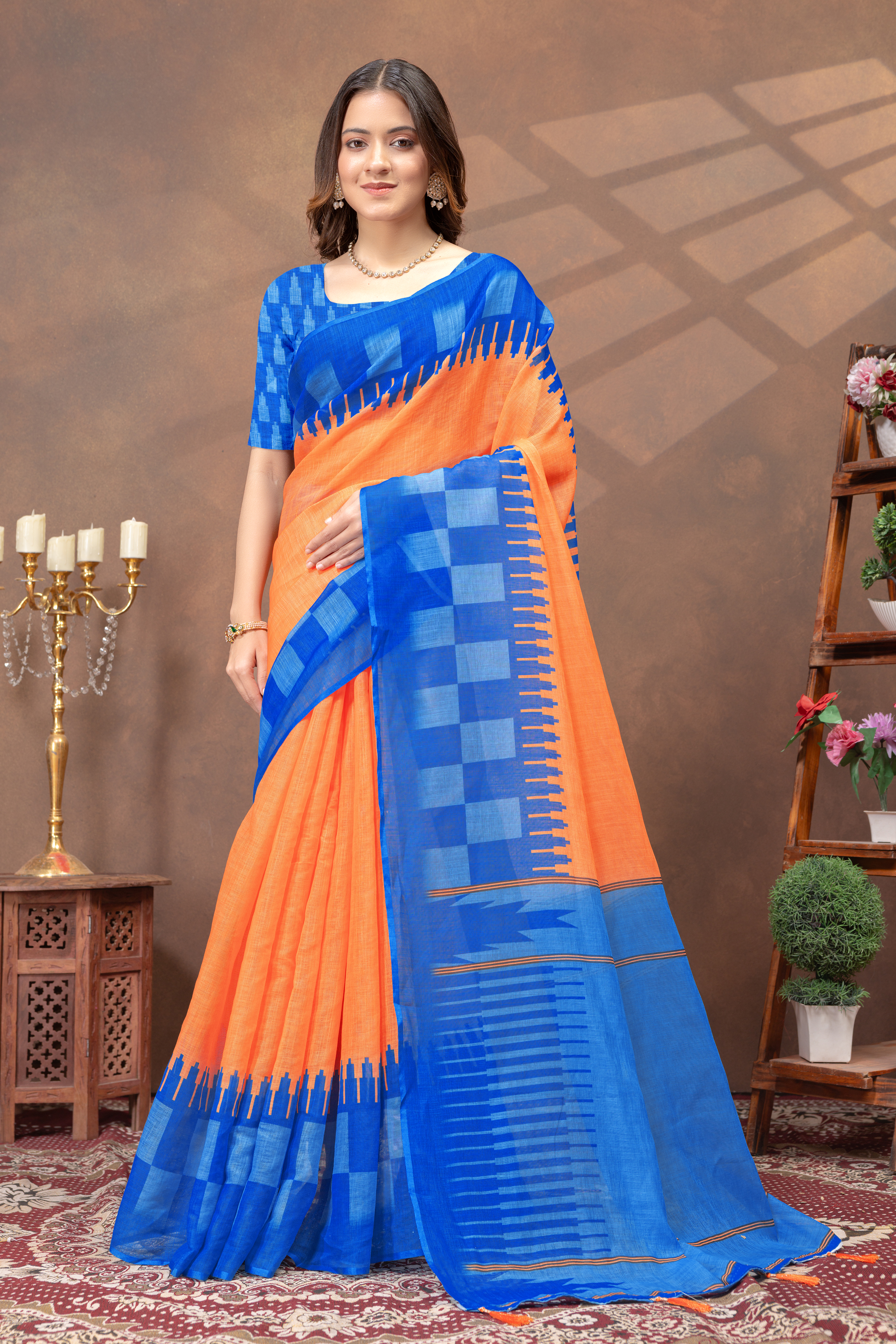
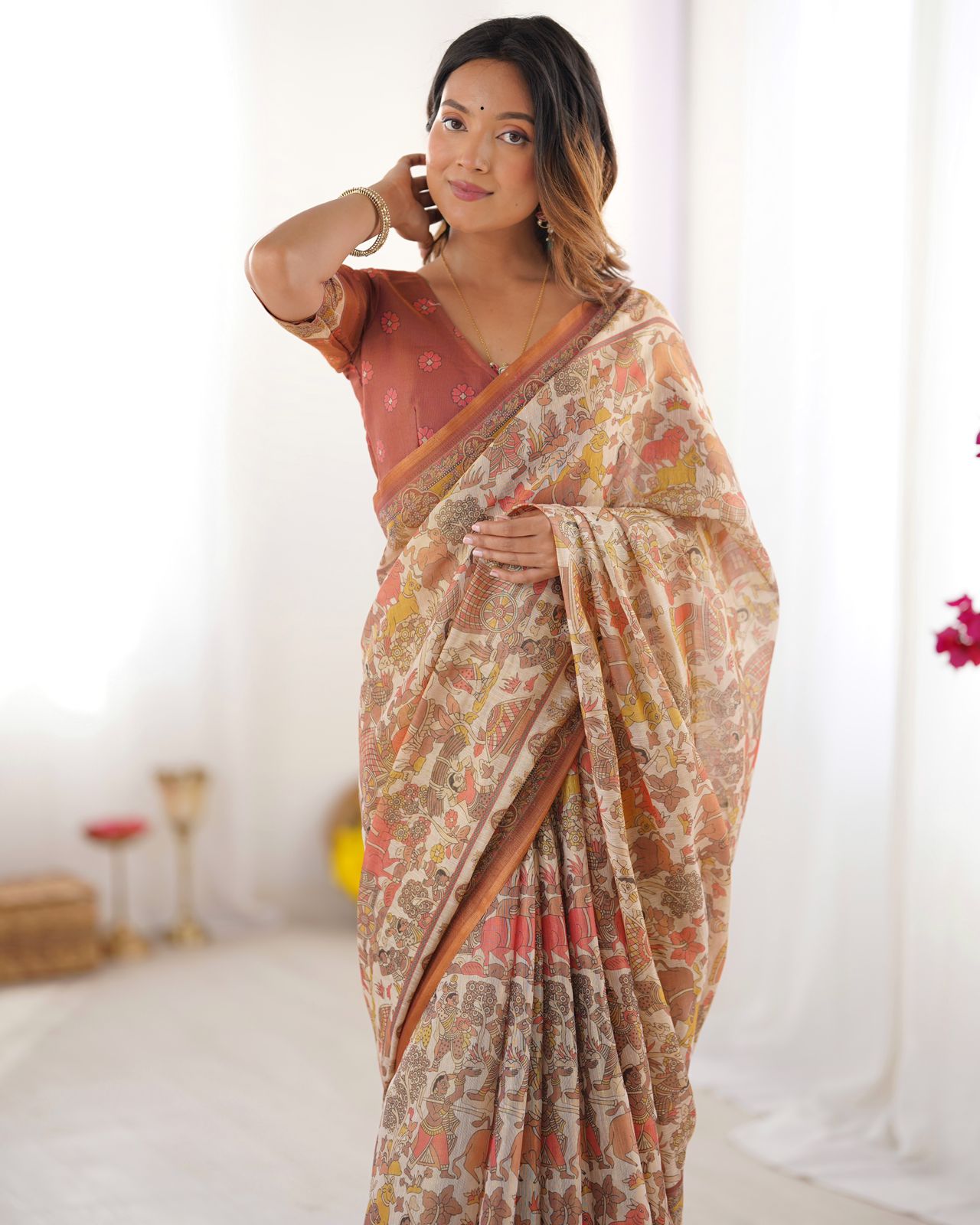 Ethnic Beige Cotton Linen Saree with Village Art Design
The Festive Olive Green Dola Butti Silk Saree With Blouse suits a daytime or early-evening celebration. Olive green gives the outfit festive depth without looking excessively bright, while the dola butti pattern adds repeated points of interest across the drape. Style the saree with small jhumkas and a bangle stack that won't interfere with serving food or performing aarti.
The Elegant Mustard Dola Butti Silk Saree With Blouse creates a warmer alternative. Mustard complements marigold decorations and looks especially effective with a deep green, rust or burgundy accent. A neatly pinned pallu, low block heels and a compact shoulder bag make the saree easier to manage during photographs and family visits.
Prepare the saree at least 30 minutes before leaving or before guests arrive. Pin the first and last pleats, secure the pallu at the shoulder and test whether the hem clears the floor while walking. Avoid excessively long tassels or loose brooches near a diya flame, and keep the pallu away from incense, candles and open cooking areas.
Which saree fabrics are easiest to manage?
Lightweight silk blends, cotton, Chanderi and soft georgette are generally easier to manage than very stiff brocade or heavily layered tissue. Banarasi silk can look magnificent but may feel heavier, so check the saree's weight and practise the drape before the event.
A safety pin should secure the pallu without visibly distorting the fabric. Place one pin near the shoulder and another inside the waist pleats if needed. Test sitting, walking and bending before the ceremony because a secure standing drape can still loosen during normal movement.
Try These Simple Ethnic Looks with a Light Lehenga
A lehenga makes sense for Bhai Dooj when the celebration is large, photographs are important or the family prefers a more dressed-up festive appearance. A lightweight lehenga is more suitable than a heavily layered bridal style for a home puja and meal.
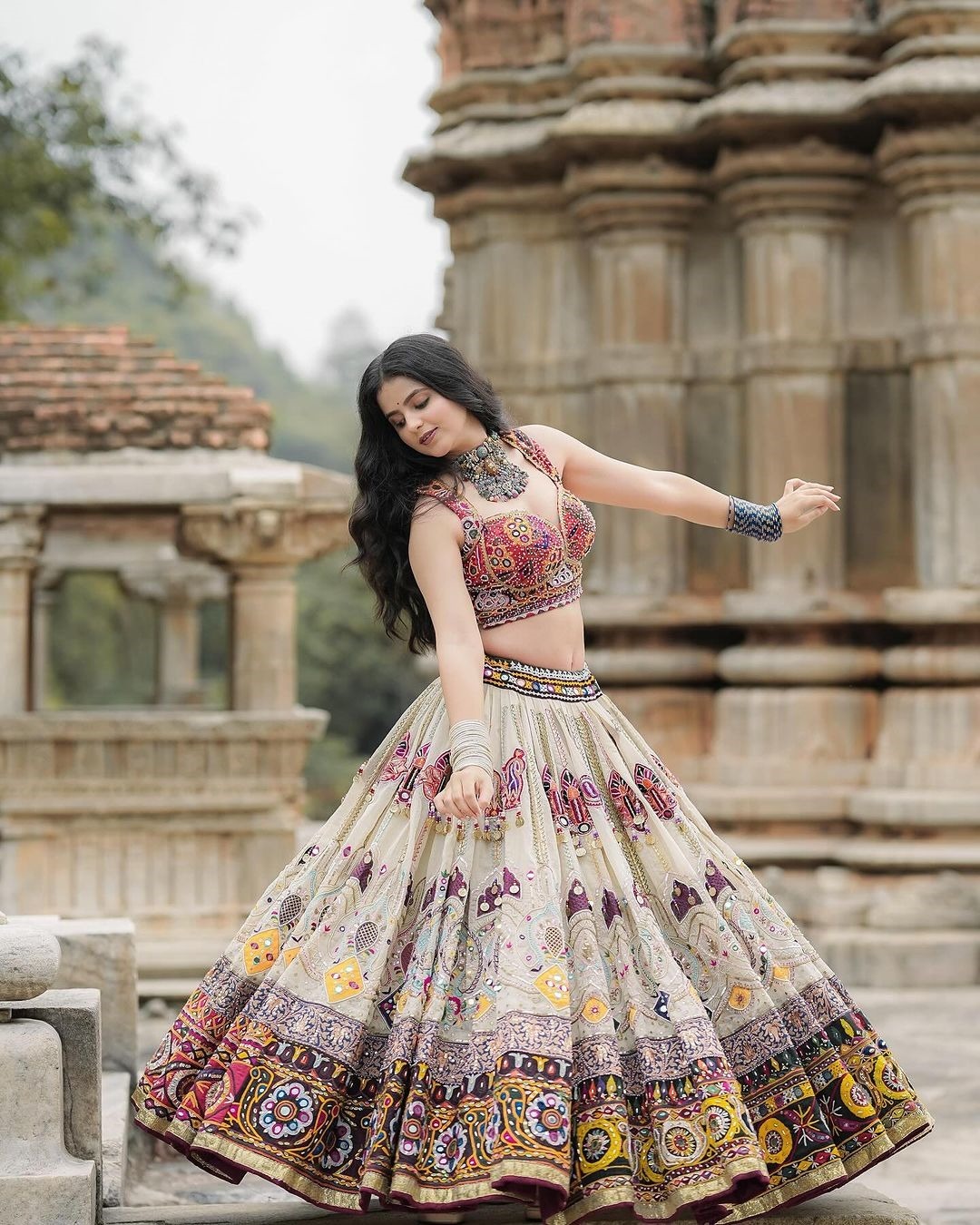 Cream Ethnic Lehenga Choli with Mirror Work Design
The Red Ethnic Lehenga Choli with Digital Print Design makes a strong choice for an evening gathering or a celebration with several relatives. Digital print can create vivid motifs without the weight of dense zari or metal embroidery. Balance the red with simple gold earrings, a restrained necklace and a dupatta draped over one shoulder rather than wrapped tightly around the arms.
The Beige Ethnic Printed Lehenga Set for Navratri and Garba can be adapted for Bhai Dooj when styled with quieter accessories. Beige gives printed motifs room to stand out and works well with rust, wine, green or gold accents. Choose a compact potli and comfortable juttis instead of dance footwear if the day includes long periods of sitting or walking.
Check the lehenga's waistband, lining and hem before wearing it for a family event. A broad, soft waistband is more comfortable than a rigid narrow band, and a lining that ends above the hem can prevent the skirt from catching against your ankles. If the dupatta is slippery, use two small hidden pins at the shoulder and waist.
A lehenga doesn't need a very full flare for a festive effect. A-line and panelled skirts often provide enough movement while taking up less space on a sofa, dining chair or staircase. Keep the blouse fit comfortable around the arms and bust because restrictive sleeves become noticeable during photographs and meals.
Try These Simple Ethnic Looks in Festive Colours and Fabrics
Warm festive colours, soft jewel tones and breathable natural fabrics suit Bhai Dooj because they look celebratory in family photographs without becoming impractical indoors. Colour choice should also reflect the time of day, the lighting at home and the amount of existing decoration.
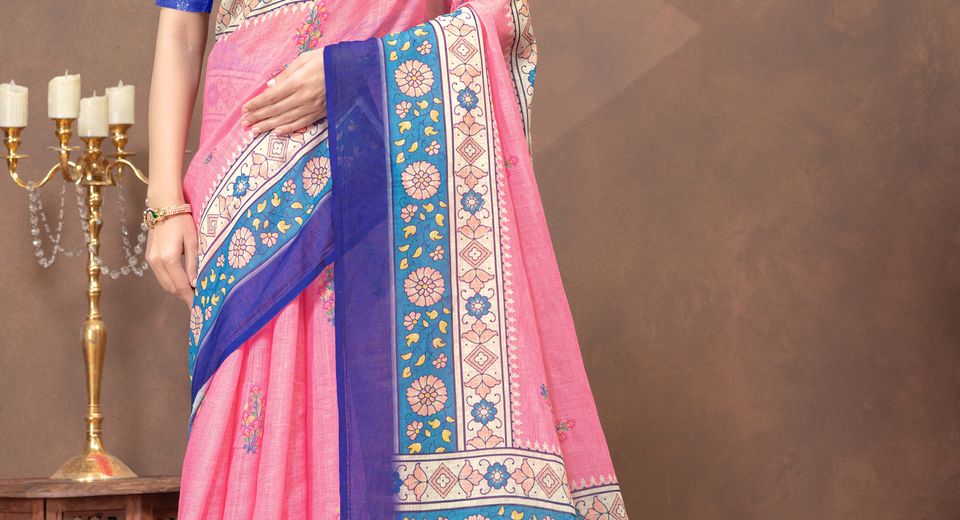
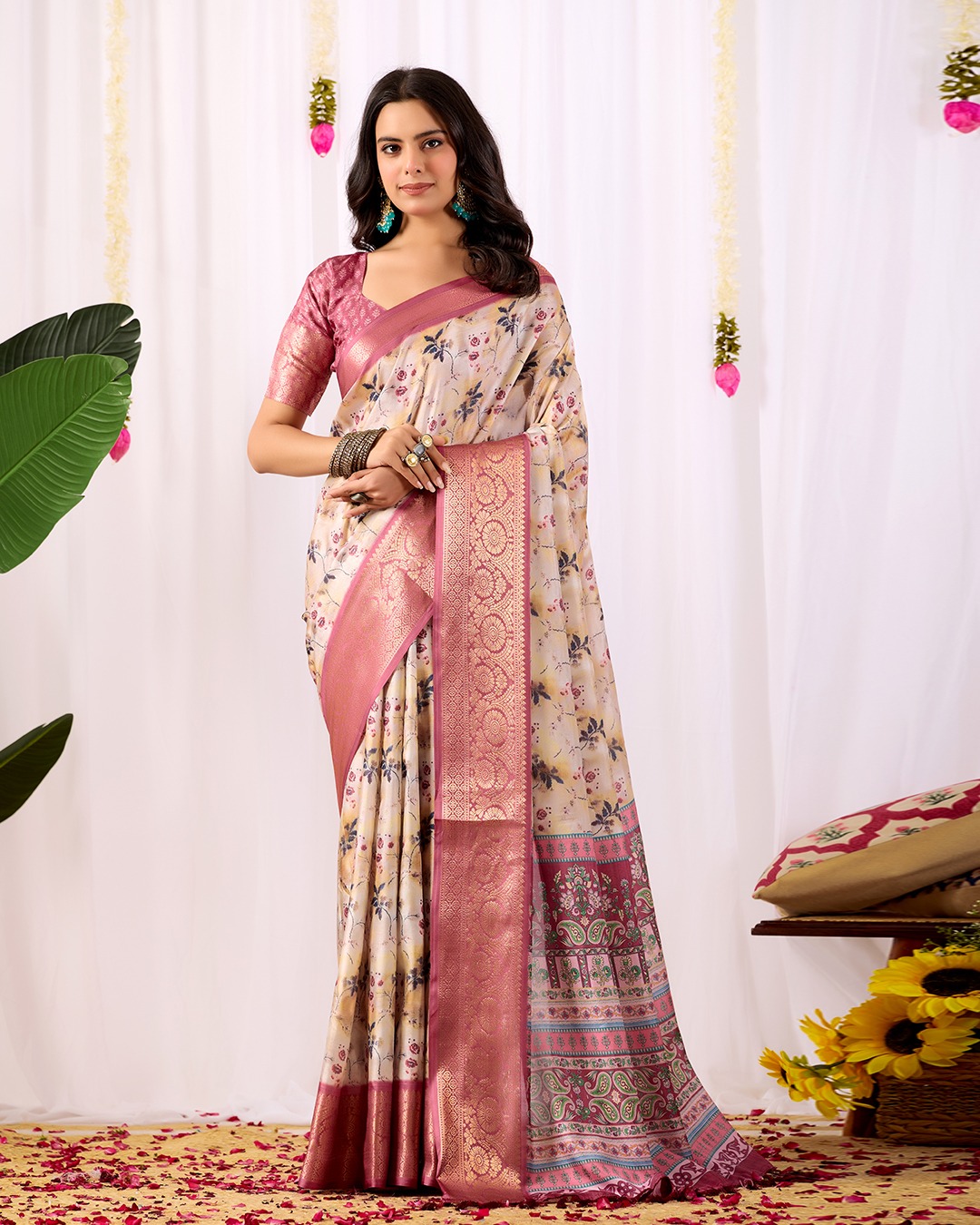 Festive Beige Saree with Floral Print and Rich Zari Work
Mustard, marigold, red, rani pink, olive green, cream and beige all work well for Indian festive wear. Mustard and red provide high contrast in photographs, while cream and beige create a calmer appearance. Olive green and brown are useful for anyone who prefers muted colours, especially when paired with gold, coral or rust accessories.
Banarasi silk and dola butti silk provide sheen and structure, making them suitable for sarees and evening celebrations. Chanderi feels lighter and often has a delicate translucence, so it benefits from careful layering. Cotton remains the most breathable choice for warm homes, kitchen-heavy gatherings and daytime ceremonies. Organza creates an airy, sculptural dupatta but may require pins because the smooth surface can slide.
Zari catches light effectively, but dense zari can add weight and require gentler care. For a simple Bhai Dooj outfit, select one prominent finish, such as a zari border, embroidered neckline or printed dupatta, instead of combining heavy work across every garment. A single clear focal point generally looks more polished than several competing embellishments.
How can you coordinate colours with family décor?
Coordinate with family décor by choosing one accent colour from the surroundings rather than matching every decoration. A mustard outfit can echo marigolds, an olive saree can complement green leaves, and a cream kurta can balance a colourful rangoli.
Photographs usually look more balanced when the outfit contrasts with the background. Avoid wearing a beige outfit directly against a beige wall, and add a rust, pink or green accessory if your clothing is close to the colour of the sofa or curtains. Natural daylight reveals colour accurately, while warm bulbs make mustard, red and gold appear deeper.
Try These Simple Ethnic Looks Without Over-Accessorising
You can avoid looking overdressed by limiting the outfit to one statement element and repeating one colour in the accessories. A richly coloured saree may need only earrings, while an embroidered kurta set may look complete with a bindi and a simple watch.
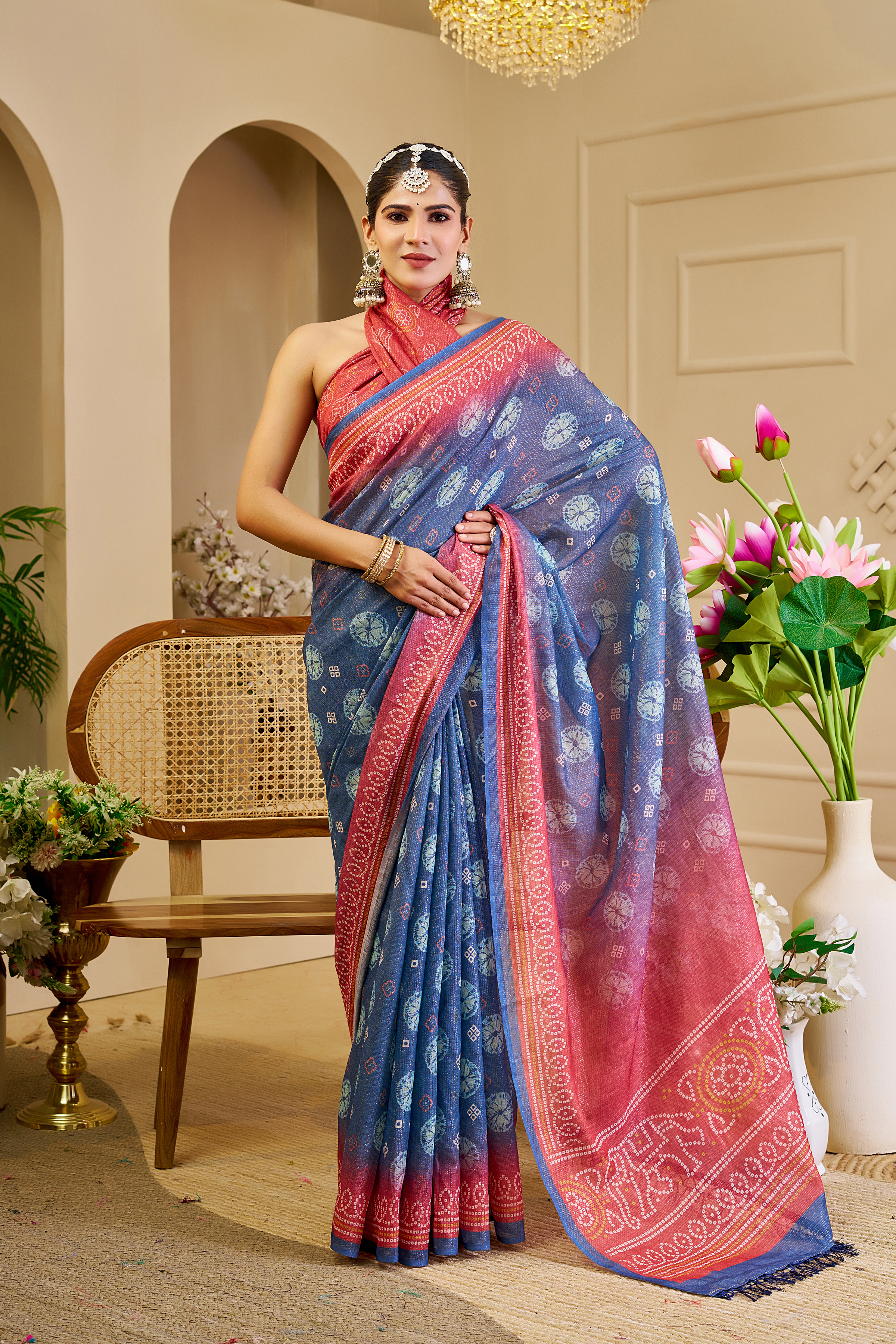
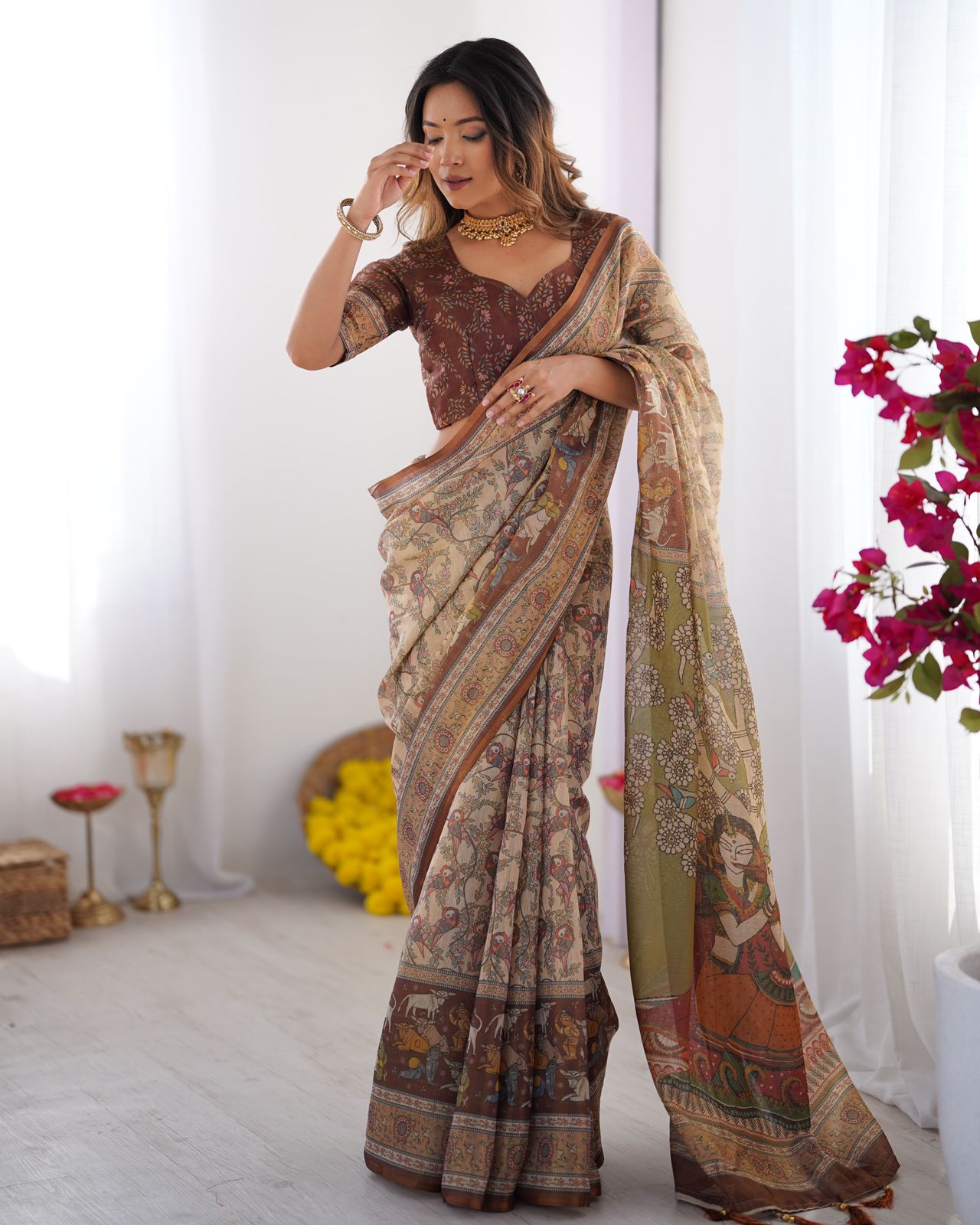 Beige Earth Folk Tale Saree – Varnavi
Jewellery should support the neckline. Long earrings work with a relatively plain kurta neckline, a short necklace suits a deeper V-neck, and a high embroidered neckline may need no necklace at all. A bindi, neatly shaped brows and a soft lip colour can provide more festive definition than multiple layers of jewellery.
Hair also affects comfort. A low bun or braid keeps hair away from the face during aarti and meals, while soft waves suit an evening gathering. Use a small amount of setting spray rather than heavy styling products if you expect to travel in warm weather. Keep a few safety pins, fashion tape and a compact comb in your handbag for practical adjustments.
Choose footwear according to the floor and the amount of walking required. For a saree, footwear with a stable sole helps maintain the intended drape length. For a lehenga, avoid very high heels unless the hem has been altered specifically for that height. For a kurta set, juttis, kolhapuris and low block heels all work when they provide enough support.
Try These Simple Ethnic Looks After Checking Fit and Care
Before buying a Bhai Dooj outfit, check the fabric composition, size chart, lining, garment measurements, wash instructions and delivery timeline. These details determine whether an attractive outfit will actually be comfortable and ready for the celebration.
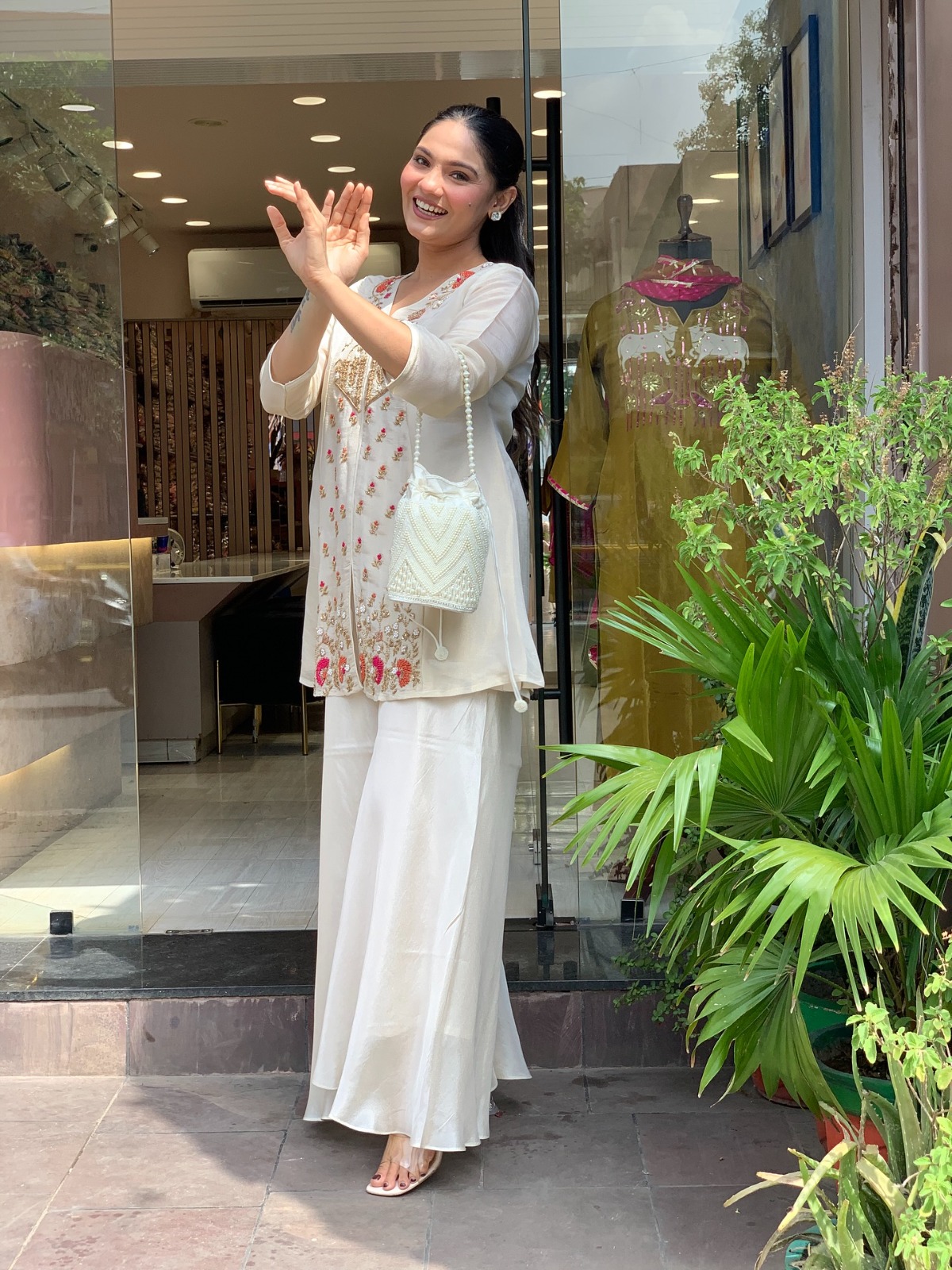 Cream Embroidered Silk Kurta Pant Ethnic Co-ord Set
Read whether the outfit is fully lined or partially lined, particularly for Chanderi, organza and lightweight printed fabrics. Ask whether the blouse, kurta or lehenga has adjustable margins if you're between sizes. Confirm the expected delivery date at least seven days before Bhai Dooj so that alterations and a trial wear remain possible.
Try the complete outfit at home before the event. Sit on the floor, climb a few steps, raise your arms, walk at a normal pace and carry a small plate or handbag. These movements reveal tight armholes, slipping dupattas, dragging hems and waistbands that may feel uncomfortable after a meal.
Follow the care label rather than assuming every festive garment can be washed at home. Silk sarees and zari details often need dry cleaning or careful airing, while cotton may be hand-washed in cool water with a mild detergent. Store clean silk and embellished garments folded in breathable muslin, and refold them every few months to reduce permanent crease marks.
Simple ethnic dressing succeeds when comfort supports the ritual rather than distracting from it. Select one strong element, secure the practical details in advance and choose fabrics that suit the weather. A well-fitted kurta set, an organised saree drape or a light printed lehenga can make Bhai Dooj feel festive without turning family time into a styling challenge.
Common Questions About Choosing a Bhai Dooj Outfit
What should I wear for Bhai Dooj at home?
A comfortable kurta set, lightweight saree or lightly embellished lehenga works well for Bhai Dooj at home. Choose breathable cotton, Chanderi or light silk when the celebration includes floor seating, cooking or a long family meal.
Which colour is best for a Bhai Dooj outfit?
Mustard, marigold, red, rani pink, olive green, cream and beige are all suitable Bhai Dooj colours. Choose a shade that contrasts with your home décor and add gold, rust, green or burgundy accessories for definition.
Can I wear a saree for a Bhai Dooj puja?
Yes, a saree is suitable for a Bhai Dooj puja when the pleats and pallu are secured before the ritual. Dola butti silk, lightweight silk blends, cotton and Chanderi are practical choices when you need to sit, walk and serve food comfortably.
What kind of kurta set is suitable for Bhai Dooj?
A kurta with straight pants and a manageable dupatta is suitable for Bhai Dooj because the silhouette allows easy movement. Choose embroidery, a silk finish or a colourful dupatta for festive detail, while cotton is preferable in warm weather.
How can I make a simple ethnic outfit look festive?
Make a simple ethnic outfit festive by adding one noticeable element, such as gold earrings, a zari border, a bright dupatta or a brocade potli. Avoid combining heavy jewellery, dense embroidery and a highly embellished dupatta in the same look.
How early should I buy a Bhai Dooj outfit?
Buy a Bhai Dooj outfit at least seven days before the celebration when possible. The extra time allows you to check the fit, arrange minor alterations, test the complete styling and handle any delivery or care requirements.