

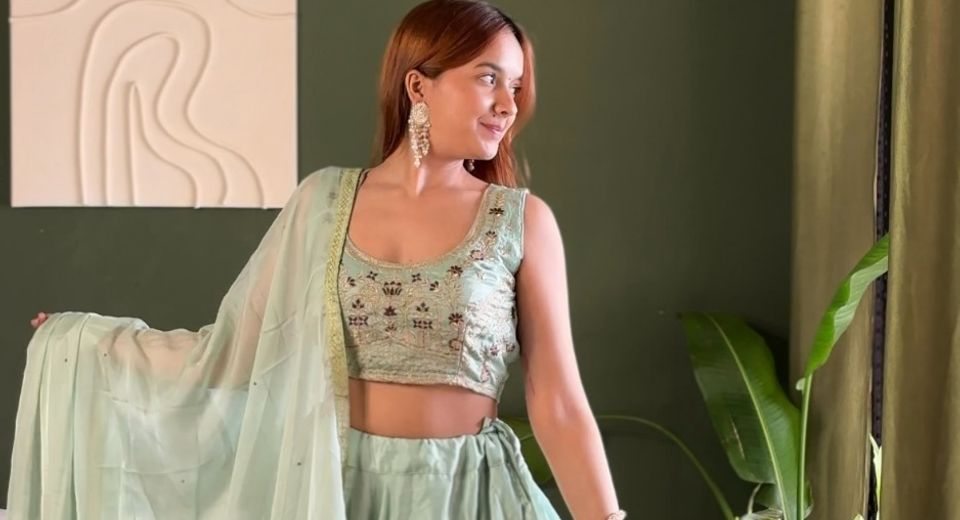
A lightweight mehendi lehenga that works for a second event solves two practical problems at once: you need freedom to sit, walk and participate in the ceremony, but you also want an outfit polished enough for another wedding function. The right choice depends on more than a bright colour or attractive embroidery. Fabric weight, lining, waistband comfort, blouse versatility and the amount of surface work all determine whether a lehenga feels wearable after the mehendi ceremony ends.
Mehendi celebrations often involve floor seating, photographs, dancing, travel between venues and several hours of movement. A lehenga chosen only for its first impression can become uncomfortable when the waistband digs in or the dupatta needs constant adjustment. A reusable design gives you more value: change the blouse, drape the dupatta differently, replace the jewellery and create a noticeably different look for a sangeet, reception or festive dinner.
Why choose a lightweight mehendi lehenga that works for a second event?
A lightweight mehendi lehenga that works for a second event combines easy movement with enough structure to look dressed up in photographs. The skirt should hold its shape without requiring multiple heavy layers, and the blouse should be comfortable for at least four to six hours of wear.
Heavy bridal lehengas often use dense zari, sequins, velvet panels, thick can-can or several layers of lining. Those details can be beautiful, but they add heat, bulk and maintenance. A lighter georgette, net, muslin cotton or moderately finished satin design is usually easier to carry from one venue to another. Lightweight doesn't mean plain; embroidery, mirror work, threadwork and carefully placed floral motifs can provide visual interest without covering every inch of the garment.
Rewear potential also changes the buying calculation. A lehenga that costs more but can be styled for two or three occasions may offer better value than a highly specific bridal outfit worn once. Neutral pastels, jewel-toned pinks, lime green, magenta and multicolour designs can move between daytime and evening settings when the accessories are changed thoughtfully.
Which fabrics keep a mehendi lehenga comfortable?
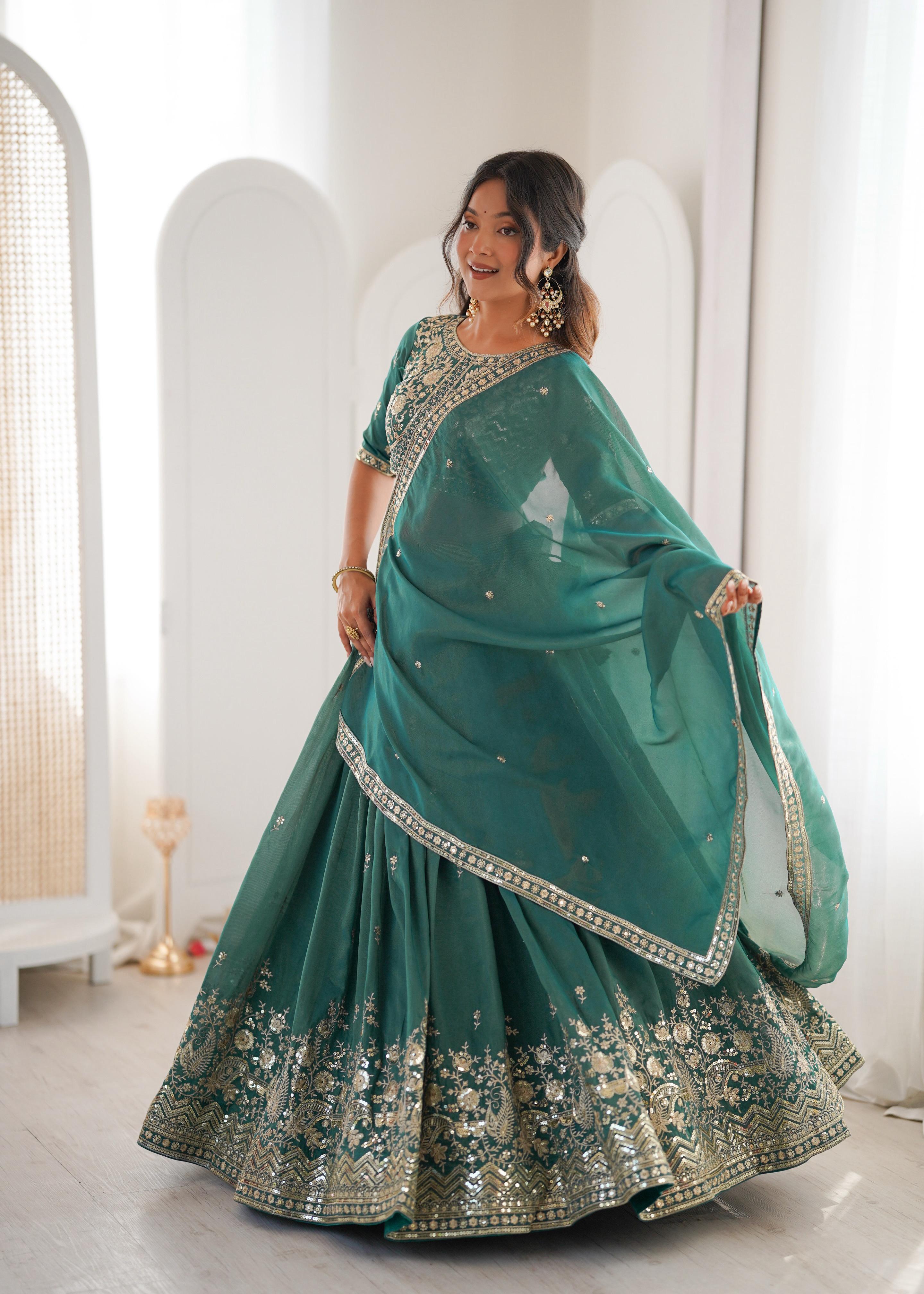
Georgette, lightweight net, muslin cotton and moderately finished satin are practical fabric choices for a comfortable mehendi lehenga, although the lining and embroidery also affect the final weight.
Georgette supports easy movement
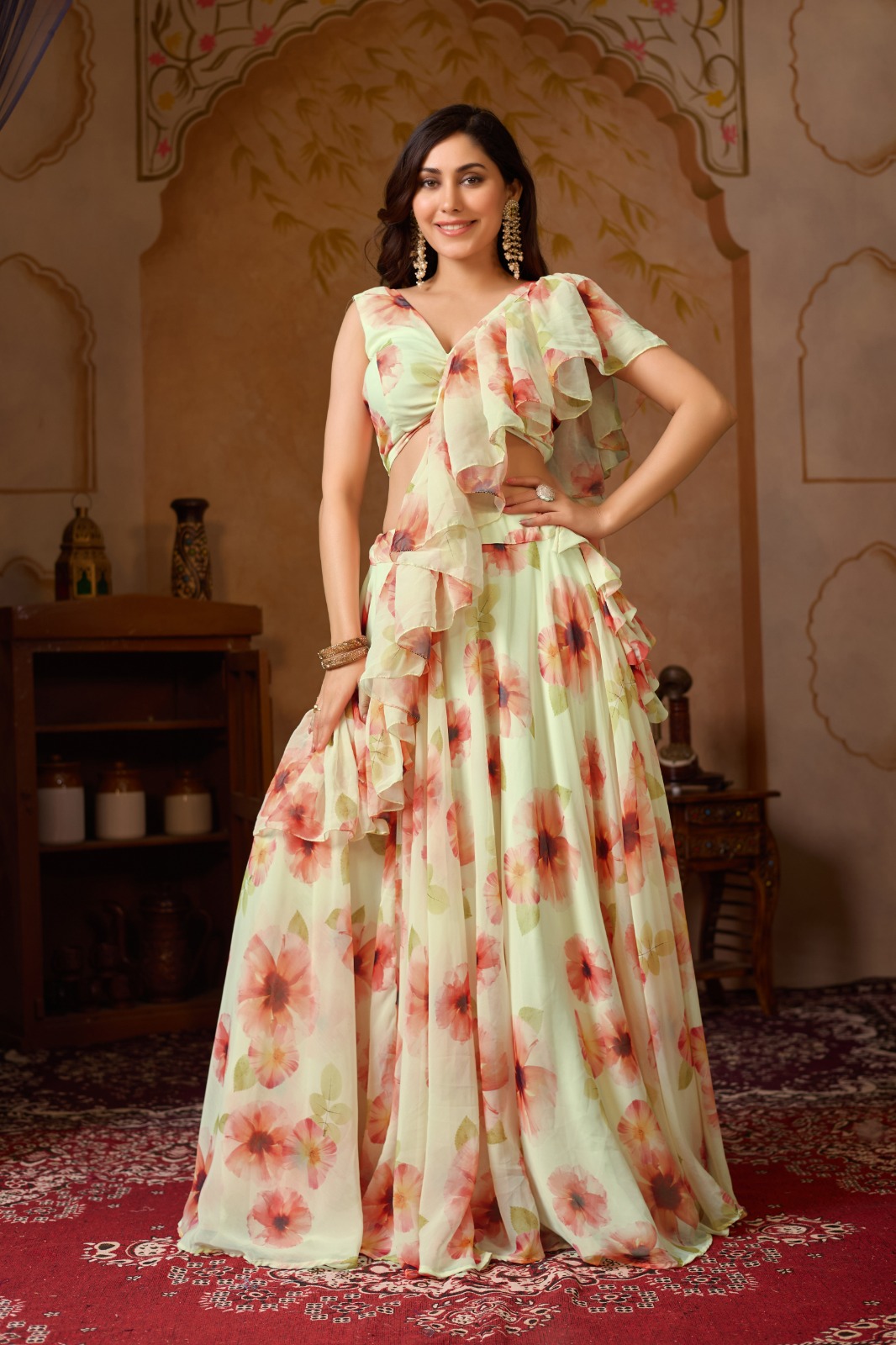
Georgette has a fluid fall that helps a skirt move naturally while dancing or walking. Pastel Floral Georgette Lehenga Set with Ruffle Blouse illustrates how a soft base and a statement blouse can create a festive appearance without the stiffness of heavily layered bridal wear. Georgette can crease, so hang the skirt rather than folding it tightly after use.
Net creates volume without excessive bulk
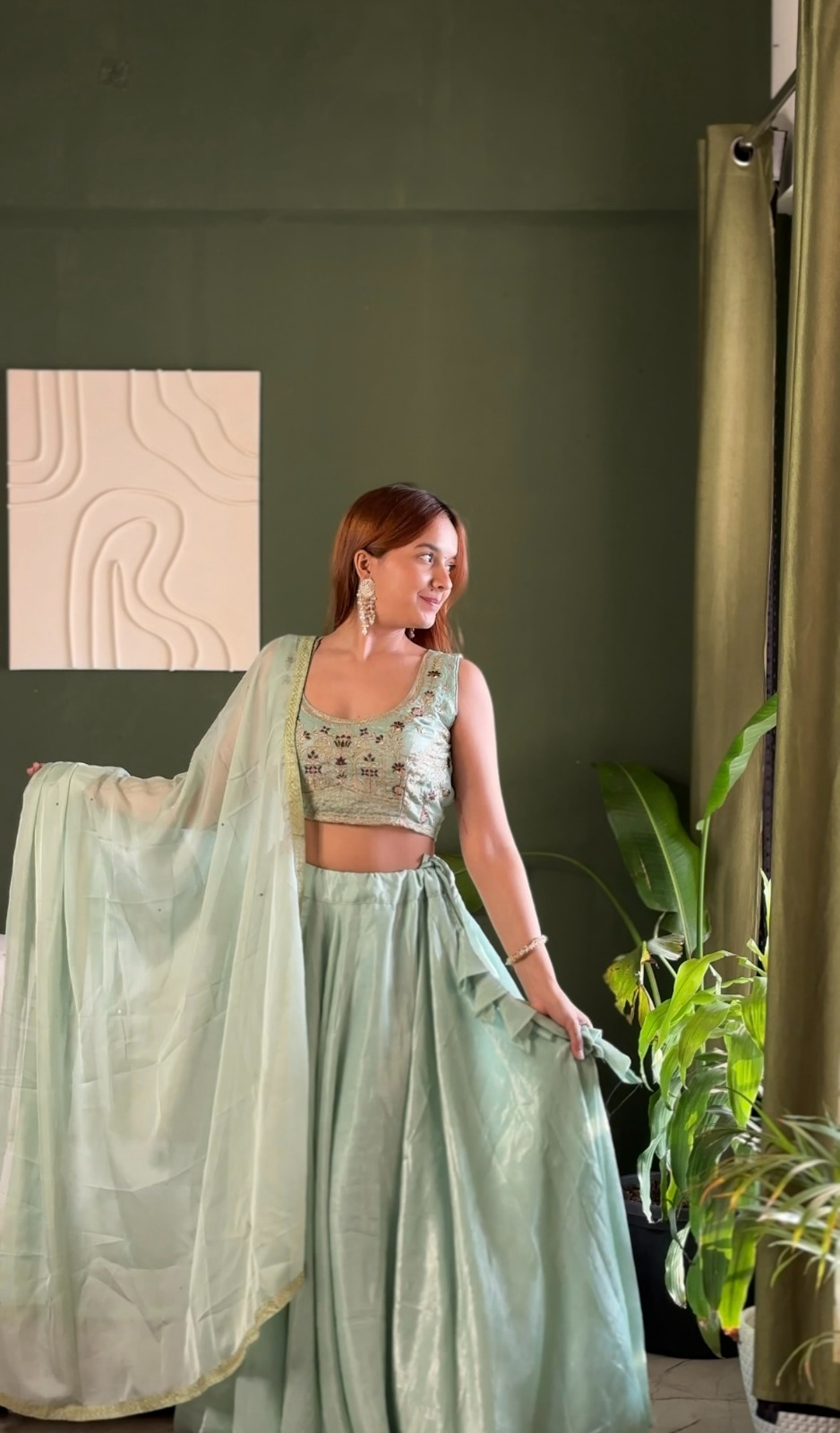
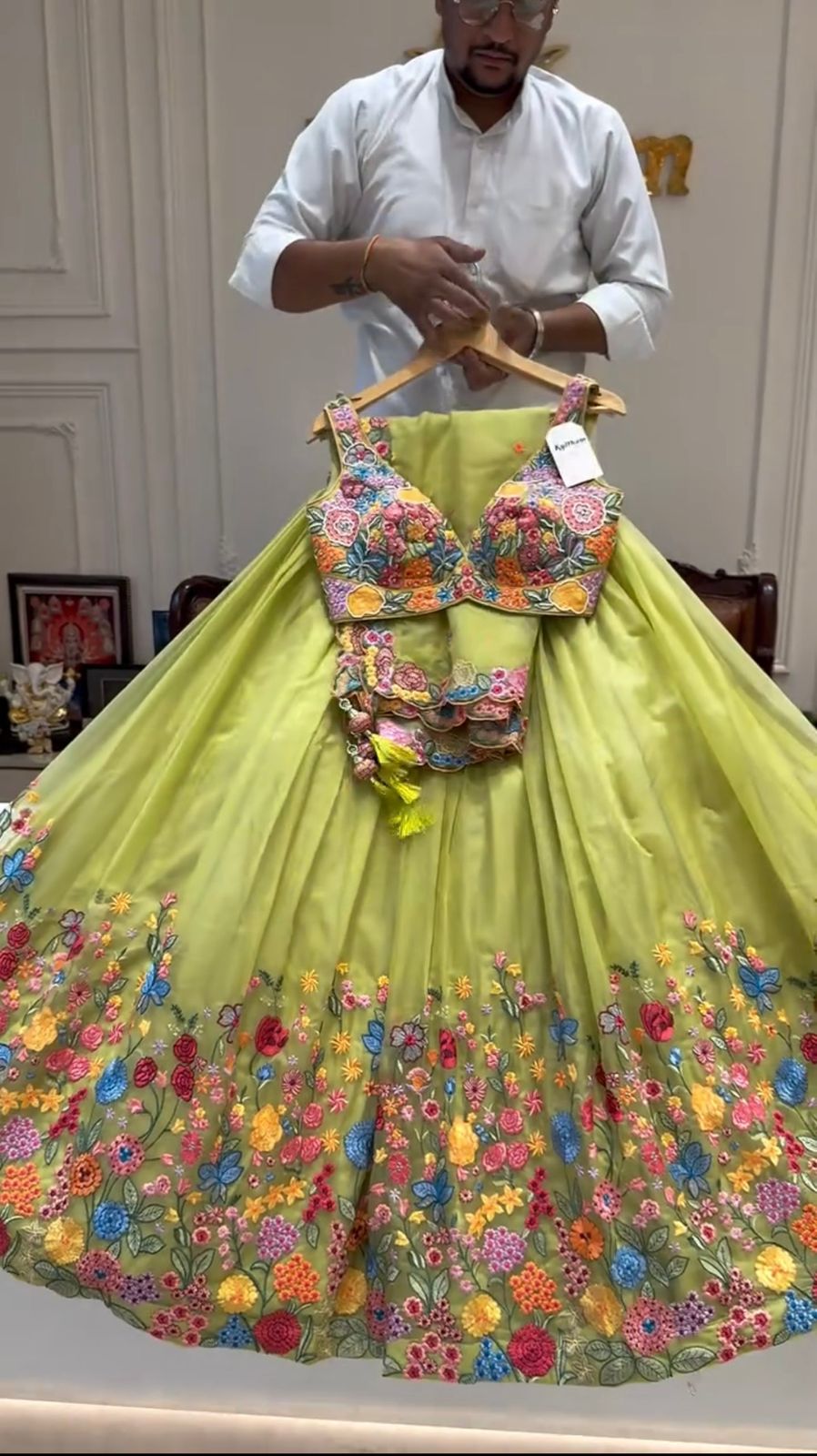
Butterfly net and related lightweight net constructions can create a fuller silhouette with less weight than dense brocade or multiple stiff underskirts. Lime Floral Embroidered Butterfly Net Lehenga Set and Pastel Grey Embroidered Butterfly Net Lehenga Set show how net can support floral embroidery and a modern colour palette. Check the inner lining before buying because rough seams or a poorly finished hem can affect comfort more than the outer fabric.
Muslin cotton suits daytime functions
Muslin cotton is useful for a daytime mehendi because it generally feels lighter and more breathable than heavily coated synthetic surfaces. Multicolor Mirror Work Muslin Cotton Lehenga Choli Set adds reflective detail while retaining a softer, more relaxed character. Mirror work can catch on jewellery, so store the set in a breathable garment bag with the embellishments turned inward.
Satin gives a dressier second appearance
Satin creates a smooth surface and a subtle sheen that can make the same lehenga feel more evening-appropriate. Magenta Satin Embroidered Lehenga Set Online can be styled for a daytime mehendi with restrained accessories and then given a sharper evening treatment with metallic heels, stronger eye makeup and a structured clutch. Satin can show pressure marks, so avoid placing a heavy bag on the skirt while seated.
How should you select a colour for two different wedding events?
Select a colour that suits the light of the mehendi ceremony and can be transformed with a different blouse, dupatta or jewellery set for the second event.
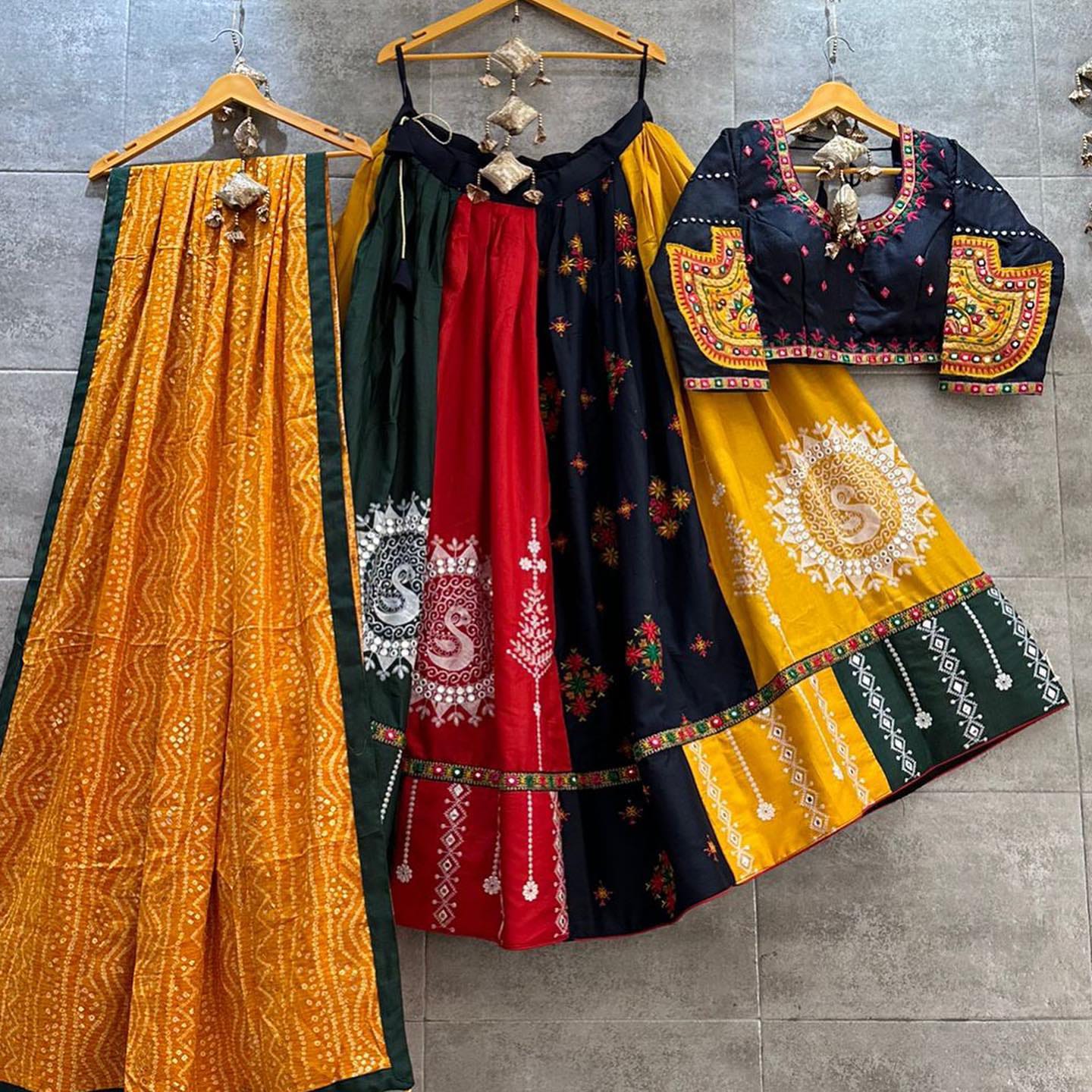
Green, lime, pink, coral, yellow and multicolour combinations naturally suit a mehendi setting because they photograph well against floral décor and henna-stained hands. A lime or mint palette feels fresh in daylight, while magenta and deeper pink can transition more easily into an evening function. Pastel Grey Embroidered Butterfly Net Lehenga Set offers a quieter base that can take on different personalities through accessories, making grey a useful option when you don't want a conventional green outfit.
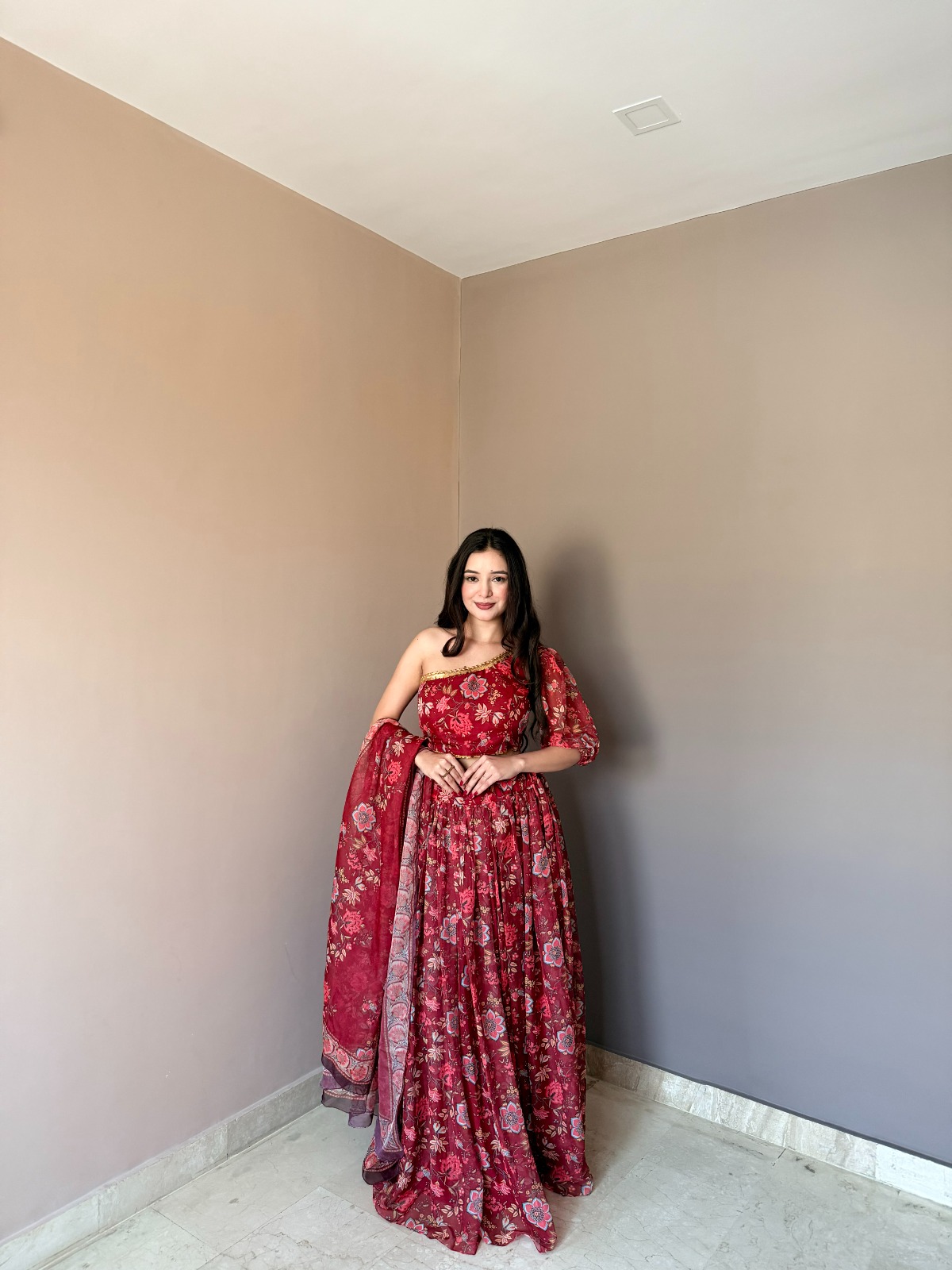
Consider the venue lighting before deciding. Strong yellow lighting can make mustard, lime and gold appear warmer, while daylight reveals the true softness of mint, blush and grey. Large floral prints are lively for a daytime ceremony, but smaller motifs and controlled embroidery may be more adaptable for a reception. A multicolour lehenga can be especially reusable because you can select one accent shade for the blouse, dupatta or jewellery at the second event.
Colour is also connected to photography. Very pale yellow or beige can lose contrast against cream décor, while extremely reflective sequins may create bright hotspots under flash. If photographs matter, choose a colour with visible contrast against the venue and ask for daylight and indoor images whenever possible.
What details make a lehenga genuinely reusable?
A reusable lehenga usually has a versatile blouse, manageable embellishment, an adjustable waist and a dupatta that can be draped in more than one way.
Look closely at the blouse
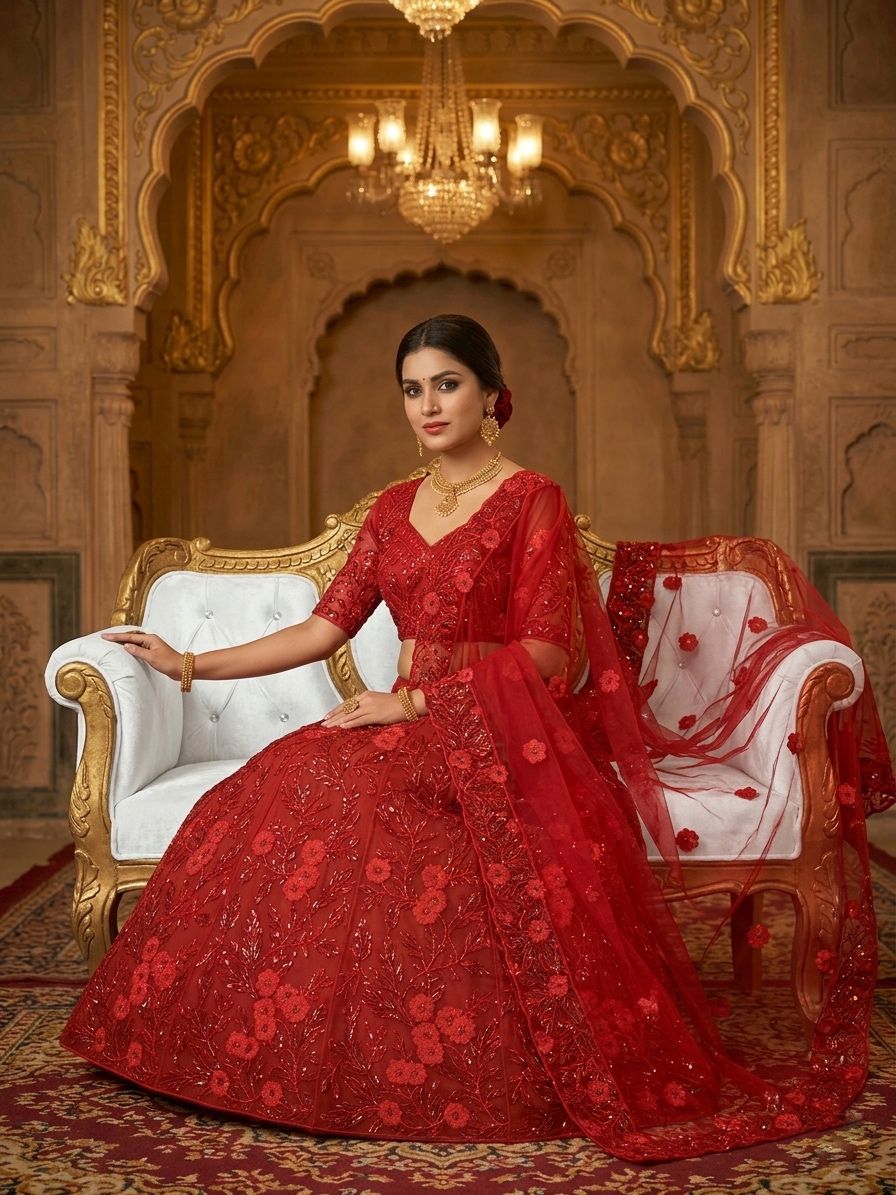
A blouse with a clean neckline and moderate ornamentation is easier to repeat than a heavily bridal choli designed around one specific styling direction. A ruffle blouse can create a youthful mehendi look, while a simpler embroidered blouse can be paired with a contrasting dupatta for a later celebration. Mint Embroidered Lehenga Set with Net Dupatta for Women demonstrates how a coordinated skirt and dupatta can provide a complete first look while leaving room for alternate jewellery.
Check the waistband and length
A comfortable waistband should sit securely without compressing the stomach when you sit on the floor. Measure your natural waist and the point where you intend to wear the skirt, then compare those measurements with the garment size chart. Check the skirt length with the footwear you expect to wear; a hem that drags on the floor collects dirt and becomes harder to reuse.
Assess the embellishment placement
Embellishment concentrated around the border or selected floral panels is often easier to style again than dense work across the entire skirt. Threadwork can look refined without adding the weight of extensive metal embroidery. Designer Threadwork Silk Lehenga Choli Set with Dupatta gives an example of how threadwork and silk can create a more formal second-event direction, although the wearer should check the total weight before choosing it for a long mehendi ceremony.
Choose a flexible dupatta
A dupatta that can be worn over one shoulder, around the arms or pinned across the torso increases styling options. Net dupattas create volume and a light frame around the outfit, while a softer dupatta can be easier when you expect to dance or handle mehendi rituals. Keep safety pins away from delicate net and use small, smooth pins to reduce snagging.
How can you style one lehenga for a mehendi and a second event?
Style the first look with comfortable footwear and lighter jewellery, then change at least three visible elements for the second event so the outfit reads as intentionally restyled.
- For the mehendi: Choose flat embellished juttis or low wedges, lightweight earrings and a secure braid or low bun. Keep one hand free where possible because mehendi application can make large rings and dangling bracelets inconvenient.
- For a sangeet: Replace the flat footwear with block heels, add a waist belt or layered necklace and pin the dupatta more securely for dancing. A belt can also alter the proportion of a full skirt without tailoring the garment.
- For a reception: Use crystal or metallic jewellery, a compact clutch and a more structured drape. A sleek bun, defined eyeliner and a deeper lip colour can shift a pastel or floral lehenga from daytime festive to evening formal.
- For a family celebration: Pair the skirt with a plain silk, brocade or satin blouse in one colour taken from the embroidery. A new blouse often creates a stronger visual change than replacing small accessories.
Pink Bridal Sequins Lehenga Set with Heavy Flare is better suited to a grander second appearance than a casual repeat because its heavy flare and sequins create a strong statement. If you choose a dramatic design, keep the first styling simpler and reserve the fuller jewellery and more formal makeup for the evening event.
Which shopping categories help narrow the choice?
Shopping by budget, fabric and role in the wedding party can make the search more efficient than browsing every mehendi design together.
Haldi Lehengas Under 5500 can be useful when you want bright, relaxed colour ideas that also suit a daytime mehendi. Bridesmaid Lehengas Under 5500 is relevant when the outfit must coordinate with a wedding palette without looking identical to the bride's clothing. A bridesmaid lehenga should also allow enough movement for group photographs, welcome rituals and dancing.
Net Lehengas Under 4500 with 51% Discount helps narrow the search when you want volume at a lower budget, but inspect the lining, hem and seam finish before ordering. Silk Lehengas Under 3000 may suit a more traditional second event, especially when you plan to pair the skirt with a different blouse. Pink Lehengas Under 4000 with 50% Discount is a practical category for shoppers seeking a festive colour with a defined spending limit.
Budget should include tailoring and accessories. A blouse alteration, petticoat adjustment, fall or edging can add to the final cost. Reserve at least seven to ten days for basic alterations when a wedding date is approaching, and try the complete outfit with footwear before the final fitting.
How should you care for a lehenga after the first event?
Air the lehenga immediately after wearing it, remove surface dust gently and use professional cleaning when the care label requires it.
don't seal a damp or perspiration-exposed lehenga in plastic because trapped moisture can encourage odour and damage delicate embroidery. Hang the skirt and blouse on broad hangers for several hours, keeping the garment away from direct sunlight. A breathable cotton cover is safer for longer storage than a thin plastic bag.
Dry-clean embellished net, silk and heavily embroidered garments unless the care label specifically permits another method. Avoid ironing zari, sequins, mirror work or raised threadwork directly. Use a low-temperature steamer from a safe distance, or place a clean cotton cloth between the iron and the fabric when the garment's care instructions allow pressing.
Store the dupatta separately if its embroidery can catch on the skirt. Fold heavy embellishments inward with acid-free tissue or clean muslin between layers, and refold the garment every few months to reduce permanent crease lines. These small steps make a second wear more likely to look fresh rather than like an afterthought.
A practical final checklist before ordering
Before ordering, confirm the fabric, lining, complete set contents, measurements, return window and alteration time. A product photograph can't tell you whether the waistband stretches, whether the dupatta is long enough or whether the skirt has a stiff underskirt.
- Ask for the approximate garment weight when the listing doesn't provide it.
- Measure the waist, hips, blouse bust and desired skirt length rather than choosing only by usual clothing size.
- Check whether the set includes the blouse, skirt, dupatta, can-can or any separate inner layer.
- Match the colour to both daytime and evening lighting if a second event is planned.
- Choose jewellery and footwear that can create a clearly different second look.
- Allow at least one trial wearing before the mehendi ceremony.
The most useful purchase isn't necessarily the most ornate lehenga. A comfortable silhouette, adaptable colour, manageable embellishment and a blouse that can be restyled will give you more opportunities to wear the outfit confidently. That combination lets a festive mehendi look continue into another celebration without appearing repetitive.
Questions About Choosing a Mehendi Lehenga for Two Events
What makes a mehendi lehenga comfortable for several hours?
A comfortable mehendi lehenga usually has a breathable or lightweight outer fabric, a smooth lining, a secure but non-tight waistband and a hem that works with your footwear. Georgette, lightweight net and muslin cotton can reduce bulk, while dense sequins, thick can-can and rough seams may increase discomfort.
Can I wear the same lehenga to a mehendi and reception?
Yes, the same lehenga can work for both events when the colour and design are adaptable. Change the blouse or dupatta where possible, then alter the jewellery, footwear, hairstyle and makeup so the second look has a different proportion and level of formality.
Which colours work best for a reusable mehendi lehenga?
Mint, lime, pink, magenta, grey and multicolour designs can work well for both a mehendi and a later wedding event. Daylight-friendly colours suit the first ceremony, while deeper accessories and metallic details can make the same outfit appropriate for an evening reception.
Is a net lehenga suitable for a daytime mehendi ceremony?
A net lehenga can suit a daytime mehendi when the lining is comfortable and the embroidery is not excessively heavy. Butterfly net can provide volume with less bulk than several stiff underskirts, but the hem and inner seams should be checked before purchase.
How can I make a repeated lehenga look different?
Replace at least three visible elements, such as the blouse, dupatta drape, jewellery, footwear, hairstyle or makeup. Pairing the skirt with a plain satin or silk blouse in an embroidery accent colour often creates a stronger change than simply switching earrings.
How should I store an embroidered lehenga after wearing it once?
Air the lehenga away from direct sunlight, remove surface dust gently and store it dry in a breathable garment cover. Fold heavy embellishments inward with clean tissue or muslin between layers, and follow the care label for professional cleaning, especially for silk, net, zari and sequined garments.




