

A garden engagement changes the practical rules of dressing. A Lehenga for a Garden Engagement Where You Will Walk on Grass must look festive in photographs while allowing you to cross lawns, greet guests, climb shallow steps and sit without repeatedly lifting the skirt. The right choice depends on hem clearance, fabric weight, flare, footwear and the way the dupatta is secured. Sparkle and colour matter, but construction matters just as much when the venue replaces a polished floor with grass and uneven ground.
Lehenga for a Garden Engagement Where You Will Walk on Grass: What Makes One Suitable?
A suitable lehenga has a controlled hem, moderate flare, secure waist construction and enough lightweight structure to avoid dragging across the lawn. Grass catches a trailing edge more easily than a hard floor, especially when the ground is damp or slightly uneven.
Start by checking the skirt length with the shoes you will actually wear. A hem that barely clears a smooth indoor floor may touch grass outdoors. Ask for a fitting while wearing your engagement footwear, then walk ten to fifteen metres, turn, sit on a chair and take two steps up if the venue has a platform or staircase. These simple movements reveal problems that a mirror cannot.
A practical hem should sit approximately 1 to 2 centimetres above the ground when you stand naturally in your chosen shoes. A larger gap can be more comfortable on a lawn, although the ideal amount depends on the skirt's flare and your height. Avoid an extra-long can-can edge if you expect to walk frequently because stiff volume can catch on grass and make turning awkward.
A waistband with hooks, a zip and a broad inner facing generally feels more stable than a loose drawstring alone. The skirt should stay in place when you take a longer stride. A small hidden loop inside the skirt can also help a tailor attach a temporary wrist loop or lifting ribbon for photographs and lawn crossings.
Lehenga for a Garden Engagement Where You Will Walk on Grass: Which Fabrics Work Best?
Georgette, light net and soft organza usually handle a garden engagement better than very heavy velvet, dense brocade or multiple stiff layers. Fabric choice affects how quickly the hem collects moisture, how easily the skirt catches on blades of grass and how tiring the outfit feels after several hours.
Georgette bends naturally around the ankles and photographs with a fluid fall. Pastel Floral Georgette Lehenga Set with Ruffle Blouse offers a useful direction for a daytime celebration because a soft skirt can move without the rigid bulk of heavy panels. Georgette still needs careful steaming because crushed folds near the hem can shorten the visible clearance.
Net creates volume without requiring a very heavy outer fabric, but the number of lining layers matters. Fine net over a satin or crepe lining is generally easier to walk in than several stiff net tiers. Butterfly net designs can look airy in outdoor light; inspect the lower edge for dense embroidery or sequins that may pull the skirt downward.
Organza has a crisp surface that holds a defined shape, although organza can snag against rough foliage and may feel less forgiving when you sit. Red Floral Organza Lehenga Set with One Shoulder Blouse illustrates how a structured fabric can create a strong silhouette, but the hem should be tested carefully before a lawn event.
Check the lining as carefully as the outer fabric. Polyester satin can feel warm during a sunny afternoon, while a soft cotton-blend or breathable crepe lining may be more comfortable for extended wear. A lining that clings to the legs can make walking harder even when the outer skirt is lightweight.
Lehenga for a Garden Engagement Where You Will Walk on Grass: How Much Flare Is Practical?
A moderate flare is usually more practical than an extremely circular skirt when walking on grass. A full flare creates beautiful movement, but excess fabric increases the chance of stepping on the inner layers or brushing against wet grass.
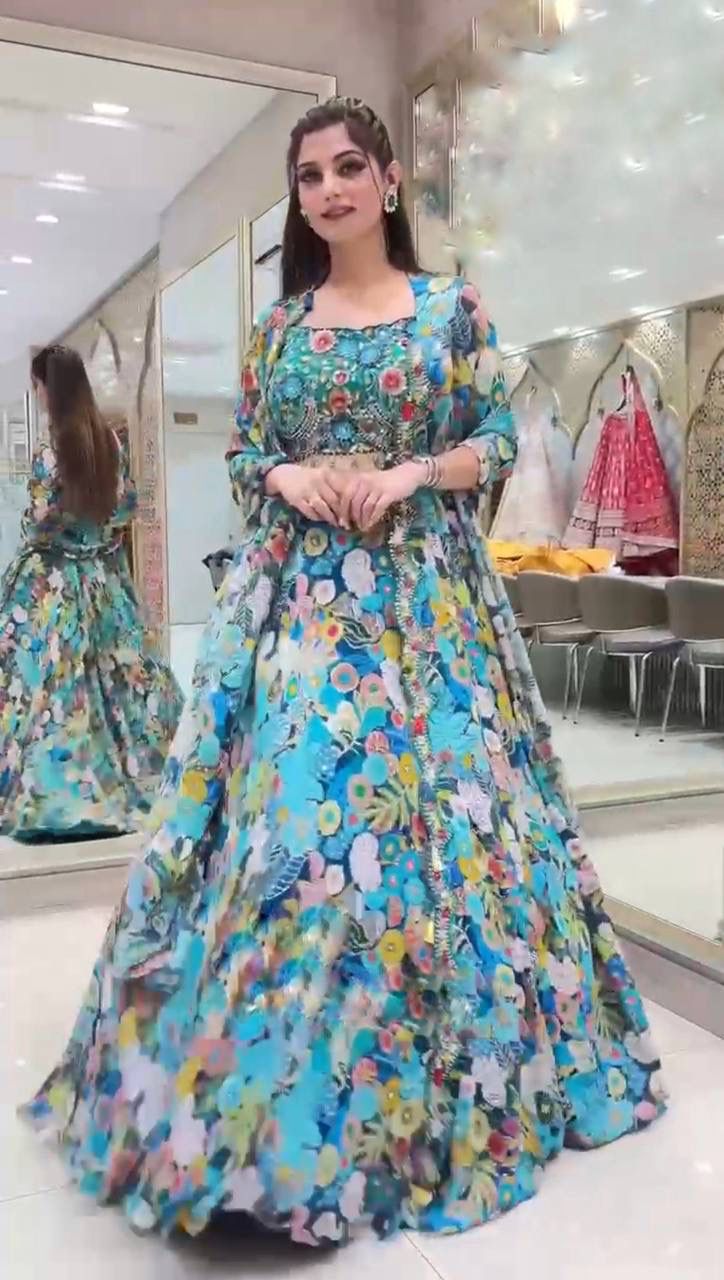
Consider a skirt that opens enough for comfortable strides without forming a large train. Blue Floral Georgette Lehenga Set with Heavy Flare can work for a dramatic entrance when the venue provides a clear pathway, but a wearer who will circulate across the lawn should check whether the heavy flare includes extra stiff layers. A skilled tailor can often reduce unnecessary inner volume without changing the outer appearance.
Ask how many layers sit beneath the visible skirt. Two or three well-finished layers may provide shape without making the lehenga difficult to lift. A very stiff can-can can push the hem outward, increasing the area that touches chairs, flower beds and guests moving nearby.
Flare also affects photographs. A broad skirt looks striking in seated portraits and slow walking shots, while a narrower A-line or panelled silhouette is easier for candid movement. If the engagement includes a ring ceremony, lawn games, a short procession or extensive family photographs, mobility should take priority over maximum volume.
Lehenga for a Garden Engagement Where You Will Walk on Grass: Which Footwear and Length Should You Choose?
Choose the skirt length only after deciding on footwear, because changing heel height changes the hem clearance and your stability on grass. Block heels, wedges and embellished flats are safer choices than narrow stilettos for a lawn engagement.
Grass can hide soft patches, sprinkler lines and small stones, so a broad heel distributes pressure more reliably. A block heel between 1.5 and 2.5 inches gives some height while remaining easier to balance in than a thin heel. Wedges should have a textured sole; completely smooth soles can slide on damp grass or polished stone paths.
Flat footwear is not automatically safer if the lehenga was hemmed for heels. Wearing flats can cause the skirt to sweep the ground, making the wearer more likely to step on the fabric. If you prefer juttis or embellished flats, have the lehenga fitted at that height from the beginning.
Keep a second pair of comfortable shoes in a small bag if the event includes a long photo session. The replacement pair should have a similar sole height so that the hem does not suddenly become too long. A discreet emergency kit with safety pins, double-sided fashion tape, stain wipes and a small crochet hook can solve common outdoor wardrobe problems.
Test your footwear on grass before the event if possible. Walk normally, take a side step and turn without looking down. A shoe that feels stable on a tiled floor may sink into soft lawn soil, while a textured sole can grip more confidently on a slightly damp pathway.
Lehenga for a Garden Engagement Where You Will Walk on Grass: Which Colours and Embellishments Photograph Well?
Pastels, fresh greens, coral, pink, powder blue and warm ivory photograph naturally in garden light, while medium-depth colours retain definition against pale lawns and floral décor. Colour should be chosen with the event timing and background in mind rather than with indoor lighting alone.
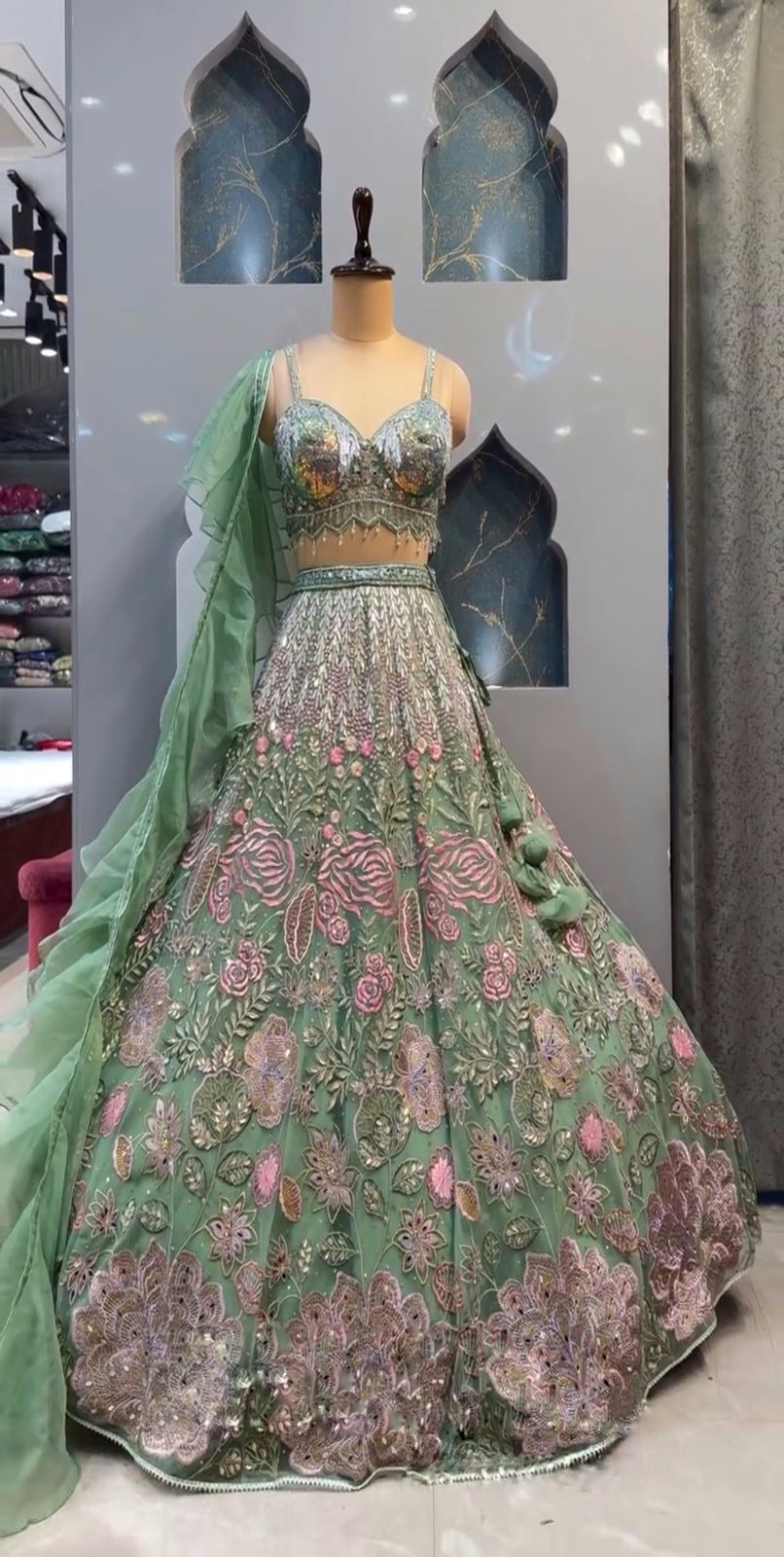
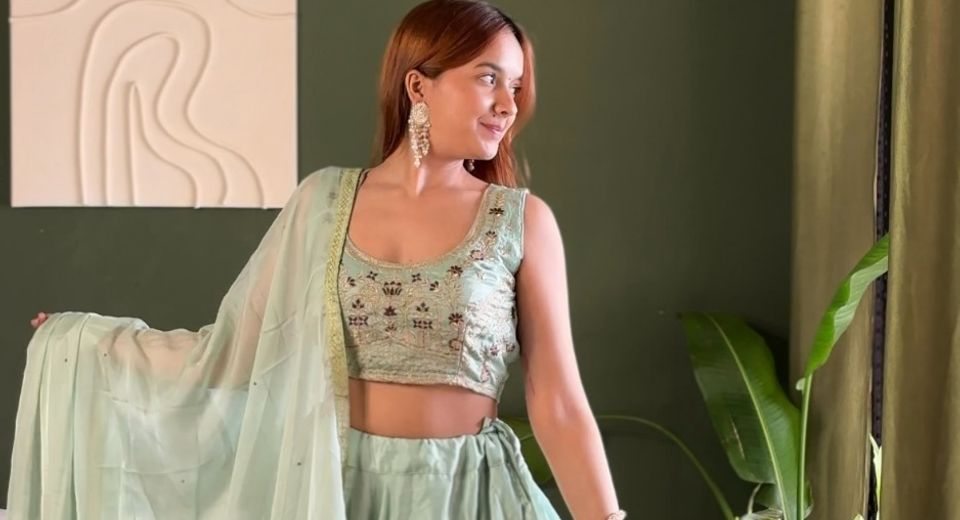
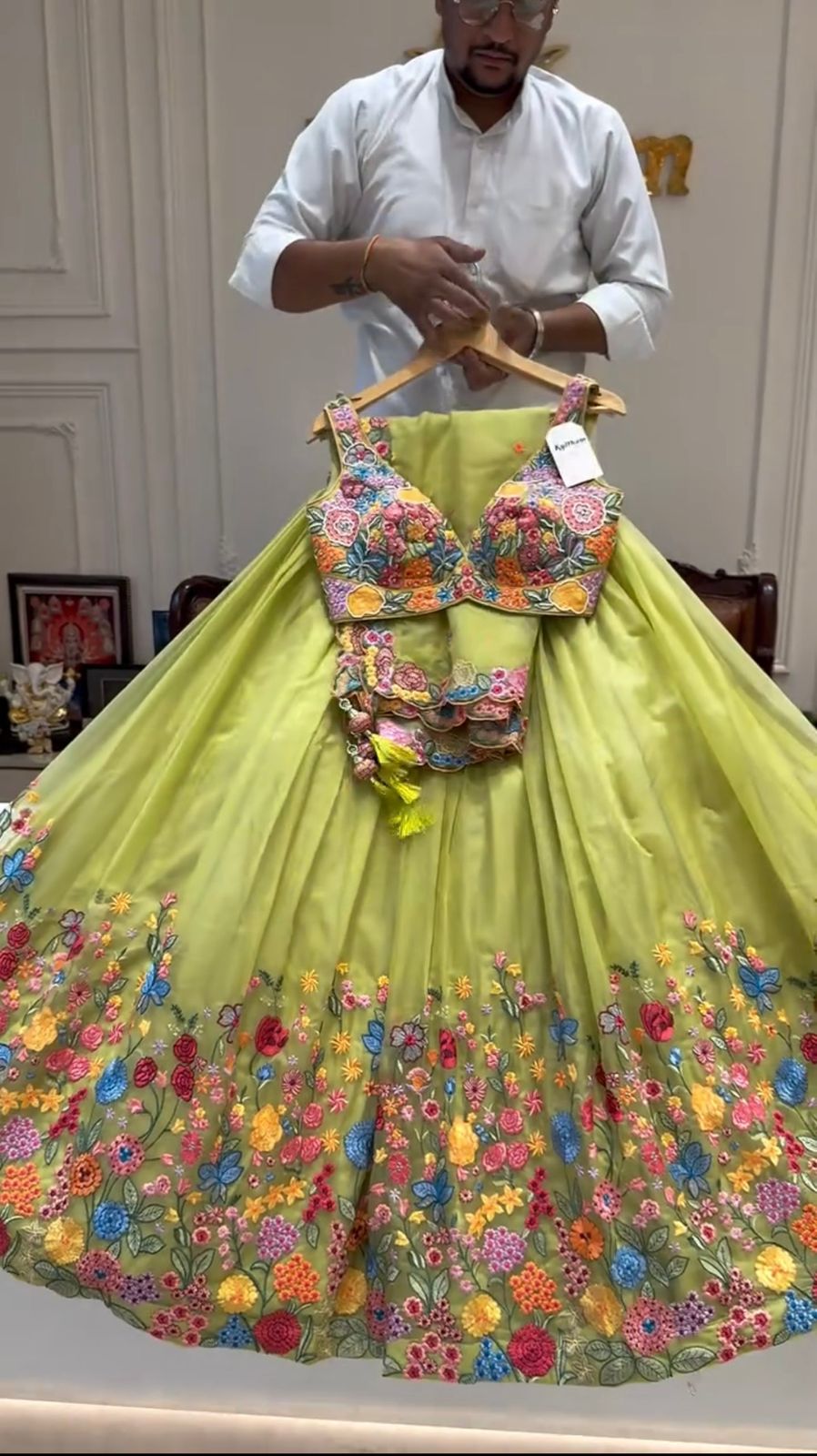
Mint Embroidered Lehenga Set with Net Dupatta for Women can suit a daytime garden palette because mint reflects daylight without appearing harsh. Lime Floral Embroidered Butterfly Net Lehenga Set creates more contrast against green foliage, so it may be particularly effective when the venue has pale flowers, cream seating or neutral décor.
Pastel Grey Embroidered Butterfly Net Lehenga Set offers a quieter alternative when the engagement décor is already colourful. Pastel grey can look elegant in shade, but pair it with warm gold, rose-gold or pearl jewellery so that the outfit does not appear flat in photographs taken under cloudy light.
Sequins and zari catch sunlight attractively, but heavy surface work can add weight and make the skirt less flexible. Pink Sequins Embroidered Butterfly Net Lehenga Set can provide visible sparkle without requiring a dark colour, provided the lining remains comfortable and the sequin work does not rub against the ankles.
Outdoor photographs often contain bright green, beige, stone and floral tones. A lehenga with clear colour contrast will remain distinguishable in group pictures. Very pale beige may blend into cane furniture or dry grass, while neon shades can reflect strongly in direct midday sun. Request a photograph taken outdoors, not only under boutique lighting, before finalising an unusual colour.
Lehenga for a Garden Engagement Where You Will Walk on Grass: How Should You Secure the Dupatta?
Secure the dupatta at the shoulder and waist so that it cannot slide forward while you walk, greet guests or hold a bouquet. One fixed shoulder pin is rarely enough for an outdoor engagement because wind can lift net, chiffon and lightweight organza.
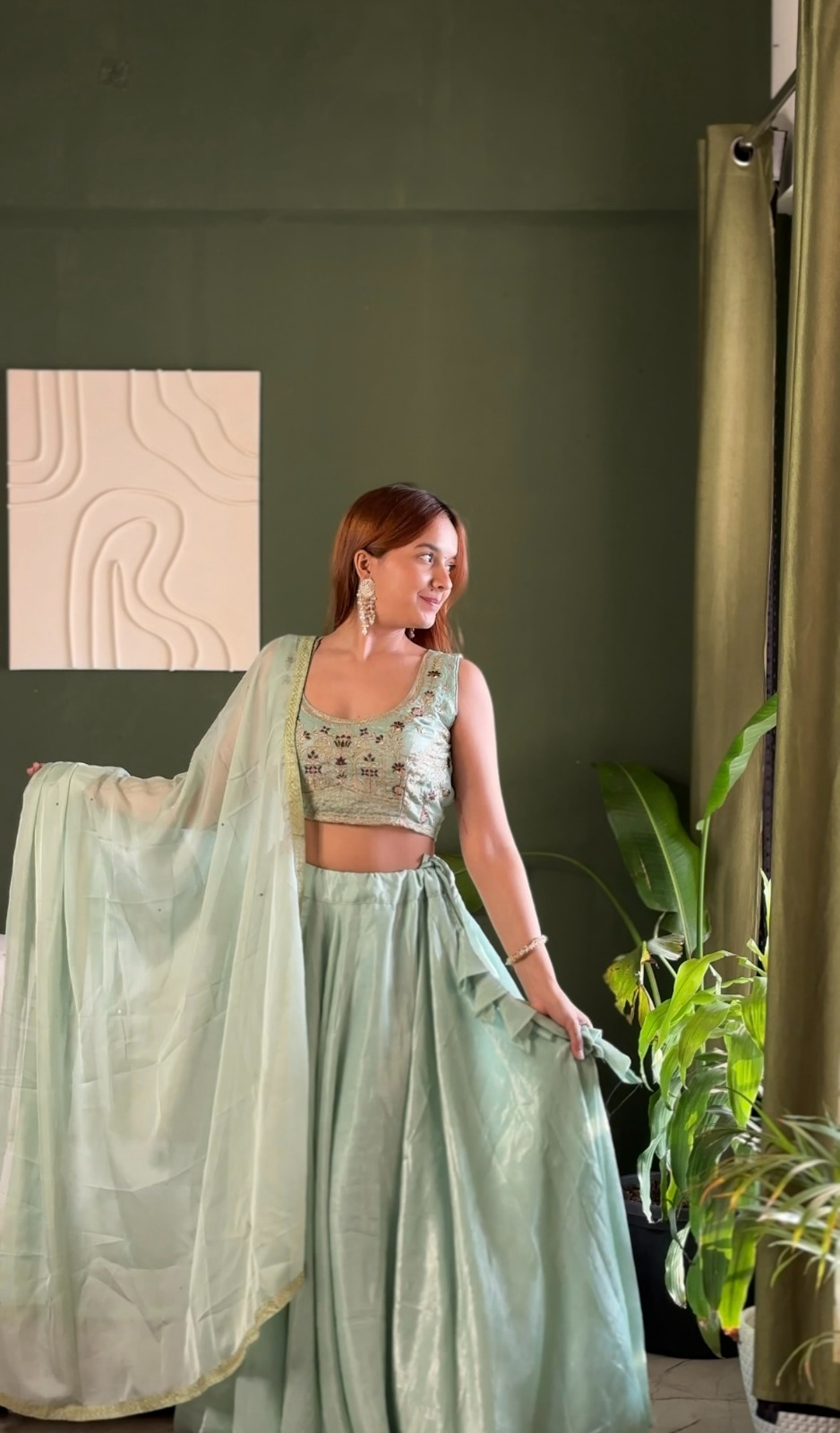
A practical arrangement places one concealed pin at the shoulder, one at the waist or side seam and, when necessary, a small pin near the opposite forearm. Use safety pins from the reverse side so they do not catch the visible embroidery. A tailor can add tiny thread loops at suitable points, protecting delicate fabric from repeated pinning.
Net dupattas provide volume with relatively little weight, although their open surface catches wind. A neatly pleated drape over one shoulder leaves both hands available and keeps the edge away from damp grass. If you want a longer dramatic drape for portraits, use it only for posed photographs and secure it before moving between locations.
For an evening garden event, Red Butterfly Net Sequins Lehenga Set Wedding Wear can offer a festive, reflective finish. The dupatta should be tested under a light breeze because sequins can make one edge heavier than the other. A balanced shoulder fold prevents the embellished border from swinging into your face or snagging on nearby chairs.
Keep the dupatta border away from the ground when standing near flower beds or lawn edges. A concealed waist pin is especially helpful when the border is heavy, because the pin prevents the fabric from sliding forward as you walk. Avoid placing pins through delicate sequins or embroidered motifs whenever a seam allowance is available.
Lehenga for a Garden Engagement Where You Will Walk on Grass: How Can You Balance Comfort and Budget?
Balance comfort and budget by prioritising a well-fitted skirt, breathable lining and secure construction before paying extra for dense embellishment. A beautiful lehenga that restricts walking will be worn awkwardly, which shows in both photographs and body language.
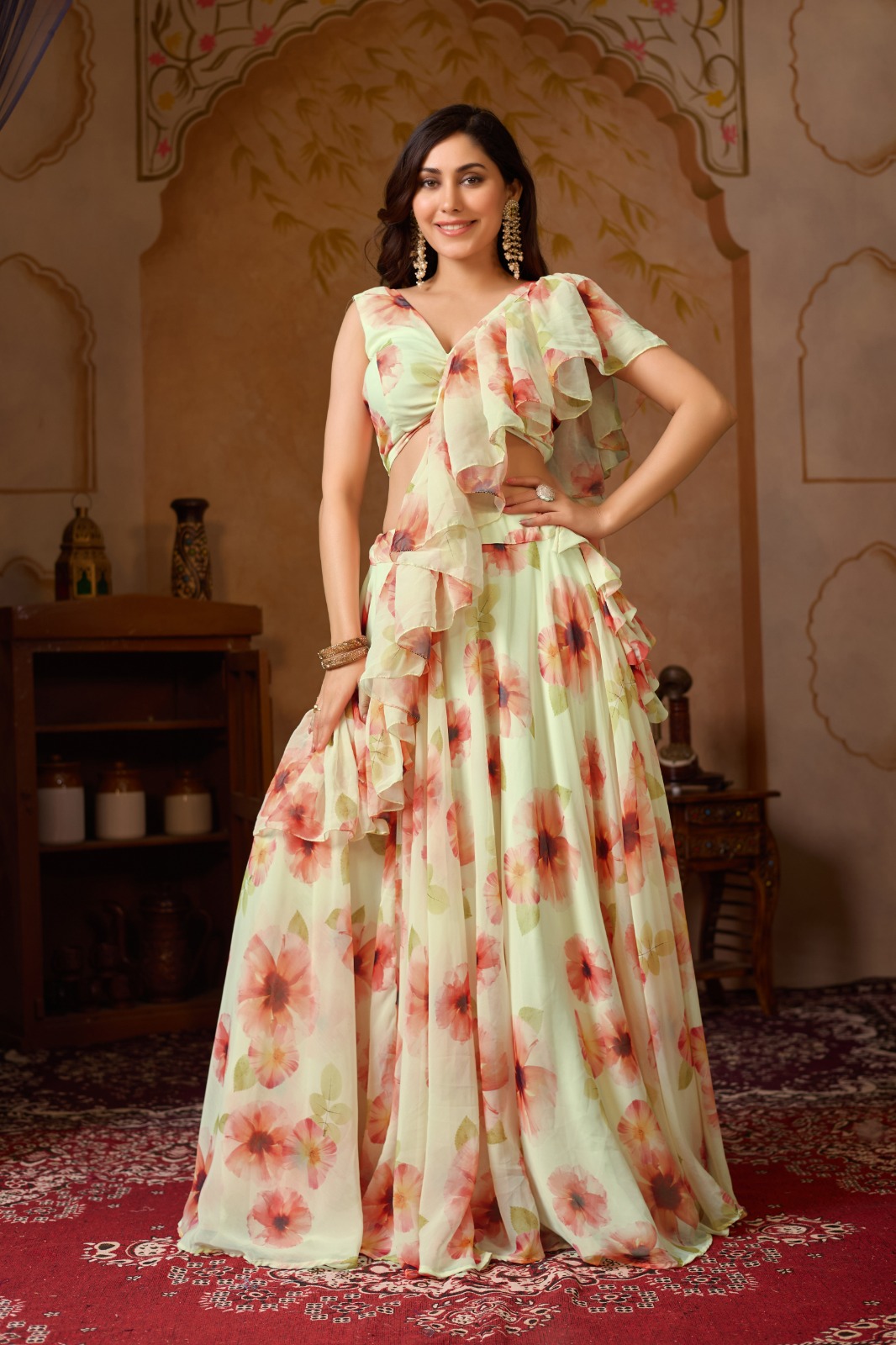
For a coordinated family or bridesmaid look, Bridesmaid Lehengas Under 5500 can provide a useful price reference while you compare fabric, lining and finishing rather than judging only the listed discount. A lower price is worthwhile when the skirt has clean seams, a stable waistband and embroidery that does not scratch the skin.
Net Lehengas Under 4500 with 51% Discount may suit guests seeking lighter volume, but inspect whether the advertised net skirt uses a comfortable lining. Some inexpensive net garments feel scratchy at the waist or knees, and an inexpensive alteration can become necessary if the hem is uneven.
Silk Lehengas Under 3000 can be appealing for their sheen, although silk-blend garments vary considerably in weight and drape. Ask whether the skirt contains a heavy lining or stiff underskirt before choosing silk for a lawn venue. A lighter silk blend may be easier to walk in than a dense traditional weave.
Pink Lehengas Under 4000 with 50% Discount can help when you want a bright engagement colour without committing to a very high budget. Compare the garment's actual measurements, lining and embellishment placement before purchasing. A low price does not compensate for a waist that needs excessive tightening or a hem that requires major alteration.
Haldi Lehengas Under 5500 may include cheerful yellow, lime and floral options that also work for a daytime engagement, although the styling should match the engagement dress code. Reserve heavier bridal volume for a clear, firm pathway and choose lighter construction when guests will walk across open grass.
Schedule alterations at least seven to ten days before the engagement. That window leaves time for a second fitting, pressing and a walking test in the final footwear. On the day before the event, steam the garment according to its care label, pack the dupatta flat and avoid storing the skirt compressed under heavy luggage.
Common Questions About Choosing a Grass-Friendly Garden Engagement Lehenga
What length should a lehenga be for walking on grass?
A lehenga should usually sit about 1 to 2 centimetres above the ground when worn with the final footwear, although a slightly higher hem can be safer on damp or uneven grass. Test the length by walking, turning and sitting before the event.
Which footwear is safest with a garden engagement lehenga?
Block heels, textured wedges and embellished flats are generally safer than stilettos on grass. Match the skirt alteration to the actual heel height because changing from heels to flats can make the hem drag.
Is a heavy-flare lehenga practical for an outdoor engagement?
A heavy-flare lehenga is practical when the venue has firm pathways and limited walking, but moderate flare is easier for moving across a lawn. Check the number and stiffness of inner layers before choosing a dramatic silhouette.
How can I stop a lehenga dupatta from blowing in the wind?
Secure the dupatta at the shoulder and waist with concealed pins or stitched thread loops. A pleated one-shoulder drape is usually more stable than a loose, long drape during lawn photographs.
Which lehenga fabrics are comfortable for a daytime garden engagement?
Georgette, lightweight net and soft-lined organza are generally comfortable for daytime outdoor wear. Choose breathable lining and avoid excessive stiff layers if the engagement includes several hours of walking.
How do I protect a lehenga from wet grass?
Keep the hem slightly clear of the ground, avoid standing at lawn edges after watering and lift the skirt by an inner loop when crossing damp areas. Carry stain wipes and have the garment professionally cleaned according to its fabric and embellishment.




