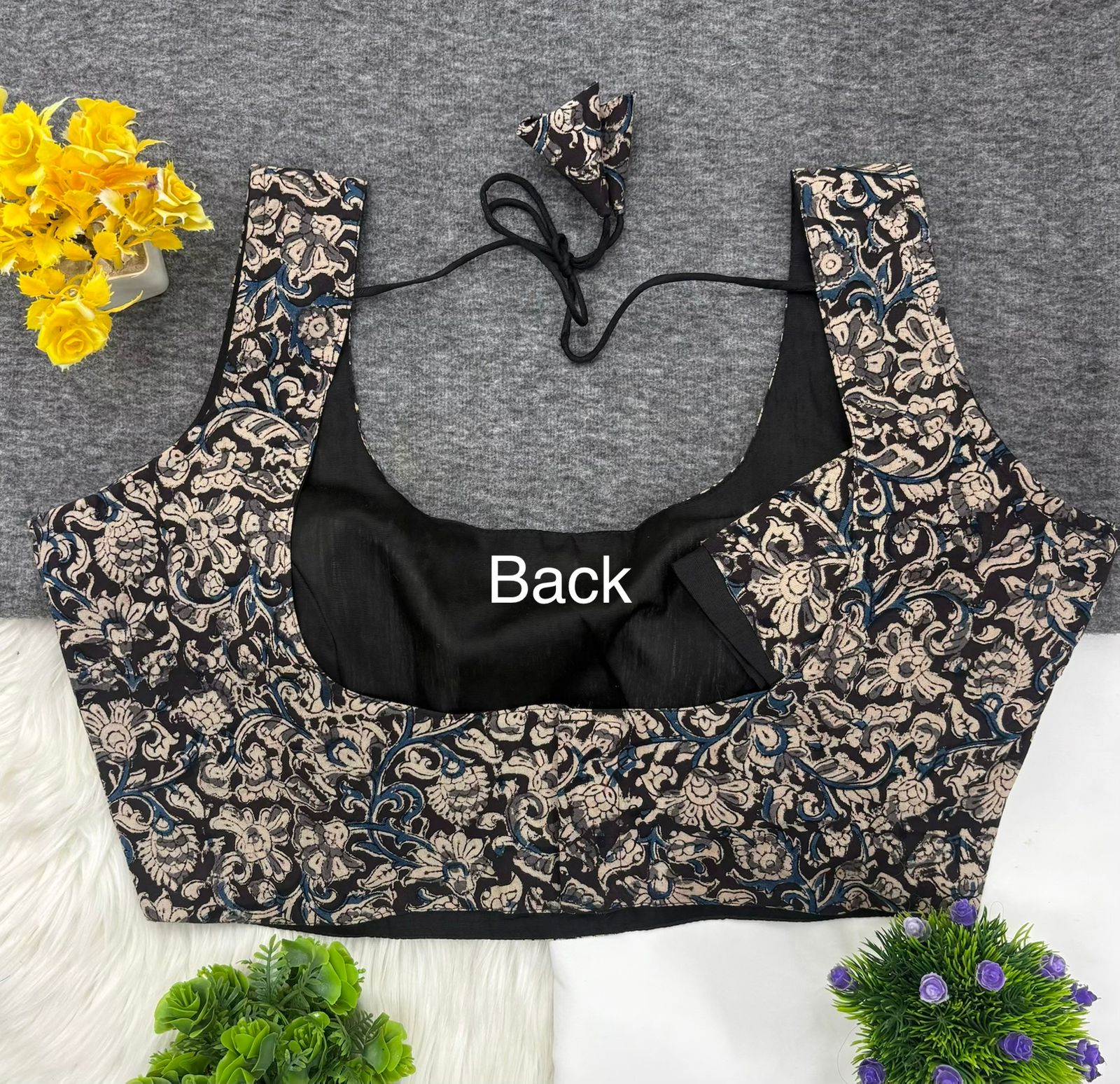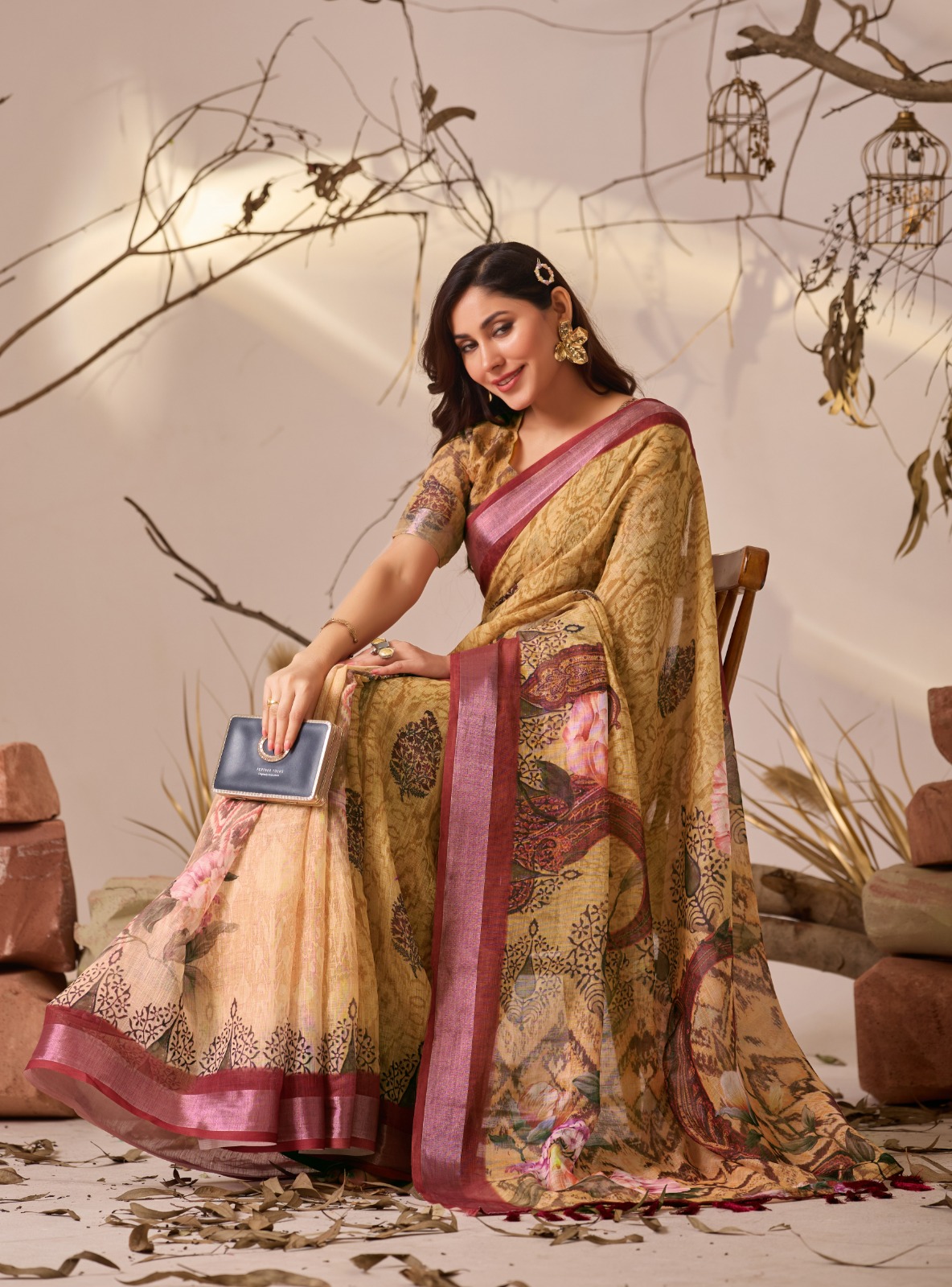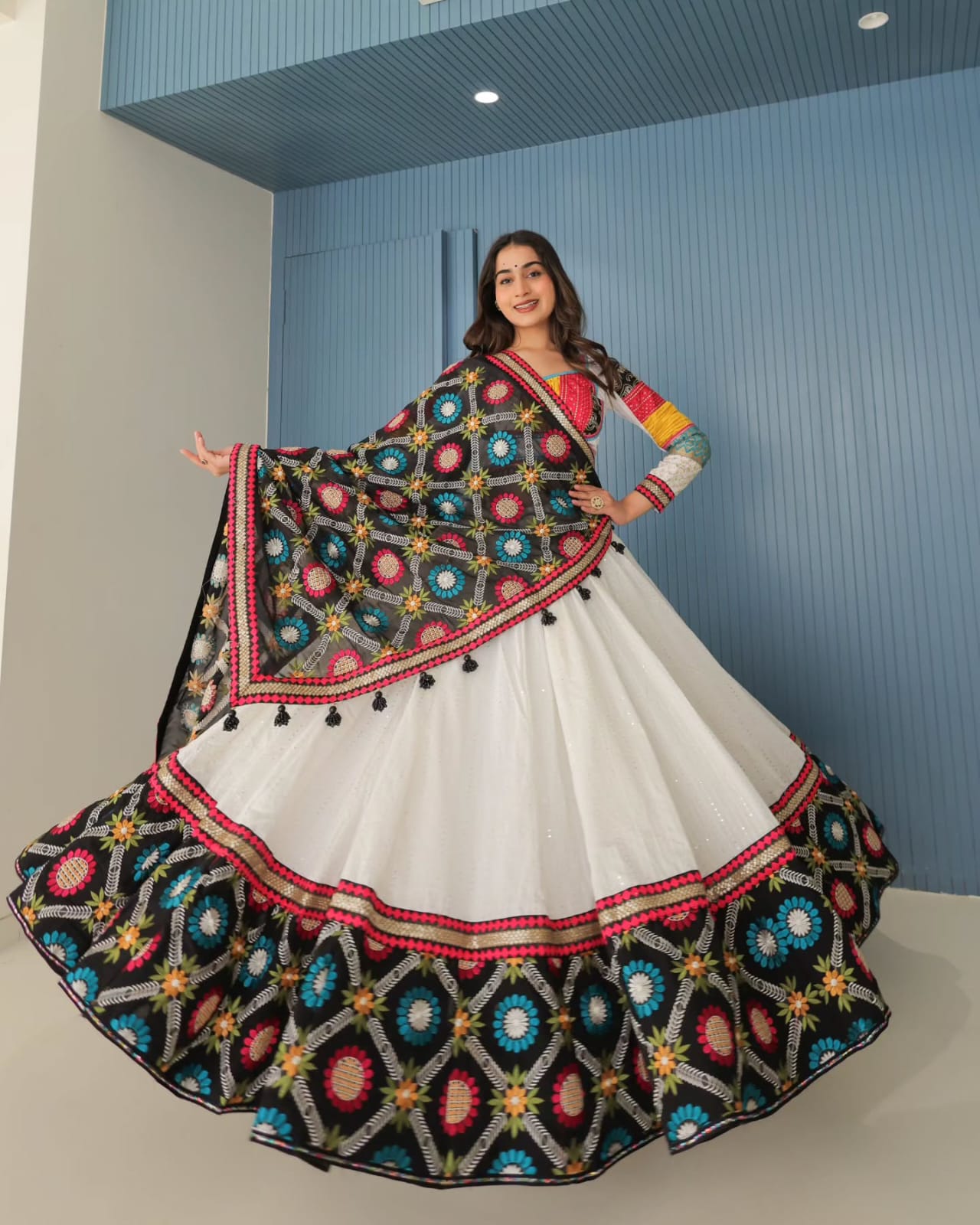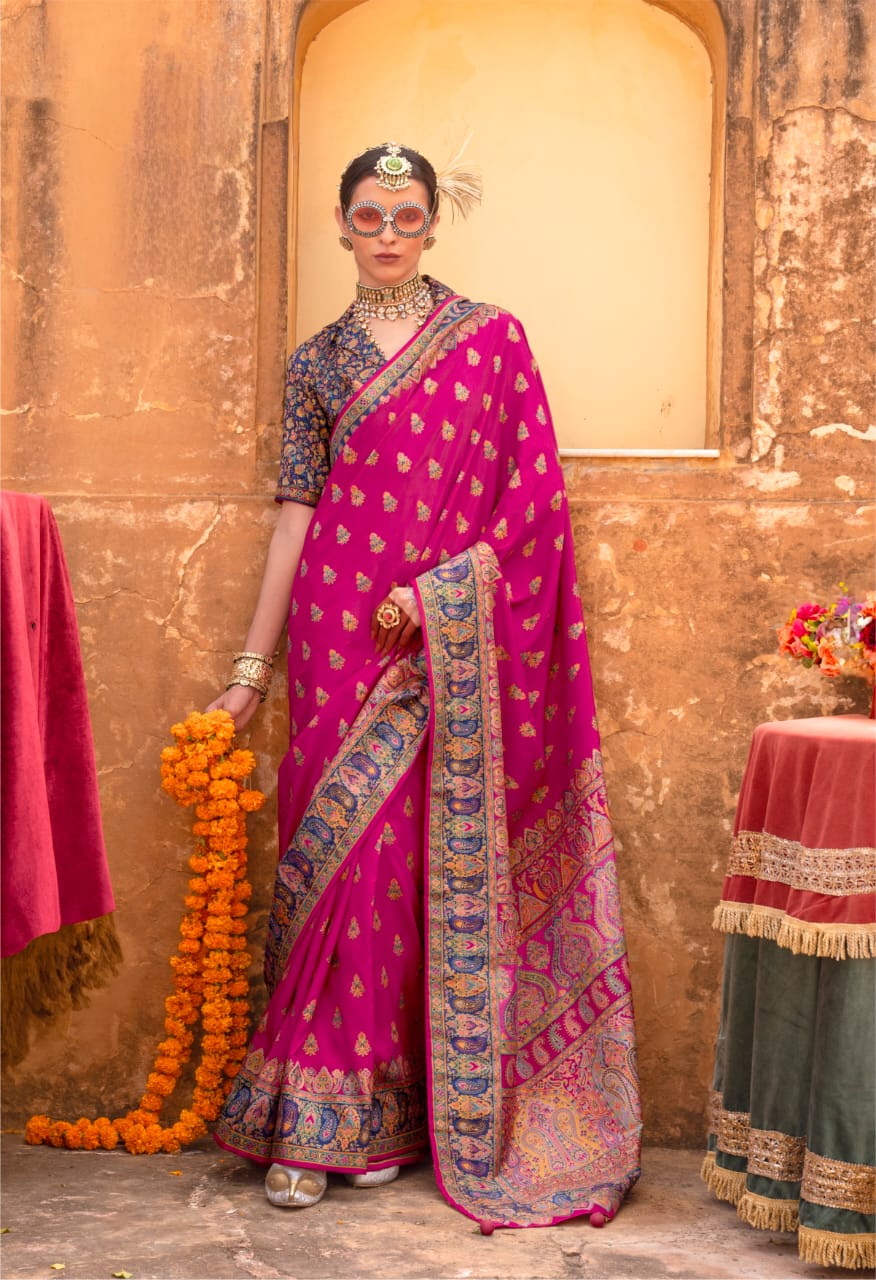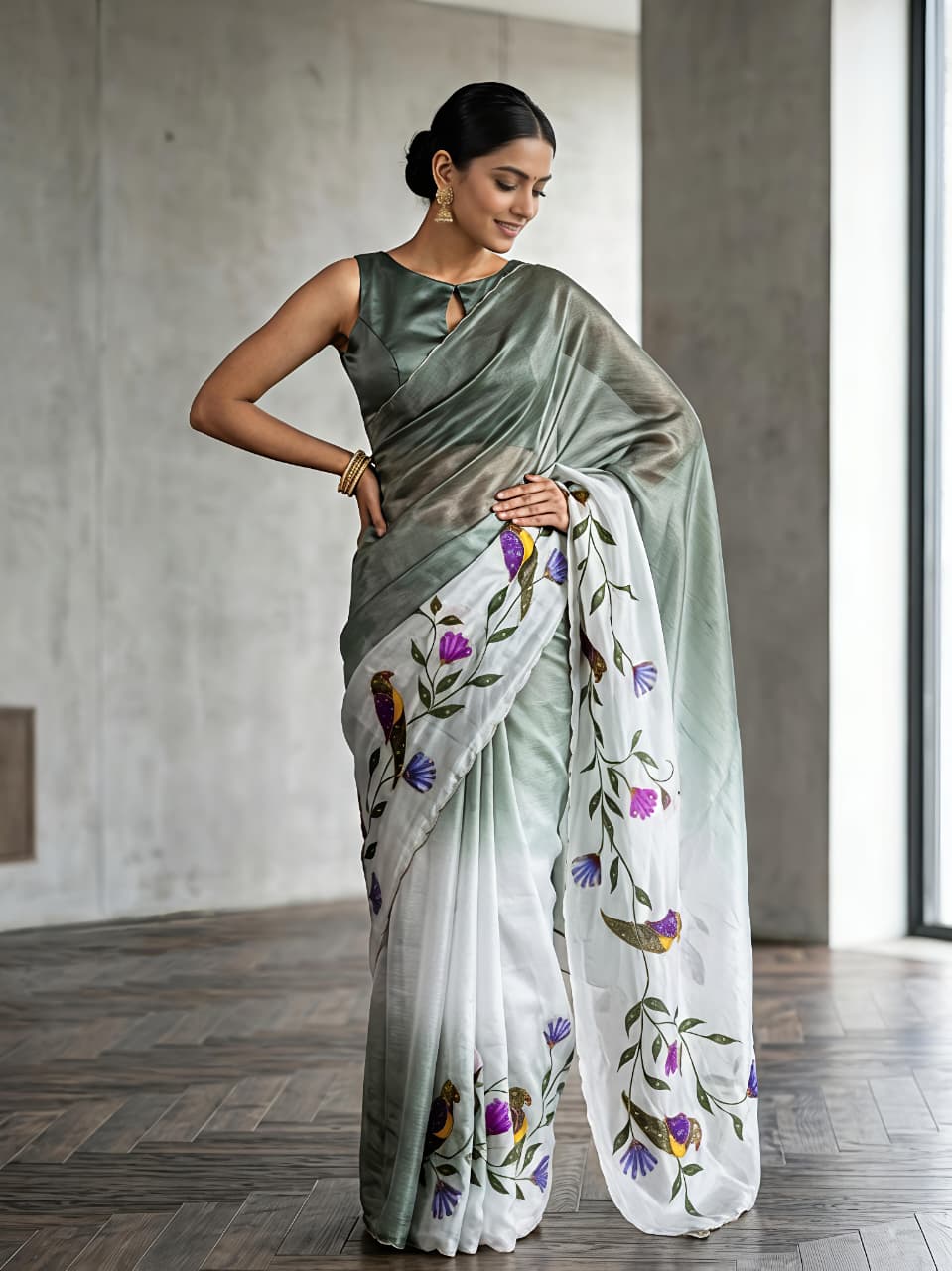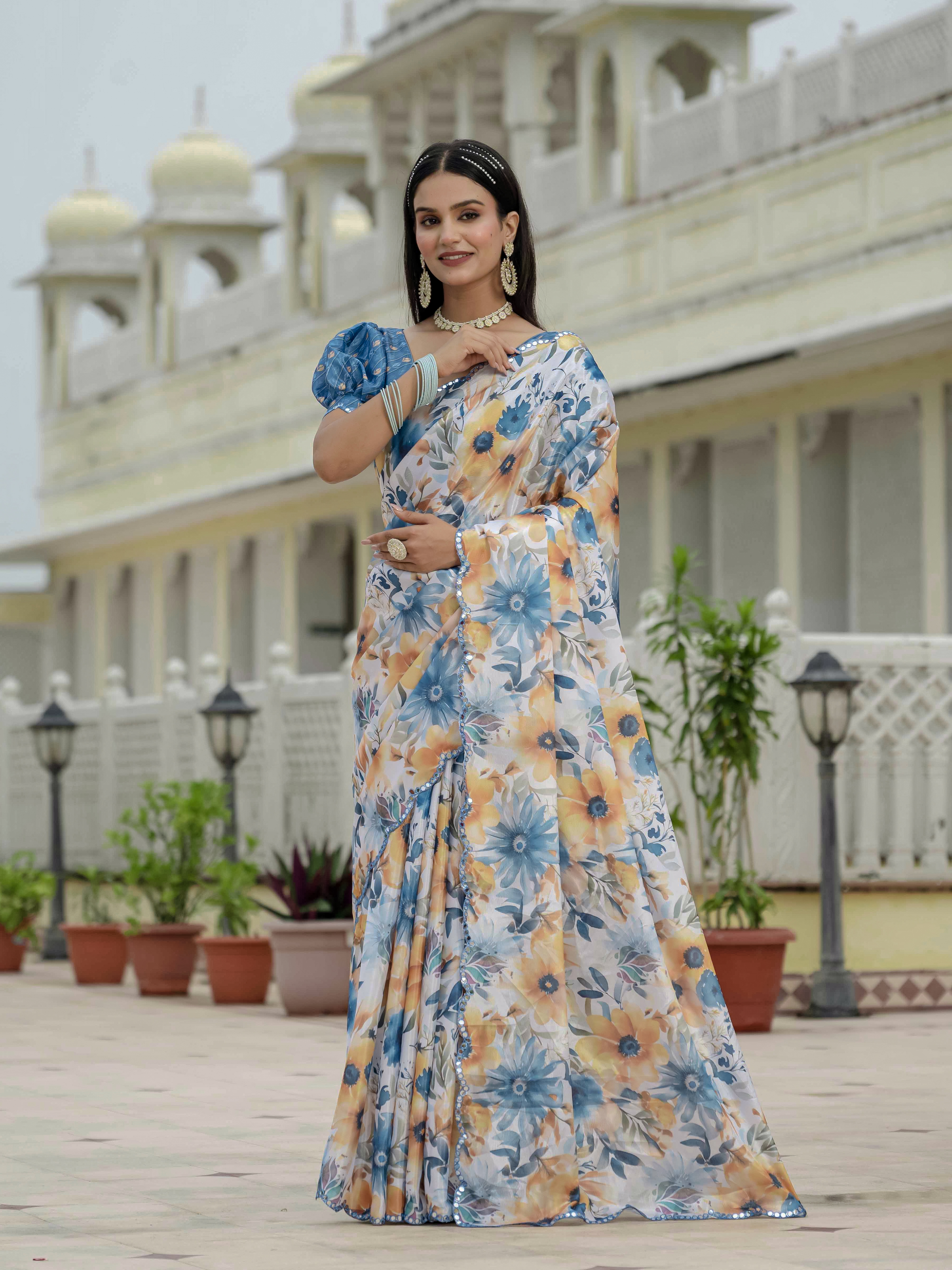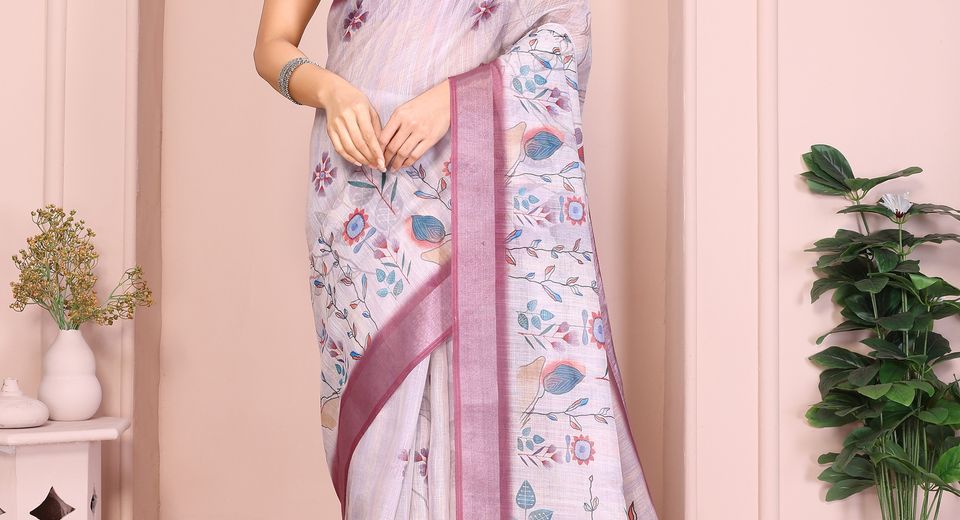
Lavani-Inspired Saree Styling: Maharashtrian Looks for Modern Women brings the spirited movement of Maharashtra's folk tradition into a wardrobe that may need to work for office celebrations, festive lunches and evening functions. A convincing Maharashtrian look doesn't depend on wearing a costume from head to toe. The result comes from making a few recognisable choices: an energetic drape, a fitted blouse, a strong colour contrast, traditional jewellery and a confident way of carrying the pallu.
Lavani performance attire is designed for movement, visibility and rhythm, while a modern saree outfit must also consider comfort, sitting, walking and styling time. The useful approach is to borrow the visual language of Lavani rather than copy stage clothing literally. The sections below explain how to do that with linen cotton sarees, printed borders, practical accessories and adaptable drapes.
Lavani-Inspired Saree Styling: What creates a Maharashtrian look?
Lavani-inspired styling is recognisable through a lively drape, a neatly shaped blouse, saturated or contrasting colours, and Maharashtrian jewellery details. The look often draws attention to the waist, shoulders and face, which helps the saree appear expressive even when the fabric and ornamentation remain simple.
The classic Nauvari saree is nine yards long and is traditionally wrapped with a trouser-like division between the legs. The arrangement gives a wearer more freedom to move than a conventional five-and-a-half-metre saree. A standard saree can still suggest the same spirit through a pleated front, a secure waistline and a pallu that stays close to the shoulder instead of falling loosely.
Lavani costumes are commonly associated with bold colour combinations such as red with green, pink with purple, orange with yellow and black with bright accents. A contemporary wardrobe can soften those contrasts with mauve, lavender, teal or blue while retaining the high-energy effect through a printed border, earrings or a vivid blouse.
Lavani-Inspired Saree Styling: Which drape works best?
A secure Nauvari-inspired drape works best when movement and Maharashtrian character matter, while a regular Nivi drape with a tucked, pleated pallu works better for long hours and formal settings.
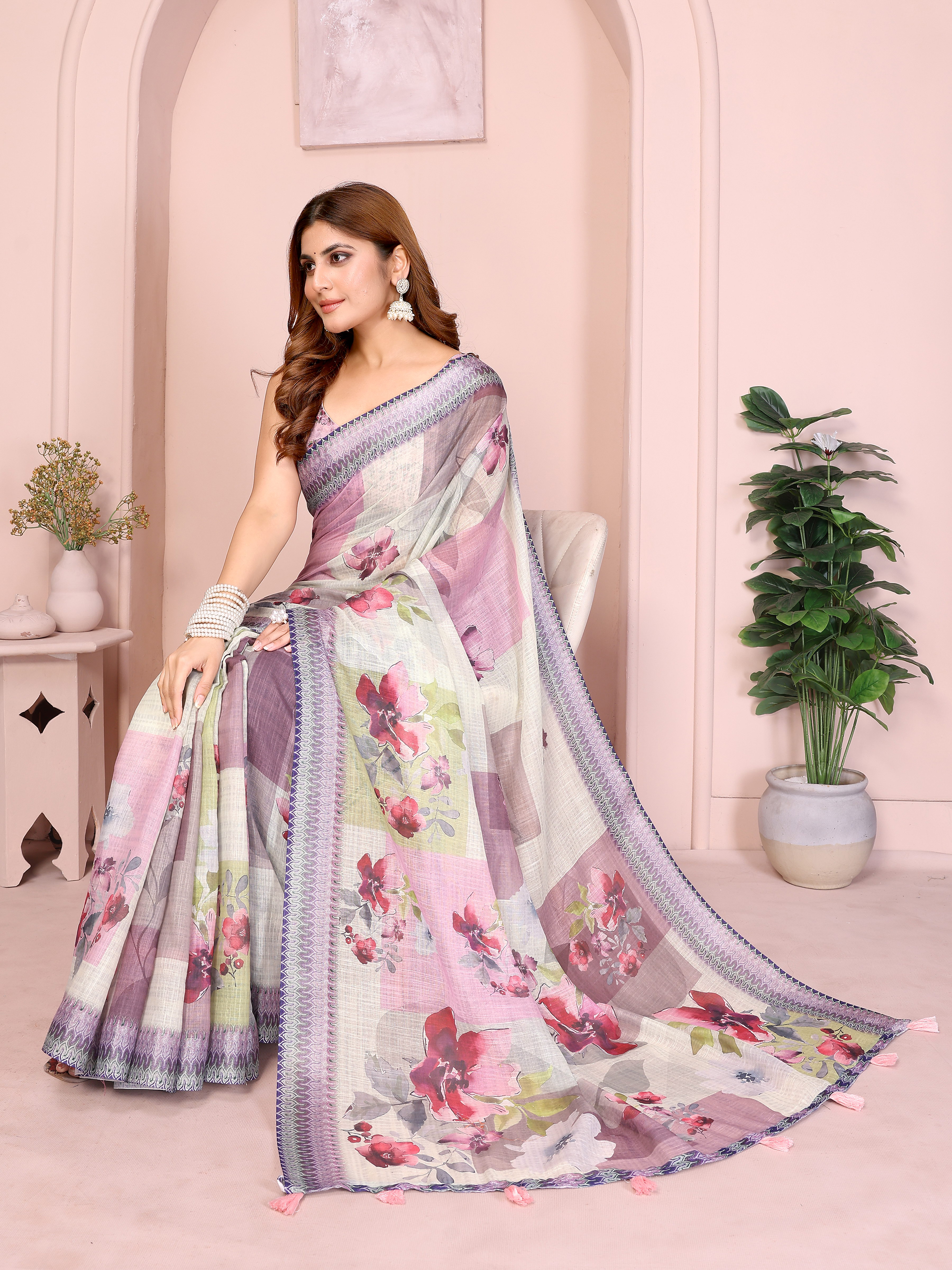
Lavani-Inspired Saree Styling with an accessible Nauvari option
A modern Nauvari-inspired arrangement begins with a saree that has a firm but flexible weave and minimal bulk at the waist. Wear fitted shorts or leggings underneath, place the centre of the saree at the back, bring both ends between the legs and tuck the fabric securely at the back waist. Pleat the remaining upper section at the front and arrange the pallu over the left shoulder.
A true nine-yard Nauvari requires more fabric and practice than a regular saree, so a five-and-a-half-metre saree may not create the same leg division. A practical alternative is a dhoti-style pre-stitched saree or a regular saree arranged with a shorter, neater pallu. The alternative is easier for beginners and more suitable for commuting, dancing at a family function or sitting on the floor.
Lavani-Inspired Saree Styling with a regular Nivi drape
A regular Nivi drape becomes more Maharashtrian in spirit when the front pleats are narrow, the waist is clearly defined and the pallu is pleated rather than left open. Pin the pallu at the shoulder and secure a second point near the underarm if the outfit must remain stable during movement.
Place the pallu slightly forward when wearing a classic nose ring or layered necklace, because the arrangement creates a balanced frame around the face. Keep the pallu length between the knee and mid-calf for a mobile daytime look; a longer pallu creates more drama but needs additional pins.
Lavani-Inspired Saree Styling: How should you choose fabric and print?
Linen cotton is a strong choice for a modern Lavani-inspired outfit because it offers a breathable hand feel, visible texture and enough structure for pleats without the weight of heavy silk.
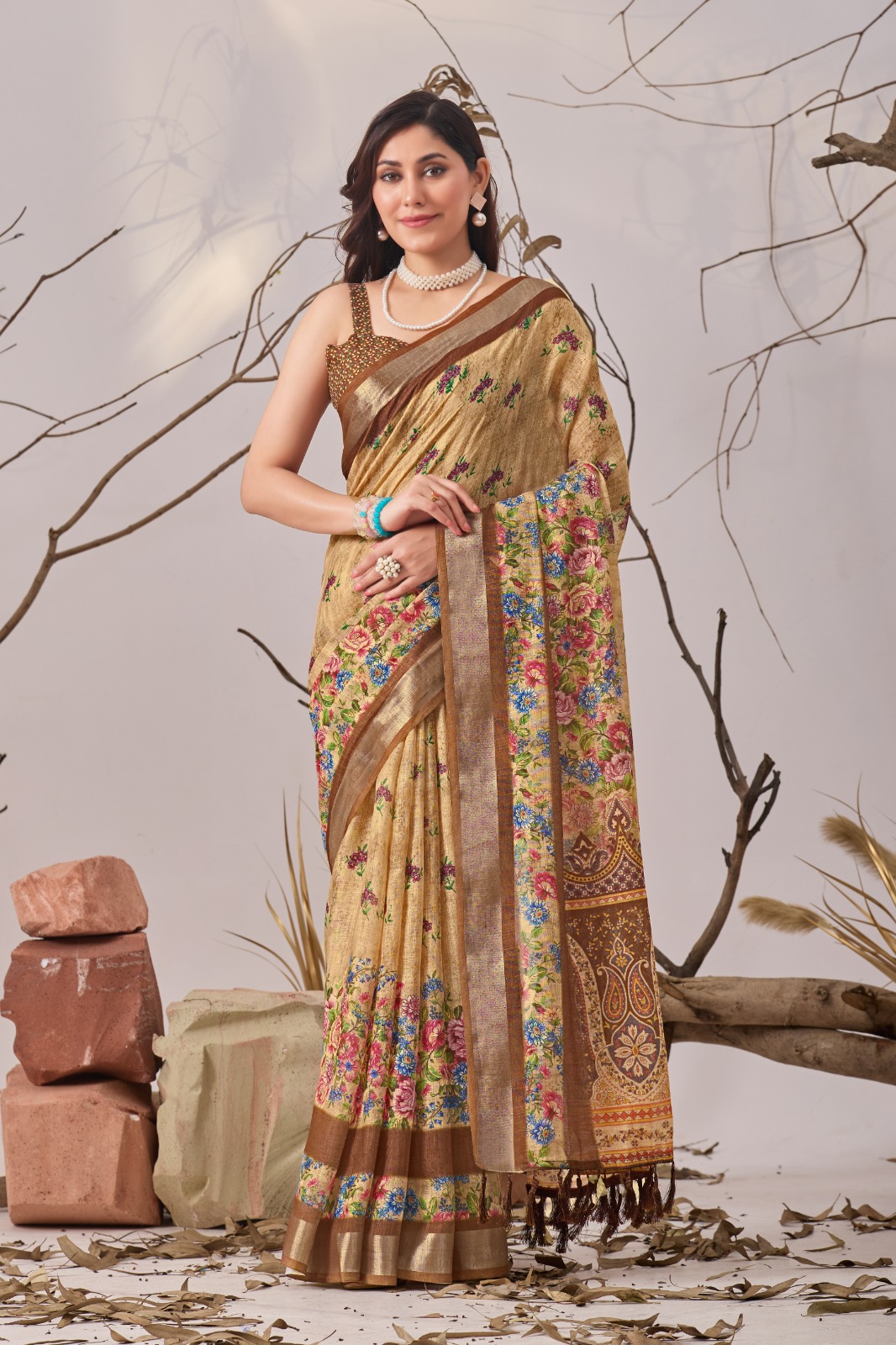
A print can do the work of several accessories. Floral motifs keep the outfit fresh for a daytime celebration, while a Madhubani-inspired pattern introduces an artistic regional reference without making the styling look theatrical. A defined border is particularly useful because it gives the pallu and lower edge a visible line when you walk or turn.
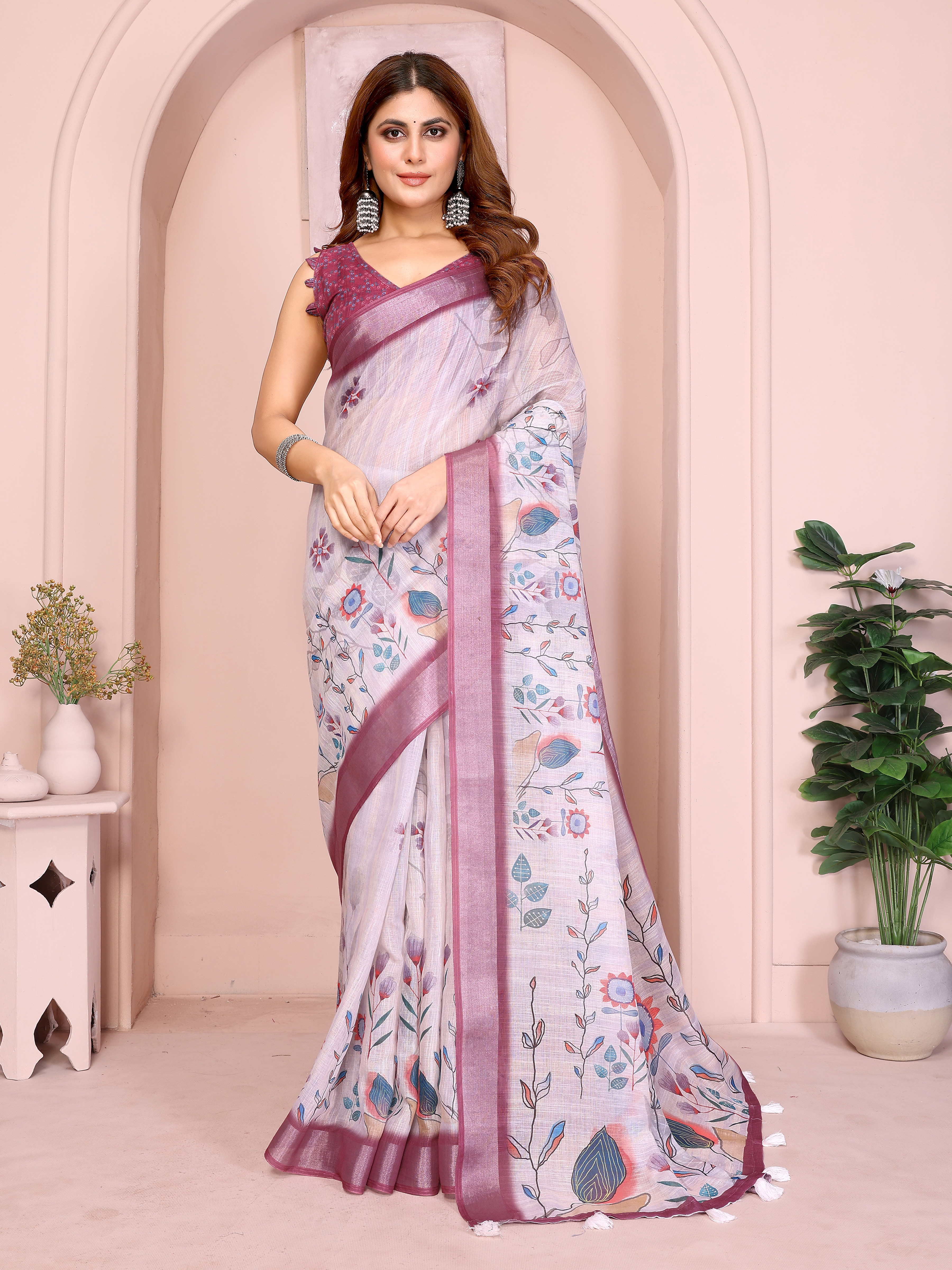
The Lavender Floral Linen Cotton Saree with Elegant Blue Border demonstrates how a cool lavender base can gain definition from blue edging. Pair the saree with a cobalt, ink-blue or lavender blouse and add silver-toned jewellery for a restrained interpretation of Maharashtrian styling.
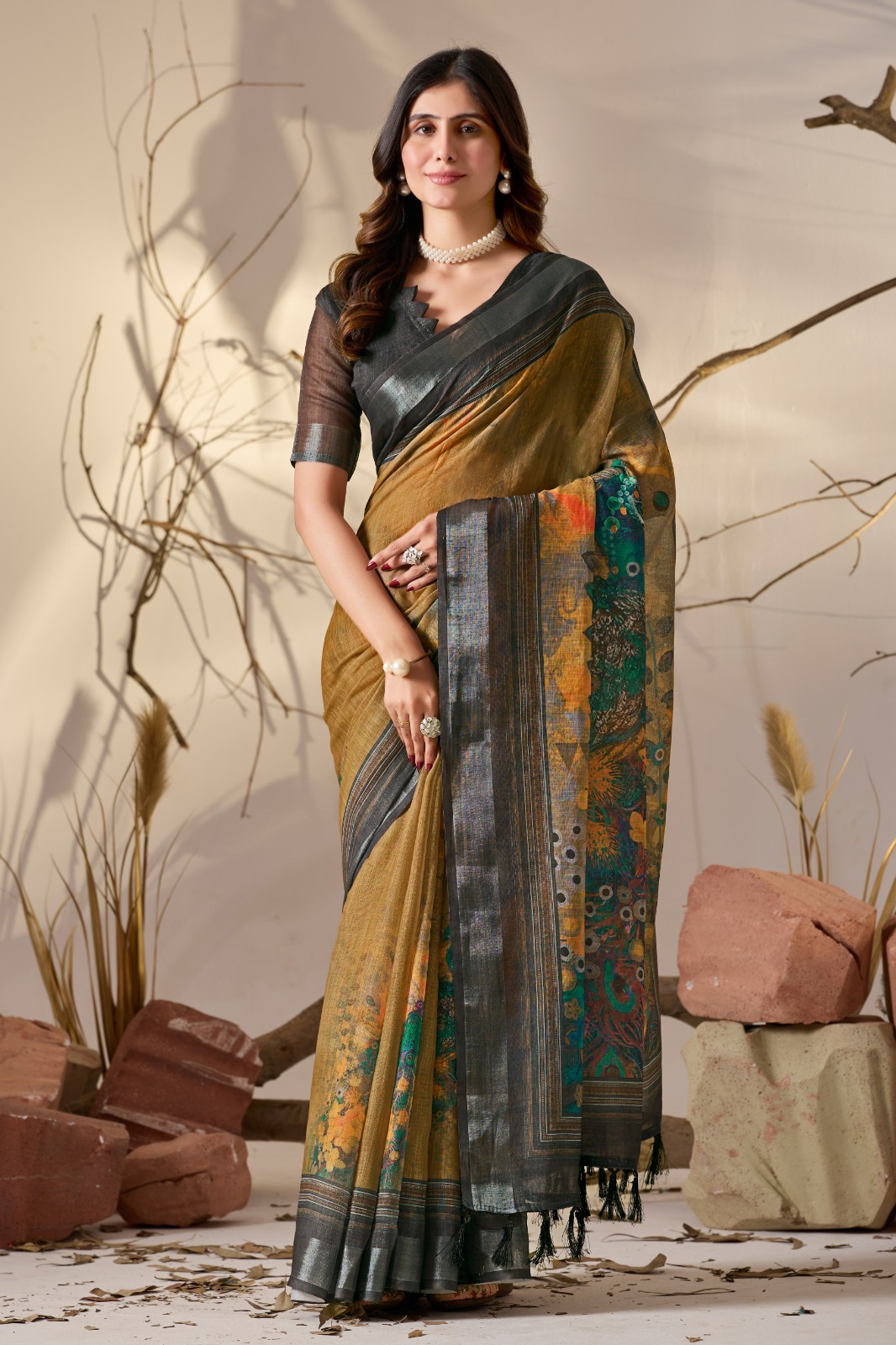
The Elegant Mauve Linen Saree with Artistic Madhubani Print suits a quieter festive mood. A deep purple blouse, antique-gold earrings and a compact bun bring out the folk-art character while keeping the outfit appropriate for a cultural event or daytime reception.
The Elegant Pink & Black Linen Printed Saree for Modern Women gives a sharper, city-friendly contrast. A black sleeveless or elbow-length blouse can make the saree feel contemporary, while a green glass bangle stack introduces a distinctly Maharashtrian note.
Choose the Multicolour Floral Linen Cotton Saree with Blue Border Look when the event permits a more expressive palette. Select one colour from the print for the blouse instead of adding another unrelated shade. This single-colour decision prevents a multicoloured saree from becoming visually crowded.
Lavani-Inspired Saree Styling: Which blouse shapes support it?
A close-fitting blouse with a defined neckline and sleeves between the elbow and wrist gives a saree the strongest Maharashtrian visual balance.
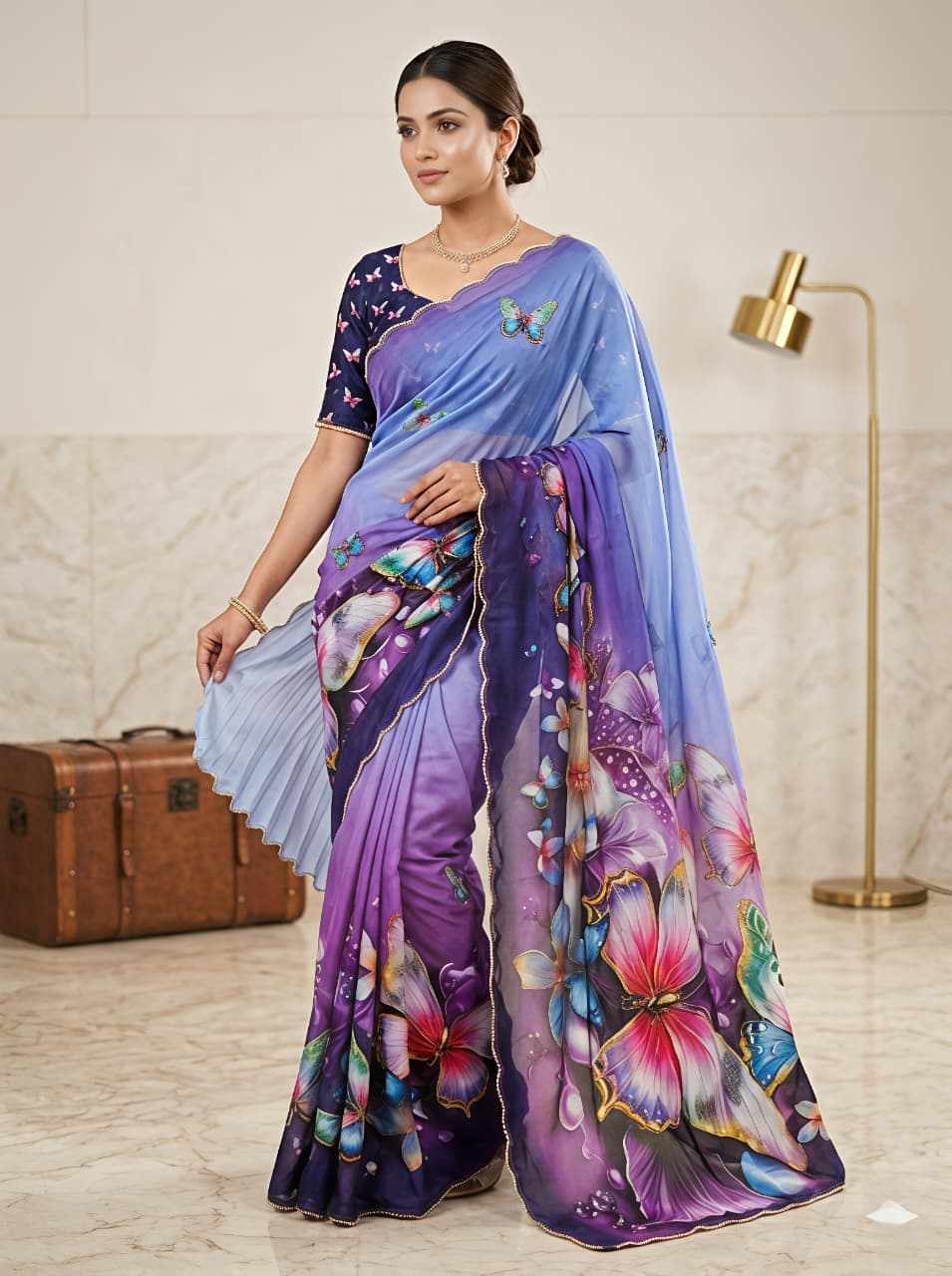
A time-honoured Lavani blouse often has a fitted shape, a modest scoop or square neckline and sleeves that allow the arms to move freely. A modern version can use a high round neck, a sweetheart neckline or a short standing collar, provided the blouse remains well-fitted at the bust and upper arm. Loose fabric can disturb the clean line created by the pleats.
Three-quarter sleeves work especially well with linen cotton because they echo the covered, structured feel of older regional silhouettes. Elbow-length sleeves are cooler for daytime events. A sleeveless blouse suits an evening gathering, but pair it with stronger earrings or a more heritage hair arrangement so the look retains its Maharashtrian identity.
The Lavender Linen Cotton Floral Print Saree with Contrast Border can take a blouse matched to its border rather than its main floral field. Matching the border creates a deliberate outline and lets the floral surface remain the focus.
For the Red Floral Linen Cotton Saree with Beautiful Printed Border, a plain bottle-green, black or deep red blouse will look more polished than another large print. Printed saree plus printed blouse can work for a stage-inspired event, but the motifs should differ in scale and share at least one colour.
Lavani-Inspired Saree Styling: Which jewellery and beauty details matter?
Maharashtrian jewellery creates the regional connection most efficiently through a nath, thushi-style necklace, green glass bangles, jhumka earrings and a time-honoured bindi.
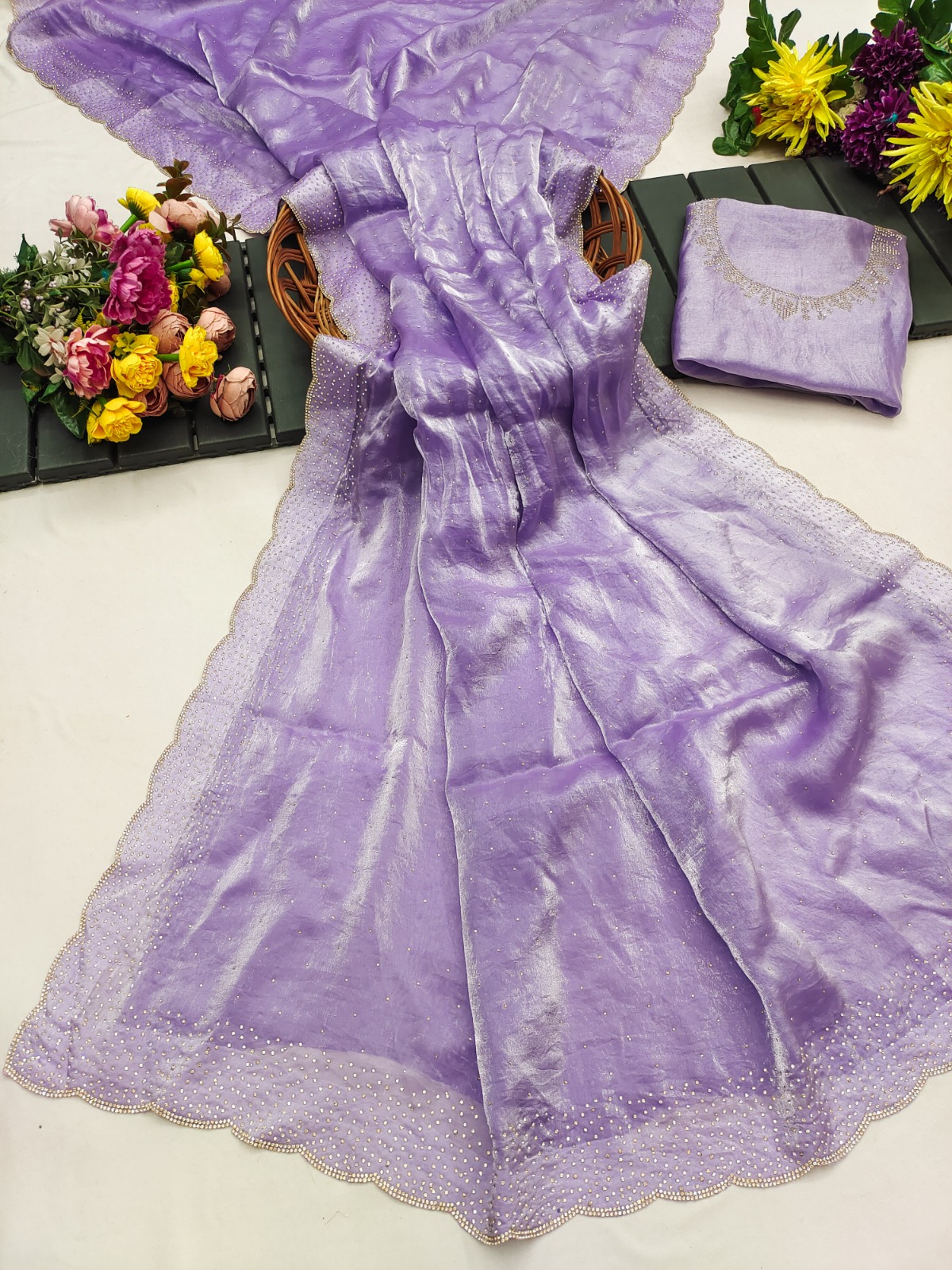
A large nath immediately changes the character of a saree, but comfort should determine the choice. A lightweight clip-on nath is more practical for a work celebration, while a classic crescent-shaped nose ring can suit a wedding or cultural programme. A thushi necklace, a short gold-toned choker made from closely set beads, sits near the neck and works well with a blouse that has a broad neckline.
Green glass bangles are a particularly effective detail because they add colour without competing with a printed saree. Wear four to eight bangles per arm for a visible stack, or use two green bangles with metal cuffs for a lighter everyday version. Add a short necklace or long chain, not both automatically; the neckline, blouse trim and size of the earrings should determine the final quantity.
A low bun decorated with gajra gives the most recognisable festive finish. A braided ponytail or a low textured braid is more secure for commuting and still works with a bindi and statement earrings. Choose a warm terracotta, brick-red or rose lip colour for a strong look, and keep the eye makeup defined but not excessively smoky when the saree already has a busy print.
Lavani-Inspired Saree Styling: How can you dress for each occasion?
The same Maharashtrian references can be adjusted by changing the drape, jewellery weight and blouse finish rather than replacing the entire outfit.
Lavani-Inspired Saree Styling for a daytime cultural programme
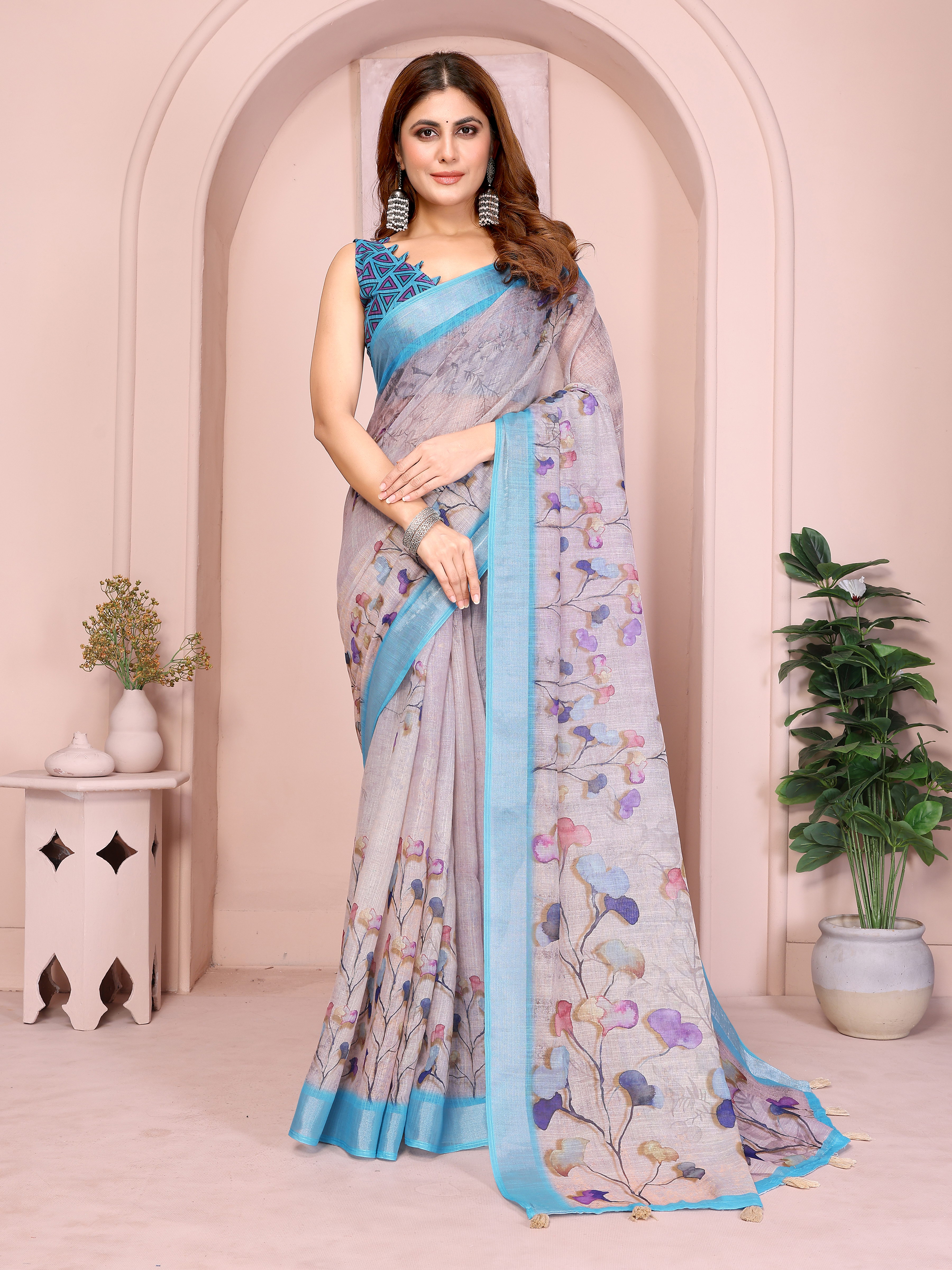
A linen cotton saree, elbow-length blouse, green bangles and a compact bindi are enough for a daytime cultural programme. Choose the Elegant Mauve Linen Saree with Artistic Madhubani Print with tan sandals and antique-gold jewellery for an artistic, comfortable outfit. Keep the pallu pinned at the shoulder so the print remains visible without obstructing movement.
Lavani-Inspired Saree Styling for a Haldi ceremony
A bright floral saree with a secure drape and washable, lightweight accessories suits a Haldi ceremony. The Teal Floral Printed Linen Saree with Blouse can be styled with a mustard or green blouse accent, floral earrings and flat footwear. Avoid trailing tassels and fragile jewellery because turmeric paste, outdoor seating and frequent movement can damage delicate details.
Lavani-Inspired Saree Styling for an evening reception
An evening reception allows a deeper blouse colour, stronger metallic jewellery and a more dramatic pallu. The Mauve Floral Print Linen Cotton Saree with Blouse | VARNAVI can be paired with antique-gold earrings, a sleek bun and a mauve or wine lip. Use two hidden pins at the shoulder and one at the waist when the pallu is intentionally worn forward.
Lavani-Inspired Saree Styling for an office or college event
An office or college event calls for a lighter interpretation of the look. Wear the Lavender Floral Linen Cotton Saree with Elegant Blue Border with a plain blouse, small jhumkas, two green bangles and comfortable block heels. A regular Nivi drape is more practical than a full Nauvari arrangement when the outfit must remain comfortable for several hours.
Lavani-Inspired Saree Styling: How can you shop within a budget?
A convincing regional look can be built by prioritising the saree's border, blouse fit and two signature accessories instead of buying a fully coordinated outfit.
For a practical starting point, browse Sarees from Rs 1000 to Rs 1500 and choose a saree with enough structure for neat pleats. Discount collections such as Sarees Under 20% Off and Sarees Under 10% Off can be useful when you already own a suitable blouse and need only a new colour or print.
Larger reductions in Sarees Flat 60% Off and Sarees Flat 50% Off may make it possible to add a second saree for a different mood. Check the fabric description, blouse-piece details, border width and care instructions before comparing prices. A saree that needs frequent professional cleaning may cost more to maintain than a washable linen cotton option.
Before buying, measure the blouse you already wear comfortably and compare those measurements with the size chart. Allow approximately 1.5 to 2 centimetres of alteration ease at the side seams, depending on the blouse fabric and desired fit. Confirm the saree length as well: a shorter wearer may prefer a standard length, while a Nauvari-inspired adaptation needs enough fabric for secure tucking.
Lavani-Inspired Saree Styling: What should you check before leaving home?
A five-minute movement test prevents most practical saree problems before an event begins.
- Walk ten steps: Check that the lower pleats don't catch under your feet and that the hem doesn't drag.
- Sit on a chair: Confirm that the waist tuck remains secure and that the pallu doesn't pull at the shoulder.
- Raise both arms: Make sure the blouse sleeves and shoulder pins allow comfortable movement.
- Turn once: Check whether the pallu swings into the face or jewellery.
- Carry a small emergency kit: Keep two safety pins, a spare bindi, fashion tape and a compact comb in your bag.
Wash or air the saree according to its care label after wearing it, and remove pins before folding. Fold linen cotton sarees along the border and store them in a breathable cotton cover rather than sealed plastic. Refold delicate sarees every few months to reduce permanent crease lines.
Lavani-inspired dressing feels most modern when the cultural references are intentional and the wearer can move naturally. Choose one strong drape, one clear colour story and two or three regional details. That balance keeps the outfit expressive, comfortable and respectful of the Maharashtrian inspiration.
Questions About Lavani-Inspired Maharashtrian Saree Styling
Can I create a Lavani-inspired look with a regular five-and-a-half-metre saree?
Yes, a regular saree can create a Lavani-inspired look through narrow front pleats, a secure waist tuck, a pleated pallu and Maharashtrian jewellery. A five-and-a-half-metre saree will not produce the same leg division as a traditional nine-yard Nauvari, but it is easier to wear for everyday events.
What blouse should I wear with a Maharashtrian saree look?
A fitted blouse with elbow-length or three-quarter sleeves gives the most balanced Maharashtrian appearance. Match the blouse to a border colour or choose a plain deep shade when the saree has a large or multicoloured print.
Which jewellery is essential for a Lavani-inspired saree outfit?
A nath, green glass bangles, jhumka earrings, a bindi or a thushi-style necklace can establish the regional connection. You do not need every piece at once; choose one statement item and two supporting details for a modern result.
Is linen cotton suitable for Lavani-inspired saree styling?
Linen cotton is suitable because the fabric is breathable, textured and structured enough for visible pleats. Pin the pallu and waist securely, and check the care label because some linen cotton sarees may require gentle washing or careful ironing.
How should I style a Maharashtrian saree for a Haldi ceremony?
Choose a lightweight floral saree, a secure drape, flat or low-heeled footwear and washable accessories for a Haldi ceremony. Avoid long tassels and fragile jewellery because turmeric, outdoor seating and frequent movement can stain or damage them.
How can I make a Lavani-inspired saree look suitable for college or the office?
Use a regular Nivi drape, a breathable saree, a plain fitted blouse, small earrings and a limited bangle stack for college or office wear. Keep the nath optional and use a pinned pallu so the outfit remains polished and practical throughout the day.