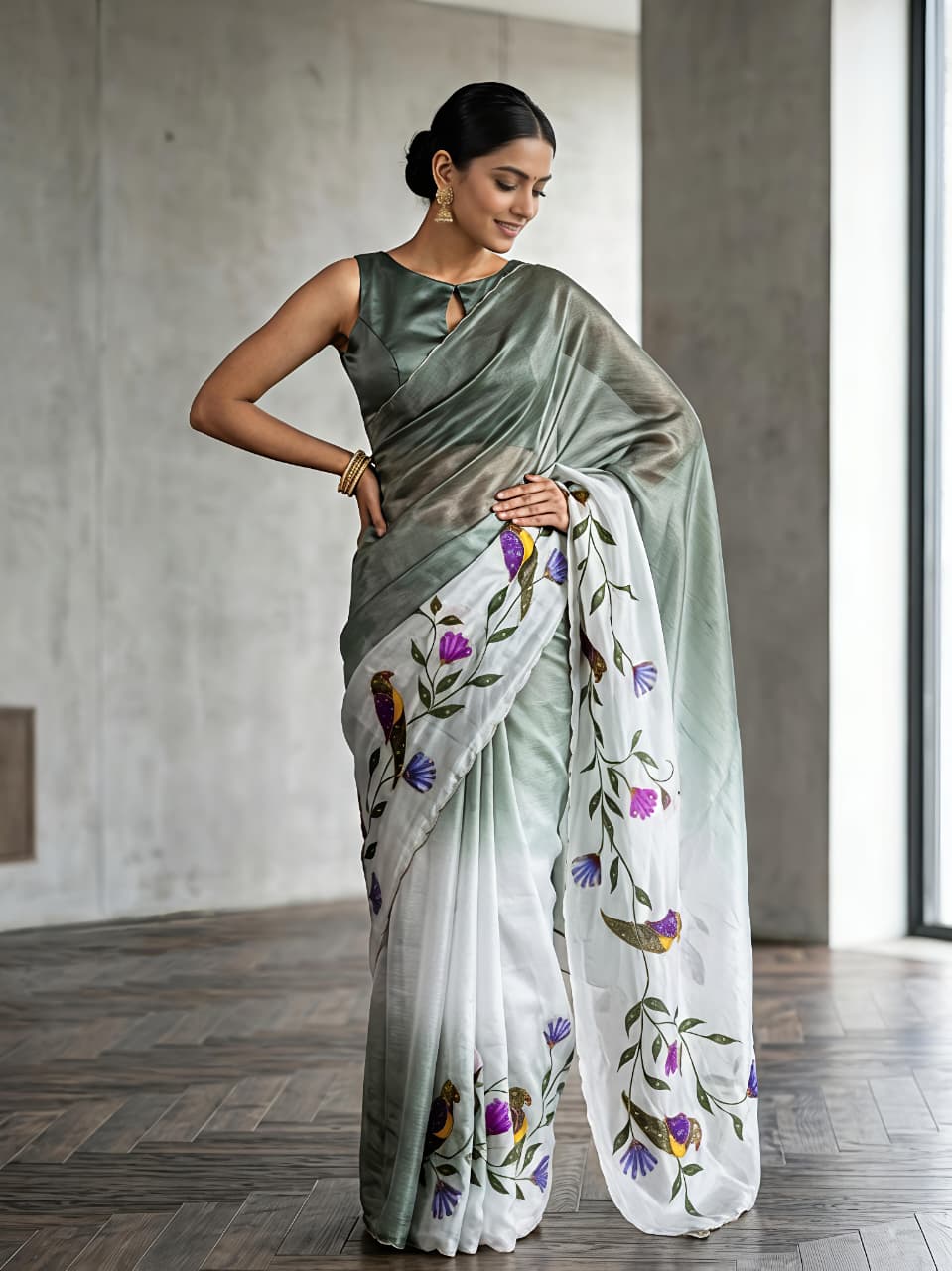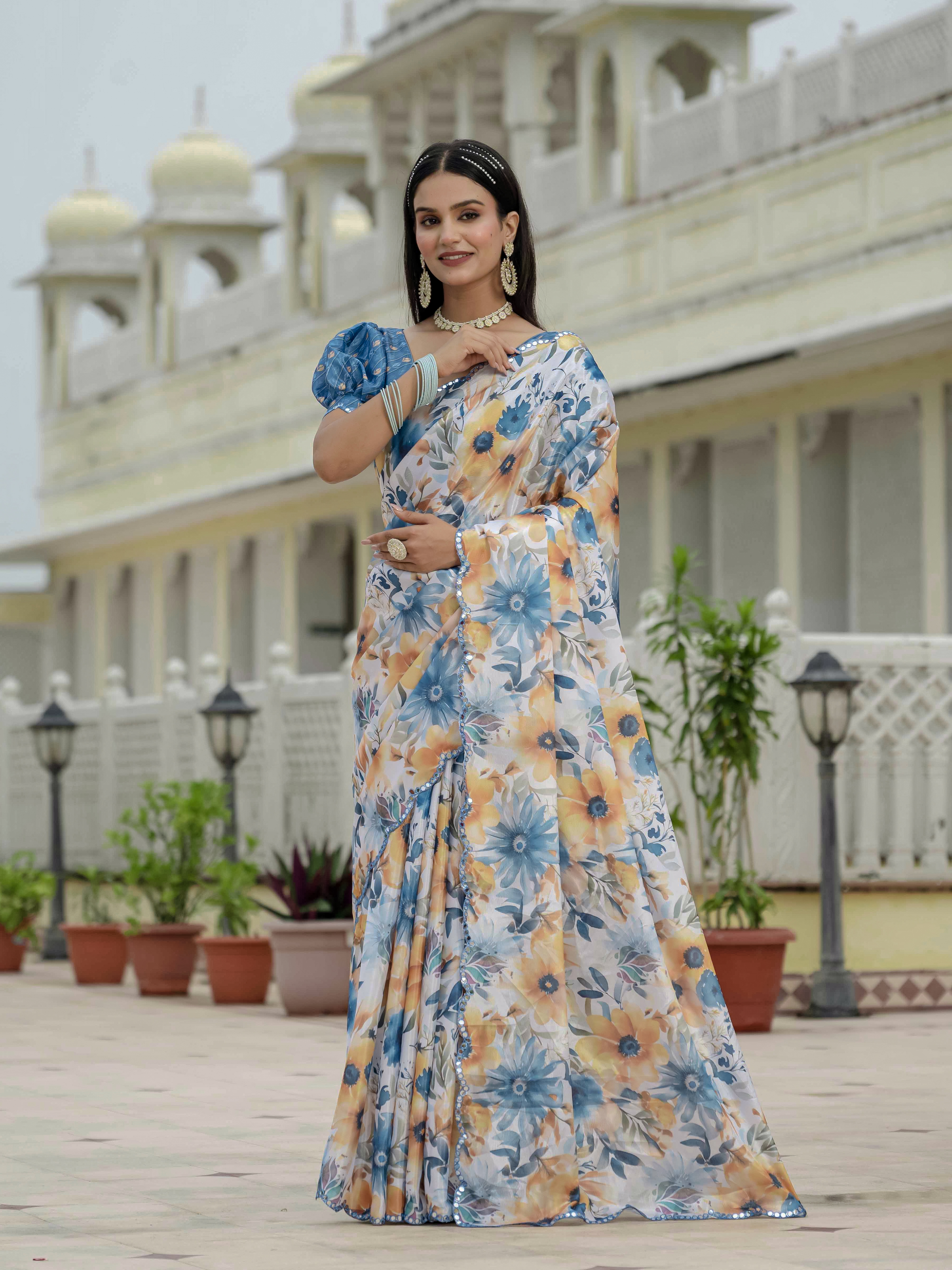
The Latest Salwar Suit Fashion Trends in India are moving beyond one fixed silhouette. Indian wardrobes now include straight kurta sets, Anarkali salwar suits, palazzo sets, short kurtas with shararas and unstitched suit materials, with fabric and finishing often deciding whether a look feels suitable for work, travel, a puja or a wedding. The most useful trend is versatility: a well-cut set can change character through its dupatta, footwear, jewellery and tailoring.
Current choices also show a balance between visual detail and practical wear. Embroidery is being used as a border, neckline accent or scattered motif rather than covering every surface. Chanderi silk, Vichitra silk and Paithani-style zari bring occasion appeal, while readymade three-piece sets reduce styling time. Understanding the differences helps you buy a salwar suit for its real use instead of choosing only by colour or photograph.
What are the Latest Salwar Suit Fashion Trends in India?
The Latest Salwar Suit Fashion Trends in India favour adaptable kurta sets, breathable-looking lightweight weaves, strategic embroidery, richer jewel tones and relaxed trousers. Straight-cut sets remain reliable, while Anarkali, palazzo and sharara silhouettes provide more movement and occasion impact.
The shift isn't a rejection of traditional salwar kameez design. Instead, familiar elements are being edited for contemporary wardrobes. A heritage dupatta may be paired with a cleaner straight kurta; a zari-woven fabric may be cut into an easy three-piece set; and an Anarkali may use less volume so that it works for an evening gathering without feeling costume-like.
- Silhouettes: straight kurtas, lightly flared Anarkalis, palazzo trousers and coordinated three-piece sets.
- Surface detail: floral embroidery, neckline work, sleeve borders and small repeated motifs.
- Colours: maroon, rust orange, pastel blue, beige, black, white and green, with contrast dupattas adding definition.
- Materials: Chanderi silk, Vichitra silk, Fendy silk and zari-woven suit materials for different levels of occasion dressing.
Which salwar suit silhouettes are gaining attention?
Straight kurta sets, easy Anarkalis, palazzo suits and three-piece readymade sets are the most useful silhouettes to consider. Each shape creates a different proportion, so the best choice depends on movement, height, comfort and the level of formality required.
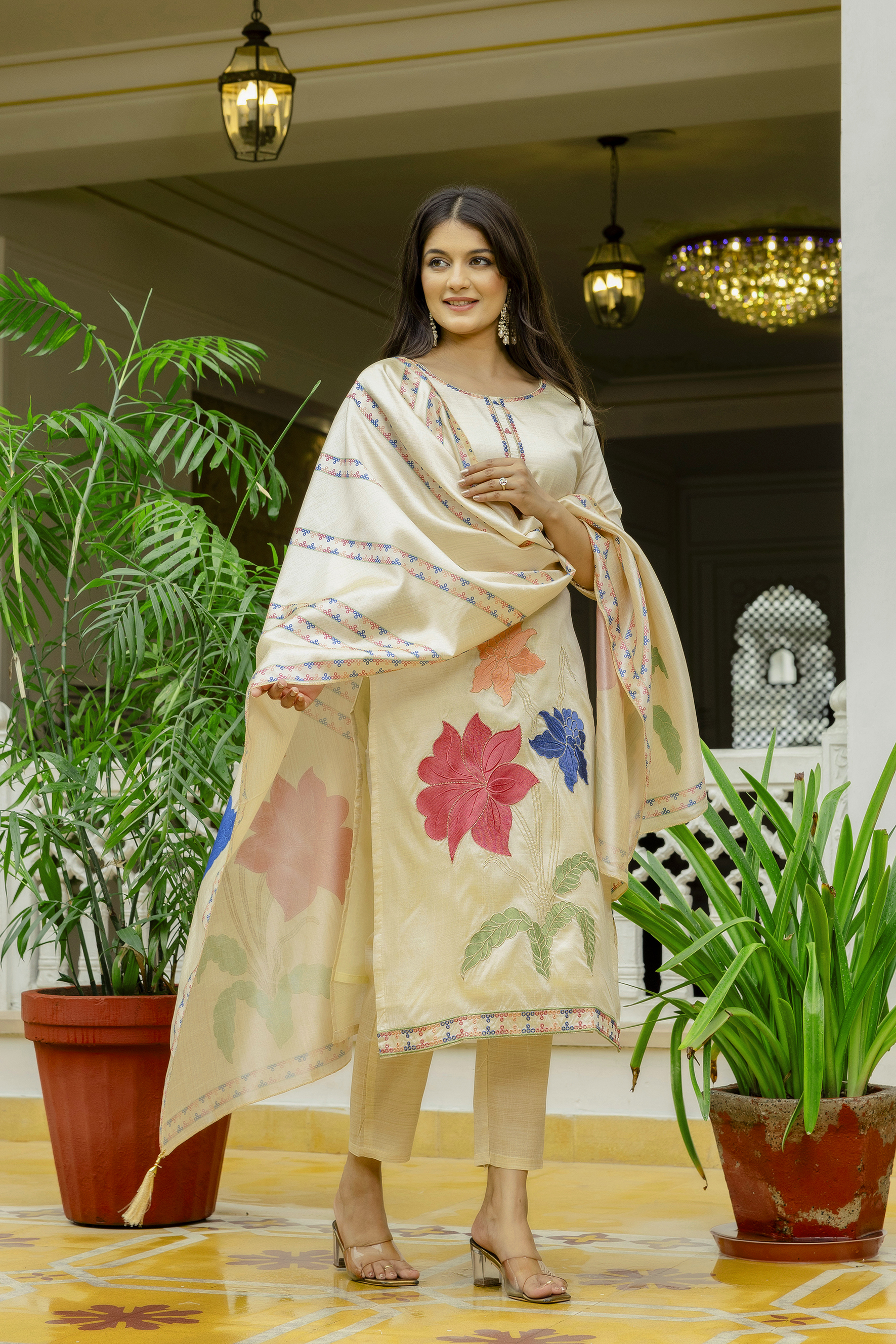
Straight kurta sets for repeat wear
Straight kurta sets suit office gatherings, daytime celebrations and regular festive dressing because the vertical line looks polished without adding substantial volume. A narrow trouser or straight pant keeps the outfit streamlined, while a dupatta introduces colour and softness. The Maroon Viscose Chanderi Silk Embroidered Kurta Set for Women demonstrates how a deeper colour and restrained embroidery can make a simple cut feel occasion-ready.
Anarkali and gentle flare
Anarkali suits work best when the flare matches the setting and the wearer's preferred movement. A moderate flare is easier for sitting, commuting and carrying a handbag, while a fuller flare creates a stronger wedding or sangeet presence. The collection titled Ladies Dress Anarkali Salwar Suits is relevant for shoppers who want the recognisable Anarkali shape but still need choices across lengths and levels of embellishment.
Palazzo and relaxed three-piece sets
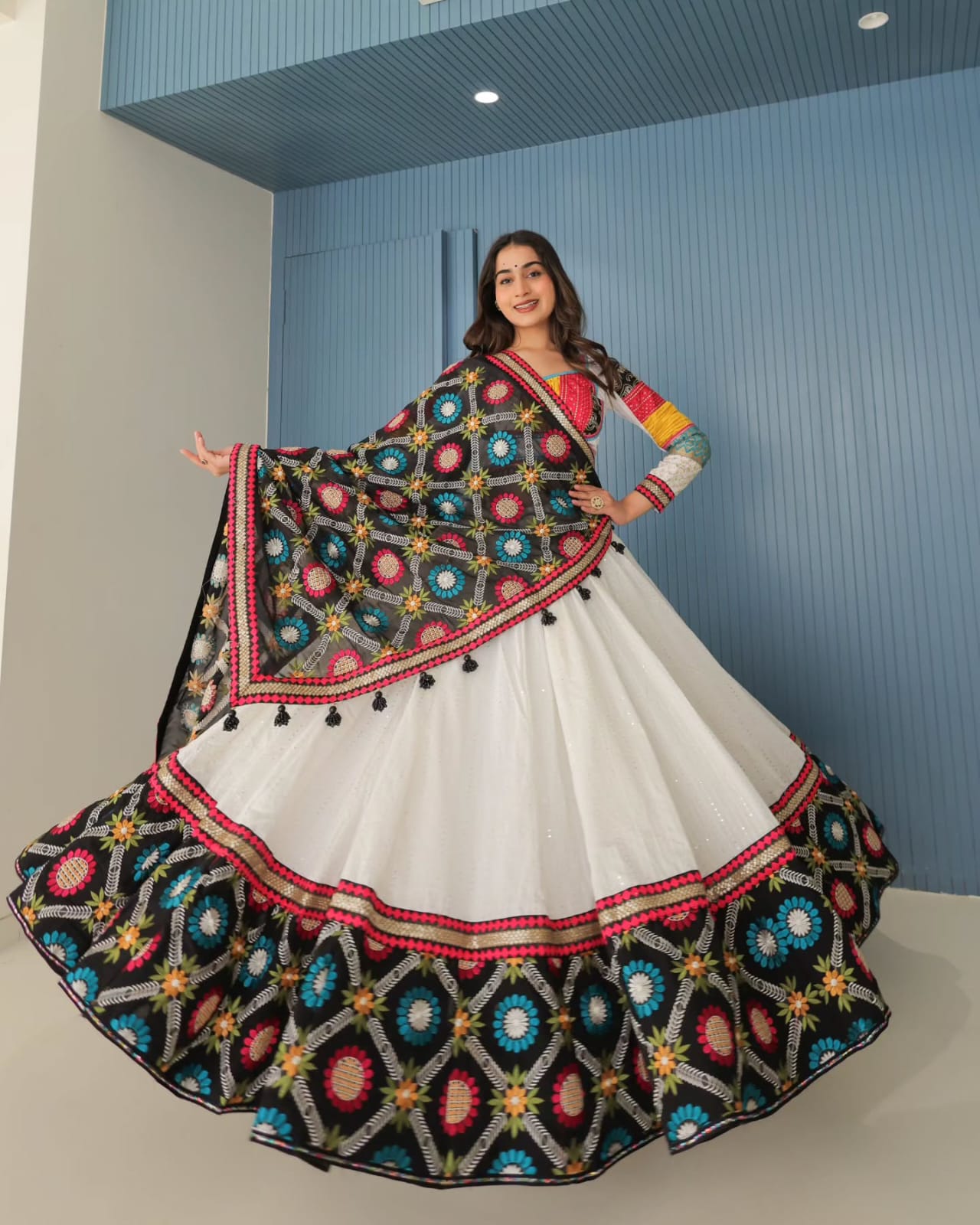
Palazzo trousers create a broad lower silhouette and pair well with shorter kurtas, fitted bodices or neatly proportioned straight tops. Three-piece readymade sets are practical when the kurta, bottom and dupatta have already been coordinated. The Black Red Fendy Silk 3 Piece Readymade Salwar Suit Set shows how a contrast-heavy palette can give a relaxed set enough presence for an evening function.
Which fabrics and finishes matter most in current salwar suit styles?
Fabric choice matters because weight, surface texture, opacity, crease behaviour and drape change the way a salwar suit looks and feels. Chanderi silk generally offers a light, subtly dressed-up appearance; Vichitra silk has a smoother, richer visual character; and zari-woven material brings metallic pattern into the fabric itself.
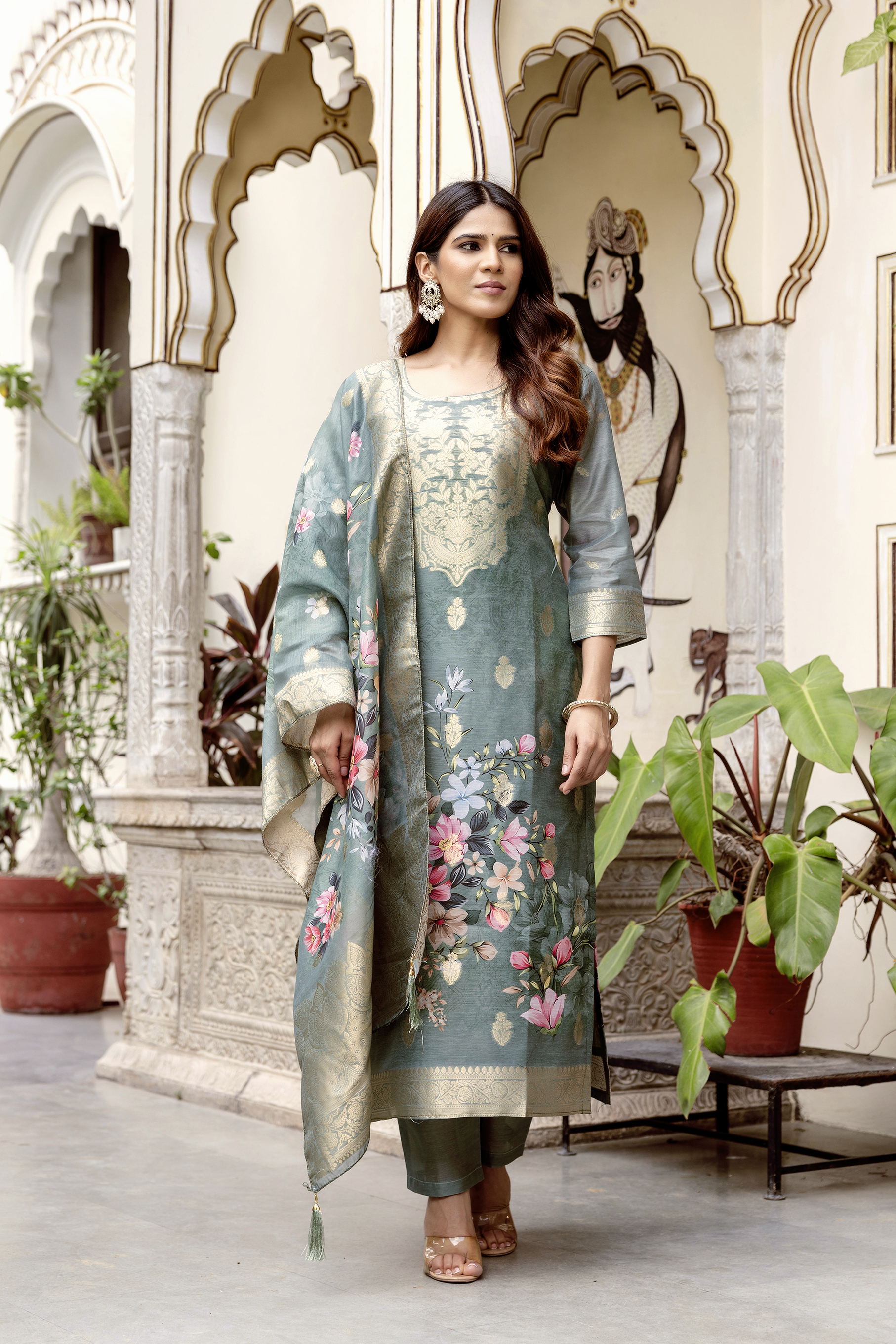
Chanderi is especially useful when the outfit must feel festive without becoming heavy. The Pastel Blue Embroidered Chanderi Kurta Set with Dupatta illustrates why pale colours and a light-looking weave work well for daytime ceremonies, summer celebrations and intimate family events. Pastel blue also gives gold, pearl and silver accessories different styling directions.
Vichitra silk can support a more formal finish through its smooth appearance and structured fall. The Elegant Beige Vichitra Silk Embroidered Kurta Set for Women brings a neutral foundation for antique-gold jewellery, coloured footwear or a more dramatic dupatta. Beige isn't limited to minimal styling; it can make embroidery and accessories more visible.
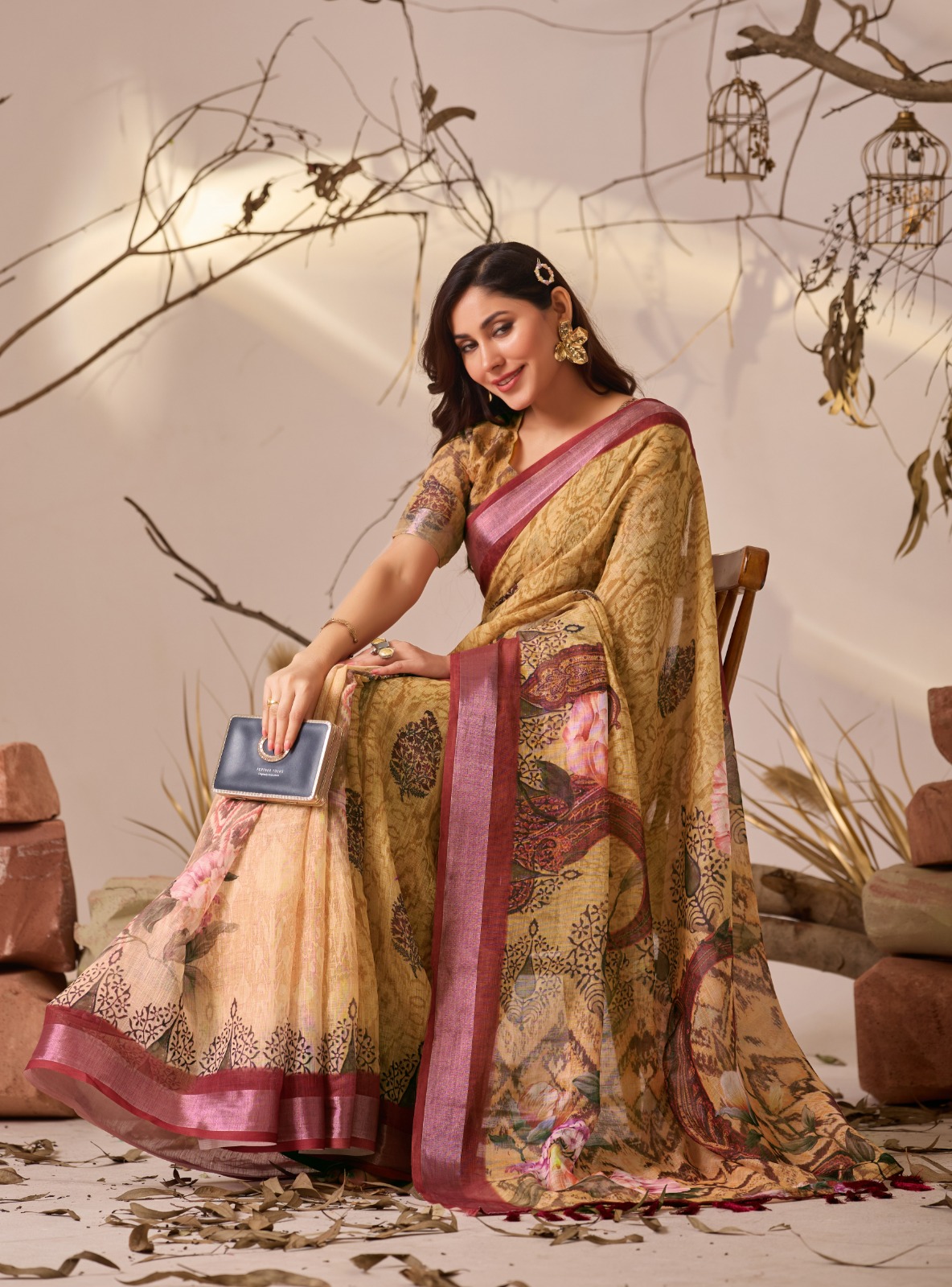
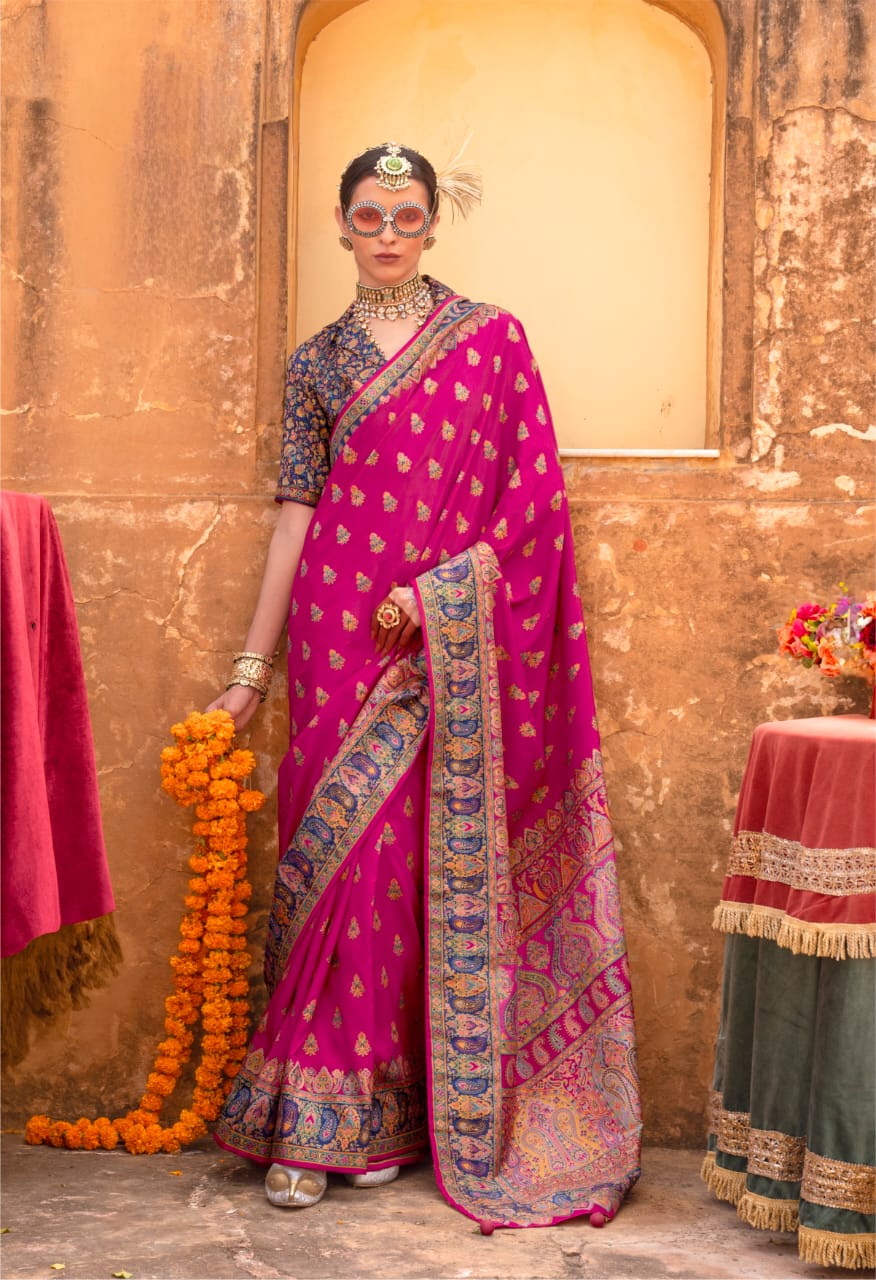
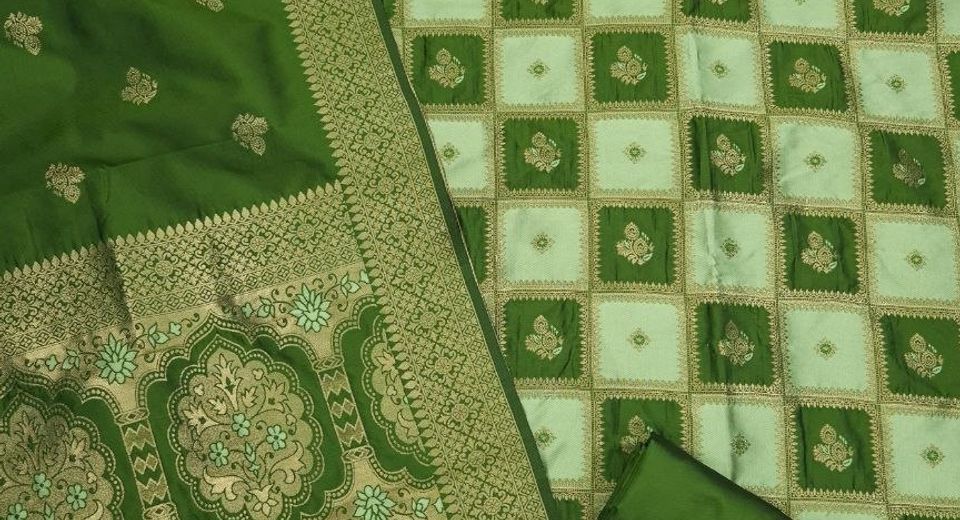
Zari is a metallic thread or metallic-effect element woven or embroidered into textile surfaces. Zari-woven suit materials can be especially useful for shoppers who want to select their own kurta, salwar and dupatta proportions. Green Paithani Style Zari Woven Unstitched Suit Material and Maroon Paithani Style Zari Woven Unstitched Suit Material show how jewel colours and traditional-inspired woven detail can move into a personalised outfit.
How should fabric be matched to use?
Choose lighter Chanderi-based sets for daytime events, smoother silk-like surfaces for evening gatherings and zari-woven material when custom tailoring is part of the plan. Readymade embroidered sets are efficient when a complete outfit is needed quickly, but unstitched material gives more control over sleeve length, neckline depth, trouser width and hemline.
Which colours and embroidery details are trending?
Maroon, rust orange, pastel blue, beige, black, white and green are strong salwar suit colour directions because they cover both understated and celebratory dressing. The most wearable combinations use one dominant colour and one controlled contrast rather than mixing several competing shades.
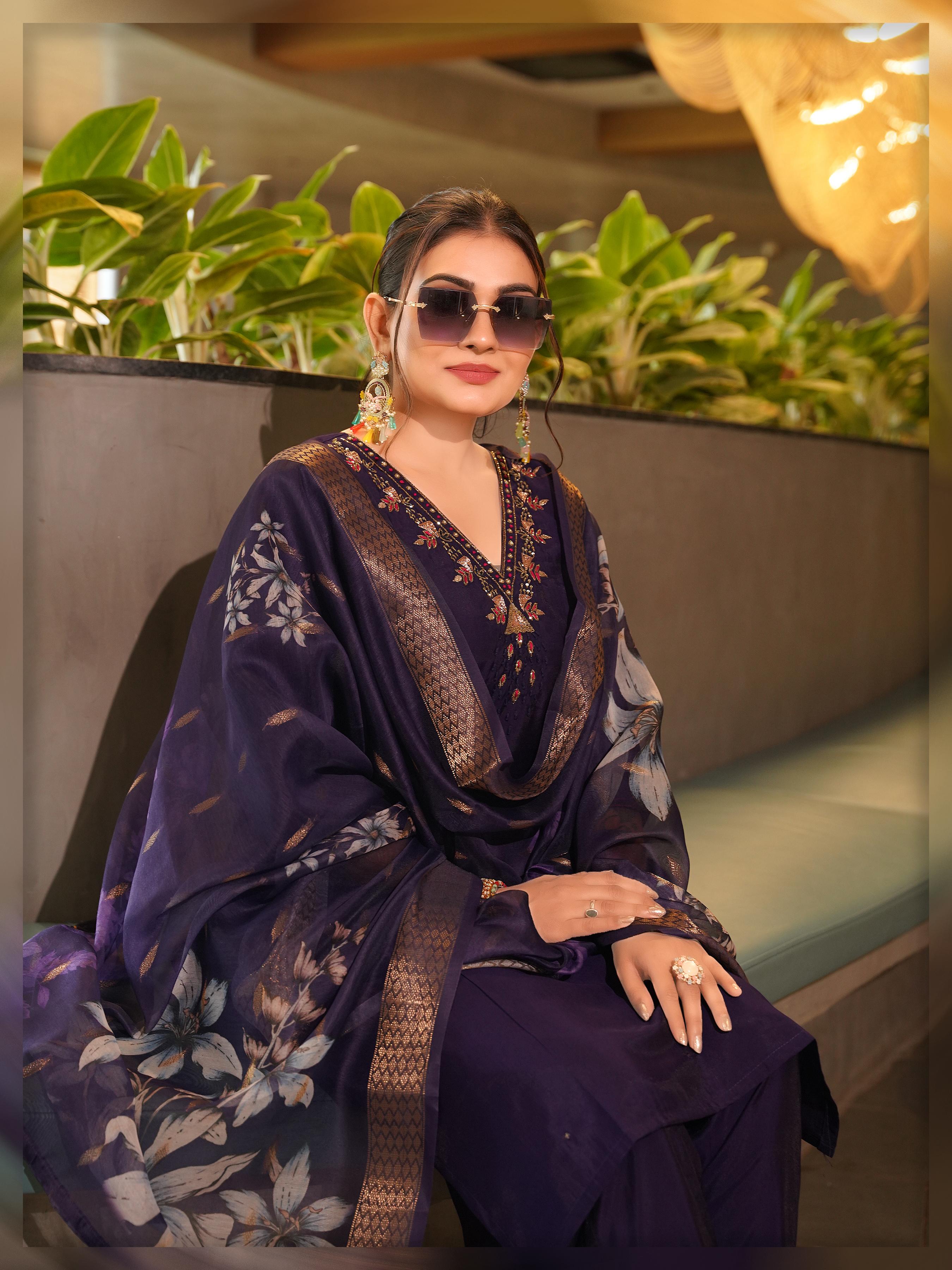
Maroon and rust orange bring warmth to autumn, winter and evening wardrobes, while pastel blue and beige are effective for daylight functions. Black and white create a graphic base that allows floral embroidery, red accents or metallic jewellery to stand out. The Rust Orange Embroidered Readymade Suit Set for Women is an example of how a saturated colour can carry the outfit even when the silhouette remains straightforward.
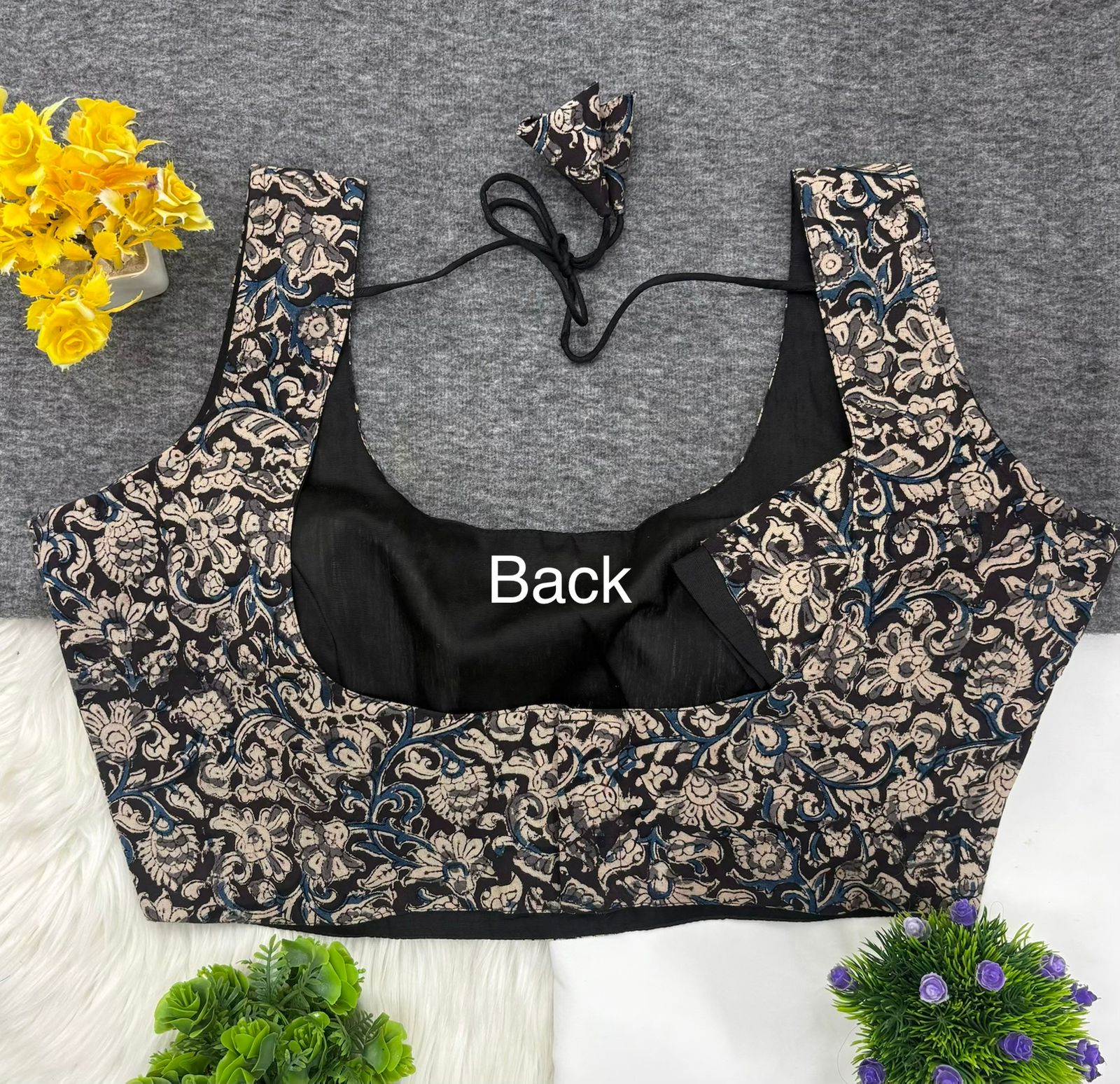
Embroidery placement is more important than embroidery quantity. Work around the neckline frames the face; sleeve borders make hand movement noticeable; hem embroidery gives a longer kurta visual weight; and small floral motifs distribute detail without making the garment difficult to accessorise. Black White Floral Embroidered Readymade Salwar Suit uses contrast and floral placement to create definition without relying only on a bright base colour.
- For daytime: choose pastel blue, beige or lighter floral embroidery with pearl, silver or soft gold accessories.
- For evening: choose maroon, black, rust orange or jewel green with stronger earrings and a defined lip colour.
- For understated dressing: select embroidery concentrated at the neckline, cuffs or hem rather than dense all-over work.
- For statement dressing: let a vivid colour or zari border lead, and keep the remaining accessories visually quieter.
How can a salwar suit be styled for different occasions?
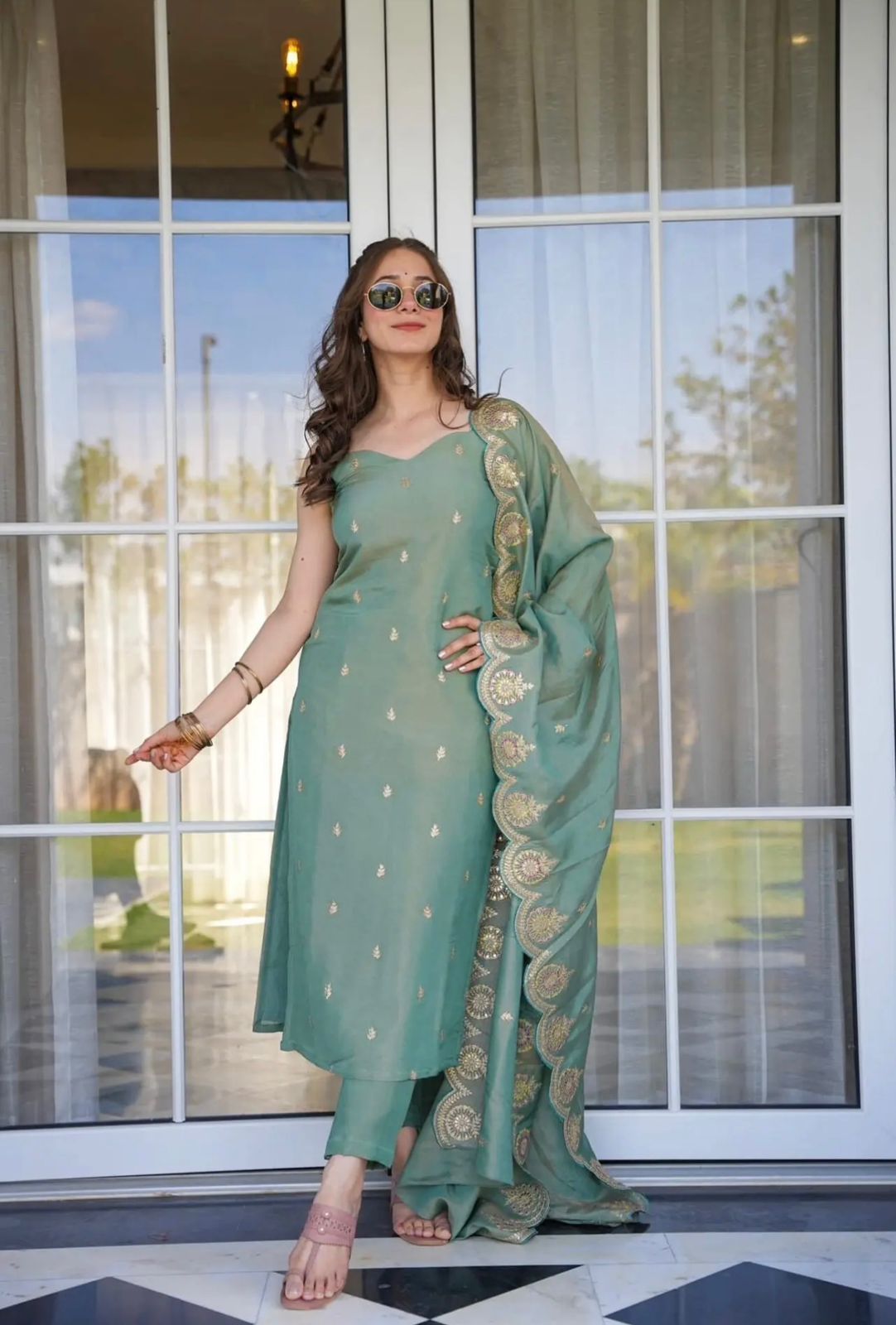
A salwar suit becomes occasion-appropriate through the combination of silhouette, fabric, accessories, footwear and dupatta drape. The same straight kurta can appear professional with a narrow trouser and minimal jewellery or festive with a textured dupatta and embellished sandals.
Work and daytime gatherings
Workwear salwar suits benefit from a moderate hemline, comfortable sleeve opening and a dupatta that stays secure without constant adjustment. Choose small earrings, a structured tote and flat or low-heeled footwear. Beige, muted maroon, pastel blue and restrained prints are easier to repeat across a working wardrobe than heavily sequinned designs.
Puja and family celebrations
Puja dressing works well with breathable-looking fabrics, modest necklines and a dupatta draped over one shoulder or both shoulders. Chanderi silk, floral embroidery and medium-scale motifs give visual interest while remaining appropriate for daytime rituals. A small bindi, jhumkas and embellished flats can complete the look without adding unnecessary weight.
Wedding events and evening functions
Wedding and evening styling can support richer colour, zari, silk-like surfaces, layered jewellery and a more dramatic silhouette. A gently flared Anarkali or a three-piece set with a contrasting dupatta creates movement in photographs. Keep the outfit balanced by choosing either statement earrings or a prominent necklace unless the neckline and embroidery are very restrained.
How do you choose the right salwar suit online?
The right online purchase depends on measurements, fabric information, garment construction and the event for which the outfit is intended. A flattering photograph can't replace checking the size chart, kurta length, sleeve length, bottom style and whether the dupatta is included.
- Define the use first. Decide whether the suit is for office wear, a daytime ceremony, festive evenings, travel or a wedding function.
- Check the silhouette. Compare straight, flared, palazzo and sharara proportions with garments already worn comfortably.
- Read the material description. Note whether the item is a readymade kurta set, a three-piece set or unstitched suit material.
- Measure the body, not an old label. Measure bust, waist, hip and preferred kurta length, because sizing differs between cuts and sellers.
- Inspect the colour context. Maroon, black and rust may appear deeper under indoor lighting, while pastel blue and beige can look brighter outdoors.
- Plan alterations. Allow time for sleeve adjustment, side-seam correction, trouser hemming or neckline changes before a major event.
Collection labels can also help narrow a broad search. Dress Materials suits shoppers who want tailoring control, while Salwar Suits with 30% Off and Salwar Suits Flat 40% Off may be useful for comparing value across multiple styles. Sale filters should not replace checking fabric, measurements and return conditions, because a low price doesn't correct an unsuitable fit.
How should embroidered and zari salwar suits be cared for?
Embroidered and zari-decorated salwar suits last longer when they're cleaned gently, dried away from strong sunlight and stored without crushing the decorated surface. Care should follow the garment label, but delicate embellished pieces commonly benefit from professional dry cleaning rather than repeated home washing.
Turn a readymade suit inside out before storage and place a soft cotton cloth between heavily embroidered sections if rubbing is likely. Fold zari-woven material along broad, clean folds instead of pressing sharp creases into the same line repeatedly. Store garments in a breathable fabric cover, not sealed plastic for long periods, because trapped moisture can encourage odour and damage.
Small marks should be addressed quickly with a clean, dry cloth rather than aggressive rubbing. Never apply perfume, hair spray or oil directly onto embroidery or zari. Air a worn garment completely before folding it, and inspect it every few months for loose threads, dampness or colour transfer.
Where do current salwar suit trends fit in a practical wardrobe?
Current salwar suit trends are most valuable when they add more than one outfit possibility to a wardrobe. A maroon embroidered set can serve a family dinner, festive lunch and winter celebration with different dupattas; a pastel Chanderi set can move from a daytime puja to a small reception; and unstitched Paithani-style material can be tailored for a more individual fit.
An useful wardrobe plan includes one easy straight set, one lighter daytime set, one richer evening outfit and one adaptable piece with a neutral base. The Salwar Suits On Sale collection may help shoppers compare these categories, but the strongest purchase remains the garment that suits an actual calendar of events, a realistic care routine and the wearer's preferred movement.
Salwar suits continue to evolve because they can absorb new colours, fabrics and proportions without losing their recognisable Indian identity. Choosing by silhouette, fabric performance, embroidery placement and occasion gives the trend a longer life than buying a look based only on a passing colour forecast.
Common Questions About India’s New Salwar Suit Styles
What salwar suit styles are trending in India right now?
Straight kurta sets, lightly flared Anarkalis, palazzo suits and coordinated three-piece readymade sets are among the most useful current styles. Chanderi silk, Vichitra silk, floral embroidery and zari details are also prominent choices for occasion dressing.
Which salwar suit is best for a wedding function?
A gently flared Anarkali, zari-detailed suit or richer three-piece set works well for a wedding function. Maroon, rust orange, black, deep green and other jewel tones pair effectively with embellished footwear and statement earrings.
Are straight salwar suits suitable for office wear?
Yes, straight salwar suits are suitable for office wear when the fit is comfortable and the embroidery is controlled. Choose moderate kurta lengths, practical trousers, secure dupatta styling and colours such as beige, muted blue, maroon or restrained prints.
What is the difference between a readymade salwar suit and unstitched suit material?
A readymade salwar suit is already constructed and generally needs only minor alterations, while unstitched suit material must be cut and tailored. Unstitched material offers greater control over neckline, sleeve length, trouser width and overall fit.
How should zari-woven salwar suit material be stored?
Store zari-woven material clean and completely dry in a breathable fabric cover, using broad folds that avoid repeated sharp creases. Keep the material away from direct sunlight, moisture, perfume and rough surfaces that can pull metallic threads.
How can one salwar suit be styled for both daytime and evening wear?
Use lighter jewellery, flats and a simple drape for daytime wear, then change to statement earrings, embellished footwear and a more structured dupatta drape for evening. A contrasting dupatta can also make a straight kurta set feel more formal.