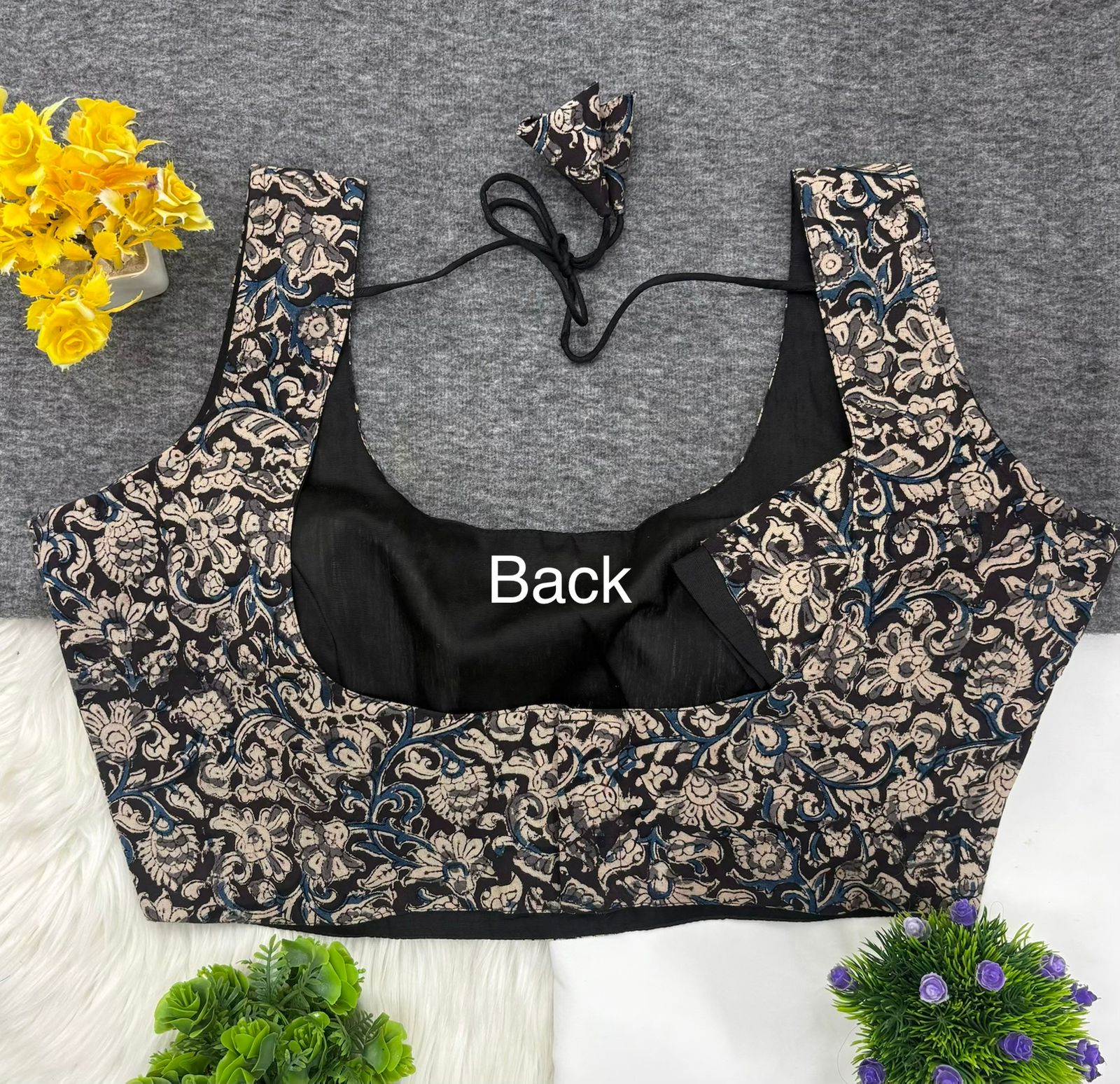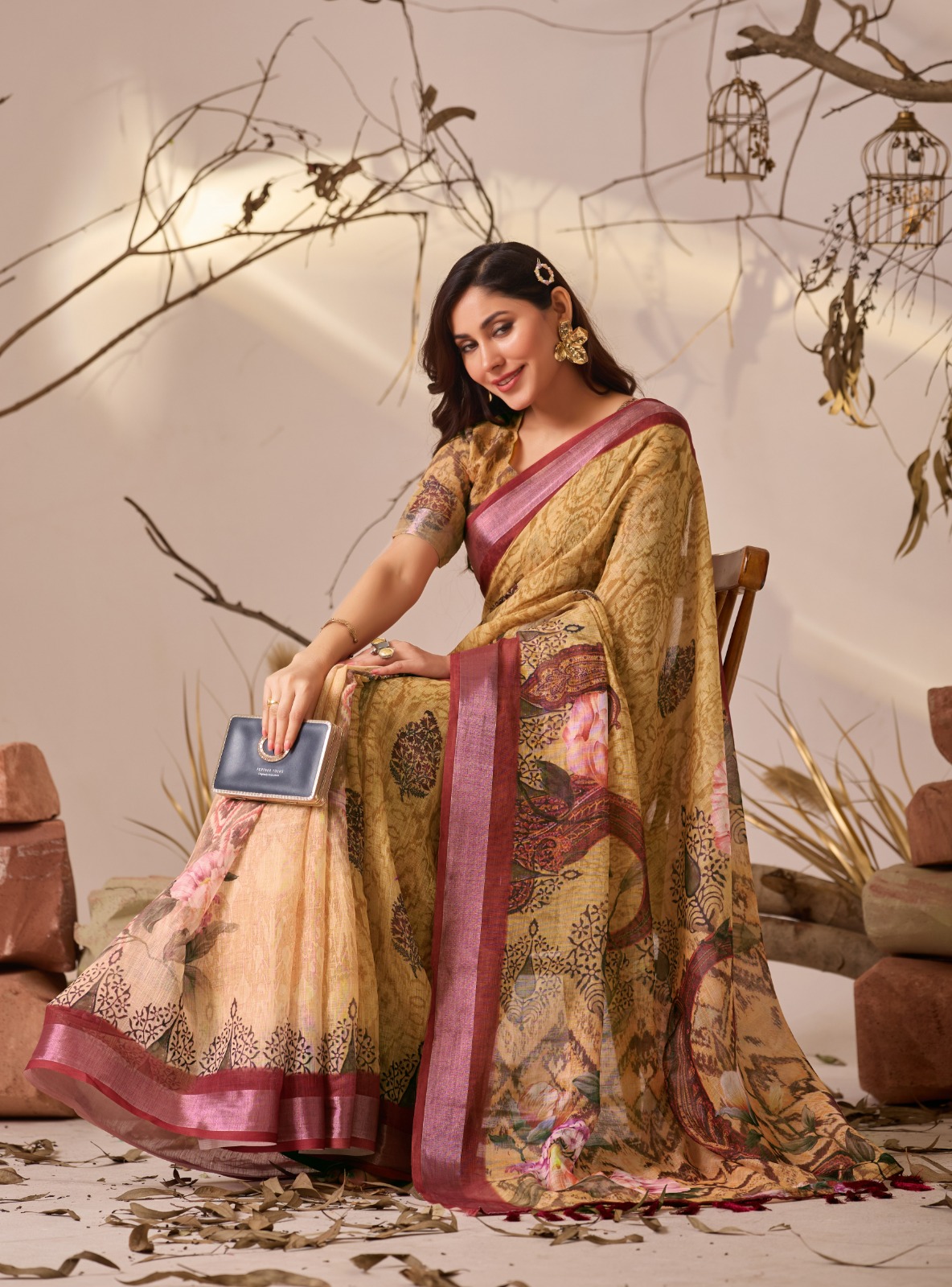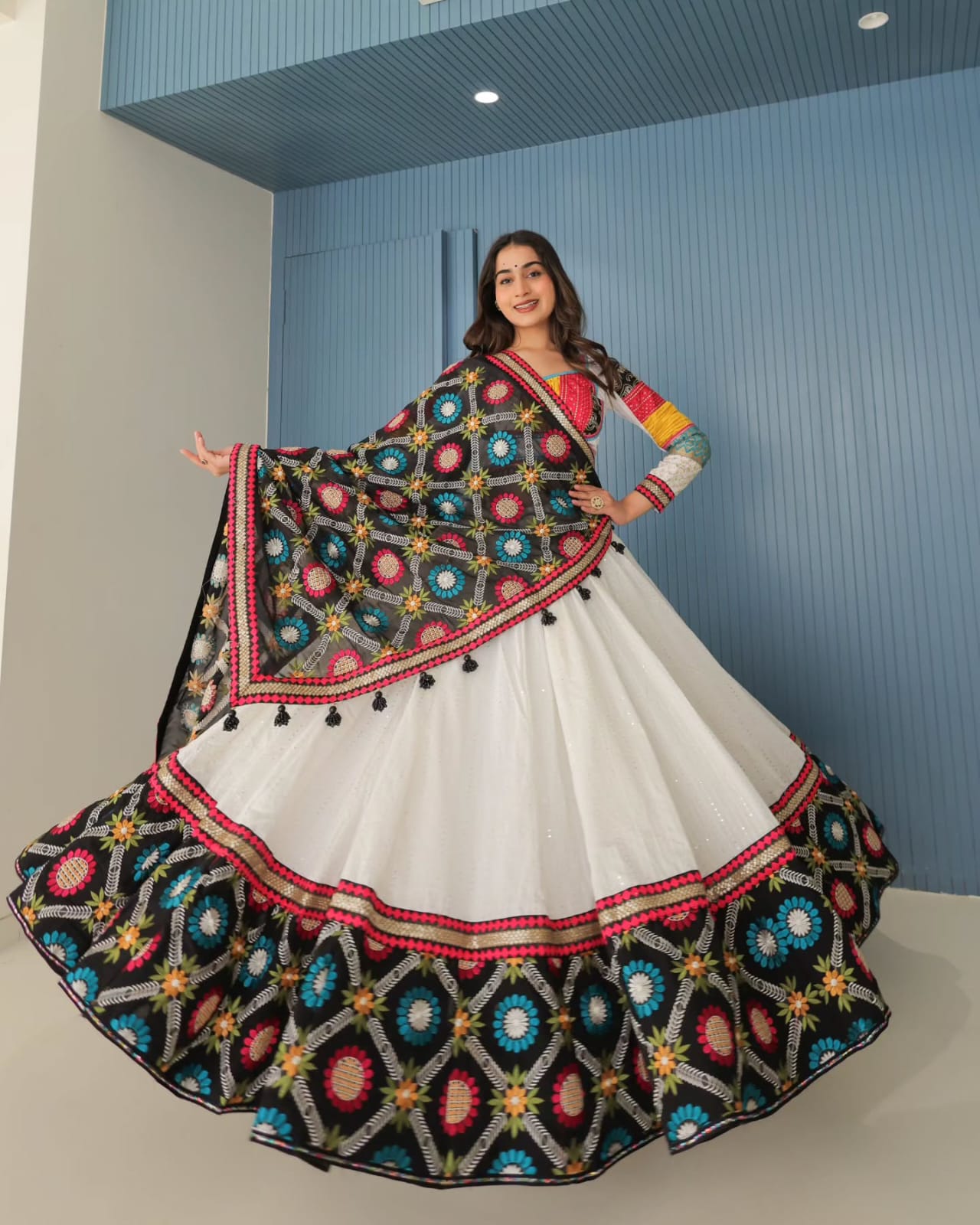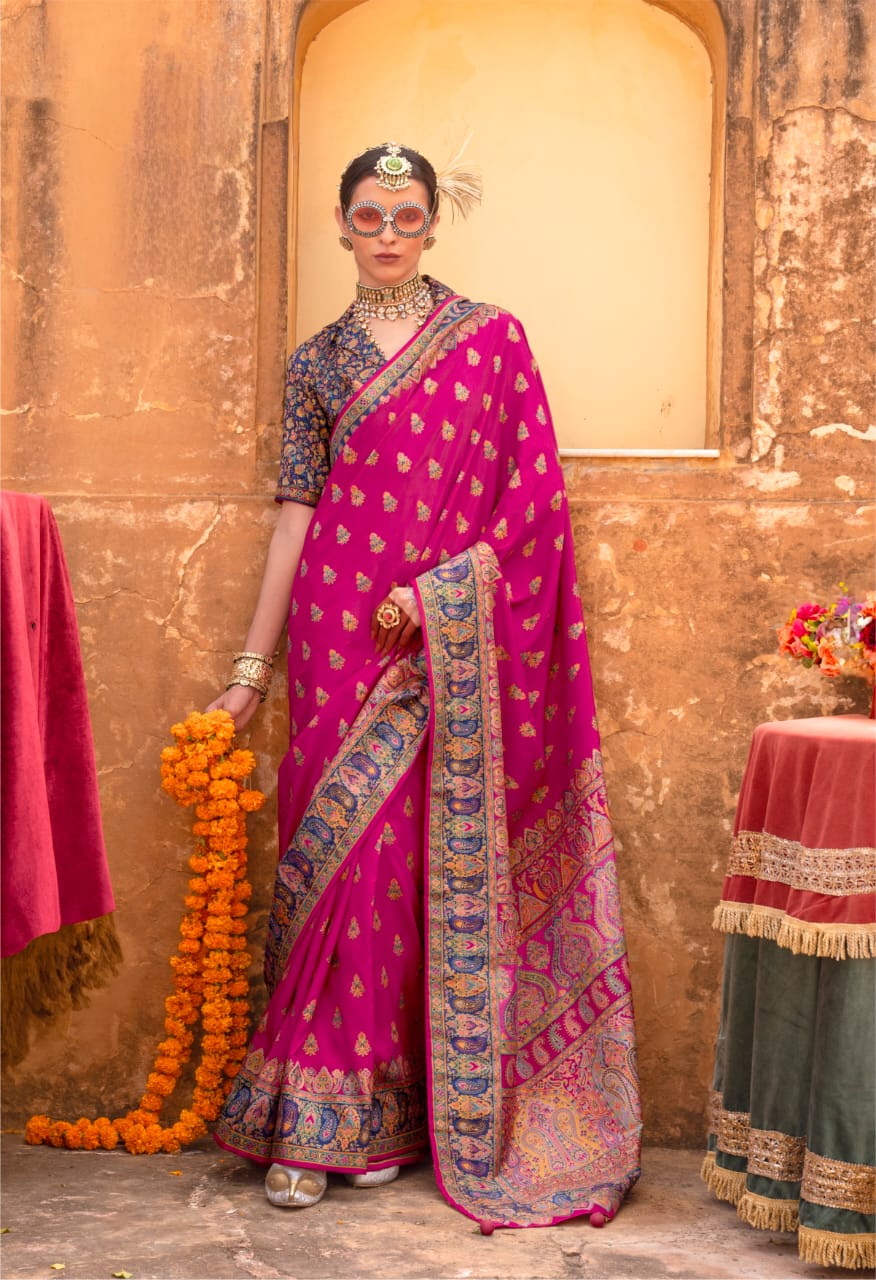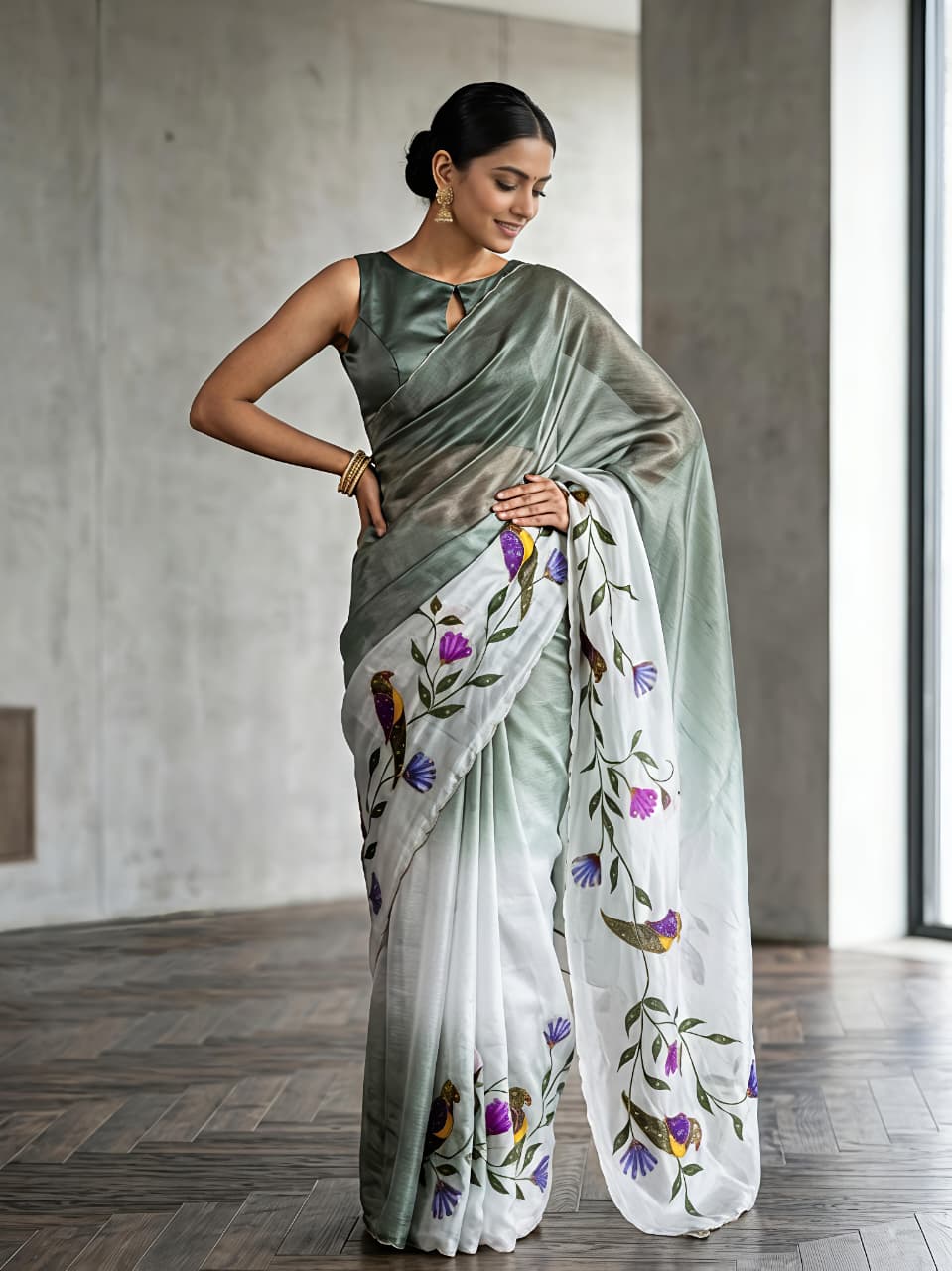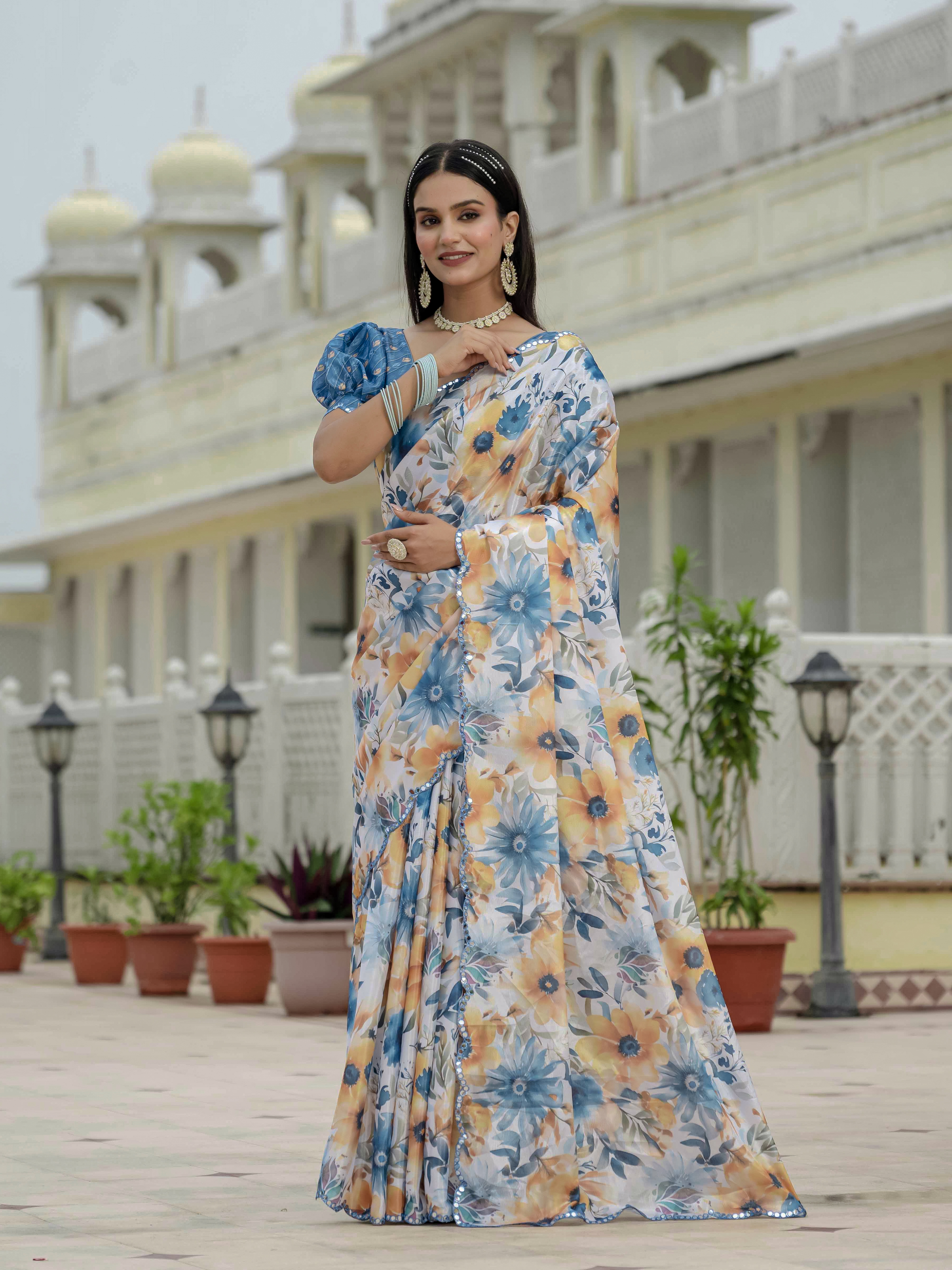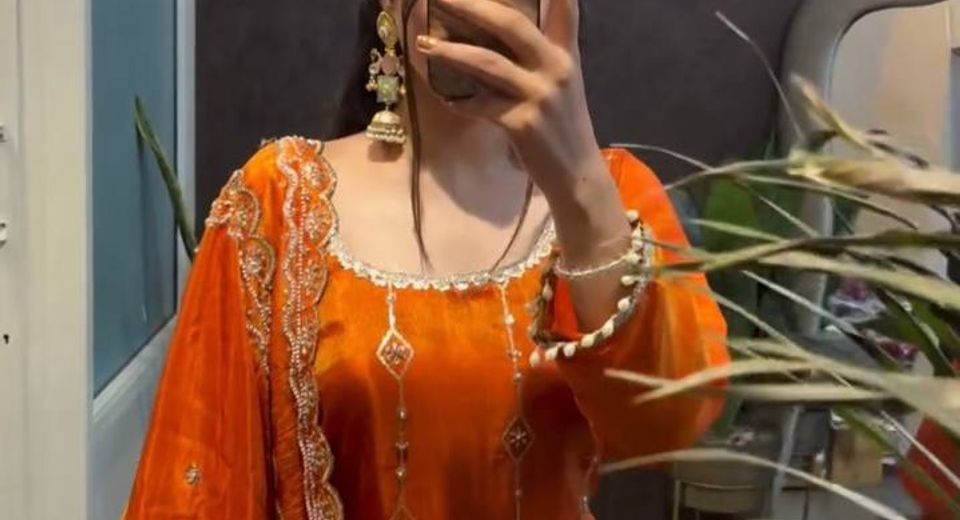
Latest Salwar Suit Dupatta Designs are changing how a familiar salwar suit looks, feels and functions. A dupatta is no longer an afterthought matched only by colour; its fabric, border, width, embroidery and drape can make a straight kurta appear formal, soften an Anarkali silhouette or give a simple set a contemporary finish. The most useful way to choose one is to match the dupatta's visual weight and construction to the kurta, trousers, body proportions and occasion.
A good choice also prevents common wardrobe problems: a slippery scarf that won't stay on the shoulder, a heavy border that overwhelms a petite frame, or a sheer fabric that needs constant adjustment. The guide below explains what to look for and how to style current salwar suit dupatta designs without treating every trend as equally practical.
What makes the latest salwar suit dupatta designs look current?
The latest salwar suit dupatta designs look current because they combine one strong detail with a cleaner overall silhouette. That detail may be a wide zari border, small sequin placement, a contrasting colour panel, a translucent Chanderi texture or a carefully finished scalloped edge.
Older styling often relied on matching the kurta, salwar and dupatta in exactly the same print and colour. Current styling allows controlled contrast. A pastel blue kurta may take a slightly deeper blue or ivory dupatta, while a black Anarkali can support metallic zari and pearl-like moti detailing. The result feels coordinated without appearing overly uniform.
Three design directions are especially useful when comparing a new dupatta. First, lightweight fabrics such as Chanderi create an airy, polished layer for daytime gatherings. Second, embroidered or sequinned borders make a plain suit suitable for dinners and celebrations. Third, Paithani-style zari-woven surfaces bring a traditional textile effect to an unstitched suit material, giving the wearer more control over the final silhouette.
Current doesn't have to mean complicated. A narrow contrast border on a solid suit can look more refined than several competing motifs. Dupatta design should support the kurta's neckline and sleeve detail instead of hiding both under excessive folds.
How should dupatta fabric match the salwar suit?
Dupatta fabric should match the suit according to the kurta's structure, the amount of embellishment and the length of time you expect to wear it. Lightweight fabrics suit relaxed or daytime sets, while denser woven or embellished fabrics work better with festive tailoring.
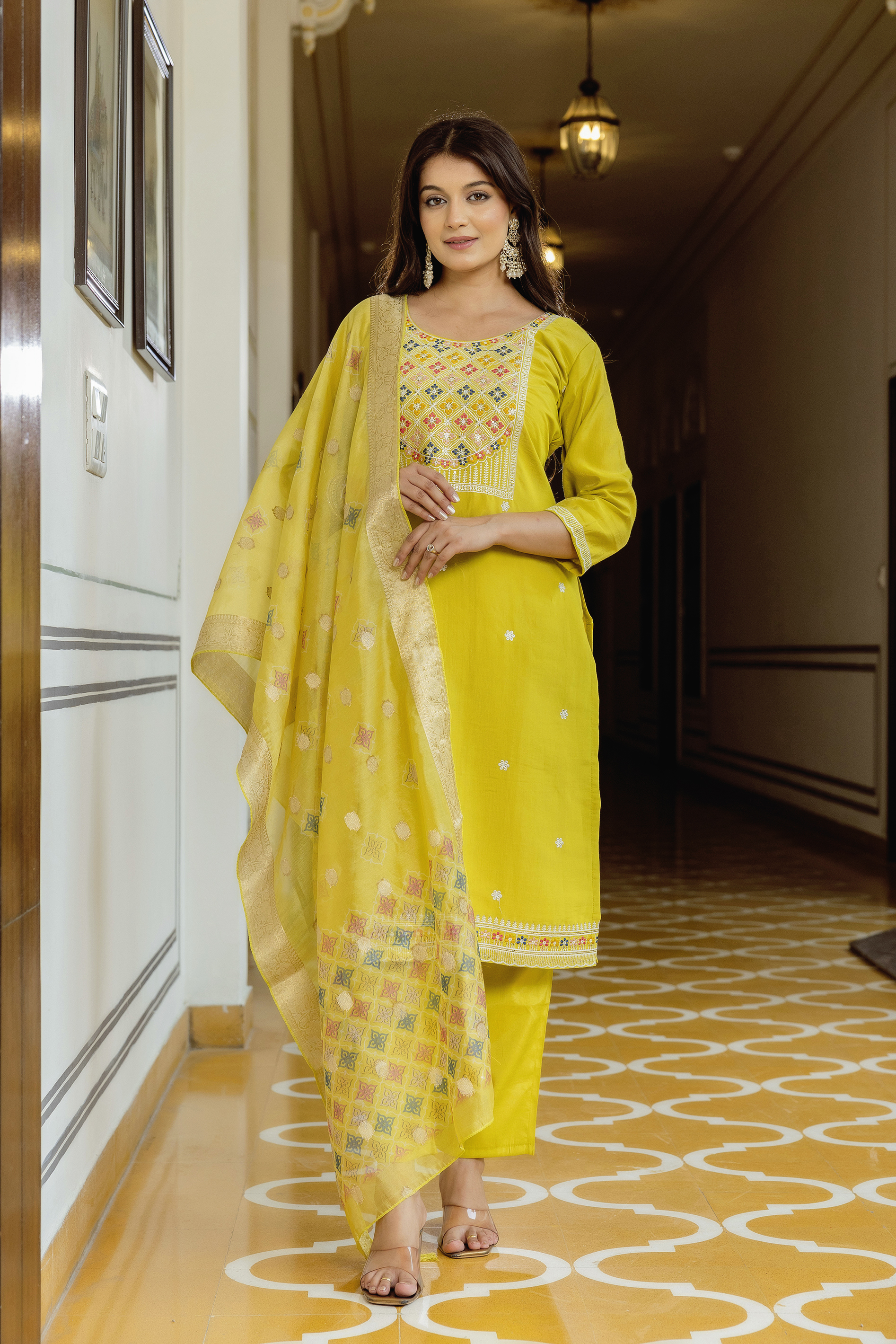
Chanderi for light structure
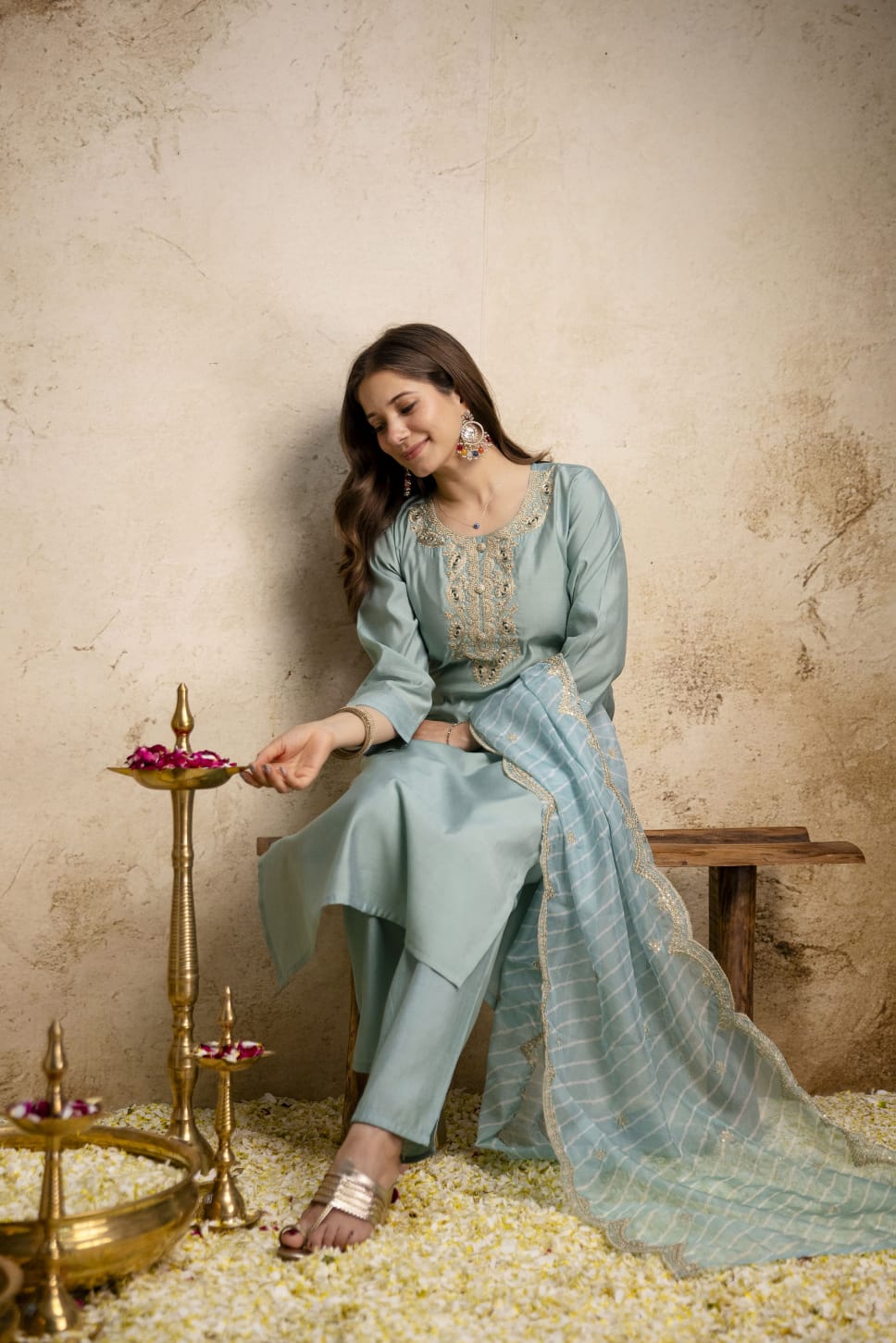
Chanderi has a light hand and a subtle sheen, so it adds elegance without making a straight kurta look bulky. A Chanderi dupatta works particularly well with embroidered kurta sets, three-piece office-to-evening outfits and warm-weather dressing. The fabric usually benefits from a neat shoulder fold because its transparency and gentle body are part of its appeal.
Maroon Viscose Chanderi Silk Embroidered Kurta Set for Women illustrates how a rich base colour can carry delicate surface work without needing an extremely heavy dupatta. Pastel Blue Embroidered Chanderi Kurta Set with Dupatta offers the opposite effect: a softer colour story where the texture and embroidery provide interest rather than strong contrast.
Silk-look and woven surfaces for celebration
Silk-look fabrics and zari-woven surfaces create more visual density, making them suitable for evening events, family functions and festive dressing. Pistachio Green Paithani Style Zari Woven Unstitched Suit Material and Royal Purple Paithani Style Zari Woven Unstitched Suit Material demonstrate why colour and weave should be assessed together. A luminous green or purple needs a balanced border and a controlled drape so that the outfit remains elegant rather than crowded.
Unstitched material also changes the buying decision. The wearer can decide whether the finished dupatta should be narrow and understated or wider with a prominent border. Tailoring should preserve enough length for the chosen drape; a dupatta that's too short can't create a comfortable over-the-shoulder fall.
Embellished fabrics for formal wear
Embroidered, sequin and zari details are most effective when the rest of the outfit has room to breathe. Black Anarkali Suit Set with Sequin Zari and Moti Lace Work already has a strong festive vocabulary, so the dupatta should echo one or two details instead of adding unrelated prints. A restrained metallic edge or a sheer matching layer can maintain balance.
Which dupatta designs suit different salwar suit silhouettes?
Dupatta designs should follow the proportions of the kurta and bottom rather than being selected separately. Straight suits, Anarkalis, palazzo sets and time-honoured three-piece suits each benefit from a different distribution of volume.
Straight kurtas and narrow borders
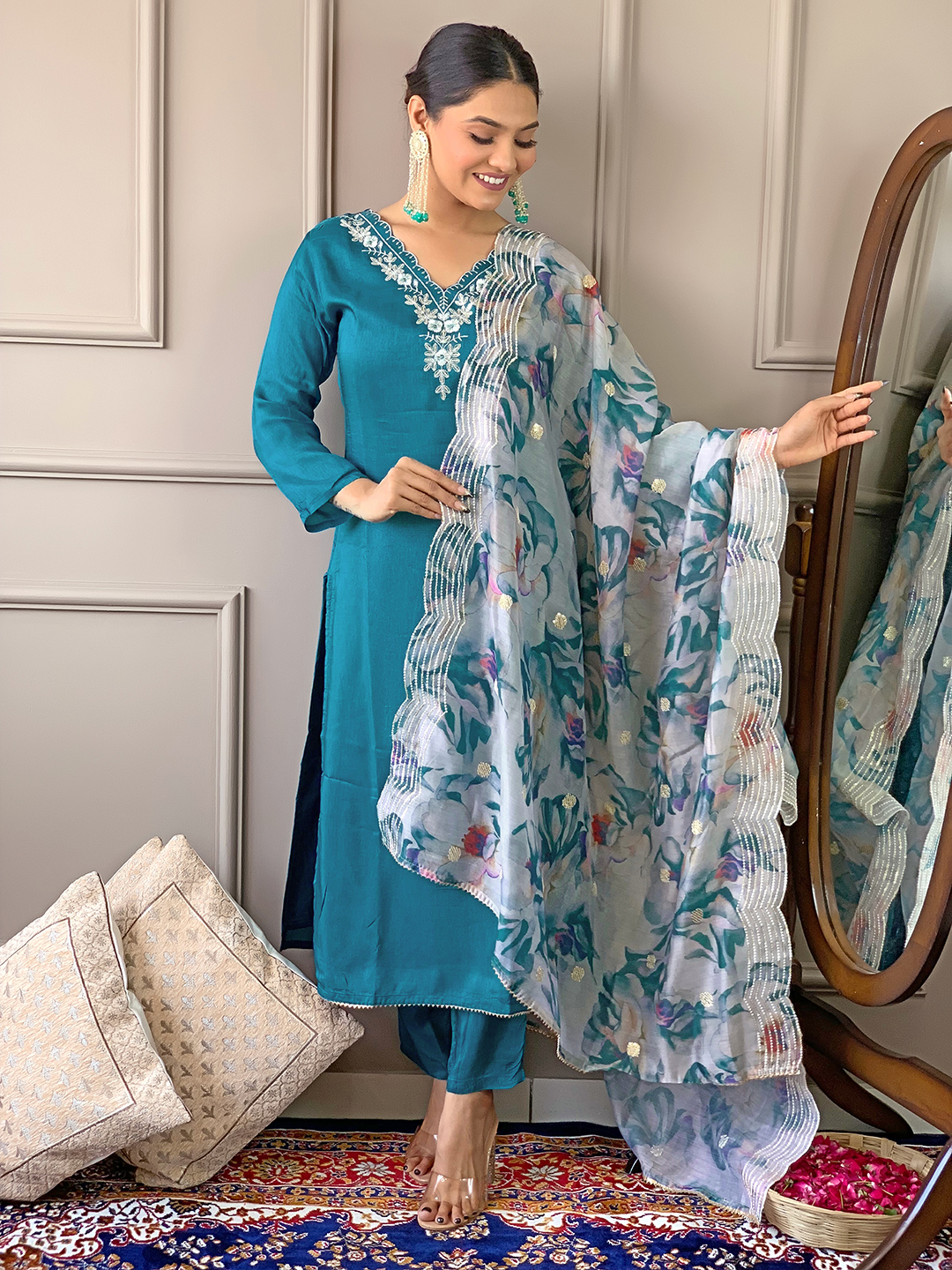
A straight kurta usually looks balanced with a dupatta that has a slim border, a small repeated motif or a lightly contrasting colour. Wearing the dupatta open over both shoulders creates vertical lines and can make the outfit appear longer. A single-side drape is more relaxed, but it may hide embroidery placed near one shoulder.
Rust Orange Embroidered Readymade Suit Set for Women can be styled with a simple open fall when the kurta embroidery already provides a focal point. The warm colour is strong enough to lead the outfit, so an overly broad contrasting border could make the upper body appear visually wider.
Anarkali suits and longer falls
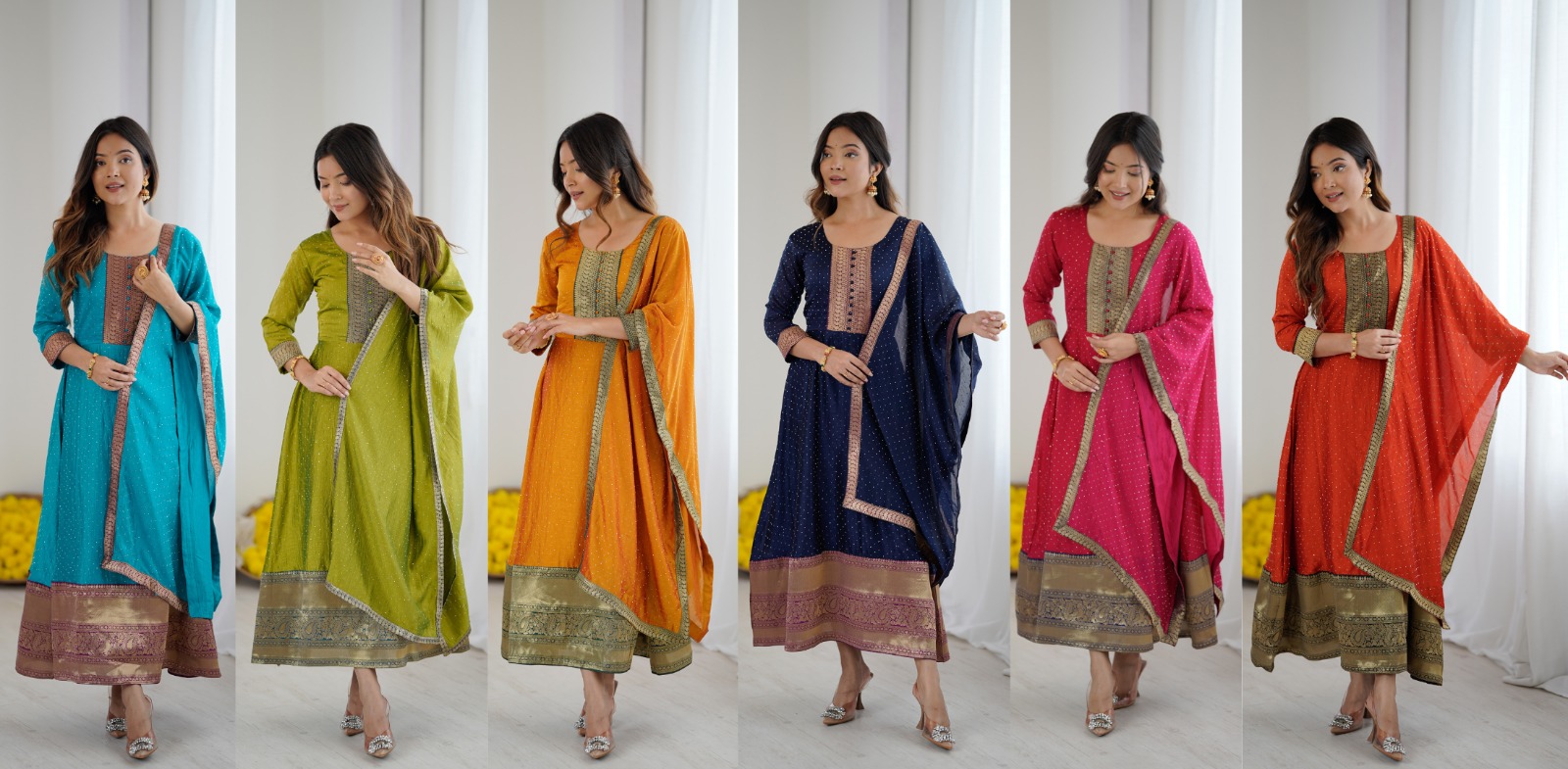
Anarkali suits pair well with dupattas that have enough length to follow the flared hem visually. A narrow front pleat and one shoulder placement keep the torso neat, while allowing the remaining fabric to fall beside the flare. A very stiff or short dupatta can interrupt the movement of an Anarkali.
Ladies Dress Anarkali Salwar Suits is an useful collection to browse when comparing this relationship between flare and drape. Look for the hem, sleeve and neckline details before focusing on the dupatta border, because the most attractive border can't correct a disproportionate overall silhouette.
Palazzo and wide-leg bottoms
Palazzo suits already create width below the waist, so a dupatta with moderate volume usually produces the cleanest result. A shoulder drape with narrow pleats or a front-open fall keeps the upper half defined. Very large motifs placed across the chest can compete with the wide-leg shape.
Unstitched suit materials
Unstitched suit materials allow customisation of kurta length, sleeve width, trouser shape and dupatta dimensions. Ask the tailor to consider the finished garment as one composition; a short kurta with a very wide border may need a simpler bottom, while a long kurta can carry more border detail without looking crowded.
How can colour and border placement improve a dupatta?
Colour and border placement improve a dupatta when they guide the eye toward the face and create a deliberate connection with the kurta. Matching one small element, such as embroidery thread or zari tone, is usually enough to make contrasting pieces look coordinated.
Dark suits can take metallic, jewel-toned or softly contrasting dupattas, but the level of contrast should reflect the occasion. Black Red Fendy Silk 3 Piece Readymade Salwar Suit Set already uses a high-impact colour relationship. A red-edged, black-based or muted metallic dupatta can reinforce the palette, whereas a third bright colour may make the outfit feel fragmented.
Black White Floral Embroidered Readymade Salwar Suit shows the usefulness of a neutral base. A black-and-white suit can be kept monochromatic for a modern appearance or given a single accent through a red, emerald or wine dupatta. The accent should appear once more in jewellery, footwear or a small accessory to make the styling intentional.
Border width matters as much as colour. A border of roughly 2 to 4 centimetres gives definition without dominating a daily or semi-formal suit. A wider border of 6 centimetres or more creates a festive statement and needs a relatively simple drape. Border placement along one long edge can be shown clearly over the shoulder, while borders on all four sides create a framed effect when the dupatta is worn open.
Which dupatta drapes are practical for real occasions?
The most practical dupatta drape is the one that stays secure, shows the garment's detail and allows comfortable movement. Pinning the shoulder fold discreetly is often more useful than repeatedly readjusting a loose scarf.
For work and daytime gatherings
The two-shoulder open drape gives the neatest coverage for work, family visits and daytime events. Fold the dupatta lengthwise once, place the centre behind the neck, and let both ends fall evenly over the front. This method works especially well with lightweight Chanderi because it creates clean vertical lines without adding much bulk.
An one-shoulder drape is faster and more relaxed. Place the dupatta over one shoulder and secure the opposite side near the waist if the fabric keeps shifting. The method suits embroidered straight suits when the front of the kurta needs to remain visible.
For festive functions
A front-pleated shoulder drape is reliable for festive wear because it displays the border and keeps the neckline visible. Make five to seven even pleats, place them over one shoulder, and allow the remaining length to fall behind or across the opposite arm. A concealed safety pin can protect the pleats without showing on photographs.
A head-covering drape is appropriate for some family and religious settings, but fabric weight becomes important. A heavy zari border can pull at the hair or neckline, so place the border along the outer edge and use a lightweight base. Comfort matters for events lasting three hours or more.
For photographs
A diagonal front drape creates movement in photographs, particularly with a solid kurta. Place the dupatta over one shoulder and bring the lower end across the opposite side of the body, leaving enough fabric to show the border. Avoid bunching the fabric at the waist because tight folds can obscure embroidery and add unwanted bulk.
How should you buy the latest salwar suit dupatta designs online?
Buying the latest salwar suit dupatta designs online requires checking construction details beyond the product photograph. Start with the complete set description and confirm whether the garment is ready-made, semi-stitched or unstitched.
- Check the fabric name: Chanderi, viscose, silk-look and zari-woven materials behave differently under pleating and pinning.
- Check dimensions: A dupatta around 2.25 metres can support common shoulder drapes, but personal height and preferred coverage may require more length.
- Inspect the border: Note whether the border runs along one edge, two edges or all four sides, and whether lace, zari or embroidery adds weight.
- Compare lining and transparency: Sheer dupattas may need a suitable kurta colour underneath, while dense fabrics need enough shoulder support.
- Read the care information: Embroidery, sequins and metallic zari can require gentle cleaning and careful storage.
- Plan the full outfit: Jewellery, footwear and hairstyle should not compete with a broad border or high neckline.
Sale collections can be useful for comparing construction and colour at different price points, but discount percentage should not replace fabric inspection. Salwar Suits with 30% Off, Salwar Suits Flat 40% Off and Salwar Suits On Sale may help narrow a budget, while Dress Materials is more suitable when tailoring control matters more than immediate wear.
Readymade sets are convenient when the proportions already suit you and the event is close. Customised materials are better when you need a particular kurta length, sleeve fit or dupatta width. The right choice depends on alteration needs, not simply on whether the item is labelled designer or festive.
How do you care for an embroidered or zari dupatta?
An embroidered or zari dupatta should be stored clean, dry and loosely folded with soft tissue between heavy embellishment. Care instructions from the garment should take priority, but gentle handling is safer than routine machine washing for sequin, moti, lace and metallic thread work.
Air the dupatta after wearing it, then spot-test any cleaning method on an inconspicuous section. Avoid spraying perfume, hair spray or deodorant directly onto zari and sequins because alcohol and moisture can affect shine or adhesive finishes. Fold embroidered sections inward rather than allowing embellishments to rub against other garments.
Use a broad hanger only when the fabric is light and the garment won't stretch; long-term hanging can distort a heavy dupatta. For Chanderi, fold along existing creases and store away from direct sunlight to reduce colour fading. For zari-woven materials, a breathable cotton cover is preferable to sealed plastic storage.
The best dupatta isn't necessarily the most ornate one. A balanced border, suitable fabric weight, secure drape and colour connection can make one salwar suit work for several settings. Once those practical factors are clear, current design details become easier to choose with confidence.
Questions readers ask about salwar suit dupattas
These answers address the most common decisions around fabric, draping, borders and online buying.
Practical Questions About Choosing a Salwar Suit Dupatta
Which dupatta is best for a straight salwar suit?
A lightweight dupatta with a narrow or medium border is usually best for a straight salwar suit. Chanderi, soft viscose and lightly embroidered fabrics create vertical lines without overwhelming the kurta. An open two-shoulder drape shows the straight silhouette clearly.
How long should a salwar suit dupatta be?
A dupatta around 2.25 metres generally supports common shoulder and front-pleated drapes, although taller wearers or those wanting head coverage may prefer more length. The required length also depends on whether the fabric is folded, wrapped or worn open. Always compare the listed dimensions with your height and preferred styling.
Can a heavy zari dupatta be worn with an embroidered suit?
A heavy zari dupatta can be worn with an embroidered suit when both pieces share a colour or metallic detail and the rest of the outfit remains restrained. If the kurta already has sequins, lace and dense embroidery, choose a zari border with a simpler base. This prevents the neckline and upper body from looking overcrowded.
Which dupatta drape is best for a wedding or festive function?
A front-pleated one-shoulder drape is a dependable choice for weddings and festive functions because it displays the border while keeping the fabric controlled. Pinning the shoulder pleats helps the drape stay in place during movement. A head-covering style can be added when the setting calls for more coverage.
How can I style a black-and-white salwar suit with a dupatta?
A black-and-white salwar suit can be styled with a monochrome dupatta for a clean modern look or a single accent colour such as red, wine or emerald for contrast. Repeat the accent in jewellery, footwear or a small accessory. Avoid introducing several unrelated bright colours.
Is an unstitched salwar suit material better than a ready-made set?
An unstitched salwar suit material is better when you need control over kurta length, sleeve fit, trouser shape or dupatta dimensions. A ready-made set is more convenient when the standard measurements suit you and the outfit is needed quickly. Tailoring time and alteration cost should be included in the comparison.