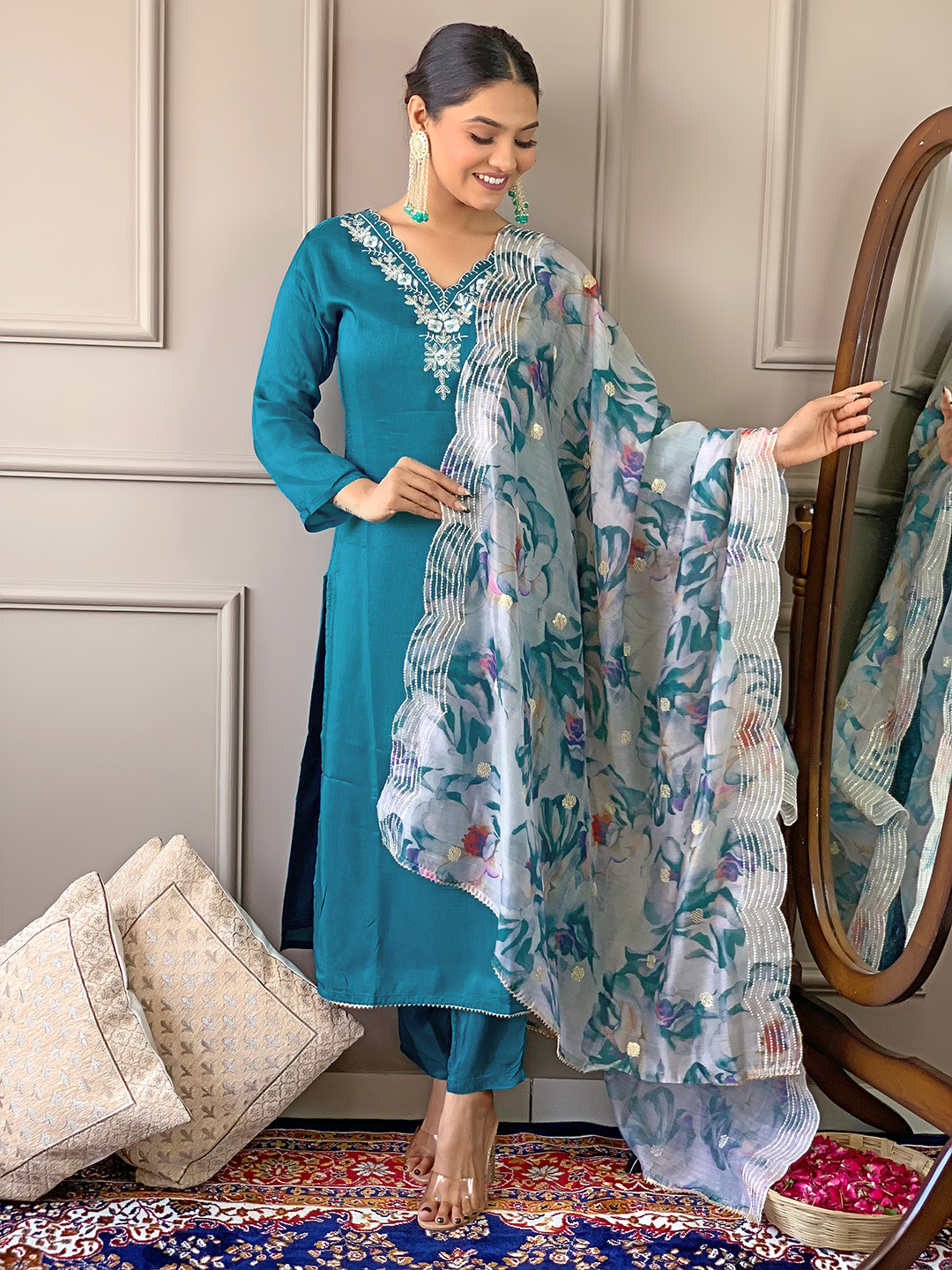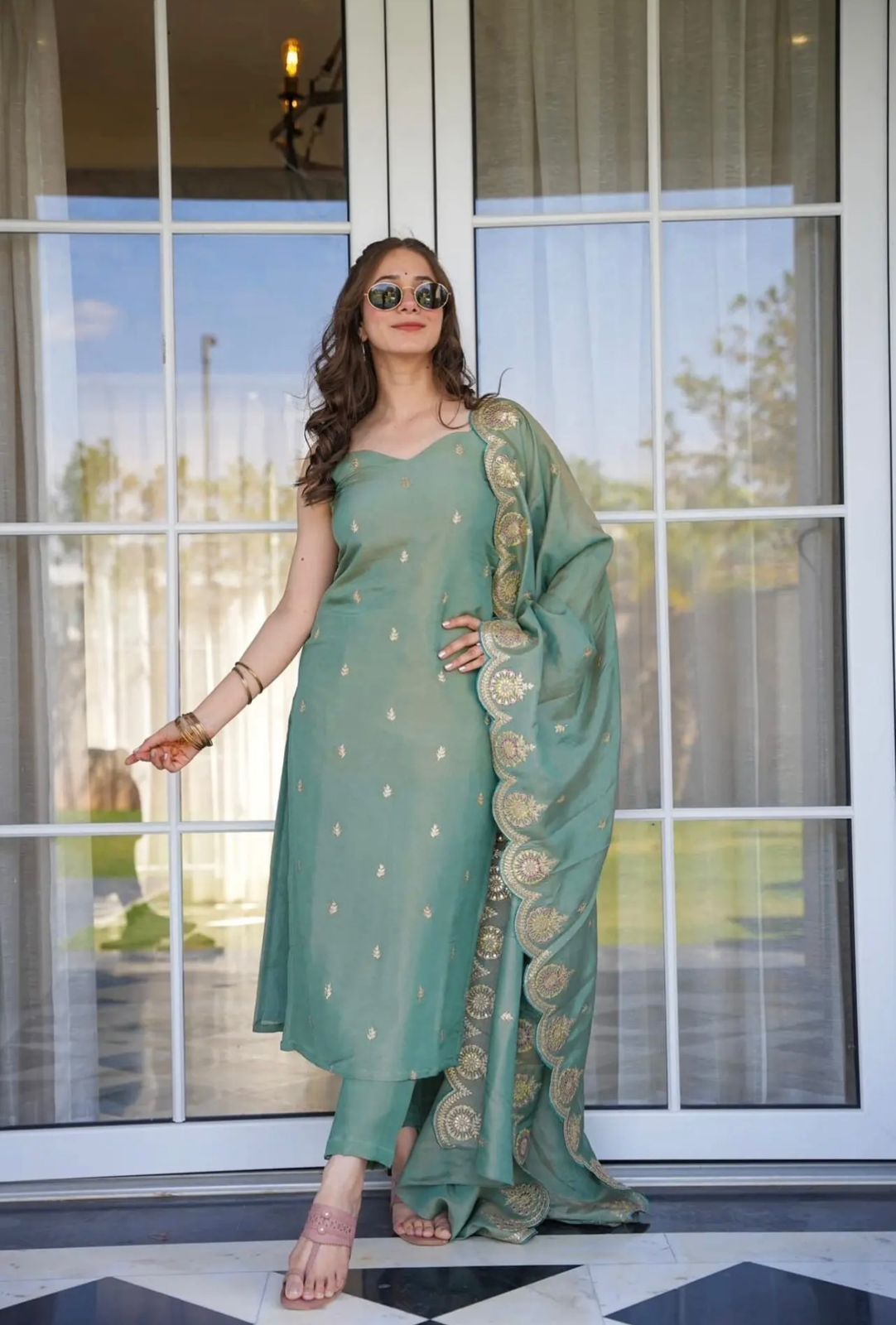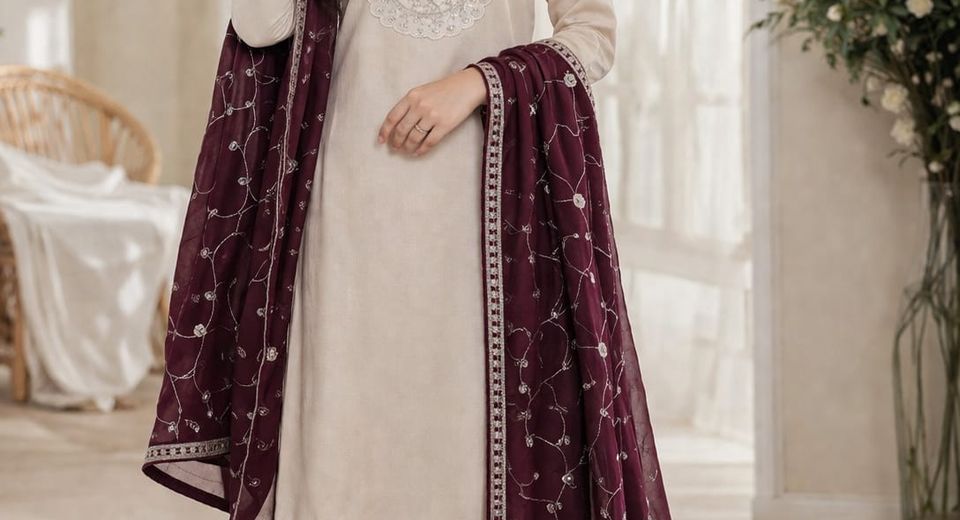
The latest salwar suit designs and styles are moving beyond a single definition of the traditional salwar kameez. Current wardrobes include straight kurta sets, Anarkali suits, palazzo suits, sharara-inspired bottoms and coordinated three-piece outfits, with each silhouette solving a different dressing need. The most useful choice depends on the cut, fabric, level of embroidery and the occasion-not simply on whether a colour is trending.
A practical way to shop is to decide three things first: how much movement you need, how formal the event will be and whether you want a ready-to-wear outfit or a custom fit. A cotton daily suit, a Chanderi festive set and a heavily embroidered wedding outfit may all be called salwar suits, but they behave very differently in Indian weather and social settings.
Which latest salwar suit designs and styles suit different occasions?
Straight suits suit work and daytime gatherings, Anarkali suits suit festive events, and richer three-piece or zari-accented sets suit weddings and formal celebrations. Matching the silhouette to the occasion makes an outfit look considered without requiring excessive embellishment.
For office wear and regular daytime use
A straight kurta with tapered trousers, cigarette pants or a modest salwar creates a clean outline that works well for commuting and desk-based days. Choose breathable cotton, cotton blends, Chanderi or lightweight viscose, depending on the season. Small floral embroidery, restrained woven motifs and solid colour blocks usually look more versatile than dense all-over decoration.
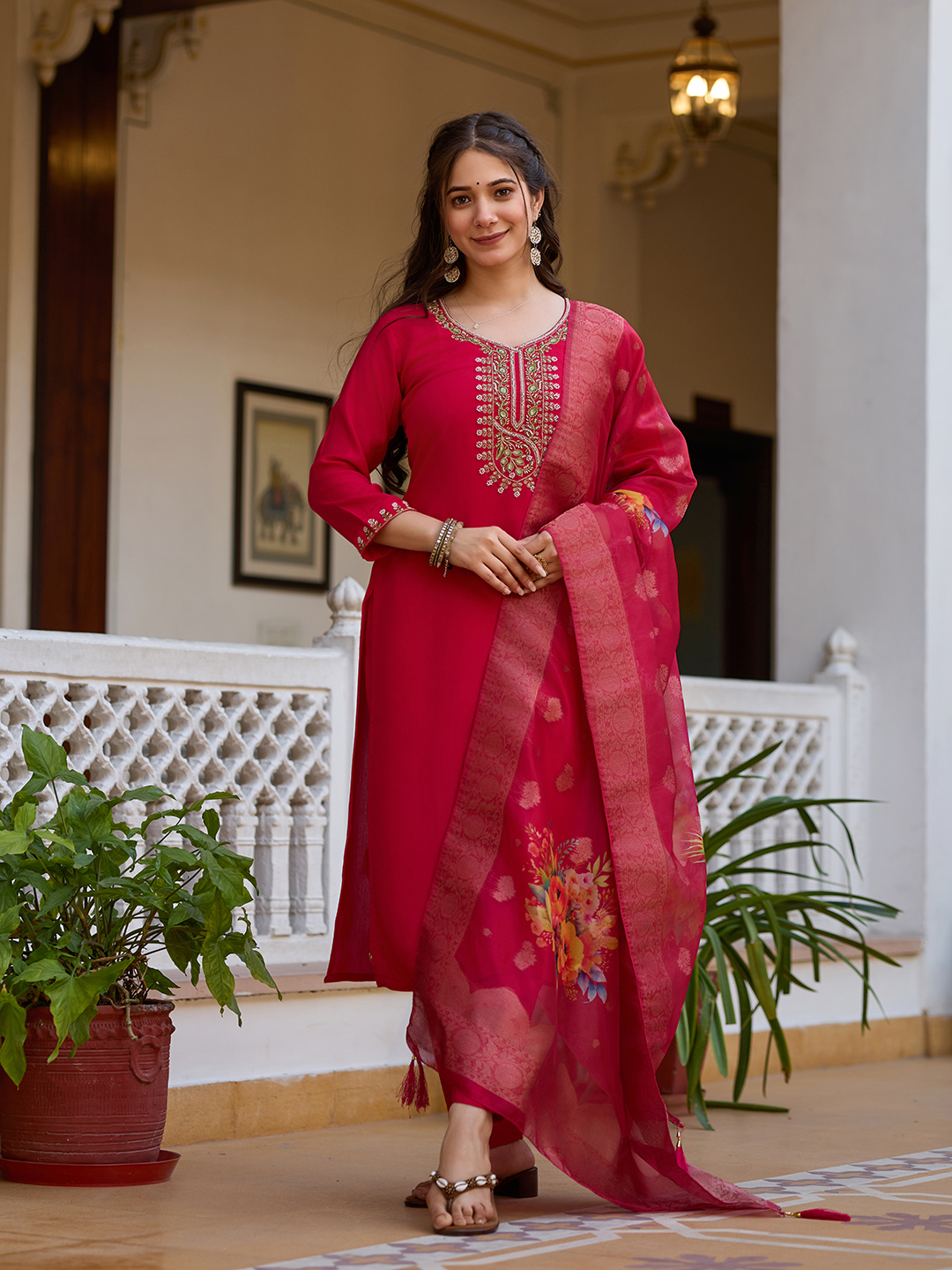
The Off White Floral Embroidered Straight Suit Set demonstrates why a straight cut remains dependable: the vertical line is easy to style, while an off-white base allows a contrasting dupatta, tan footwear or muted jewellery. The Elegant Sky Blue Woven Ethnic Suit Set offers another useful daytime direction because woven texture can make a simple outfit look finished without the weight of heavy threadwork.
For puja, family lunches and festive afternoons
For daytime festive dressing, choose a softly structured kurta with a breathable fabric and one noticeable detail such as woven texture, a printed dupatta or floral embroidery. Pastels, marigold yellow, coral, lavender, rust and ivory photograph well in natural light and don't feel as severe as very dark colours during the day.
The Elegant Beige Vichitra Silk Embroidered Kurta Set for Women works as a useful example of a dressed-up neutral. Beige and silk-like sheen can be made more festive with gold earrings, while a lighter dupatta keeps the outfit suitable for an afternoon rather than only an evening function. The Rust Orange Embroidered Readymade Suit Set brings stronger colour into the same category and can be balanced with antique-gold accessories.
For weddings and evening celebrations
Anarkali suits, velvet-touch fabrics, silk blends, zari details and layered dupattas create the visual richness expected at evening celebrations. A floor-skimming Anarkali needs enough hem clearance for walking, whereas a shorter kurta with a palazzo or sharara can feel easier at a crowded reception.
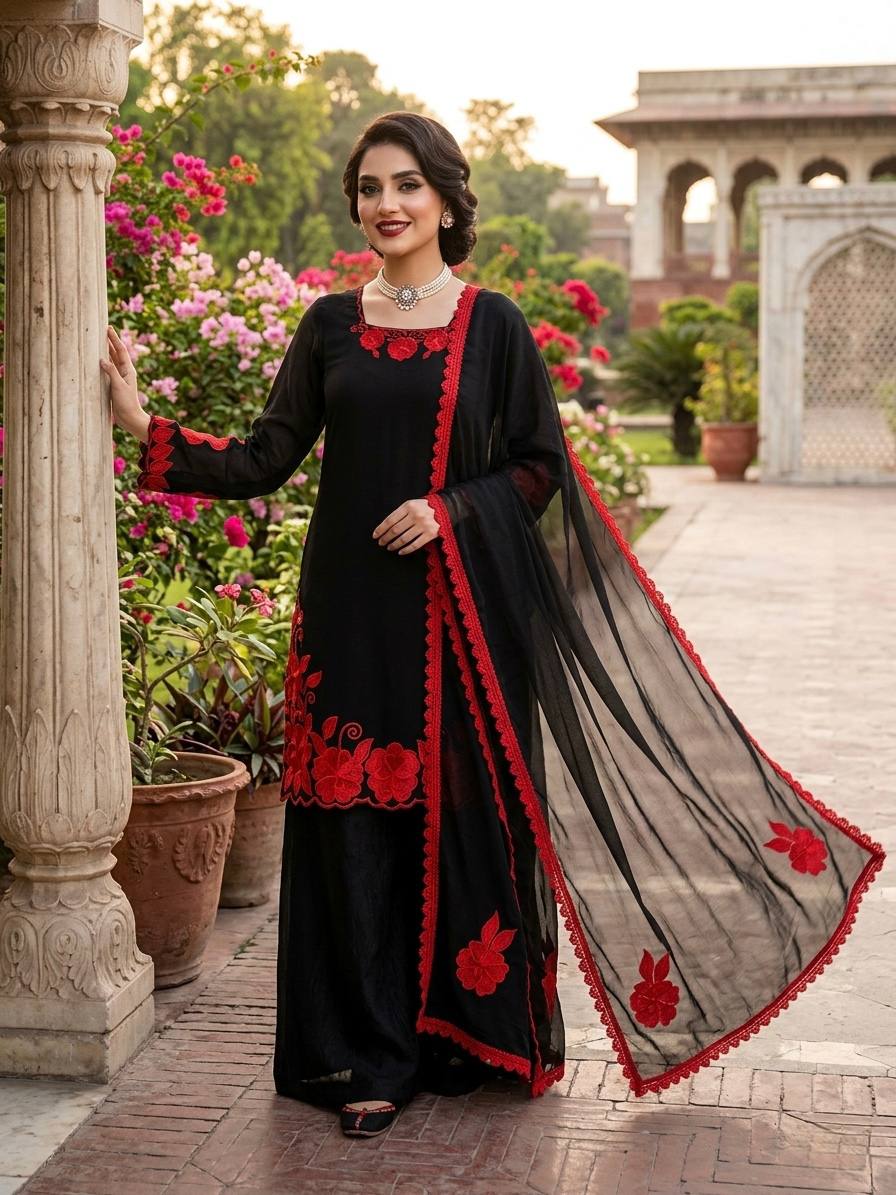
The Black Red Fendy Silk 3 Piece Readymade Salwar Suit Set shows how a high-contrast palette can provide drama without requiring an oversized silhouette. A black base paired with red accents is especially effective with one metal family of jewellery, such as gold or antique gold, rather than several competing finishes.
What silhouettes define current salwar suit styling?
Current salwar suit styling is defined by the straight suit, Anarkali, palazzo suit, Punjabi-inspired suit and three-piece readymade set. Each silhouette changes proportions, movement and the amount of styling required.
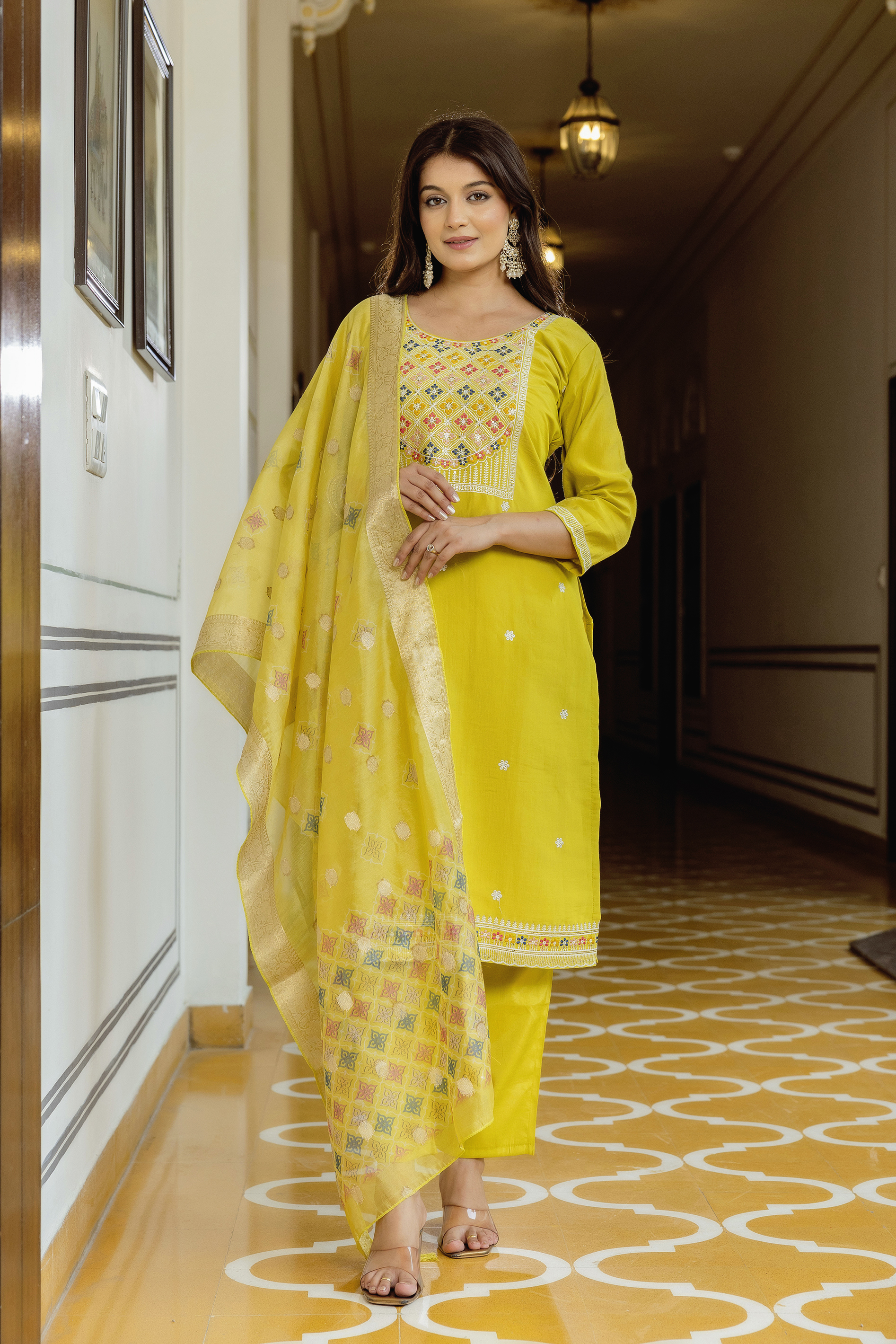
Straight suits
Straight suits fall in a relatively direct line from the shoulder to the hem and are among the easiest options to repeat. The cut works with cigarette pants, churidar trousers or a narrow salwar. A side slit can improve walking comfort, but the slit should not pull open when you sit or climb stairs.
Straight suits are also forgiving when you want to alter the styling. A matching dupatta creates a streamlined look, while a contrasting dupatta changes the outfit's character. The Black White Floral Embroidered Readymade Salwar Suit illustrates how a monochrome base can handle coloured footwear, a bright bag or silver-toned jewellery.
Anarkali suits
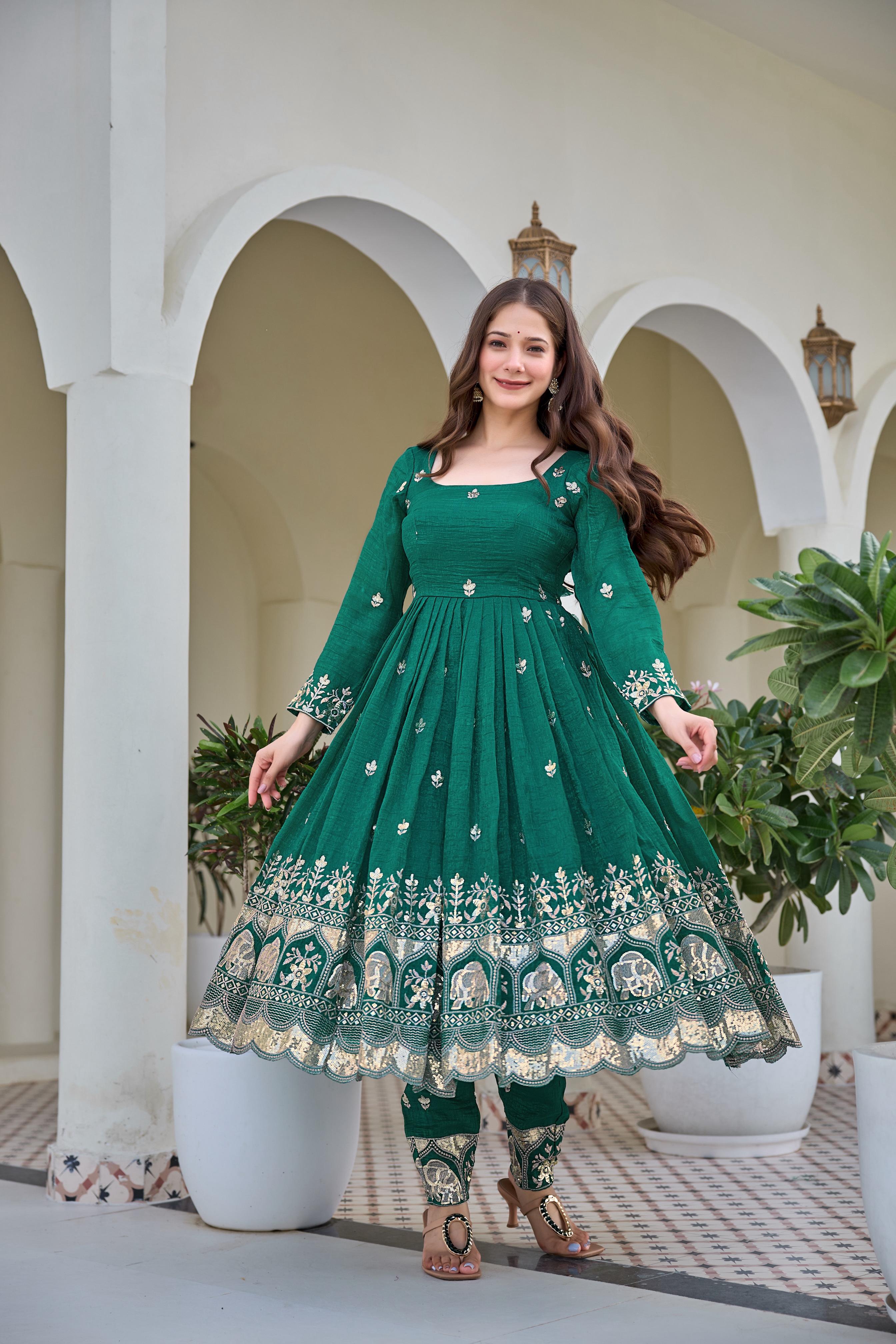
Anarkali suits flare from the waist or upper body and create movement through panels or gathers. Anarkali suits are effective for festive events because the flare gives visual volume even when the embroidery is limited to the yoke, sleeves or border.
Check the flare before buying: a wide hem should not catch under your feet, and the waist seam should sit at the intended point rather than several centimetres too high or low. Shorter Anarkali lengths pair well with trousers for a contemporary proportion, while longer versions need footwear selected before hemming.
Palazzo and wide-leg suits
Palazzo suits balance a fitted or semi-fitted kurta with wide-leg trousers. The proportion works best when the kurta finishes around the hip, mid-thigh or knee, depending on the width of the palazzo. Very wide trousers need a fabric that drapes rather than stands away from the body.
The Lavender Chanderi Kurta with Olive Embroidered Palazzo Suit uses colour contrast to make the lower half of the outfit part of the design rather than an afterthought. Chanderi has a light, elegant hand, so the set can suit a daytime celebration when paired with delicate earrings and low-profile footwear.
Punjabi and three-piece styles
Punjabi-inspired suits typically use a shorter or mid-length kurta with a salwar, Patiala-style bottom or straight trouser, while a three-piece set includes the kurta, bottom and dupatta as coordinated elements. Three-piece sets are useful when you want an immediately complete outfit, but each component should still work with other pieces in your wardrobe.
Readymade three-piece sets are particularly practical for last-minute dressing because the colour, trim and proportions have already been resolved. The Elegant Sky Blue Woven Ethnic Suit Set can be worn with its coordinated elements for a polished look or separated into simpler combinations with neutral trousers and a plain dupatta.
Which fabrics work best in salwar suits?
Cotton and breathable blends work best for heat and repeated daytime use, Chanderi and silk blends suit light festive dressing, and fabrics with zari or dense embroidery are better reserved for occasions where structure and decoration matter more than all-day ease.
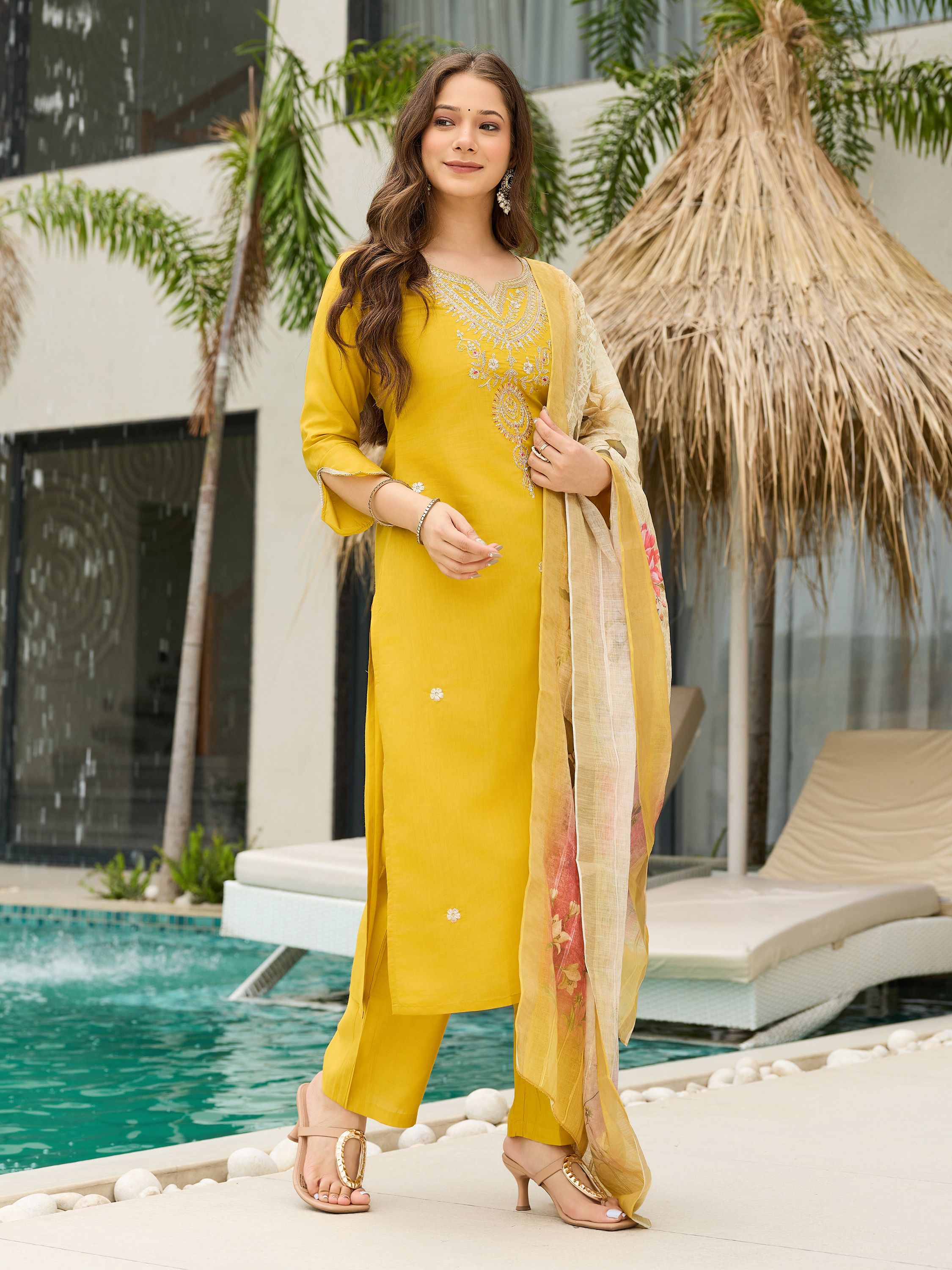
Breathable fabrics for Indian summers
Cotton absorbs moisture and remains comfortable in hot weather, although cotton garments can crease more readily than synthetic blends. Cotton voile, mulmul and lightweight cotton blends are good choices for daily wear, provided the fabric isn't transparent under strong light. A lining may improve opacity but can reduce airflow, so check whether the lining stops at the bodice or continues through the full garment.
Rayon and viscose drape smoothly and often resist the stiff appearance associated with very crisp cotton. However, viscose can shrink or lose shape if washed aggressively. Read the care label, and avoid assuming that a fluid fabric can tolerate hot water or a high-heat dryer.
Festive fabrics and surface details
Chanderi is valued for its light body and subtle sheen, making it suitable for festive daytime outfits. Silk blends offer a richer fall and are useful for evening dressing, but they may need more careful storage and pressing. Zari adds metallic texture and catches light, while embroidery adds dimension through thread, beads or sequins.
The Maroon Paithani Style Zari Woven Unstitched Suit Material is a reminder that woven detail can carry an outfit without dense surface embroidery. Unstitched material gives more control over kurta length, sleeve shape and trouser style, but tailoring time must be included in the buying plan. Allow at least several days for basic stitching and longer when adding lining, piping or custom embellishment.
How should you choose colour, print and embroidery?
Choose colour according to light, venue and repeat-wear potential, then use print or embroidery to establish the outfit's level of formality. A strong colour doesn't need heavy decoration, and a neutral suit can look festive through texture, zari or a contrasting dupatta.
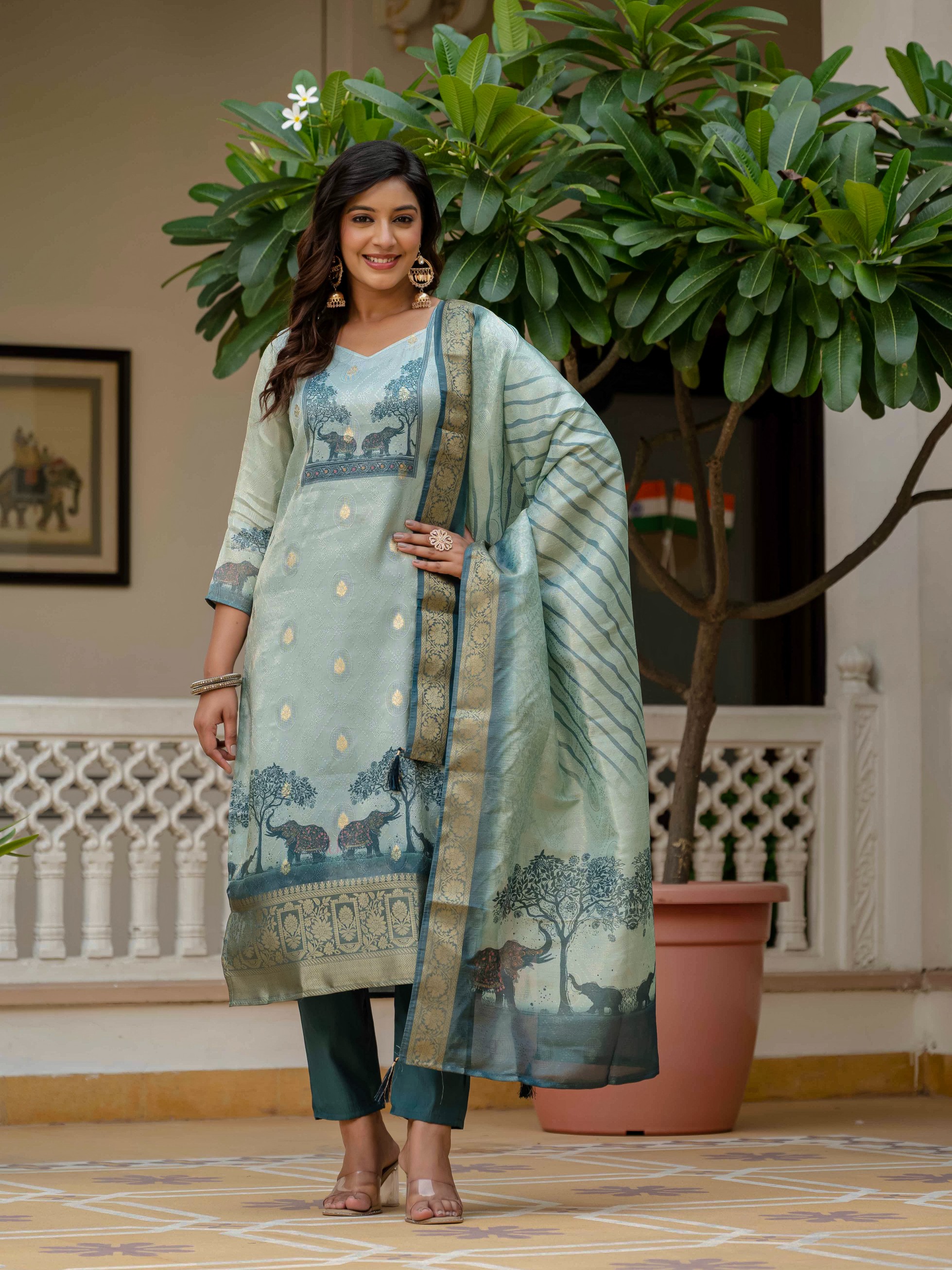
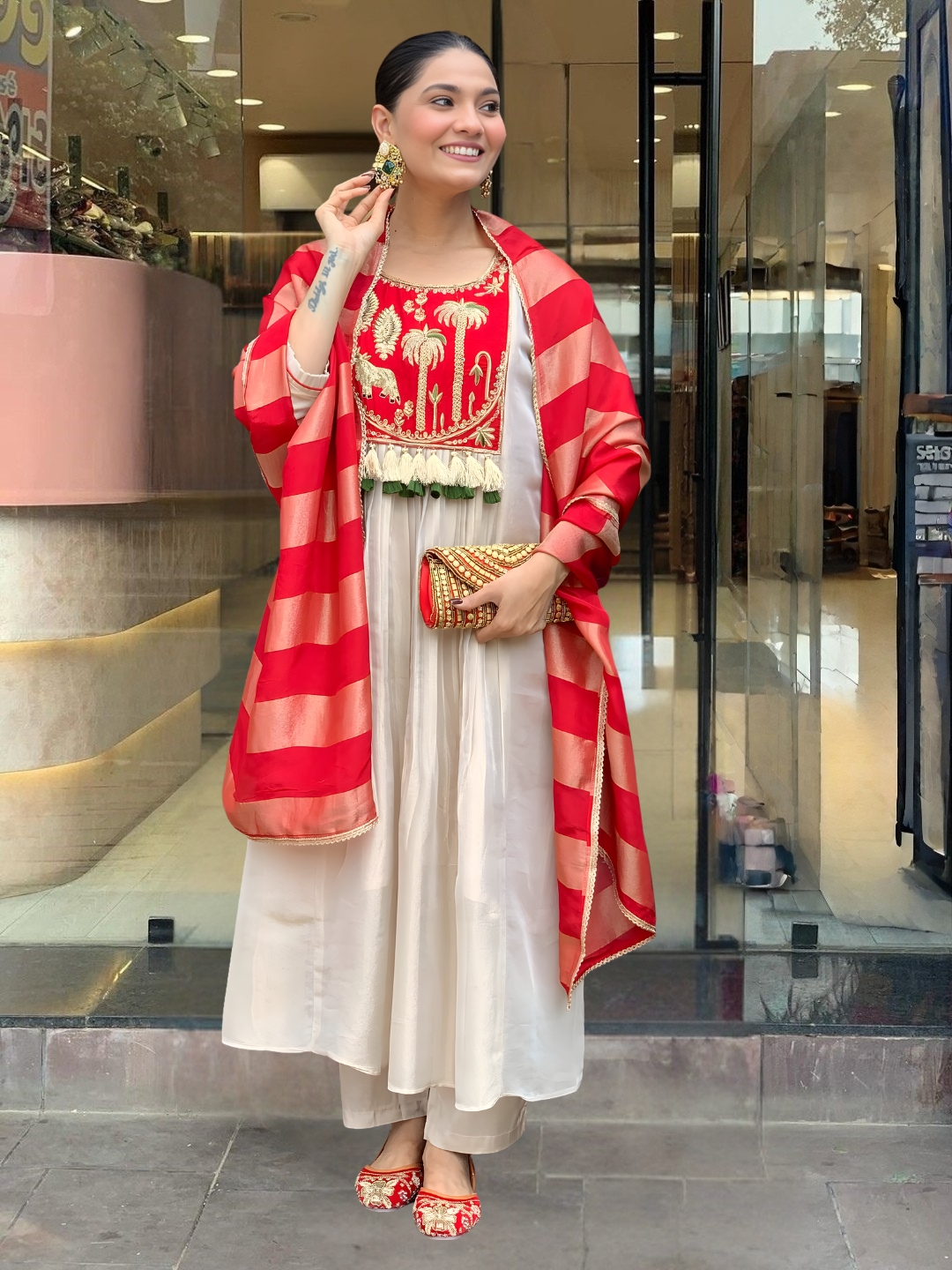
For daytime events, ivory, beige, sky blue, lavender, peach, rust and leaf green create a lighter visual effect. For evening functions, maroon, black, wine, emerald and deep red offer more depth under artificial lighting. Black and white provide a useful base for statement accessories, while red, rust and maroon can be softened with beige, cream or muted metallics.
Floral embroidery gives a softer impression than geometric placement, while woven motifs create interest without the raised texture of threadwork. Border embroidery can lengthen the visual line of a dupatta or define a sleeve, but a border placed too close to the hem may be shortened during alterations. Inspect the placement before buying an outfit that will need hemming.
The Black White Floral Embroidered Readymade Salwar Suit is suited to accessory-led styling because its monochrome palette leaves room for colour. The Maroon Paithani Style Zari Woven Unstitched Suit Material takes the opposite approach: its zari-led surface can remain the focal point with a restrained blouse-style neckline and limited jewellery.
What should you check before buying a readymade or unstitched suit?
Check garment measurements, fabric composition, lining, transparency, sleeve comfort, trouser rise and alteration allowance before buying a salwar suit. Product-size labels are less reliable than actual garment measurements.
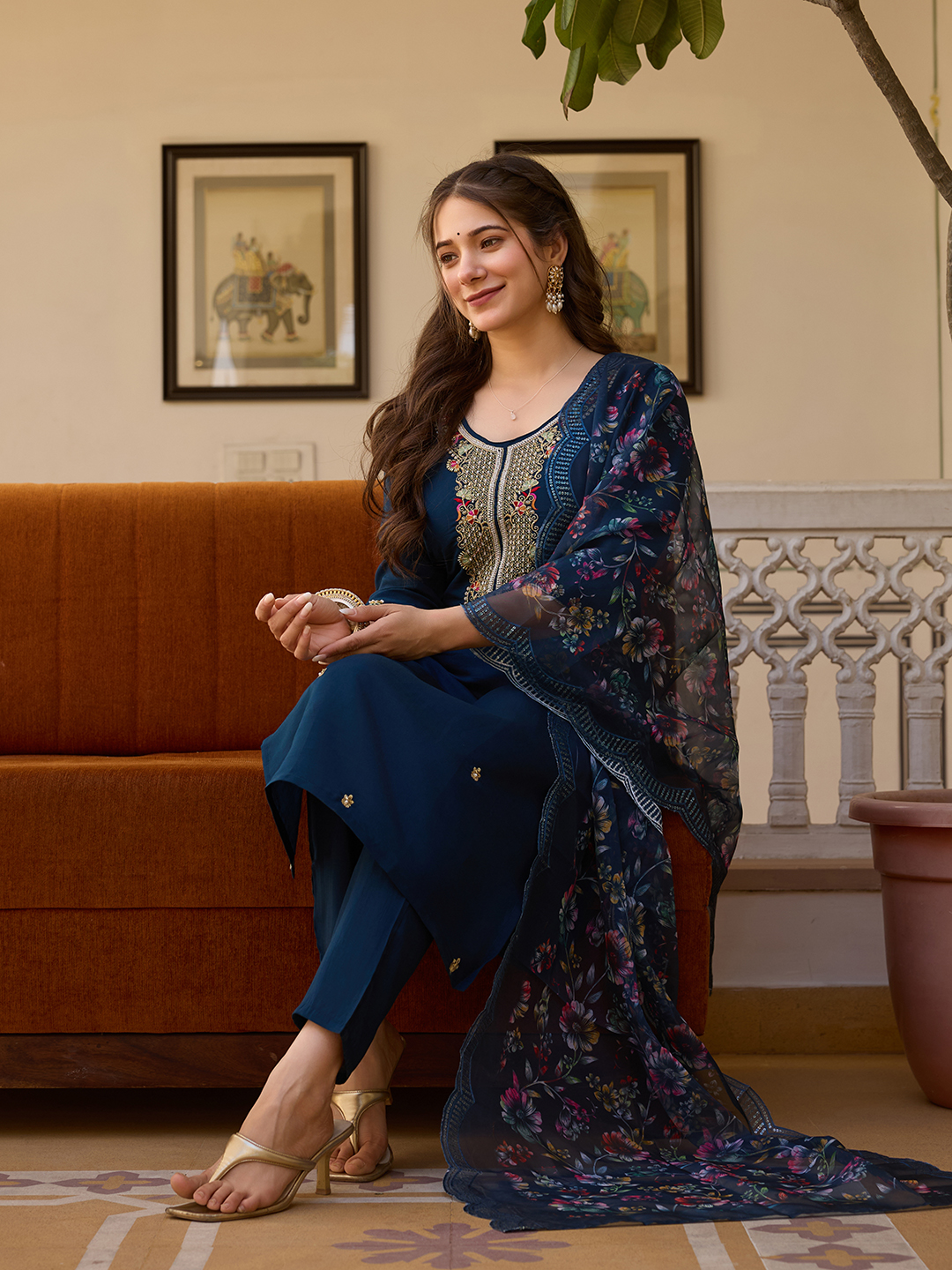
Measure a well-fitting kurta from shoulder to shoulder, chest, waist, hip and shoulder-to-hem length, then compare those numbers with the size chart. For bottoms, check waist, hip, rise, inseam and opening at the ankle. A narrow ankle opening may not pass over the foot comfortably, while a very wide palazzo needs enough length to avoid dragging.
Readymade sets save tailoring time, but the shoulder and armhole are usually the hardest areas to alter neatly. Unstitched Dress Materials provide more control over proportions and are helpful when standard sizes don't match your measurements. Tailoring should include seam allowance, shrinkage risk and the footwear height you expect to wear.
Before placing an order, confirm whether the displayed set includes the dupatta, whether embellishment continues on the back, and whether the lining is included. Sale-led collections such as Salwar Suits with 30% Off, Salwar Suits Flat 40% Off and Salwar Suits On Sale can offer value, but a discount doesn't compensate for an unsuitable size or fabric that can't work in your climate.
How can you style a salwar suit without making it look repetitive?
Change one major element at a time-dupatta, footwear, jewellery, sleeve styling or bottom silhouette-to create a new look without buying a complete outfit. Repeating a suit becomes easier when the base colour works with at least three accessories already in your wardrobe.
A neutral suit can take a printed dupatta, coloured juttis or oxidised silver jewellery. A bright suit often benefits from beige, ivory or metallic accessories rather than another saturated colour. For an evening event, add structured earrings and a small clutch; for daytime, use a lighter bag and flat sandals to reduce visual weight.
Dupatta drape also changes the silhouette. A shoulder drape keeps the front clean, a neckline drape adds framing, and a relaxed one-shoulder fall creates movement but may need discreet pinning. Keep pins away from delicate Chanderi, zari and fine embroidery because repeated punctures can weaken the surface.
For a wider selection of silhouettes, the Ladies Dress Anarkali Salwar Suits collection is useful when you want flare and movement. A collection focused on Dress Materials is more suitable when custom tailoring matters. The best choice is the one that matches your time, measurements, climate and intended number of wears rather than the one with the most decoration.
How should salwar suits be cared for?
Care for salwar suits according to fibre and embellishment, using cool water, mild detergent and shade drying unless the care label gives different instructions. Proper storage prevents colour transfer, snagging and avoidable creasing.
Turn embroidered garments inside out before washing, keep zari away from harsh chemicals and avoid rubbing embellished areas. Dry garments flat or on a broad hanger when the fabric is vulnerable to shoulder stretching. Direct sunlight can fade strong dyes, especially red, rust, maroon and deep blue, so shade drying is safer.
Steam is usually gentler than pressing directly over embroidery, sequins or zari. If ironing is necessary, use a pressing cloth and the lowest suitable temperature. Fold heavily embellished dupattas with tissue or soft cotton between layers, and avoid hanging very heavy garments for months because the shoulder seams can bear excess weight.
With the right silhouette, fabric and care routine, the latest salwar suit designs and styles become practical wardrobe options rather than short-lived trend purchases. A well-chosen straight suit can serve work and lunches, a Chanderi palazzo set can cover festive afternoons, and a zari-rich suit can return for several celebrations when its care and styling are planned properly.
Questions to Ask Before Choosing a New Salwar Suit
Which salwar suit style is best for everyday wear?
A straight kurta with comfortable trousers or a simple salwar is usually the most practical everyday option. Cotton, lightweight blends and restrained embroidery offer better breathability, movement and repeat-wear value than heavily embellished fabrics.
Are Anarkali suits suitable for short women?
Anarkali suits can suit shorter women when the flare begins at the right point and the hem does not overwhelm the frame. A shorter length, a fitted yoke and a low-contrast dupatta can create a cleaner proportion; footwear should be selected before final hemming.
Which fabric is best for a salwar suit in summer?
Cotton is generally the most breathable choice for summer salwar suits, while lightweight Chanderi and suitable viscose blends can work for festive daytime dressing. Check lining and transparency because a heavy full lining can reduce airflow.
What is the difference between a ready-made salwar suit and unstitched suit material?
A ready-made salwar suit arrives with finished garment pieces and is faster to wear, while unstitched suit material must be tailored to your measurements. Unstitched material offers more control over length, sleeve shape, neckline and bottom style but requires additional tailoring time and cost.
How can I style a black and white salwar suit?
A black and white salwar suit can be styled with one strong accent colour, such as red, emerald, cobalt or rust, through footwear, a dupatta or jewellery. Silver accessories create a cooler look, while gold or antique-gold details make the outfit warmer and more festive.
How do I stop zari and embroidery from getting damaged?
Turn embellished garments inside out, wash them gently according to the care label and avoid direct heat on zari or embroidery. Store heavy pieces folded with soft tissue or cotton layers, and use steam or a pressing cloth instead of placing a hot iron directly on decoration.