

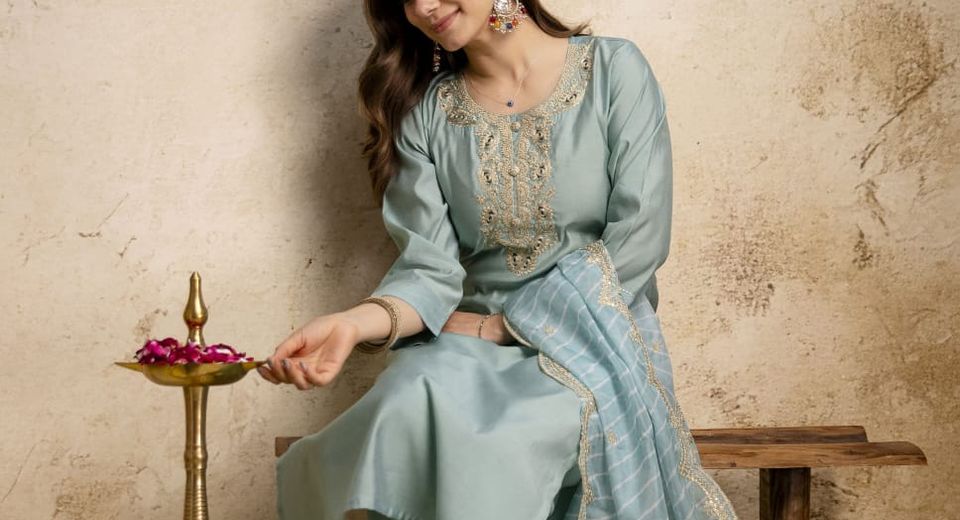
Latest Patiala Salwar Suit Designs are bringing Punjabi volume into wardrobes that also value lighter fabrics, practical fits and repeat wear. The defining feature is the salwar itself: numerous pleats gather into a narrow ankle or calf cuff, creating a rounded, draped silhouette below a relatively short kameez. A Patiala suit can look traditional with a phulkari-style dupatta, or contemporary with a solid kurta, slim accessories and minimal embroidery.
Choosing one successfully requires more than selecting a bright colour. Pleat depth, kameez length, fabric weight, waist construction and dupatta proportion all change how the outfit sits on the body. The guide below explains those decisions so you can distinguish a genuine Patiala silhouette from an ordinary salwar suit with extra gathers.
What makes a Patiala salwar different?
A Patiala salwar is identified by deep horizontal pleats, generous fabric volume and a gathered lower cuff that creates a distinctly rounded drape. The traditional silhouette usually includes a shorter kameez, although current versions may use a knee-length kurta for easier everyday styling.
Traditional Patiala tailoring uses substantially more cloth than a straight salwar because the fabric is folded into repeated pleats around the waist and hips. The pleats are not merely decorative; they allow a wide range of movement while keeping the lower leg relatively neat. The upper waistband should feel secure without cutting into the waist, because excess pressure can flatten the pleats and make the salwar look bulky.
A Punjabi salwar and a Patiala salwar are related but not always identical terms. Punjabi salwars may have fewer pleats and a less exaggerated drop, while a classic Patiala usually has a fuller body and a more visible cuff. Online product photographs can be misleading, so check the garment measurements and look for descriptions that mention pleated volume, a gathered cuff or Patiala construction.
How much volume should a Patiala have?
A wearable Patiala generally needs enough volume to form clear folds without dragging at the knee or pooling heavily at the ankle. A moderate design is easier to sit in, layer with a dupatta and wear for several hours than an extremely wide version made from stiff fabric.
Petite wearers often find that medium-depth pleats with a 24- to 28-inch kameez work better than very deep gathers paired with a cropped top. Taller wearers can carry a fuller salwar and a longer kameez, provided the cuff remains visible. These are starting points rather than fixed rules because rise, waist placement and personal comfort also affect the final proportion.
Latest Patiala Salwar Suit Designs worth considering
Latest Patiala Salwar Suit Designs are moving in four useful directions: lighter fabric construction, coordinated three-piece sets, restrained embellishment and contrast styling. Each direction changes the outfit's best use, so the most fashionable option isn't automatically the most practical one.
1. Pastel Patiala suits with delicate embroidery
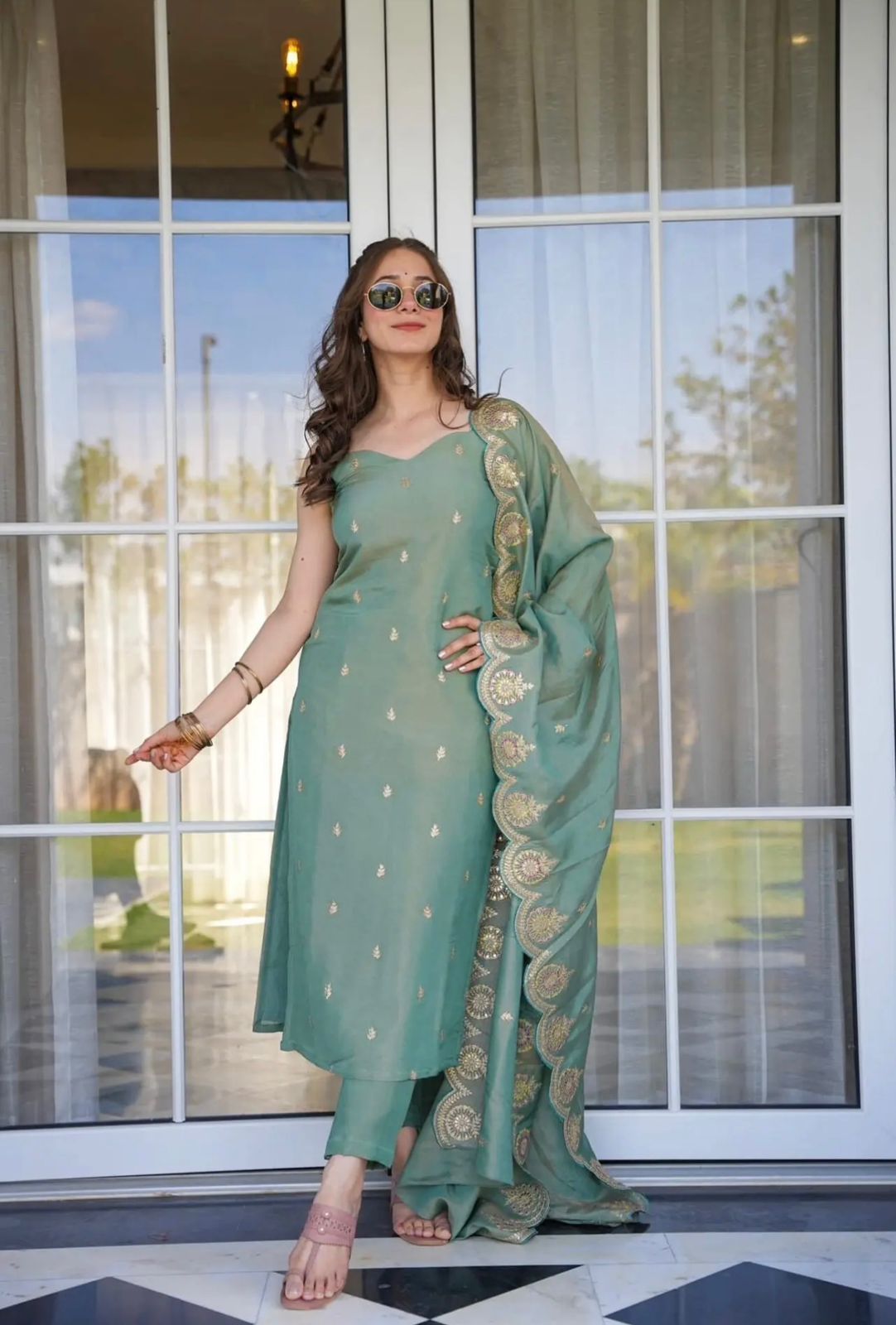
Pastel Patiala suits work well for daytime celebrations because pale blue, pistachio, blush and mint shades reflect light without looking visually heavy. A style such as Pastel Blue Embroidered Chanderi Kurta Set with Dupatta demonstrates how a lighter kurta-and-dupatta combination can provide festive polish without the dense shine of a wedding outfit.
Chanderi has a light hand and a subtle surface sheen, but Chanderi garments still need careful handling because rough bags, jewellery edges and machine agitation can catch the weave. If you adapt a Chanderi kurta to a Patiala silhouette, choose a salwar with enough body to hold pleats while keeping the upper layer airy.
2. Contrast Patiala sets with a shorter kameez
A contrast Patiala set uses a strongly different colour between the salwar, kameez and dupatta to make the pleated lower half more visible. Black with red, navy with pink or ivory with emerald can create definition without requiring heavy embroidery.
Black Red Fendy Silk 3 Piece Readymade Salwar Suit Set illustrates why a three-piece colour relationship matters: the kurta, bottom and dupatta can be coordinated while still giving the eye separate areas to read. For a true Patiala look, keep the top fitted enough to balance the fuller salwar and avoid a very flared anarkali over the pleats.
3. Zari and sequin versions for evening wear
Zari, sequin and lace detailing make a Patiala suit suitable for receptions, sangeet evenings and festive dinners, especially when the decoration is concentrated around the neckline, hem or dupatta border. Black Anarkali Suit Set with Sequin Zari and Moti Lace Work shows the impact of concentrated surface detail, although its anarkali volume creates a different silhouette from a classic short Patiala kameez.
A Patiala salwar with evening embellishment should use a lined, stable fabric so the pleats don't collapse under the weight of zari or beadwork. Heavy decoration at the ankle can also interfere with walking and footwear, so a bordered cuff is usually more comfortable than dense embroidery across every fold.
4. Paithani-inspired woven fabrics
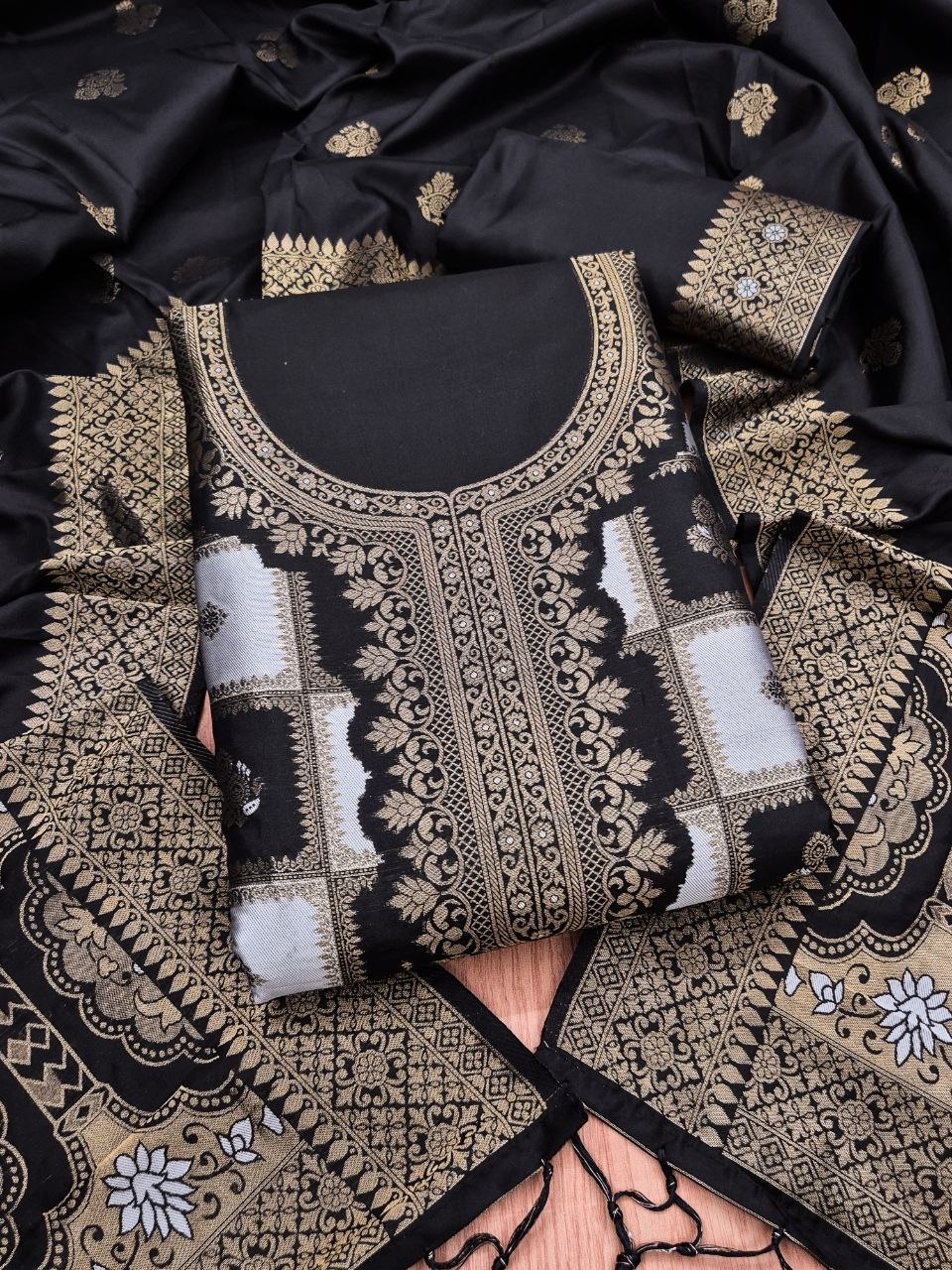
Paithani-style zari woven fabrics add a traditional Indian textile reference through woven motifs and metallic accents rather than surface-stitched embroidery. Pistachio Green Paithani Style Zari Woven Unstitched Suit Material, Royal Purple Paithani Style Zari Woven Unstitched Suit Material and Mint Green Paithani Style Zari Woven Unstitched Suit Material can inspire coordinated Patiala tailoring when the material is cut with sufficient width for pleats.
Unstitched dress material gives more control over rise, cuff width, kameez length and sleeve shape, but tailoring quality becomes important. Tell the tailor that the salwar needs a genuine pleated construction, not a narrow trouser pattern with elastic gathers. Ask for a test measurement at the waist and cuff before the final seams are closed.
Which fabrics work best for a Patiala suit?
Cotton, cotton blends, rayon, silk blends and lightweight woven fabrics can all work for Patiala suits, but the best choice depends on the required pleat behaviour and the weather. Breathable cotton is practical for daytime wear, while silk blends and zari-woven materials create more structure for celebrations.
Cotton holds crisp pleats and absorbs perspiration, making it useful for summer gatherings and regular wear. Rayon falls softly and feels fluid, but very thin rayon may make deep pleats look limp. Chanderi gives an elegant lightness, although lining may be required for opacity and shape. Fendy silk and similar silk blends can provide a richer fall for evening outfits, but they should not be treated like washable everyday cotton.
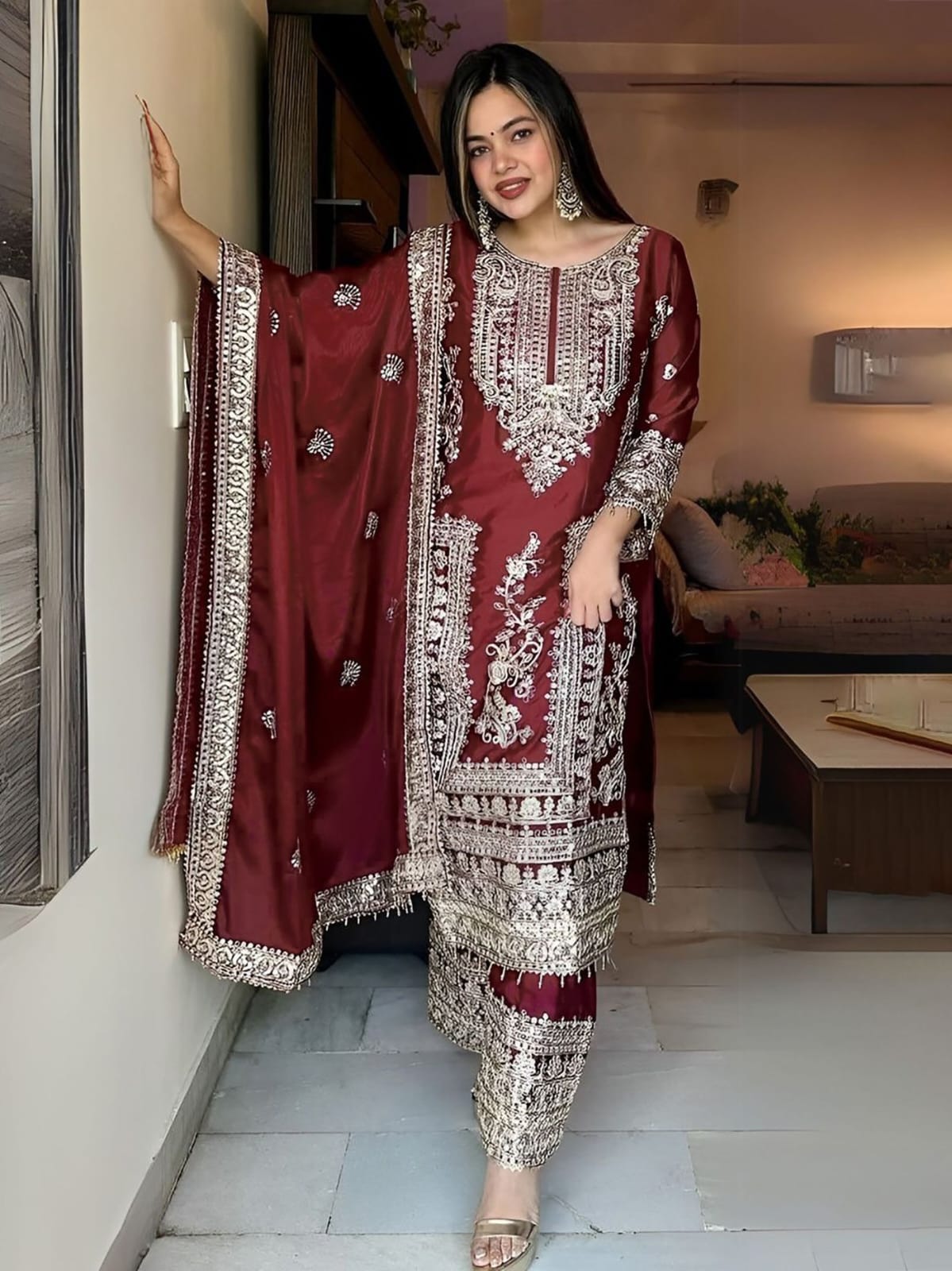
Rust Orange Embroidered Readymade Suit Set for Women is a useful reference for warm festive colour: rust orange works especially well with antique-gold accessories, beige sandals and a cream or contrasting dupatta. Black White Floral Embroidered Readymade Salwar Suit shows the opposite approach, using a high-contrast palette and floral detail that can be adapted to a more restrained Patiala base.
What should you check in the fabric specification?
Check fibre content, lining, transparency, wash instructions and embellishment before buying a Patiala suit. A fabric description that only says "silk" doesn't tell you whether the garment is pure silk, a silk blend or a synthetic satin-like weave.
For a ready-made suit, inspect whether the salwar has a stitched waistband, adjustable drawstring, elastic, or a combination of both. A drawstring allows small adjustments during the day, while a broad elastic band may feel more comfortable for sitting. The cuff should not be so tight that it restricts the calf or leaves a deep mark after a few hours.
How to choose the right Patiala fit and proportions
The right Patiala fit keeps the waist stable, gives the pleats room to open and places the kameez hem at a flattering point above or around the knee. Comfort at the rise is more important than choosing the smallest possible waist measurement.
Measure your natural waist, fullest hip, front rise and preferred cuff circumference. Compare those measurements with the garment chart rather than relying only on small, medium or large labels. For stitched sets, allow enough hip ease for sitting and climbing stairs; a Patiala salwar should not pull horizontally across the upper thigh.
The kameez length controls the visual balance. A short kameez makes the outfit look more traditional and shows more of the pleated salwar. A mid-thigh or knee-length kurta gives greater coverage and can feel easier for office-adjacent festive dressing, but the extra length may hide the upper folds. A side-slit kurta can restore movement when the hem is longer.
Shoulder fit and sleeve opening deserve equal attention. A shoulder seam that falls too far outward can make the entire outfit appear oversized, while a tight armhole becomes uncomfortable when the dupatta is draped across the chest. Three-quarter sleeves are versatile, but full sleeves may look more polished with a simple evening Patiala.
How to style a Patiala suit for different occasions
A Patiala suit becomes occasion-appropriate through the fabric, dupatta, jewellery and footwear rather than through pleats alone. The same salwar can move from a daytime celebration to a family dinner when the supporting pieces change.
For Haldi ceremony and daytime events
Choose breathable cotton, Chanderi or a light blend for a Haldi ceremony, and prioritise washable construction over fragile embellishment. Yellow, turmeric, green, coral and pastel shades suit daylight, while a compact jhumka, braided hair and flat Punjabi juttis keep the outfit practical.
Use a lightweight dupatta with a secure shoulder tuck so the fabric doesn't trail near turmeric paste, food or outdoor seating. If the garment includes zari, keep metallic accessories limited to one statement element because strong sunlight can make multiple shiny surfaces look crowded.
For weddings and festive evenings
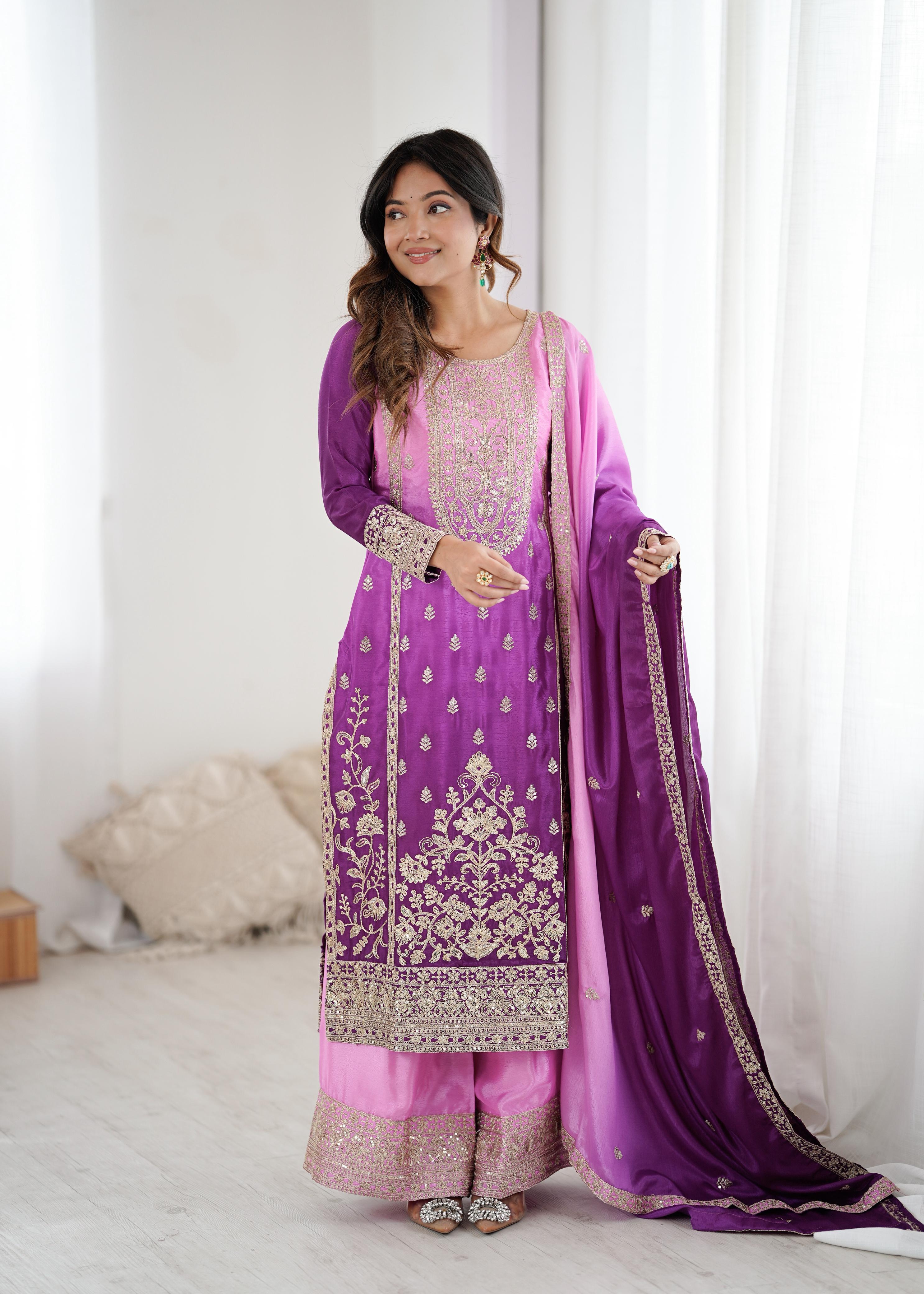
Wedding styling benefits from silk blends, zari borders, sequins or carefully placed moti work, with a dupatta that has enough width to cover the shoulder elegantly. A rich purple, black, rust orange or jewel-green palette can carry heavier jewellery than a pale daytime shade.
Pair an embellished kameez with a quieter Patiala salwar when possible. A heavily decorated top, ornate salwar, broad-bordered dupatta and large necklace can compete for attention. A single statement maang tikka or choker often creates a more composed result than wearing every festive accessory together.
For casual and repeat wear
For repeat wear, choose a solid or lightly printed kurta, a medium-volume salwar and a dupatta that can be washed or replaced easily. The Ladies Dress Anarkali Salwar Suits collection can be useful for comparing kurta silhouettes, while Dress Materials offers a route to customising kameez length and sleeve shape when ready-made proportions don't suit you.
Pair a simple Patiala with a denim jacket only when the kameez is relatively streamlined; a very flared embroidered top and a bulky jacket can obscure the pleats. Small hoops, a fabric tote and flat sandals make the outfit feel current without removing its Punjabi character.
Dupatta drapes that keep the Patiala silhouette visible
The most effective Patiala dupatta drape leaves enough of the pleated salwar visible to show the outfit's defining shape. A narrow shoulder drape, a front-open drape and a one-side pleated drape are practical choices.
For a narrow shoulder drape, pleat the dupatta neatly over one shoulder and let both ends fall at the front. This arrangement frames the kameez neckline and avoids covering the waist gathers. For a front-open drape, place the centre behind the neck and let the ends hang evenly in front, using a discreet pin near the shoulder.
A broad dupatta border should sit away from the busiest pleats whenever possible. If the border rests directly over the lower folds, it can make the ankle area look visually heavy. A lighter dupatta with a strong border works particularly well with a zari-woven or embroidered kameez.
Buying and caring for a Patiala suit
The safest purchase begins with a measurement chart, clear fabric information and photographs that show the complete salwar rather than only the kurta. Check the return or alteration terms before ordering because waist and cuff fit are harder to correct after heavy embroidery or woven borders are involved.
Sale sections such as Salwar Suits with 30% Off, Salwar Suits Flat 40% Off and Salwar Suits On Sale can be useful for comparing prices, but a discount should not replace a construction check. Confirm whether the set includes a dupatta, whether the bottom is stitched, and whether the displayed price applies to the full three-piece outfit or only the kameez.
Wash cotton Patiala suits according to the care label, using a mild detergent and avoiding prolonged soaking when colour bleeding is possible. Chanderi, zari, sequins, moti lace and silk blends usually benefit from gentle hand washing or professional dry cleaning rather than vigorous machine cycles. Dry embroidered garments inside out and away from harsh direct sunlight.
Store a pleated salwar folded along its existing pleat lines instead of compressing it under heavy garments. Use a breathable garment bag for embellished pieces, keep zari away from dampness and remove jewellery before handling the fabric. These simple habits help preserve the cuff shape, metallic work and surface finish between wears.
Latest Patiala Salwar Suit Designs offer genuine variety when you assess construction rather than chasing a colour trend. A breathable cotton version can serve daytime needs, a Chanderi or pastel design can suit intimate celebrations, and a zari or silk-blend set can carry an evening wardrobe. The best choice is the one whose pleat volume, kameez length, fabric care and dupatta proportion match how you'll actually move in it.
Common Questions About Choosing and Styling Patiala Suits
What is the difference between a Patiala salwar and a regular salwar?
A Patiala salwar has much fuller fabric, deeper horizontal pleats and a gathered cuff, creating a rounded drape around the legs. A regular salwar may have fewer pleats, a narrower cut or a straighter fall.
Which fabric is best for a Patiala salwar suit in summer?
Breathable cotton and lightweight cotton blends are usually the most comfortable for summer because they allow airflow and hold pleats reasonably well. Chanderi can also feel light, but check lining and care requirements before choosing it for frequent wear.
Can a Patiala suit be worn with a long kurta?
Yes, a Patiala salwar can be paired with a mid-thigh or knee-length kurta for greater coverage and a more contemporary look. A shorter kameez shows more pleats and creates a more traditional Punjabi proportion.
How should a Patiala salwar fit at the waist and cuff?
The waistband should stay secure without digging into the waist, and the hip and rise should allow comfortable sitting and walking. The cuff should remain neat around the ankle or calf without restricting circulation or leaving painful marks.
What dupatta looks best with a Patiala suit?
A lightweight dupatta with a defined border usually works best because it adds polish without hiding the pleated salwar. Keep the drape on one shoulder or in an open front arrangement so the waist gathers and lower volume remain visible.
Are Patiala suits suitable for weddings?
Patiala suits are suitable for weddings when made in a richer silk blend or woven fabric and finished with zari, sequins, embroidery or a statement dupatta. Keep either the kameez or the salwar relatively quiet if the other pieces already have heavy decoration.





