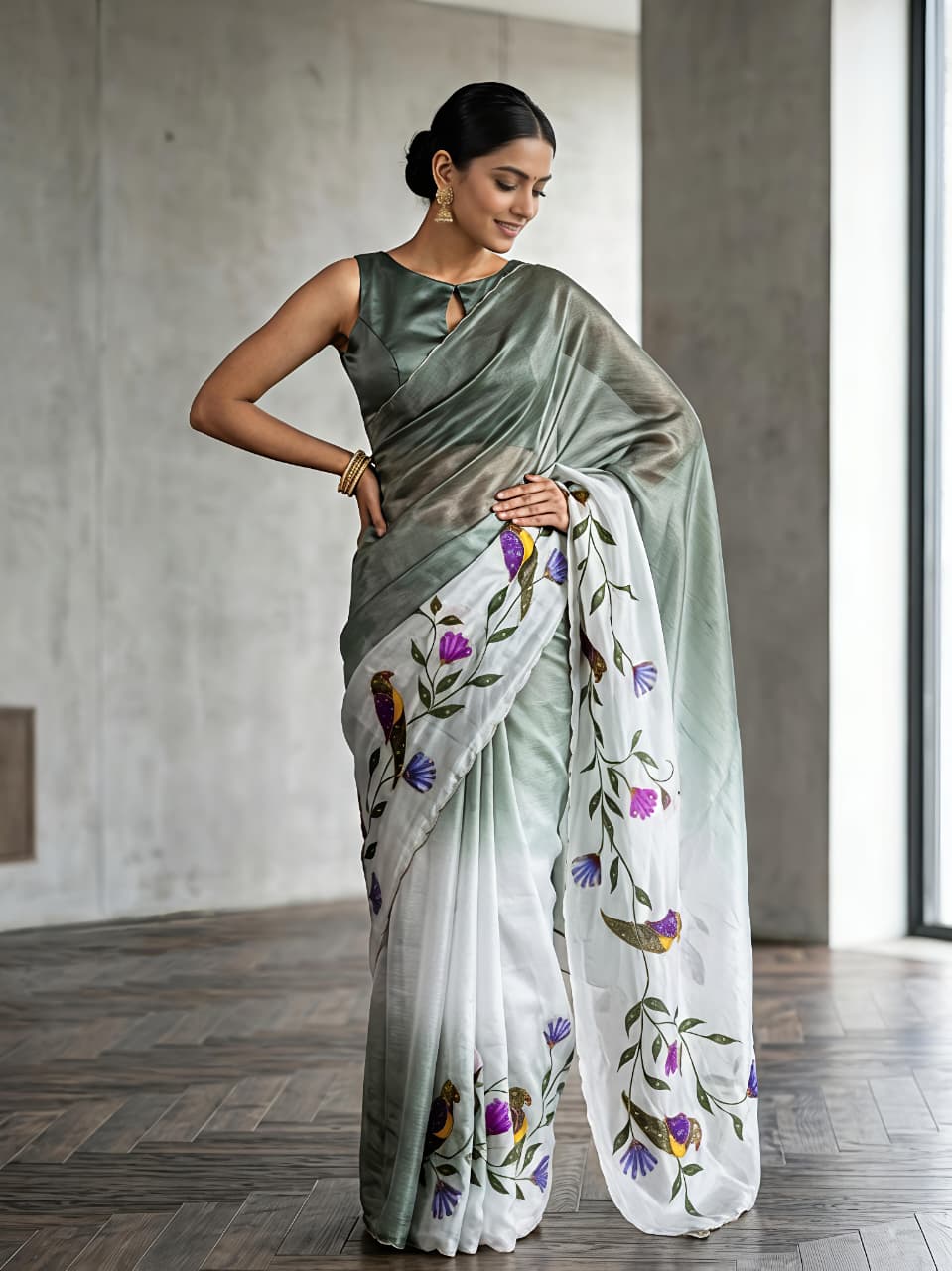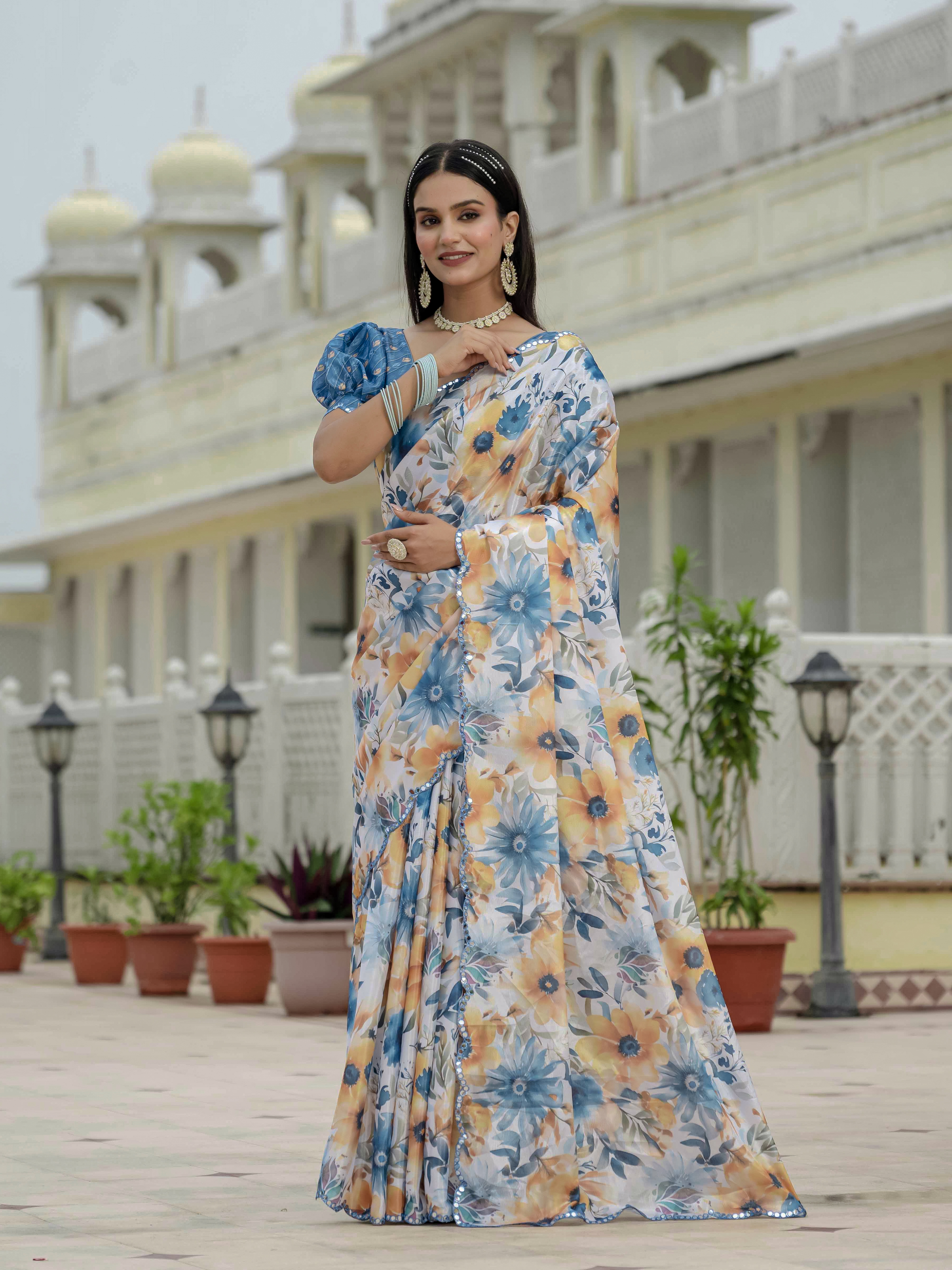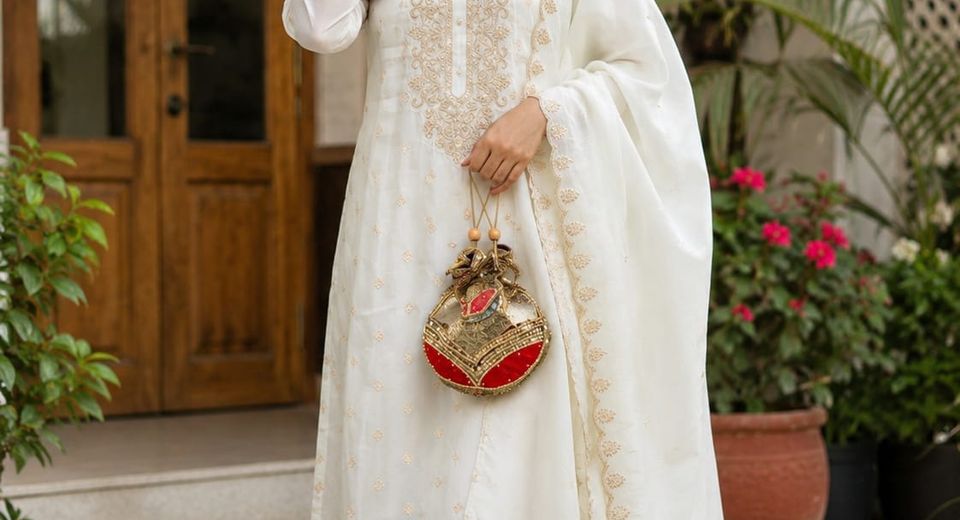
Latest Ethnic Salwar Suit Trends are bringing sharper attention to proportion, fabric weight and styling flexibility rather than decoration alone. A well-chosen salwar suit can move from a daytime puja to a family dinner when the silhouette, dupatta and accessories work together. Current collections include embroidered Chanderi kurta sets, fluid Anarkalis, straight-cut sets and ready-to-wear options that reduce the effort of building an outfit.
The most useful way to read the trend is to separate lasting design changes from short-lived surface details. A dramatic sleeve may look current for one season, while a well-cut kurta, a breathable textile and a versatile colour can remain useful for years. The guide below explains what is changing, what each choice communicates and how to buy a salwar suit for a specific Indian occasion.
Which Latest Ethnic Salwar Suit Trends are shaping wardrobes?
The strongest Latest Ethnic Salwar Suit Trends combine relaxed movement with visible craftsmanship. Straight kurtas, Anarkali panels, coordinated dupattas, tonal embroidery and richer textile textures are appearing alongside more traditional salwar kameez proportions.
One important shift is the rise of the coordinated kurta set. A matching bottom and dupatta create a complete outfit without requiring the wearer to identify separate colours or prints. A second shift is the use of fabric texture as the main visual feature. Chanderi silk, Vichitra silk, viscose jacquard and zari details can make a simple shape look considered without relying on heavy all-over embellishment.
- Clean straight silhouettes: Straight kurtas work well for office gatherings, festive lunches and travel because they offer a neat line without restricting the legs.
- Soft Anarkali volume: Anarkali panels are returning in controlled flare rather than uniformly wide, ballroom-like shapes.
- Focused embroidery: Necklines, cuffs, yokes and hems receive more attention than every surface of the garment.
- Useful three-piece sets: Kurta, bottom and dupatta combinations make styling faster and provide more outfit options.
- Colour stories with restraint: Maroon, beige, mustard, black, white, pastel blue and rust orange offer stronger wardrobe value than novelty shades used once.
How are silhouettes changing in contemporary salwar suits?
Contemporary salwar suit silhouettes are becoming easier to wear by balancing classic volume with a cleaner upper body. The most practical choices are straight kurtas, gently flared Anarkalis and longline sets that leave enough room for walking and sitting.
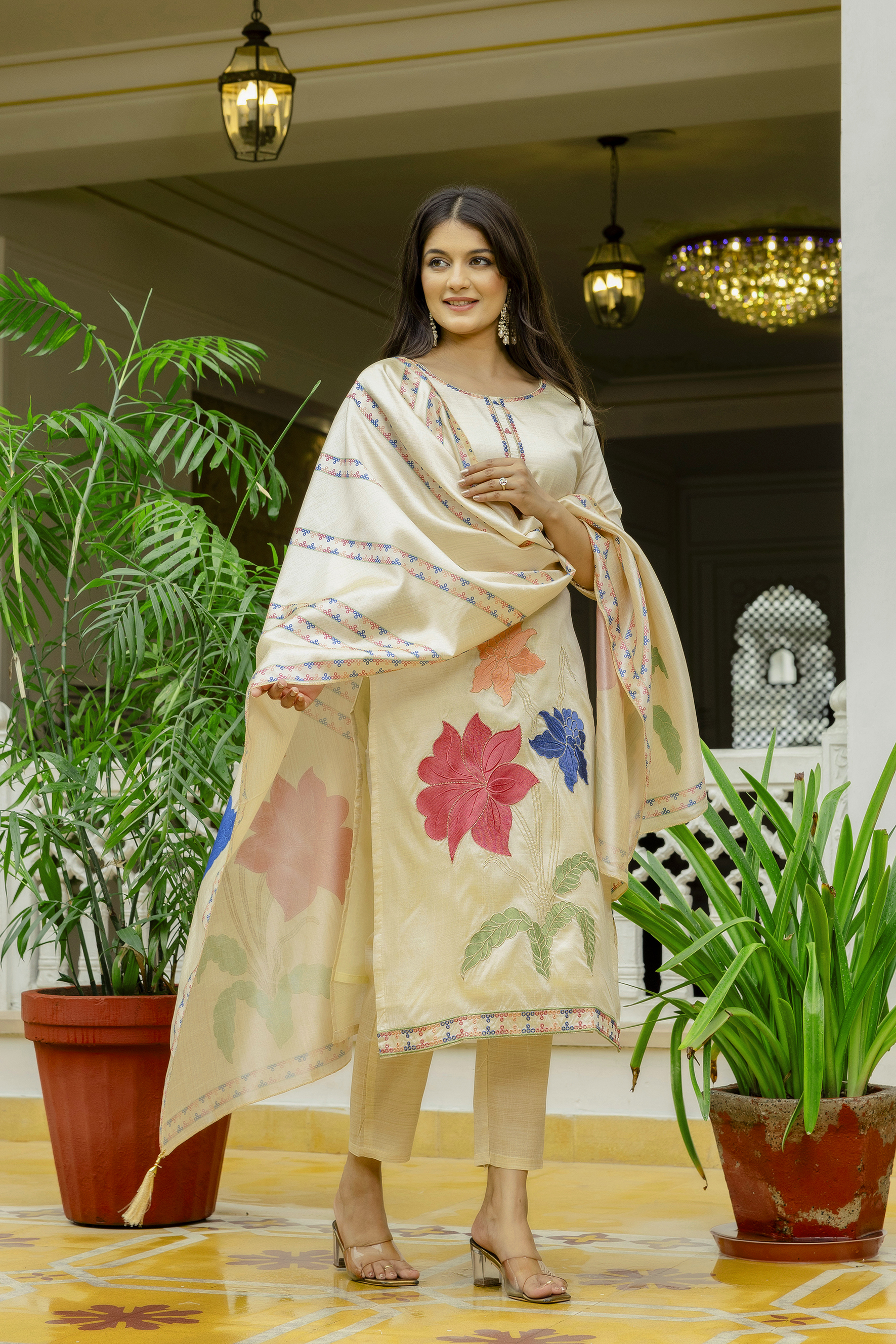
Straight kurtas for repeated wear
A straight kurta usually falls in a nearly vertical line from the underarm to the hem, making it suitable for both slim trousers and heritage bottoms. The cut looks polished with a narrow salwar, cigarette pant or matching straight trouser. A straight silhouette also allows embroidery to remain the focal point rather than competing with excessive volume.
The White Embroidered Viscose Jacquard Kurta Set for Women demonstrates why textured fabric works well with a relatively simple shape. White jacquard creates visual interest through weave and surface relief, while a restrained silhouette keeps the result suitable for daytime celebrations, small ceremonies and summer family events.
Anarkali shapes with controlled flare
An Anarkali suit is most adaptable when the flare begins at a flattering seam and the hem has enough room for movement without becoming difficult to manage. A knee-length Anarkali suits a lighter, more contemporary look, while a longer flare creates stronger festive presence. Panel placement matters because vertical panels can make the garment appear longer, while horizontal borders add emphasis at the hem.
The Black Anarkali Suit Set with Sequin Zari and Moti Lace Work belongs to the more occasion-focused side of the trend. Sequin zari and moti lace work provide sparkle and texture, so minimal jewellery and a controlled dupatta arrangement prevent the outfit from looking overloaded.
Longline and layered proportions
Longer kurtas are most effective when the lower garment is visually clean. A narrow trouser or simple palazzo allows a longline kurta to remain the central line of the outfit. A heavy or highly patterned bottom can shorten the appearance of the complete look by creating too many competing horizontal breaks.
Which fabrics give a salwar suit modern appeal?
Fabric gives a salwar suit its movement, opacity, comfort and level of formality, so textile choice should come before colour or embellishment. Chanderi silk adds a light, slightly crisp fall; Vichitra silk offers a richer surface; viscose jacquard contributes woven texture; and zari introduces reflective detail.
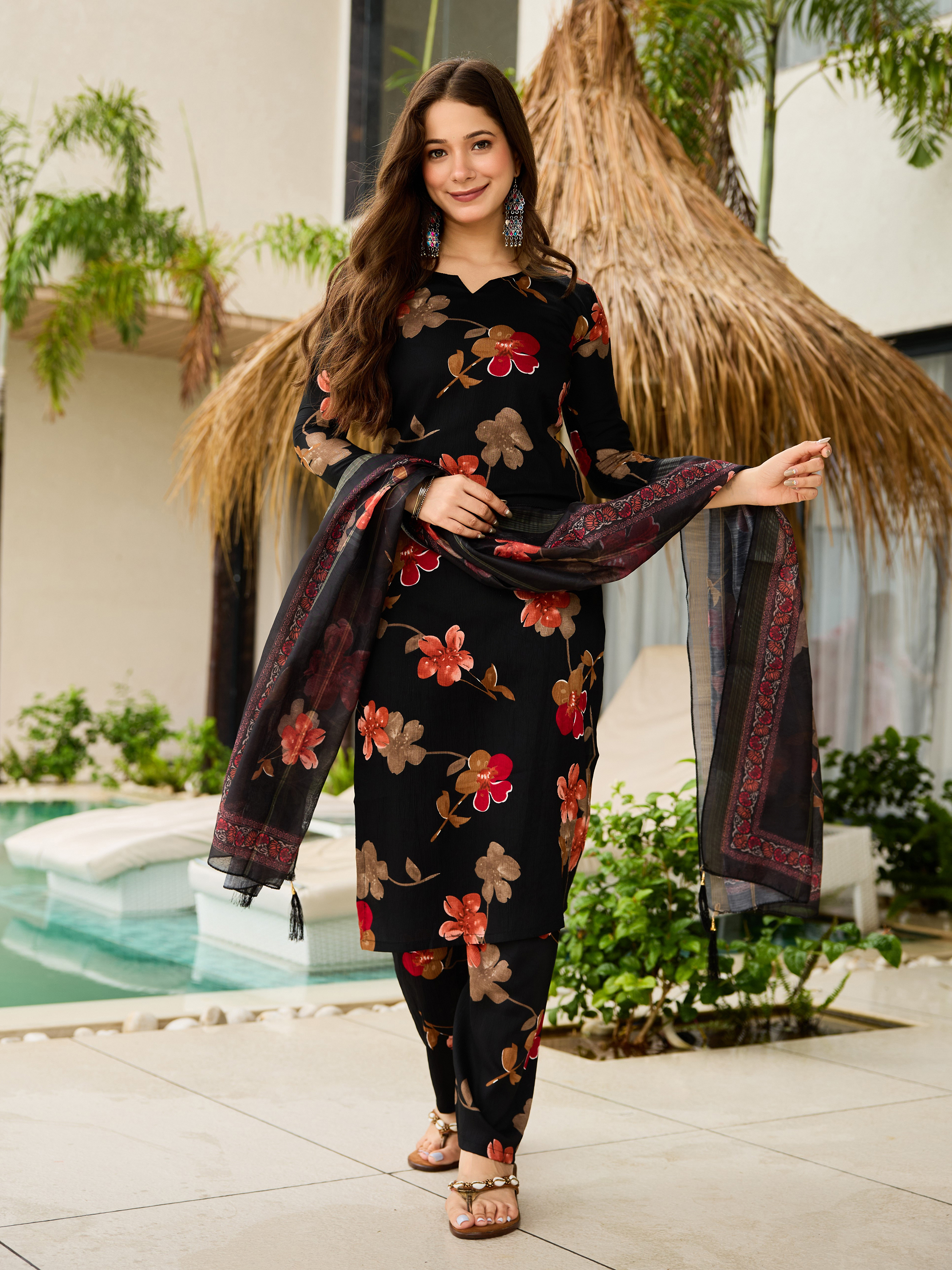
Chanderi is especially useful for Indian weather because the fabric can feel lighter than heavily woven festive textiles. A Chanderi kurta set with a dupatta looks refined for daytime events, but the textile still benefits from careful handling because delicate yarns and embroidery can snag. The Pastel Blue Embroidered Chanderi Kurta Set with Dupatta suits events where softness and freshness matter, including a Haldi ceremony, a daytime engagement or a spring festival.
Vichitra silk is better suited to a dressier mood when the wearer wants a slightly fuller, more formal fall. The Elegant Beige Vichitra Silk Embroidered Kurta Set for Women shows how a neutral base can support embroidery without becoming visually loud. Beige also works with gold, pearl, tan and muted rose accessories, increasing the number of ways the set can be worn.
Viscose can provide fluid drape and comfortable movement, while jacquard construction adds a patterned surface without requiring a printed motif. A viscose jacquard set is often a strong middle ground for festive lunches and semi-formal gatherings. Buyers should check whether the lining, embroidery and washing instructions match the fabric because surface decoration can require gentler care than the base textile alone.
Which colours and embellishments feel current?
Current salwar suit colours favour wearable depth: maroon, mustard, rust orange, black, white, beige and pastel blue all create distinct moods without depending on an unusual seasonal shade. Embellishment is moving towards concentrated detail, including zari, sequins, moti lace, threadwork and embroidered borders.
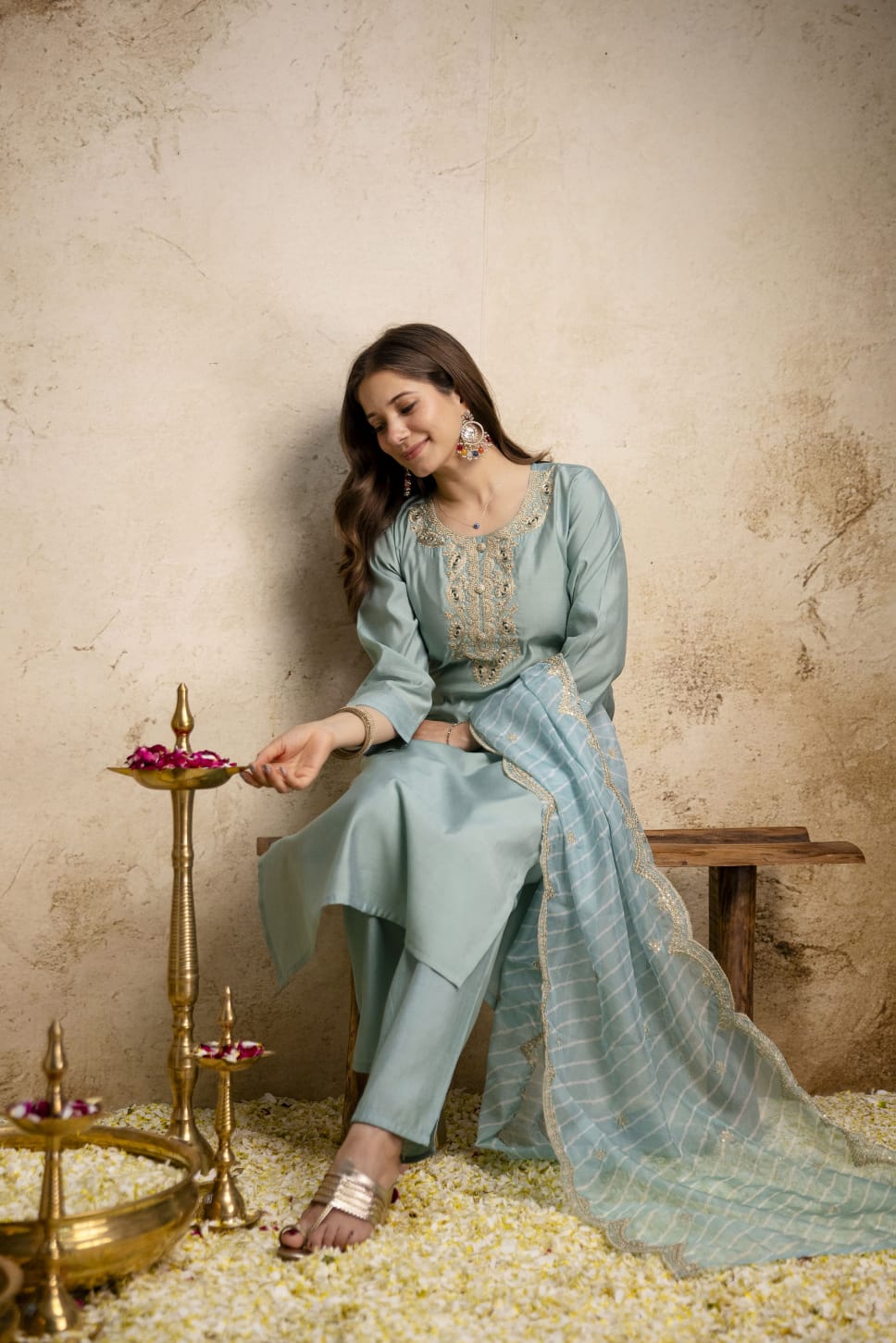
Maroon works particularly well for evening dinners, winter weddings and festive gatherings because it has enough depth to support antique gold or polished metallic jewellery. The Maroon Viscose Chanderi Silk Embroidered Kurta Set for Women combines a saturated colour with a fabric that can retain a lighter, more graceful appearance than heavily embellished brocade.
Mustard is expressive in daylight and pairs naturally with ivory, emerald, rust and antique gold. The Mustard Embroidered Chanderi Kurta Set for Women - Varnavi. Can be styled with a contrasting dupatta or kept tonal for a quieter result. Mustard embroidery benefits from accessories in warm metal because cool silver can create a sharper contrast that may not suit every motif.
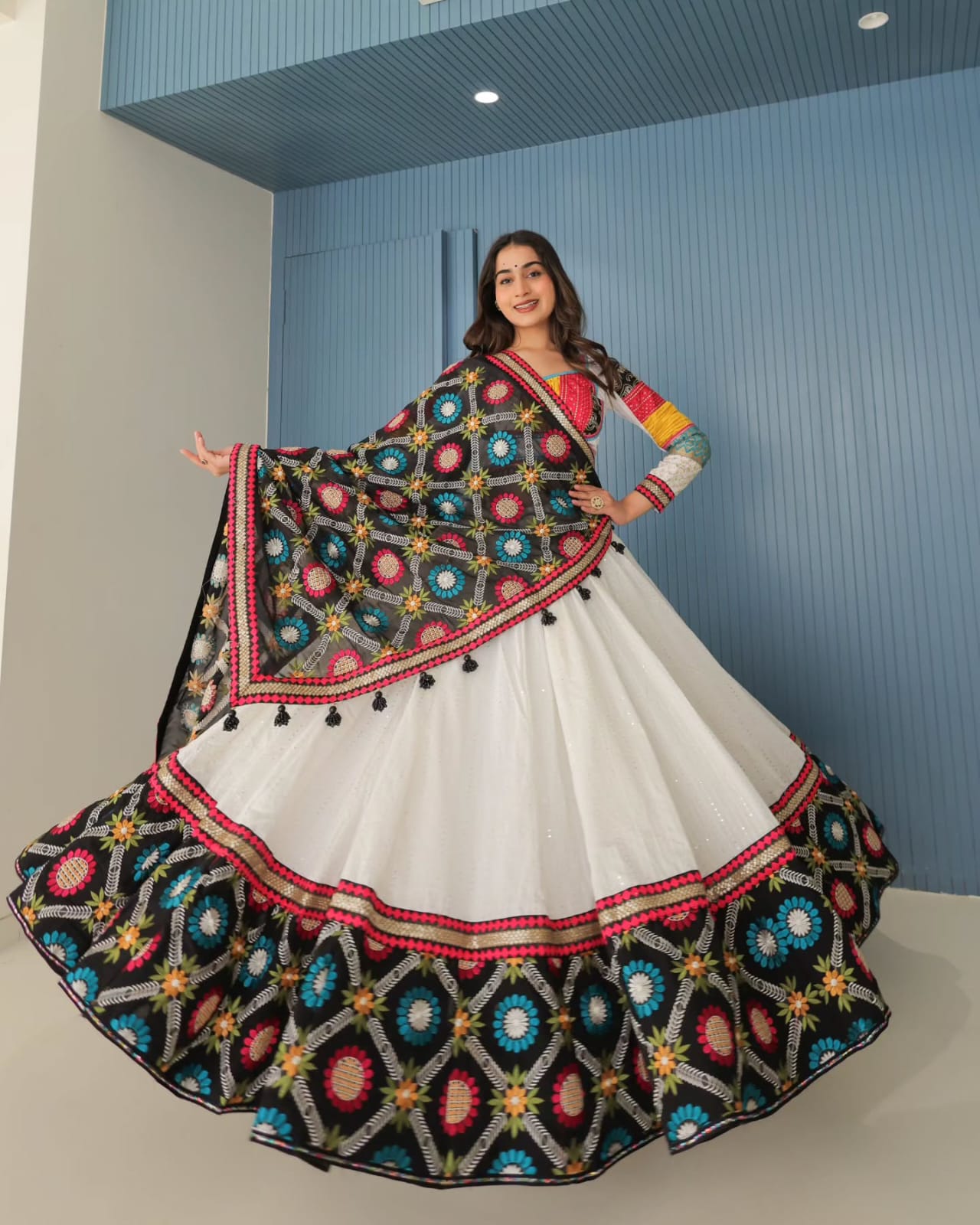
Rust orange gives a festive alternative to red and pairs well with cream, brown, teal and muted pink. Black and white create the clearest graphic contrast, especially when floral embroidery provides the transition between the two shades. The Black White Floral Embroidered Readymade Salwar Suit is an example of how a strong two-colour base can remain lively without additional bright accessories.
Embroidery placement also changes how the eye reads the body. A vertical embroidered panel can lengthen the front, a border can draw attention to the hem and neckline work can frame the face. Heavy embellishment around the waist can add visual width, so shoppers who prefer a longer line may want detail concentrated above the bust or below the knee.
How should a salwar suit be styled for different occasions?
A salwar suit should be styled according to the event's formality, time of day and amount of movement required. The same kurta set can look casual, festive or evening-ready when the dupatta, footwear, jewellery and hair are changed deliberately.
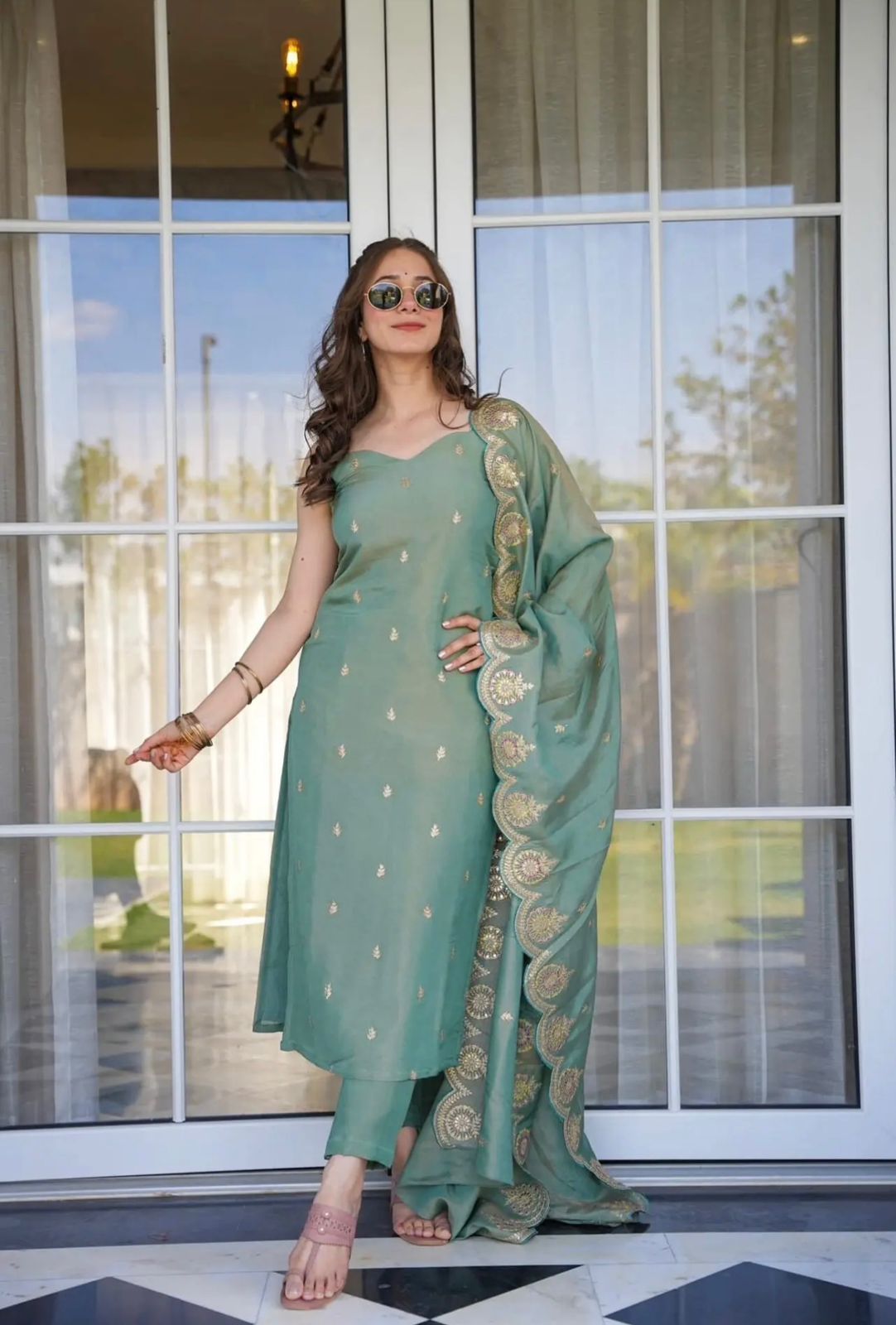
For Haldi ceremonies and daytime functions
Daytime functions suit pastel, mustard, white, beige and light floral combinations with breathable fabrics and low-weight accessories. A pastel Chanderi dupatta can be worn over one shoulder or loosely around both arms so the embroidery remains visible. Juttis, small hoops, a compact potli and fresh-looking makeup keep the outfit comfortable during long social gatherings.
For weddings and festive evenings
Wedding evenings call for deeper colour, stronger textile texture or controlled sparkle. Zari, sequins and moti lace can provide enough occasion presence without requiring a heavily layered necklace. The Black Anarkali Suit Set with Sequin Zari and Moti Lace Work needs only earrings, a neat clutch and footwear with a little height to create a complete evening look.
For work and semi-formal events
Workwear and semi-formal dressing benefit from straight silhouettes, moderate embroidery and colours such as beige, white, maroon or muted blue. The dupatta can be folded lengthwise and placed evenly over both shoulders for a composed appearance. Small studs, a structured tote and low block heels maintain polish without making the outfit feel ceremonial.
For travel and quick dressing
Readymade suit sets are practical for travel because the top, bottom and often the dupatta are already coordinated. The Rust Orange Embroidered Readymade Suit Set for Women brings a warm colour option for family visits and festive travel, while the Black White Floral Embroidered Readymade Salwar Suit gives a more flexible contrast. Pack embellished dupattas separately in a soft cotton or muslin bag to reduce snagging.
How can shoppers choose the right salwar suit online?
Online salwar suit shopping becomes safer when the buyer checks measurements, fabric descriptions, lining, closure details and return conditions before focusing on photographs. A familiar size label isn't enough because shoulder width, armhole depth and kurta length can vary between cuts.
- Measure a garment that already fits: Compare bust, waist, shoulder, sleeve and kurta length measurements with the product chart rather than relying only on body size.
- Check the complete set: Confirm whether the listed outfit includes a bottom and dupatta, and verify whether the bottom is elasticated, fitted or adjustable.
- Read the fabric line carefully: Banarasi silk, Kanjeevaram and Chanderi don't behave in the same way, and terms such as viscose jacquard or Vichitra silk indicate different drape and care needs.
- Assess the occasion: A heavily embellished Anarkali may be ideal for a reception but impractical for commuting or repeated daytime wear.
- Look at embroidery placement: Zoom into seams, neckline finishing, hem borders and dupatta edges to understand where the visual weight sits.
- Calculate the usable wardrobe value: Ask whether the kurta works with existing trousers, whether the dupatta can be paired with another outfit and whether the colour suits at least two occasions.
Discount collections can be useful when the buyer already knows the required silhouette and fabric. Ladies Dress Anarkali Salwar Suits is relevant for shoppers seeking flare and movement, while Dress Materials suits buyers who prefer to customise stitching, length or sleeve shape. Salwar Suits with 30% Off, Salwar Suits Flat 40% Off and Salwar Suits On Sale can help with price comparison, but a reduced price should never replace checking measurements and garment details.
How should embroidered and silk-blend salwar suits be cared for?
Embroidered and silk-blend salwar suits last longer when they're protected from friction, moisture and harsh washing. Care labels should take priority, but hand washing or professional dry cleaning is commonly safer than a strong machine cycle for zari, sequins, lace and delicate embroidery.
Store a fully dry salwar suit in a breathable cotton cover rather than an airtight plastic bag. Fold embellished sections inward with a layer of soft muslin between folds, and avoid hanging heavy Anarkali skirts for long periods because the weight can pull at shoulder seams. Keep zari away from perfume, deodorant and damp storage because oxidation can dull metallic surfaces.
Remove small stains by blotting gently with a clean, dry cloth instead of rubbing the embroidered area. Test any cleaning method on an unseen seam before treating the front. Iron Chanderi, viscose jacquard and embroidered panels from the reverse side on a low or moderate setting, with a pressing cloth between the iron and the garment.
What should remain after the trend changes?
The most durable salwar suit choices will have a comfortable fit, an useful colour, a fabric suited to the climate and embroidery that matches the wearer's real calendar. A trend-led detail can add freshness, but proportion and re-wear potential determine whether a set earns space in the wardrobe.
A practical capsule might include one straight embroidered set in beige or white, one deeper maroon or black evening option, one pastel Chanderi set for daytime events and one readymade suit for travel. Such a mix covers office celebrations, family functions, festive lunches and weddings without repeating the same visual formula.
Latest Ethnic Salwar Suit Trends are therefore most valuable when they make time-honoured dressing easier to interpret. Choose the silhouette for movement, the fabric for climate, the colour for the calendar and the embellishment for the level of formality. That sequence turns a fashionable purchase into an useful Indian wardrobe decision.
Practical Questions About Choosing Current Salwar Suit Styles
What are the latest salwar suit trends for women?
The latest salwar suit trends include clean straight kurtas, controlled-flare Anarkalis, coordinated three-piece sets, textured fabrics and concentrated embroidery. Chanderi, viscose jacquard, Vichitra silk, zari and tonal threadwork are especially useful for creating a current look without excessive decoration.
Which salwar suit is best for a Haldi ceremony?
A pastel blue, mustard, white or light floral salwar suit in Chanderi or another breathable fabric works well for a Haldi ceremony. Choose comfortable movement, washable or clearly labelled care requirements and limited heavy embellishment because the event may involve extended outdoor activity.
Is Chanderi suitable for salwar suits?
Chanderi is suitable for salwar suits because it offers a light, elegant fall and works well for daytime festive dressing. Chanderi embroidery and zari should be protected from friction, strong detergents and rough machine washing.
How can someone style a black Anarkali suit?
A black Anarkali suit can be styled with metallic earrings, a compact clutch and simple footwear so the flare and embroidery remain visible. If the suit includes sequin zari or moti lace, avoid adding several heavily embellished accessories at the same time.
What should be checked before buying a salwar suit online?
Check the garment measurements, kurta length, shoulder width, fabric, lining, bottom style, dupatta dimensions and care instructions before buying online. Product photographs should support, not replace, the size chart and written description.
How should an embroidered salwar suit be stored?
An embroidered salwar suit should be stored completely dry in a breathable cotton cover, with soft muslin between embellished folds. Keep the garment away from perfume, moisture and direct sunlight, and use professional cleaning when the care label recommends it.