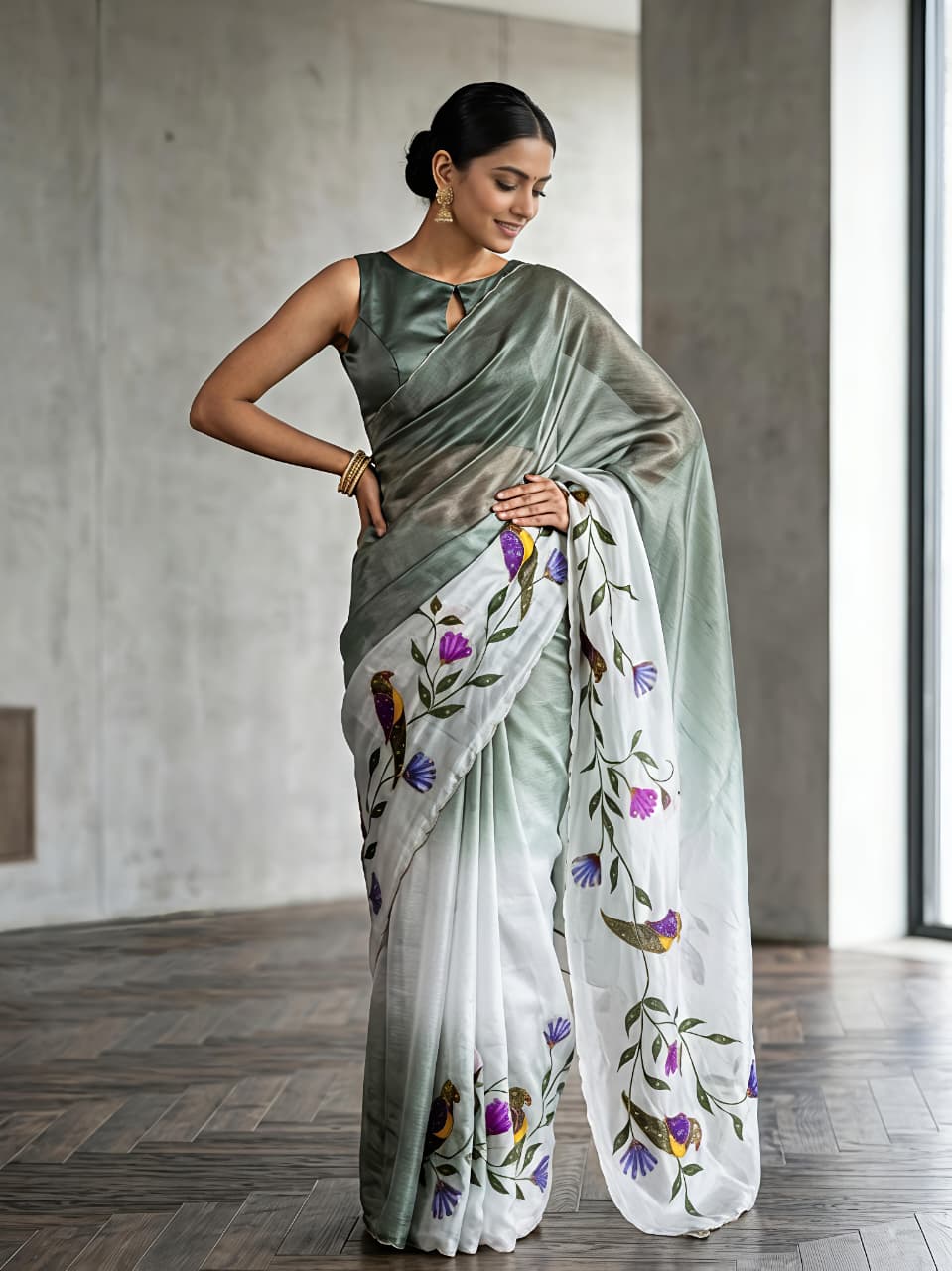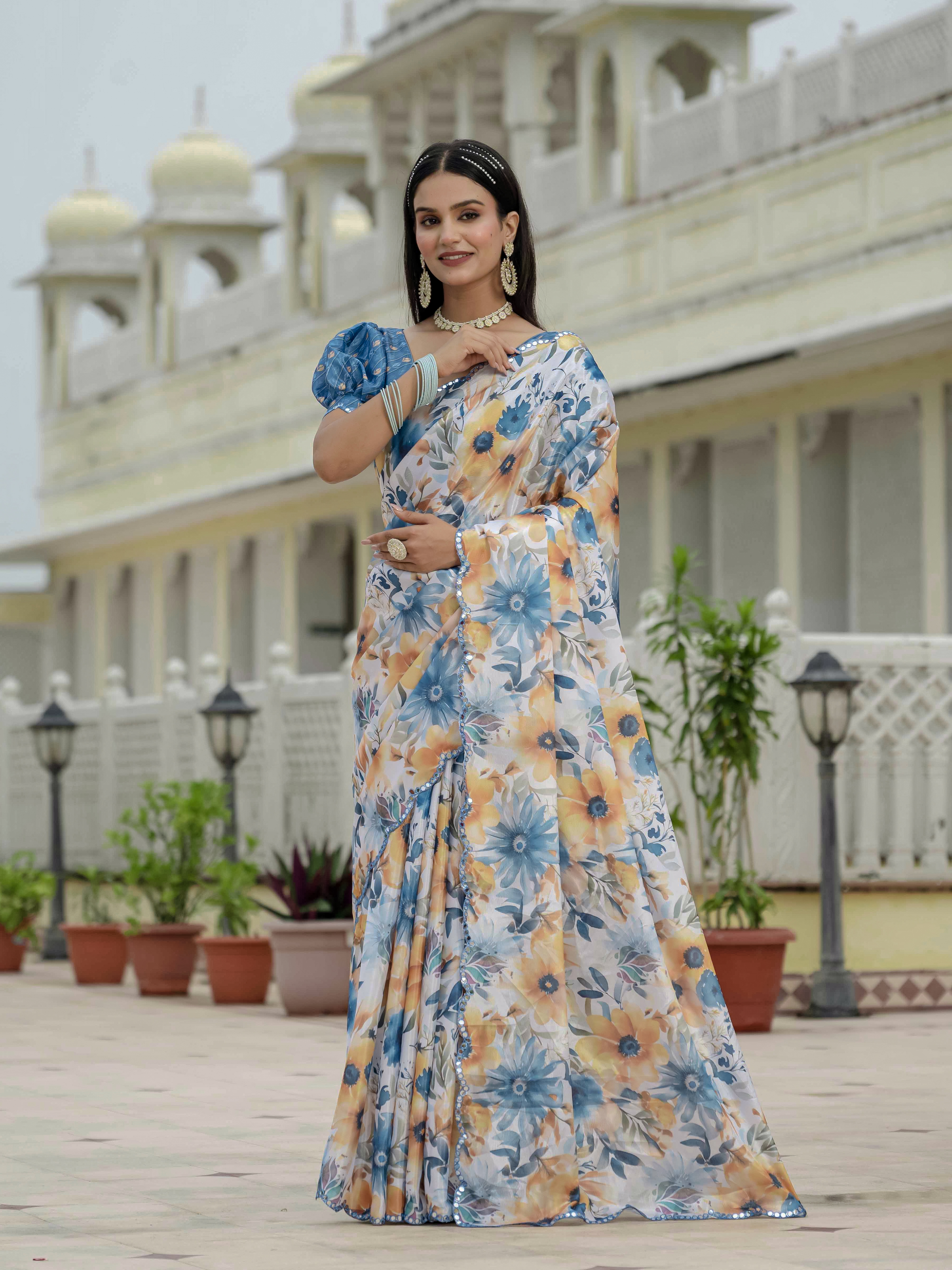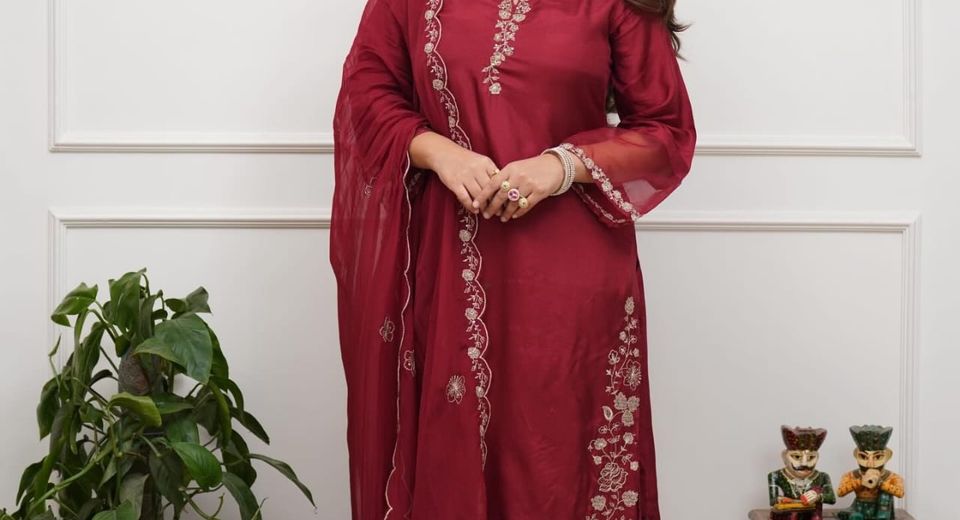
Latest Embroidered Salwar Suit Designs are moving towards lighter fabrics, controlled embellishment and silhouettes that can be worn beyond one celebration. A finely embroidered Chanderi kurta set may work for a daytime puja, while sequin zari and moti lace can make an Anarkali suitable for an evening reception. The useful question isn't simply whether a suit looks ornate; the useful question is whether the fabric, embroidery scale, fit and dupatta suit the way you plan to wear it.
This guide explains how to read embroidery, compare common fabrics, select a silhouette for your body proportions and style a salwar suit for specific events. It also includes practical checks for lining, colour, stitching, washing and value before you buy.
What defines the latest embroidered salwar suit designs?
The latest embroidered salwar suit designs typically combine one dominant visual detail with a comfortable, relatively uncluttered base. The dominant detail may be floral threadwork, a decorated neckline, a patterned hem, sequin zari or a lace-edged dupatta.
Modern designs often use embroidery placement rather than heavy coverage to create impact. A vertical embroidered panel can lengthen the appearance of a straight kurta, while border work at the hem can give an Anarkali more movement. Small motifs scattered across a pastel kurta feel lighter than dense work over the entire front.
- Floral embroidery: Suitable for daytime functions, office celebrations and spring or summer wardrobes, especially on Chanderi, cotton-silk and viscose bases.
- Geometric embroidery: Gives a more structured look and works well on straight kurtas, palazzo sets and monochrome outfits.
- Sequin and zari work: Reflects light and is better suited to sangeet evenings, receptions and festive dinners than long daytime events.
- Moti and lace detailing: Adds a traditional finish around necklines, sleeves, dupattas and hems without requiring all-over embroidery.
An useful design test is to identify the focal point from a distance of two metres. If the eye can't settle on the neckline, border, motif or dupatta, the outfit may feel visually busy even when each individual detail is attractive.
Which fabrics make embroidered salwar suits practical?
Chanderi silk, viscose Chanderi silk, crunchy silk, Vichitra silk and cotton-silk blends each create a different combination of drape, shine, breathability and embroidery definition.
Chanderi and Chanderi silk
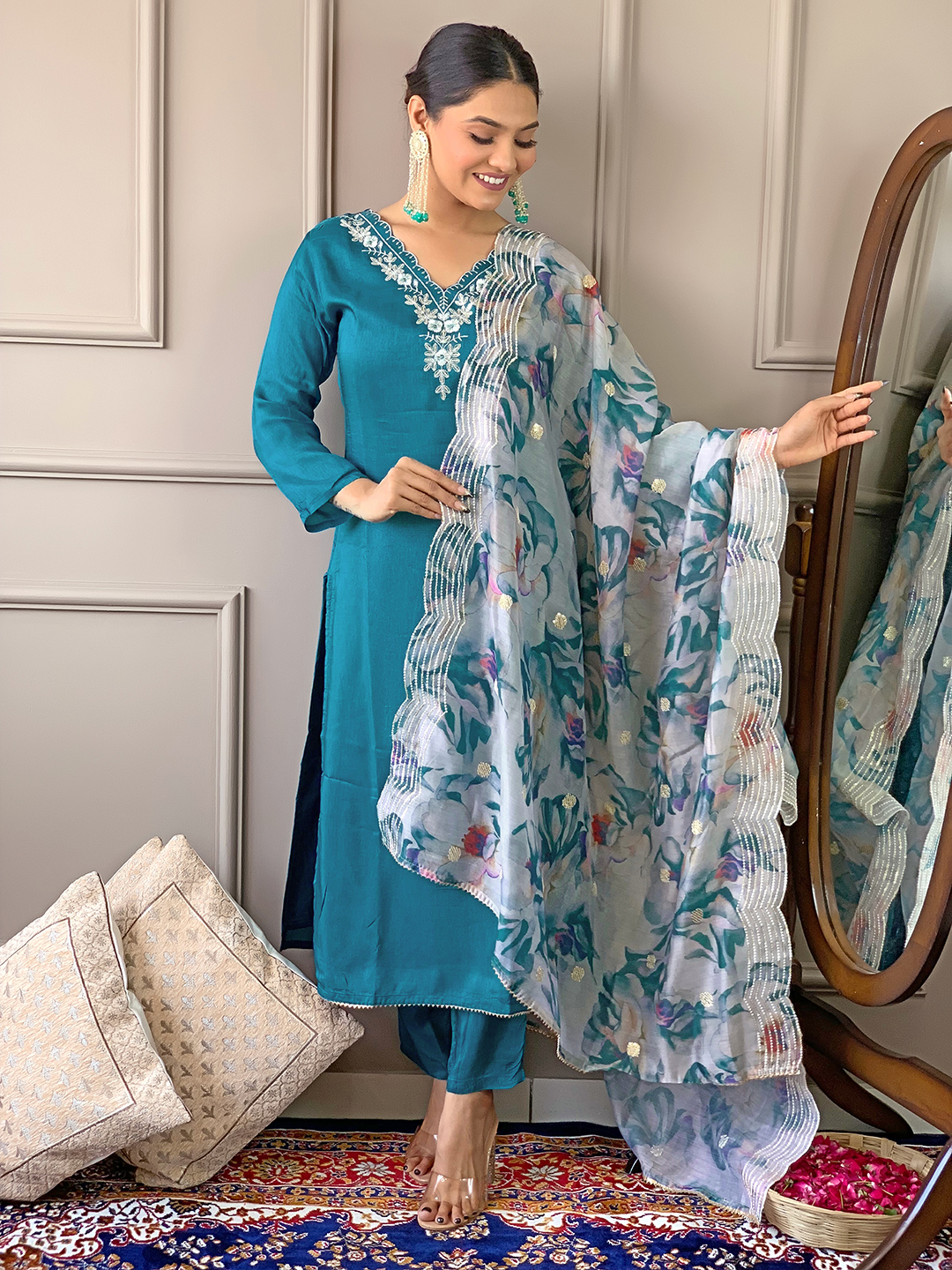
Chanderi has a light, slightly sheer hand and a subtle lustre that makes threadwork look delicate rather than heavy. A lined Chanderi kurta is particularly useful for daytime festive wear because the fabric looks dressy without trapping as much heat as a densely woven synthetic material.
The Pastel Blue Embroidered Chanderi Kurta Set with Dupatta demonstrates why pale colours and fine embroidery are often paired together. Pastel blue, ivory, blush and soft yellow can show floral motifs clearly while keeping the overall outfit calm.
Viscose Chanderi silk
Viscose Chanderi silk generally offers a smoother fall and a little more fluidity than crisp heritage Chanderi. The Maroon Viscose Chanderi Silk Embroidered Kurta Set for Women is an example of how a deeper colour can make embroidery appear more defined and evening-ready.
Crunchy silk and Vichitra silk
Crunchy silk has a firmer, textured feel that can help a kurta or palazzo hold its shape. The Mauve Crunchy Silk Embroidered Kurti Palazzo Set for Women suits shoppers who want a contemporary two-piece proportion with visible structure.
Vichitra silk has a smooth, polished appearance and is often chosen for dressier sets. The Elegant Beige Vichitra Silk Embroidered Kurta Set for Women shows how a neutral base can let embroidery supply the contrast instead of relying on a bright colour.
How fabric affects comfort
Fabric weight matters more than surface shine when a suit will be worn for several hours. For a summer Haldi ceremony, choose a lined but breathable Chanderi or cotton-based set, while a winter reception can accommodate a more substantial silk blend and heavier embellishment.
Before buying, check whether the garment is lined through the bodice, whether the sleeves have a comfortable inner seam and whether the dupatta feels manageable. A beautiful embroidered suit becomes impractical when the lining scratches, the neckline pulls or the dupatta slips continuously.
How should you choose embroidery for the occasion?
Choose embroidery according to the event's lighting, duration, formality and movement requirements. Daytime events favour matte thread, small motifs and lighter colours, while evening functions can support reflective sequin zari, metallic thread and darker jewel tones.
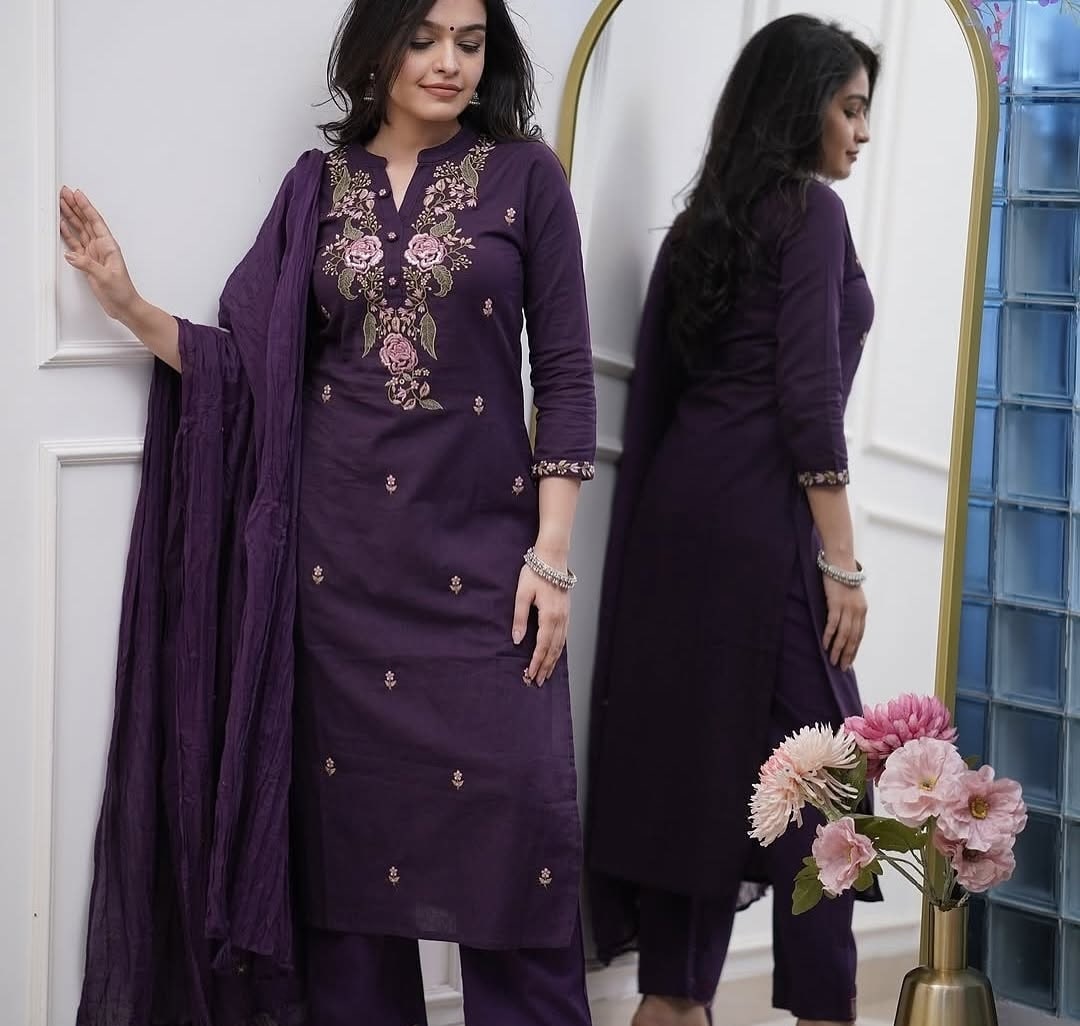
- Office festivities: Select a straight kurta set with restrained floral work, three-quarter sleeves and a dupatta that doesn't require constant adjustment. Beige, mauve, dusty blue and muted green look polished without appearing excessively ceremonial.
- Family puja or daytime celebration: Chanderi, cotton-silk and light viscose work well with botanical embroidery, narrow borders and soft colours. A mustard set can look festive while remaining easy to accessorise.
- Haldi ceremony: Yellow, marigold, coral and pink work naturally with the colourful setting. Avoid very long hems if the event involves sitting on the floor or moving outdoors.
- Sangeet or reception: Sequin zari, metallic thread, moti lace and a fuller Anarkali silhouette create more presence under evening lighting. Choose secure embellishment and a lining that allows comfortable movement.
- Wedding guest dressing: A rich maroon, rust, black or emerald suit can look formal without competing with bridal clothing. Keep jewellery proportionate when the neckline and dupatta already carry substantial embroidery.
The Mustard Embroidered Chanderi Kurta Set for Women works as an useful example for daytime festive dressing because mustard provides colour while Chanderi keeps the visual effect relatively light. For a more dramatic evening direction, the Black Anarkali Suit Set with Sequin Zari and Moti Lace Work uses surface shine and ornate finishing to signal greater formality.
Which silhouette and fit should you select?
A straight kurta, Anarkali, palazzo set and flared or layered salwar silhouette create different proportions, so the best choice depends on movement, height and where the embroidery is placed.
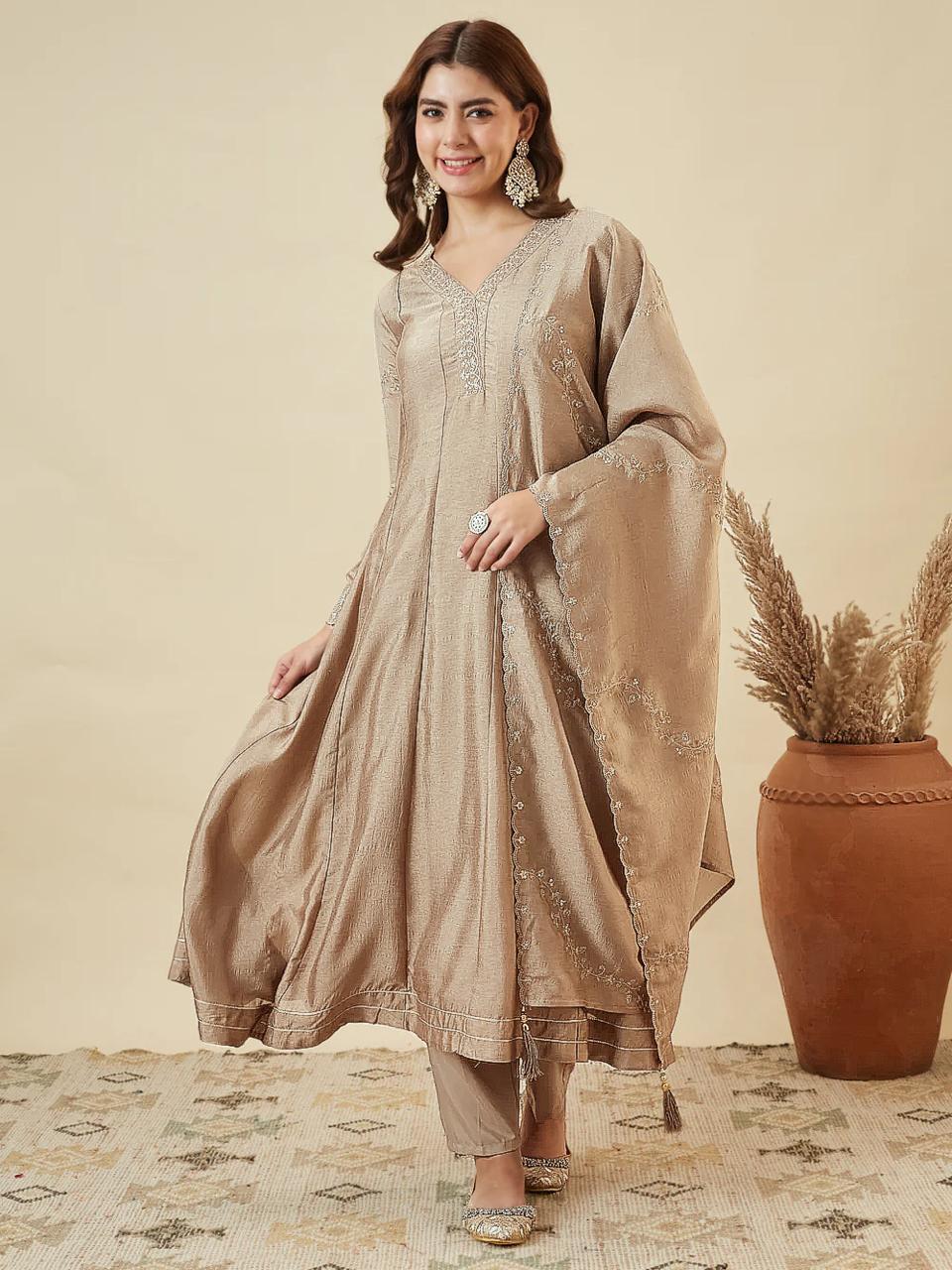
Straight kurta sets
Straight kurtas create a clean vertical line and are generally easy to style for work, travel and daytime events. A side slit can improve walking comfort, while a hem that ends around the lower calf often works well with cigarette pants, churidars or narrow trousers.
Check shoulder width before focusing on the waist. A shoulder seam that sits too far out can make embroidery around the upper body look untidy, whereas a slightly relaxed waist can usually be adjusted more easily.
Anarkali suits
Anarkali suits are most flattering when the flare begins at a position that supports the wearer's proportions and when the hem has enough clearance for walking. A defined yoke, vertical panels or embroidery that grows gradually towards the hem can create a coherent line.
Measure the full length and flare rather than relying on the size label alone. A petite wearer may prefer a moderate flare and a shorter hem, while a taller wearer can carry a longer, fuller Anarkali without the skirt overwhelming the frame.
Palazzo and relaxed sets
Palazzo sets balance detailed kurtis with generous leg volume, making them useful for shoppers who want a contemporary look without a close-fitting bottom. The Mauve Crunchy Silk Embroidered Kurti Palazzo Set for Women illustrates how a textured fabric can preserve shape in a relaxed silhouette.
Wide-leg bottoms need correct length to avoid bunching over the foot. Hem the palazzo while wearing the footwear intended for the outfit, especially if the set is reserved for heels or platform sandals.
How can you style an embroidered suit without overdoing it?
Balance one heavily decorated element with simpler accessories, footwear and makeup. If the kurta has dense embroidery, use a plain or lightly bordered dupatta; if the kurta is restrained, a richer dupatta or statement earrings can supply the festive emphasis.
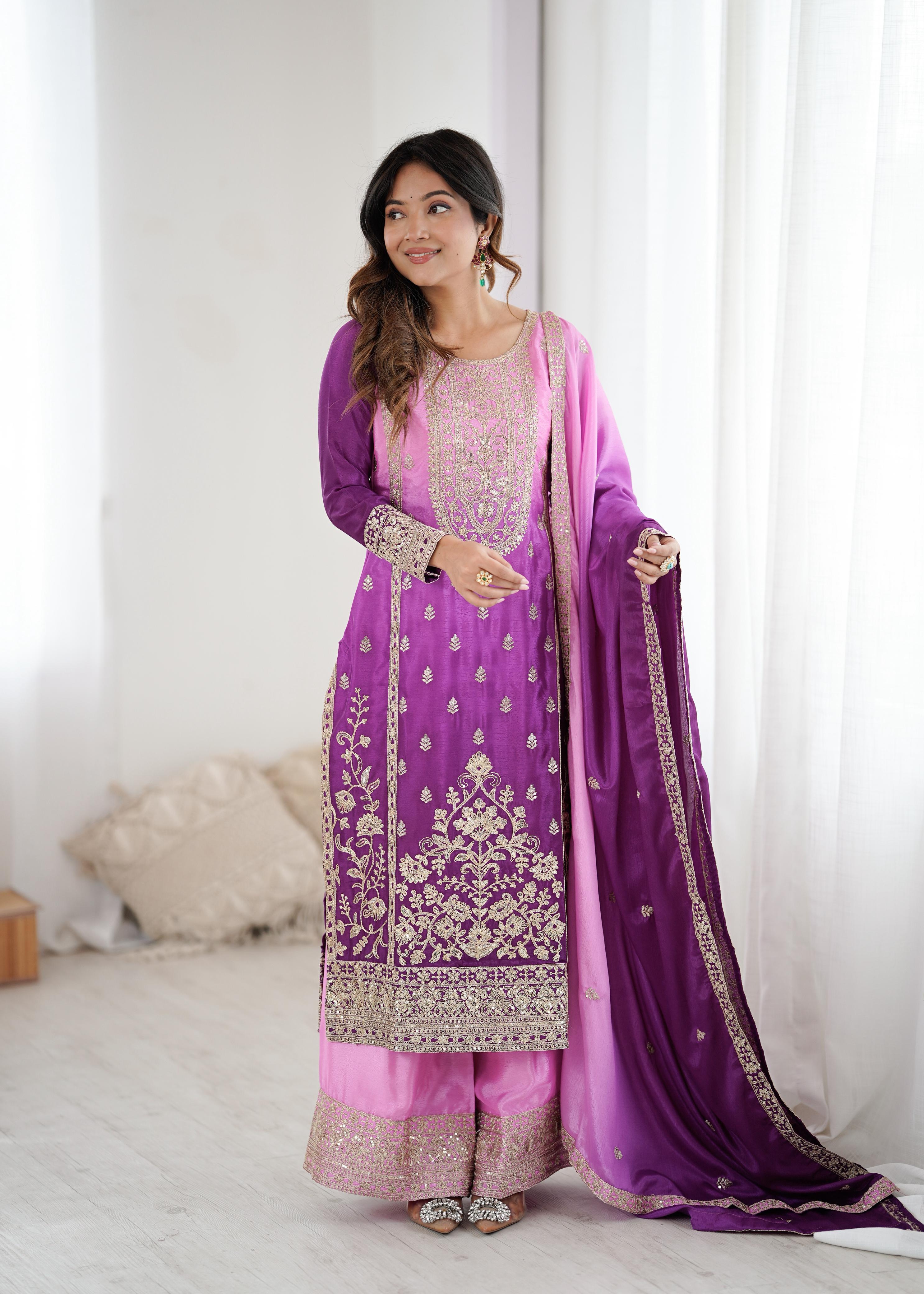
- Jewellery: Pair a decorated neckline with earrings and a slim bracelet instead of a large necklace. A plain round or V-neck can accommodate a short necklace, layered pearls or a classic pendant.
- Dupatta drape: Drape a heavy dupatta over one shoulder when the embroidery is concentrated on the front. For a lighter set, a neatly pleated front drape can show the kurta pattern while keeping both hands free.
- Footwear: Juttis and embroidered flats complement daytime suits. Low block heels work with Anarkalis because they add height without making a full skirt difficult to manage.
- Bag: Choose a small potli, clutch or structured shoulder bag in a colour already present in the embroidery. Matching every accessory to the kurta can make the outfit look overly coordinated.
- Colour contrast: A rust orange suit can take ivory or antique-gold accessories, while a black and white suit can handle a single strong accent such as red, emerald or cobalt.
The Rust Orange Embroidered Readymade Suit Set for Women can be styled with antique-gold earrings and neutral footwear for a warm festive palette. The Black White Floral Embroidered Readymade Salwar Suit can be made more contemporary with a single-colour bag instead of adding several contrasting accessories.
What should you check before buying an embroidered salwar suit?
Check measurements, lining, embroidery security, fabric transparency and included pieces before judging the design. These details determine whether a suit will remain comfortable and presentable after repeated wear.
- Compare garment measurements: Record bust, waist, hip, shoulder and full length in centimetres. Compare those numbers with the garment chart, because an "M" or "L" isn't standard across sellers.
- Allow movement: Add ease at the bust and hip for sitting, reaching and wearing a base layer. A fitted garment with dense embroidery has less flexibility than an unembellished kurta.
- Inspect the reverse side: Embroidery should not have large loose threads, sharp wire ends or unsecured sequins. Loose elements can snag dupattas and irritate the skin.
- Confirm the set contents: Check whether the listing includes the bottom and dupatta, and whether the bottom is elasticated, drawstring-based or tailored.
- Assess transparency: Hold light fabrics near a window or bright lamp. A pale Chanderi kurta may require a slip or full lining, particularly when worn outdoors.
- Consider alterations: Side seams, sleeve length and hem length are usually easier to alter than a heavily embroidered neckline or shoulder. Buy with the least alterable areas in mind.
Price should be assessed against fabric, embroidery density, lining, finishing and the number of included pieces. Discounted collections such as Salwar Suits with 30% Off and Salwar Suits Flat 40% Off can be useful for value shopping, but a lower price should not replace checking measurements and construction.
Shoppers building a wider festive wardrobe can also compare Ladies Dress Anarkali Salwar Suits for fuller silhouettes or Dress Materials when they prefer to select their own tailor, lining and final length. Red Dress Materials Under 2000 may suit budget-conscious buyers who already have access to reliable stitching.
How do you care for embroidered salwar suits?
Care for embroidered salwar suits by following the garment label, reducing friction and storing embellishments away from pressure. Professional dry cleaning is the safest default for dense zari, sequins, moti and delicate silk blends.
For washable viscose or Chanderi blends, test a hidden area first and use cold water with a mild detergent only if the care label permits it. Do not scrub embroidered panels, wring the kurta or soak metallic embellishment for long periods. Press excess water between clean towels and dry the garment inside out away from direct sunlight.
Iron embroidery from the reverse side on a low setting with a pressing cloth between the iron and fabric. Avoid placing a hot iron directly over sequins, zari or glued motifs. Store a fully dry suit folded with soft tissue over raised embroidery, and keep heavy garments from crushing lighter ones.
Air the outfit after wearing it before returning it to the wardrobe. Promptly remove makeup or food marks through a professional cleaner rather than rubbing the stain at home. These small habits reduce colour transfer, tarnish and thread damage over time.
Building an useful embroidered salwar suit wardrobe
A practical wardrobe needs different levels of ornamentation rather than several outfits with the same degree of decoration. Begin with one versatile straight set in a neutral or muted colour, add one brighter daytime Chanderi option, and then choose a more ornate Anarkali or dark evening set.
For example, an Elegant Beige Vichitra Silk Embroidered Kurta Set for Women can cover polished daytime gatherings, while the Pastel Blue Embroidered Chanderi Kurta Set with Dupatta brings a softer warm-weather option. A black Anarkali or maroon set can then provide evening contrast without requiring a completely different accessory collection.
The most wearable latest embroidered salwar suit designs are the ones that fit the calendar as well as the body. A breathable fabric, secure embroidery, useful colour and correctly measured silhouette will deliver more value than a highly embellished outfit that remains uncomfortable after one event.
Common Questions About Choosing Embroidered Salwar Suits
Which fabric is best for an embroidered salwar suit in summer?
Chanderi, cotton-silk and lightweight viscose blends are usually more comfortable for summer than heavy synthetic or densely layered fabrics. Choose a breathable lining and avoid dense zari or sequins when the outfit will be worn outdoors for several hours.
Are embroidered salwar suits suitable for office wear?
Embroidered salwar suits can suit office wear when the embroidery is restrained and the silhouette is practical. Choose a straight kurta, moderate hem length, muted colours and a dupatta that does not require frequent adjustment.
How do I choose between an Anarkali and a straight salwar suit?
Choose an Anarkali when you want flare and a more ceremonial appearance, and choose a straight suit when you want easy movement and repeated wear. Full length, flare, shoulder fit and the event's seating arrangements should guide the decision.
Can I wear a heavily embroidered salwar suit to a daytime wedding?
Yes, but daytime wedding dressing usually works better with lighter fabrics and controlled shine. Chanderi with floral threadwork, a narrow border or limited sequin detail can look festive without appearing as heavy as a fully embellished evening Anarkali.
How should embroidered salwar suits be washed?
Follow the care label, and choose professional dry cleaning for silk blends, zari, sequins or moti work. If a washable fabric is approved for home cleaning, use cold water, mild detergent, no rubbing or wringing, and dry the garment away from direct sunlight.
What accessories work with an embroidered salwar suit?
Use accessories that support the embroidery rather than competing with it. Statement earrings, a small clutch and juttis or low block heels are usually enough when the neckline and dupatta are richly decorated.