Lai Haraoba Outfit Ideas: Traditional Manipuri Fashion & Styling begin with respect for the Meitei cultural setting, not with a checklist of decorative pieces. Lai Haraoba is a traditional festival of the Meitei people of Manipur that honours local deities, known as Umang Lai, through ritual, music, dance, processions and community gatherings. A thoughtful outfit should allow movement, suit the setting and show awareness of Manipuri dress without turning sacred clothing into a costume.
Women's traditional styling commonly centres on a phanek, a wrapped lower garment, paired with an innaphi or inaphee, a graceful upper drape or shawl. Men may wear a dhoti or other traditional garments with a wrapped cloth such as a khudei, depending on the community and event. Clothing choices vary between ritual performers, families, visitors and different local celebrations, so an invitation or host's guidance should take priority over a generic fashion formula.
Lai Haraoba Outfit Ideas for understanding the cultural setting
A culturally appropriate Lai Haraoba outfit is modest, comfortable, locally informed and suitable for the specific ritual space. Guests should ask whether the gathering expects everyday traditional dress, ceremonial clothing or a particular community style before choosing an ensemble.
Lai Haraoba isn't a single stage performance with one universal costume. The festival includes Lai Haraoba rituals, maibi-led religious ceremonies, maiba participation, dance sequences, music played on instruments such as the pena and social events that may have different dress expectations. A visitor attending a public cultural programme can usually choose an elegant ethnic outfit, while someone entering a shrine or joining a local ritual should follow the host community's instructions more closely.
For women, a phanek and innaphi create the clearest traditional reference. A phanek may be handwoven or patterned, while an innaphi can add a light, graceful layer over the upper body. The two pieces should coordinate in scale: a strongly patterned phanek generally benefits from a quieter innaphi, while a plain lower wrap allows a woven border or textured shawl to become the focal point.
Visitors should avoid presenting a costume associated with another Manipuri tradition as though it were a universal Lai Haraoba uniform. The cylindrical potloi, for example, is strongly associated with Manipuri bridal and Ras Lila imagery and should not automatically be selected for a Lai Haraoba visit. Cultural accuracy often means choosing less theatrical clothing and paying more attention to fabric, drape and context.
Lai Haraoba Outfit Ideas centred on the phanek and innaphi
The most dependable Lai Haraoba Outfit Ideas pair a comfortable wrapped lower garment with a neat blouse or fitted top and a lightweight innaphi-style drape. The result should look composed while leaving enough ease for walking, sitting on the floor and participating in a long community programme.
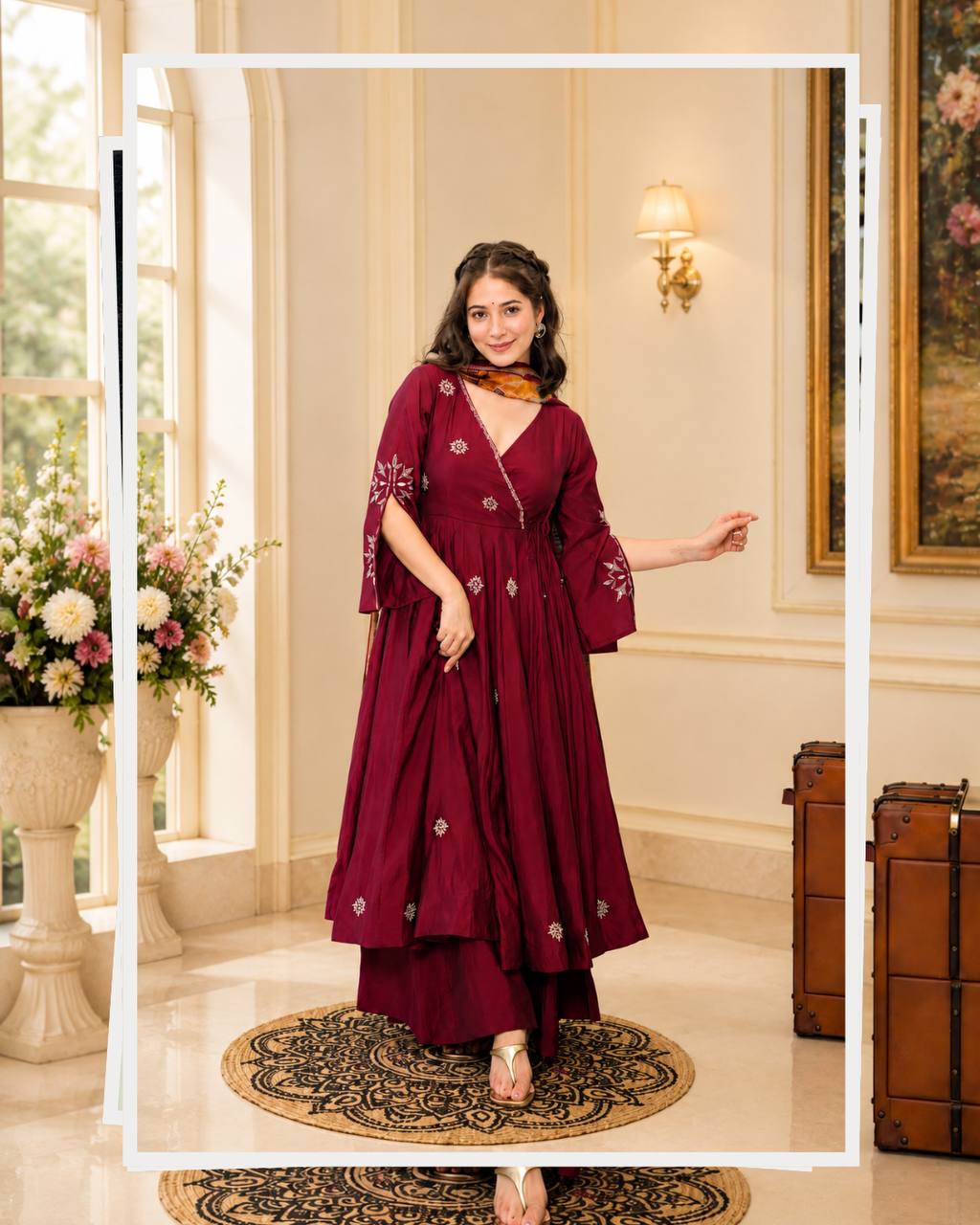
A traditional-inspired women's ensemble
A woven phanek in maroon, deep green, indigo or muted red works well with a cream, ivory or soft peach blouse. Add an innaphi in a related neutral shade and keep the drape secured at the shoulder with a discreet pin. A narrow woven border or small geometric motif gives definition without competing with ritual activity.
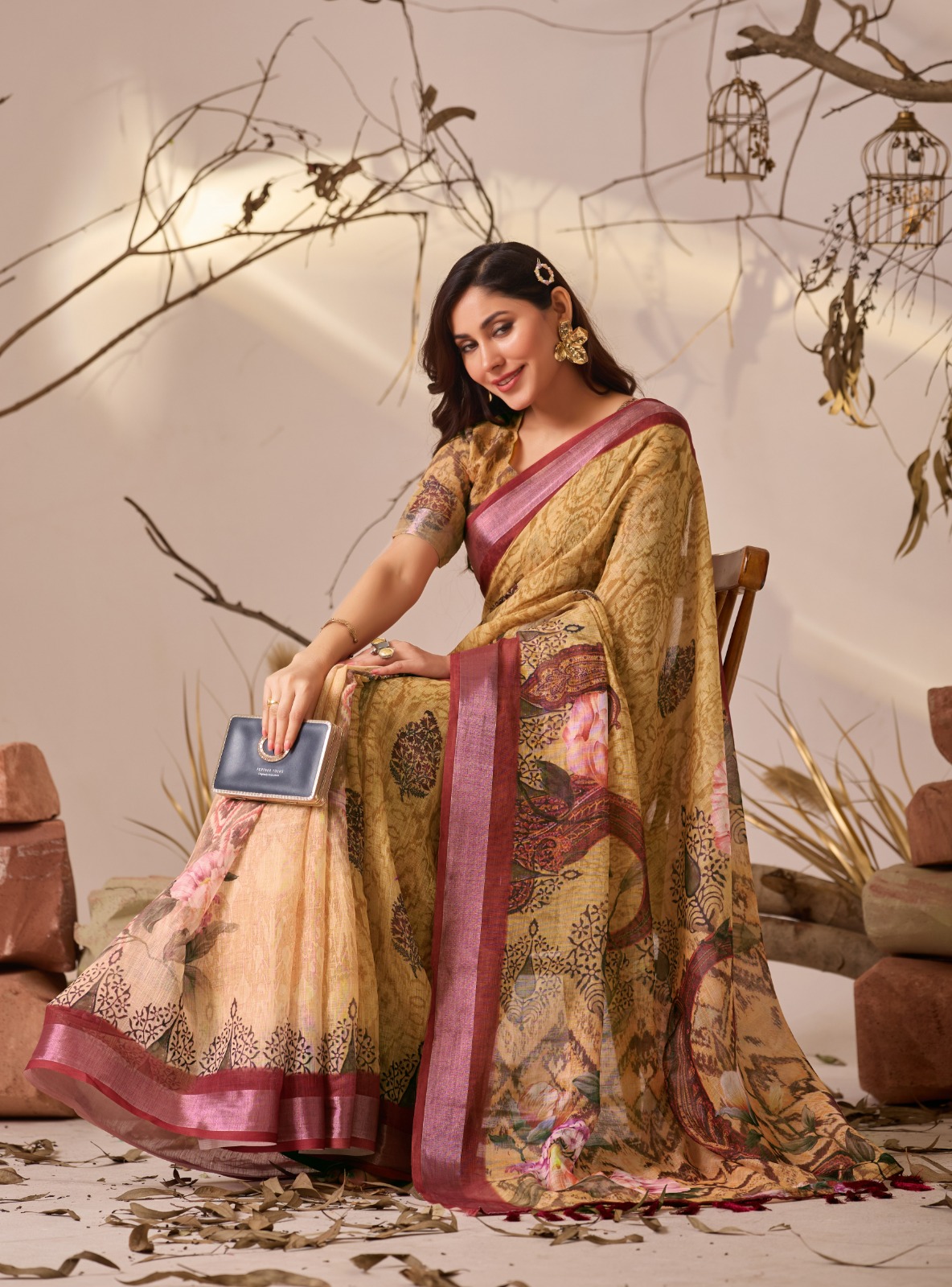
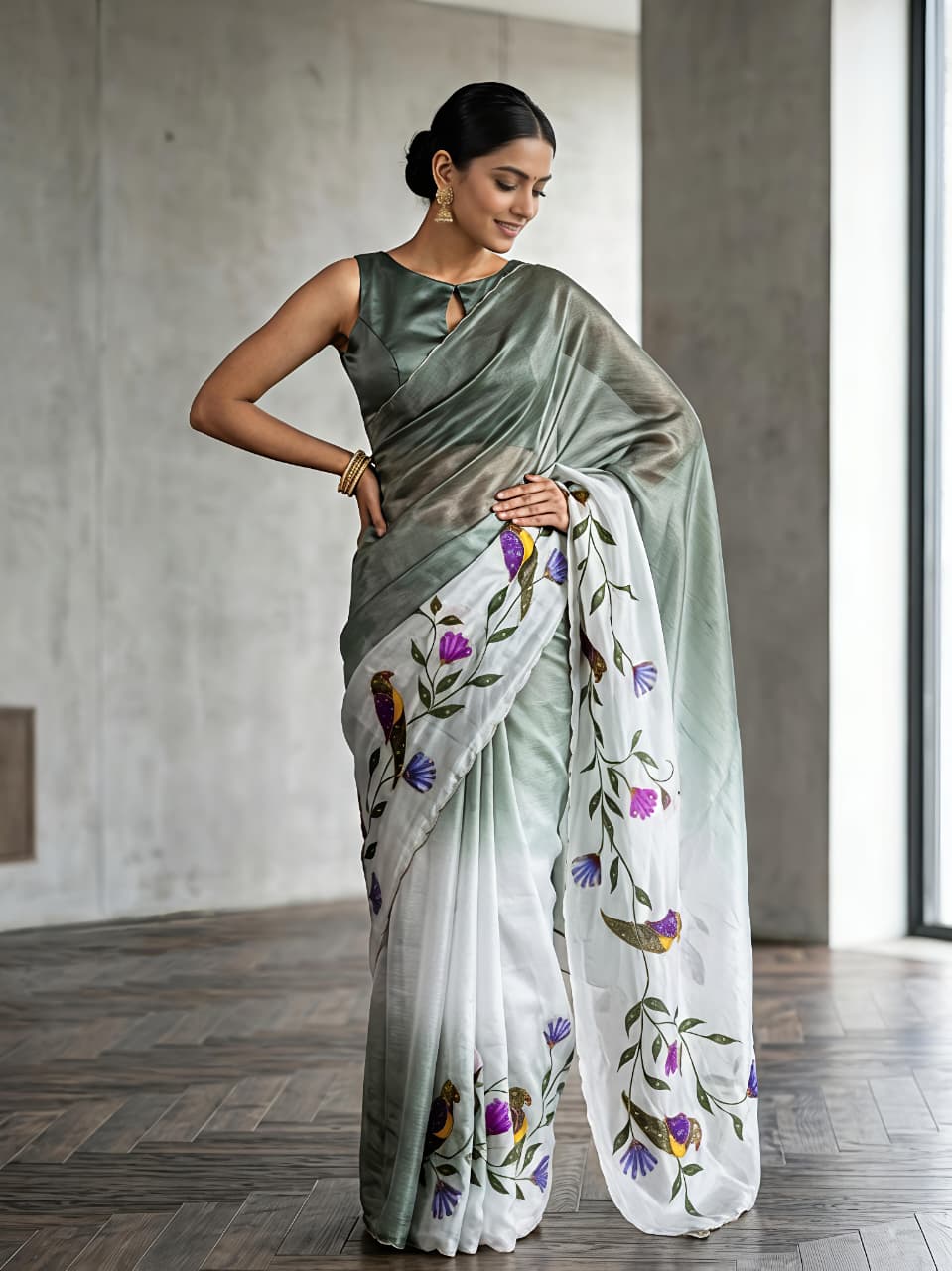
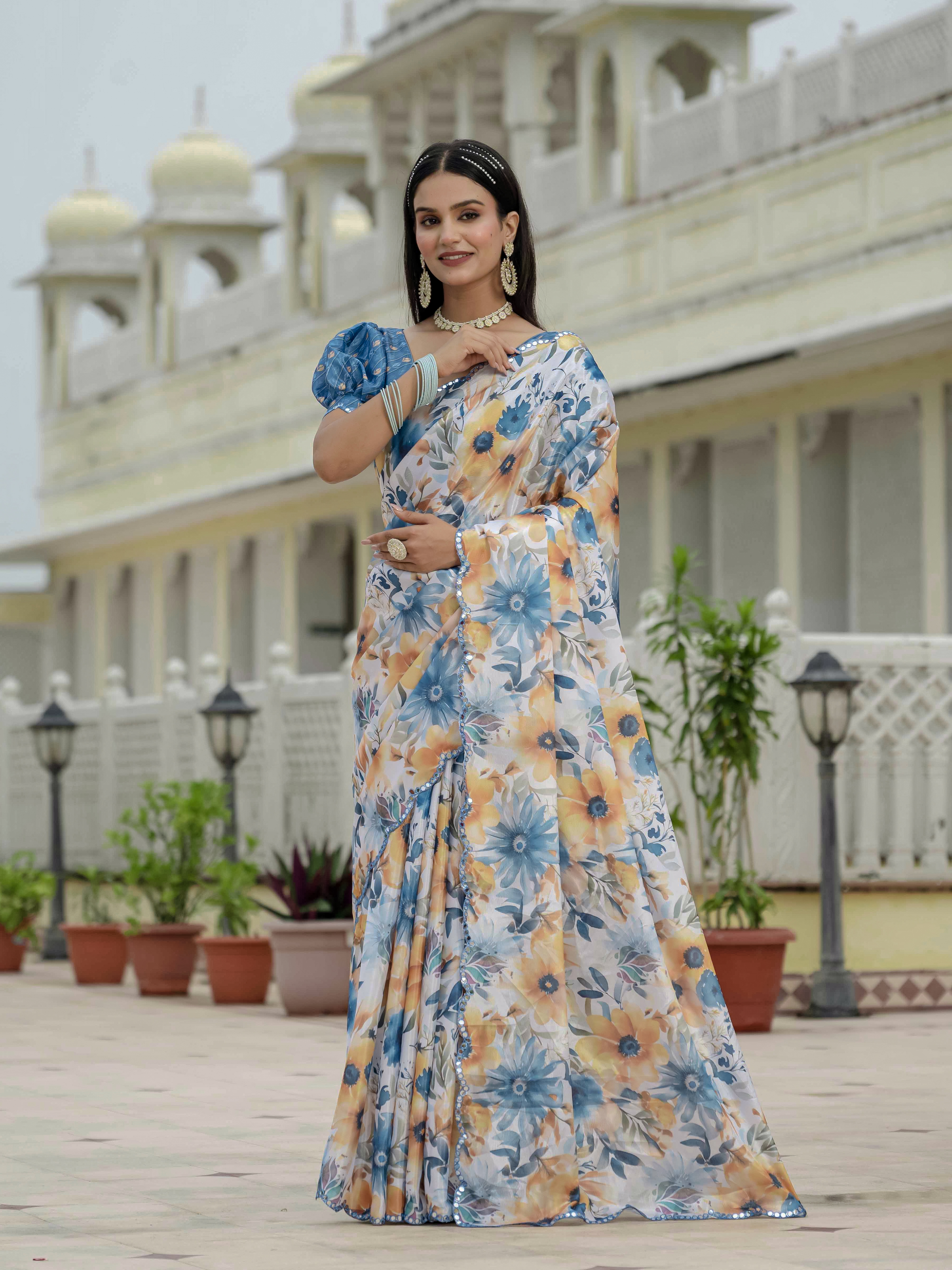
A saree can also serve as a respectful guest outfit when a phanek is unavailable, especially for a public cultural event rather than a restricted ritual. A saree should be draped securely, with the pleats set high enough to permit walking and the pallu pinned so that it doesn't trail near lamps, instruments or crowded pathways.
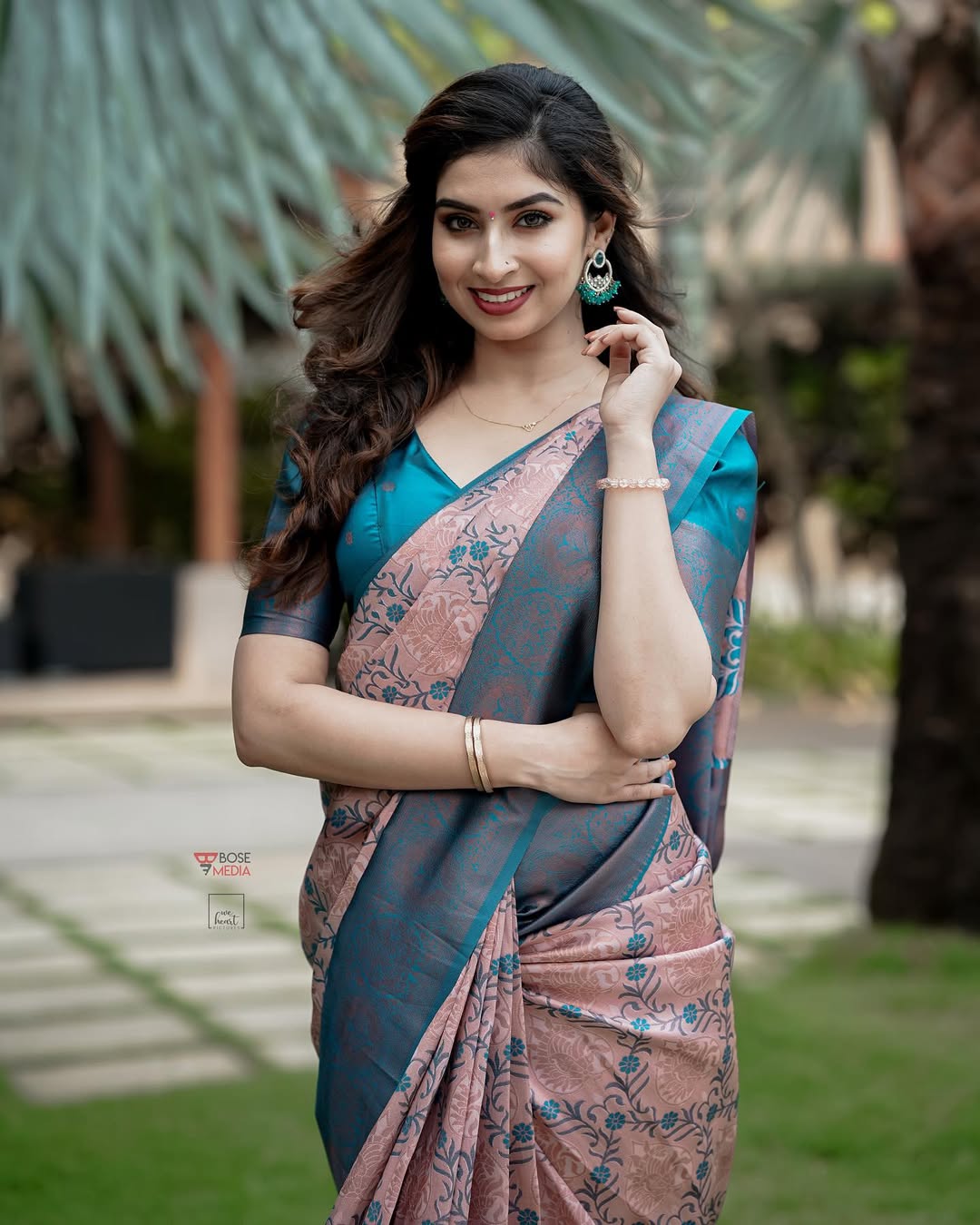
Pastel Peach Teal Banarasi Lichi Silk Saree Zari Work offers a useful example of balancing colour and shine. The peach and teal combination can be styled with a plain blouse and restrained jewellery, rather than adding another heavily embellished layer. Maroon Banarasi Lichi Silk Saree with Zari Border gives a deeper festive option, while Maroon Mal Cotton Ethnic Saree With Blouse from VARNAVI is more suitable when breathable comfort matters during a daytime gathering.
A lighter contemporary interpretation
A contemporary interpretation can use a solid cotton or silk-blend skirt with an understated blouse and a handloom-style stole, provided the outfit remains modest and doesn't imitate a ceremonial performer's costume. A soft, unstructured layer is easier to manage than a very long dupatta in a busy venue.
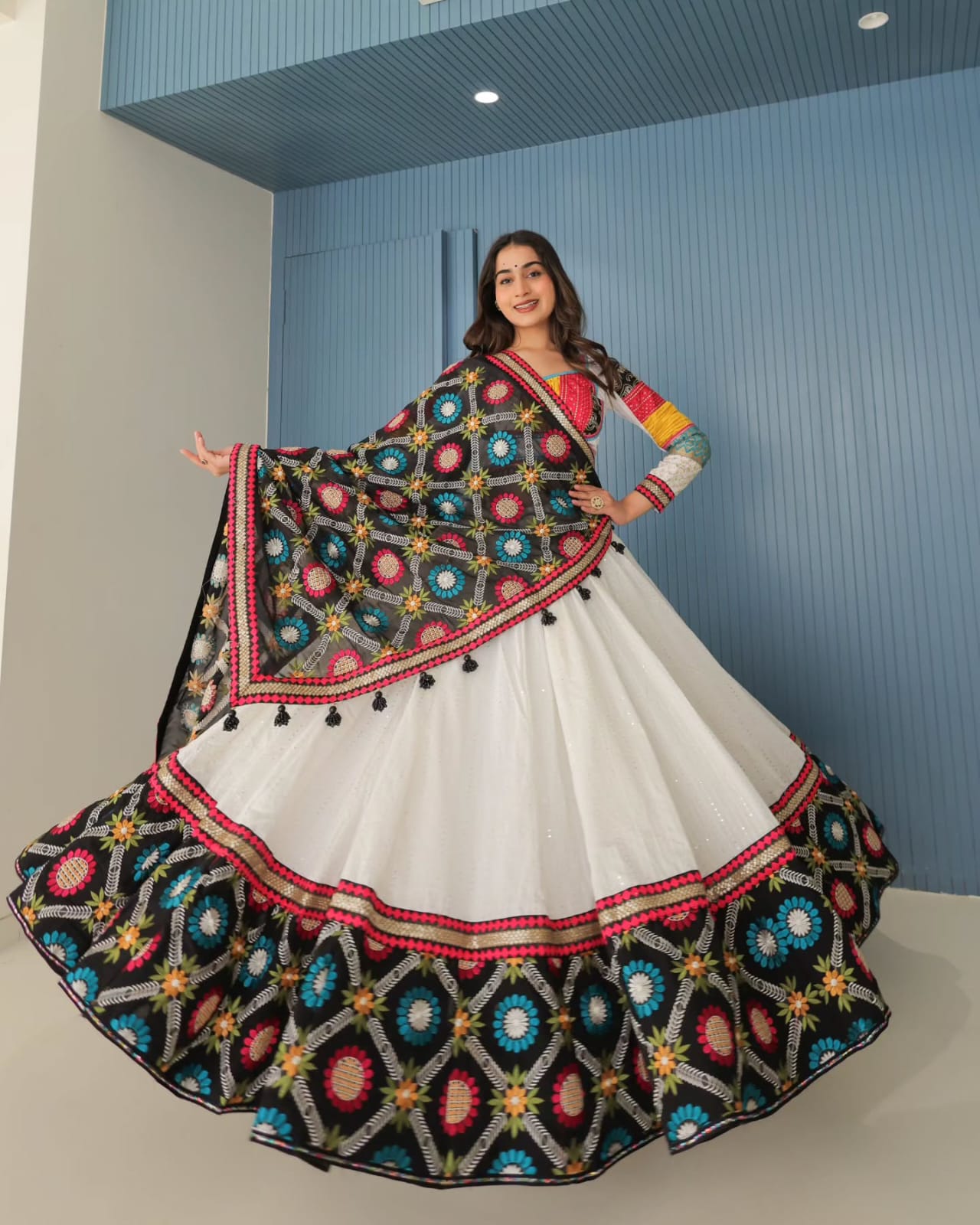
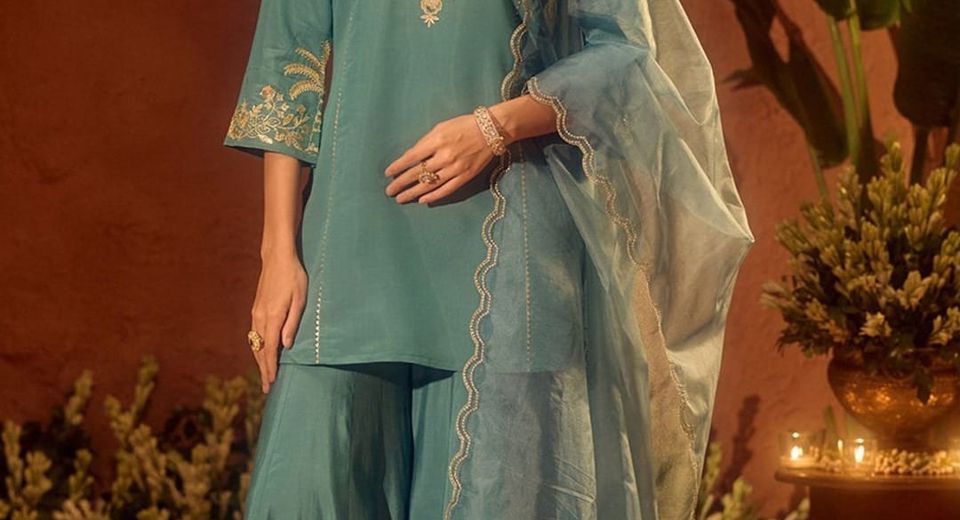
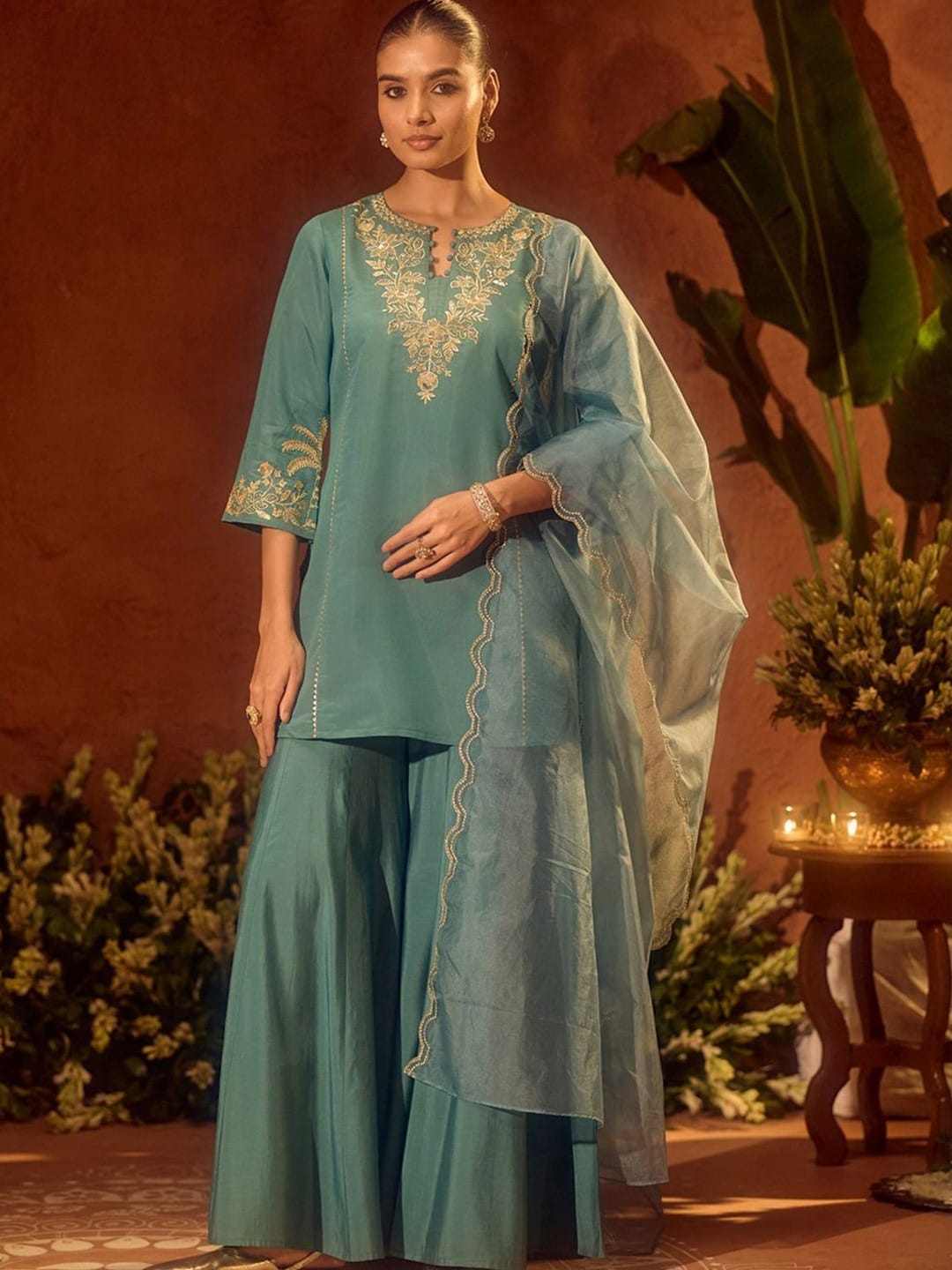
Pastel Blue Chanderi Silk Embroidered Sarara Set for Women can work for a public festive programme when the dress code welcomes North Indian ethnic silhouettes. The Chanderi texture keeps the look light, but the sarara shape should be styled simply so the outfit reads as polished occasion wear rather than a claim to be traditional Manipuri dress. Cultural styling becomes more honest when the wearer names the garment accurately.
Lai Haraoba Outfit Ideas for choosing fabrics and colours
Cotton, handloom textiles, breathable silk and light silk blends suit Lai Haraoba gatherings because they remain comfortable during extended ceremonies and movement. Colour should support the setting, with rich jewel tones, earthy shades, cream, white and muted pastels generally easier to style respectfully than excessive metallic shine.
Manipuri textile traditions include distinctive woven patterns and borders, and local handloom quality can vary by district, artisan and intended use. A cotton phanek is practical for daytime events in warm weather because cotton absorbs moisture and allows airflow. Silk or silk-blend clothing creates a more formal impression but can feel heavy if it includes dense zari, lining and multiple layers.
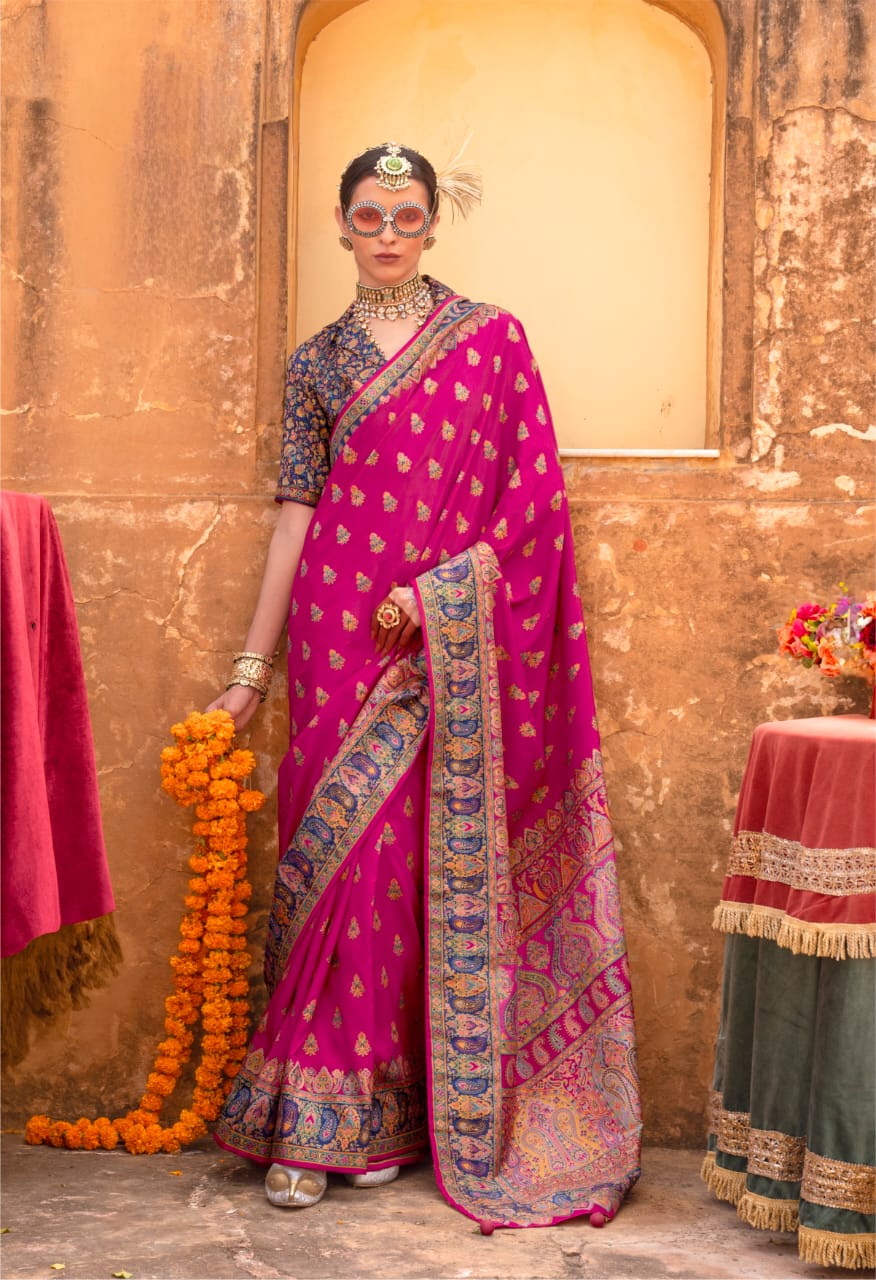
Banarasi silk can be beautiful for a formal guest appearance, but Banarasi silk isn't a substitute for Manipuri textile knowledge. Maroon Banarasi Soft Silk Saree with Golden Zari Border illustrates how a comparatively lighter saree can provide occasion polish without the weight of a very ornate brocade. Magenta Zari Banarasi Lichi Silk Saree With Blouse is better reserved for an evening programme or a celebratory reception where stronger colour and visible zari are appropriate.
Gold zari should be treated as an accent rather than the entire visual message. A zari border, a small pair of earrings and one restrained bangle set can create festive definition. An outfit covered in sequins, oversized stones and high-shine metallic embroidery may photograph well but can feel disconnected from the grounded, textile-led character of a community festival.
Climate and duration should guide fabric selection. Choose cotton or a light blend for a four- to six-hour daytime programme, and reserve heavier silk for shorter indoor functions or cooler weather. Pack a small safety pin, a flat pair of footwear and a breathable inner layer because secure dressing is more valuable than elaborate styling during a long traditional gathering.
Lai Haraoba Outfit Ideas for jewellery, hair and makeup
Jewellery, hair and makeup should remain neat and moderately scaled so that the clothing, ritual environment and wearer's comfort remain central. Traditional-inspired styling doesn't require recreating a performer's full adornment or borrowing religious symbols without understanding their meaning.
Gold-toned or silver-toned earrings, a slim necklace, a few bangles and a small hair accessory are sufficient for most guest outfits. Choose one focal point: a woven border, statement earrings or a richly coloured drape. Combining a heavy choker, long necklace, large jhumkas, stacked bangles and an embellished waist belt can make movement difficult and obscure the textile details.
A low bun, braid or securely pinned half-up style is practical for outdoor processions and crowded venues. Hair should remain away from the face and should not require repeated adjustment. Fresh flowers may be suitable in some settings, but guests should check local custom before wearing flowers associated with a particular ceremony or performer group.
Makeup should be breathable and humidity-resistant, particularly during warm outdoor events. A light base, defined brows, a soft lip colour and a small bindi can complement a traditional outfit without creating a stage look. A bindi is a personal styling choice, not a substitute for cultural knowledge, and it should be omitted if the local host indicates that a particular ritual has different expectations.
Lai Haraoba Outfit Ideas for adapting a saree respectfully
A saree can be adapted for a Manipuri cultural event by using secure pleats, a practical pallu and styling details that acknowledge the distinction between a saree and a phanek. The goal is to dress elegantly as a guest without claiming that a different regional garment is indigenous Manipuri attire.
Start with a comfortable blouse that provides full enough coverage for sitting and moving. Set the saree pleats evenly, pin the pallu at the shoulder and avoid a loose trailing end near cooking areas, lamps or dense crowds. A lower heel or flat sandal is safer than a narrow high heel when the venue includes grass, uneven ground or floor seating.
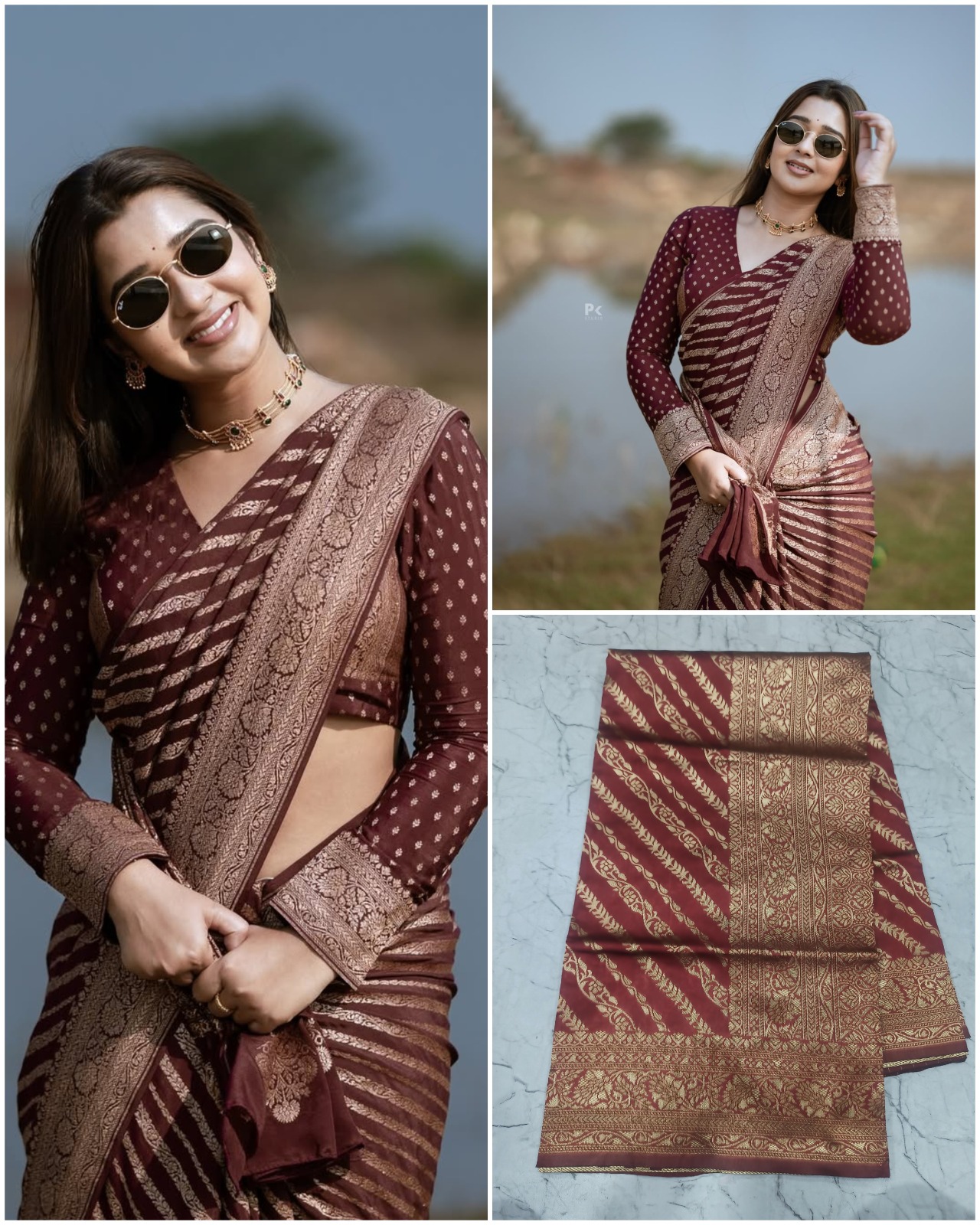
Maroon Banarasi Lichi Silk Saree With Zari Work suits a formal evening interpretation when paired with a plain blouse and limited jewellery. Maroon Lichi Silk Jacquard Saree with Rich Pallu creates a quieter statement if the blouse is kept matte and the pallu remains securely pinned. These sarees can support the festive mood, but a host's request for phanek and innaphi should always override personal preference.
don't mix unrelated regional identifiers simply because they're all labelled traditional. Kanjeevaram, Banarasi silk and Chanderi each belong to distinct textile histories, just as Manipuri phanek and innaphi carry their own cultural context. A visitor can wear any of these garments tastefully while still describing them accurately.
Lai Haraoba Outfit Ideas for planning comfort and cultural respect
The best final outfit is the one that respects the host community, stays secure through the programme and doesn't compete with the meaning of the gathering. Comfort and cultural clarity matter more than recreating a look from a fashion photograph.
Before dressing, confirm four practical details: whether the venue is indoors or outdoors, whether floor seating is expected, whether photography is permitted and whether guests are asked to wear a particular traditional garment. These answers determine the right hemline, footwear, drape and jewellery. A lightweight shawl is useful in a cool hall, while a breathable blouse and cotton lower garment are more practical for a warm outdoor ceremony.
Collections such as Traditional Northeast Indian Dress Occasion Collection can provide broader regional styling context, but a collection featuring Northeast Indian garments should not be treated as proof that every garment belongs to Manipur. Sikkim Traditional Women's Dress Collection, Traditional Uttarakhand Dress for Women and Traditional Himachal Dress for Women represent other regional traditions with their own silhouettes and histories. Traditional Goa Dress for Women likewise belongs to a different cultural landscape. Comparing these collections can sharpen regional awareness rather than flattening Indian dress into one category.
For a visitor who wants the safest choice, a modest cotton or silk-blend outfit in a rich but controlled colour, secure footwear, minimal jewellery and a pinned drape is a reliable starting point. For a participant with family or community guidance, a properly worn phanek and innaphi will be more meaningful than a generic festive ensemble. The most respectful styling decision is to ask, listen and dress for the actual gathering rather than for an imagined version of it.
Practical Questions About Lai Haraoba Dressing
What should a woman wear to Lai Haraoba?
A woman can wear a phanek with an innaphi, especially when the host community recommends traditional Manipuri clothing. For a public cultural programme, a modest cotton saree or simple ethnic set is also appropriate when styled securely and described accurately as a guest outfit.
Is a saree suitable for a Lai Haraoba celebration?
A saree is suitable for many public Lai Haraoba programmes, but it is not the same garment as a Manipuri phanek. Choose breathable fabric, pin the pleats and pallu securely, and follow the host's instructions if a particular traditional dress code applies.
What is the difference between a phanek and an innaphi?
A phanek is a wrapped lower garment traditionally worn by Manipuri women, while an innaphi or inaphee is a draped upper cloth or shawl. The two pieces are often coordinated through colour, border and textile texture.
Can I wear heavy Banarasi silk or zari to Lai Haraoba?
You can wear Banarasi silk or zari for a formal public event if the host's dress code permits it. Keep the rest of the styling restrained, and choose lighter fabric or cotton when the programme is outdoors, lengthy or likely to involve walking and floor seating.
What jewellery works with a Manipuri-inspired outfit?
Small to medium earrings, a slim necklace, a few bangles and a securely pinned hair accessory work well for most guests. Avoid copying ceremonial jewellery or wearing religious symbols as decoration unless a knowledgeable host confirms that the choice is appropriate.
Is potloi appropriate for Lai Haraoba?
Potloi should not be selected as a generic Lai Haraoba outfit because the cylindrical garment is strongly associated with Manipuri bridal and Ras Lila traditions. Visitors should choose a phanek and innaphi or a modest guest ensemble unless a specific performance or ceremony requires another costume.