

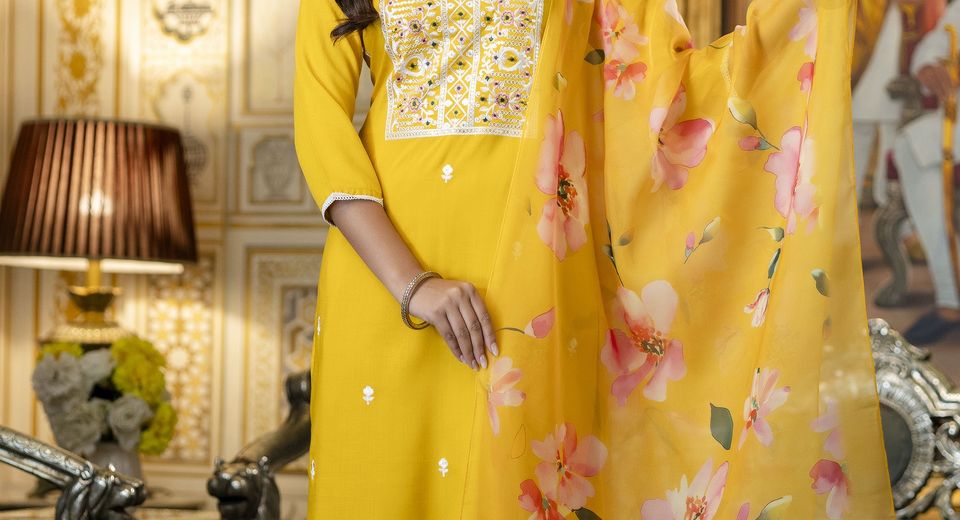
Kumaoni Pichora and Its Meaning Beyond a Yellow Dupatta begins with an important distinction: a Pichora isn't simply any yellow stole worn with ethnic clothing. Pichora, also written as Pichoda or Pichौड़ा, is a ceremonial textile associated especially with Kumaoni communities in Uttarakhand. Its yellow ground, red ornamentation and ritual use connect clothing with marriage, fertility, protection, family and regional identity.
The colour catches attention first, but colour alone can't explain why a Pichora appears at weddings, naming ceremonies and other important moments. The textile carries social meaning through its motifs, method of wearing and relationship to the wearer's family and community. Understanding those layers also helps shoppers style yellow Indian clothing without treating a culturally specific garment as a generic dupatta.
What is a Kumaoni Pichora?
A Kumaoni Pichora is a ceremonial yellow textile traditionally worn by women from the Kumaon region of Uttarakhand. The cloth is commonly decorated with red motifs, including floral forms, dots and auspicious symbols, and is draped over the head and shoulders during significant Hindu rituals.
The word refers to a regional textile tradition rather than one universal construction. Older Pichoras could be made and decorated at home, while contemporary versions may be printed, block-printed, machine-embroidered or produced using other commercial techniques. Some families prefer a handmade Pichora for a wedding, whereas others choose a lighter, readily available version for a festival or family puja.
A traditional Pichora is often rectangular and broad enough to cover the head and upper body. The yellow field may recall turmeric, sunlight and auspiciousness, while the red decoration creates a visual frame around the wearer. The textile can be worn with a Kumaoni sari, ghagra, blouse or other regional dress, although present-day wearers also pair Pichora-inspired pieces with salwar suits and contemporary separates.
Terminology and practice can vary between Kumaoni communities, villages and families. A description that applies to a wedding Pichora in one household may not describe every Pichora made or worn across Uttarakhand. That variation is part of the textile's living history rather than a reason to reduce it to one fixed costume formula.
Why is a Pichora yellow and red?
A Pichora is primarily yellow because yellow is associated with auspiciousness, turmeric, fertility, sunlight and ceremonial joy in Kumaoni Hindu practice; red adds associations of marriage, vitality, protection and Shakti.
Yellow has a strong ritual vocabulary across South Asia. Turmeric is used in purification and wedding ceremonies, and its warm colour suggests prosperity and well-being. In a Kumaoni Pichora, yellow can therefore signal a sacred or celebratory setting rather than merely a preference for a bright fashion shade.
Red motifs bring contrast and symbolic force. Red is widely connected with the bride, married life, energy and auspicious beginnings. The relationship between the two colours matters: a yellow ground supports the red symbols, while red gives the textile a recognisable visual identity. The pairing also makes the Pichora visible in family photographs and group rituals without requiring metallic embellishment.
Colour meanings are never completely isolated from personal choice. A modern Pichora may use saffron, mustard or pale yellow, and the red may range from vermilion to wine. A paler base can look understated in daylight, while a strong turmeric yellow gives a more time-honoured festive impression. The symbolic framework remains more important than matching a single catalogue shade.
Kumaoni Pichora and Its Meaning Beyond a Yellow Dupatta
Kumaoni Pichora and Its Meaning Beyond a Yellow Dupatta lies in the textile's role as a marker of belonging, blessing and life-stage transition. The Pichora can communicate that a woman is participating in a family ritual within a particular regional tradition.
For many Kumaoni families, a Pichora is linked with married women and auspicious occasions. It may be worn by a bride, gifted to a woman by her maternal family, or brought out for a wedding ceremony involving close relatives. The textile can consequently keep memories of a mother, grandmother or natal home, making its value emotional as well as visible.
The cloth also functions as a portable expression of Kumaoni identity. Uttarakhand communities living outside the hills may wear a Pichora at a wedding or cultural gathering to maintain a visible connection with home. A yellow textile worn in Delhi, Mumbai or abroad can carry a regional story even when the surrounding clothing is contemporary.
Calling a Pichora only a yellow dupatta removes the context that makes the garment meaningful. A standard dupatta is usually selected to complete an outfit, while a ceremonial Pichora may be selected because it belongs to a ritual, a family memory or a community practice. The two objects can share a drape, but they don't necessarily carry the same cultural function.
A Pichora becomes meaningful through the combination of colour, motif, ceremony, memory and the person who gives or wears it.
Which motifs appear on a Kumaoni Pichora?
Common Pichora decoration includes red dots, floral patterns, borders and auspicious symbols such as the swastika, conch, bell or geometric forms, although the exact arrangement varies by maker and family.
The swastika in this context is an ancient Hindu auspicious symbol associated with well-being and good fortune; it should not be confused with the later political appropriation of a similar-looking sign in Europe. Floral forms can suggest growth and fertility, while repeated dots create rhythm across the yellow field. A red border gives the cloth a visual edge and helps it read clearly when draped over the head.
Motifs may be arranged symmetrically, concentrated around the border or scattered across the centre. Handmade versions can show small differences in spacing, line thickness and colour saturation. Those variations are evidence of the making process, not automatically defects.
Contemporary designs sometimes simplify heritage symbols or introduce additional decorative elements. A printed Pichora-inspired stole may use only a red border and a few floral motifs, while a ceremonial handmade piece may contain dense ornamentation. Buyers should ask whether a textile is a classic Pichora, a Pichora-inspired accessory or a current yellow-and-red dupatta.
When do women wear a Pichora?
Women commonly wear a Pichora at Kumaoni weddings, religious ceremonies, family celebrations and other auspicious occasions, with exact practice determined by community and household custom.
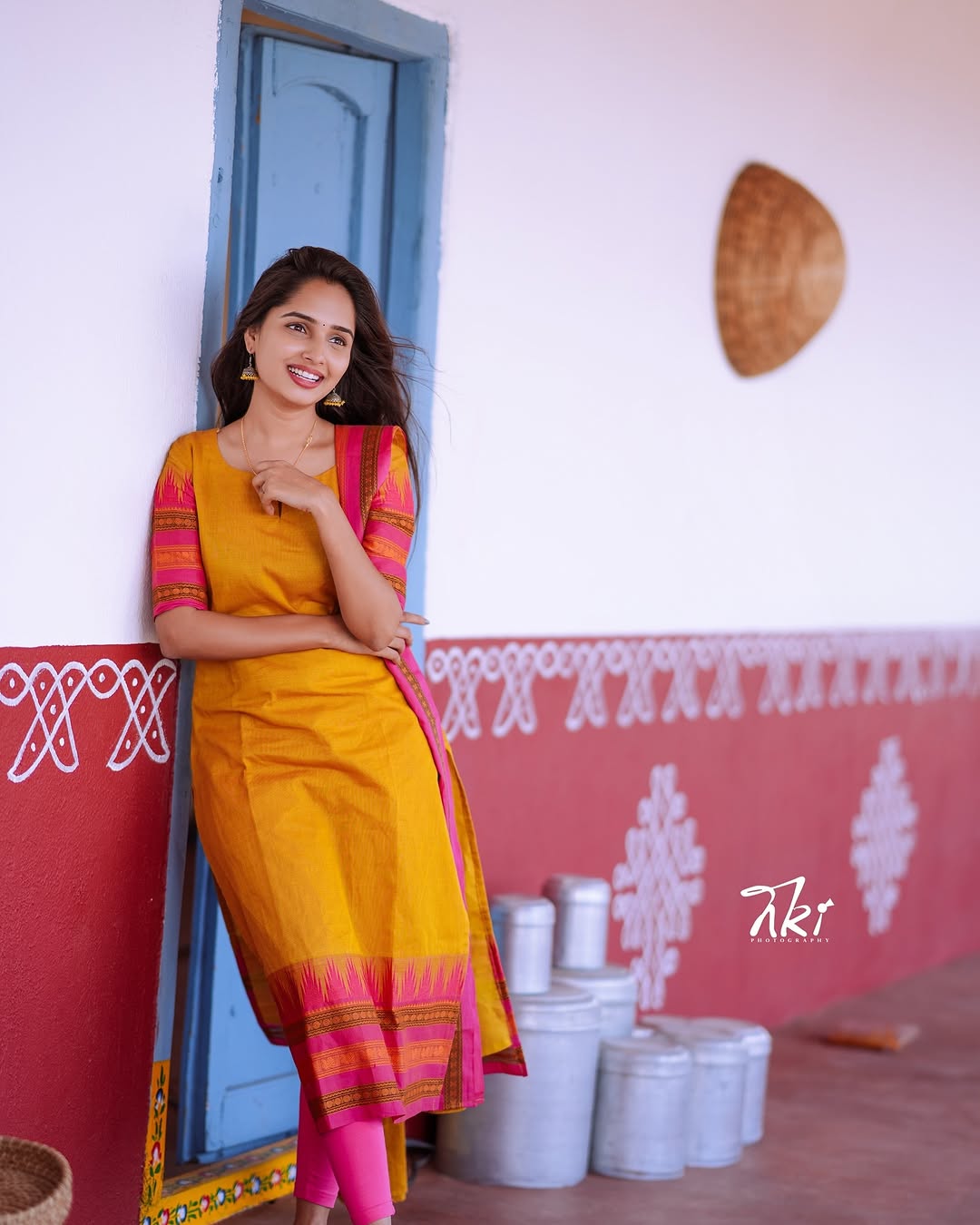
Wedding use is especially visible. A bride may wear a Pichora over regional bridal clothing, or women from the bride's family may wear Pichoras during wedding rituals. The textile can also appear at ceremonies connected with a child, a household prayer or a festival. The correct use isn't determined only by the colour yellow; the event and the wearer's relationship to the family matter.
A Pichora is often draped over the head before being arranged across the shoulders. The front corners may fall symmetrically, or the cloth may be folded for a more controlled shape. Jewellery, a red bindi, glass bangles and regional ornaments can reinforce the ceremonial character, but no single accessory is compulsory for every wearer.
People outside Kumaon can appreciate the textile while remaining attentive to context. Wearing a Pichora at a Kumaoni wedding with the family's invitation is different from labelling any yellow dupatta as authentic Kumaoni attire. Asking the host or a Kumaoni artisan about the appropriate drape is a practical sign of respect.
How can yellow Indian outfits be styled without confusing them with a Pichora?
Yellow Indian outfits can borrow the Pichora's colour story while remaining clearly contemporary by using yellow as a palette reference rather than claiming that every yellow dupatta is a Pichora.
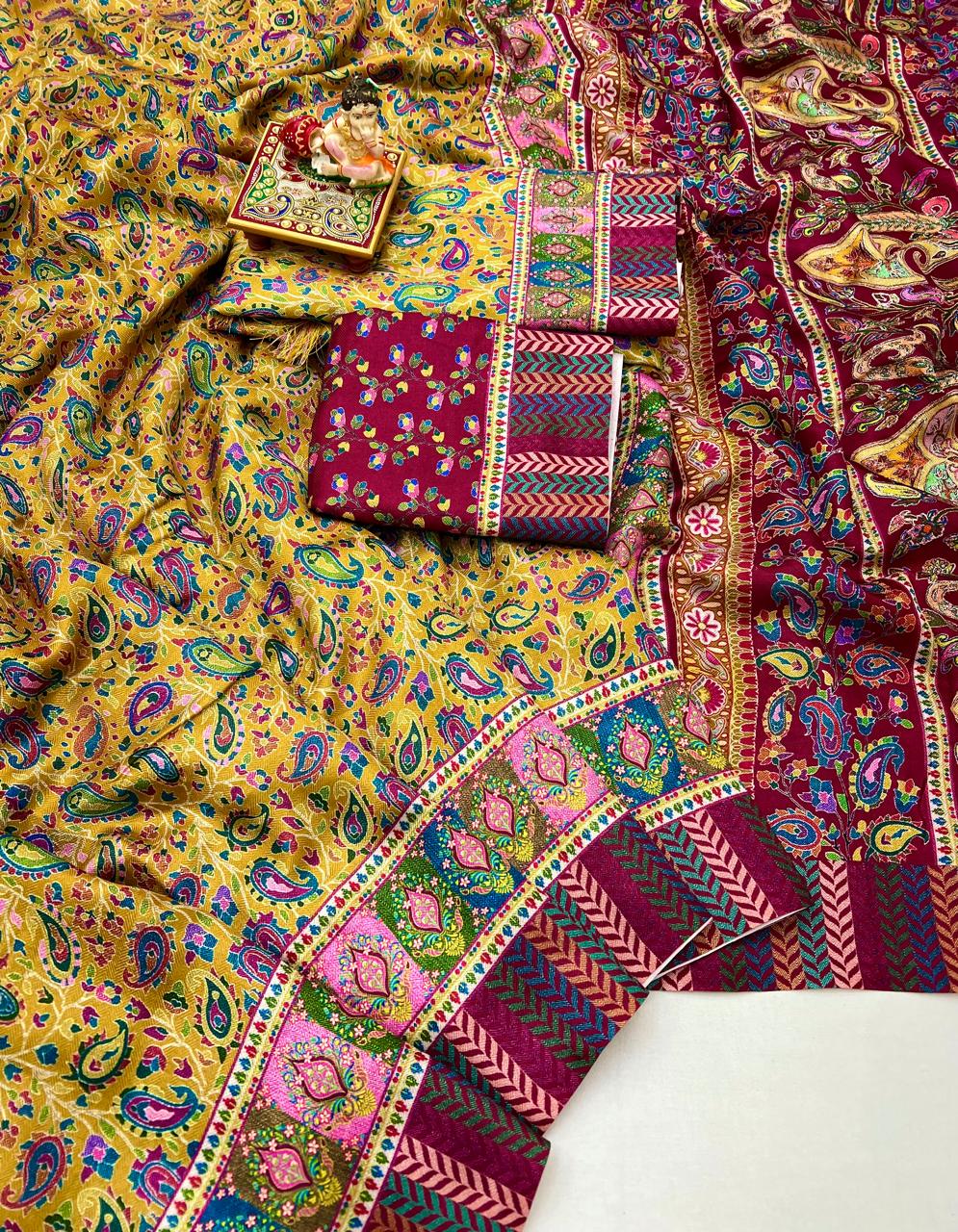
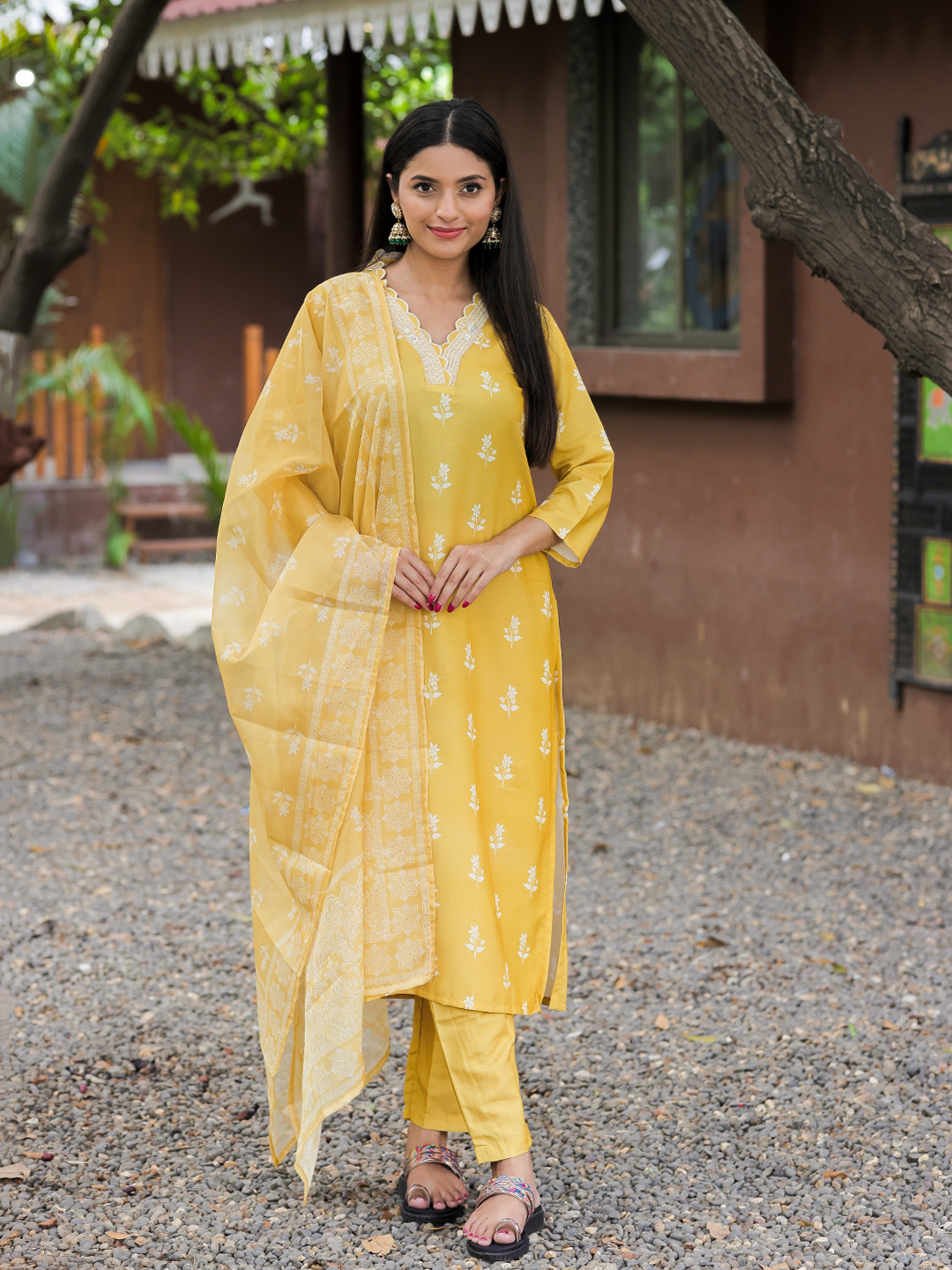
A Mustard Yellow Kurti Pant Dupatta Set for Women can echo the turmeric warmth of a Pichora for a daytime family gathering. The coordinated kurti, trousers and dupatta create a practical three-piece silhouette, but the outfit should be described as a mustard kurti set unless it has recognised Pichora construction, motifs and cultural provenance.
The Classic Yellow Cotton Kurti Set with Woven Dupatta suits summer events because cotton is breathable and a woven dupatta adds texture without the weight of heavy embellishment. A light yellow cotton base creates a softer interpretation of the familiar palette for a puja or informal festive lunch.
For a more decorative look, the Sunshine Yellow Embroidered Kurti Set with Dupatta introduces embroidery rather than classic Pichora symbolism. The distinction is useful when planning dress codes: embroidery can look festive, while a genuine ceremonial Pichora may carry family or regional significance beyond surface decoration.
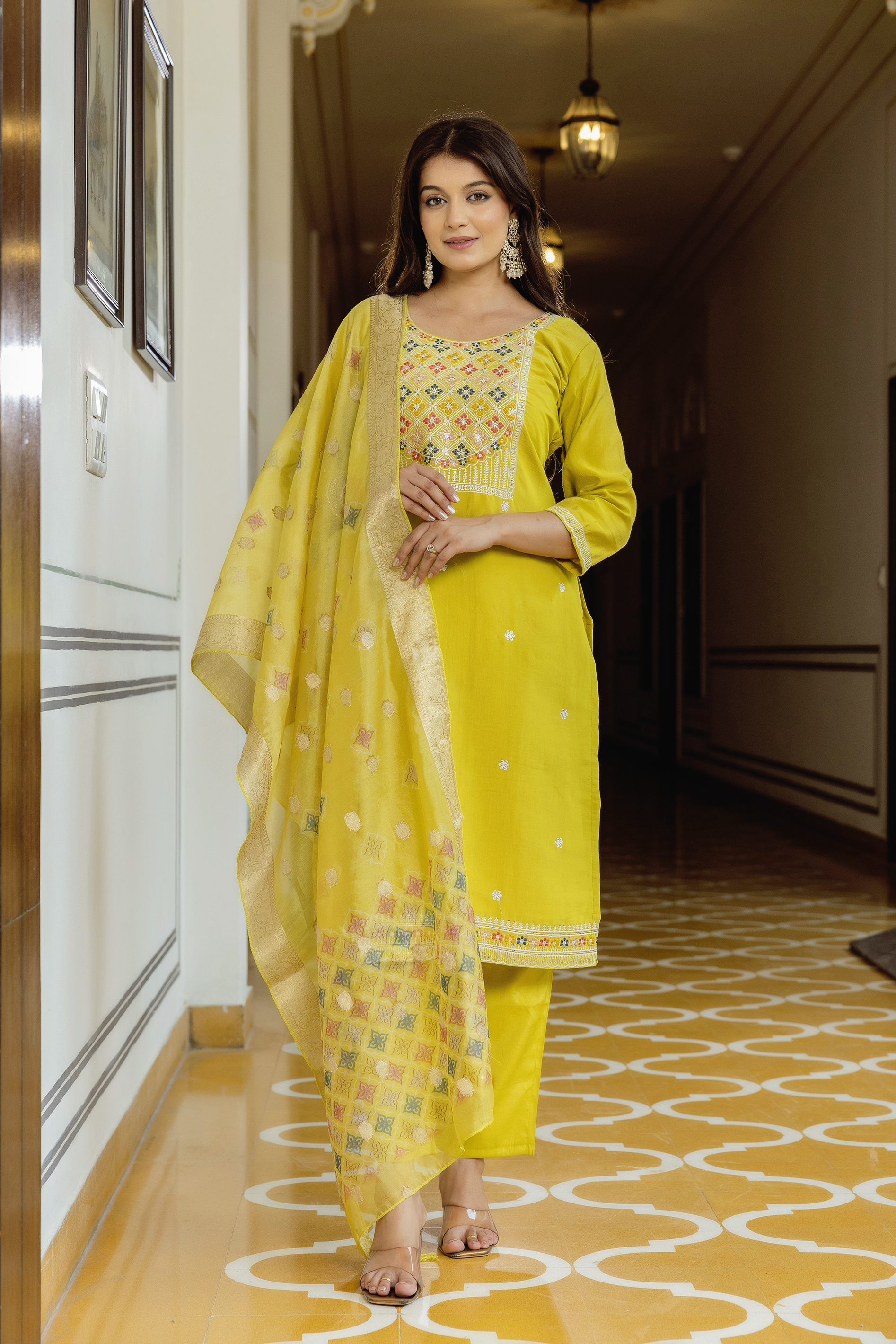
The Mustard Yellow Jacquard Kurta Set with Embroidery & Dupatta demonstrates how weave structure can deepen a yellow outfit. Jacquard texture catches light differently from a flat printed textile, so the set can work for an evening celebration without relying on sequins.
The Yellow Embroidered Cotton Kurti Pant Set with Dupatta offers another comfortable option for warm-weather ceremonies. Cotton, lining, sleeve length and trouser ease matter more than colour alone when an outfit will be worn for several hours in a crowded ritual setting.
The Yellow Jacquard Woven Kanchi Cotton Kurti Set suits a wearer who wants a structured, textural surface and a regional handloom-inspired feel. A mustard or golden accessory can coordinate with the outfit, while a red bindi or red bangles can nod to the Pichora palette without presenting the kurti set as a heritage Pichora.
The Mustard Yellow Designer Kurti Pant Dupatta Set Women can work for a more polished festive gathering. Minimal gold jewellery, brown sandals and a red accent in the earrings or bangles create balance; adding every possible yellow and red accessory can make the styling look costume-like rather than considered.
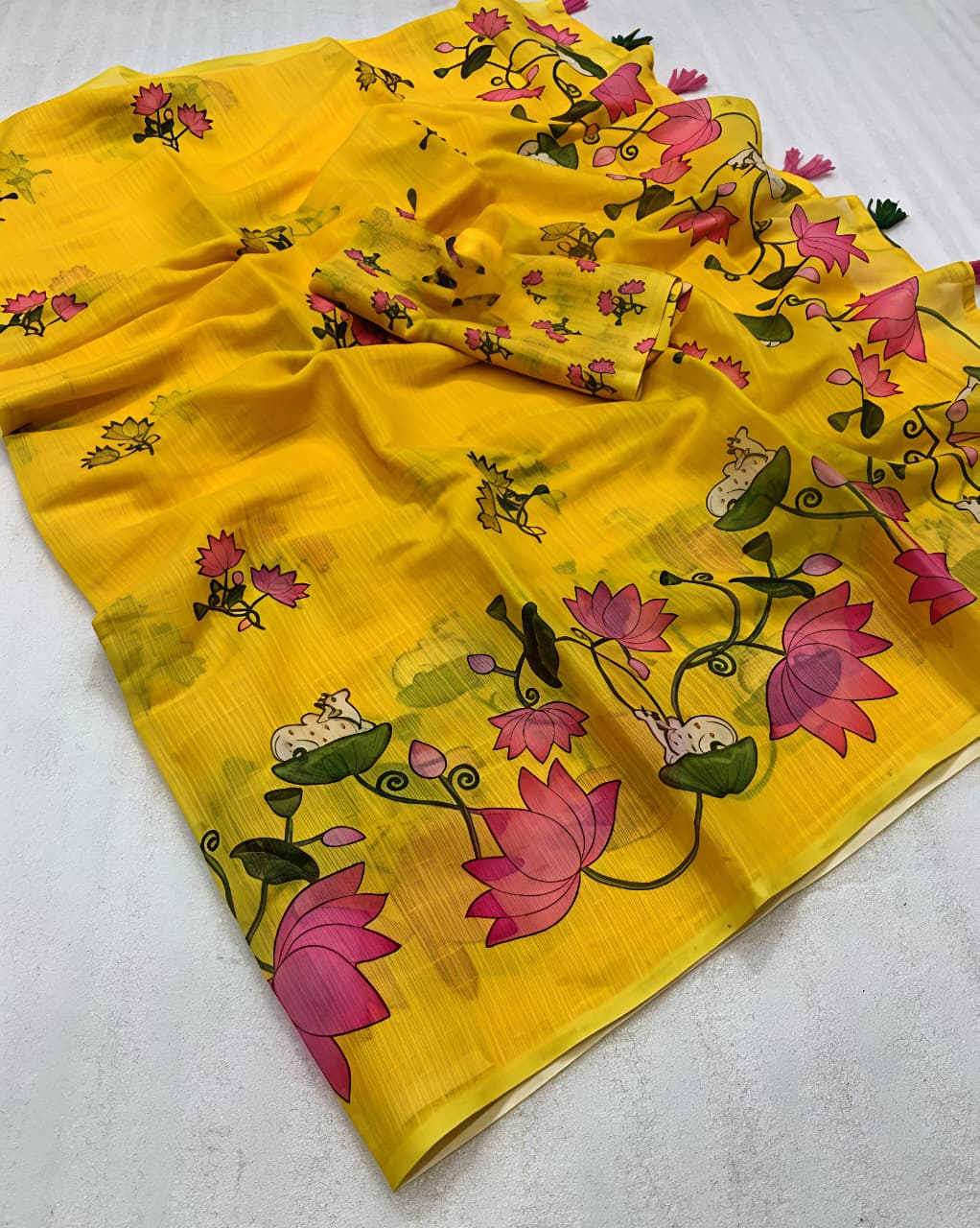
For a different silhouette, the Designer Yellow Patola Border Pashmina Silk Saree For Women brings yellow into a saree wardrobe through a Patola-inspired border and a richer silk surface. The saree can be styled for a reception or formal celebration, but its construction and textile identity remain distinct from a Kumaoni Pichora.
How should a Pichora be bought and cared for?
A Pichora should be bought by checking its material, production method, dimensions, motif clarity, colourfastness and cultural description rather than choosing only by yellow colour.
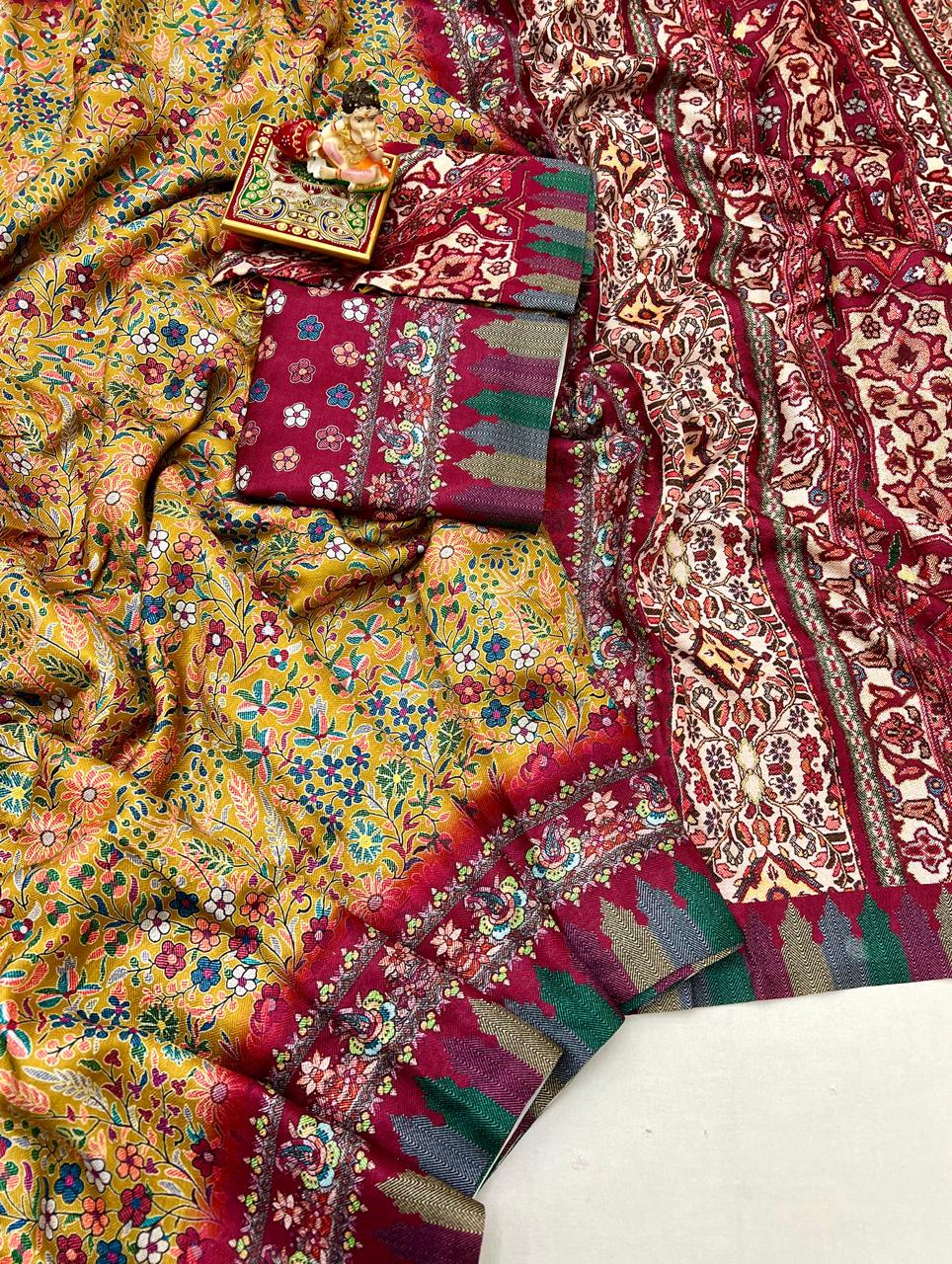
Ask whether the textile is hand-painted, hand-block-printed, screen-printed, machine-printed or embroidered. Ask for the fabric composition as well: cotton, silk, synthetic fibre and blended textiles require different care. A ceremonial Pichora intended for repeated rituals should have a comfortable width and enough length to cover the head and shoulders without constant adjustment.
Colourfastness matters because strong red pigment can bleed into a yellow ground during washing. Test an inconspicuous edge with a clean, damp white cloth if the maker permits it. A seller should also clarify whether the textile has been pre-washed, whether slight irregularities are expected and whether metallic or embroidered details can tolerate moisture.
Most cotton Pichoras should be gently hand-washed separately in cool water only when the care label permits washing. Avoid chlorine bleach, prolonged soaking and aggressive scrubbing. Dry the textile in shade rather than harsh direct sunlight, because repeated ultraviolet exposure can fade yellow and red dyes.
Silk or heavily decorated Pichoras are safer with professional dry cleaning, especially when zari, embroidery or unstable dyes are present. Store a clean, completely dry textile folded in breathable muslin, refolding it every few months to reduce permanent crease lines. Avoid sealed plastic for long-term storage because trapped moisture can encourage odour and mildew.
How can a Pichora be worn respectfully?
A Pichora can be worn respectfully by acknowledging its Kumaoni origin, using its name accurately and following the family or community custom connected with the event.
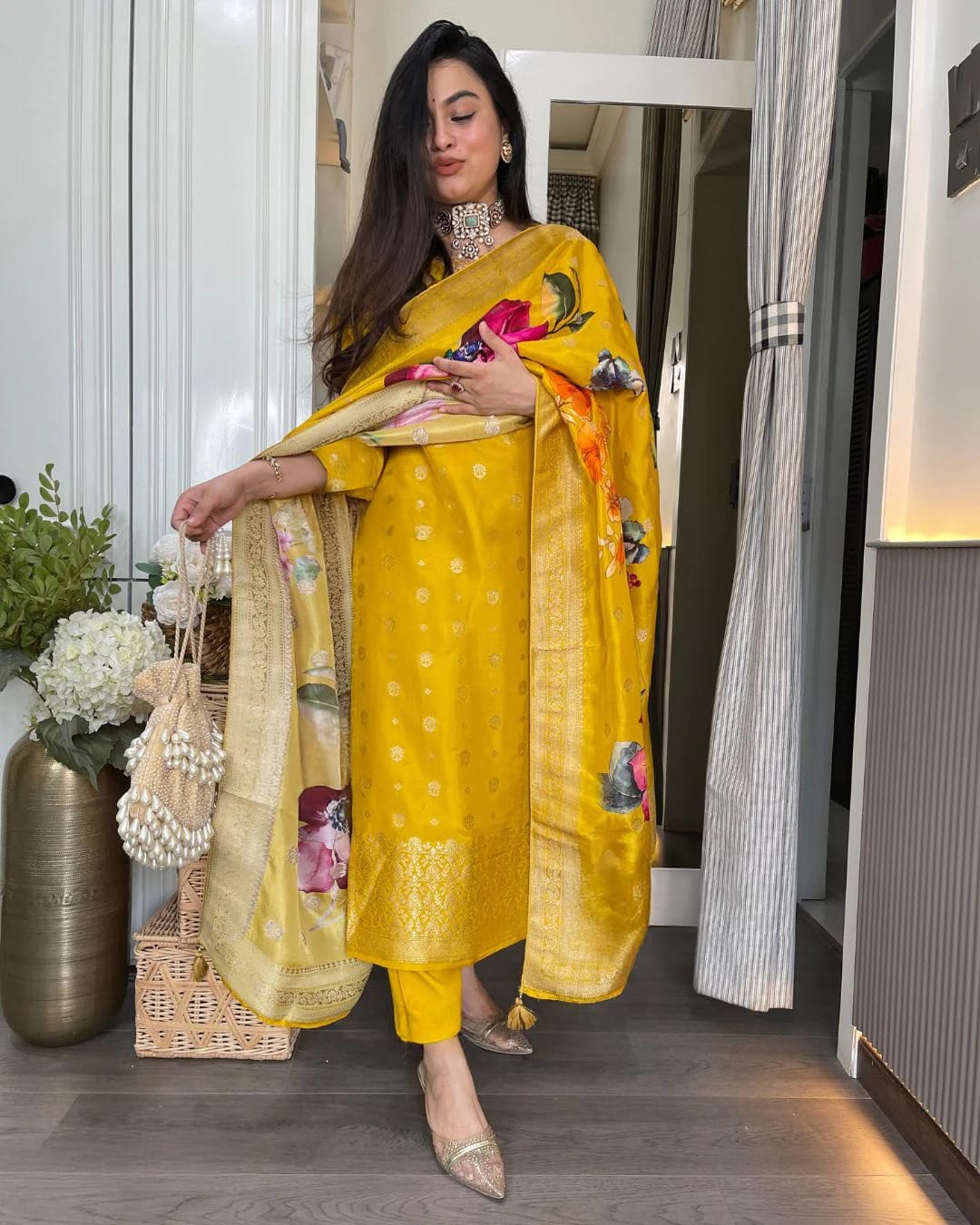
don't market an ordinary yellow dupatta as a Pichora merely because it has red flowers. A product description should distinguish a traditional Kumaoni Pichora, a contemporary Pichora-inspired textile and a yellow festive dupatta. Accurate naming protects buyers from confusion and recognises the artisans and communities associated with the tradition.
At a Kumaoni wedding, follow the hosts' preference about whether guests should cover the head, wear a particular colour or reserve a Pichora for specific participants. At a cultural programme, learning the correct pronunciation and asking permission before photographing someone's ceremonial clothing shows more care than copying motifs without context.
Contemporary styling can remain thoughtful. Pairing a Pichora with a simple Kumaoni blouse or sari allows the textile to remain central, while wearing it with a contemporary outfit can be appropriate when the occasion is informal and the wearer understands the distinction between inspiration and tradition.
Ultimately, a Pichora isn't valuable because yellow is trendy for one season. Its lasting significance comes from the way colour, ritual, family memory, regional identity and good making meet in one textile. That combination explains why a Pichora can be worn as clothing and remembered as heritage.
Common Questions About Kumaoni Pichora, Colour and Tradition
What does a Kumaoni Pichora symbolise?
A Kumaoni Pichora symbolises auspiciousness, marriage, fertility, protection, family blessing and Kumaoni regional identity. Yellow commonly connects with turmeric and ceremonial joy, while red motifs are associated with vitality, married life and auspicious beginnings.
Is every yellow dupatta a Pichora?
No, every yellow dupatta is not a Pichora. A Pichora is a culturally specific Kumaoni ceremonial textile identified through its regional context, yellow-and-red colour scheme, motifs, drape and ritual use.
Why are red motifs used on a Pichora?
Red motifs provide the traditional contrast associated with marriage, energy, protection and auspiciousness. Floral forms, dots, borders and symbols such as the swastika may appear, although designs vary between families and makers.
When is a Pichora worn?
A Pichora is commonly worn at Kumaoni weddings, religious ceremonies, family celebrations and other auspicious events. The precise ritual use depends on the customs of the wearer's family and community.
Can someone who is not Kumaoni wear a Pichora?
Someone who is not Kumaoni can wear a Pichora respectfully, especially with the invitation or guidance of a Kumaoni family or cultural group. The wearer should name the textile accurately, avoid presenting a generic yellow dupatta as a Pichora and remain attentive to the event's customs.
How should a Pichora be washed?
A cotton Pichora should generally be hand-washed separately in cool water only when its care instructions allow washing. Silk, zari-decorated and heavily embroidered Pichoras usually require professional dry cleaning, while all versions should be dried in shade and stored in breathable fabric.




