

Kosa Silk vs Other Indian Silk Sarees: Styling & Occasion Guide begins with one useful distinction: Kosa generally refers to a Tussar silk tradition, while Indian silk sarees differ substantially in fibre, weave, surface, weight and ornamentation. A Kosa saree can feel textured and organic; a Banarasi saree often looks more lustrous and zari-rich; a Kanjeevaram saree usually has a substantial body and contrast borders. Understanding these differences helps you choose a saree for the weather, ceremony, blouse design and amount of movement you need.
The word "Kosa" is strongly associated with Tussar silk traditions in central and eastern India, including Chhattisgarh and Odisha. Sellers may use Kosa and Tussar labels differently, so a careful buyer should check the listed fabric, weave, finish and care instructions rather than relying on the name alone.
Kosa Silk vs Other Indian Silk Sarees: What makes Kosa different?
Kosa silk is generally recognised by its naturally textured hand, muted sheen, visible slubs and breathable, slightly crisp drape. Kosa is commonly made from Tussar silk, a wild silk with less uniform filaments than cultivated Mulberry silk, so small variations in yarn thickness and colour are normal.
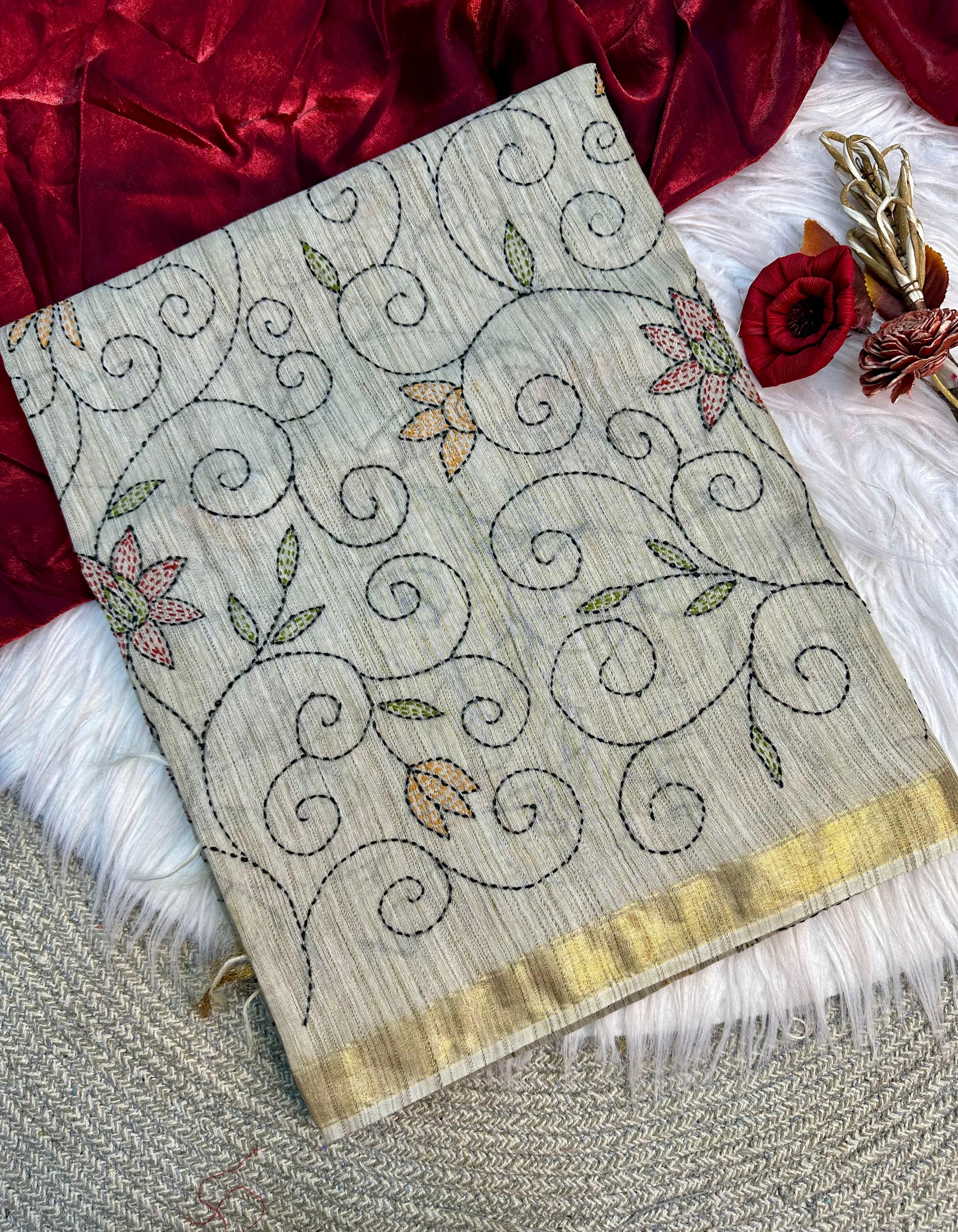
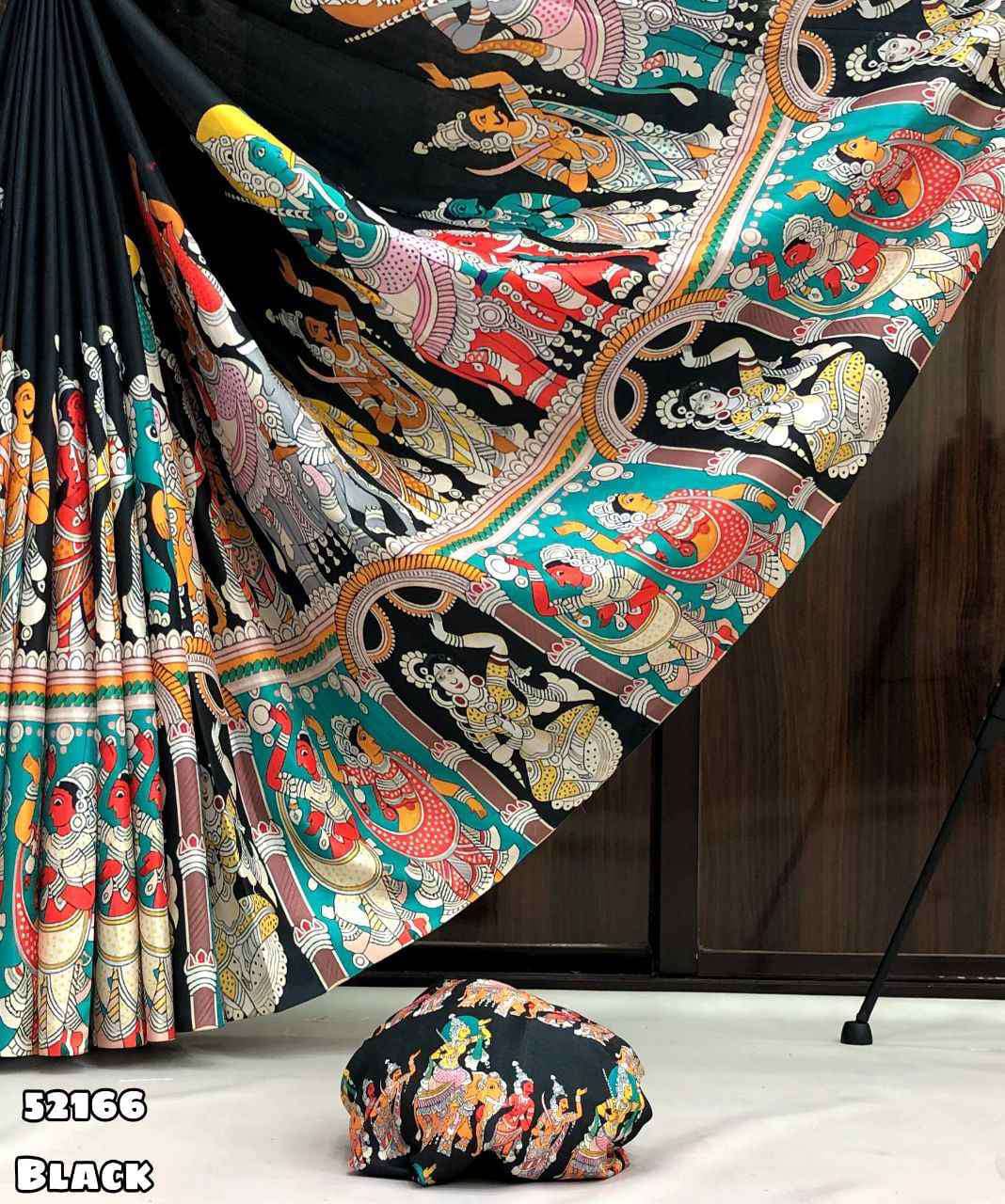
The surface of Kosa silk doesn't usually have the mirror-like shine associated with heavily polished silk. Light catches the uneven weave softly, giving the saree an understated but distinctive appearance. Hand block prints, Kalamkari panels, woven borders and restrained zari work sit particularly well on Kosa and Tussar bases.
Kosa should not automatically be treated as a synonym for every Tussar saree. "Tussar" identifies a broader silk category, whereas "Kosa" can signal a regional textile vocabulary, local processing method or particular market description. A Tussar saree may be printed, handwoven, dyed, embroidered or blended, so the product specification remains important.
- Texture: Kosa and Tussar commonly show a dry, grainy or slubbed surface, while Mulberry silk is often smoother.
- Sheen: Kosa usually has a soft, subdued glow; Banarasi silk and some satin-finished silks can appear more reflective.
- Drape: Kosa often holds a gentle sculptural fall, while lightweight Chanderi may feel airier and Kanjeevaram generally feels more structured.
- Decoration: Kosa works well with Kalamkari, natural-looking motifs and modest borders, whereas Banarasi and Kanjeevaram are frequently selected for prominent zari.
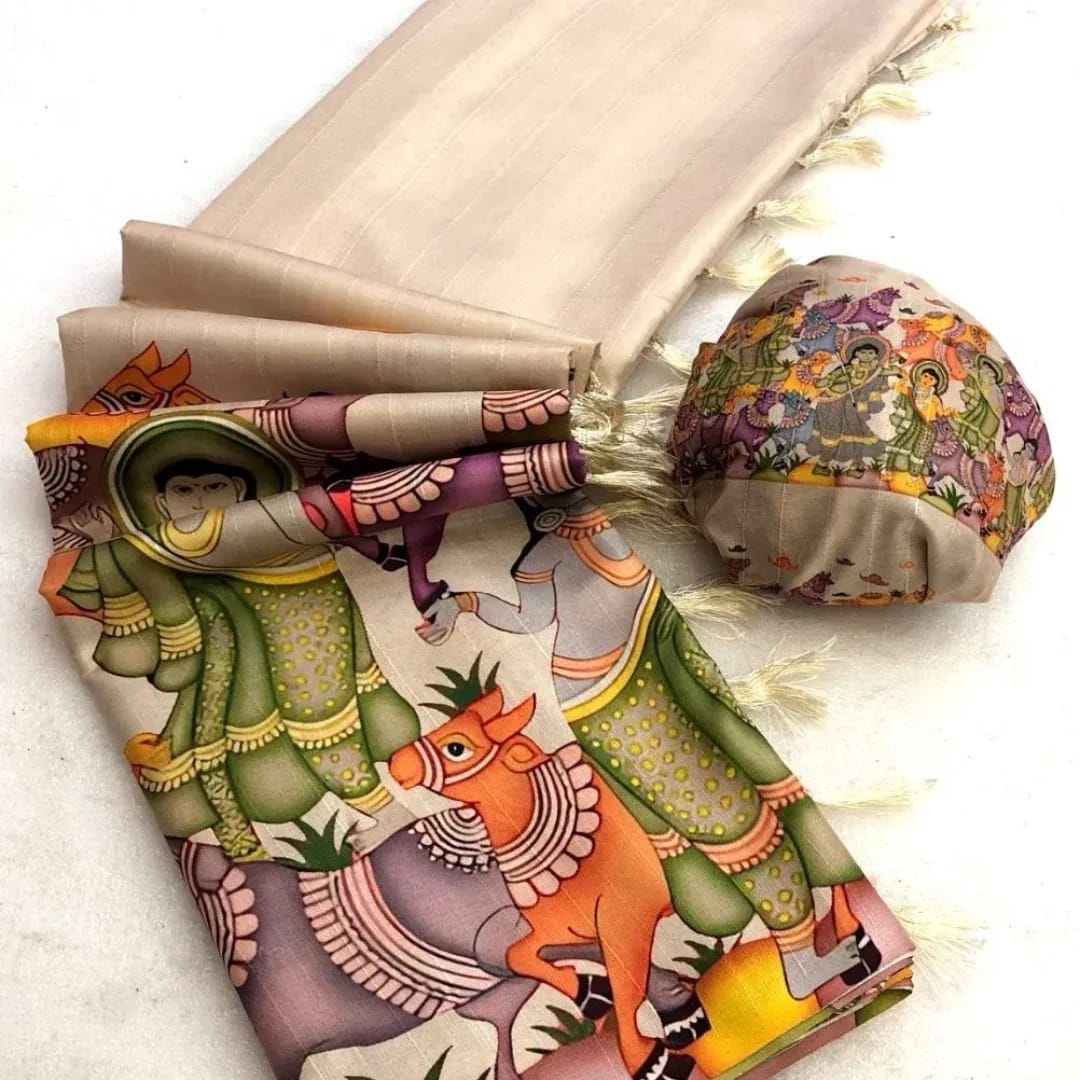
Tussar Silk Kalamkari Printed Saree with Blouse shows why printed Tussar works well for daytime dressing. The printed surface supplies visual interest without requiring a dense metallic border, and the included blouse makes colour coordination easier.
Kosa Silk vs Other Indian Silk Sarees: How do the fabrics compare?
Kosa is a strong choice for tactile texture and a quieter finish; Banarasi suits rich brocade formality, Kanjeevaram suits ceremonial structure, and Chanderi suits lightness and translucency. The right comparison depends on how the saree will be worn rather than on a simple hierarchy of quality.
Kosa silk and Banarasi silk
Banarasi silk is known for brocade weaving, figured motifs and zari, often in patterns inspired by butis, jaal, florals or Mughal design. Banarasi silk tends to look more opulent and photograph strongly under indoor lighting. Kosa usually offers more surface irregularity and a less formal visual weight.
Choose Banarasi silk for a wedding reception, formal evening celebration or ceremony where gold or silver zari is central to the outfit. Choose Kosa for a daytime wedding function, cultural event or elegant work-to-evening look. Maroon Banarasi Soft Silk Saree with Golden Zari Border illustrates the formal direction: a deep colour and golden border can carry a wedding outfit with minimal additional ornament.
Kosa silk and Kanjeevaram
Kanjeevaram sarees are associated with Kanchipuram weaving, silk bodies, contrast borders and pallu structures that give the garment considerable presence. Kanjeevaram is often selected for South Indian weddings, bridal trousseaus and major religious ceremonies because broad borders and a dense silk body create a formal silhouette.
Kosa is more suitable when you want a softer, artisanal appearance or a saree that doesn't dominate the entire outfit. Kanjeevaram generally benefits from a structured blouse with defined sleeves or a high neckline, while a Kosa saree can work with a simpler blouse that lets the natural texture remain visible.
Kosa silk and Chanderi
Chanderi is usually lighter, more translucent and airier than Kosa, with a delicate fall that suits warm weather and long daytime wear. Chanderi may be woven in silk-cotton or silk forms and often features subtle motifs, fine borders or a gentle sheen.
Kosa provides more texture and body, so it's often easier to pleat into a defined front or wear with a blouse that has architectural details. Chanderi creates a lighter, floating effect, making it useful for summer festivities, daytime pujas and intimate gatherings.
Kosa silk and smooth Mulberry silk
Mulberry silk generally has a smoother, more even filament and a polished hand, while Kosa's wild-silk character brings slubs and variation. Smooth silk can look sleek with contemporary tailoring; Kosa can make a minimal outfit feel considered without heavy embellishment.
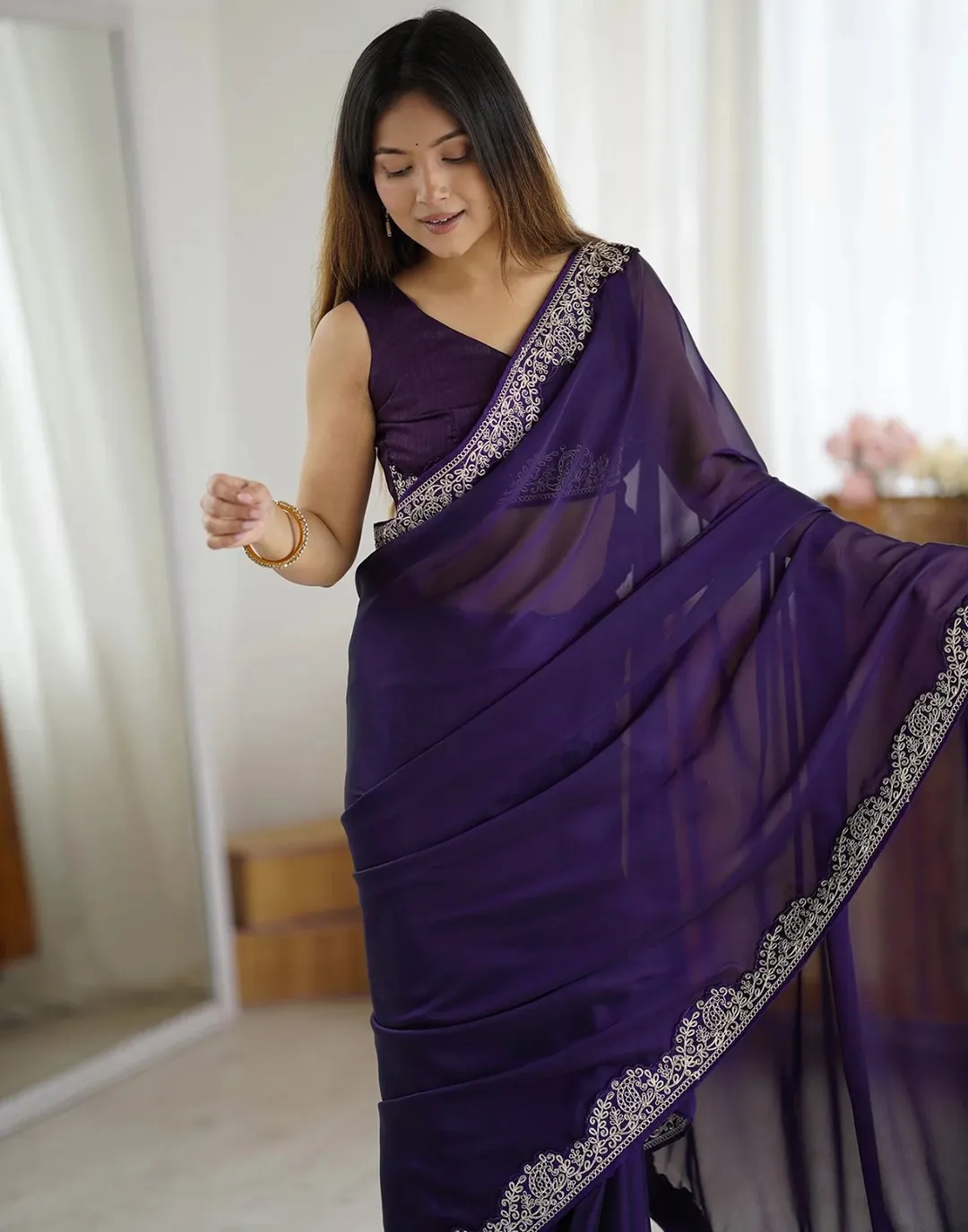
Blue Kora Silk Saree with Zari Border belongs to a related lightweight, transparent-looking silk aesthetic. But kora and Kosa should not be treated as identical names. Kora silk is often valued for its crisp, sheer quality, whereas Kosa usually signals a more textured Tussar-like surface. Checking the listed composition prevents confusion between the two.
Kosa Silk vs Other Indian Silk Sarees: How should each one be styled?
A Kosa silk saree looks most balanced with accessories and a blouse that echo its texture instead of competing with it. Styling should change according to the saree's print, border width, colour depth and level of formality.
Blouse choices
For a printed Kosa or Tussar saree, choose a solid blouse in one of the deeper colours from the print. A round neck, elbow-length sleeve and fabric-covered buttons create a classic daytime look. A sleeveless blouse, square neckline or asymmetric sleeve can make the same saree suitable for a contemporary gallery event or dinner.
For a saree with zari, match the blouse finish to the metallic detail rather than adding a second dominant embellishment. A matte silk blouse can calm a bright border, while a lightly woven brocade blouse can support a formal saree without requiring sequins. A contrasting blouse works best when the saree itself has a restrained palette.
Draping and pleats
Standard Nivi draping is the most versatile option because Kosa's texture remains visible across the pleats and pallu. Press the pleats lightly rather than flattening every slub; excessive pressing can remove the fabric's natural dimensional quality.
For a slimmer, more vertical appearance, keep five to seven front pleats at a consistent width and place the pallu in narrow, even pleats over the shoulder. For a relaxed heritage look, leave the pallu open and secure it with a discreet pin near the shoulder. A belt can work with a plain Kosa saree, but a narrow belt should not hide the border.
Jewellery and finishing details
Oxidised silver, brushed gold, terracotta, wood and handmade textile jewellery complement Kosa's earthy surface. Polished kundan, temple jewellery or layered gold can also work for weddings, especially when the saree contains zari, but one statement element is usually enough.
Keep the handbag structured when the saree has a fluid or textured fall. Choose a low bun, braid or controlled waves according to the neckline and event. A small bindi, woven potli and neutral makeup often preserve the artisanal quality of a Kosa saree better than an overload of glitter.
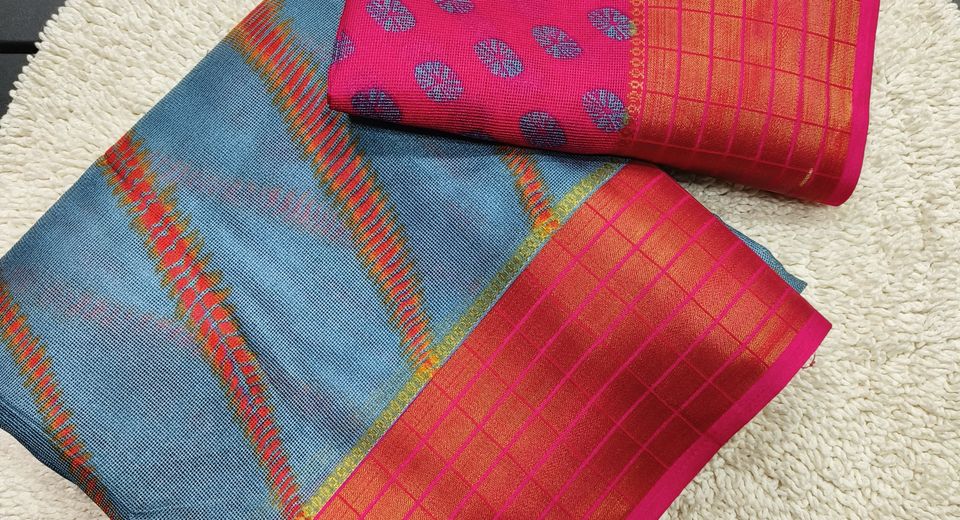
Premium Grey Silk Saree with Pink Zari & Shibori Print gives an useful styling example for a modern festive wardrobe. Pink zari supplies the metallic cue, while Shibori print adds movement; a dusty rose, charcoal or muted pink blouse can connect the two without introducing another competing colour.
Kosa Silk vs Other Indian Silk Sarees: Which fabric suits each occasion?
Kosa is most flexible for daytime celebrations, cultural occasions and semi-formal gatherings, while richly woven Banarasi and structured Kanjeevaram usually suit the most ceremonial moments. Weather, venue and expected movement should influence the choice as much as the dress code.
- Haldi ceremony: A printed Kosa or Tussar saree in turmeric yellow, coral, green or ivory gives texture without looking overly bridal. Pure silk still needs careful handling around turmeric, oil and wet colour, even when the colour palette feels casual.
- Day wedding: Kosa with Kalamkari, a defined border or restrained zari gives a graceful guest look. Off White Kalamkari Tussar Silk Saree with Blouse suits a neutral, craft-led palette; add a maroon, rust or bottle-green blouse for contrast.
- Wedding reception: Banarasi silk, Kanjeevaram or a high-zari silk generally carries evening formality better than a very muted Kosa saree. Maroon Banarasi Soft Silk Saree with Golden Zari Border needs little additional decoration beyond earrings and a formal blouse.
- Festive lunch or puja: Kosa, Chanderi or lightweight silk keeps the outfit polished without excessive weight. A compact pallu and low jewellery profile make long periods of sitting and movement more comfortable.
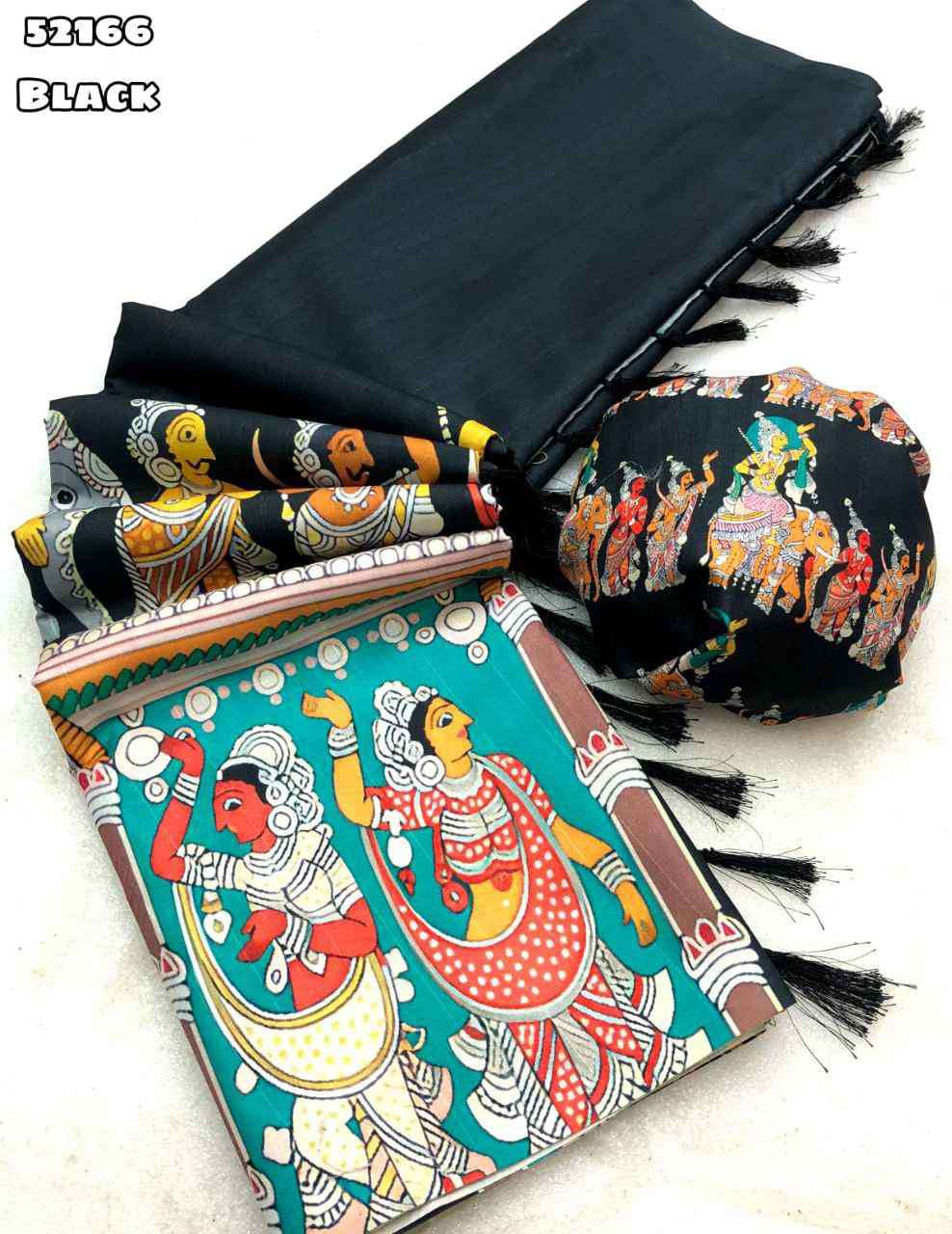
- Office celebration: Select a medium or dark solid colour, a neat blouse and minimal jewellery. Refined Black Kalamkari Silk Saree with Blouse can move from a professional cultural event to dinner when paired with a clean blouse and restrained accessories.
- Evening party: A saree with zari, a deeper colour or a more graphic print can provide enough presence for low lighting. Designer Off White Tussar Silk Saree with Kalamkari Print can look party-ready with a black, wine or antique-gold blouse and statement earrings.
Collection context can also clarify the intended use. Silk Sarees Under 3000 With Discount may be useful for comparing accessible silk options, while Party Wear Sarees points towards more decorative styling. Red Banarasi Silk Sarees for Weddings Under 1100 is more directly relevant when a formal wedding palette and zari-led appearance matter.
Kosa Silk vs Other Indian Silk Sarees: What should you check before buying?
Check the fibre description, weave, blouse-piece details, measurements, border width, colour photographs and care instructions before buying any silk saree. Product names alone can't establish whether a saree is pure silk, silk-blend, handwoven or powerloom-made.
- Read the composition: Look for a clear statement such as Tussar silk, Kosa silk, Mulberry silk, silk-cotton or silk blend. "Silk feel" describes appearance, not fibre content.
- Inspect the texture: Slubs and small variations can be normal in Kosa and Tussar. Excessive loose threads, irregular dye patches or weak seams are different concerns and should be clarified before purchase.
- Measure the saree: A standard saree is commonly around 5.3 to 5.5 metres without the blouse piece, but actual measurements vary. Confirm the blouse-piece length if you need elbow sleeves, a high neck or a tailored back.
- Assess the border: A broad zari border adds visual weight and may require a more structured petticoat. A narrow border makes frequent draping and travel easier.
- Compare total cost: Price depends on fibre, weaving method, zari, printing, finishing, blouse inclusion and craftsmanship. A lower price doesn't automatically indicate poor design, but an unexplained premium deserves a fabric and construction explanation.
- Review care: Ask whether dry cleaning is required, whether the saree should be folded with muslin, and whether direct sunlight or perfume may affect the colour.
Gray Color Sarees Under 1000 can be an useful colour-led comparison when you want a neutral palette, but a budget filter should not replace checking composition and measurements. The same grey shade can appear very different on textured Kosa, smooth Mulberry silk, translucent Chanderi and zari-rich Banarasi silk.
Kosa Silk vs Other Indian Silk Sarees: How do you care for them?
Most silk sarees should be dry-cleaned when visibly soiled, stored away from direct sunlight and refolded periodically to protect the fold lines. Kosa and Tussar deserve particular care because their textured yarns can catch on jewellery and rough storage surfaces.
After wearing a silk saree, air it in shade for several hours before folding it. Do not spray perfume, deodorant or hair products directly onto silk because alcohol and oils can mark dyes and metallic details. Remove brooches and sharp pins carefully, checking that no thread has been pulled.
Fold the saree with the zari facing inward and wrap it in unbleached cotton or muslin. Refold the saree every two or three months so one crease doesn't remain pressed for years. Keep silk away from damp cupboards, plastic bags and direct heat; breathable fabric storage reduces the risk of trapped moisture and odour.
don't machine-wash, wring or soak a silk saree unless the care label specifically permits it. For a small spill, blot gently with a clean, dry cloth and send the saree to a professional cleaner rather than rubbing the mark. A careful storage routine preserves colour, zari and drape more reliably than frequent home washing.
Kosa Silk vs Other Indian Silk Sarees: Which one should you choose?
Choose Kosa when you want texture, a muted glow, craft-led prints and comfortable daytime versatility. Choose Banarasi when you want brocade and zari for a visibly formal look, Kanjeevaram when you want ceremonial structure, Chanderi when you prioritise lightness, and smooth Mulberry silk when you prefer an even, polished surface.
The most practical decision combines four questions: how formal is the event, how much movement will you need, which texture suits your personal style, and how much care are you prepared to provide? A saree that answers all four questions will usually be worn more often than a more elaborate saree chosen only for its reputation.
Common Questions About Choosing Between Kosa and Indian Silk Sarees
Is Kosa silk the same as Tussar silk?
Kosa silk is commonly associated with Tussar silk, but the two terms are not always interchangeable in retail descriptions. Tussar is the broader silk category, while Kosa may indicate a regional tradition, processing method or market label, so the fibre and weave description should be checked.
Is Kosa silk suitable for a wedding?
Kosa silk is suitable for daytime weddings, Haldi ceremonies and semi-formal wedding events, especially when it has Kalamkari, a defined border or restrained zari. A heavily woven Banarasi or Kanjeevaram saree may be more suitable for a highly formal evening reception or bridal ceremony.
How does Kosa silk compare with Banarasi silk?
Kosa silk usually has a textured surface, muted sheen and lighter artisanal appearance, while Banarasi silk is known for brocade, zari and a more opulent finish. Choose Kosa for understated daytime elegance and Banarasi for stronger ceremonial or evening impact.
What blouse goes with a Kosa silk saree?
A solid blouse in a deeper colour taken from the saree's print is the most versatile choice for Kosa silk. Matte silk, elbow sleeves and a simple neckline suit daytime wear, while a sleeveless cut, square neck or lightly woven brocade can make the saree more contemporary or formal.
Can Kosa silk sarees be washed at home?
Kosa silk sarees should generally not be machine-washed, soaked or wrung, and professional dry cleaning is safer for visible stains. Always follow the care label, air the saree in shade after wearing it and store it folded in breathable cotton or muslin.
Does Kosa silk suit hot weather?
Kosa silk can suit warm daytime wear because its Tussar-like structure is breathable and less densely polished than some heavier silks. Weight, lining, weave density and the blouse design still matter, so a lightweight Kosa saree with an unlined or breathable blouse will usually feel more comfortable than a heavily embellished version.





