

Kodava Saree Draping and Why the Pallu Is Worn Differently becomes clear as soon as you look at the shoulder and waist. The pallu travels from the front over the right shoulder, while the main pleats are gathered at the back. That arrangement contrasts with the familiar Nivi drape, in which front pleats fall from the waist and the pallu usually rests over the left shoulder. The distinctive style belongs to the traditional dress of Kodagu, also known as Coorg, in Karnataka.
The right-side pallu isn't simply a decorative variation. The back pleats, firm tucks and wrapped front create a garment that remains comparatively secure while the wearer walks, works or attends a ceremony. Fabric weight, blouse fit, border width and pin placement all affect the final result. Understanding those details makes the style easier to wear respectfully and comfortably.
Kodava Saree Draping and Why the Pallu Is Worn Differently in the Traditional Form
Kodava Saree Draping and Why the Pallu Is Worn Differently can be summarised in two structural features: back pleats and a right-shoulder pallu. The lower part of the saree wraps around the waist, gathers behind the body and is tucked or secured firmly. The remaining length crosses the upper body and comes forward over the right shoulder.
In a standard Nivi saree, the front pleats generally point downward from the waist, creating a vertical panel between the feet. The pallu crosses the torso and falls over the left shoulder. The Kodava arrangement reverses the visual emphasis. The front appears more wrapped, the pleated volume sits behind the waist, and the pallu border frames the right side of the upper body.
The saree usually ends around the ankles or slightly above them, depending on footwear and personal preference. A shorter hem can make walking easier during a long event, while a longer hem may suit photographs or formal indoor wear. The upper edge should remain level around the waist, because an uneven tuck can pull the back pleats sideways.
Kodava Saree Draping and Why the Pallu Is Worn Differently in Kodagu Culture
The right-shoulder pallu is a recognised marker of traditional Kodava women's dress, although exact methods vary between families, generations and occasions. Regional clothing traditions develop through repeated community practice rather than one universally documented instruction, so no single explanation should be treated as complete history.
Popular accounts often connect the secure arrangement with the active outdoor life historically associated with Kodagu and with the community's martial identity. Back pleats and a firmly controlled pallu can certainly reduce loose fabric across the front and help the wearer move more easily. The martial explanation, however, should be treated as cultural context rather than the only proven reason for every detail of the drape.
Climate, local modesty conventions, work, ceremony, textile availability and family teaching may all influence how the garment is worn. The right shoulder also creates a distinctive visual balance. A border near the face and torso draws attention to the blouse, jewellery and hair arrangement, while the gathered back gives the silhouette a different shape from a left-shoulder saree.
A respectful modern interpretation keeps the defining structure visible: the pallu crosses to the right shoulder and the pleated section is arranged at the back.
Kodava Saree Draping and Why the Pallu Is Worn Differently: Choosing Fabric and Length
Medium-weight cotton, linen-cotton and soft silk blends generally work well for Kodava Saree Draping because these fabrics hold a tuck without becoming excessively rigid. Most adults can begin with approximately 5.5 to 6.3 metres of fabric, although height, waist measurement, blouse coverage, border width and the desired pallu length change the amount needed.

A fabric that's too slippery may loosen at the back, while a very crisp fabric can create excessive bulk in the pleats. A fitted underskirt with a firm waistband is especially important because the saree is gathered and secured behind the body. A loose underskirt can allow the whole garment to slide even when the shoulder pallu is pinned correctly.
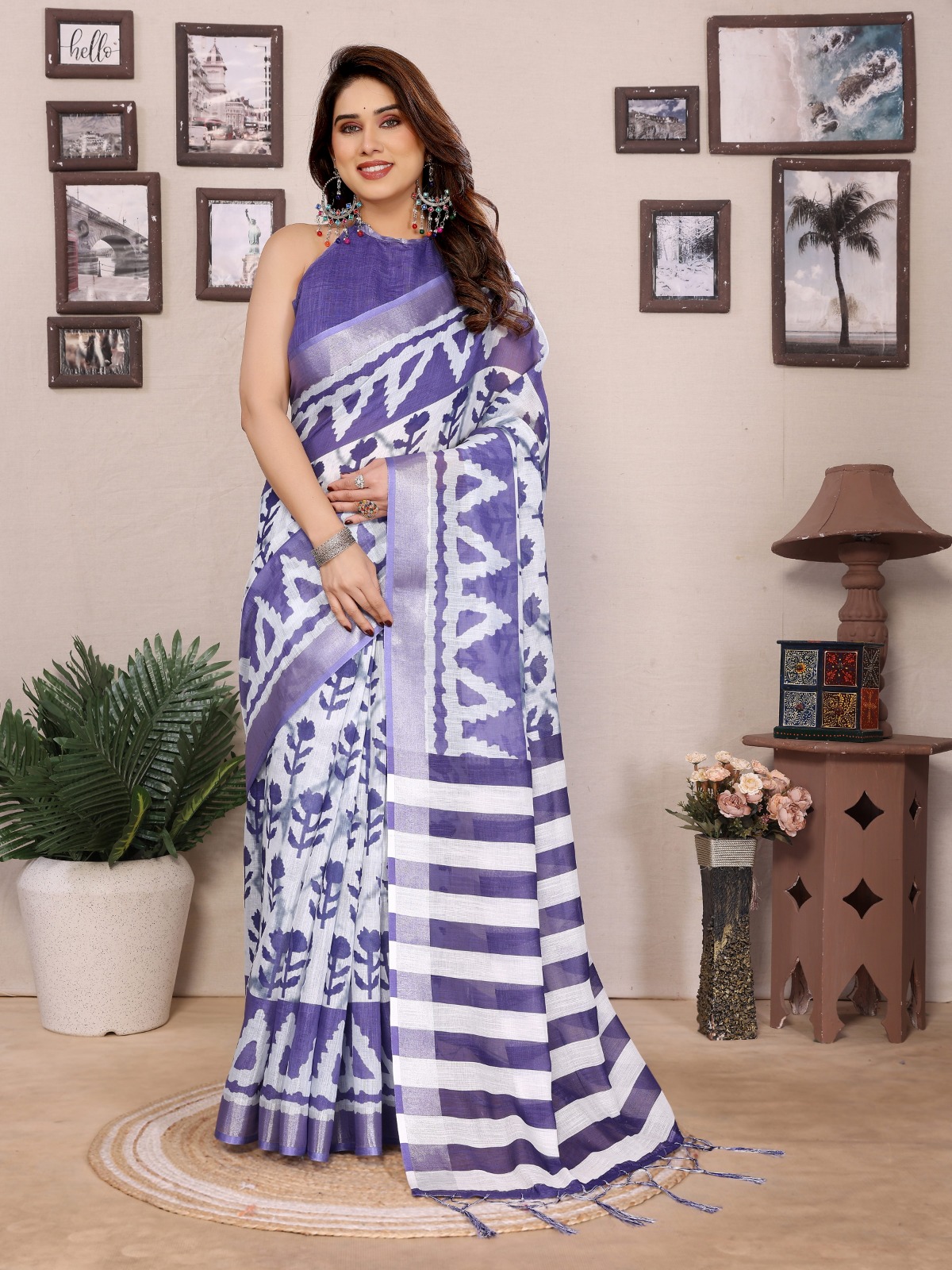
Border design can make the drape easier to check. A contrast border reveals whether the hem is level and whether the pallu has turned in the intended direction. Multicolor Grid Print Linen Cotton Saree with Purple Border provides an useful example of how geometric lines can make the direction of the fabric easy to read.
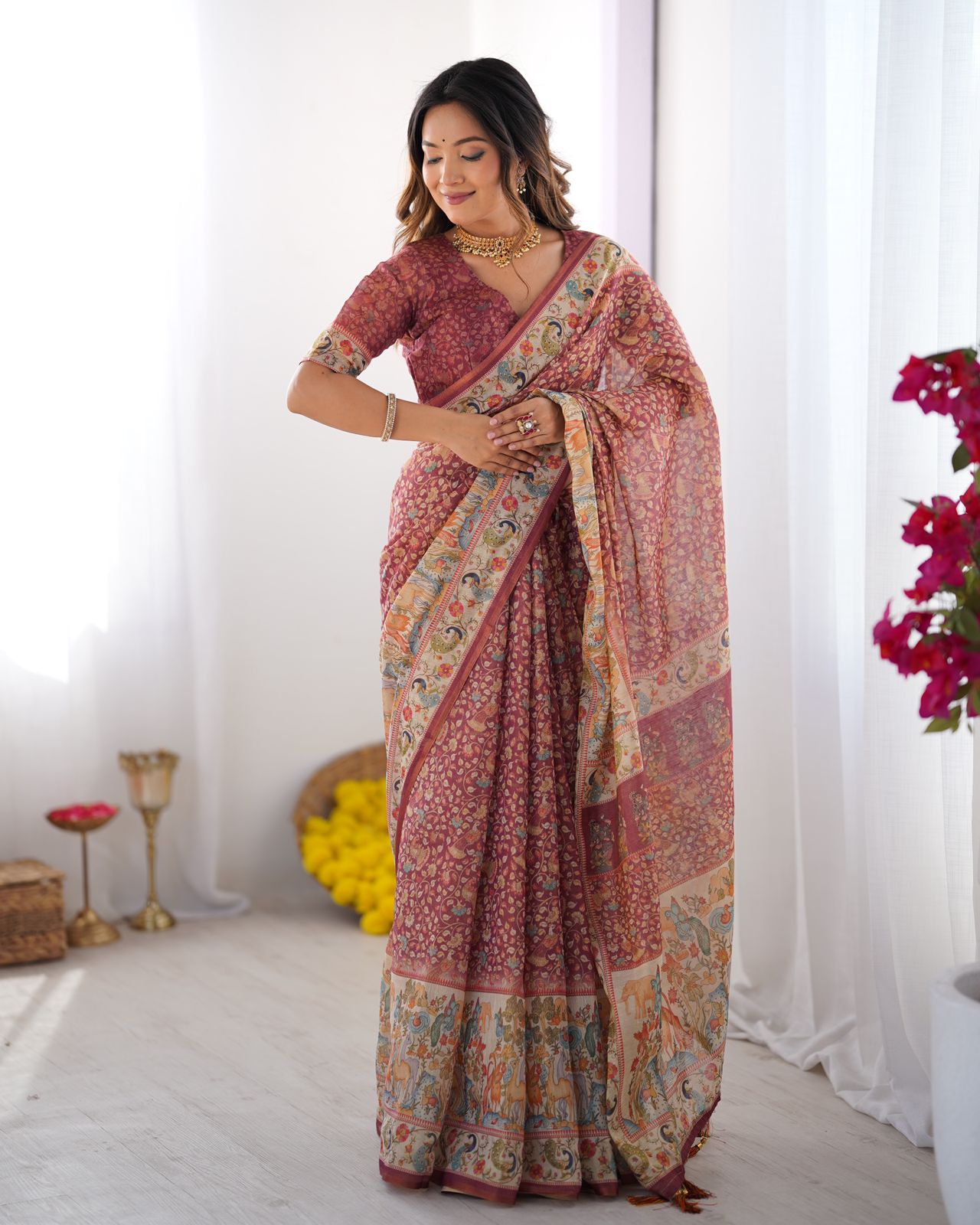
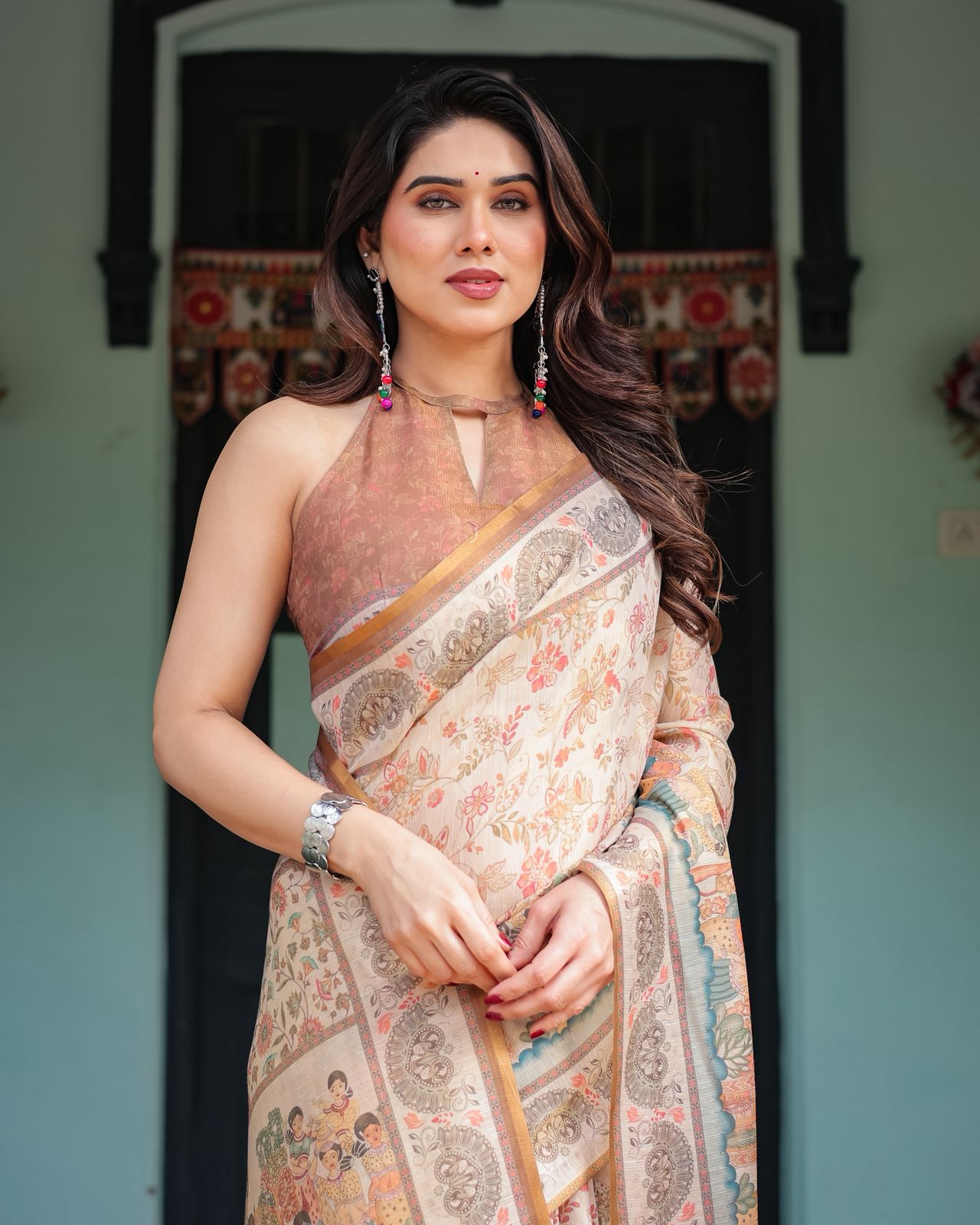
A softer textile can create a gentler silhouette. Peach Multicolor Linen Cotton Saree with Paisley Pallu places visual emphasis on the pallu motif rather than a strongly geometric border. Ivory Cream Floral Handloom Saree with Heritage Pallu offers a quieter option in which handloom texture and a heritage-inspired pallu provide the main interest.
Satin needs additional care because its smooth surface can move against the underskirt. Orange Purple Satin Saree with Woven Zigzag Pallu for Women shows how a pronounced pallu can become the focal point, but the fabric should be secured at the waist and shoulder without inserting pins through visible woven work.
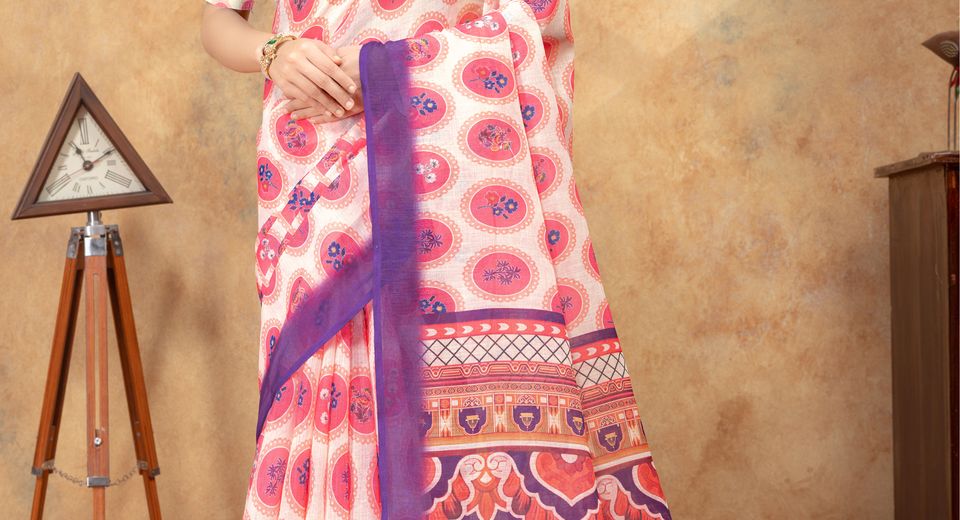
Print placement matters before you begin. Printed Mal Cotton Saree With Designer Pallu by VARNAVI has a clearly identified decorative end, so laying the saree out briefly can prevent the intended pallu from being accidentally tucked around the waist. The same preparation helps with Peach Floral Medallion Print Saree with Purple Pallu, where the contrasting pallu deserves to remain visible.
How to perform Kodava Saree Draping and Why the Pallu Is Worn Differently
Kodava Saree Draping and Why the Pallu Is Worn Differently becomes easier to understand when the steps are completed in sequence. Wear the blouse, underskirt and footwear intended for the final outfit before starting, because changing shoe height later can alter the hemline.

- Set the starting end. Hold the plain end at the waist and leave enough fabric for a secure tuck. Place the lower edge approximately 2 to 5 centimetres above the floor, adjusting for shoes and walking comfort.
- Complete one waist wrap. Take the saree around the body once while keeping the top edge level. Smooth the front and remove twists before bringing the fabric to the back.
- Create the back pleats. Gather about 6 to 9 pleats at the back of the waist. Pleats measuring roughly 10 to 12 centimetres across are a practical starting point, although the exact width depends on the fabric and the wearer's proportions.
- Secure the gathered section. Keep the pleats facing consistently in one direction. Tuck the upper edge firmly into the underskirt waistband or use a discreet safety pin through the inner layers.
- Bring the unpleated length across the torso. Guide the fabric from the back towards the front and across the upper body. Avoid twisting the waist section, because a twist can pull the pallu diagonally.
- Place the pallu over the right shoulder. Bring the pallu forward and over the right shoulder. Keep the border visible and allow the end to fall behind or near the back according to the variation being followed.
- Test the fit. Pin near the shoulder seam, then walk, sit and lift both arms gently. Add a second discreet pin at the waist or below the shoulder only where movement reveals looseness.
A mirror placed behind you is useful for checking the back pleats. Another person can check whether the pleats sit centrally and whether the pallu crosses the torso without twisting. Standing still can hide a loose tuck, so movement testing should be part of the preparation rather than an afterthought.
How should the right-shoulder pallu be pinned?
The right-shoulder pallu should be pinned near the blouse shoulder seam and, when necessary, at the waist to prevent sliding. Insert the pin through inner layers rather than the visible face of the saree, and avoid placing a large pin through zari, delicate embroidery or an open weave.
For a long ceremony, a second small pin a few centimetres below the shoulder can provide stability. Pinning every fold flat is unnecessary and can make the pallu stiff. A contemporary belt may help control a slippery fabric, but a belt is an optional styling addition rather than a required part of the traditional drape.
Kodava Saree Draping and Why the Pallu Is Worn Differently for Blouses and Jewellery
The blouse should support the wrapped front and leave enough room for the pallu to cross the torso comfortably. A close-fitting blouse with sleeves reaching the upper arm gives the silhouette a clear outline. Round, square and boat necklines can work, provided the neckline doesn't become uncomfortable when the fabric passes across the chest.

A blouse colour can either echo the pallu or create a deliberate contrast. Peach Floral Medallion Print Saree with Purple Pallu can be paired with purple to reinforce the border or with a neutral shade to soften the contrast. Buy Teal Blue Kalamkari Linen Cotton Saree with Coral Border can be styled with coral, teal or an earthy neutral, depending on whether the intended look is ceremonial or daytime.
Traditional Kodava jewellery may include silver or gold necklaces, earrings, bangles and hair adornment, but jewellery choices vary by family, age and event. A current interpretation doesn't need several statement pieces at once. One prominent necklace with restrained earrings often keeps attention on the right-side pallu and the distinctive back pleats.
A neat bun or braid helps prevent hair from catching on pins and leaves the pallu border visible near the shoulder. Heavy hair accessories should be checked while sitting and turning the head, especially when the right shoulder carries a brooch or a layered necklace.
Indigo Peach Satin Saree with Striped Pallu and Border Work demonstrates how a striped pallu can sharpen the shoulder line. Strong stripes require careful alignment, because even a small twist becomes easy to see. A printed or woven border should be allowed to fall naturally rather than being forced into a perfectly flat shape that strains the fabric.
Where to shop and how to adapt Kodava Saree Draping and Why the Pallu Is Worn Differently
A suitable saree should be selected for fabric behaviour, length and pallu placement rather than colour alone. Before buying, check whether the decorative end is long enough to cross the torso and reach the right shoulder after the waist wrap. A short pallu may force the wearer to pull the back pleats loose.
Budget-conscious shoppers can compare Sarees from Rs 1000 to Rs 1500 with Sarees Under 20% Off and Sarees Under 10% Off, while larger sale ranges such as Sarees Flat 60% Off and Sarees Flat 50% Off may offer additional fabric choices. Discount labels don't indicate whether a fabric will hold the drape, so measurements, weave description and pallu length still deserve attention.
For a first attempt, choose a medium-weight linen cotton or mal cotton saree with a visible border. Practice once at home, photograph the back, and note where the waistband and shoulder pins need adjustment. A trial run also shows whether the pallu interferes with a handbag strap, bangles or a ceremonial shawl.
Contemporary styling can borrow the structure without claiming to reproduce every family-specific detail. Keep the right-shoulder direction and back pleats clear, use comfortable footwear, and avoid attaching unfamiliar accessories merely because they appear in a fashion photograph. When attending a Kodava cultural event, guidance from a Kodava wearer or family host is more reliable than a generic online tutorial.
Care after Kodava Saree Draping and Why the Pallu Is Worn Differently
The saree should be aired after wearing and stored only when it's completely dry. Remove every pin by opening it fully rather than pulling it through the fabric, because hurried removal can enlarge pinholes along the shoulder or waist.
Follow the care label for washing. Linen cotton and mal cotton may tolerate gentle hand washing, while satin, zari and delicate handloom fabrics may require specialist cleaning. Fold the saree along existing fold lines, place tissue paper between heavily embellished sections, and avoid hanging a heavy saree on a thin wire hanger for long periods.
Press the saree on the reverse side at a moderate temperature suited to the fibre. Do not iron directly over zari, metallic thread or raised woven work. A clean, dry storage space away from direct sunlight helps preserve colour, especially in saturated purple, indigo, coral and orange shades.
Practical Questions About Kodava Saree Draping and the Right-Side Pallu
Why is the Kodava saree pallu worn over the right shoulder?
The Kodava saree traditionally brings the pallu over the right shoulder as part of a regional drape with back pleats and a secure wrapped front. Popular explanations connect the arrangement with movement and Kodagu's martial culture, but family and regional practices can differ.
Where do the pleats go in a Kodava saree?
The main pleats are gathered at the back of the waist rather than falling down the front as they do in the common Nivi drape. Six to nine consistent pleats are a practical starting point, with the upper edge tucked firmly into the underskirt.
Can a regular saree be used for Kodava Saree Draping?
A regular saree can be used if it has enough length and a pallu long enough to cross the torso and reach the right shoulder. Medium-weight cotton, linen-cotton and soft silk blends are easier to secure than very slippery satin or very fluid georgette.
How much saree length is needed for the Kodagu drape?
Most adults can begin with approximately 5.5 to 6.3 metres. Height, waist measurement, border width, blouse coverage and the desired pallu length may require more or less fabric, so the saree should be tested before an important event.
How do I stop the Kodava saree pallu from slipping?
Use a firm underskirt waistband, secure the back pleats through inner layers and place a small pin near the right shoulder seam. A second discreet pin at the waist or below the shoulder can help with satin and other slippery fabrics.
Is Kodava Saree Draping suitable for a wedding or ceremony?
Kodava Saree Draping is suitable for a ceremony when the saree, blouse and accessories are chosen with attention to Kodava tradition. A wearer should distinguish between respectfully adopting the visible structure and claiming a family-specific style without guidance from Kodava hosts or community members.




