

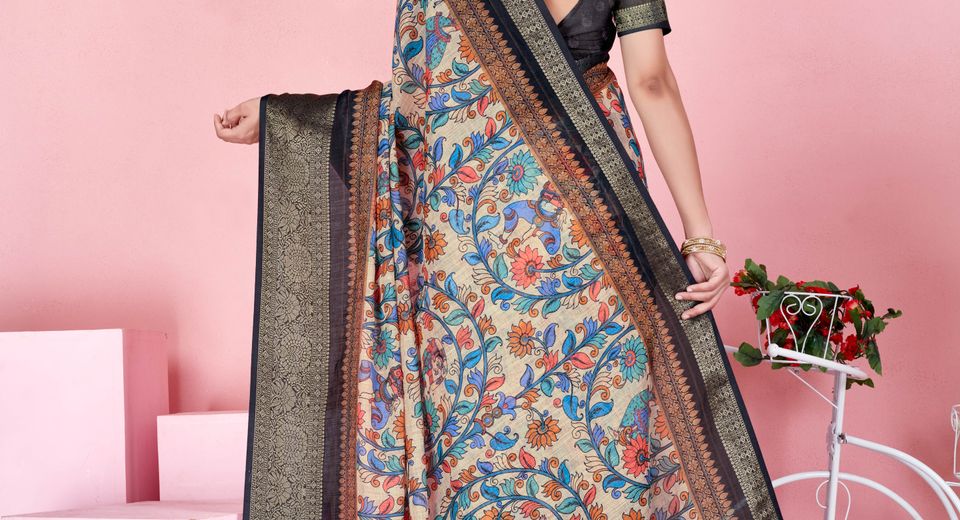
Khasi Jainsem and Dhara as Distinct Draped Clothing Terms describe related but non-interchangeable ways of discussing women's traditional dress in Meghalaya. The distinction matters because a garment name can point to its construction, the number of cloth pieces involved, the way the cloth is secured, and the community context in which it's worn. Treating Jainsem and Dhara as two names for one generic heritage dress removes those details from the conversation.
Terminology can alter between communities, families, English-language sources, and commercial descriptions. A careful explanation therefore identifies the normally described structure of each garment while acknowledging local variation. The guide below focuses on vocabulary, draping logic, fabric choices, contemporary styling, and respectful use of ethnic references.
Khasi Jainsem and Dhara as Distinct Draped Clothing Terms: why the difference matters
Khasi Jainsem and Dhara refer to distinct draped clothing terms, even though both may involve wrapped or layered cloth worn with a blouse and other supporting garments. Jainsem is generally described as a Khasi women's garment made from two main pieces of cloth arranged around the body and secured at the shoulders. Dhara is commonly described as a more flowing drape in which a length of cloth is arranged from the shoulder and allowed to fall over the body, with its exact form differing by region and wearer.
The distinction isn't simply a choice between two colours or two decorative styles. Jainsem describes a recognisable garment system, while Dhara is often used for a draped form whose appearance depends more visibly on the length, width, folding, and placement of the cloth. Sources may spell or transliterate terms differently, and some sellers use broad labels for convenience. Commercial labels should not be treated as complete cultural classifications.
Khasi clothing belongs to a wider Meghalaya textile landscape that also includes Jaintia and Garo traditions, each with its own names and forms. A garment associated with one community should not automatically be labelled as the dress of another. Naming the Khasi community and the garment type together is more accurate than using "Northeast Indian dress" as a substitute.
Khasi Jainsem and Dhara as Distinct Draped Clothing Terms: how a Jainsem is constructed
A Jainsem is commonly understood as a two-piece Khasi women's garment arranged around the body and held at the shoulders. The layered construction gives the outfit a fuller, more enveloping silhouette than a single scarf-like drape, although the final appearance changes according to fabric, pleating, fastening, and the wearer's method of arranging it.
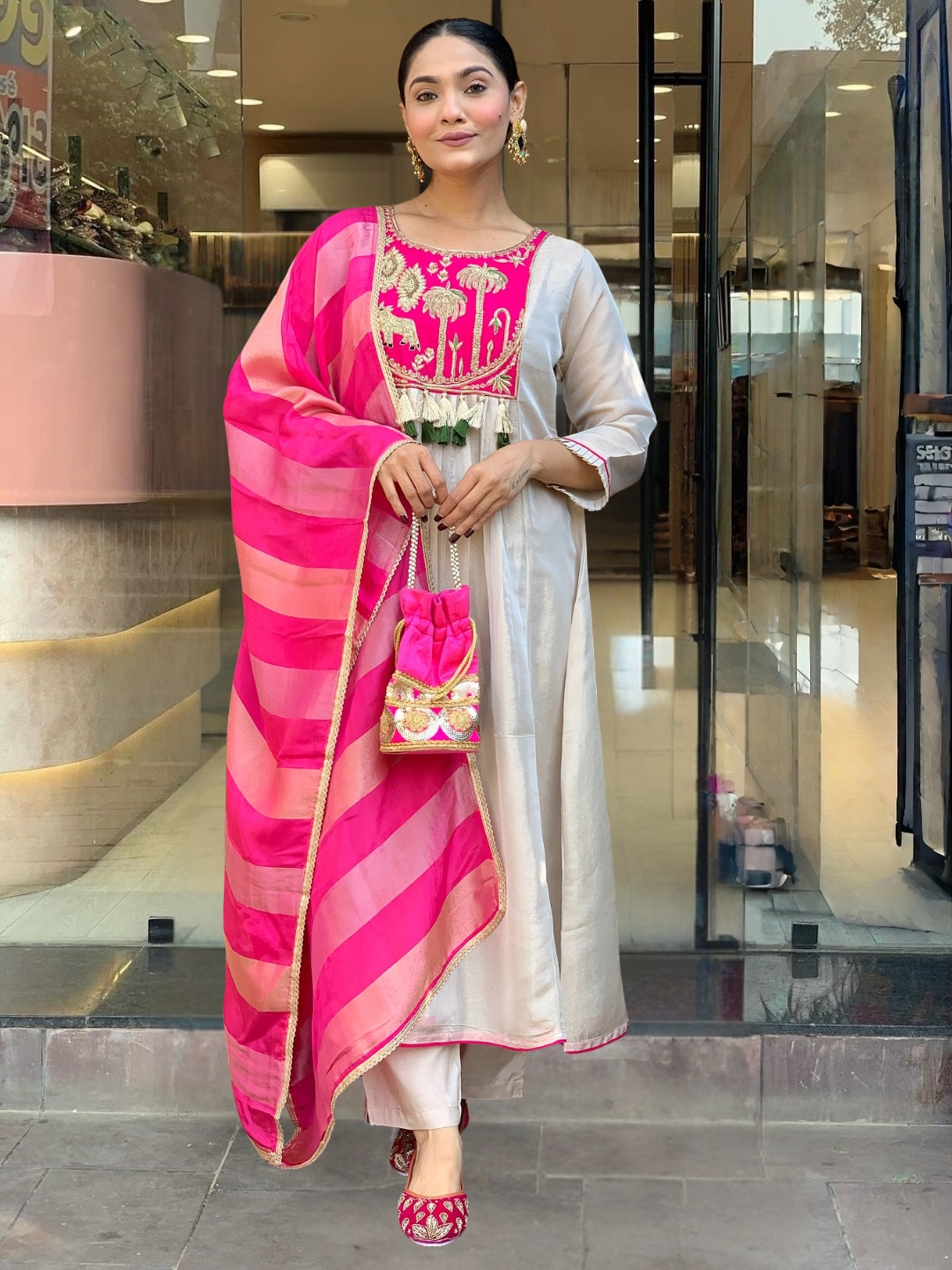
The body of a Jainsem may be formed by wrapping cloth around the torso and lower body, while a second piece creates an additional front or shoulder layer. Pins, brooches, tucks, or other fastenings can control the cloth. A blouse or fitted upper garment is often visible beneath the drape, and a petticoat or skirt-like base may help support the lower portion. These details explain why Jainsem should not be reduced to the idea of a saree worn in a different way.
Heritage and ceremonial Jainsem ensembles may use handwoven cotton, silk, wool blends, or fabrics selected for a particular event and climate. Border placement is structurally important because a visible edge helps define the vertical fall and shoulder arrangement. A heavy border can also alter how the garment sits, especially when the cloth is pinned rather than stitched.
Modern wardrobes sometimes borrow the visual principle of a layered shoulder drape without reproducing the Jainsem itself. Indigo Peach Satin Saree with Striped Pallu and Border Work demonstrates how a striped pallu and a defined border can guide the eye through a drape. The construction remains a saree, however, not a Jainsem, and the two terms should remain distinct.
Khasi Jainsem and Dhara as Distinct Draped Clothing Terms: what Dhara describes
Dhara is commonly used for a flowing draped garment or draping method in which a longer piece of cloth falls from the shoulder over the body, but the exact definition depends on regional and source-proper usage. Dhara should therefore not be presented as a universal, single-pattern garment with identical measurements everywhere.
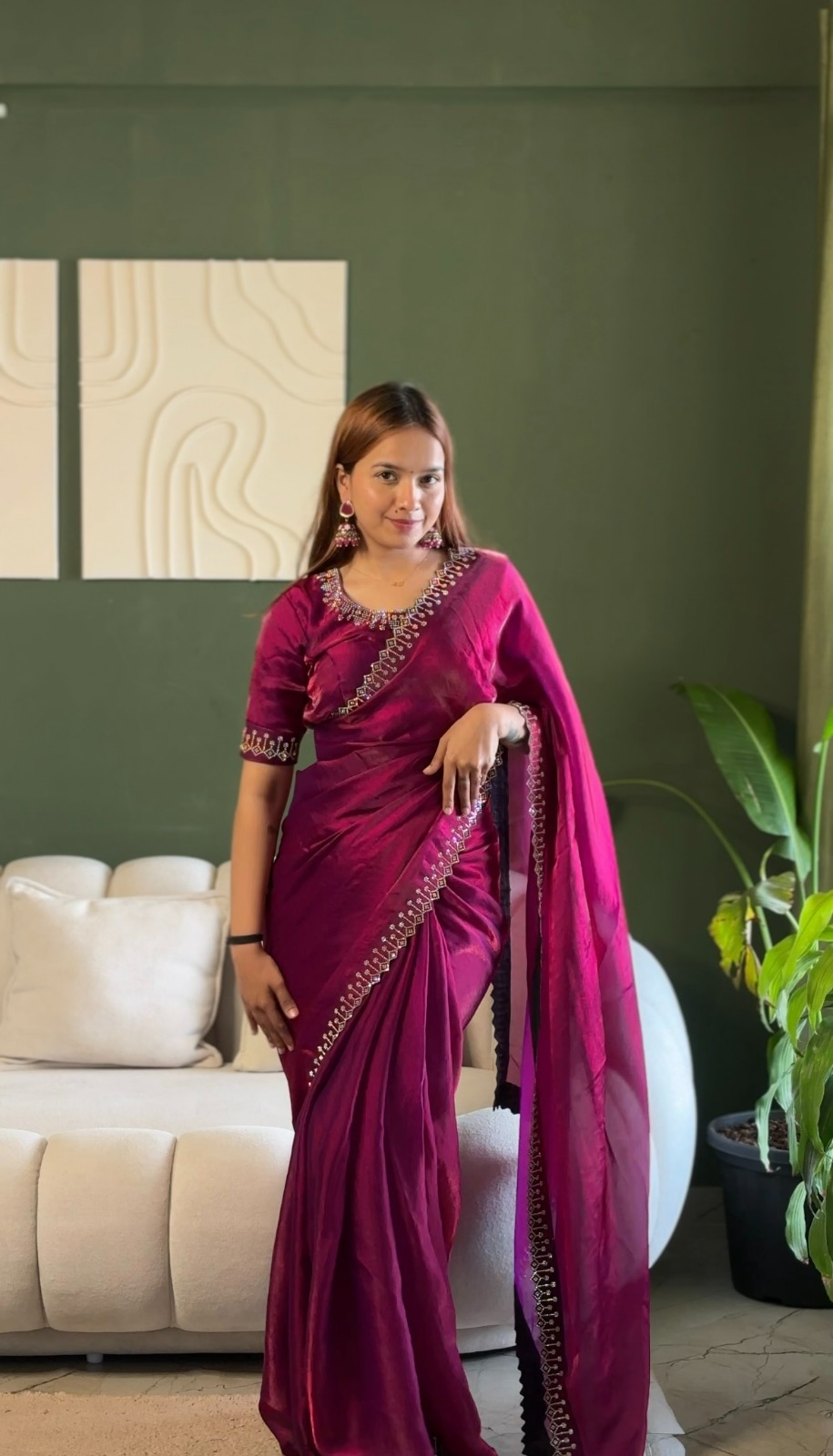
The word draws attention to the fall and arrangement of the cloth. The wearer's choice of shoulder, the number of folds, the amount of fabric brought across the front, and the way the lower edge is controlled all affect the result. Some descriptions place Dhara within Khasi women's dress vocabulary, while other descriptions use the word more broadly for a draped form. Reading the context is essential before assigning a precise construction.
A Dhara-style arrangement can appear lighter or more vertically elongated than a layered Jainsem, particularly when one principal length of cloth creates the visible outer fall. That visual impression isn't a rule about every Dhara. Fabric weight, body shape, blouse design, and fastening can make the same term look substantially different from one wearer to another.
The difference becomes clearer when the garments are described through practical questions. How many principal cloth pieces are being used? Where does the garment receive support? Is the cloth wrapped as a layered body covering or placed primarily as a shoulder-to-body fall? Which community and event does the name refer to? Answers to those questions are more reliable than judging a photograph by silhouette alone.
Khasi Jainsem and Dhara as Distinct Draped Clothing Terms compared by construction
The simplest practical comparison is that Jainsem is usually identified through a two-piece layered arrangement, whereas Dhara is generally identified through a more singular, flowing drape whose form varies with local usage. Neither description makes one garment more authentic, formal, or attractive than the other.
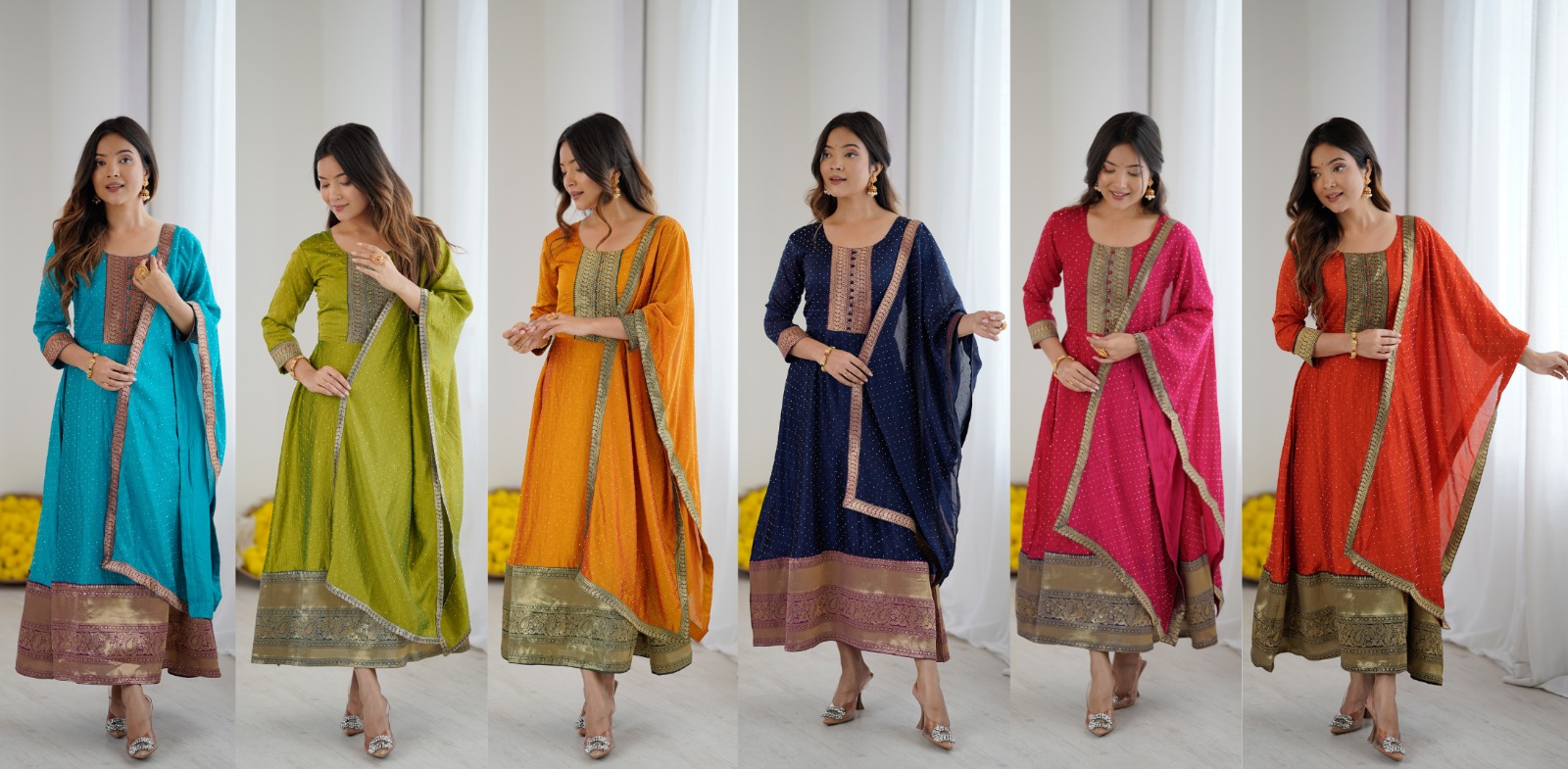
- Primary structure: Jainsem commonly uses two principal cloth pieces; Dhara generally centres on a prominent flowing length arranged from the shoulder.
- Visual effect: Jainsem often creates a layered and enveloping body silhouette; Dhara can create a longer, more open vertical fall.
- Fastening: Jainsem may rely on shoulder pins, brooches, tucks, and overlapping layers; Dhara may depend more on controlled folds and the placement of a single dominant drape, although fastening practices vary.
- Terminology: Jainsem has a stronger association with Khasi women's dress; Dhara may be used more variably across descriptions and should be identified with its specific local context.
- Modern adaptation: A contemporary outfit can borrow a layered shoulder line or a flowing fall without becoming a classic Jainsem or Dhara.
These comparisons are useful for shoppers, writers, stylists, and museums because they prevent visual resemblance from becoming false equivalence. A garment that has a shoulder drape isn't automatically Khasi. A garment sold with a "Dhara" label isn't automatically made according to every community's understanding of Dhara.
Khasi Jainsem and Dhara as Distinct Draped Clothing Terms: the role of fabric and borders
Fabric weight determines whether a draped garment holds a crisp fold, settles into a soft fall, or pulls at its fastenings. A 5.5-metre saree in satin behaves differently from a similarly sized cotton cloth, and a Jainsem or Dhara arrangement must be judged by the fabric's hand rather than by colour alone.
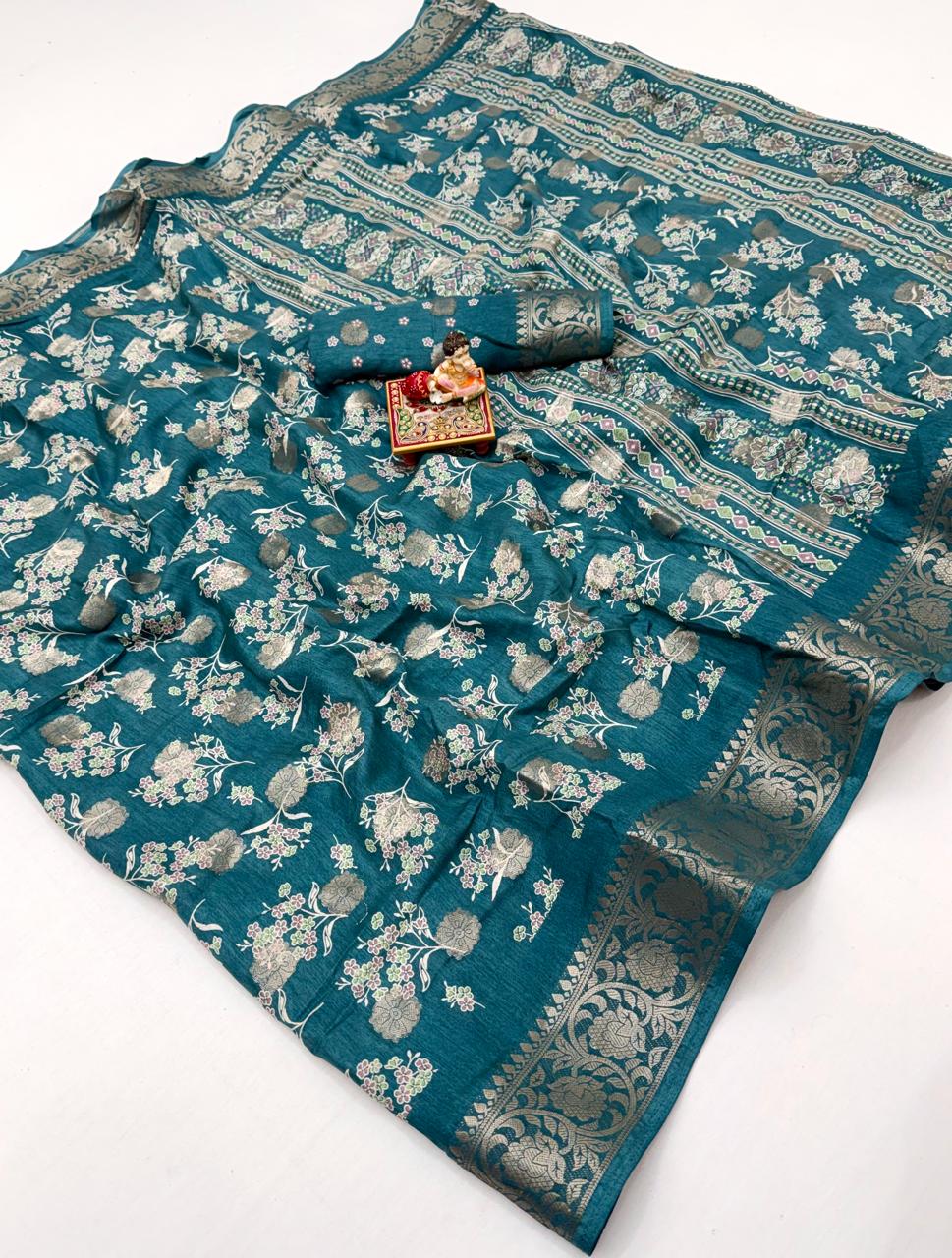
Silk and satin create fluid movement but can slide at the shoulder, making a discreet safety pin, brooch, or fabric-friendly clasp useful for long wear. Cotton provides grip and breathability, which can make layered wrapping more stable in warm weather. Linen-cotton has a textured hand and may hold a fold well, but linen creases quickly. Vichitra silk has a structured sheen that can support occasion dressing while still requiring careful pinning around a shoulder.
Border width changes proportions. A border between 2 and 4 inches can define an edge without overwhelming a layered outfit; a wider zari or jacquard border adds weight and may pull the outer layer downward. Maroon Floral Linen Cotton Saree with Woven Jacquard Border is an useful example of how a woven border can act as a visual frame, although a saree border should not be confused with a Jainsem edge.
Colour placement affects perceived volume. Darker lower panels can make a layered silhouette look visually grounded, while a bright shoulder panel draws attention upward. A restrained palette can keep the form visible when several layers overlap. Modern Taupe Vichitra Silk Embroidered Co-Ord Set for Women and vichitra Jacquard Woven Gown Dupatta Set use coordinated surfaces rather than an unstitched time-honoured drape, so their styling lessons concern colour balance and texture, not direct cultural equivalence.
Khasi Jainsem and Dhara as Distinct Draped Clothing Terms in contemporary styling
A contemporary outfit should be described by its actual construction and only compared with Jainsem or Dhara at the level of drape, layering, or visual proportion. Accurate naming is the first styling decision because a stitched kurta set, co-ord set, gown, saree, and community-specific draped garment are not interchangeable categories.
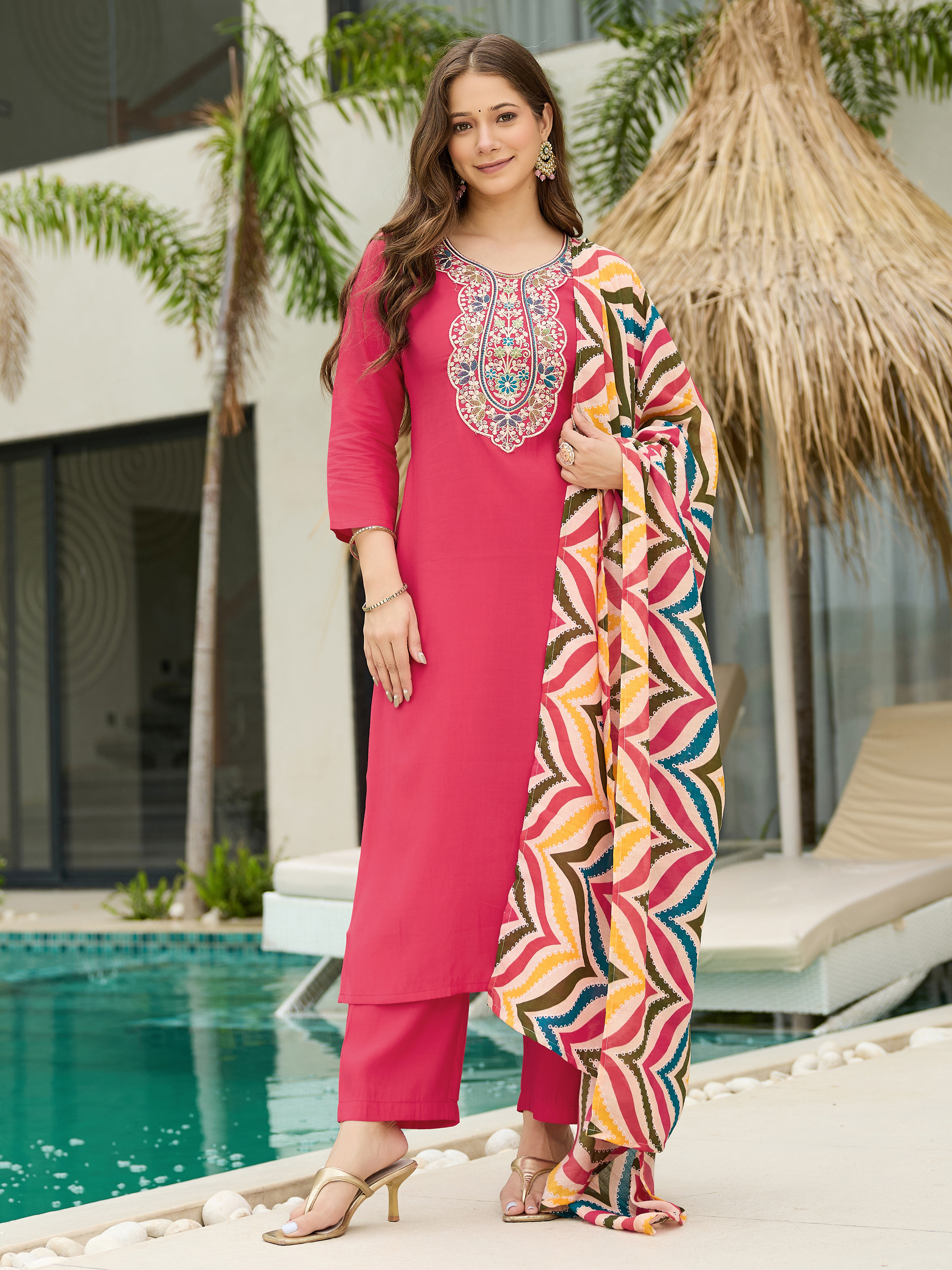
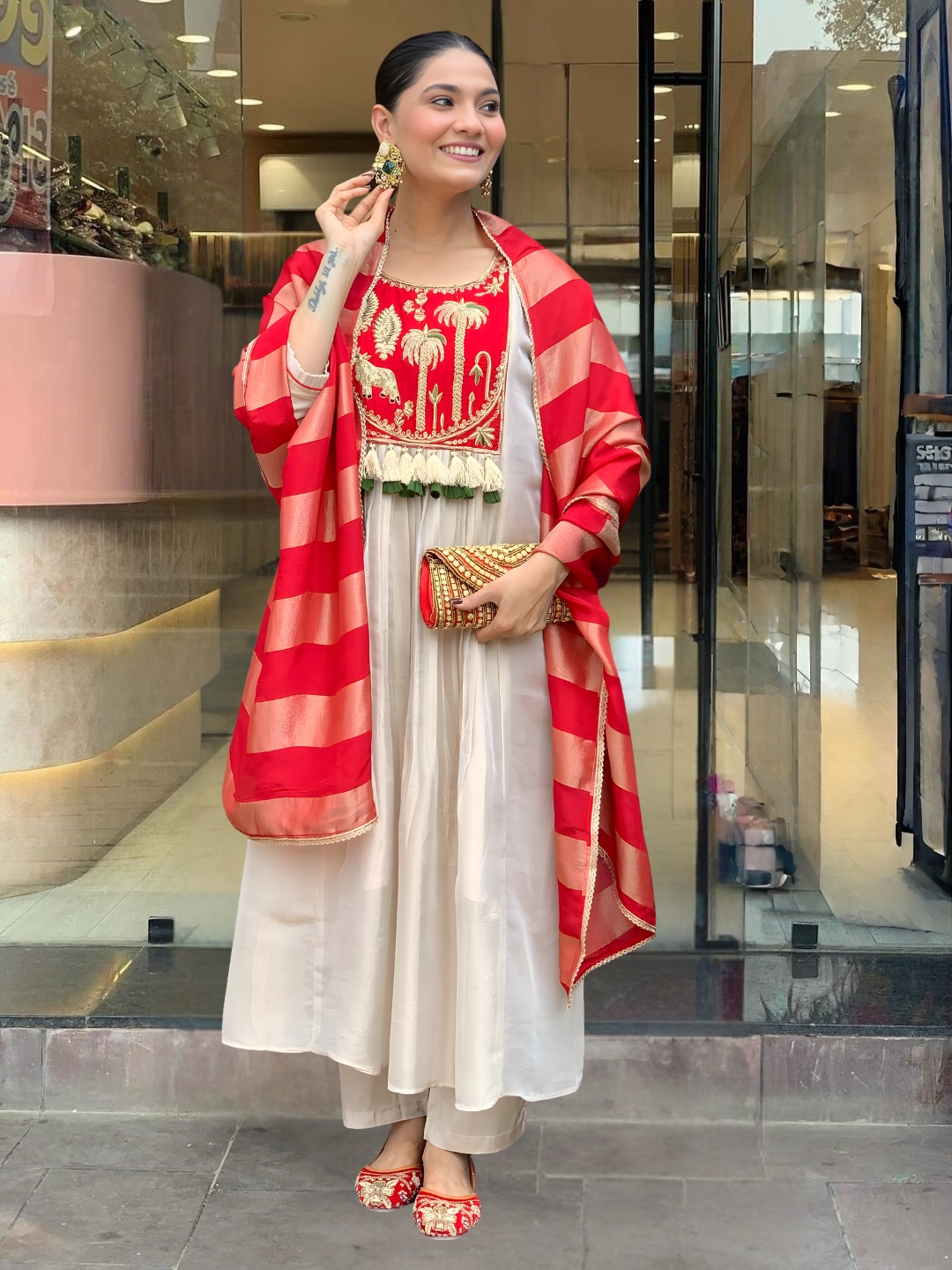
A modern layered look can use a blouse, an ankle-length skirt, and a separate dupatta pinned at one shoulder. The result may repeat the rhythm of a wrapped garment while remaining a modern ensemble. Keep the shoulder fastening secure, place the heaviest border away from the neck, and test sitting and walking before an event. A 3 to 4 inch overlap at the shoulder is usually easier to care than a very narrow fold that slips during movement.
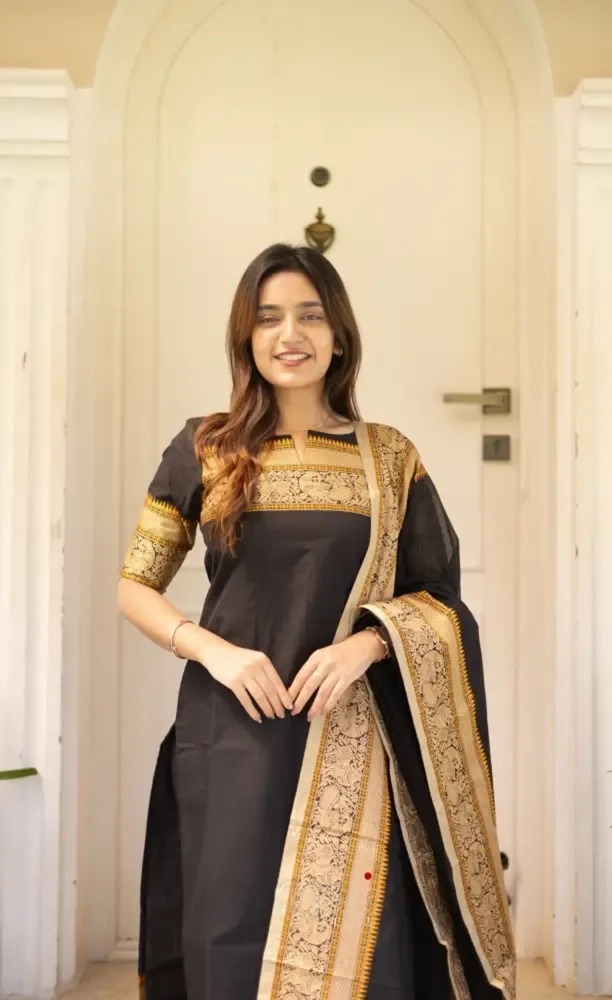
Dupattas offer a practical route to experimenting with a flowing fall. Gajri Embroidered Kurti Pant Dupatta Set Women can be styled with the dupatta in a long shoulder-to-side fall, while Black Jacquard Woven Kanchi Cotton Kurti Set offers a more structured cotton surface for a compact, polished silhouette. Neither outfit becomes a Jainsem or Dhara through draping alone.
For a coordinated family or festive wardrobe, Kanchi Cotton Woven Kurta Pant Dupatta Set and Elegant Silk Embroidered Kurta Pant Set with Jacquard Dupatta show how a dupatta can supply vertical movement without requiring an unstitched body wrap. The styling principle is transferable: choose a stable shoulder point, keep the front folds even, and let one border or embroidered panel provide the visual focus.
When using cultural references in editorial copy, product descriptions, or social media, avoid calling every layered dupatta look a Jainsem. Say "Jainsem-inspired shoulder layering" only when the comparison is genuinely useful, and explain which visual feature is being referenced. Do not imply that a commercial kurta set reproduces Khasi identity, ceremonial meaning, or classic construction.
Khasi Jainsem and Dhara as Distinct Draped Clothing Terms: care and respectful use
Care begins with identifying the actual fibre and construction rather than relying on the cultural name of a garment. Cotton can usually tolerate gentler washing than silk, satin, zari, or heavily embroidered cloth, while jacquard surfaces may need protection from snagging and abrasion.
Air silk and satin garments away from direct, harsh sunlight, and store them folded with breathable paper rather than compressed under heavy clothing. Fold zari borders inward or roll them around a wide tube to reduce sharp creases. Cotton Jainsem or Dhara cloth should be completely dry before storage because trapped moisture can produce mildew, especially during humid monsoon weather.
Before wearing a layered drape for several hours, check the fastening points after 20 to 30 minutes of movement. Shoulder pins should pass through stable fabric and should not catch delicate embroidery or loose zari. Carry one spare safety pin, a small brooch, and a clean cloth for emergency adjustments at an outdoor event.
Respectful use also involves crediting the community and avoiding claims that a modern adaptation is an authentic traditional garment. Khasi Jainsem and Dhara as distinct draped clothing terms should remain visible as cultural vocabulary, not become decorative labels applied to any outfit with a long shoulder fall.
Khasi Jainsem and Dhara as Distinct Draped Clothing Terms: a quick identification guide
A reliable identification starts with construction, local context, and the number of principal cloth pieces rather than colour or silhouette. Use the following checklist when reading a catalogue, evaluating a photograph, or describing an outfit.
- Identify the garment type: decide whether the item is an unstitched drape, saree, dupatta set, gown, kurta set, or another construction.
- Count the main cloth pieces: a two-piece layered arrangement commonly points toward Jainsem descriptions, while a dominant flowing length may indicate Dhara usage.
- Observe the support points: note whether the cloth is secured at both shoulders, one shoulder, the waist, or several overlapping points.
- Check the source context: look for the Khasi community, Meghalaya location, local-language terminology, event, and maker instead of relying on a generic marketplace title.
- Separate resemblance from identity: a modern saree or dupatta can share a layered silhouette without being a Jainsem or Dhara.
Photographs alone can't answer every question because pinning, underlayers, and the back arrangement may be hidden. A product description or museum note should state what is known, distinguish interpretation from fact, and avoid claiming a single universal form for a term that may vary by community or source.
Common Questions About Khasi Jainsem and Dhara Drapes
What is the main difference between a Khasi Jainsem and Dhara?
A Khasi Jainsem is commonly described as a two-piece layered garment arranged around the body and secured at the shoulders. Dhara is generally described as a more flowing drape formed around a prominent length of cloth, although Dhara terminology and construction can vary by local context.
Is a Jainsem the same as a saree?
No, a Jainsem and a saree are different garment systems. A Jainsem is commonly associated with a two-piece Khasi women's ensemble, while a saree usually consists of one long unstitched cloth worn with a blouse and an underskirt or petticoat.
Is Dhara worn by all women in Meghalaya?
No, Dhara should not be presented as a single garment worn identically by all women in Meghalaya. Meghalaya includes Khasi, Jaintia, Garo, and other communities with different clothing traditions, and Dhara descriptions can vary by region, family, and source.
Can a dupatta draped over one shoulder be called a Dhara?
A one-shoulder dupatta can resemble a flowing drape, but resemblance alone does not establish that it is Dhara. Describe the actual garment as a dupatta or contemporary layered outfit unless the specific cultural context and construction support the Dhara term.
Which fabric works best for a layered Jainsem-style look?
Cotton or cotton blends are usually easier for a stable layered look because they provide grip and breathability. Silk and satin create a fluid finish but may slide at the shoulder, so secure fastening and movement testing are important.
How should a draped Jainsem or Dhara garment be stored?
Store the garment completely dry, away from direct sunlight, and fold it with breathable paper or roll it around a wide tube. Protect zari, embroidery, satin, and jacquard surfaces from sharp creases, heavy pressure, moisture, and rough hangers.




