

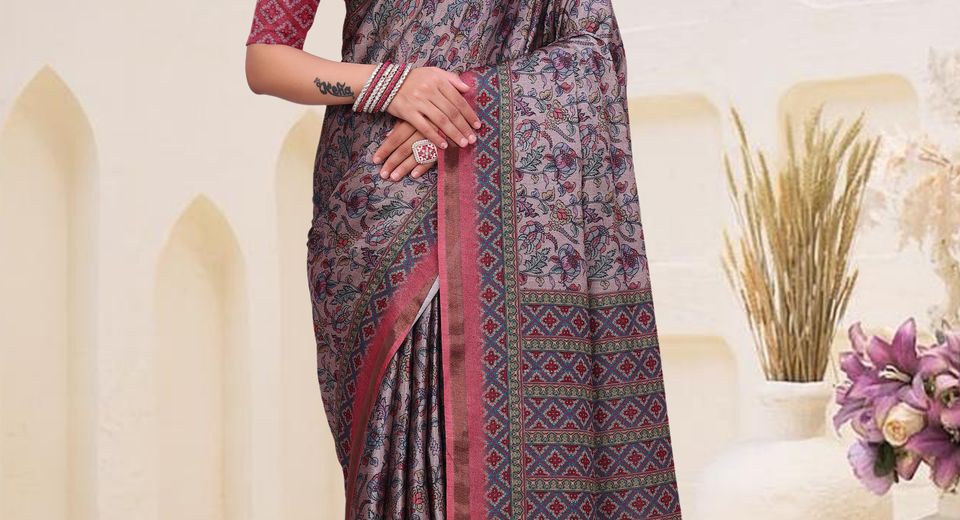
Khajuraho Dance Festival Fashion needs to balance cultural elegance with the practical realities of an outdoor celebration. The annual festival in Madhya Pradesh brings classical dance performances to the temple landscape, usually during cooler winter evenings, so a saree should look refined without becoming heavy, slippery or difficult to manage. The strongest outfit combines a breathable weave, a secure drape, a comfortable blouse and jewellery that complements rather than competes with the architecture and dance.
An effective starting point is to treat the event as a festival celebration with a formal artistic setting, not as a crowded wedding reception. Floral prints, handloom textures, modest zari and considered traditional accessories can create a silk look for the festival without requiring excessive embellishment. The right choice also depends on whether you'll sit for several hours, walk across uneven ground or attend a daytime cultural programme before the evening performance.
Khajuraho Dance Festival Fashion: What should the outfit achieve?
Khajuraho Dance Festival Fashion should provide graceful movement, weather-appropriate comfort and visual respect for a historic cultural venue. A saree with a stable pleat structure, a non-slippery blouse and moderate ornamentation usually performs better than a heavily layered outfit.
Temple exteriors and open performance spaces create a distinctive background. Rich reds, deep maroons, teal, indigo, ivory and muted pastels photograph well against sandstone, while very reflective sequins can look distracting under stage lighting. A defined border helps the saree hold its line in photographs, but an extremely stiff border may make walking and sitting uncomfortable.
The festival is associated with Indian classical dance traditions, so a heritage silhouette feels especially appropriate. That doesn't mean every outfit must be a formal silk saree. Linen cotton, Mal cotton, handloom cotton and soft silk can all look ceremonial when the colour, blouse and accessories are coordinated thoughtfully.
How formal should the saree be?
A polished saree with one strong classic detail is formal enough for most festival evenings. The defining detail could be a zari border, a Banarasi weave, a handloom texture, temple-inspired earrings or a neatly finished contrast border.
Overloading an outfit with a statement necklace, large earrings, stacked bangles and a heavily embroidered blouse can reduce comfort during a long performance. Choose one focal point and let the saree's weave or print provide the second layer of interest.
Khajuraho Dance Festival Fashion: Which fabrics work best?
Linen cotton, Mal cotton, handloom cotton and soft silk are practical choices for a Khajuraho festival because they offer different balances of breathability, structure and occasion appeal. Fabric weight, weave density and the expected weather matter more than a label such as "festive" or "classic."

Linen cotton and handloom cotton
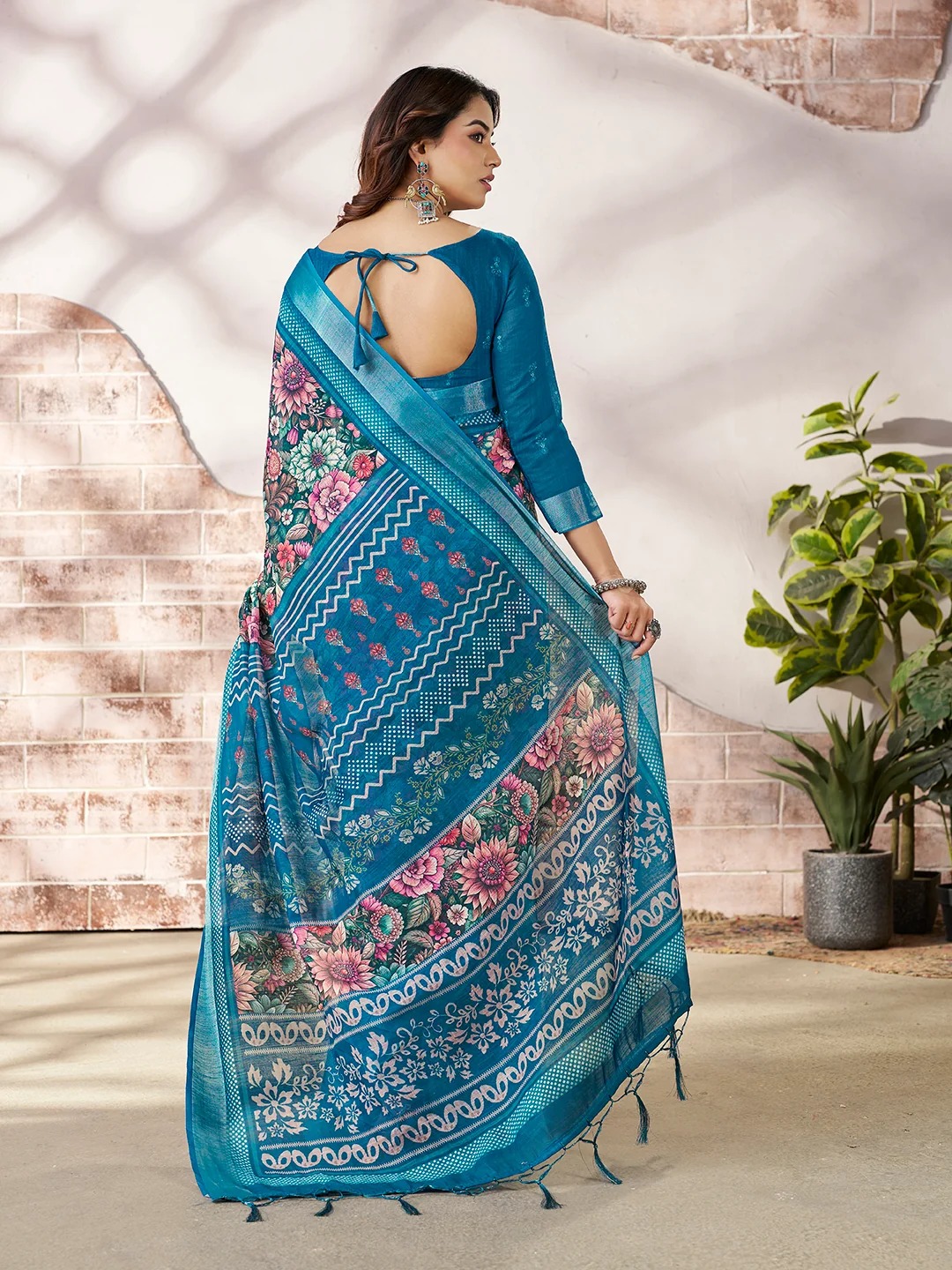
Linen cotton is a strong choice when the day includes walking or when you prefer a saree that feels lighter against the skin. Blue Linen Cotton Floral Printed Saree With Contrast Border shows how a floral surface and defined border can create a dressed-up appearance without metallic overload.
Red Floral Linen Cotton Saree with Beautiful Printed Border suits a brighter festival celebration while retaining the relaxed character of a breathable weave. Floral motifs also connect naturally with an outdoor setting, although a floral saree doesn't need floral jewellery to complete the look.
Pastel Floral Tissue Handloom Cotton Saree with Zari Weaves offers a more delicate interpretation of heritage dressing. The tissue effect and zari weaves provide occasion detail, while the cotton base can feel easier to wear than a dense brocade during a long programme.
Mal cotton and soft silk
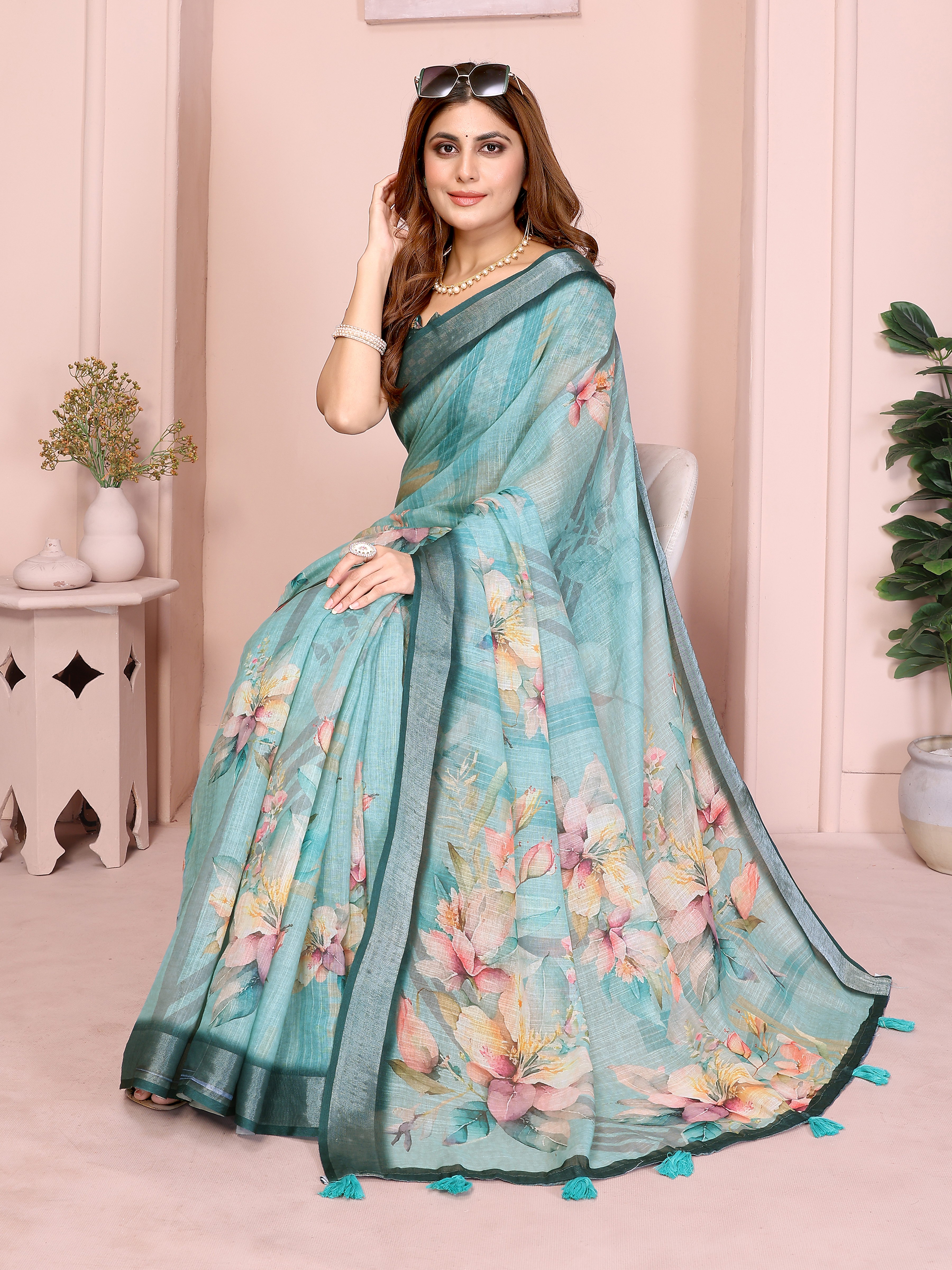
Mal cotton works well for guests who want a distinctly ethnic saree with less weight than many formal silks. Teal Floral Linen Cotton Saree with Elegant Contrast Border brings colour and definition together, making a separate heavy necklace unnecessary.
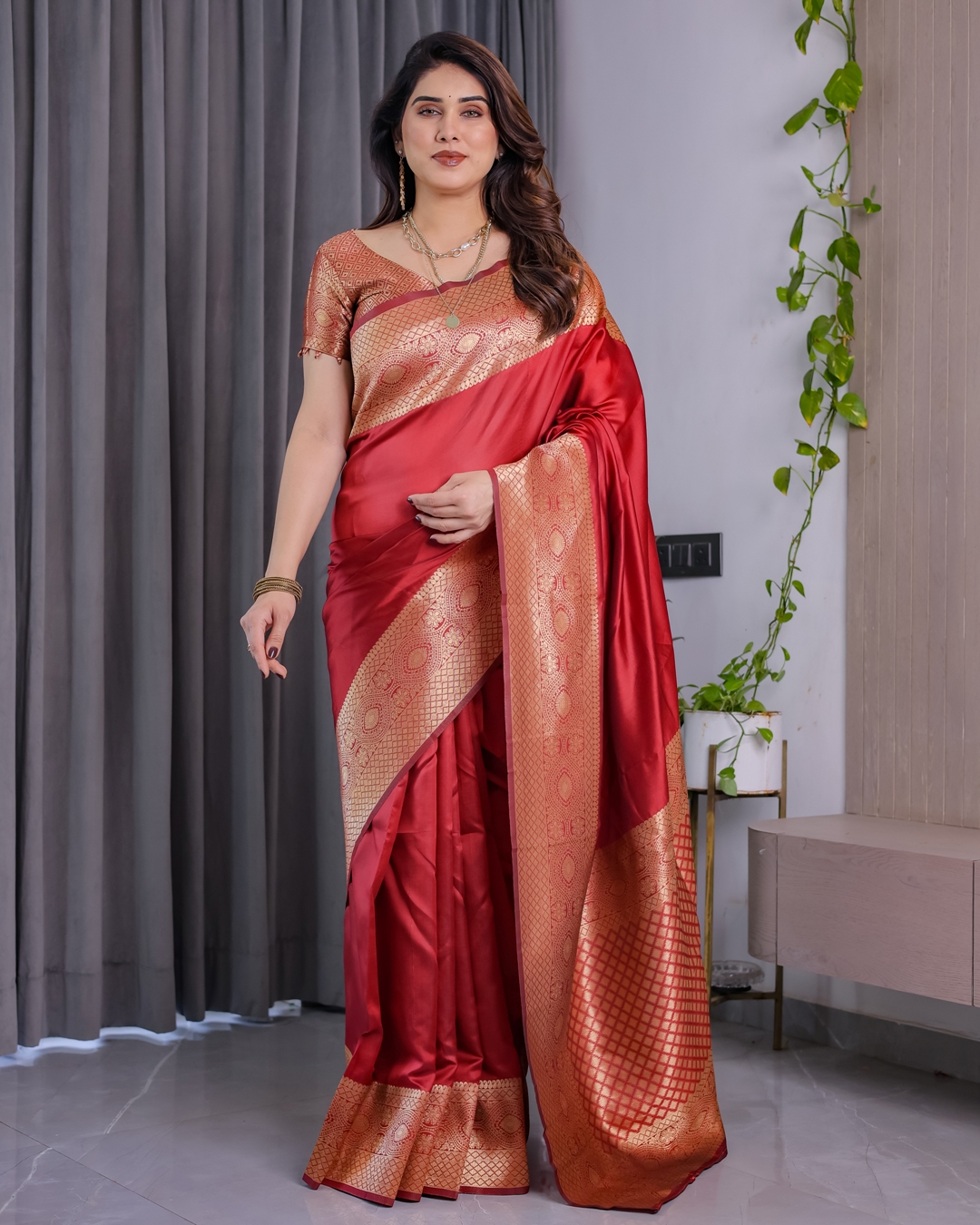
Soft silk creates a richer silk festival celebration look, particularly for an evening performance. Red Banarasi Soft Silk Saree with Jacquard Zari Border has the visual depth associated with Banarasi silk, while a soft-silk construction can be more forgiving than a very crisp heritage silk for extended wear.
Fabric selection should also account for care after travel. Cotton sarees can crease in a suitcase but usually recover with steam or careful pressing. Zari and jacquard borders should be folded with tissue paper and kept away from rough jewellery that can catch the threads.
Khajuraho Dance Festival Fashion: How should you choose colours?
Deep jewel tones, earthy shades and controlled pastels are reliable colours for a Khajuraho temple setting because they contrast clearly with sandstone without looking excessively theatrical. Red, maroon, teal, green, rust, cream and muted pink all work when paired with a balanced blouse.
Red creates a confident heritage impression and works especially well with antique-gold accessories. Maroon feels quieter and more formal, while teal introduces colour without the visual intensity of scarlet. Pastel sarees can look elegant in daylight, but they benefit from a stronger border or darker blouse for an evening event.
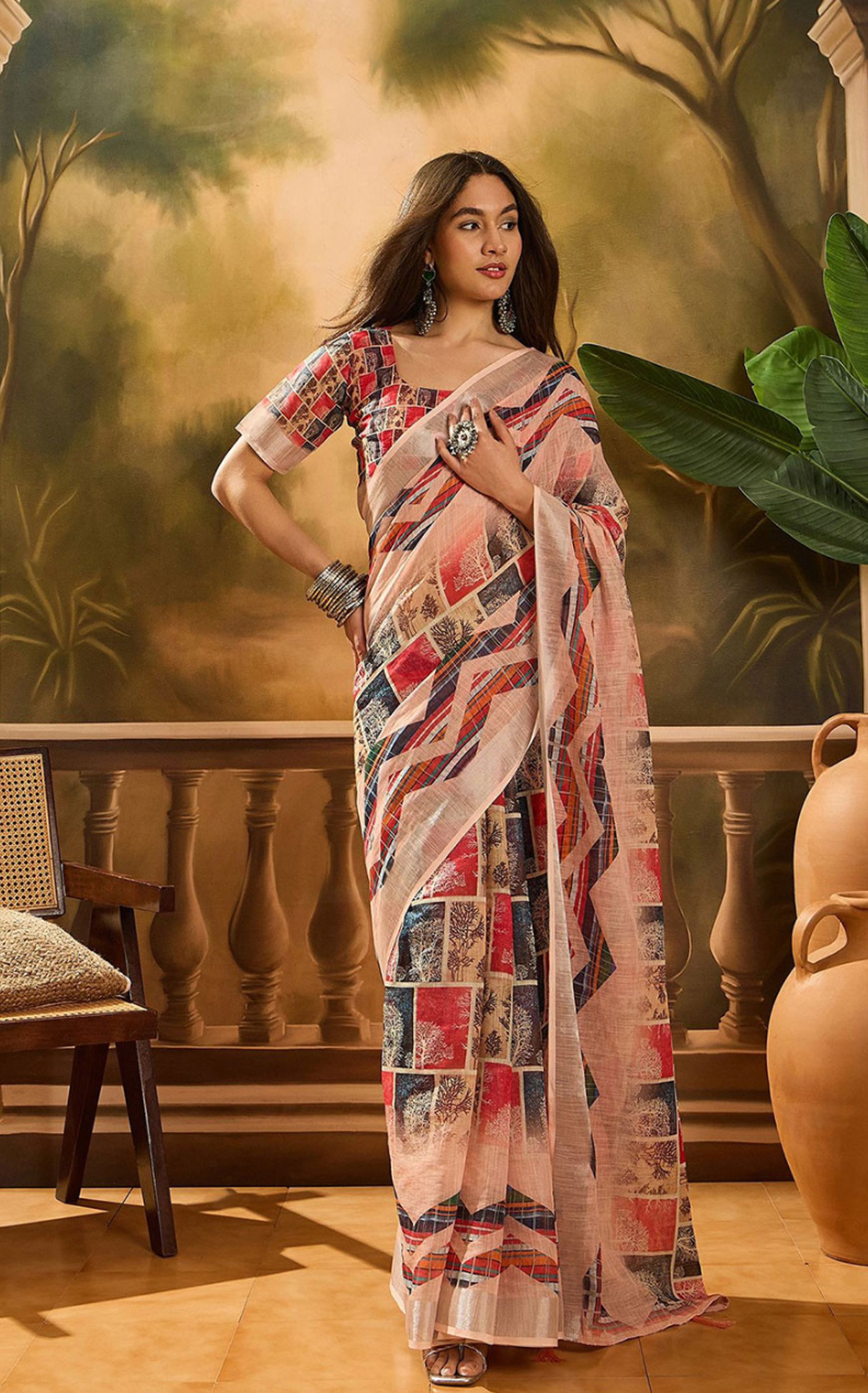
Print scale is worth considering. Small florals appear refined in photographs and are easy to accessorise. Large multicolour prints become the primary feature, so the blouse and jewellery should remain simple. A multicolour linen cotton floral saree needs only one or two accessory colours repeated from the fabric.
Colour should not be selected only for photographs. Light beige, cream and very pale pink can show dust more readily when the venue involves outdoor seating or walking. A darker petticoat or a well-fitted underskirt can also prevent a pale saree from becoming transparent under strong lights.
Khajuraho Dance Festival Fashion: Which blouse and drape details matter?
A well-fitted blouse, a firm petticoat and a securely pinned pallu make a saree easier to wear during a long dance performance. These construction details matter more than adding another decorative layer.
Blouse choices
A blouse with a high enough back and comfortable armhole provides support when you sit, walk and adjust your pallu. Elbow-length sleeves create a classic appearance and reduce the need for multiple bangles, while a short sleeve works well with lighter cotton sarees.
Contrast blouses are effective when they repeat a border colour. A teal saree can take a maroon, gold or ivory blouse depending on the print, while a red saree can be paired with maroon, cream or muted gold. Avoid matching a busy floral print with a blouse covered in dense embroidery unless the overall styling is intentionally maximal.
Drape security
A narrow, evenly pressed pleat stack and a pallu that falls below the hip generally provide the best combination of movement and coverage. Use two concealed safety pins at the shoulder and one at the waist, placing the pins through the inner layers rather than the visible border.
Flat sandals or low block heels are safer than narrow stilettos on grass, stone paths and uneven flooring. Measure the saree after footwear is chosen, because a hem that brushes the ground can collect dust or catch under a sandal.
Khajuraho Dance Festival Fashion: Which accessories feel appropriate?
Classic festival accessories work best when they echo one element of the saree, such as its zari, border, floral motif or colour. Gold-toned jhumkas, small chandbalis, a slim bangle stack and a compact potli can complete the look without overwhelming a classical performance setting.

Temple jewellery can be appropriate when used selectively. A single temple-style pendant or pair of earrings is enough for a saree with a prominent Banarasi silk border. Kundan, meenakari and oxidised silver create different moods, but mixing all three in one outfit can make the styling appear unplanned.
Hair should remain secure for the duration of the programme. A low bun, braided bun or neatly pinned side braid holds better than loose curls in an open venue. Fresh jasmine can add a time-honoured note, provided the flowers remain comfortable and don't interfere with a seat back or shawl.
A lightweight shawl or stole is worth carrying for cooler evenings. Select a neutral wrap that doesn't snag the zari, and keep a small pouch with safety pins, fashion tape, tissues and a compact comb. Practical preparation protects the appearance of the saree more effectively than extra ornamentation.
Khajuraho Dance Festival Fashion: How can you build complete looks?
A complete festival look becomes easier to plan when the saree, blouse, jewellery and footwear each have a defined role. The following combinations cover a restrained daytime appearance, a colourful evening outfit and a richer silk look.
- Handloom floral look: Pair Pastel Floral Tissue Handloom Cotton Saree with Zari Weaves with an ivory or muted rose blouse, small gold earrings and tan flat sandals. Keep the makeup fresh and use a low bun for a graceful daytime programme.
- Bright heritage look: Style Red Floral Linen Cotton Saree with Beautiful Printed Border with a maroon or antique-gold blouse, gold jhumkas and a plain potli. This combination suits a festival celebration without depending on sequins or heavy embroidery.
- Jewel-toned look: Wear Teal Floral Linen Cotton Saree with Elegant Contrast Border with a plain gold or deep maroon blouse, a low bun and muted-gold sandals. Let the contrast border remain visible by keeping the pallu neatly arranged.
- Evening silk look: Choose Red Banarasi Soft Silk Saree with Jacquard Zari Border with understated earrings, a firm petticoat and a compact clutch. Banarasi silk supplies enough visual richness for an evening performance without requiring a heavily embellished blouse.
- Earthy cotton look: Maroon Mal Cotton Ethnic Saree With Blouse from VARNAVI can be styled with antique-silver earrings, a neutral sandal and a simple braid. The deeper colour is practical for an outdoor venue and the cotton character keeps the outfit approachable.
Collection browsing can also be organised by purpose. Silk Sarees Under 3000 With Discount may help when you want a more formal appearance within a defined budget. Party Wear Sarees can provide inspiration for evening colour and draping, but avoid automatically choosing sequins for a cultural performance. Red Banarasi Silk Sarees for Weddings Under 1100 can be useful for comparing red-and-gold combinations, even though a dance festival calls for lighter accessories than a wedding.
Khajuraho Dance Festival Fashion: What should you check before travelling?
Check the weather, seating arrangement, walking distance and saree condition at least two days before departure. A practical checklist prevents last-minute styling choices that compromise comfort.
- Test the drape: Sit on a chair for 30 minutes, walk up steps and bend slightly to check whether the pleats or pallu shift.
- Pack safely: Fold zari borders with tissue paper, place the saree in a breathable cotton cover and avoid compressing it under shoes or toiletries.
- Carry repairs: Pack six to eight safety pins, a small sewing kit, fashion tape and a stain-removal wipe.
- Confirm footwear: Wear the shoes during the final saree-length measurement, especially if the venue includes stone paving or grass.
- Plan warmth: Carry a shawl that works with the saree and can be used during the return journey.
Steam a linen cotton or cotton saree shortly before wearing it, but keep a hot iron away from zari unless the care label permits direct pressing. Banarasi silk, jacquard borders and tissue weaves are safer when pressed from the reverse side through a thin cotton cloth.
The most successful festival outfit leaves enough attention for the performance itself. A saree that stays comfortable, secure and visually balanced allows you to focus on the dancers, music and historic setting rather than adjusting clothing throughout the evening.
Khajuraho Dance Festival Fashion: What are the key takeaways?
Choose a breathable saree for walking and long seating, a richer soft silk or Banarasi silk for a more formal evening, and a stable drape for uninterrupted comfort. Coordinate one major accessory with the saree's border or weave, keep footwear practical and carry a warm layer for the winter air.

A thoughtful festival look doesn't depend on the highest shine or the heaviest embellishment. Linen cotton, Mal cotton, handloom cotton and soft silk can all support traditional dressing when colour, fit, texture and drape work together.
Common Questions About Khajuraho Dance Festival Saree Styling
What saree is suitable for the Khajuraho Dance Festival?
Linen cotton, Mal cotton, handloom cotton and soft silk sarees are suitable for the Khajuraho Dance Festival. Choose linen cotton or handloom cotton for walking and daytime comfort, and choose soft silk or Banarasi silk for a richer evening appearance.
Can I wear a cotton saree to a classical dance festival?
Yes, a cotton saree is an excellent choice for a classical dance festival. A defined border, neat pleats, a well-fitted blouse and gold-toned earrings can make a cotton festival look feel formal without adding unnecessary weight.
Which colours look good against Khajuraho temples?
Red, maroon, teal, green, rust, cream and muted pastels look effective against Khajuraho's sandstone architecture. Darker jewel tones photograph well in evening light, while pastels work particularly well for daytime programmes when paired with a defined border.
How can I keep my saree secure during a long festival programme?
Use a firm petticoat, evenly pressed pleats and concealed safety pins at the shoulder and waist. Test the complete drape while sitting and walking before leaving, and select flat sandals or low block heels for uneven outdoor surfaces.
Is Banarasi silk too formal for the Khajuraho Dance Festival?
Banarasi silk is not too formal when the styling remains restrained. Pair a Banarasi silk saree with simple earrings, a plain or lightly detailed blouse and practical footwear instead of combining it with heavy jewellery and dense embellishment.
What should I carry with a saree for an outdoor dance festival?
Carry a lightweight shawl, safety pins, fashion tape, tissues, a small sewing kit and a compact comb. A breathable saree cover and tissue paper are useful for protecting cotton, jacquard and zari details during travel.





