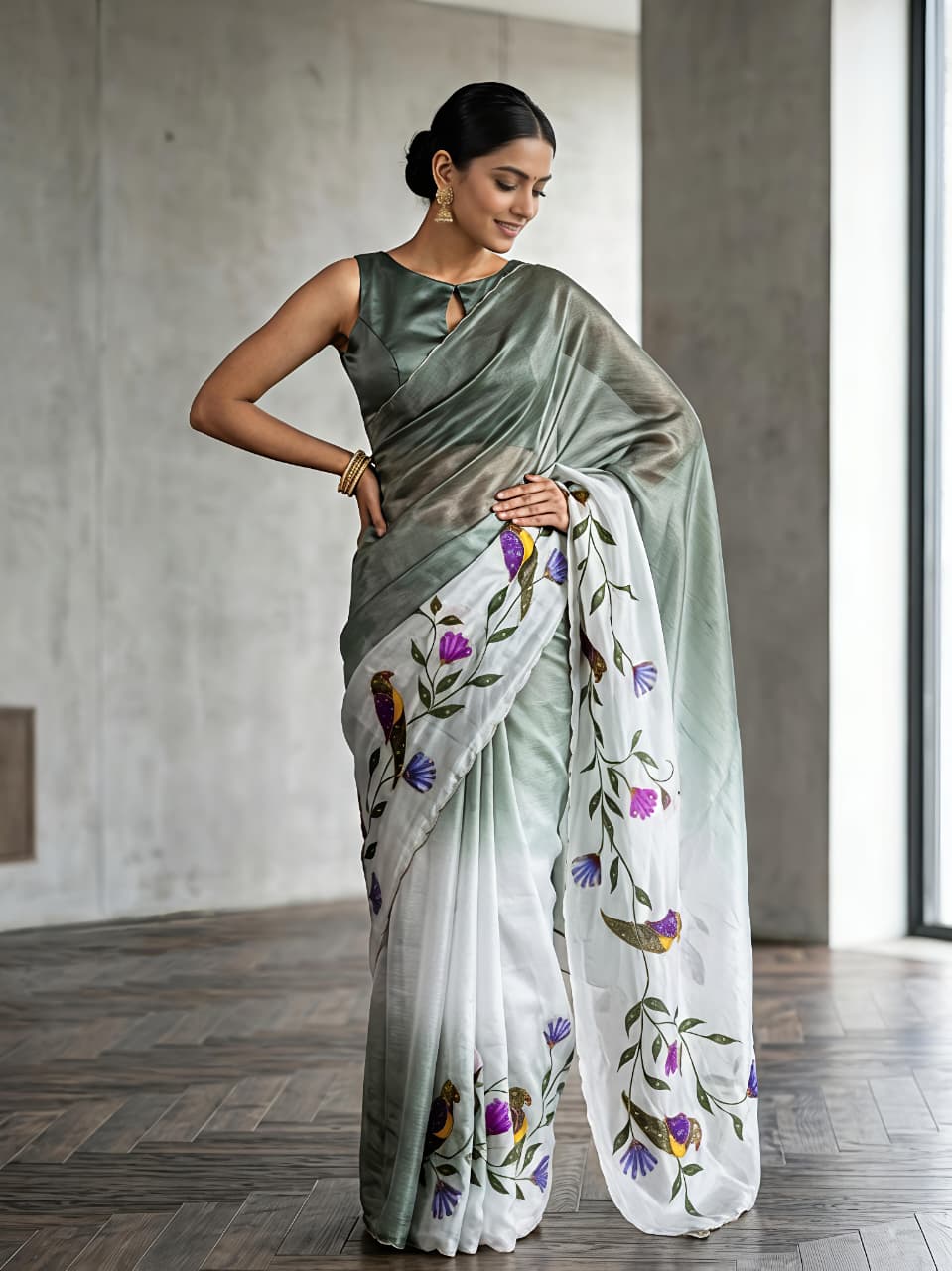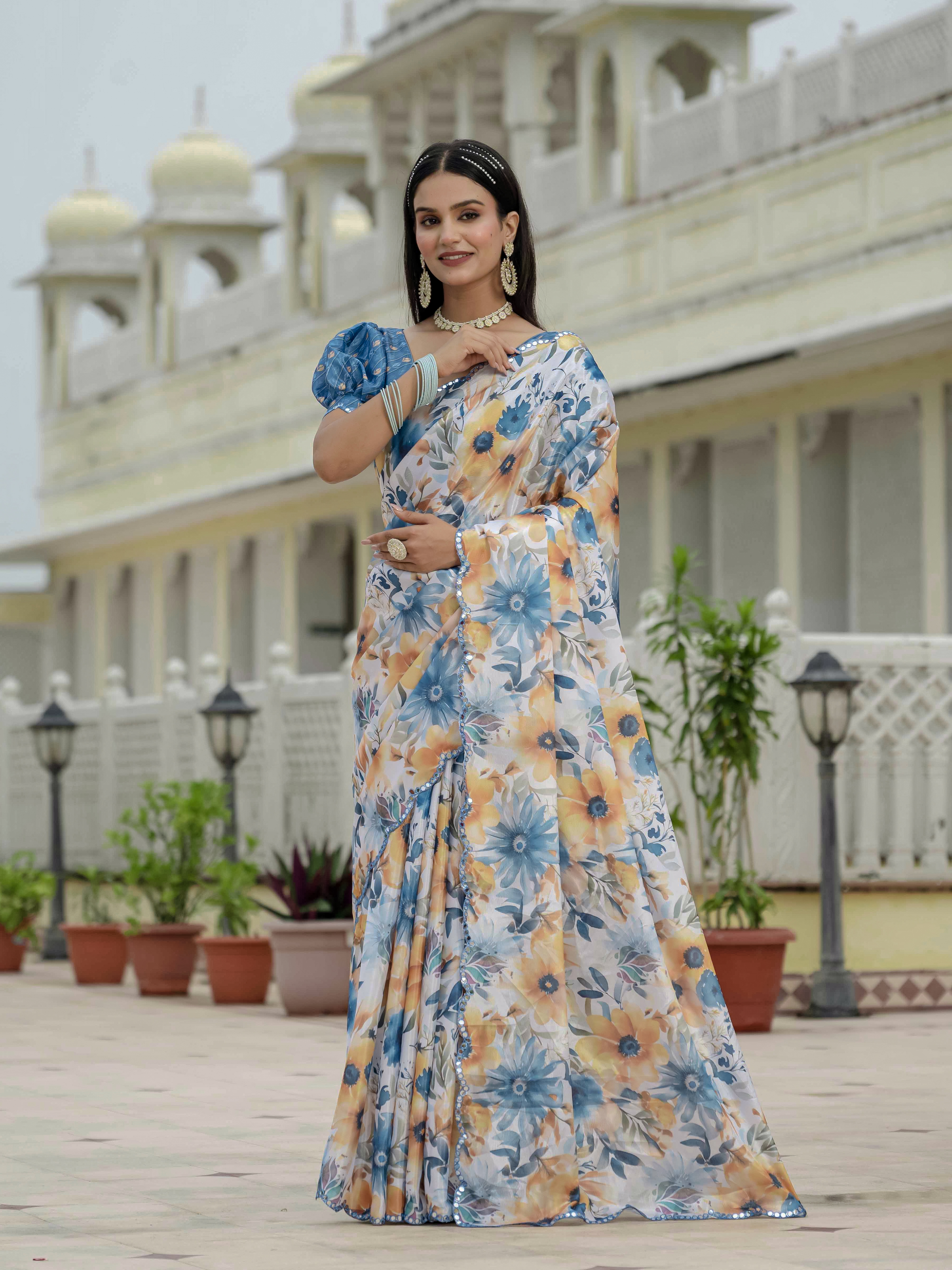
Kerala Saree vs Kasavu Saree: What's the Difference? The short answer is that Kerala saree is the broader regional description, while Kasavu saree usually refers to a Kerala-style saree with a distinctive gold-toned border. The terms overlap because many traditional Kerala sarees use kasavu detailing, but they don't describe exactly the same feature. Understanding the distinction helps you choose the right fabric, border width, blouse and level of formality.
A white, cream or ivory saree with a gold border is commonly recognised as a Kasavu saree. A Kerala saree can follow that familiar palette, but it may also use coloured borders, printed bodies, cotton-silk, linen cotton or other regional interpretations. The difference is therefore one of emphasis: Kerala identifies the cultural and geographical tradition, while Kasavu highlights the border treatment.
Kerala Saree vs Kasavu Saree: What does each name mean?
Kerala saree describes a saree associated with Kerala's textile traditions, whereas Kasavu saree describes a more specific light-coloured saree with gold or metallic border work. Both names are used loosely in shops, so a product description should be read for its actual fabric and construction.
Traditional Kerala clothing includes the set mundu, a two-piece outfit made from a lower mundu and an upper neriyathu. A single-piece Kerala saree creates a related visual effect but is easier for many wearers to pleat and secure. The terms Kerala saree, Kasavu saree and set mundu can therefore appear together while referring to garments with different constructions.
The word Kasavu is strongly associated with the gold border tradition of Kerala. Older ceremonial textiles could use real gold thread, but present-day sarees more commonly use zari, metallic yarn or a woven imitation-gold finish. Border material, weave density and width affect the saree's weight, price and durability.
Kerala identity doesn't depend entirely on a gold border. A saree can be Kerala-inspired through its restrained drape, regional styling and breathable textile while using a coloured or printed edge. A Kasavu description, however, normally signals that the gold-toned border is an important visual feature.
Kerala Saree vs Kasavu Saree: Which visual details reveal the difference?
The border is the quickest visual clue: a classic Kasavu saree keeps a prominent gold-toned border against a white, cream or ivory body, while a Kerala saree may have a wider range of borders and colours.
- Body colour: Kasavu sarees usually remain close to white, ivory, cream or off-white. Kerala sarees may use those shades as well as muted or brighter coloured bodies in contemporary designs.
- Border: Kasavu sarees typically feature zari, metallic thread or a woven gold border. Kerala sarees may use gold, coloured, printed, contrast or textured borders.
- Pallu: A Kasavu pallu often repeats the gold border in a restrained arrangement. A Kerala saree may show more variation in pallu colour, print and surface texture.
- Decoration: Kasavu styling is usually minimal, with the border supplying the main ornament. Kerala-inspired sarees can include prints, motifs, stripes or more visible surface design.
- Colour contrast: Ivory with gold gives a ceremonial appearance. A coloured border or printed body makes a Kerala saree feel more contemporary and versatile.
Covering the border in a product photograph provides an useful test. If the saree still looks like a regional textile because of its fabric and construction, Kerala is the broader description. If the gold edging creates most of its identity, Kasavu is the more precise term.
A gold border also varies in character. Bright yellow-gold zari looks crisp and festive, antique gold appears softer and more traditional, and a narrow metallic line creates a quieter daytime effect. Border width matters as much as colour because a 1- to 2-inch edge behaves very differently from a broad 4- to 6-inch ceremonial border.
Kerala Saree vs Kasavu Saree: How do fabric and zari affect wearability?
Fabric determines comfort, fall and maintenance more strongly than the label Kerala or Kasavu. Cotton suits humid daytime events, silk creates a structured formal drape, and linen cotton offers a crisp, breathable alternative.

Cotton and linen cotton for daytime events
Cotton absorbs moisture and usually feels comfortable during long Onam gatherings, cultural programmes and temple visits. Cotton may crease more visibly than silk, but the relaxed texture suits informal festive dressing. Linen cotton feels airy and slightly crisp; it's useful when you want a saree that holds a clean line without the weight of dense silk.
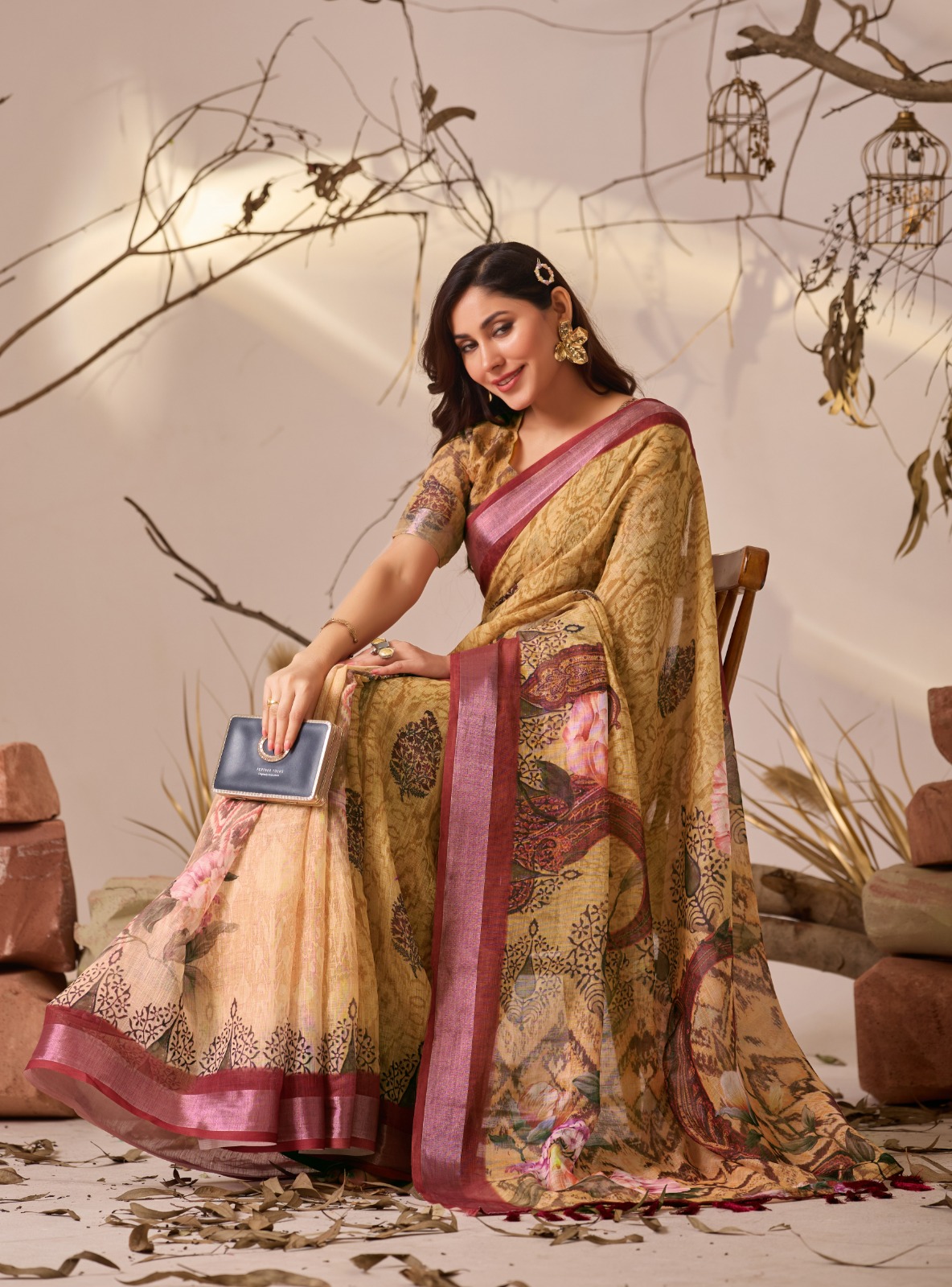
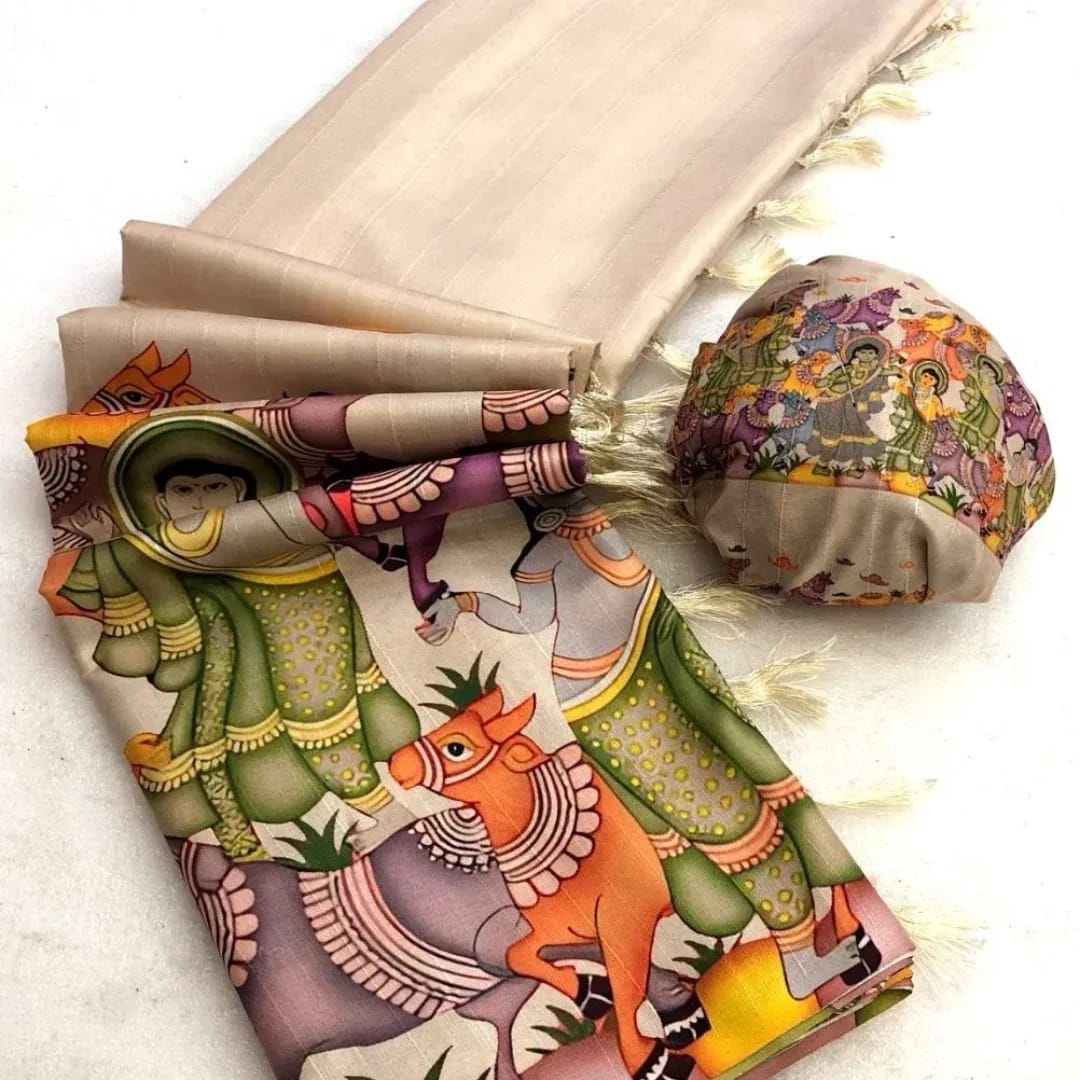
Beige Kalamkari Printed Linen Cotton Saree Online illustrates how a breathable base can support a traditional drape while moving beyond the strict ivory-and-gold palette. A printed linen cotton saree works particularly well with a plain blouse in beige, rust, indigo or deep brown.
Silk and Tussar silk for formal dressing
Silk gives pleats more body and creates a smoother, more luminous surface. Tussar silk has a naturally textured appearance and a slightly less polished fall, making it suitable for festive dressing that feels rich without looking excessively glossy.
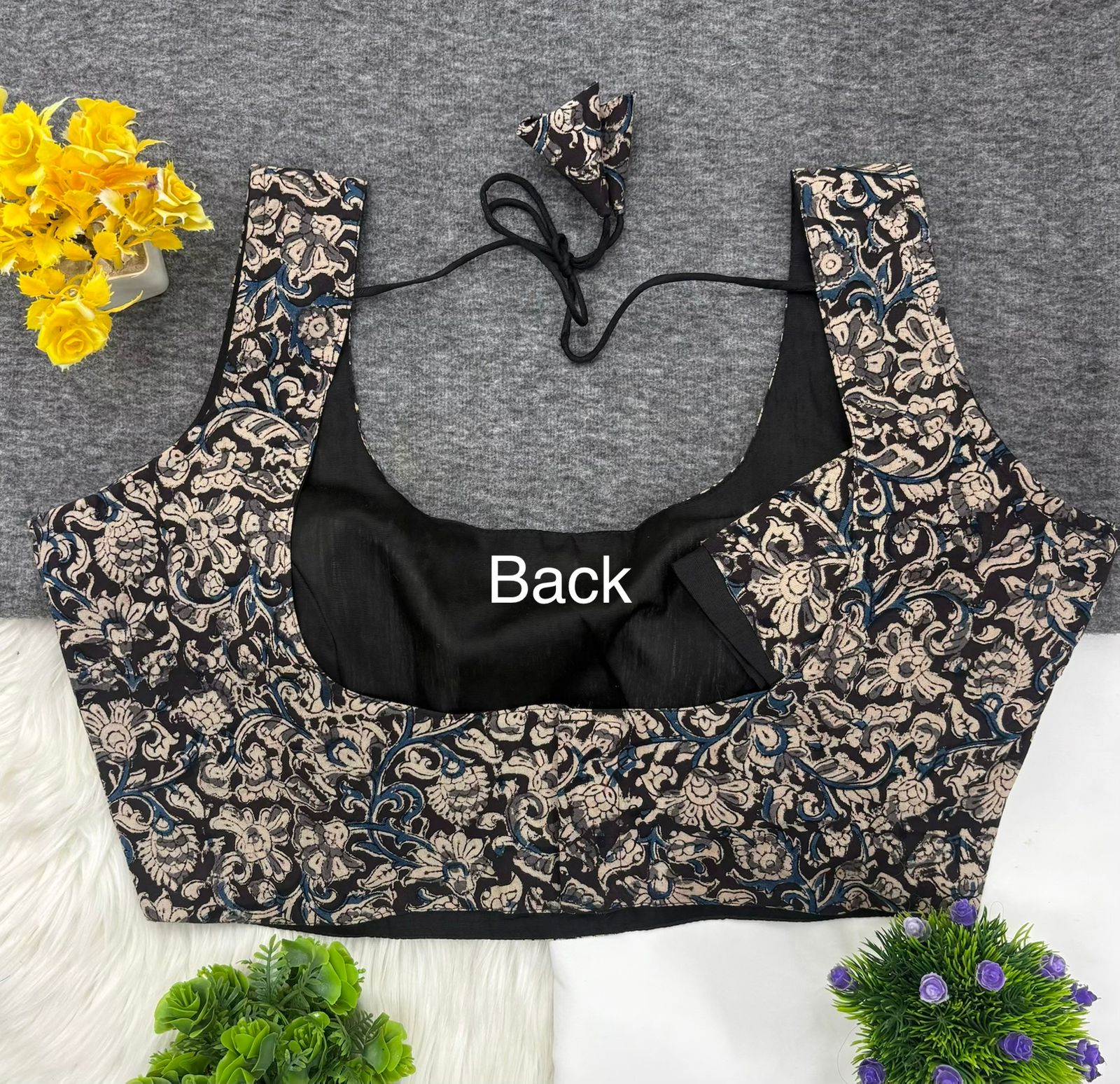
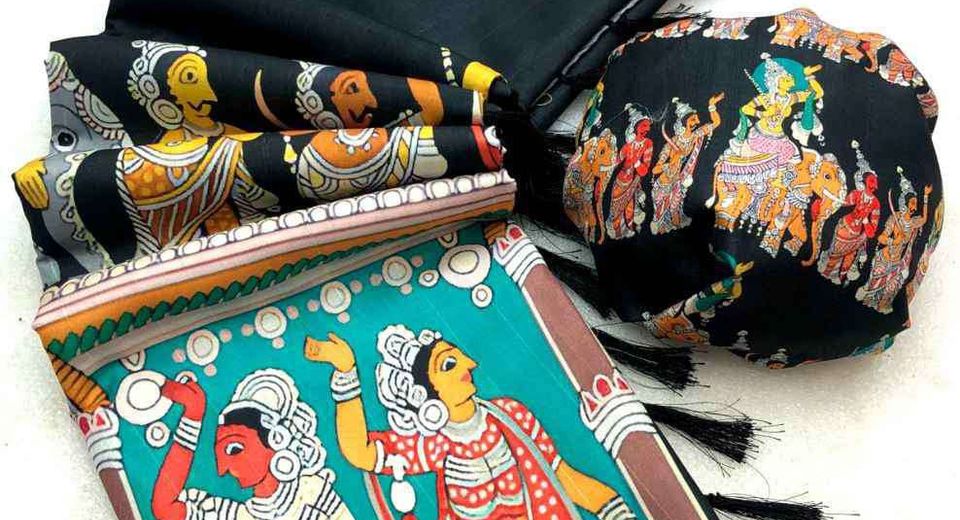
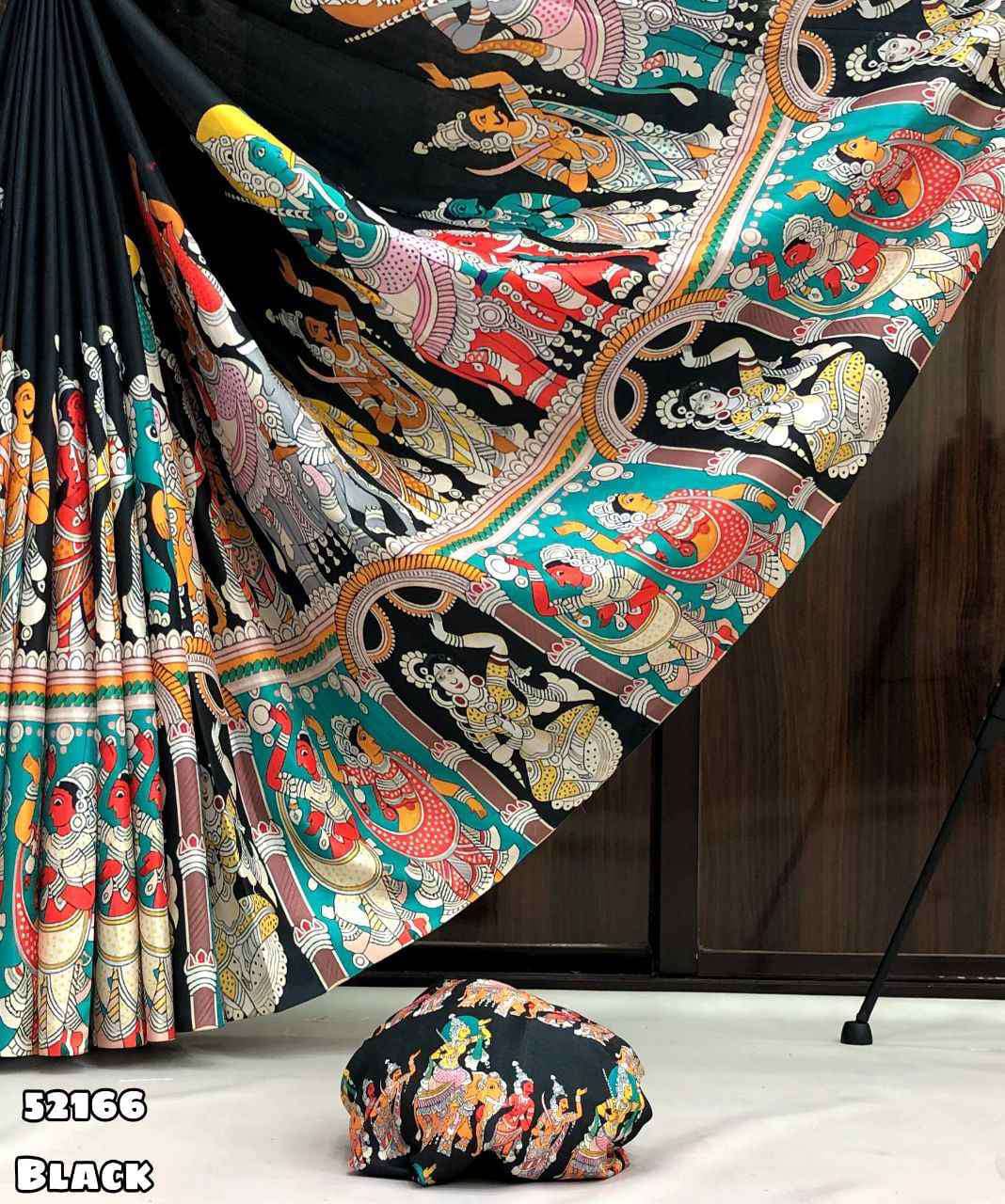
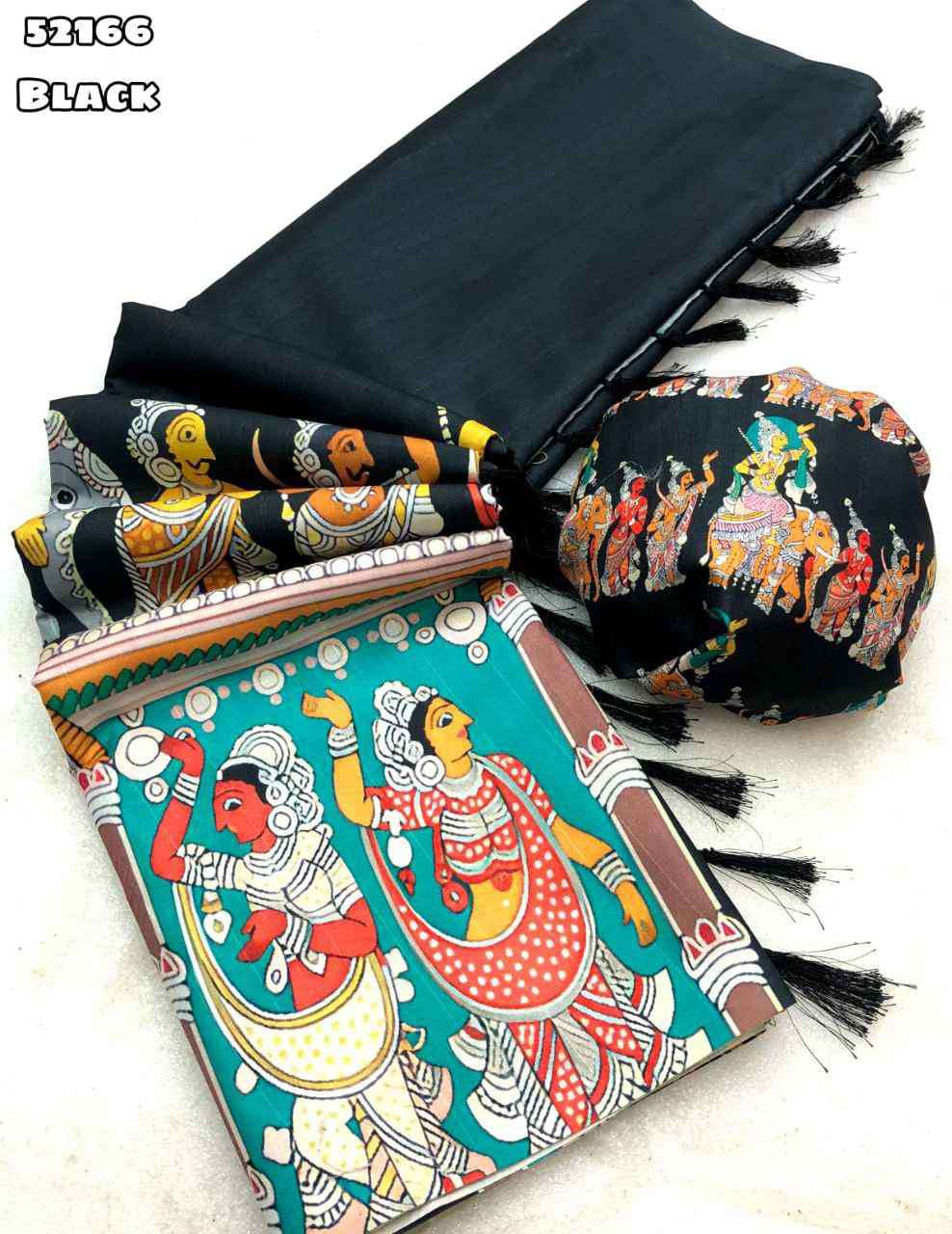
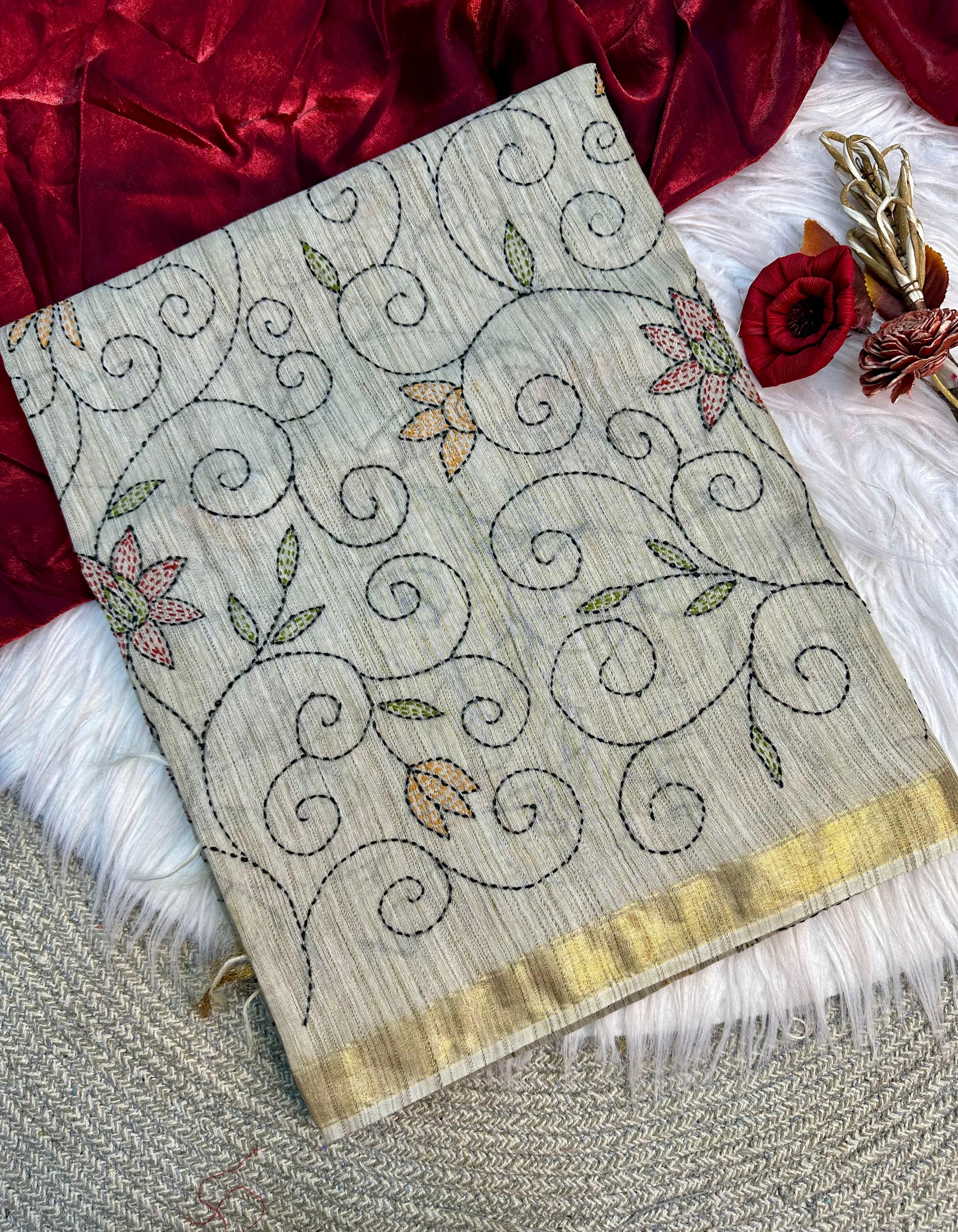
Black Traditional Kalamkari Print Silk Saree and Tussar Silk Kalamkari Printed Saree with Blouse show how silk can support an ethnic drape even when the colour palette differs from classic Kasavu white and gold. Premium Handloom Silk Saree with Handkatha gives another example of how hand-finished surface detail can become the main visual feature of a saree.
Understanding zari before buying
Zari is a metallic thread or metallic strip used to create decorative borders and motifs, but not all zari has the same composition or weight. A product description may refer to zari, metallic yarn, imitation zari or a woven metallic finish. Those terms should not be treated as interchangeable when you're comparing durability and care.
A dense, broad zari border adds visual weight and may make the saree fall more firmly around the ankles. A narrow border is lighter, easier to pleat and generally more comfortable for daytime movement. Ask whether the border is woven, embroidered, printed or applied if the description doesn't make the construction clear.
Kerala Saree vs Kasavu Saree: Which one suits each occasion?
Choose a Kasavu saree when you want an immediately recognisable white-and-gold festive appearance, and choose a broader Kerala saree style when you want more freedom with colour, print or fabric.
- Onam celebration: A cotton or cotton-silk Kasavu saree with a medium zari border is comfortable for daytime gatherings and photographs. A red, green, mustard or maroon blouse adds colour without losing the traditional foundation.
- Vishu: A cream saree with a narrow gold border creates a composed look for daytime rituals and family visits. Lightweight fabric is practical if you expect extended standing or walking.
- Temple visit: A modestly styled Kerala or Kasavu saree in cotton, linen cotton or light silk is suitable. Avoid excessive trailing fabric and secure the pallu so it remains comfortable during movement.
- Kerala wedding: Silk or Tussar silk brings a fuller fall for a formal ceremony. A broad gold border, structured blouse and traditional gold jewellery increase the sense of occasion.
- Office cultural day: A Kerala-inspired saree with a subtle border or controlled print is easier to wear for several hours than a heavily embellished design. Elegant Black Kalamkari Silk Saree can be styled with a plain black, cream or muted gold blouse.
- Casual festive gathering: A coloured body with a zari edge gives festive character without following the strict white-and-gold formula. Traditional Yellow Saree with Blue Zari Border Design demonstrates how colour can create a distinctly Indian but contemporary appearance.
Colour changes perceived formality. Bright white with yellow gold looks crisp and ceremonial, cream with antique gold feels softer and more traditional, and a printed or coloured body appears more relaxed. A maroon, black or jewel-toned blouse can move a pale saree towards evening wear, while a cotton blouse in a related neutral keeps the outfit appropriate for daytime.
Kerala Saree vs Kasavu Saree: How should you style and drape each one?
A neat Nivi drape with evenly spaced pleats is the most adaptable styling choice for both Kerala and Kasavu sarees. Place the pallu over the left shoulder, keep the pleats compact at the waist and use a concealed pin when the fabric or zari border shifts.
Kasavu sarees benefit from restrained styling because the white-and-gold combination already brings a strong identity. A round, boat or square neckline works well with a blouse in gold, red, green, maroon, mustard or black. Gold jhumkas, one necklace and a modest bangle stack are usually sufficient; matching every accessory to the zari can make the outfit look heavy.
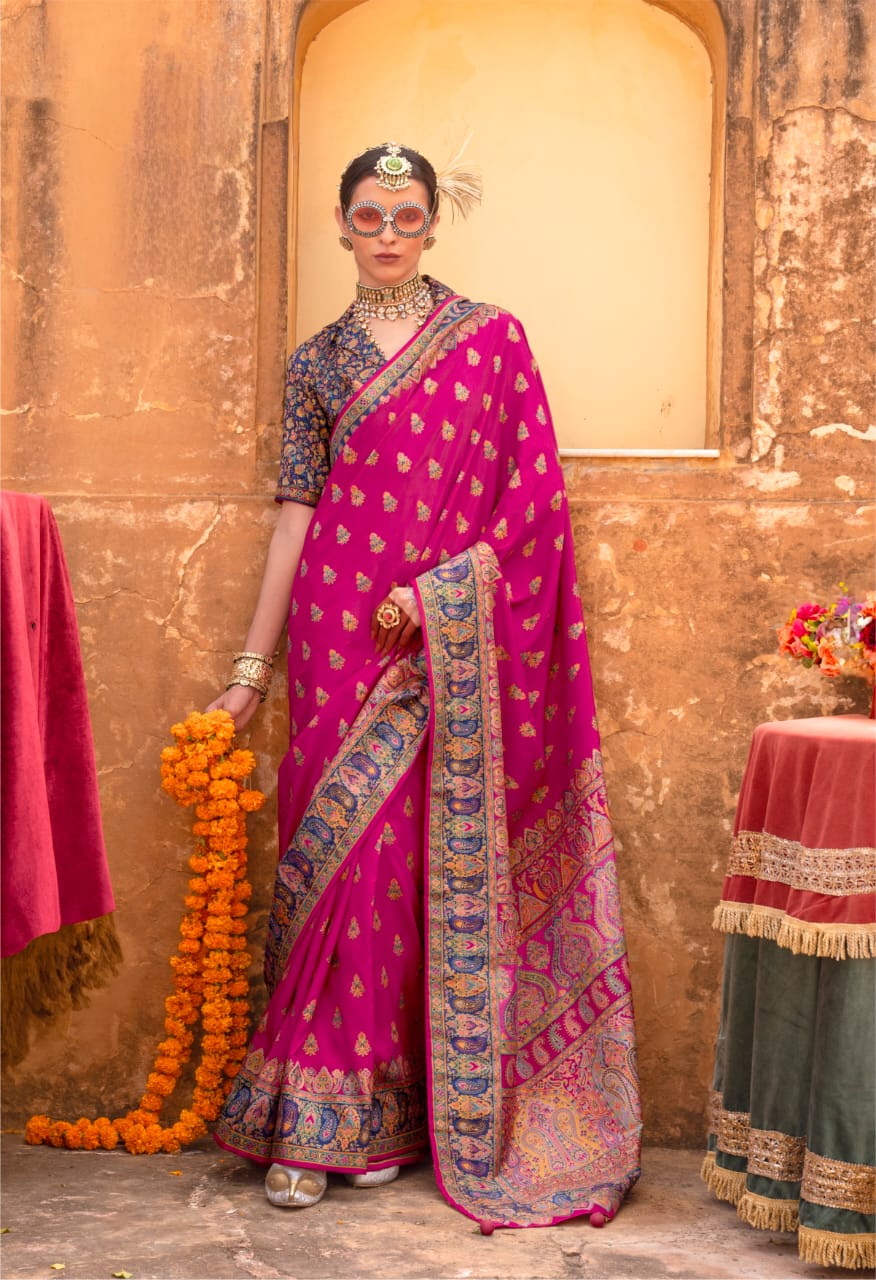
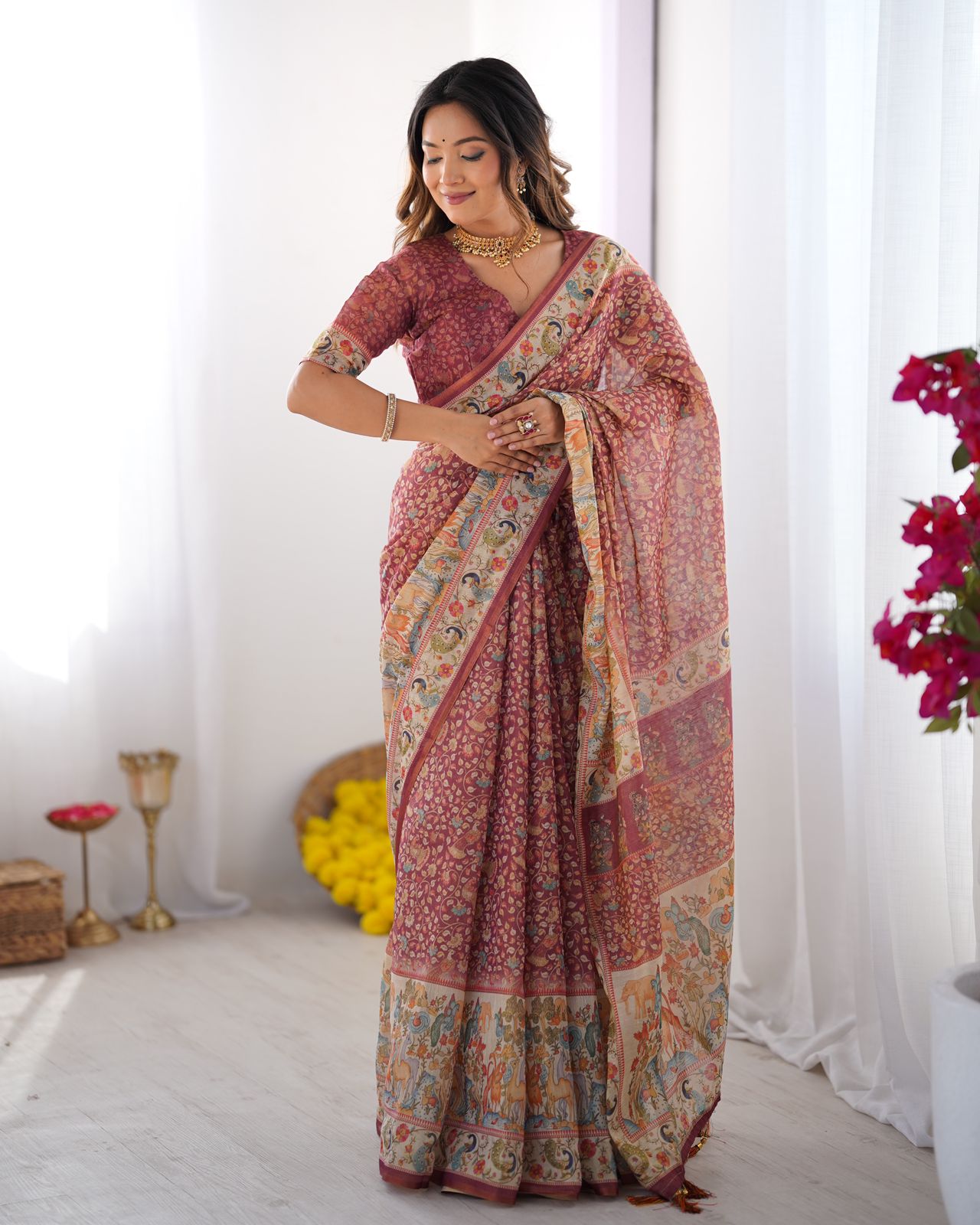
Kerala sarees with prints or coloured borders allow more contrast. Purple Kalamkari Tussar Silk Saree with Printed Blouse can be styled with minimal jewellery because the blouse and printed surface already supply visual detail. Varnavi Royal Kalamkari Maroon Handloom Saree supports a deeper, more dramatic palette, so antique-gold jewellery and a plain blouse can keep the overall look balanced.
The pallu needs careful handling when the border is stiff or broad. Spread the pallu to display the border, then make broad, shallow folds instead of many narrow pleats if the fabric is thick. Lightweight cotton can be secured close to the shoulder, while slippery silk may need a safety pin hidden beneath the shoulder fold.
Hair and footwear can reinforce the regional mood without turning the outfit into a costume. A low bun with jasmine suits a classic Kasavu look, while a braid or loose low bun works with a printed Kerala saree. Choose flat sandals for temple visits and low block heels for formal events where the saree needs a little additional length.
Kerala Saree vs Kasavu Saree: What should you check before buying?
Check the fabric, border construction, measurements, blouse details and care instructions before deciding whether a Kerala or Kasavu saree is right for you.
- Read the fabric composition: Confirm whether the saree is cotton, cotton-silk, silk, Tussar silk, linen cotton or a blend. Fabric composition predicts breathability, weight and crease behaviour.
- Measure the border: Note the border width in inches rather than relying only on words such as broad or rich. A broad border can shorten the visible body of a saree and create more weight around the hem.
- Check the blouse piece: Some sarees include an attached blouse piece, while others are sold with a separate printed blouse or without one. Tussar Silk Kalamkari Printed Saree with Blouse and Purple Kalamkari Tussar Silk Saree with Printed Blouse show why the blouse detail should be confirmed before purchase.
- Inspect the pallu: Look for a matching border, print placement and any tassels. A pallu that differs significantly from the body can change the way the finished drape appears.
- Match price to construction: Compare the textile, handloom description, zari type and finishing rather than judging value from border shine alone. Collections such as Sarees from Rs 1000 to Rs 1500 can be useful for budget comparison, while Sarees Under 20% Off, Sarees Under 10% Off, Sarees Flat 60% Off and Sarees Flat 50% Off help you filter current gives without confusing discount percentage with textile quality.
- Check care instructions: Cotton can often be gently hand-washed if the label permits, but silk, zari and hand-finished sarees generally benefit from dry cleaning or specialist care. Never assume a metallic border is safe for vigorous washing.
Care should be matched to the actual fibre and finish. Fold silk and zari sarees with the metallic border inside the fold, refold them every few months to prevent permanent creasing, and store them in breathable cotton rather than sealed plastic. Keep direct perfume, deodorant and prolonged moisture away from zari because chemical residue can dull metallic surfaces.
Kerala Saree vs Kasavu Saree: Which should you finally choose?
Choose a Kasavu saree for the clearest traditional white-and-gold statement, and choose a Kerala saree in the broader sense when you want regional character with more flexibility in fabric, colour and print.
A cotton Kasavu saree is a sensible choice for a warm daytime festival, while silk or Tussar silk suits a wedding or evening celebration. A printed linen cotton or handloom Kerala saree may be more useful when you want one garment for office events, family functions and casual festive dressing.
Neither label automatically indicates superior quality. A well-made cotton Kerala saree can be more comfortable and practical than a heavy silk Kasavu saree, while a carefully woven zari border can give a simple saree greater ceremonial value. Compare construction, measurements and care requirements first, then select the name that best matches the look you want.
Common Questions About Kerala Saree and Kasavu Saree Differences
Is every Kerala saree a Kasavu saree?
No. Kasavu saree is a more specific term for a light-coloured Kerala-style saree with a gold-toned border or kasavu detailing. Kerala saree is the broader regional term and can include coloured, printed or differently bordered designs.
What colour is a traditional Kasavu saree?
A traditional Kasavu saree is usually white, cream, ivory or off-white with a gold or antique-gold border. Contemporary versions may use coloured blouses or small design variations while retaining the light body and metallic border.
Is Kasavu the same as a set mundu?
No. A set mundu is a two-piece Kerala garment made from a lower mundu and an upper neriyathu. A Kasavu saree is generally a single-piece saree identified by its light body and gold border, although both garments share related textile traditions.
Which fabric is best for a Kerala saree in summer?
Light cotton and linen cotton are generally the most comfortable choices for hot, humid weather because they are breathable and relatively light. Cotton-silk can provide a dressier finish, but it may feel warmer than plain cotton during extended daytime wear.
Can I wear a Kasavu saree to a wedding?
Yes. Silk or Tussar silk Kasavu sarees with a broad zari border are suitable for formal wedding functions. Pairing the saree with a structured blouse, traditional gold jewellery and a neat pallu creates a more ceremonial appearance than a simple cotton version.
How should I care for a Kerala or Kasavu saree with zari?
Follow the fibre-specific care label and use specialist or dry cleaning for silk and delicate zari when recommended. Store the saree folded in breathable cotton, refold it periodically and protect the metallic border from perfume, moisture and prolonged direct sunlight.