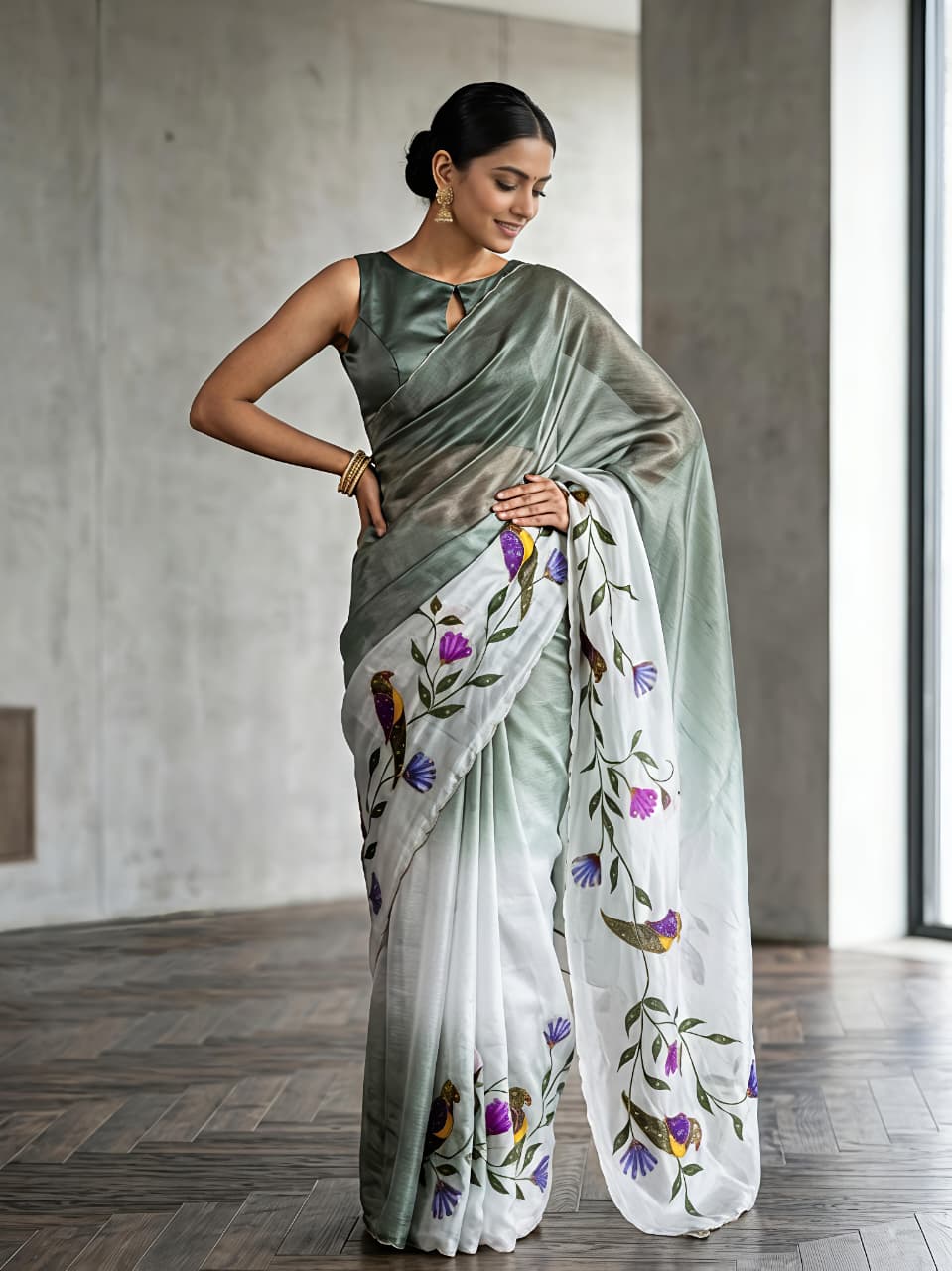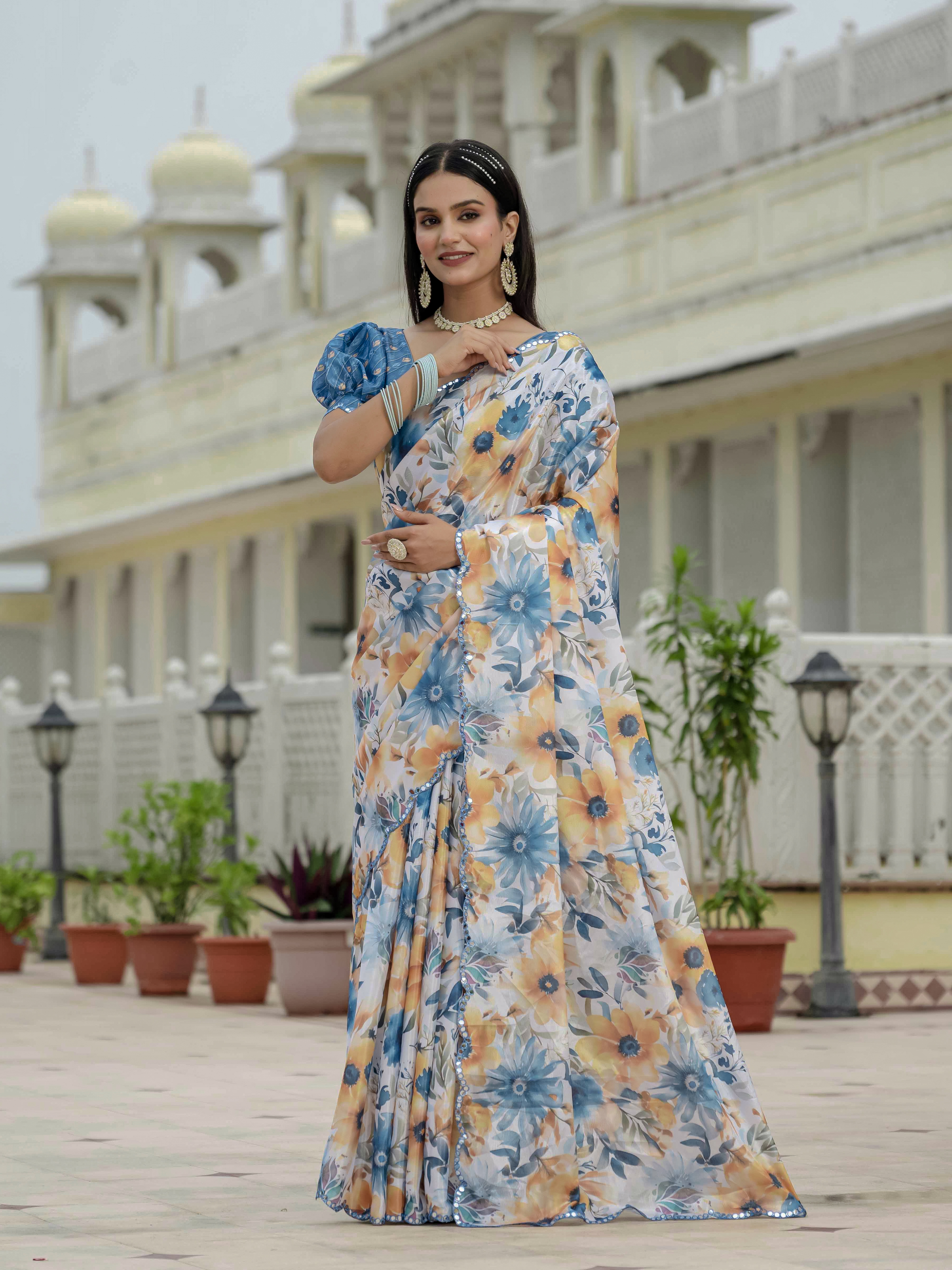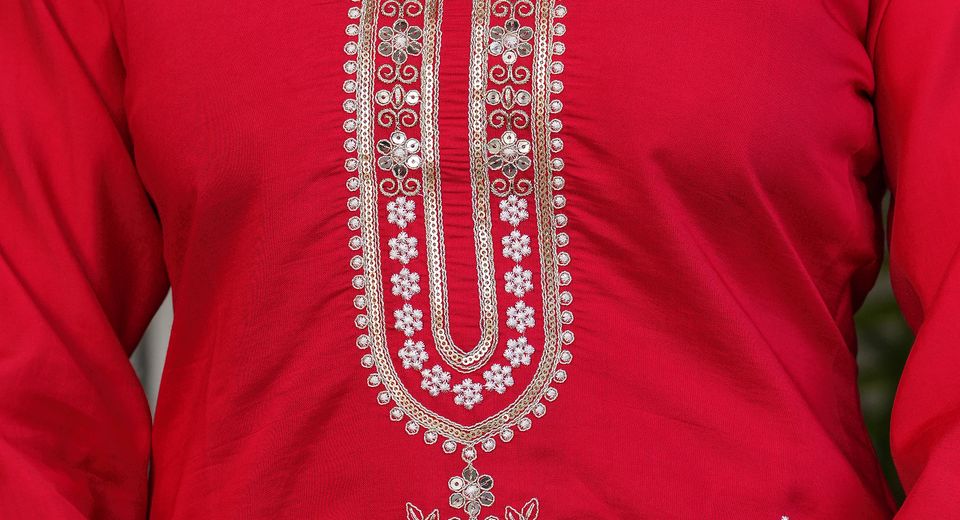
The Kerala Festival Calendar: What to Wear for Every Major Festival becomes much easier to follow when clothing choices reflect the season, ritual and social setting of each celebration. Onam may call for a kasavu saree or settu mundu, Vishu suits bright but graceful dressing, and Eid rewards polished comfort during long family visits. Kerala's climate adds another practical concern: cotton, linen blends, Chanderi and lightweight viscose usually feel more comfortable than heavy synthetic layers.
Kerala festive dressing doesn't require a completely traditional wardrobe. A handloom-inspired saree, a well-cut kurta set or a modest blouse paired with a plain skirt can all work when the fabric, colour and styling suit the event. The useful distinction is between a temple visit, a daytime family gathering, a procession and an evening reception.
Kerala Festival Calendar: How should you plan an outfit?
The best outfit plan considers the festival month, time of day, venue and amount of movement expected. A cotton set is sensible for a humid afternoon, while a zari-bordered saree can be reserved for an evening celebration or formal family portrait.
Kerala remains warm for much of the year, with especially heavy rainfall during the southwest monsoon from June to September. Breathable weaves, quick-drying lining and secure sandals are practical choices when outdoor movement is likely. Very long hems are inconvenient for processions, temple queues and wet ground.
- For temple visits: Choose shoulders and knees covered, a non-transparent fabric and a comfortable drape that remains secure while walking or sitting.
- For daytime celebrations: Cotton, Chanderi, viscose and soft rayon offer better airflow than thick velvet or layered brocade.
- For evening gatherings: Zari borders, embroidered dupattas, silk accents and deeper jewel tones add formality without requiring excessive embellishment.
- For rain-prone months: Carry a compact shawl or spare dupatta, and avoid delicate metallic footwear that can stain or lose its finish in water.
Kerala Festival Calendar: What should you wear for Onam?
Onam dressing traditionally works best with an off-white, cream or white base accented by kasavu-style gold. The palette connects naturally with the settu saree, kasavu saree and Kerala mundu while leaving room for contemporary silhouettes.
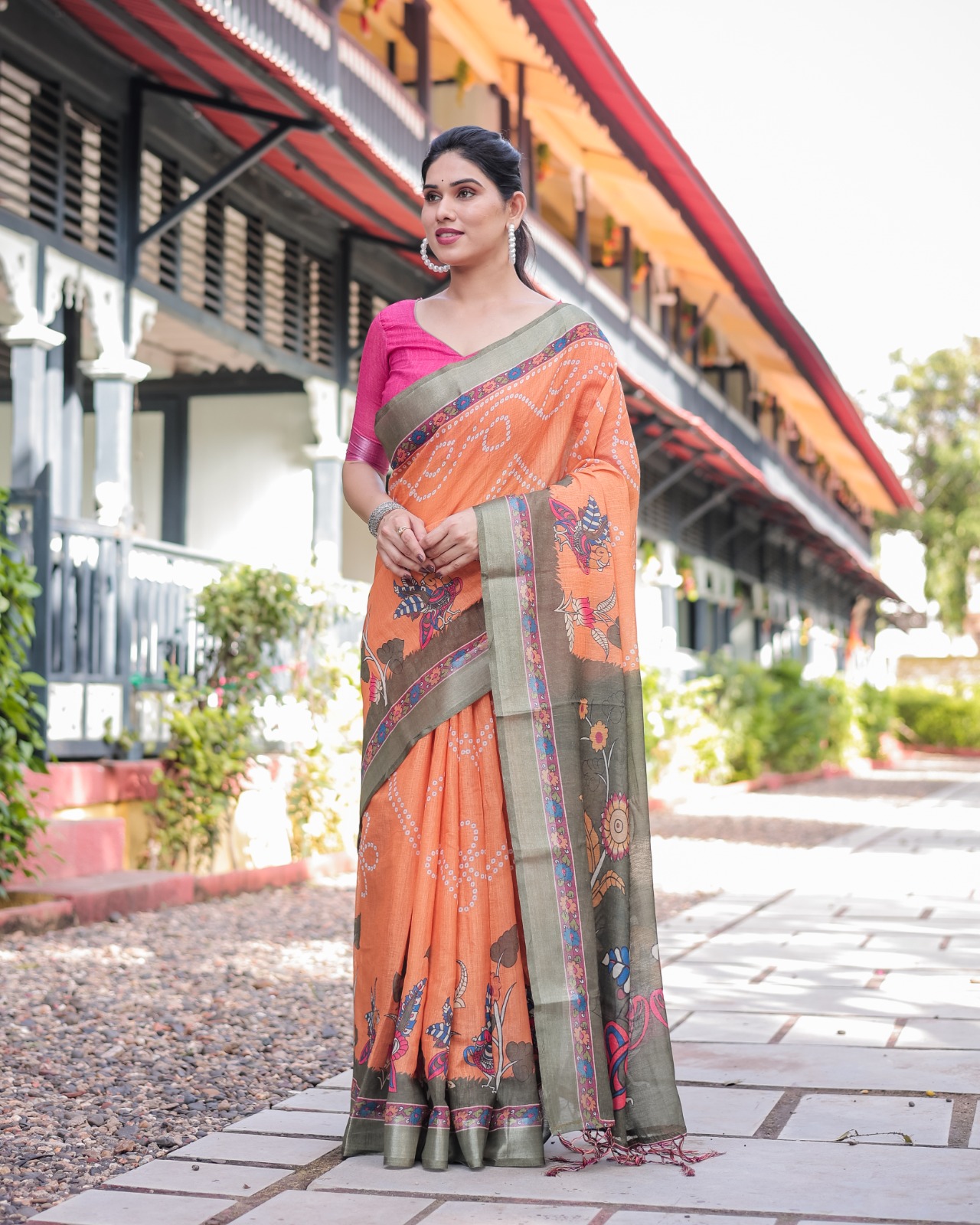
For a formal Thiruvonam lunch, a cream or white saree with a gold border is a dependable choice. A blouse in maroon, bottle green, mustard or red creates contrast without overpowering the understated base. Gold-toned earrings, jasmine flowers and a low bun complete the look more convincingly than excessive statement jewellery.
A kurta set is practical for pookkalam viewing, office celebrations and family visits. Festive Wear Cream Embroidered Kurta Set offers the right visual direction for Onam because cream preserves the time-honoured lightness while embroidery introduces a celebratory finish. A cotton or cotton-blend dupatta is preferable when the gathering involves outdoor seating.
Young guests and anyone who prefers separates can pair a simple cream kurta with a gold-bordered skirt, straight pants or palazzo trousers. Lavender Chanderi Kurta with Olive Embroidered Palazzo Suit shows how a softer contemporary palette can still feel festive when embroidery and drape are kept refined.
Kerala Festival Calendar: What should you avoid wearing for Onam?
Very dark head-to-toe outfits, noisy embellishment and uncomfortable synthetic fabrics are usually poor choices for a daytime Onam gathering. White or cream garments also need a practical care plan because sambar, payasam and outdoor seating can create visible stains.
Kerala Festival Calendar: What should you wear for Vishu?
Vishu outfits suit bright, fresh colours such as yellow, green, coral, pink and white, with comfortable silhouettes for visiting the Vishukkani and meeting relatives. Vishu falls in April, when lightweight fabric is especially valuable in Kerala's warm weather.
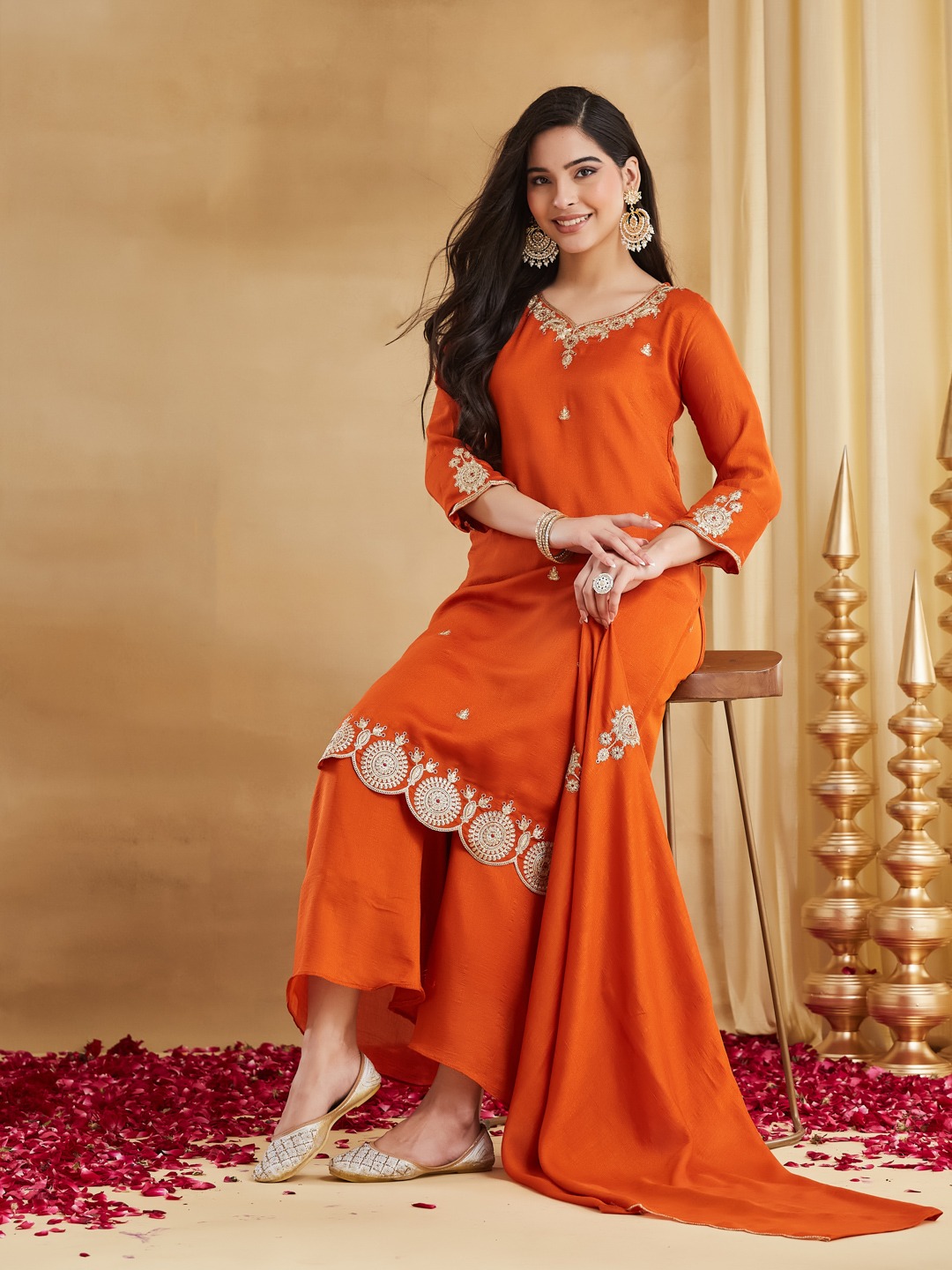
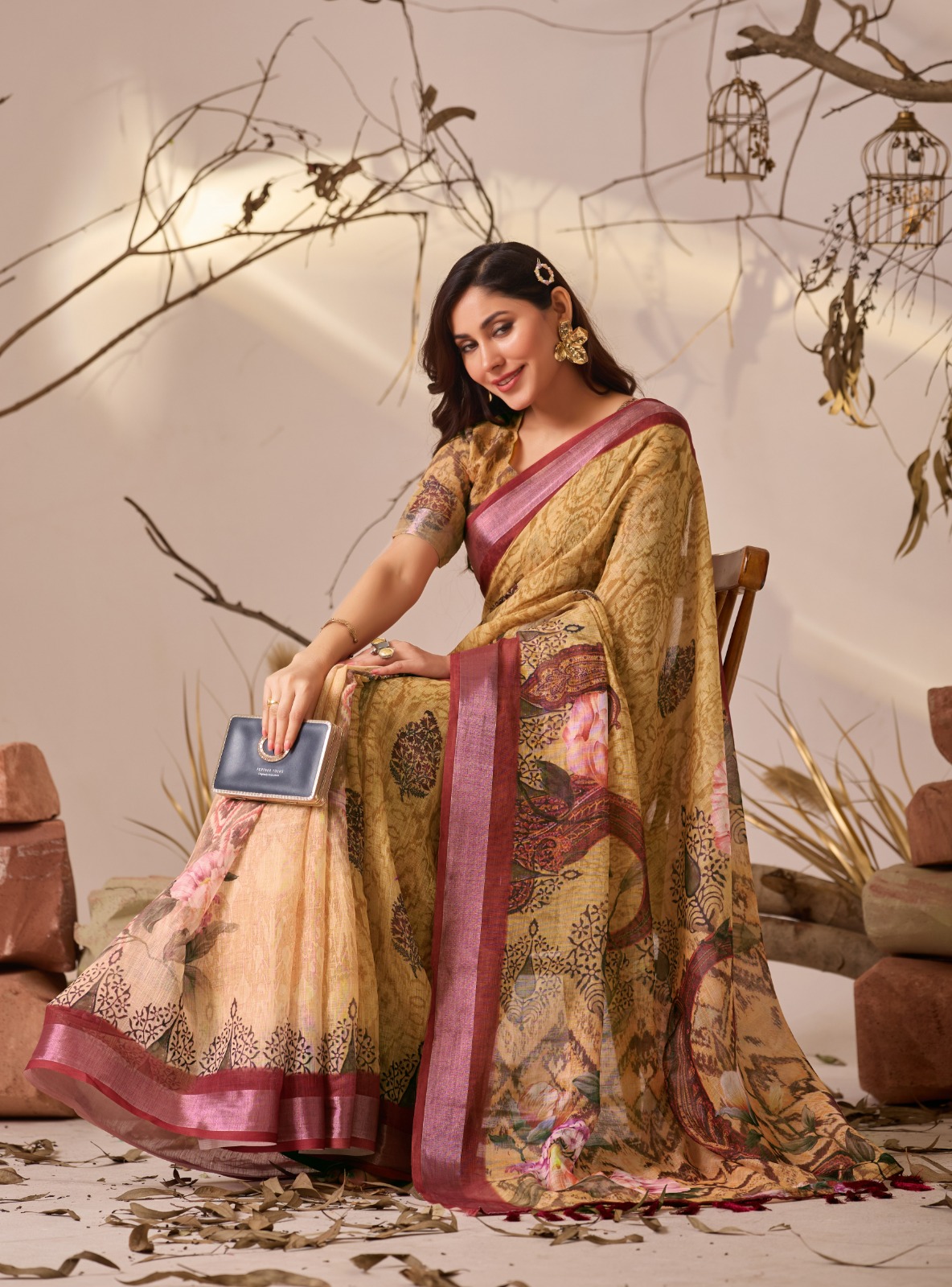
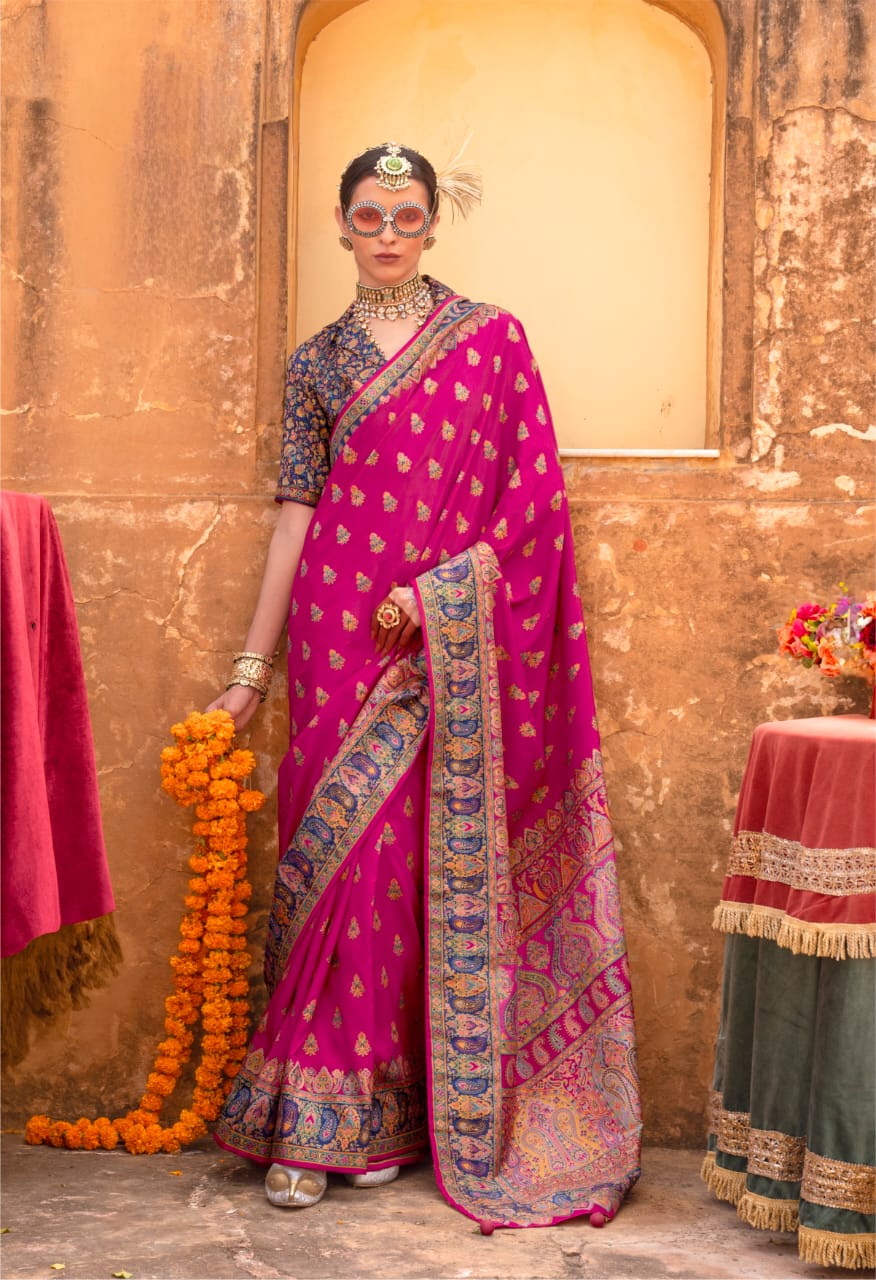
Women often choose a kasavu saree, Kerala-style set saree, salwar suit or kurta set for Vishu. A yellow blouse with an ivory saree creates a recognisable festive look, while a green kurta with a cream dupatta brings a more relaxed option. Small zari details, woven borders and floral embroidery provide enough occasion character without making the outfit difficult to wear during daytime rituals.
Trendy Green Ethnic Kurti Dupatta Set for Festive Wear fits the colour logic of Vishu while remaining easy to move in. White Embroidered Viscose Jacquard Kurta Set for Women is another useful direction for a family gathering because white can be brightened with a yellow dupatta, gold jewellery or fresh flowers.
Vishu dressing benefits from restraint around accessories. Since the Vishukkani ceremony and family visits may begin early, lightweight jhumkas, a thin chain and comfortable flat sandals are often more useful than a heavy necklace or high heels.
Kerala Festival Calendar: How can you dress for temple festivals?
Temple festivals such as Thrissur Pooram call for modest, secure clothing that allows standing, walking and crowd navigation. The celebration is visually grand, but visitors should not confuse the spectacle around the procession with permission to wear impractical or revealing clothes inside temple spaces.
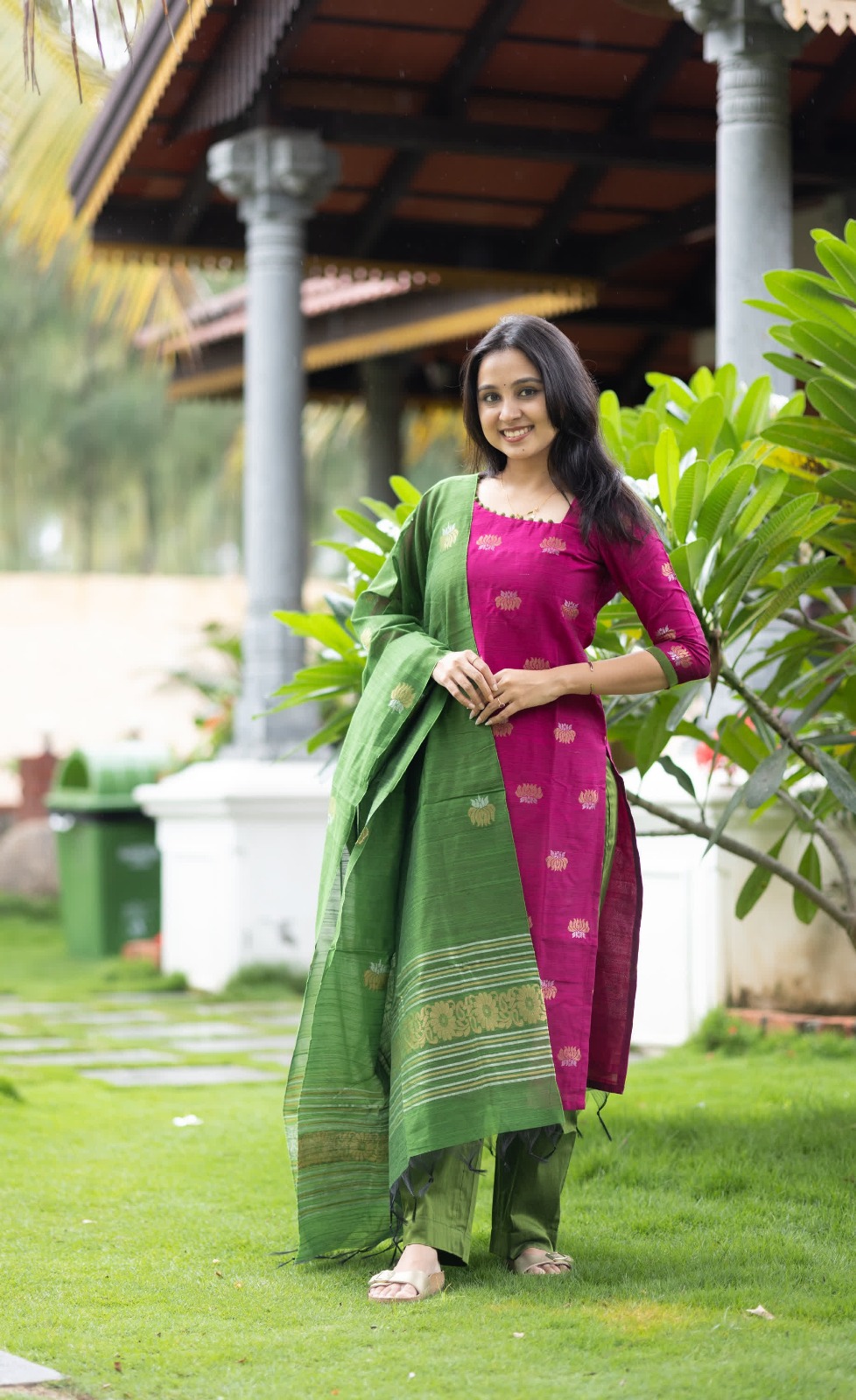
A saree with a firmly pinned pallu, a salwar suit with a full-length kurta or a kurta with straight pants works well. Choose breathable cotton, Chanderi or a light viscose weave, especially when the event involves several hours outdoors. A blouse with secure shoulder coverage and a comfortable neckline is more useful than a fragile, heavily cut-out design.
Kanchi Cotton Woven Kurta Pant Dupatta Set is a sensible example of a structured, breathable outfit for a temple-festival day. The woven texture gives the set visual interest, while trousers and a dupatta provide easier movement than a trailing skirt.
Footwear should be closed enough to protect the feet from crowded streets but easy to remove if required. Keep valuables minimal, pin the dupatta at both shoulders if the crowd is dense and carry a small cotton handkerchief rather than a large handbag.
Kerala Festival Calendar: What works for Attukal Pongala?
Attukal Pongala and similar daytime observances require modest, washable and heat-friendly clothing because participants may spend hours outdoors near cooking areas and temporary ritual spaces. Natural fibres and simple silhouettes are more practical than elaborate eveningwear.
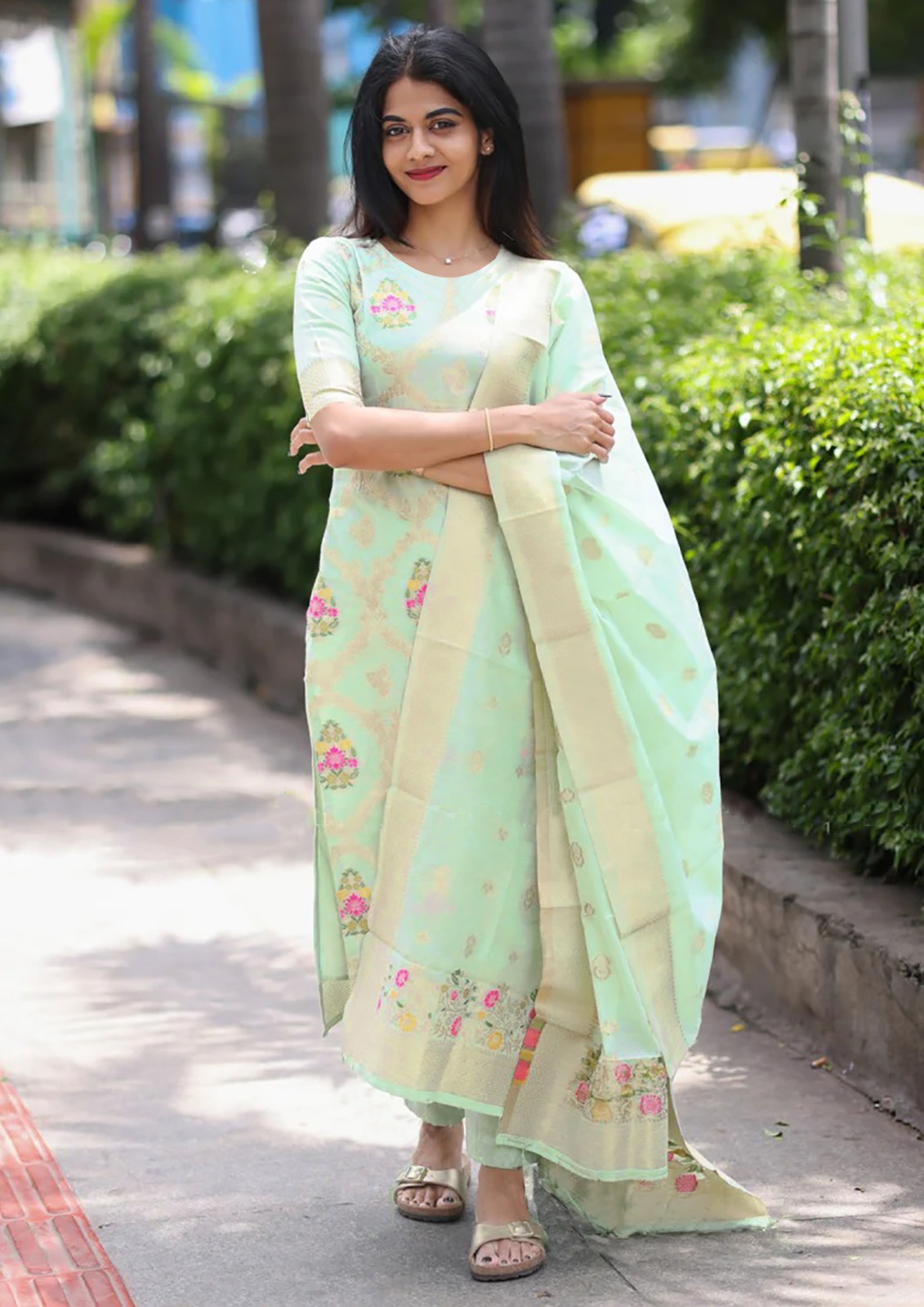
A cotton saree, cotton salwar suit or loose kurta with straight pants allows airflow and makes sitting or standing easier. Pale colours can look beautiful but may show ash, turmeric or food stains, so mid-tones such as muted green, rose, mustard and lavender can be easier to manage.
Dupattas should be secured away from open flames and cooking vessels. Avoid long tassels, wide sleeves and excessive layers near a pongala hearth. Flat footwear with a firm sole is safer than slippery sandals, especially on temporary flooring or crowded streets.
A simple garment can still look considered through one strong detail: a woven border, embroidered neckline, gold studs or a neatly coordinated bindi. The aim is respectful presentation without clothing that competes with the ritual or creates a safety problem.
Kerala Festival Calendar: What should you wear for Eid?
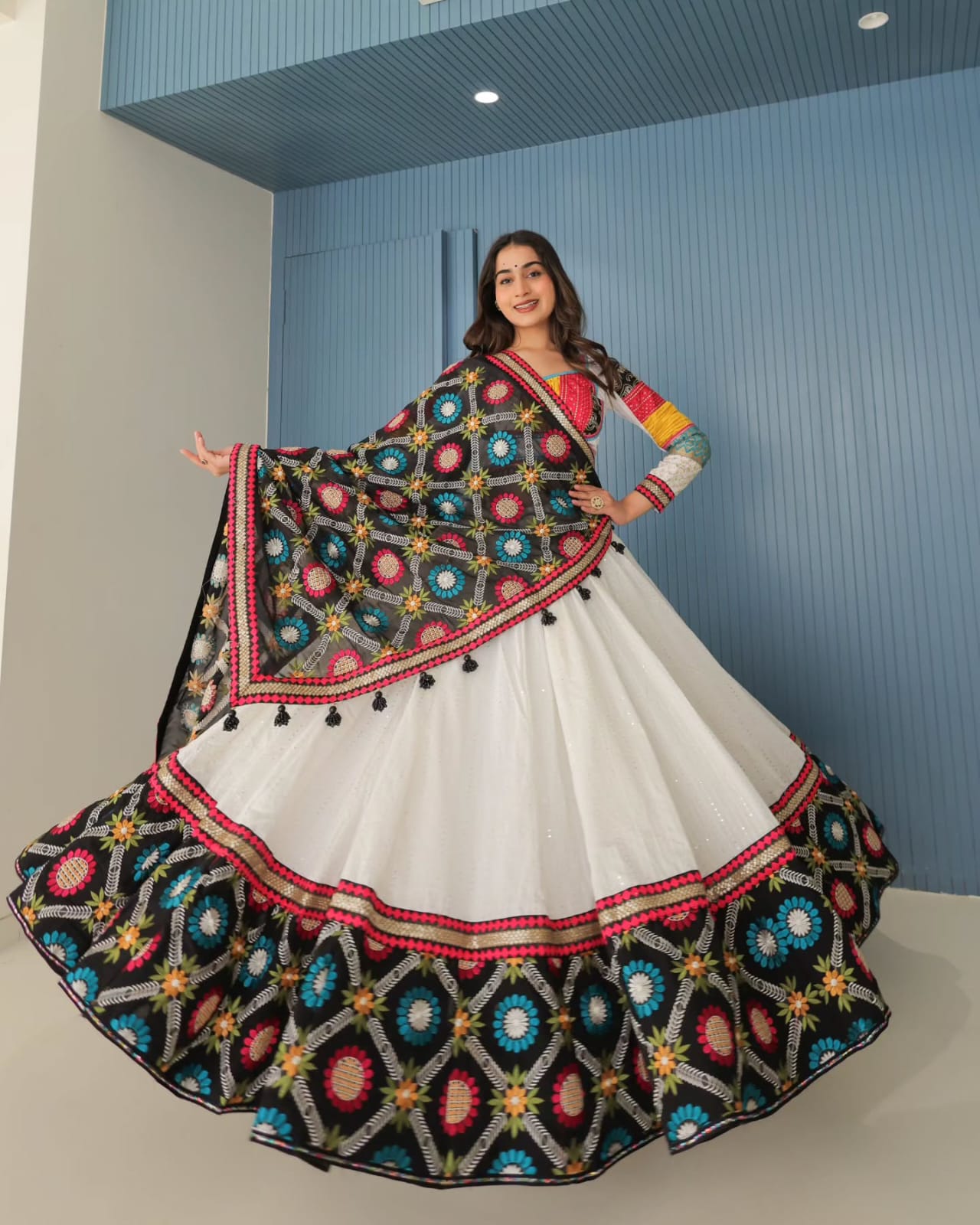
Eid outfits in Kerala usually work best when they combine modest coverage, refined colour and comfort for prayers, visiting and meals. Salwar suits, anarkali sets, long kurtas with palazzos, shararas and sarees can all be appropriate depending on family custom and the event's formality.
For daytime Eid visits, viscose, cotton, Chanderi and light georgette offer an useful balance of drape and airflow. An embroidered neckline or dupatta border can make a simple set look celebratory. For an evening gathering, deeper shades such as emerald, wine, navy and plum pair well with metallic embroidery and delicate jewellery.
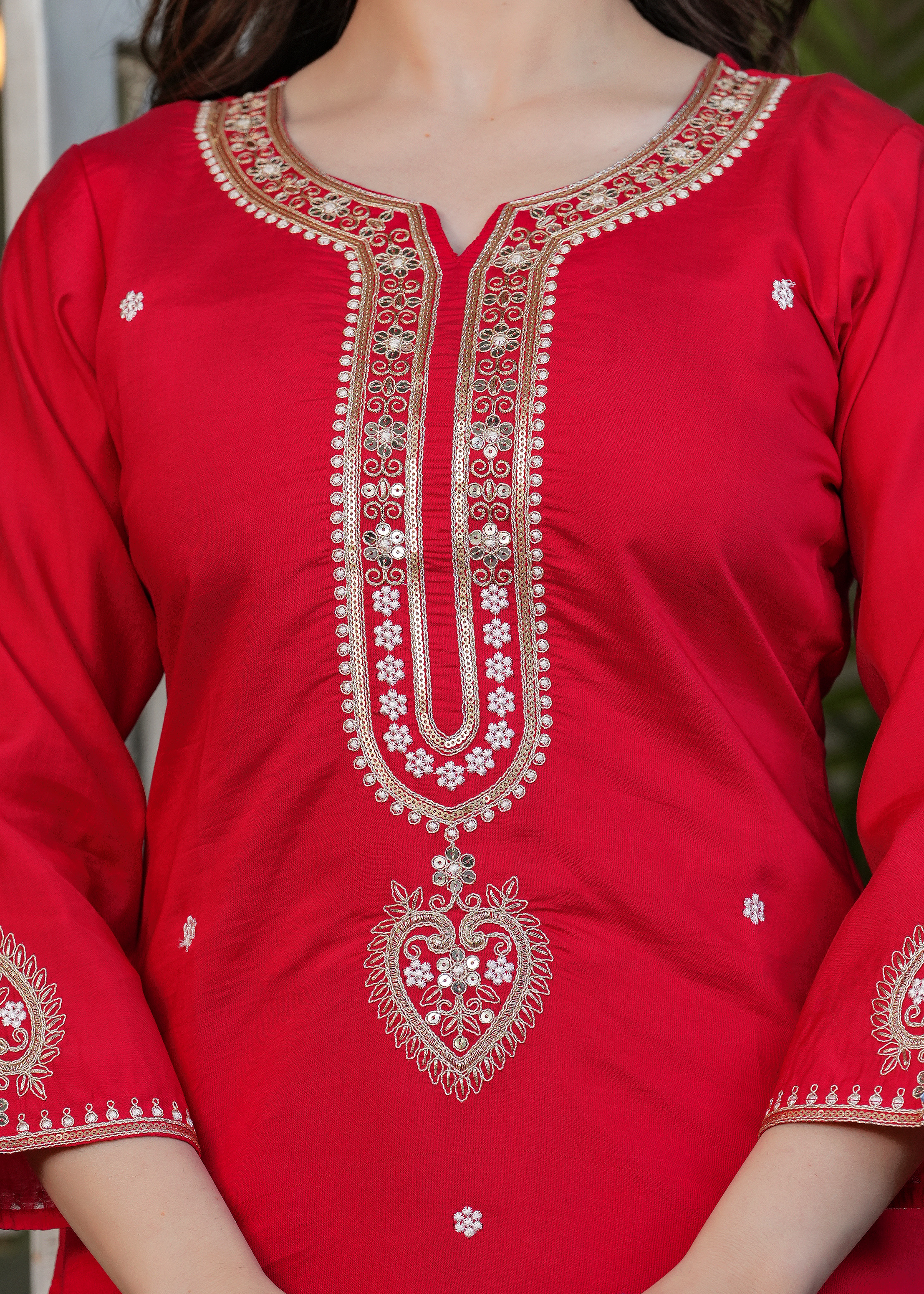
Festive Red Chanderi Kurta Pant Dupatta Set Women demonstrates why Chanderi works well for festive dressing: the fabric has a light hand feel, a subtle sheen and enough structure for a polished silhouette. The red tone can be softened with neutral sandals and understated gold accessories.
Sharara trousers and palazzos are comfortable for visiting several homes, but the hem should not drag on wet floors. A shorter kurta, a secure inner layer and a dupatta pinned at the shoulder help maintain ease during greetings, meals and travel.
Kerala Festival Calendar: How should you dress for Christmas?
Kerala Christmas outfits can range from a modest church-appropriate saree to a festive kurta set for family lunch and an embroidered ensemble for an evening party. The setting should determine the level of shine, sleeve coverage and heel height.
For church services, choose a saree, a sufficiently covered midi-length dress or a full-length kurta set with a neatly arranged dupatta. Red, ivory, forest green, navy and gold are seasonally appropriate without requiring novelty prints. A light shawl is useful for air-conditioned interiors and late-evening travel.
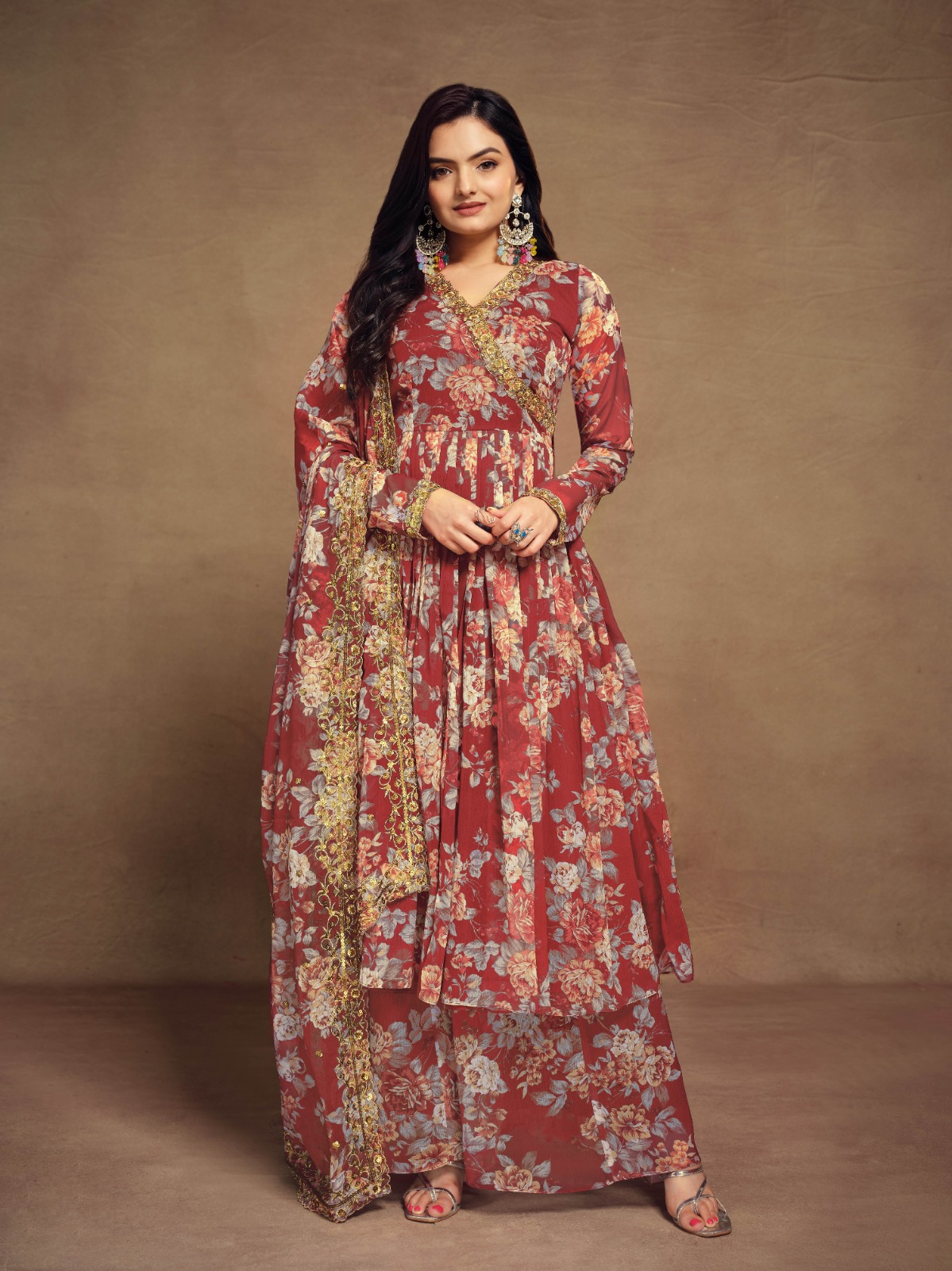
Shop Floral Digital Printed Chiffon Kurti Palazzo Set with zari embroidery brings together a festive print, a fluid palazzo shape and zari detail. Chiffon needs a well-fitted lining, however, because an unlined or poorly lined garment can become uncomfortable and transparent under bright light.
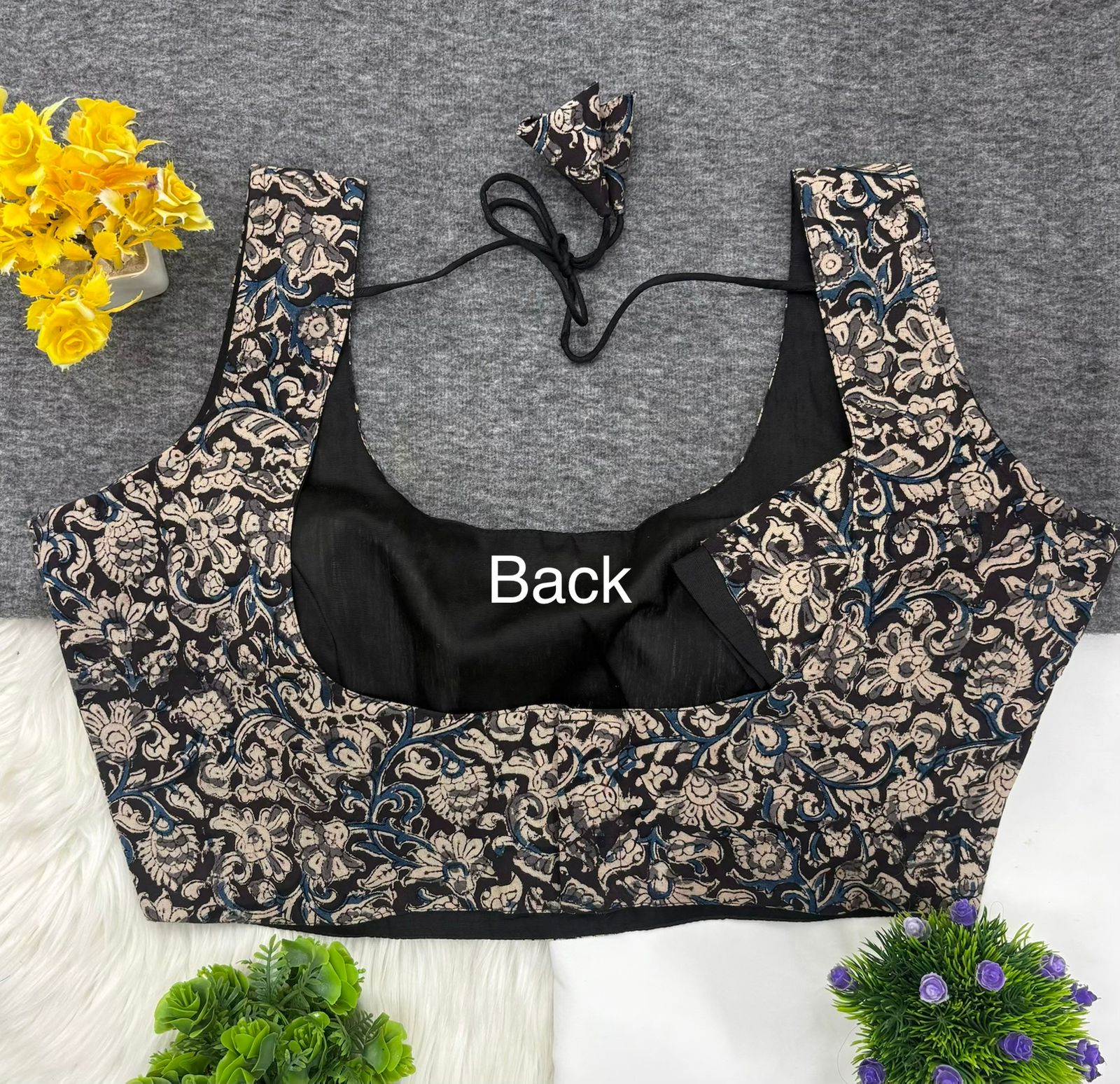
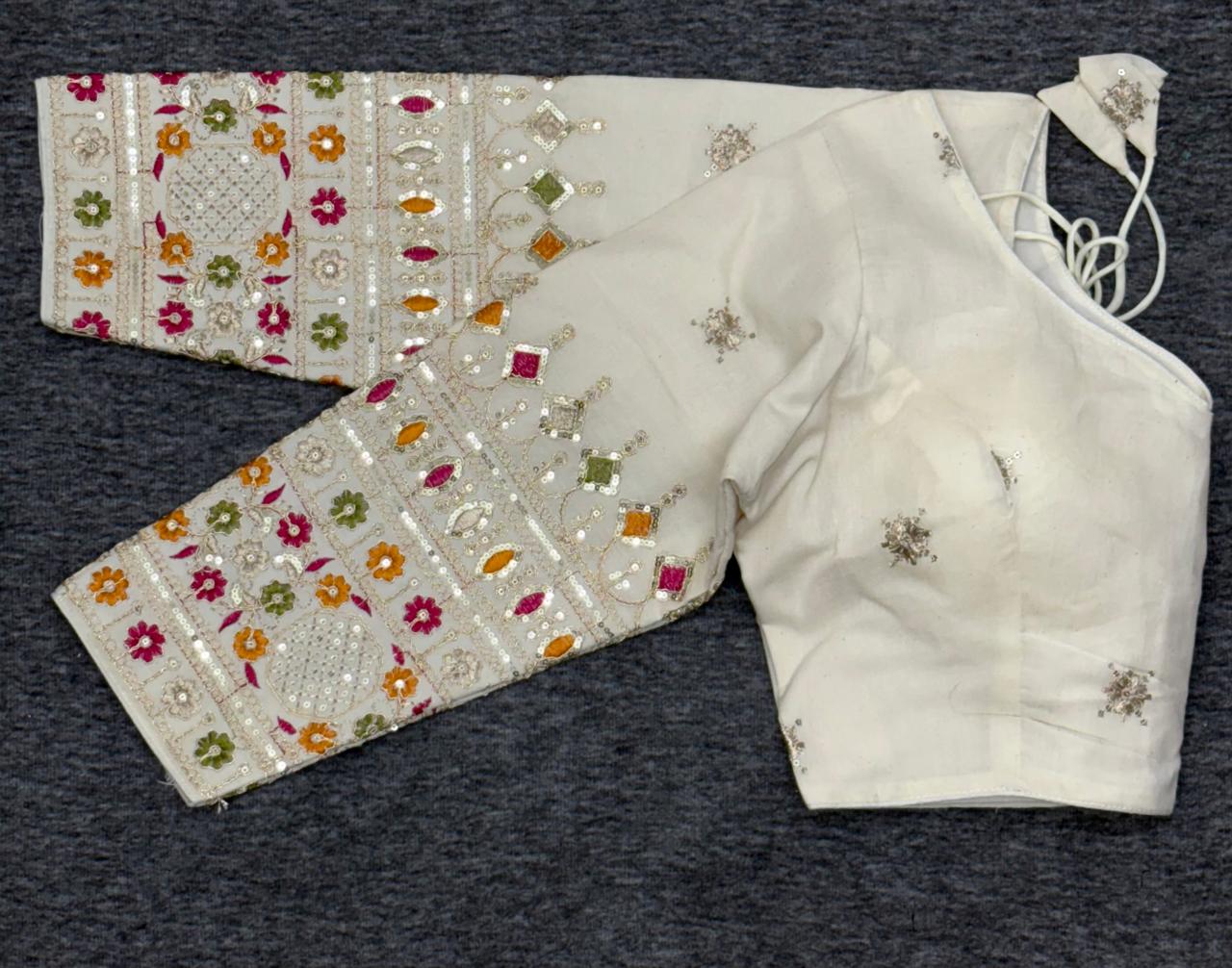
For a more formal Christmas dinner, Classic Festive Wear Blouse for Stylish Saree Look can be paired with a plain silk, satin or georgette saree. A blouse with a balanced neckline and secure fastening matters more than heavy ornamentation when the evening includes dining and socialising.
Kerala Festival Calendar: How can you repeat festive clothes wisely?
Repeating festive clothing looks intentional when the styling changes through colour accents, jewellery, draping and layering. A cream kurta can appear different with a green dupatta for Vishu, a gold stole for Onam or a red accessory for Christmas.
Festive Wear Cream Embroidered Kurta Set can move from an Onam lunch to a family anniversary when paired with different footwear and jewellery. Festive Red Chanderi Kurta Pant Dupatta Set Women can be worn with a lighter dupatta for daytime and a metallic clutch for evening use.
Fabric care also affects how often an outfit can be reused. Air garments in shade after wearing, treat food stains quickly with cold water, separate zari from rough surfaces and follow the wash label. Chanderi, chiffon and embroidered viscose should not be scrubbed aggressively because friction can damage yarns, surface texture and embellishment.
Store sarees and dupattas folded with clean cotton or rolled around a broad support rather than compressed into a small stack. Refold delicate garments every few months to reduce permanent crease lines, and keep moisture absorbers in the wardrobe during Kerala's humid season.
Kerala Festival Calendar: A simple decision guide for every celebration
A practical Kerala Festival Calendar wardrobe can be built around three reliable bases: one light saree, one breathable kurta set and one more formal embroidered outfit. These pieces can be adapted with blouses, dupattas, jewellery and footwear instead of requiring a new garment for every festival.
- Choose the venue first: Temple spaces require modest coverage and secure dressing, while a private evening party allows more flexibility.
- Check the weather: Select cotton or lightweight blends for heat, and protect delicate fabrics during monsoon travel.
- Match the formality: Use kasavu borders and subtle zari for classic daytime events, then add embroidery or richer colour for evening celebrations.
- Plan movement: Pin saree pallus, secure dupattas and choose footwear that can handle queues, stairs and wet streets.
- Finish with one focal detail: A floral gajra, woven border, embroidered neckline or gold earring is often enough to make a simple look festive.
Kerala's celebrations reward clothing that respects tradition while remaining wearable in real conditions. The strongest outfit isn't necessarily the most embellished one; it's the garment that suits the festival, survives the weather and allows you to participate comfortably from the first ritual to the final family photograph.
Common Questions About Dressing for Kerala’s Festival Calendar
What is the traditional dress for Onam in Kerala?
The traditional dress for Onam is commonly a kasavu saree, settu saree or settu mundu in white, cream or off-white with a gold border. A cream kurta set with gold jewellery and jasmine flowers is a practical alternative for people who prefer separates.
What should women wear to a Kerala temple festival?
Women should wear modest clothing that covers the shoulders and knees and remains secure during walking or standing. A cotton saree, full-length kurta set or breathable salwar suit with a pinned dupatta is usually suitable.
Which fabrics are comfortable for Kerala festivals?
Cotton, Chanderi, viscose, soft rayon and lightweight linen blends are comfortable choices for Kerala's warm and humid conditions. Chiffon and georgette can work for festive drape when they have a breathable, well-fitted lining.
What colours are suitable for Vishu celebrations?
Yellow, green, coral, pink, white and cream are suitable colours for Vishu because they create a bright, optimistic daytime palette. Gold accents, floral embroidery or a kasavu border can add festive definition without making the outfit heavy.
Can I wear a salwar suit to an Onam celebration?
A salwar suit is appropriate for many Onam celebrations, especially office events, family visits and outdoor gatherings. Choose cream, white or muted colours with gold, green or maroon accents to reference the traditional Onam palette.
How should festive clothes be cared for in Kerala’s humid weather?
Festive clothes should be aired in shade after use, dried completely before storage and protected with clean cotton covers. Chanderi, chiffon, zari and embroidered garments should be washed according to their care labels and kept away from prolonged dampness.